Launched in January 2010, ARLnow.com is the place for the latest news, views and things to do around Arlington, Virginia. Started by a Pentagon City resident who has spent the past several years working in local TV news, ARLnow.com seeks to distinguish itself with original, enterprising, up-to-the-minute local coverage.
|
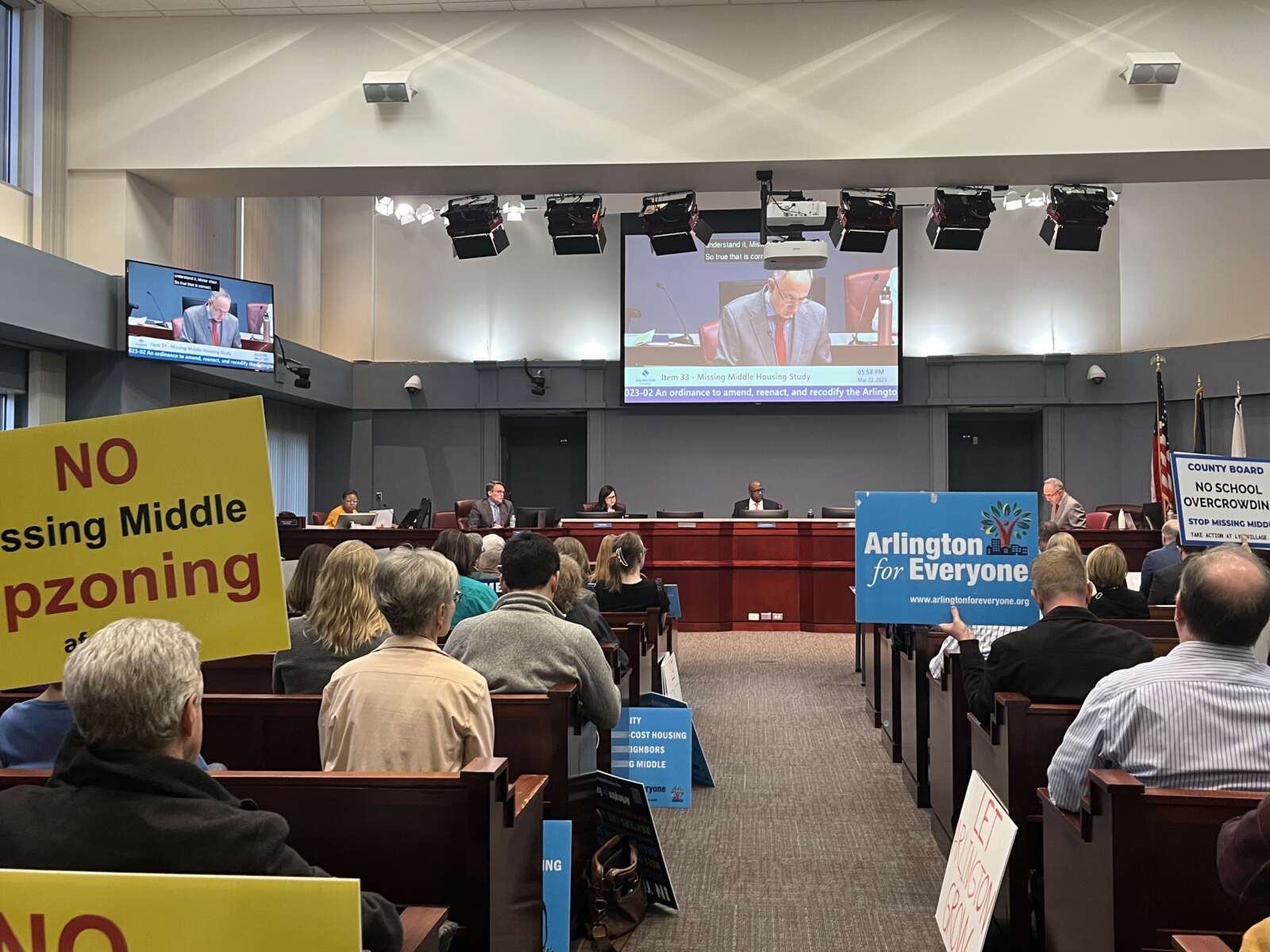
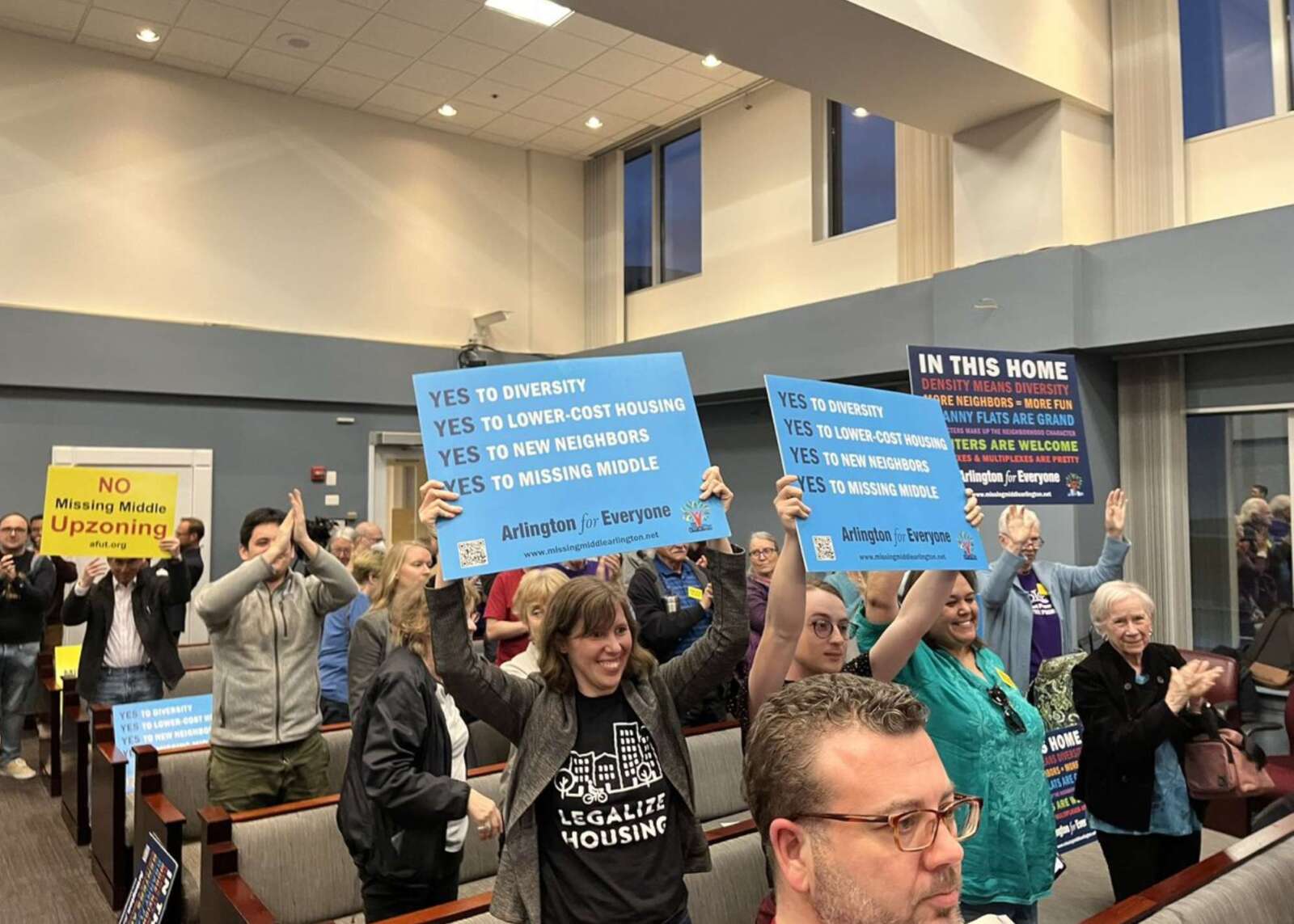

(Updated at 9:40 p.m.) After years of consideration, and multiple days of public testimony and County Board discussion, one of Arlington’s most contentious local proposals in memory is becoming a reality.
The Arlington County Board voted unanimously Wednesday evening to approve allowing smaller multifamily structures — also known as Missing Middle — in what were heretofore neighborhoods of only single-family detached homes.
The vote will allow the by-right construction of buildings from duplexes to six-plexes, depending on lot size, with the units capped at four on certain smaller lots. The structures will be no larger, in height or footprint, than what’s allowed for single-family homes.
The vote also comes with a temporary cap: 58 such structures per year, for five years, geographically dispersed by zoning district. It also comes with minimums for off-street parking: half a parking spot per unit as the minimum 3/4 of a mile from Metro rail and 1/2 mile from certain bus stops and one spot per unit outside of transit zones.
Arlington County Board Chair Christian Dorsey called the previous single-family only zoning a “vestige of old times” in comments immediately following the vote on the measure, which he called a “reform” and “fundamental good policy.”
Dorsey, echoing other Board members who spoke of the expected future growth of Arlington’s population, expressed support for allowing more types of housing in all parts of Arlington, with greater affordability as an overarching goal. Currently, much of the redevelopment of older single-family homes has resulted in the construction of much larger and more expensive single-family homes.
“We are part of a dynamic vibrant community of Arlington that has for generations invested in the kind of living conditions that makes this the kind of place that most people value and naturally people will be attracted to,” Dorsey said. “That is not a bad thing, in fact, that is a damn good thing. We should think of how we accommodate that so that it continues to work well for as many people as it can.”
While the vote was unanimous, some Board members expressed concern about allowing up to six units in less transit-accessible parts of the county. Matt de Ferranti and Libby Garvey backed an amendment that would have limited more lots to only four units away from Metro corridors, but the amendment failed by a vote of 3-2.
Board member Takis Karantonis, in his remarks following the vote, noted the general disparity in age between supporters of the Missing Middle proposal, dubbed Expanded Housing Options by the county, and those who spoke against it, who were notably older on average.
“Now is the time to intervene: to shape change on our terms before change shapes us,” Karantonis said. “Enhancing housing options for Arlingtonians who live here today and those who will choose to live here tomorrow is one of the decisive actions we cannot afford not to take.”
“Whoa, we just de-segregated Arlington,” a supporter of the proposal said to another after the vote, seemingly in disbelief. Only a few other large localities in the U.S. have taken similar action to densify housing, including Minneapolis and Portland.
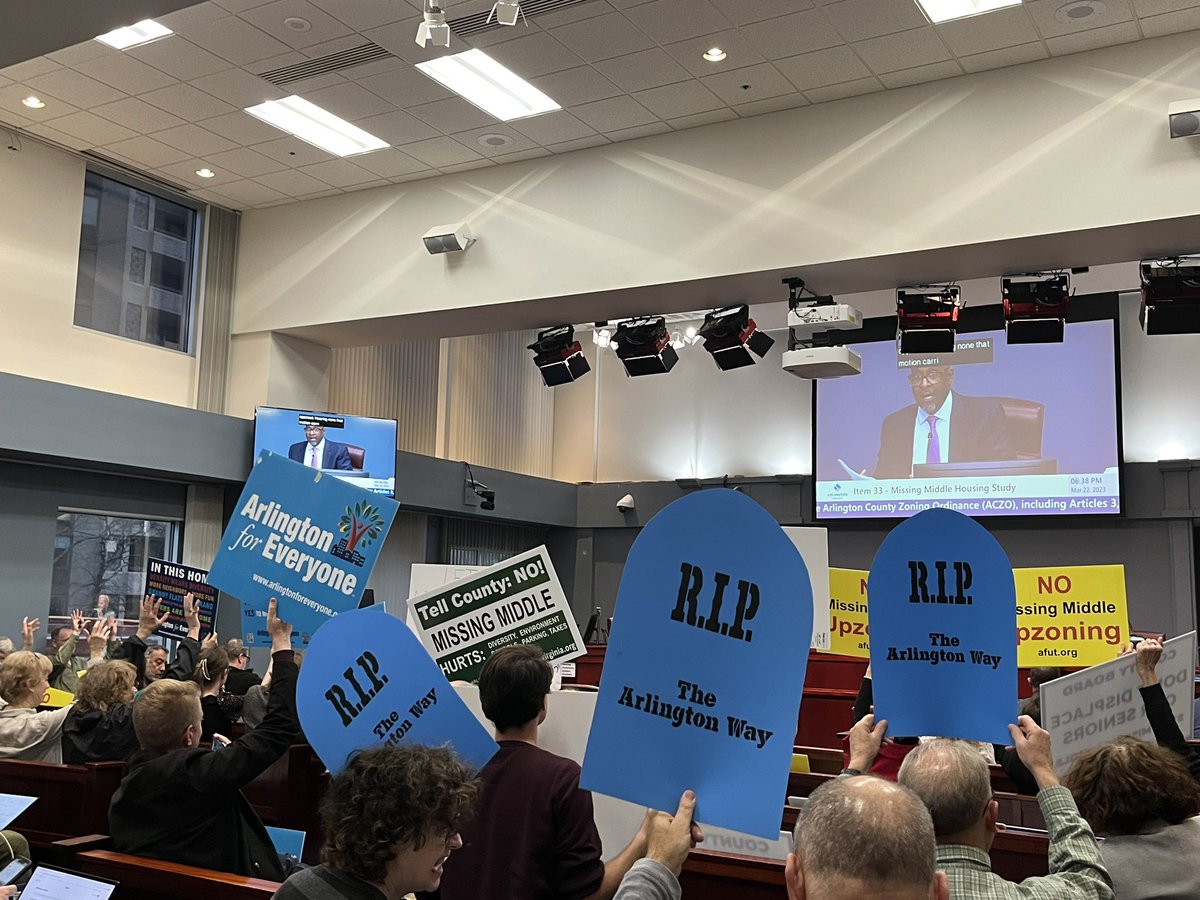
Elsewhere in the County Board room, opponents were holding up blue tombstones saying “R.I.P The Arlington Way” and balloons with a winged heart, saying “Forever in our hearts.” Since a draft Missing Middle proposal was first reported by ARLnow last May, opponents have predicted deleterious consequences from rezoning and decried what they characterized as a rushed process that did not include a sufficient level of study and community engagement.
Board member Matt de Ferranti spoke in favor of correcting a historic wrong — among other reasons for the vote — citing the county banning construction of row houses from the 1930s to 1960s. The County previously “protected the wealth of those already living in single-family neighborhoods,” he said.