(Updated at 3:35 p.m.) In Arlington’s long fight to regain control of its school calendar, one of the county’s representatives in Richmond finally sees some reason for optimism.

School leaders have hoped for years now to wrest control of the calendar from state officials, giving Arlington Public Schools the chance to start classes before Labor Day each year. State law generally bars school systems from starting any earlier unless officials can demonstrate a compelling reason to push up the calendar, like the threat of winter weather, in what has long been referred to as the “King’s Dominion Rule.”

The theme park helped convince state lawmakers to take control of the school calendar in a bid to boost the state’s tourism industry back in 1986, and the company has frequently fought attempts by school systems to adjust their own calendars since, over fears that doing so would cut into the park’s pool of low-wage summer workers. But the park’s ownership has softened its opposition to the change as time has gone by, and dozens of school systems have managed to obtain “waivers” to the state law to set calendars as they please.

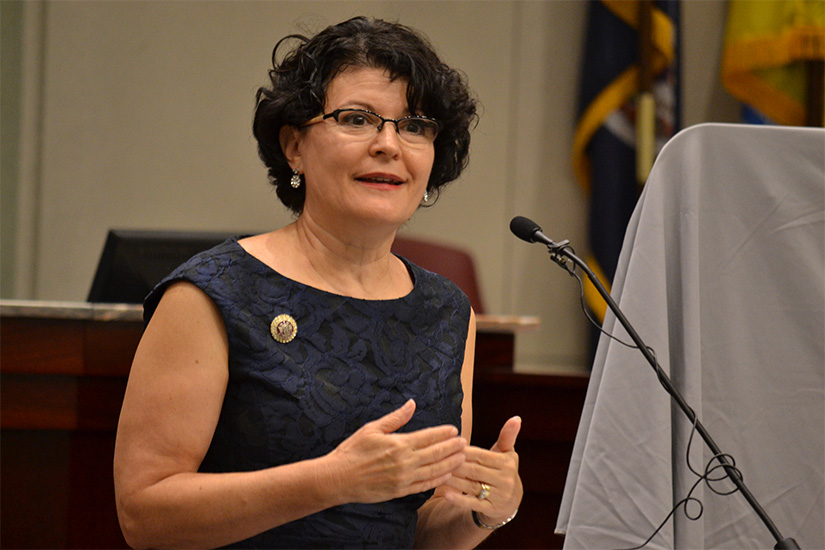
Even still, the General Assembly has repeatedly stymied efforts to hand control back to all the state’s school systems, including Arlington, despite the mounting pressures of standardized tests on the final months of the school calendar. But this year, however, state Sen. Barbara Favola (D-31st District) has hope.

She’s crafting legislation that would specifically give all Northern Virginia localities the power to set their own school calendars. Some, like Fairfax and Loudoun counties, already have waivers to start before Labor Day, but she’s hoping that such narrowly tailored legislation to sweep in counties like Arlington might prove more palatable to her Republican colleagues.

“We have so many jurisdictions under the waiver already, it’s ridiculous,” Favola told ARLnow. “We don’t have control over when SATs or SOLs start… and after those are done, students just aren’t energized. I’m hoping this will finally give Arlington the chance to start earlier.”

The state Senate has killed similar efforts plenty of times before, and this year was no exception. Even though a bill giving all school systems calendar control passed overwhelmingly in the House of Delegates this session, it died narrowly in a Senate committee.

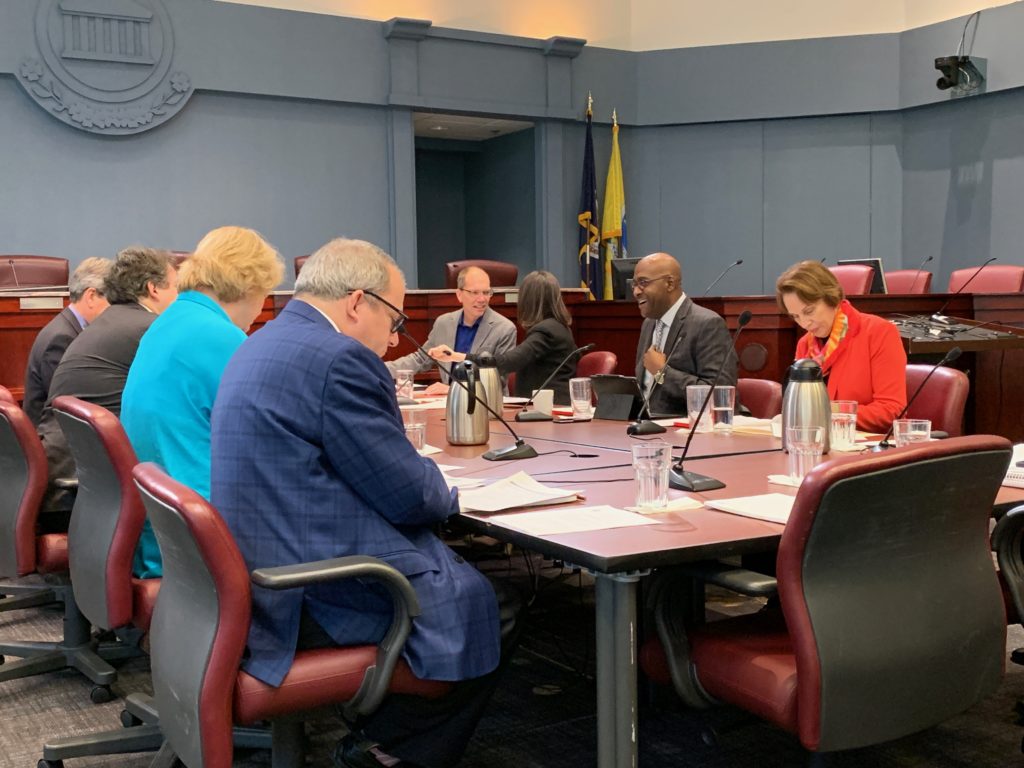
But Favola says she’s heard that some Republicans in the chamber are “not opposed” to the bill she’s planning, and even gotten “positive feedback” from others. During a work session with Arlington’s County Board on Friday (Dec. 7), Favola said she’d heard specifically from Sen. Steve Newman (R-23rd District) that he could support such legislation — that’s notable because Newman chairs the Senate’s Education and Health committee, the very group that killed the school calendar bill this year.

In an interview after the meeting, Favola declined to elaborate on Newman’s support, or put other Republicans “on the spot” who might support the bill. Through his legislative aide, Newman said he will “look forward to reviewing Sen. Favola’s legislation again this year, and will give it every consideration.”

“As you may know, I have been working to get a Labor Day exemption into the budget over the past few years that would cover much of Virginia,” Newman wrote in a statement. “We will continue to move this important endeavor forward in the 2019 General Assembly Session.”

Despite her optimism, Favola would concede that it’s no sure thing that her legislation will succeed. Even though King’s Dominion has not been as vocal in lobbying against such legislation in recent years, she said the company is “still saying there’s a need” for student workers ahead of Labor Day weekend.

That’s where she hopes the legislation’s provision targeting only “Planning District 8” — which includes Arlington, Alexandria, Falls Church, Fairfax, Loudoun, Prince William, Manassas and Manassas Park — can provide some reassurance to the theme park, and the legislators who may be swayed by King’s Dominion’s concerns. Since the park sits roughly an hour-and-a-half down I-95 from Northern Virginia, it stands to reason that it doesn’t draw many workers at all from the area’s schools.

However, Favola’s bill would leave some large and influential localities without calendar control, including Virginia Beach, Chesterfield, Henrico and Richmond.

That means her legislation will likely need to compete with other bills designed to give all the state’s school systems control — Sen. Amanda Chase (R-11th District), and a representative of some suburban Richmond communities a bit closer to the park, has already introduced just such a bill.

The General Assembly is set to reconvene for a one-month-long session on Jan. 9.

File photo
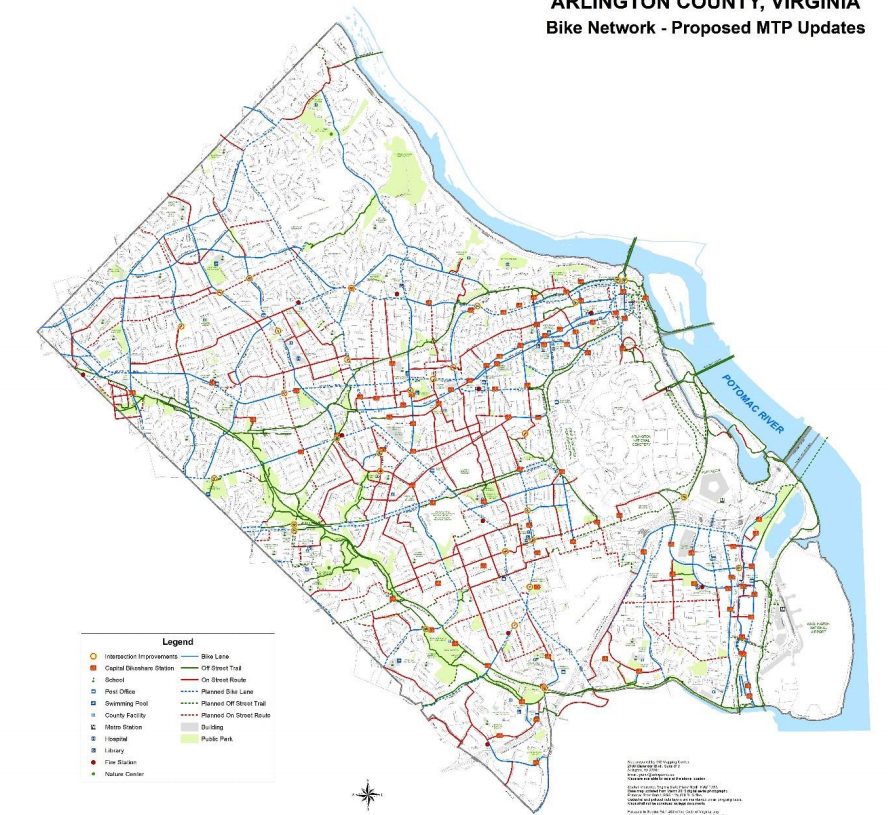

Arlington transportation planners are weighing major revisions to the guiding document for the future of the county’s bike infrastructure, sketching out a wish list of new trails and bike lanes they want to see over the coming years.

County officials have recently begun circulating a draft version of an updated “bicycle element” to Arlington’s “Master Transportation Plan.” The document was last updated a decade ago, and a working group has spent more than a year crafting potential changes for the plan.

In all, it contains 26 new pieces of cycling infrastructure from the last time the plan was revised, including a bevy of new trail segments, additional on-street lanes and trail renovations. The county is now soliciting public feedback on the draft in the form of a community survey, with additional engagement efforts to come.

But the document also includes some broad goals for county officials to pursue to meet the needs of cyclists over the coming decades, with a special focus on how Arlington can make people feel safer while riding their bikes on local streets.

“Many residents have identified that they do not have suitable bicycle facilities within their neighborhoods or ones that connect to the local destinations that they want to travel to,” the draft document reads. “Other bicyclists do not feel comfortable riding with or amongst motor vehicle traffic and they feel that some on-street bikeways do not provide sufficient separation from motor vehicles. While the County has developed many on-street bikeways in recent years, their distribution and connectedness across the Arlington is currently uneven.”

To that end, the updated plan calls for plenty of infrastructure improvements to meet that goal. The county’s budget squeeze, however, will make it a challenge for the County Board to find finding for many of these projects, at least in the near term.

But the document does identify several improvements that have already been funded in the county’s long-term construction plans, including three additions from the plan’s last update. Those include:

McKinley Road Buffered Bicycle Lanes – Revise the roadway markings on McKinley Road between the Custis Trail and Wilson Boulevard to include buffered bicycle lanes. Undertake the roadway marking along with construction of crossing enhancement to provide for improved access to McKinley Elementary School and the Custis Trail.

S. Clark Street Cycle Track – Construct an off-street cycle track that connects the planned Army Navy Drive protected bicycle lane at 12th Street South to 18th Street S. and the Crystal City Metrorail station.

Shirlington Road Bridge – Reconstruct the Shirlington Road bridge, and adjacent sidewalks, to provide an enhanced, wide bicycle and pedestrian path along the west side of the roadway that links the W&OD and Four Mile Run trails.

As for the rest, some the new planned changes only impact small sections of trails or roadways, requiring only small funding commitments. Others are substantially more ambitious.

Among the bigger asks are requests for the renovation of the entirety of the W&OD Trail as it runs through Arlington, and the portion of the Four Mile Run Trail south of W. Glebe Road, totaling about 5.5 miles in all.

“Improvements may include: trail widening, minor realignments, new pavement markings, wayfinding signage and consideration of the addition of trail lighting,” the document reads.

When it comes to new and improved trails, other planned projects include upgrades for the entirety of the Bluemont Junction Trail and and the construction of a new, half-mile long bike and pedestrian trail connecting the site of the former Northern Virginia Community Hospital in Glencarlyn to the nearby Forest Hills neighborhood.

Some of the plan’s more substantial on-street projects include the construction of bike lanes and other improvements along “the entirety of S. George Mason Drive,” stretching about 2.1 miles in all. The document also envisions new bike lanes along N. Highland and N. Herndon streets, between Key Boulevard and 7th Street N., to allow for easier access to the Clarendon Metro station.

Additionally, the document recommends the creation of some new “bike boulevards,” or coordinated infrastructure improvements to give cyclists an alternative to bypass busy roads for quieter side streets.

The county’s previously constructed some off Columbia Pike, and the plan envisions one along the Rosslyn-Ballston corridor (on Key Boulevard, N. Jackson Street and 13th Street N. between N. Rhodes and N. Quincy streets) and another connecting Ashton Heights and Lyon Park (on 5th, 6th, 7th and N. Fillmore streets to connect Henderson Road to Pershing Drive as it meets Washington Blvd).

The county is planning an open house to collect in-person feedback on the new bicycle element on Jan. 14 at Phoenix Bikes (909 S. Dinwiddie Street), set to run from 6-7:30 p.m.

Photo via Arlington County


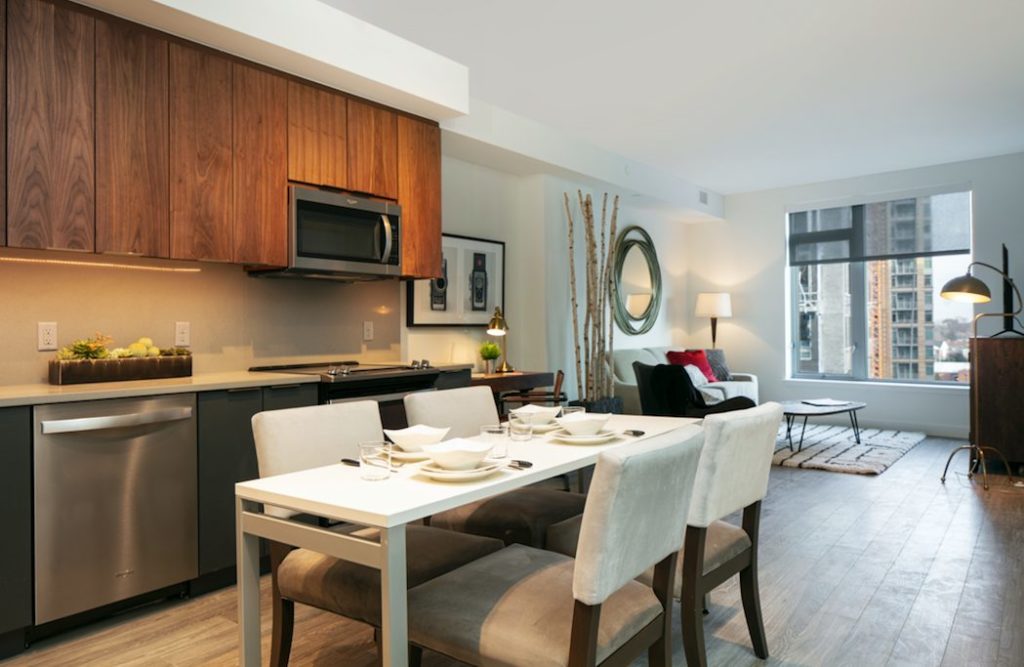
A startup offering temporary hotel rooms in new apartment complexes is now planning to expand to two Arlington developments.

WhyHotel announced today (Tuesday) that it will soon offer 175 rooms for rent in the residential tower attached to the Ballston Quarter development, and another 150 rooms in the “Centro Arlington” project, which is taking the place of the Food Star grocery store off Columbia Pike. The company recently scored $10 million in venture funding to power the new projects, in addition to a similar “pop up” hotel in “The Boro” development in Tysons.

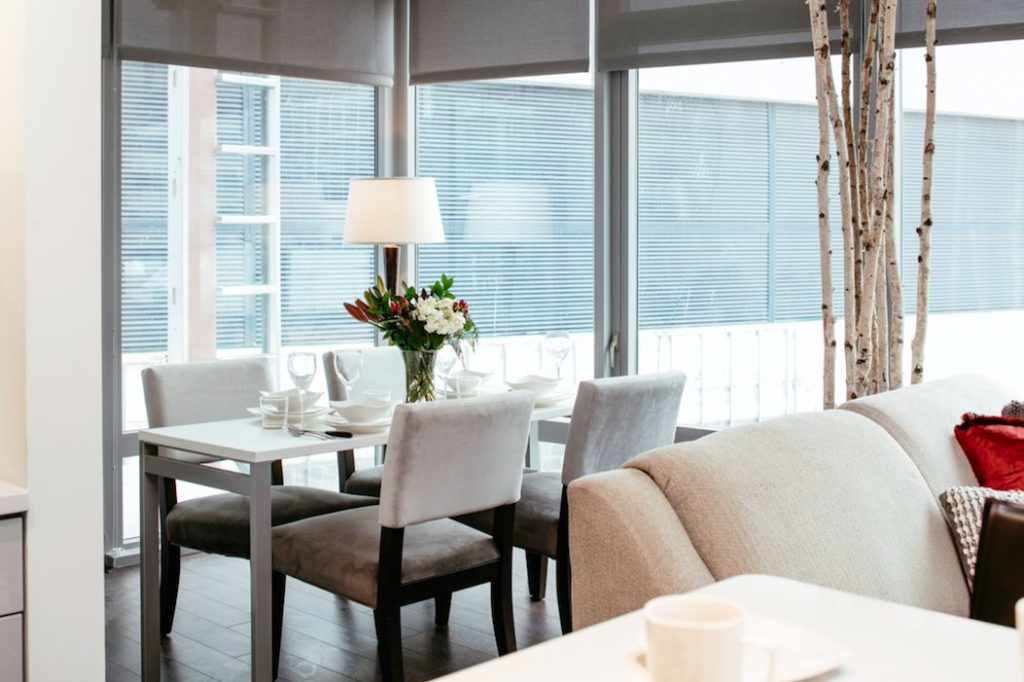
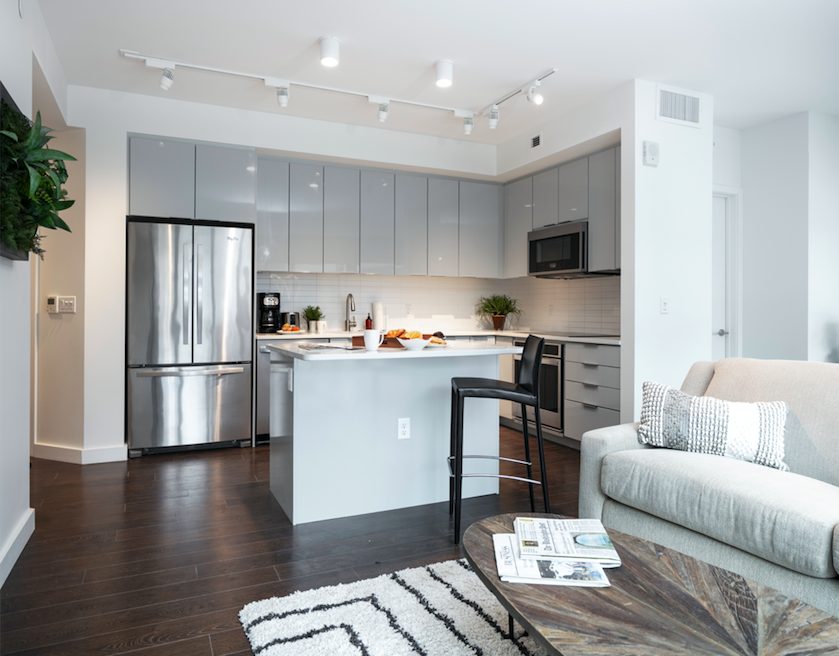
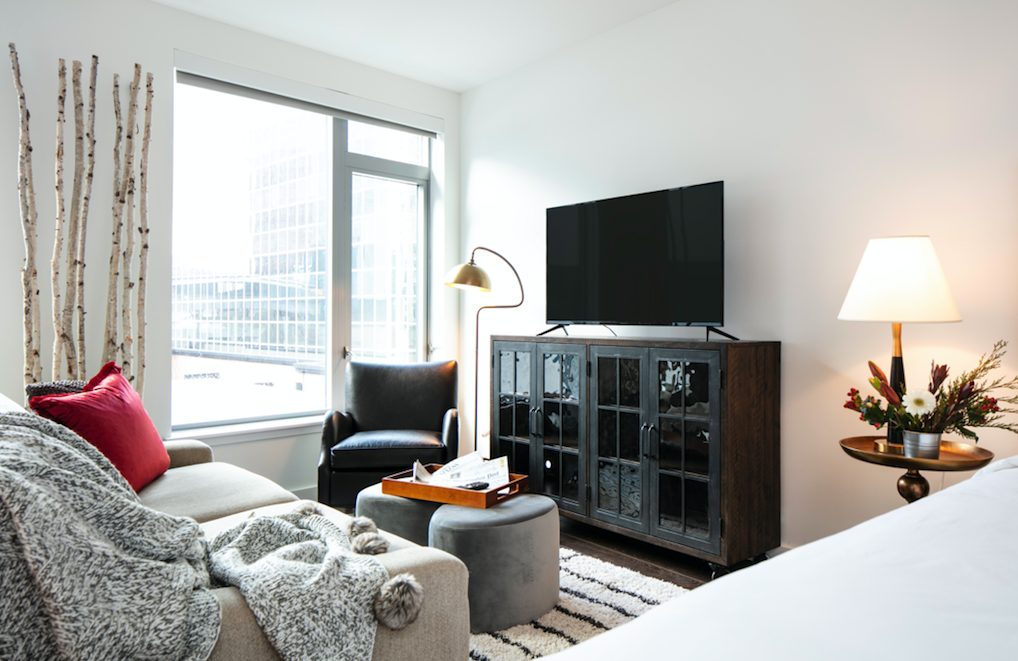
Unlike a home-sharing service like Airbnb, WhyHotel strikes agreements directly with the owners of large residential properties to rent out blocks of furnished apartments, bringing along an on-call staff to handle cleaning and other guest needs. The company is hoping to provide a happy medium for customers between staying at a friend’s place and shelling out for a hotel room, while helping developers fill space in new buildings as they lease them out.

Jason Fudin, WhyHotel’s co-founder and CEO, told ARLnow that he was interested in opening up shop more properties around Arlington because of the area’s potent mix of tourism and booming residential development. WhyHotel is aiming to open its first “pop up” in D.C., but Fudin says he never lost sight of the county as a “great place to be.”

“We do expect to be in Arlington in perpetuity,” Fudin said. “And as there’s more and more development, we’re hoping to be the solution people look to as they activate their developments.”

Fudin noted that the company has its roots in Arlington. The concept began as an initiative by developer Vornado Realty Trust at “The Bartlett” complex in Pentagon City, but its backers then struck out on their own, initially joining up with Crystal City startup incubator 1776.

Considering that Fudin viewed the company’s work in Pentagon City as a clear success for all involved, driving plenty of business to retailers near the building in the process, he’s hoping to replicate the same formula in Ballston and along the Pike.

Fudin expects that WhyHotel will have its Ballston Quarter rooms ready by April 1, slightly after the residential section of the development (located at 700 N. Randolph Street) is slated to open up. Some stores in the newly renovated Ballston Common mall have already started opening for business, and Fudin expects that will make the rooms immediately above the development plenty desirable.

Beyond the location’s proximity to D.C., he added that the large number of corporate headquarters in the neighborhood (not to mention federal tenants like DARPA) should bring plenty of travelers to the area.

Fudin conceded that the location on the Pike (950 S. George Mason Drive) is a “less dense urban area” than either D.C. or Ballston, but he said the company was still interested in moving in because of how close it is to the Pentagon.

“You have a tremendous number of people that work in defense or in the federal government who call that area home, so we natural customers in that space,” Fudin said. “It’s a great spot for families who are relocating. When you relocate to city, you don’t instantly have housing, whether you’re military or otherwise, and we see this as a great option for them… The ability to stay in a ‘like-home’ experience rather than a small hotel room is better for everybody.”

The Centro Arlington development, which will be anchored by a Harris Teeter grocery store, is to set to open in earnest midway through 2019, so Fudin expects WhyHotel’s rooms will be available there in “late summer or early fall.”

The County Board is set to sign off on allowing WhyHotel to offer some of its new rooms next week. County staff is recommending the Board’s approval for the temporary hotel use at Ballston Quarter for the next two years or so at a Dec. 15 meeting.


Arlington Agenda is a listing of interesting events for the week ahead in Arlington County. If you’d like to see your event featured, fill out the event submission form.

Also, be sure to check out our event calendar.

Tuesday, Dec. 11

Electric Scooter Safety
Arlington Central Library (1015 N. Quincy Street)
Time: 7-9 p.m.

With more and more dockless electric scooters popping up on the streets of Arlington, join Lime to learn the basics of safe scooter riding and test drive one of their dockless electric scooters in the library auditorium.

Wednesday, Dec. 12

Arlington Community Chorus Winter Concert
Kenmore Middle School (200 S. Carlin Springs Road)
Time: 7:30-8:30 p.m.

Celebrate the season with the Arlington Community Chorus at its concert, “Wintertide.” Directed by Melodie Henderson and accompanied by Laura Lindsay, the group will perform a wintery mix of songs, including the always crowd-pleasing “Winter Wonderland” and “Sleigh Ride.”

Thursday, Dec. 13

Amazon and Arlington with Real Estate Agent Natalie Vaughan
Arlington Central Library (1015 N. Quincy Street)
Time: 7-8:30 p.m.

Join Natalie Vaughan, associate broker at Compass Real Estate, to explore the “Amazon Effect.” Vaughan will discuss the possible implications of Amazon’s HQ2 (well, half of it anyway) for the region’s housing market: Will prices soar? Will rents skyrocket?

Friday, Dec. 14

Creative Coffee: Destress Doodles
Connection: Crystal City Library (2100 Crystal Drive)
Time: 11 a.m.-12 p.m.

Bring your favorite art materials, sketchbook, and a cup of coffee or tea. Play with ‘Zentangles’ and learn how to draw away the frustration of the holidays. This program is designed for adults, but art-loving mature high schoolers are also welcome.

Saturday, Dec. 15

Virginia Bronze Handbells – The First Noel*
Clarendon UMC (606 N. Irving Street)
Time: 7-8:30 p.m.

The Virginia Bronze handbell ensemble will present a holiday concert, The First Noel. Tickets are available online at vabronze.org. Advance tickets are $12 for adults, $10 for seniors and children. At the door, tickets are $15 for all ages.

National Chamber Ensemble – Holiday Time Warp*
Unitarian Universalist Church of Arlington (4444 Arlington Blvd)
Time: 7:30-9:30 p.m.

NCE’s holiday concert will bring classical masterpieces and holiday favorites from the Baroque to the present together on one program for all. The concert concludes with a carols sing-along led by beloved tenor and media personality Patrick D. McCoy.

Sunday, Dec. 16

Equality Virginia: Transgender Advocacy Speakers Bureau
Congregation Etz Hayim (2920 Arlington Blvd)
Time: 10:15 a.m.-11:45 a.m.

Engage in dialogue with a member of the Transgender Advocacy Speakers Bureau. The speaker will help listeners build a better understanding of transgender life experiences through storytelling and open, candid discussion.

*Denotes featured (sponsored) event


Arlington officials are calling off plans to buy a two-acre site in Fairfax County for a new bus maintenance facility, a move they expect will save the county millions over the years.

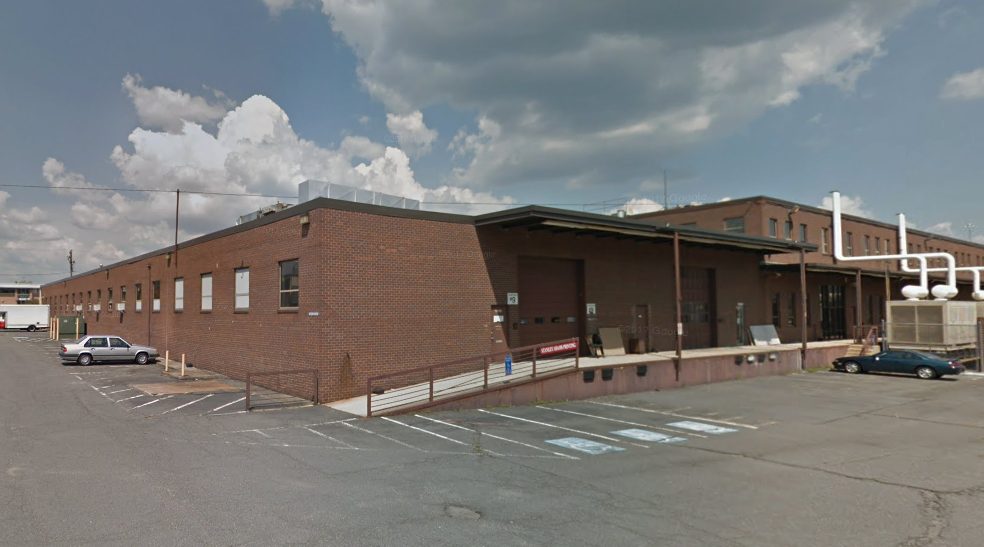
The County Board voted unanimously Friday (Dec. 7) to cancel its contract to spend $4.65 million on a site along the 6700 block of Electronic Drive in Springfield, originally designated as the future home of a “heavy maintenance facility” for Arlington Transit buses.

The county agreed to the land deal in December 2016, over concerns that it wouldn’t have enough space to store and maintain its growing fleet of ART buses. ART currently leases a storage yard in the Alexandria section of Fairfax County for the purpose, but the county managed to open a new maintenance facility in Crystal City last year and buy another property in Nauck for more space this summer.

County board Chair Katie Cristol told ARLnow that the latter purchase is what convinced the Board to abandon its Springfield plans.

Initially, the county planned to use that property, located on the 2600 block of Shirlington Road, as both bus storage and the home of a new ART “operations center.” But Cristol says that, once county engineers got the chance to examine the site more closely, they felt the property would have enough room to accommodate the maintenance functions planned for the Springfield site as well.

“Locating our maintenance operations outside the county was always among the best of no good options as we looked for more space for our buses,” Cristol said. “But once we discovered that the Shirlington Road site was large enough for maintenance as well, colocating things just made so much more sense.”

In all, Cristol expects cancelling the Springfield contract will save the county $10.5 million right off the bat, counting the purchase price and site preparation costs. She also estimates that the change will do away with another $900,000 in annual upkeep costs for the new property, which certainly qualifies as “good news” during the county’s current budget crunch.

County officials had eyed the Shirlington Road site for years before finally buying it for $23.9 million in July. ART once leased a section of the site for bus storage, but made the move to buy the entire property once it earned some state grants and other regional transportation money to defray the cost.

ART already beefed up its fleet of buses with some new purchases this summer, and plans to keep adding vehicles to meet a projected increase in ridership over the next decade or so.

Photo via Google Maps


With Amazon coming to town, Arlington leaders believe the time is ripe to finally change the name of Jefferson Davis Highway — and some of their allies in Richmond are ready to hit the gas on that effort, even as others look to pump the brakes.

Once again, the County Board plans to ask the General Assembly for the authority to remove the former Confederate president’s name from its section of the state-owned Route 1. Alexandria leaders have already taken a similar step, but state lawmakers have repeatedly refused to grant Arlington the permission to make such a change over the years.

But with a socially conscious tech giant planning to set up shop in Crystal City and Pentagon City, the very neighborhoods where signs currently honor Davis’ legacy, the Board hopes skeptical legislators might be a bit easier to convince. Board members held a joint work session with six of the county’s representatives in Richmond Friday (Dec. 7), in order to underscore the importance of the switch ahead of the start of the General Assembly’s session on Jan. 9.

“We should be clear that this is an effort to elevate white supremacy and honor Confederate leaders on our highways,” said Board Vice Chair Christian Dorsey. “A nongovernmental company choosing our area to locate underscores how we should be thinking about things differently.”

While all in attendance could agree that the name of the highway needs to change, preferably to match Alexandria’s newly adopted moniker of “Richmond Highway,” there wasn’t much in the way of consensus on how to achieve that goal.

Some lawmakers urged patience, noting that the upcoming 2019 elections could flip control of both the House of Delegates and the state Senate to Democrats for the first time in nearly two decades — Republicans hold one-seat majorities in both chambers, following last year’s wave election for Democrats in the House.

Until that happens, however, most lawmakers aren’t willing to spend political capital battling on the issue, particularly considering that the upcoming legislative session will last less than a month.

State Sen. Barbara Favola (D-31st District) carried legislation to spur the name change this year, only to see it narrowly die in committee on a party-line vote, and she’s already sworn off interest in renewing that effort. Sen. Adam Ebbin (D-30th District) has backed other such bills in the past, but he expressed similar skepticism about the legislation’s prospects next year.

“The only way I’m putting it in is if we have any hope of passing it,” Ebbin said. “I’m polling some Republicans on the prospect of that… but I’m not introducing it unless can we can get a very narrow bill together.”

Ebbin suggested that the Board might have more success if it secured some allies in the business community for that effort, urging officials to solicit support from groups like the Arlington Chamber of Commerce or the Crystal City Business Improvement District. Representatives from both groups did not immediately respond to requests for comment on whether they’d be interested in supporting such a bill.

Other lawmakers suggested that Amazon itself might provide a powerful push, considering the company’s robust lobbying efforts and its growing importance to the state’s economy. But, after speaking with the company’s representatives about just such a prospect, Ebbin is less than optimistic.

“I don’t think Amazon will be taking active political positions until after things cemented in,” Ebbin said, noting that state lawmakers and local officials still need to formally sign off on Gov. Ralph Northam’s proposed deal with the company. That isn’t set to happen until early next year, meaning that Amazon likely won’t have much of a say in the upcoming legislative session.

Del. Mark Levine (D-45th District) was similarly pessimistic on the prospect of his Republican colleagues taking action on any name change legislation in 2019, but he believes the county shouldn’t wait on Richmond.

He argued that Arlington could act immediately to remove any road signs referencing Davis, even if the county doesn’t formally change the name. After all, Levine pointed out that the highway is known by all manner of other names as it winds its way throughout the state.

“There is zero Virginia law that requires that highway to have those street names,” Levine said. “If the question is: ‘can you change the street signs?’ Of course you can change the street signs. If it has some name in a dusty book somewhere, that’s fine.”

Levine argued that the county should go directly to the Commonwealth Transportation Board, the executive agency overseeing all of Virginia’s road and transit operations, to ask for such a change. He suggested an appeal to Northam, a Democrat, might help that effort, considering that “we have a very friendly governor right now, and we have a much less friendly General Assembly.”

County Board Chair Katie Cristol noted that Arlington officials have had some conversations with the CTB about such a prospect, but have not come away with the clarity that Levine sees in the law. A spokesman for the CTB did not respond to a request for comment on the issue.

Cristol also pointed to an advisory opinion from Attorney General Mark Herring suggesting that the county might not be able to make such a change, which Levine waved away quickly as having “no force of law.”

Still, Dorsey and his colleagues argued that they’d much rather pursue a more cautious path, in order to avoid unnecessarily ruffling feathers in Richmond.

“In the absence of universal certainty, we’re not interested in figuring out what think we can get away with,” Dorsey said. “This is not about if we can somehow figure out if we can do it and somehow not suffer adverse consequences. That’s a risk we’re not willing to take.”


The D.C. region probably won’t see the worst of the snow storm shaping up to our south, but this weekend could still see a few flurries.

It’s set to be sunny yet freezing for most of the weekend, so it’ll certainly feel like winter: with or without the precipitation.

It should make for decent weather, at least, to go check out a new art installation in Crystal City, or any of the other events going on around the county.

Or if you’d rather stay inside and catch up on our most popular stories of the past week, that’s an option too. If you’ve somehow missed the first story on the list, you’ve bypassed one of ARLnow’s most read stories in its roughly nine-year history.

  1. Large Crowd Reported at Clarendon Cheesecake Factory Amid Free Cheesecake Promotion
  2. A-Town Bar and Grill Closing
  3. Clark Street in Crystal City Closed Due to Bomb Threat
  4. ‘Washington-Loving High School’ Proposed As New Name for Washington-Lee
  5. Alleged Underwear Bandit Leads Would-Be Crime Fighter on Brief Chase

Head down to the comments to discuss these stories or anything else local. Have a great weekend!

Flickr pool photo via Erinn Shirley


A new bar and restaurant could be on the way for Ballston Quarter, as businesses in the development slowly start to open to customers.

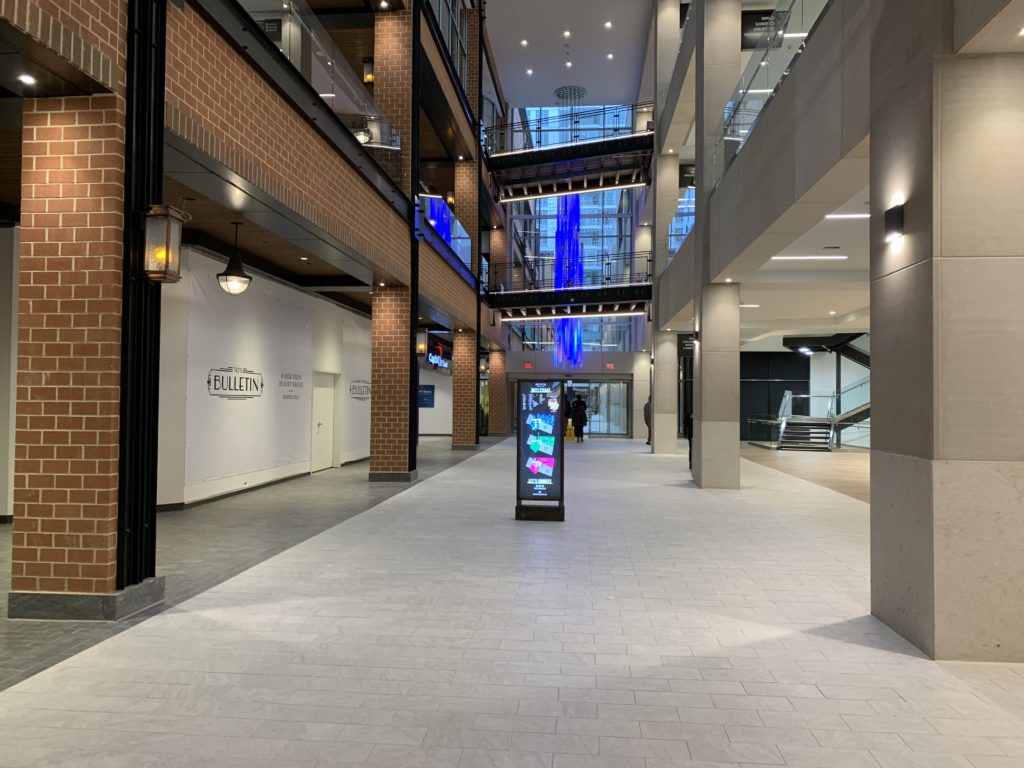
An establishment dubbing itself the “Ballston Service Station” is planning to move into the newly converted Ballston Common mall, according to a permit application.

The restaurant is seeking to serve both wine and beer “on and off premises,” records show, but there aren’t many other details available about the company. However, it does seem to have ties to Andrew Dana, the co-owner of D.C.’s Timber Pizza Company and Call Your Mother Deli — Dana’s phone number is listed as the contact on the Ballston Service Station permit application.

Dana is already planning on bringing a Timber Pizza location to Ballston Quarter, which will be located in the development’s “Quarter Market,” an upscale food court.

It’s unclear if the two restaurants will be connected, however — neither Dana nor a spokeswoman for Forest City, the company backing Ballston Quarter, responded to requests for comment.

Some stores and restaurants in Ballston Quarter have started welcoming their first customers in recent weeks, though the exact timeframe for the rest of the development to open for business remains murky.

The Quarter Market is currently slated to open in February, and Forest City hopes to have everything open by this coming spring.


To combat growing concerns about how Amazon’s new influx of workers might put a strain on Arlington’s congested roads and Metro’s troubled rail system, county leaders are increasingly embracing the same argument — so many people have left Crystal City and Pentagon City over the years that the area’s transit network is ready to welcome new residents.

There’s little doubt that the 25,000 workers Amazon plans to eventually bring to the region will have an impact on commute times for drivers, and crowd more people onto local trains and buses. But Arlington officials stress that they already planned to move plenty of people through and to the newly dubbed “National Landing,” only to see thousands of federal and military employees flee the neighborhood years ago.

That means the area’s trains and buses still have available seats, ready to accommodate Amazon’s new arrivals.

“Transportation system utilization is reflective of building occupancy,” county transportation director Dennis Leach said during a question-and-answer session live streamed on Facebook yesterday (Thursday). “We’re down about 24,000 jobs and we see it on the rail system, we see it on the roads… so we have that capacity, we just have to get people to use [these options].”

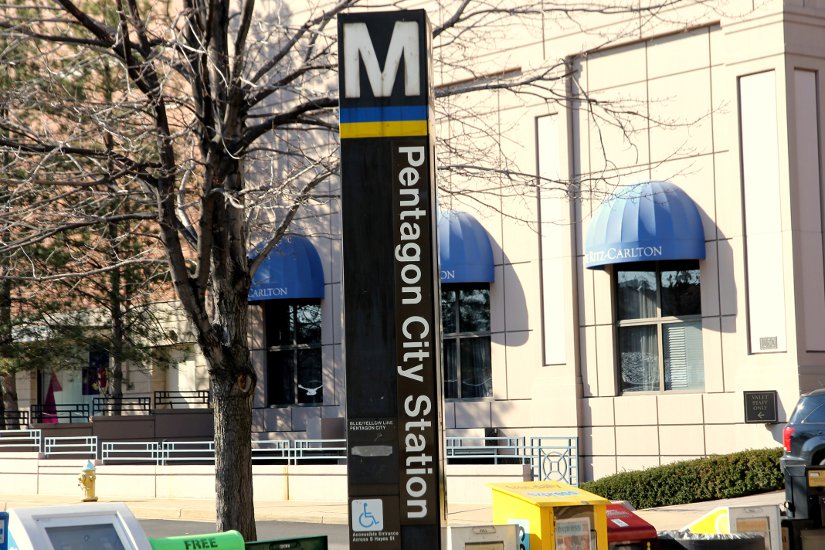
Leach points out that Crystal City has been hardest hit in recent years, particularly by the Base Realignment and Closure process. He noted that he “had to go back to 1986 to find a lower annual passenger count” at the neighborhood’s Metro station; for Pentagon City, he had to go back to 2001.

Similarly, Leach said that traffic volume on Crystal City and Pentagon City roads is “down 20 percent since 2000,” another “reflection of lower employment” in the area. He believes there’s even ample parking available, despite some neighbors’ concerns to the contrary, arguing that the neighborhoods’ “parking assets are incredibly underutilized.”

That being said, Leach admits that the county would much rather see Amazon’s new arrivals using public transit, and the county has some “work to do” in that department. Metro presents a particularly thorny challenge for leaders — even if stations in the “National Landing” area aren’t seeing as many riders as they once did, the rail service is still trying to improve its safety and reliability after years of struggles.

But Lynn Bowersox, Metro’s assistant general manager for customer service, communications and marketing, believes that the agency is moving in the right direction in solving those problems. She’s particularly enthusiastic about General Manager Paul Wiedefeld’s budget proposal for the 2020 fiscal year, which would see Metro return to running nothing but eight-car trains and even expand its “Rush Hour Promise” program to offer more refunds to commuters for lengthy rides.

“I think the capacity is really going to be there as these jobs come to Arlington,” Bowersox said. “Especially with these improvements we have in the pipeline.”

Of course, it’s no guarantee that Wiedefeld will win all those promised changes from Metro’s governing board. The full suite of service improvements Wiedefeld is calling for come with a hefty price tag, and Arlington officials have cautioned that they may not be able to afford everything Wiedefeld is asking for. The new budget could end up costing the county another $8 million per year, a particularly worrying prospect for county leaders, given Arlington’s existing budget pressures.

With or without those enhancements, however, Bowersox is confident that Metro’s safety and reliability improvements will be enough to win Amazon employees over.

“We believe in our reliability and we’re standing behind it,” she said.

Leach is optimistic about as well about the state’s planned investments to help the county build its long-planned second entrance at the Crystal City Metro station, making it even more accessible to both Amazon’s future office space and the rest of the neighborhood. The state will also help Alexandria fund another entrance at the soon-to-be built Potomac Yard station, even though funding concerns initially convinced leaders to cancel the project.

Yet officials also recognize that the area is still not as walkable, or accessible for cyclists, as it could be. That’s due in large part to Route 1, which Leach points out acts as a “divider” between Pentagon City and Crystal City with its large, elevated sections of highway.

The state and county are both planning on spending $250 million on Route 1 improvements, but they haven’t identified the exact source of all that money, or even what the improvements will be. Generally, Leach does hope that the change help “knit the Crystal City and Pentagon City neighborhoods together,” and that will likely mean bringing the highway down to the same grade as the rest of the street network.

Renee Hamilton, deputy administrator for the Virginia Department of Transportation’s Northern Virginia District, said that officials only have a “broad concept” for what those changes will look like, and are still discussing the exact timeline for how the project will move forward. But, like Leach, she does expect that substantial changes are in the offing.

“It’s very difficult to get from one side of Route 1 to another,” Hamilton said. “So we’re going to look at creating a boulevard feel to it, which will likely require us to lower some of the roadways.”


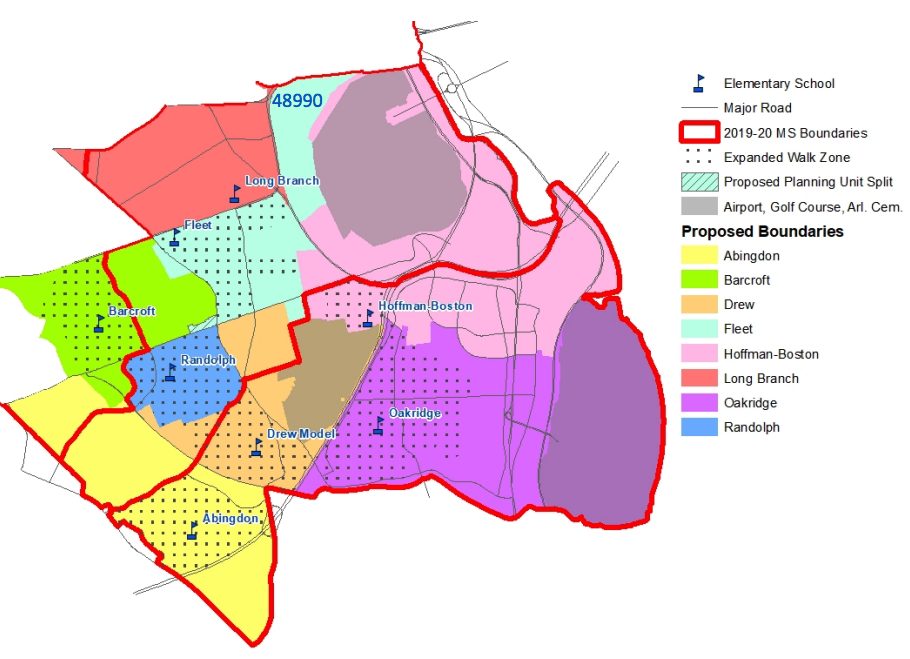
Eight South Arlington elementary schools will soon see changes to their attendance boundaries, now that the School Board has signed off on a final map and put an end to a contentious, messy debate over boundaries that roiled several school communities over the last few months.

The Board voted unanimously last night (Thursday) to approve a boundary map drawn up by school officials just a few days ago, a move that could send as many as 413 elementary students to new schools starting next year.

Arlington Public Schools officials designed the boundary process to meet a series of different concerns. Not only is the school system facing rising enrollment numbers across all of its schools, but officials needed to account for the opening of Alice West Fleet Elementary School next year. The school system is also gearing up to convert Drew Model School into a “neighborhood” school, drawing its attendees primarily from the communities surrounding the Nauck building, and move its Montessori program to the building currently serving as Patrick Henry Elementary.

Accordingly, the process involved drawing new boundaries for both Drew and Fleet, while shifting some students primarily from Oakridge and Long Branch to those schools, as well as Hoffman-Boston.

But APS leaders and Board members have come under fire from virtually all sides as they’ve managed this complex series of moves.

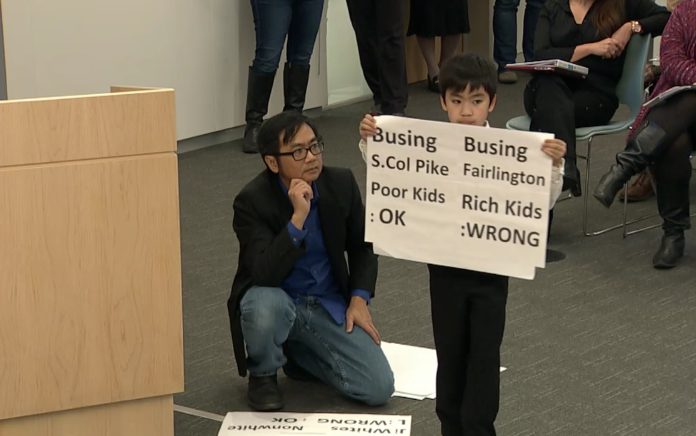
Many parents at Henry felt betrayed by proposals that would send roughly a fifth of the community to Drew instead of Fleet, even though they felt school officials had long promised to avoid such a change. Others at Drew fretted that the boundary changes wouldn’t do enough to even out demographics at each South Arlington school, while Abingdon parents were alarmed by a prior proposal to move some students in Fairlington to Drew instead.

Even still, Board members expressed confidence that the map they’ve approved will best serve the needs of the entire school system, despite the acrimony that marred the process.

“It’s a solution we need to have happen at this point because of our rising enrollment,” said Board Chair Reid Goldstein. “This boundary change is not perfect. No boundary change is perfect.”

Yet plenty of parents arrived at Thursday’s meeting to decry the entire process, with many lamenting that the Board has managed to break their trust that future efforts will be managed competently.

“You’re failing Drew and Fleet,” parent Susan Hampton told the Board. “I don’t know why you’d willfully increase economic segregation… I’ve lost my faith in the process.”

Notably, even some Board members expressed regret that they couldn’t do enough to better spread out students eligible for free and reduced price lunch (a key indicator of their family’s economic means) across the eight schools. While the new map will reduce FRL rates at some schools, Barcroft, Drew and Randolph will all still have at least 50 percent of their student bodies eligible for free and reduced lunch.

“I certainly didn’t meet all the goals we laid out for this,” Goldstein said.

But Board member Monique O’Grady argued that the new map still took major steps toward addressing racial inequality in the county, primarily with how it will transform Drew’s future. She noted that the Nauck community has long hoped for a “single-focus neighborhood school,” though students there have been constantly bused away from the area, dating back to the days of the Jim Crow era.

While some parents at Henry proposed transforming Drew into a countywide “option” program as one way to avoid more boundary changes elsewhere, O’Grady stressed that converting Drew into a pure neighborhood school is the best way to meet the community’s needs.

“Now Drew will follow in the footsteps of Oakridge and Abingdon… which now enjoy huge support from the families they serve,” O’Grady said. “I believe Drew will enjoy similar success.”

Other parents were similarly pleased that the Board’s map will keep the entirety of the Fairlington community together at Abingdon, even though it will leave the school a bit overcrowded for now. The Board chose to leave some schools a bit under-capacity — including Fleet and Drew — to allow for growth over the years, and avoid more boundary changes. Then, it hopes to address any remaining issues in the 2020 boundary drawing process.

“[This map] acknowledges that our neighborhoods continue to fill with elementary-aged children who want to take advantage of our excellent schools, and gives our county and our kids room to grow,” said Claire Rosenberger, an Abingdon parent.

But many remain nervous that the 2020 changes will proceed similarly turbulently, and warned parents to be vigilant moving forward.

“Successful civic engagement does not require that everyone agree with end result, but it does require transparency and accountability,” said Joe Everling, a Henry parent who has been fiercely critical of the Board’s process. “To my utter amazement, that has not happened here… there is no oversight for this board, except for the citizen voter.”


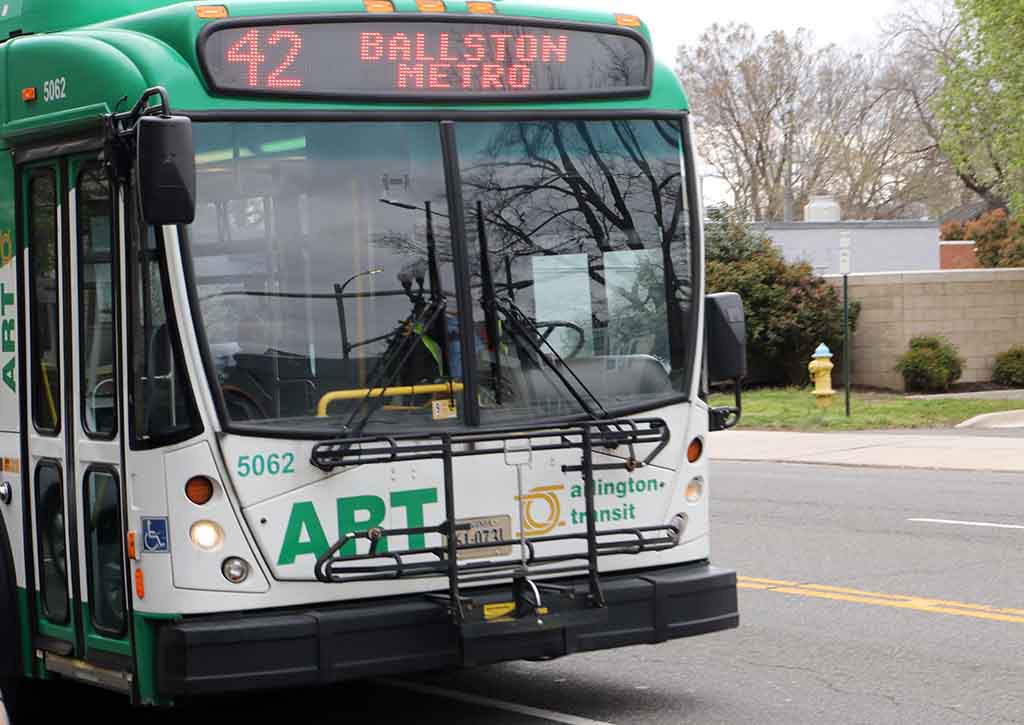
Arlington Transit will start running a new bus route to better connect Ballston and Shirlington later this month.

Starting Dec. 17, the bus service will introduce a “72” route, running from N. Glebe Road’s intersection with Old Dominion Drive in Rock Spring to the intersection of S. Quincy Street and S. Randolph Street near the Village at Shirlington. Buses will run every 20 minutes during rush hours and every 30 minutes the rest of the day, according to ART’s website.

The transit agency first surveyed riders about the new route this fall, and it will use it to run buses through the Ballston Metro station, via both directions of George Mason Drive. ART also plans to run new buses along the route, some of which it acquired this summer.

The new 72 route will involve the creation of a total of eight new bus stops, including:

Northbound Bus Stops

Stop 1 – N. Glebe Road and in front of the Marymount Admissions Building
Stop 2 – N. Glebe Road and 32nd Street N.
Stop 3 – N. Glebe Road and N. Albermarle Street
Stop 4 – N. Glebe Road and N. Abingdon Street

Southbound Bus Stops

Stop 5 – N. Glebe Road and 35th Road N.
Stop 6 – N. Glebe Road and 33rd Road N.
Stop 7 – N. Glebe Road and Rock Spring Road
Stop 8 – N. Glebe Road and Old Dominion Drive

The route will run from 5:58 am to 8:37 pm every weekday.

File photo


View More Stories