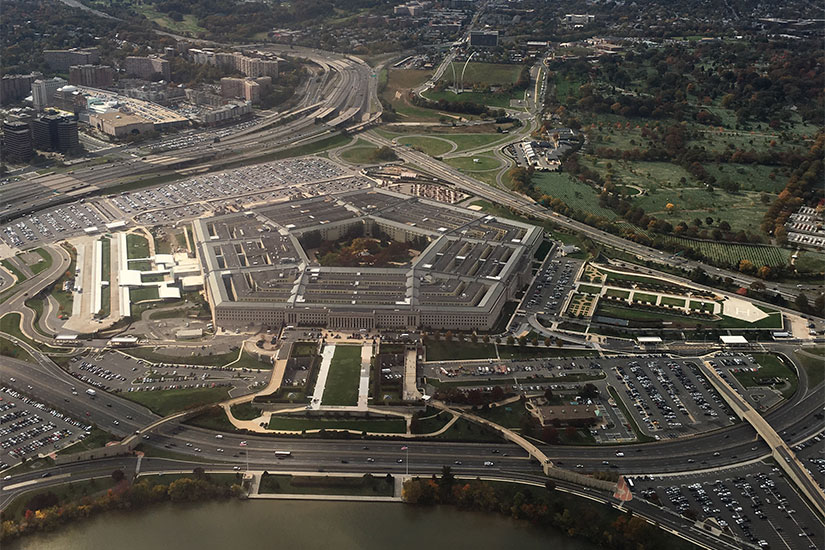
(Updated at 1:50 p.m.) At least two packages in a mail processing center at the Pentagon could contain the deadly poison ricin, according to news reports.

Department of Defense officials have told local and national news outlets that the packages were addressed to Defense Secretary James Mattis and Admiral John Richarson, but never made it inside the Pentagon itself. The mail center is located on the building’s campus, but not inside the Pentagon.

The FBI will take the lead in the investigation, officials told reporters. No word yet on how much of the poison was discovered, or if anyone came in contact with it.

File photo


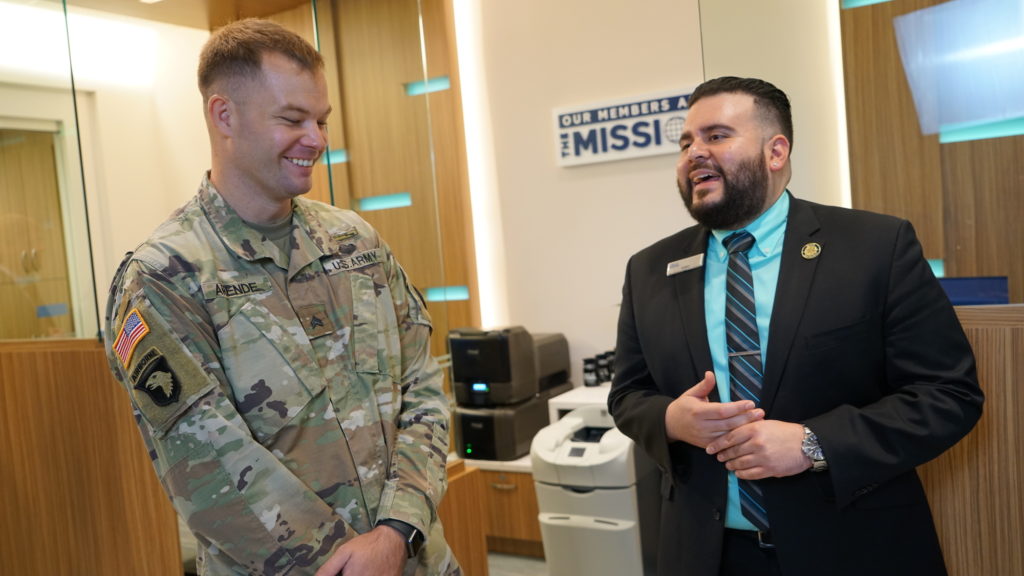
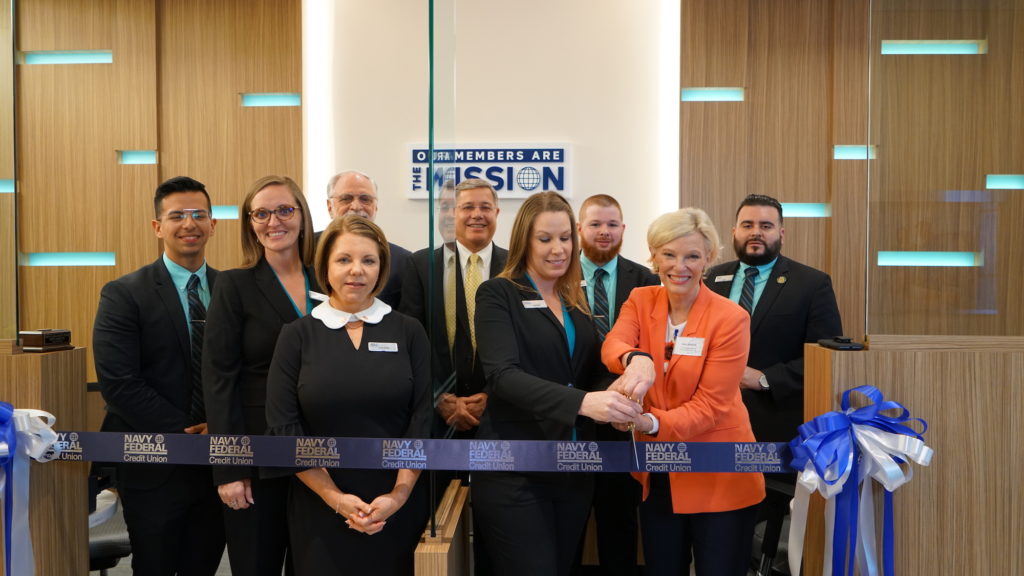
Navy Federal Credit Union has now opened its fourth branch in Arlington.

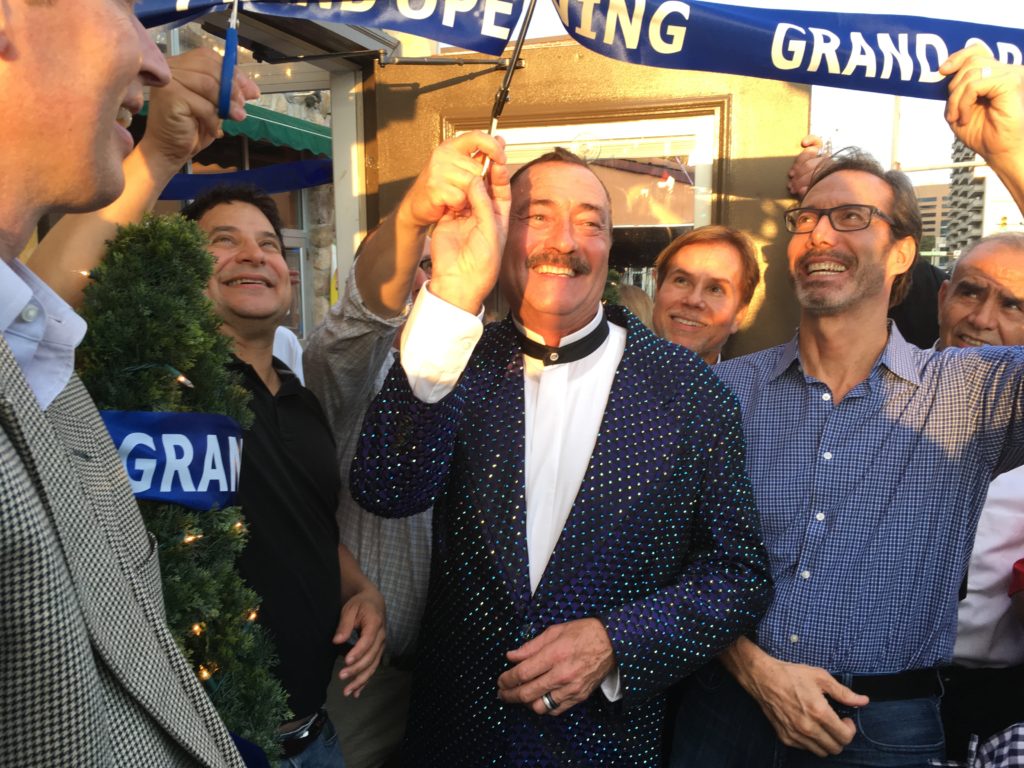
The bank held a grand opening for the new branch, located at 6402 Williamsburg Blvd, on Monday.

The new location is situated in the Williamsburg Shopping Center, near the intersection of N. Sycamore Street and Williamsburg Blvd., which is also home to a CVS and newly rebranded frozen yogurt shop.

Navy Federal primarily caters to active-duty service members, veterans and their families. Other locations around Arlington include one on the grounds of the Pentagon itself, one in Ballston and one in Crystal City.


A new upscale barbershop is on the way for Ballston next year.

Scott Parker, the co-founder of a bevy of businesses throughout Arlington, announced in a Facebook post yesterday (Monday) that he plans to help open “Bearded Goat Barber” in early 2019. He said he hopes the Bearded Goat will be a “premier barbershop specializing in tailored haircuts, hot lather shaves and sculpted beard trims.”

Parker subsequently told ARLnow that the barbershop will be located at 4201 Wilson Blvd, as part of the Ballston Exchange development, the former home of the National Science Foundation.

“We’re really excited to be among all the awesome new tenants that are coming into that project like Shake Shack, Cava, and Philz Coffee, among others,” Parker said.

Parker himself has previously focused primarily on the restaurant business, backing bars like A-Town in Ballston, the G.O.A.T. and Don Tito in Clarendon and Barley Mac in Rosslyn. He’s also recently helped start a new boxing gym, Bash Boxing, with locations set for Rosslyn and Ballston.

But Parker said that he plans to team up with a pair of barbers, Eric Renfro and Jon Dodson, on this latest venture. They previously worked at the Hendricks Barbershop, another high-end barber that opened in Clarendon in 2016.

“Jon and Eric decided to start their own shop, and asked me to be a part of it,” Parker said. “They’re super talented guys with almost 20 years of combined experience in barbering. For them it was a chance to finally realize their dream, and, for me, a great opportunity to work with two very passionate, accomplished people.”

Photo via @beardedgoatbarber


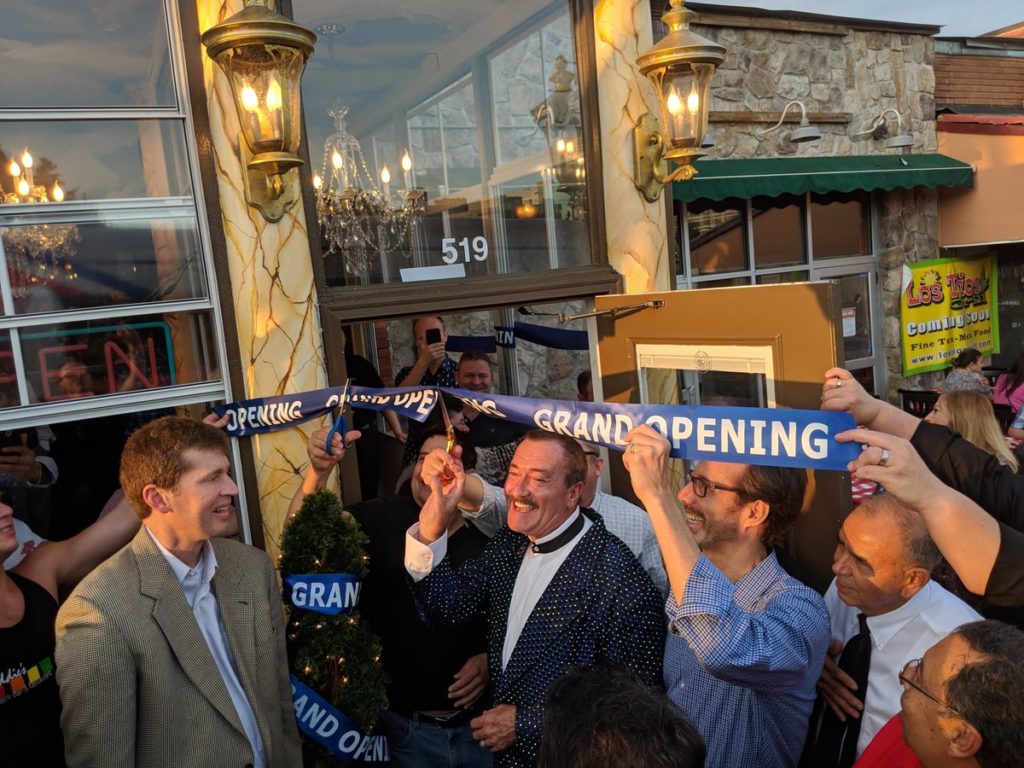
Federico Ristorante Italiano, the spiritual successor to Crystal City’s Cafe Italia, is now open for business.

Co-owner Freddie Lutz, who also runs the eponymous Freddie’s Beach Bar, told ARLnow that the revived restaurant held its grand opening Sunday (Sept. 30).

Lutz worked for decades as a waiter and maitre d’ at Cafe Italia, located at 519 23rd Street S., and worked with a pair of other former employees to bring the eatery back to life after it closed in April. He’d originally planned to dub it “Freddie’s Italian Cafe,” but decided to change the name a bit in deference to its former owners.

Lutz added that the restaurant held a soft opening last Monday, before officially cutting the ribbon on the place Sunday night. Lutz, a longtime South Arlington resident, held an “ice cream social” at his home nearby, then led attendees over to Federico for the big celebration.

“We had a line up the street, it was packed and very festive,” Lutz said.

Lutz said attendees included state lawmakers like state Sens. Adam Ebbin (D-30th District) and Barbara Favola (D-31st District) and Del. Mark Levine (D-45th District), as well as former County Board member Jay Fisette.

Lutz is hoping the new place can capture the spirit of the original restaurant, which was a fixture of the neighborhood since it opened in 1976. Though the eatery fell on some hard times in later years, Lutz expects the restaurant to be packed full of diners for the foreseeable future.

“We’ve got our sea legs and now we’re bracing ourselves for the busy times,” Lutz said.


Arlington may spend slightly more on school construction than some of the county’s peers around the D.C. region, but a long-awaited audit report suggests that the school system has done a decent job holding costs down in recent years.

Prepared by an independent firm for the School Board’s internal auditor and released today (Monday), the new analysis commends Arlington Public Schools for matching other dense urban areas like Alexandria and D.C. when it comes to the cost of new school construction. The audit found that the county does tend to spend more on architectural and engineering work than some of its neighbors, but analysts chalked up that discrepancy to Arlington’s challenges finding space for new schools.

APS has earned plenty of criticism for its spending on construction projects in recent years, particularly after a state analysis showed that the school system spent significantly more on the new Wakefield High School than other counties around the state did on comparable projects. The Board hired an internal auditor, John Mickevice, in 2014 as debate raged across the county about the costs of major construction efforts of all sorts, and he commissioned this review of costs last October.

In general, the audit found that the school system is hardly perfect when it comes to managing big projects — for instance, the analysts note that Arlington’s lengthy public engagement process does inevitably tend to drive costs up — and includes some suggestions about how APS might streamline some of its design and acquisition practices. But it also does not contain any sweeping indictment of the school system’s methods, finding that Arlington has often paid less per seat for its elementary and high schools than its neighbors.

“Even with our challenges, this shows we’re still in the ballpark with everyone else,” School Board member Barbara Kanninen, the chair of the Board’s audit committee, told ARLnow. “This idea that somehow we’re too extravagant is simply not confirmed… and it is a little bit validating.”

In all, the audit found that the county’s high schools cost less to build than nine of the 14 other schools around the region that analysts examined. The firm, Bethesda-based O’Connor Construction Management, primarily focused on schools in Loudoun County, Fairfax County, D.C., Alexandria and Montgomery County, Maryland.

For instance, the group found that the new Wakefield High School, opened in 2013, cost a total of $118.6 million, or about $60,500 per seat. Meanwhile, the new Wilson building (set to open next year and house the H-B Woodlawn and Stratford programs) will cost around $101 million, or $130,300 per seat.

For comparison, similarly sized high schools in D.C. ranged in cost from $129,000 per seat to $248,000 per seat. High schools in Montgomery County ranged from costs close to $51,900 per seat to $76,500 per seat, while Loudoun’s cost hovered between $51,800 and $59,800 per seat.

Fairfax County had the lowest costs of the bunch, with prices ranging from $33,100 per seat to $40,400 for new high schools.

The audit found similar trends in elementary school construction costs.

Arlington paid about $64,000 per seat at the new Discovery Elementary School, and is set to finish the new Alice West Fleet Elementary at a cost of $62,500 per seat. D.C. schools ranged in cost from $100,000 to $124,000 per seat, while Montgomery came in at $41,400 to $65,100 per seat. Loudoun’s schools ranged from $27,900 to $34,300 per seat.

But the analysts noted that Fairfax, Loudoun and Montgomery all benefited from working with considerably more open space than similar projects in Arlington or D.C. Not only has that forced the county to pay significantly more to build underground parking structures at some schools, but APS can’t simply replicate the same school designs at each site.

“APS does not have the luxury of developing uniform design specifications, due to the dense urban location of its schools,” the analysts wrote. “Thus, each school is designed to meet the particular needs of the community’s students.”

As Kanninen puts it, the school system can’t simply take a design “off the shelf” and use it over again the exact same way — the audit estimates the additional design work can bump up the costs of Arlington’s projects by as much as 1.5 percent of the total construction cost, compared to the county’s neighbors.

That being said, the analysts found that “the increased staff involvement — in time and resources — during the community engagement process” does also tend to edge the county’s costs a bit higher. But they also awarded APS high marks for its energy efficiency standards, which should help generate savings in the long term.

The report recommends a whole host of new contracting practices for APS to adopt, and suggests that the school system tweak some of its methods for buying things like school furniture.

Kanninen says the Board plans to take a close look at all of those recommendations, particularly one suggesting that APS emphasize “value engineering” throughout the design process to keep costs down. She added that the Board specifically asked the analysts to include those recommendations for changes in the report, which delayed its release slightly.

School leaders had initially hoped to have the audit in hand this summer, prompting some grumbling about the report’s delay, but Kanninen wants to assure the community that were no ulterior motives at play.

“People think we were trying to figure out how to pitch this story, but that was not the case at all,” Kanninen said.

Kanninen, the Board’s lone member up for re-election this year, said she is acutely aware that the subject of school costs has become a hot-button political issue. Even though she expects the report won’t quiet all the school system’s critics, she hopes it reassures taxpayers that their money is being well spent.

“There are always going to be people who believe we’re spending too much… but I think it’s going to lend some confidence to the community that we’re spending wisely,” Kanninen said. “The School Board took this proactive step to look into this and it’s a positive thing. There’s a lot to be proud of here.”

Now, county and school leaders are trying to schedule a joint meeting of their respective audit committees to discuss the report in more detail, according to County Board member John Vihstadt. As co-chair of the county’s audit committee, he hopes to use that gathering to gain “a collective understanding of the audit findings and look to collaborative next steps to address them.”

Photo via Arlington Public Schools


A new group set to study potential reforms for the county’s “Neighborhood Conservation” program will soon start its work, with the broad goal of evaluating the program’s efficacy after it endured some deep cuts this year.

The county is now recruiting members for a working group on the subject, after staff sketched out their plans for the new committee to the County Board last Tuesday (Sept. 25).

The program, which lets communities lobby for money to complete modest improvement projects like new sidewalks or landscaping, has earned its fair share of critics over the years. Projects funded through the program have often been plagued by cost overruns, and the pace of its evaluation process has slowed dramatically, leading to some calls to end the program in its entirety.

The Board even slashed $23 million from its budget when setting a new Capital Improvement Plan in July, in order to cope with an increasingly challenging budget picture. The program’s supporters argued that amounted to effectively killing Neighborhood Conservation by starving it of funding.

But, in a concession to its backers, the Board also agreed to a year-long study of how the program is working to see how it might be reformed or otherwise reconstituted.

A draft charge for the working group presented to the Board calls for it to examine a variety of questions, with one more important than most: “are the goals and objectives of the NC program still valid in today’s environment, and are they being achieved?”

County Manager Mark Schwartz is planning on appointing one community member and a staffer from the county’s planning department to co-chair the group. Then, the rest of the group will include members from the following:

  • Neighborhood Conservation Advisory Committees
  • Parks and Recreation Commission
  • Transportation Commission
  • Neighborhood Complete Streets Commission
  • Environment and Energy Conservation Commission
  • Civic Federation
  • Planning Commission
  • Department of Community Planning, Housing and Development, Neighborhood Conservation team
  • Department of Environmental Services, engineering bureau
  • Department of Parks and Recreation, park development team

The group will also include two “at-large” members from the community.

The new group’s charge also calls for it to examine the cause of “unanticipated cost increases” for Neighborhood Conservation projects, which are often triggered by “unforeseen needs to address failing infrastructure incidental to the scope and implementation” of the projects.

The committee is also set to study whether the program’s funding is distributed “equitably” to projects around the county. A frequent criticism leveled at the program is that wealthier, older communities tended to benefit the most, as the process of lobbying for a project’s inclusion in the program could be quite time consuming, and most accessible to people already highly involved in civic life.

“Some parts of the county are way more involved and they communicate a lot more readily than others,” Board member Libby Garvey said. “There are a lot of voices we don’t hear, and they might live in communities that have a real need, but we don’t hear from them for a variety of reasons.”

That’s why county planner Anthony Fusarelli assured the Board that “we want to make sure the perspectives brought to bear in this effort are diverse and capture those viewpoints.”

Fusarelli added that the group will likely begin meeting by December, with plans to deliver a final report to the Board in the fall or winter of 2019.

As for projects already in the queue for Neighborhood Conservation funding, Schwartz says the county fully plans to move ahead in working on those in the meantime.

“We’ll reassess that, probably about a year from now, to see if adjustments need to be made,” Schwartz said.

File photo


An employee of an Arlington car wash is now behind bars after police say he stole and then drunkenly crashed a customer’s vehicle.

County police believe 61-year-old Rigoberto Folgar Hernandez was sent home Friday afternoon (Sept. 28) after showing up to work drunk at a car wash along the 4100 block of S. Four Mile Run Drive.

But Hernandez returned to the business a short time later, when he “drove a customer’s vehicle off the property, went over a median and struck a concrete piling and a parked vehicle,” police say.

Hernandez then exited the vehicle and went back to the car wash, where he was arrested shortly afterward. He’s now facing charges of grand larceny: motor vehicle theft, destruction of property, hit and run, and drunk in public.

Hernandez is set for a hearing on those charges in Arlington General District Court on Nov. 20, and is being held without bond.

Full details from a county crime report:

GRAND LARCENY (Significant), 4100 block of S. Four Mile Run Drive. At approximately 11:34 a.m. on September 28, police were dispatched to the report of a hit and run. Upon arrival, it was determined the suspect had been sent home from his employment at a car wash due to showing signs of intoxication. The suspect returned to the car wash and, shortly after, drove a customer’s vehicle off the property, went over a median and struck a concrete piling and a parked vehicle. The suspect then exited the vehicle and fled the scene on foot back to the car wash. Rigoberto Folgar Hernandez, 61, of Arlington, Va., was arrested and charged with Grand Larceny: Motor Vehicle Theft, Destruction of Property, Hit and Run, and Drunk in Public. He was held on no bond.


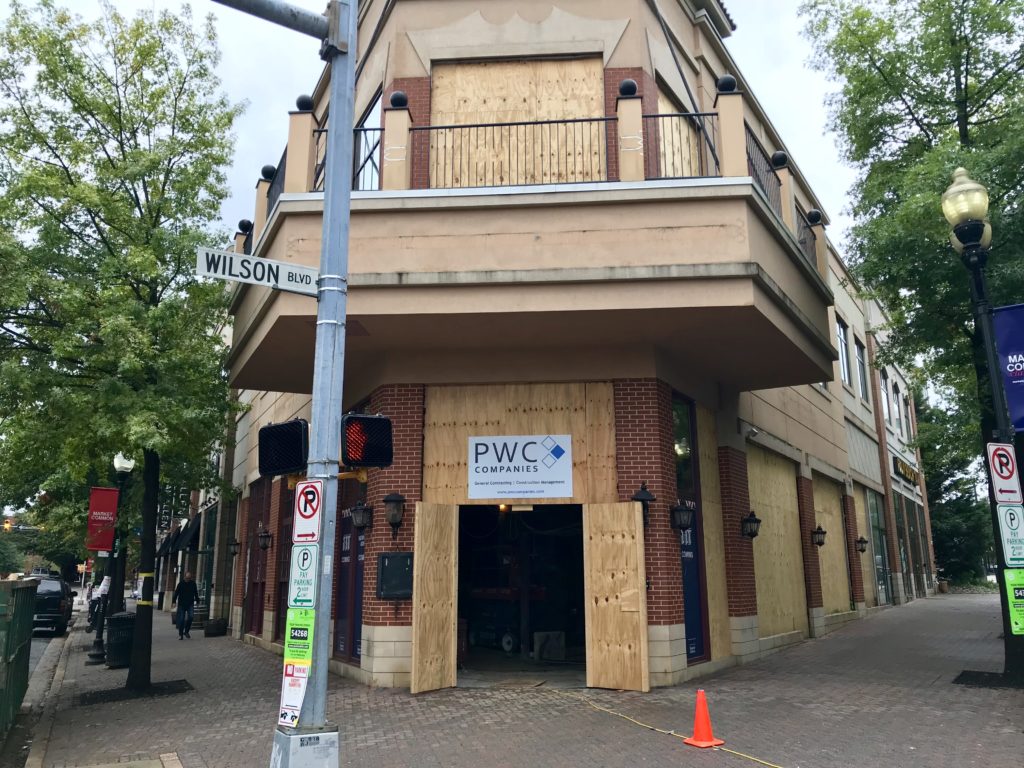
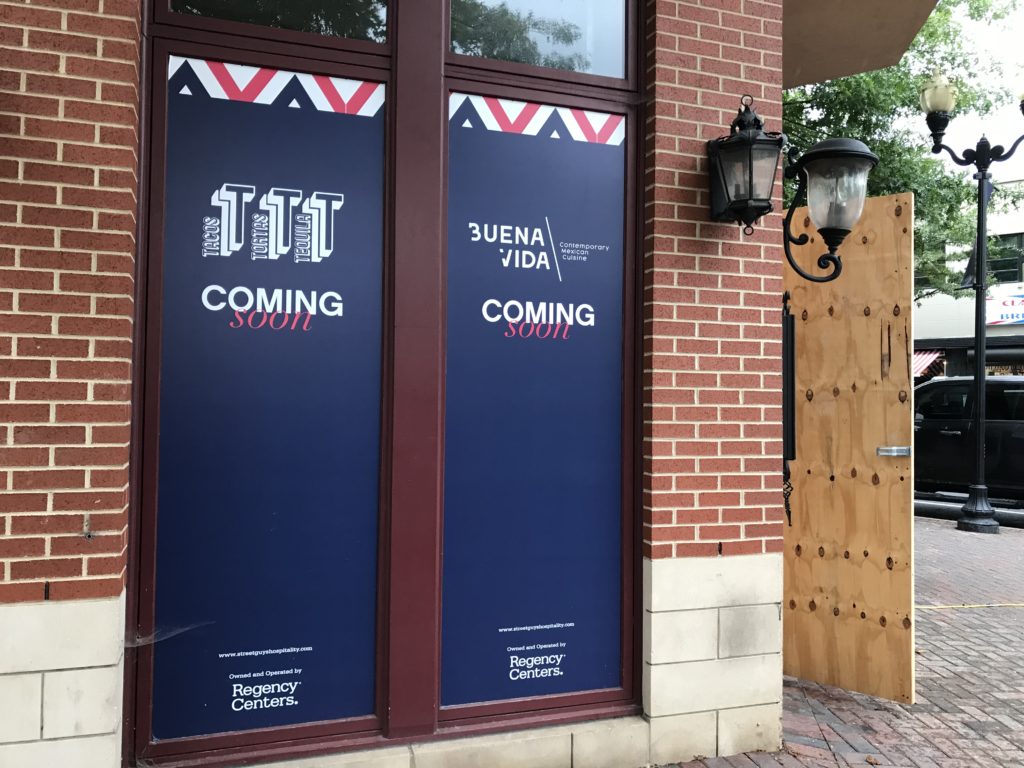
Work is picking up steam on the trio of new restaurants moving into the space once occupied by La Tasca in Clarendon, with its owner targeting a partial opening a few months from now.

Street Guys Hospitality, the group backing Clarendon’s Ambar and Baba, is now hard at work on construction for the new eateries: Tacos, Tortas and Tequila on the first floor, Buena Vida on the second and a rooftop bar to cap things off. The group opened the former two Mexican eateries in Bethesda earlier this year.

Lindley Richardson, a spokeswoman for Street Guys, told ARLnow that owner Ivan Iricanin is targeting February 2019 for TTT and Buena Vida’s grand opening.

She added that the rooftop space will open “at a later date,” noting that it currently does not have a name — Iricanin previously told other media outlets that it would be dubbed “Up.”

Meanwhile, county permit records show that Iricanin’s company won county permission for some interior demolition work on all three floors of the building in August, with work continuing in the weeks since. Iricanin also plans to bring a new Ambar location to Northwest D.C. next year, his second in the city.

La Tasca closed back in March, after spending roughly 14 years serving Clarendon diners.


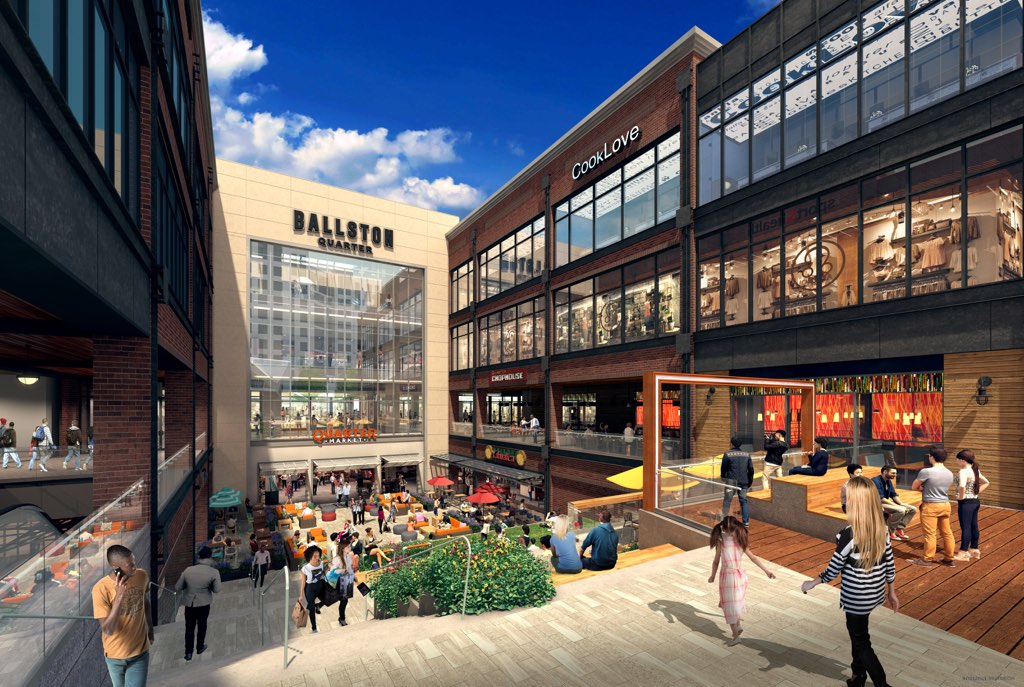
Ballston Quarter is now set to feature a full complement of restaurants with outdoor patios in the new development’s plaza, despite some reticence from Arlington planning staff.

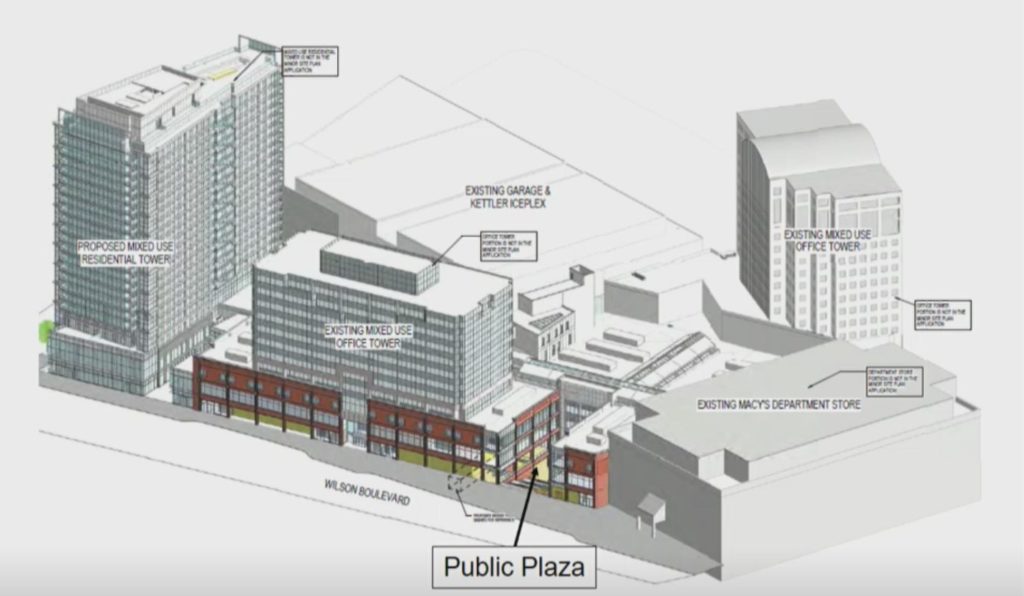
The newly renovated Ballston Common mall now has the county’s go-ahead to welcome six restaurants with outdoor seating areas to its west plaza, along Wilson Blvd, after the County Board unanimously approved some permit changes at a meeting last Tuesday (Sept. 25).

The following restaurants will now be able to welcome outdoor diners to the plaza:

The decision to allow the full range of patios, however, ran counter to the recommendation of county staff. They raised concerns that one set of outdoor seating, located to the left of plaza when seen from Wilson Blvd, would be particularly disruptive to people walking through the development.

“It’s essentially a further privatization of the public space in the public plaza,” Adam Watson, a staffer in the county’s planning division, told the Board. “It obstructs public access and circulation.”

Evan Pritchard, an attorney for Ballston Quarter developer Forest City, argued that the full range of outdoor seating is a “key ingredient of the plaza area” and dismissed concerns that it would somehow impede the flow of pedestrians through the development.

“Most people heading to Ballston Quarter will never encounter the plaza unless they want to,” Pritchard said, pointing out that most visitors will access the development either via a pedestrian bridge connecting to the area’s Metro station or through the mall’s entrances on Wilson Blvd and N. Glebe Road.

The plaza itself is designed for outdoor events, and will connect to the development’s new “food hall,” Pritchard added.

Board members were persuaded by that line of thinking, with John Vihstadt observing that “the plaza is a destination, not a conduit.”

“A destination is most attractive when it’s busy and energized, not empty and desolate,” Vihstadt said.

County staff compared Ballston Quarter’s plaza to Rosslyn’s Central Place, just across from the area’s Metro station, which is a heavily trafficked open space between several large skyscrapers. But Board member Erik Gutshall didn’t view that as an apt comparison, arguing that the plaza is “not a streetscape where we’re trying to manage competing needs” as it won’t sit on Wilson Blvd itself.

“I have confidence that Forest City will be able to manage this place to everyone’s benefit,” Gutshall said.

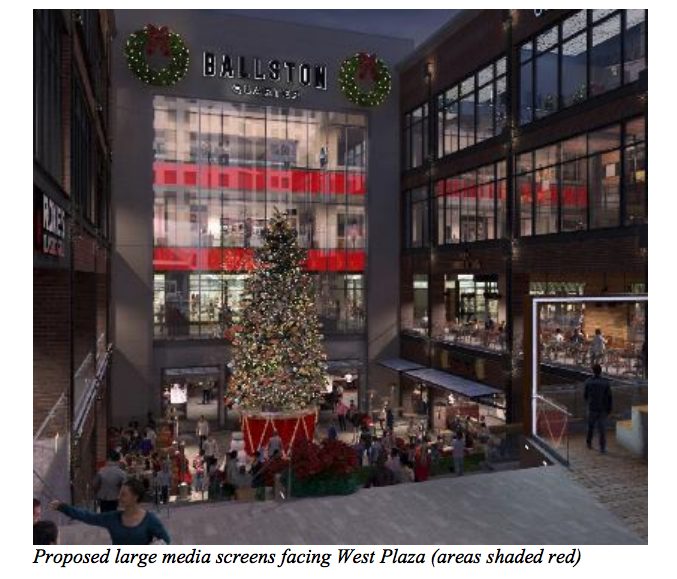
The Board also laid the groundwork for approving another change to the plaza sought by the developer: the addition of two large LED “media screens” above the plaza.

Forest City initially planned to withdraw its request for a permit for the screens, after Pritchard discovered that they might be a bit too far off the ground to meet the county’s zoning rules. Instead, the Board pushed off consideration of the matter until December, giving members time to tweak the ordinance and allow the new screens to move forward.

Ballston Quarter is currently slated to open in late October, after a brief delay, though Forest City expects its restaurants and retailers to open on a rolling basis over the coming months.


At long last, Mother Nature is ready to let up a bit and offer Arlington its first pleasant weekend of the fall.

After a dreary week of rain, the forecast is looking quite promising indeed over the next few days — and that should be quite good news for bars and restaurants hurting from the past few weeks of wet weather.

Fortuitously, there are also plenty of outdoor events planned for this weekend around the county, from the Crystal City Oktoberfest to South Arlington’s ValleyFest. Check out our events calendar for a full look at what’s going on around Arlington.

And if you’re a bit behind on your reading, catch up on our most popular stories from the past week:

  1. Armed Robbers Invade Country Club Hills House
  2. Police: Woman Raped at Columbia Pike Apartment Building
  3. Original Bob and Edith’s Diner on Columbia Pike Listed for Sale
  4. Arlington Cyclist Killed in D.C.
  5. ACPD Arrests Nauck Shooting Suspects

Head down to the comments to discuss those stories, your weekend plans or anything else local.

Flickr pool photo via Michael Coffman


(Update at 4:25 p.m.) After this article was published, Carol Fuller, president of the Crystal City Civic Association, reached out with some clarity on the origin of the street art:

The art projects are the work of JBG Smith, the major developer in Crystal and Pentagon Cities.  They have so many projects in the works, including PenPlace where the bikes are now located on the wall, that they wanted to “beautify” the project areas. They did this as a “small mini intervention” project to link Pentagon and Crystal Cities and create some “buzz” for their development projects in an interesting and more attractive way. The work was done by Ground Swell, a company of architects, landscapers, and artists from Philadelphia.

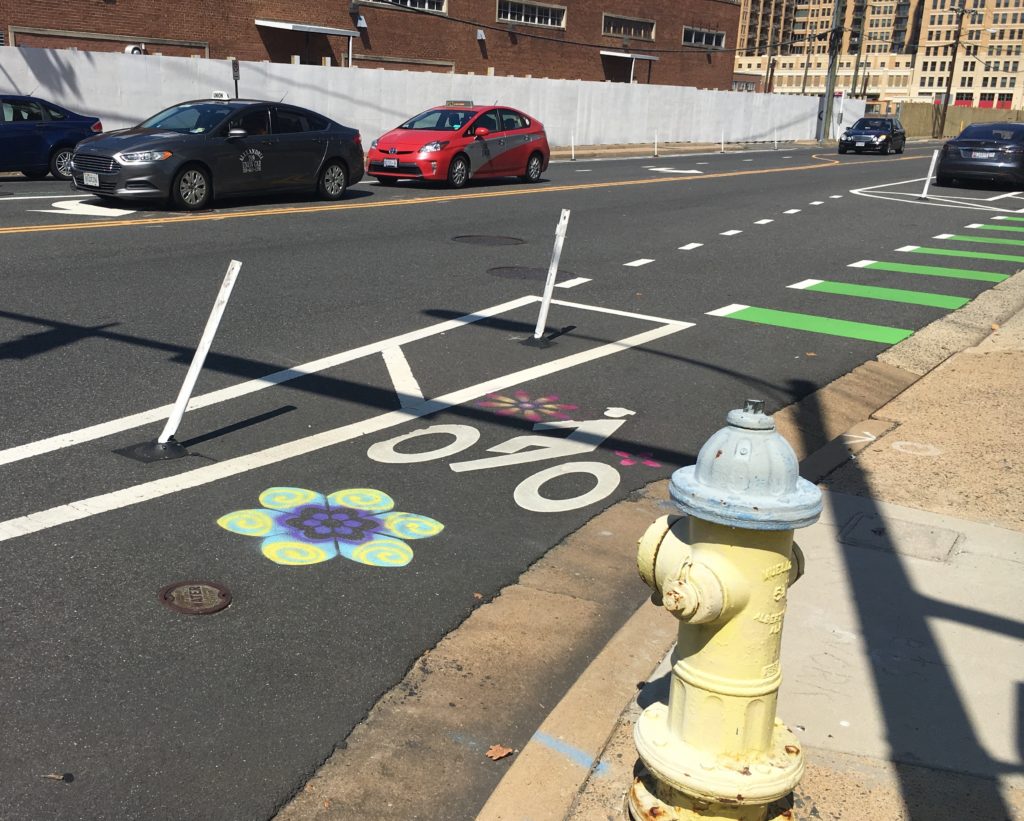
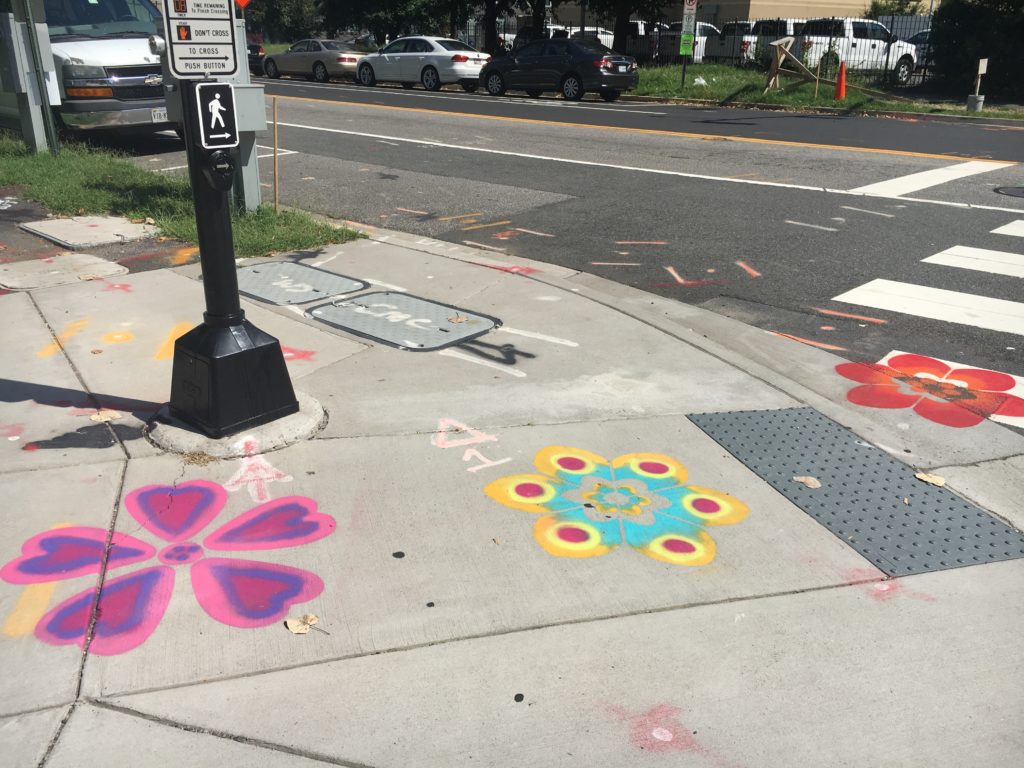
The mysterious street art cropping up around Pentagon City and Crystal City seems to be evolving.

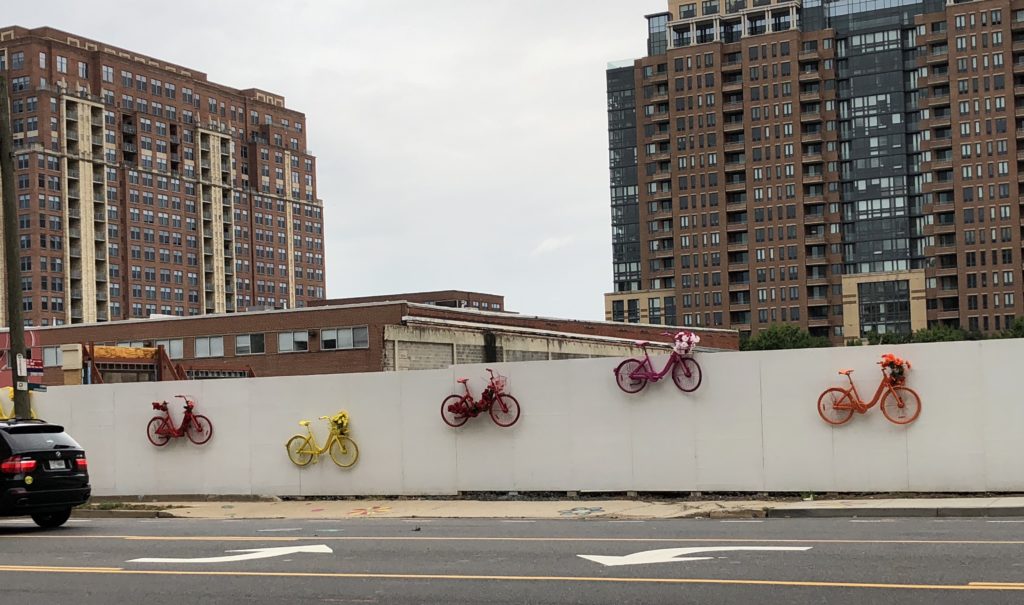
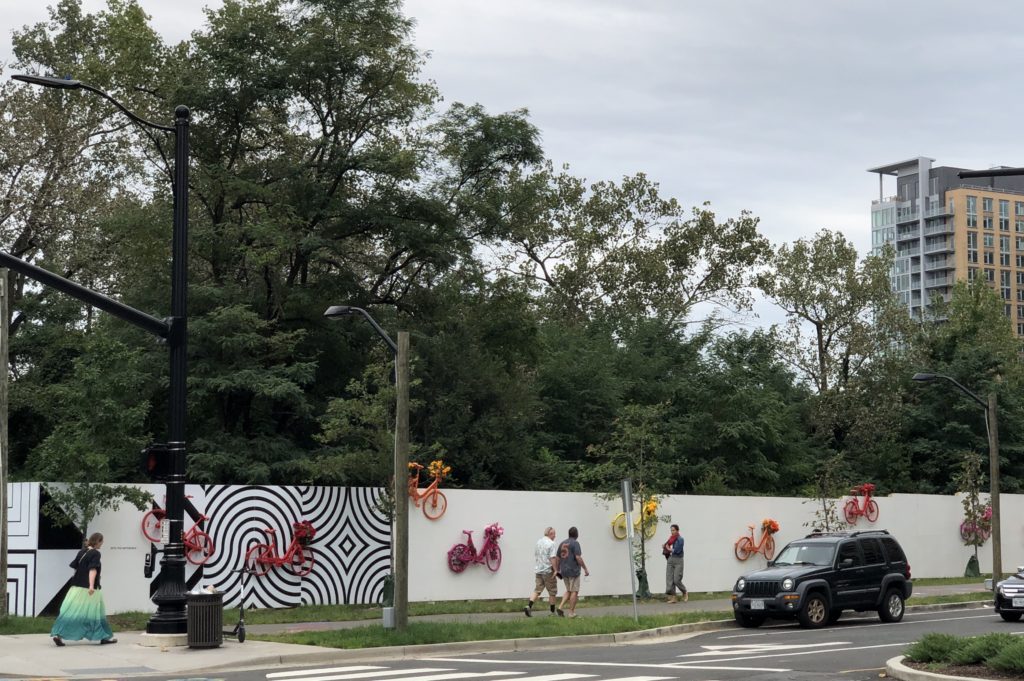
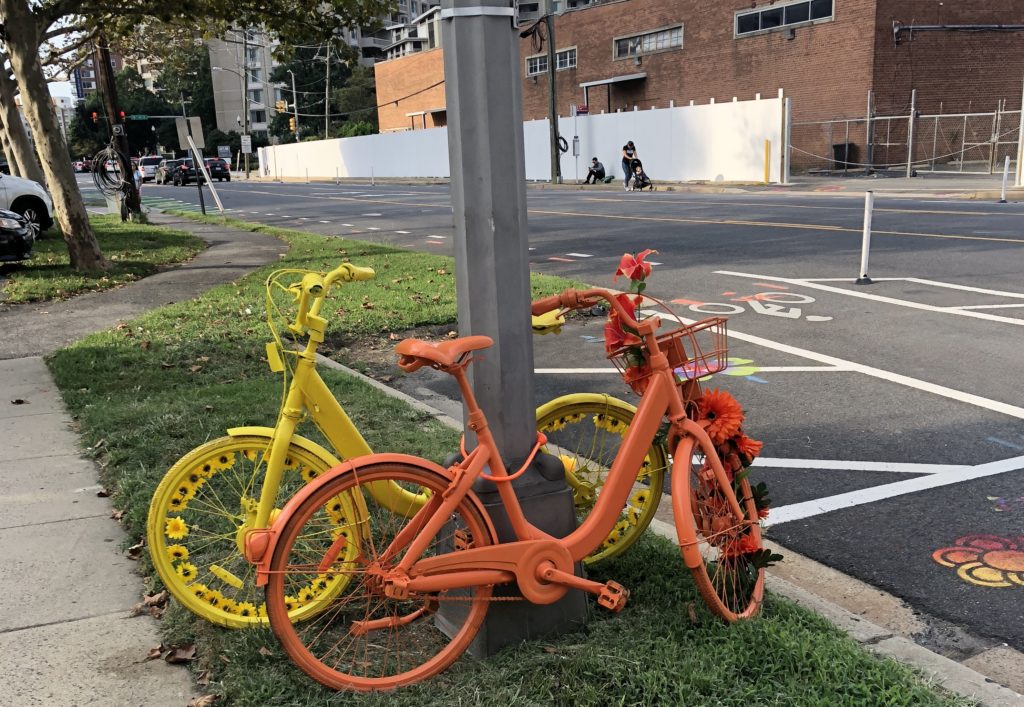
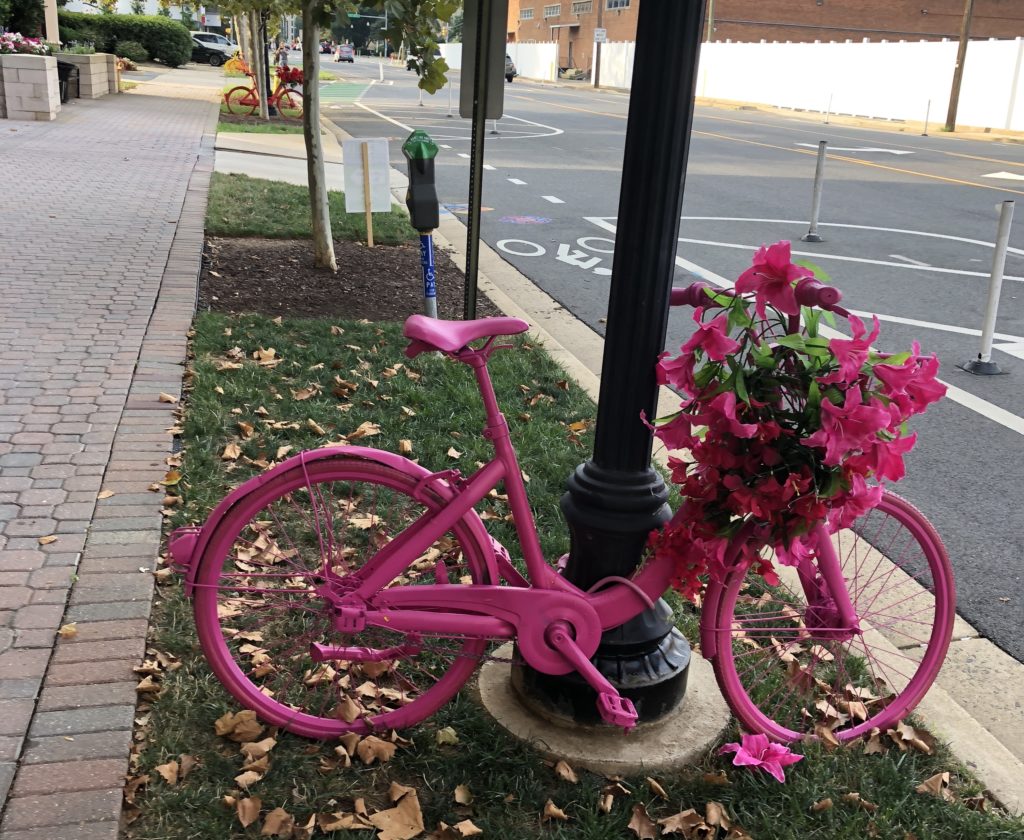
Readers first alerted to ARLnow to a series of spray-painted flowers popping up all along 12th Street S. and S. Eads Street earlier this month. Several colorful bikes adorned with flowers appeared on street corners soon afterward, though no one in the county government or local business community had any idea who was responsible for the art.

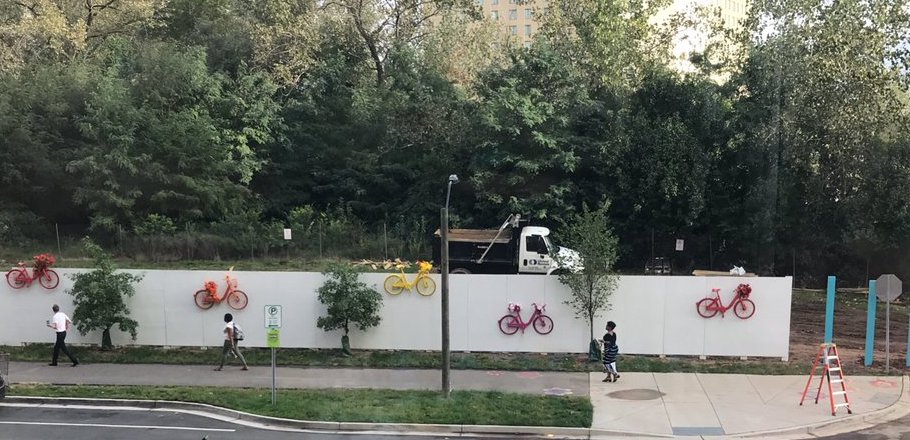
This week, the bikes remain, but have migrated slightly. Many are now mounted on the wall of a bike and pedestrian trail running along 12th Street S., between S. Fern Street and S. Eads Street, not far from the Pentagon City Metro station. Others are affixed to walls alongside S. Eads Street itself.

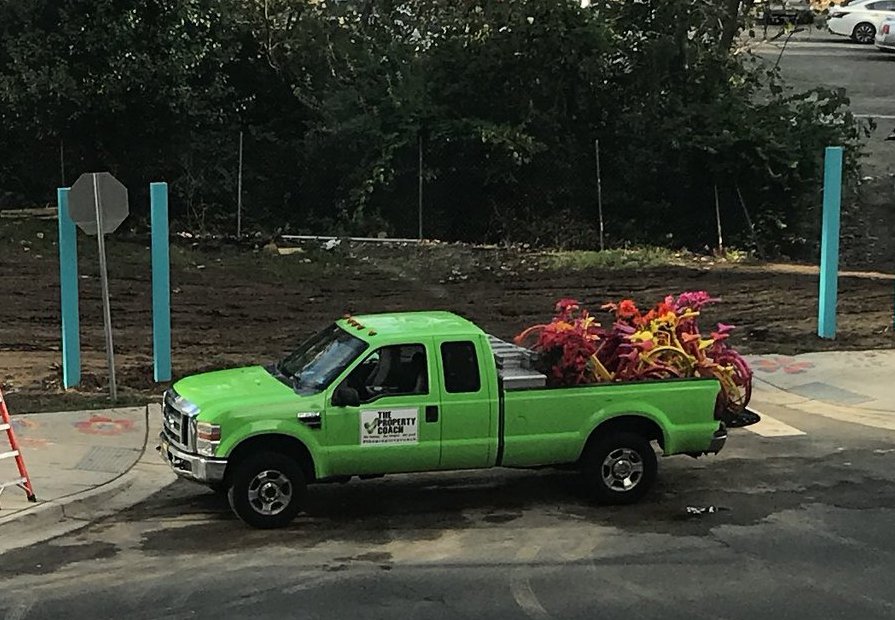
Some readers say they’ve spotted a pick-up truck full of workers dropping off the bikes, though it remains unclear who is backing the public art effort. Reader Christine Brown was able to snap a picture of the truck, which is labeled “The Property Coach.”

State records show no indication of any business with such a name, and an internet search was fruitless as well.

https://twitter.com/cmoye/status/1044928343374798849


View More Stories