
Ask Eli banner

This regularly-scheduled sponsored Q&A column is written by Eli Tucker, Arlington-based Realtor and Rosslyn resident. Please submit your questions to him via email for response in future columns. Enjoy!

Question: Can you explain the difference between settlement and ratification?

Is there another metro area with more “industry languages” than D.C.? Between consultants, lawyers, and politicians, you can sit next to somebody at a quiet bar, who’s speaking perfectly clear English, and not understand a word. Realtors are just as guilty of rattling off terms and acronyms in the course of conversation, so here’s a quick glossary of common terms that I’m frequently asked to define.

  1. Ratification: Occurs when both parties (buyer and seller) have agreed to the deal and the contract has been signed/initialed by both parties without any additional changes.
  2. Settlement: This is the date that the home is actually purchased by the buyer. Also known as “closing.”
  3. Underwriting: The final approval process for a loan. The underwriter reviews the entire loan application package and issues an approval or notifies the buyer of any conditions that must be met in order to secure a loan.
  4. EMD: Earnest Money Deposit. A negotiable sum of money deposited by the buyer into an escrow account after the contract is finalized, usually within 3-5 days and 2-3% of the sales price. If the buyer walks away from the deal outside of legal means/contingencies, the seller can keep the entire sum of money as damages.
  5. Contingency: A term within a sales contract that gives the buyer or seller the right to void a contract, without penalty, if certain criteria are/are not met. A common contingency is a Home Inspection. The buyer is given the right to an inspection and if the buyer and seller cannot agree on corrective action requested by the buyer, the buyer has the right to void the contract, within a pre-determined period of time (usually 5-10 days after ratification).
  6. FSBO: For Sale By Owner. When a homeowner decides to do something crazy and sell his/her home without an agent J
  7. ARM: Adjustable Rate Mortgage. A loan with a fixed interest rate for a specific period of time (usually 5, 7, or 10 years) that can adjust to a different rate, based on market rates when the fixed period ends. It’s well established that these loans led to the housing crash 10 years ago, which led to the Great Recession, and ARMs got a very bad name in the process. However, they can be a great product for many buyers because they offer lower rates than a 30-year fixed (most common loan product) and most homeowners will sell their home before the time the rate can adjust.
  8. PITI: Principal, Interest, Taxes, and Insurance. The total monthly fixed payments for a homeowner. PITI is commonly used to determine the daily rent-back rate for a Post-Settlement Occupancy Agreement (seller remains in the home for a specified period of time after settlement).
  9. 1031: A 1031 Exchange allows a homeowner to defer capital gains tax charges from a home sale by using the proceeds of the sale towards the purchase of another home. You must meet certain requirements like identifying the home to purchase within 45 days and settling within 180 days, from the date of the previous home sale. As with all tax-related transactions, it’s advisable to consultant an accountant beforehand.

Let me know if there are any other terms you’ve heard thrown around by agents that you aren’t clear on. I’m happy to write a second column with more terms.

If you’d like a question answered in my weekly column, please send an email to [email protected]. To read any of my older posts, visit the blog section of my website at http://www.RealtyDCMetro.com.

Eli Tucker is a licensed Realtor in Virginia, Washington DC, and Maryland with Real Living At Home, 2420 Wilson Blvd #101 Arlington, VA 22201, (202) 518-8781.



Eclectic displays of original art, a vast array of styles and media, and the finest artists in the country will be featured during the 4th Annual Arlington Festival of the Arts April 16th and 17th. Produced by Howard Alan Events and hosted by the Clarendon Alliance, this two-day outdoor-juried art show is an ideal opportunity for art enthusiasts to explore the work of many different artists in one setting.

“We are excited to return to Clarendon,” says festival promoter Howard Alan. “The community here is supportive of the arts and truly appreciates and recognizes quality work.”

Bold and vibrant paintings, contemporary and whimsical art, life-size sculptures, photography and jewelry as well as functional art and unique gift items, all with broad appeal, will be on display and for sale. Prices will be set to suit all budgets and range from as little as $25 to $30,000.

“This event is a wonderful celebration of the arts,” affirms Alan. “It is very much like an outdoor art gallery, perfect for art enthusiasts and collectors interested in new quality investments by emerging artists as well as the casual shopper looking for unique gift items. We showcase the nation’s top artists and exceptional local talent with their finest works of art that will appeal to people of all ages as well as collectors with varied interests and budgets.”

The artists are juried by an independent panel of expert judges and hand-selected from hundreds of applicants based on quality and diversity. “Our goal is to provide a unique experience where festival goers can take in the sights, sounds and colors of a first-rate festival with a wide variety of art on display, while interacting with the artists,” assures Alan. “It is a terrific opportunity to explore the works of many different artists and discuss their inspiration and creative process before making an investment.” The exhibitors, present for the duration of the show, will set up their displays along Washington Boulevard.

Howard Alan Events develops and produces some of the nation’s finest juried art shows in more than 40 venues each year, many are ranked among the top 100 art fairs in the country by Sunshine Artist magazine. These shows, which attract locals and tourists alike, include the Alexandria King Street Art Festival (Alexandria, VA), the Downtown Aspen Art Festival (Aspen, CO), the Beaver Creek Art Festival (Beaver Creek, CO), and the Las Olas Art Fairs, (Fort Lauderdale, FL).

The 4th Annual Arlington Festival of the Arts runs Saturday and Sunday, April 16 – 17, from 10:00 am to 5:00 pm each day, admission is free. The art show will take place in Clarendon on North Highland Street. For additional information about this event and other Howard Alan Events shows across the country, visit www.artfestival.com or call 561-746-6615.

The preceding post was written and sponsored by Howard Alan Events.


Just Listed banner

Just Listed highlights Arlington properties that just came on the market within the past week. This feature is written and sponsored by Team Cathell, “Your Orange Line Specialists.”

Here are this week’s just listed properties in Arlington:

You can access all active listings in Arlington on the Cathell Team website.


Healthy Paws

Editor’s Note: Healthy Paws is a column sponsored and written by the owners of Clarendon Animal Care, a full-service, general practice veterinary clinic. The clinic is located 3000 10th Street N., Suite B. and can be reached at 703-997-9776.

April is National Pet First Aid Awareness Month. We’ve all likely had the experience of having a sick or injured pet and wondering whether emergency treatment is needed or if it is something that can wait until your primary veterinarian is open in the morning.

The first step in knowing if there is a problem is knowing what is normal for your pet. This is why we recommend regularly performing an at-home health assessment:

  • My pet is behaving normally, active and in good spirits
  • My pet’s appetite is normal with no difficulty in chewing or swallowing
  • My pet breathes normally, without straining or effort
  • My pet urinates in the usual amounts and frequency, with no pain or difficulty when eliminating
  • My pet has normal appearing bowel movements, with no pain or difficulty when eliminating
  • My pet walks without stiffness, pain or difficulty
  • My pet’s feet look healthy and its nails are short
  • My pet’s coat is full, glossy and in good condition
  • My pet’s skin is free from dry flakes and not greasy
  • My pet has no fleas, ticks, lice or mites
  • My pet’s ears are clean and odor free
  • My pet’s eyes are bright, clear and free of matter
  • My pet’s nose is moist and free from discharge
  • My pet’s teeth are clean and his breath is not foul-smelling
  • My pet’s gums are glistening and pink
  • When I run my hands over my pet’s entire body, there are no lumps or bumps

While the answers to the above might not all be yes, especially in an elderly pet, or one with pre-existing conditions, if there’s a change from your pet’s norm then this is potential cause for concern. So, again, knowing what’s normal is key!   

Normal vital signs for cats & dogs:

  • Dogs and cats have a higher temperature than we do — normal is 99.5-102.5 F.  Because of this, they will usually feel “warm” to us, but this does not necessarily mean that they have a fever.   
  • The normal resting respiratory rate of a dog and cat should be less than 35.  Again, it is helpful to know what is normal for your pet, especially if they have underlying cardiac disease
  • The normal resting heart rate is a bit more difficult to assess and can be quite variable among cats and dogs.  
    • Large-breed dog (>50#) – 60-100 beats per minute (bmp)
    • Medium-breed dog (25-50#) – 80-120 bpm
    • Small-breed dog (<25#) – 80-140 bpm
    • Cat – 120-160bpm

In two weeks we’ll discuss what may constitute a pet emergency, and some key tips to keep in mind in those cases.

In the meantime, here are a few great online resources:

Please check out Clarendon Animal Care’s Calendar of Upcoming Events, including a Yappy Hour to benefit our local shelter, the AWLA Walk for the Animals, and Taste of Arlington!


Ask Eli banner

This regularly-scheduled sponsored Q&A column is written by Eli Tucker, Arlington-based Realtor and Rosslyn resident. Please submit your questions to him via email for response in future columns. Enjoy!

Question: What reason would a seller have to release an Earnest Money Deposit to a buyer who defaults on the purchase contract?

This question came in via the comments section of last week’s article on Earnest Money Deposits (EMD) and leads to a topic I feel strongly about.

In summary, the EMD is money set aside by a buyer that can be kept by a seller if the buyer chooses to break the purchase contract outside of the legal means/contingencies established within the contract (e.g. home inspection contingency). The amount is often equal to 2-3% of the sales price. In my article, I noted that, in practice, when a buyer walks away from a deal, sellers often release the EMD back to the buyer even though it’s within their rights to keep it.

Thus, the very good question… WHY?

Who Loves Million Dollar Listing?

Despite what you’ve seen on Million Dollar Listing, it doesn’t take screaming insults to buy or sell a home. That behavior works for television, but will destroy deals and leave both sides unhappy if handled that way in real life.

The reason that sellers often release the EMD back to a buyer who wants to void a contract is because the agents have maintained a positive, good faith relationship between both sides, which allows the seller to understand that there’s a real person/family on the other side of the deal.

Win/Win, Not Win/Lose

If you’ve read The Power of Nice by Ron Shapiro, Cal Ripken’s agent, you’ll know that every deal is an opportunity for both sides to walk away happy (Win/Win), not for one side to win and the other to lose (Win/Lose). Operating with this mindset allows buyers and sellers to deal with unexpected problems without crashing the deal or causing unnecessary hardship.

I’ll offer another example of why relationships can be just as important to a seller. After 25 years, you’ve decided to sell the home you raised your children in and a few days before settlement, with the house halfway packed, there’s a family emergency and you have to drop everything. What sort of relationship would you want to have between your agent and the buyer’s agent at that moment? One where insults were exchanged and lies told to add an extra $2,000 to the sales price and eliminate a few items that were requested in the home inspection (Win/Lose)? No, you’d want your agent to be able to pick up the phone, explain the situation to the buyers, and quickly reach a compassionate solution that allows you to take care of your family, not deal with a crazed buyer eager to get you back.

Have you been party to a real estate transaction where positive relationships saved the day or had unhealthy relationships ruin a sale or cause unnecessary pain for one or both sides?

If you’d like a question answered in my weekly column, please send an email to [email protected]. To read any of my older posts, visit the blog section of my website at http://www.RealtyDCMetro.com.

Eli Tucker is a licensed Realtor in Virginia, Washington DC, and Maryland with Real Living At Home, 2420 Wilson Blvd #101 Arlington, VA 22201, (202) 518-8781.


Berry&Berry2

This is a sponsored column by attorneys John Berry and Kimberly Berry of Berry & Berry, PLLC, an employment and labor law firm located in Northern Virginia that specializes in federal employee, security clearance, retirement, and private sector employee matters.

By John V. Berry

As has been widely reported in the news recently, five members of the U.S. women’s soccer team filed a gender wage discrimination complaint regarding the disparity between their salaries and those of the U.S. men’s soccer team. In light of the extremely strong and noteworthy facts in this case, we thought it might be interesting to take a closer look at some of the potential disparate pay issues in this high profile complaint.

As above-mentioned, the case currently involves the five team captains of the U.S. women’s soccer team, including Hope Solo and Carli Lloyd, who filed a wage discrimination complaint with the U.S. Equal Employment Opportunity Commission (EEOC) on behalf of all members of the women’s team against the U.S. Soccer Federation. The women claim that the U.S. Soccer Federation was paying members of the men’s soccer team more than the women’s team members. Some of the details revealed about the complaint suggest that the women’s soccer team members have a very strong case, which is not always typical in most equal pay cases. Usually, it is hard to prove the disparities in pay between men and women. Yet, that does not seem to be the case in this matter.

The women note that they are paid between 28% and 62% less than the men depending upon certain variables. The members of the U.S. women’s soccer team receive $72,000 for playing 20 regular season games, compared to the men whose members each make a minimum of $100,000 for playing 20 regular season games. These amounts only represent base salaries. Women can make a bonus of $1,350 for winning a game, but receive no bonus for losing (yet men do).

Essentially, if a member of the U.S. women’s soccer team wins all 20 games, she will earn $99,000. Depending on the variables, if a U.S. men’s soccer team member wins all 20 games, he would have the potential to earn $263,320, essentially $164,000 more than a U.S. women’s soccer team member. If a U.S. men’s soccer team member loses all 20 games, he would still earn $100,000.

Given that the EEOC will have to investigate these disparities, it is important to note the following facts cited in the complaint and various media accounts:

  • In 2015, the U.S. women’s soccer team generated $20,000,000 more in revenue than the U.S. men’s soccer team;
  • The U.S. women’s soccer team won the World Cup in 2015, while the U.S. men’s soccer team finished 11th overall in 2015; and
  • The U.S. women’s soccer team won its third World Cup on July 5, 2015, in the most viewed soccer game in American television history.

Based on the complaint and information gleaned from media outlets, the case appears to present many strong facts demonstrating a disparity between the wages paid to the members of each U.S. national soccer team. Unless the matter settles, the complaint will likely lead to a lawsuit against the U.S. Soccer Federation filed by either the EEOC or the U.S. women’s soccer team members, which would end up in U.S. District Court. In light of the current facts that have been revealed, it would not be a surprise if the U.S. Soccer Federation settles the case.

We represent employees in employment matters. If you need assistance with a federal retirement or an employment issue, please contact our office at (703) 668-0070 or at www.berrylegal.com to schedule a consultation. Please also visit and like us on Facebook at www.facebook.com/BerryBerryPllc.


Arlington libraries aren’t “ssshhh-ing” students and they aren’t stocked with microfiche film anymore. Remember those film readers?

It’s 2016 and the Arlington Public Library is evolving into a 21st century community resource and research center complete with garden tool lending, computer labs, and even American Girl dolls. And now they are showcases of energy efficiency as well.

Arlington’s Central Library, in partnership with the Arlington Initiative to Rethink Energy, has reached a pretty big milestone. In 2015, Central Library used less than half as much purchased electricity as it did in 2000! The County is saving over $125,000 annually at Central Library alone, and the annual savings will grow as electricity prices go up.

To achieve those savings the County installed LED lights, improved building energy controls, and a new efficient cooling system. In addition, 250 solar panels were installed on the roof at Central Library (60 kW of solar purchased with a Federal grant in 2011), providing clean energy to the Library.

This Earth Day you can follow Central Library’s lead in your own home! You can get an energy efficient LED light bulb at Central Library by bringing an old incandescent bulb to Central Library on the dates and times below. We’ll swap it at no cost — one per household, while supplies last.

EARTH DAY AT CENTRAL LIBRARY – LED Bulb Swaps:

1015 N. Quincy Street, Arlington

FRIDAY, APRIL 22 from 10 a.m. – noon

SATURDAY, APRIL 23 from noon – 2 p.m.

SUNDAY, APRIL 24 from 1 p.m. – 3 p.m.


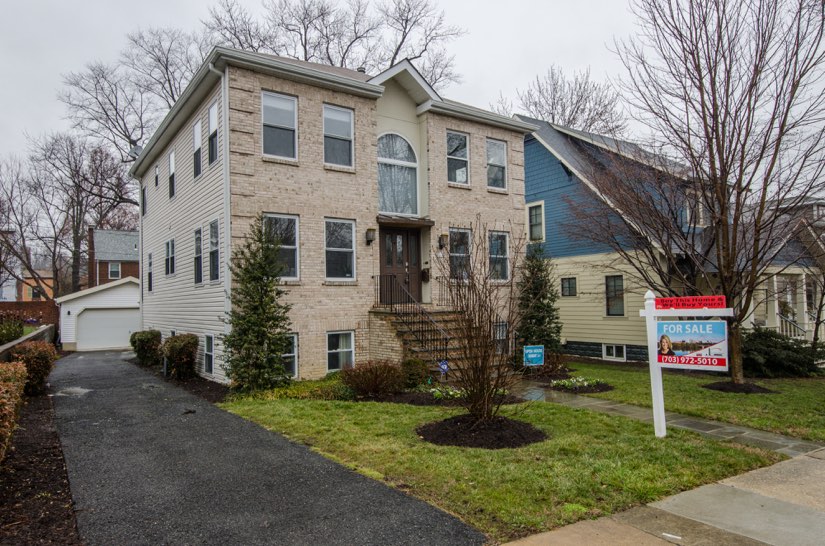
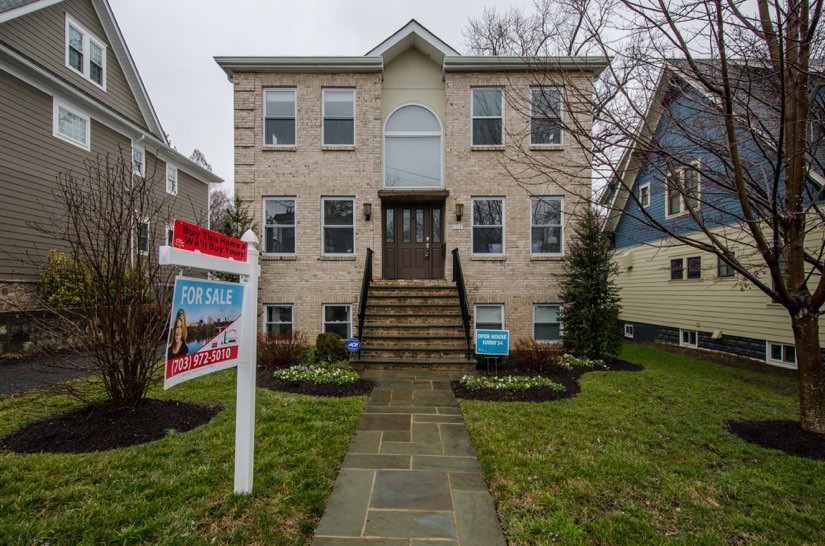
1117 17th Street S.
Neighborhood
: Addison Heights
Listed: $1,099,000
Open House: Sunday, April 3 from 2-4 p.m.

Check out this 5BR/ 4BA (including main level BR) in sought-after Addison Heights!

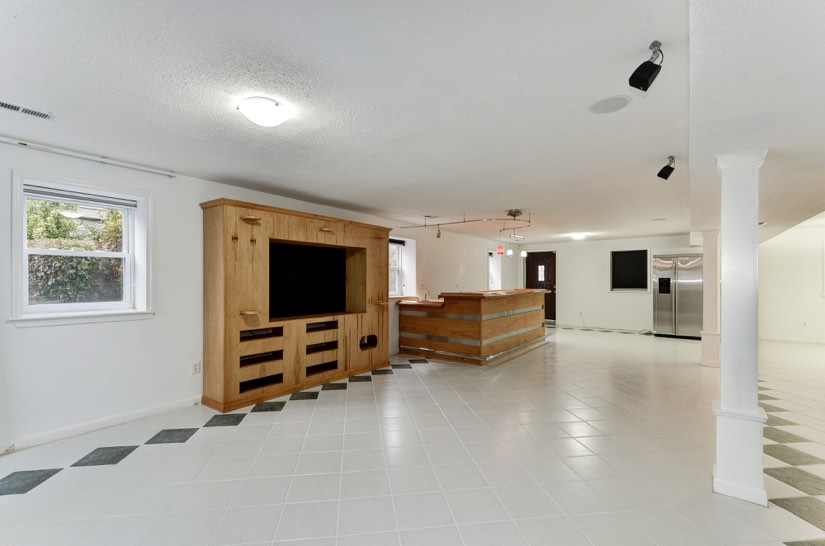
Gorgeous hardwood floors, tons of natural light, and separate dining room. Huge attached master bath. Lower level offers huge rec room with direct access to fenced in, large backyard.

Deck off the main level, perfect for entertaining. Home has fresh paint throughout, backup generator, fresh carpet, and built-in sound system.

Open to the public this Sunday, April 3rd, 2-4 p.m.

To schedule a private showing, please call (703) 570-6458. Listed by The Keri Shull Team / Optime Realty.


Weekend Wine and Beer Guide logo

Editor’s Note: This biweekly column is sponsored by Dominion Wine and Beer (107 Rowell Court, Falls Church). This column was written by Garrett Cruce, a Cicerone Program Certified Beer Server, who also writes about beer on his own blog: beerbeltway.wordpress.com. Catch new posts there on Sundays. 

Just the other day, I was pouring a beer just as I had been doing for a couple years — straight down the middle. I was executing a perfect pour — or so I thought. The beer in my glass was flat. Could it have been because of the pour? Was there a more perfect pour, a “goldilocks pour?”

The perfect pour. It’s something that beer lovers aspire to. It’s something that means different things to different people. I am, of course, talking about pouring beer from a bottle into a glass.

For some, pouring a beer so that it all flows into the glass in one motion without overflowing is perfect. For others, creating a large foamy head is perfect. For still others, finding the balance between a swiftly poured glass and an attractive head of foam is perfect.

Bottled beers tend to have a bit of extra carbonation, which is introduced in the bottling process. That extra gas, if it is not allowed to properly dissipate on pouring, can give the beer an extra bite in the sip that can seem harsh. If we think about what we like so much about draft beer, it just might be that it better balances the carbonation with the underlying beer. Pouring beer from a bottle can be done in a way that approximates the experience of having a freshly pulled draft beer.

For years, I was one of the many who tilted my glass at about 45 degrees (give or take) for a quick and foamless pour. I thought that I was doing it right — and well. I was wrong. I’ll tell you why. Pouring into a tilted glass, to keep the carbon dioxide from escaping quickly, allows it to remain in the beer leaving it more bubbly than it was meant to be. I still have servers in restaurants and family members assuring me that this is the proper pour. I have proof to the contrary.

Randy Mosher, author of the modern classic Tasting Beer, uses wonderful illustrations to show how his idea of a perfect pour is to pour the beer straight down the middle of the glass allowing a large head to form. The idea is to allow this foamy head to form, then dissipate so you can pour more of the beer in the glass. This both generates an attractive head of foam and allows much of the excess carbon dioxide to escape.

Garrett Oliver writes about a similar method in The Oxford Companion to Beer. He writes that a perfect pour involves pouring a thin stream down the middle of a glass as it sits on the table. Oliver’s description applies to restaurant service and assumes that it is proper not to touch the glassware. While he does allow for the server to ask permission to pick up the glass should it become necessary, the perfect pour would be a hands-off affair.

For a couple of years, this has been my preferred method. My experience has been that pouring most craft beers this way results in too much carbon dioxide escaping. Often I am left with more of a syrupy, though tasty, beverage and less of the beer I intended to experience. Let’s go back to that beer I poured that got me thinking. It was meant to be complex with banana-like esters and bitterness from black malt and alcohol sweetness. All I got was a cloying and overly smooth brew that seemed an incomplete picture.

It got me thinking about what I call the “goldilocks pour.” My Cicerone Certified Beer Server training recommended a hybrid pour, similar to the technique used when pulling a draft beer, for restaurant service. The idea was that a straight pour would take too much time, leaving a customer waiting. The solution was to pour into a 45 degree-tilted glass for two-thirds of the bottle then rotate to pour the remaining third and create a modest head of foam. Perhaps the amount of carbonation that Randy Mosher wanted to release was not so great as to stand up to the straight pour method. Maybe we need to retain some of that fizz.

I got a recent seasonal release from New York’s Brewery Ommegang to use for my pour test. It’s a saison made with sweet orange peel and pink peppercorn. The result is a mildly fruity beer that brims with the banana-like esters of Belgian yeast, but is balanced by the mild spice of pepper and bright citrus of the peel. It’s quite refreshing and deserving of a perfect pour. It’s important to note that beers that use Belgian yeast, like saisons, are highly carbonated to begin with.

(more…)


Just Listed banner

Just Listed highlights Arlington properties that just came on the market within the past week. This feature is written and sponsored by Team Cathell, “Your Orange Line Specialists.”

The long Easter holiday weekend seems to have slowed Arlington’s real estate market this week with fewer listings and sales than in the previous few weeks. Only 67 new listings came on the market this week, while only 61 properties sold. Last week, 89 homes went under contract. There were also fewer bidding wars this week which was great news for buyers. The average days on market remains steady at 46.  Overall inventory is still far below that of a balanced market.

Mortgage interest rates this week dipped a tiny bit by about 7 basis points to an average of 3.83% for a 30-yr fixed rate. There was some intriguing economic news this week that could impact our housing market later this year. The Fed chairman stated she did not anticipate any further rate hikes this year, which has caused the dollar to weaken against major foreign currencies. That was unwelcomed news for Wall Street which saw its value drop, but it’s not such bad news for U.S. workers and the overall U.S. economy. When the dollar weakens, U.S. goods and services become cheaper abroad stimulating greater trade that helps our trade deficit and helps create more American jobs at home. American workers should hoist a brew and thank Fed Chair Janet Yellen for that.

Other economists this week said they expect the yield on the 10-year U.S. Treasury note to drop a little bit this year. The yield is more directly linked to long term interest rates like mortgages. So we may actually see mortgage rates stay at the current low level or even drop further, while at the same time American job growth gets a stimulus. Both conditions would add strength to our housing market this year.

Meanwhile, the listing of the week is actually not in Arlington but just a few feet over the border in McLean.  Check out this fabulous contemporary in Franklin Park, listed below.

Click to see all the fresh new inventory in MRIS and call Team Cathell when you find a home you like.

You can access all active listings in Arlington on the Cathell Team website.


Gordon James Property Management's Rental Trends column banner

This biweekly sponsored column is written by the experts at Gordon James Realty, a local property management firm that specializes in residential real estate, commercial real estate and home owner associations. Please submit any questions in the comments section or via email.

Many landlords are unfamiliar with vacant home insurance even though the coverage is critical to protecting their real estate investments. The primary reason has to do with landlord insurance policies that typically only extend to occupied properties. If those dwelling places are vacant for more than 30 or 60 days (the time period is dependent on the insurance carrier and policy) landlord insurance can cease to apply.

And, if damage occurs to the property during a vacancy period, the landlord or real estate investor will more than likely be held liable for the full cost of any claims filed with their insurer. That isn’t the only potential fallout; if insurance carriers discover that a property is vacant, they have the right to drop coverage altogether, lower coverage levels, or file charges of insurance fraud.

Now for the good news–vacant home insurance is beneficial to landlords. With it, real estate investors are protected against partial property loss, total property loss, and liability lawsuits. It may not seem all that different from landlord insurance, but it is. A vacancy policy safeguards property owners from the unique risks posed by vacancies.

Those risks stem from the fact that no one is present to maintain and protect the property. If a pipe bursts, a squirrel gets into the attic, or fixtures are stolen, nobody is around to alert the landlord. The same goes for vandalism and breaking and entering. The landlord will only discover the problems during their regular property inspections.

This is where, and why, vacant home insurance is a lifesaver. It can cover named perils like vandalism and water damage. It can also protect against cash value losses and liabilities sometimes found with intrusions–it turns out that intruders can sue landlords if they’re injured while breaking and entering. Without a vacancy policy in place, landlords can be held liable for the injury.

Because of that, it’s in landlords’ best interest to build a comprehensive insurance plan that covers properties throughout their lifecycles from occupied to vacant and back to occupied again. It protects their investment and, equally as important, their cash flow, reputation, and business.

If you’re contemplating a property management company and would like some advice, we’re happy to help. Contact us.


View More Stories