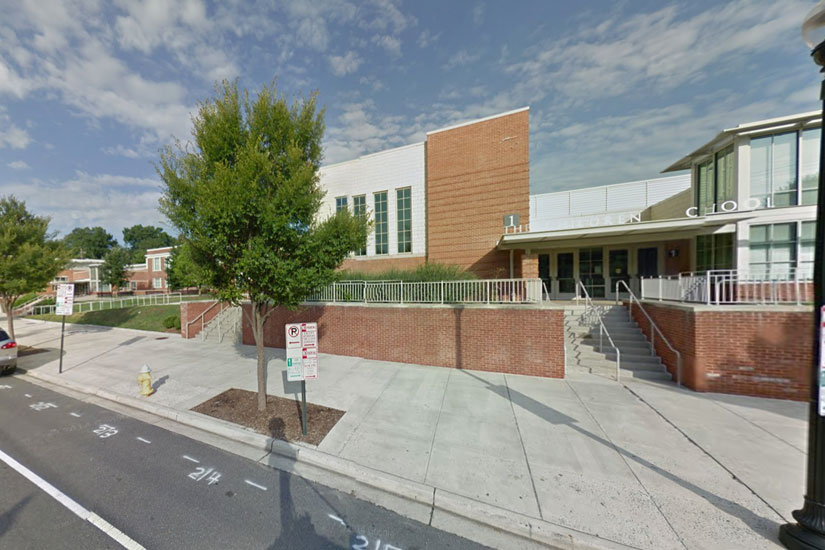
Reed/Westover building (photo via Google Maps)(Updated at 1:10 p.m.) One of the proposals on the table for Arlington Public Schools’ middle school seat expansion plan is moving the H-B Woodlawn program to the Reed School/Westover Library site, a proposal that has caught the ire of many Westover residents.

The Reed/Westover building currently houses the Children’s School — the early education program for young children of APS employees — and the Integration Station, which serves pre-K students with disabilities. The building underwent a $22.5 million renovation in 2009, by far the most recent project of any of the sites APS is considering for expansion.

A group called “Concerned Citizens of Westover” has launched a Change.org petition asking the Arlington School Board to not move the H-B Woodlawn program to the Reed/Westover building. The petition has amassed 973 supporters as of publication.

The proposed new HB Woodlawn renovation, would build over the recent costly renovation, displacing The Children’s School, the Integration Station, impacting the current Westover Library and farmers market and would reduce/change the green space and fields in Westover,” the petition states.

Two of the options currently on the table would see H-B Woodlawn move to the building with more construction: one would see the Stratford building on Vacation Lane expanded into a 1,300-seat neighborhood middle school, and another would expand the Stratford building to 1,000 seats and build a 300-seat addition somewhere else.

Other options on the table include moving H-B Woodlawn to the Wilson School site and expanding the Stratford site, or building a 1,300-seat neighborhood middle school at the Wilson School site, an option members of the School Board are leaning against.

A recent APS staff presentation suggests that Reed is “underutilized” and may be a suitable location for H-B Woodlawn because it would allow the school to maintain its current size and provide more green space than the Wilson School site.

According to APS staff, the 2009 Reed/Westover renovations were done to allow the building to structurally support future expansion, but expansion was originally planned for an elementary school, considering that Swanson Middle School is about a third of a mile away. Concern about too many students in a two block area of Westover is listed as a “challenge.”

In addition to the petition, Westover residents created a video explaining why they oppose moving the H-B Woodlawn program to the building in their neighborhood. They have also created a video talking about how to “use Reed the right way” (below) — by using it as an elementary school instead of as a secondary school.

The School Board plans to vote on Dec. 18 on which middle school expansion plan to move forward with. The total budget for the 1,300-seat expansion is $126 million, and the Capital Improvement Plan the School Board passed this summer requires those seats to open by September 2019.

http://www.youtube.com/watch?v=kib0oResWhc

Photo via Google Maps
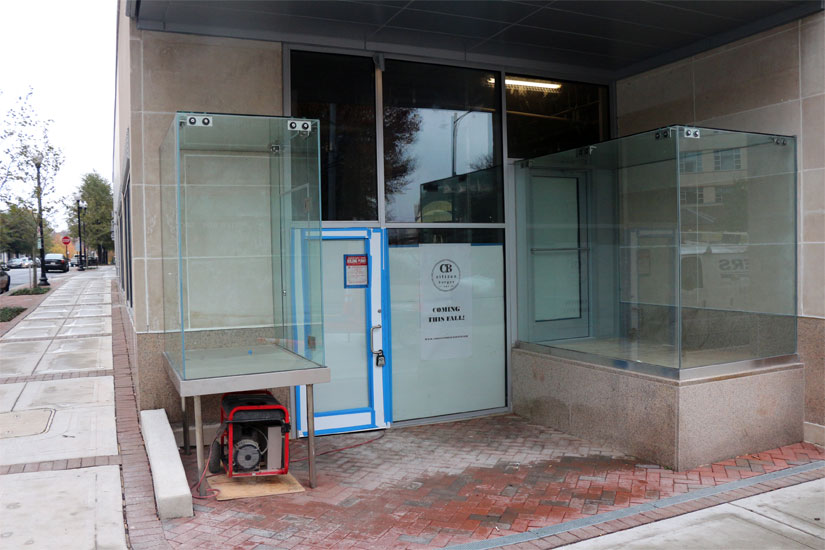

Citizen Burger Bar's location at 1051 N. Highland Street Citizen Burger Bar's location at 1051 N. Highland Street

Citizen Burger Bar, a sit-down, farm-sourced burger restaurant, hopes to open at 1051 N. Highland Street in Clarendon around the new year.

The restaurant announced in a press release that it expects to open “in about two months,” with a full bar and a large, open space with an open kitchen. The restaurant’s first branch opened in Charlottesville in 2012, and the Clarendon location will be its second.

“The idea is to broaden people’s horizons when it comes to simple, ‘classic American’ fare,” said owner Anderson McClure, an Alexandria native. “We want to serve great food and drinks, and do it in a way that might also change people’s perception and standards.”

The restaurant, according to a press release, will source its grass-fed beef, eggs, cheese and produce from farms in Virginia “each run with ethical, sustainable, free-range priorities.” All of the waitstaff will be trained to explain the origins of the menu and bar items. The restaurant says it will partner with “neighborhood bakers” for the bread used in its burger buns.

As far as the bar, customers can expect a rotating tap list and more than 100 bottles of beer, plus “cutting-edge craft cocktails and an upstanding wine list showcasing many Virginia wineries.”

There will also be flatscreen TVs throughout the bar.

The Charlottesville location was named the “best burger” and “best place to watch the game” in the 2014 edition of C-Ville Weekly, a Charlottesville magazine.


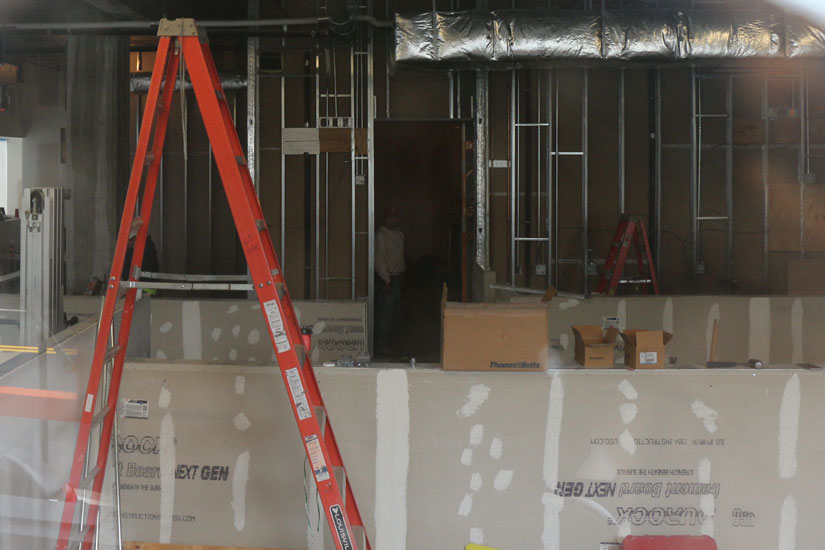
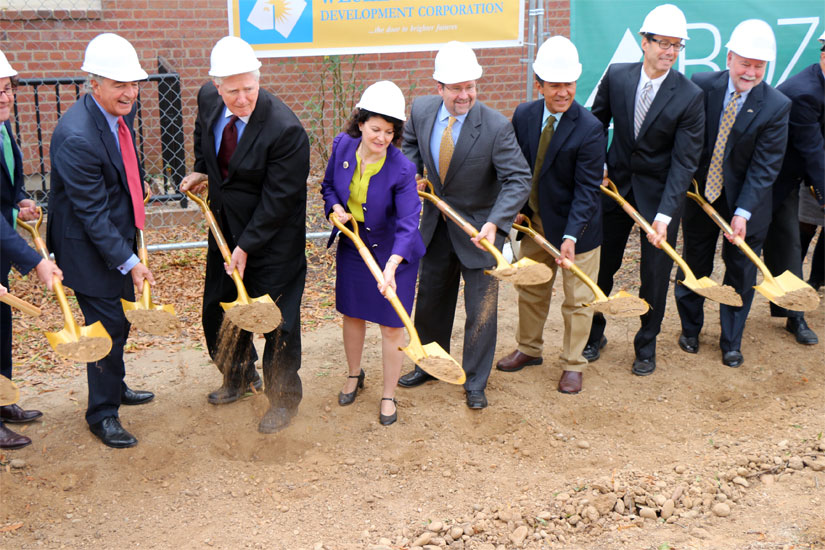
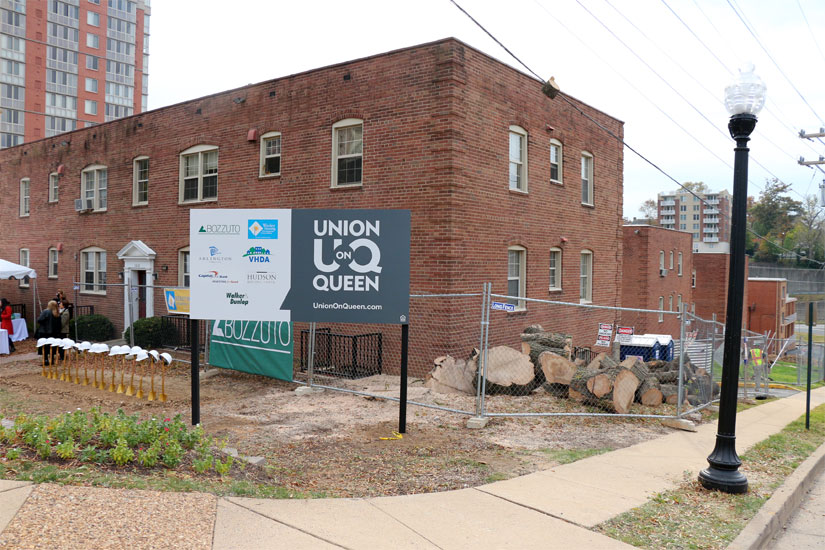
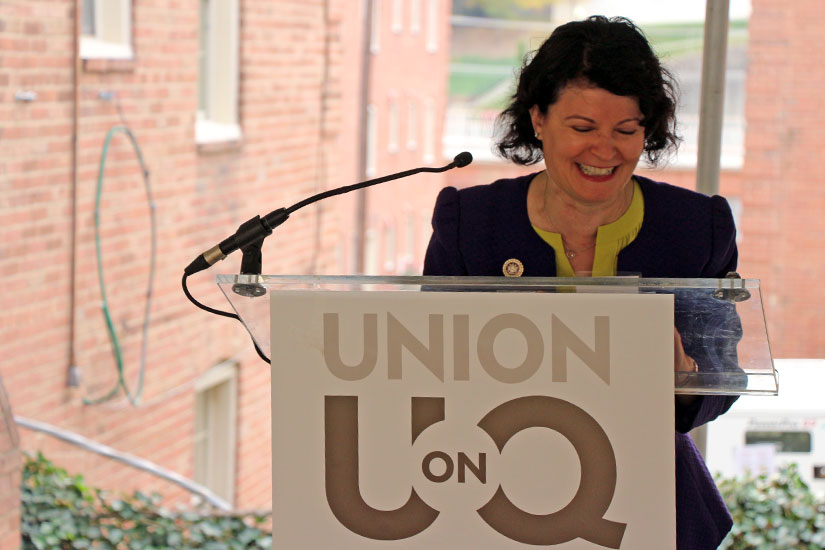
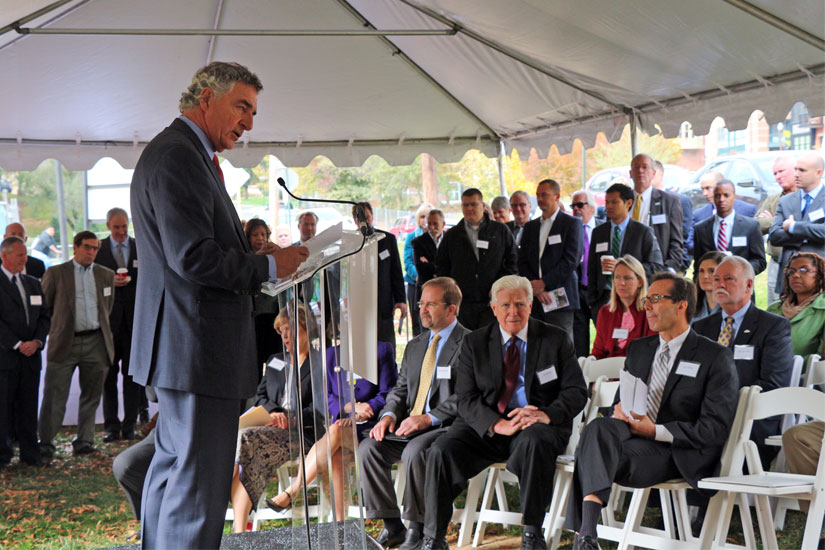
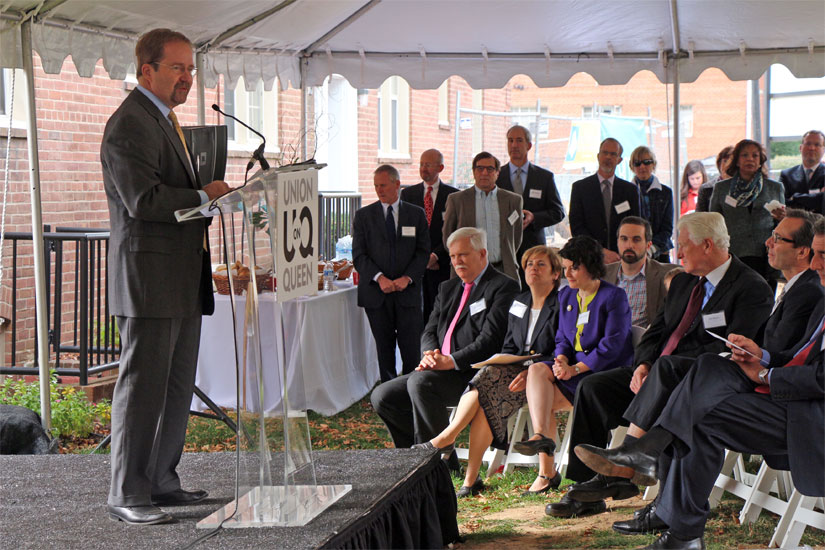
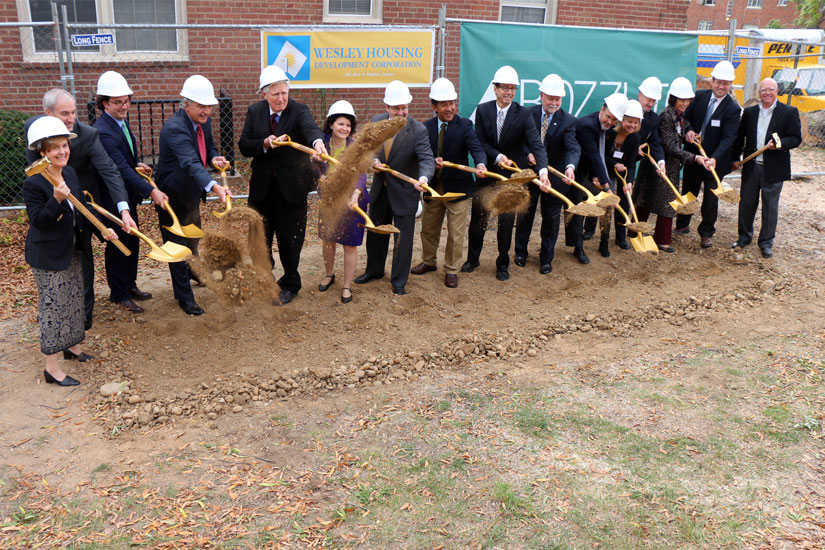
Construction on 193 new apartments — including 78 affordable units — in the Fort Myer Heights neighborhood has begun, and county officials and developers celebrated today with a groundbreaking.

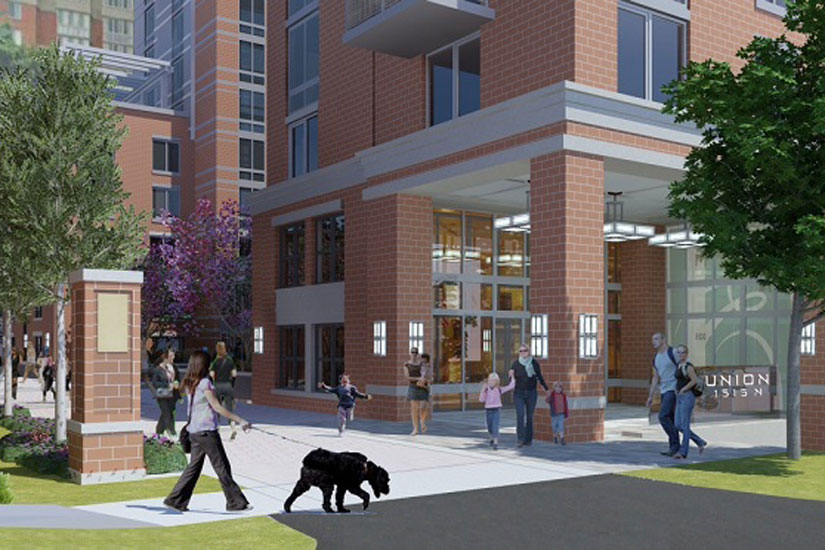
The project, called Union on Queen, will raze three buildings to erect a 12-story tower, which will contain 181 apartments. The two buildings that make up the Pierce Queen Apartments, built in 1942 on the 1600 block of 16th Street N., will be gutted, but preserved and renovated. They will be converted into 12 affordable units.

The project is a public-private partnership among The Bozzuto Group, nonprofit developer Wesley Housing and Arlington County, which is providing debt financing. Construction began a few weeks ago, according to Bozzuto President Toby Bozzuto, and is expected to last two years, putting the project on track for an October 2016 opening.

The process to get the apartments from proposal to site plan approval to construction was not an easy one. The project was deferred by the Arlington County Board before its March 2013 approval for design and parking concerns. It also faced issues securing affordable housing grants from both the county and the state.

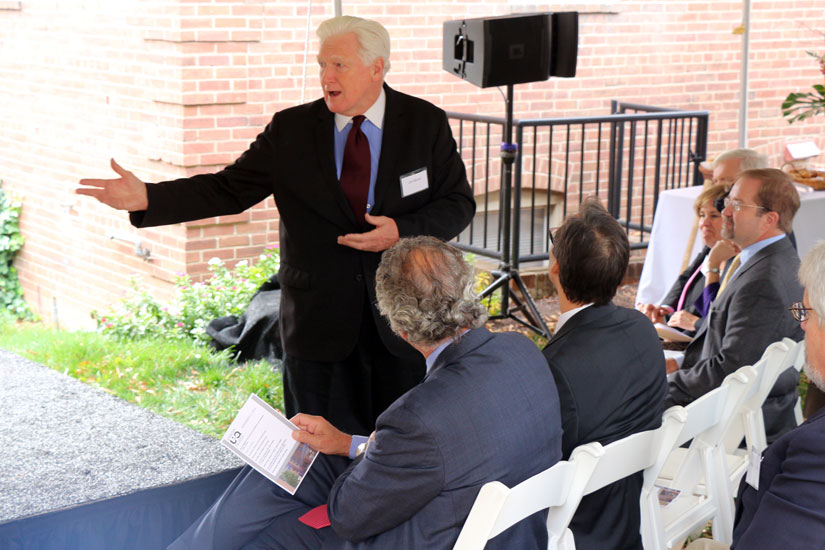
The developers and public officials in attendance at this morning’s groundbreaking all noted how tough of a slog the approval process was. Wesley Properties President and CEO Shelley Murphy said the company’s founder called Pierce Queen Apartments “the project from hell” when the company acquired it in 1991.

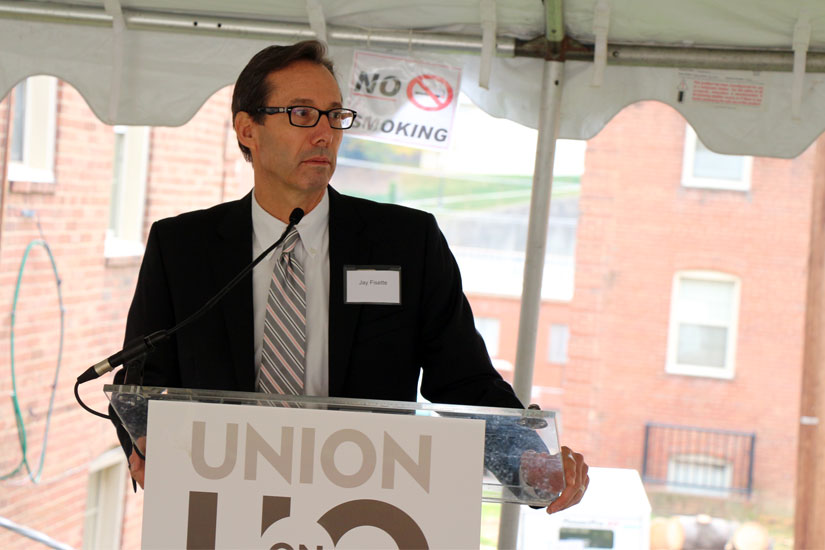
“This is as good an example of why Arlington succeeds as anything,” County Board Chair Jay Fisette said. “We actually follow through. Follow-through is hard. We all create plans, we all create visions, we write beautiful words, we put it on a shelf. In Arlington, we work really hard to bring the vision to life, to make the investments and the hard calls to make things work.”

Rep. Jim Moran didn’t step up to the podium — “One of the nice things about retiring is that I don’t have to stand up at any more podiums and microphones,” he joked — but said “Arlington County works, and it works because they understand that communities and their economies are a reflection of a collective decision-making on the part of thousands of families.”

Arlington approved $6.8 million in Affordable Housing Investment Fund money toward the project, which also received assistance from the Virginia Housing Development Authority. The state money wasn’t easy to secure, several of the speakers said, partly because the development’s total cost was close to being ineligible for state money. Eventually, the sides struck an arrangement and Fisette said the apartments will be up to the high standards the county has set.

“There are a lot of places that would say, ‘Dumb it down, cheaper, less efficient. It’s affordable housing in there’,” Fisette said. “But that’s not the way this community works. We want every building to be indistinguishable from the next.”


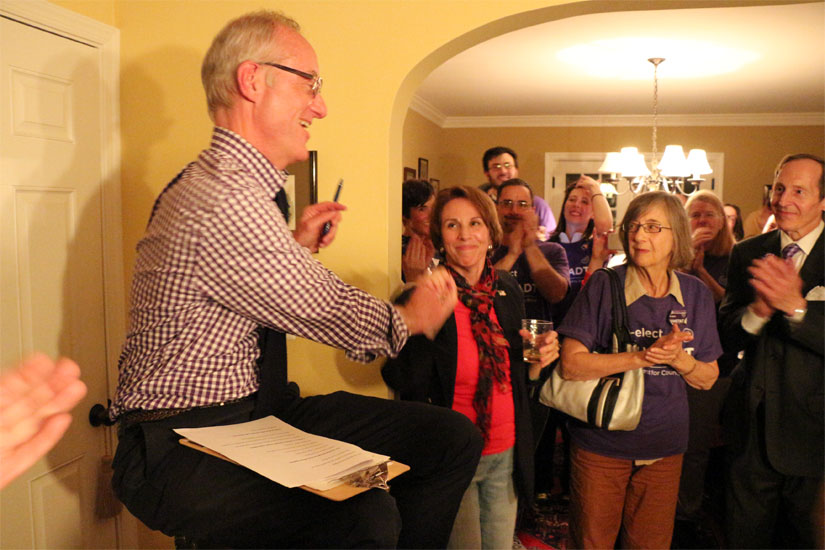
John Vihstadt high-fives fellow County Board member Libby Garvey at his election party Nov. 4, 2014(Updated at 3:25 p.m.) The shockwaves around the re-election of John Vihstadt to the Arlington County Board last night continue to reverberate today, with many around Arlington wondering if the county is about to undergo a major policy shift.

“The streetcar is dead,” local political blogger and strategist Ben Tribbett told ARLnow.com last night at the Democrats’ election party in Crystal City. “The voters spoke so overwhelmingly tonight. There’s absolutely no way that [County Board members] Mary [Hynes] and Walter [Tejada] can win re-election if they’re running as pro-streetcar candidates next year. The voters have spoken on this now. It’s over.”

The growing chorus that the majority of the County Board — Chair Jay Fisette, as well as Hynes and Tejada — are out of touch with the voters was bolstered by Vihstadt’s margin of victory. The Republican-endorsed independent won 55.76 percent of the vote to Democrat Alan Howze’s 43.8 percent — less than his margin of victory in the April special election but still a big surprise to many who follow Arlington politics, who haven’t seen a non-Democrat win a County Board general election since 1983.

Howze won just 13 of Arlington’s 52 precincts. By comparison, Democrat Sen. Mark Warner won the majority of votes in every one of Arlington’s precincts, and took 70.59 percent of Arlington ballots.

It’s that result that led Arlington County Democratic Committee President Kip Malinosky to determine that Vihstadt’s victory was not from a lack of Democratic voter turnout, but rather the issues and candidates themselves.

“At this point, I’m not prepared to say what the message [voters sent] was, I’d like to look deep into it and hear a lot more,” he told ARLnow.com last night. “Arlington is a wonderful place to live, it’s well-governed, low crime, low unemployment rate. But people are obviously unsatisfied about something, so we’re going to have to do better.”

County Board member Libby Garvey, a Democrat, threw her support behind Vihstadt before the April special election to replace Chris Zimmerman, and was forced to resign from the ACDC executive committee for it. Last night, she experienced a mix of elation and relief at Vihstadt’s home in Tara-Leeway Heights, realizing her efforts had been validated by tens of thousands of Arlington voters.

“This is a mandate,” she said emphatically. “I think our colleagues on the Board have gotten out of touch with what people want, including Democrats. It’s just really a wonderful validation of what we’ve been saying and what we’ve been thinking. I think the people of Arlington are taking back control of their county and that’s a good thing.”

Tribbett agreed, taking it a step further. He said Howze shouldn’t take the blame for the loss; instead, it’s on the Board’s own lack of trust with voters and on the local Democratic leadership.

“It’s on the County Board 100 percent,” Tribbett said.

“This is the problem with Arlington Democrats. They spent the time after they lost the special election, and here’s the arrogant response: ‘When we get more voters, they’ll just take our sample ballot, and they won’t know the issues, so they’ll vote for our candidate,'” he continued. “Their plan is to hope that people aren’t informed? Well, this is one of the most educated electorates in the country, and they just told them basically to eff themselves with that kind of strategy, to rely on them being misinformed. Gimme a break. They ought to be embarrassed.”

While Tribbett believes the Columbia Pike streetcar to be a political impossibility at this point, groups that support it say the election shouldn’t be seen as a referendum on the streetcar.

“It would be reading too much into Arlington voters’ intentions to ascribe the election of John Vihstadt to a full term on the Arlington Board over Alan Howze primarily to the debate over the Columbia Pike streetcar,” said the Coalition for Smarter Growth, in a press release this afternoon. “Streetcar opponents linked the price tag of the streetcar to general concerns over government spending and the state of the economy… [but] we are confident that the streetcar will continue to stand up to scrutiny and prove to be the best investment for the Columbia Pike Corridor.”

Tejada said he hopes the Board can “work together in a respectful manner” and “find as much common ground as possible.” He deflected questions about the future of the streetcar and concerns over his and Hynes’ ability to win re-election in 2015. Instead, Tejada championed the achievement of agreeing on the streetcar plan without sacrificing any affordable housing on Columbia Pike.

Tejada also obliquely referred to Garvey and Vihstadt’s rhetoric as “divisive,” saying many of the Board’s critics are “condensing” the issues into “sound bites.” He said he looked forward to “continue to inform details to the community, particularly factual information that it took quite a long time to get to.”

“I think this is a crossroads moment in time for Arlington,” Tejada said. “We need to decide whether we’re going to become a timid and stagnant community or are we going to continue to be bold and innovative and craft difficult strategic policies that will sustain us in the future in all parts of the county.”


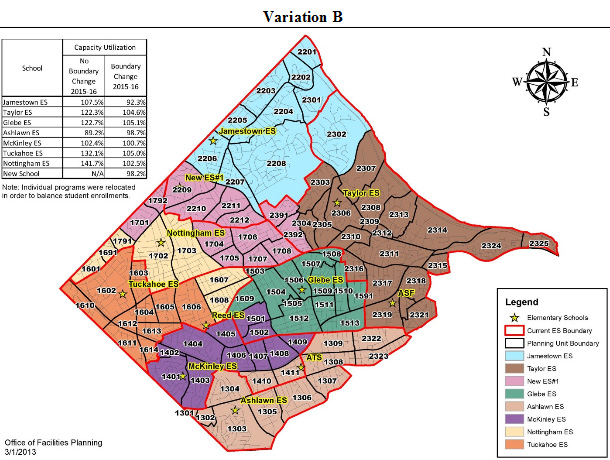
APS Superintendent Dr. Patrick Murphy's proposed boundary changes(Updated at 1:45 p.m.) Just 18 months after Arlington’s School Board approved a new elementary school boundary plan for North Arlington, an influx of more new students is prompting the Board to reconsider those plans.

Arlington Public Schools spokesman Frank Bellavia says 652 additional Pre-K and elementary students came to the district this year, outpacing APS’s growth projections by 52. That, along with variances on a school-by-school basis, has caused APS to explore “possible refinements to the boundaries.”

Following a series of three community meetings, the School Board is scheduled to fast-track a vote on a new boundary map for the 2015-2016 school year in January.

The process for determining the new school boundaries will begin with a community meeting at 7:00 p.m. on Monday, Nov. 17, at Williamsburg Middle School. There, APS staff will present data showing the need for the boundary change, demonstrate the online tool that parents can use to recommend their boundary maps and “begin work with the community to refine boundary options,” according to an APS press release.

The schools whose boundaries will come under review are the under-construction elementary school next to Williamsburg Middle School, Glebe Elementary, Tuckahoe, Ashlawn, Nottingham, Taylor, Jamestown and McKinley.

The approved boundary change from May of last year reassigned 900 students and resulted in five schools — Taylor, Glebe, Tuckahoe, McKinley and Nottingham — sitting at more than 100 percent capacity, but no school above 105.1 percent capacity. The decision was reached after an eight-month community process, and previous boundary realignments have resulted in tension among parents.

The boundary revision process, from the first School Board information session to its scheduled adoption, will take two and a half months.

“After we received updated enrollment projections based on Sept. 30 enrollment numbers, the Superintendent directed staff to begin looking at refinement of the 2015-16 boundaries,” APS spokesman Frank Bellavia told ARLnow.com in an email. “The projections confirmed that we will have enrollment imbalances within the those schools and there is a need to do boundary refinements for a relatively small number of families.”

At tomorrow night’s School Board meeting, APS staff will present their newest school population projections and outline the need to revising the boundaries. From Nov. 18 to Dec. 5, parents and community members will be able to go online and submit their boundary recommendations for staff to consider. Staff will review those recommendations at another community meeting Tuesday, Dec. 9, in the Williamsburg auditorium.

The community meetings will provide an opportunity for the families that may potentially be impacted to work with staff to develop recommended adjustments using the Online Boundary Tool originally introduced in the boundary process two years ago,” APS said in a press release. “Individuals will be able to see the possible moves that can help to further balance enrollment for these schools. Information shared at all community meetings will help shape the discussion and prepare individuals to use the Online Boundary Tool.”

In January, the School Board will take up the issue. First, with a work session on Jan. 5, then with an information item on Jan. 8, when Superintendent Patrick Murphy presents his recommendation. On Jan. 15, the Board will hold a public meeting on the issue before voting on a new boundary alignment on Jan. 22. All of the School Board meetings will be at 7:30 p.m. at 1426 N. Quincy Street.

File photo via APS


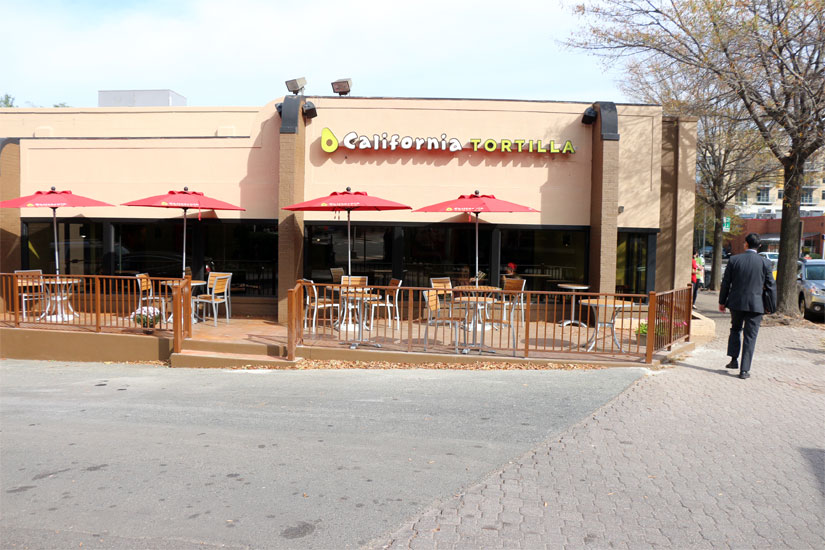
California Tortilla in Courthouse will be offering free burritos to customers on Thursday to celebrate a transition to a new franchise owner.

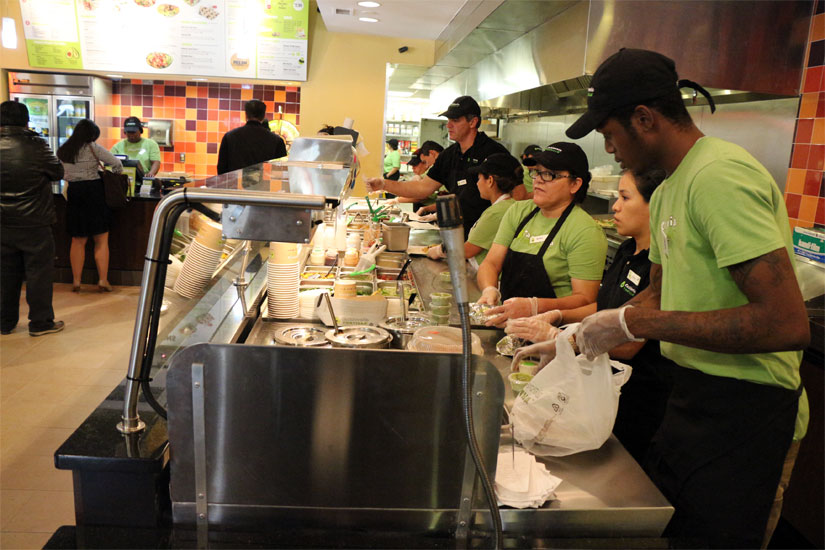
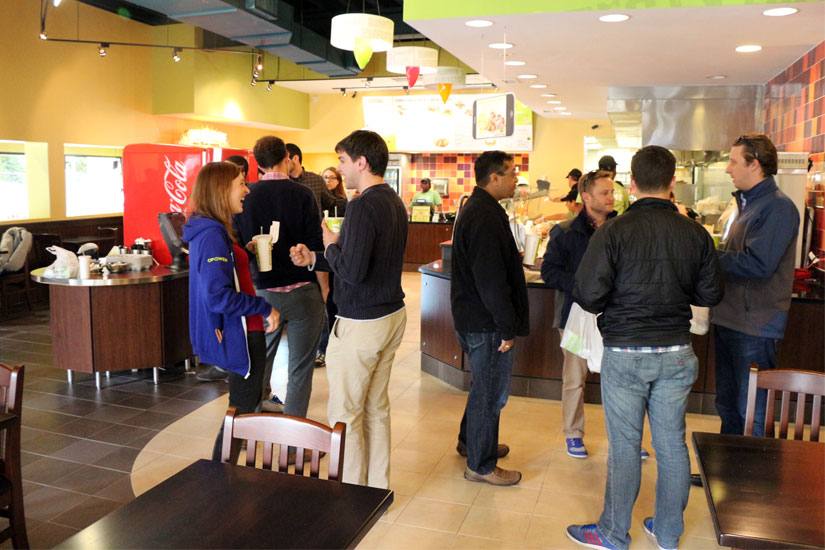
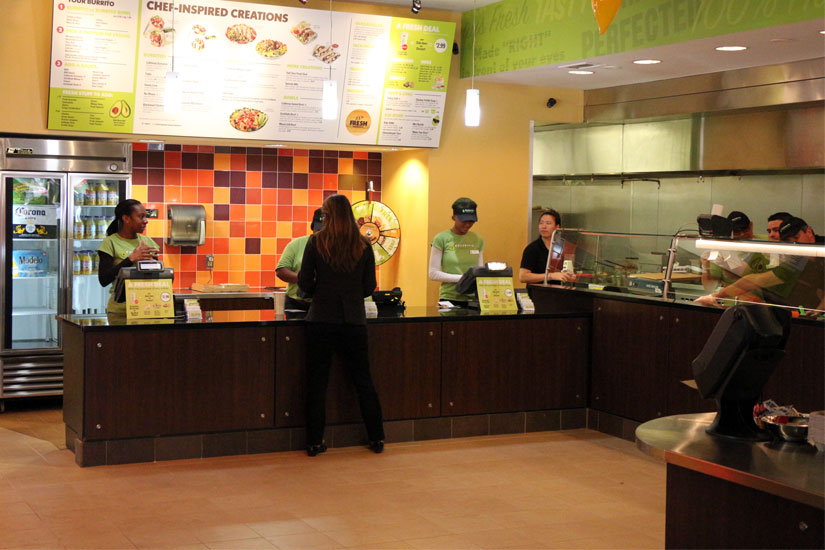
The restaurant, at 2057 Wilson Blvd, has been closed for renovations and sports a new look inside. On Thursday, from 11:00 a.m. to 1:30 p.m. and 5:00 to 7:30 p.m., all customers can get a free burrito and a drink. The first 20 customers in line get a “Burrito Elito” loyalty card with free burritos for a year.

California Tortilla also has locations at Reagan National Airport and in Crystal City. Those, along with all other “Cal Tor” locatons, are offering free chips and queso sauce to any customer who tells the cashier they voted. The promotion is valid today only.


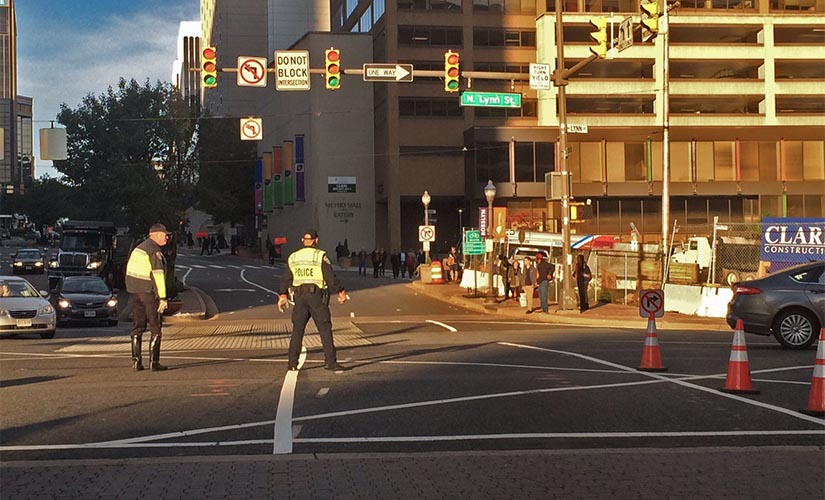
Police directing traffic at the intersection of Wilson Blvd and N. Lynn Street on the morning of 10/20/14(Updated at 1:10 p.m.) The Arlington County Police Department will increase its presence at several key Rosslyn intersections this month.

From this Thursday, Nov. 6, to Nov. 24, officers will be assigned to special safety details at the intersections of Wilson Blvd and Lee Highway with N. Lynn Street.

The Wilson-Lynn intersection has been a source of major headaches during rush hours thanks to the ongoing construction along N. Lynn Street with the Central Place project. The backups have led to some drivers not yielding to pedestrians in crosswalks, and the ACPD is responding with the new enforcement campaign.

The Lynn Street and Lee Highway intersection, nicknamed the “Intersection of Doom,” has for years been a dangerous place for pedestrians and bicyclists because of vehicles exiting from I-66 to the Key Bridge intermingling with users of the Custis and Mount Vernon trails.

Police say they plan to ticket pedestrians, bicyclists and drivers who violate traffic and jaywalking laws.

Officers will ticket motorists who violate traffic laws or do not yield for pedestrians in crosswalks,” according to a police press release. “In addition, pedestrians will be cited for jaywalking. Public Service Aides will hand out safety information to drivers, pedestrians and bicyclists who commute through these busy intersections.”

The enforcement campaign will begin from 7:00 to 9:00 a.m. and noon to 1:00 p.m. on Thursday and continue on weekdays until the Nov. 24, the Monday before Thanksgiving. The pedestrian safety campaign, part of the region’s Street Smart campaign, is designed to inform motorists, bicyclists and pedestrians that 25 percent of traffic deaths in the D.C. region are bikers and walkers, nearly 90 deaths per year.


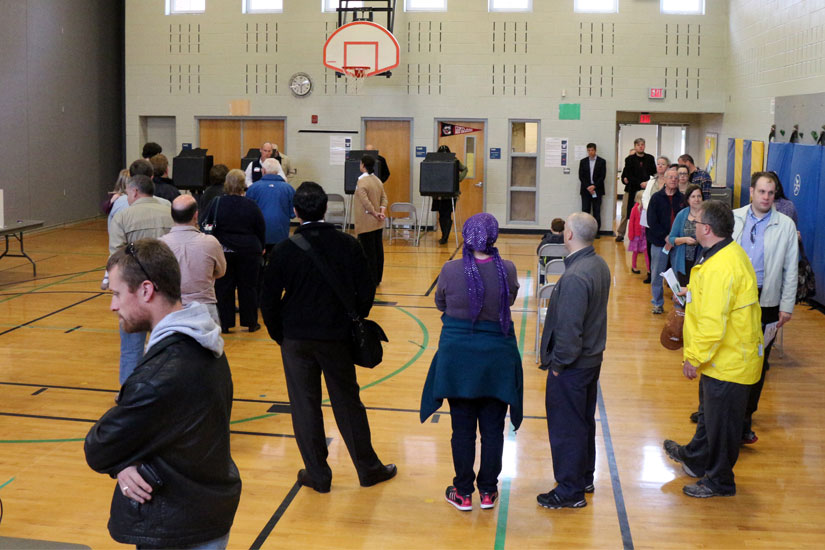
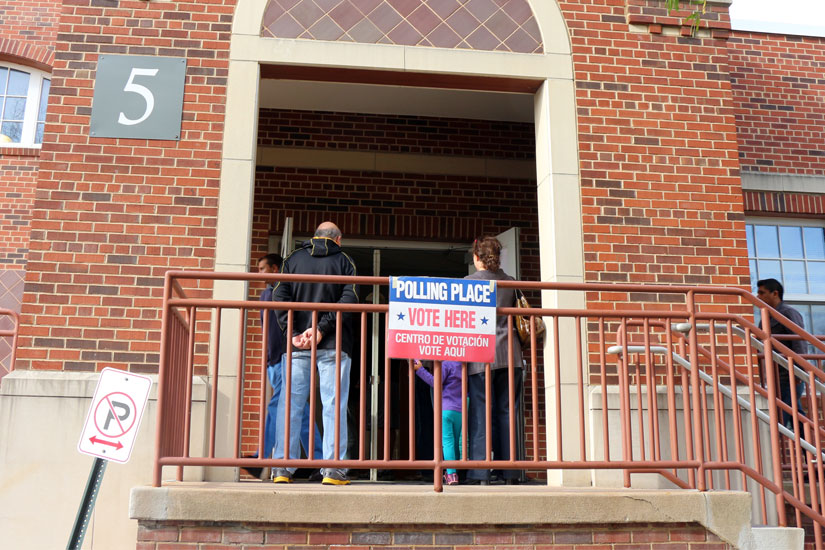
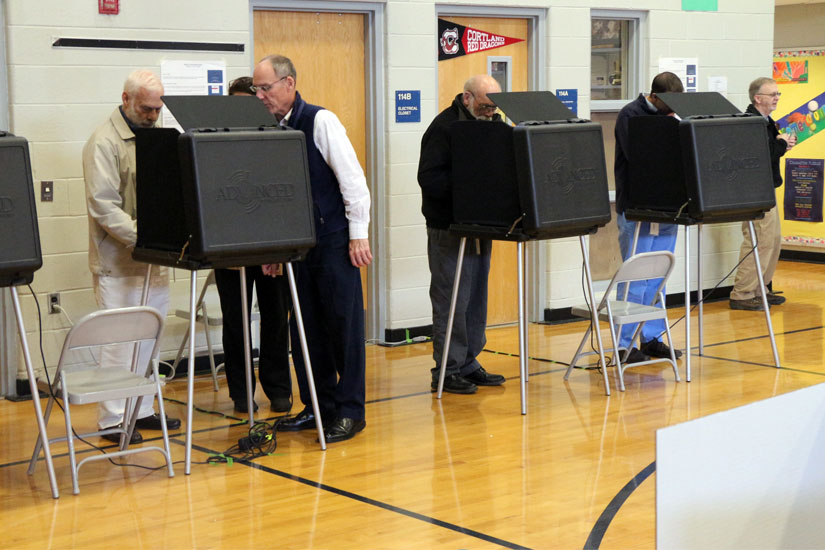
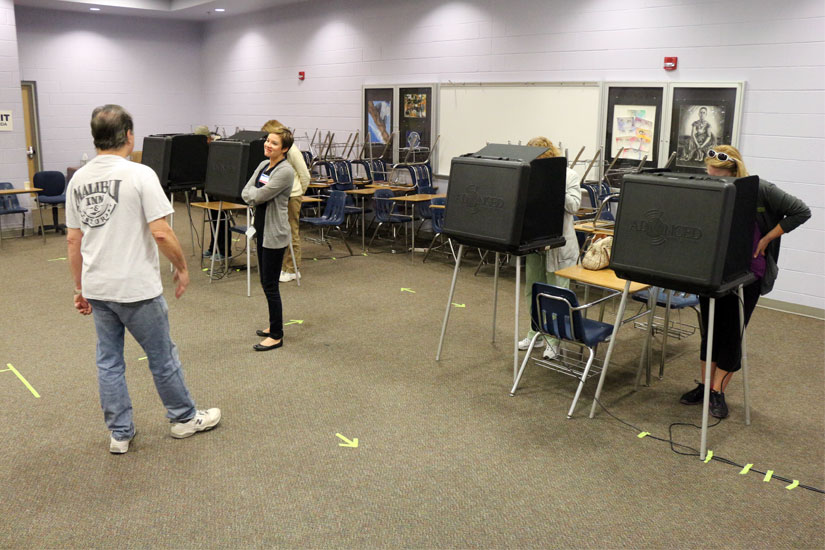
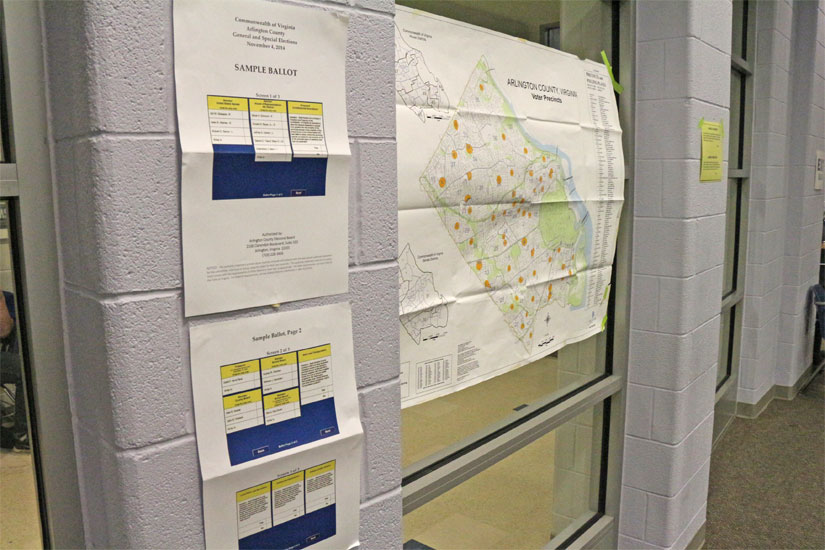
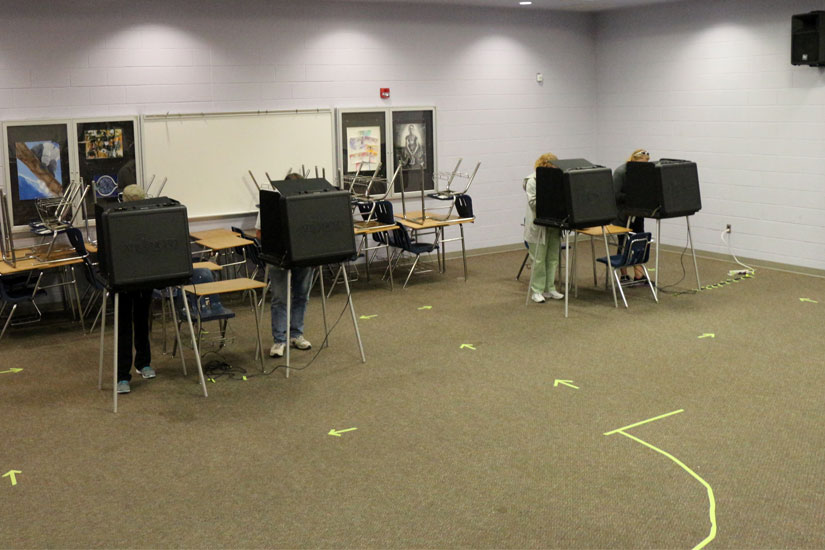
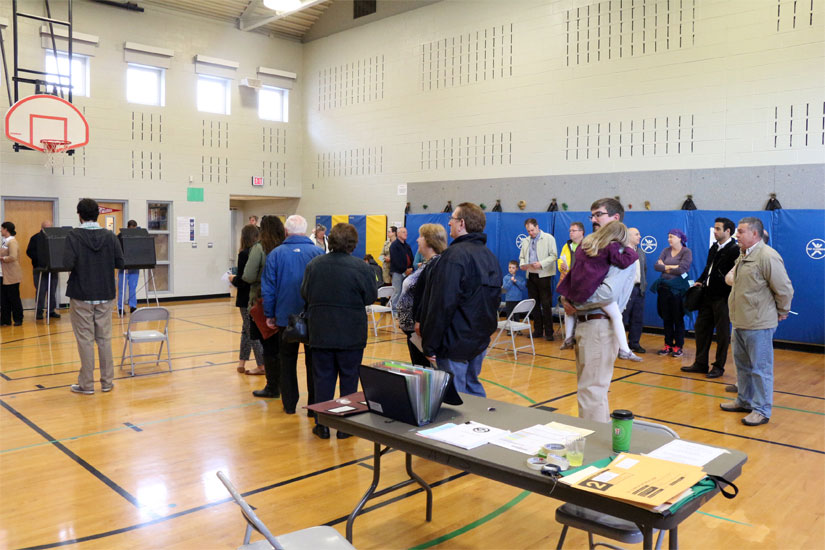
Many polling places across Arlington had lines out the door as voters streamed in to decide Senate, House of Representatives, County Board and School Board races today.

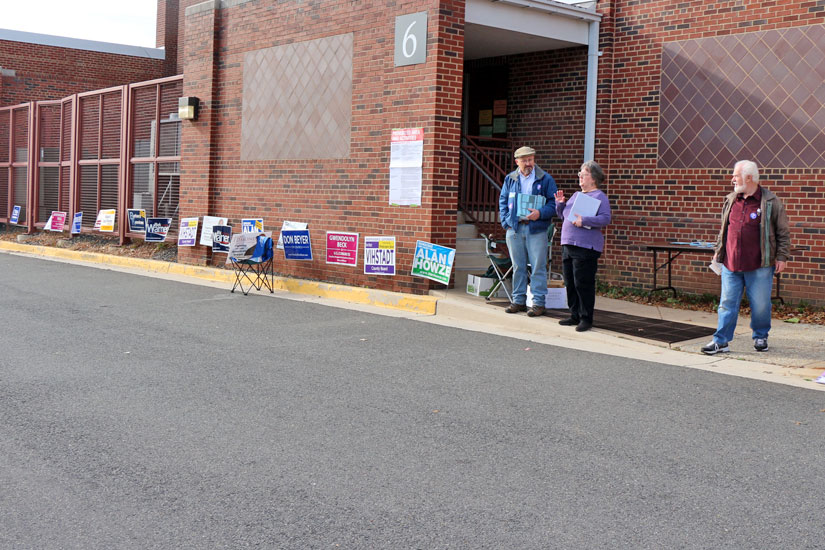
At Arlington Traditional School (855 N. Edison Street), campaign workers stationed outside the school said lines were surprisingly long considering there is no presidential election this year. Wes Pippert has voted at the school for 20 years, and he said turnout was unusually strong.

Pippert said he hasn’t been following local issues, but that didn’t stop him from voting for all four bond measures — Metro and transportation, parks and recreation, capital projects and schools — on the ballot.

“I voted for County Board and School Board,” Pippert said, “but I can’t say I was very informed.”

Pippert’s son and daughter voted with him, and his son said he voted for Audrey Clement for School Board because he “liked her name” more than Barbara Kanninen’s.

Judy Word and Andrew Smoyer also voted at Arlington Traditional School, but they said they have been paying more attention to local issues — particularly the Columbia Pike streetcar — than in years past.

“I think the bulk of voters in the County Board election are voting their opinion on the streetcar,” Smoyer said. “We both thought more about it, because usually we vote party line. More than in previous years we had to think separately about the issues.”

Martha Deutscher voted at Washington-Lee High School, and she said she votes every year as a “loyal Democrat.”

“Streetcars don’t cross my mind,” she said. “I’m a Democrat, I usually vote Democrat. I’m just here to support the party.”

Arlington General Registrar Linda Lindberg predicts turnout in Arlington will be “about 50 percent” and said turnout is about 10-15 percent so far. The turnout is heavier in North Arlington than in South Arlington so far, Lindberg said, which is typical of most elections, despite the prominence of the streetcar in the race.

There have been complaints about faulty ballot machines in Culpepper Gardens and Arlington Traditional School — one ballot box froze at Washington-Lee but was quickly rebooted, according to the precinct chief — but Lindberg said that could simply be due to voter error.

“Our machines are definitely aging at 11 years old, and seldom does one keep a touchscreen device that long,” she said. “We have had a few issues with voters not properly making selections or complaining the selections they make aren’t registering. At Culpepper there are a lot of elderly voters who don’t always touch carefully. The election officers have been instructed to tell voters having difficulty making selections to either touch directly straight down on the selection or to use a stylus. We haven’t had issues when voters touch their selections properly.”

According to Lindberg, Arlington received 6,800 absentee votes, with “probably several hundred ballots still to be returned,” putting the absentee turnout at less than in the 2010 midterms that didn’t feature a Senate election. This election features the race to replace longtime Rep. Jim Moran, and Independent candidate Gwendolyn Beck was campaigning at Washington-Lee High School this morning.

Beck said it’s her goal to visit every polling place in the 8th Congressional District today, and she started with “packed” polling places Wilson School and Fire Station 10 in Rosslyn. In Rosslyn, she saw several voters she met on Saturday when campaigning during the Clarendon bar crawl.

“That’s the big question: how do you reach millennials?” she said. “You meet them where they go out.”


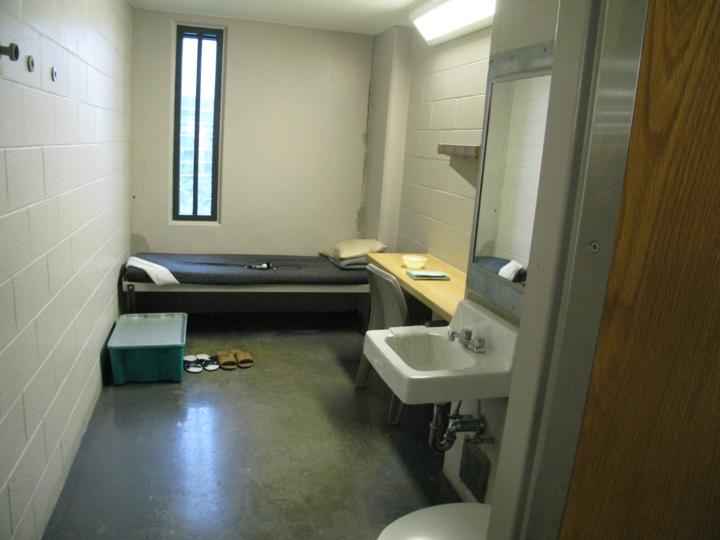
Jail cell(Updated at 3:40 p.m.) Arlington County will no longer ask many job applicants about their criminal record prior to an interview.

The county announced today it would be “banning the box” on job applications that asked prospective employees about their criminal records. A current application for an open position on the county’s website doesn’t include a criminal record question.

“Taking this step reinforces our commitment to fair hiring practices,” said Marcy Foster, the county’s Department of Human Resources director, in a press release. “And ‘banning the box’ will help ensure that happens.”

For positions related to public safety, like police officers and firefighters, asking about criminal convictions will still be part of the application process, and “questions regarding criminal convictions may still be asked at the time of the interview,” the county said.

By “banning the box,” Arlington joins Alexandria, Newport News, Norfolk and Richmond — along with 10 states — as jurisdictions that no longer ask about criminal convictions in the first phase of job applications. While criminal records never were a disqualification for employment in Arlington, the county said, “they can be a barrier to employment for anyone with a criminal record, negatively impacting millions of Americans.”

“Allowing these candidates to proceed further into the process creates opportunities that may otherwise have been lost, and provides candidates with a more level playing field during the application process,” the press release states.

Arlington will also no longer ask questions about convictions for driving under the influence, except for jobs that require the applicant to operate a motor vehicle. If a candidate is selected for a job, the county will still perform its standard background check.

“Allowing these candidates to proceed further into the process creates opportunities that may otherwise have been lost, and provides candidates with a more level playing field during the application process,” the county said, in a press release. “Arlington County is committed to being an equal opportunity employer, and to attracting, developing and retaining a diverse workforce to serve the community.”


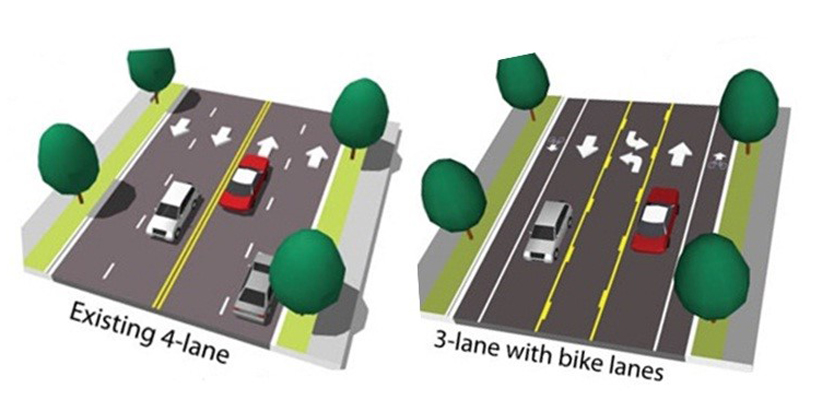
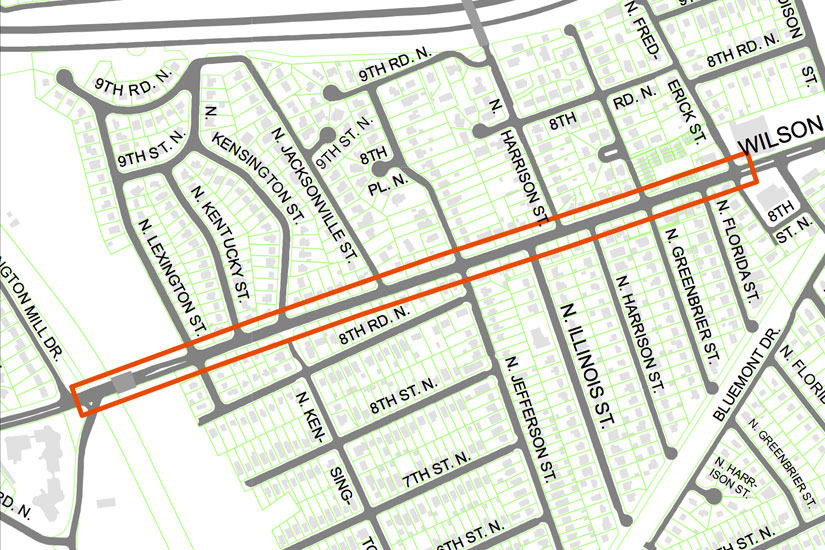
The proposed Wilson Boulevard improvements (image via Arlington CountyThe stretch of Wilson Blvd between N. Frederick and Manchester Streets is planned to be reduced from four lanes to three next spring.

The change has been advocated by the Bluemont Civic Association (BCA) for years, and the neighborhood’s representatives have posited that the lane reduction, coupled with sidewalk expansion, will make the corridor more walkable without increasing traffic congestion.

The project, which Arlington County says is in design phase with reconfiguration set for spring 2015, will reduce westbound and eastbound traffic to one lane each, while adding a center lane for left turns and bike lanes on either side of the street. The plan also calls for consolidating bus stops in this stretch to reduce possible congestion.

Currently, there are no funded plans to expand the sidewalks.

County staff is holding a general community meeting on Nov. 20, from 7:00 to 9:00 p.m., at Arlington Traditional School (855 N. Edison Street), to discuss the plans. The county also plans for a “robust community notification process throughout the corridor,” before the restriping and repaving work begins.

The plans to reduce the lanes on Wilson Blvd was initially recommended by the BCA’s Sidewalk Safety Task Force and supported by the BCA in October 2012. Arlington decided to incorporate the plans when it made its restriping and repaving calendar for this year.

Wilson Blvd improvements map (image via Arlington County)“We are grateful that Arlington County is listening to us and working to make our ‘Main Street’ a safer and more pleasant place for all residents and visitors,” BCA President John Lau said in a press release. “Working together, the efforts of neighborhood residents and county officials have led us to this long-awaited first step for improving our neighborhood and an important Arlington corridor.”

While the county approved the requested changes to Wilson Blvd’s lane configuration, the BCA’s requests to have the power lines — with poles located on Wilson Blvd’s sidewalks — moved underground was deemed prohibitively expensive by the county. The BCA is also hoping that the improvements be extended for all of Wilson Blvd west of N. Glebe Road, something county staff said it will continue to explore.

“This is a demonstration project that will be monitored further by the County to determine whether a complete streets project — currently unfunded — is viable along the entire section of Wilson Boulevard, west of North Glebe Road,” the project website reads. “If successful, staff will continue to work with the community to develop this future potential project.”

The plan, when it was being discussed last June, received some concern for businesses located along the corridor. The sidewalk task force reported businesses were “extremely concerned” that reducing the number of lanes would “gum up traffic to the point where they would lose business.”

The BCA cited the stretch of Washington Blvd west of N. Glebe Road, which goes from four lanes to two and has higher peak traffic volume, as an example of why the Wilson Blvd proposal won’t significantly worsen traffic.

Images via Arlington County


Startup Monday header

Editor’s Note: Sponsored by Monday Properties and written by ARLnow.com, Startup Monday is a weekly column that profiles Arlington-based startups and their founders. The Ground Floor, Monday’s office space for young companies in Rosslyn, is now open. The Metro-accessible space features a 5,000-square-foot common area that includes a kitchen, lounge area, collaborative meeting spaces, and a stage for formal presentations.

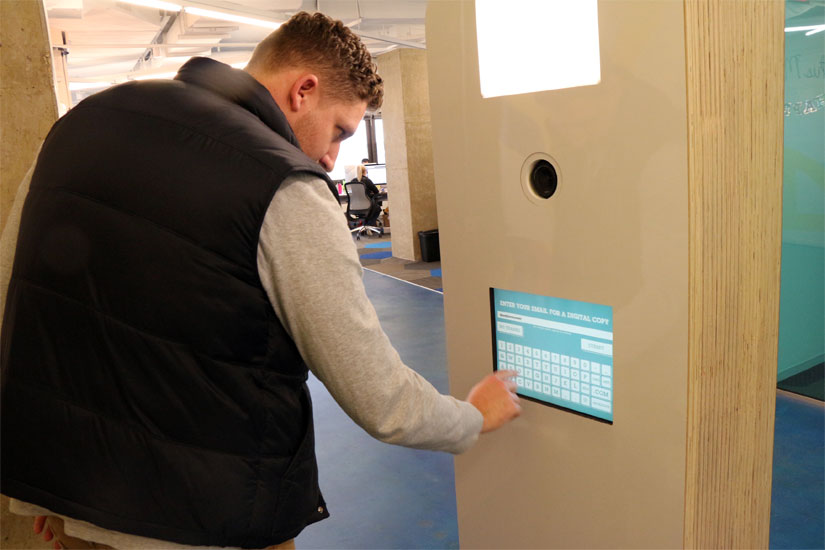
Onomonomedia Founder Dave Clark poses for one of the company's photo boothsThe combination of nostalgia and modern technology is at the heart of Crystal City startup Onomonomedia, which builds custom photo booths that link with social media.

Dave Clark founded the company four years ago after graduating from Liberty University — where he transferred from George Mason — and it has since grown into a multi-device based marketing agency, providing photo booths for companies to engage potential customers with “real-world experiences.”

The germ of the idea starting six or seven years ago, Clark told ARLnow.com last week, when Clark took a photo booth his friend bought to a wedding and it was a huge hit.

“I saw the opportunity in how social media was blowing up, but I wanted to make sure it included a real-world experience,” Clark said. “It’s really revolutionized event marketing. It’s a super engaging thing at an event, and gives people real content.”

Clark said it was hard at first to think of what the company could be, since photo booths are typically thought of as something to do ” at the beach or the mall.” But once he saw how people were using it, and how popular the feature of posting directly to social media from the booth was, he knew he had a potentially huge new platform.

Onomonomedia Founder Dave Clark using one of his photo boothsSo, in 2010, he started to reach out to companies around D.C. to use his photo booths. He was able to bring booths to Adams Morgan Day and Foto DC and get noticed by D.C. events website Brightest Young Things. BYT became Time Magazine, whose partner, Wired, asked Onomonomedia to do a photo wall installation for its Wired Store, an annual gadget pop-up shop in New York City over the holidays.

Since then, Onomonomedia has only grown, built more and sleeker photo booths, different products — like Instagram kiosks, GIF generators, video booths and 3D booths. Clark said the GIF booth, which takes four photos of the user and turns it into an animation, is his most asked-for product.

“People wanted to see the content that was created at their event,” Clark said. “We’ll create it as classy, creatively and as easy as possible.”

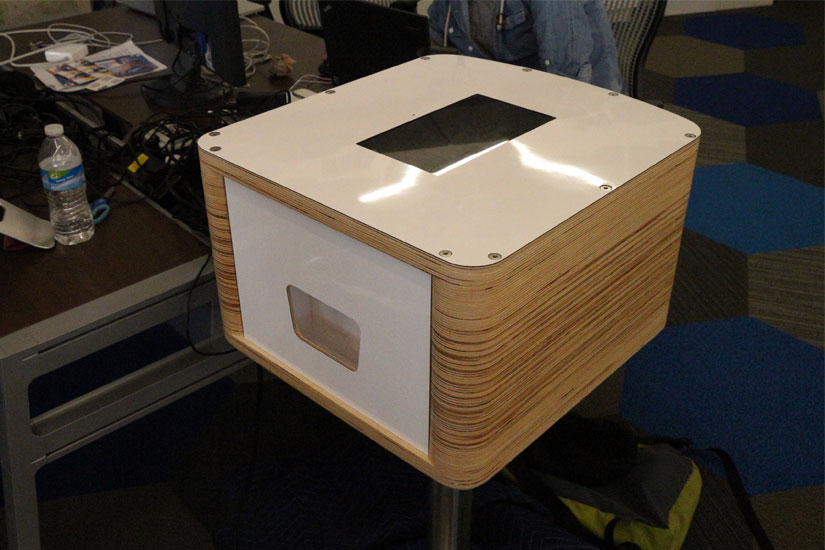
The booths are made from dozens of pieces of plywood that are carefully placed together. There’s a digitial SLR camera, a computer and a printer in each. The original booths were designed by a full-time carpenter who moonlights as an artist. Now, Onomonomedia employs a full-time electrical engineer to help create new booths.

An Onomonomedia Instagram kioskEach standard booth takes “about a week” to build, Clark said, and they have made about 30 so far. Ten of those booths were made at once for a huge project with Armani Exchange stores. The fashion company wanted Onomonomedia booths in 13 of its stores around the country simultaneously. The project “was like a $200,000 investment round” for the company, and was a “gamechanger” for its future.

This year, Clark expects Onomonomedia to exceed $1 million in sales for the first time. It works with Fortune 500 companies, has sold booths to Vitamin Water and is constantly exploring new avenues to pursue, Clark said. The company moved to Disruption Corporation‘s Crystal City office this summer, but not as a company that has taken investment. Instead, Disruption CEO Paul Singh just liked the idea and the company so he offered Clark and his seven full-time employees office space. (more…)


View More Stories