A virtual public meeting is being held this week on the topic of potential improvements to Route 1 through Crystal City.

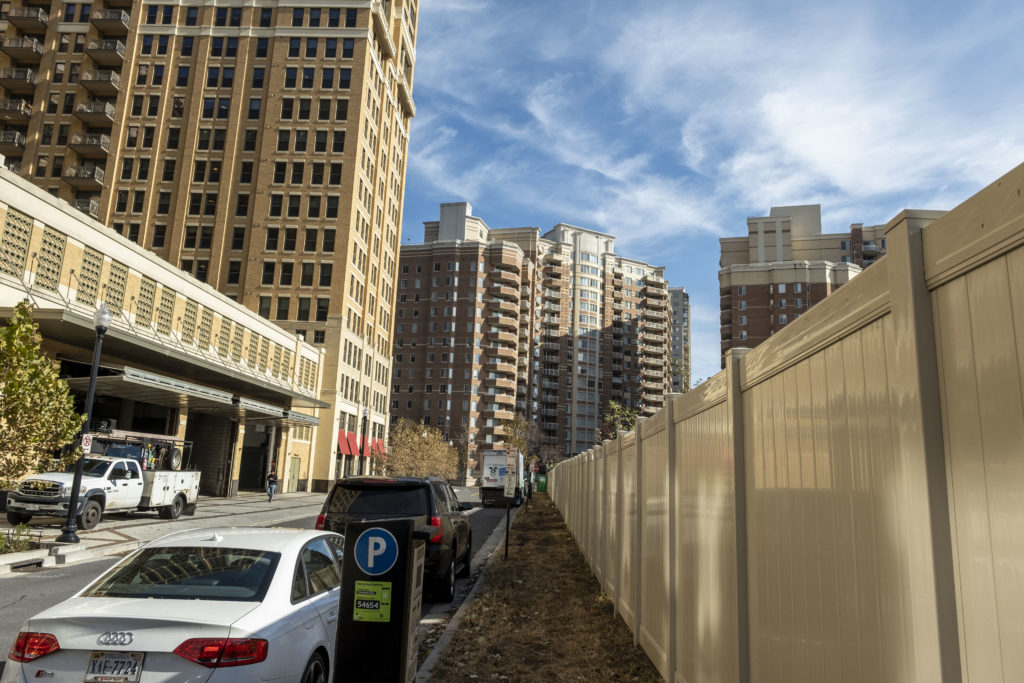
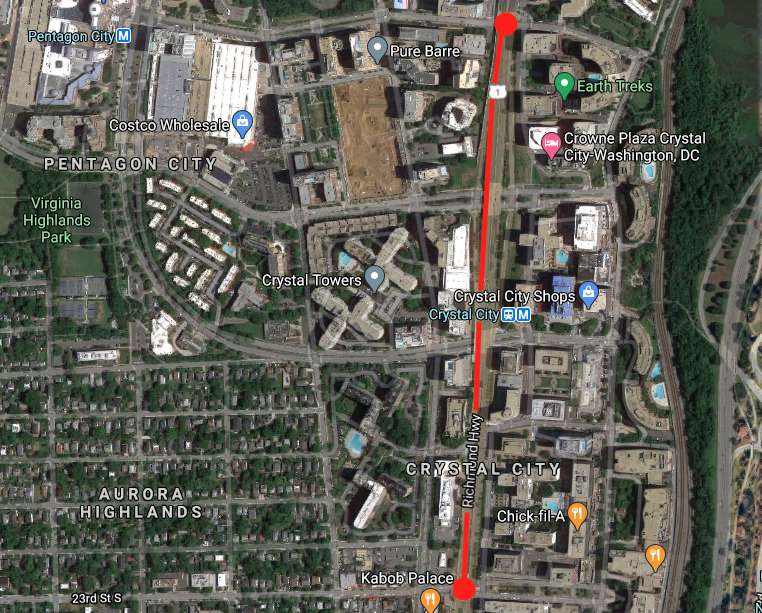
VDOT and Arlington County are studying ways to improve the safety, accessibility and experience along Route 1 between 12th and 23rd Street. The study responds to greater demand for various transportation methods as construction of Amazon’s HQ2 progresses.

“As this area’s commercial and residential densities continue to increase, transportation plans will need to address the wide-ranging needs of pedestrians, bicyclists, transit riders, motorists, and other users while maximizing the safety, convenience, and sustainability of the system for decades to come,” said the VDOT study page.

Participants in the online meeting, scheduled for Wednesday at 6:30 p.m., will hear a review of existing conditions on Route 1 — also known as Richmond Highway — and learn about responses to a public survey that was open during October and November. They can also ask questions and give input.

The public is invited to provide comments during the meeting or through Monday, Dec. 28.
After the meeting, the public will hear and have the chance to provide feedback on draft recommendations in spring 2021. Officials expect the final study to be done next summer.

“At this time, no construction funding has been allocated, so the study will not set design or construction dates,” the VDOT website said.

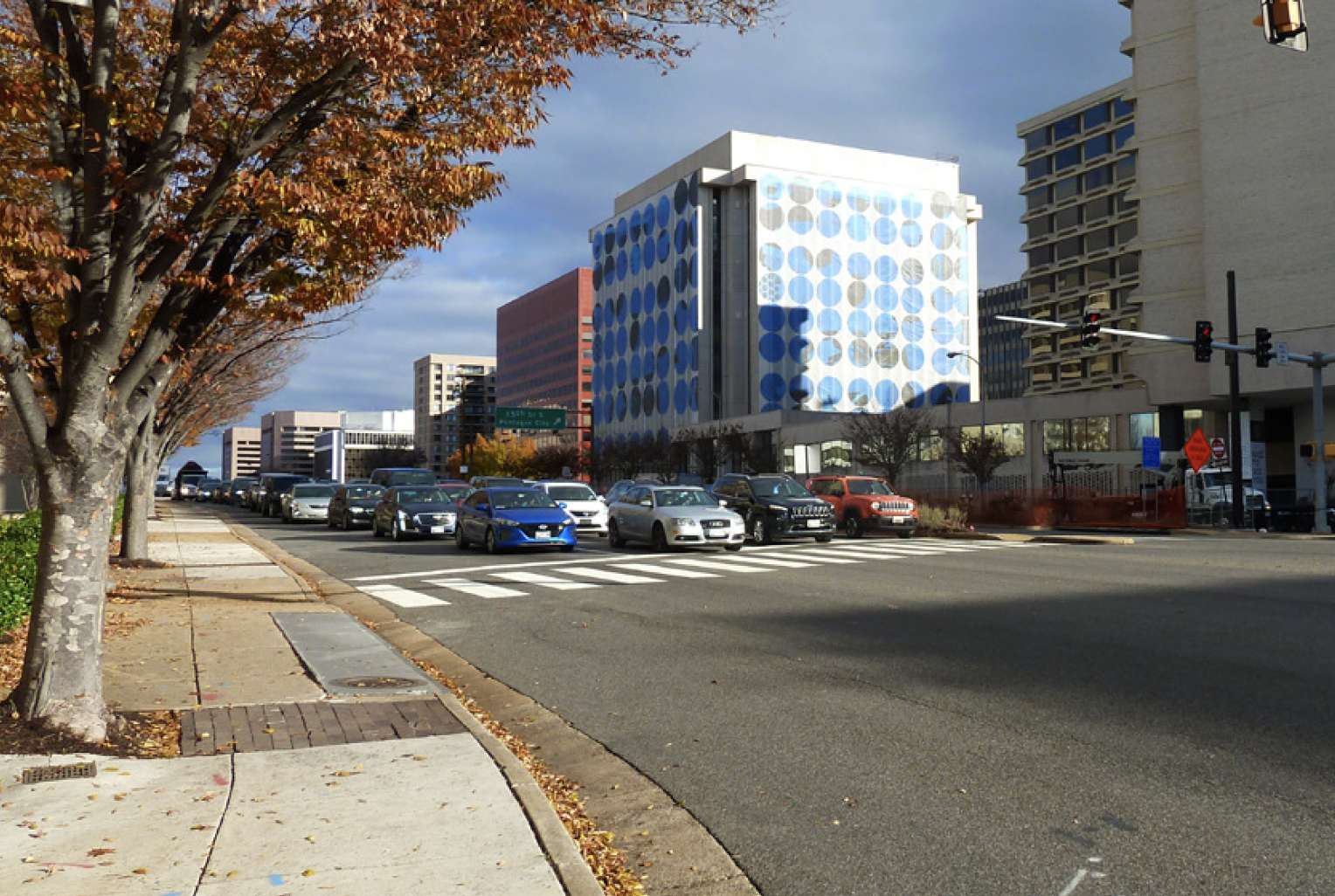
The department is not the only group thinking of ways to improve the highway. In October, the National Landing BID released “Reimagining Route 1,” a report that transformed the car-centric highway into a safer boulevard lined with trees, retail and restaurants.

“Route 1 was originally designed to accommodate the auto-centric development trends of the mid-20th century, when the primary objective was to move cars through the area as quickly as possible,” the BID said in a press release. “The resulting elevated highway, super blocks, and oversized intersections divided the community for decades, inhibiting not only connectivity and access, but also the area’s ability to come together as a singular downtown district.”

VDOT is studying the Route 1 overpasses over 12th, 15th and 18th streets, which some have called to be eliminated in favor of more urban intersections at grade.

Those interested in joining the virtual meeting can register online or participate in listen-only mode by calling 877-309-2071 (access code 205-472-841).

The study team will make a short presentation beginning at 6:30 p.m. and answer questions for about an hour afterward, the website said. A recording and meeting materials will be available online following the meeting.

In addition to doing so during the meeting, feedback can be provided via a comment form or email.
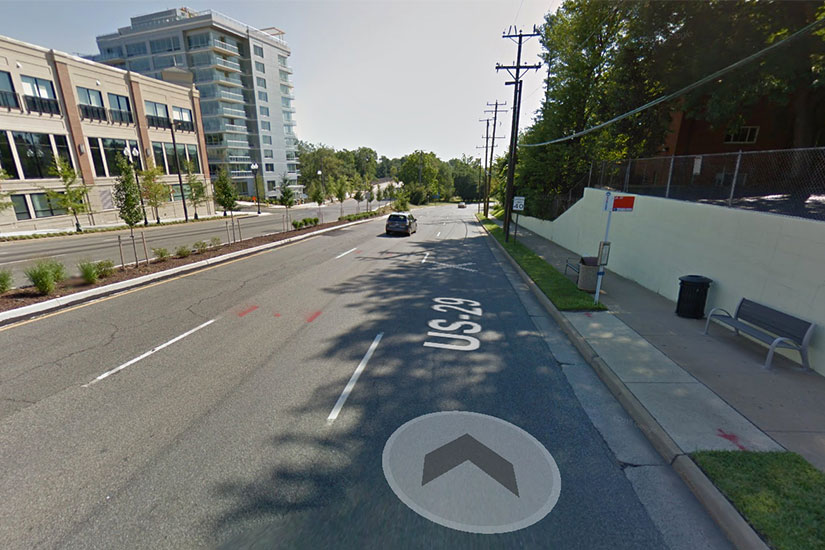

Arlington County has received a $710,000 grant to convert an outside lane of Lee Highway to bus- and HOV-only.

The lane will run eastbound from N. Veitch Street to N. Lynn Street during peak morning hours and westbound from N. Oak Street to N. Veitch Street during the evening peak period. During these times, roughly 25 loaded buses travel that stretch per hour, staff said in a report this January.

At other times, it will continue as a general-purpose travel lane.

The project is one of six “low-cost, low-risk” projects to receive a grant through the Commuter Choice program, which funds transit projects with toll revenue from I-66 inside the Beltway. On Wednesday, the Commonwealth Transportation Board authorized the Northern Virginia Transportation Commission to award $3.5 million in grants, NVTC announced.

“We’re expanding the transportation network now using a conservative strategy focused on low-cost projects and longstanding assets to ensure access to convenient, safe and reliable choices whenever people are ready to commute,” NVTC Executive Director Kate Mattice said in a statement.

The scope and timeline of the program are limited this year after revenue plummeted due to COVID-19. Pre-pandemic, Commuter Choice on the I-66 corridor anticipated $25 million in grant funding for the 2021-22 fiscal year. Instead, tolled trips dropped by nearly 50%, the 2020 Commuter Choice report found.

“Given the lower revenues and increased competition for this round of I-66 Commuter Choice, we’re pleased that NVTC and the CTB selected this project for funding,” said Eric Balliet, a spokesman for Arlington’s Department of Environmental Services.

The funding, less than the full $1 million the County applied for, will be used to cover pavement treatment, restriping, and signage for the new bus lane.

“We anticipate fully implementing the project but have not yet had discussions about adjustments to the project scope based on the lower funding amount,” Balliet said.

The County Board will be need to accept and appropriate the funds and execute an agreement with NVTC, he said. Staff have up to two years to dedicate the money to the project, and up to five years to spend it.

The county mulled this project over before, even seeking funding — unsuccessfully — in 2019.

The county was also denied a request $10 million to help add a second entrance to the Ballston Metro station at N. Fairfax Drive and N. Vermont Street.

Other funded projects include three “existing, high-performing express bus services” and $1 million towards a second entrance to the McLean Metro station, the announcement said.

These projects minimize “the risk around the uncertainty of a return to pre-pandemic traffic volumes and (make) the best use of the minimal available toll revenues,” the announcement said.

Since the Commonwealth of Virginia and NVTC established the program in 2017, it has provided more than $60 million grant funding to 36 projects in Northern Virginia.

Photo via Google Maps


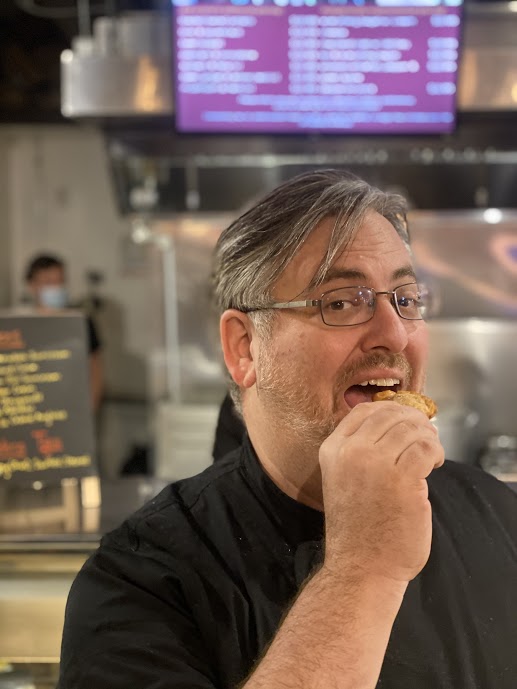
Just four months after chef Ed Hardy started making pierogies for pickup and delivery, his operation, Zofia’s Kitchen, has a brick-and-mortar shop in Ballston Quarter.

“We were really fast going from a ghost kitchen to a store front,” Hardy told ARLnow. “We are going to be looking for a second location, probably, if we can do well through January.”

His pierogi shop — in the former Cucina Al Volo spot inside the Quarter Market food hall — will hold its grand opening tomorrow (Friday). The first 30 customers will receive a 15 Zofia’s Kitchen e-gift card. To promote social distancing, both in-person and delivery orders are eligible.

Hardy blends New York City’s Jewish and Chicago’s Polish flavors with a dash of Old Bay and Southern barbecue to round out the vast geographical expanse that his humble dumplings cover.

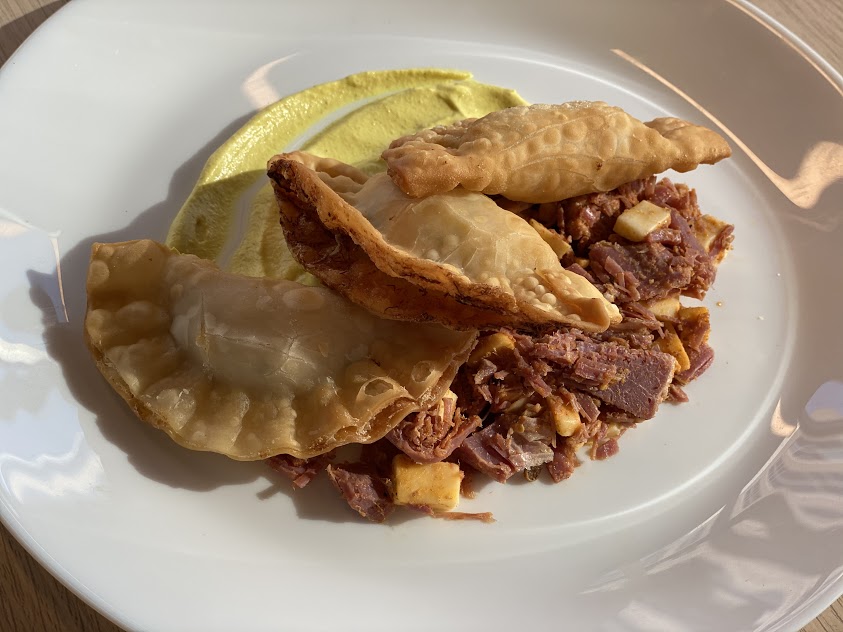
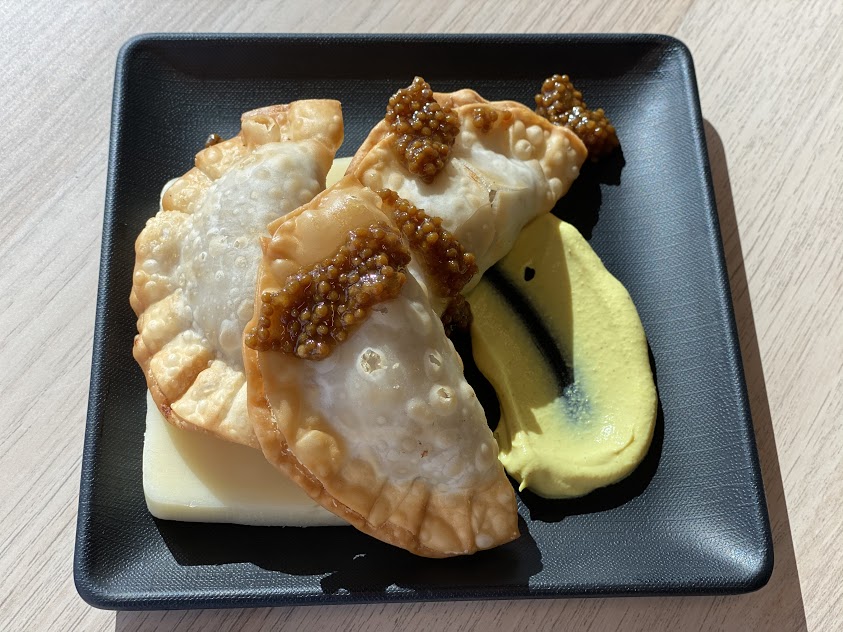
Signature pierogies include loaded baked potato, house-cured and smoked pastrami and provolone, crab rangoon, and everything bagel with cream cheese and lox.

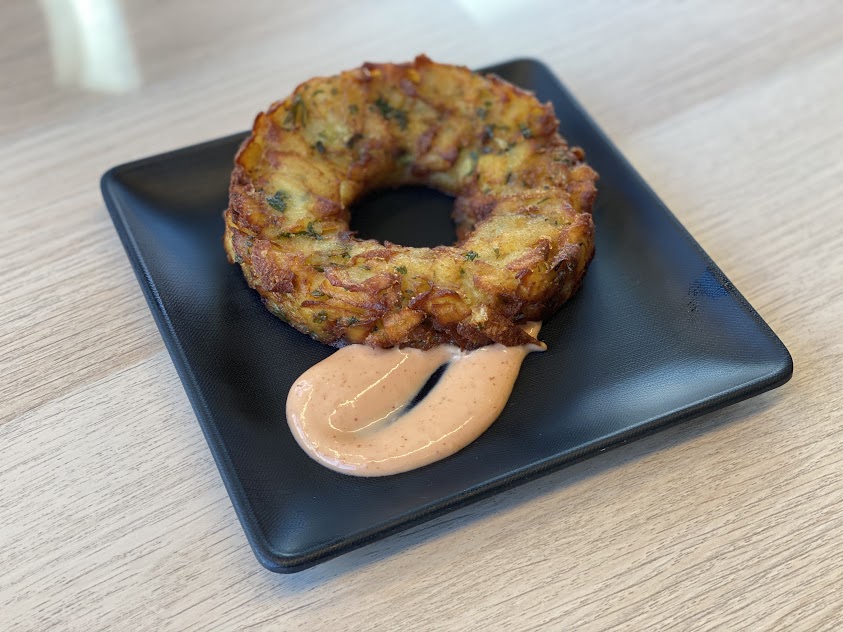
For a side, customers can choose from seasonal sides and soups, or try Hardy’s latke doughnut: shredded potato and onion formed into a ring and fried, served with lemon-dill sour cream.

If they still have room for dessert, customers can stick with sweet pierogies, like the seasonal brown sugar-spiked pumpkin “pie-rogi,” or take a break from the dumpling and opt for confections such as truffles or rugelach.

Before coming to Northern Virginia, Hardy had a career in some of New York City’s most famous restaurants. He worked for three Michelin-Starred restaurants, The ModernGramercy Tavern, and Aquavit, as well as the comfort food destination Red Rooster Harlem.

Locally, Hardy led the kitchen at Bistro Vivant in McLean and Quench in Rockville, Md. Then he hung up his apron and started driving Bacon N’ Eds food truck.

Hardy was teaching classes at Cookology Culinary School when it shut down and switched to virtual learning due to the pandemic.

“COVID-19 hit Cookology hard,” said Hardy, who looked for other ways to keep cooking.

He came to pierogies after being asked to cater them for a socially distanced party. It went so well that he and the host, Nate Reynolds, decided to take the idea public.

Hardy went to Cookology to ask if he could operate a ghost kitchen from there, knowing the owner would be on board.

“I think she had advertised that she would be open to being a potential concept incubator,” Hardy said.

By mid-September, Hardy and his team, two former students of his and two other recently laid-off chefs, moved into the ghost kitchen at Cookology. Two and a half weeks ago, they had a soft opening in the Ballston Quarter food court while they prepared the space for the grand opening.

“Honestly, I was surprised by the enthusiastic response to the humble pierogi,” Hardy said. “I think we’ve tapped into a need for another different, yet familiar, comfort food. Zofia’s is like the Polish grandmother you didn’t know you missed.”

For a limited time, Zofia’s is offering three festive platters of pierogis, with flavors inspired by the familiar tastes of Hanukkah, Christmas and New Year’s.

Cooked or frozen pierogies are available for pick-up at Ballston Quarter and for delivery via Postmates on the Zofia’s Kitchen website or through UberEats and DoorDash.


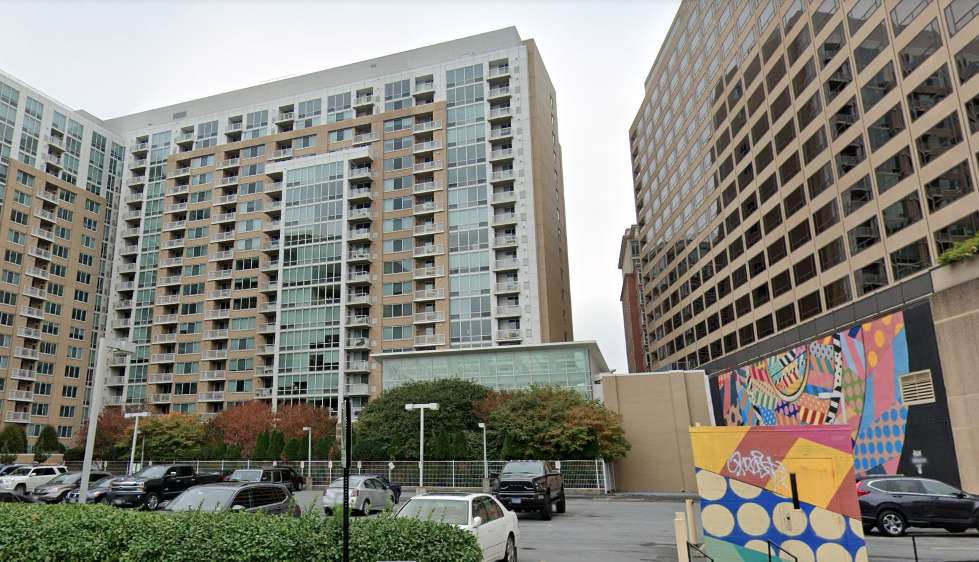
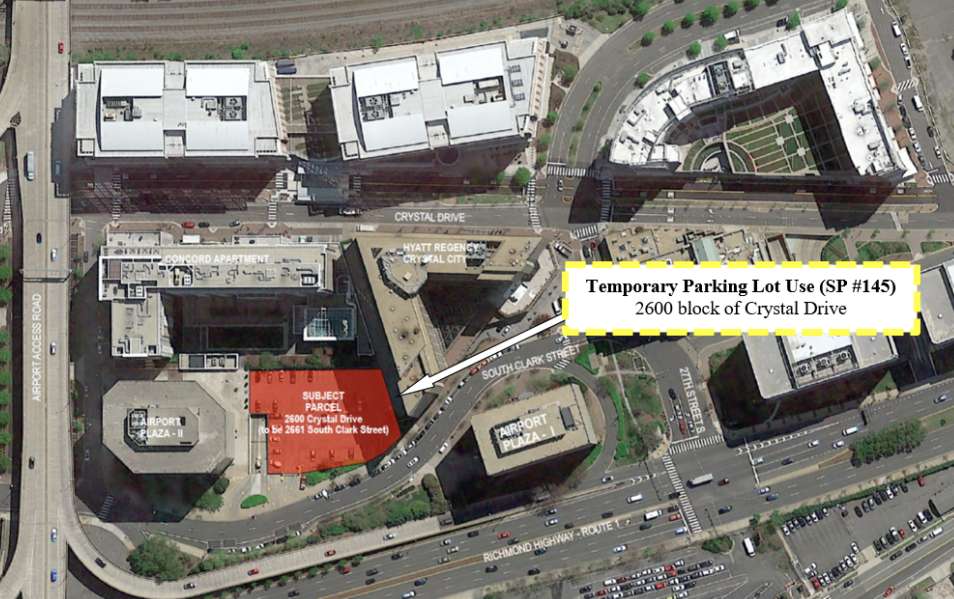
A potential residential development in Crystal City is being delayed again, thus keeping an otherwise prime property as a parking lot.

Owner Gould Property Co. wants to delay construction at 2661 S. Clark Street a few more years while it waits for different market conditions. Since 1983, when the 70-space parking lot was approved, Gould has been granted extensions to keep it a parking lot. The last extension was in 2016.

The County Board is slated to review Gould’s last possible extension on Saturday.

This time, the County is set to give the company a deadline to start building by Dec. 31, 2025, or turn the parking lot into an interim public plaza by March 31, 2026. The plaza would stay until the property owner is ready to build. Staff said Gould has agreed to the County’s conditions.

With the Board’s approval, the permit will remain until Dec. 31, 2025. Without it, the permit would expire in Feb. 28, 2021. County staff support the move — to a point.

“Staff believes that if the residential building is not under construction by 2025 that the temporary parking lot use should be discontinued and replaced with an interim plaza in this location,” the staff report says.

This lot is currently used for for short term parking for two office buildings in the Airport Plaza, as well as for event parking and staging for the adjacent Hyatt Regency Hotel.

The temporary parking lot has seen plenty of use, thanks to the neighboring hotel and office building.

“The use of the parking lot for the hotel (which is a major facility and has remained opened during the COVID-19 pandemic) has proven to be of particular significance due to recent operational changes,” the staff report said.

Gould officials could not be reached for comment by publication time.

For years, the company has monitored market conditions and development opportunities, but has yet to act, according to staff. In the report, staff acknowledged the rationale behind the developer’s hesitancy.

“Staff recognizes that market demand for some of the envisioned densities or anticipated uses may remain unknown in the near term,” the staff report said.

Image via Google Maps


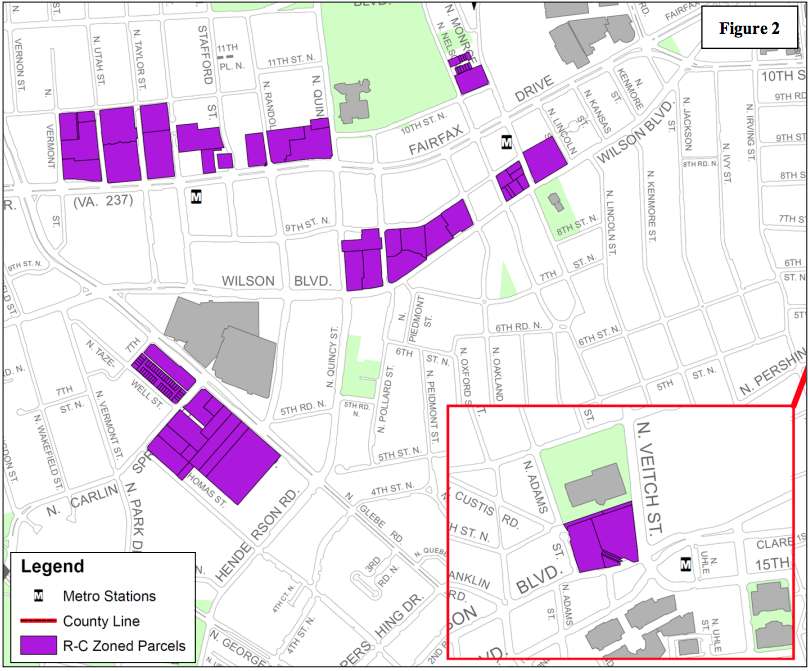
County staff want to amend zoning ordinances to let some restaurants more easily establish outdoor cafés near the Ballston, Virginia Square and Courthouse Metro stations.

Arlington County has allowed outdoor cafés in most commercial and mixed-use districts since 1978, with the exception of a few zoned districts. The County Board is slated to review an amendment allowing cafés in one such zoning district — the “R-C” district — this weekend.

“Outdoor cafes are compatible with the district’s purpose and intent and would further bolster the economic vitality of restaurants located with the district,” the staff report said. “Outdoor cafes enliven the streetscape, provide passive surveillance of the street, and enable people’s participation in street life.”

The outdoor cafés in question could be either on private property, as a by-right use, or on the sidewalk, with an approved permit. It would apply to restaurants within R-C — “Multiple-family Dwelling and Commercial District” — zoning.

An informal survey conducted by the County found a majority of residents who responded support this change. Of the 69 respondents, 85% supported the amendment because cafés would have a positive effect on on activating street life.

“Other common themes included helping out restaurants during a challenging economic period, enabling restaurants to respond more effectively to the COVID-19 pandemic, and seeking out opportunities to reclaim street parking for outdoor cafes in areas with narrow sidewalks,” staff said.

Concerns expressed by survey respondents ranged from noise, keeping pedestrian pathways clear and charging rent for the use of public space.

This amendment does not involve the program for temporary outdoor seating areas, or TOSAs, staff said.

“In response to the need for increased public health measures to combat the coronavirus, Arlington County permits restaurants, bars and cafes to establish temporary outdoor seating areas (TOSAs) which resemble outdoor cafes but are regulated and permitted under different laws,” staff said.

Rather, this amendment has been a work plan item for the Planning Division for a while now — “well before on the onset of COVID-19,” Arlington County spokeswoman Jennifer Smith said in an email.

“One benefit of TOSAs is that some of the restaurants who have been advocating for this amendment were able to have temporary outdoor dining since June through the TOSA process,” Smith said. “With the approval of this amendment, they can pursue a permanent outdoor café.”

Although the change comes as struggling restaurants lean on outdoor dining, even in the winter months, outdoor cafés have been part of Arlington County’s plan to enliven retail corridors for the last five years.

In the 2015 Retail Action Plan, outdoor cafés are encouraged because they improve the pedestrian experience in and increase the number of “third places” for the community to gather.

“‘Third places’ — locations outside of home or work where people meet, socialize and learn from each other — are highlighted as community elements that, when present, can add activity and excitement to street life as centers of gathering,” the County’s web page says.


A new report released by three local civic associations says tenant protections, more housing options and community amenities would make the 22202 zip code livable.

But significant barriers — including a history of exclusionary zoning to a lack of political will from leaders — are holding the area back, the neighborhoods say.

The report was produced by Livability 22202, a coalition of the Arlington Ridge, Aurora Highlands, and Crystal City civic associations.

“We want to ensure our neighborhood reflects the vision of an inclusive community and that residents’ voices are heard in a rapidly changing environment,” the report’s authors wrote. “By learning from the past and planning for a realistic future, we can ensure our shared values and visions as a 22202 community hold a promise that all are welcome to find a home here.”

The report coincides with heavy redevelopment and the construction of Amazon’s permanent HQ2 in Pentagon City. It also comes as Arlington County studies the lack of “middle housing” — duplexes and other smaller-scale multifamily housing — and sponsors discussions on the effects of race-based policies in County’s past.

“We believe that the adoption of our policy solutions, together with other livability objectives, will contribute to making our neighborhood an even better and more inclusive community to live and work in,” said Susan English, of the Arlington Ridge Civic Association, in a statement.

The report affirms the same solutions housing advocates have called for as the Missing Middle Housing Study takes shape.

“As the County embarks on a process to overhaul its policies and practices to fill the housing ‘missing middle,’ our report and its recommendations provide a comprehensive roadmap for change,” said Tarsi Dunlop, of the Crystal City Civic Association, in a statement.

The authors predict Amazon and the other commercial and residential development will displace existing residents, and recommend assistance and policies at the local and state level for renters and owners.

Ben D’Avanzo, of the Aurora Highlands Civic Association, said the report’s findings of “explicit racial restrictions and redlining” will supplement Arlington’s race and equity dialogues.

The Livability 22202 members said the group will now push for their recommendations to be adopted.

In a statement to ARLnow, Arlington County Board Chair Libby Garvey said she appreciates the hard work and the recommendations, many of which are consistent with the County’s goals.

“The County, too, wants to avoid displacement, increase the housing supply, and diversify housing choices,” she said.

In response to the assertion in the report that the County lacks political will to remove housing barriers, Garvey said county staff and the County Board are working with the community to do so while avoiding political backlash that could set them back.

“We are building political will,” she said. “The Board sees increasing the housing supply and access to housing as critical to Arlington’s long term sustainability and success as a community.”

The report is the result of workshops with renters, homeowners, experts and historians, as well as a study of the history of zoning and land use in the area and current barriers to adequate housing.

In addition to housing-related recommendations, the report also makes recommendations aimed ad strengthening local community cohesion.

Those recommendations include “creating both physical and digital spaces for community building, including a full-scope community center,” and “developing policies and processes to better include renters in the community, particularly addressing barriers to information sharing with residents of high-rises.”


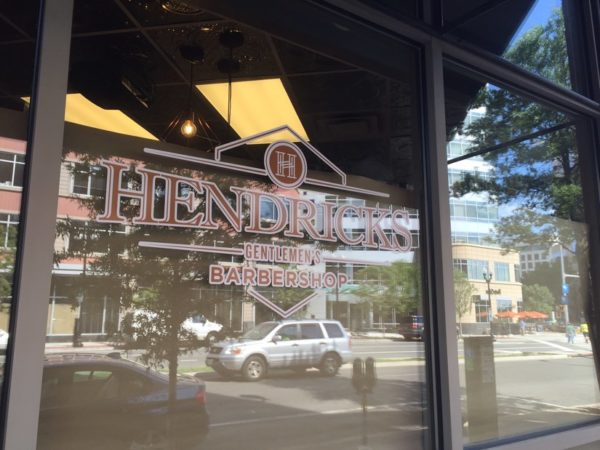
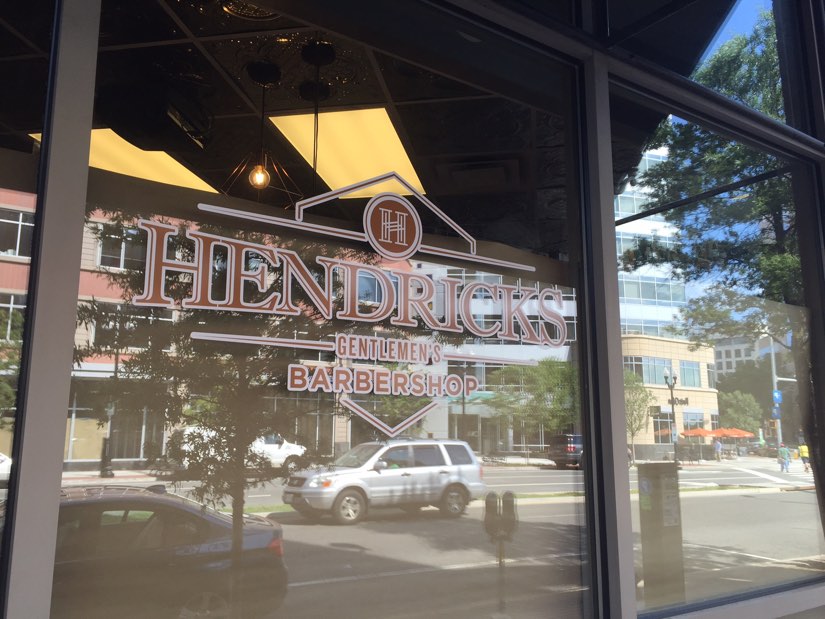
After months of losing business during the pandemic, Hendricks Gentlemen’s Barbershop in Clarendon will close for good just before Christmas.

Co-owners Melanie St. Clair and Lisa Dahl announced the closure to customers last night.

“We wanted to thank each of you for your loyalty and support,” they said in an email. “As a small business, navigating this pandemic has been extremely difficult. It is with a heavy heart, that after four years of serving the Clarendon community as your neighborhood barbershop, we have made the tough decision to close our doors.”

The barbershop at 3000 Washington Blvd opened in September 2016 and billed itself as Clarendon’s only upscale destination for men’s haircuts, beard trims and hot, straight-razor shaves. Hendricks gained popularity during its four-year stay, but it has not been enough to stay afloat during the pandemic.

“COVID-19 is really hitting us hard,” St. Clair said. “None of us could’ve predicted this.”

The last day of business is set for Wednesday, Dec. 23. But St. Clair and Dahl, who also own Smitten Salon in Lyon Park, are not done with the space just yet.

Clients at Smitten confirmed Internet tropes from the early stages of quarantine: wives were giving their husbands haircuts, while some men who no longer had to go to the office were growing their hair out. With partners to cut their hair and without suits to put on or clients to visit, men are coming in every two months instead of monthly, or not coming back at all, St. Clair said.

Hendricks took an additional hit because barbers cannot provide beard trims or hot shaves due to mask regulations, she said.

Meanwhile, she said Smitten has attracted new clients as other salons close. The thriving business gave St. Clair and Dahl the idea to replace Hendricks with a new, boutique location of the salon.

“Women want to look good on Zoom,” St. Clair said. “My clients tell me, ‘I’m not sitting on Zoom with gray roots,’ or ‘I’m bored staying at home with my kids at home,’ or ‘I’m not getting my nails done, so I’m getting a haircut to feel good.'”

Cosmetic changes to the space will begin in the new year, and St. Clair said she aims to be done with the work by February or March 2021.

“It’s like coming full-circle,” said St. Clair, who first opened Smitten in the current Hendricks location almost 10 years ago.

She said she is proud to have the brand survive, in a different way.

“We’re grateful to show Clarendon that [the neighborhood] is not going to shut down,” she said. “We don’t want to see everyone close up, and I hope other people are able to do the same thing.”

File photo


A park that’s under construction a few blocks south of Clarendon is expected to get a new name.

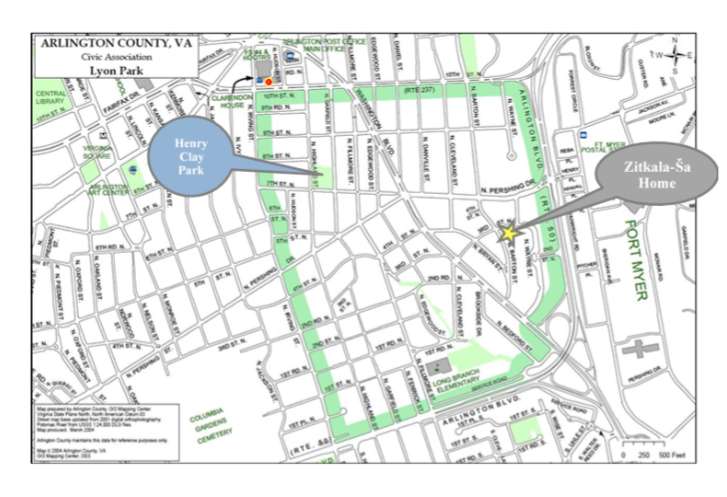
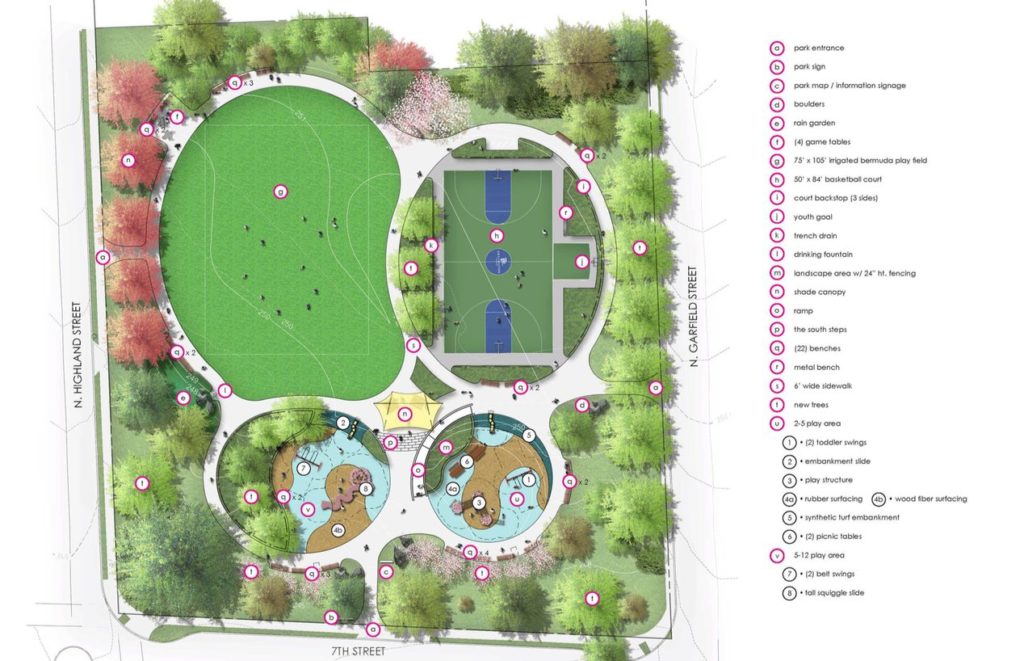
Arlington’s Park and Recreation Commission is recommending Henry Clay Park be renamed Zitkala-Ša Park, after a prominent Indigenous activist and author who lived in Lyon Park. The County Board is set to consider the name change at its Saturday meeting.

The park at 3011 7th Street N. remains closed while it undergoes extensive renovations. It is slated to reopen in early 2021 with the new name.

The Lyon Park Citizens Association presented the idea to the Park and Recreation Commission this summer. In October, the change received unanimous support from the Historical Affairs and Landmark Review Board and majority support from the Neighborhood Conservation Advisory Committee, per a county staff report.

“This proposed name change comports with the County’s naming guidelines and will add significantly to the diversity of park names,” the Lyon Park Civic Association said.

Only a handful of individuals provided public testimony, mostly in favor of the change, though at least one person spoke out against it. The Commission voted for the change in late October.

According to the Department of Parks and Recreation, the park is where the original Lyon Park School stood. The building was renamed Henry Clay School in 1927 after Clay, a slave-owning Kentucky lawmaker and Secretary of State who fought a duel near Chain Bridge.

“It is believed that Henry Clay Park was created in the early 1980s and retained the name of the school previously located on the site,” the park website said.

Clay held abolitionist views but kept the slaves he inherited as a child, freeing them upon his death.

Zitkala-Ša (“Red Bird,” or Cardinal bird) and her husband, Captain Raymond Talefase Bonnin, moved to Lyon Park in 1925 and lived there until their respective deaths in 1938 and 1942. Both are buried in Arlington National Cemetery and their home still stands at the corner of 3rd Street N. and Barton Street.

Born in South Dakota in 1876, Zitkala-Ša was eight when Quaker missionaries recruited her to leave the reservation and attend a manual labor school. There, she was given the name Gertrude Simmons, her long hair was cut and she was forbidden from speaking her native language.

“Although she enjoyed learning to read and write, she experienced first-hand the damage of having her heritage stripped away,” Arlington Public Library wrote about her. “Feeling torn between her life on the reservation and her forced assimilation into white mainstream culture, Zitkála-Šá pursued higher education and distinguished herself as a public speaker on social and political issues.”

From 1911 to her death, she was politically active. She joined the Society for American Indians, speaking nationally on its behalf. She and her husband founded the National Council of American Indians and advocated for voting rights, healthcare, legal standing and land rights, the library said.

She also created the Indian Welfare Committee of the General Federation of Women’s Clubs, speaking in Washington, D.C., Arlington, and Fairfax.

She spent the rest of her life in as president of the Council of American Indians, “speaking and writing about the continuing political and social mistreatment of Native Americans,” the library said.

A county staff report recommends the County Board endorse the name change proposal.


Arlington County is expected to pilot a program that prices parking by demand along Metro corridors.

The proposed $5.4 million program, funded by VDOT, is slated to be considered by the County Board this weekend.

Staff recommend that the Board accepts the state funding and approve the pilot that would alter parking prices based on the day, time and number of people competing for a spot. It would also give drivers real-time information on spot availability and price.

The grant has been approved by the Commonwealth Transportation Board and staff included the project in the 2021 fiscal year capital improvements plan, a county staff report says. The County will not have to match state funds.

“The Commonwealth’s recognition of the innovative nature of the project… serves not only as a recognition of the relative level of risk, when compared with a traditional highway or transit project, but also of the project’s promise and potential transferability to other locations in the Commonwealth,” said the county staff report.

In other words, the state is willing to take a chance on the system in Arlington, and should it succeed other communties follow Arlington’s lead.

Demand-based parking, which county staff call “performance parking,” is being piloted in a few cities across the country, including D.C.

The District Department of Transportation said this program, which was tested over the course of four years in Penn Quarter/Chinatown, “was largely successful.” It provided real-time information on spot availability and was able to lower or raise prices, which encouraged turnover and, as a result, increased the number of available spots.

Proponents say surge price parking reduces the number of cars on the road and lightens congestion caused by people circling blocks looking for spaces. At the time, critics said that D.C.’s surge-price parking would hurt low-income people looking to visit popular destinations.

The County Board last reviewed the idea for this system two years ago, when the board gave staff the green light to apply for “SMART SCALE” funding — to the tune of $6.1 million — to pilot the project.

If Arlington was chosen, those funds would not have been available until July 1, 2024. But the reason staff included the project in this year’s capital improvement plan is because the state gave the county a new offer.

“In the fall of 2018, during the application evaluation process for SMART SCALE, the Commonwealth, through one of the Deputy Secretaries of Transportation, approached Arlington County and asked if it would accept funding from [VDOT’s Innovation and Technology Transportation Fund] instead of SMART SCALE,” the county staff report says. “ITTF was designed specifically for cutting-edge projects like Performance Parking that advance the state of the practice in transportation.”

Work on the new system along the Rosslyn-Ballston corridor and Crystal City-Pentagon City corridor is expected to start kick off during the current fiscal year, which ends on June 30.

“A total of $700,000 is anticipated to be used for FY 2021,” the staff report says. “The balance of funding will be used in FY 2022 and FY 2023… These funds will be used for design, installation, testing, and deployment of a pilot hardware and software system.”


Benjamin Banneker Park could open sometime before Christmas, about one year after work started and a few months behind schedule.

“We just have a few final items that we are working on,” said Arlington County Parks and Recreation spokeswoman Susan Kalish in an email. “When the park opens, you’ll find a bigger park.”

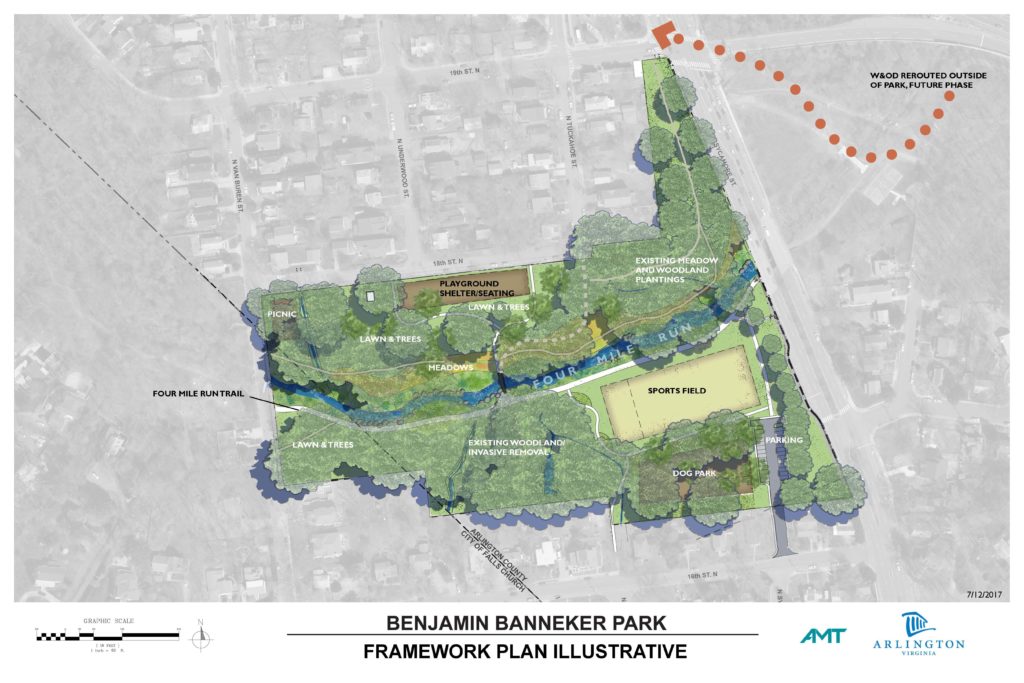
The new park is 1.8 acres larger, the W&OD and Four Mile Run trails are four feet wider, and the park’s amenities have been upgraded, she said. The $2.5 million project was given the green light in September 2019. Work started in December 2019 and was originally slated to finish in the third quarter of 2020, according to the project page.

“Due to COVID-19, the manufacture and shipping of the play equipment was delayed, necessitating the projected opening of the park to fourth quarter 2020,” said Erik Beach, a Parks and Recreation staff member, in an email.

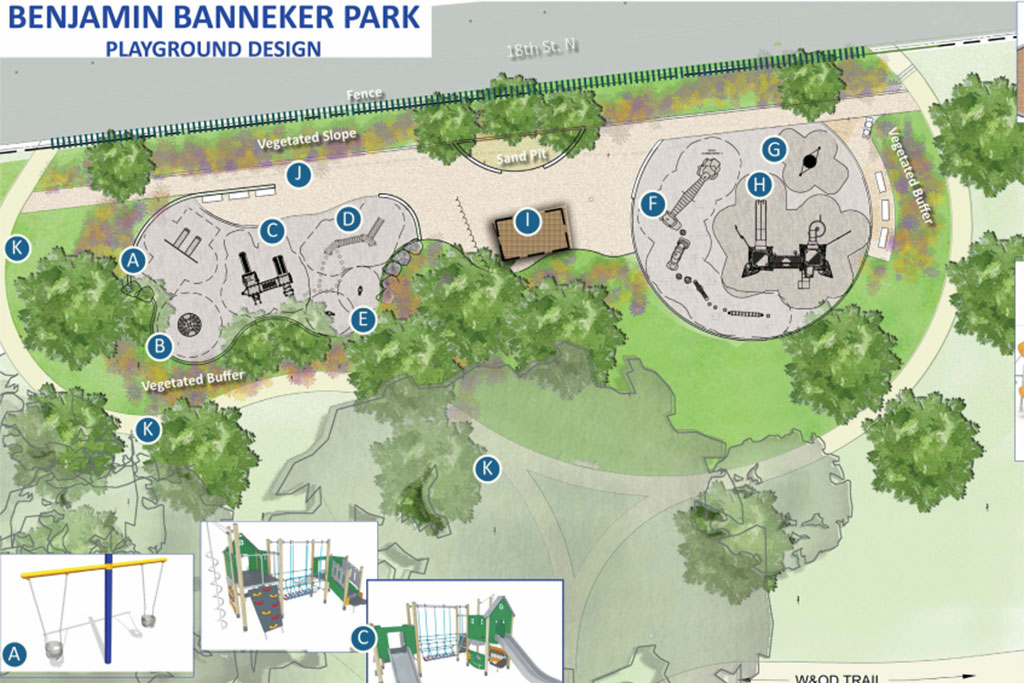
The playground for children ages 2 to 12 got new equipment, including an obstacle balance course, rock climbing, and “soaring play towers with sky-high slides,” Kalish said.

The athletic field, meanwhile, has been expanded to the west to allow parts of the turf to rest while other parts are used, she said. Spectators will also find updated seating.

The parking lot was resurfaced and striped to improve connections between amenities and to make the dog park, fields and trail more accessible for people with disabilities. The two widened trails include a new pathway configuration around the playground, she said.

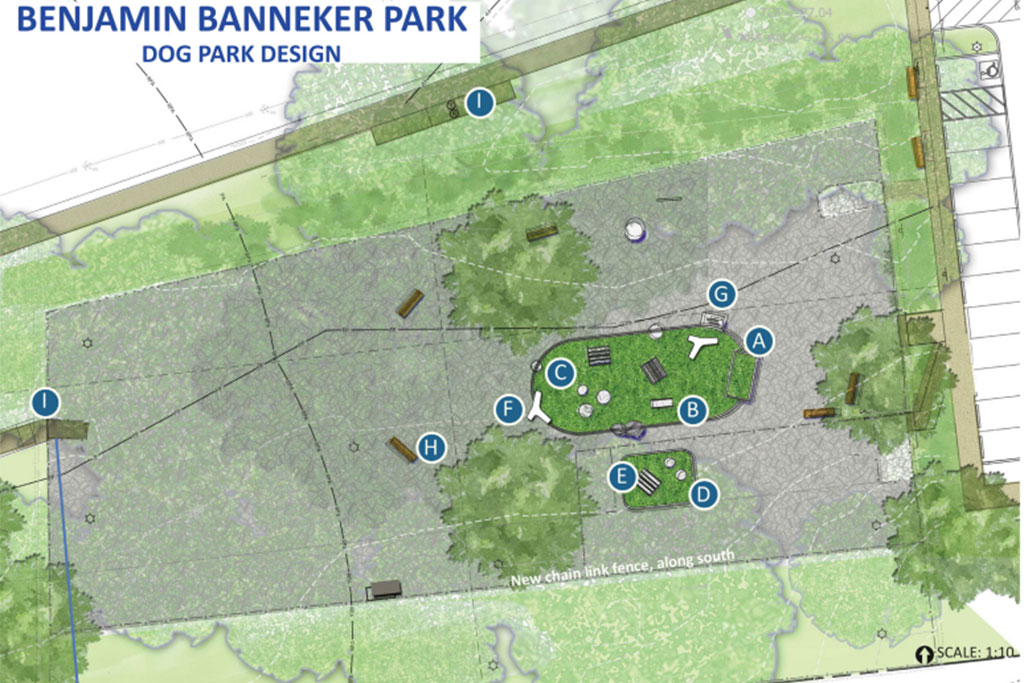
Upgrades to the picnic area include new seatings and furnishings, canopy trees and native plantings, and the dog park has new entrances and structures for dogs to explore.

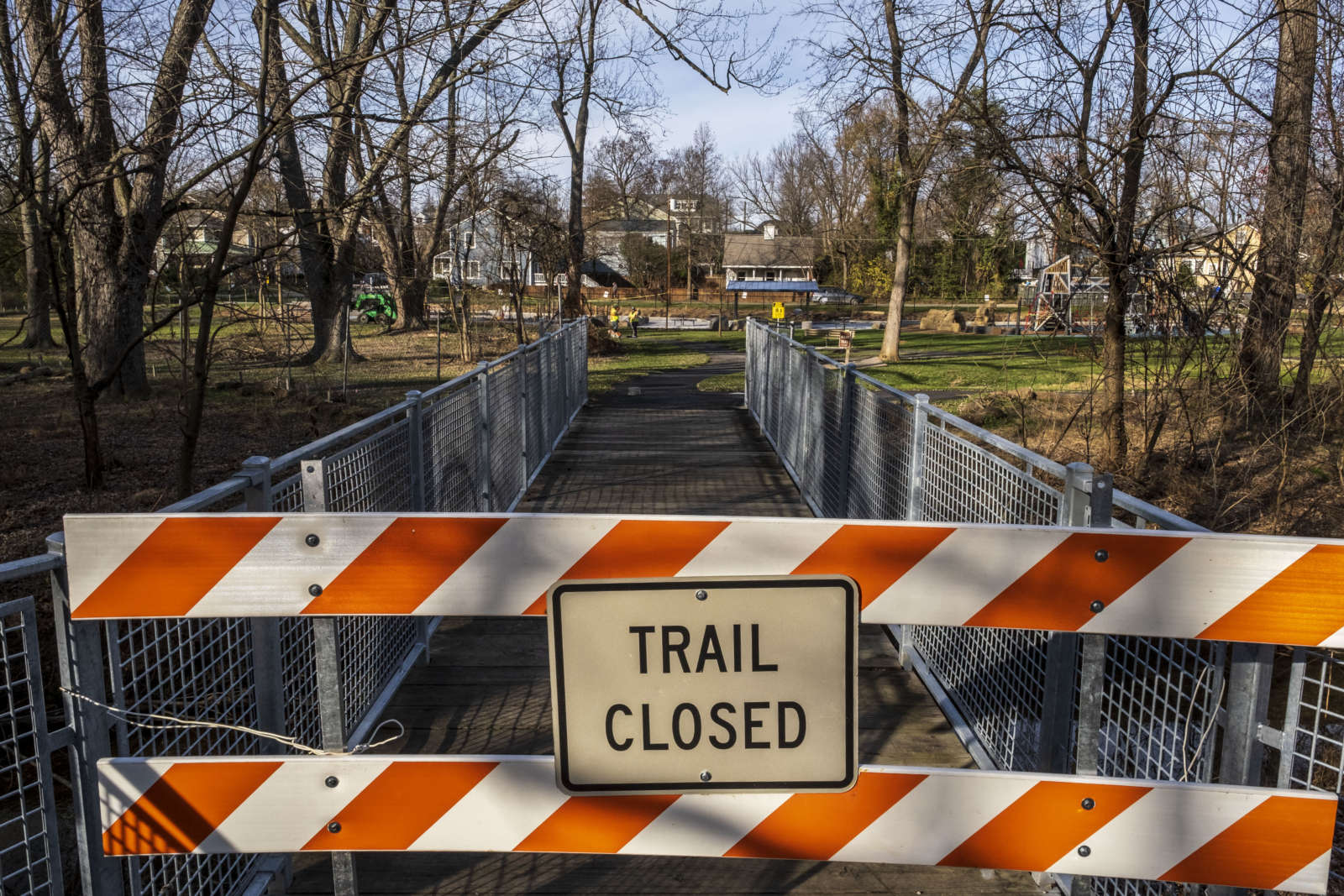
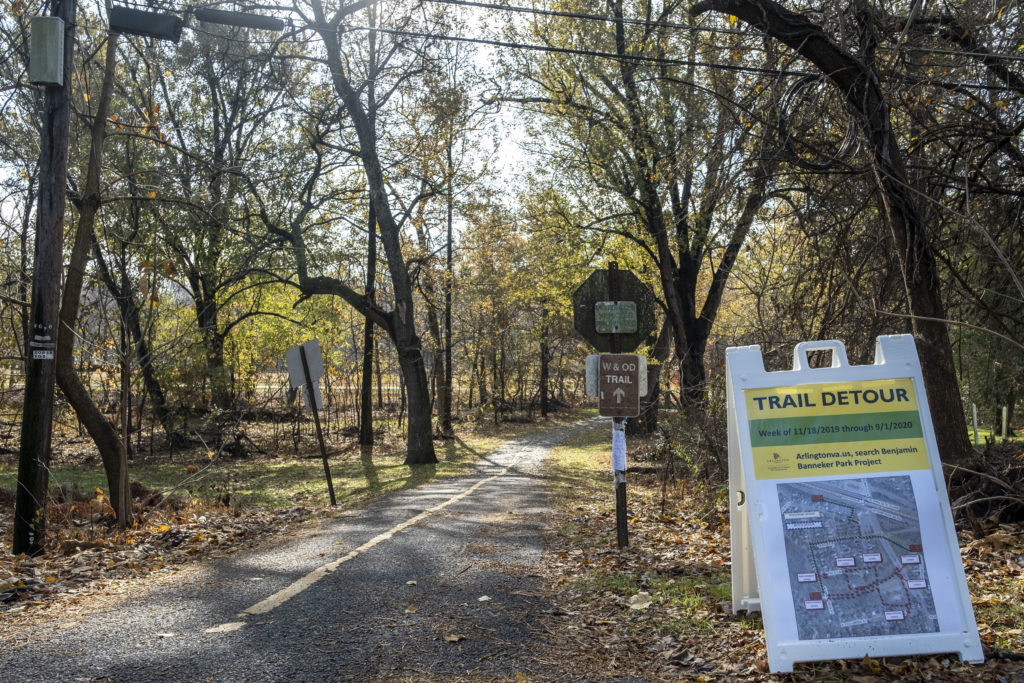
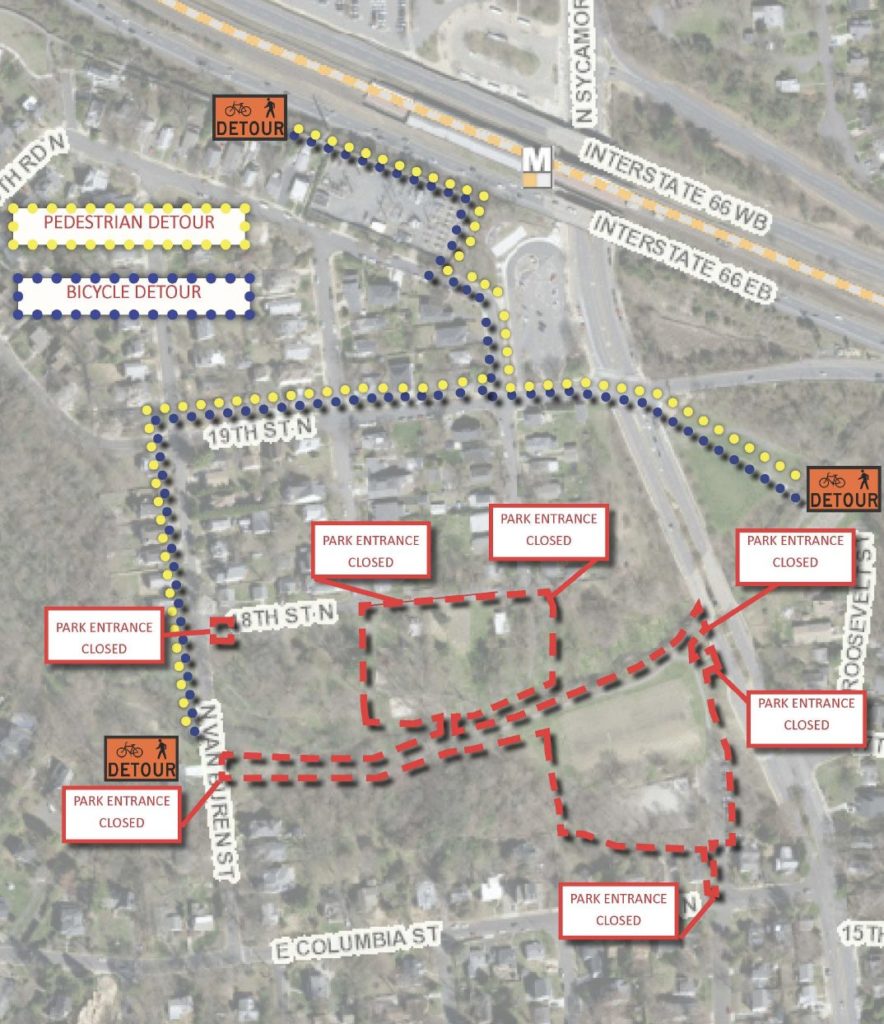
While work has been ongoing, pedestrians and bicyclists using the W&OD trail had to take a detour to the busy intersection of N. Sycamore Street and 19th Street N.

After recent heavy rains, some residents have noted that part of the park tends to flood.

“Like most County parks, Benjamin Banneker Park is predominantly in a floodplain and there will always be lingering moisture due to the geographical nature of its location,” Kalish said.

But Beach said some of the drainage issues people saw during construction have been addressed as work finishes.

“Stormwater management and mitigation measures to treat pollutants include permeable pavement at the walkways and bench seating areas in the playground and a stormwater facility to treat runoff in the parking lot,” Kalish said.

These measures meet the state stormwater management requirements, and the site is graded and designed for water to flow towards Four Mile Run, she said.

Kalish said the department is still fixing a separate drainage issue in the playground’s sand pit, so the sand pit will not be available “for a bit” after the park opens.

“Once we have everything completed the park should run as smoothly as any park that in a floodplain,” she said.

Other mitigating efforts Kalish listed included planting more plant beds around the dog park, field and playground, and adding more than 600 sapling trees. A natural safety surface was installed in half of the playground area for better drainage.

“The County rejected some small areas of the safety surfacing installation, which has since been corrected,” Beach said.


Sponsored by Monday Properties and written by ARLnow, Startup Monday is a weekly column that profiles Arlington-based startups, founders, and other local technology news. Monday Properties is proudly featuring Shirlington Gateway. The new 2800 Shirlington recently delivered a brand-new lobby and upgraded fitness center, and is adding spec suites with bright open plans and modern finishes. Experience a prime location and enjoy being steps from Shirlington Village. 

(Updated at 3:20 p.m.) Stand Together Ventures Lab, part of the Arlington-based philanthropic organization Stand Together, is helping launch and fund startups that could help people in transformational ways.

The nonprofit venture capital team invests money from Stand Together Foundation, which gives resources to community-based organizations nationwide to help break cycles of poverty. The umbrella organization for the Lab and the foundation, Stand Together, is located at 1320 N. Courthouse Road in Courthouse and was founded by politically-active businessman Charles Koch.

Koch’s Charles Koch Institute is located in the same building.

But Ventures Lab Managing Director Sihyun Choi will not invest in just any startup that purports to have a social impact. It has to take a revolutionary approach to a problem, not an evolutionary one, he said.

“Evolutionary ideas tend to be less risky,” he said. “We see a lot of solutions that help things the way they exist…That’s an easier thing to solve for than changing the system as a whole.”

Choi joined Ventures Lab this March, and in these last 10 months, he said he has learned how hard it is to find organizations that attack the roots of problems in the spheres of racial justice, criminal justice reform, poverty and immigration. He also joined as Ventures Lab was getting started and as the U.S. was bracing for COVID-19.

The pandemic heightened the urgency around the issues that need solutions, he said.

“My personal view is that expectations before March, and post-March — especially with the social unrest around racial justice and criminal justice reform needs across the country — have become exacerbated,” Choi said. “That certainly accelerated both the clarity of the work and the importance of it, and frankly, how quickly we needed to mobilize our work around that.”

The first group of startups receiving money from Choi and his team of ex-venture capitalists and corporate operations professionals reflect the topics people latched onto in 2020, which the pandemic in part revealed and exacerbated. These issues include criminal justice reform and racial inequality in unemployment.

From 140 startups it looked into this year, the Lab picked four: JusticeText, RisekitShift, and a fledgling company Choi cannot yet name. Typical checks range from $100,000 to $1 million, depending on the age of the company and the needs of a founder, he said.

JusticeText uses AI to transcribe audio and visual evidence for public defenders, who often do not have the time to review extensive footage and recordings themselves or the resources to hire a transcription service. Some estimate about 80% of crimes involve video evidence.

RiseKit helps people facing significant employment barriers — such as a criminal record, housing and food insecurity or a non-traditional education — find jobs. Shift helps veterans translate their skills from the military into jobs.

Choi could not name the fourth organization yet because it will launch next year, but he said it shows people in underserved communities — who may have no idea that their interests can align with careers — how to convert a passion into a viable life path.

Soon, Ventures Lab aims to invest in more startups, addressing other realms such as health care and education. The team is not aiming to invest in a certain number of companies, and it will take chances on those that may not generate lots of revenue, Choi said.

“We are exclusively biased toward if it is driving social impact — and if it makes money, great,” he said. “We’ll invest in the things we think are really important. By nature, it’s hard to put a quota on that.”

Asked if the lab will invest in Arlington-based startups, Choi said, “We’d love to continue to see opportunities here in the D.C. area, since the start-up ecosystem here is certainly growing.”


View More Stories