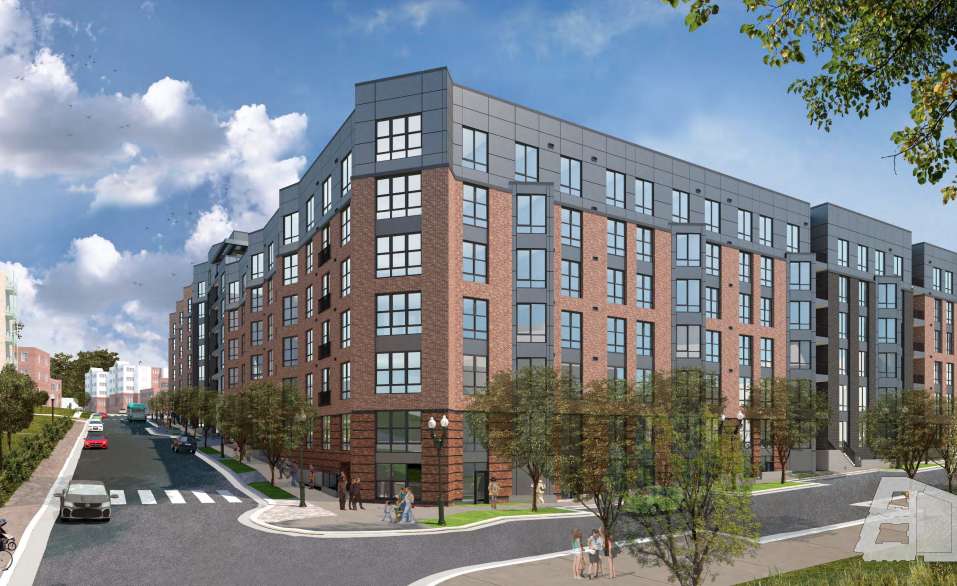
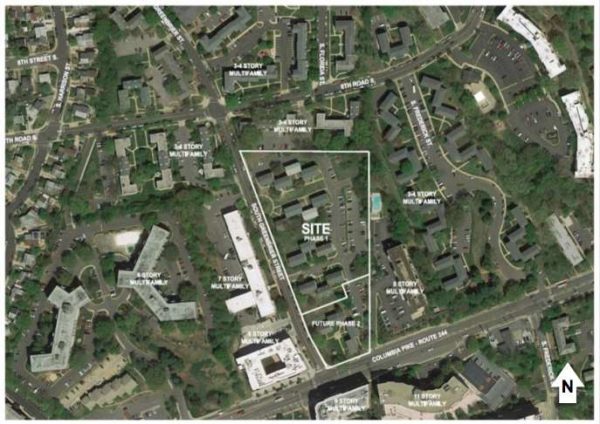
This Saturday, the Arlington County Board is slated to review a proposal to convert garden-style apartments on Columbia Pike into a 400-unit development dubbed Pike West.

The redevelopment of what’s currently known as the Greenbrier Apartments will add affordable housing units in a diverse neighborhood of Arlington that has seen an influx of residents, where the county aims to preserve 6,200 affordable housing units.

The five-acre property at 835 S. Greenbrier Street is bordered by Columbia Pike to the south and S. Greenbrier Street to the west. It currently has 117 residential units in 18 garden apartment buildings that were built in the 1940s.

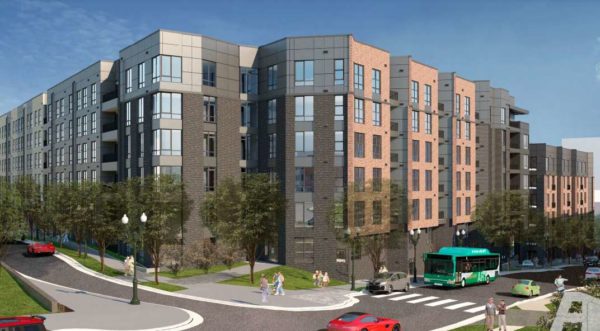
In the first of two phases of the project, local developer Merion Group plans to demolish 14 of the apartment buildings, or 90 units, and build two 6-story apartment buildings and a shared, above-ground parking garage with 418 spaces and topped with a green space. The other 27 units and accompanying 20 parking spaces will remain in this phase.
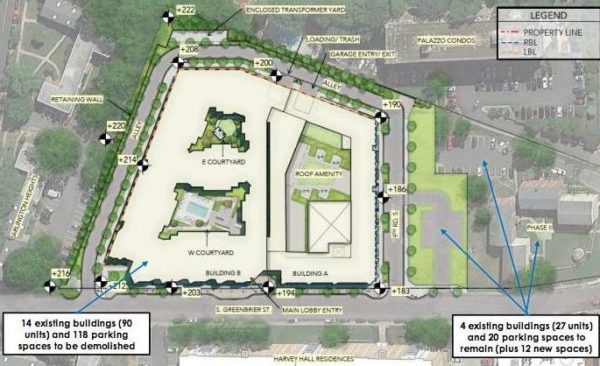
The developer asked to remove two planned neighborhood streets, and instead turn them into alleys while relocating them within the Greenbrier property.

The new apartment buildings will set aside either 93 or 124 units for people making up to 60% of the average middle income.

“In either event, you will have more units that are affordable than that are out there on the site today,” said Catharine Puskar, an attorney for the developer.

The developer met with the community on Sept. 22 and with impacted tenants on Oct. 29, Puskar said. Tenants will get a requisite 120-day notice of the project next year ahead of construction.

Until then, “they are welcome, and we would like them, to stay inside their units,” she said.

Columbia Pike was the site of a recent affordable housing scuffle between Arlington residents and the County Board. Last month, the County Board voted to shelve a proposal from county staff to change rules governing affordable condos and other for-sale housing along Columbia Pike, InsideNova reported. Critics were vocal in their disapproval of the plan when it first came before the board in June and again in October.

But this project carries less controversy, according to some planning and transportation commission members, who mostly voiced approval of the plans during recent meetings. There is, however, some community opposition, from a group that’s generally skeptical of new development.

Representing Arlingtonians for Our Sustainable Future, economist Jonathan Huntley told the Planning Commission that the group has estimated the development will require up to $23 million in funding to meet new residents’ and students’ needs in the coming years.

The units feed into schools that are already crowded, he said.

“Ultimately, this development will require Arlington to make a fiscal commitment to meet the needs of new residents,” said Huntley. “We predict Pike West will attract more students and generate lower than average real-estate revenues, both of which will lead to deficits.”

Photo (3) via Google Maps
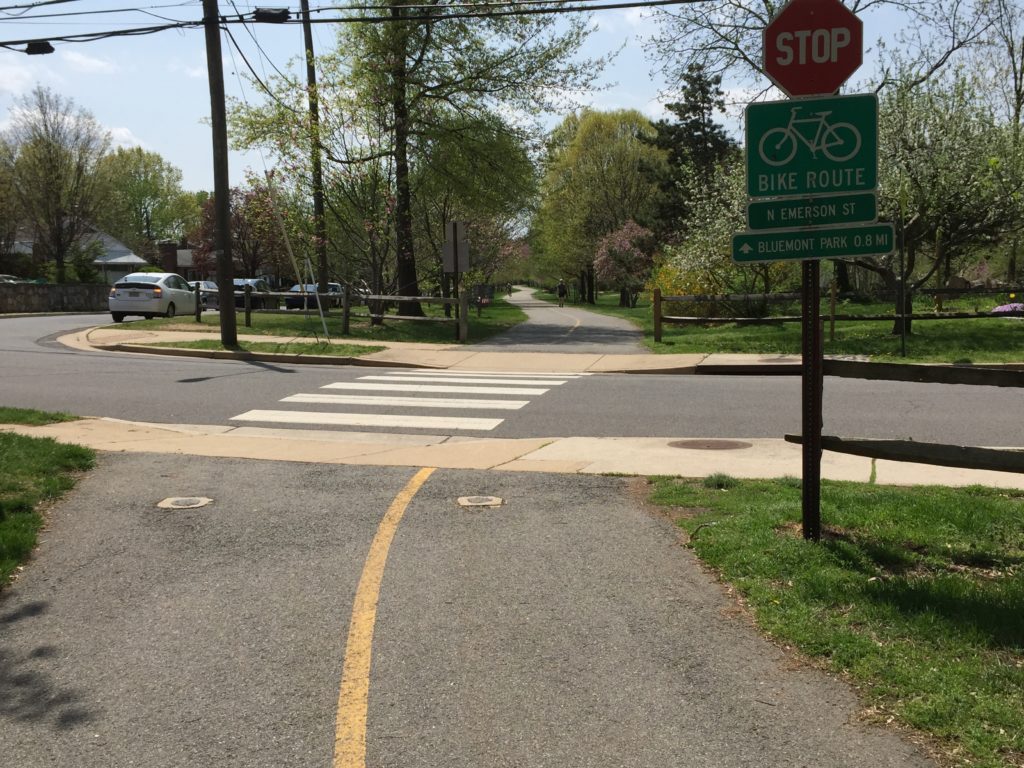

County staff are accepting public comments on some long-awaited safety improvements at three intersections along the Bluemont Junction trail.

Residents will be asked if the proposed changes would make them feel safe using the trail or driving across it. The engagement period is open through Friday, Nov. 20.

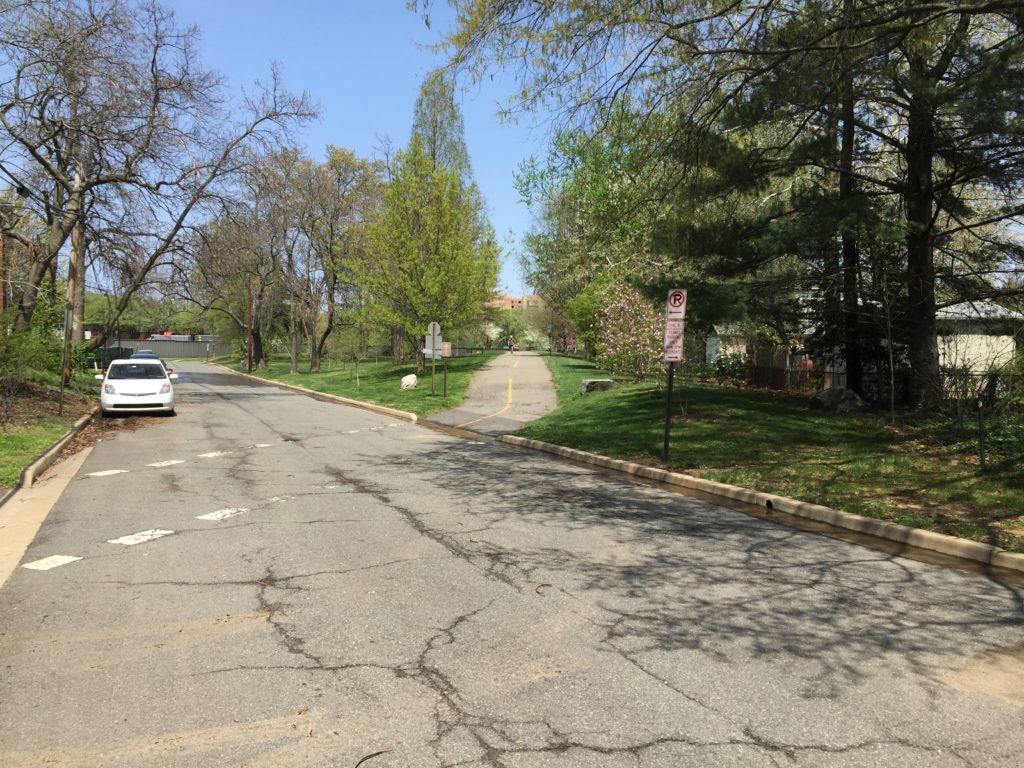
For years, users have said conditions are unsafe along the trail, which connects Ballston with the Washington and Old Dominion trail at Bluemont Park. It’s difficult for trail users and drivers to see one another at the intersections, until the former are already in the crosswalk.

Discussions and presentations on upgrades began last winter, but staff had to pause their progress this spring due to the pandemic. Work resumed this fall.

“Trail safety and access issues for the Bluemont Junction trail were first raised by the community in 2013,” the county project page said. “The project has evolved to focus on the three intersections included based on site visits, data analysis, and community input.”

The intersections are at N. Kensington Street, N. Emerson Street and N. Buchanan Street.

The Bluemont Civic Association, the Bicycle Advisory Committee and Pedestrian Advisory Committee provided input on the preliminary designs. The public comment period through Nov. 20 will inform the design plans that county staff will present to stakeholders for more comments once they are 30% complete.

“This project was identified as necessary to improve safety and accessibility at intersections where the trail and the street network meet,” the county staff project page said. “It will benefit people walking, biking, accessing transit, and driving.”

Where the trail intersects with N. Buchanan Street and N. Emerson Street, the trail and road are at different elevations and visibility is low, the survey said.

Although the trail is typically more heavily used than the roads, signs are limited and the street markings are worn out.

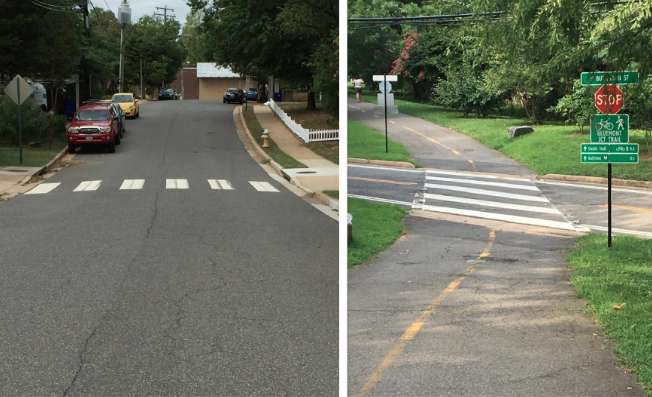
At N. Buchanan Street, staff propose using striping at the trail crossing to slow speeds and give motorists more time to see trail users, adding warning signs and possibly creating a raised crossing.

At N. Emerson Street, county staff propose raising the crossing, changing the angle of the approach to the trial and adding signs. 

Sightlines at the N. Kensington Street intersection are limited and nearby transit stops are not ADA accessible, the survey said.

They propose narrowing the trail crossing, adding ADA-compliant transit stops with boarding platforms, bringing the raised crossing up to trail grade, adding ADA-compliant tactile warning strips and improving the high-visibility crosswalk markings.


(Updated at 5 p.m. on 11/10/20) Dominion Energy and Arlington County are looking to swap two pieces of land near Crystal City.

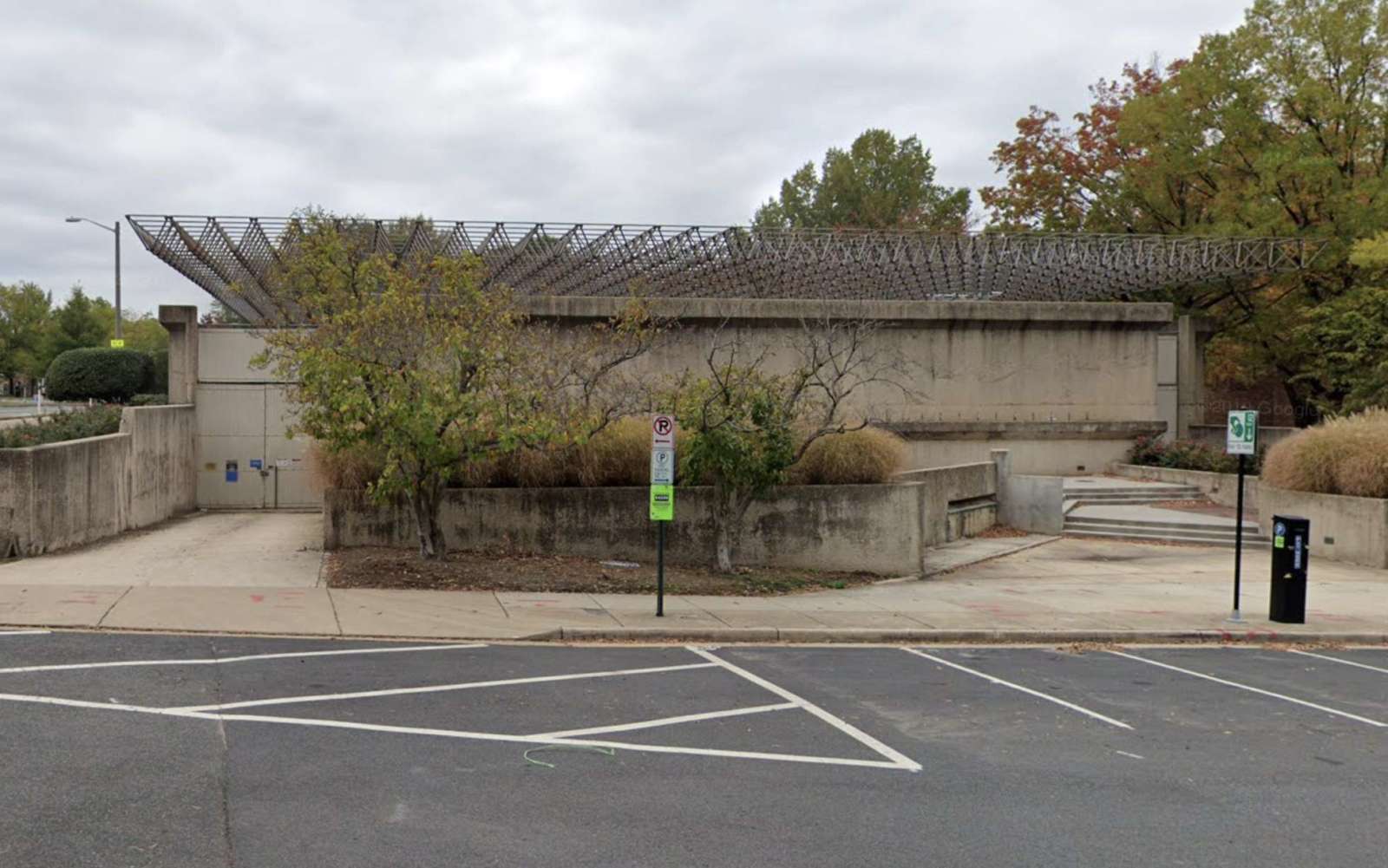
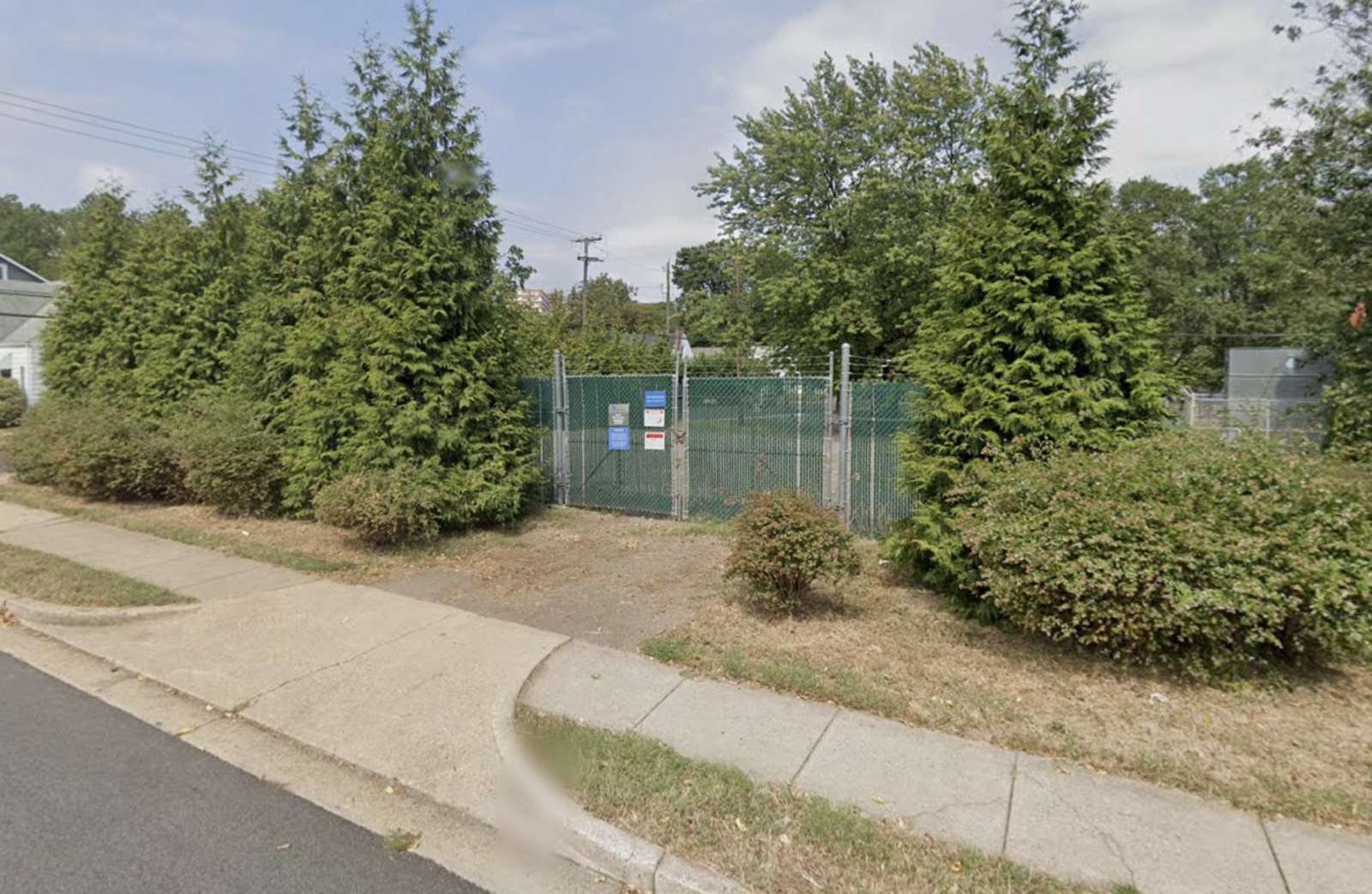
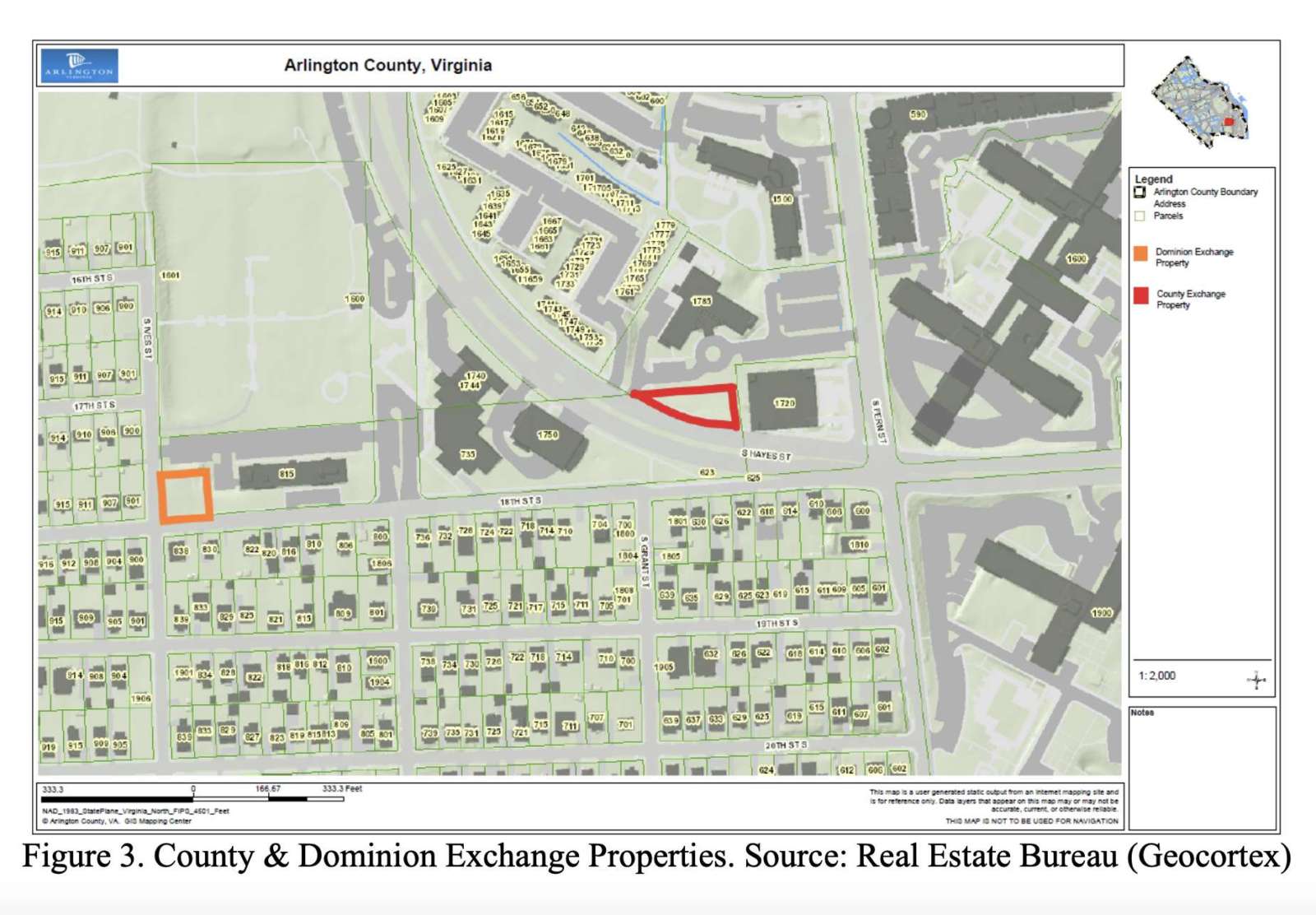
On Saturday, the County Board is slated to consider a series of real estate and land use actions, including a land exchange agreement between Dominion and the county. Dominion offered to give the county a piece of property at the corner of 18th Street and S. Ives Street in exchange for a piece of county-owned land on the corner of S. Fern and S. Hayes streets.

The swap would allow Dominion to expand its substation — located roughly two blocks from Amazon’s under-construction HQ2 — to accommodate larger, newer equipment. Construction on the expansion is anticipated to start late in the first quarter of 2021.

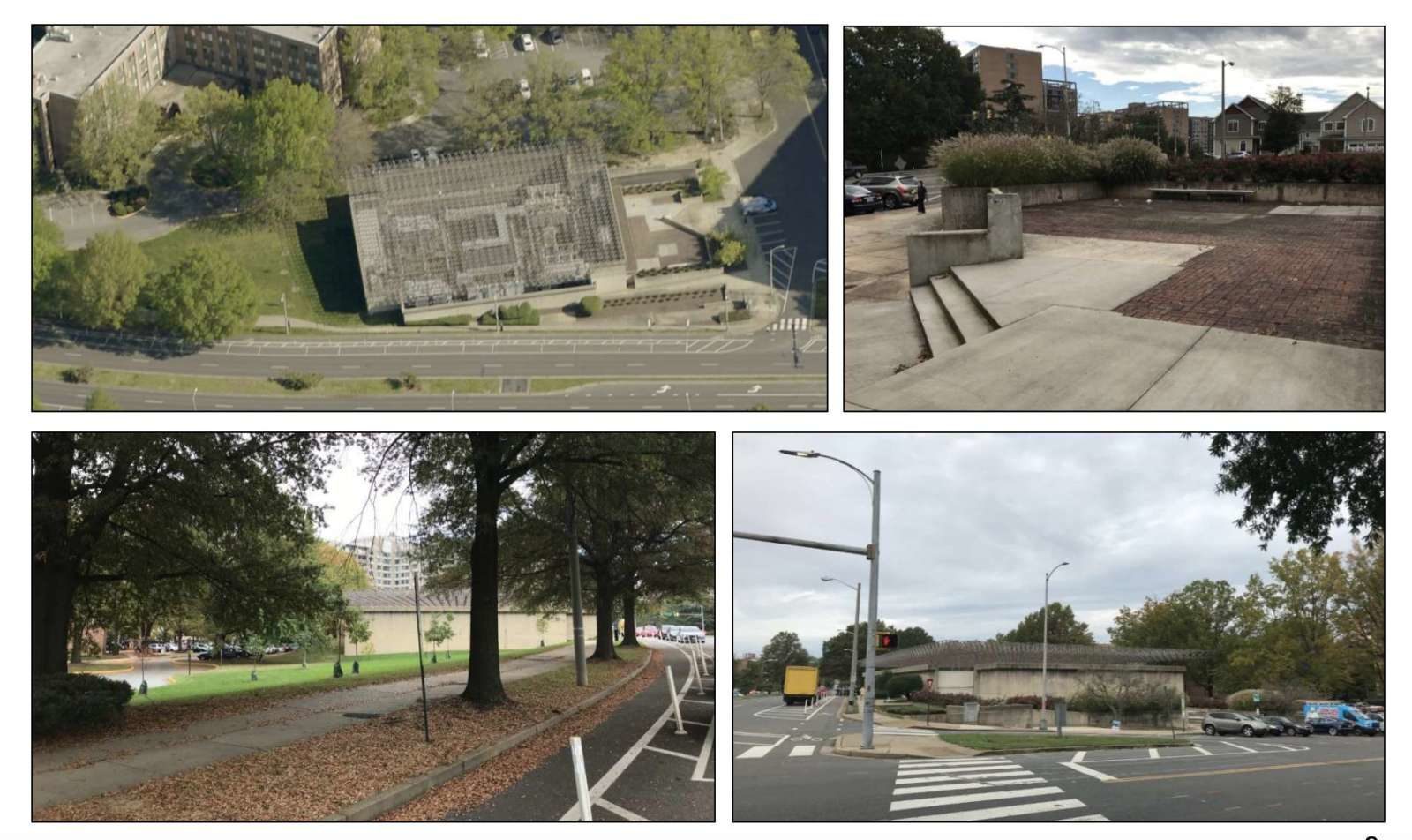
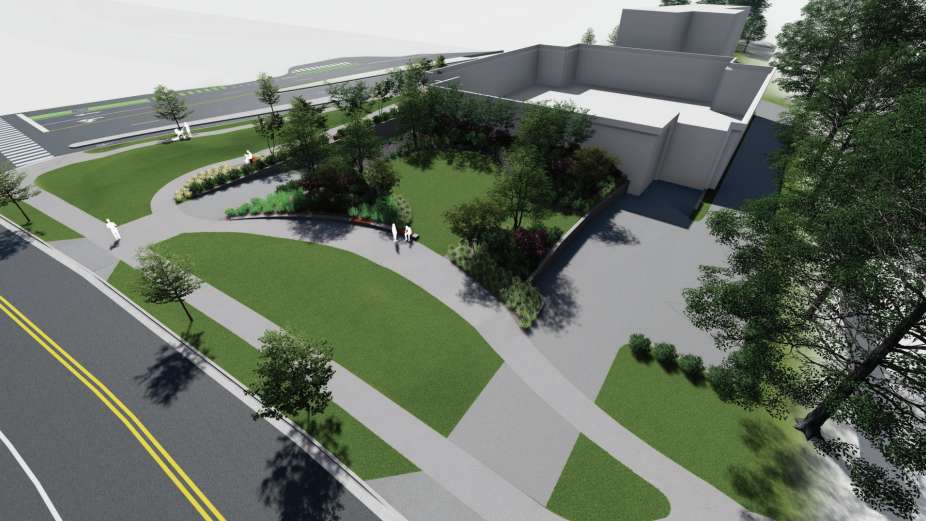
The County is considering turning the Dominion property, the site of a previous substation, into a park.

In addition to updating the substation, Dominion is also trying to meet increasing demand for energy as the Pentagon City and Crystal City areas develop, said Michael Halewski, a real estate specialist from the Department of Environmental Services, during a meeting on Wednesday with Arlington’s Planning Commission.

“Dominion is on a tight time frame for the delivery of the increased electrical capacity to the community,” Halewski said.

The area needs more “redundancy and reliability” in the electrical services it provides, said Dominion spokesperson Peggy Fox in an email on Tuesday.

To get the extra physical space needed for the new equipment, Dominion looked to neighboring land. The county-owned property — an unused, grass-covered sliver along S. Hayes Street — did not have as many constraints, including underground public utilities, as other plots.

The original discussion about this exchange occurred in the summer of 2019, and in July 2020, Dominion submitted a rezoning application to the County Board.

In August, Dominion notified the neighboring civic associations of its plans, and invited feedback through a survey. It also purchased social media ads and held two virtual meetings.

“It was one of the more successful community engagements Dominion has had in response to one of its projects,” said Matthew Weinstein, counsel to Dominion Energy, during the Planning Commission meeting.

In response to feedback on the aesthetics of the substation, Dominion updated its permit to include a commitment to installing public art on-site, redesigning the plaza to improve the pedestrian and leisure experience and widening the sidewalk from four feet to six feet, said Dominion spokesperson Ann Gordon Mickel in a project update on Oct. 28.

Neighboring civic associations told county staff they had no issues with the substation rezoning proposals, but the Aurora Highlands Civic Association did express hesitancy with the exchange agreement.

“We’ve heard some concerns from the community about the environmental condition of the land,” said Halewski, the county staffer.

Environmental reports indicate that some areas of the old sub-station property would need to be remediated if dirt was disturbed and excavated. The soil could be used on-site or disposed of in a regulated landfill, he said.

“The cost of those different scenarios range from $0 if it’s a passive open space to approximately $55,000,” Halewski said. “This would be a county cost.”

Photos above (1-2) via Google Maps, (3-4) via Arlington County


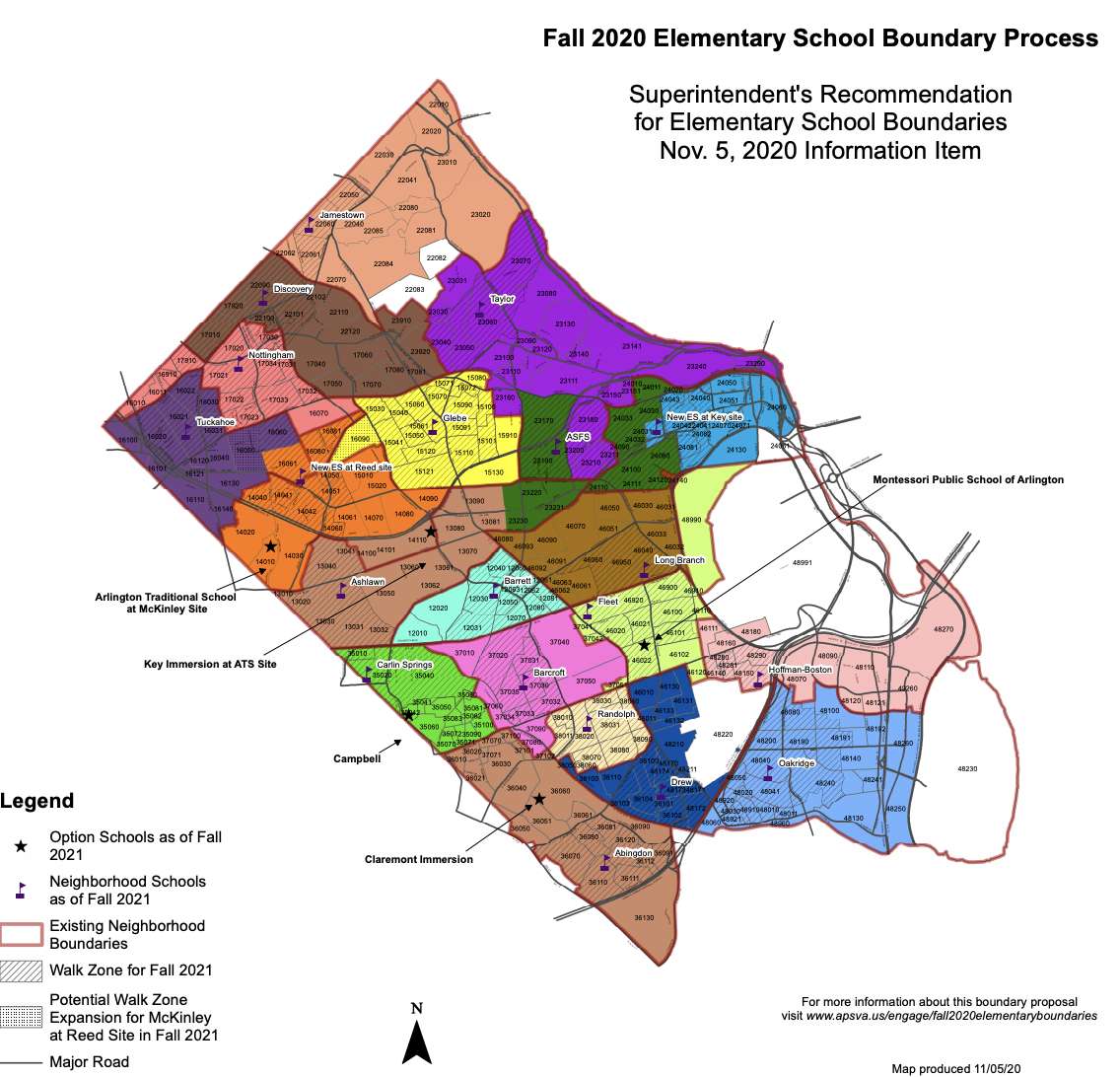
The latest Arlington Public Schools elementary boundary process earned some public plaudits, a relative rarity, after the number of students who would have been assigned to new schools was cut nearly in half.

The superintendent’s recommended plan makes enough changes to accommodate the new Reed and Key elementary schools, which open in the fall of 2021. Twenty-two planning units, or about 800 students, will be reassigned among Arlington Science Focus School, the Key school site, and Ashlawn, McKinley, Taylor and Tuckahoe schools. The move increases the number of students who can walk to school by 600.

Originally, some 1,400 students were to have been reassigned.

The larger set of boundary changes was first proposed in early October. A public hearing on the superintendent’s new proposal will be held on Dec. 1, before the board considers adopting it on Dec. 3.

A separate countywide boundary process is slated for as soon as 2022.

The new plan presented on Thursday night was drafted after APS staff received numerous messages from parents who requested that the process avoid impacting children’s friendships and relationships with teachers, which have been harder to develop and maintain during distance learning.

Staff told the School Board that Superintendent Francisco Durán’s new boundary recommendations make minimal adjustments and preserve flexibility for a broader process to come.

Many parents who spoke at the meeting commended the school system for the changes.

“It’s clear stakeholders listened to community feedback, took it on board and made real effort to try to align boundaries to minimize disruption and better utilize space in available schools,” said Katie Geder

For another parent, Mike Flood, the recommendations checked all the boxes: limited disruptions, balanced enrollment, stability and proximity to neighborhood schools.

June Locker said parents in her planning unit were surveyed and a majority believe that APS has addressed their concerns, she said.

School Board members were divided on how to alleviate the crowding not addressed in the new plan, and with enrollment declining, questioned how severe overcrowding will be next fall.

Board member Reid Goldstein said the plan leaves too many planning units alone.

“While we’re doing virtual [learning] is the perfect time to make the necessary capacity changes,” he said.

Both Goldstein and board vice-chair Barbara Kanninen said they were nervous the countywide boundary process would not happen in 2022 as planned, and asked Durán for a commitment to one.

Durán said the goal in providing additional flexibility is to have a broader, countywide boundary process.

“There is that commitment to do that,” he said.

Board member Tannia Talento disagreed with the calls for bolder boundary changes, saying the system needs flexibility in the event that capacity needs are lower than projected in the next few years.

Board member Nancy Van Doren predicted that enrollment will bounce back because most of those who opted out this year are in prekindergarten and kindergarten, ages when it is easier to keep kids home.

“We may have more of a pop back, quickly, than we might be concerned about,” she said.

In February, the School Board approved an elementary school building swap to account for the new Reed School building in Westover, as well as the former home of the Key Spanish immersion program near Courthouse being converted to a neighborhood school to account for population growth in the area.

That process, and past school boundary change processes, have frequently been met by criticism from parents, in contrast to the encouragement from most speakers at Thursday’s meeting.


Sponsored by Monday Properties and written by ARLnow, Startup Monday is a weekly column that profiles Arlington-based startups, founders, and other local technology news. Monday Properties is proudly featuring Shirlington Gateway. The new 2800 Shirlington recently delivered a brand-new lobby and upgraded fitness center, and is adding spec suites with bright open plans and modern finishes. Experience a prime location and enjoy being steps from Shirlington Village. 

A global pandemic, nationwide social-justice campaigns and a contentious presidential election: 2020 threw three curveballs at Rosslyn-based startup Phone2Action.

“What a year, right?”

That is Jeb Ory, the founder of Phone2Action, which offers software that promotes civic engagement through mobile phones. Last week he announced that his company is acquiring fellow startup GovPredict, following 10 months of user engagement levels that his staff have never seen before.

“We have had far and away record usage of our software this year,” he said.

Ory called the acquisition of GovPredict a “natural fit” and a “game changer.”

Founded in 2015, GovPredict builds software for nonprofits, lobbying firms, campaigns and corporations. Acquiring the startup will help both companies stay ahead of trends in digital advocacy, he said.

“It became so clear that if we were to combine forces, we would be able to solve challenging problems for our clients, to help them do their jobs better, to have better policy campaigns and make better decisions,” he said.

Unlike Phone2Action, which Ory said had a very active office culture until the shutdown orders, GovPredict has a 100% remote workforce, with many staff in the D.C. area. The 1500 Wilson Blvd office will remain Phone2Action’s headquarters as it continues offering its hybrid home-office work plan to its 160 employees. The company grew by 60 with the acquisition.

Phone2Action’s software proved to be what associations, nonprofits and organizations needed to inform and “activate” people from a distance during the COVID-19 relief efforts this spring, the social-justice initiatives this summer and the election campaigns this fall.

During the week leading up to the passage of the CARES Act, Phone2Action saw 1.5 million people advocate for policies, most of them new to their clients.

When restaurants closed, the National Restaurant Association rallied industry members to share their stories with lawmakers, he said. Another client, the American Nurses Association, changed the conversation around what personal protective equipment is and how to make sure hospitals have them.

“We saw massive engagement because regular people understood how serious this is,” Ory said. “Whatever the role, they wanted to pitch in.”

Phone2Action saw another wave of engagement after the police killing of George Floyd. During the summer of social-justice campaigns and protests, nonprofits saw spikes in online and offline engagement.

This fall, more than 10 million people visited Phone2Action’s customizable “Get Out the Vote” centers. One client, Headcount, ran celebrity-promoted voter registration drives that saw hundreds of thousands of new voters register.

“It’s been exciting and humbling to be a part of,” Ory said. “These issues are life-and-death for so many people.”

The pandemic has also changed Phone2Action’s work culture for the better, he said. With some employees fully remote before the pandemic, and others in the office full-time, the company has had a chance to evaluate what each worker needs to succeed, without priority being given to those who happened to be in the office.

“I think it’s important to acknowledge how fortunate we are to” be able to work remotely, he said.

Photo courtesy Phone2Action


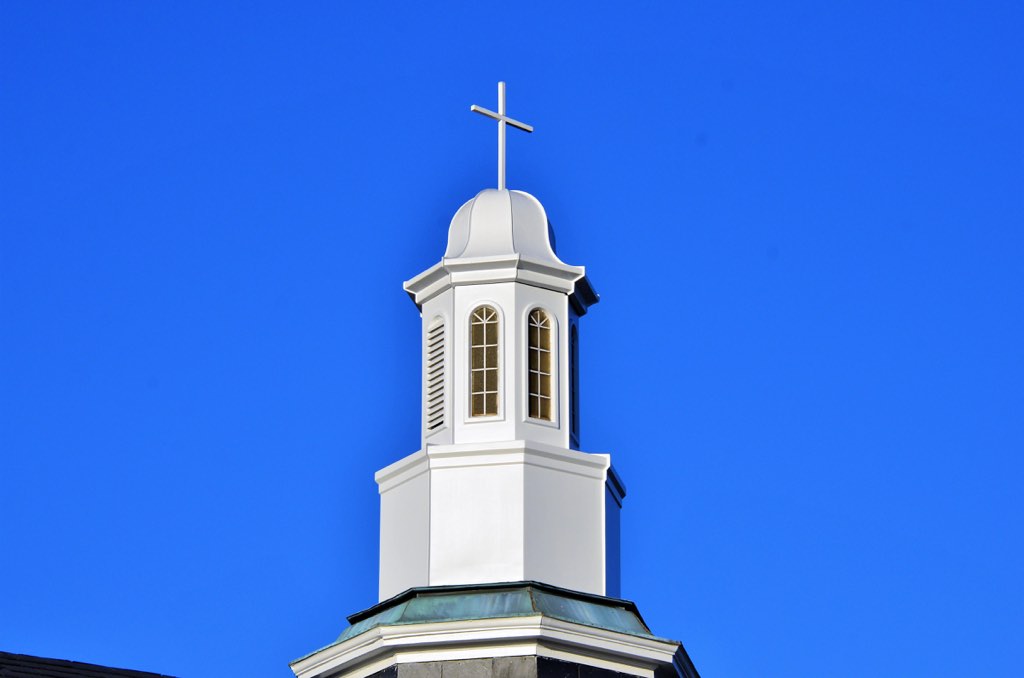
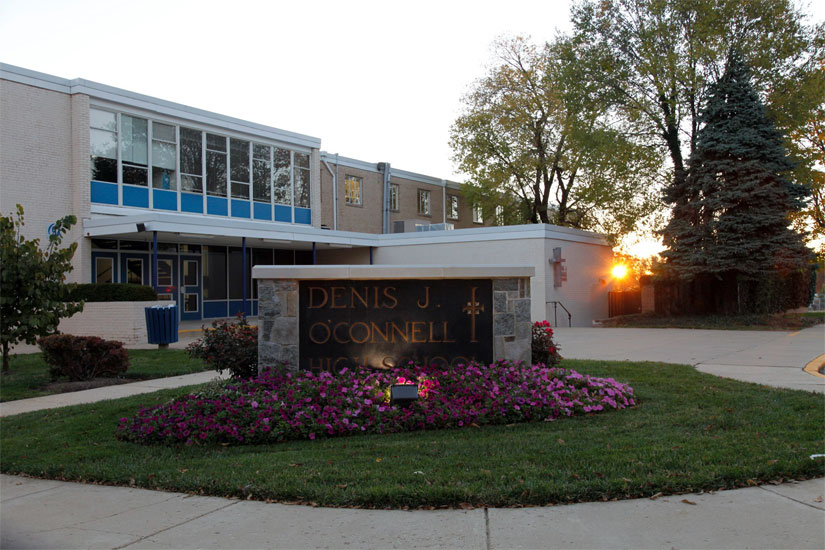
The same gathering on Oct. 31 that took Bishop O’Connell High School online until December has forced St. Thomas More Cathedral School to do the same.

Two St. Thomas More employees tested positive for the coronavirus after attending a Halloween gathering also attended by Bishop O’Connell students who tested positive and prompted the school to cancel in-person classes.

The parochial PreK-8 school in Buckingham told students and staff school would be virtual through next Monday, with in-person instruction set to resume on Tuesday, Nov. 17.

According to the school’s calendar, confirmation, which was set for Monday night, has been postponed and will be rescheduled.

“When Bishop O’Connell closed… my employees went to be tested,” Principal Cathy Davis told ARLnow on Monday morning. “The minute we heard about the positive tests, we looked at our protocols.”

The children and staff of the parochial school are divided into cohorts so that one or two classrooms can isolate if a case appears. But her team decided that the smartest thing to do was to revert to virtual, she said, adding that the transition was easy since the prep work had already been done distributing devices and setting up Google Classrooms.

Davis said administrative staff will be drafting on a report after this series of events and will see what lessons can be learned, such as whether employees have to sign certain COVID-19 commitments. Currently, the school operates on the honor system, with a pledge to prioritizing student safety.

Unlike Bishop O’Connell students, whose return is scheduled for Dec. 1, St. Thomas More students and staff, including the two who tested positive, are slated to return prior to the Thanksgiving break.

“In terms of Pre-K and second-grade children, the better way is in-person,” Davis said. “Our goal is to be in-person.”

When Davis broke the news to parents, she said she “expected unrest,” since 83% of population are dual-working parents.

“Even I have been amazed at how positive everyone is,” she said.

She predicted the school will transition right back to in-person classes.

“Certainly I wish this didn’t happen, but if it has to happen, it’s nice to know we have a strong community who gets this is our new normal,” Davis said.

In October, officials from the Arlington Public Health Division repeatedly warned against celebrating Halloween with trick-or-treating, nightlife and indoor gatherings. Cases in the county, meanwhile, are on an upswing and just reached a fresh peak since the initial spring wave.


Bishop O’Connell High School went fully virtual on Friday, and will remain so until December, out of an abundance of caution after two positive cases came to administrators’ attention.

The two cases were traced to what head of school Bill Crittenberger called “an off-campus gathering” with “quite a few young people” on Halloween (Oct. 31).

The two cases, one confirmed and one presumed, were reported to the school on Wednesday. The second case was confirmed on Thursday. The two students likely came to school on Tuesday, with the 500-student cohort that comes Tuesdays and Thursday, though it’s also possible one or both were in on Wednesday, with another 500-student cohort comes in on Wednesdays and Fridays.

Given the uncertainty and the number of students at the gathering, administrators decided it made more sense to go virtual than to quarantine specific individuals.

“We felt like it’s not as simple as flipping a switch, but staff was seasoned from having done it in the spring,” Crittenberger said of moving to virtual learning. “I’m really proud of how O’Connell transitioned in less than 24 hours,” he said.

The school, in Arlington’s East Falls Church neighborhood, does not itself provide tests for students. Both families independently got tested and notified the school.

Although some schools may be more explicit about asking students to agree to COVID-19 norms, he said the expectation at DJO is that students follow Catholic social teaching and the commandment to “love your neighbor as you love yourself.”

“To be fair, some of the things that this gathering were about put folks in a spot that wasn’t ideal,” said Crittenberger.

Otherwise, everybody has been extraordinarily compliant about social-distancing and wearing masks, he said.

The students and faculty will be fully virtual for two weeks, which leads into the Thanksgiving break. Their first day back will be Dec. 1, a Tuesday.

Crittenberger said the response to the closure was fairly minimal and largely positive, with some suggesting that the virtual learning be reduced to one week.

“We’ve tried to be lockstep with the community,” he said.

Arlington public schools, meanwhile, will remain virtual for most students through the end of the year.

Photo via Facebook


(Updated at 4 p.m.) While many schools in Virginia will start their winter sports seasons next month, Arlington Public Schools will not follow suit.

Some parents and a School Board member urged Superintendent Francisco Durán to reverse course on this decision during the School Board meeting held that night. They argued that other jurisdictions in Virginia — including neighboring Fairfax County — are gearing up to play sports, and that not participating harms students in the short- and long-term.

“We’ve already taken school away from our kids,” said Megan Newfeld, a parent of a high school aged-son who plays golf. “It’s now enough.”

Not providing public school sports makes it harder for kids who cannot afford private or travel teams to improve, she said. Further, she added that all students who are competitive and looking to get recruited by colleges will be at a disadvantage.

Durán said the Virginia High School League (VHSL) allows each district to determine whether to participate in winter sports, which include swim and dive, basketball, wrestling, and indoor track and field. APS declined because it would not align with the return-to-school plan, he said.

“Participating in sports while continuing distance learning does not send a consistent message,” Durán said.

APS will revisit the metrics to see about participating in “season two” sports — sports like football, cross country and golf, which are usually played in the fall and which mostly are played outdoors — he said. Winter sports, by contrast, are mostly played indoors.

School Board member Tannia Talento asked Durán to reconsider the decision, in part because students are already doing conditioning on school grounds.

“These students are in these places already and doing work, and it’s at the high school, where they are more aware of conditions,” said Talento.

Although it is not consistent with the return to school plan, which is on hold, she said “we have to weigh everything individually and holistically and make compromises where we can.”

Yorktown High School boys basketball coach Joe Reed lamented the decision in a tweet, writing the his “heart goes out to my players, especially the seniors.”

An online petition calling for APS to reverse its decision has garnered more than 1,250 signatures as of 3:45 p.m.

“The benefits of team sports go far beyond exercise — improved academics, teamwork, leadership, positive mentorships and overall improved mental health,” the petition says. “For this school year, these factors are even more important as many Arlington teenagers are at home struggling with virtual learning and missing out on the normal activities of their high school years.”

“As the superintendent and school board of a county with large disparities of wealth, it is even more important that APS offer sports for those who cannot afford to play elsewhere,” the petition adds.

Late Friday afternoon, the pro-school-opening group Arlington Parents for Education also weighed in with a statement.

“Not only is VHSL proceeding with the season, but thousands of Arlington children have been participating in youth, club and travel sports all fall with absolutely no outbreaks,” the group said. “Durán’s only rationale on not allowing athletic competition is ‘consistency, ‘which is a self-fulfilling argument that since APS is failing to provide the in-person support and instruction many of our children need for academics, it may as well do the same for sports.”

The VHSL, a statewide sports league comprising public and private high schools, approved a Championship + 1 schedule in September that would allow students to play 60% of their sport’s regular season schedule, starting in December, with modified regional and state championships.

On Oct. 29, Gov. Ralph Northam signed an executive order that allows the proposed VHSL schedule to begin in December as scheduled. In a statement published by VHSL, Northam said the league been a partner during the pandemic and has drafted thoughtful guidelines for reinstating sports.

“Keeping our student athletes safe is critical during this pandemic,” Northam said. “I know I join many parents in looking forward to the safe return of school sports.”

VHSL Executive Director Dr. John W. “Billy” Haun welcomed the news, saying in the statement that the amendment “clears the way for all of our sports to play.” The league drafted guidelines for playing sports that include limits on attendees, cleaning and disinfecting recommendations, masking and social-distancing.

File photo


Without in-person school, play dates and activities, many kids have lost their primary sources of social interaction and exercise due to COVID-19.

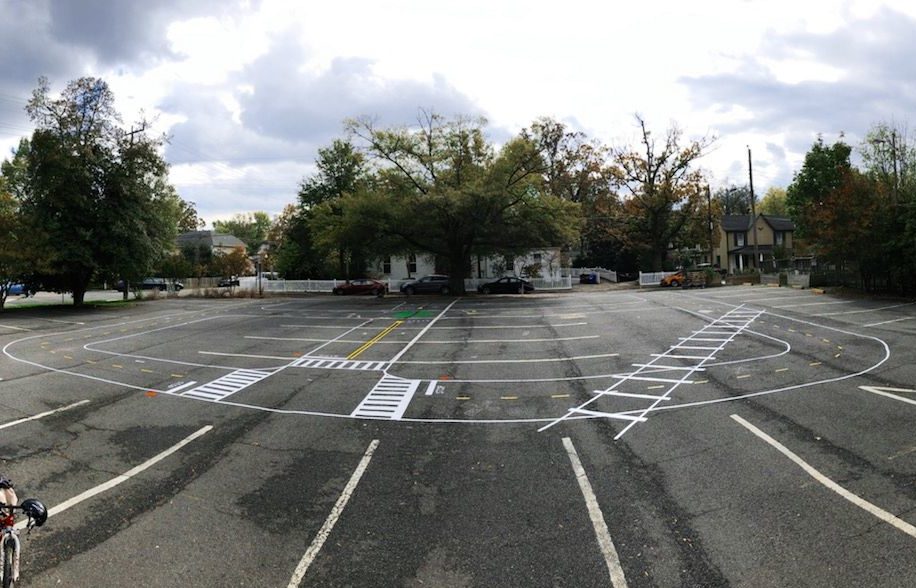
But volunteers in Arlington say a new traffic garden, a space where kids can play and learn how to travel roads safely, could restore some of the lost opportunities for play.

“It was clear we needed new stuff for kids to do,” said Fionnuala Quinn, who makes and consults on traffic gardens. “This is a friendly, happy place for them at a time when a lot has been taken away from them.”

After getting approval from the Women’s Club of Arlington (700 S. Buchanan Street) in Barcroft to use their parking lot, a group of 10 bicycling enthusiasts, community members and engineers grabbed some chalk paint and duct tape and got to work. Three-and-a-half hours later, the parking lot was transformed into space with railroad crossings, crosswalks, streets and roundabouts that kids can walk, bike or skateboard along.

“It’s a bright spot in a tough time,” said Gillian Burgess, a cycling and walking advocate and former chair of the Arlington Bicycle Advisory Committee, who helped with the effort.

Families seem to enjoy it and kids find it intuitive, she said.

“It’s funny, parents will ask us how to use it, but kids just do it naturally,” she said.

The crew in Arlington is one of about 30 nationwide that have repurposed parking lots and constructed these temporary traffic gardens since the start of the pandemic, Quinn said.

“Once you start looking and thinking about this, you realize there is asphalt lying neglected everywhere,” she said. “As soon as you do it, small children appear.”

The original traffic gardens were built in the 1950s in Denmark and the Netherlands. They resembled miniature cities, with tiny buildings and kid-sized roads and traffic signs.

The trend made its way to the U.S., with a large concentration of them in Ohio, where they are called safety towns, Quinn said. She has catalogued about 300 installations in the U.S.

Quinn, who lives in Reston, left her engineering job to engineer and consult on traffic gardens full-time. She said the 50s-era gardens ertr amazing, but expensive to maintain and most kids only ended up going once during their childhood.

Her job is to make these gardens easier and cheaper to build and maintain so that they can be replicated on a smaller scale, more locally, and be more accessible to all kids.

She has helped with permanent installations at two Washington, D.C. schools, and spearheaded two in Alexandria and one in Fauquier County. They required months or years of planning and work.

But temporary pop-ups, including the one in Arlington, use little resources and take less time. Once people see how much kids love them, the pop-ups also advance the community conversation toward permanent versions, she said.

https://twitter.com/TrafficGardens/status/1323693002754314240

The Barcroft traffic garden will be in place for a few months. Burgess is working on getting the message out through schools and neighborhood email lists and has started looking for other locations in the county. She aims to add more gardens by this spring.

The group is working with the Arlington Safe Routes to School coordinator to apply for grants to fund permanent traffic gardens at Arlington schools.

With kids learning remotely, Safe Routes to School grants are going toward different educational initiatives, including traffic gardens, Burgess said. In the meantime, she and Safe Routes are also working with the school system to make walking and biking routes to school safer.

Photos courtesy Gillian Burgess 


Even COVID-19 could not stop an opportunity for adorable pet photos around the holidays.

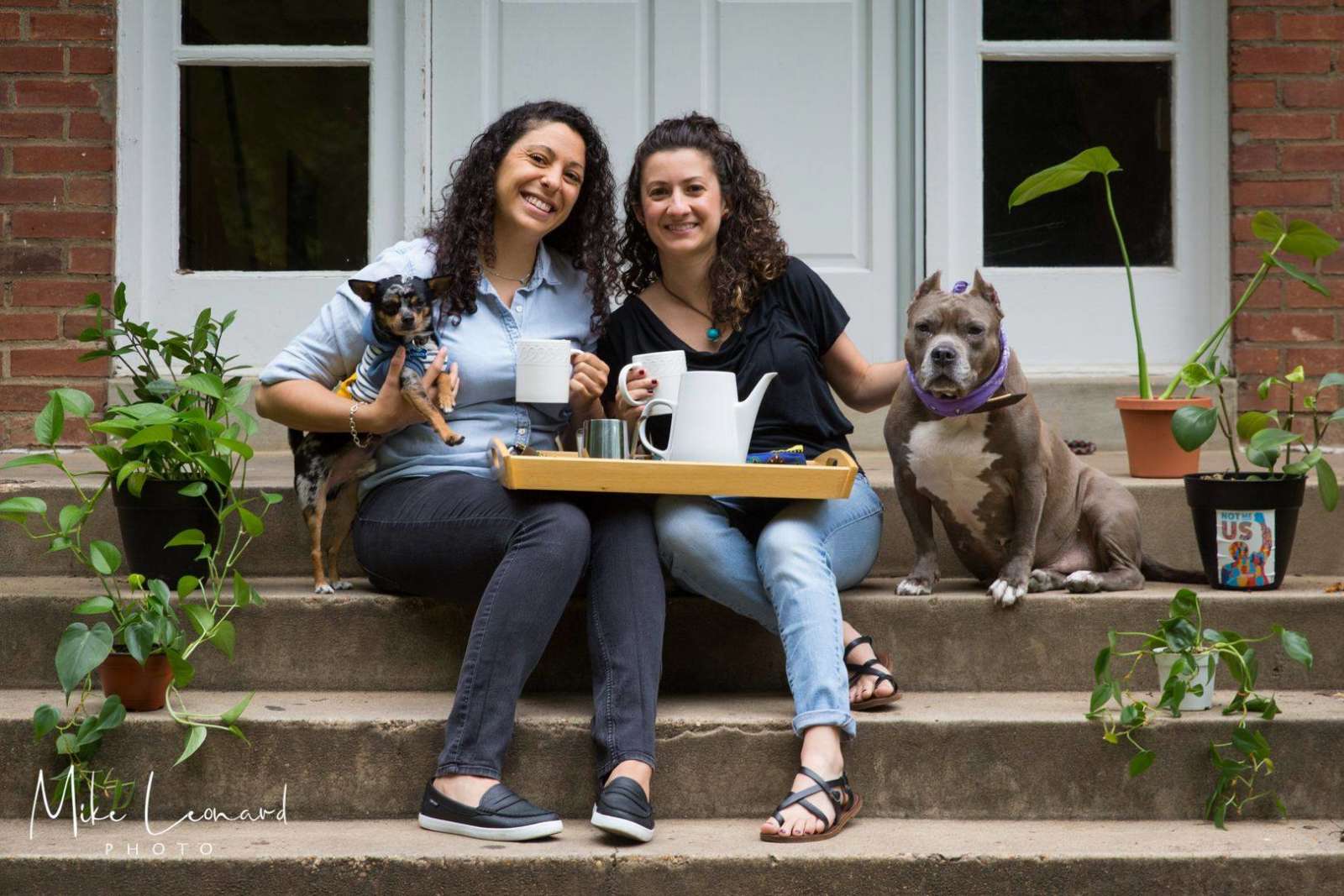
During two weekends in November, local pet owners can get family portraits ready for seasons-greetings cards with the holiday edition of Porch Portraits, a pandemic-proof fundraiser by the Animal Welfare League of Arlington.

“Have a holiday pajama party, bring out your favorite party looks, deck your pet in their holiday gear, any holiday fun you’d like to capture,” the announcement from AWLA said.

The organization has hosted holiday “Pet Pawtrait” sessions before, but this year will look different: The event will span three days and will be socially distanced. Sessions will take about 10 minutes, with a minimum donation of $100, and participants will receive at least three professional digital images within 10 days.

As holidays approach and the pandemic continues, AWLA is focused on supporting the community as people cope with job losses, including via its pet pantry and veterinary support, AWLA Events Coordinator Hollie Dickman said.

“We never want food or resources to stand in the way of people keeping their pet,” she said. “We want to keep pets with the people who love them as much as we can, especially during holidays and COVID-19.”

Sessions are open for Nov. 14, 21 and 22 and participants must be residents of Arlington or Alexandria. Registration for sessions on Nov. 14 end Sunday, while registration for the weekend of Nov. 21-22 ends next Sunday, Nov. 15.

Participants select the date, but AWLA will coordinate times so photographers can do back-to-back sessions in the same neighborhood. Times may range from 8 to 11 a.m. and 4 to 6 p.m.

Those who want to notify AWLA of times that do not work for them are asked to contact Dickman at [email protected].

Participants must have a porch in front of their house or an outdoor area, such as a park, in front of their condo or apartment complex where pictures can be taken.

All portraits will be taken from a 6-foot distance with no direct contact between the photographer and the household, the announcement said.

Local photographers Mike Leonard, Jeremy Robin and Erinn Shirley will be taking the portraits.

This is the second socially-distant porch portrait session AWLA has run to raise funds this year. The first occurred in May, two months into mandated restrictions due to COVID-19.

Leonard had been doing porch portraits during the pandemic and asked to donate his services to AWLA as a fundraiser, Dickman said. The impromptu fundraiser generated $3,000 from 25 participating families.

“I thought that was a great success,” she said. “We are anticipating a similar turnout, we hope to see that $3,000 raised again.”

Family portraits courtesy of Hollie Dickman. Christmas dog (top) via AWLA/Facebook.


(Updated at 9:20 p.m.) At long last, some children in Arlington Public Schools were able to walk the halls and see their teachers.

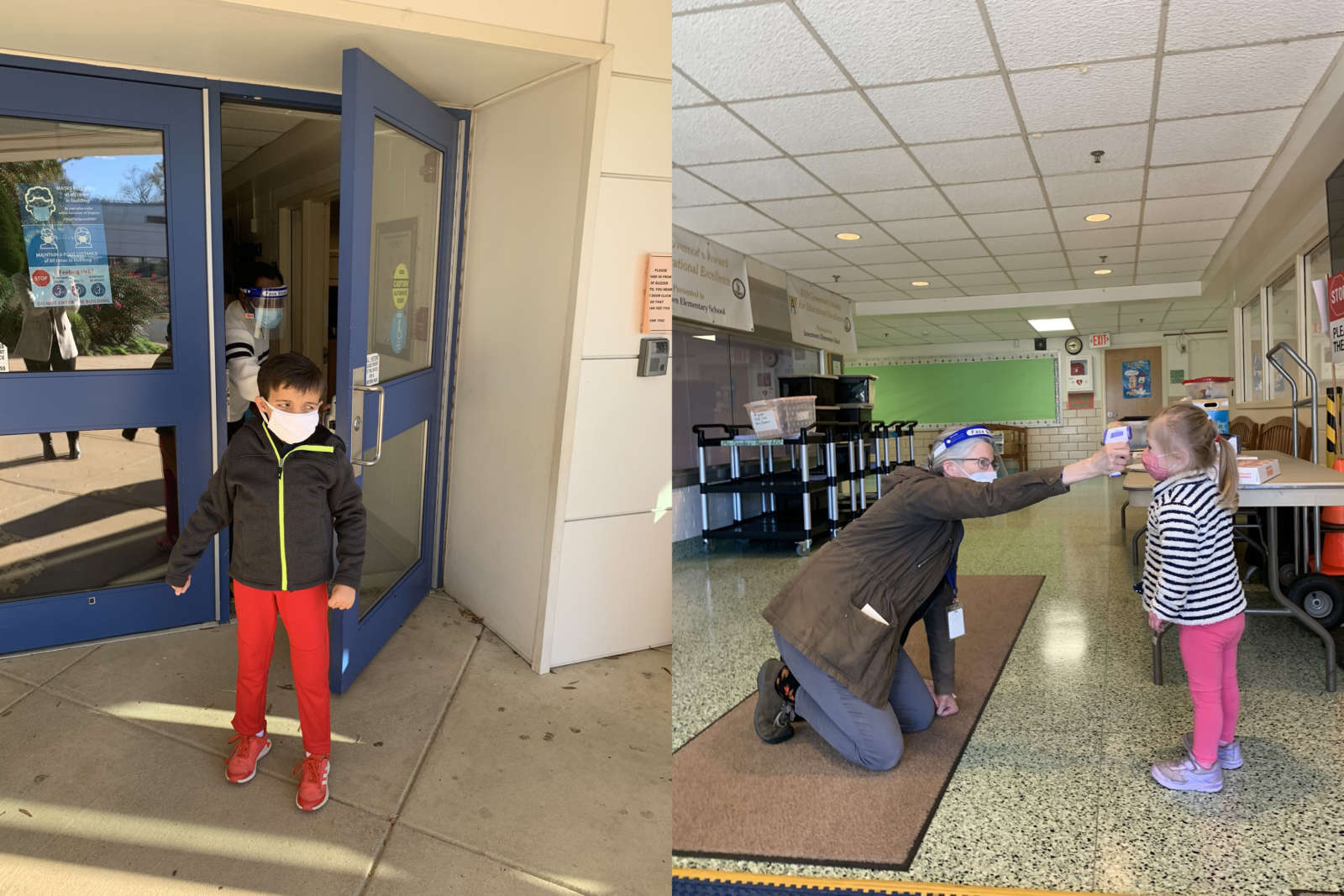
Wednesday was the first day of in-person school for about 230 children with disabilities in 33 APS buildings and programs, and administrators were happy to see them back. The day went smoothly, from health and safety protocols to transportation and technology operating as planned, said Superintendent Francisco Durán.

“We were very excited to welcome our first group of students back for in-person learning,” Durán said. “Principals and staff at each school enthusiastically welcomed our students as they arrived and helped ensure a safe and successful transition.”

But the scene may be bittersweet for some of the PreK, early elementary, and career and technical education students — and parents. Those students were initially slated to return next Thursday, but APS decided return dates set for 2020 would be delayed until 2021 due to rising cases.

The news was announced in an email from Durán on Monday, but he informed parents last Tuesday that delays should be expected.

“We continue to see the case incidence rate in our area increasing, not decreasing,” Durán wrote. “Level 2 comprises significantly larger numbers of students and staff. Moving too quickly to Level 2, while case levels are still rising, represents a safety risk and could cause further disruption to schedules.”

But on Wednesday morning, some smiles were evident through the masks.

https://twitter.com/McCarthyM_JES/status/1324022642140237826

On social media, scenes of students at schools prompted a response from a local group advocating for a return to in-person education.

“Can’t imagine how happy they are to be back,” tweeted Arlington Parents for Education. “Now onto the rest!”

Durán said pausing the plans allows APS to see if its mitigation measures are successful with the first group of students, and gives the school system more time to solidify staffing plans.

In a statement, Arlington Parents for Education said it will continue to advocate for students to return.

“At some point, we have to learn to live in a world where COVID-19 exists and children are allowed to attend school. There is no such thing as a zero-risk environment for anything,” the organization said. “Arlington’s children will feel the effects of this decision for years to come.”

In June, before a rise in cases later in the summer, only 10% of families that responded to an APS survey said they preferred an online-only start to the 2020-2021 school year.

The clamor from some parents for kids to return spilled over during a COVID-19 virtual update with County Board members last Friday. About 95% of questions from the public during the Q&A portion of the call concerned schools reopening, County Board member Katie Cristol said during the meeting.

“To the members of our community who are looking to the County Board to provide a different answer on school reopening than the one they’ve gotten from APS to date, we can resonate with that frustration,” Cristol said. “But I’m sorry, we’re not here to give you different answers than the ones you’ve gotten from Superintendent Francisco Durán and the School Board.”

She affirmed the school board’s jurisdiction over managing public schools.

“It keeps accountability with those who can make decision, and keeps decisions in partnership with the superintendent that have to do with students and workforce, groups of people that the County Board does not have as much insight into,” Cristol said.

Arlington County sent $10.15 million of its CARES Act funding to APS, including a $500,000 grant for providing home internet access to low-income households. Another $1.65 million went toward wireless network deployment and $340,000 went to food programs. The food programs also received $1.125 million from other sources of state and federal funding.

Photos courtesy APS


View More Stories