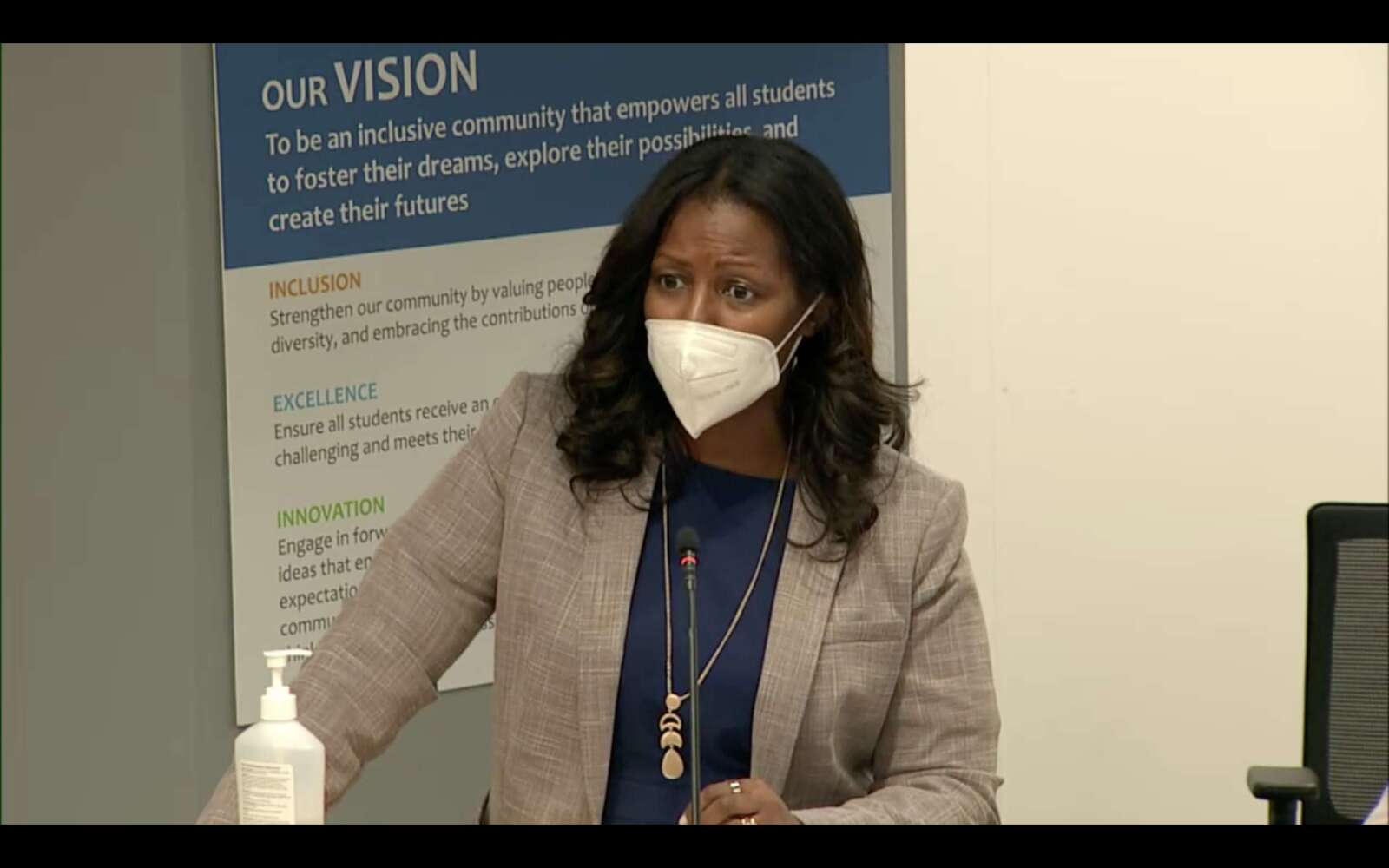
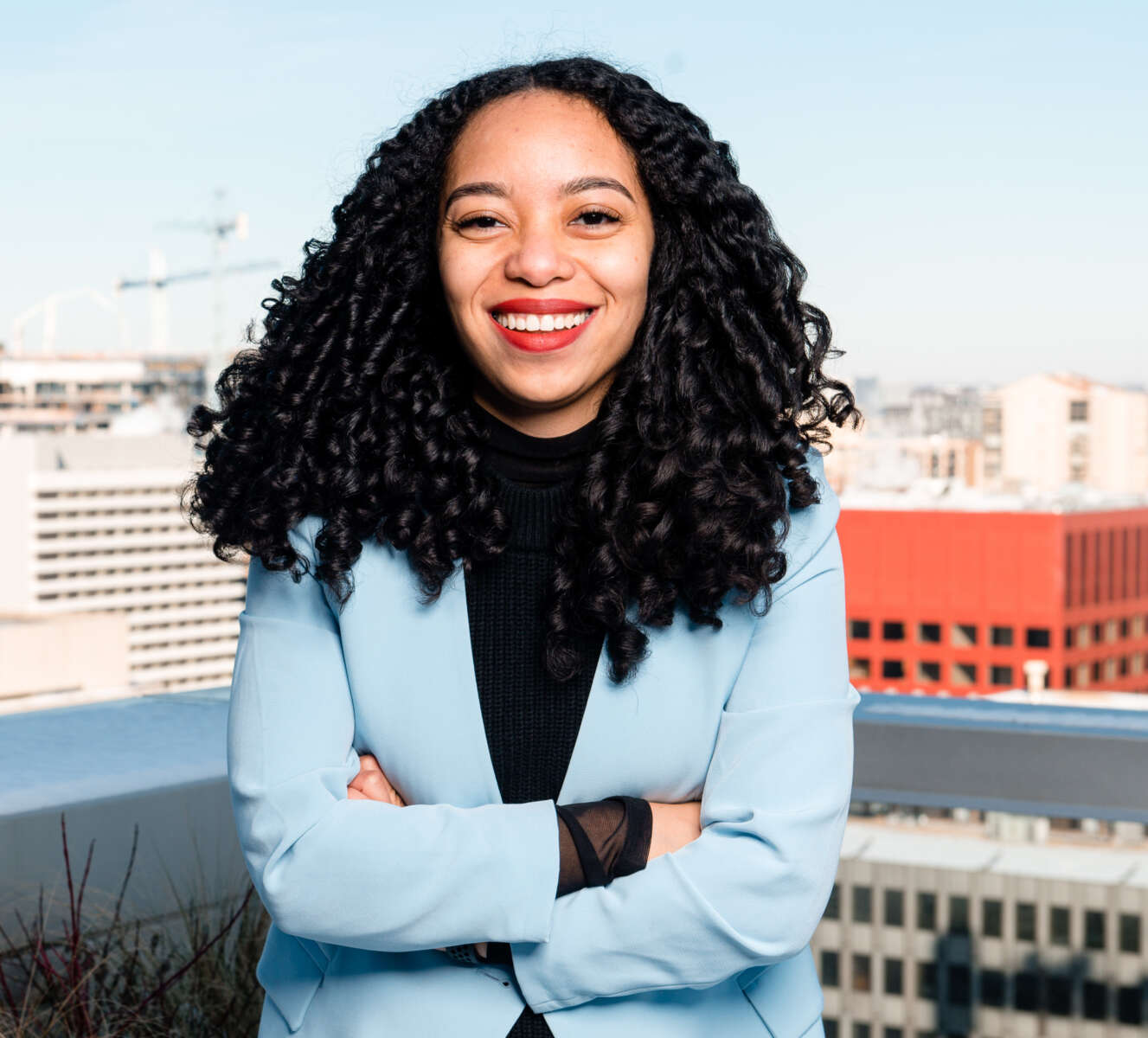
Adele McClure (courtesy photo)

(Updated 9:10 a.m. on 1/26/22) A second candidate for the new, metropolitan House of Delegates District 2 has emerged.

And Adele McClure, 32, says she was in the right place at the right time to even consider running. She was in the middle of moving apartments when the state Supreme Court accepted new district maps after a months-long redistricting process.

“The opportunity literally arose when I found out my old place was no longer in the district and the new place was,” said McClure, who is the Executive Director of the Virginia Legislative Black Caucus. “Isn’t that crazy? It felt like everything was aligning.”

If elected — and the election will likely be held in 2023 — McClure says she will increase funding for and expand affordable housing and homeownership opportunities, fully fund public schools, make healthcare more accessible and equitable, champion criminal justice reform and tackle climate change.

She said she will bring professional and personal experience to her role while, as a Black and Asian woman, representing marginalized perspectives in Arlington’s state delegation, which has been historically white. McClure has worked both in the legislative and executive branches of Virginia government and has lived experiences of the same issues she’s tackled professionally.

“I’ve been at the execute and implement stages, creating the legislation, getting it through and jumping it over to execution side to make sure that communities have the resources they need and connecting with folks to make sure the bill gets off the ground,” she said.

McClure says she experienced hunger and periodic homelessness growing up in the Alexandria portion of Fairfax County and attending the public schools there. In high school, she worked three jobs and took care of her niece and nephew while her brother was incarcerated. She was the first in her family to attend college, graduating in 2011 from the Virginia Commonwealth University.

“If you told me, as a little girl, I would be running to represent Arlington County, I would think it was so out of the realm of possibilities,” she said.

Since then, she has spent the last decade building up a resume of service in Arlington and in state politics.

After graduating from VCU, she moved to Arlington, where she lived until she decamped to Richmond to work under Virginia Lt. Gov. Justin Fairfax as the policy director. (She resigned after he became the target of sexual assault allegations.)

She also ran the state Department of Housing & Community Development’s first eviction-prevention effort. Three years ago, McClure earned a spot in the law and policy category of the 2019 Forbes 30 Under 30 list and was elected to the Forbes Under 30 Global Board.

In Arlington, McClure has served on the county’s Action Plan for Ending Homelessness, the Board of Directors for the Alliance for Housing Solutions, the Community Services Board and on the CSB’s Substance Use Disorder committee, and the Continuum of Care homelessness outreach program.

She is involved in the Arlington County Democratic Committee, has volunteered during elections as an assistant precinct chief, and worked to establish the Dulles Justice Coalition, which provided interpreters and attorneys to travelers when former President Donald Trump’s travel ban went into effect.

“There are a lot of folks out there who can give a ton of background and lived experience with these policies,” she said. “I’m intentional about reaching out to those who will be closely impacted by the legislation.”

She’ll be going up against Nicole Merlene, a former candidate for State Senate and ARLnow columnist. Merlene has also made expanding affordable housing in her hometown of Arlington a top priority and has an extensive resume of local leadership.

(more…)


Events around Arlington are picking back up after a month-long lull, likely due to the snow, the holidays and the spread of omicron.

This week, folks can join moderated discussions with local elected officials as well as a D.C. author and lawyer who defends Black children in the criminal justice system, get organization inspiration and learn the Japanese art of floral arrangements and origami.

The local event highlights for Jan. 24-30 are below. Submit your event to our event calendar by filling out this event submission form at least two weeks in advance.

Monday, Jan. 24

Arlington County Federal Credit Union’s How to Buy Affordably in the DMV*
Virtual
Time: 5:30-6:30 p.m.

During this one-hour webinar, ACFCU’s Mortgage Loan Officer, Sandra Ortecho, will walk attendees through the process of debt-to-income, applying for a loan, credit scores and more so they feel empowered to go out and buy a home.

NAACP Arlington Branch Monthly Meeting*
Virtual
Time: 7-8:30 p.m.

The Arlington branch of the NAACP’s monthly meeting is open to the public and will feature guest speakers Katie Cristol, Arlington County Board Chair, and Barbara Kanninen, the Arlington School Board Chair. Register in advance online.

Tuesday, Jan. 25

Organizing During the Pandemic
Virtual
Time: 6:45-7:45 p.m.

This event aims to provide attendees with the latest tips and tricks in organizing so they can better enjoy their homes and offices during the pandemic. The class will be taught by Julie Pandya, a local mother whose company, Home Strategies LLC, helps people find solutions to their organizing problems. Registration is required for the free, online event.

Wednesday, Jan. 26

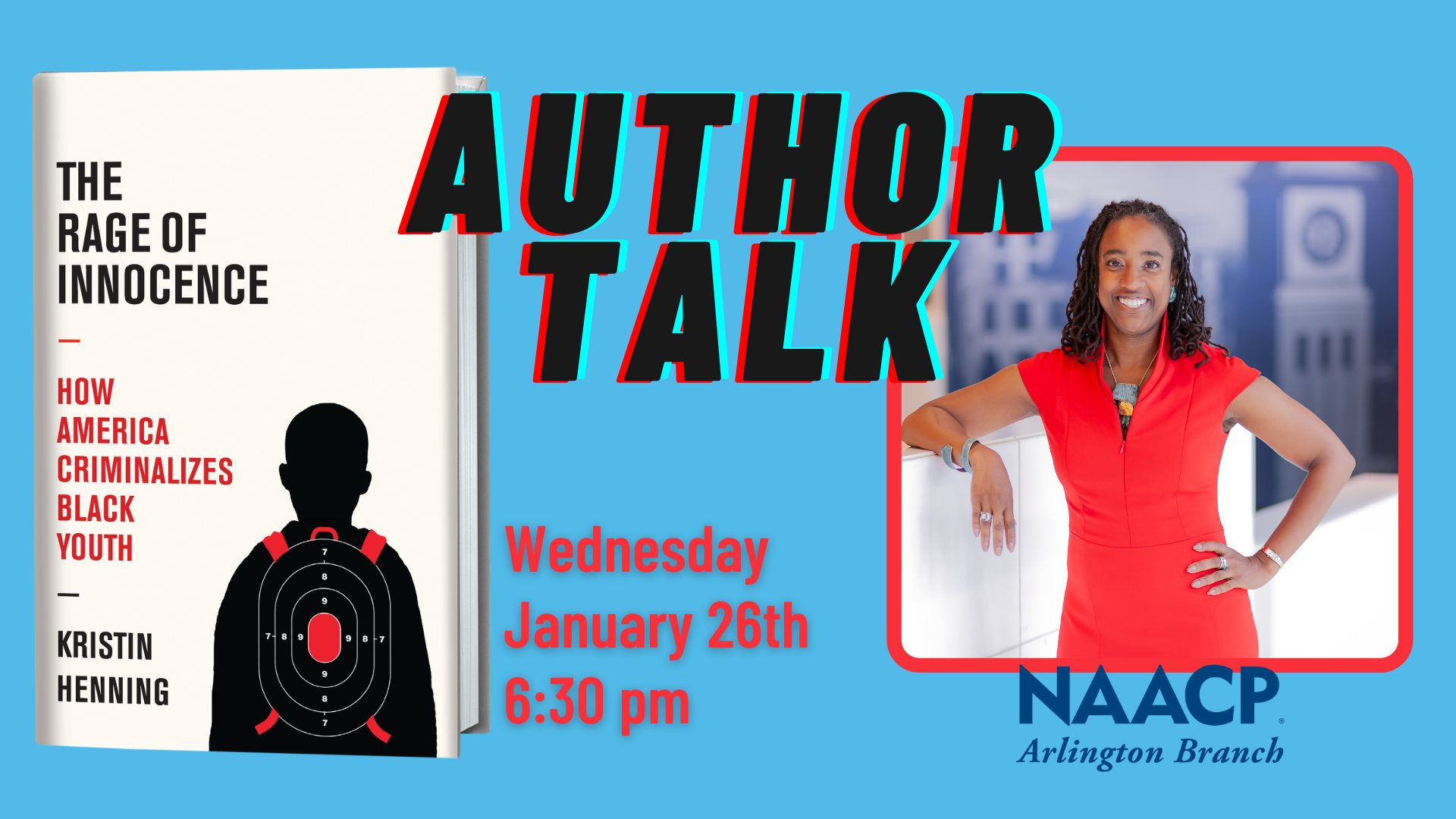
Author Talk: The Rage of Innocence*
Virtual
Time: 6:30-8 p.m.

The Arlington Branch of the NAACP is hosting a free, virtual discussion with Kristin Henning, a professor and the author of “The Rage of Innocence: How America Criminalizes Black Youth.” Drawing on her 25 years of experience representing Black youth in D.C.’s juvenile court, Henning’s book makes the case that the crisis in racist American policing begins with its relationship to Black children. Advanced registration is requested.

Thursday, Jan. 27

ACFCU’s Beginner Real Estate Investing*
Virtual
Time: 5:30-6:30 p.m.

This 60-minute webinar will go over the basics of beginner real estate investing, how to choose rental properties and provide an overview of the real estate market. ACFCU’s Director of Business Lending, Marty Weitzel, will guide participants through an informational presentation and Q&A session so they feel prepared to capitalize on property investments.

Saturday, Jan. 29

Learn the art of flower arrangement and origami
Virtual
Time: 3-4 p.m. 

Study Japanese in Arlington is holding a New Year Ikebana event featuring special guest Yukari Mire, from IKENOBO, who has studied the art of Japanese floral arrangements for 42 years. This free, virtual event requires advance registration online or via the QR code on the poster and is open to all ages and skill levels.

* denotes sponsored listing


Sponsored by Monday Properties and written by ARLnow, Startup Monday is a weekly column that profiles Arlington-based startups, founders, and other local technology news. Monday Properties is proudly featuring 1515 Wilson Blvd in Rosslyn. 

Enabled Intelligence, a startup founded by a longtime Arlington resident and father, is redefining what inclusion of people with disabilities in the workplace looks like.

And it does so while solving a long-standing labor problem for government agencies and contractors trying to automate their operations with artificial intelligence, says CEO and founder Peter Kant.

Enabled Intelligence employs Americans with disabilities and veterans to do data annotation — teaching computers what images or sounds to look for as they are programmed to sift through large data sets — for government and government-adjacent groups.

“It’s technical, repetitive, problem-solving, somewhat compulsive and relatively asocial work,” he said.

This work has to be done by “puzzle solvers who always want an answer” and U.S. citizens to ensure the data stays secure, Kant says. But government groups, which can’t send data annotation overseas like private companies, often struggle to find people to do the work. Kant ran into this problem while leading SRI International, a research institute with a location in Rosslyn.

So he turned to a “highly skilled, underutilized workforce” within the U.S.: people with certain cognitive differences, who have an edge over neurotypical people, and veterans from intelligence and defense agencies, who have helpful subject-matter expertise.

These two groups face barriers to skilled work because of their disabilities, he said.

“Some were bagging groceries but had a computer science degree from Radford University, and because of their neurodiversity, were not working anywhere else,” he said.

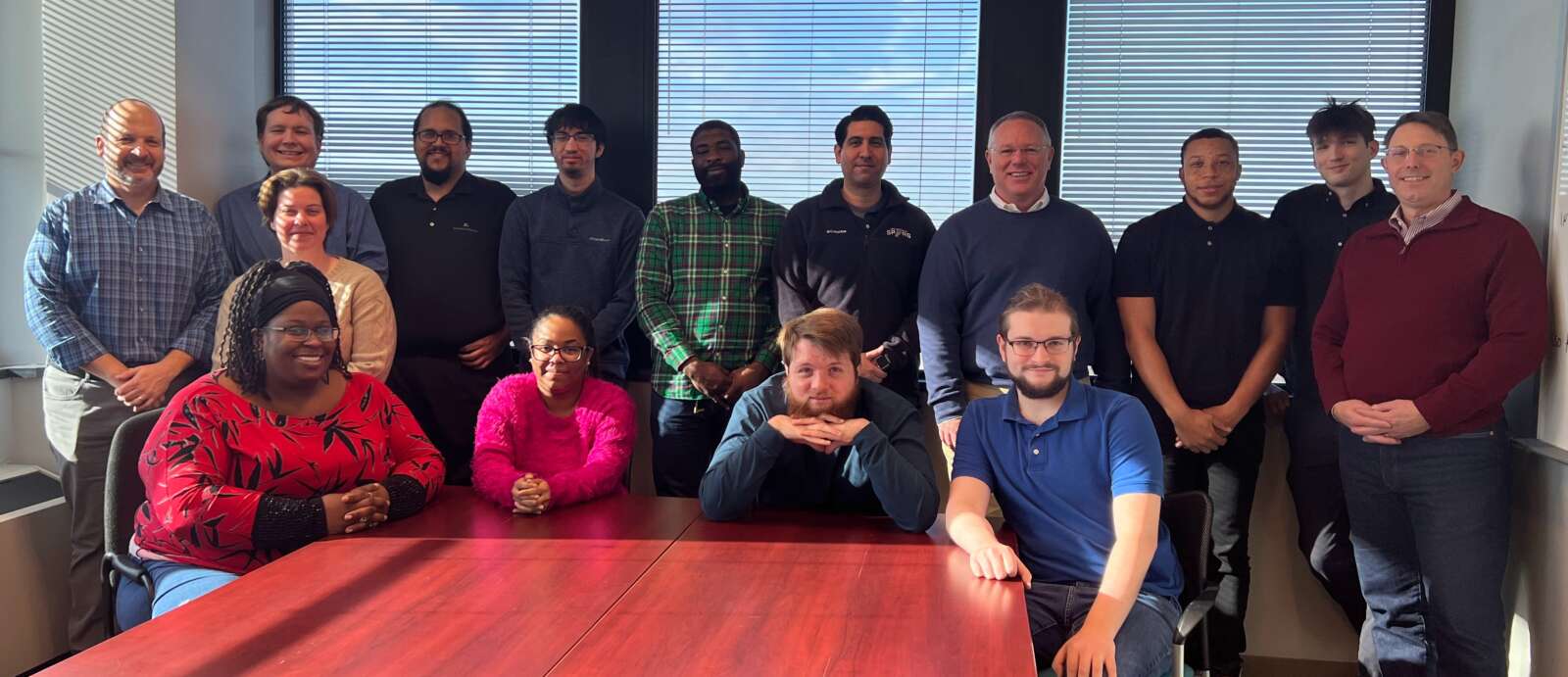
Today, 14 of Enabled Intelligence’s 20-person team have disabilities.

“This is not just a company just for people with disabilities, it’s a mix of people neurodiverse and [neurotypical] people,” Kant said.

Enabled Intelligence team photo (courtesy photo)

The mix helps people with disabilities integrate while demonstrating to people without disabilities that cognitive differences can be assets, he said.

Case in point: New annotators were identifying photos where at least 20% of a vehicle was in the frame. The trainer, who had 15 years’ experience teaching this work, explained that when it comes to close calls, they should play it safe and include the photos.

“One of the annotators, literally just looking at a Powerpoint slide in the training room, said, ‘No, no, no, it’s 17%,'” Kant said.

The trainer said it was close enough to include, but the team member insisted it shouldn’t be included. After the meeting, the photo was measured and sure enough, 17% of the car was in-frame.

Another employee is a whiz at computers who was working at a grocery store while pursuing her cosmetology license. She couldn’t keep up with these two jobs, however, due to a brain injury that was giving her seizures.

At Enabled Intelligence, she has quickly moved up the ranks. After getting her start identifying photos, she has been promoted to identifying audio files in a different language — which she has already picked up.

“She’s been a very valuable asset to us,” Kant said.

Kant says Arlington organizations have helped him hire employees and find advisors who understand how to work with people with cognitive differences.

He found employees through local nonprofit Melwood, which provides vocational training to people with disabilities. One of his advisors is Arlington therapist Ginny Conroy, who runs Social Grace, a local group that coaches people with disabilities and works with businesses to hire and retain neurodiverse employees.

Enabled Intelligence got its start in March 2020 but has been insulated from the worst of the economic impacts of the pandemic because government work has been relatively stable, he said. So far, Enabled Intelligence has booked $2.5 million in business and closed on a seed fundraising round that netted $1 million, lead by the Disability Opportunity Fund.

After being fully remote for more than a year, the company moved into its first, temporary brick-and-mortar office building just over the border in Falls Church (6400 Arlington Blvd). In the new year, Kant has his sights set on a permanent office so employees can handle more secure data and he can expand the company’s operations.


New cameras enforcing speeding could be coming to Arlington school and work zones by the end of this year.

The County Board voted on Saturday to have speed cameras installed throughout the county near schools and on public roads where construction work is ongoing.

Board members heralded the cameras as a tool for protecting children, lowering severe and fatal crashes — an initiative known as Vision Zero — as well as reducing race- and ethnicity-based disparities in traffic enforcement and providing relief to overworked Arlington County Police Department officers.

“The idea that we can keep our community safer, address this behavior and then reduce demand on the police and reduce interactions with police is just a really heartening step for us to take,” said Board Chair Katie Cristol.

The vote follows the passage of state law in 2020 allowing municipalities to install speed cameras.

It also coincides with an anecdotal increase in speeding around schools, according to Board member Libby Garvey (although speed-related crashes in school zones have remained relatively constant at 10 per year, per county data).

“Maybe there hasn’t been a huge increase in crashes, but there has been an increase in bad behavior, and that’s pretty worrisome,” she said. “This is about children and safety.”

Last fall, Arlington County took steps to make school zones safer by lowering speed limits to 20 mph around 13 schools.

County staff are reviewing best practices, crash data, equity concerns and other local factors to determine where to place the cameras, Vision Zero project manager Christine Baker told the County Board. School zones encompass a 600-foot radius of a school crosswalk or school access point.

“We plan to be strategic and intentional about where we place speed cameras to ensure they’re effective in reducing speeds and promoting fairness and equity as well,” Baker said.

Board members said this should reassure motorists who also travel in D.C. and feel that camera locations are chosen to “trap” them and generate revenue rather than correct behavior.

Here’s what drivers need to know.

When will the program start? 

Locations could be selected by this fall and the program could start as soon as cameras and warning signs are installed, either this winter or in early 2023.

Who will get citations? 

Anyone going 10 miles per hour over the speed limit. Every citation will be issued after a sworn ACPD officer reviews the footage.

How much will citations cost? What are the other penalties? 

Citations for the first 30 days of the program will be warnings that carry no fines. After that, they are $50 a fine, the same as red light-camera violations. The fines will go into the general fund.

Violations will be civil, not criminal, meaning they won’t add points to a person’s driver’s license or be considered for insurance purposes. Drivers can contest the violations.

How much will the program cost? 

The program will cost $600,000 a year, and for now, ACPD anticipates the fines will offset the program’s costs, Capt. Albert Kim told the County Board. The costs include the purchase of 10 cameras, which can be moved, camera installation, program operations, ticketing and the salary of the full-time police employee reviewing the footage.

Where can I learn more about speed cameras?

Information in multiple languages will be available on the county website. The county will increase communication about the program through community email lists and the communication channels of APS and ACPD as the start date draws closer.

How will my data be protected? 

State law requires Arlington police and the third-party vendor to delete footage and shred physical documents with personally identifiable information within a certain time frame: 60 days of reviewing the footage and determining the driver wasn’t speeding, or within 60 days of a driver paying a fine, Kim said.

(more…)


The Diocese of Arlington is advising Catholic schools to follow Gov. Glenn Youngkin’s (R) executive order exempting families from school-based mask mandates.

One of Youngkin’s first acts in office was an executive order intended to let parents decide whether their children wear masks to school. It goes into effect Monday and rescinds former Gov. Ralph Northam’s executive order last year requiring masks in schools.

In a letter to school leaders explaining what this means for schools in the Diocese of Arlington — which encompasses 21 counties and seven cities in Northern Virginia — Superintendent of Schools Joseph E. Vorbach III says state requirements supersede local public health guidance.

“Throughout the pandemic, our Catholic schools have been directed to follow state and local public health directives,” he writes. “Where those have been in conflict, the state requirement has primacy.”

The executive order says parents of a child enrolled in elementary or secondary school or a school-based early child care and educational program “may elect for their children not to be subject to any mask mandate in effect at the child’s school or educational program,” the order reads.

The state legislature, however, passed a law that some schools systems interpret as protecting their ability to establish mask mandates in order to offer in-person instruction. The executive order’s legality has since been challenged by some parents who sued. Attorney General Jason Miyares has already asked the lawsuit be dismissed.

In response, Arlington Public Schools, as well as other public school systems, including those in Alexandria and Fairfax County, have come out with guidance defying Virginia’s new governor. Last night (Thursday), the Arlington School Board voted to retain the school system’s mask requirement.

But Catholic schools in the sprawling Diocese of Arlington, which reaches from Arlington to Shenandoah County, are being told to follow Youngkin’s order while keeping up other mitigation strategies recommended by the Centers for Disease Control and Prevention.

“Diocesan direction to our schools is to continue following local public health guidance, without however, violating the rights of parents as described in Executive Order 2,” Vorbach said. “The governor’s executive order is clear on the right of parents not to have their child be subject to a mask mandate.”

As for how school administrators should walk this tight-rope, Vorbach says schools should provide updated, school-specific guidance to faculty and parents and maintain other COVID-19 protocols.

“The diocese continues to elect to follow CDC guidelines for isolation of those who contract COVID-19 and quarantining for those who come in close contact with a confirmed case of COVID-19,” he said.

Spokeswoman Amber Roseboom tells ARLnow that one way administrators can navigate this shift in approach is to identify “which parents prefer their children to wear a mask in school.”

In addition, she said, the schools will keep up with other public health recommendations related to isolation and quarantine.

“Local public health guidance remains very important, and our schools are continuing to employ a variety of COVID-19 mitigation strategies,” she said. “We are following isolation and quarantine recommendations to the greatest extent possible. Our schools communicate with local public health offices regularly. The Executive Order allowing parental choice on masks is a new variable our schools will work with, as we have done in each situation over the past two years.”

The CDC, which recommends masking, has published studies showing more COVID-19 cases among schools without universal masking policies, although some have questioned the science behind this guidance.


APS Chief of School Support Kimberley Graves (via APS)

(Updated at 12:05 p.m. on 2/3/21) During the Arlington School Board meeting last night, public school administrators made the case for why the fledgling, controversial in-house virtual learning platform now deserves better grades.

Last fall, Arlington Public Schools launched its Virtual Learning Program for families with reservations about in-person school amid the pandemic or whose students preferred online classes.

But the program got off to a rocky start due to a teacher shortage and lack of administrative support. Parents said many students were sitting unsupervised in virtual “waiting rooms,” doing individual work overseen by assistants, struggling to get into third-party online classes and not getting needed special-education services.

Teachers, meanwhile, reported getting switched to different subjects on short notice, scrambling to find instructional resources, not knowing who to talk to and feeling unsupported.

“We were not pleased with the rocky start and we wanted to make sure things were moving on a little more smoothly by about this time of the year,” School Board Chair Barbara Kanninen said during the meeting.

Yesterday, APS administrators outlined what it’s done since then to extinguish the VLP’s myriad little fires. They didn’t, however, address the rumors swirling of an uncertain future for the VLP beyond the 2021-22 school year amid dropping enrollment, mostly at the elementary level, as families transition back to their home school or leave the school system. The program had 282 elementary students in October and has 247 students today.

Kimberley Graves, APS’s chief of school support, said communications with parents and home schools have improved under the new principal Danielle Harrell, but that the connection between the online and the brick-and-mortar school still needs work — an assessment shared by some teachers.

“While there’s been tremendous support from home schools, there is still work to be done to ensure that our students in the VLP have a direct connection to their home schools and really define what those connections look like,” Graves said.

A parent from the VLP Parents’ Coalition echoed Graves’ evaluation of the program.

“Although VLP has made good progress, there are still a number of challenges to be addressed, and the VLP Parents Coalition looks forward to continuing our collaboration with APS to ensure the program is a successful option for those that need and want it,” the parent, who wished to remain anonymous, told ARLnow.

Those connections are crucial because, compared to the overall APS student body, the VLP has higher proportions of students who received additional services from their brick-and-mortar buildings pre-pandemic. Sixty percent of students are eligible for free- or reduced-price lunch, while 24% are special-education students and 36% are English-language learners.

Graves outlined a few bright spots: Harrell was onboarded with the temporary help of three retired principals who also addressed the program’s immediate concerns. She now meets regularly with the school systems’ other principals. Every vacant instructional position is now filled and teachers had opportunities last November to access instructional training.

APS is calling more families of students who don’t log in frequently, but Graves said, this isn’t “catching all students.” Meanwhile, those students who were teacher-less in September won’t receive first-quarter grades in those classes.

Going forward, Graves said APS will make sure more students can participate in extracurricular activities and athletics through their home schools and increase the number of middle- and high-school classes taught by live APS teachers.

All elementary classrooms are taught by APS teachers but third-party vendors such as Virtual Virginia, the state’s online learning platform, are used in the middle and high school levels, she said.

More than 70% of middle school classes are taught by live APS teachers; at the high school, two-thirds of classes are taught by third-party vendors to give students a wide variety of courses to choose from.

(more…)


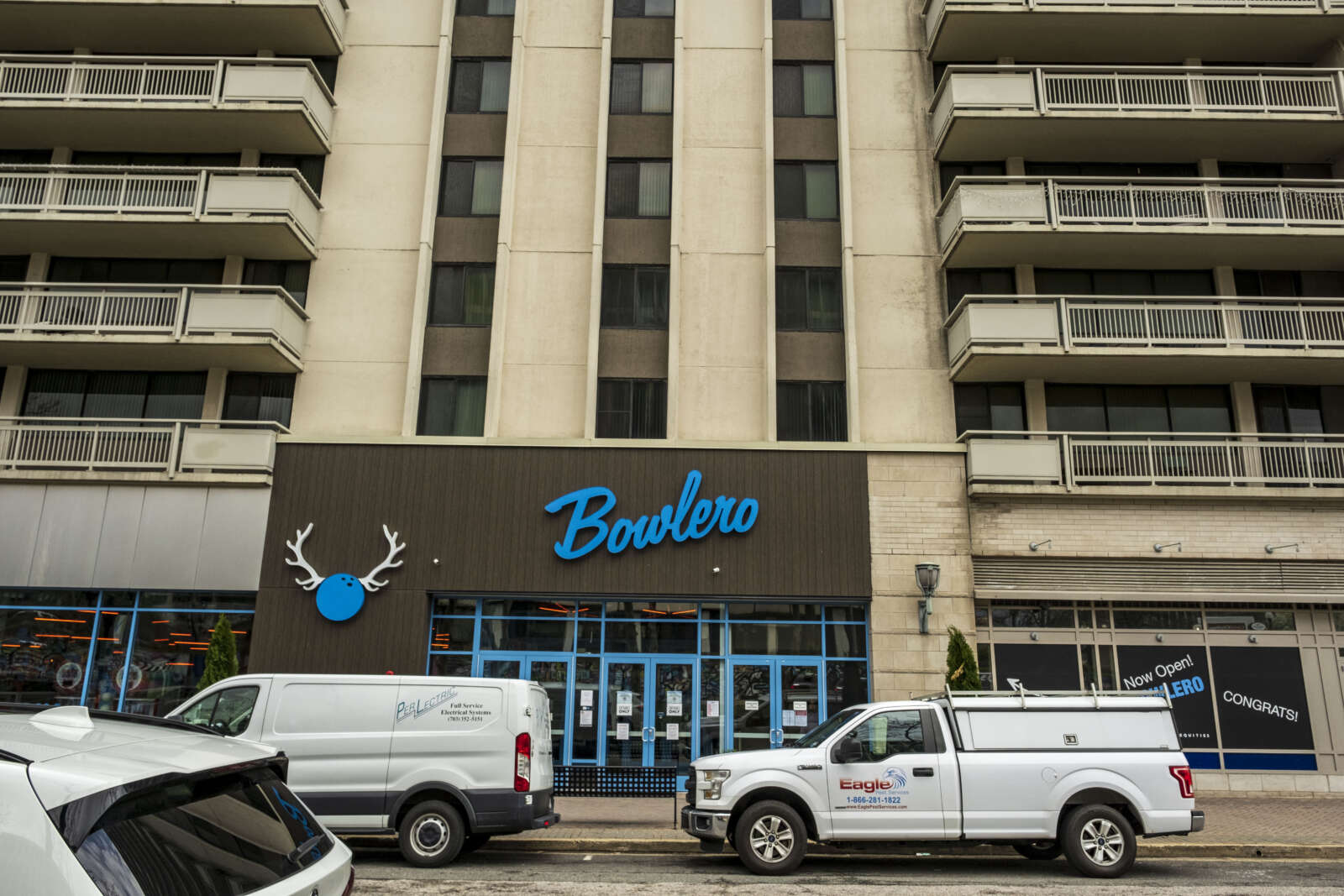
It appears that Bowlero — an allegedly rowdy Crystal City bowling alley at the base of apartments — won’t be headed to the gutter this year.

The Arlington County Board this weekend is set to renew use permits for Bowlero (320 23rd Street S.) sparing it from closure, on the conditions that staff will review its operations next January, closely monitor the business in the meantime and review it again in 2025.

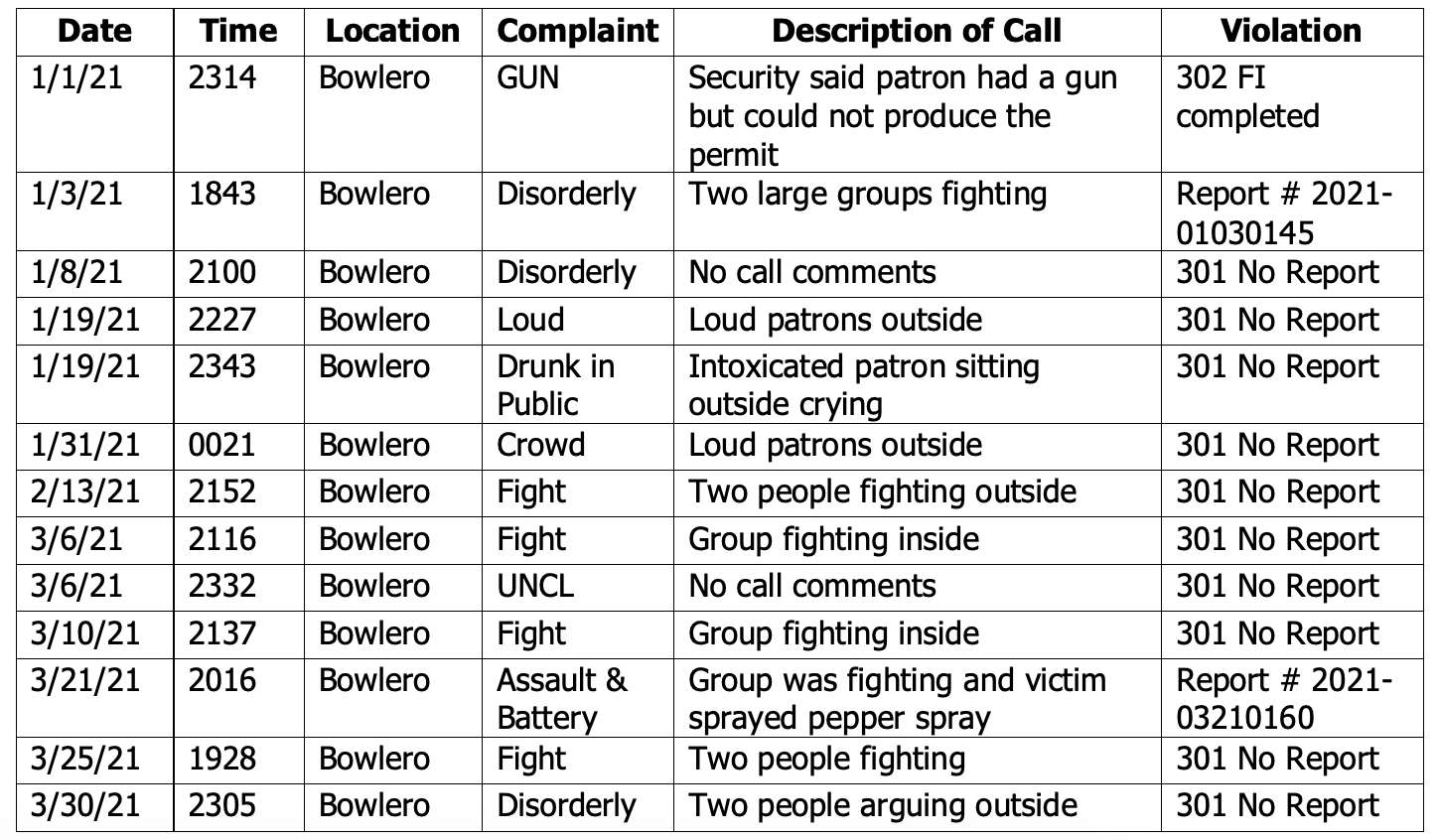
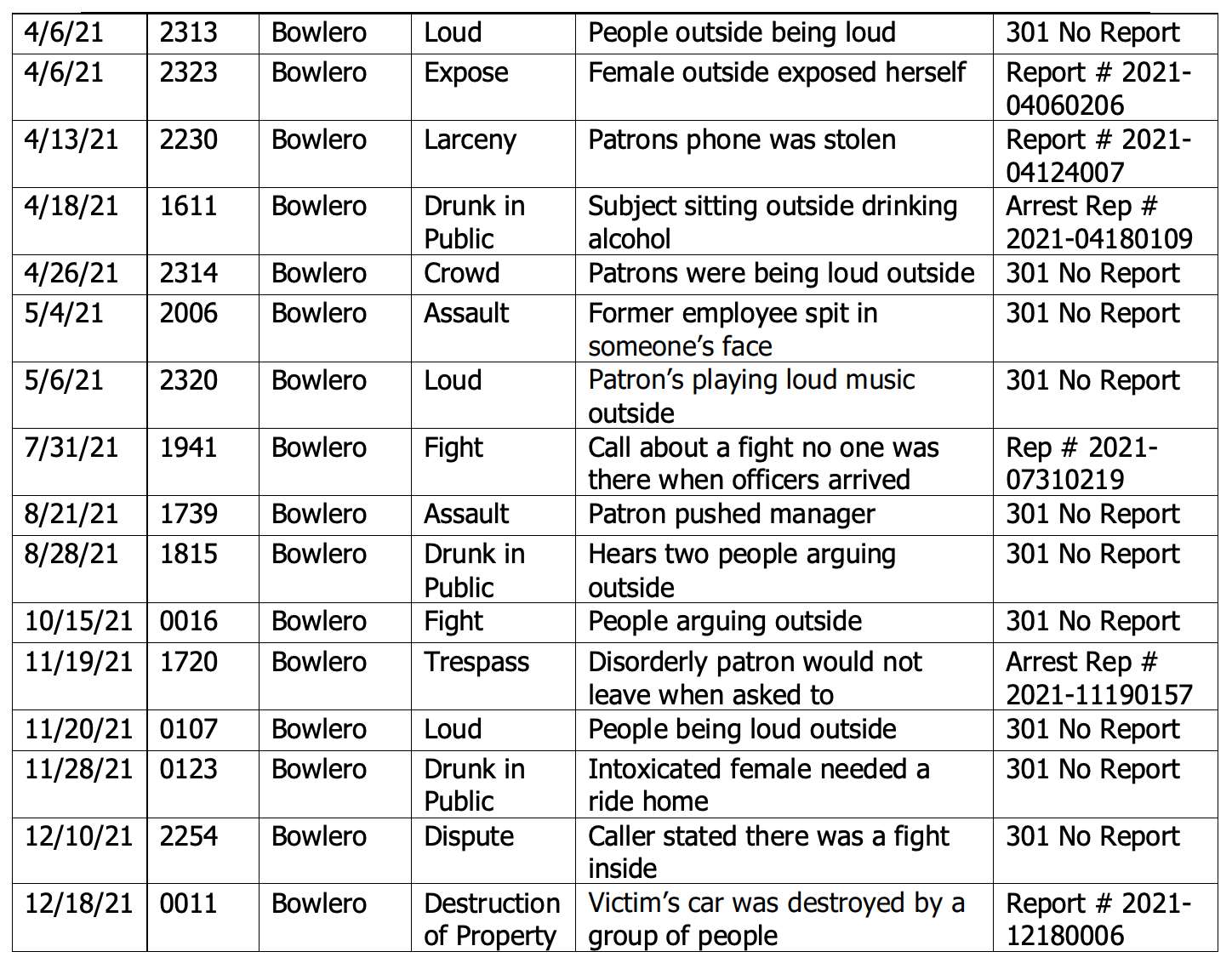
But the relationship between the bowling alley and the residents of The Buchanan apartments above it is uneasy. There have been dozens of reports to Arlington County Police Department of fights, drunk and loud patrons, indecent exposure and damaged property.

It reached a point where ACPD hosted an online town hall on March 31 last year to hear tenants’ concerns and discuss the work by officers and Bowlero staff to get crowds under control.

Eighteen months after opening, Arlington County is recommending the Board renew Bowlero’s permits with the one-year review to make sure community concerns about night-time nuisances are minimized. Since it opened in July 2020, there have been nearly 70 calls for service to ACPD.

The county says it supports renewing the permits because the quality-of-life problems caused by rowdy patrons are being addressed through the Arlington Restaurant Initiative (ARI), a partnership between ACPD and restaurants and bars to make Arlington a safe nightlife destination.

Otherwise, it says in a county report, staff found no other problems with the business operating there.

The police department supports the renewal because Bowlero maintains the restaurant initiative accreditation it earned in October 2020, per the report. The alley’s management plays an active role in involving police, ACPD said in the town hall, making half of the 52 calls for service between July 2020 and March 31.

“Bowlero has also implemented proper security measures and best practices, as recommended by Arlington County Police Department (ACPD), for calming and managing crowds, in addition to proactively responding to pending reports on site,” the report said. “The Police Department has not identified any outstanding public safety issues related to the continuation of the subject use.”

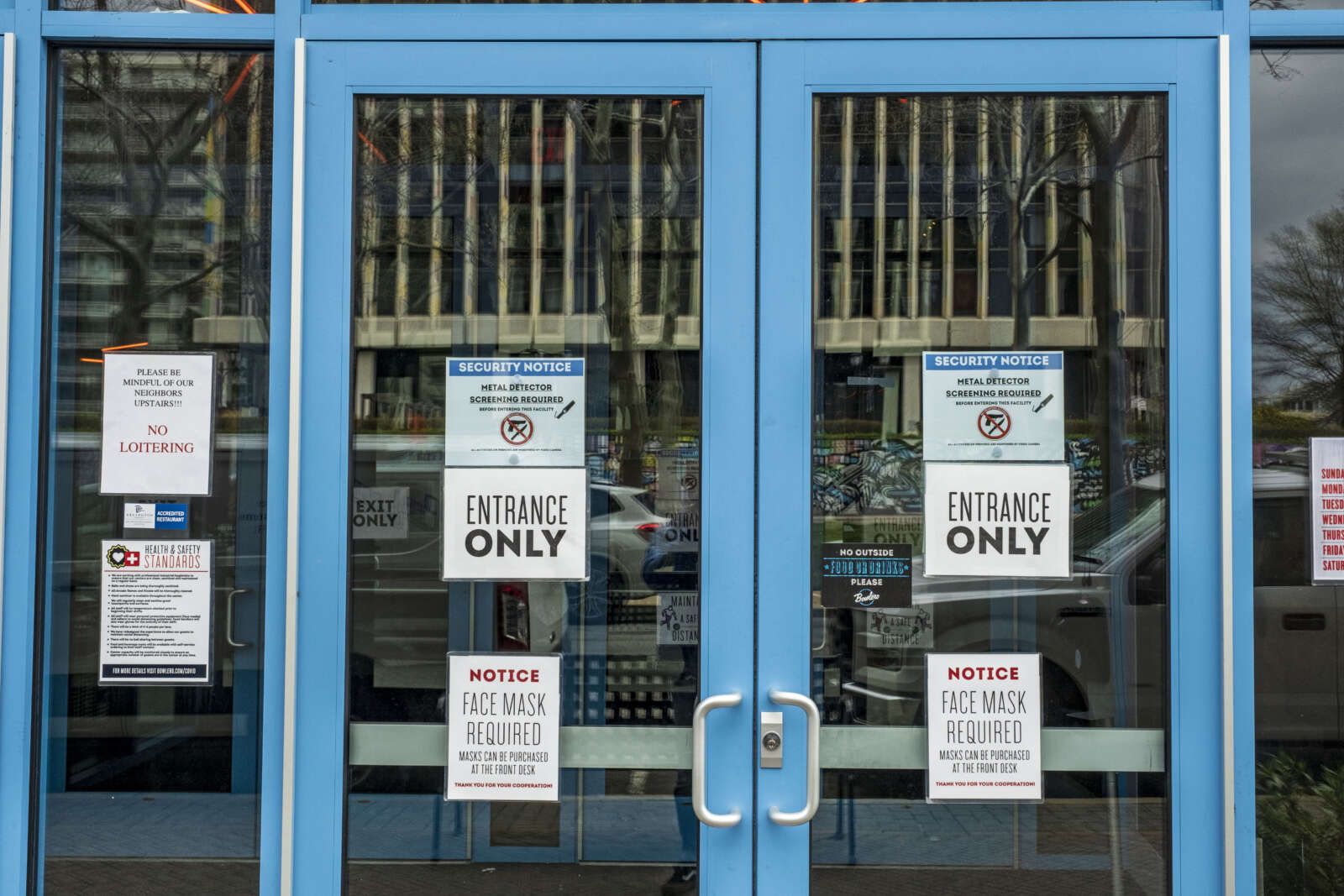
These security measures include scanning people with wands and checking bags, the report says. In addition, a neighborhood liaison has been appointed to address residents’ concerns.

Still, members of a nearby civic association have expressed their concerns “about reports of a high volume of late-night noise and potentially dangerous activity related to patrons of the establishment,” the report said.

One former resident, who moved away partially because of the nuisances downstairs, said metal detectors and police’s best practices are “treating the symptoms” but not addressing their root causes: alcohol, prices, promotions and hours.

The permits allow Bowlero to operate from 11 a.m. to 2:30 a.m. Monday through Friday and from 10 a.m. to 2:30 a.m. Saturday through Sunday.

The former Buchanan resident said the calls to police detailed in the report — chiefly calls about fights and loud and drunk patrons — “seem typical of what I experienced.”

“They are absurd,” he said. “Gun issue? Street fights? Woman exposing herself? These are not just noise complaints, nor was this U Street [a street in D.C. known for its nightlife] prior to Bowlero opening. It was a calm and pretty safe street that turned into a place to actively avoid.”

Here’s the full list of what residents called for in 2021:

Calls to ACPD for service at Bowlero in Crystal City (via Arlington County)

Cash (via Pepi Stojanovski/Unsplash)

A local pilot program to give up to 200 qualifying low-income residents $500 a month for two years, no strings attached, will move forward without any public funding.

For a few months last fall, Arlington County was poised to spend either federal or county money on “Arlington’s Guarantee,” a guaranteed income pilot program launched by nonprofit Arlington Community Foundation.

This commitment fell through, however, when the county and ACF realized any infusion of public funding would have put participants at risk of losing their government benefits, such as child care subsidies or food stamps.

“It would put them back instead of putting them forward,” says Anne Vor der Bruegge, ACF’s Director of Grants and Initiatives.

She and Department of Human Services spokesman Kurt Larrick call this income precipice the “benefits cliff.” The little additional income would make the fall particularly painful in Arlington given its high cost of living.

“The issue was that in order to give money to recipients and then not push them off the benefits cliff — where, for example, they lose SNAP because they make too much income — and to make the net effect of receiving the cash zero, we had to get a waiver from the Virginia Department of Social Services (VDSS),” Larrick said.

He added that with the waiver, the monthly stipend “would not count as income in the calculation of benefits, and no one who joined the program would lose benefits by being ‘over income.'”

But this waiver only works if the program is 100% privately funded. Last year, the county and ACF learned that neither the county’s original plan to use American Rescue Plan Act funding nor its revised plan to use unspent funds from the 2021 fiscal year would have worked.

“The County decided to rescind the plan to give ARPA money so as to not negatively impact the recipients,” he said. “Using closeout funds would have created the same issue.”

ACF’s wide donor base ensures this loss of funding won’t impact the program’s trajectory, says Vor der Bruegge, but it may slow it down slightly.

“We had intended all along for it to be privately funded from the get-go: that is, through individual people, philanthropic organizations and corporate dollars,” she said, adding that the ARPA funding “evolved as an opportunity we didn’t plan for or seek out.”

County contributions would have allowed ACF to enroll all 200 participants immediately, she says. Now, ACF will resume its plan to continue accepting donations until it reaches 200 participants.

So far, 105 residents are receiving money directly onto debit cards through the program. ACF will continue expanding enrollment in groups of 25, as funding becomes available, up to 200 people. Donations benefit participants directly, says Vor der Bruegge, as ACF obtained a grant to cover the program’s operating costs.

The “benefits cliff” issue is not exclusive to Arlington.

Vor der Bruegge says it hurt nascent guaranteed income programs across the state and nation that were counting on ARPA funding, she said. These programs are proliferating right now because federal stimulus checks normalized the idea of automatic payments to residents — and many were latching onto ARPA funding.

Now, they’re having to “go back to the drawing board,” she said, adding that some states are introducing legislation to override this unintended consequence.

“It is pretty prevalent across the country,” she said.


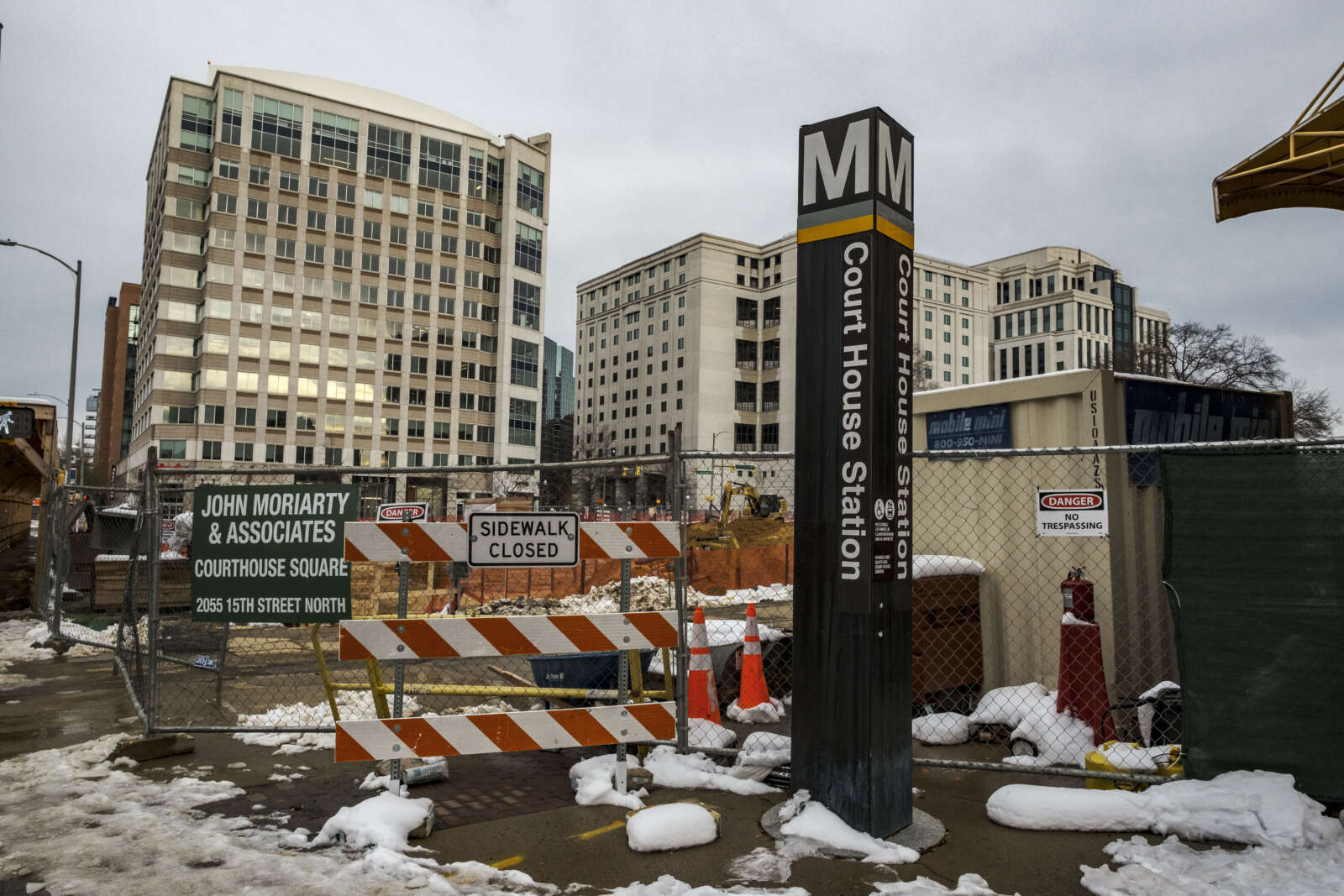
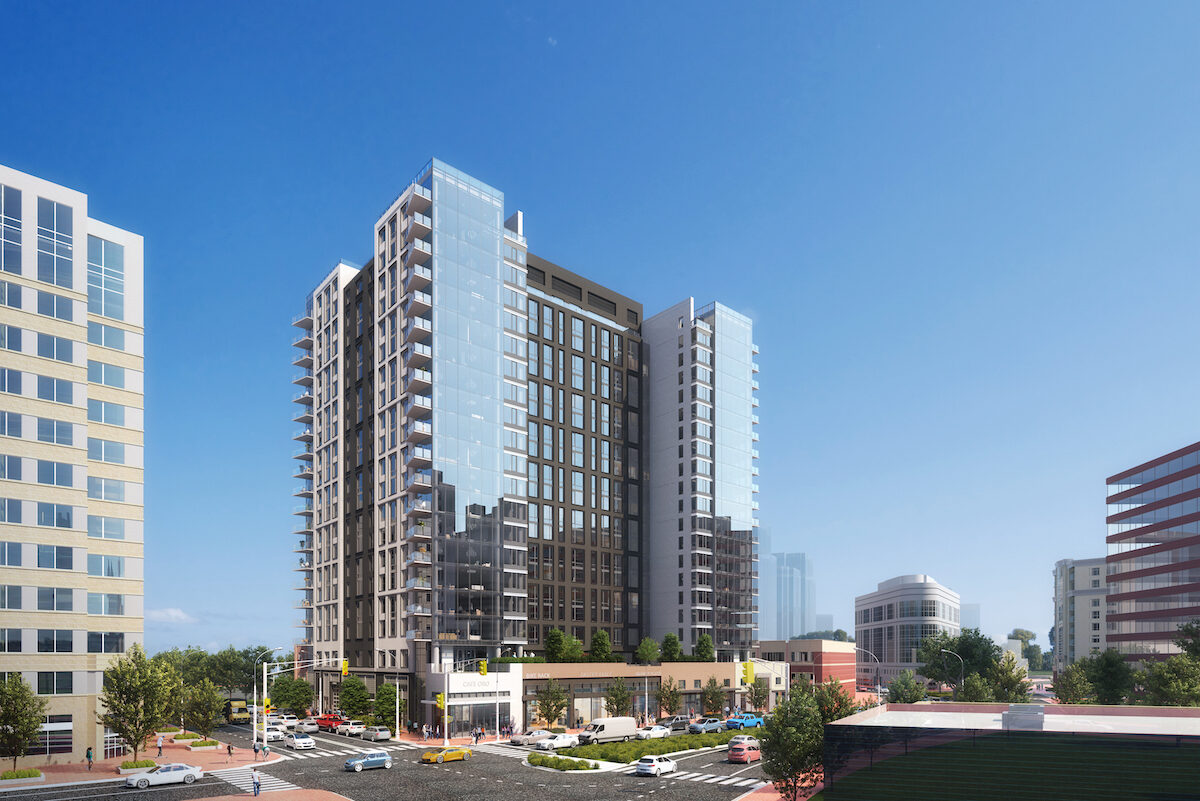
As a 20-story apartment building by Greystar takes shape in Courthouse, the developer is poised to agree to take on some county-identified transportation projects around the site.

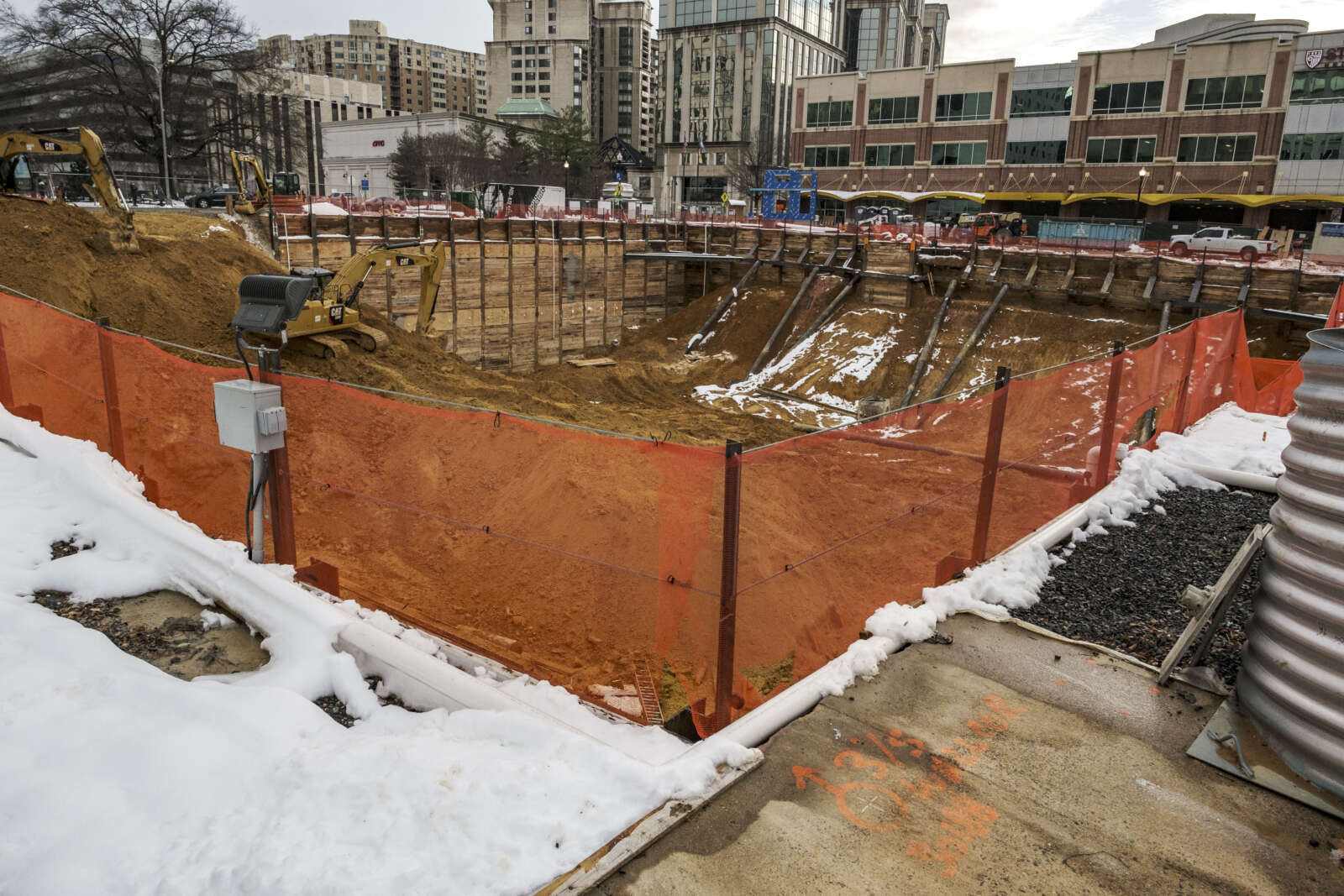
This Saturday, the County Board is slated to approve an agreement delegating to Greystar the design and construction of light transportation improvements near the “Landmark Block” at 2050 Wilson Blvd. The county will reimburse the developer up to $2.5 million.

These projects add to the streetscape improvements and community benefits that Greystar will provide through its approved redevelopment plans. The “Landmark” site was previously home to brick buildings that housed a handful of restaurants, including CosiBoston MarketJerry’s Subs and Summers Restaurant.

After the County Board approved the project in March, demolition began last summer and construction broke ground in October. Greystar intends to complete the apartment building in the fall of 2023.

The pending agreement would task Greystar with some street repaving, signal upgrades and utility work. County staff say it will be cheaper, easier and more efficient for Greystar to handle these projects concurrent with construction.

“These needed transportation improvements… are either adjacent to, above, or beneath the proposed site plan improvements, and dovetail with the improvements already approved as part of the site plan project’s package of community benefits,” the report said.

Specifically, Greystar would relocate existing — or install new — traffic signal poles, traffic signal cabinets and other traffic-related items in the public right-of-way at three intersections: Wilson and Clarendon Blvd and N. Courthouse Road; N. Courthouse Road and 15th Street N.; and N. Uhle Street and Clarendon Blvd.

It will also add a “bike island” at the intersection of 15th Street N. and Clarendon Blvd in the westbound direction and install about 250 feet of a new 12-inch water main within N. Courthouse Road.

As part of the approved project, Greystar agreed to make the following streetscape improvements along Clarendon Blvd, Wilson Blvd and N. Courthouse Road:

  • widen sidewalks and improve street crossings for pedestrians
  • widen or add protected or dedicated bike lanes
  • widen the center median for Wilson and Clarendon Blvd
  • relocate the county parking lot entrance from 15th Street N.
  • screen in or buffer the 15th Street N. frontage of the county parking lot

Greystar also agreed to build part of a pedestrian promenade along N. Uhle Street and a shared street along 15th Street N. These community benefits were envisioned seven years ago as part of an effort to plan the next 30 years of development in Courthouse.


Arlington County is applying for a $4.5 million grant to further offset a proposed west entrance to the Ballston Metro station.

On Saturday, the County Board is set to approve this request for funding from the Northern Virginia Transportation Commission (NVTC), which would come from I-66 toll revenues.

This is the latest application from the county, which is trying to offset the $140 million project with regional and state dollars even as some of these sources have dried up due to the pandemic.

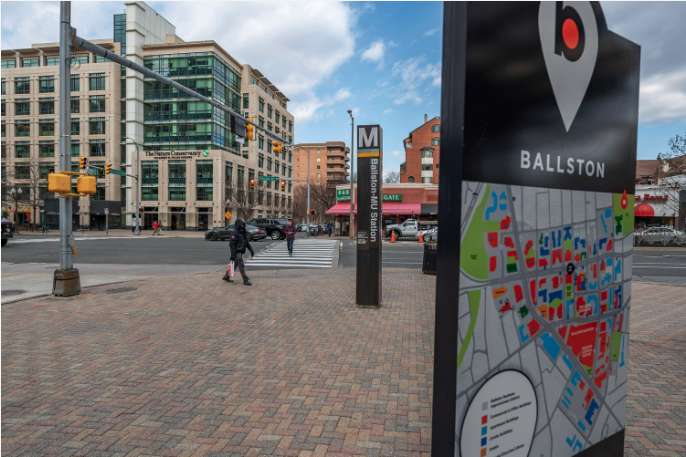
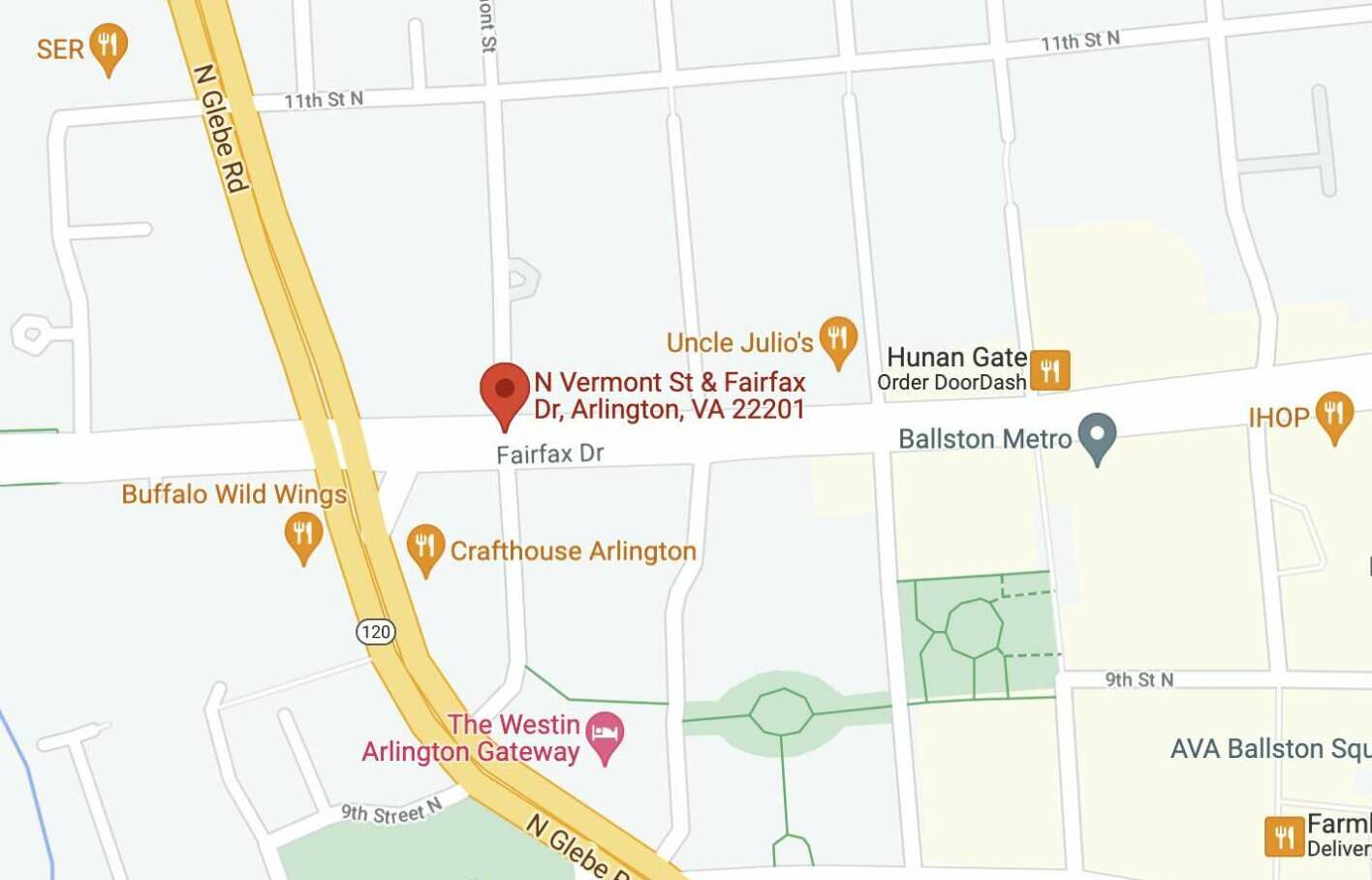
The entrance would be located at N. Fairfax Drive and N. Vermont Street, almost a quarter of a mile west of the existing entrance. The county previously said this second entrance would greatly expand access to the station, increase Metro’s capacity and make it more efficient.

Map showing potential location of new Ballston Metro entrance (via Google Maps)

If all the funding comes through, designs could be completed next year and construction could start in 2024 and end in 2027, Department of Environmental Services spokeswoman Claudia Pors tells ARLnow.

“The team is looking to finish the 35% design update this year and procure design-build services in 2023, pending funding from NVTA,” Pors said. “Construction is projected to start in 2024 and we anticipate a construction period of 3 years.”

The $4.5 million represents a revised request to the NVTC. Arlington had previously applied for $10 million from the same program in January 2020 but — despite being “the top scoring project” — the project was cut from the funding round due to a drop in toll revenue caused by COVID-19.

“Following a request from NVTC staff, the County withdrew its application for the Ballston-MU West Entrance in August 2020,” the report said. “I-66 Commuter Choice Program revenues have still not fully recovered from the effects of the pandemic, and so for Round Five the County has lowered its funding request from $10 million to $4,500,000.”

And while available funding is scarce, the cost to build the second entrance is increasing. A 2019 estimate put the project at $130 million; a 2021 estimate puts the project at $140 million.

“The use of the known information on items such as station entrance layout and elevator location from the design updates instead of previous assumptions in the 2019 cost estimate, along with the impact of inflation, are the two drivers of the cost increase,” the report said.

More than half of the project’s costs could come from a pending application with the Northern Virginia Transportation Authority (NVTA) for $80 million. The county says this sum would cover the rising costs as well as the loss of funding from NVTC and the Virginia Department of Rail and Public Transportation, which also lost revenue for new projects during the pandemic.

Pors said the NVTA will make a funding decision later this spring or in the early summer months.

Meanwhile, Arlington County intends to increase how much it’s budgeting for the project, from $25 million to $30 million.

Arlington’s Transportation Commission — while supportive of the project — is sounding the alarm on the $5 million increase at the local level.

“The Commission is concerned specifically about: 1) The appropriateness of making a change this large in how capital funding is being allocated completely outside of the CIP process and seemingly hidden within grant applications,” chairman Chris Slatt said in a letter to the County Board. “2) The high overall cost of the project and whether it still represents a good ‘bang for our buck’ in increasing access to transit for Arlington residents.”

He said $30 million could be used locally to bring every bus stop in Arlington into full compliance with the Americans with Disabilities Act, increase Capital Bikeshare’s 10-year capital budget or cover the costs to design and build more local projects intended to lower traffic congestion and improve public transit.

Map via Google Maps


In Cherrydale, there’s a little stretch of road called “Old Lee Highway” where a few signs bearing the Lee name have yet to fall.

But that’s about to change.

Last week, the Commonwealth Transportation Board approved Arlington County’s request to change the name of “Old Lee Highway,” or State Route 309, to Cherry Hill Road. The motion put an end to Confederate Gen. Robert E. Lee’s proverbial last stand here.

In July, the Arlington County Board voted to change the name for Route 29 from Lee Highway to Langston Blvd. While all the local road signs along Route 29 have been changed, it took some extra time — and a separate, smaller community engagement process — to find a suitable name for “Old Lee Highway” and send it to the state transportation board for approval.

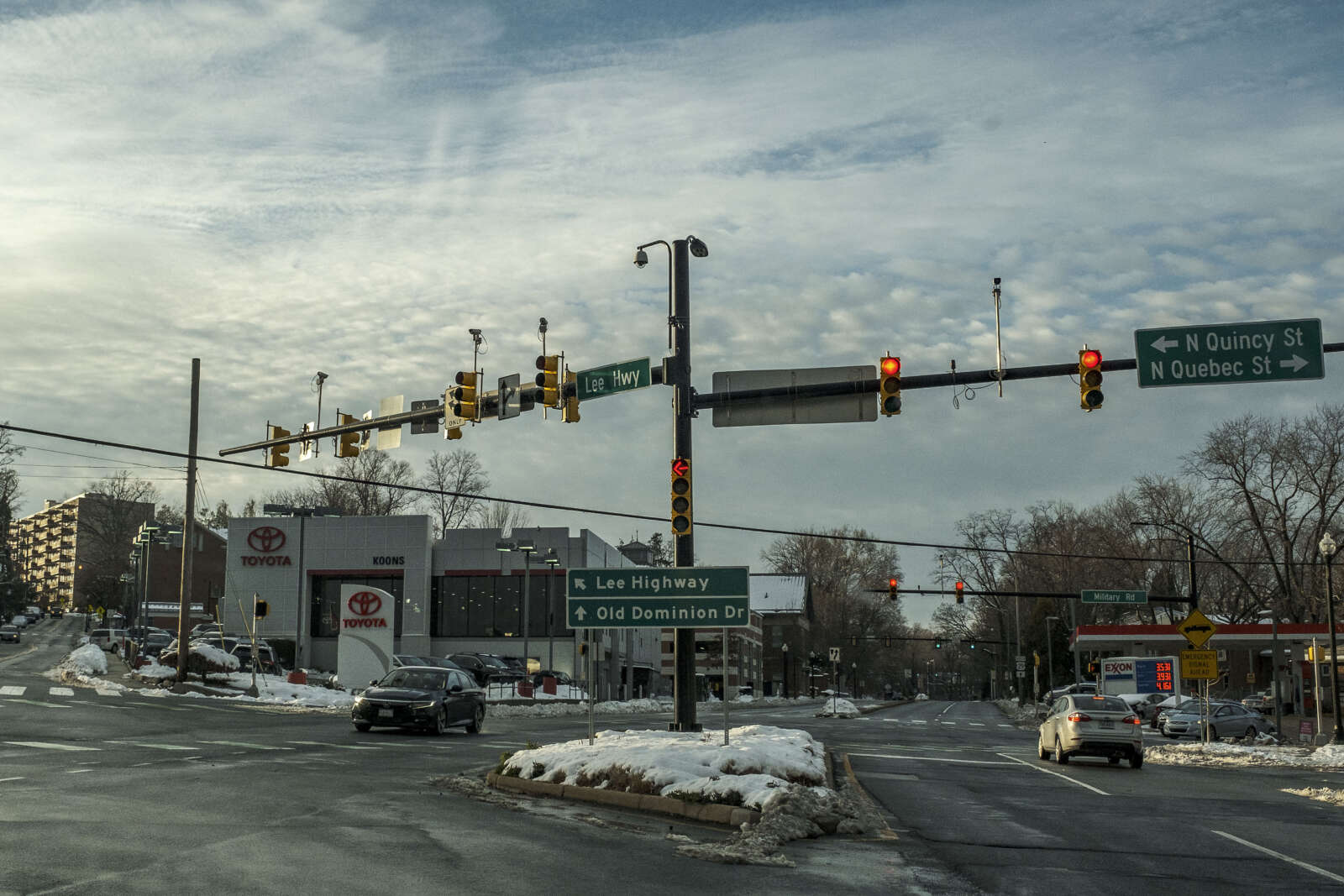
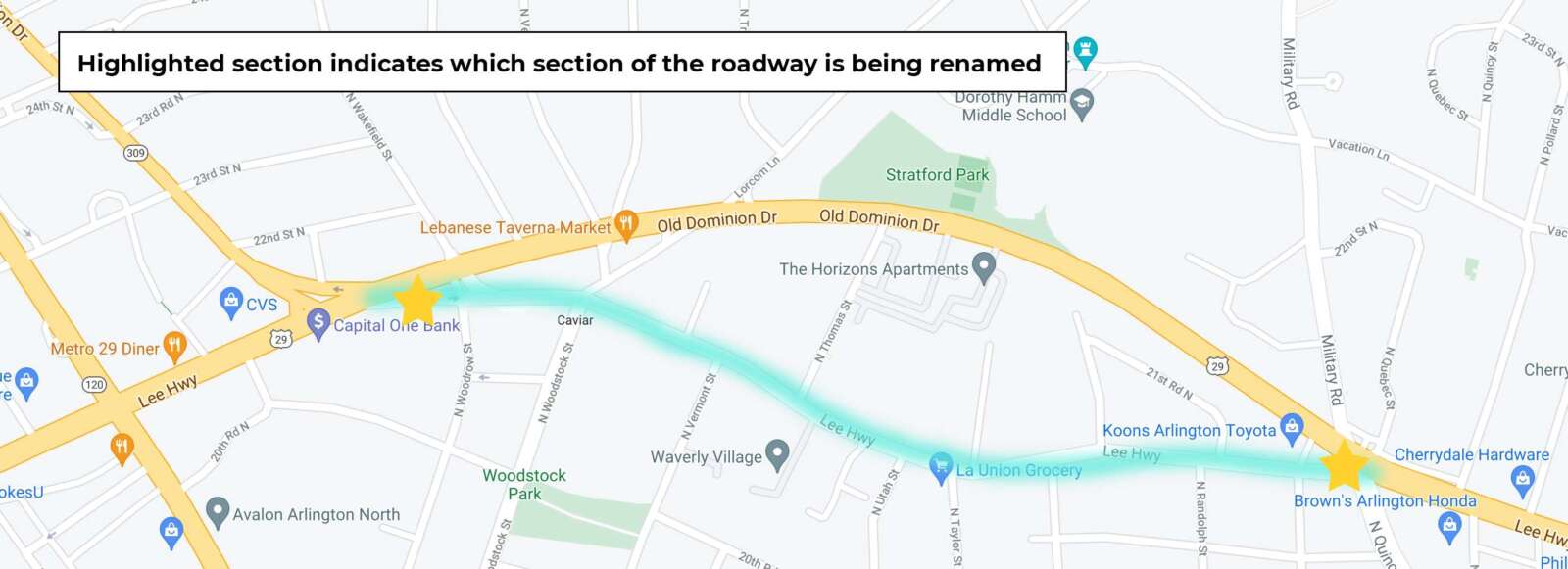
Old Lee Highway begins where Old Dominion Drive intersects with Langston Blvd. It ends with a fork in the road, where drivers can turn onto N. Quincy Street or continue east on Langston Blvd.

The stretch of ‘Old Lee Highway’ being renamed (via Langston Blvd Alliance)

The County Board tasked the Langston Blvd Alliance — which suggested Langston Blvd as the new monicker for Route 29 — with conducting an abbreviated process for Old Lee Highway. It came up with three suggestions: front-runner Cherry Hill Road, and two alternatives, Waverly Way and Cherry Hill Lane.

The LBA says Cherry Hill Road fits for a number of reasons.

“Cherry Hill Road is the historic name of the area just up the hill from Cherrydale,” said the LBA working group in a letter to the county. “Cherry Hill can also be seen as a blending of the Cherrydale and Waverly Hills neighborhoods. Dorsey Donaldson originally named this area Cherrydale because of the many cherry trees in the area, some of which are still here today.”

Meanwhile, “road” is a happy medium between “drive” and “lane” that “indicates a smaller, more walkable street but one that supports an important North Arlington bus route,” the group said.

All this came about because the alliance raised concerns with the County Board about staff’s initial suggestion to rename Old Lee Highway as “Old Dominion Drive.”

“LBA and those living on Old Lee Highway expressed concerns that the name ‘Old Dominion Drive’ would cause further confusion for drivers and emergency vehicles,” according to the organization’s webpage.

The Board unanimously approved Cherry Hill Road during its Oct. 19, 2021 meeting, when then-Board Vice-Chair Katie Cristol said the name was “the winner by a fair mile.”

The other names in the top 10, pared down from 92 recommendations, were:

  1. Cardinal/Cardinal View
  2. Cherrydale
  3. District View
  4. Dogwood
  5. Monument View
  6. Union
  7. Waverly Heights

As of this week, the county says operational changes to Cherry Hill Road “are yet to be scheduled” and a schedule for switching the signs is pending.

Meanwhile, the county issued internal guidance to all departments to wrap up all associated renaming by March 14.

And for the curious, the county says residents can’t ask for an old sign. The county has, however, added some to the Center for Local History surplus and given several to the Arlington County Historical Society.


View More Stories