The following appeared earlier this week in the ARLnow Press Club’s Early Morning Notes newsletter. Join the Press Club and help support more local reporting in Arlington.

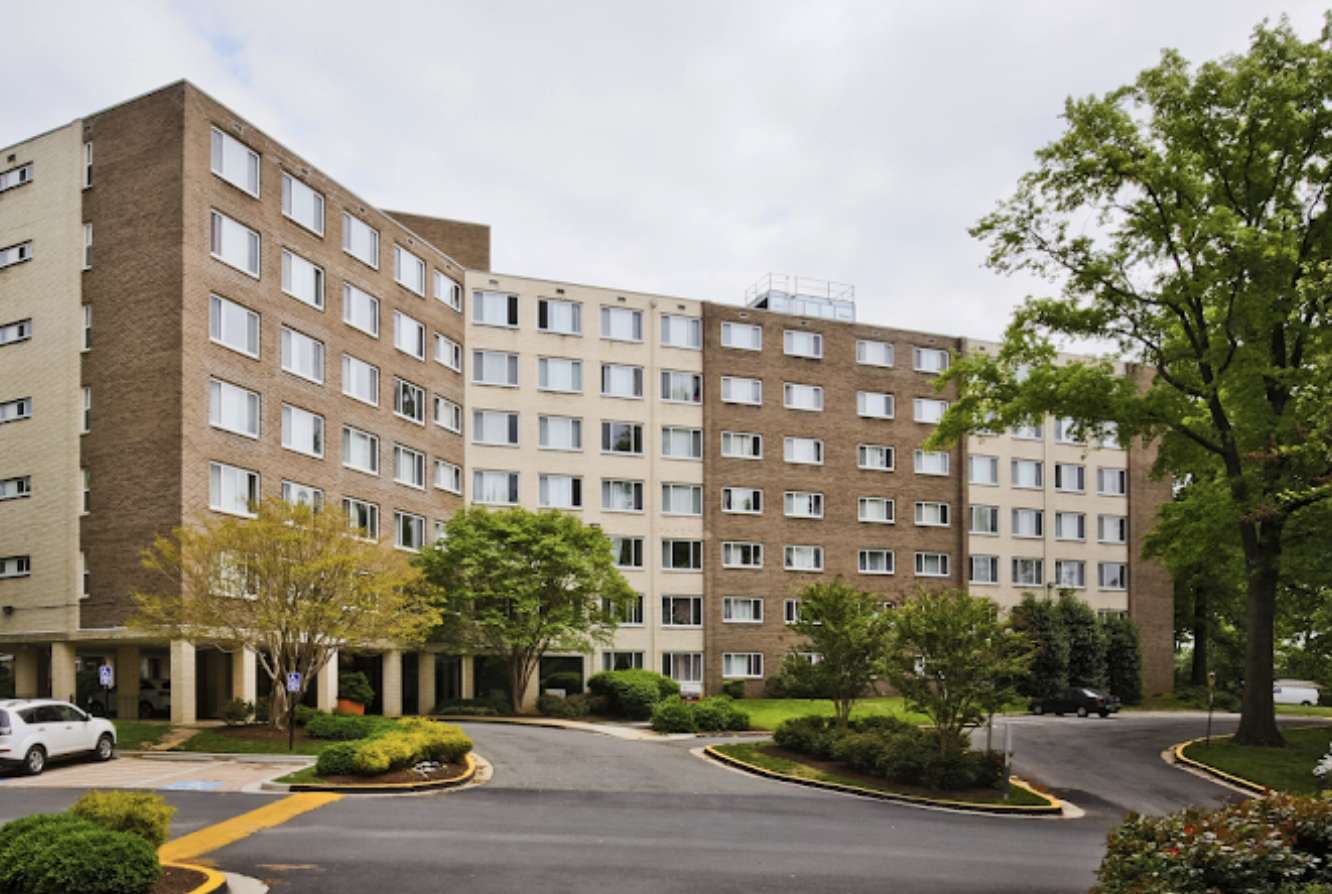
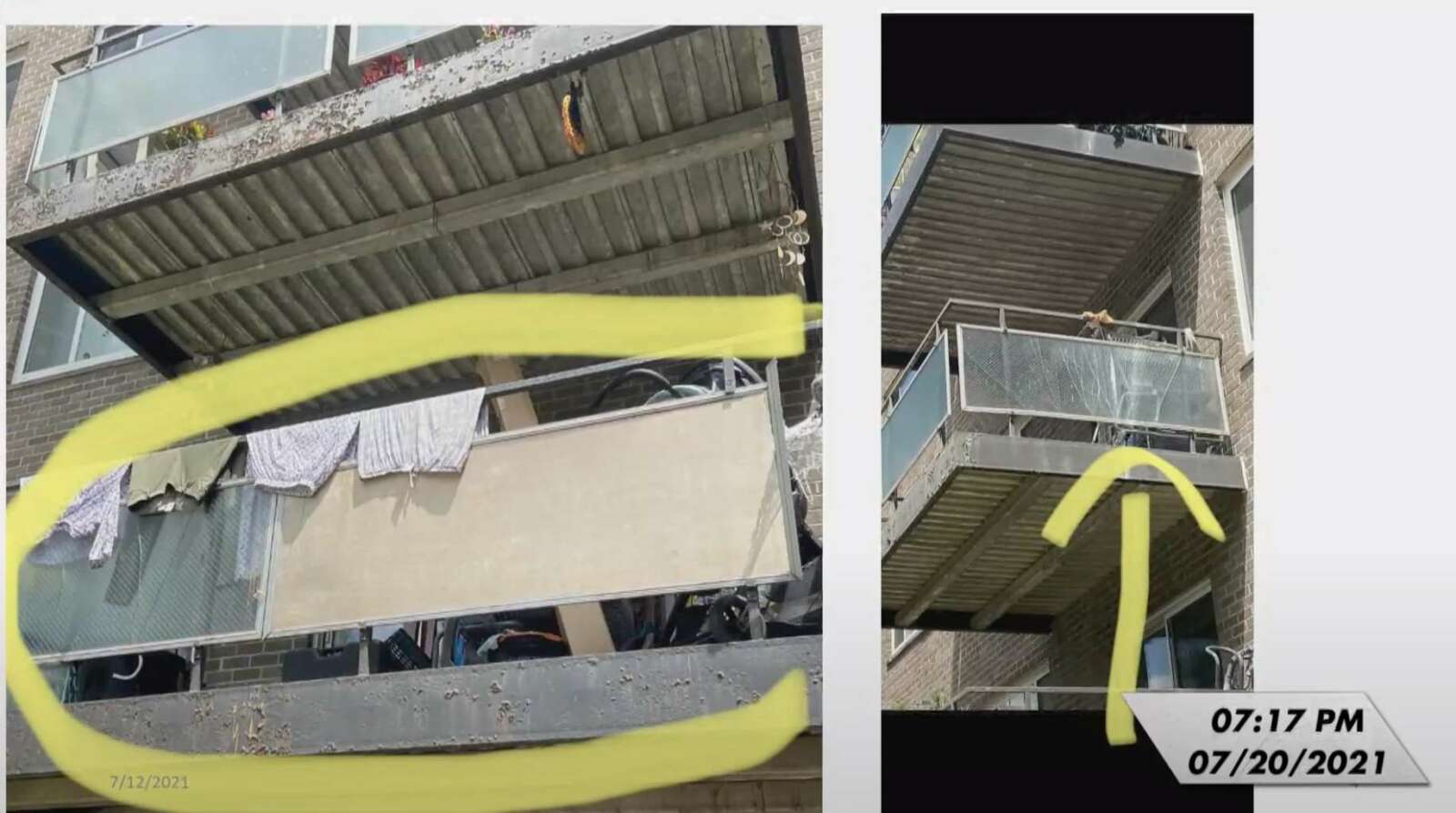
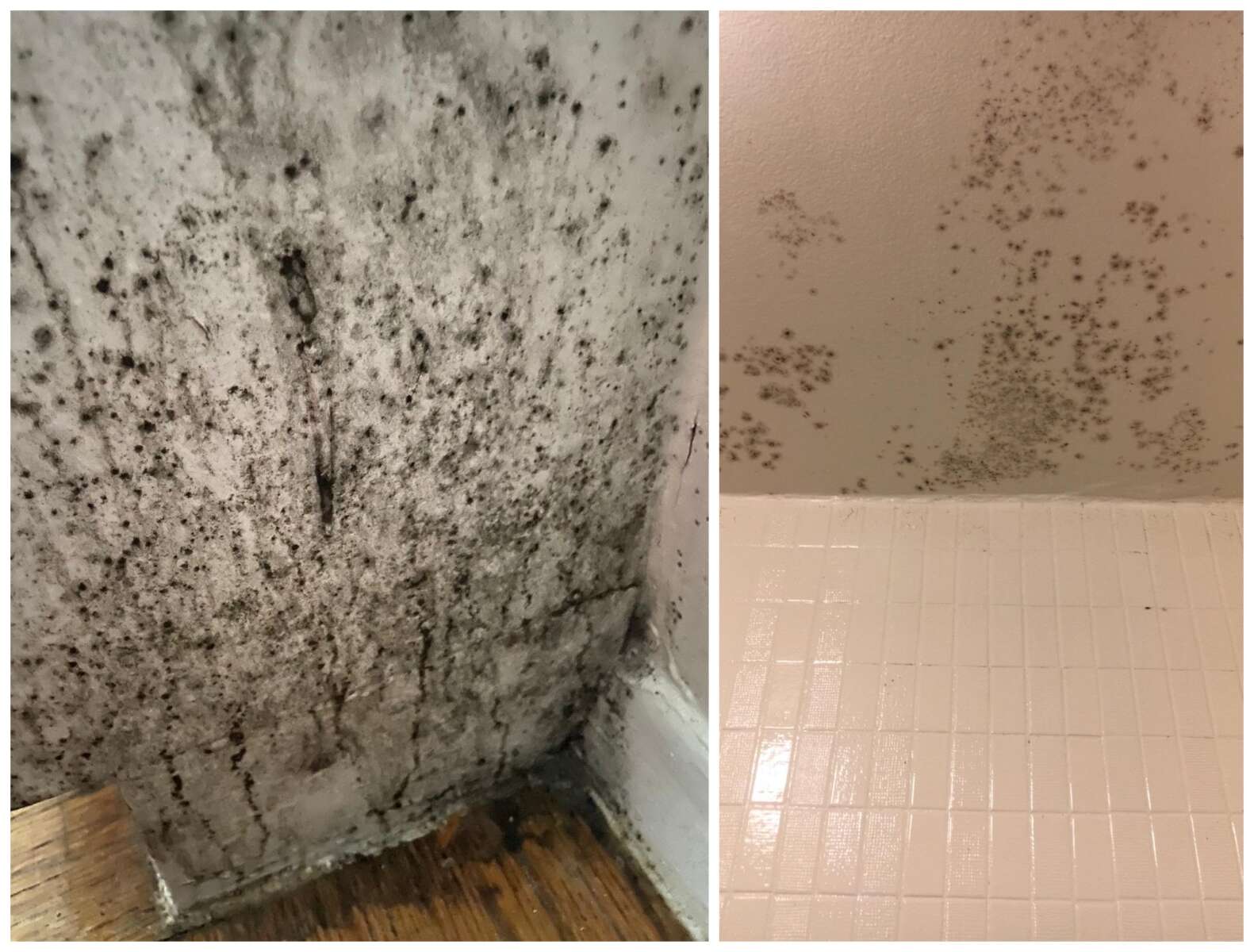
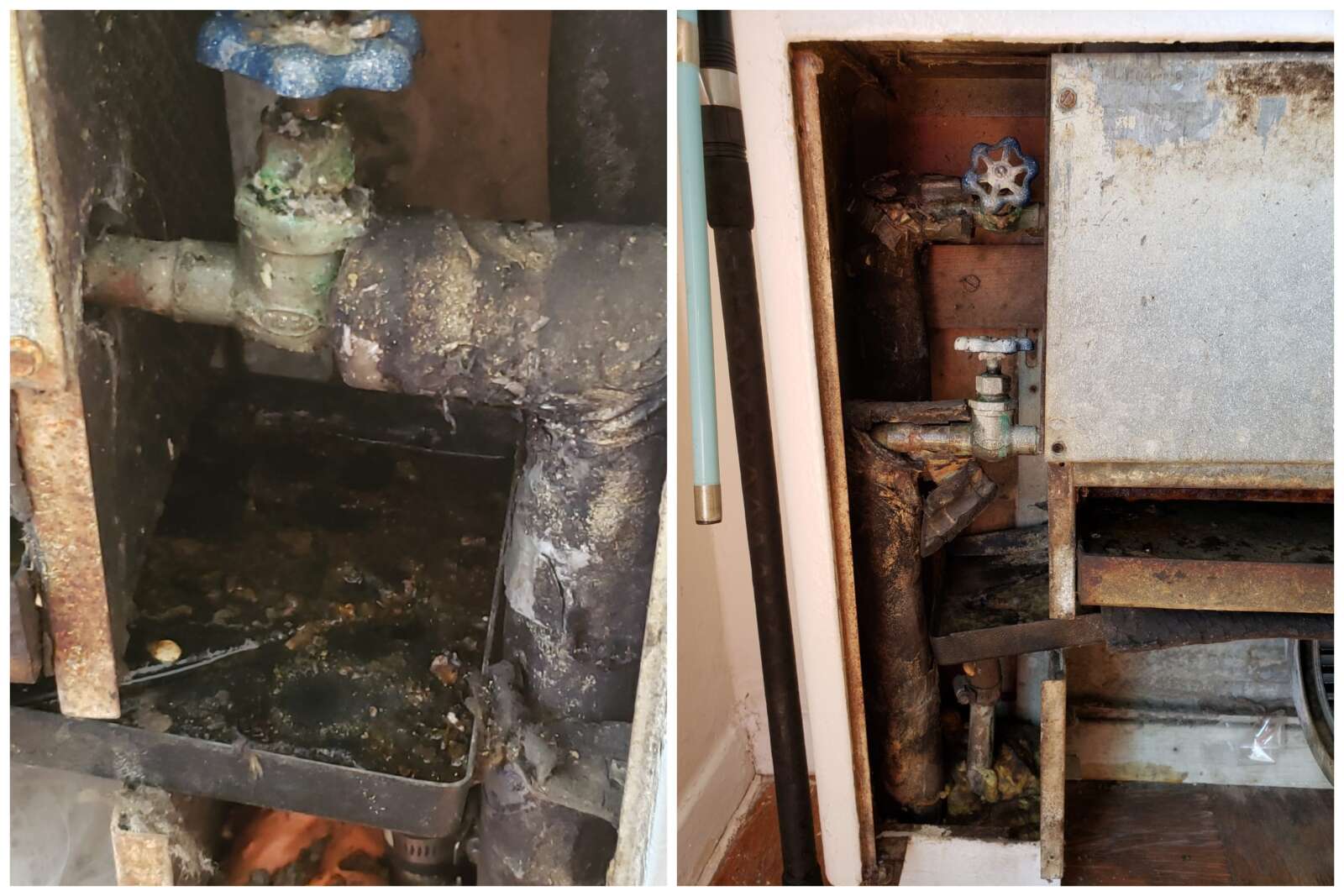
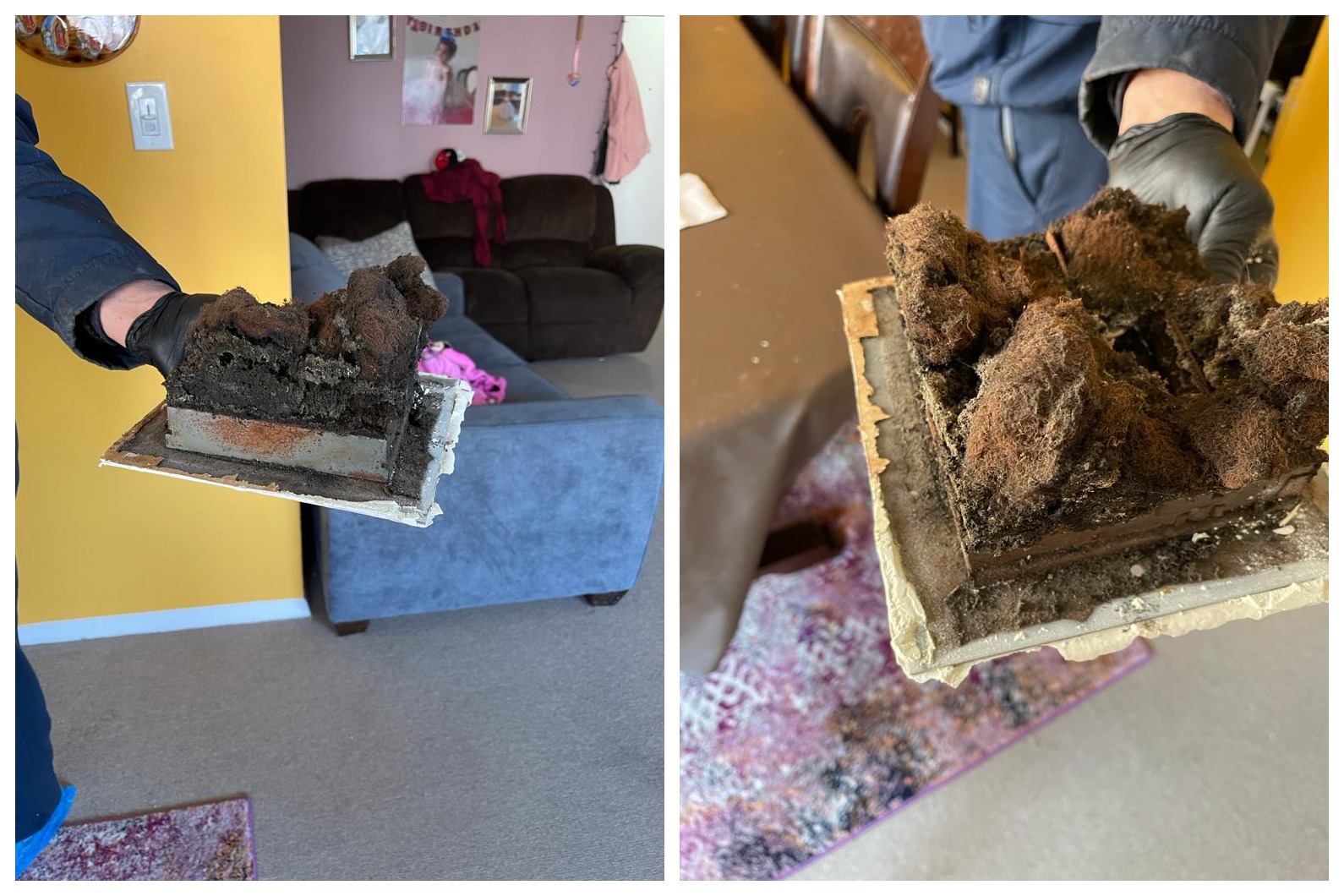
This week, the County Board got another update from tenant advocates and property owner AHC, Inc. about the ongoing work to improve the physical conditions at the Serrano Apartments as well as their tenant-landlord relationship.

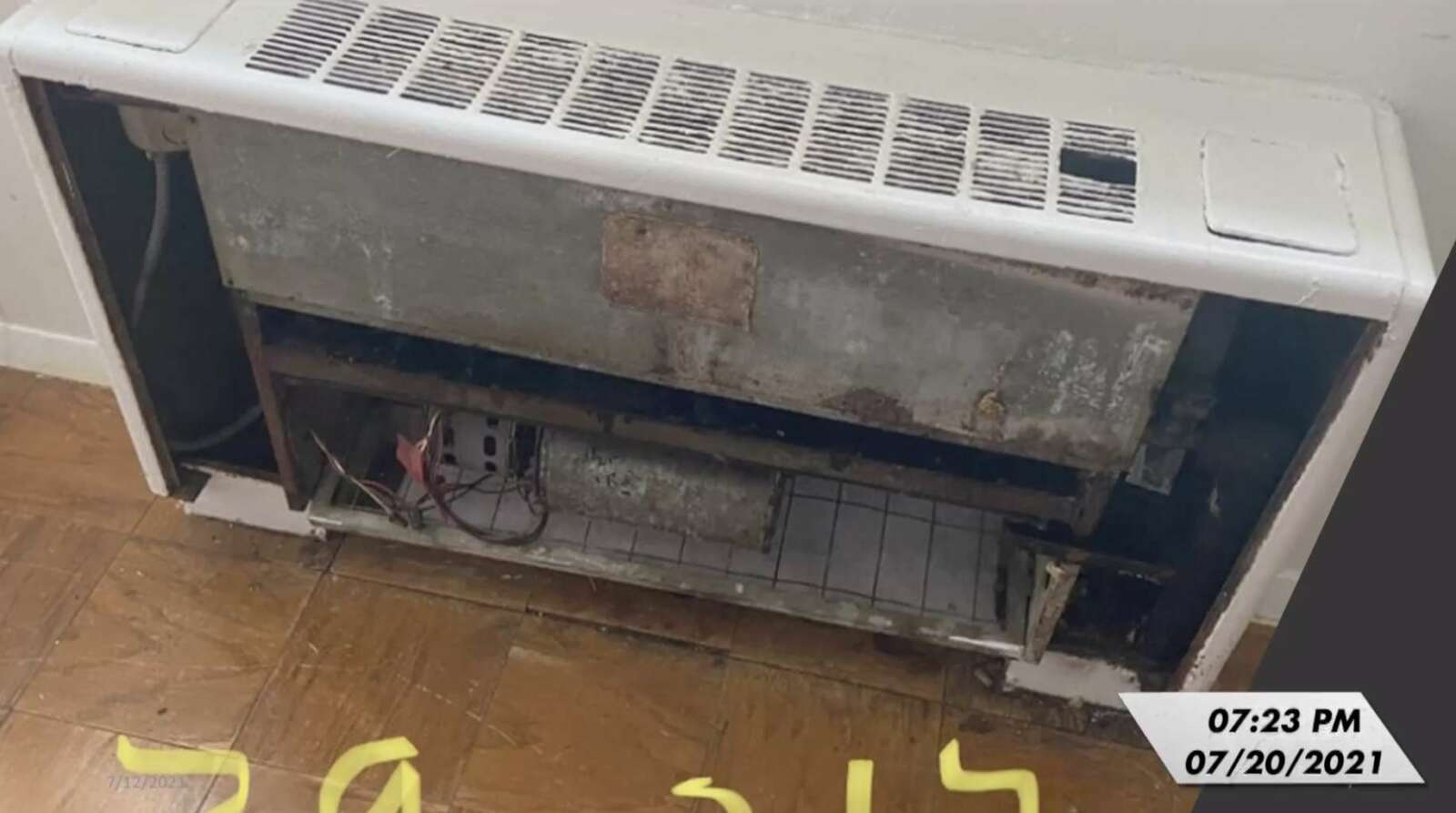
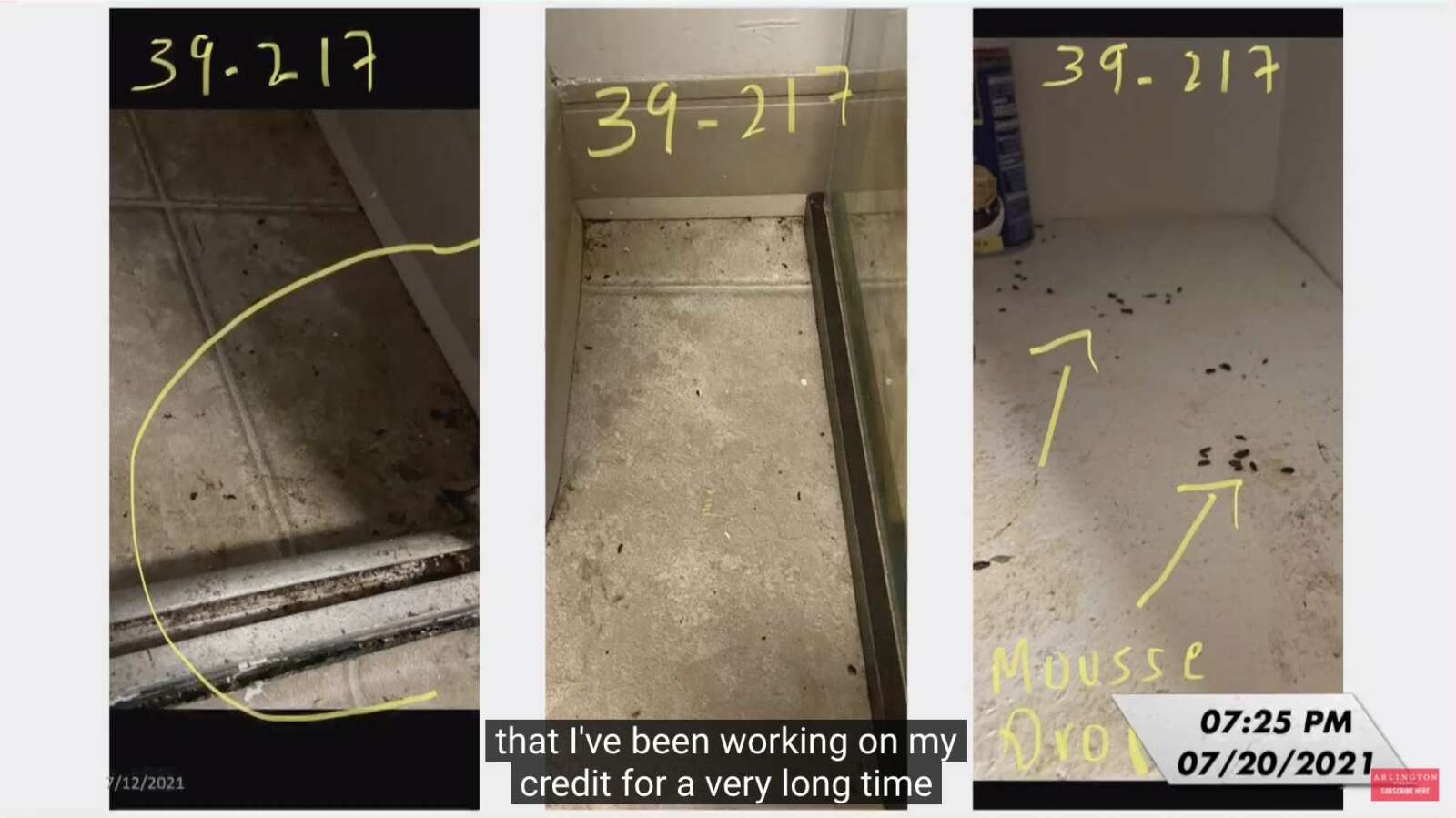
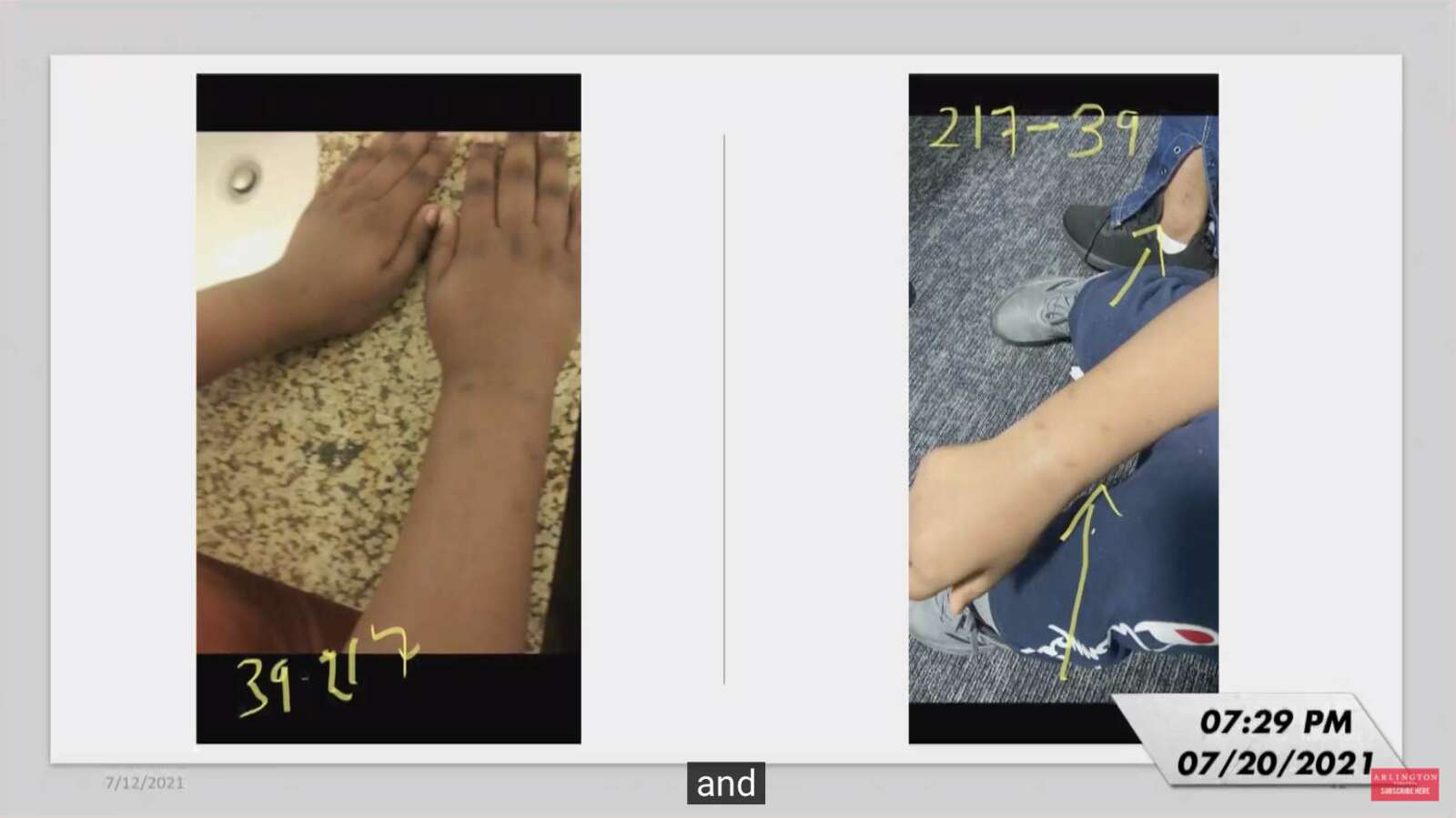
Seven months ago, residents went public with accounts of rodents, mold and shoddy maintenance that they had endured for years. In the ensuing weeks, the County Board instituted regular updates from residents and affordable housing nonprofit AHC to keep tabs on the work being done to improve life at the Serrano.

Both parties say physical conditions have improved. Inspections are complete, everyone has either moved back to the Serrano or into a new living situation and AHC is still seeing administrative changes after the retirement of CEO Walter Webdale: two more retirements, six new members of the Board of Directors, including two AHC apartments residents, and an ongoing CEO search.

“We have been continuing to make strong progress together with tenant advocates and residents,” said interim AHC CEO Susan Cunningham. “We continue to be focused on making sure our most affected households from some maintenance issues at the Serrano last year are able to be back in secure and comfortable homes.”

But tenants say trust is still lacking — especially when it comes to insurance claim-like process AHC has set up to reimburse residents for property damage caused by its neglect.

For claims settled without mediation, residents are accepting one-third or less than what they estimated was the dollar amount of property damage (which in most cases was under $15,000), said Elder Julio Basurto. He argued that AHC, in undercutting what residents claim is due, re-victimizes them.

“[AHC] can hide behind insurance adjusters. They’re telling residents, ‘If you don’t like it, go to mediation — go to court,” said Basurto. “We ask that you [the County Board] be involved to stop the re-traumatizing, the re-victimizing of these residents.”

If the claims issue can’t be resolved, tenants can choose mediation. But they need a lawyer. Both parties do.

For a company like AHC, Cunningham says getting a lawyer preserves the integrity of the process. But for the folks Basurto represents, “lawyering up” means getting entangled in a process that they may not have the means, command of English, bandwidth or legal status to do.

During the meeting, County Board members spent some time parsing out these differing dynamics. Ultimately, members said they can’t really do anything to modify this legal process. What I took away from this conversation was that residents believe the parameters of an in-court mediation systematically disadvantage people seeking relief, and the County Board wanted to establish that the steps AHC was taking to right things could have unintended negative consequences.

This tension points back to the lack of out-of-court mediation options for tenant-landlord disputes in Arlington County, an issue that ARLnow columnist Nicole Merlene first brought to my attention earlier this year. She talked about the Tenant-Landlord Commission’s work to reinstate some kind of out-of-court, county-run mediation process after the county defunded one years ago.
(more…)


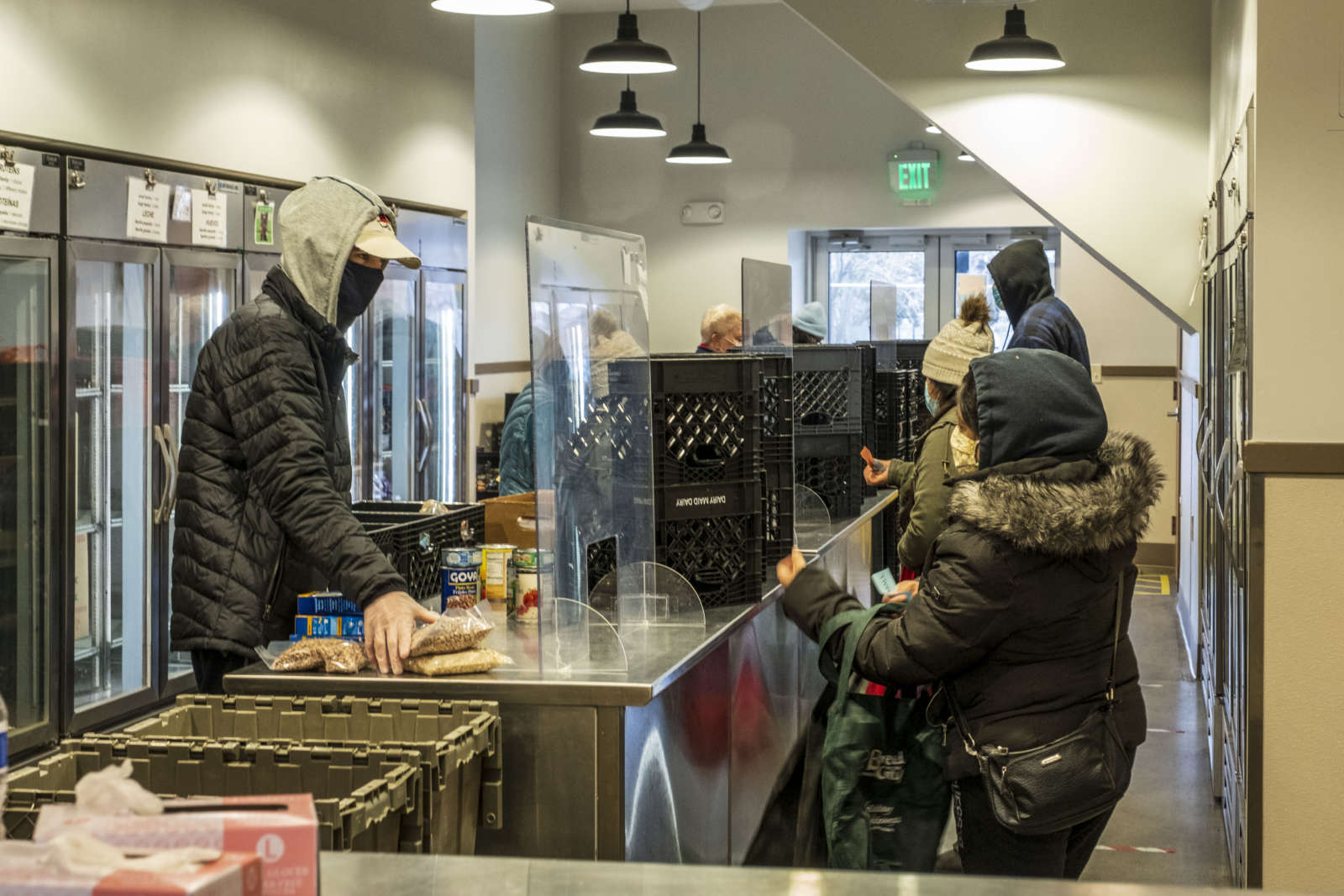
Volunteers distributing food at AFAC (Staff Photo by Jay Westcott)

‘Tis the season for charity, as year-end giving campaigns and holiday donation drives ramp up.

This year, with Thanksgiving and Christmas on the horizon, two dozen local nonprofits have listed what they need to serve their clients this holiday season.

Contribution opportunities include providing essentials to people in affordable housing, transitional housing and recovery programs, supporting the arts, feeding people and animals and helping nonprofits provide STEM programming and assist job-seeking clients.

The lists, republished with permission of the Arlington Chamber of Commerce after originally appearing in the Chamber’s Arlingtonian newsletter, are below.

AHC Inc.

  • Assemble holiday gift bags filled with fun items such as fuzzy socks, craft supplies and a gift card for teens and senior citizens in AHC’s programs.
  • Donate education tools for AHC’s youth. Purchase gifts from AmazonSmile through AHC Inc.’s Wish List.

Animal Welfare League of Arlington 

  • Donate food and supplies from our Chewy Wish list so pets and their families get the resources they deserve to stay together.
  • Donate items from our Amazon Wish list to give shelter animals the care they need or even a special surprise this holiday season.

Arlington Arts Center

  • Donate two foldable wheelchairs for visitors who may need assistance during their visit.
  • Donate painting supplies for gallery walls (roller covers, painters tape and drop cloths).

Arlington Food Assistance Center (AFAC)

  • Register online to organize a food drive to help AFAC collect food for Arlington families struggling against hunger. AFAC will provide boxes and will pick up the donated food.

Arlington Free Clinic

  • Donate a $25 Target gift card so that patients who are parents can buy holiday presents.
  • Donate lotion and hand cream for patients who visit during the cold, dry months.

Arlington Partnership for Affordable Housing 

  • Donate household supplies, such as toiletries, for our Household Essential Pantry.
  • Donate winter clothing accessories for Holiday Seasonal Drive, such as children’s face masks, gloves, scarves and hats.

Arlington Thrive

  • Empower and celebrate an Arlington case manager or social worker by donating a gift — such as a gift card, office supplies, an experience or an accessory — for their holiday surprise care package.

Aspire! Afterschool Learning

  • Donate an Amazon gift card in any amount for student program needs and family support.
  • Donate an item from Aspire!’s Amazon Wish list.

Bridges to Independence

  • Donate towels for families in need of shower supplies.
  • Donate pots and frying pans to families in need of kitchen supplies.

Computer CORE

  • Donate used laptop or desktop computers for us to refurbish and give at no-cost to our low-income adult job-seeking clients.
  • Donate computer mice and external cameras for recipients to participate in Zoom meetings.

Culpepper Garden

  • Donate cloth face masks and personal hygiene products for seniors in our assisted living residence.
  • Support Culpepper Garden’s Daffodil Bulb Drive by ordering a reusable bag of 25 select daffodil bulbs to keep or donate back to Culpepper Garden.

ENDependence Center of Northern Virginia

  • Assist our move from the Courthouse area to National Landing in January 2022.
  • Donate a SmartBoard interactive display to use in our new accessible meeting room at our new location.

Jennifer Bush-Lawson Foundation (JBLF)

  • Check out JBLF’s Amazon Wish list and help elevate the lives of low-income moms this holiday season.

National Capital Treatment & Recovery (formerly Phoenix House Mid-Atlantic)

  • Donate socks or winter gloves to an adult struggling with substance use disorder.
  • Donate travel-size items for hygiene kits (such as toothpaste, toothbrush, deodorant and shampoo) for an adult struggling with substance use disorder.

New Hope Housing (NHH)

  • View NHH’s Amazon Wish list at for items to donate which can serve our guests at the Residential Program Center (RPC).
  • Donate gift cards from Giant, Safeway, Walmart or Target in $25 increments. These make great welcome home gifts for our guests who move out of RPC and into their own place.

Operation Renewed Hope Foundation

  • Donate new bath towel sets: one large towel, one hand towel and one or two washcloths.
  • Donate a bagless vacuum cleaner.

PathForward

  • Donate a new twin-size bed bundle, such as sheets and a blanket, to an adult seeking warmth this winter at our Homeless Services Center.
  • Donate Glucerna Protein Shakes to an adult managing their health and wellness in our Medical Program.

Restoration Immigration Legal Aid 

  • Donate Walmart gift cards for asylum seekers and vulnerable immigrant children to buy food and holiday gifts for their families.
  • Donate essential hygiene items for the most vulnerable immigrants in our area.

Rosie Riveters

  • Donate a space where Rosie Riveters can hold paid and free after-school and weekend STEM programs.

RPSVA’s Arlington Peers Helping Peers in Recovery

  • Donate winter gear (such as hats, heavy socks, gloves, blankets and sleeping bags) for homeless adults.
  • Donate snacks and bottled water for homeless adults.

The Clothesline for Arlington Kids

  • Prepare a student for winter weather. Donate new winter coats or lightly used coats in excellent condition. Particular need for adult sizes for teens.
  • Put a smile on a kid’s face. Donate new sneakers.

Wreaths Across America

  • Sponsor a veteran’s wreath to be placed on the headstone of an American hero laid to rest at Arlington National Cemetery this National Wreaths Across America Day (Saturday, Dec. 18). Each $15 handmade, live balsam wreath is placed by a volunteer and sponsored by an individual.

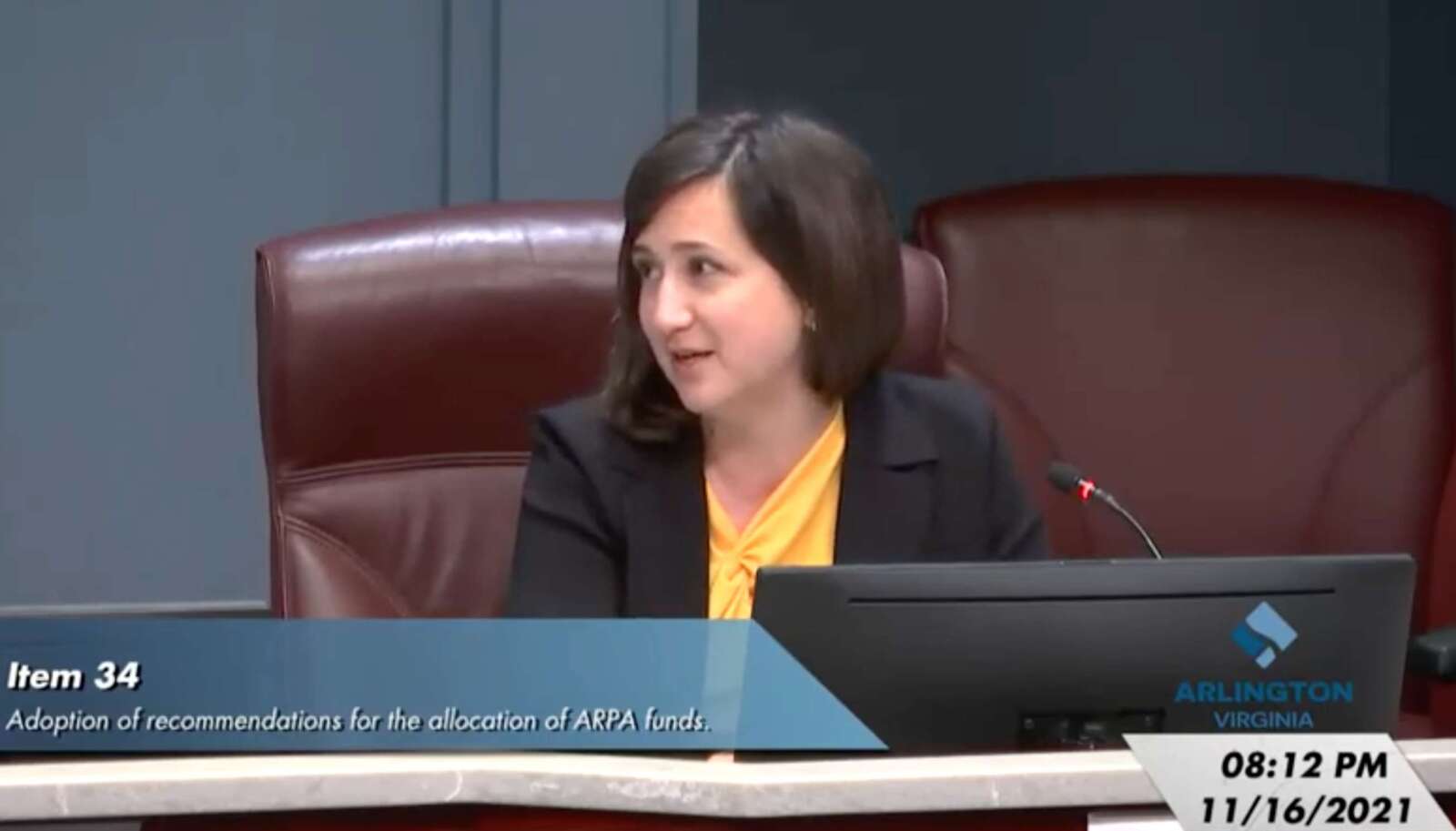
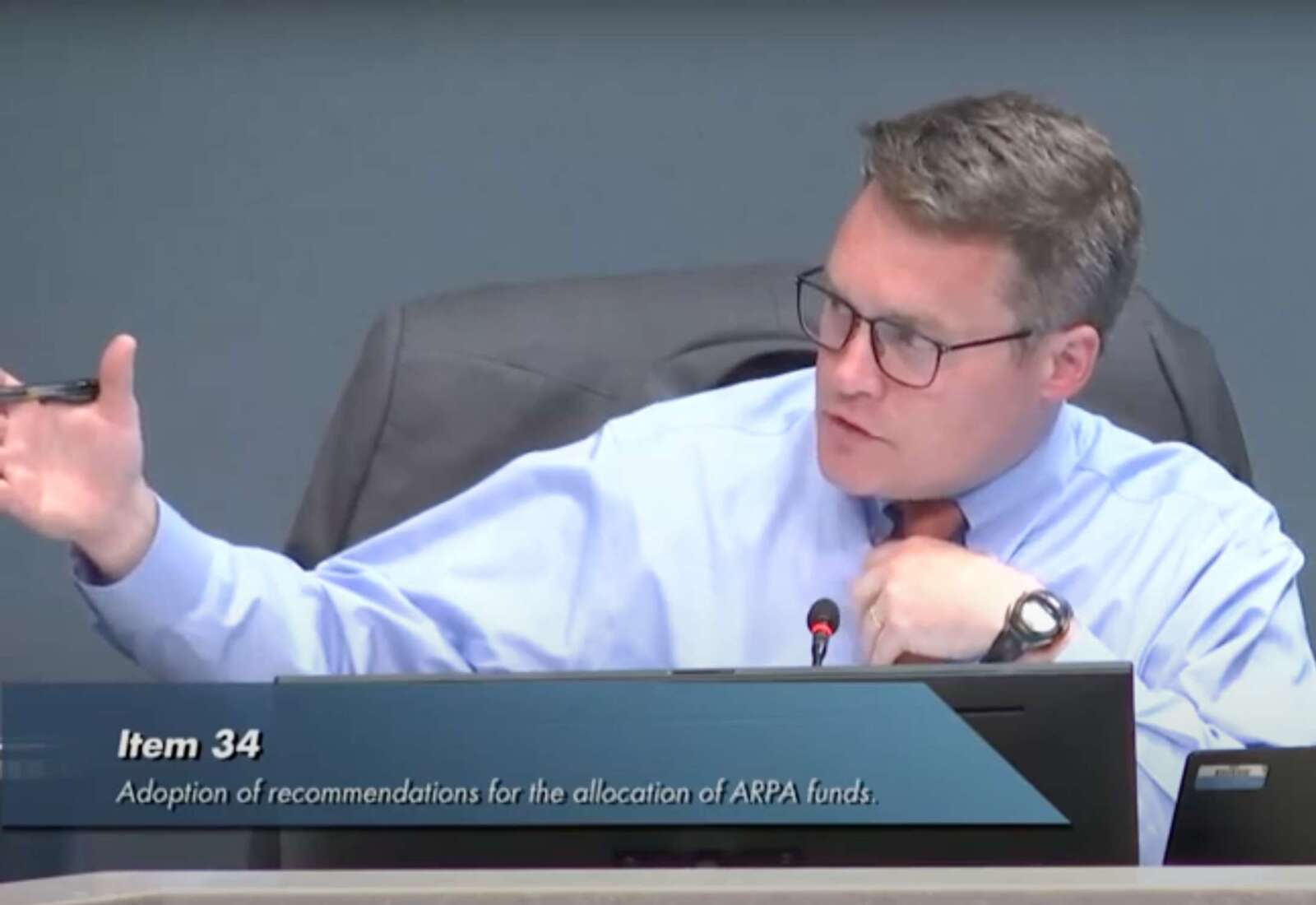
Arlington County Board Chair Matt de Ferranti speaks during the Board’s Tuesday meeting on how to allocate federal funding (via Arlington County)

Pandemic recovery, childcare and criminal justice reform will be receiving millions in federal and county funds.

This week, the Arlington County Board voted to put federal COVID-19 relief funding and unspent county budget dollars toward these areas and other equity initiatives. Members also signaled the county’s commitment to these priorities by adopting them in their state legislative priority package.

On Tuesday, the Board allocated $29.5 million in American Rescue Plan Act funds for pandemic response and local assistance programs.

It also put more than $6 million in surplus from the 2020-21 budget, or “closeout” funds, toward retention bonuses and compensation of county employees, support for restorative justice initiatives, review of body worn footage cameras and a new position in the Sheriff’s Office.

“Our American Rescue Plan and closeout funding allocations focus on our continued responsibility to keep our community healthy and safe, providing funding for testing, vaccine support and COVID response,” County Board Chair Matt de Ferranti said. “We also are investing in mental health care through the Crisis Intervention Center and childcare, a critical issue that the pandemic has revealed as more pressing than ever, as well as transportation and our employees.”

Since the plans were introduced in October, the county added some line items to the ARPA and “closeout” spending plans. Two of particular note include money to establish a childcare capital fund and to hire a quality assurance employee for the Arlington County jail.

The Board left $2.4 million ARPA funds unallocated to meet any unforeseen needs determined in 2022, as well as $14.1 million in unallocated close-out funds to address financial pressures in upcoming 2022-2023 budget.

Direct pandemic response — such as testing site and vaccine clinic support — received $9 million while local programs, ranging from housing assistance to the expansion of the Crisis Intervention Center for behavioral health services, received $20.5 million.

New to the ARPA spending plan is $5 million to develop affordable childcare options, spearheaded by childcare champion and Board Vice-Chair Katie Cristol.

“ARPA federal guidelines highlight some of the uses for it: they include investment in new or expanded learning services, support for pandemic-impacted small businesses and support to disproportionately impacted populations and communities. One thing at the center of those three circles of the Venn diagram is childcare,” she said during the Board meeting on Tuesday. “This has emerged as one of the top needs during the pandemic.”

Board Vice-Chair Katie Cristol speaks about childcare during the Tuesday meeting (via Arlington County)

Arlington has increased the number of available childcare slots, but they are not affordable to those making 50% or less of the Area Median Income, she said.

The county would put the $5 million toward a new childcare capital fund to be accessed by providers and developers who agree to set aside some affordable spots on an ongoing basis in exchange for a one-time infusion of dollars.

The result would be permanently discounted childcare spots created at the time a provider signs a long-term lease or a developer receives approval to build a childcare center, she said.

Before Tuesday night, the Board had previously allocated $2 million in ARPA funds for small business support and $3.8 million for restoring libraries, community centers and other important community facing programs.

(more…)


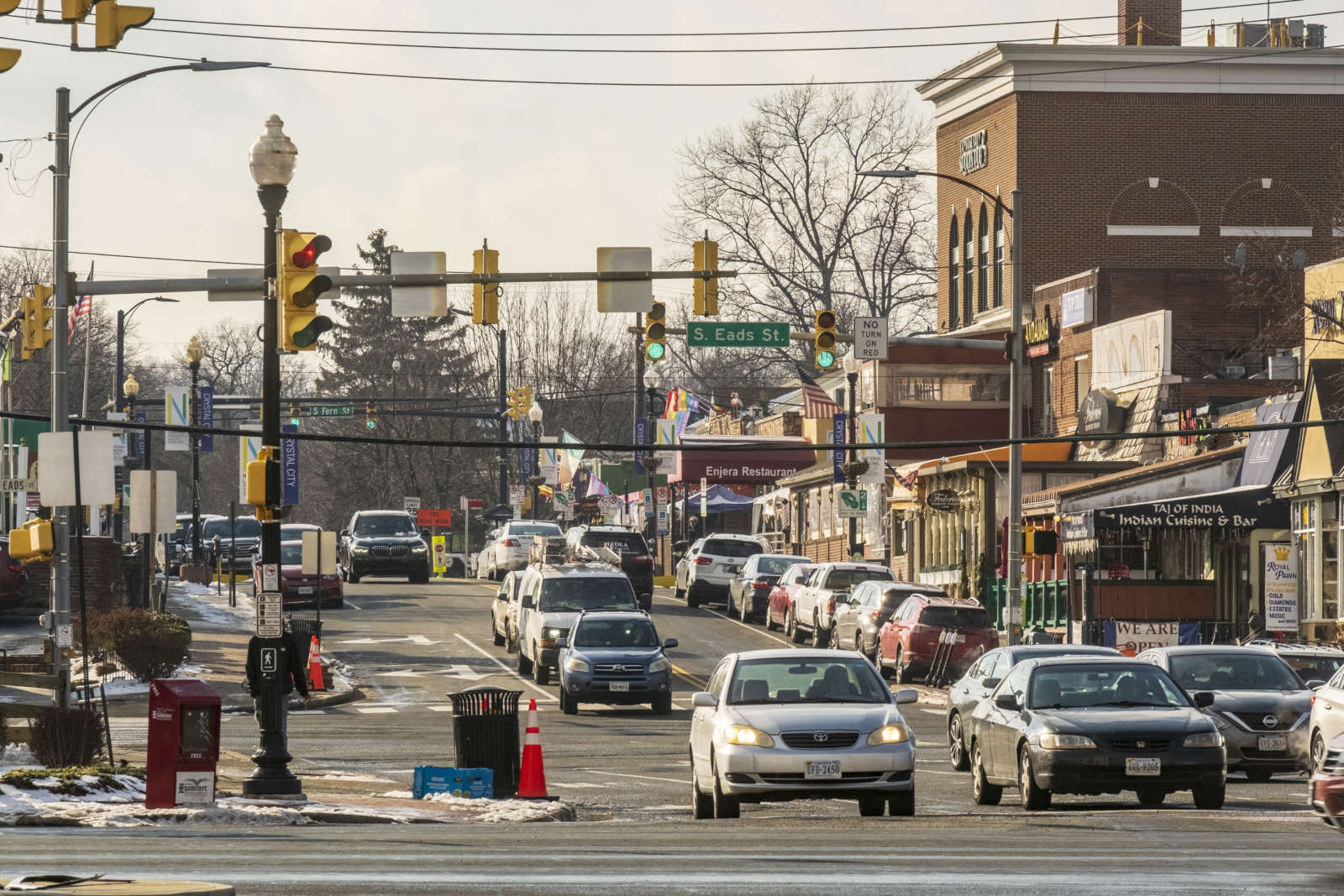
Restaurants in Crystal City (Staff Photo by Jay Westcott)

(Updated on 12/7/21 at 2:30 p.m.) With a bevy of development looming, a band of residents, restaurateurs, landowners and business leaders are trying to preserve the “soul” of Crystal City: “Restaurant Row.”

For many years, a collection of small, independently owned restaurants have operated along 23rd Street S., between S. Eads and S. Fern streets, including the locally famous LGBT nightlife spot Freddie’s Beach Bar and Restaurant.

But the people who frequent and run these business wonder where the long-term viability of this corridor fits into the flurry of development nearby: Amazon’s HQ2 in Pentagon City, JBG Smith’s extensive development pipeline in Crystal City, and Arlington County’s Crystal House Apartments affordable housing project, among others.

As all these projects take shape, the group has reprised a rallying cry from two years ago, reiterating that Restaurant Row needs some attention — but not the kind that stamps out its unique character.

“With all this stuff happening, what about 23rd Street, the sole soul for Crystal City for decades?” said Rob Mandle, the National Landing Business Improvement District Deputy Executive Director, in a recent Crystal City Citizen Review Council meeting. “What are we going to do over the course of the next five years while the rest of National Landing transforms?”

Those are still open questions for members of the CCCRC, who earlier this month met with restaurant owners and landowners to discuss ideas for investing in Restaurant Row, which was identified in the Crystal City Sector Plan as a “major community asset with local businesses that should be preserved or protected.”

This line has puzzled county planner Matt Mattauszek for two years.

“What does that mean, ‘preserve and protect?’ What are the exact mechanics of that?” Mattauszek said. “I don’t think anyone on our side wants to lose any opportunities in terms of that protection element while maintaining it as a destination.”

Ultimately, he said the community needs to develop a clear set of priorities before the county can help.

Members of the CCCRC and local landowners have long- and short-term ideas for preserving and updating Restaurant Row.

Aurora Highlands resident Michael Dowell says he wants conditions that facilitate updates to the aging buildings that preserve their feel. Otherwise, worsening infrastructure will force out tenants and make the buildings ripe for redevelopment.

“The thing we want to preserve is that community feel of 23rd Street restaurants,” he said. “They’re human scale, they have a lot of local ownership, and there is a huge variety there.”

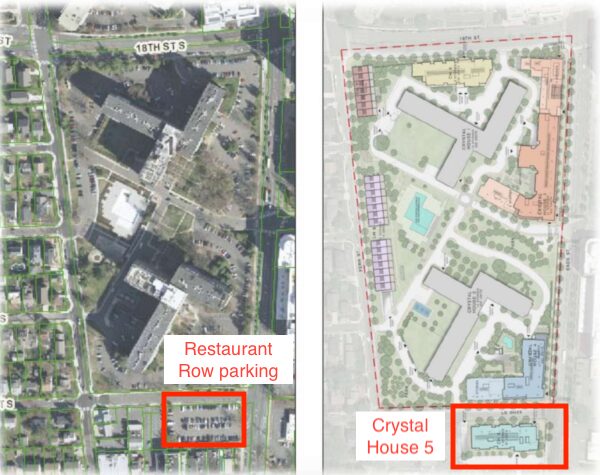
Some said the area needs more street parking, a long-time concern for residents that has resurfaced as the county embarks on its Crystal House development project. As part of the project, a parking lot between 22nd and 23rd Street S. will be turned into townhomes known as “Crystal House 5.”

An aerial view of existing Crystal House Apartments and renderings (via Arlington County)

Speeding is also a problem, said Darren Buck, an Aurora Highlands resident and Transportation Commission member. He suggested a comprehensive rezoning effort from S. Ives Street to Route 1 that would bring in a traffic signal and better lighting and create a streetscape that establishes Restaurant Row as a destination.

(more…)


The pandemic has moved office work to the home. As at least some of that work moves back to office buildings, the next frontier might be outdoors.

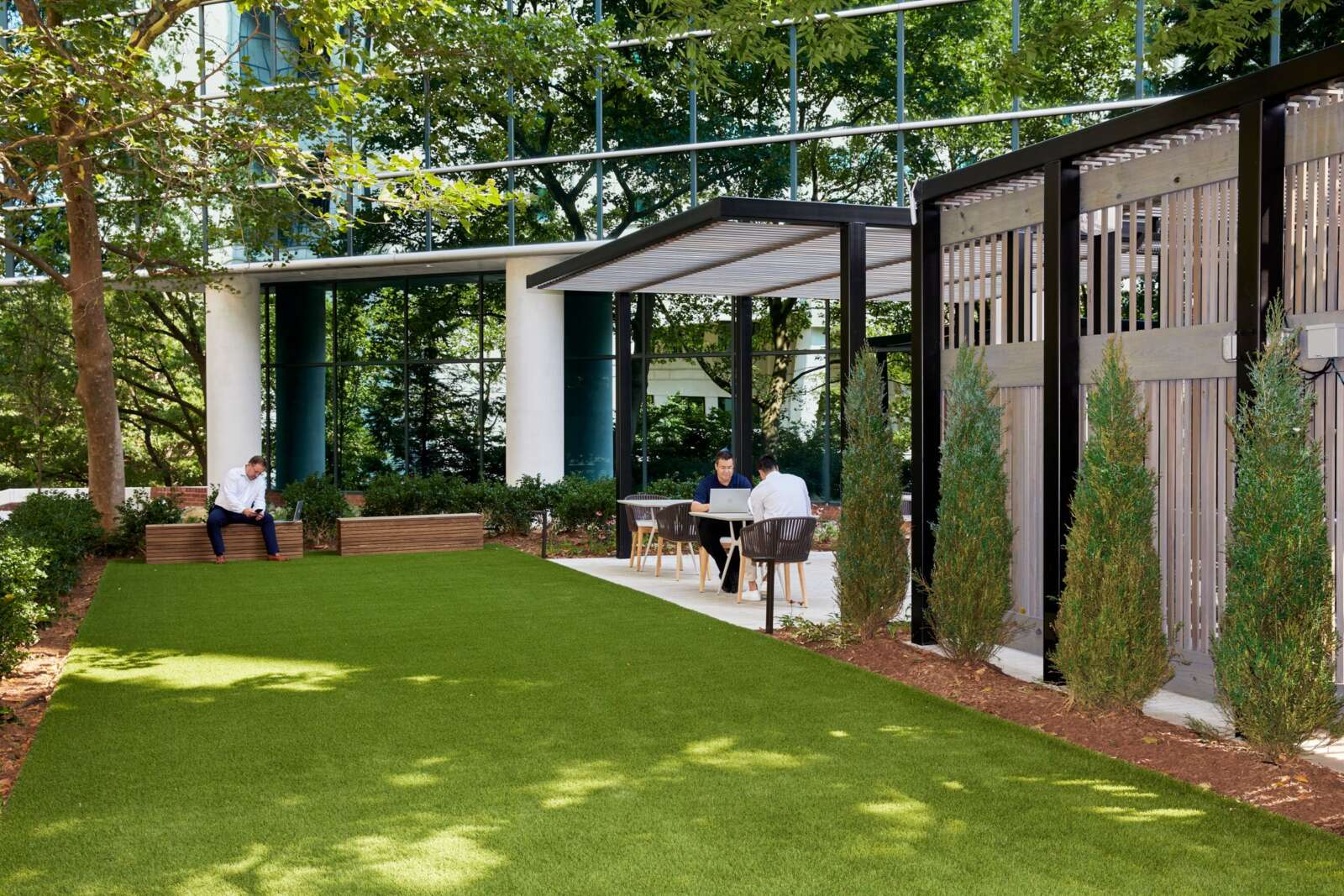
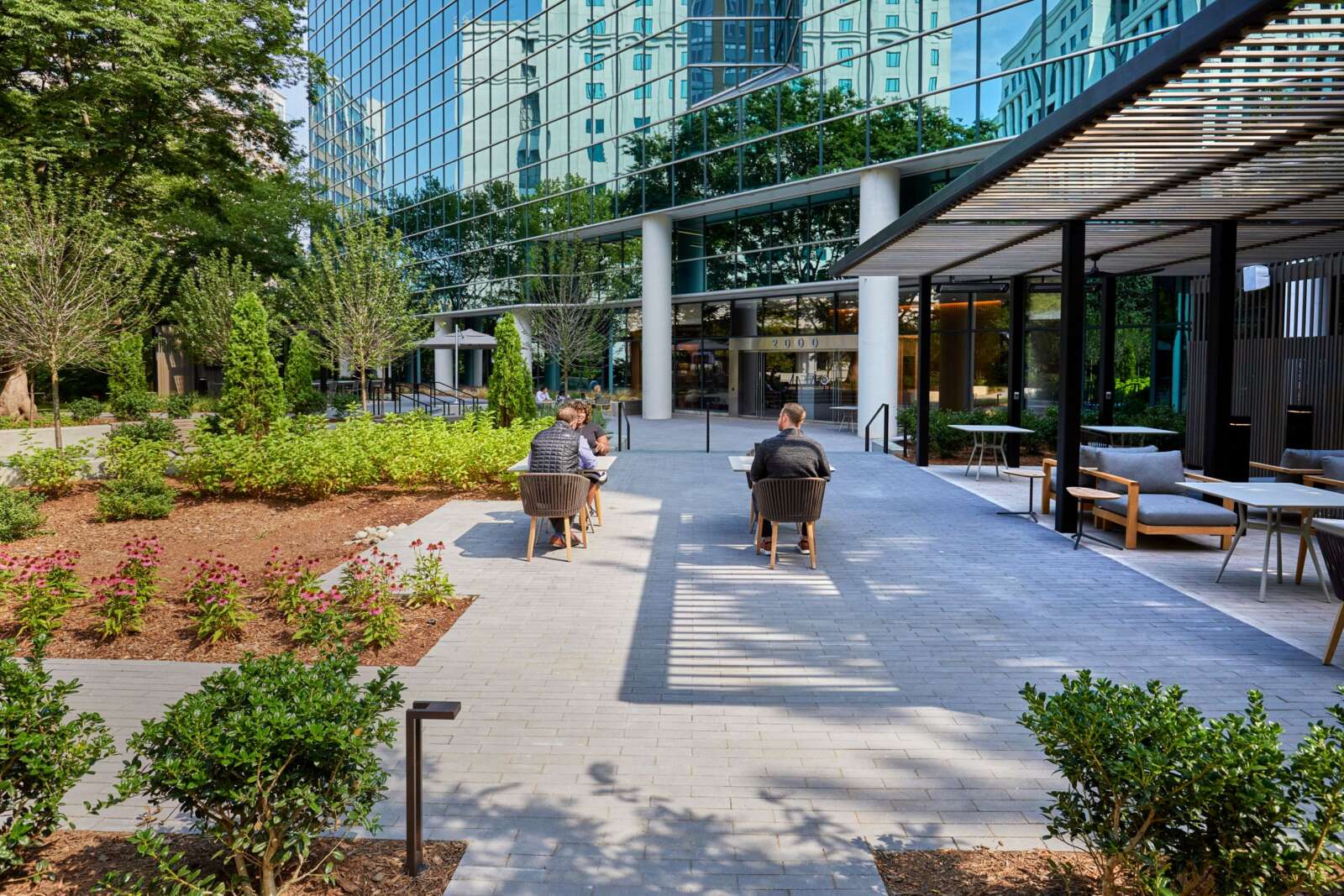
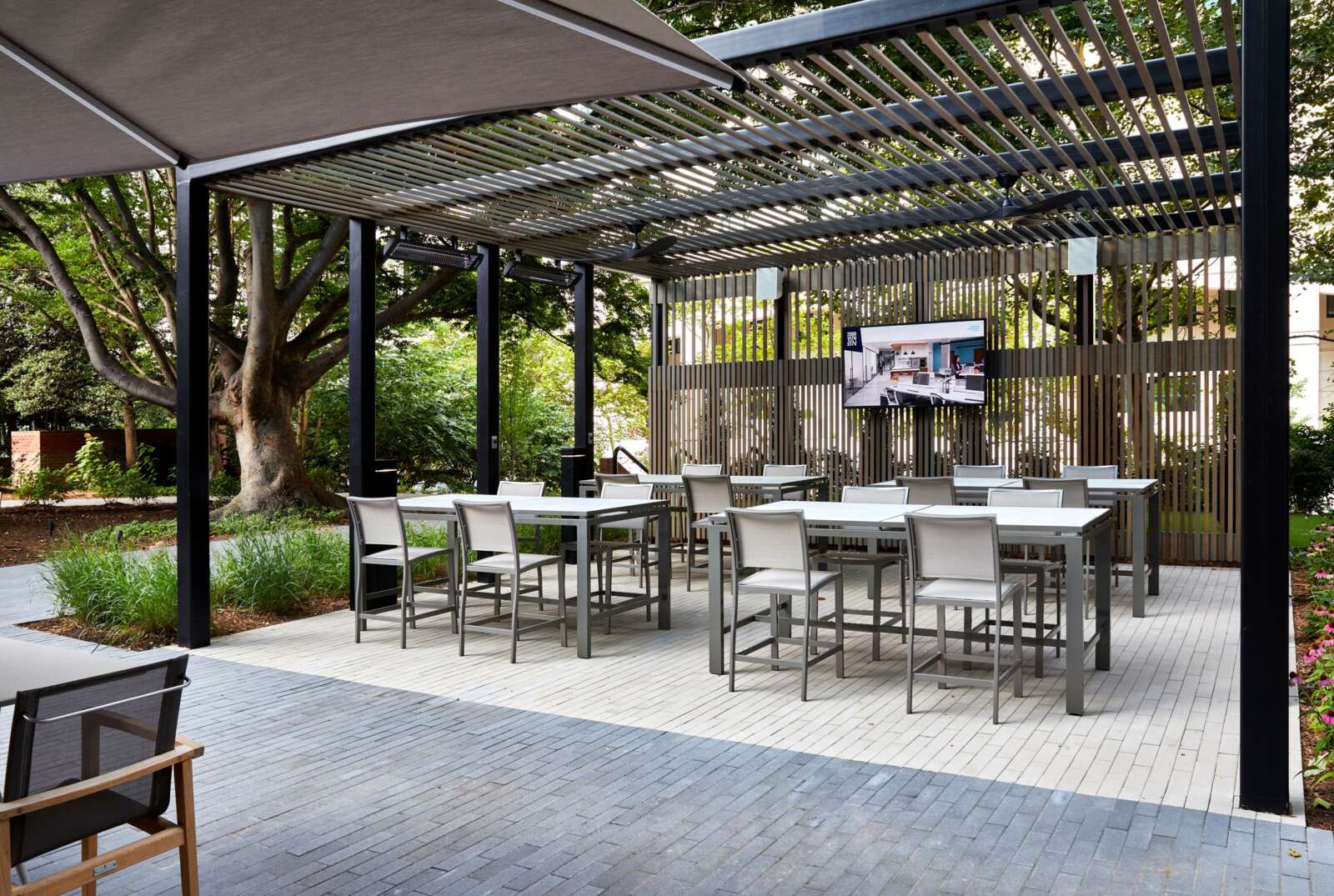
In Arlington, a recently-renovated 1980s office building in Courthouse offers a glimpse of a greener office future, with a year-round outdoor working space.

The new 16,000-square foot landscaped outdoor plaza at 2000 15th Street N. — the centerpiece of a $11 million renovation project — is the largest outdoor plaza of any office building in the Rosslyn-Ballston corridor, according to American Real Estate Partners (AREP).

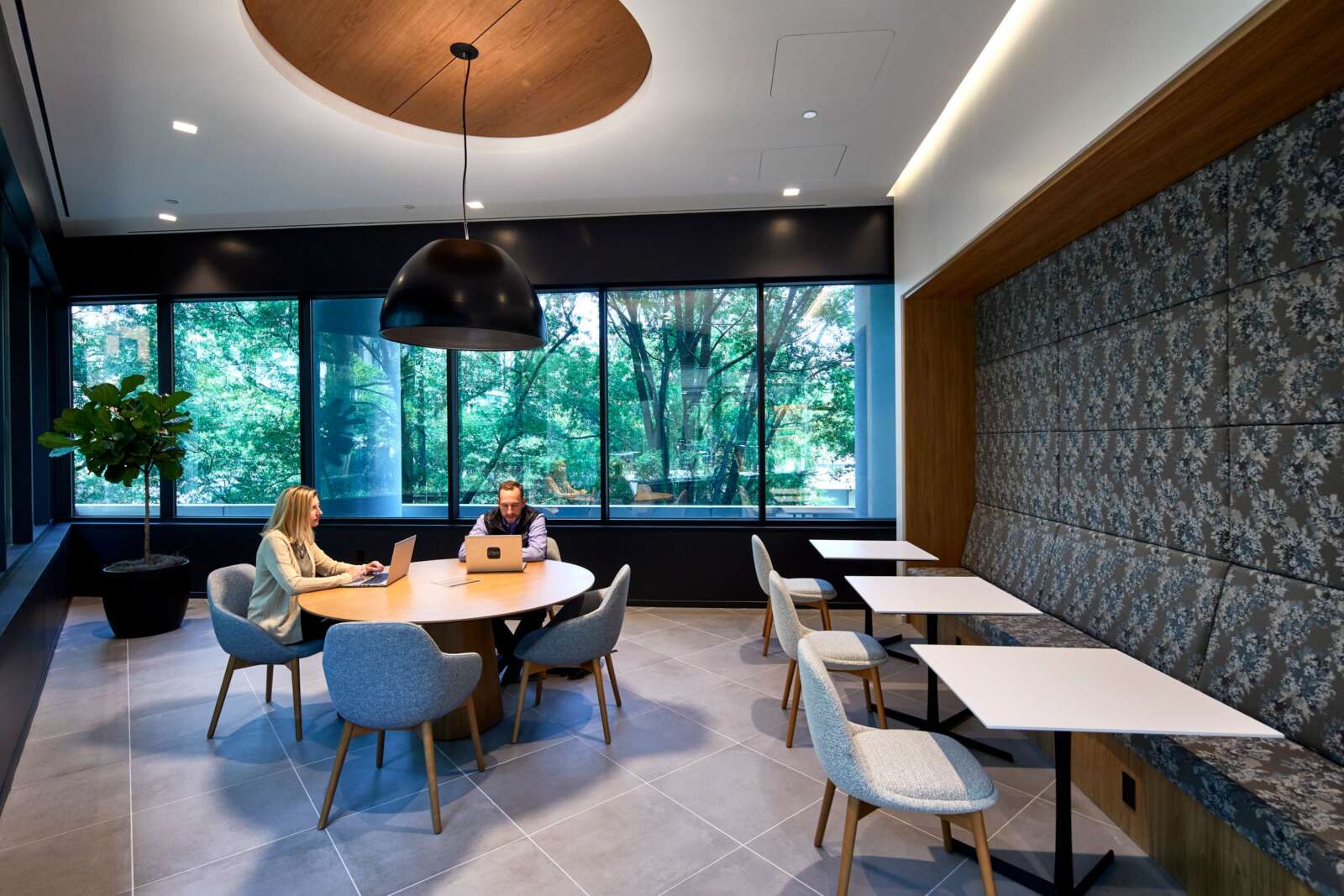
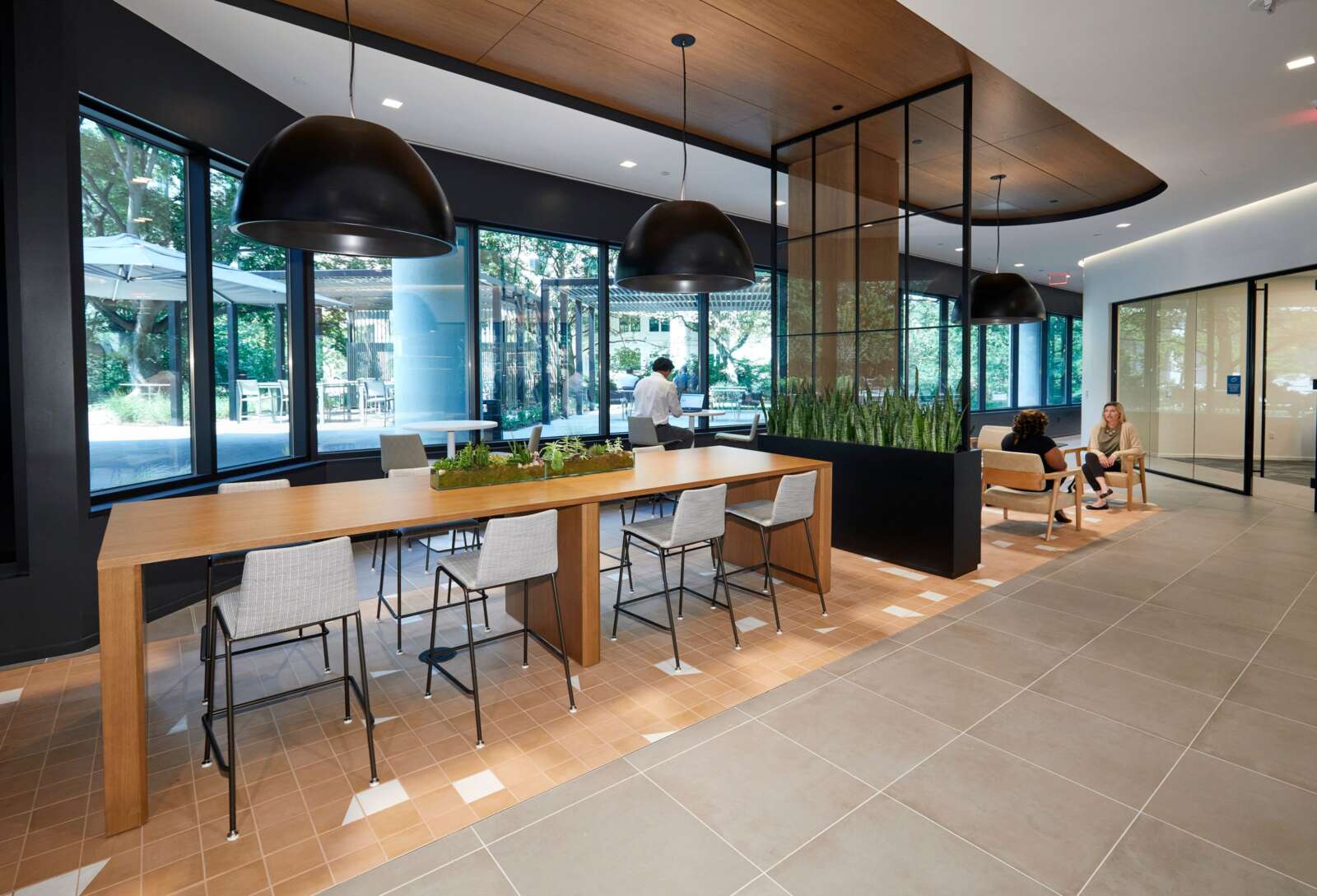
“The renovated plaza, wired for connectivity, extends the office to the outdoors, offering all-season, year-round use as a work and meeting space, and provides a spectacular backdrop to the indoor conference and amenity spaces, creating an urban oasis,” said Paul Schulman, AREP’s Principal and Chief Operating Officer.

The group says the renovation will help tenants coax employees back to the office with new experiences and stronger health features, such as air filters and purifiers. Experts say such projects are the latest examples of how incorporating natural elements into built environments can improve employees’ health while promoting environmental stewardship.

COVID-19 has altered many people’s work and personal habits, and these changes are likely to stick around, according to a Post-Schar poll released this summer. Three-quarters of respondents said they’ll spend more time outside, two-thirds said they’d wear comfortable clothing more often, and nearly 70% said they’d wear a mask when sick.

People and offices are adapting to these behavioral changes, in part, by working outdoors — or by bringing elements of the outdoors inside — and focusing on wellness measures.

During the pandemic, experimental outdoor work spaces popped up in Crystal City and in Rosslyn’s Gateway Park.

Meanwhile, new office projects here boast natural elements — such as Amazon HQ2’s water- and mountain-inspired “Helix” building — and wellness, such as Skanska’s new office project near Quincy Park, which has been recognized for its focus on health and well-being.

The seeds for natural, “biophilic” design elements were planted decades ago, says Dr. Gregory Unruh, an expert on sustainable business strategy in George Mason University’s School of Integrative Studies. It took a pandemic and the right technology to get people to rethink their work environments and to see nature integrated into offices.

“There’s something about us having a connection with the world,” he said. “Before the conversation around ‘biophilia’ existed, there was scientific research that suggested if you give people windows with a view of nature, they tend to be more productive, happier and less sick.”

Other research demonstrated that, without outdoor air circulating in and with the synthetic materials in carpets, paints and cleaning supplies, indoor office spaces had poorer air quality than the outdoors, despite the gas-burning cars and other pollution sources outside.

COVID-19 connected these issues, Unruh says. Building owners outfitted indoor spaces with machines that regularly bring outdoor air inside while people spent more time outdoors.

Although employees and employers realized that remote work could be as productive as in-person work, they still recognized the need for interpersonal collaboration — a need he says the rise of outdoor working spaces will meet.

“These collaborative outdoor spaces are going to play a role,” Unruh said. “These initial experiments we see in Arlington are very encouraging, and I think they enhance the working life and community life of people.”

Integrating nature into workplaces could encourage environmental stewardship among more people, says Elenor Hodges, the Executive Director of EcoAction Arlington.

The biophilic elements at 2000 15th Street N. and other under-construction projects support the environment in addition to workers, she says. Additional trees improve stormwater management and green roofs keep the county cooler.

Particularly in urban areas, she said, strengthening one’s connection to nature is important for encouraging sustainable habits.

“People need to see nature in order to understand the importance of stewarding it,” she said.

She notes that the county-level conversations about biophilic design, still in their infancy, are pandemic-driven.

“We’ve seen at County Board meeting people raising these questions [about biophilia],” she said. “I don’t think that would have happened before the pandemic.”


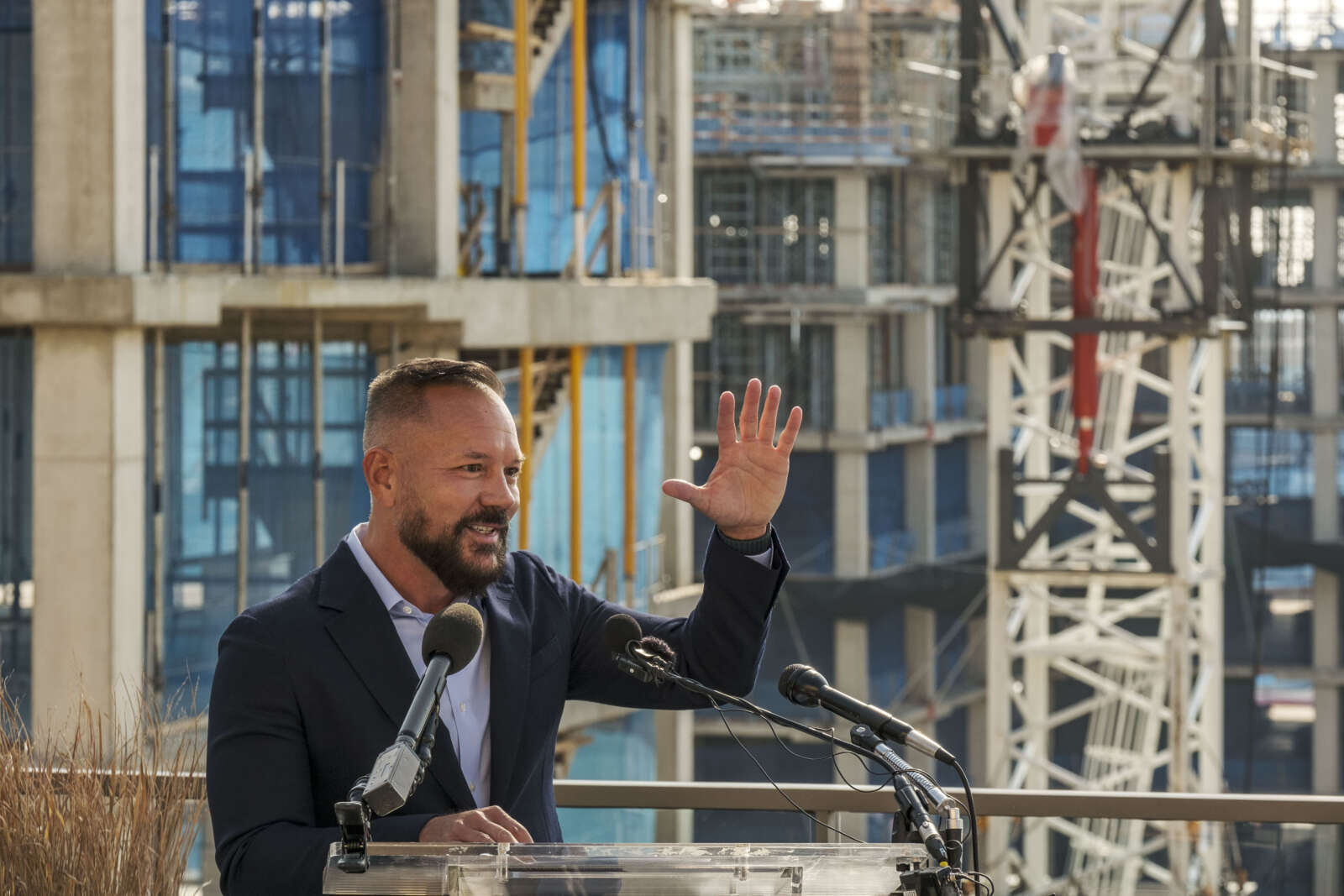
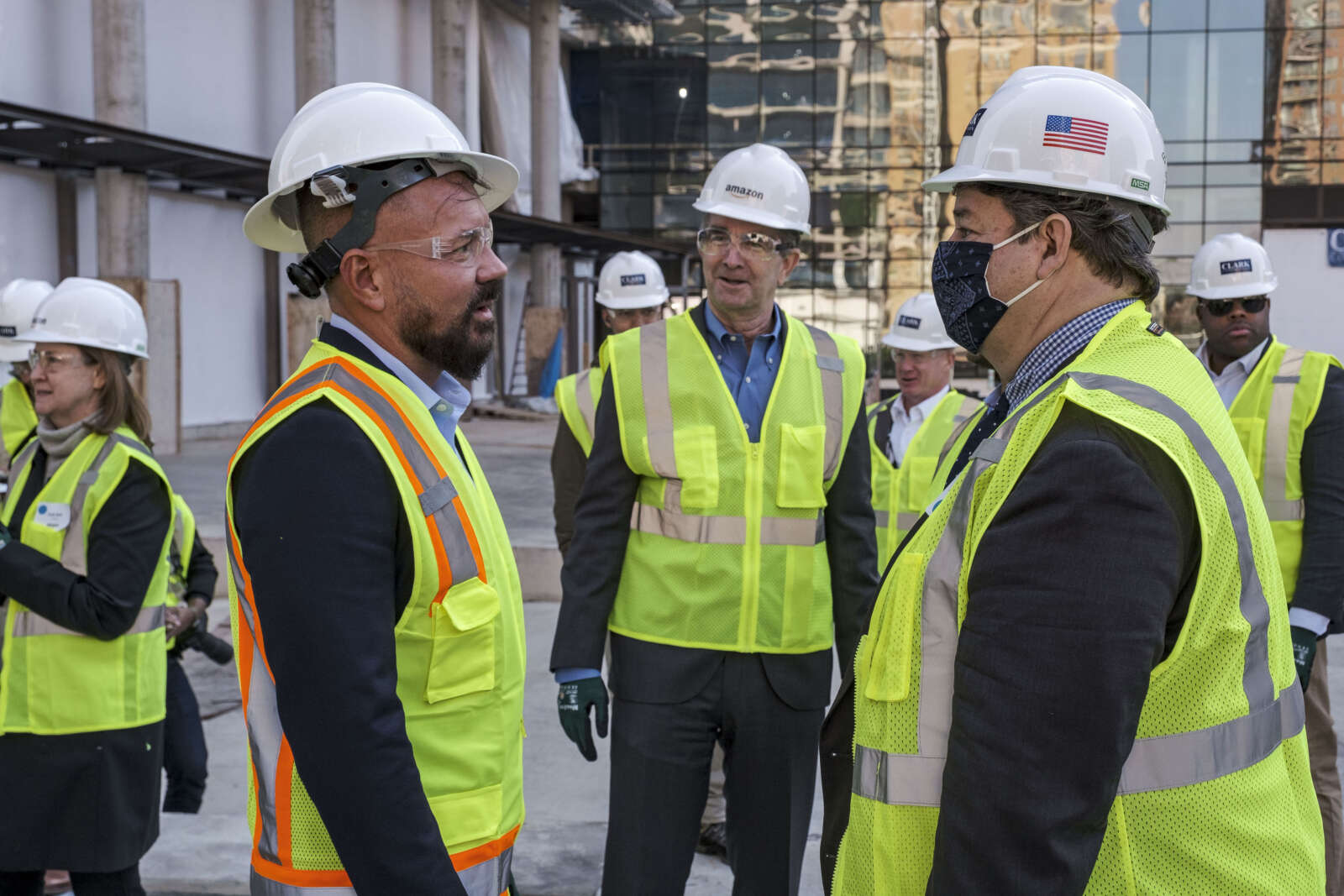
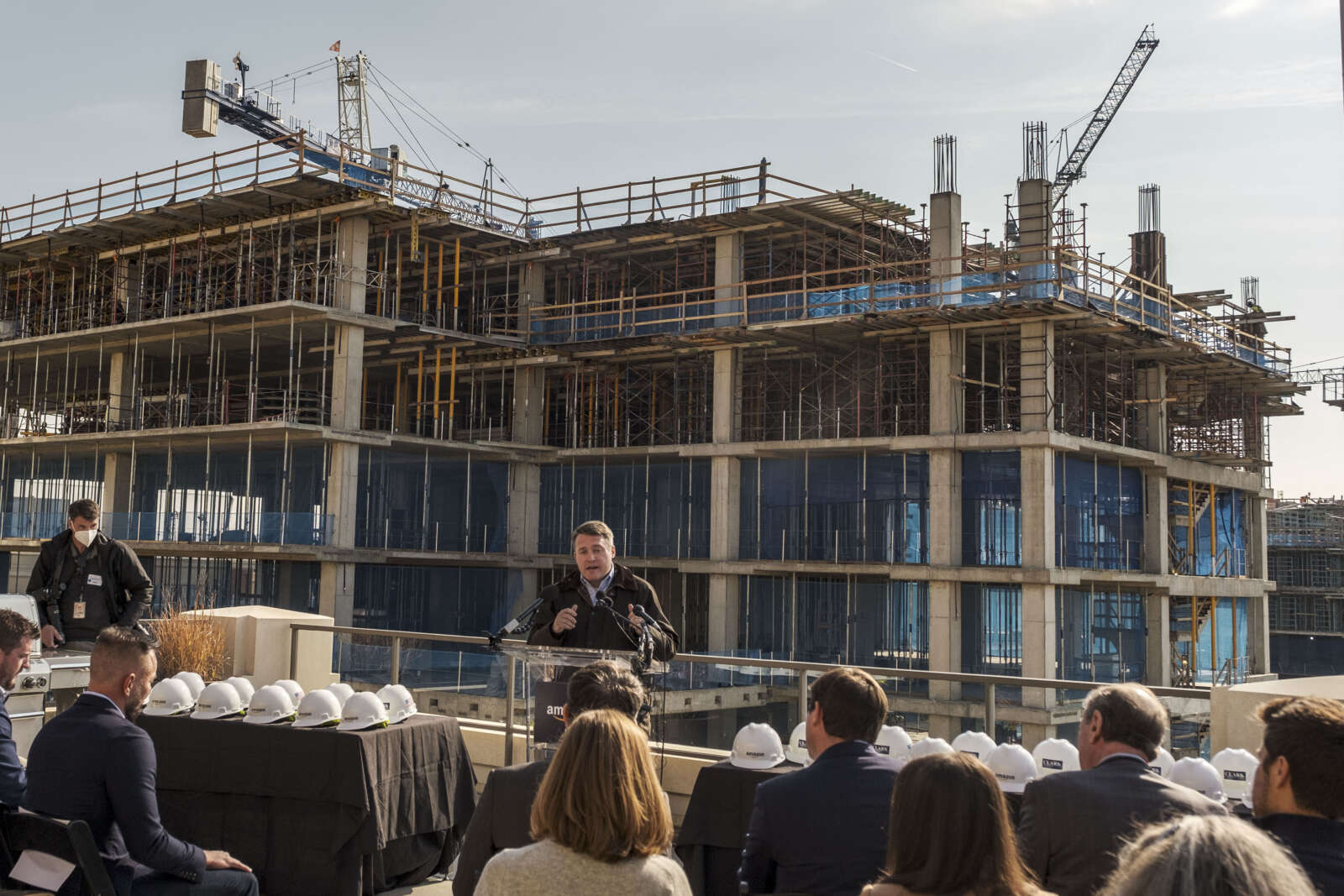
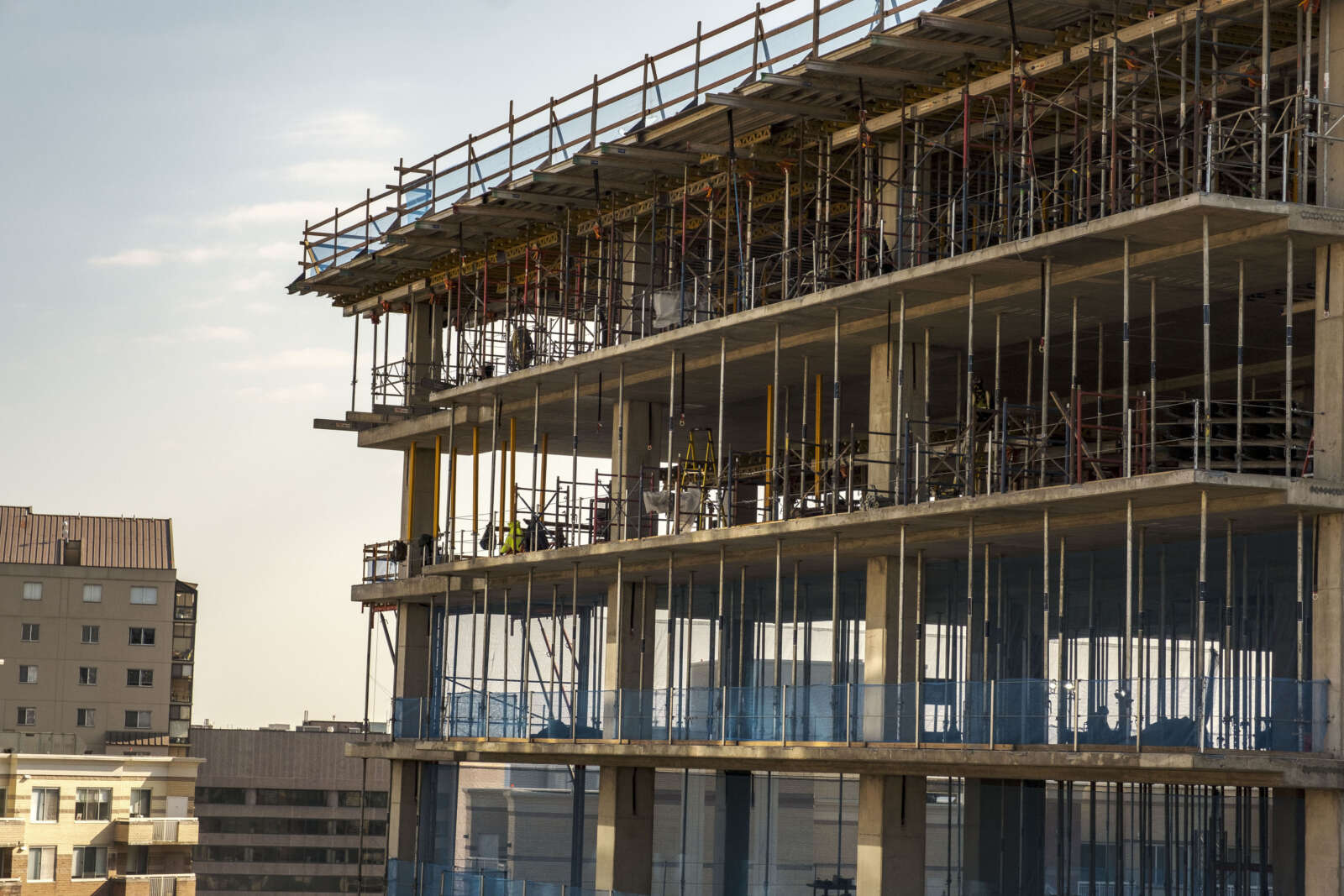
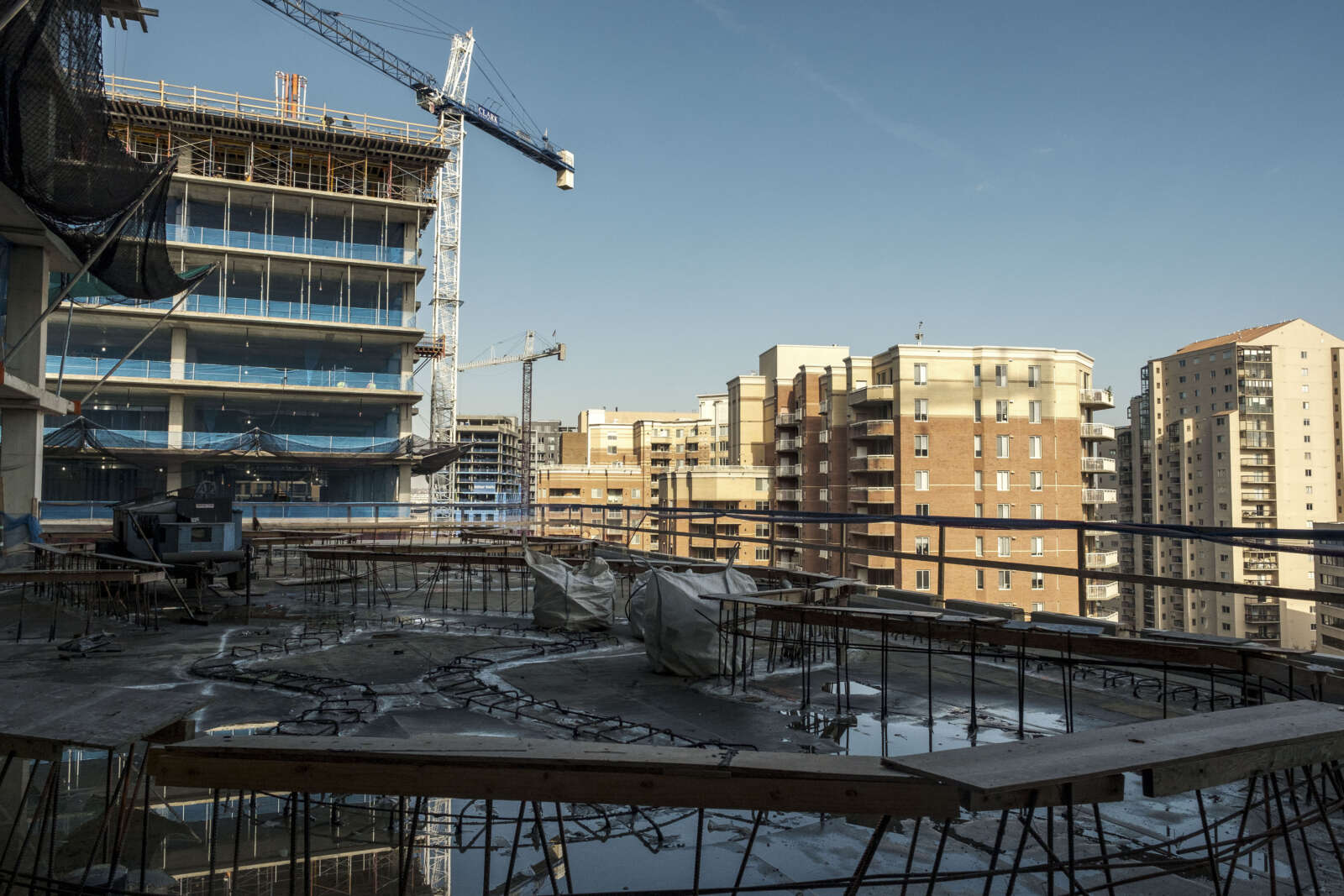
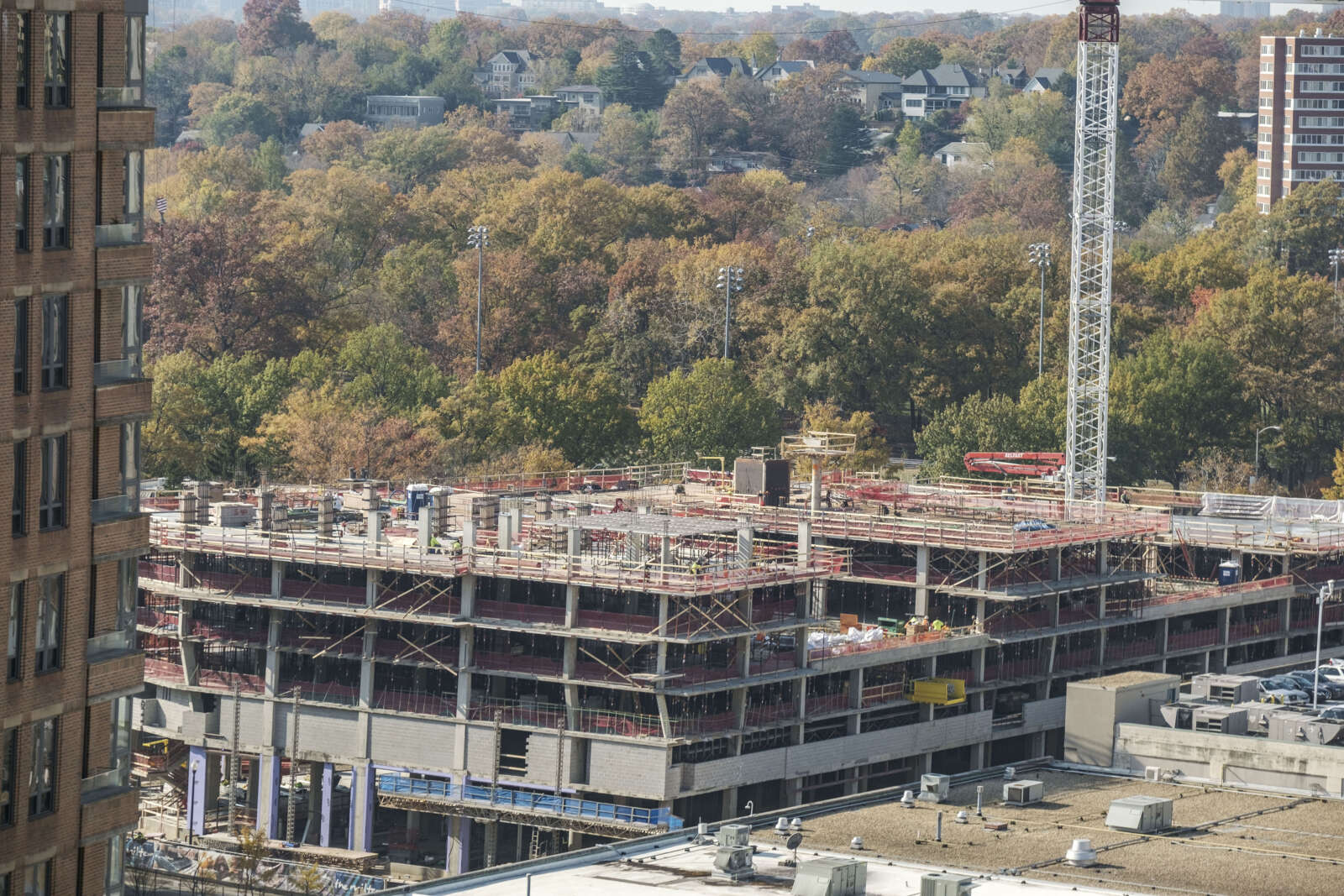
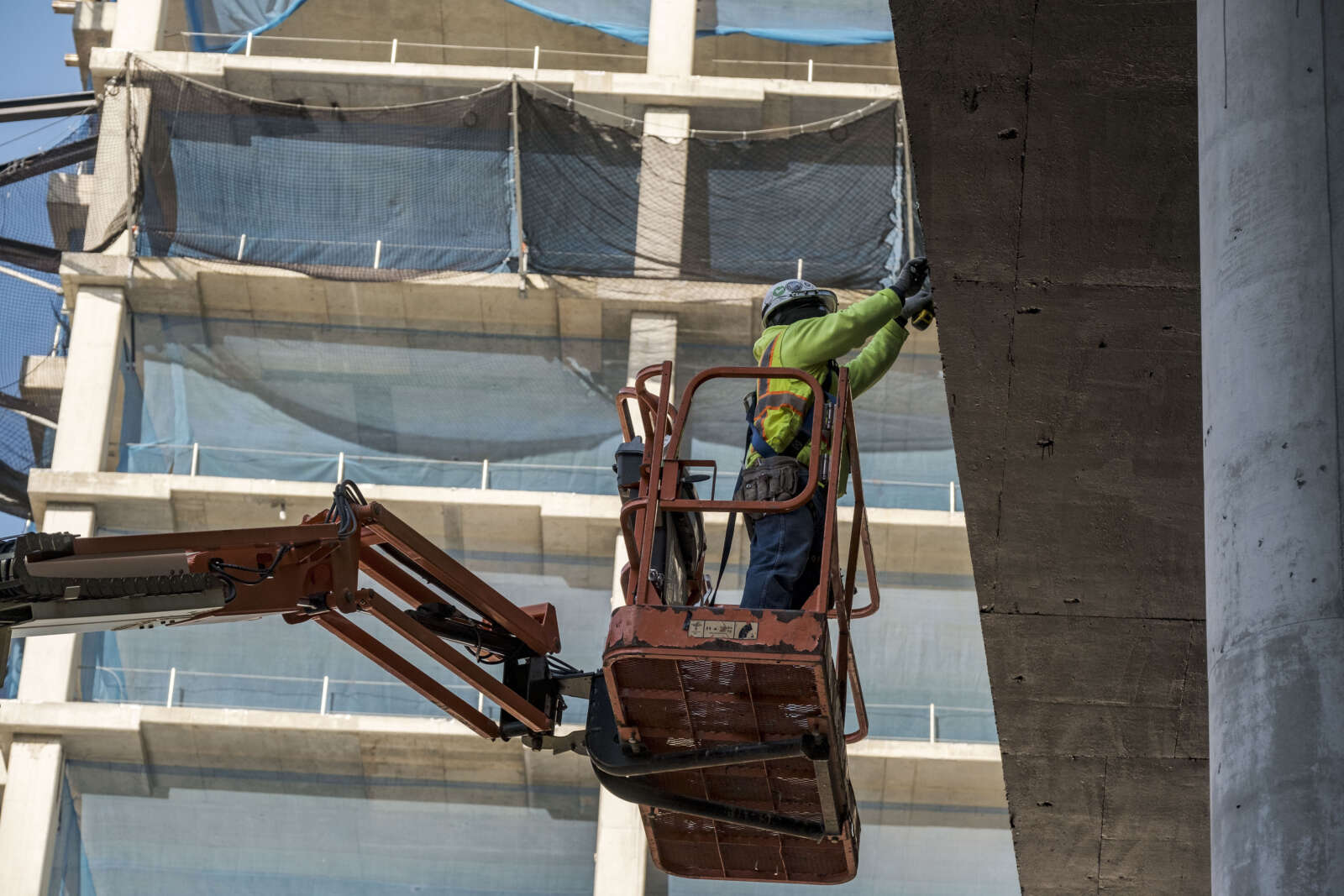
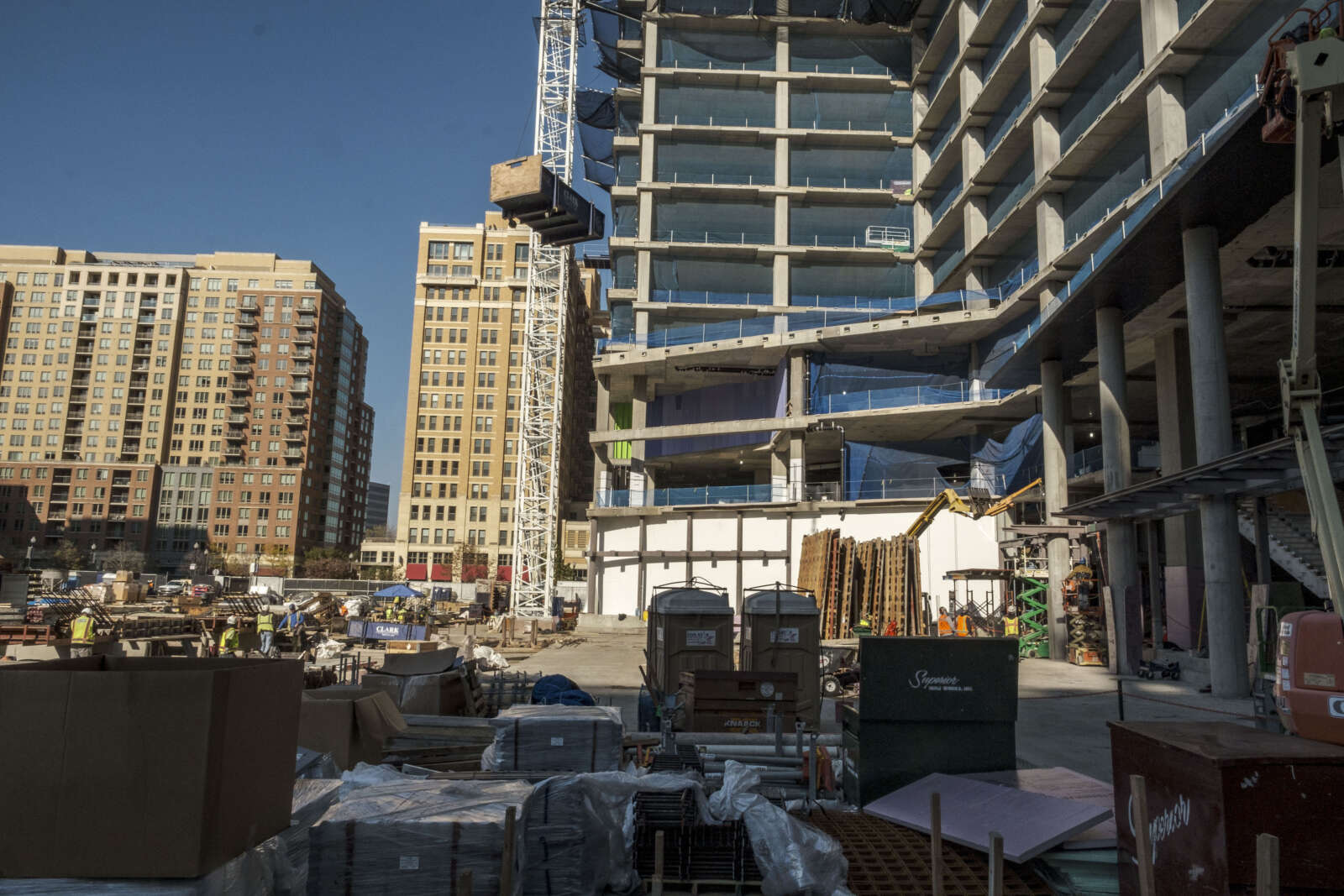
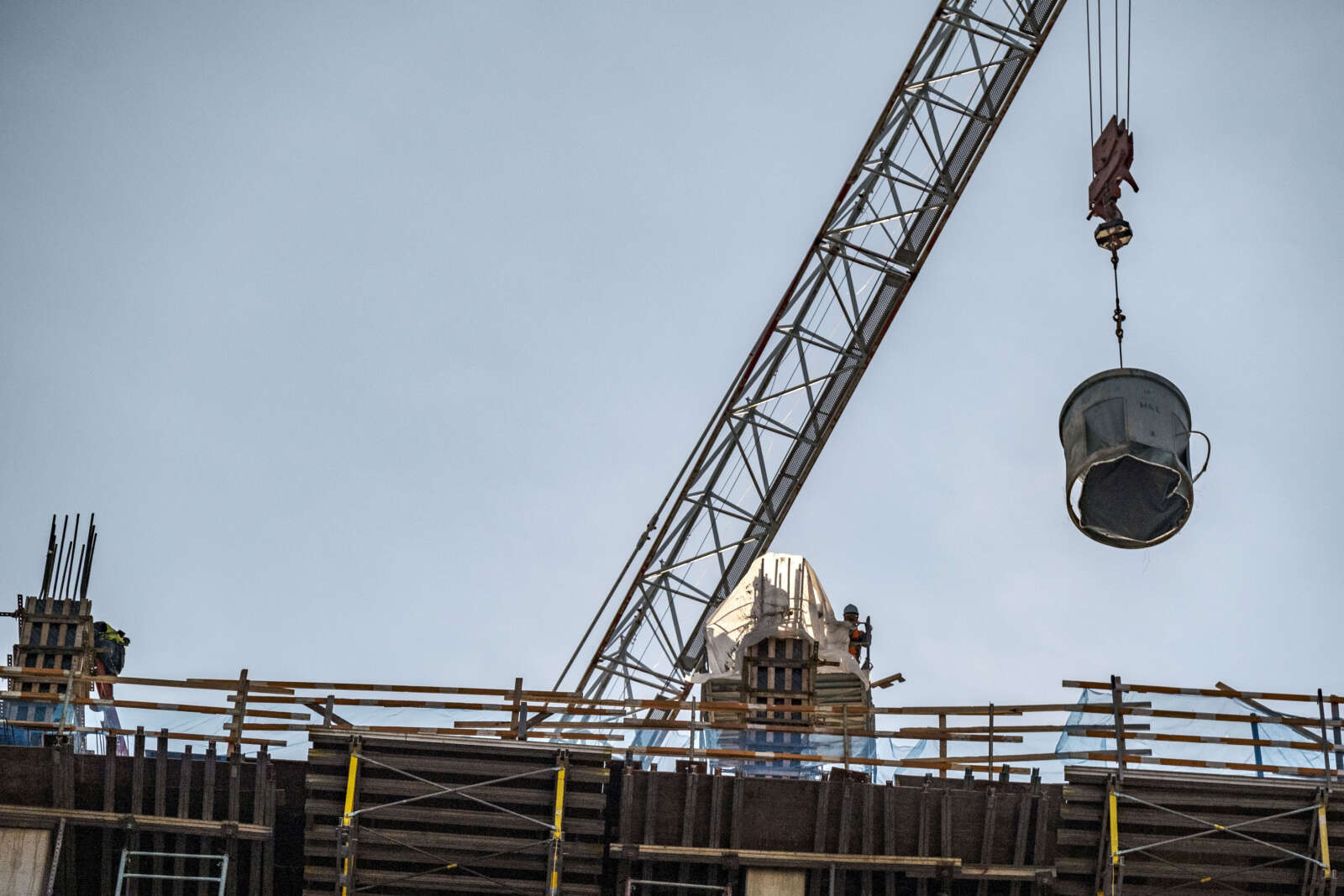
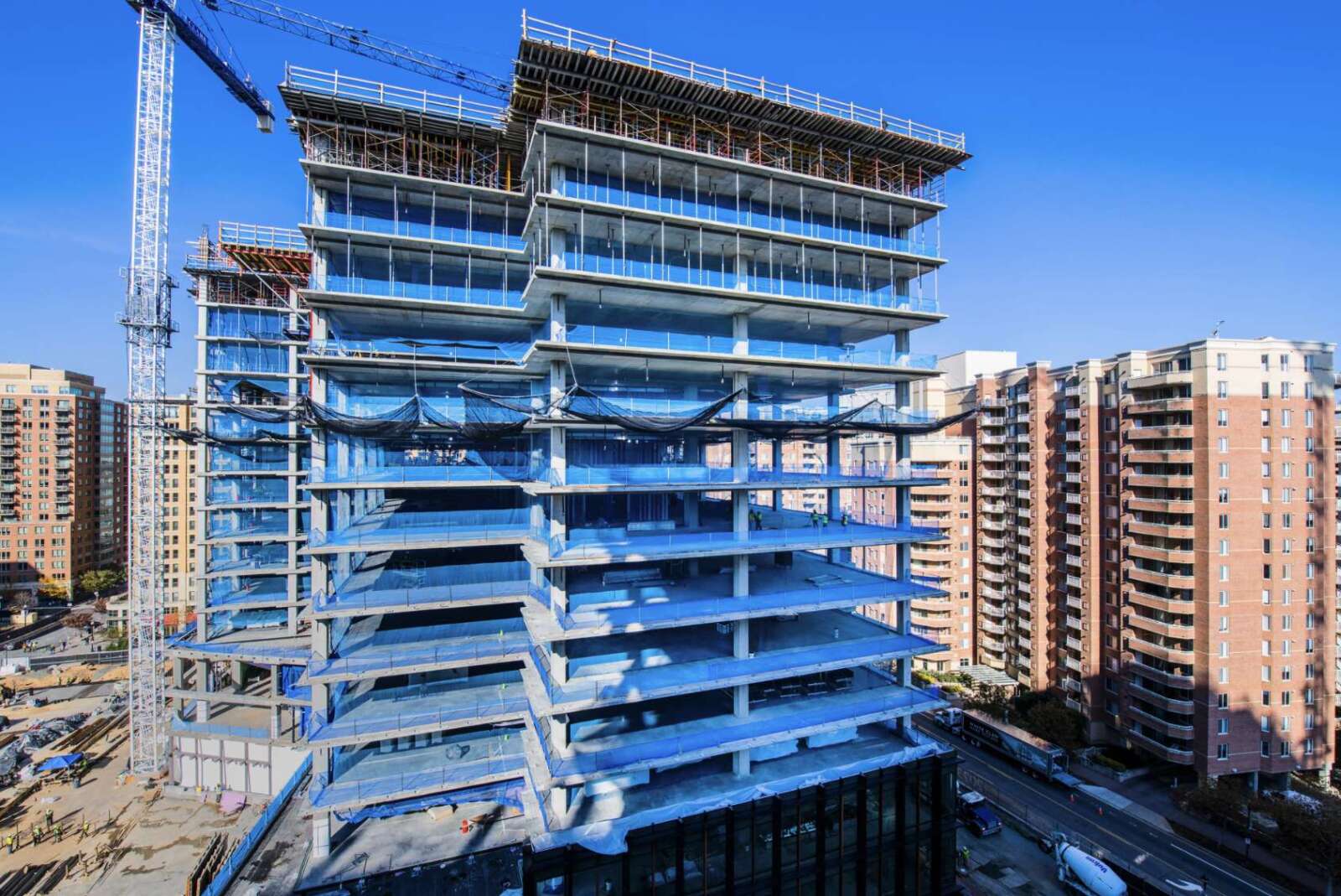
(Updated at 4:30 p.m.) With 800 workers completing one floor every 10 days, the first two buildings of Amazon’s HQ2 are set to reach their full height in April.

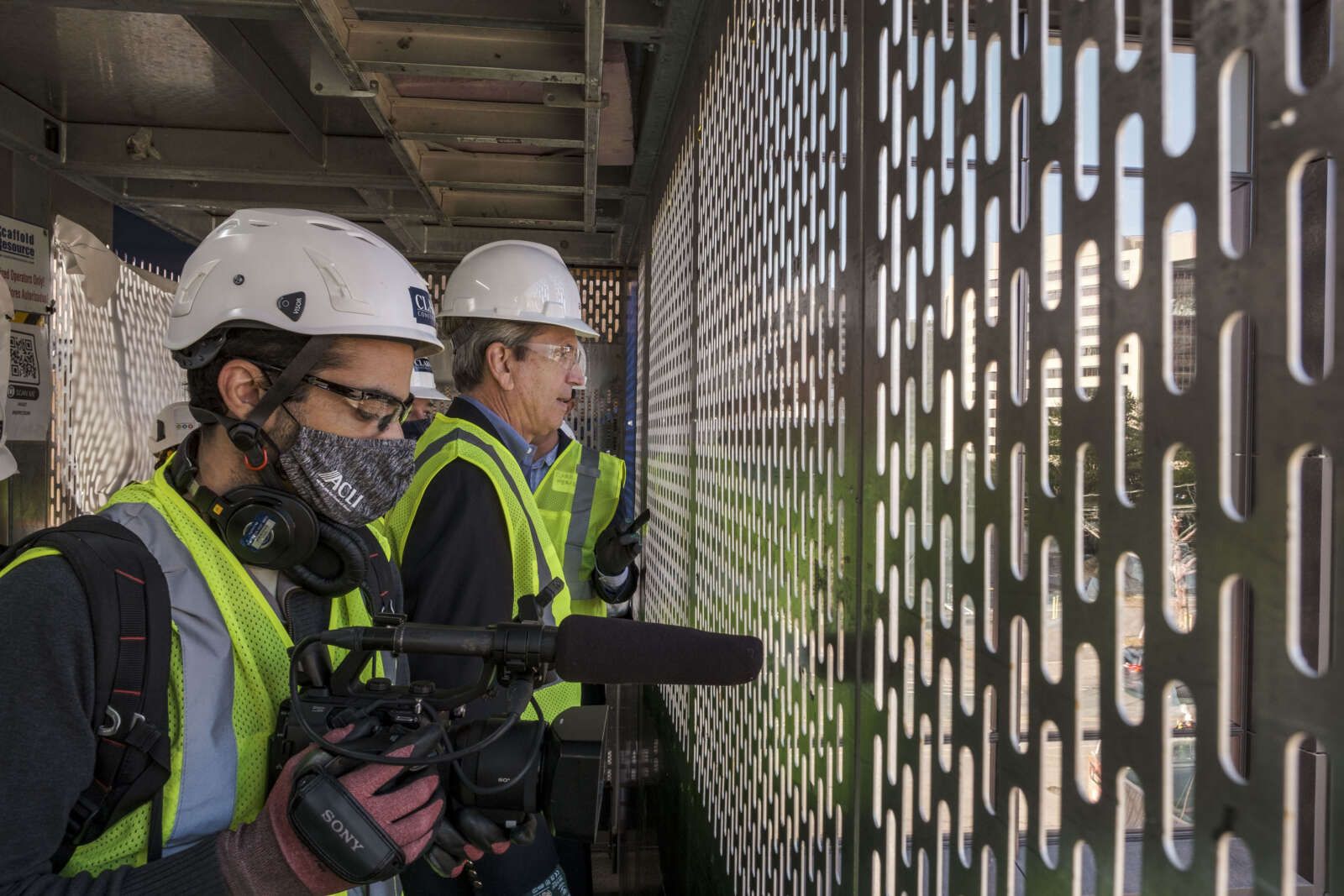
Construction began on the 2.1 million-square foot Met Park campus — the first phase of the massive Pentagon City project — in January 2020 and is still on-track to be completed in 2023, Amazon officials said during a hard hat tour today.

Separately, shortly after the tour ended, Amazon founder Jeff Bezos’ Day 1 Families Fund announced a $2.5 million grant to longtime Arlington nonprofit Doorways, intended to “end homelessness for families in the Arlington area.”

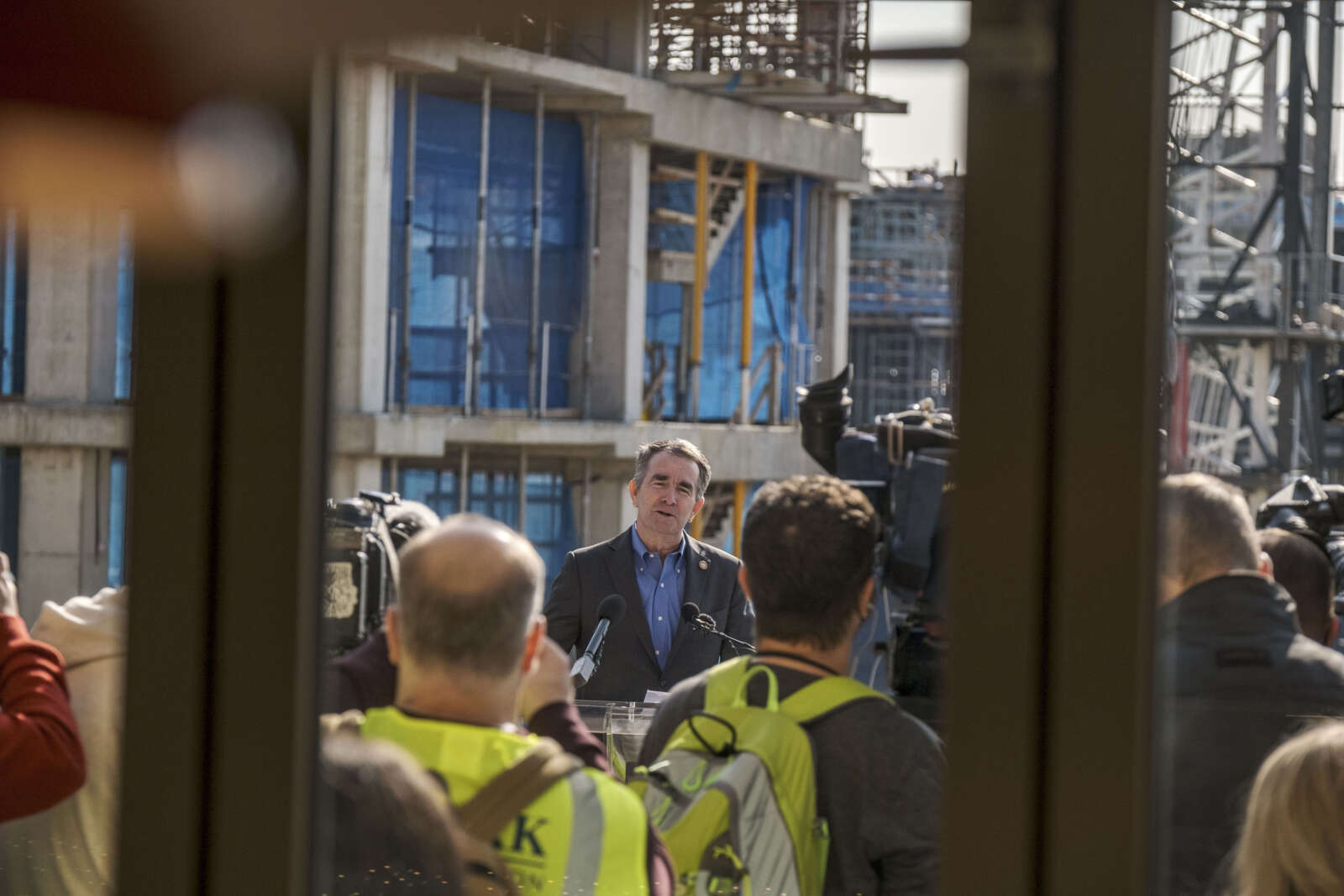
Donations to local nonprofits was also a theme of the remarks from Amazon officials to the gathered crowd of media members and elected officials, including outgoing Virginia Gov. Ralph Northam and Arlington County Board Chair Matt de Ferranti. They spoke of the company’s community involvement, its pace of hiring workers for HQ2, and construction progress.

“Three years ago, we made a commitment to create 25,000 and an investment of more than $2.5 billion,” said Brian Huseman, Amazon’s Vice President of Public Policy. “I’m excited to announce to you today that we are on track for that. As of today, we have more than 3,500 Amazon employees working at HQ2 and more than 2,500 open roles, which is double where we were a year ago today. HQ2 is on track and it’s here.”

Amazon now intends to fulfill its goal of 25,000 jobs by 2028.

Once an abandoned warehouse, the site of Met Park will eventually feature two solar-powered, 22-story office buildings and more than 50,000 square feet of retail space, including a childcare, as well as a 2-acre public park and a 700-person meeting center free for the community to use.

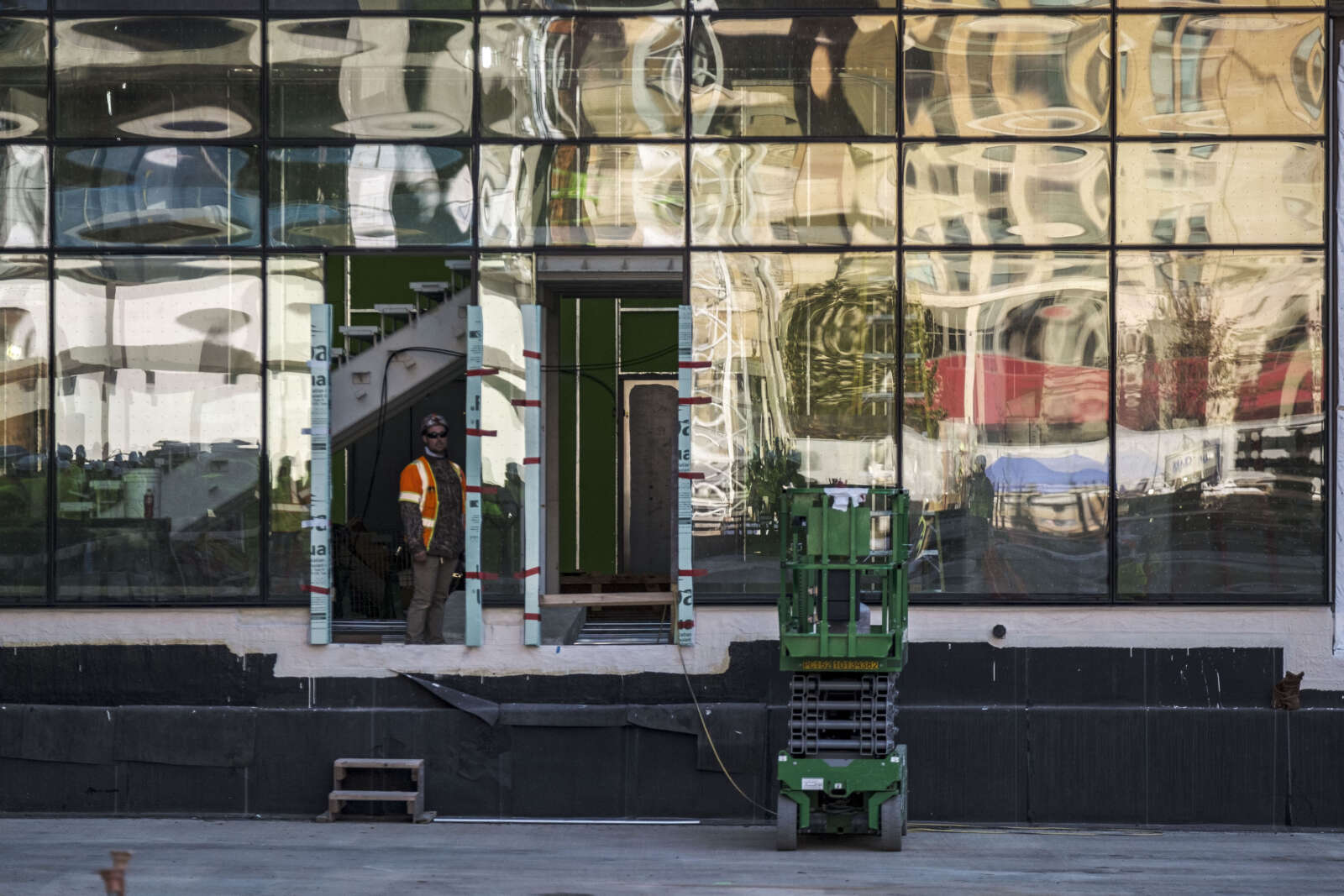
“Despite the challenges brought on by the pandemic, I’m truly proud to share that we’ve hit all our critical milestones and we’ve kept the project on schedule while keeping the workers safe as well as our community,” said Jeff King, the vice president of construction for Clark Construction. “Just last month, we surpassed the halfway mark with our concrete operations. We set the timber roof over the event center… Our exterior façade commenced in September. And in the last couple weeks, we started revitalizing Metropolitan Park.”

So far, workers have reached level 15 on the pair of office buildings and are getting ready to frame level 16, he said. Once completed, the buildings’ rooftops will feature a café terrace, a dog run terrace and an urban farm terrace.

A timber roof was recently installed over the event center, which mostly be available for events such as conferences, Amazon’s Senior Manager of External Affairs Patrick Phillippi said. The terms of shared use have yet to be ironed out.

Officials highlighted the sustainability of the construction project as well, from using concrete that sequesters recycled carbon to diverting 84% of all construction materials from landfills.

Over the last three years, Amazon has donated $34 million to local nonprofits such as La Cocina VA, Arlington Food Assistance Center and Bridges to Independence, and schools, such as the “Think Big Space” innovation lab under construction at Wakefield High School.

Huseman said Amazon has donated more than $500 million in low-rate loans and grants to preserve 2,300 affordable homes in the HQ2 region, with more coming. As part of the Met Park development, Amazon is donating more than $20 million to Arlington County to fund the creation and preservation of committed affordable housing units, primarily through the development of additional units at the nearby Crystal House apartment complex.

Separate from these donations, local nonprofit Doorways — which works to lift locals out of homelessness and support victims of domestic violence — announced today that it also received an Amazon-related windfall: $2.5 million from Bezos’ families fund grant, which is doling out $96.2 million to 32 nonprofits across the country.

(more…)


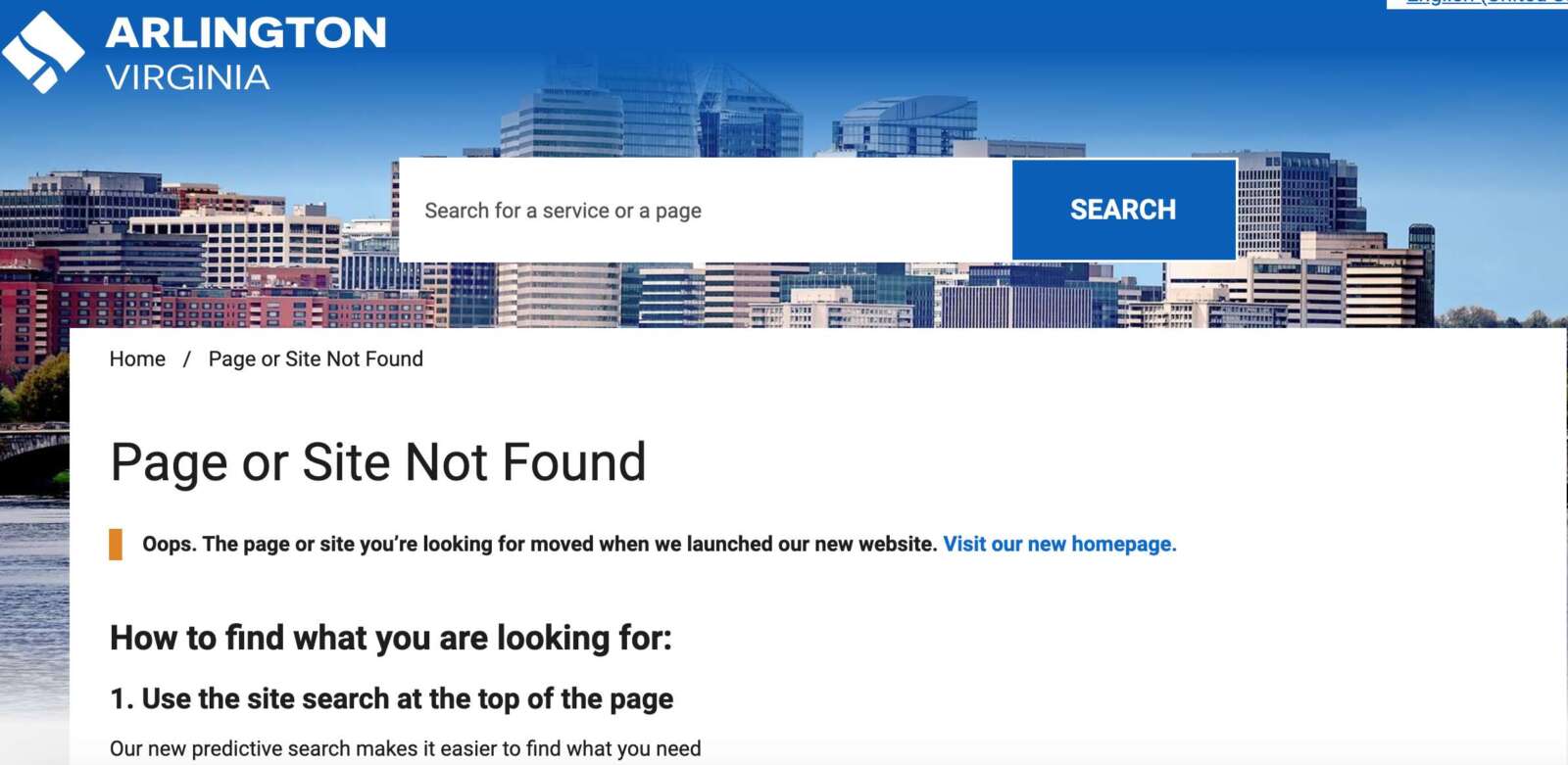
What appears when a broken link is clicked on Arlington County’s new website (via Arlington County)

Arlington’s County Manager has apologized for the frustrating user experience on the new county website, which has left thousands of broken links in the wake of its launch.

The new website, sporting the new county logo, was implemented one month ago and since then those trying to navigate the site or search for information on the site via Google are frequently getting “Page or Site Not Found” errors.

“Not only are members of the community members frustrated, I’m frustrated — as are a lot of county employees,” County Manager Mark Schwartz told Board members yesterday. “We use the website all the time.”

On Tuesday afternoon, Schwartz provided County Board members with an update on staff’s efforts to restore many of the broken links — 6,634 by the county’s count — to working order by Thanksgiving. Progress is being made and users can expect next week a “marked improvement” to the broken links, as well as the website’s internal search engine, Schwartz said.

Despite knowing broken links would pose a problem, Arlington forged ahead with the move to the new website anyway because the old platform was, according to Schwartz, not secure and on the brink of collapse.

“We didn’t do it on a whim. Our old platform was wobbly and about to fall over,” he said. “We were forced to go a little bit earlier than we wanted to, given that the alternative was that our old website — which everyone now misses — was about to fall over.”

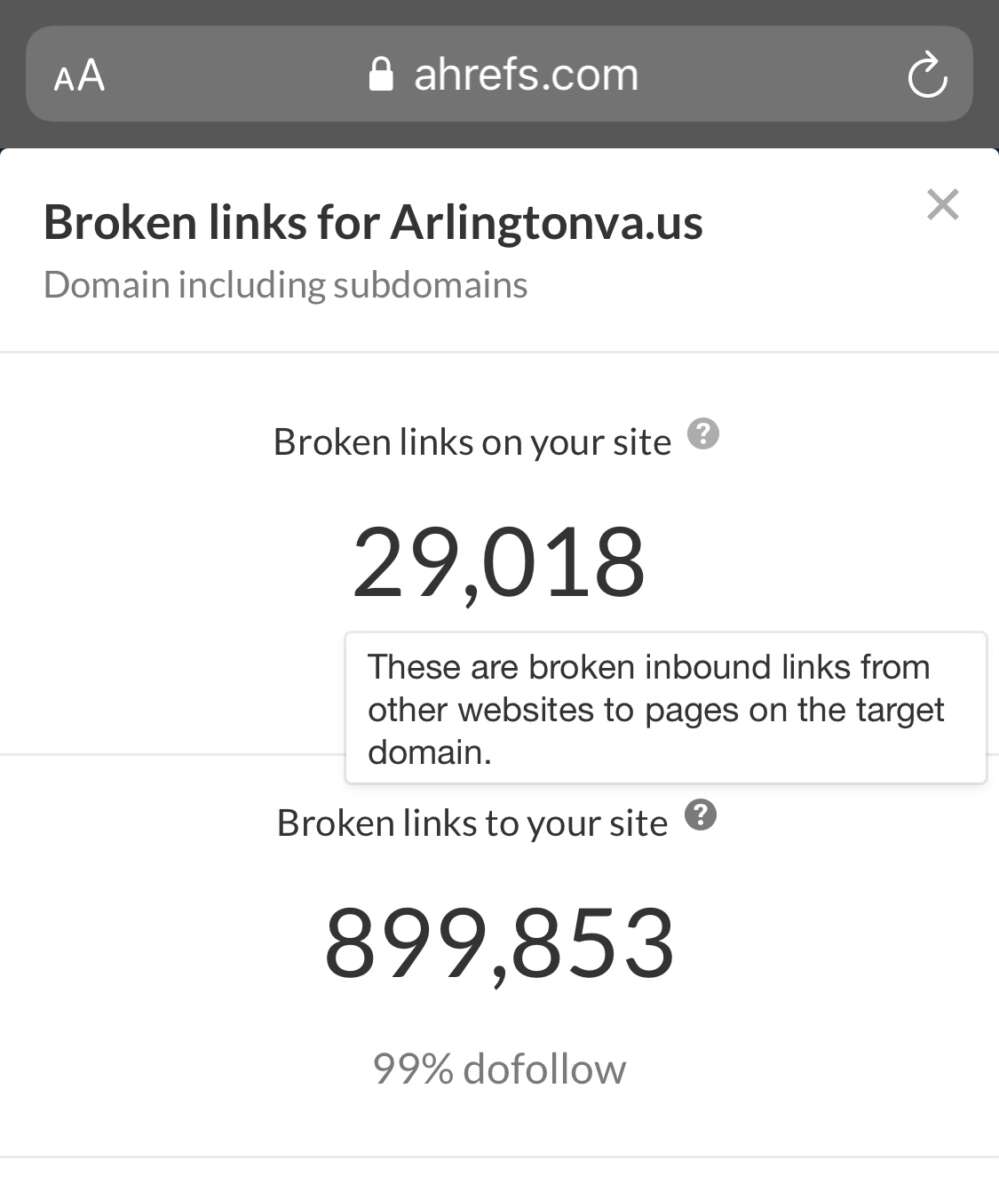
He also tried to take a swipe at ARLnow’s article yesterday about the broken links, which included a screenshot of a platform that tracks broken links to websites.

“If it didn’t make me cry, it was funny, in ARLnow there was an article published today saying there were 900,000 broken links on our website,” he said. “We only have 187,000 [links]. I think there’s something broken in that article.”

The number, generated by a broken link checker on the search engine optimization website Ahrefs, in fact refers to the number of inbound links to the county site — from other websites including those of news outlets, local civic associations, etc. — that are now broken.

Result of broken link checker for the county website (via ahrefs.com)

Those who encounter broken links can reach out to the county or use the reporting function at the bottom of the “Page or Site Not Found” page, officials said.

Board member Libby Garvey thanked those who have already written the county with links to fix.

“It reminds me of snow plowing. There might be cul-de-sac somewhere we might have missed and people let us know,” she said. “I know they’re often upset but that helps us get in there because we really don’t know everything all the time.”

Board Vice-Chair Katie Cristol said she appreciated Schwartz’s explanation of the timing of the website transition.

“People, Board members included, expect a high level of service from Arlington, and are disappointed when it’s not met,” she said. “Understanding there was some urgency, security reasons being part of that, is really helpful context.”

Still, the website launch promised “exciting things to come” and has yet to deliver, Board member Christian Dorsey said.

“You heightened people’s expectations they were going to get a fully finished product,” he said, drawing attention to other unfinished aspects, such as missing photos or icons and inconsistent grammar and syntax.

In response, Schwartz said every department will have someone click through each page to pinpoint those inconsistencies.

Two fixes will take more time, officials said. First, about half of the broken links are associated with old press releases, which are low on the county’s list of things to fix. Second, there are still issues with searching for PDFs uploaded to the website.

“We’re working through the challenges,” Assistant County Manager Bryna Helfer said.


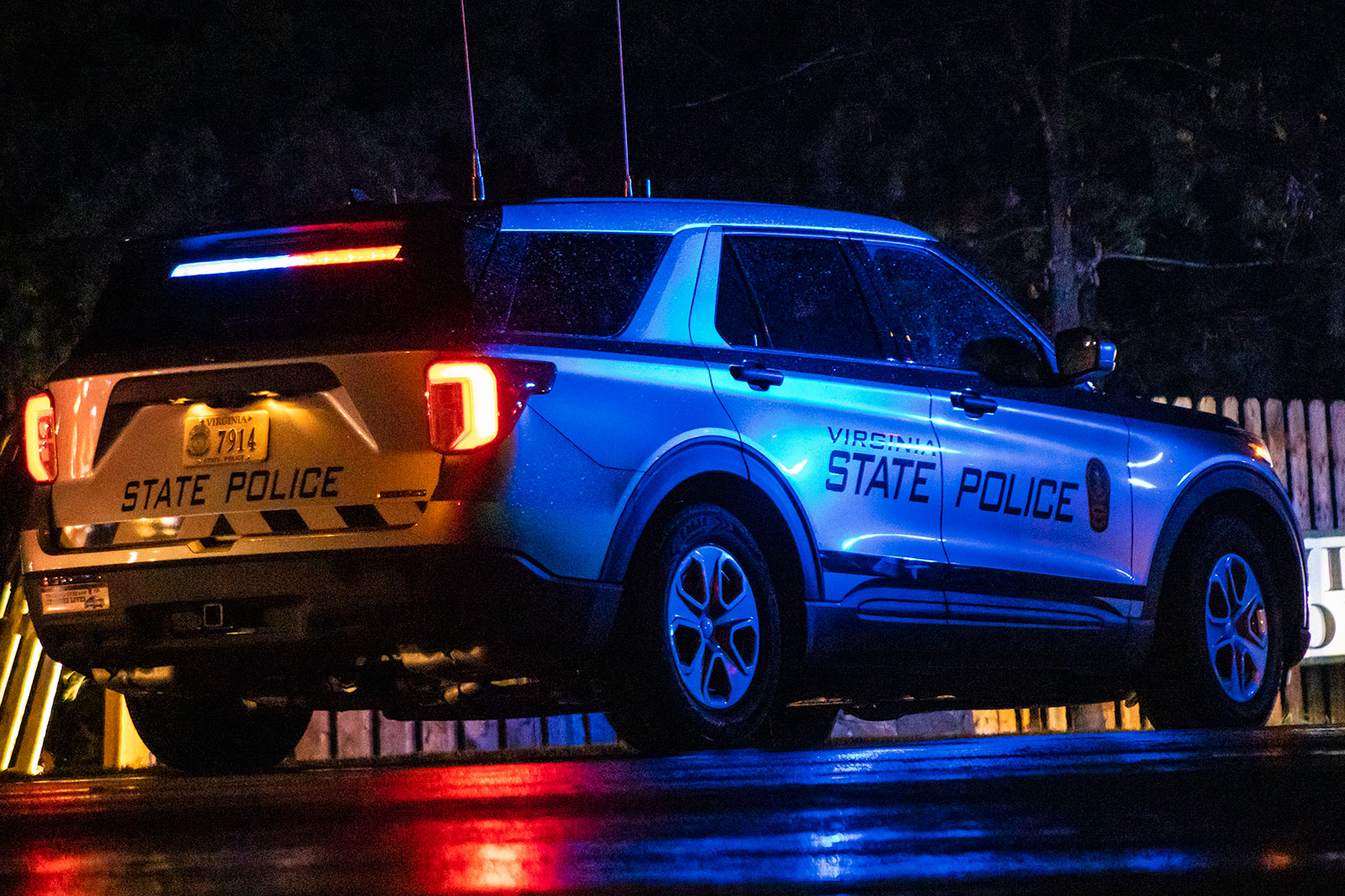
Virginia State Police vehicle (photo by John Calhoun/JC Photography)

As its police force shrinks, the Arlington County Police Department is leaning on state police when extra officers are needed to maintain its nightlife detail.

Virginia State Police troopers will be helping Arlington fill staffing holes in the local nightlife team that works with bars and restaurants in Clarendon and Crystal City to keep establishments and patrons safe and to help keep order when things get out of hand.

The number of acting police officers available to staff ACPD’s various divisions has dropped amid retirements, reports of low morale, and attrition to more lucrative and less demanding private-industry jobs. In response, ACPD has turned to VSP troopers who are willing to help out with the nightlife detail, according to the county.

This past weekend the County Board approved a mutual aid agreement between the two forces that codifies compensation for troopers.

The agreement will help keep staffing for the detail steady, not add to it, ACPD spokeswoman Ashley Savage tells ARLnow.

“The overall staffing for the Nightlife detail is remaining the same,” she said via email, adding that ACPD does not disclose the specific number of officers. “The MOU with [VSP] provides ACPD the option of utilizing troopers to fill vacancies in the Nightlife detail, when necessary. The department began exploring additional staffing resources for the Nightlife detail in September 2021 due to a reduction in ACPD’s functional staffing.”

As part of the memorandum, troopers will be reimbursed at an overtime rate for their hours worked as well as for vehicle mileage. The county will also pay a 10% fee to VSP for “administrative and accounting costs associated with the provided services,” the report said.

The detail patrols spots in Clarendon and Crystal City as part of the Arlington Restaurant Initiative (ARI), which was founded in 2016 to tackle alcohol-related crimes in Clarendon and has since expanded to Crystal City.

Through ARI — in which police patrol area bars, train employees and meet with businesses — Clarendon’s crime rates have dropped, according to the county. The detail also looks out for misbehaving bar patrons, who can be banned from all establishments that participate in Arlington’s Bar Safe program as a result of public drunkenness or more serious crimes.

Between January and September, there have been 32 Bar Safe violations, according to Arlington police data. Rates peaked in the summer, when bars fully reopened, as did the number of fake IDs. The detail confiscated 572 fake IDs during the same time period.

While many alcohol-related crimes dropped from 2019 to 2020 due to COVID-related business closures, the detail has noticed the nightlife crowd increasing every month since the state reopened, according to a monthly police report.

With that, new safety problems have arisen: last month, there were six reports of spiked drink in Clarendon and Crystal City bars.

The collaboration between ACPD and VSP was not the only agreement that received County Board approval. On Saturday, the Board approved a mutual aid agreement with U.S. Capitol Police after 50 Arlington officers helped secure the U.S. Capitol building during the “Justice for J6” rally this fall.

The rally on Sept. 18. was held in support of those charged after the Jan. 6 invasion of the Capitol by a large pro-Trump mob. It was widely reported as a flop that did not draw the expected crowds while still costing government agencies hundreds of thousands of dollars.

The county says both of these mutual aid agreements exemplify ACPD’s commitment to regional partnerships.

“The Police Department is an active member, throughout the region, in providing mutual aid assistance,” a county staff report said. “This effort allows for the appropriate utilization of resources both within and outside of the County. Our commitment to regional partnerships greatly enhances the safety and well-being of the citizenry.”


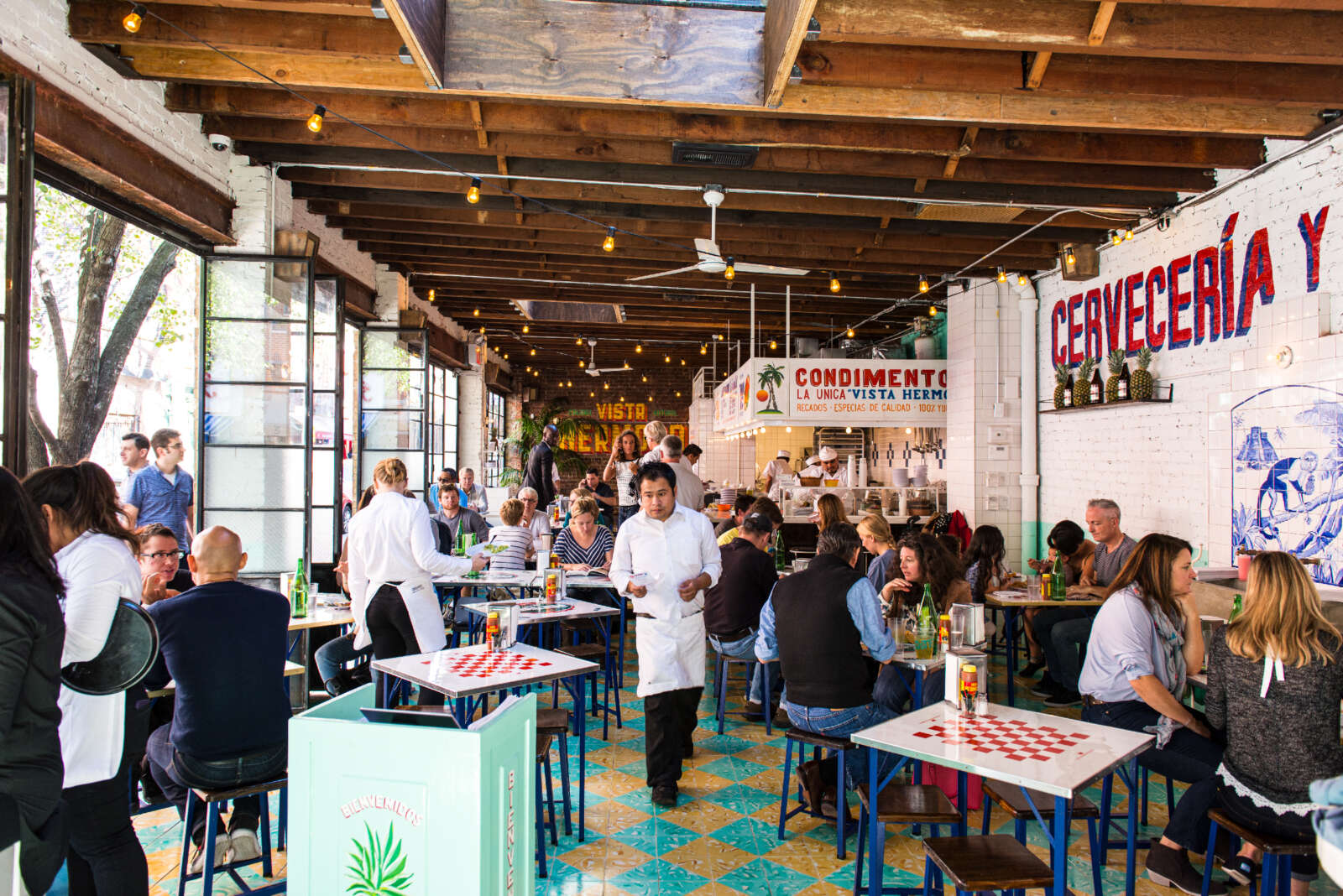
(Updated at 1:55 p.m.) After roughly two months of delays, New York City-based taqueria chain Tacombi could open in Crystal City in December.

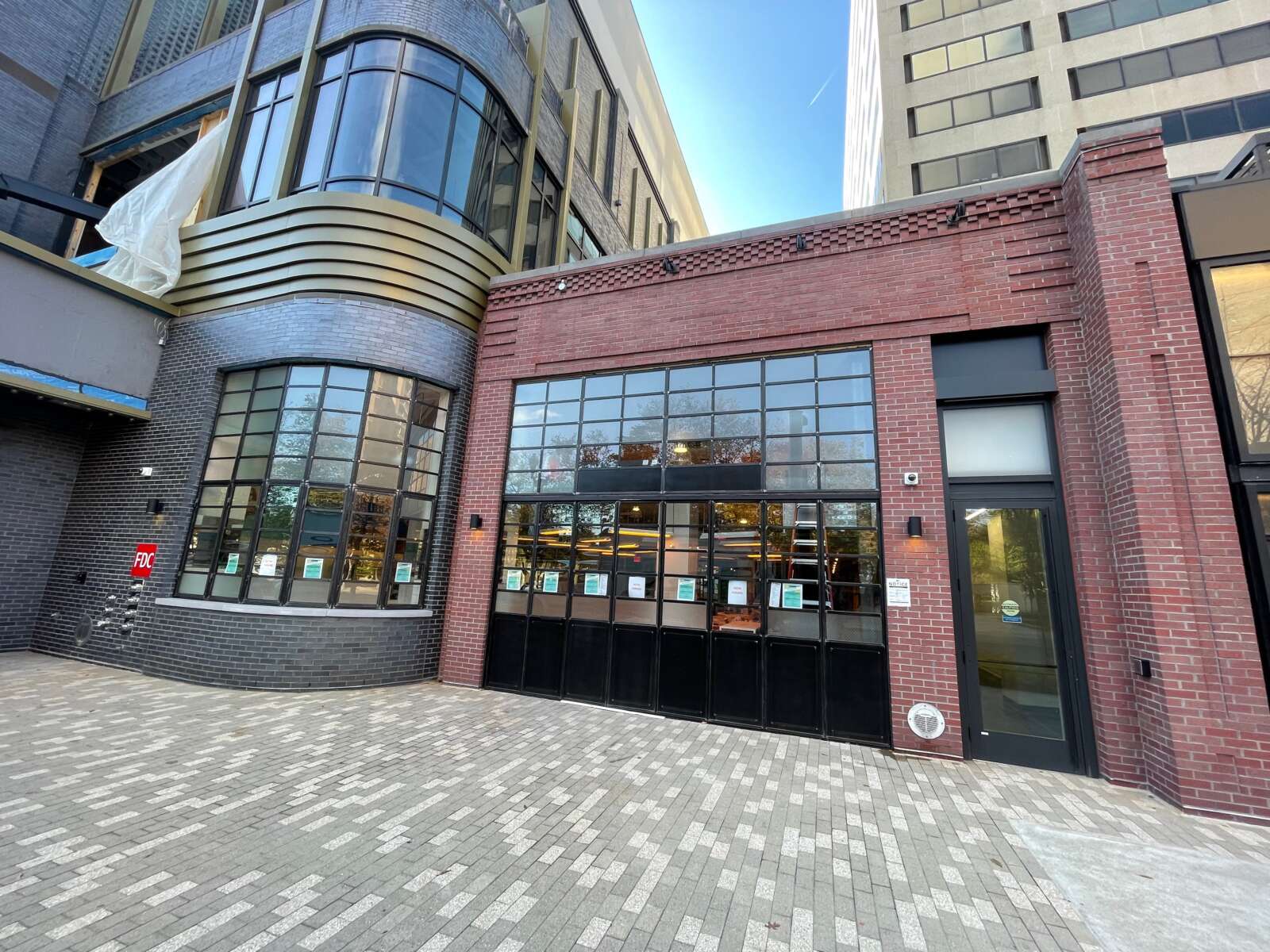
The taco spot is moving into a 3,000 square-foot space inside the revamped Central District Retail shopping plaza, also known as “Crystal Square.”

“We will be (happily!) swinging open our taqueria doors early next month,” a spokeswoman said in an email.

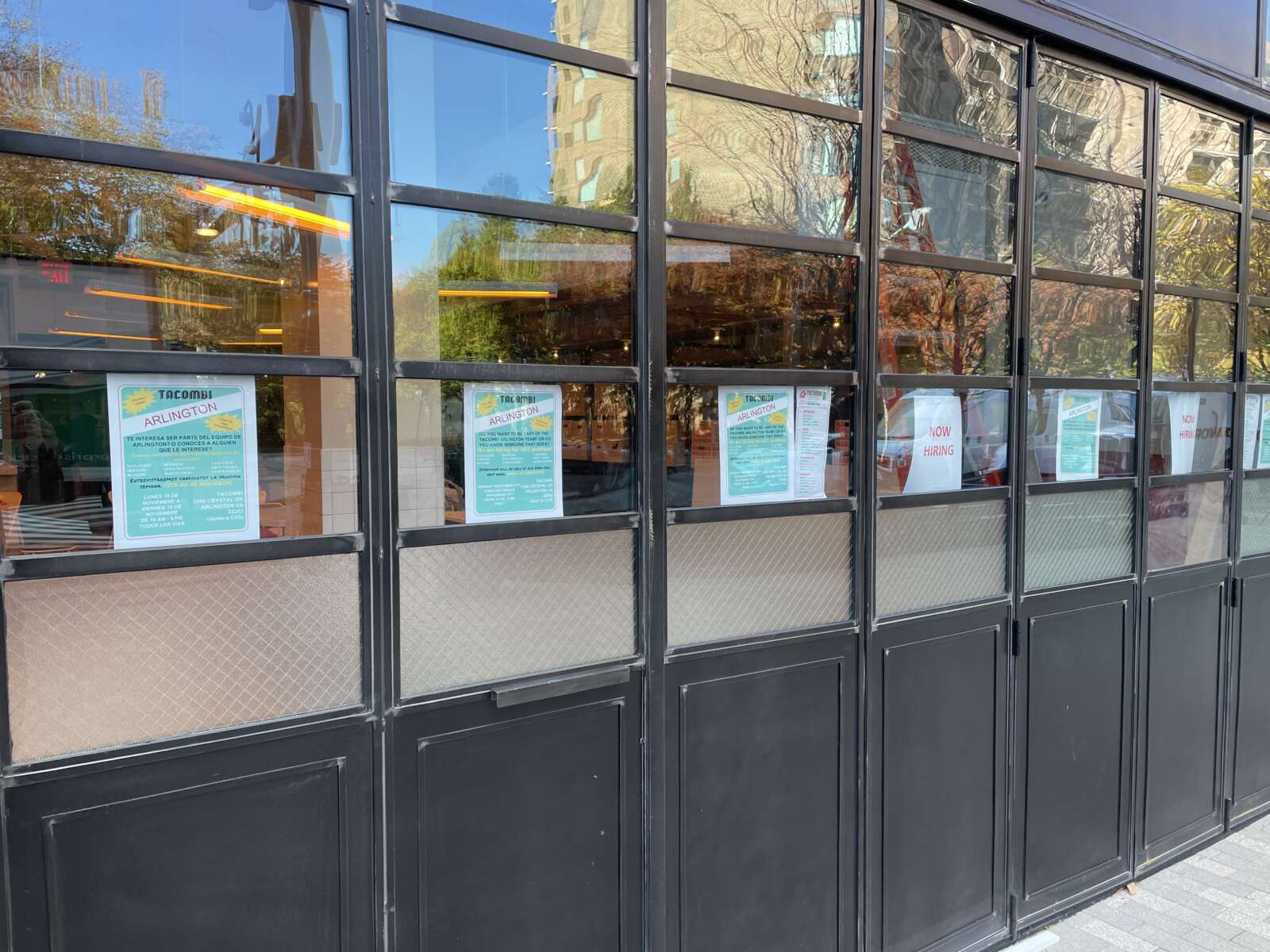
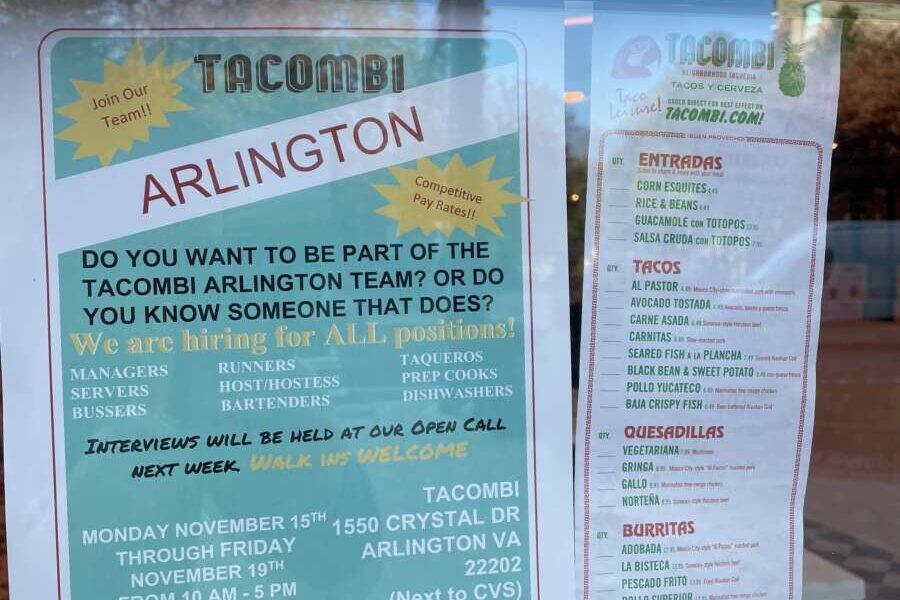
A Twitter user snapped a photo a few days ago outside the the taqueria’s new location, where Tacombi’s menu and job listings are posted. The restaurant will be serving up tacos — including fish tacos proclaimed as Manhattan’s best by New York Magazine — as well as quesadillas and burritos.

Tacombi’s opening is a few months behind schedule as work to complete the restaurant’s interior continues. This summer, the spokeswoman said the restaurant was expected to open in September.

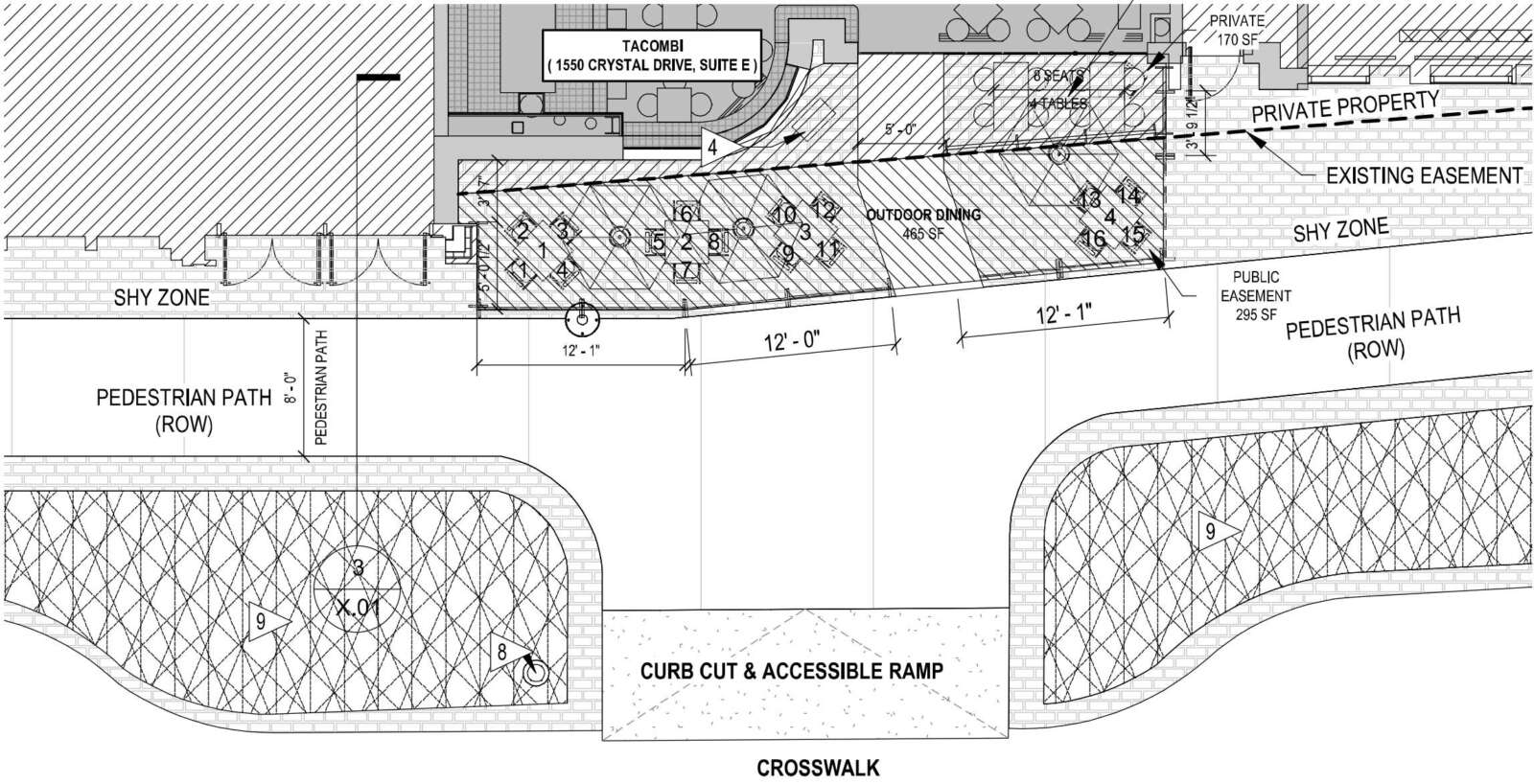
Twice this fall, the taqueria has requested the county defer approving its permit request to establish outdoor seating on the Crystal Drive streetscape while construction and inspections progress inside.

“The applicant requests additional time to complete construction, inspections, and the Certificate of Occupancy for the indoor portion of the Tacombi restaurant,” according to staff reports that went before the County Board in October and November. “Once the primary use is established, the applicant will pursue approval of the subject use permit for an outdoor café.”

Plans for outdoor seating in front of Tacombi at 1550 Crystal Drive (via Arlington County)

Last weekend, Arlington County Board members approved a request to defer approving Tacombi’s outdoor seating permit until they meet again on Dec. 11.

Tacombi got its start on the beaches of Yucatan, Mexico. The owner sold tacos from a Volkswagen Bus and eventually opened his first taqueria in the mid-2000s in New York City. Nine other locations have since opened in NYC.

The chain set its sights on Crystal City — in the same retail plaza as a CVS, NYC bakery Mah-Ze-Dahr and a Solidcore gym location — because of the rapid growth it’s experiencing, the spokeswoman previously told ARLnow.

“While National Landing is part of a cosmopolitan world capital, it also maintains the neighborhood quality that best allows us to share authentic Mexican culture,” the spokeswoman said.

Another outpost in the D.C. area — a Bethesda location — was also set to open in September but was delayed.


Current view of Route 1 (via National Landing BID)

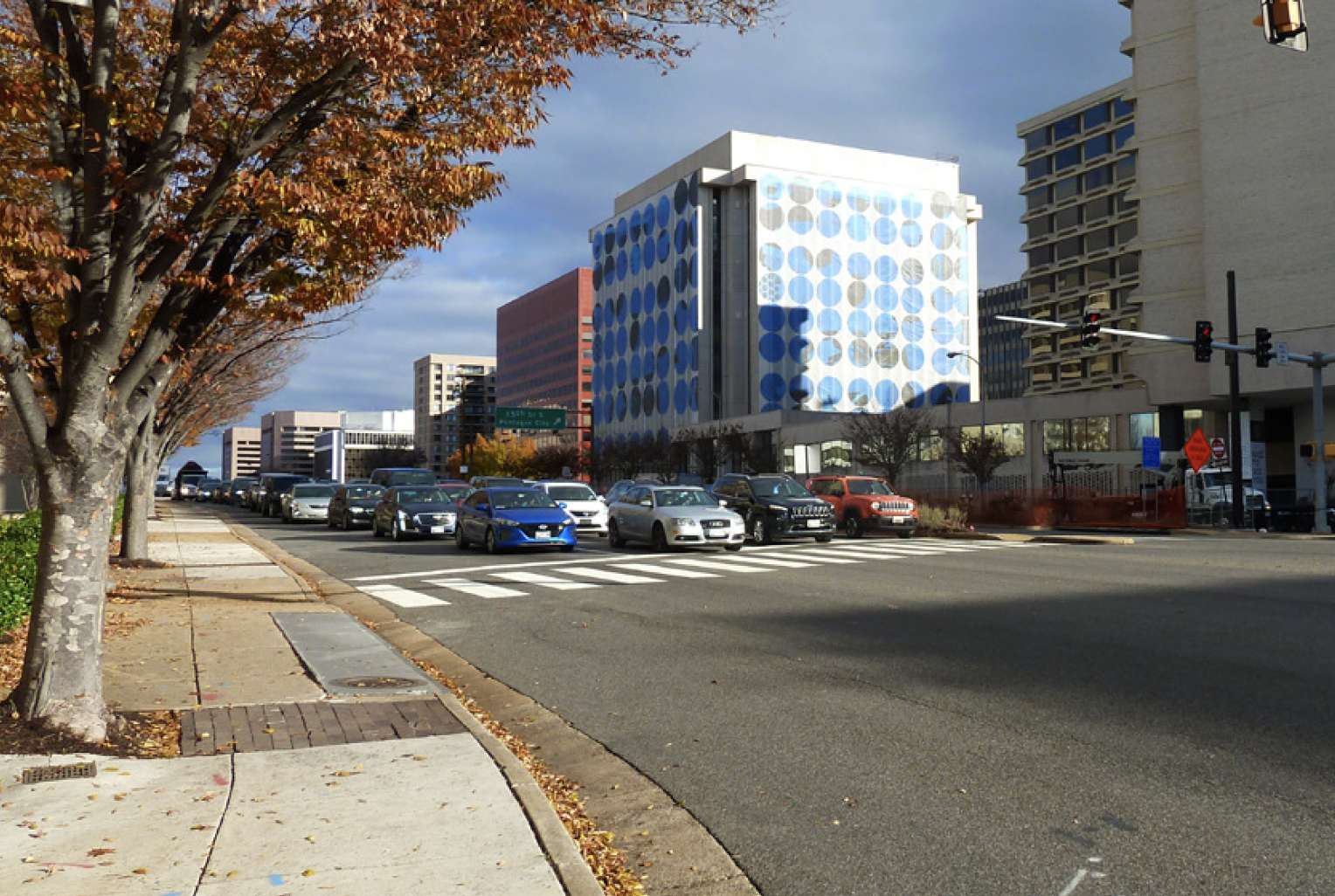
The state’s idea to lower elevated segments of Route 1 through Crystal City could cause more injuries to pedestrians and chronic congestion, according to a new report.

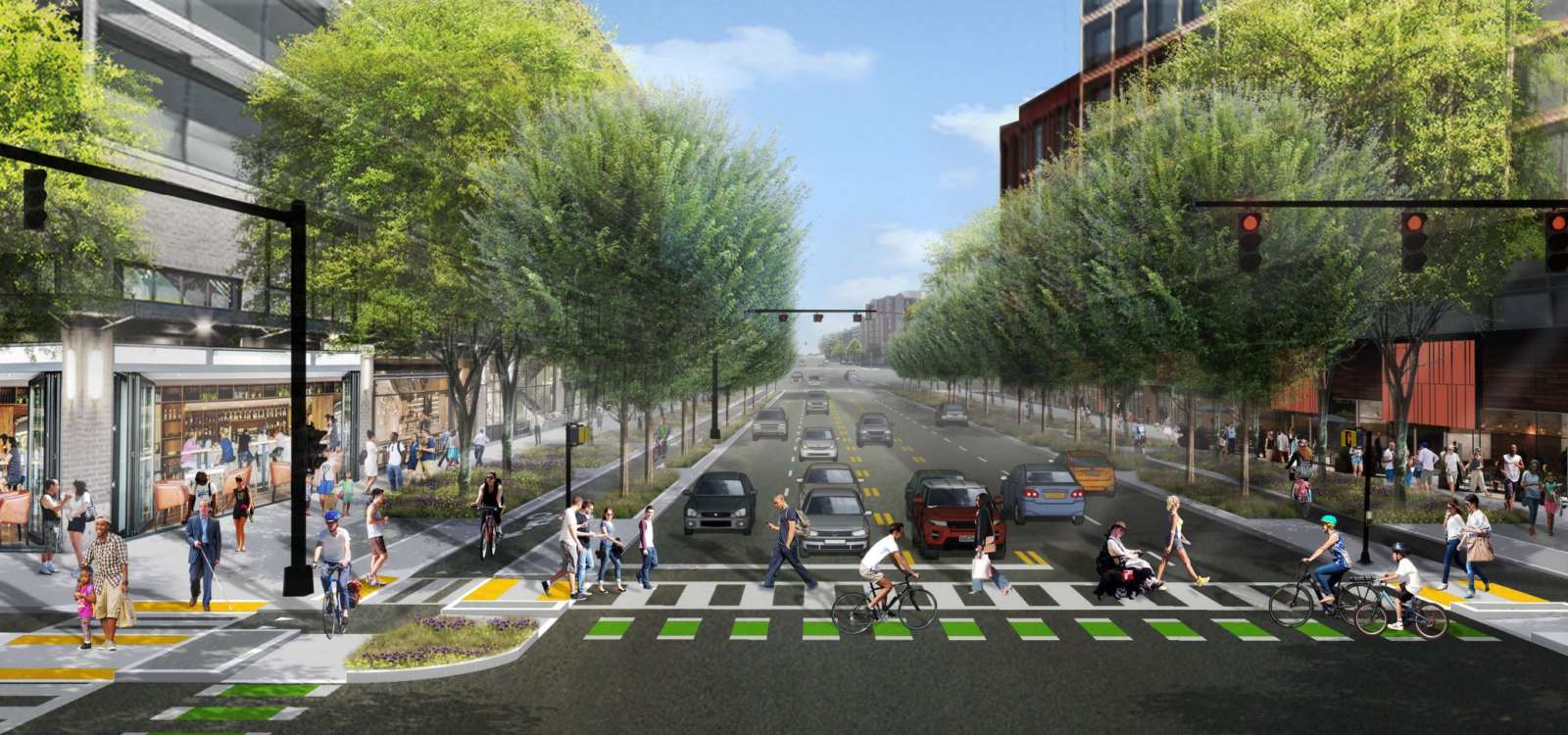
This summer, the Virginia Department of Transportation officially decided to turn Route 1, which is elevated over 12th, 15th and 18th Streets S., into an at-grade urban boulevard. It would feature wide buffered sidewalks on both sides, six to seven narrowed travel lanes, a 30-mph speed limit, wide crosswalks, landscaping and medians with pedestrian refuges.

The changes, which could cost $180 million, are aimed at making the corridor more pedestrian-friendly, but that may not actually be the case, according to the VDOT-commissioned report. Using Arlington County rush hour traffic forecasts, the report predicts pedestrian-involved crashes could increase.

Meanwhile, travel times could lengthen by up to 6 minutes for vehicles heading into Crystal City in the morning and heading out in the afternoon, due largely to delays for drivers turning left on Route 1 and several commuter bus stops getting rerouted.

Arlington County staff questioned how these negatives could square with VDOT’s preference for the concept, per a staff report. They suggested that the authors make the negative results of the traffic analysis clearer.

“An at-grade Route 1 has many operational challenges,” county staff said. “The short block lengths between parallel streets result in the need to coordinate signals and thus, the pedestrian delays will be increased on the minor parallel routes. The results point to negative impacts on the ability of transit to effectively serve the National Landing area. The at-grade scenario shown in the preferred alternative offers a more limited network connectivity while simultaneously introducing conflicts and sacrificing transit mobility.”

The report, prepared by engineering consulting firm Kimley-Horn, specifically recommends one at-grade option that allows all turns at 15th Street S., eliminates left turns at 18th Street S., and possibly includes a pedestrian underpass or overpass at 18th Street.

The state initially agreed to the study and changes to Route 1 as part of its 2018 agreement with Amazon to invest in transportation in the region.

Rendering of potential changes to Route 1 (via National Landing BID)

Pedestrian safety 

As progress ramped up on the study, locals and organizations following the Route 1 project have kept pedestrian safety front and center.

When VDOT initially considered a nine-lane highway, advocates said that would be unsafe for pedestrians and the National Landing Business Improvement District (BID) created its own renderings for a tree-lined and pedestrian-friendly Route 1.

After VDOT revised its proposal and announced its intention to bring Route 1 at-grade, Livability 22202 — a coalition of three area civic associations — rejected the study for several reasons, chief among them that even the new six- to seven-lane highway would not, in their view, improve pedestrian safety.

Data in the report appears to bear that conclusion out. Over two decades, pedestrian traffic during peak afternoon hours could increase 2x to 5x current levels, and with that could come more crashes involving pedestrians.

(more…)


Sponsored by Monday Properties and written by ARLnow, Startup Monday is a weekly column that profiles Arlington-based startups, founders, and other local technology news. Monday Properties is proudly featuring 1812 N. Moore Street in Rosslyn.

(Updated on 11/16/21 at 6 p.m.) Shift5, a Rosslyn-based cybersecurity company, has raised $20 million in Series A funding to help protect the world’s transportation infrastructure and weapons systems from cyberattacks.

The money will allow Shift5 to expand its Arlington office, adding secured facilities and labs, and add to its 50-person team, according to its announcement.

Shift5 also plans to educate fleet operators, regulators and legislators on the risks that unsecured computerized infrastructure present and show them how the data collected by these digitized planes and trains can be used to improve their efficiency, the announcement said.

The round was led by 645 Ventures, with participation from Squadra Ventures, General Advance and First In.

The company, founded by two veterans of the U.S. Army’s Cyber Branch, closed its seed funding round in 2019. Since then, Shift5 has grown through a series of contracts with several large, national passenger rail systems and more recently, with the U.S. Army and Air Force to beef up security on their combat vehicles and planes, respectively.

With the news of the second funding round and new contracts, ARLnow asked Shift5’s CEO and co-founder Josh Lospinoso to reflect on the entrepreneurial process and on what it takes to raise money as a startup. The following Q&A has been slightly condensed and edited for clarity.

ARLnow: How long have you been actively working on raising Series A funding? Did the numbers meet or exceed expectations?

Lospinoso: Shift5 closed seed funding in 2019, and in the aftermath, won a series of contracts, including work with the US Air Force, which allowed us to grow organically through this year. Our Series A was very competitive, and ultimately our new partners at 645 represented a huge addition to the team that we couldn’t pass up.

ARLnow: When you started the company, were you someone who got energized by the idea of talking to investors, or was that intimidating? Do you think your product is an easy sell, given the immediate and debilitating threats cyberattacks pose?

Lospinoso: The Shift5 founding team is very passionate about the risk to national security posed by insecure transportation infrastructure. The idea of spreading awareness about the problem was more exciting and energizing than intimidating. We live in an era in which the cyber physical effects of cyberattacks are rapidly becoming a national menace. We’re seeing the US government act here — for example, the TSA is mandating rail and air operators tighten cybersecurity. Our customers are just glad there are folks out there solving the problem for them.

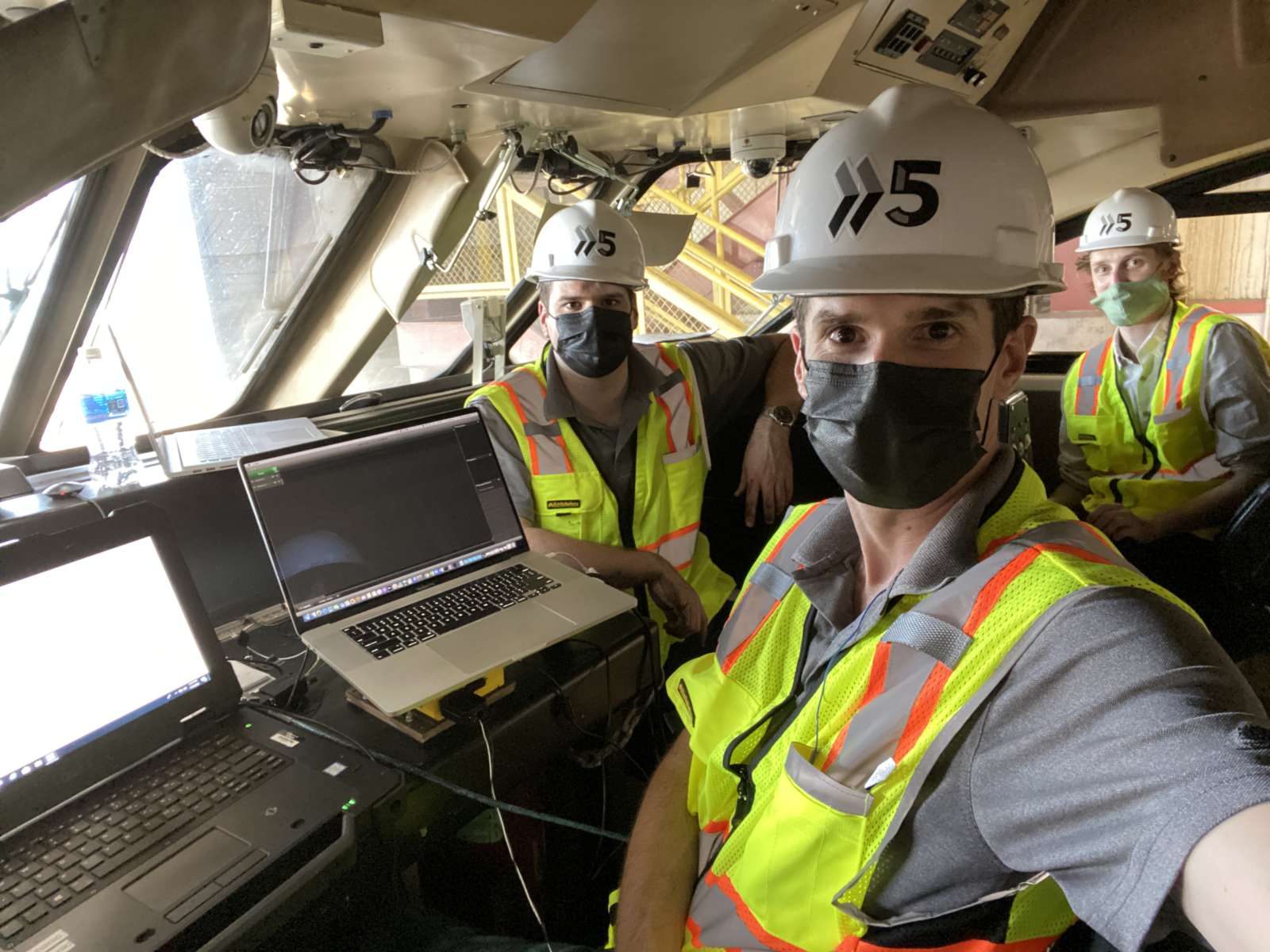
Shift5 founders deploy their product on a train (courtesy of Shift5)

ARLnow: Was there a steep learning curve to starting a company after leaving the military? Or do you think that it imparted some entrepreneurial skills?

Lospinoso: There was a pretty steep learning curve. The military prepared Mike and me for this. You’re used to jumping into high-tempo environments, having to learn the ropes quickly under a lot of pressure.

ARLnow: Which was harder, raising Seed or Series A funding?

Lospinoso: Both have difficulties in their own way. Seed Series funding is really team- and mission-focused. The Series A is much more about product/market fit. It’s about showing how your thesis at the Seed Series is playing out. By numbers, relatively few companies raise a Series A successfully. We were fortunate that we faced a problem in uniform that gave us a unique perspective on a very large opportunity. And we see that playing out.

ARLnow: What does it take to raise $20 million?

  1. Knowing something about the world that few people know to be true. Go after a big problem facing lots of people. The best kinds of problems are those that people don’t know they have.
  2. Having a risk appetite to eschew a steady paycheck and work/life balance to throw every ounce you have at a single problem.
  3. Being stubborn enough not to be deterred by short-term setbacks but nimble enough to accept feedback from customers, investors, and employees.
  4. Telling the story effectively and rallying others to your cause.
  5. Having a maniacal focus on solving customer problems.
  6. Having the maturity to give up responsibilities and control to empower those around you. Remember about rallying others to your cause.

View More Stories