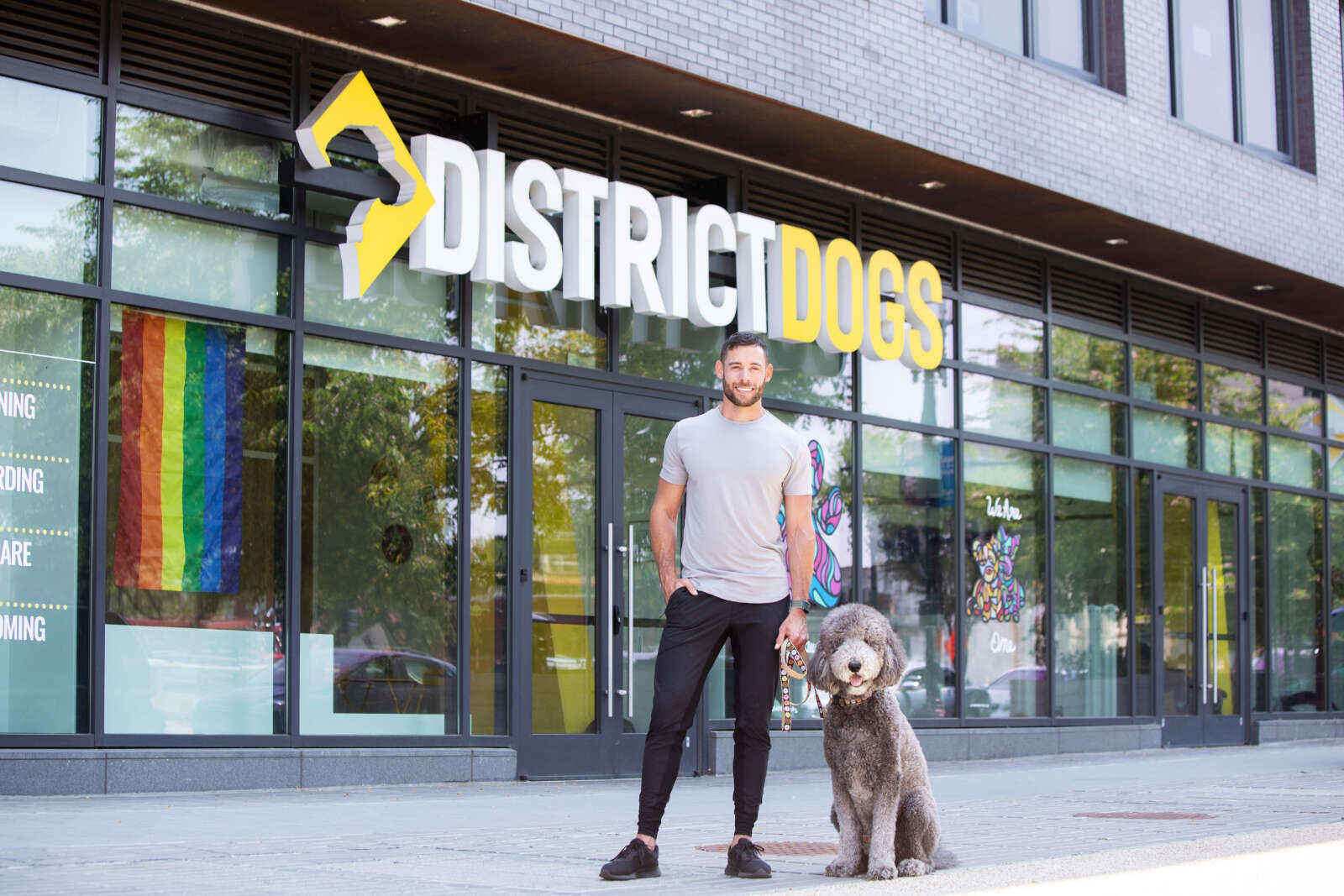
(Updated at 2:25 p.m.) A D.C.-based dog daycare and boarding facility is making its first foray out of the nation’s capital with a Clarendon outpost.

District Dogs will move into The Crossing Clarendon shopping center (formerly Market Common Clarendon) in February or March, owner Jacob Hensley tells ARLnow. In addition to daycare and boarding, District Dogs provides other services such as grooming and training.

“We’re very excited to come to Arlington,” he said. “Right now, we have the designs finished and construction plans out to bid. We should be getting bids and contractors in the next couple of weeks or so, and we expect to be open late winter or early spring.”

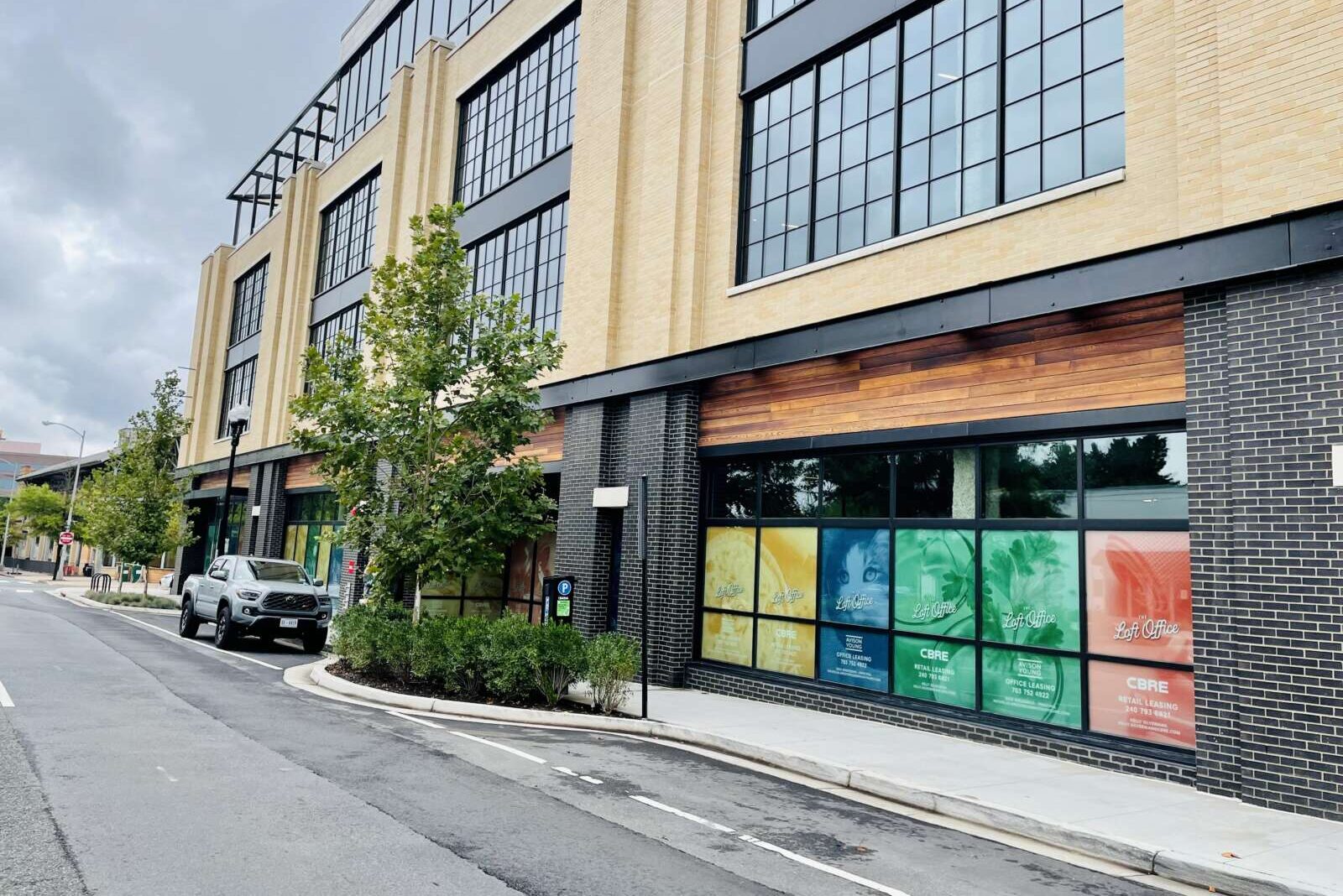
The business will front Wilson Blvd, according to a photo sent by Hensley, in a ground floor space between the Whole Foods and where Iota Club used to be.

There is one hurdle to surmount: zoning rules about how many dogs can be boarded per night. According to a zoning determination this summer, District Dogs can operate in Clarendon as a doggie daycare and grooming facility, with overnight boarding for up to three dogs. Any more overnight occupants, and it’s considered by the county a “kennel,” which is not allowed on the property either by-right or through a special exception permit.

Regency Centers, which owns The Crossing, is appealing the decision on Hensley’s behalf. Either way, District Dogs can move in, Hensley says.

“District Dogs will be able to offer daycare, boarding, grooming and training services in the Clarendon location regardless of the outcome,” he said. “I can’t comment further [about zoning issues] because of how complicated it is and I don’t want to get the details wrong.”

The forthcoming Arlington location will be Hensley’s fifth. He started District Dogs in 2014 as a one-man dog-walking business and opened his first brick-and-mortar facility in 2016 in D.C. Since then, he’s added two more D.C. locations, with a fourth under-construction.

Clarendon was a natural choice, since District Dogs targets markets with a mix of apartments and single-family homes, and many clients come to D.C. from Northern Virginia, he said.

Hensley says Arlington’s urban corridors need more of these kinds of dog-care facilities, as many existing providers are located in warehouse and industrial districts. Many customers will be able to walk to District Dogs, compared to having to drive somewhere a distance away.

“We’re bringing a more urban dog daycare experience that’s more convenient for people and where they live,” he said.

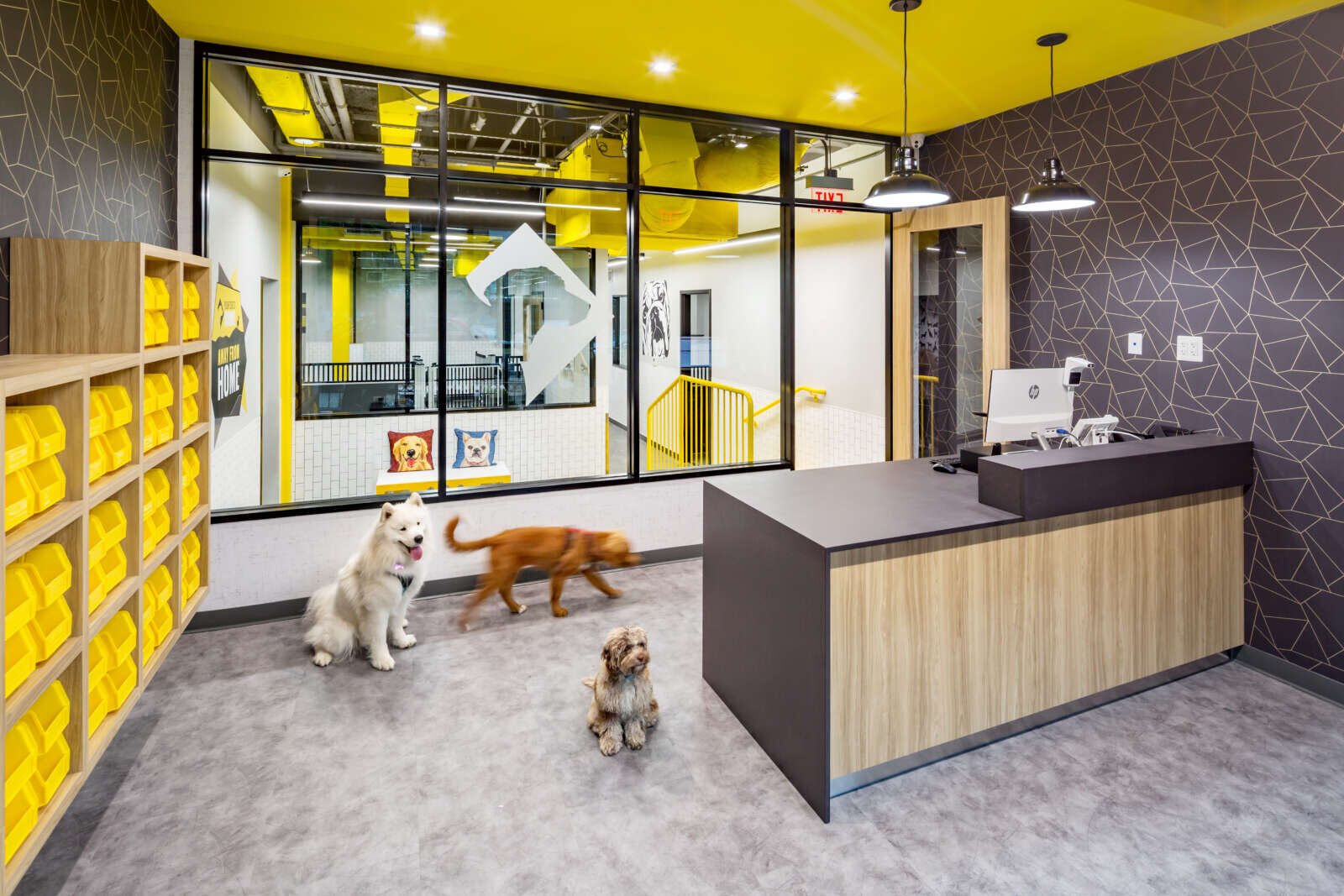
Hensley said District Dogs aims to make dogs and their humans feel comfortable. For pet owners, that means providing web-cameras so they can check in, as well as operating in spaces with lots of windows.

“We’re really just trying to show everything that goes on,” he said. “That’s what’s lacking in a lot of facilities, which can be old and run-down in a warehouse.”

Hensley attributes his ability to expand in part to COVID-19. People adopted more dogs during the pandemic and now need the services he provides, particularly weeknight, overnight boarding.

“Our facilities in D.C. are pretty much at-capacity in a daily basis,” he said. “In addition to new dogs, since people can work remote, people are traveling more… Because people’s work is so much more flexible, not just travel but the length of travel is increasing.”

Once District Dogs settles into Clarendon, locals can expect dog-friendly community activities.

“We have a great online community, and we try to do events at restaurants, bars and parks,” Hensley said. “We’re trying to bring a sense of dog community to the Arlington area — we want to be a part of it and help foster it.”

Sponsored by Monday Properties and written by ARLnow, Startup Monday is a weekly column that profiles Arlington-based startups, founders, and other local technology news. Monday Properties is proudly featuring 1812 N. Moore Street in Rosslyn.

Federated Wireless is using its proprietary private 5G solution to make a Marine Corps Logistics Base in Georgia smarter.

The company says it was able to make it happen because of its physical location in Arlington, close to the Pentagon. From its Ballston office at 4075 Wilson Blvd, Federated Wireless conducted in-person demonstrations and briefings with Department of Defense leaders during the pandemic, when travel was down.

“Being located in Arlington has really been a benefit to Federated Wireless,” Vice President and General Manager Sal D’Itri said. “We won a huge contract to implement our technology along with some marquee partners at the Marine Corps Logistics Base Albany because of our headquarter presence close to the Pentagon and its leaders. We’ve been able to cultivate those relationships as we build the business.”

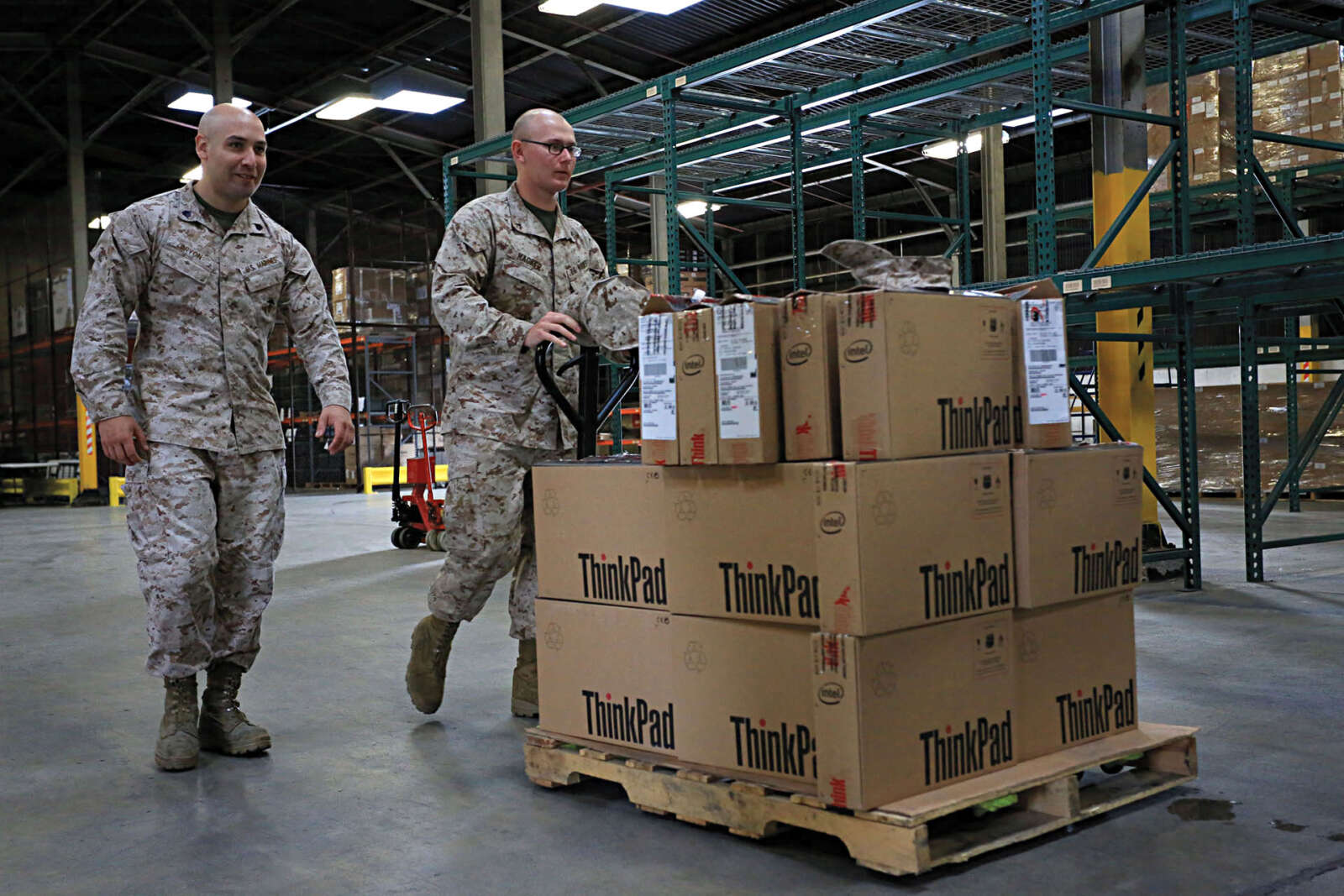
This past January, it deployed its solution at the base. The improved connectivity supports innovations such as precision forklifts, smart sensors and robots, and automated inventory management, making manual inventory and manual work inside the warehouse a thing of the past.

“This is one of the largest smart warehouse deployments of private 5G networks in the United States,” D’Itri said.

Two Marines Corps members push inventory in a warehouse (courtesy photo)

The 5G being used in Georgia provides persistent communication — also known as low latency — to spectrum networks that goes way beyond what’s available to ordinary cellphone users. D’Itri says the warehouse needs this low latency in order to support sensors, robots and machines without the interruptions and network slow-downs cellphone users occasionally experience.

“It’s a technology that’s really geared for enterprises,” he said. “We can have the low-latency that we need for robotics. We have the capacity for things we need, like holographic Internet of Things representations and augmented reality.”

Federated Wireless is growing as governments and enterprises worldwide increasingly focus on harnessing innovative 5G networks.

“5G is on every ad and every commercial now,” D’Itri said. “Our business is growing with that, particularly as we look at 5G networks that are targeting enterprises, school districts and communities that want to have a private, secure network that is more oriented to applications, as opposed to merely a carrier network” such as AT&T or Verizon.

He says Federated Wireless’s private 5G solution is made possible through its “shared spectrum controller.” In the U.S. today, spectrum is either assigned to the federal government or auctioned to carriers like AT&T. Federated Wireless uses its proprietary controller to share unused spectrum with private companies, powering reliable, private 5G networks.

With that kind of power, D’Itri says companies can not only experience greater connectivity without being tied to a specific carrier but can create “next-generation experiences” such as holographs or virtual reality.

Using its ability to share spectrum, Federated Wireless is also looking to tackle another area that large businesses and equipment manufacturers heavily rely on: WiFi.

“When you add spectrum to WiFi, you help relieve congestion and deploy more of it to stay connected,” D’Itri said. “[Consumers] would have better WiFi connectivity and more capacity.”

With these developments, D’Itri says Federated Wireless is having to grow its local presence over the next several years.

“We certainly are planning to continue hiring our Arlington office,” he said. “We have a wonderful facility here, growing the Arlington ecosystem and hiring Arlington folks, and bringing business into Arlington.”


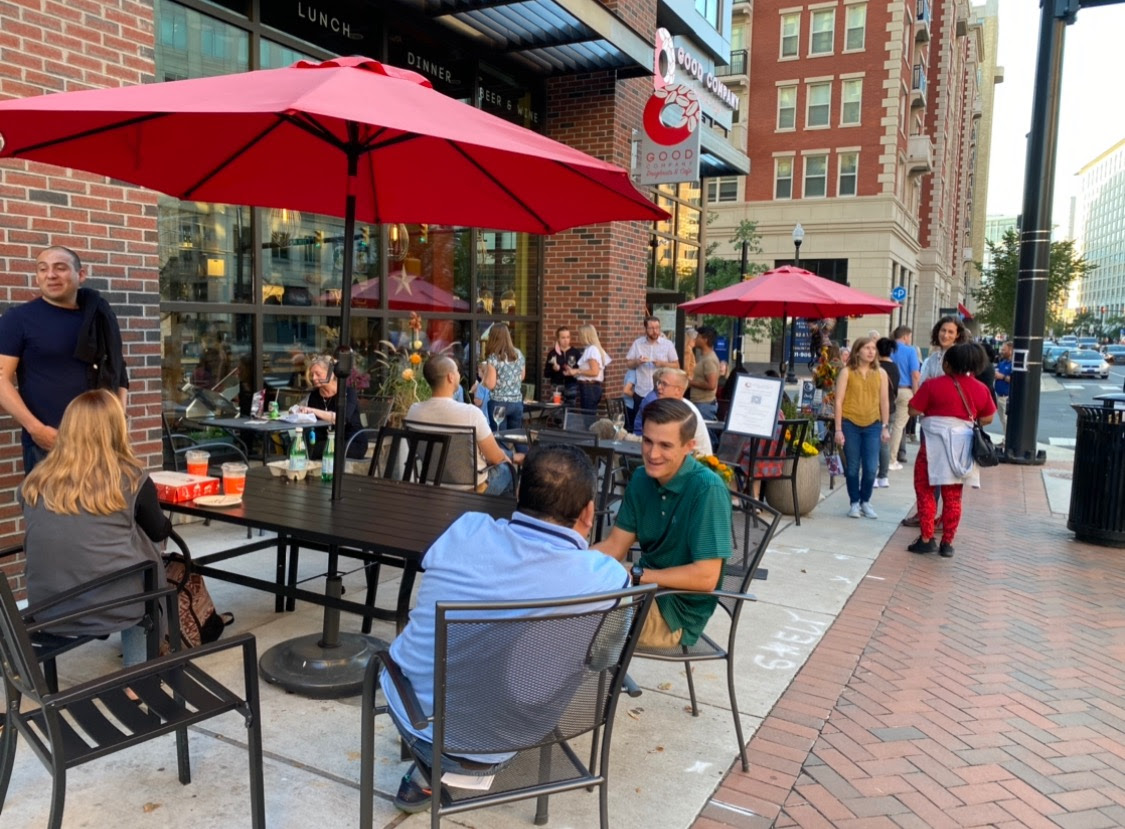
Customers enjoy outdoor dining at Good Company Doughnuts & Café (courtesy photo)

Locally-owned Good Company Doughnuts & Café in Ballston is trying to save its bustling outdoor patio from being downsized by a county transportation project.

Arlington County is installing a bus shelter in front of the business at 672 N. Glebe Road before the winter. Good Company co-owner Charles Kachadoorian says the shelter will obscure much of the storefront from the street and halve the available outdoor seating, both of which will hurt business.

“Our indoor space is small, so we continue to limit seating to our beautiful outdoor patio in order to keep our staff and neighbors as safe as possible. Unfortunately, we are at risk of losing more than half those patio seats,” he said. “We requested the county delay the installation and relocate the shelter to an area on the sidewalk that will serve the intended purpose while allowing for Good Company, a locally-owned and operated business that truly cares about its neighbors, to continue to thrive.”

Located on the ground floor of the 672 Flats apartments, Good Company not only stayed afloat during the pandemic but provided free lunches to Arlington public school kids. Meanwhile, the patio became a popular open-air gathering spot for locals and tourists seeking coffee, breakfast, lunch and of course, decadent donuts. Kachadoorian says there’s been a “huge response” from patrons and neighbors who want to see the patio stay.

The plan to build the shelter at the corner of N. Glebe Road and 7th Street N. was approved as part of the site plan for 672 Flats in October 2015, said Ben Aiken, the director of constituent services for the county. Arlington received $12,500 for the bus shelter from 672’s developer and a $6,000 bus shelter grant from the Virginia Department of Rail and Public Transportation as part of the bus stop improvement program.

That’s four years before Good Company opened in April 2019.

“There was no way they would’ve known in 2015 that there’d be this restaurant with neighborhood appeal,” Kachadoorian said. “The important thing for us is to get the site plan adjusted and move the bus stop.”

Arlington County says the project will not impact the seating Good Company is permitted to operate.

“Arlington is committed to supporting our small businesses and we have been in close contact with Good Company Doughnuts & Cafe on this issue,” Aiken said. “The business will still be allowed to keep their approved outdoor dining, as it does not impede access to the bus stop…. While the restaurant has indicated the bus stop’s location will take away half of their dining, it appears this is because of an unpermitted expansion beyond their approved seating area.”

The row of seating closer to the road is not permitted because of the dimensions of the proposed bus shelter, confirmed Kachadoorian. He says he’s been talking with the county about his extra seating and his desire to see that row made permanent.

He says the patio can’t expand around the corner, as the sidewalk is not wide enough, but the shelter could move further south on N. Glebe Road where it wouldn’t block a business.

“For us, it’s more important to have the patio, so we’d be willing to help defray the cost or do whatever needs to be done to move the shelter,” he said.

Aiken maintained that Good Company’s storefront should still be visible after the shelter is in place.

“The bus stop uses our lowest profile shelter design, is transparent, and should not significantly impact the visibility for Good Company,” he said.

(more…)


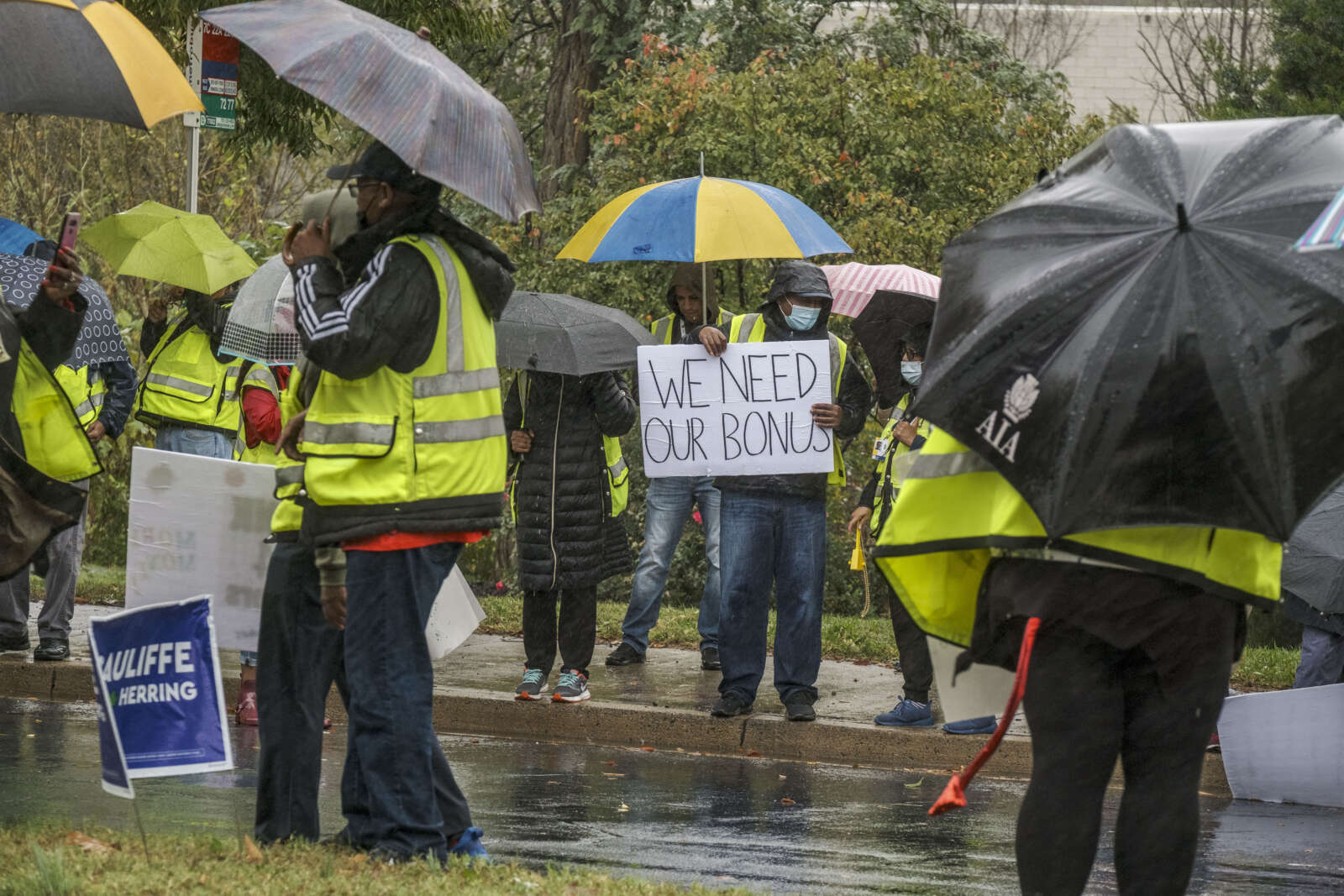
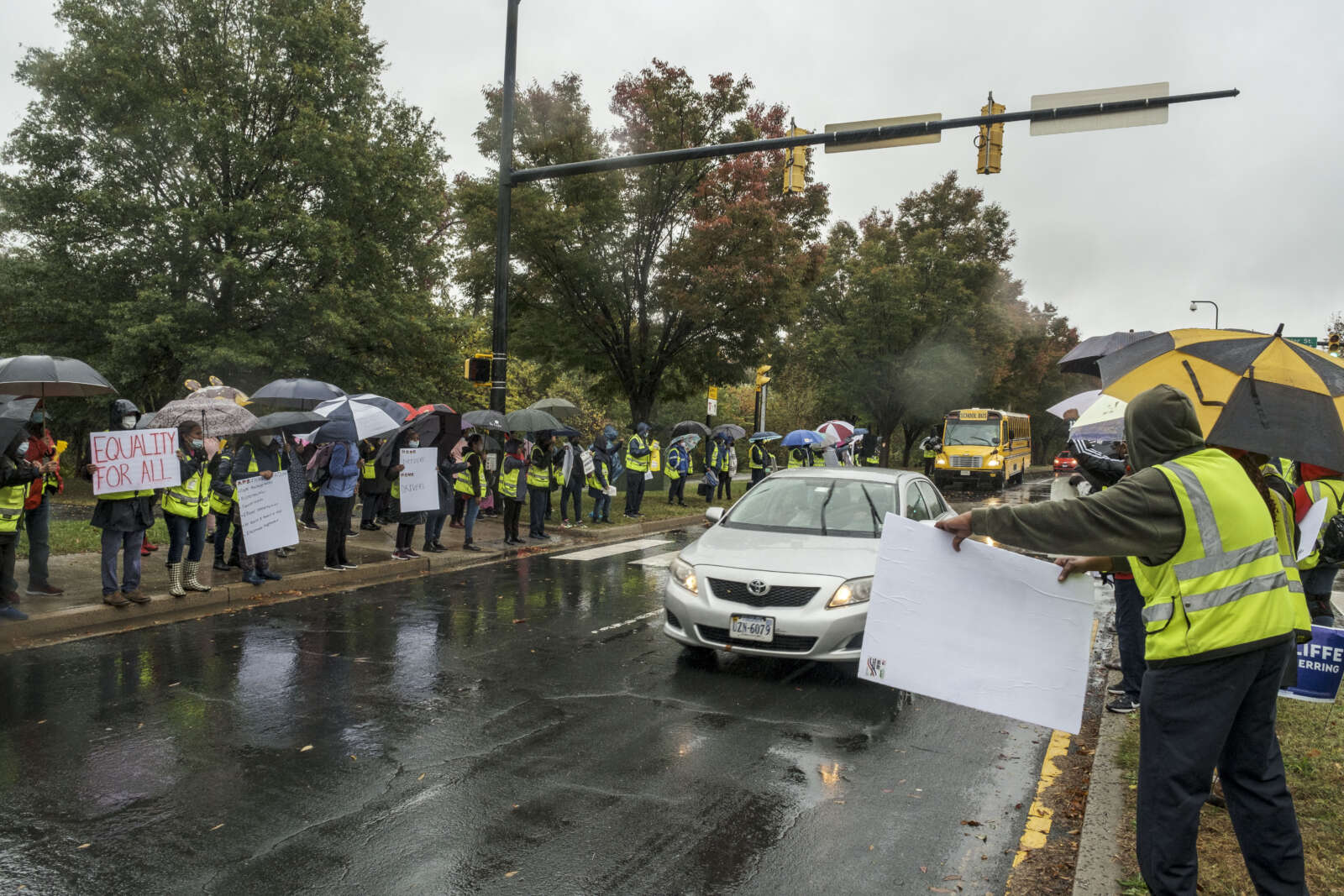
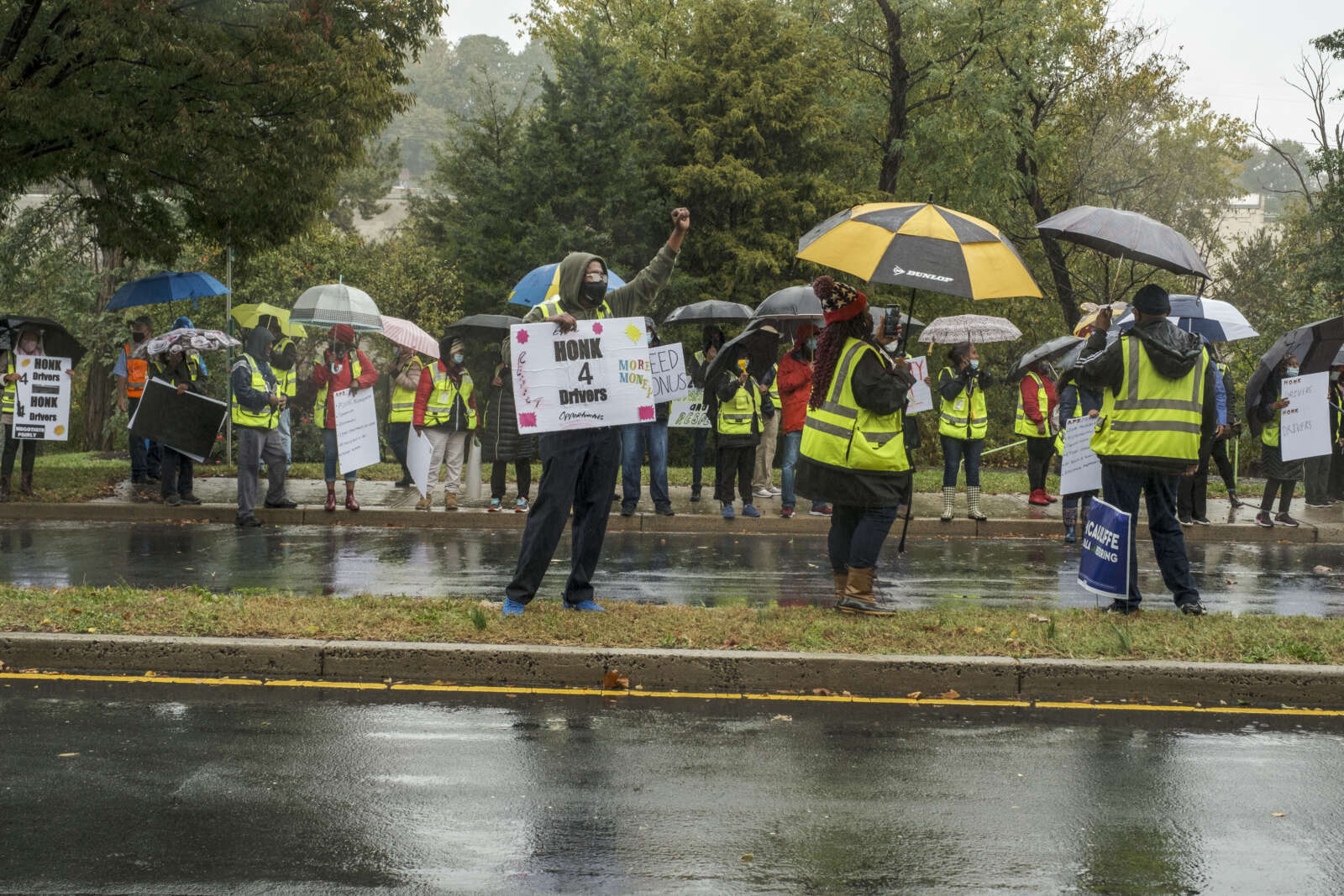
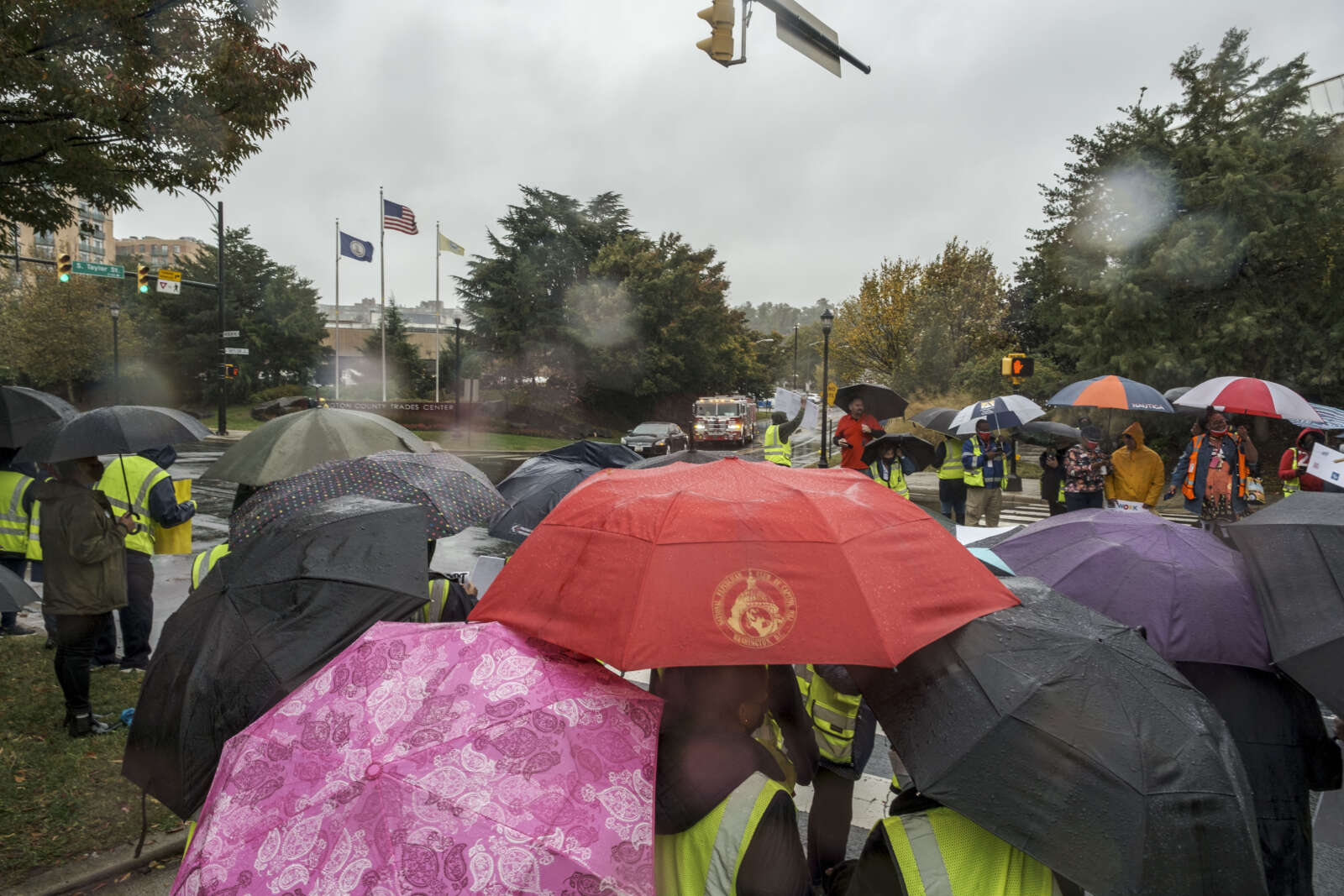
Braving the rain and wind, Arlington Public Schools bus drivers demonstrated along S. Arlington Mill Drive on Friday, calling for better pay and greater respect.

Huddled under umbrellas across from the Arlington County Trades Center (2700 S. Taylor Street) in Shirlington, about 50 drivers held signs saying, “We need our bonus” and “honk 4 drivers” and “equality for all” to cars passing by.

“It was amazing,” said Arlington Education Association President Ingrid Gant. “The bus drivers and attendants wanted to make sure their voices were heard. They felt like they were empowered to let the public know that we love their kids and we love working for Arlington, but they want to be heard and want to be treated like the rest of employees.”

The bus drivers were protesting what they say is unfair treatment when compared to other APS employees, she said. Drivers are waiting on longevity bonuses and had expected the same summer school bonuses other staff received. They are also frustrated with how they’re treated by transportation office staff.

“The longevity bonus, we’re still in the process of trying to figure that out,” she said, adding that drivers began their advocacy when they learned summer school bonuses wouldn’t apply to them.

This summer, facing deep staff shortages and having promised a robust summer school program, APS offered $1,000 bonuses to teachers and $500 bonuses to assistants who signed up. In September, when APS doled out those bonuses, Gant said bus drivers felt left out despite having worked through the summer.

In addition, drivers recently lost a third of their parking spaces at the bus depot, and most have to take a shuttle from the Barcroft Community Center to their bus. Some have been given placards permitting them to park around the lot, but have recently been getting ticketed.

She said a lottery system was established to ensure spots were distributed fairly, but it was conducted while bus drivers were on their routes, leaving other staff to get the coveted spots.

“The bus drivers are feeling like they’re the last people on the totem pole,” said Gant, who has brought these concerns to Superintendent Francisco Durán since August.

APS spokesman Frank Bellavia tells ARLnow that APS is working to address drivers’ concerns, which they have also raised during School Board meetings.

“[We] are working to address the concerns related to compensation and workplace climate that our drivers and attendants have raised in recent meetings. Most recently, staff members were provided a timeline to improve the climate within the office,” he said. “Our bus drivers provide a vital service to students and the community and we are committed to responding to their feedback and ensuring they feel valued and appreciated as members of the Arlington Public Schools team.”

As for the bonuses, he said those were targeted to classroom staff.

“Teaching summer school is voluntary,” he said. “Bonuses were provided to teachers and assistants in an effort to address a significant shortage in teachers for the summer school program. In addition, teachers are on 10-month contracts and summer school is not required of them. Bus drivers are on 11-month contracts which includes summer school.”

(more…)


Amazon has made changes to its plan for the second phase of the company’s HQ2 in Pentagon City.

For the last eight months, Amazon has been hammering out the details of the planned second phase, on the PenPlace site at the corner of S. Eads Street and 12th Street S. Today (Thursday) it unveiled some significant tweaks it has made in response to local feedback.

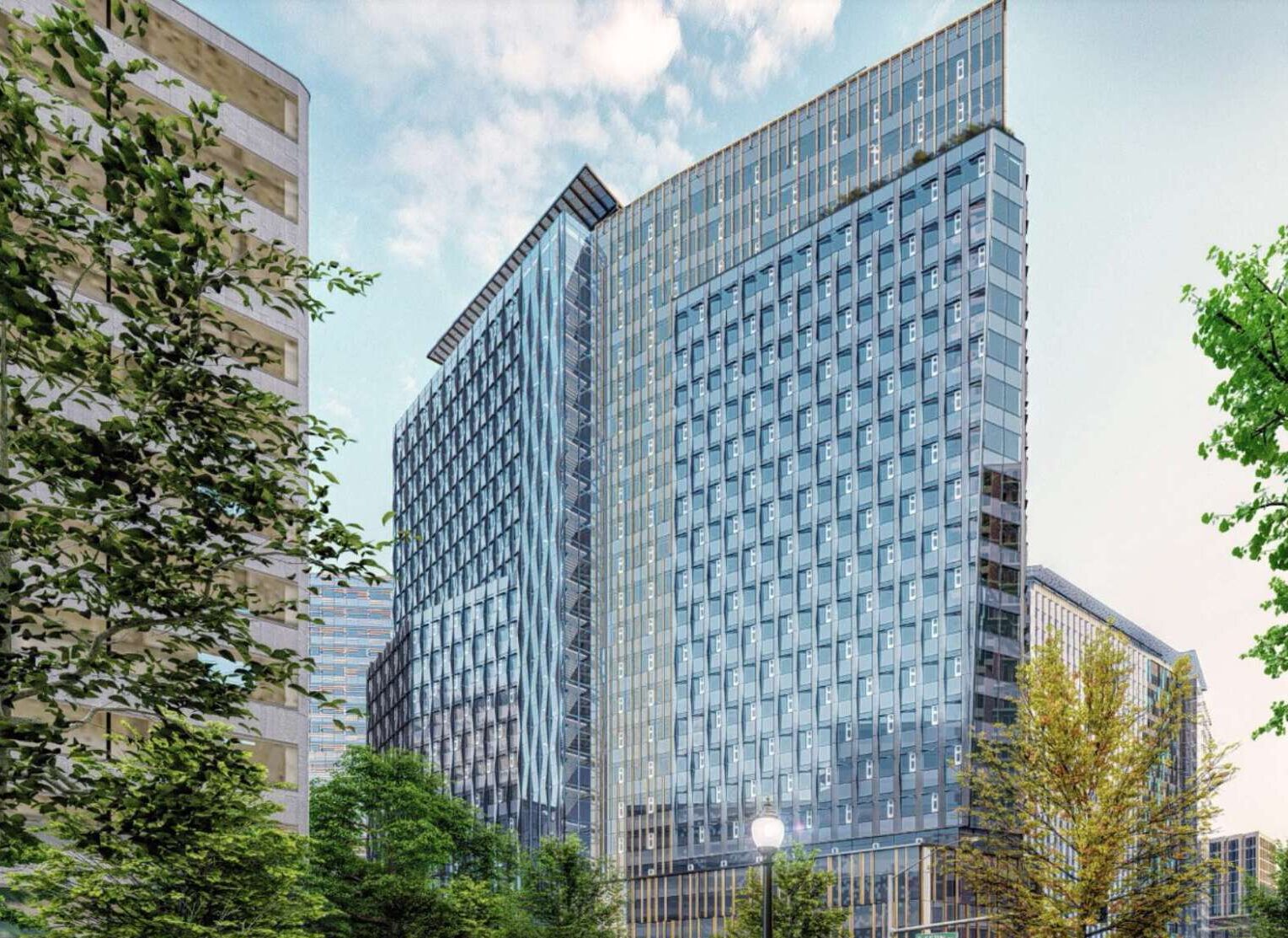
Members from the community have weighed in on everything from transportation to sustainability to architecture, suggesting changes that would make the office campus more walking- and biking-friendly, more verdant and more architecturally interesting.

“We appreciate the ideas and have made changes to enhance the overall connectivity of the site. We also incorporated additional sustainable elements and more greenery into the design, and diversified the architecture within PenPlace,” wrote Joe Chapman, Amazon’s director of global real estate and facilities, in a blog post published this morning.

“These updates make the entire project even better, benefitting our neighbors and all those that will visit HQ2,” he continued.

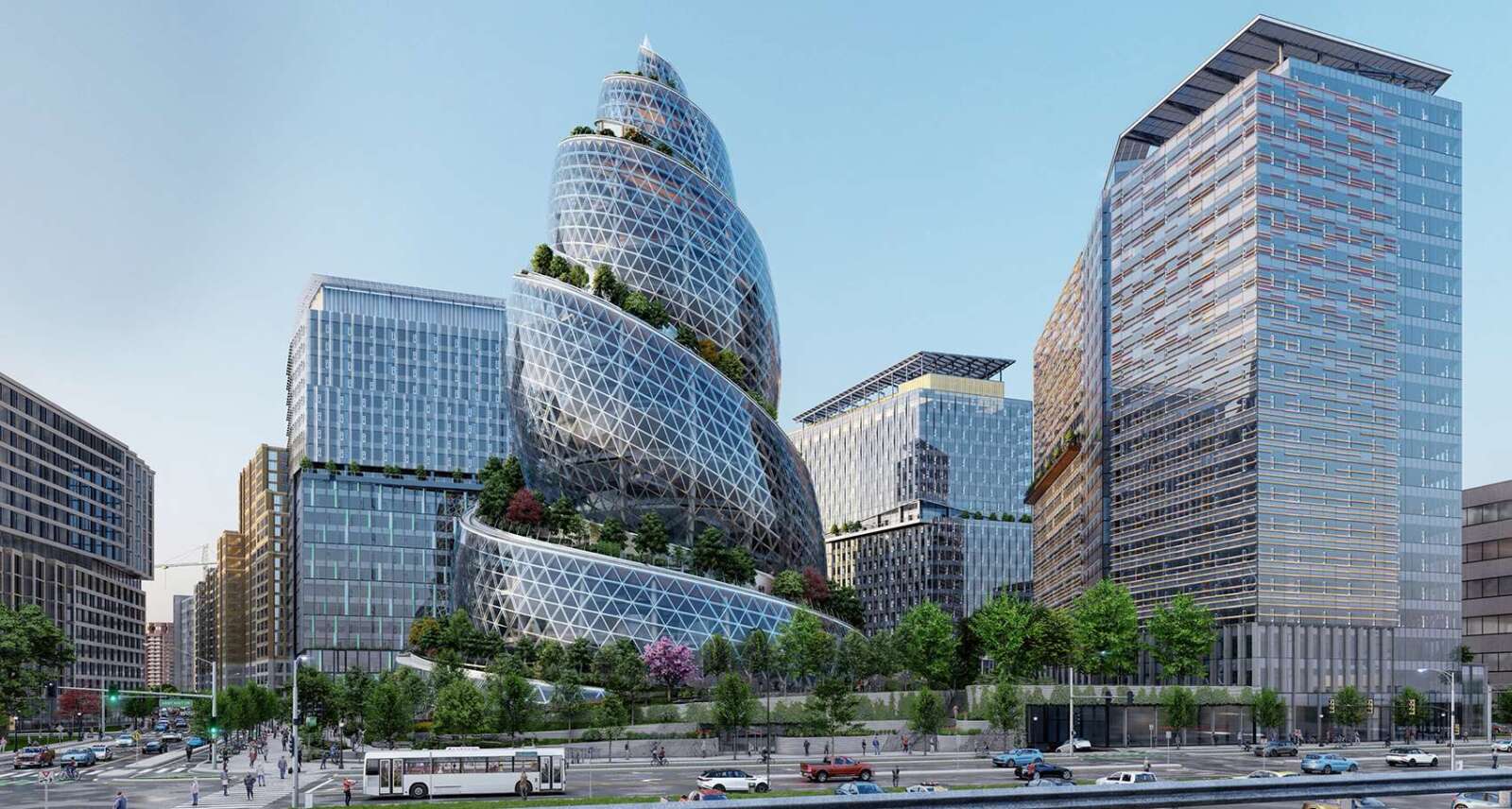
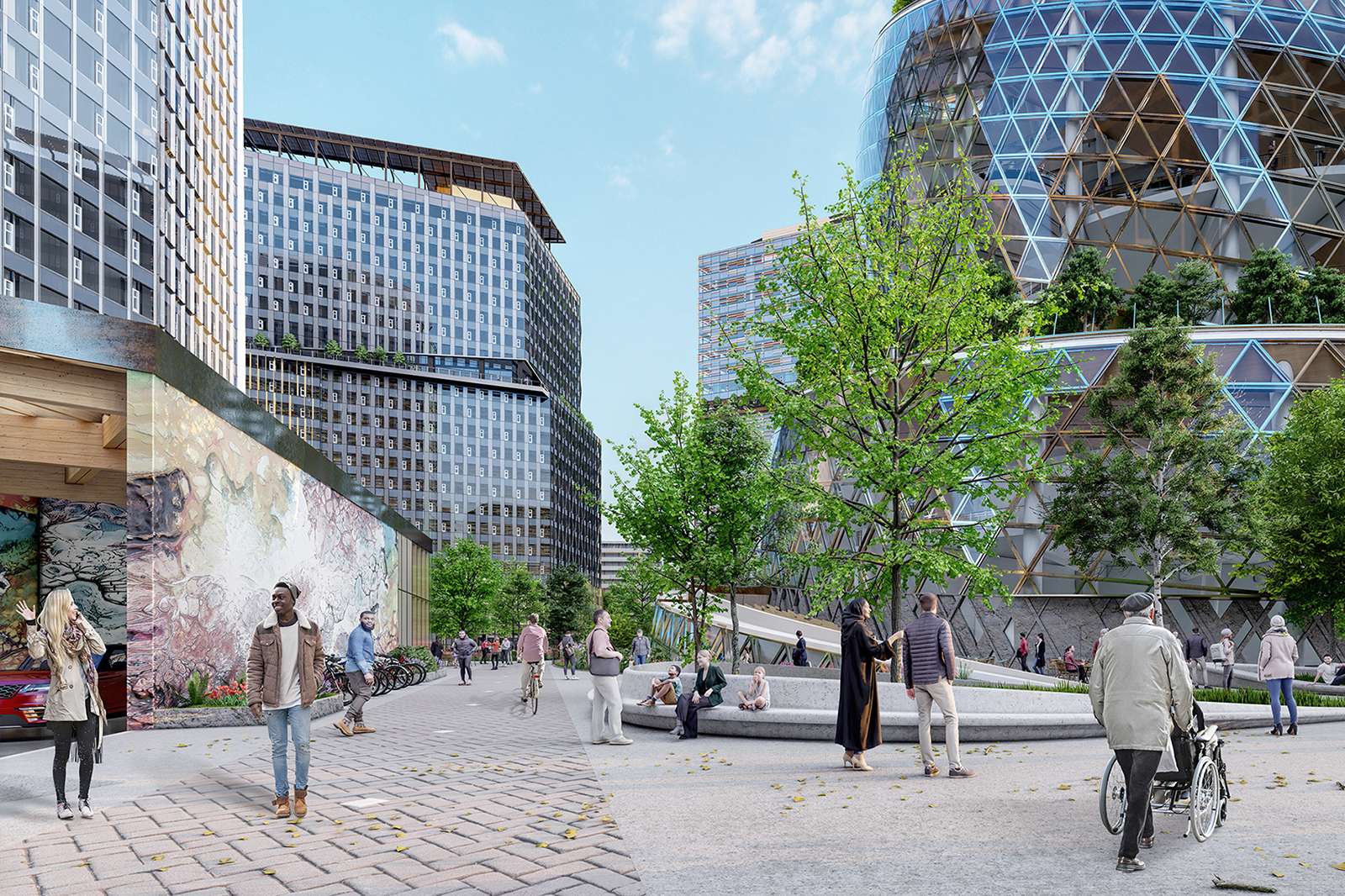
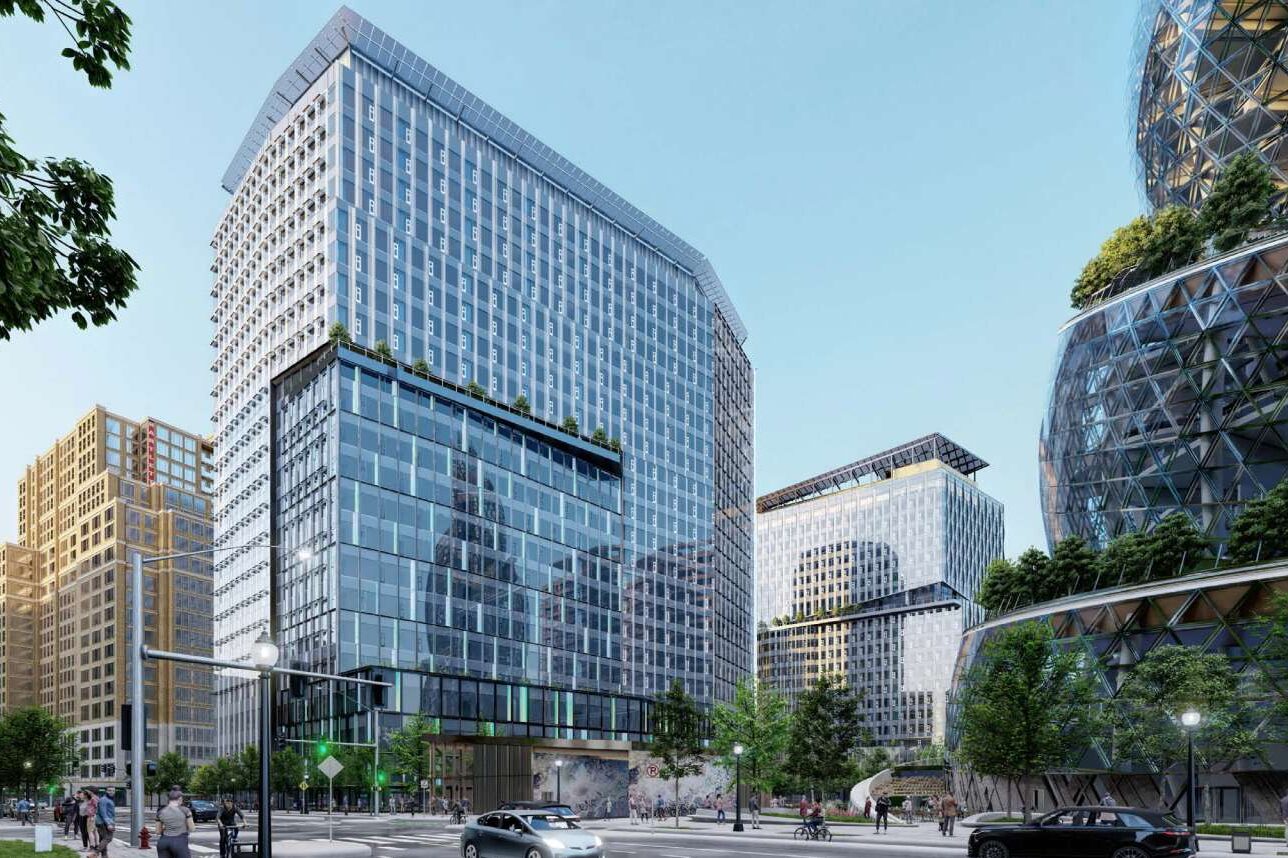
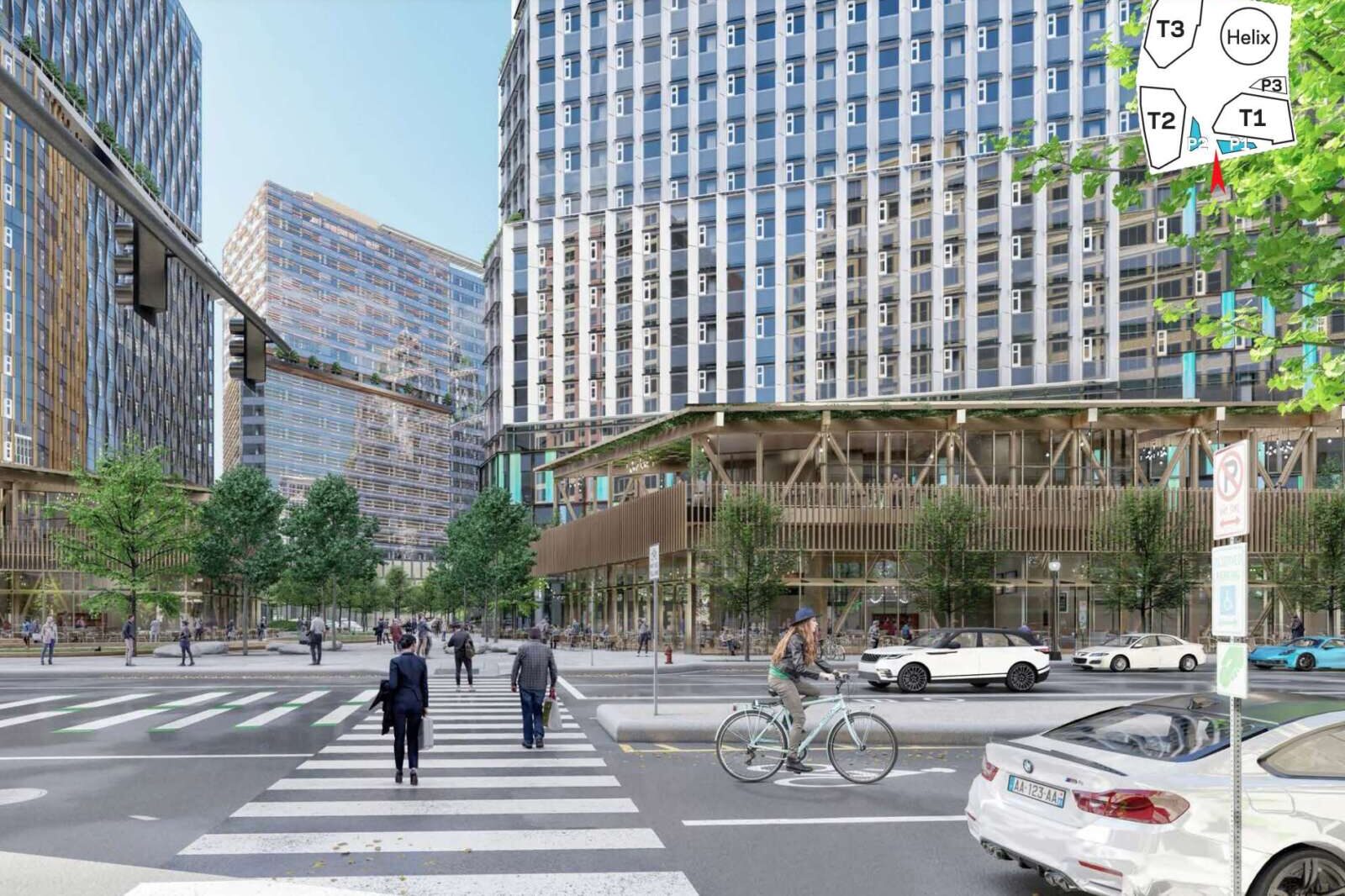
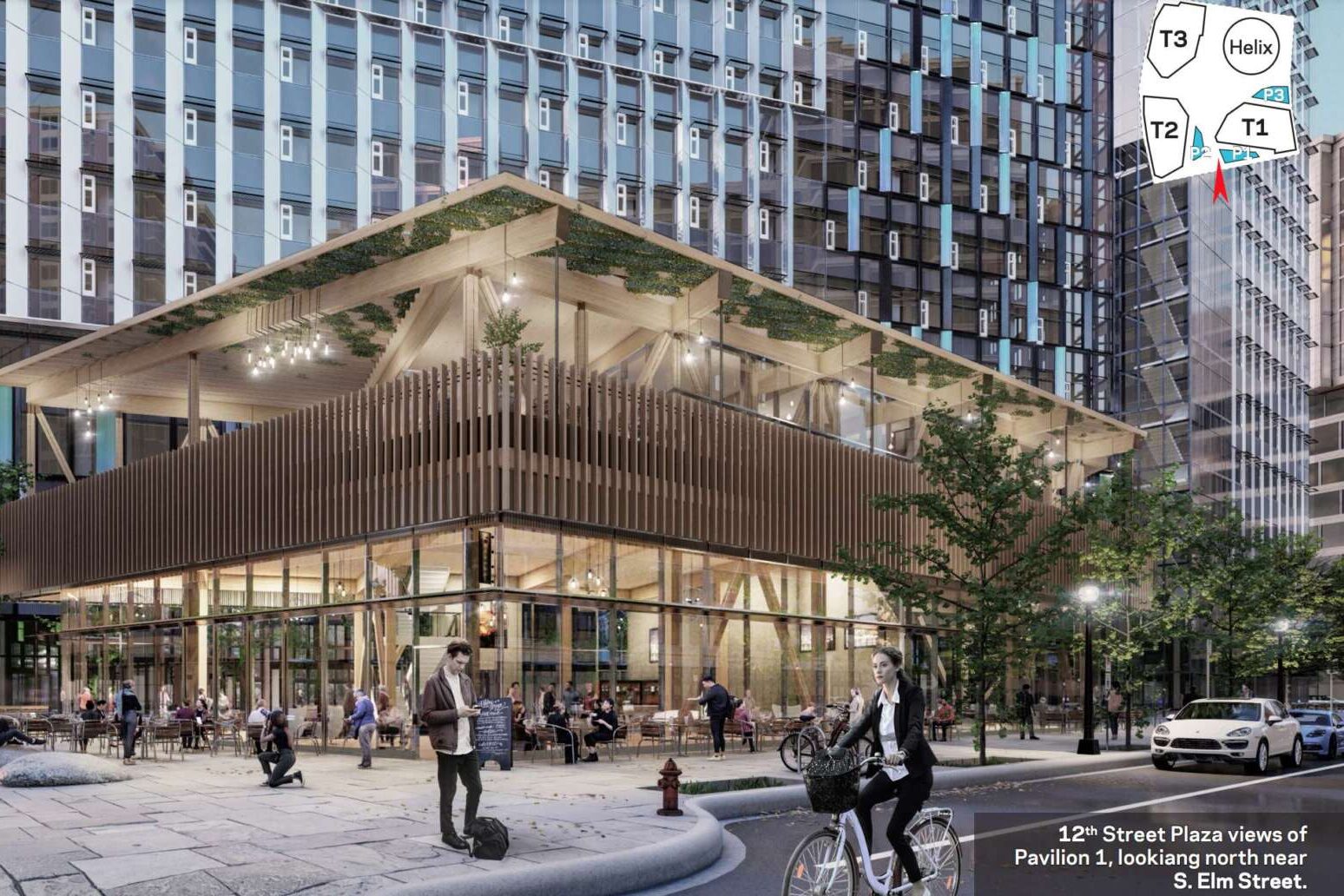
PenPlace is situated on an 11-acre site near the Pentagon City Metro station, bordered by Army Navy Drive, S. Eads Street, 12rd Street S. and S. Fern Street. It will be anchored by a lush, futuristic building, dubbed “The Helix,” and feature three, 22-story office buildings, retail pavilions, a childcare center and a permanent home for Arlington Community High School. A park drawing inspiration from local waterways will run north-south through the site.

But residents were critical of the multimodal transportation planning Amazon offered at first.

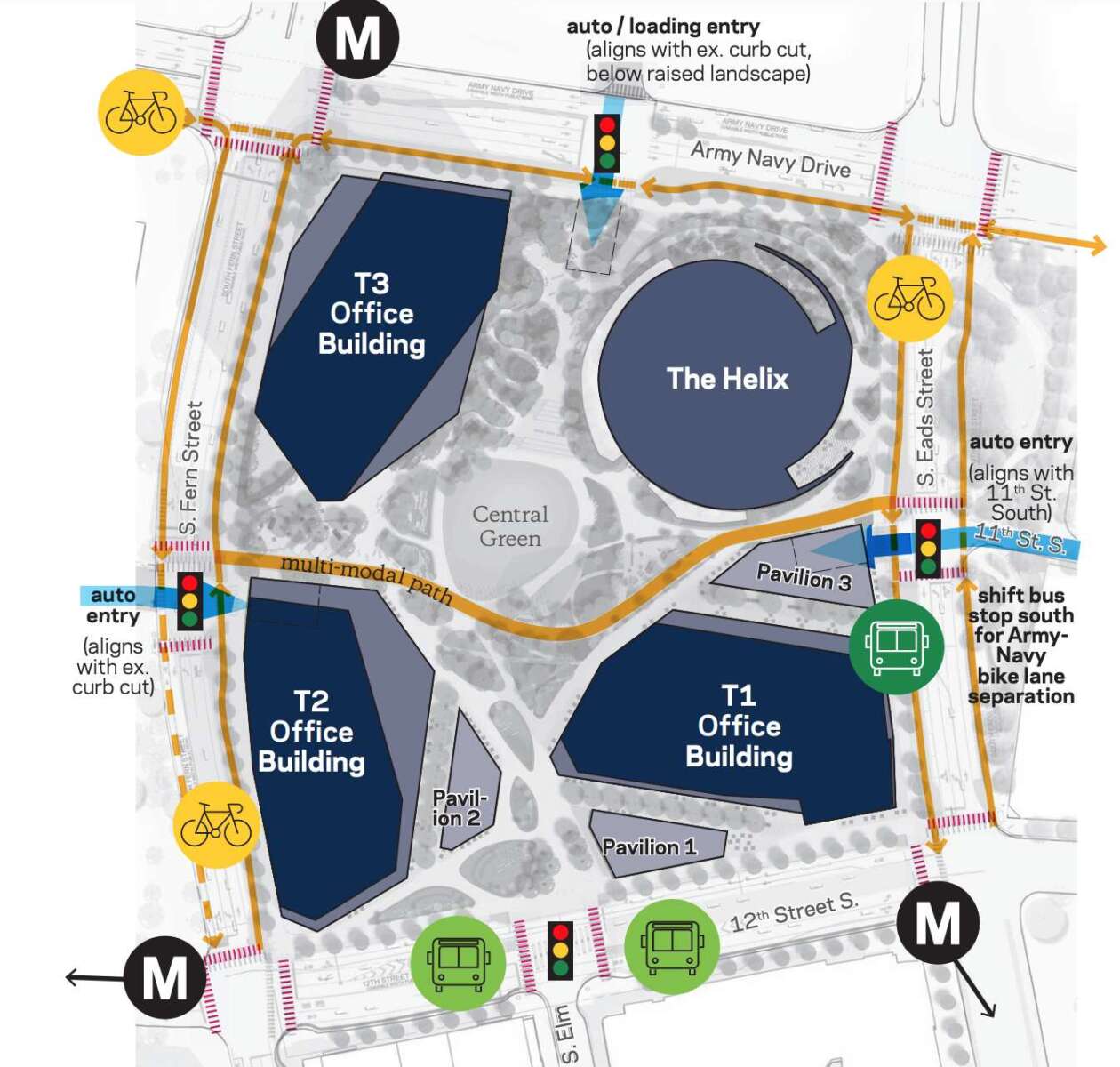
In response, Amazon changed some circulation patterns surrounding and running through the site, widened the paths running east to west to accommodate more pedestrians and cyclists and widened certain sidewalks where the heaviest pedestrian traffic is anticipated.

Transit options around PenPlace (via Arlington County)

It also added protected bike lanes along S. Eads Street and S. Fern Street to connect PenPlace to the county’s surrounding local bike transit plan.

“All of these adjustments will create more direct, wider pathways through the site and make traversing PenPlace even safer,” Chapman said. “It will also make the public Central Green and urban forest at the center of PenPlace even more accessible for everyone to enjoy.”

At least one transit advocate welcomed the change, but said a protected bike lane along 12th Street S. would further improve circulation.

https://twitter.com/CarFreeHQ2/status/1453705811230969861

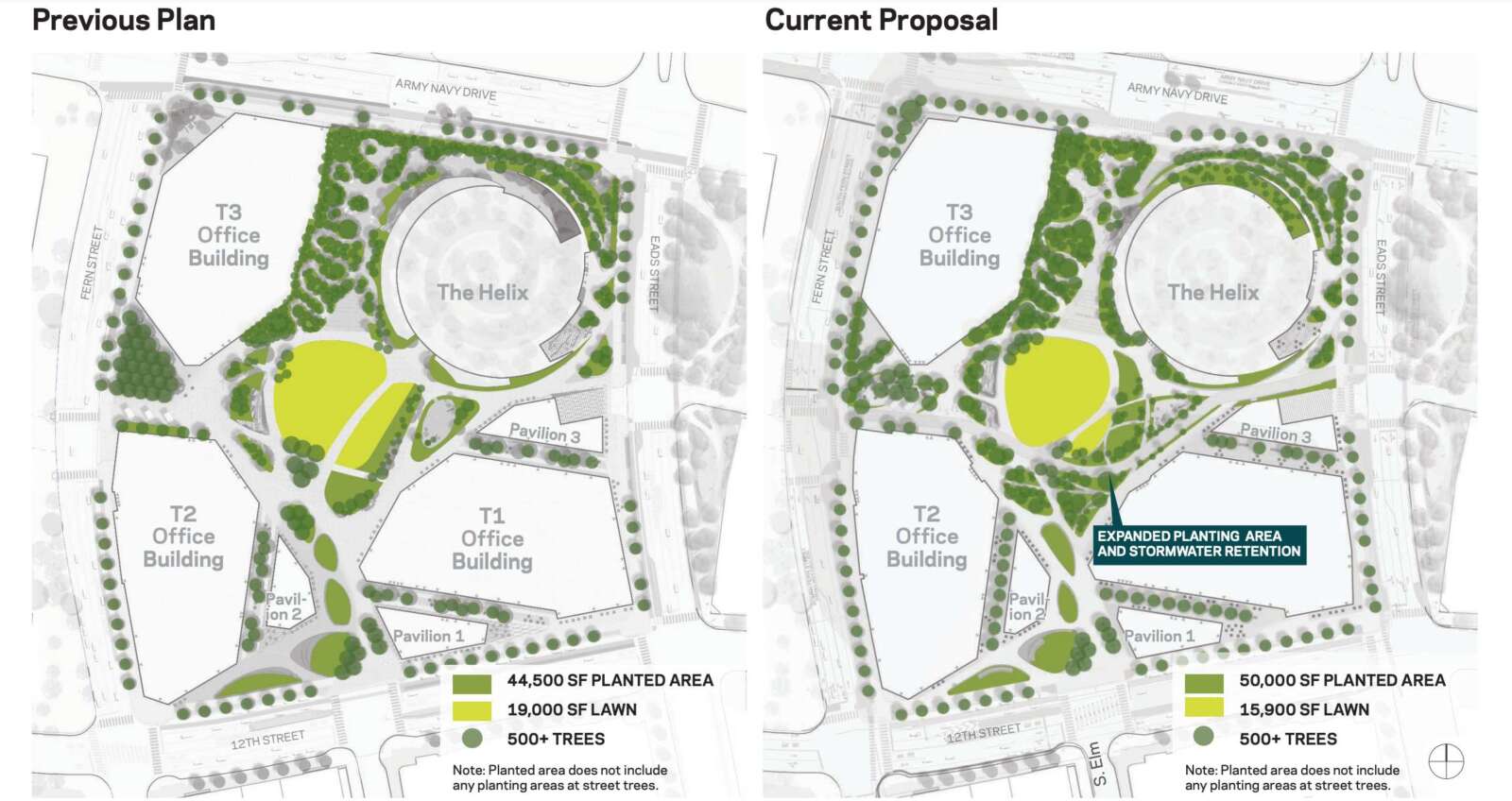
Per an Amazon blog post, residents who weighed in on the planning process told Amazon to add even more green space and native plant species to its campus. In turn, the tech and ecommerce giant expanded the planted area by 5,500 square feet and reduced the amount of impermeable surfaces, such as paving.

“We are excited to be able to deliver 2.5 acres of public open space for everyone to enjoy at PenPlace,” Chapman said.

Amazon increased the plantings within PenPlace in response to community feedback (via Arlington County)

(more…)


Fairgoers get food, drinks and treats from vendors at the county fair (staff photo)

The board of the Arlington County Fair has its sights set on moving the annual event to Long Bridge Park.

But many residents who’ve weighed in say they’d rather see it stay at the Thomas Jefferson Community Center and grounds.

This potential relocation has been under consideration since at last year, when the fair board first notified the county of its interest in the park, home to the recently finished aquatics center. Last fall, the county convened a committee to study whether Long Bridge Park or six other locations could meet the fair’s needs.

In all, committee members considered Thomas Jefferson, Long Bridge Park, Quincy Park, Virginia Highlands Park, the county’s large surface parking lot in Courthouse, Drew Elementary School and Gunston and Kenmore middle schools. The fair board, meanwhile, has only expressed interest in Long Bridge Park.

“The work of the site review committee was just exploratory,” Department of Parks and Recreation spokeswoman Susan Kalish said. “While the Fair asked to move to Long Bridge, we wanted to see what all the options were on public land.”

Arlington County Fair leaders did not respond to requests for comment about the decision to move, the location it has chosen and whether it considered other locations.

Earlier this year, Kalish said the fair’s current location or Long Bridge Park — but not inside the aquatics facility — were the most feasible options in terms of location size, parking and community impact.

Here’s how a few options stack up to the preferred alternatives, per an internal planning document shared with ARLnow.

At 20 acres, Virginia Highlands Park could accommodate all the rides, games, vendors and competitive exhibits outdoors, and it would have auxiliary parking at Fashion Centre at Pentagon City and space for storage and performers at the Aurora Hills Community Center. In addition to Long Bridge Park and Thomas Jefferson, this park was the only additional location that came recommended by DPR.

Centrally located in Virginia Square, Quincy Park has four acres of park space, is well-served by transit and backs up to — and could make use of — Washington-Liberty High School and Central Library facilities for competitive exhibits, performer changing areas and storage. Like Virginia Highlands Park, Quincy Park is easily Metro-accessible and adjacent to a major commercial corricor.

Committee members also noted that Kenmore — near the county’s western border, along Route 50 — would be a “good alternative to TJ” because of its similar size and layout.

But after walking through each site’s amenities, the committee noted the following reasons the other locations may not work.

Quincy Park “will get pushback from W-L [High School] — it will be hard to access the facilities the last couple weeks of August,” before school starts, the planning document notes.

Additionally, the fair would have to “work with Libraries to use their indoor space and parking” for the weekend, it says.

Meanwhile, members said Virginia Highlands is “difficult for emergency resource[s] to get access,” despite being adjacent to a fire station, and noted that the park itself only has 60 parking spaces, though the expansive mall parking garage is across the street.

Located near the Fairfax County border, Kenmore is less accessible, the committee noted. It would cause traffic issues on S. Carlin Springs Road and comes with security concerns, as there’s woods nearby, members said.

Having narrowed down the options to Thomas Jefferson and Long Bridge as the preferred options, Arlington County and the fair board are still reviewing feedback from the community engagement earlier this year, Kalish said.

An online feedback form generated more than 1,500 responses “that yielded a lot of interest in the [current] Thomas Jefferson Park and Community Center location,” she added.

“This information will help inform the location decision, with the final decision also considering the needs of the Arlington County Fair Board, public safety and the Fair’s impact to the community at large,” she said.

DPR should have more information after mid-November, she said.

“Once the Fair gets back to us we can dig deeper into the options for more data to support a thoughtful determination,” she said.


The Crossing Clarendon is buzzing with activity.

The mixed-use shopping and residential center formerly known as Market Common Clarendon is now home to tens of thousands of honeybees.

“We’ve been busy bees at The Crossing Clarendon!” the center said in a Facebook post. “In partnership with Alvéole, we’re so excited to announce our newest tenants… a honeybee hive.”

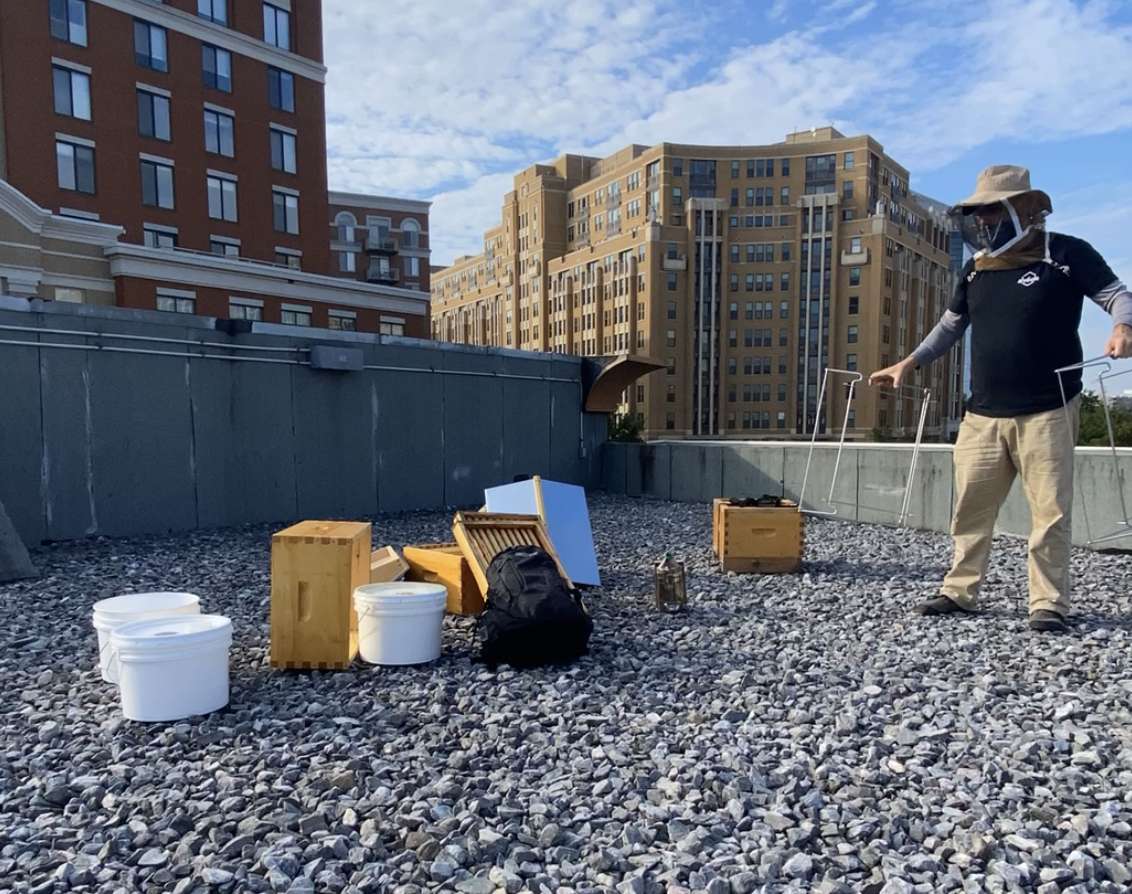
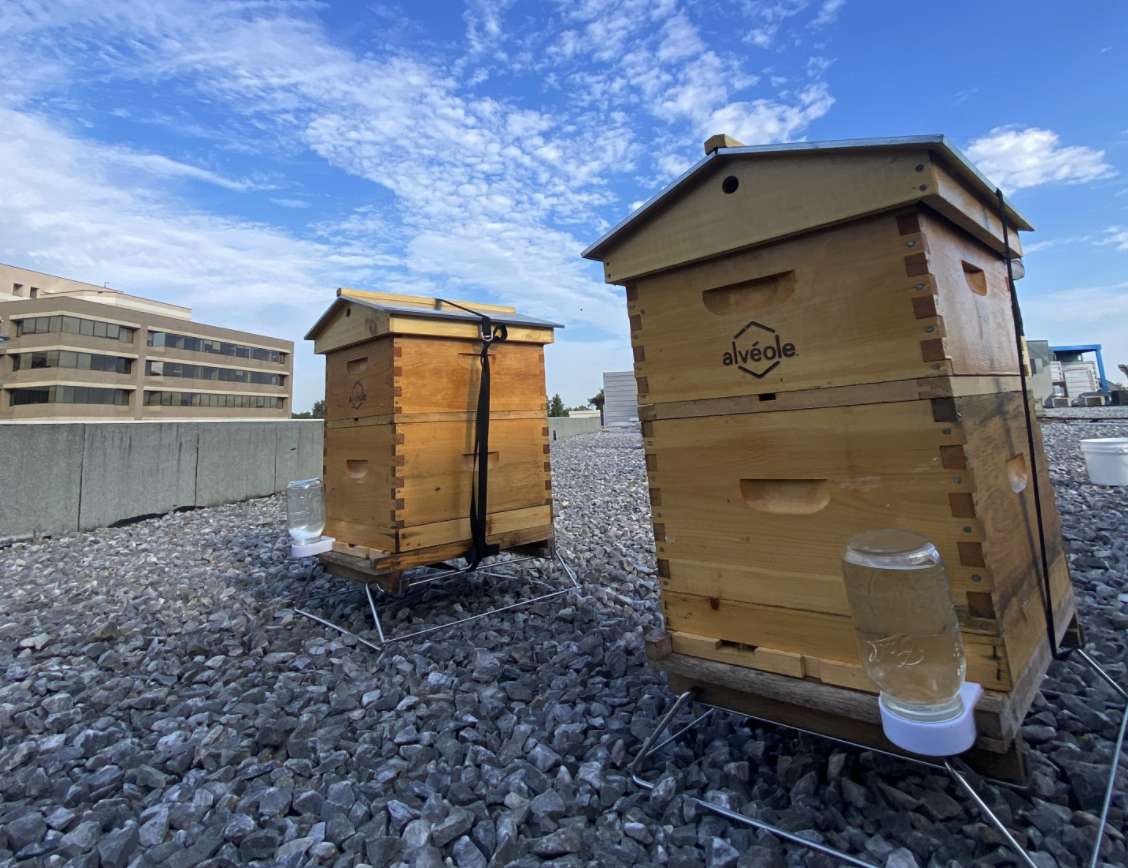
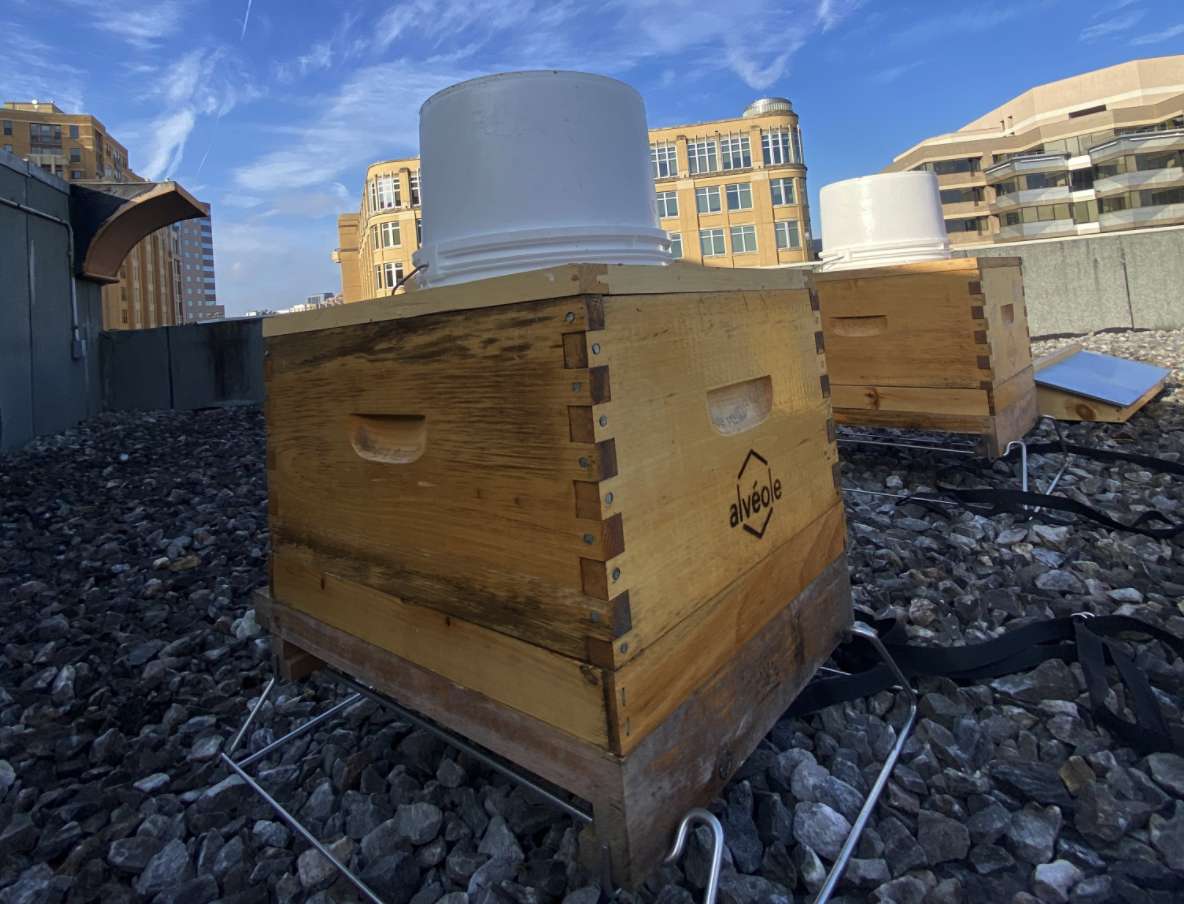
The hives are located on the rooftop of The Cheesecake Factory, and were installed by Alvéole urban beekeepers on Oct. 15.

There are two hives with a total of 24,000 bees. Alvéole has a special webpage where curious Arlingtonians can keep up with the bees.

“These vegan honeybees are helping change perspectives of our urban environment and reconnecting our community to the wonders of nature,” The Clarendon Crossing said.

Alvéole is an urban beekeeping company that helps businesses, schools and organizations install honey bee hives on their rooftops and increase engagement and sustainability. It installs hives in cities in the U.S., Canada and Europe.

Over the past 15 years honeybee colonies in the U.S. have seen large annual declines due to disease, pesticide use and habitat loss, and something called colony collapse disorder. The U.S. Dept. of Agriculture, however, said recently that the average number of honeybee colonies actually increased over the past decade, after reaching a low point in 2008.

Urban beekeeping efforts like this one in Clarendon are intended to help.

“Our goal is to make people fall in love with bees, build ecological awareness, and in time, more sustainable cities and food systems,” says the Alvéole website.


In late 2019, Arlington’s rate of vacant office space was at a six-year low, 15.5%, and poised to continue dropping.

But the pandemic reversed that trend, and today, the vacancy rate hovers around 20%.

While companies continue to weigh going in-person, county staff are working to bring down the vacancy rate. That’s a crucial task for Arlington County, as it derives its commercial property taxes from full — not vacant — office buildings.

“We know nonprofits and associations have been hit hard and that’s a big part of our office market, so that’s troubling. When it comes to tech, government contracting and professional services, there’s a lot of differences among tenants you talk to in terms of their culture: if they are back, how they feel about having people back, how many days a week they’re back,” says Marian Marquez, the director of business investment for Arlington Economic Development. “Until we get past the health crisis, it’s going to be hard to see through a lot of that.”

One new variable is 600,000 square feet of space on the sublease market, which is double the pre-pandemic level and accounts for 7% of total vacancies, she says. In addition, some federal tenants long on their way out finally had their offices go to market.

The office vacancy problem is an entrenched one and not unique to Arlington, says Marc McCauley, AED’s director of real estate.

“For the past decade… the question of ‘Do we have too much office space in the U.S.? has been the major issue,” he said. “That’s not just an Arlington issue, or a Washington, D.C. issue. Even before pandemic, tenants were using space differently, space per employee was plummeting, and almost cut in half.”

From 2016 to 2019, AED worked to drop the 21% vacancy rate by convincing high-growth companies that Arlington “wasn’t a government town,” Marquez said. Now, AED staff and county planners are working to update zoning codes and allow for a wider variety of office tenants, while making zoning processes less onerous for owners seeking to renovate their aging offices. In addition, AED is encouraging, where it can, less speculative office construction and more residential development instead.

McCauley says the Department of Community Planning, Housing and Development plans to study approved office space uses and find ways to expanded those to allow new tenants.

“We see tenants that come in and say, ‘I want to do a wet lab or a robotics engineering floor.’ Right now, zoning is an impediment to that — that would be viewed as industrial in an older code,” he said. “We want to open up offices to creative use of space… [We are] excited about letting them fill the space with newer technologies that an older, 1950s ordinance viewed as industrial.”

Marquez said there’s interest in innovation and light research and development spaces, or even using an office building as a micro-fulfillment center.

Salim Furth, a senior fellow at the Mercatus Center at George Mason University, who recently wrote that municipalities can tackle their office vacancy rates by allowing residential development, tells ARLnow that Arlington could go a step further and allow an even greater mix of uses.

“It’s very normal to have some floor for office, and ground floor is retail… but mixing and matching uses — where some floors are for a hotel, some are for a school — these are very normal things that cities should do, and we should make it work,” he said.

(more…)


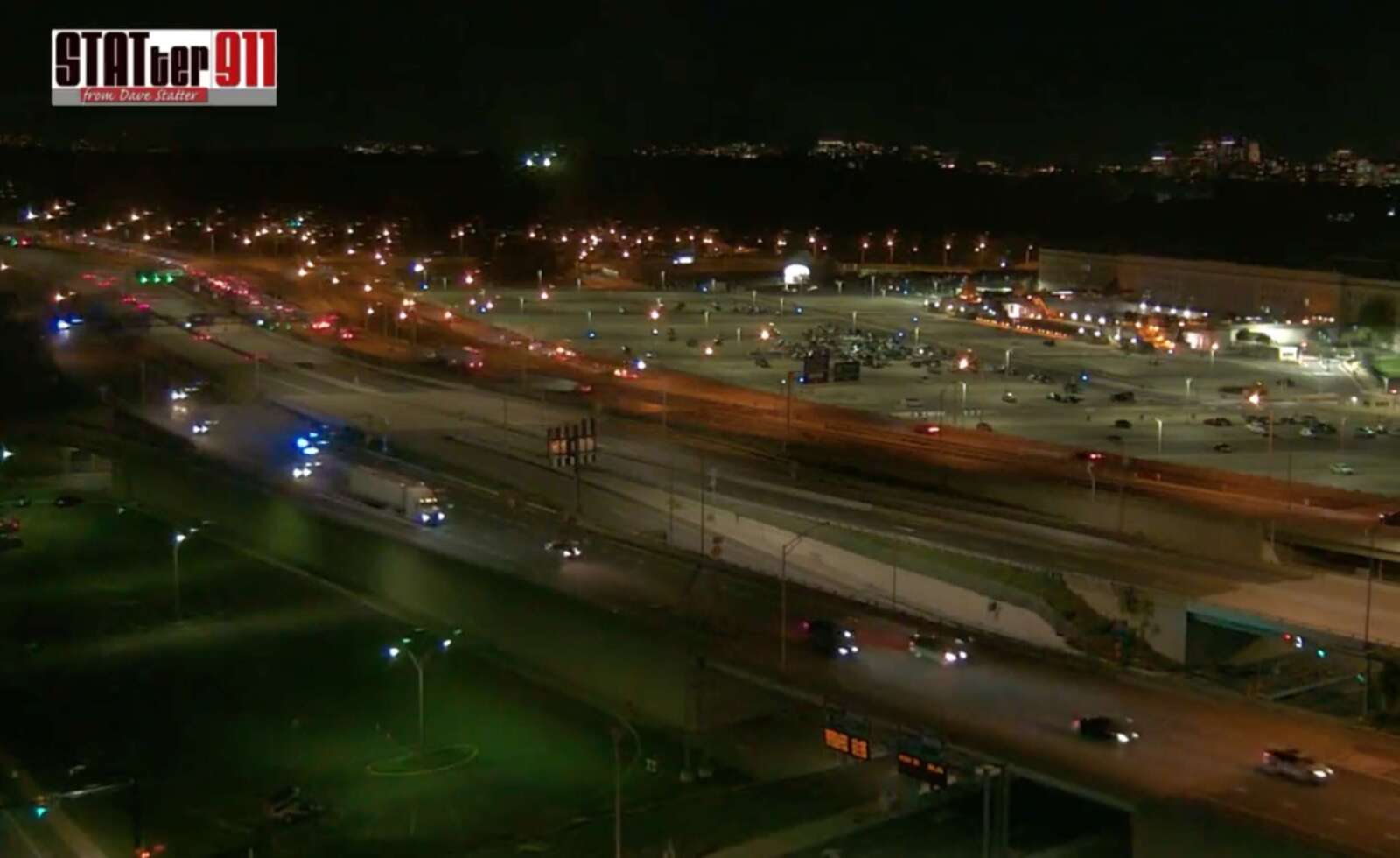
Virginia State Police troopers engage in a chase on I-395 earlier this month (via Dave Statter/Twitter)

It’s been a common occurrence lately, documented by public safety watchdog Dave Statter: Virginia State Police engage in high-speed chases on I-395 but abandon them at the D.C. line.

That’s because VSP’s loose restrictions for initiating a chase tighten when troopers reach state lines.

“Sworn employees may initiate a pursuit when a driver fails to stop after the sworn employee has given a lawful order to stop by activating emergency lights and/or siren,” according to state police chase policy. But anyone being chased for a possible misdemeanor or traffic violation, who manages to reach D.C., is in the clear.

“Unless the violator’s offense is a felony, sworn employees will discontinue pursuit at the state line,” the policy says. “If the violator is being pursued in connection with a felony offense (in addition to felony eluding police), the pursuit may continue into the District of Columbia or any adjoining state except Kentucky with the approval of a supervisor.”

Asked about which types of incidents typically lead to troopers calling things off at the 14th Street Bridge, and which lead to chases continuing into the District, VSP spokeswoman Corinne Geller said “there’s no one-size-fits-all answer that I can provide.”

“In accordance with Virginia State Police policy, each pursuit is assessed on a case-by-case basis,” she said. “The trooper and supervisor will assess the pursuit based on the variety of factors that are known and unknown at every stage of the pursuit, which will then determine if/when it is in the best of the interest of the public to terminate a pursuit.”

Sometimes, of course, police are able to stop fleeing drivers before they enter the District. Statter posted video of state police stopping a vehicle and making an arrest with guns drawn on I-395 near the Pentagon this past weekend.

If VSP chases a suspect in Arlington County, local police can and have helped nab suspects, but Arlington County Police Department policy specifies officers can only give chase when there’s a serious crime involved. While both have jurisdiction on state highways in Arlington, VSP predominantly handles enforcement there, ACPD spokeswoman Ashley Savage says.

Arlington officers can only give chase if there is probable cause that a driver or occupant has committed a violent felony or an offense involving the use or threatened use of a firearm, or has warrants on file for either reason. Additionally, ACPD officers can give chase if the pursuit could “abate a danger of a substantial likelihood of death or serious bodily injury,” the policy reads.

When they reach county lines, officers don’t have to stop, but they should consider their “level of familiarity” with the area, per the policy.

While Arlington police will maintain a lookout for a vehicle that flees from them on traffic or minor charges — searching the area without giving chase — the only other recourse in the moment is to notify state police and other local and federal law enforcement agencies.

As for joining other pursuits, the ACPD policy says “officers shall not join in a pursuit initiated by another jurisdiction that enters Arlington County unless the driver or occupant is wanted for any of the above-listed offenses.”

(more…)


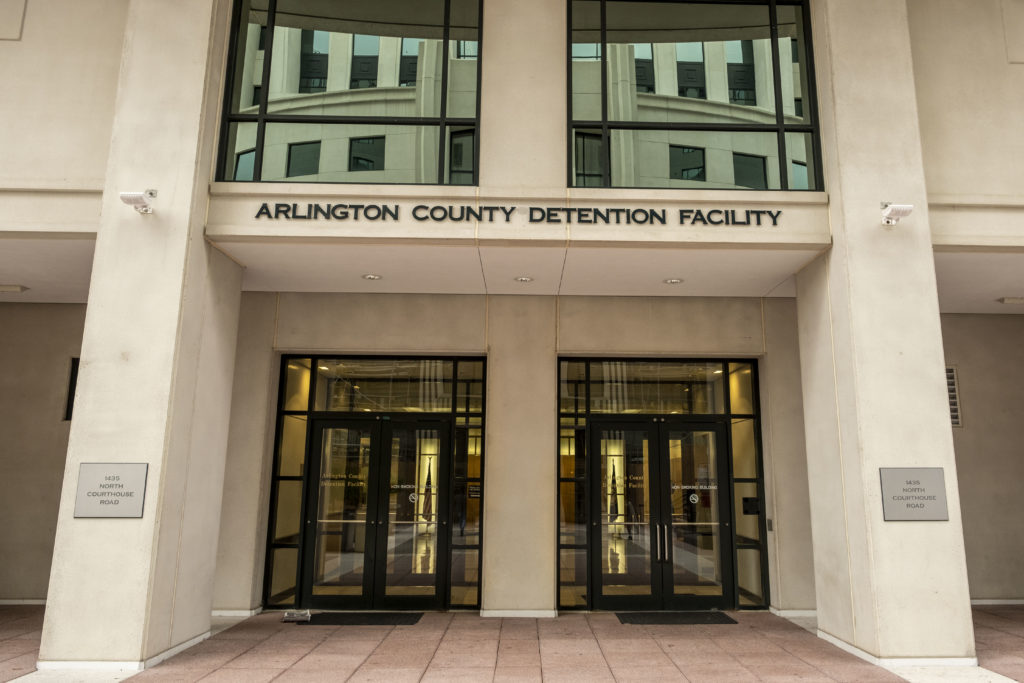
Arlington County is negotiating a contract with a new medical care provider for the county jail — its most recent move in the wake of a series of inmate deaths.

The decision, announced yesterday (Monday), comes the same month that a man, who appears to be connected to the current provider, appeared in Arlington County General District Court on charges related to the police investigation into the in-custody death of Darryl Becton last year.

Also this month, a man named Clyde Spencer became the sixth reported in-custody death in six years.

The effort to find a new medical provider will cut short Arlington’s contract with Corizon Correctional Health, which was renewed last year through 2025. Corizon will continue to provide services until the new provider is slated to take over, on Monday, Nov. 15. Because the negotiations are ongoing, the Sheriff’s Office, which runs the jail, couldn’t reveal the name of the proposed new provider.

The county says it made the decision “after careful consideration” to ensure the medical safety of inmates.

“The Arlington County Sheriff’s Office is committed to providing the highest level of medical services to those in our custody and I take each individuals care very seriously,” Sheriff Beth Arthur said in a statement. “How we care for those remanded to our custody is a priority. We are committed to having a vendor that provides the level of medical service that reflects the high expectations of not only myself, but the Arlington community.”

Corizon was not immediately available to respond to a request for comment.

Corizon has been sued multiple times across the nation for inmate deaths allegedly connected to inadequate care. In Arlington, it appears that local officials are investigating whether the way Becton was cared for in jail played a role in his death. The state medical examiner’s office ruled his cause of death to be hypertensive cardiovascular disease — caused by sustained high blood pressure — complicated by opiate withdrawal.

Nearly one year after Becton’s death, the Commonwealth’s Attorney issued an arrest warrant for a man who was charged with falsifying a patient record, a misdemeanor.

Although the office couldn’t add further details about the man at the time, a D.C. resident by the same name lists his occupation as a licensed practical nurse and his employer as Corizon Health, according to a LinkedIn profile.

And if the man who was charged is indeed employed by Corizon, his case is the second in which a Corizon correctional nurse has been charged with a crime involving an inmate in Arlington.

Another nurse was charged in 2014 with misdemeanor sexual battery and found guilty in Arlington General District Court. In an appeal to the Circuit Court, the inmate and the nurse reached a deal that allowed the nurse to avoid a jail time, according to Maj. Susie Doyel, the then-spokeswoman for the Sheriff’s Office.

The Arlington branch of the NAACP, which called for an independent investigation into Becton’s death last year, issued a statement after the news of the new medical provider was released.

“Although the Sheriff’s Office is seeking a new medical contractor, the issue remains that there have been six in-custody deaths in six years, as reported by the Arlington County Sheriff’s Office,” President Julius “J.D.” Spain, Sr. said. “The Arlington Branch NAACP’s position remains firm in seeking justice for those who have died while in the custody of the Arlington County Sheriff’s Office.”

“Ultimately, the Arlington County Sheriff, the Command Staff, and Sheriff’s Office personnel are responsible for the health, care, and safety of the individuals in their custody,” Spain’s statement continued. “The Arlington Branch NAACP will continue to seek justice to find all who are responsible, complicit, and or negligent in the deaths of those in-custody and hold them accountable.”


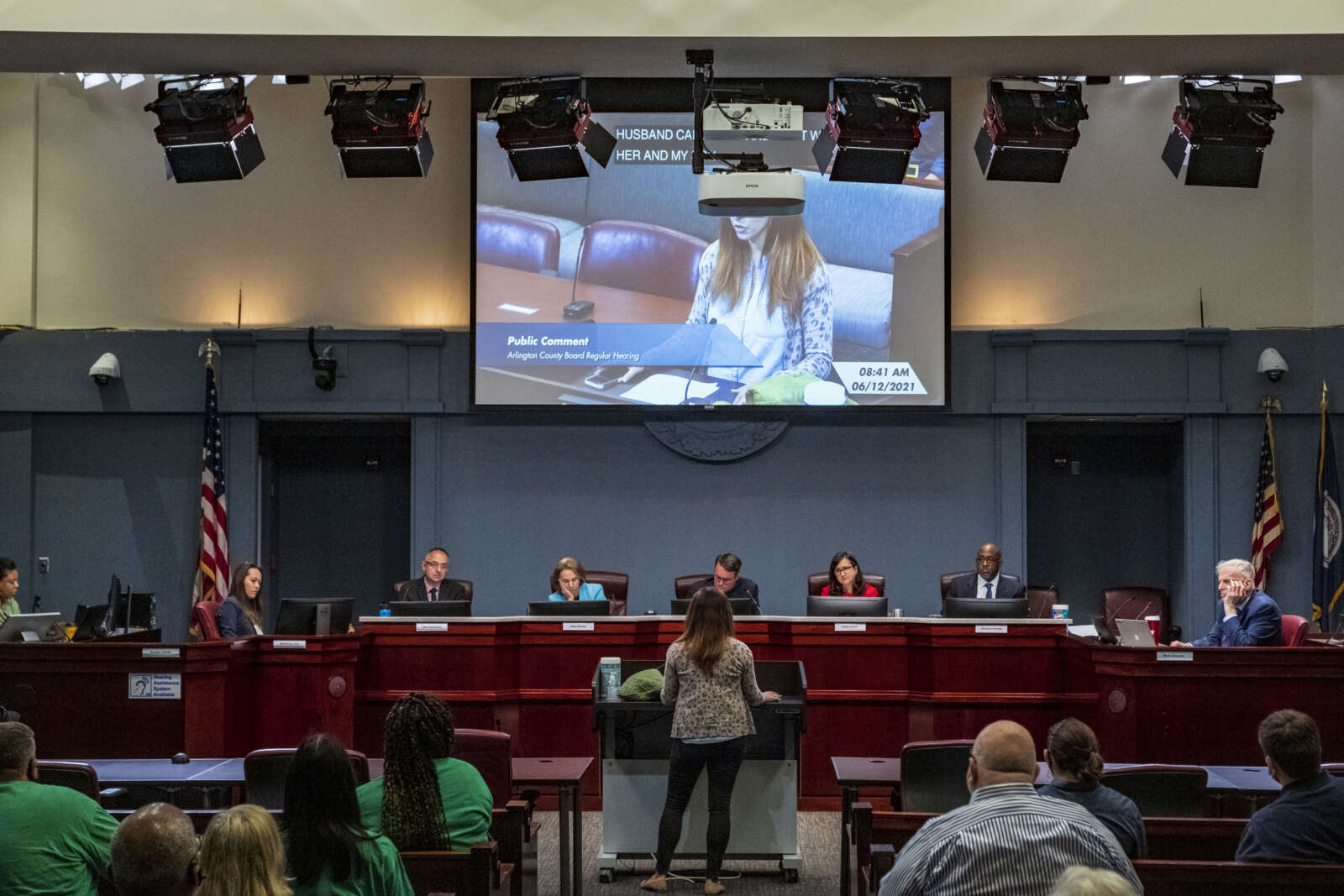
Arlington County could use federal American Rescue Plan Act funding to take a swing at making the “Arlington Way” work for more residents.

From what a development project should look like to where protected bike lanes could go, Arlington often invites residents to have a say in policy-making, a local community engagement philosophy known as the “Arlington Way.”

Although it’s a point of pride for the county, officials and staff have acknowledged that these pathways privilege those with the time, resources and connections to invest in discussions about projects, studies and policies — typically older, more affluent residents.

Left out of important county conversations, then, is Arlington’s growing population of renters, parents of young kids, people who work non-traditional hours, people without access to reliable and affordable transportation, and those who are not fluent English speakers.

This is not just a topic Arlington is grappling with. Over in Richmond, the city gave out small stipends to people who participated in updating its citywide master plan. And nationally, compensation has emerged as a “best practice” to “ensure lived experience and community expertise are fairly compensated and publicly recognized,” according to the Urban Institute.

So now, the county is proposing to allocate $50,000 during this fiscal year for a pilot program exploring different ways to make it easier for underrepresented community members to participate in engagement processes through compensation. It would apply to one-time meetings for issues as they arise as well as the longer-term time commitment of an ongoing advisory commission.

“Improving engagement with, and representation in civic structures by, historically underserved communities is a key priority nationally and for Arlington County,” according to a county ARPA spending plan. “Recent Dialogues on Race and Equity surfaced community perspectives that Arlington’s structures for decisions and public input are narrow, advantage dominant perspectives and do not offer access or representation for communities of color to County government leadership.”

Compensation could look like gift cards, childcare and meals, or waived transportation costs. As part of the pilot, the county will collect data on whether these practices increase the diversity of those who participate in government processes.

Championing this cause is Board Vice-Chair Katie Cristol, who told ARLnow earlier this month that there would soon be news about how the county aims to tackle the “Arlington Way.”

“From my perspective, this $50k in ARPA funding is important because it will help catalyze complicated, government-wide conversations about how to reduce barriers for underrepresented Arlingtonians to participate in public processes,” she said. “One of our most challenging issues is the question of how to value time spent, and address obstacles to participation, in our standing advisory bodies.”

She commended the county’s Communications and Public Engagement team for doing “some very exciting work engaging residents in more ad-hoc opportunities,” such as when the county went out to the Lubber Run Community Center to ask kids to sketch out what they’d like to see from a recreation facility.

“But we also do still derive a lot of value from groups, like Commissions, that advise the County over time and can serve as ‘laboratories’ for new ideas; and it’s clearly a lot harder to engage in that kind of ongoing commitment if childcare, transportation, opportunity costs of shift work, etc. are obstacles for you,” she said.

Previously, she said, this has been tested out in Arlington with private funding. When Arlington Partnership for Affordable Housing hosted planning meetings about the future of Columbia Pike, it organized multi-lingual sessions with dinner and childcare provided with funding from an outside grant, she said.

Eventually, the county aims to turn the results of the pilot into “common policies that can be implemented across County departments and projects,” according to the funding plan.

When asked who will oversee the pilot program and when it could be rolled out, as well as who would monitor the money to ensure it gets to the right people and so that it isn’t used to engineer who participates, a county spokeswoman said answers will come when the pilot program kicks off.

“That will all be developed in an implementation plan if/when approved by the county board,” she said.

County Board members are expected to vote on the allocation plan when they meet in November.


View More Stories