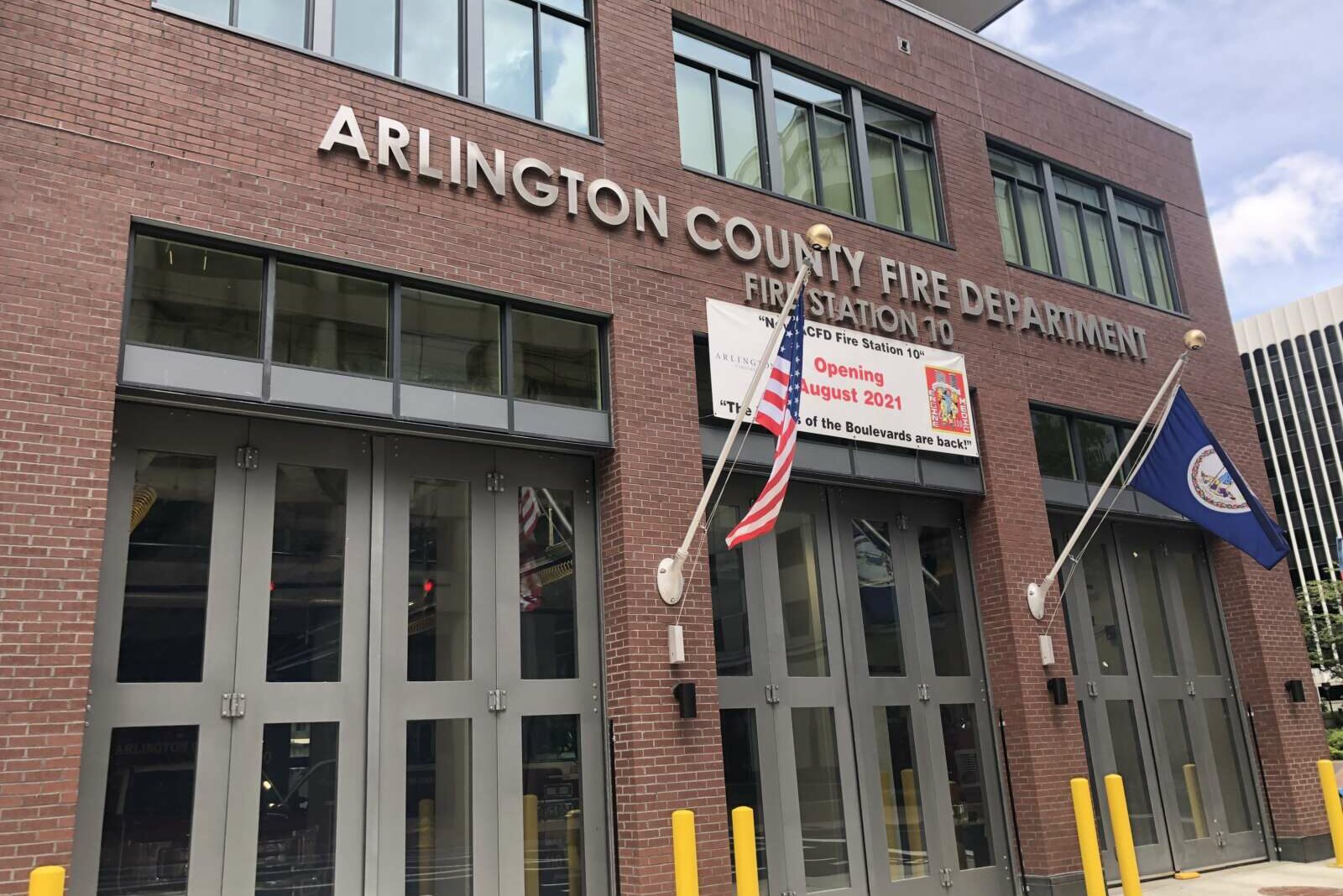
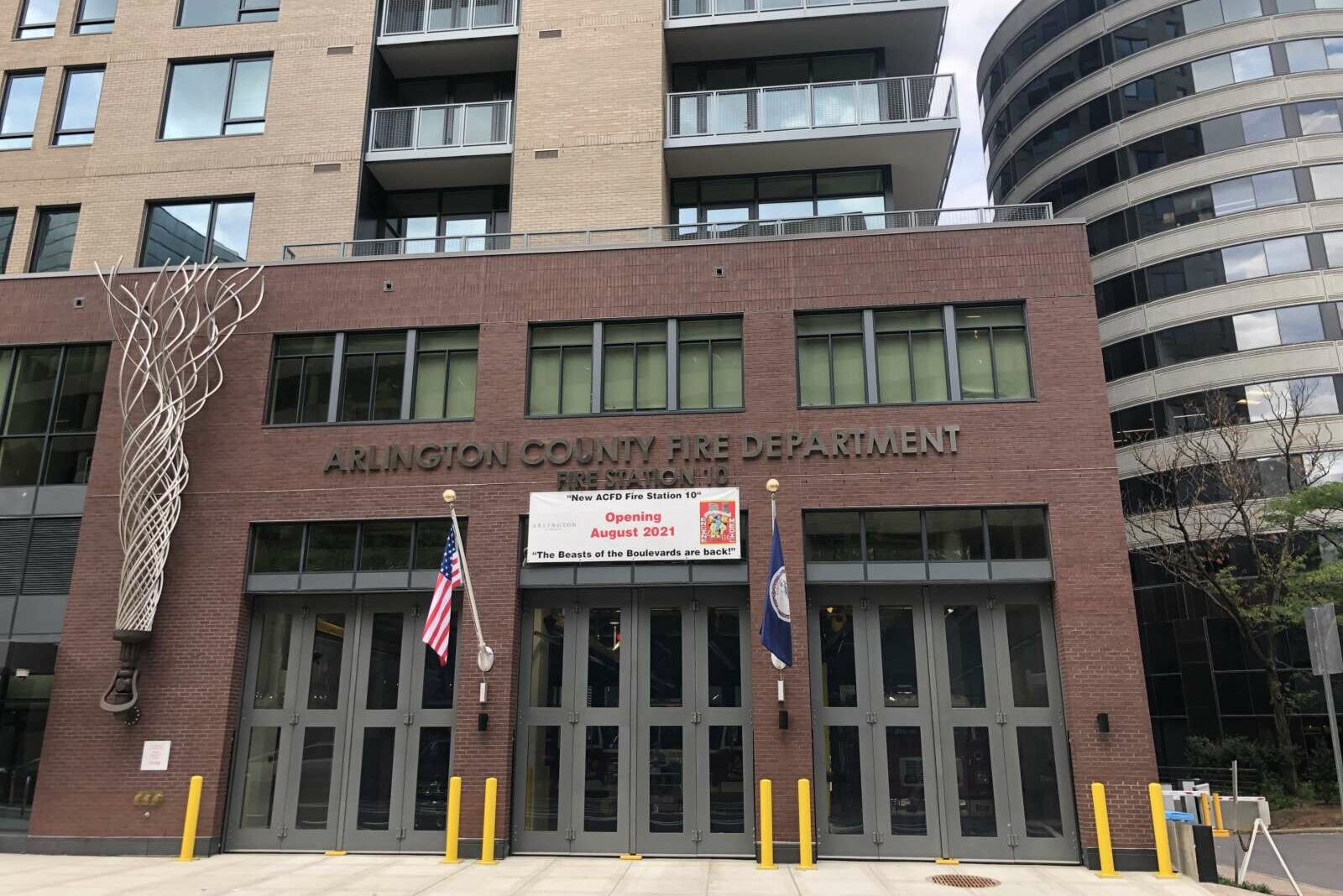
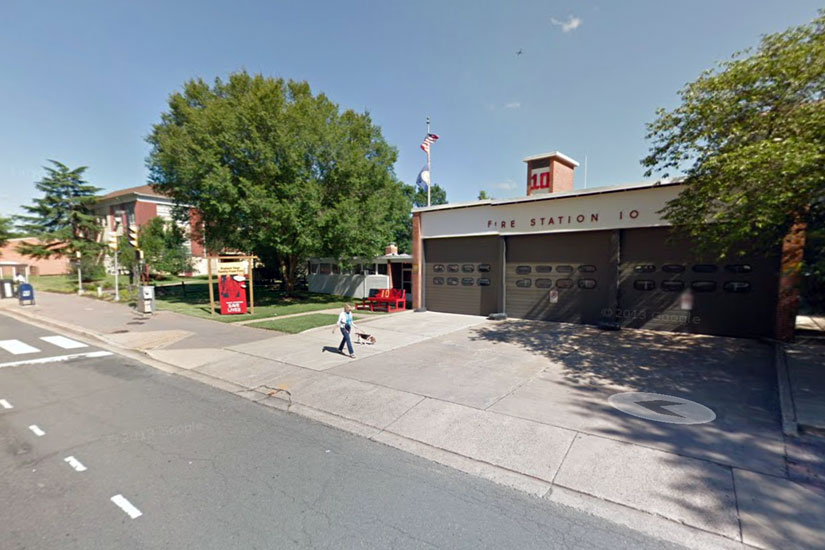
Arlington County firefighters have moved into their new, permanent Fire Station 10 in Rosslyn last Monday.

The new station, a brick building with retractable glass doors, sits at the base of one of the high-rise building in The Highlands development, two apartment towers and one condo tower on the 1500 block of Wilson Blvd.

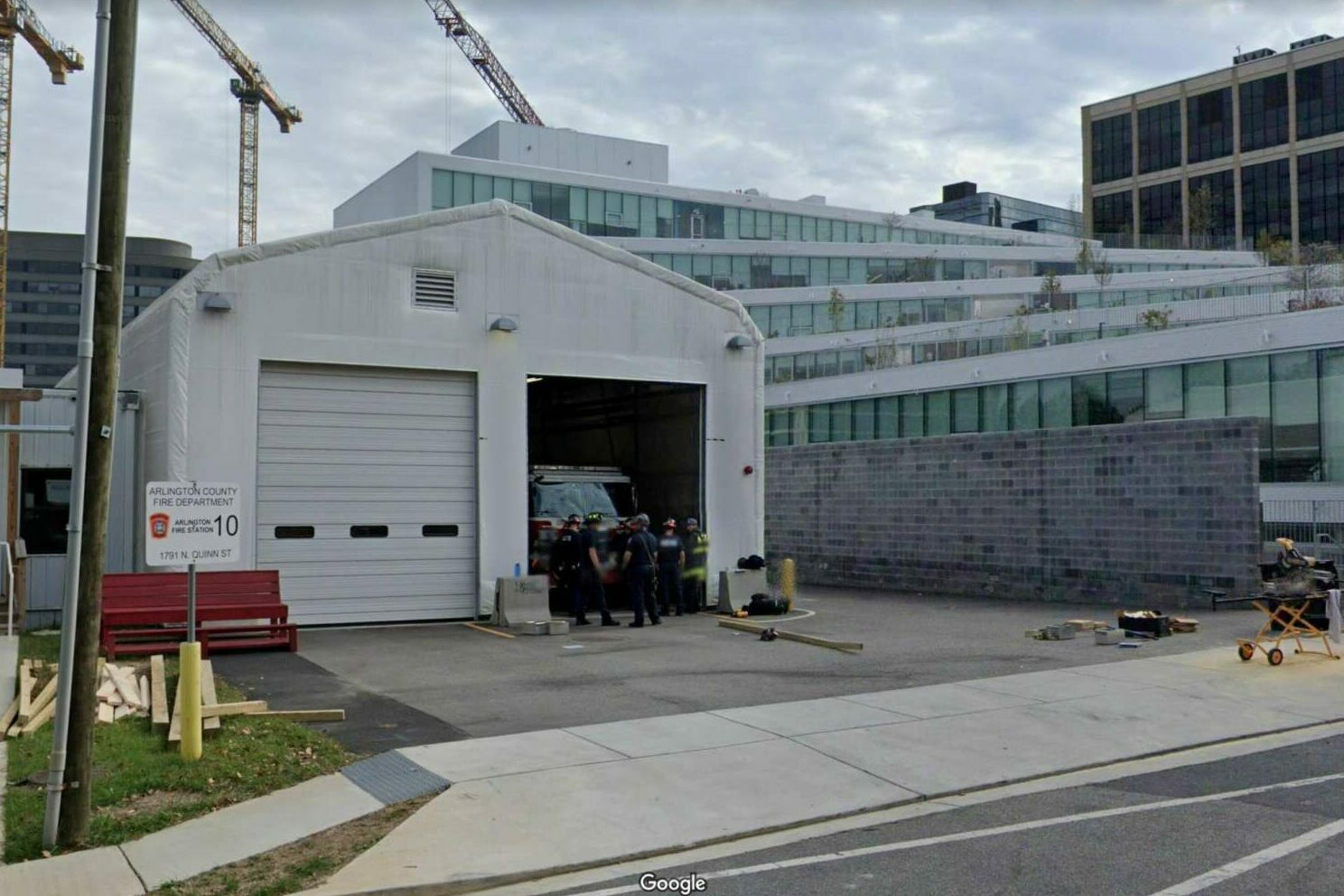
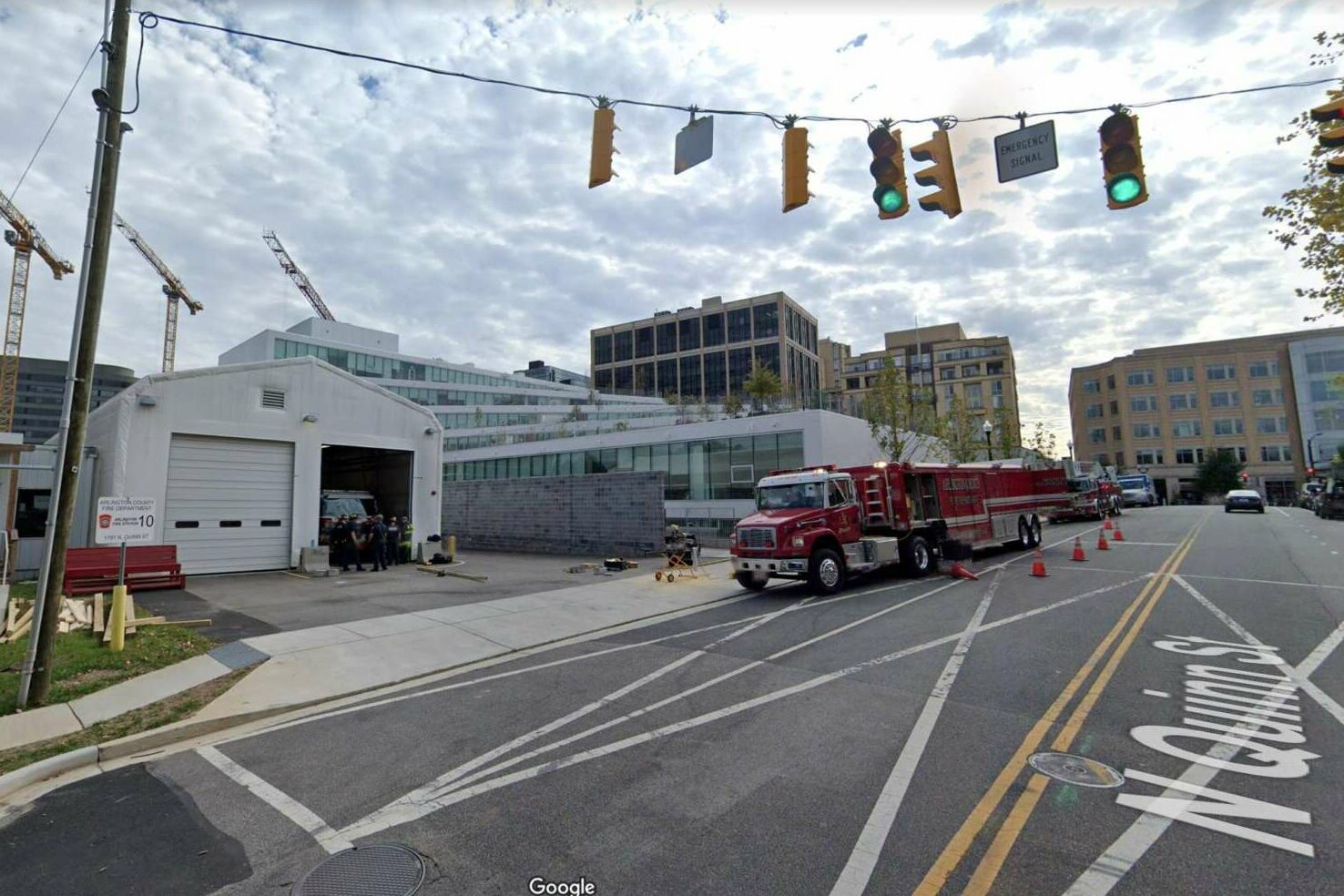
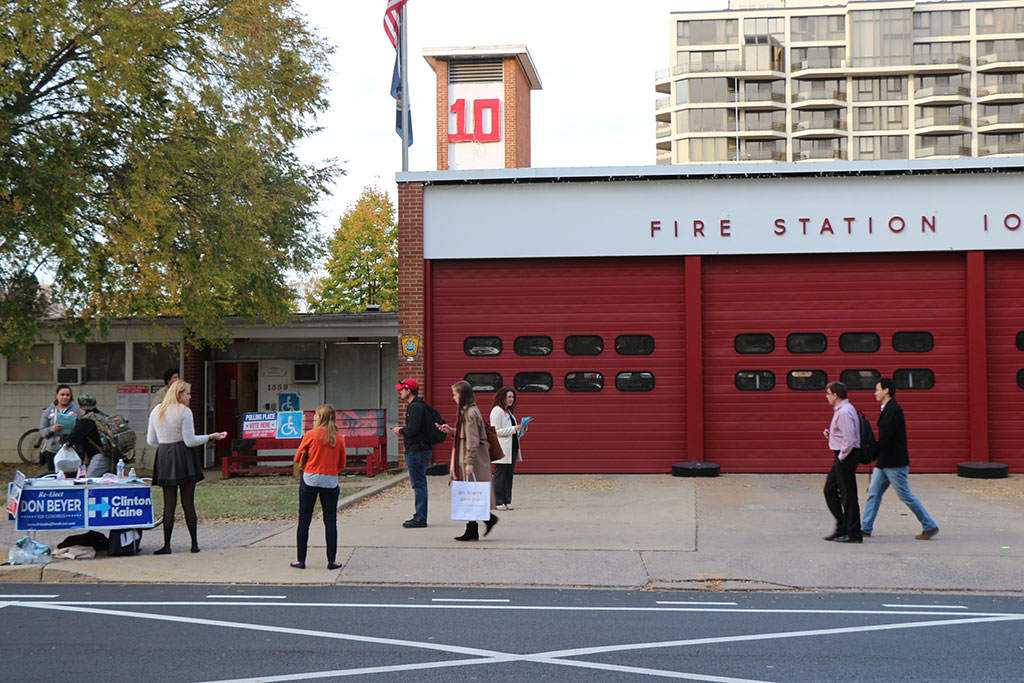
Nearly five years ago, the County Board voted to relocate the firefighters from an aging single-story station along Wilson Blvd — which was demolished to make way for The Highlands — to a temporary station at 1791 N. Quinn Street while the new station was built. Members chose to locate the station next to the construction site for The Heights, now home to the H-B Woodlawn Secondary Program and the Shriver Program, which opened in 2019.

“We cannot say thank you enough for all who have designed, funded, and built the station,” said Fire Chief David Povlitz.

The pandemic will not allow for station tours, but ACFD looks forward to sharing the features of the fire station through various media content through social media sites, said Lt. Nathaniel Hiner, a spokesman for the department.

“This is a world class facility that will allow our members to serve the community for many generations to come, while providing our firefighters a safe and comfortable work location,” he said. “The station incorporates many modern design features that improve responder turnout, safety, health, and wellness along with the ability for the department to adapt to changing needs of the community for years to come.”

The station will house a fire engine, paramedic ambulance, and technical rescue support unit, Hiner said. There are six personnel consisting of an officer, three firefighters and two medics assigned on each of three shifts.

Construction on the three towers of The Highlands, which started in October 2018, is wrapping up. The fire station appears to have finished earlier than developer Penzance anticipated. A spokeswoman previously told ARLnow the station would be ready in the fall, along with a new apartment tower and condo tower.

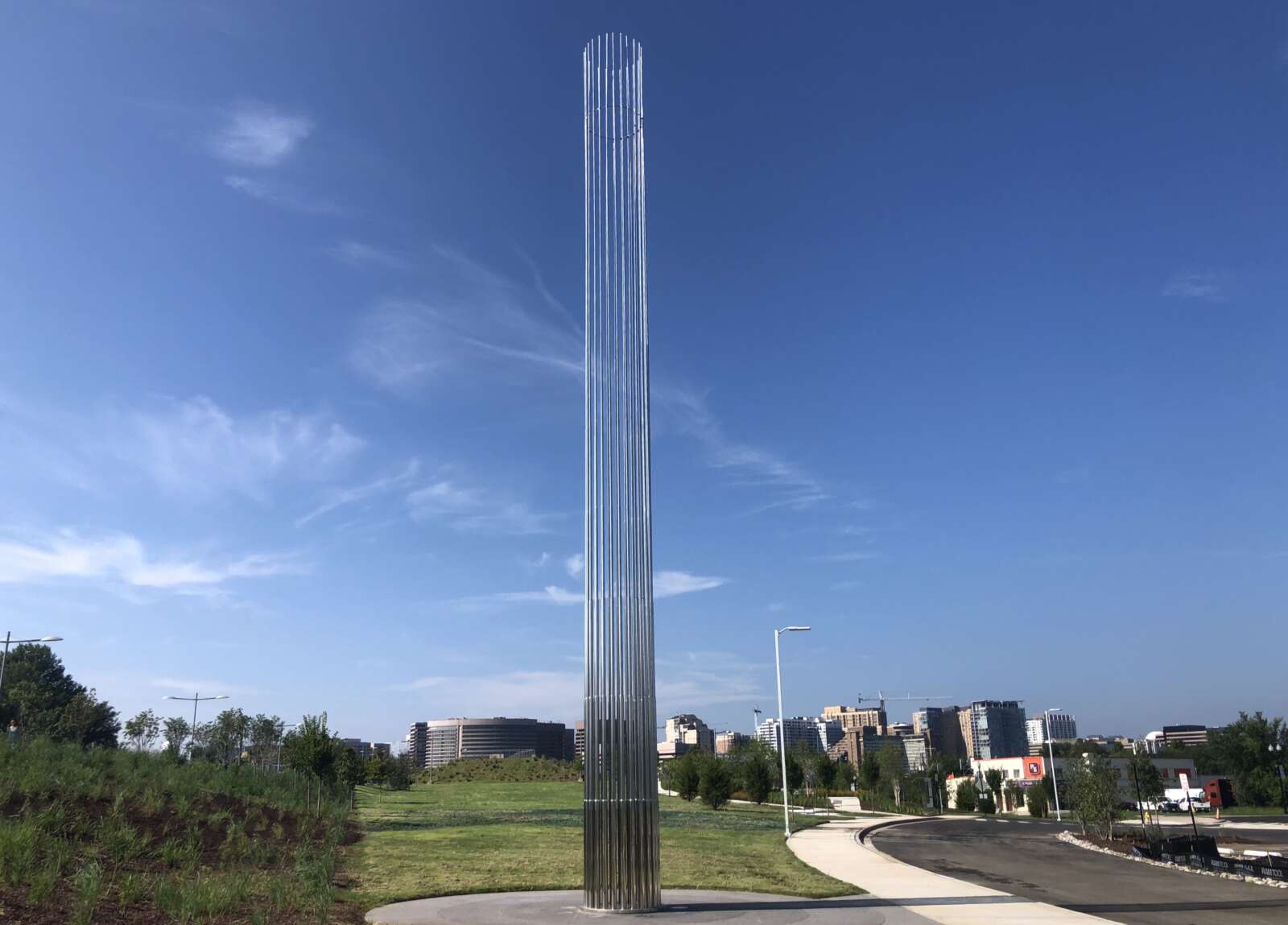
Passersby can see a 35-foot tall sculpture of a bronze nozzle with twisting spirals of stainless steel, representing water. At night, light illuminates the stainless spirals. The art installation, a tribute to firefighters, marks the first time public art has adorned a fire station.

Baltimore artists David and Eli Hess were commissioned for the art, which was funded by Penzance as a part of the development process.

Fire Station 10 is part of the 2015 Western Rosslyn Area Planning Study, which created a plan for developing the neighborhood. Other parts of the study included The Heights school building, the new Rosslyn Highlands Park and the recently completed Queens Court Residences affordable housing development (1801 N. Quinn Street), which features a new playground on-site.
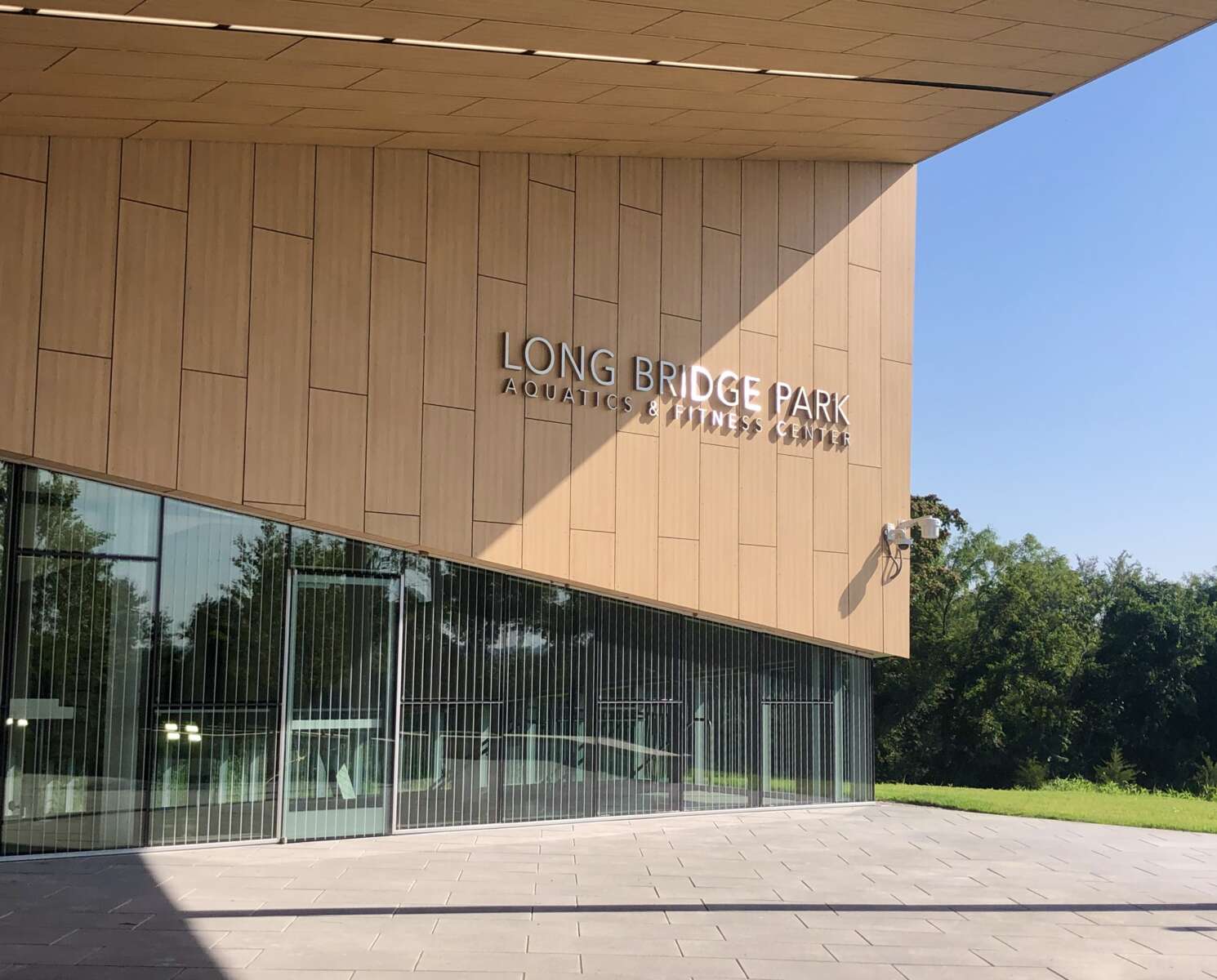

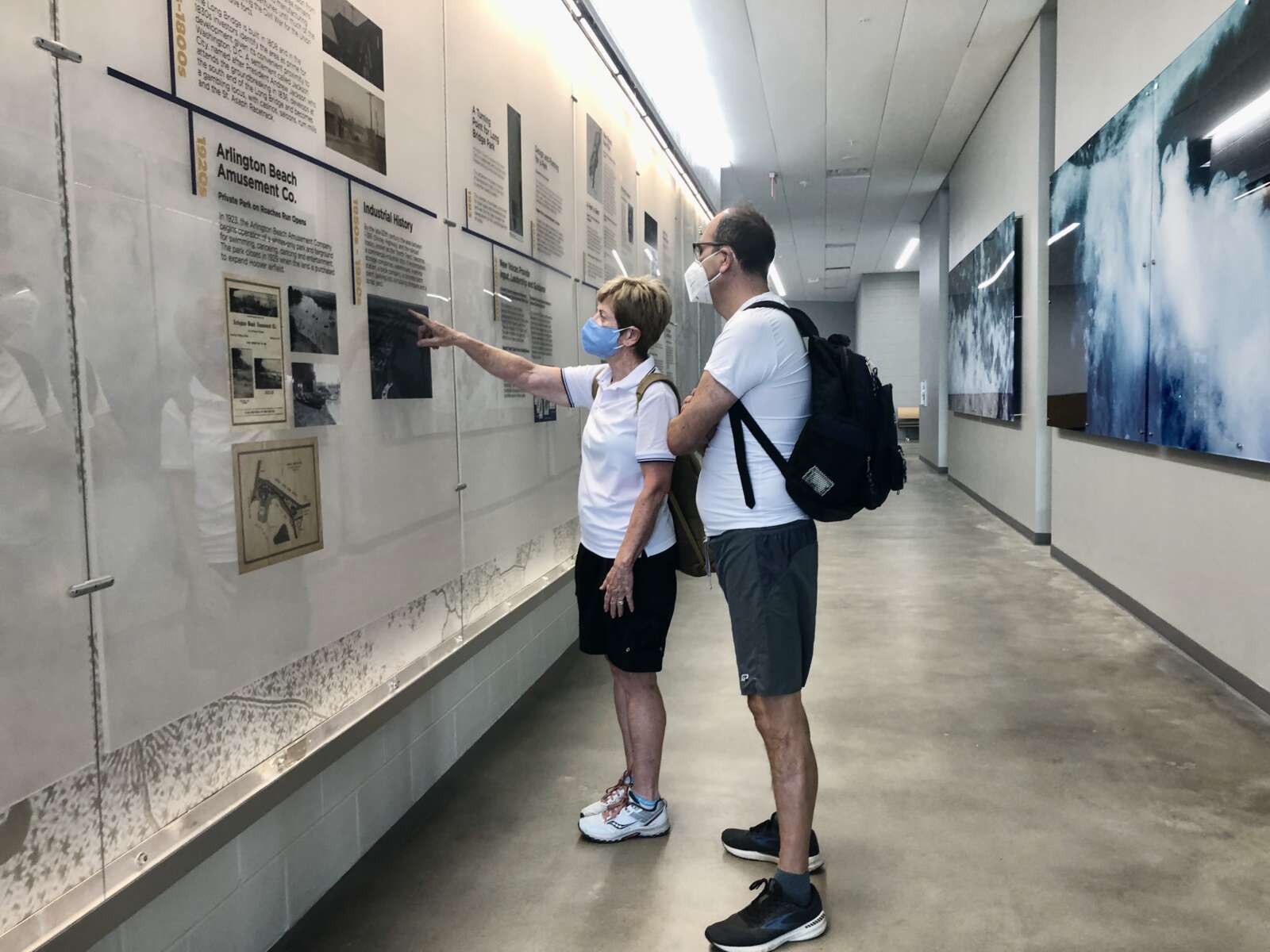
Fitness buffs, lap swimmers, curious residents and families with kids could be seen trickling into the Long Bridge Aquatics & Fitness Center this morning (Monday), on the opening day of the new facility.

A 12-year-old girl from Dorothy Hamm Middle School was the first to jump into the water, according to the Department of Parks and Recreation spokeswoman Susan Kalish.

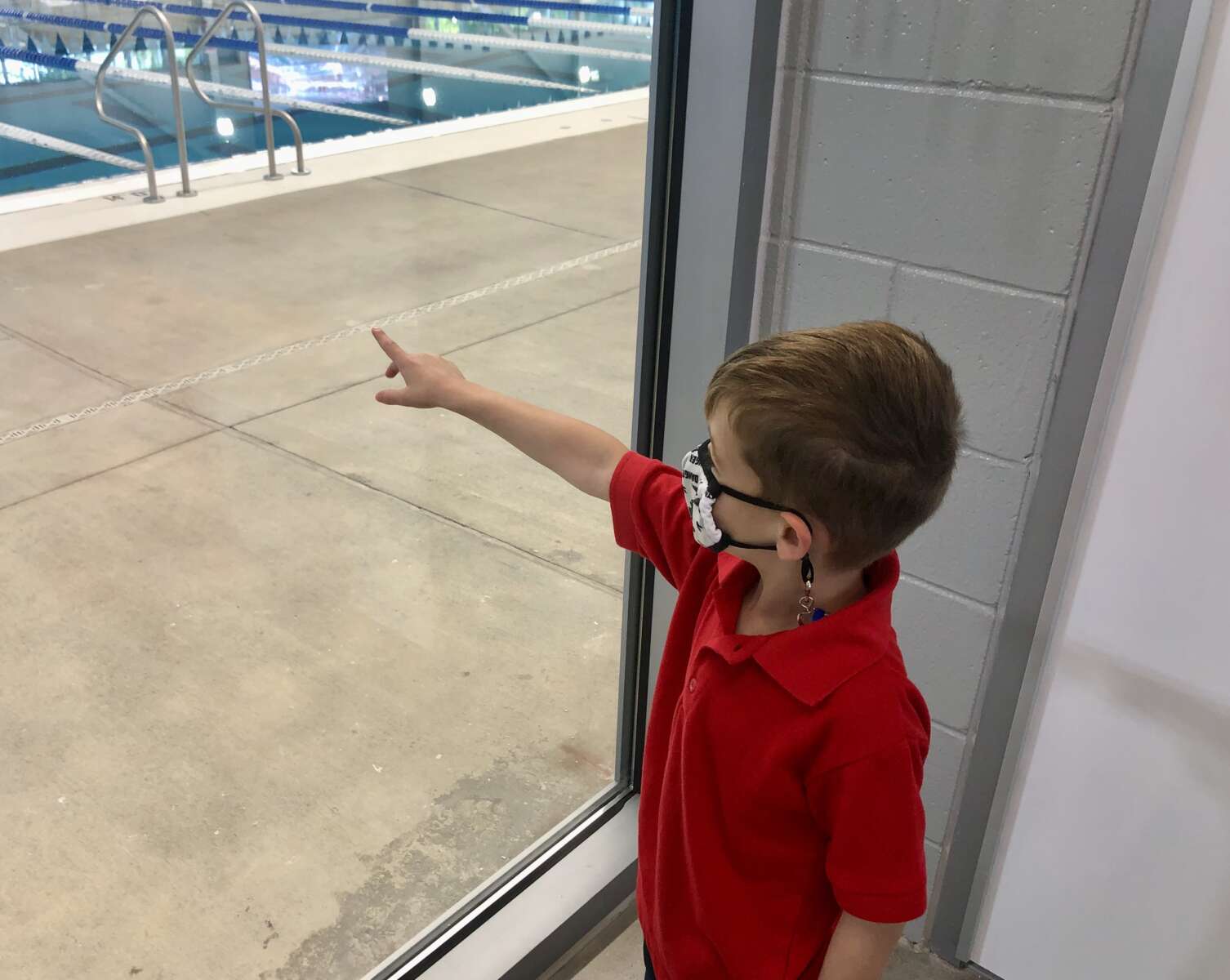
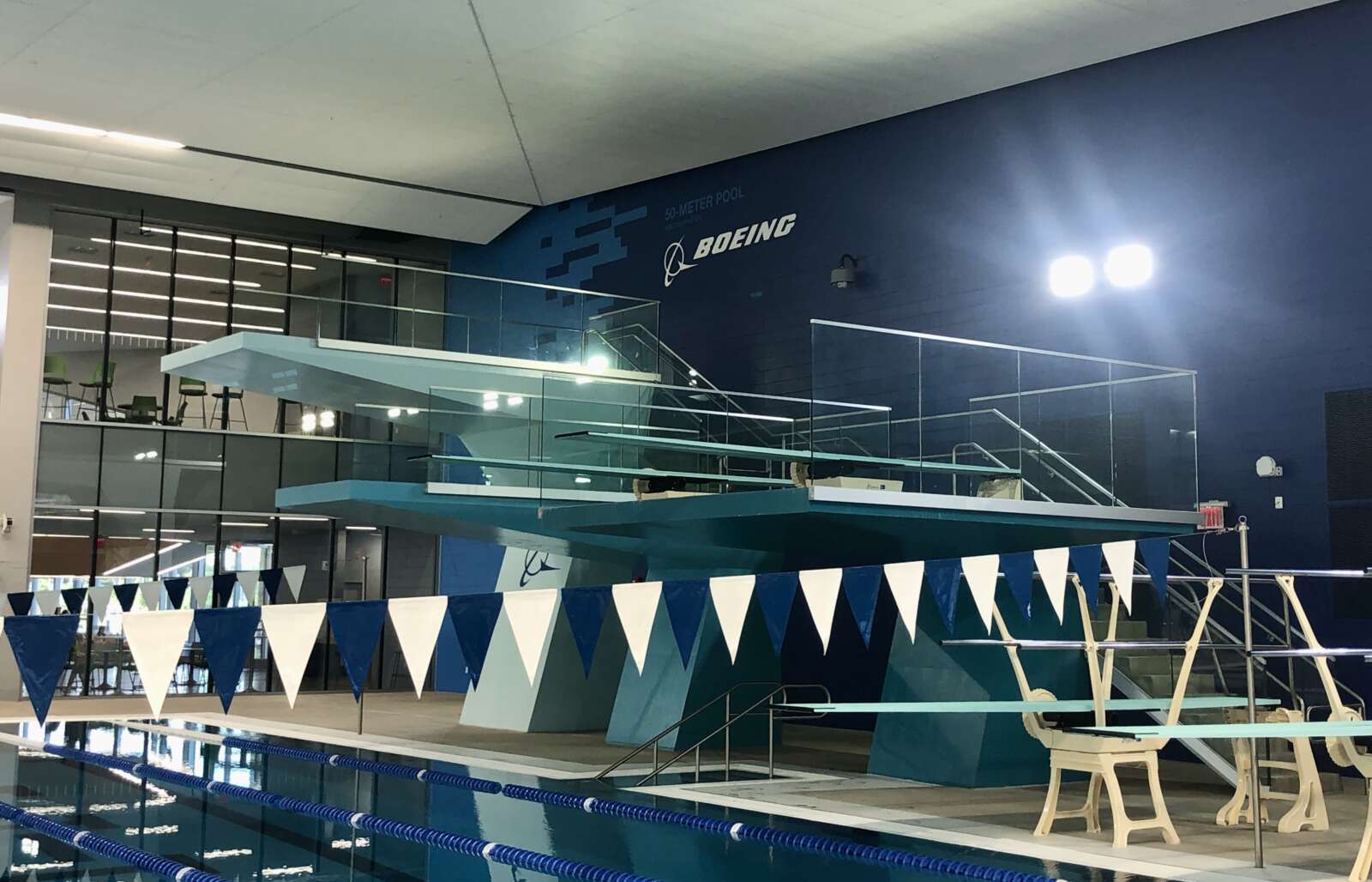
Later, when an ARLnow reporter visited the facility, a five-year-old boy could be heard wondering how tall the diving boards were, while a handful of adults worked out upstairs in an 8,000-square-foot fitness center. More families showed up later in the morning.

The county put $2 million in donations from Boeing toward opening the center at 475 Long Bridge Drive this summer. At one point, a July opening seemed possible, but delays pushed the date back to August.

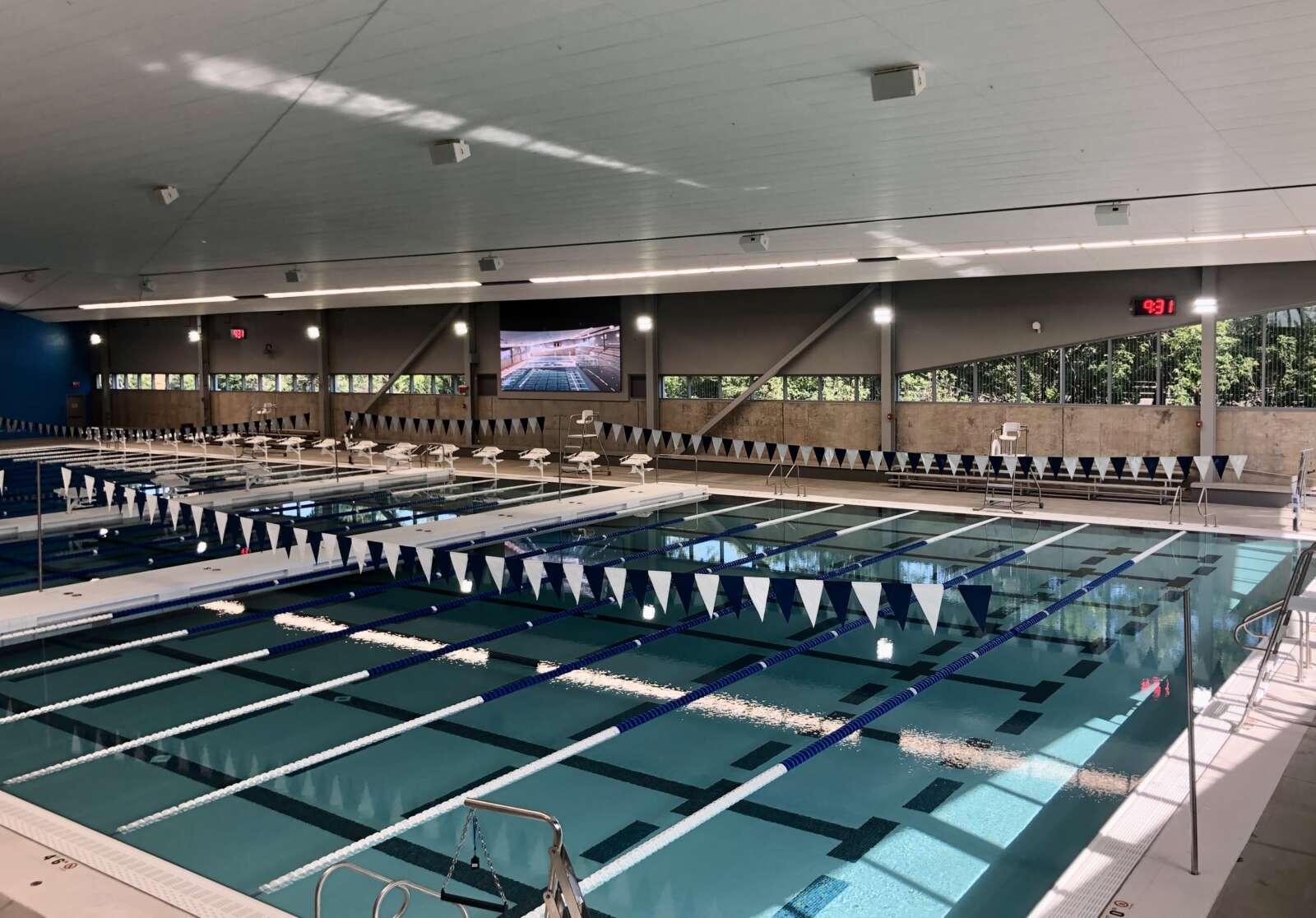
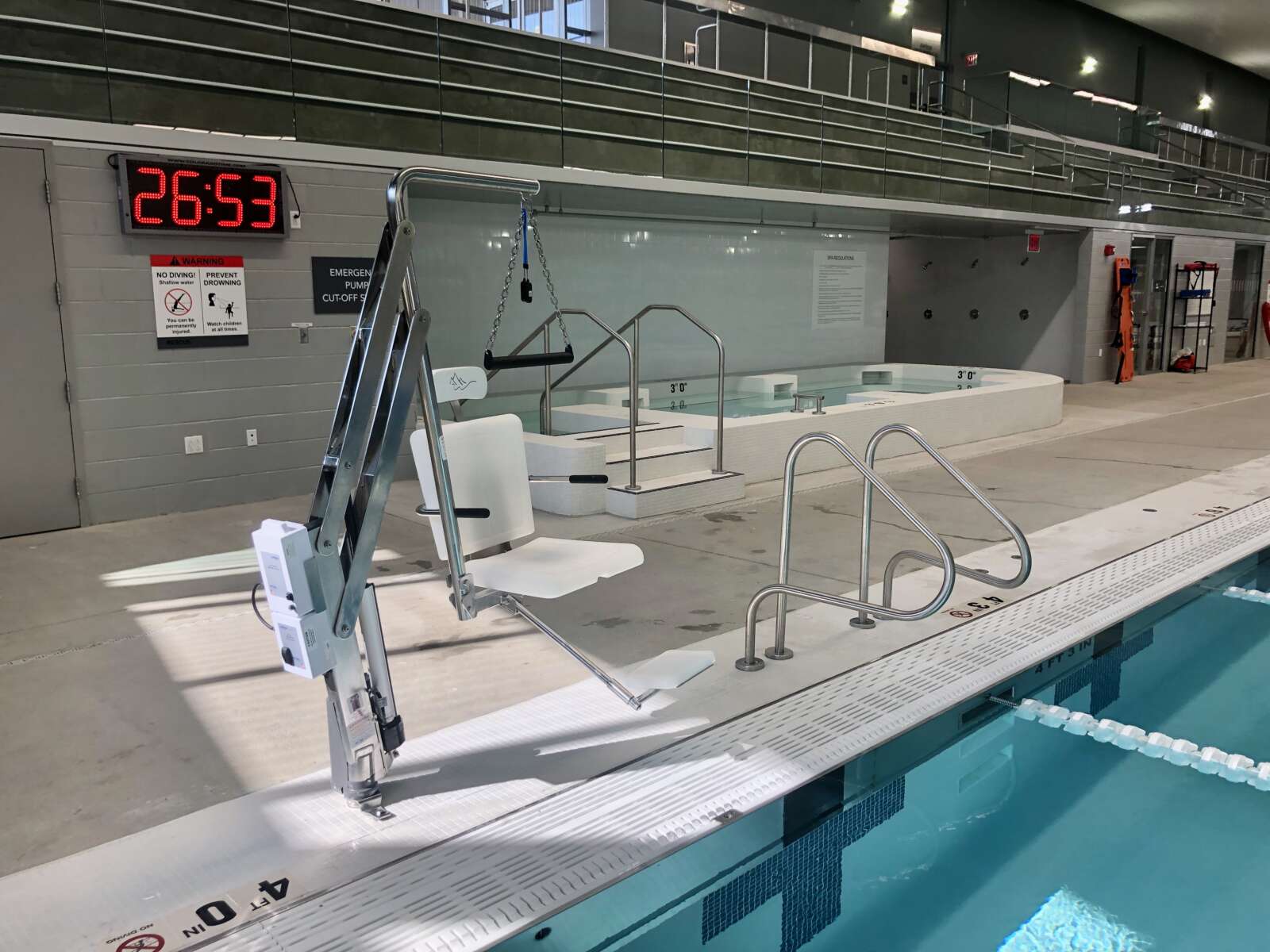
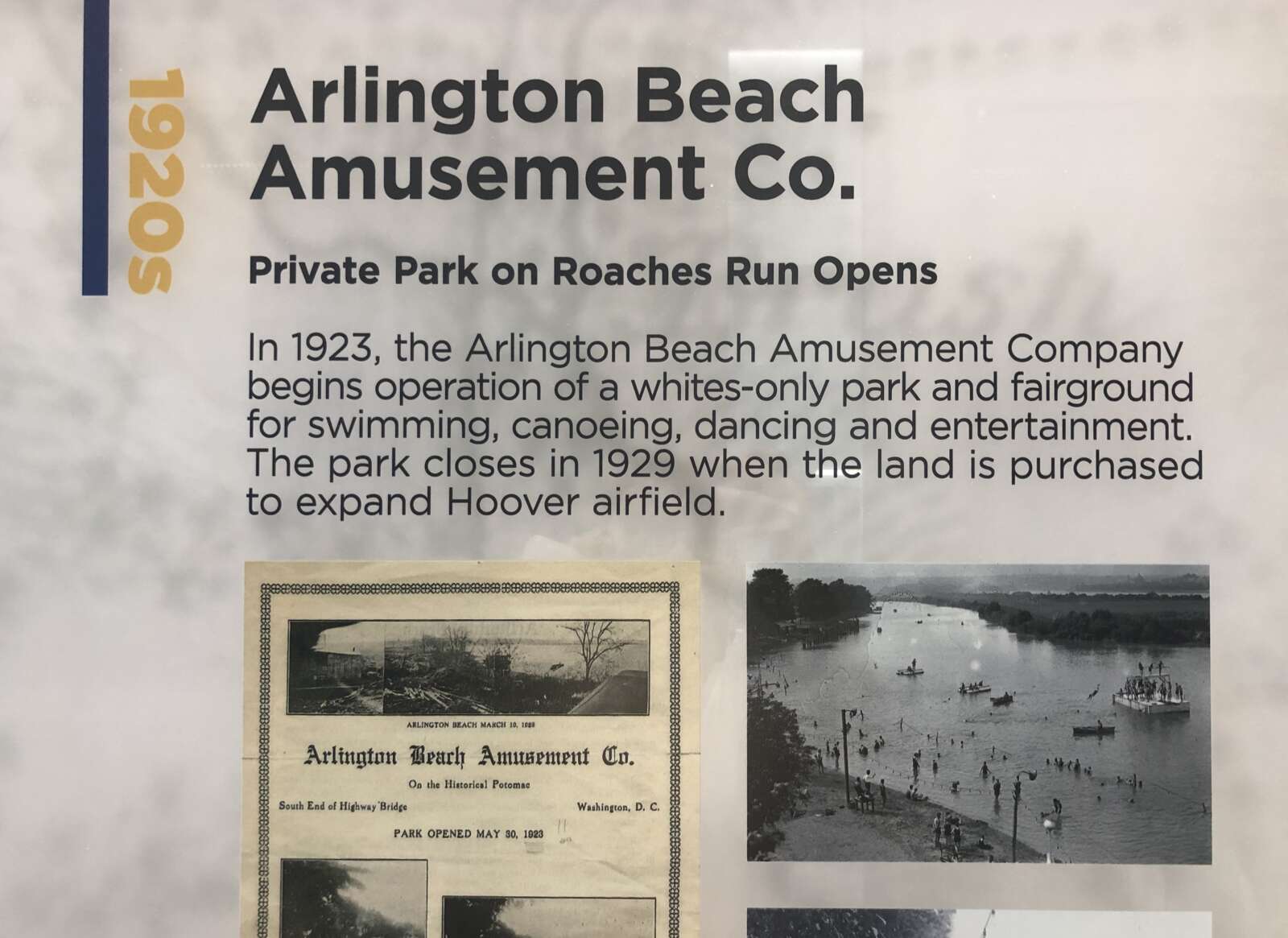
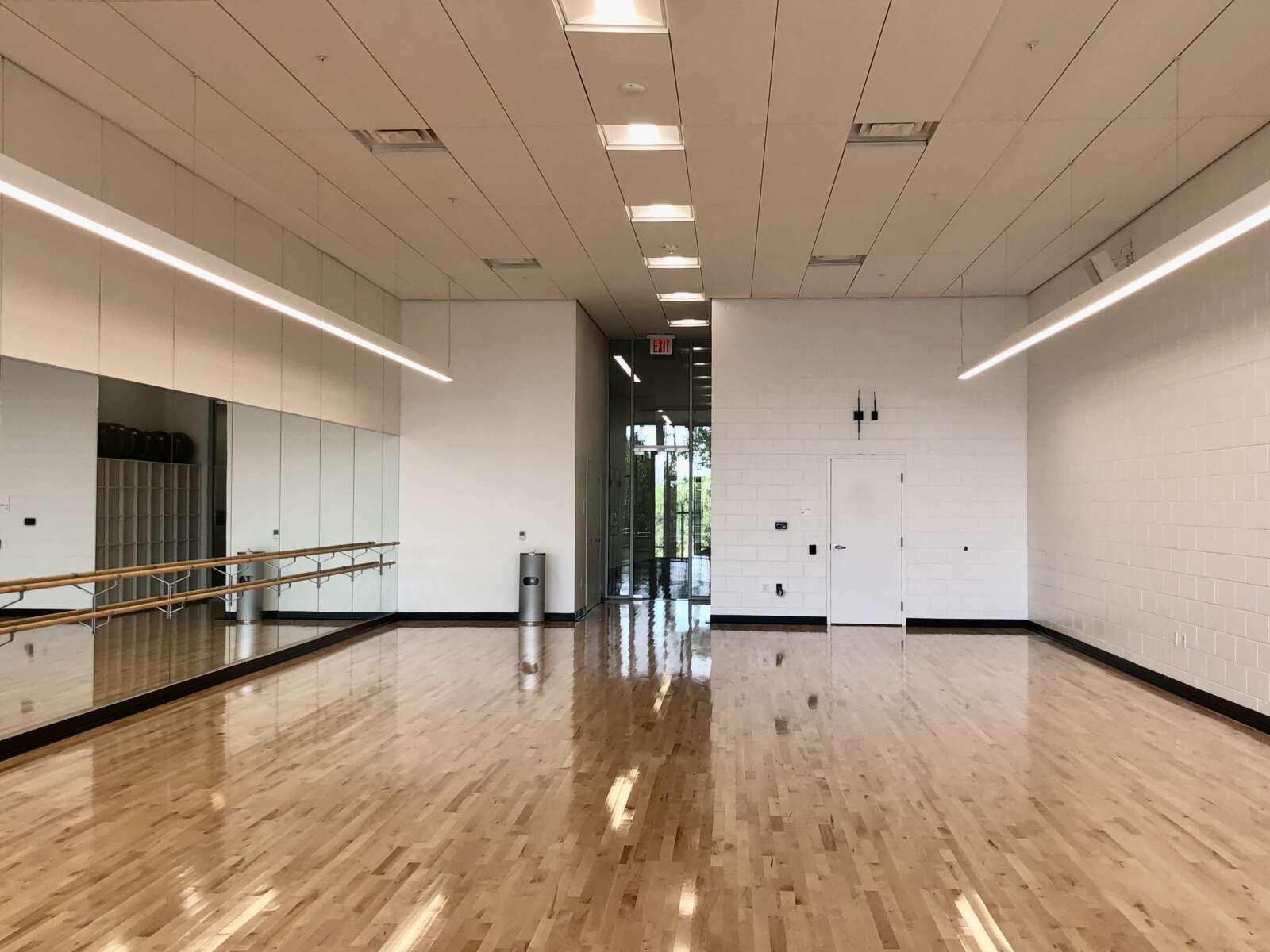
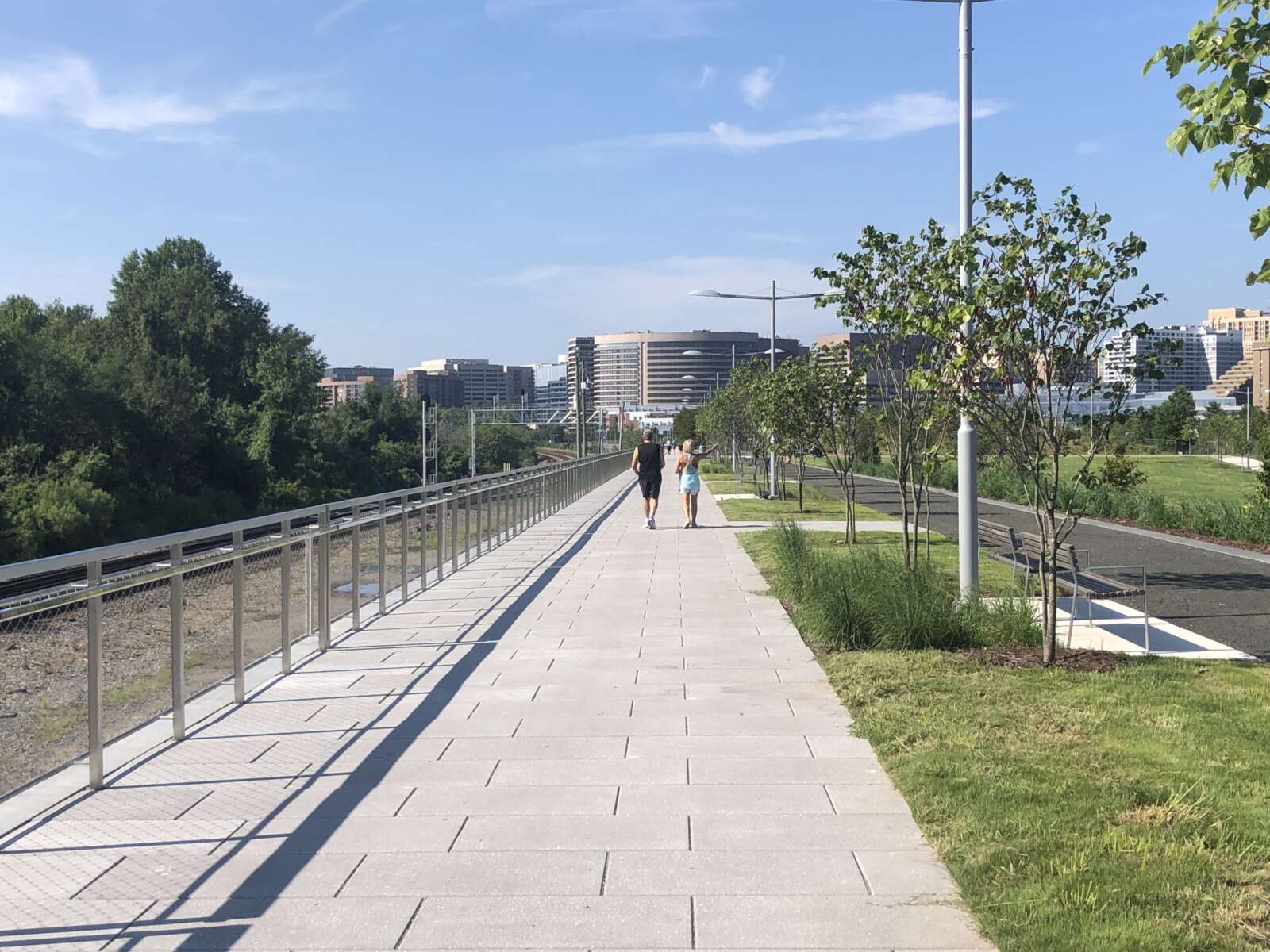
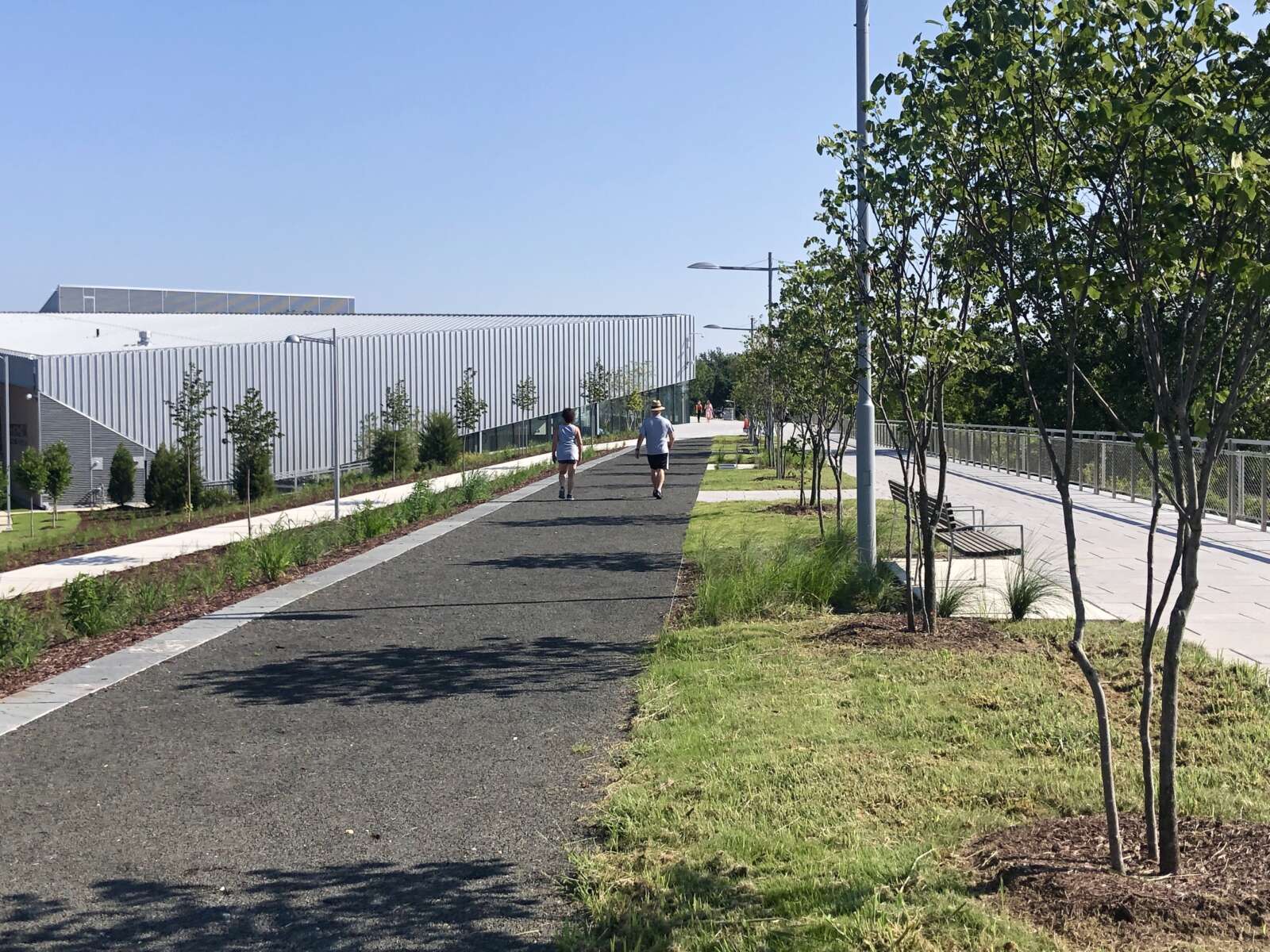
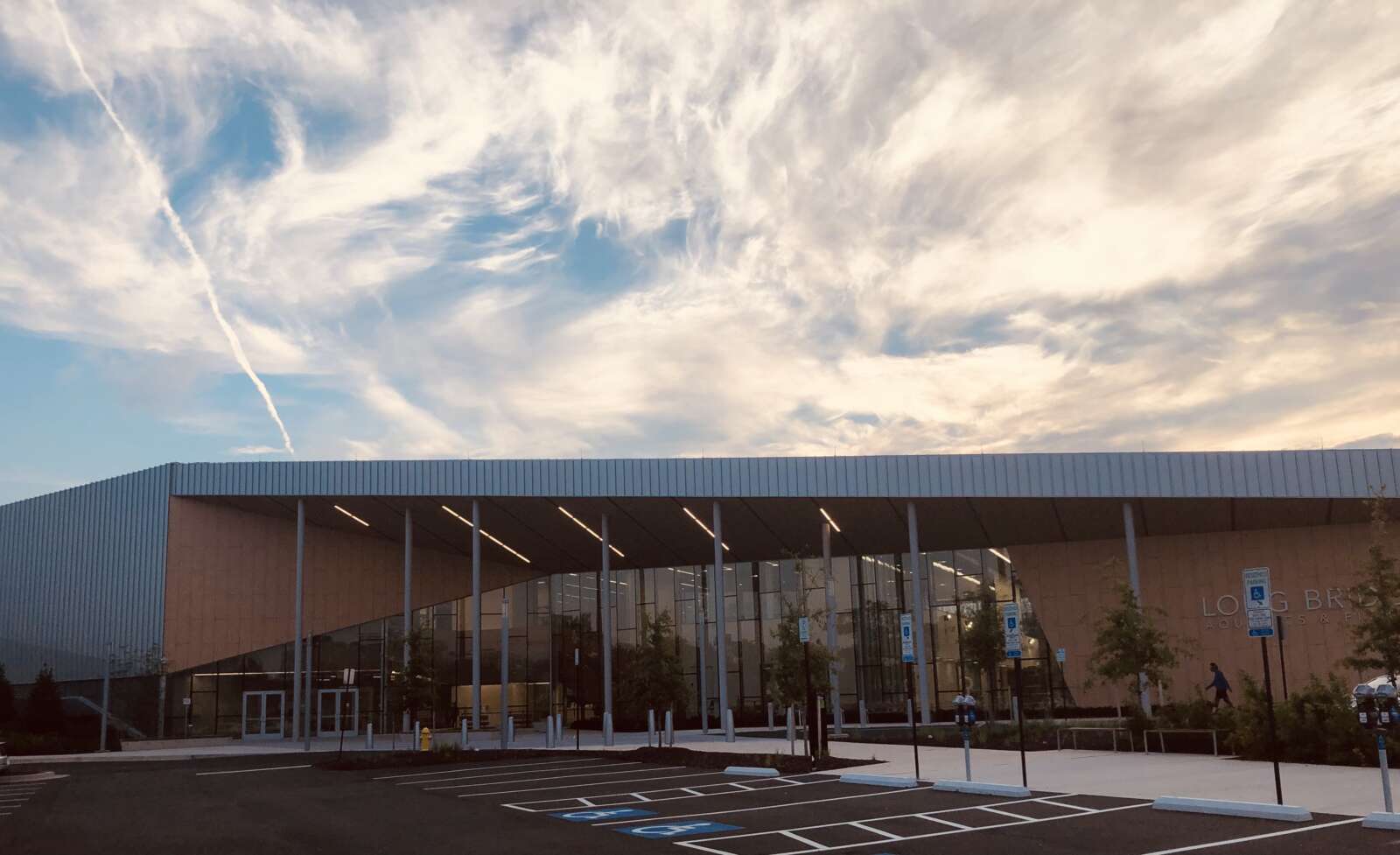
Four years after the project was approved, the 92,000-square-foot swimming and recreation facility — the second of four phases to redevelop Long Bridge Park — is officially open. It boasts a pool for serious swimmers and one for recreational swimmers, with numerous community amenities, from spas to community rooms.

“We have a full certificate of occupancy, but there is still a punch list” of tasks to complete before the center is fully done, said Peter Lusk, the athletic and facilities services division chief for the county.

Kalish said the parks department will transfer many of its swimming programs to the center, which “will help the community a lot,” as pre-pandemic, swimming classes hosted at pools in Arlington Public Schools filled up quickly.

Parks department classes are due to restart in mid-September, “the first time in 17 months,” Lusk said.

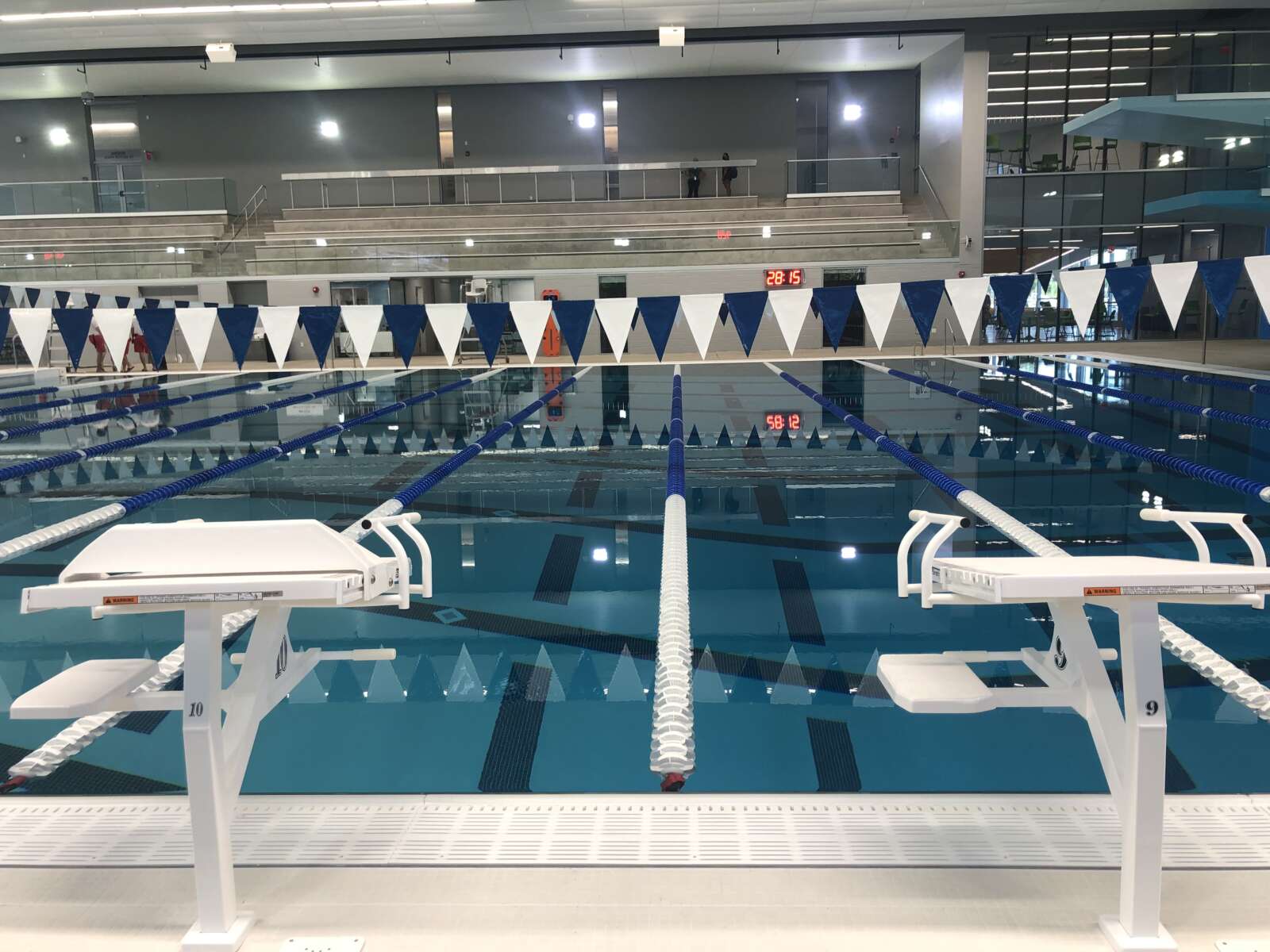
Competitive swimmers, water polo players and synchronized swimmers can use a 79-degree pool that can be configured for either 25-yard laps or 50-meter ones, using moveable starting platforms. There’s also an area for spectators upstairs.

Some younger recreational swimmers will remain at local school pools, as parents expressed concerns about travel times to Long Bridge Park.

The Aquatics Center “will be the home of the Arlington Aquatic Club,” Kalish said, referencing the county-run competitive swim program that helped to train Olympic medalist Torri Huske. “Younger ones will swim in school pool closer to home.”

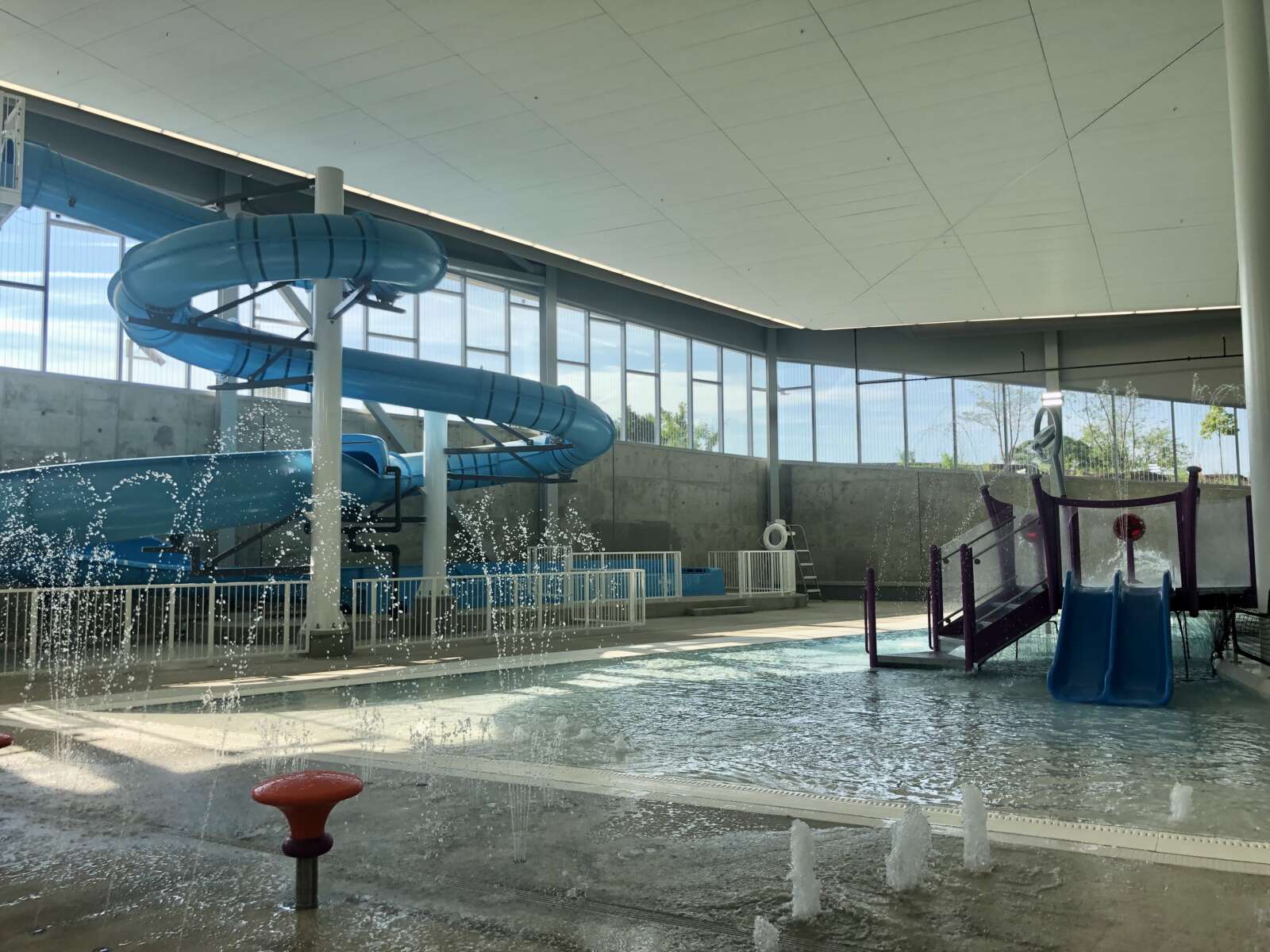
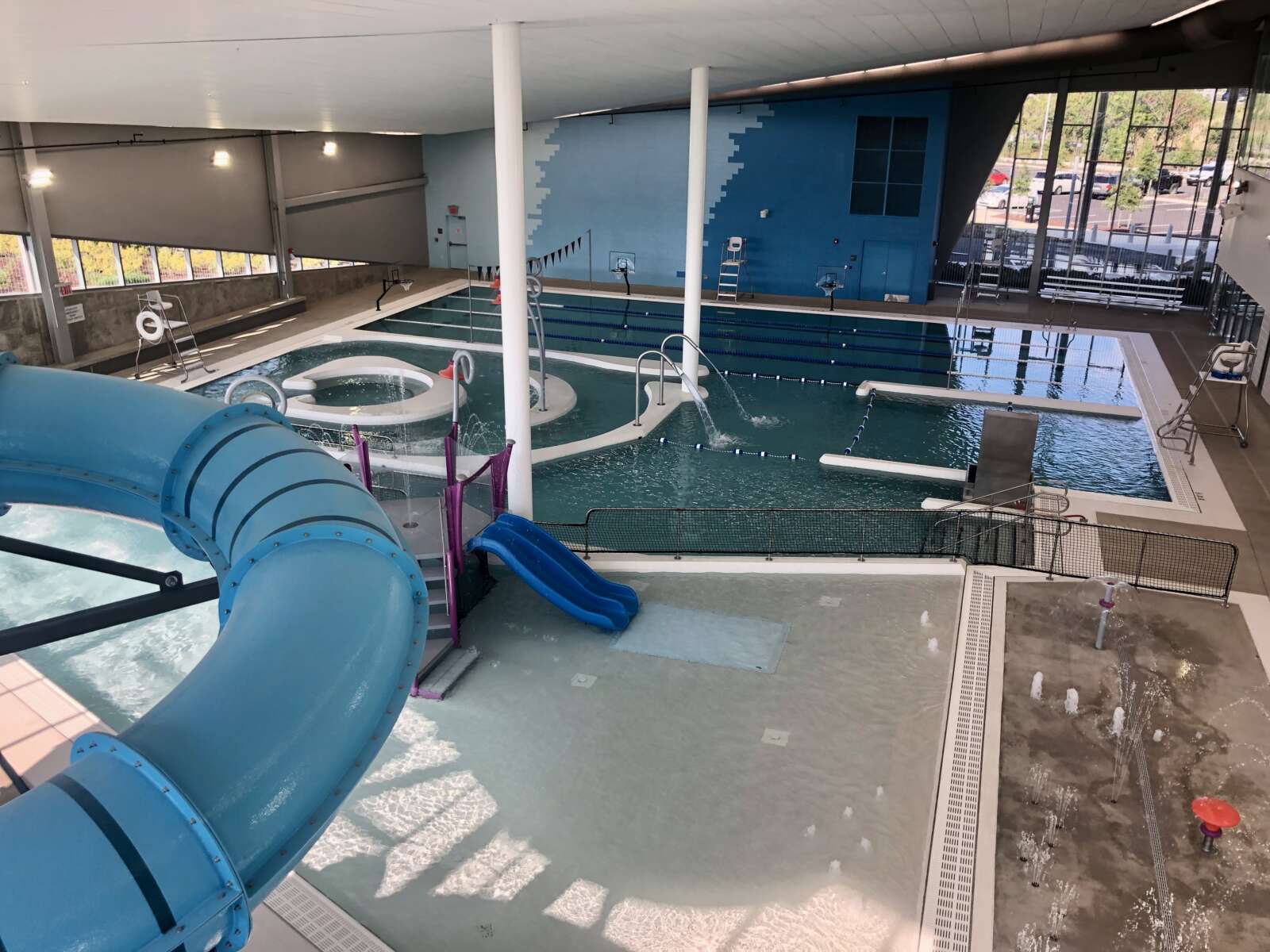
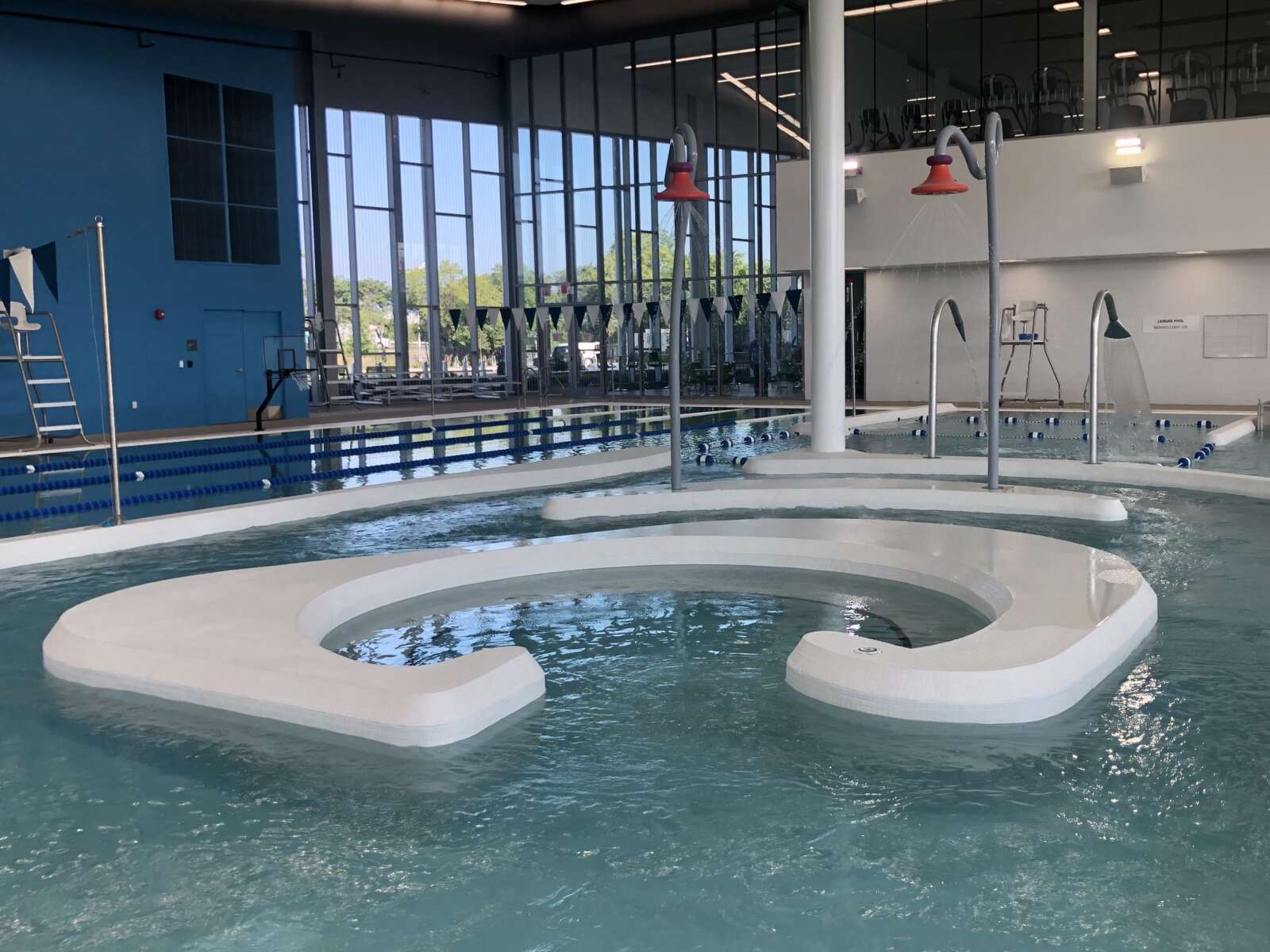
Recreational swimmers can use a family pool with a splash pad, a water slide, four 25-yard lap lanes, a lazy river and a spa. The pool is 83-84 degrees for tots, seniors, and those doing therapeutic water activities. The lap lanes can be used for water volleyball and basketball, which Kalish said the department is “hoping this will be a draw for millenials.”

Nearby, “wet” meeting rooms can be used classes and for birthday parties.

Kalish shared grand visions for bringing out the community, from hosting big swim meets and using a large screen for movie nights, renting out open spaces and turning part of the facility’s new parking lot into farmer’s markets and wine tastings.

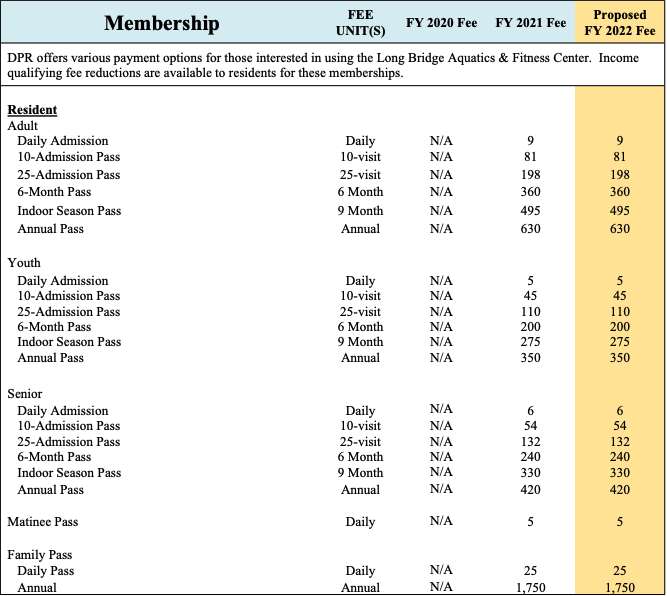
Prices for passes range by age group, and reductions are available to income-eligible residents. Daily admission ranges from $5-9 per person or $25 for families, and an annual pass ranges from $350-630 per person or $1,750 for families.

Boeing, for whom one pool is named, is making about 5,000 daily passes available to active duty military families in the USO of Metropolitan Washington-Baltimore’s service area for free through a lottery system.

The project has been in the works for nearly a decade, attracting some controversy along the way.

(more…)


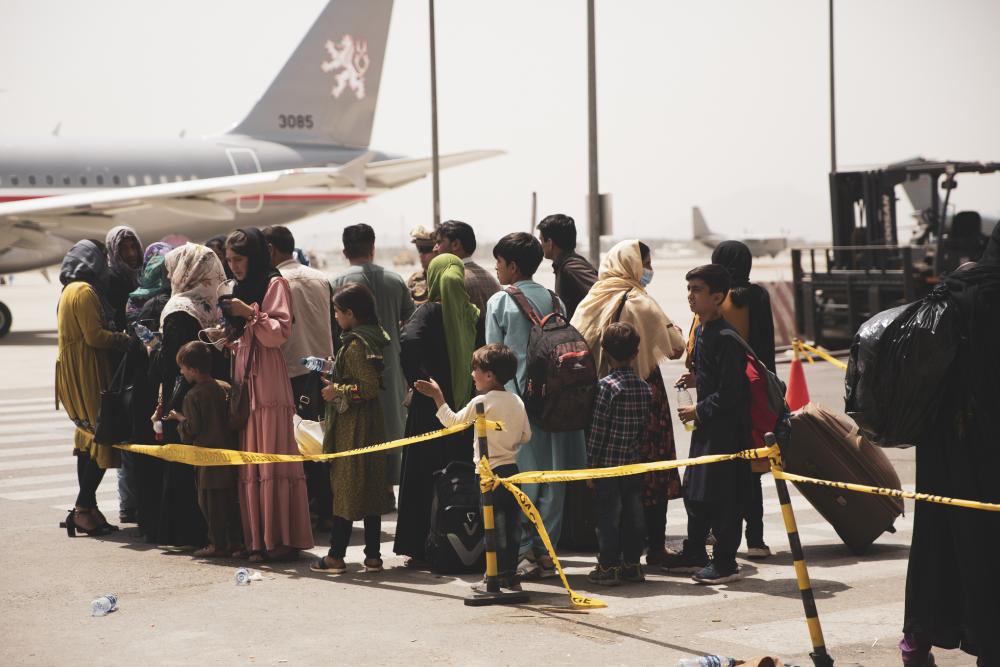
Civilians prepare to board a plane at Hamid Karzai International Airport in Kabul, the capital of Afghanistan (via Defense Visual Information Distribution Service)

(Updated at 10:50 a.m.) When the U.S. started evacuating Afghan interpreters on July 30, Arlington-based Ethiopian Community Development Council — better known as ECDC — got to work helping them resettle in Northern Virginia.

The organization, founded to help Ethiopians but which has a more global reach today, is one of three agencies authorized to resettle refugees with Special Immigrant Visas in the region.

“The majority of Afghan SIVs, currently, are being placed in the cities of Denver, Silver Spring, Houston, Arlington, and San Diego,” ECDC spokeswoman Emily Gilkinson said. “In the Arlington area, we have received about five to seven SIV holders, along with their families, per week. There have been a few couples or individuals but generally, family sizes range from 4-10 people. They are staying with their U.S. ties, in hotels or Airbnbs until moving into permanent housing.”

The other authorized resettlement agencies in the area include Catholic Charities of the Diocese of Arlington and Lutheran Social Services.

“Catholic Charities resettles the most refugees in the area, followed by LSS, then by ECDC,” said Bryna Helfer, Arlington County’s assistant county manager for communications and public engagement.

Arlington’s branch of Catholic Charities has welcomed more than 2,600 SIV holders to Northern Virginia in the last six years, and resettled 326 SIV holders — most of whom are from Afghanistan — this fiscal year, said Diana Sims Snider, the deputy director of communications for the diocese.

The organization, based in Arlington with migration and refugee offices in Arlington, Manassas, Fredericksburg and Sterling, is one of about 40 Catholic Charities around the country resettling Afghan families, she said.

For the last three weeks, the military has been facilitating flights from Afghanistan’s capital, Kabul, some of which have touched down at Dulles International Airport. Nearly 2,000 Afghan interpreters and other refugees eligible for SIVs have gone to central Virginia’s Fort Lee military base, which is operating as a temporary host facility.

Catholic Charities got to work on July 30, welcoming several planeloads of evacuated Afghan SIV holders at Fort Lee, Snider said.

“Catholic Charities staff provided legal assistance for paperwork completion, translation, child activities, and other essential resources to men, women and children at Fort Lee, Virginia,” she said. “Many of these SIV-holders then traveled on to destinations elsewhere in the U.S. to settle with family already residing in this country. About 35 of those Afghan SIV-holders who came to Fort Lee in August are settling in the Diocese of Arlington.”

The situation has become more dire and unpredictable with the fall of Kabul.

“We receive notification of arrivals only a few days before, and therefore it is very difficult to predict how many we will receive,” Gilkinson said. “We are doing our best to be flexible and responsive to the requests and information whenever it comes, as we recognize the urgency of the situation.”

How to help

ECDC and Catholic Charities both have listed ways that people can help.

“We greatly appreciate the interest that people from the local community have shown in supporting SIVs upon arrival,” Gilkinson said. “Successfully welcoming and integrating these individuals and other refugees escaping similar dangerous situations across the world is something our agency cannot do alone.”

(more…)


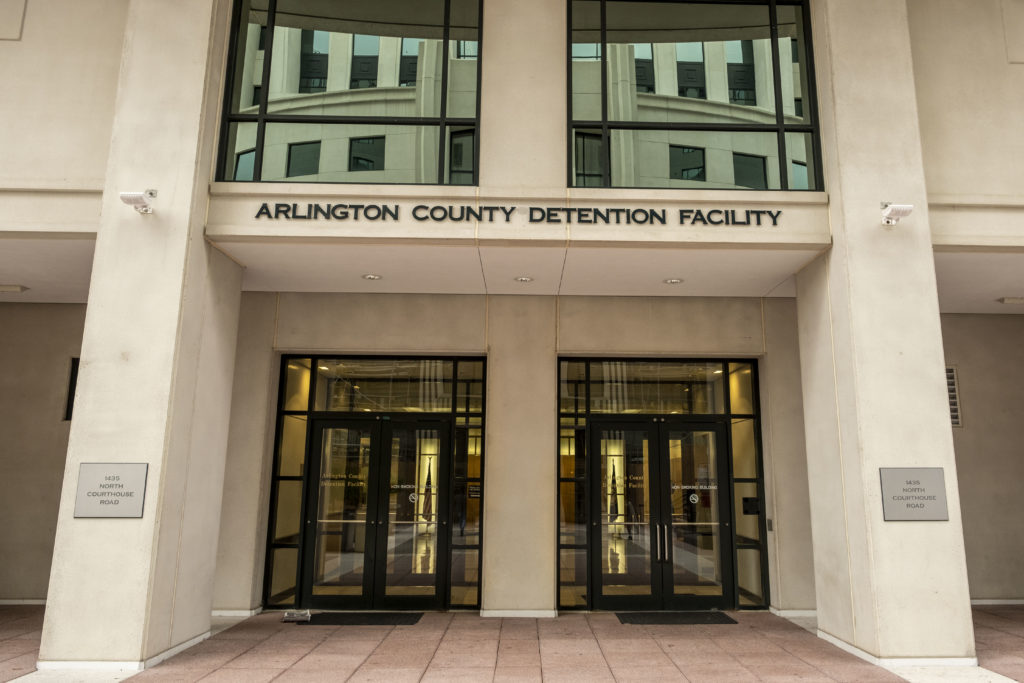
(Updated 11:40 a.m.) Last October, 46-year-old D.C. resident Darryl Becton died in his cell at the Arlington County Detention Facility in Courthouse.

The county is still looking into the circumstances around his death, but the Arlington County Police Department tells ARLnow the investigation could soon be concluded.

“Detectives are reviewing last items and anticipate concluding the investigation in the near future,” ACPD spokeswoman Ashley Savage said. “While we appreciate the need for closure and transparency, ACPD has a duty to conduct a professional, methodical, and thorough investigation to ensure all relevant facts are gathered, documented, and considered.”

ACPD will then forward the entire investigative file to the Commonwealth’s Attorney’s Office for independent review. Meantime, the Sheriff’s Office will investigate whether applicable policies and procedures were being followed in this incident.

Meanwhile, the Arlington branch of the NAACP — which called for an independent investigation of the death of Becton, an African American man — is wondering why the investigation is taking so long.

“The Arlington NAACP’s most crucial question is who is not cooperating with whom because nothing else makes sense,” branch president Julius “J.D.” Spain, Sr. said. “It’s been ten plus months, and all the family and community get is the hot potato treatment.”

By that, he says, when the NAACP talks to County Board members, they point to the Commonwealth’s Attorney, who says to talk with the Arlington County Police Department, who says talk to the Arlington County Sheriff’s Office.

“With the exception of one letter dated October 26, 2020, the Sheriff has been silent,” he said. “Her silence is the only part of this that makes any sense because Mr. Becton somehow died in a locked cell in the jail she runs. Their collective treatment of the family is highly disrespectful and compounds their grief and the concerns of citizens.”

What we know of the case

Last fall, Becton was being held on an alleged probation violation after being convicted in 2019 of a felony, “unauthorized use of a motor vehicle.”

On Oct. 1, 2020, at 4:15 p.m., a sheriff’s deputy and a Department of Human Services caseworker had found Becton unresponsive in his cell. ACPD officers were dispatched at 4:19 p.m. to investigate. Despite resuscitation efforts, Becton was pronounced dead 30 minutes later.

Within a week, the NAACP wrote to the sheriff’s office and the police department requesting an independent investigation. The same month, Sheriff Beth Arthur and then-Acting Chief of Police Andy Penn wrote a joint response.

“The death of Mr. Becton is tragic and we can assure you that a thorough and comprehensive criminal investigation into this matter will be conducted by the ACPD, followed by a comprehensive administrative investigation by ASCO to determine if all applicable policies and procedures were followed surrounding Mr. Becton’s incarceration,” Arthur and Penn wrote.

Amid the investigation, the Virginia Office of the Chief Medical Examiner conducted an autopsy, which was completed after a death certificate was issued to Becton’s family. On that document, the autopsy was listed as “pending” and no cause of death was listed.

“Mr. Becton’s loved ones deserve to know what the medical examiner determined was his cause of death, and they still can’t even get that simple answer,” Spain said.

The medical examiner’s office told ARLnow on Wednesday that the cause was hypertensive cardiovascular disease — which is caused by sustained high blood pressure — complicated by opiate withdrawal. The manner of his death was ruled to be natural.

Ten months of waiting

Meanwhile, frustrated with the investigation’s pace, the NAACP reached out to Commonwealth’s Attorney Parisa Dehghani-Tafti last week to see if she had made any progress on her independent review. In response, she affirmed that her office owe’s Becton’s family and the community “an accurate and transparent account of our work,” but pointed to the process laid out by ACPD and ACSO.

(more…)


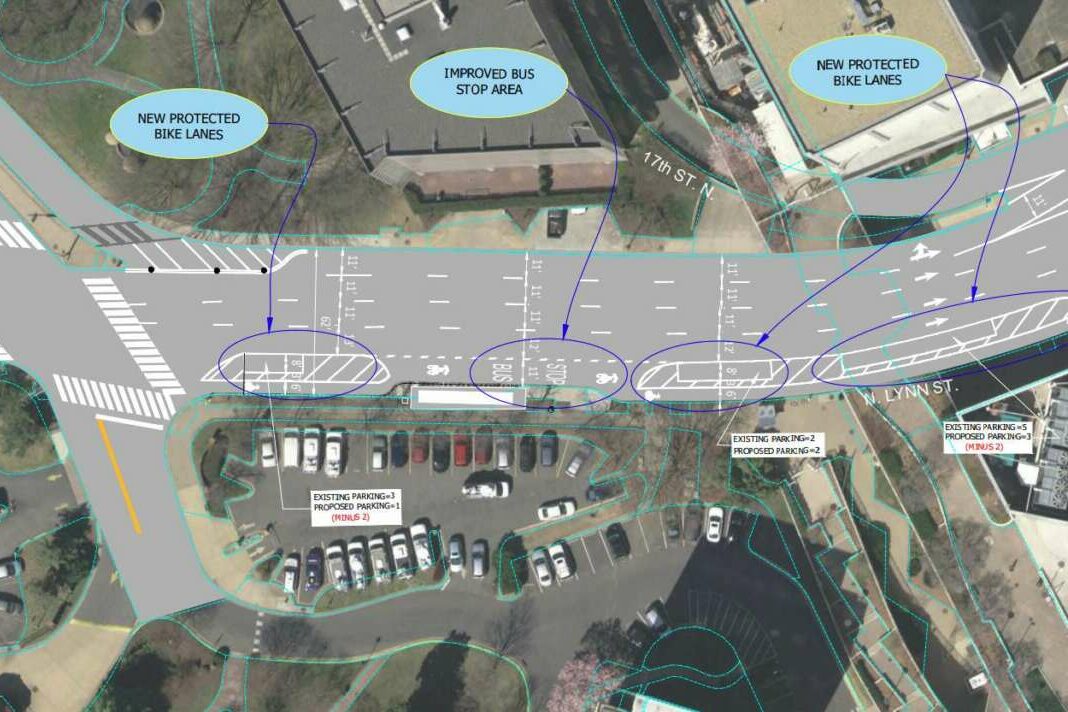
Part of the proposed resurfacing changes for N. Lynn Street (via Arlington County)

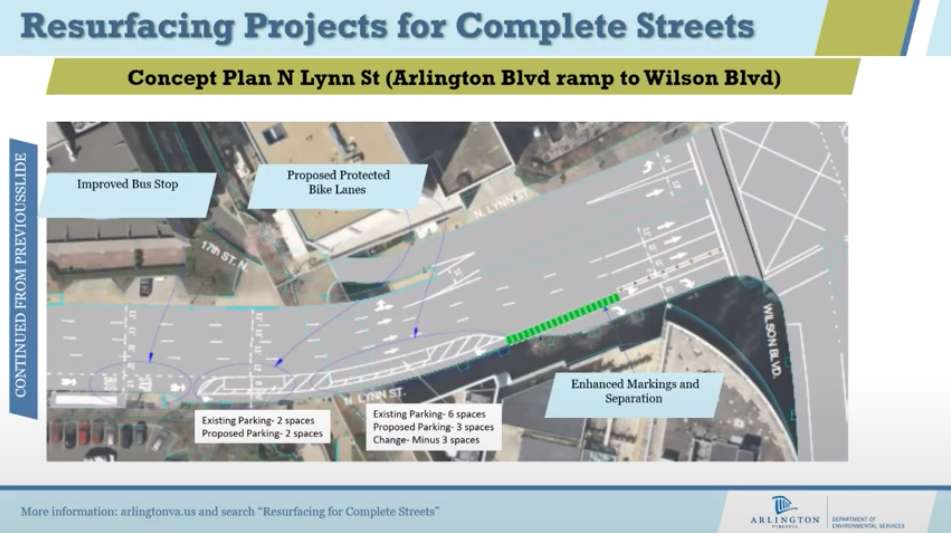
Arlington County plans to resurface a stretch of N. Lynn Street in Rosslyn to improve the driving and cycling experience.

The project is part of the county’s annual effort to resurface about 100 lane miles of roadway, prioritizing those in the most need of upgrades and those adjacent to development, schools or county-led capital projects. It is the second of two “complete streets” resurfacing projects proposed for 2021, the other being changes to Wilson Blvd in the Bluemont neighborhood.

The plans for N. Lynn Street extend from the exit ramp for Arlington Blvd (Route 50) to Wilson Blvd. Proposed changes include adding “sharrows” — encouraging drivers to share the road with cyclists — connecting with existing bike lanes, plus buffering existing bike lanes, improving markings for a bus stop, and adding markings where drivers have to cross a bike lane to turn right.

This concept design accommodates the existing traffic by maintaining the same vehicular lane configurations, it adds additional separation between people driving and biking with protected and buffered bike lanes, it enhances the network connectivity with improved bike markings, and it improves visibility of right turn conflicts with the application of green markings,” said county transportation planner Catherine Seebauer during a recorded presentation.

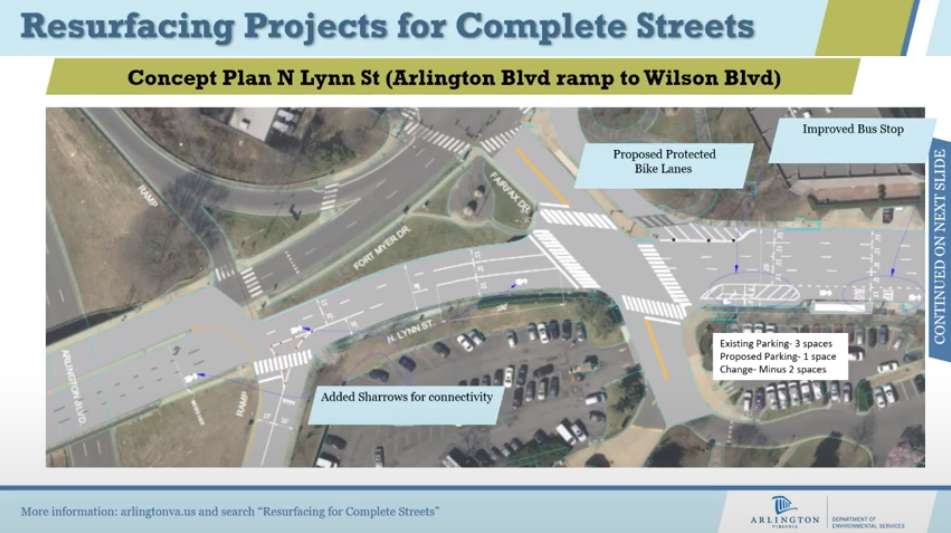
A segment of N. Lynn Street that will be resurfaced (via Arlington County)

Right after the Arlington Blvd exit ramp, the county proposes adding northbound bike “sharrows” — markings indicating where cyclists and vehicles have to share the road — that will link up to the existing bike lane after the intersection with Fairfax Drive.

“That exit ramp is a VDOT-controlled road, so Arlington County is somewhat limited in what changes we can make there, but a reconfiguration of those on-off ramps is being looked at as part of [Core of Rosslyn Transportation Study], so long-term changes are in development for that intersection,” Seebauer said.

The vehicle lanes will be narrowed after Fairfax Drive, though they will still meet the county’s standard width of 11 feet, she said.

“The extra room allows us to provide more room for other facilities,” she said, including upgrading the existing bike lanes to be protected bike lanes. “They will be separated from vehicle lanes by parked vehicles and a small buffer strip.”

A segment of N. Lynn Street that will be resurfaced (via Arlington County)

Where the bike lane merges with an existing bus stop, the bus stop markings will be improved. Further up, close to the intersection with Wilson Blvd, green paint and bollards will alert drivers and cyclists about a conflict point, where drivers have to cross the bike lane to make a right turn.

From the exit ramp to Wilson Blvd, four parking spaces will be removed to improve sightlines, Seebauer said.

An online comment period for the project closed yesterday (Tuesday). The resurfacing work will be done later this summer and fall.


Suspected oak mite bite (courtesy photo)

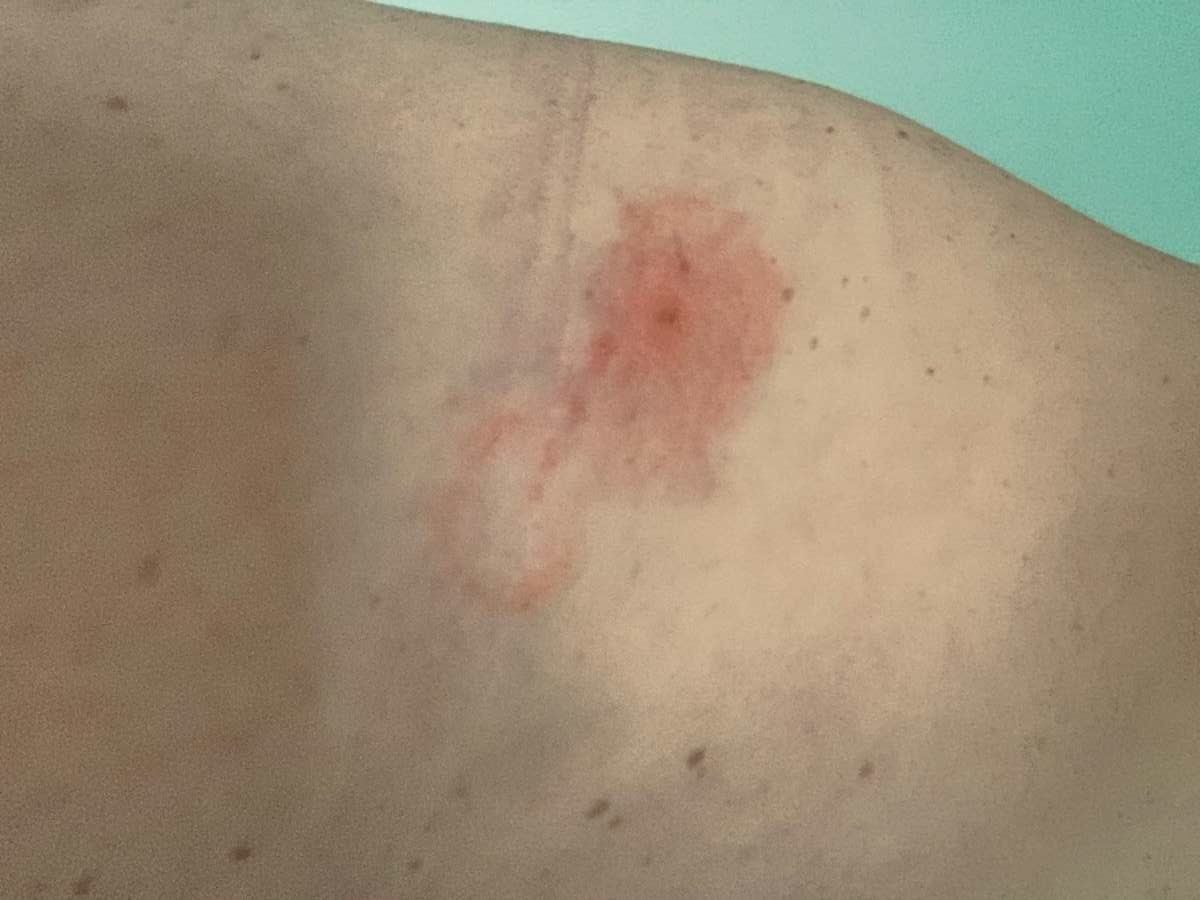
(Updated 8/19 at 12:25 p.m.) Some Arlingtonians suspected it a few weeks ago, and an entomologist with Virginia Tech has now confirmed it: those mysterious, itchy red bug bites generating a buzz here are likely from oak itch mites.

The Virginia Tech Insect ID Lab has not yet received a mite this year to study, Kirsten Ann Conrad, an extension agent for Virginia Cooperative Extension, tells ARLnow. But the mite theory nonetheless is likely correct, she says.

“No entomologist can identify a bug based on a bite. People have very different reactions to stinging biting insects,” she said. “In this case, there was plenty of circumstantial evidence that links outbreaks of oak leaf mites, and the resulting bites on humans, to cicada emergences.”
The mites are hard to track down because they’re between .2 and .8 millimeters and “nearly invisible,” according to a flier distributed by VCE’s Arlington and Alexandria offices. While they primarily feed on the eggs and larvae of the oak leaf gall midge and wood boring insects, they’re here because of the abundance of cicada nymphs. The mites bite humans when they run out of options.

“Humans are not their first choice of food,” Conrad said.

The author of the flier, Conrad said she has been getting complaints of “large raised, red skin welts and extreme itching” directly from residents and during VCE’s various educational sessions. (An Arlington County spokesman declined comment and referred us to VCE’s statements.)

The bites and mites have also been widely reported in the media. After ARLnow first reported that residents were being bitten and suspected oak itch mites, the phenomenon was covered by TV stationsthe Washington Post, and even other national and international outlets.

We later unscientifically polled readers to see if they think they’ve been bitten by these mites. About 93% of the 5,463 respondents reported that they have been bitten by the mites anywhere from once to “a lot.”

“It seems to be very local,” Conrad said. “And I don’t know what the extent of the problem is outside of the areas in which we had the Brood X emergence.”

The high response rate is not surprising, according to Conrad, who said that during a 2004 outbreak in Crawford County, Kansas, the Centers for Disease Control and Prevention estimated that about 54% of the population suffered from the bites.

While the attacks have been linked to the Brood X emergence, a cyclical occurrence, people have told Conrad they’ve never been bitten like this before.

“People here say to me that when, 17 years ago, the last Brood X emerged, they don’t remember having such an outbreak of these itch mites then,” she said. “This is my first ever experience with them myself.”

The wet, windy weather could also be to blame.

“Their success is attributed to prolific reproduction and their dispersal by wind,” according to the flier. “These microscopic mites travel with the wind, and it is likely that moist weather and abundance of food supply has caused the population of these common insects to grow.”

As for how long they’ll stick around, Conrad says there has been speculation that the mites could be a problem until frost arrives.

“I hope not, because I’ve been getting those bites too,” she said. “I can tell you that — and this seems to be contradictory — cool, moist weather conditions favor the growth of the population, which is not what we’ve had this summer.”

As for the bites, they’re not life-threatening. Typically, the itching starts within 10 to 16 hours after the mite bites and can last up to two weeks. Conrad advised using over-the-counter products to reduce itching and inflammation, such as calamine lotion, Benadryl and After-Bite, and advised people to see their doctor if the irritation requires medical attention.

Dr. Hong Hanh Nguyen, with Virginia Hospital Center, said she’s been seeing a number of patients seeking treatment for bug bites.

“From what we’ve been seeing, the itching resulting from the bite can last about two weeks and experts have suggested that we may be seeing bites from the mites until about October,” Nguyen said. “We recommend using over the counter Cortisone ointment to decrease the swelling and itching and have also recommended the use of Sarna cream for itching, both can be used multiple times a day. Ice, even just rubbing on an ice cube on the bite for 10 seconds or so, can also help reduce the itch.”

When going outside, people can apply repellents such as DEET formulations, IR-3535, picaridin and oil of lemon eucalyptus, Conrad said. People who are particularly sensitive to bites should don long sleeves, a hat and long pants when outdoors, she said. Showering and washing clothing after coming inside can help.

Treating oak trees with pesticides, however, “is not recommended nor is treatment of trees showing cicada damage,” she said.


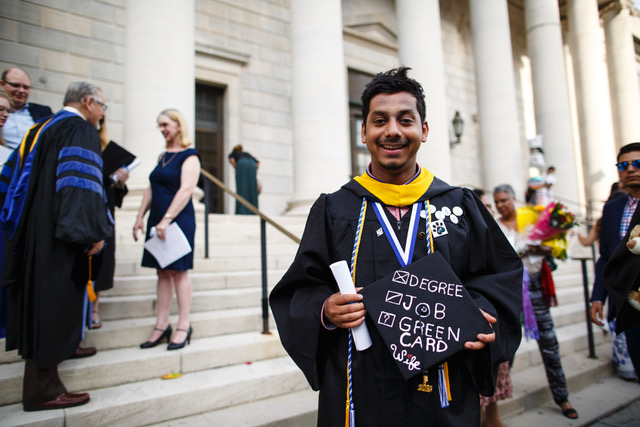
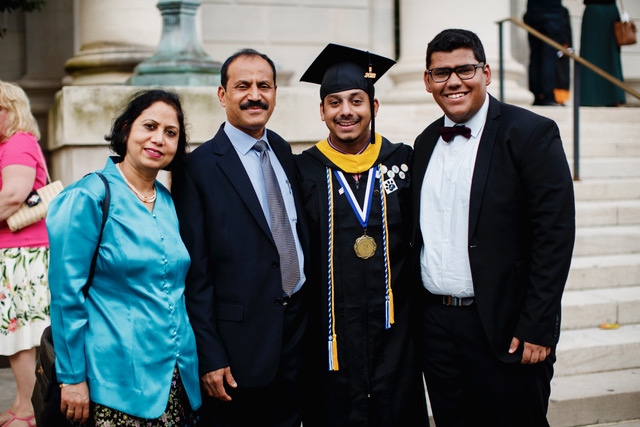
This week, a Marymount University graduate working in tech is packing up and moving to Dublin, Ireland.

He didn’t expect — or want — to leave his home on the border of Arlington and Falls Church this way.

Hansel D’Souza, 25, is an Indian national who was born and raised in Kuwait who now works for a tech company. He has been in Virginia since 2014, when he arrived on an F1 student visa to obtain a bachelor’s degree in Information Technology at Marymount. There, he dove into theater, student affairs and campus ministry.

“I was everywhere at the same time, wearing lots of hats,” he said. “People asked me, ‘Is there any job you don’t do?”

He programmed backstage lighting and sounds for the campus theater club, the McLean Community Players and the Little Theatre of Alexandria. With the campus ministry group, he went to Louisa, Kentucky for a service project and returned as a camp counselor for a few summers, watching campers graduate high school and go to college.

His extracurricular resume may be impressive — but none of his positions or volunteer work mattered when it came to seeking an H1B visa to continue working in the U.S. in his specialized field, which selects 65,000 people a year through a lottery. Up to 20,000 additional people can get this visa if they’ve earned a master’s degree or higher.

“This is not a merit-based system,” said James Montana, an attorney at Steelyard LLC, an immigration-focused law firm in Arlington. “The question is, do you have a degree that is related to the proposed work in a specialty field? An individual can do nothing to increase his chances — other than get a master’s, which is an awfully expensive way to increase them.”

D’Souza said his frustration with the H1B process, which wrote about in a Medium post, is that it whittled him down to a number in a lottery.

“Seven years of hard work, putting myself out there, making this place my home, building relationships, just came down to a lottery process,” he said. “I know I’m not the only one. I know a handful of other people going through it — and there are thousands of others across the country in similar situations every year.”

Indians in the U.S. face particular hurdles. In recent years, members of the diaspora living in the United States have protested a 150-year backlog in green cards, caused by a policy capping the number of Indians who can come to the U.S., and a coronavirus-induced excess of green cards that could go to waste despite this backlog.

Many Indian immigrants advocate for the cap to be lifted and for the immigration process to consider their technical skills instead.

As for D’Souza, he says he considered getting a master’s degree to increase his chances of staying. But after four years of tuition, and room and board, a master’s represented a financial lift he said he couldn’t justify, especially since he saw people advance in his field without one.

“Unfortunately, the world has gotten to a point where people are doing more degrees to check boxes on resume, and I didn’t want to do that,” he said.

It is too late for D’Souza, who departs tomorrow night (Wednesday), but he said he wants to elevate the voices of “international students and working professionals just like me.” He wants the Americans he knows to understand how complex immigrating to the U.S. is, as well.

“Immigration needs to change,” he said. “I’m hoping more people will realize it’s not all rose-colored glasses.”

(more…)


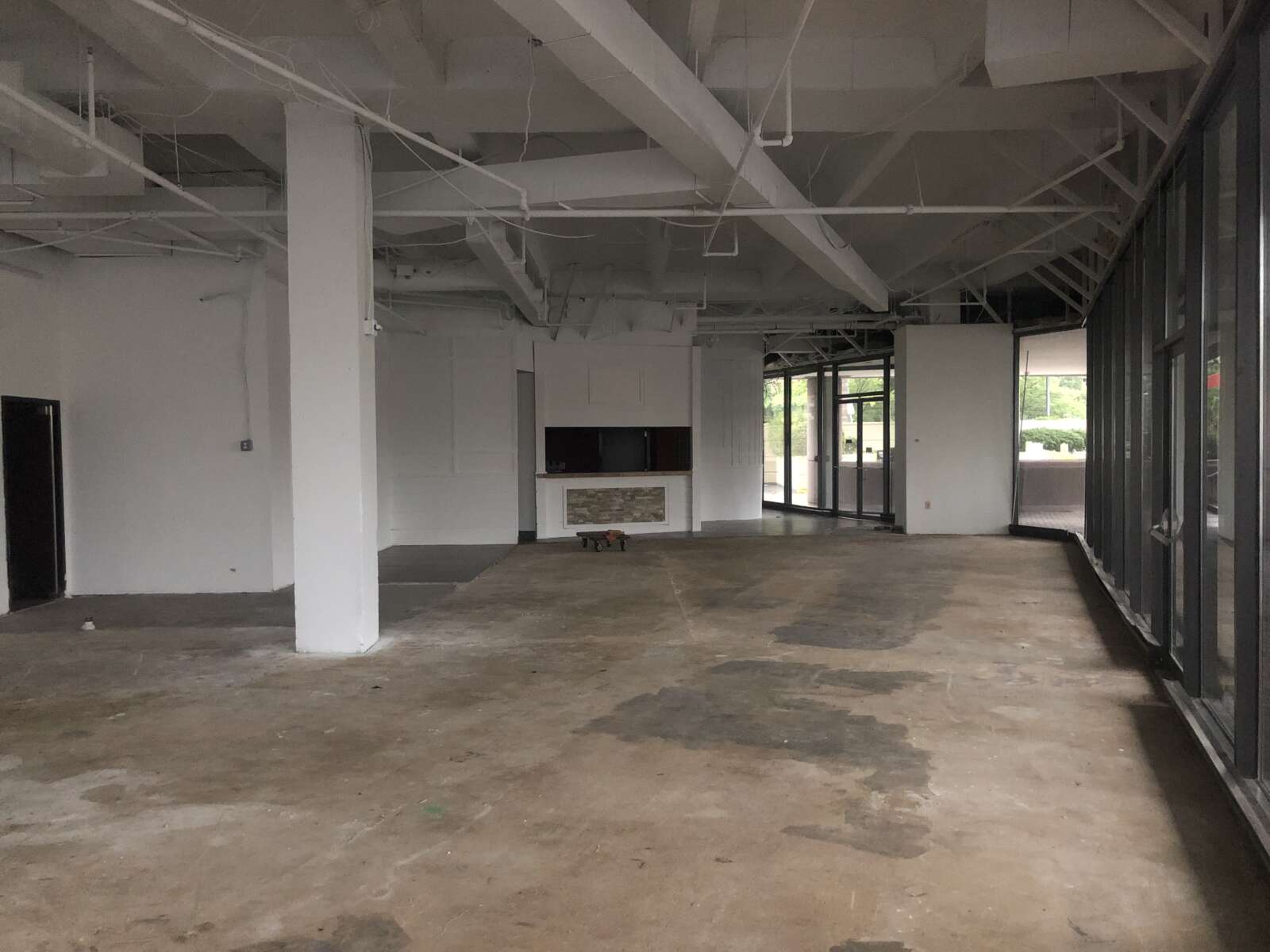
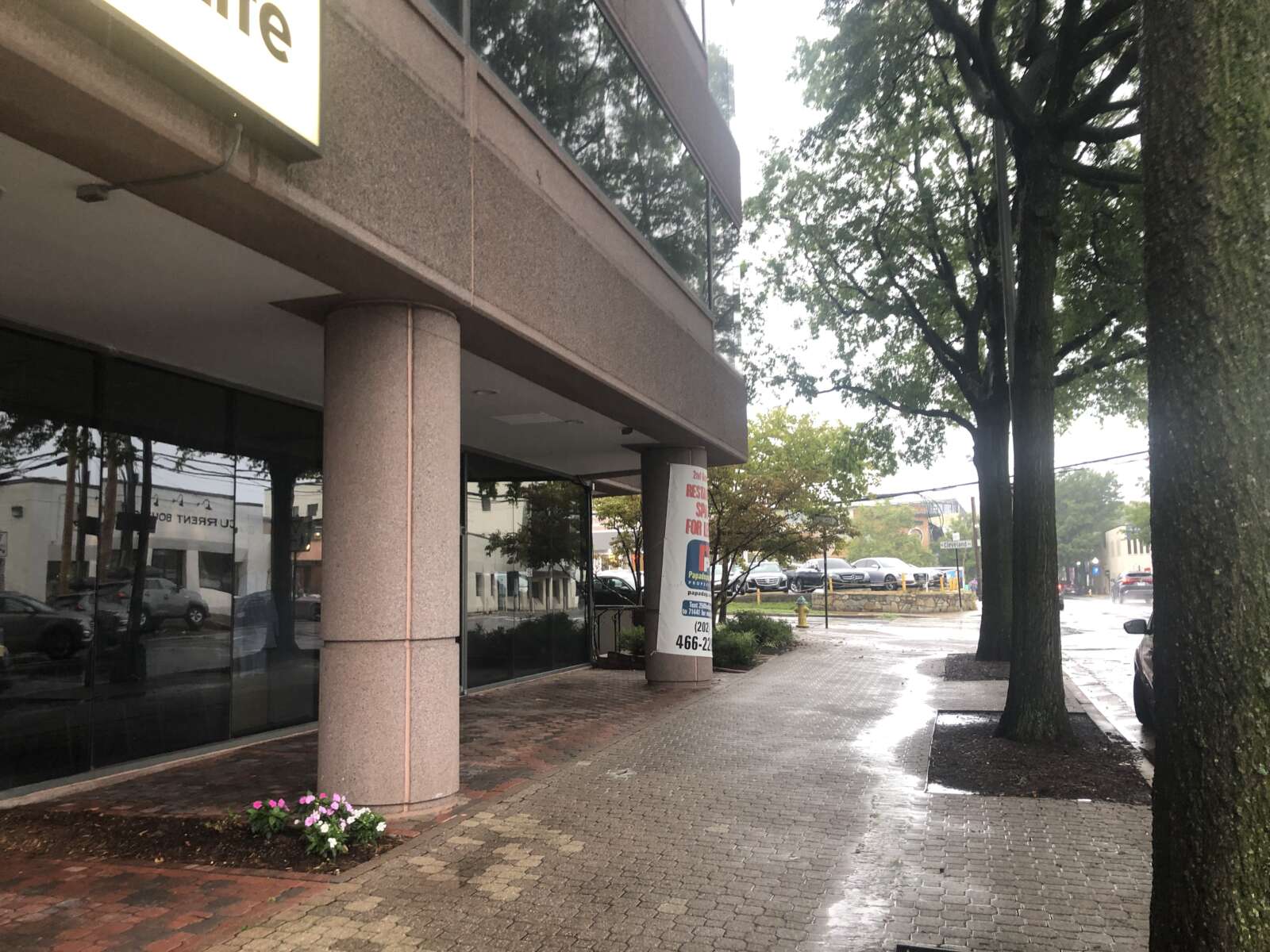
(Updated 12:30 p.m.) A shuttered Vietnamese restaurant between Courthouse and Clarendon may be converted into a music-based childcare center.

Rock and Roll Daycare is requesting Arlington County approve child care as a use for the site, which comprises about 4,391 square feet of unused, ground-floor restaurant space at the corner of Wilson Blvd and N. Cleveland Street. Rock and Roll Daycare offers music-based Montessori instruction to infants, toddlers and preschool children, according to the company’s legal representation, land use lawyer Nick Cumings.

The company is eyeing the former location of Minh Vietnamese Restaurant, at the base of a five-story office building at 2500 Wilson Blvd. The building is lined with other ground-floor retail and has 189 parking spaces, wrote Cumings, from the firm Walsh Colucci, in a letter to the county dated February.

“The Applicant is a family-run daycare provider in Massachusetts that is seeking to establish its presence in the D.C. metropolitan area,” Cumings said. “Rock and Roll Daycare… provides a unique music and arts program, international cultural education, and self-directed learning programs tailored to each child.”

The pending franchise location in Arlington follows the opening of two others in the D.C. area, one in Alexandria and the other in Reston.

The daycare will provide five classrooms: one for preschoolers and two each for toddlers and infants, Cumings said. There will be eight to 10 staff members and up to 58 enrolled children. Classes will be held year-round, Monday through Friday, from 7 a.m. to 7 p.m.

An outdoor play area about 995 square foot in size will be fenced in and contain play equipment, he said.

Approval “will bring a unique and much-desired child care option to Arlington County while continuing to activate the corner of Wilson Boulevard and North Cleveland Street,” Cumings said.

The request is one of five site plan applications that will be heard at a County Board meeting this fall. After the August recess ends, the County Board will begin meeting again on Saturday, Sept. 18, but a spokeswoman for the Department of Community Planning Housing and Development said she expects it will go before the board in October.


Arlington is denser and more diverse than it was 10 years ago, according to recently-released 2020 Census data.

The population living within the county’s 26 square miles now sits at 238,643 — a 14.9% increase over 2010, when 207,627 people called Arlington home. That outpaced the rate of population growth for Virginia and the U.S. as a whole, at 7.9% and 7.4%, respectively.

Meanwhile, the county is more diverse today than it was a decade ago: Arlington’s white population declined by 3,677 people, while the number of Hispanic or Latino, Black, Asian, multiracial and indigenous people all increased. That decade-long change reflects a similar change occurring across the nation that was the subject of a flurry of reports last week.

Now that the data is in, county staff will be reviewing the numbers to see what they mean for Arlington, said Bryna Helfer, the assistant county manager for communications and public engagement. Census data helps the county plan for future needs and services, such as emergency services, schools and transportation, while the federal government uses the demographic information to apportion funding to localities.

“Arlington’s team of demographers in Community Planning and Housing Development will be taking time over the coming weeks and months to learn more about the 2020 Census Data and what it means for Arlington,” Helfer said. “We want to thank the entire community for their participation in the 2020 Census.”

Arlington is the eighth most-populous jurisdiction within the Commonwealth, but among counties in Northern Virginia, Arlington has the smallest population, behind Fairfax, Prince William and Loudoun counties. It is growing faster than Fairfax County and D.C. but slower than Loudoun and Prince William counties.

Much of Arlington’s growth appears to be concentrated in Metro corridors — part of the county’s goal of “smart growth” around transit areas.

One census tract within Ballston appears to have the highest density not only in Arlington, but in the D.C. area, attaining a population density similar to parts of New York City. It comes in at 96,758 people per square mile, comparable to the Upper West Side of Manhattan.

Overall, Arlington has a population of about 9,180 people per square mile.

https://twitter.com/ericfidler/status/1425925529627209733?s=21

As the population grew, 13,000 housing units came online in the county. Despite the housing growth, only a handful of census tracts across the county reported fewer than 90% of their housing units as occupied. On average, Arlington has a housing unit vacancy rate of 7.7%.

While that is lower than the state’s vacancy rate of 8.2%, Arlington has a higher vacancy rate than its neighbors — Fairfax, Loudoun and Prince William counties — which have rates between 3 and 3.8%.

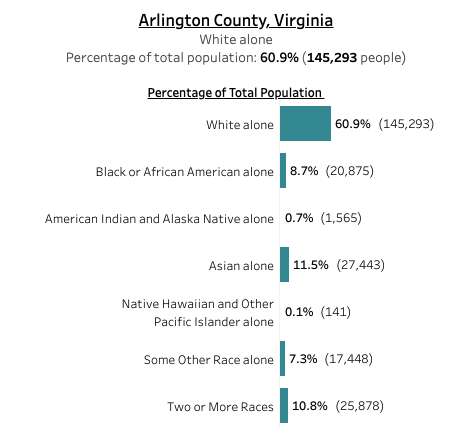
Like many other parts of the nation, the snapshot of Arlington in 2020 was more diverse than 10 years ago. It dropped from being 71.7% white in 2010 to being 61% white in 2020.

The most dramatic increase was in the number of people who identify as multiracial: This population group increased by 18,101 people, or by 233%, and now comprises 10.8% of the population. Following behind them, Asians also leaped in representation, due to a 7,512-person increase. Asians now comprise 11.5% of the population, up from 9.6% in 2010.

Although the Black population increased by 3,243 people (18.4%), Black residents still comprise roughly the same percentage of the population, from 8.5% in 2010 to 8.7% in 2020.

Race in Arlington County per the 2020 census data (via US Census)

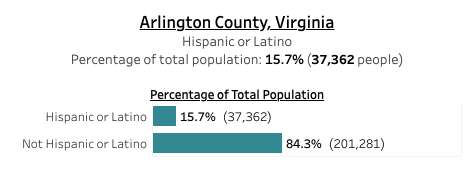
The Hispanic or Latino population also made some gains —  an increase of 5,980 people, or 0.6 percentage points.

Hispanic or Latino percentage of Arlington’s population (via US Census)

(more…)


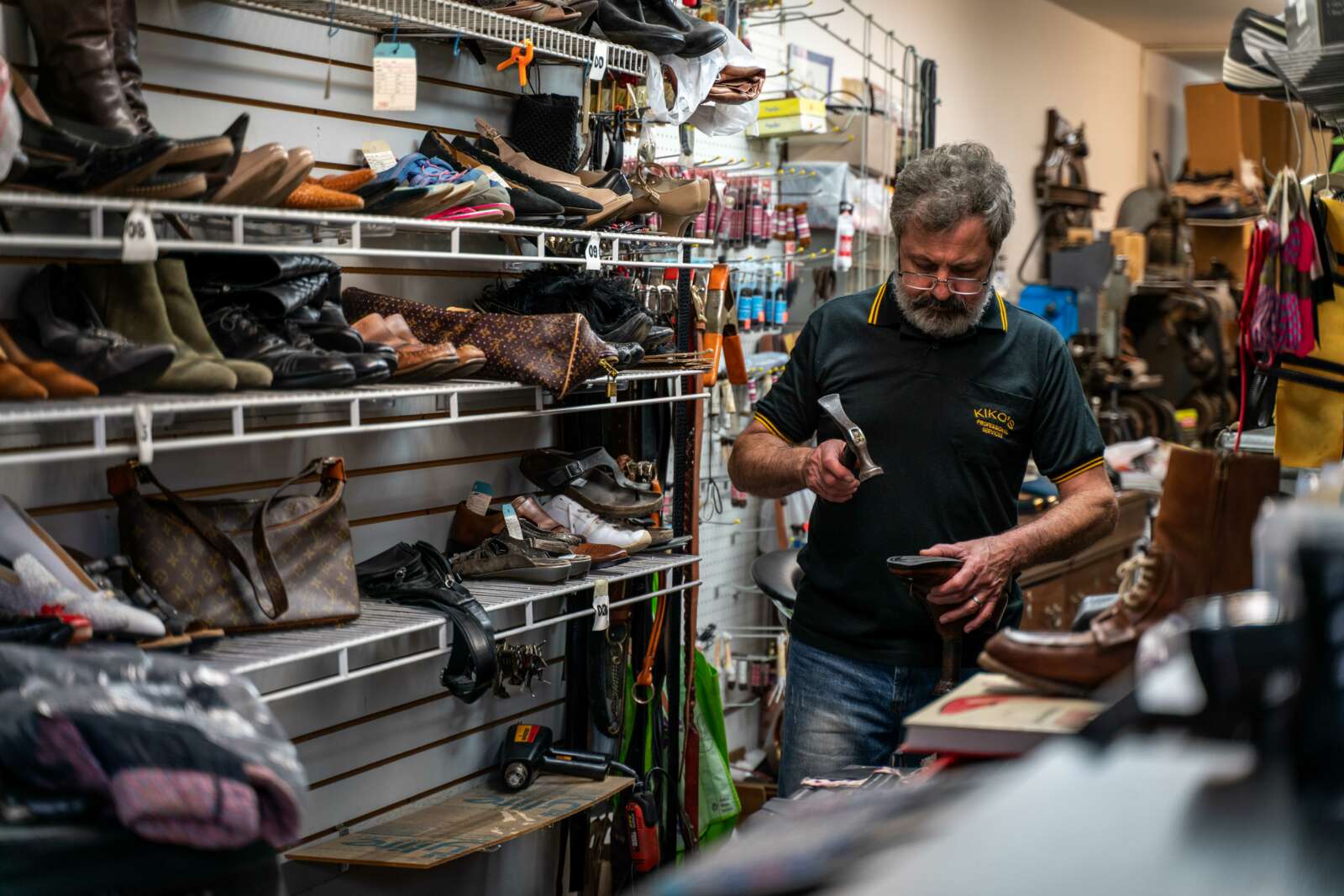
In the low-slung, pinkish Dominion Hills Centre shopping strip, sandwiched between a pharmacy and a soccer store, passers-by can find a store offering an unlikely pairing.

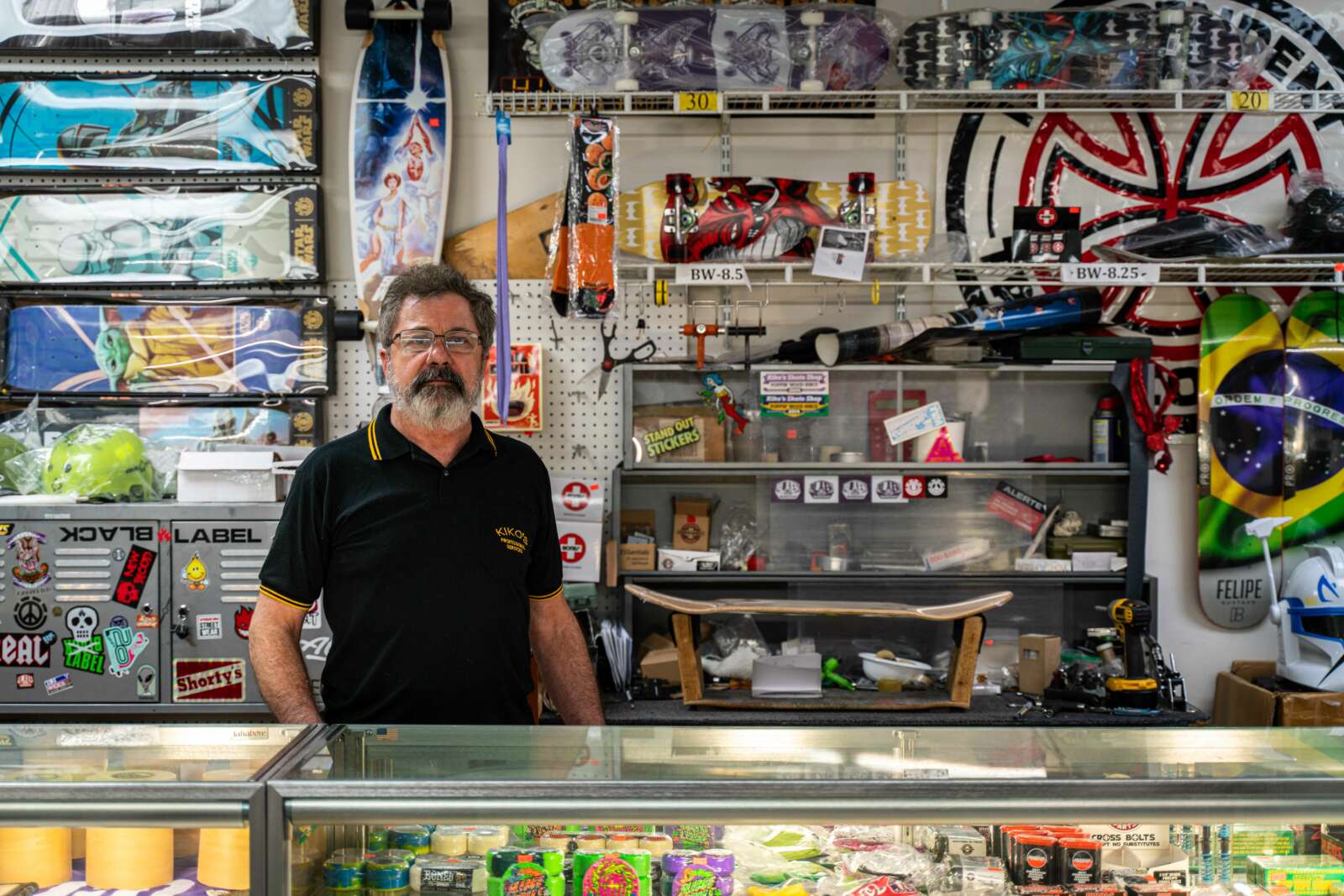
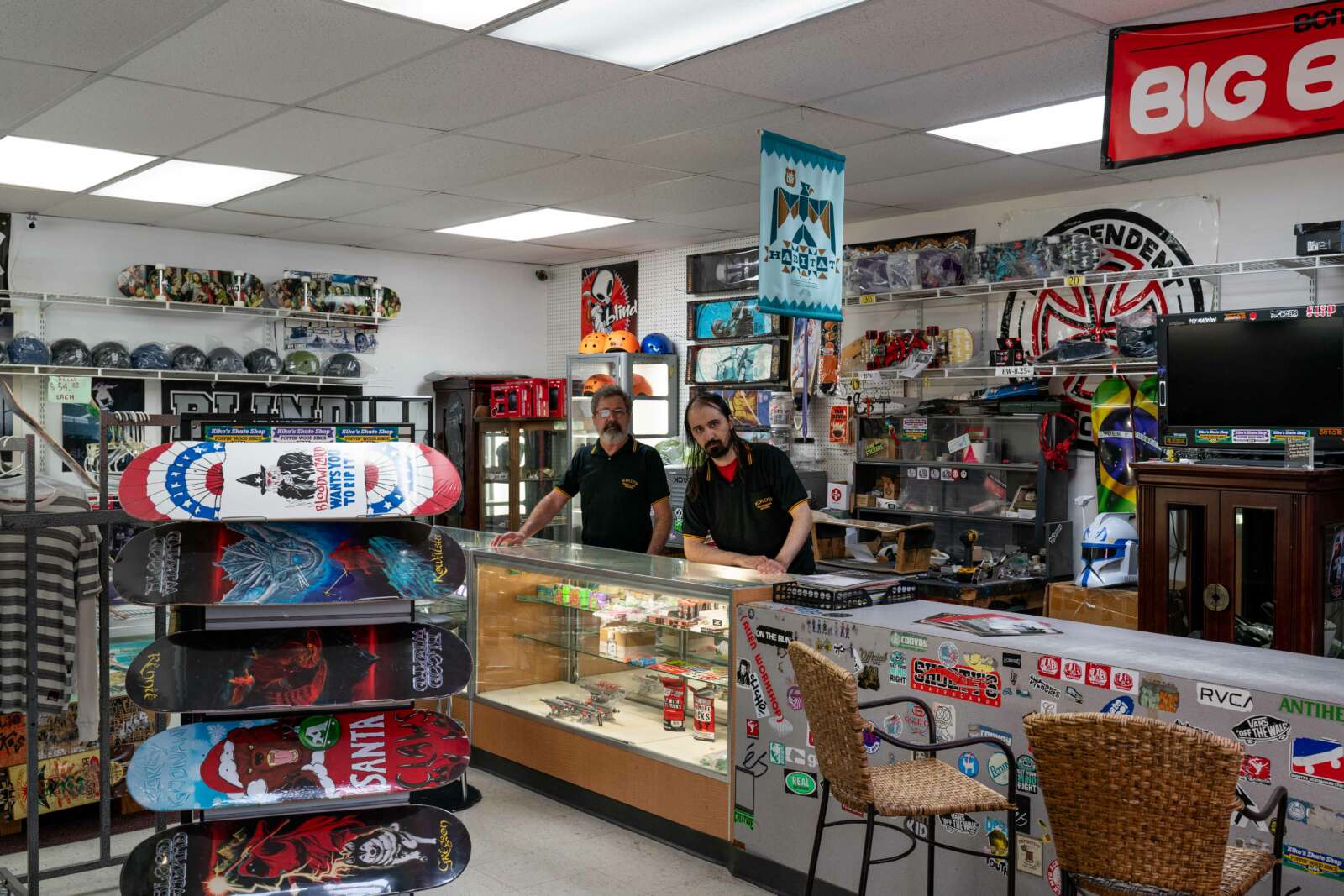
It’s a shoe repair place and a skate shop called Kiko’s Professional Services (6021 Wilson Blvd).

The place is run by Alvaro Pessotti, who immigrated to Arlington from Brazil in the 1980s. He started shining shoes out of a hotel in 1989, offering overnight services for customers. Then, Pessotti began shining shoes at conventions, in food courts and in Reagan National Airport.

“I provided shining to members of the House of Representatives for nine years,” he said. “That was a great opportunity, you know, it opened a lot of doors. I was right in the corridor to get to the White House. I have a lot of business here with the government.”

He has worked in D.C. and in Arlington since he moved to Crystal City in 1983. The longtime Arlingtonian said he has only moved once since then — to Cherrydale, where he has lived in the same house since 1986.

With people working from home, not traveling for their jobs and preferring casual wear, Pessotti says the pandemic has been bad for lots of shoe repair businesses, and he has watched some businesses close for good. A few places have closed in Arlington over the last year, coronavirus-related and not: On Lee Highway, COVID-19 sped up the closure of decades-old shoe repair shop Sam Torrey Shoe Service, and in January 2020 a dry cleaner in Clarendon that offered shoe repairs also announced it would be closing.

Pessotti says there are a few reasons he stays afloat.

“I like what I do,” he said. “I think that is what makes the difference. Plus, the volume is not big right now, and I can turn things around quickly.”

The other reason was a business idea his son came up with soon after Pessotti opened Kiko’s in 2000: selling skateboard supplies. The store started offering skateboarding gear when the Powhatan Springs Skatepark opened across the street (6020 Wilson Blvd) in 2004. The park reopened in 2019 after a complete overhaul.

“He came to me saying, ‘Why don’t we get into this business?’ I tell you it was a great idea,” he said.

Still, business could be better.

“If I was just in shoe repair, I should be closed by now. But even with skateboard, business, it’s much lower than it used to be,” he said.

Pessotti said he hopes that after Labor Day people will return from summer vacations and needing shine and repair services for their work shoes. At the airport, he said there is little business travel to keep shoe shine going.

“It’s interesting — it’s a lot of people traveling, but it’s no business, all casual shoes,” he said.

Locals on social media have lauded Pessotti’s ability to rehabilitate everything from leather handbags to sandals, and encouraged others to take their shoes there.

“He saved a pair of Tory Burch wedges I was about to throw out!” one poster said.


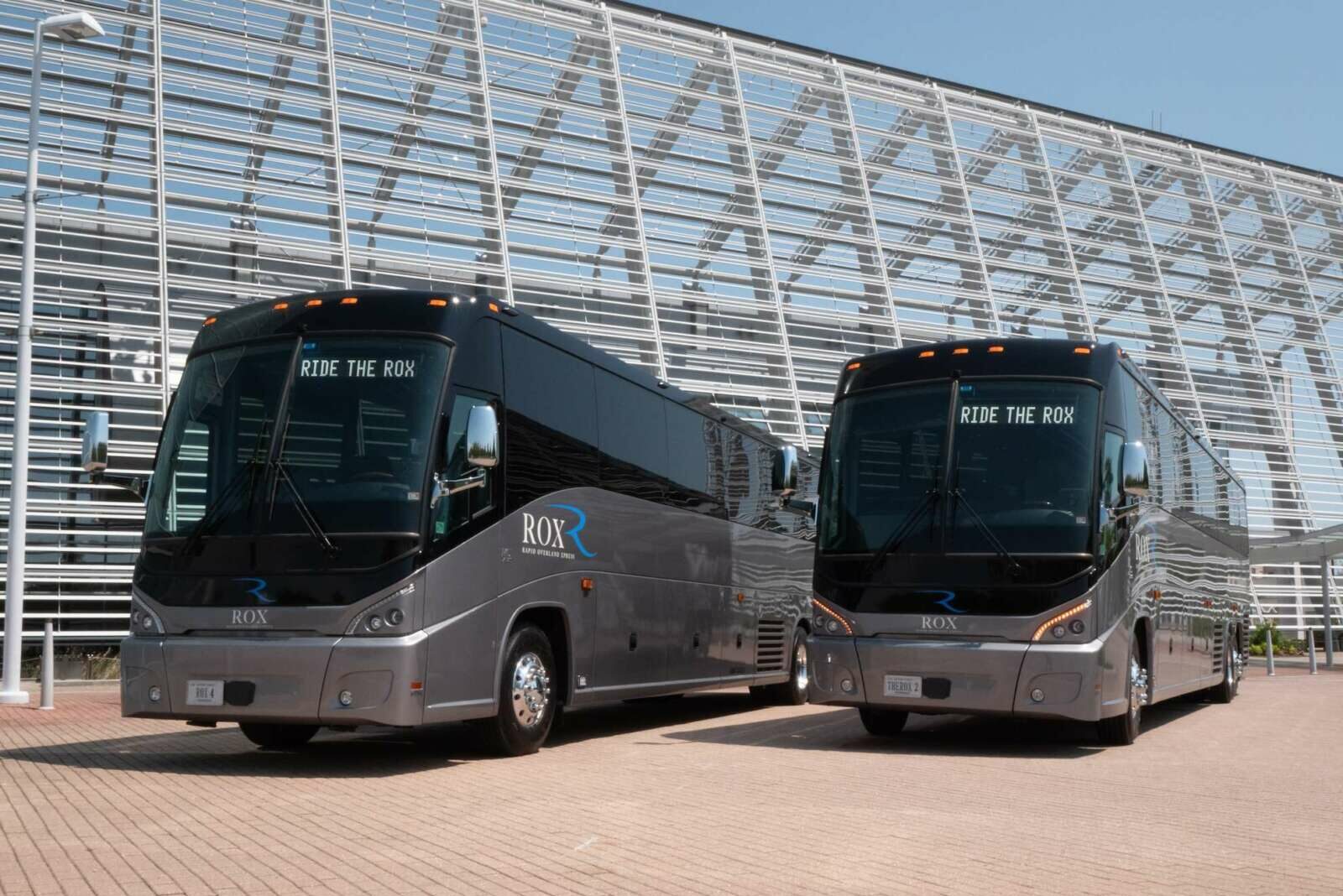
Folks wanting a weekend trip to Virginia Beach can now catch a luxury motor coach — with leather seats and hot towels — that has regular departures from Fashion Centre at Pentagon City.

Rides with the bus company, ROX, started July 1, 2020, and ended 90 days later as coronavirus cases rose in the fall. Service between Arlington and Virginia Beach started back up in July, and the company is set to bring a Charlottesville-Virginia Beach route online in September.

Today, the Virginia Beach-based company has three motor coaches that seat up to 23 passengers (a normal bus has 56 seats). Buses leave Sunday, Monday, Wednesday and Friday.

Each ROX bus has WiFi, individual charging outlets and chargers available on-demand. Riders can choose from a digital library of books, movies and TV shows, and are served a complimentary meal, snacks and soft drinks, with the option to buy alcohol.

“It’s better than any first class flight you’ve been on,” said ROX founder Jeff McWaters, a businessman and former Virginia state senator, who represented part of Virginia Beach.

McWaters, who founded the health insurance company Amerigroup, got the idea from his personal experience traveling for work between Virginia Beach and D.C.

If all the employees drove, “no one could work, it was dangerous, and we had issues,” he said, while flying was a hassle with frequent delays, and trains had poor WiFi and food.

With ROX, the former senator is looking to invigorate the commercial connection between the two hubs while taking advantage of a growing preference for remote work, with occasional trips to the office.

“We learned during the pandemic, you can work from home, you can work from the park, you can work with a glass of wine, but you can’t work on I-66, working on trains is spotty, and you can’t work on airplane,” he said. “You can work on the ROX.”

So far, most riders are using the bus for leisure, but McWaters predicts business travel will return.

ROX stops at Fashion Centre because it is well-connected and offers shopping and dining, he said. The mall, which offers luggage storage, alos has an Avis rental car outpost, and riders can catch the Metro or a car to get to other parts of Arlington, D.C. or the airport.

“It’s got everything,” he said.

While the bus service was shut down, the company earned income from private charters of a fourth bus. That coach features reclining seats, a kitchen, a sofa and eight televisions, including one outside for tailgating.

The bus has been to “some fun places,” and is set to embark on a 10-day hunting trip to Wyoming this fall, said Janice Tuckman, a sales representative for ROX.

“We picked up group at the The Greenbrier and drove them on the Kentucky Bourbon Trail, where they visited distilleries and stayed at an Airbnb. They had a whoopin’ good time, and after four days, headed back to Greenbrier.”


View More Stories