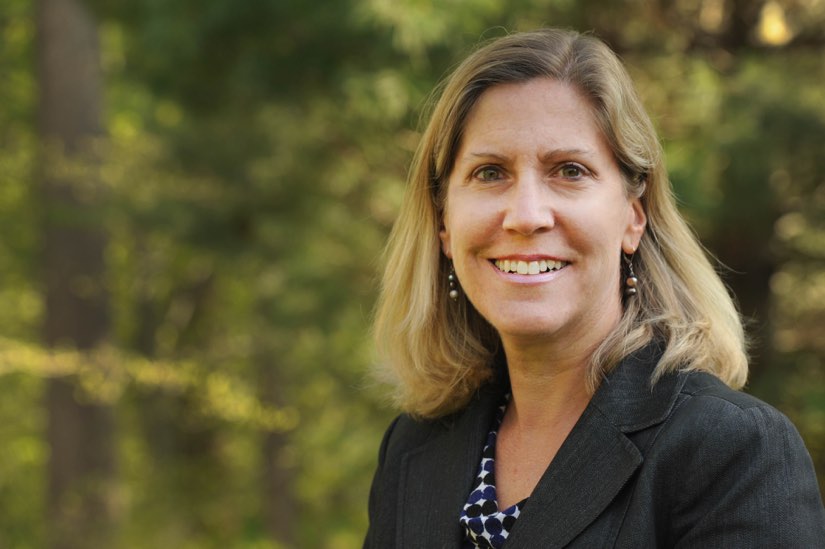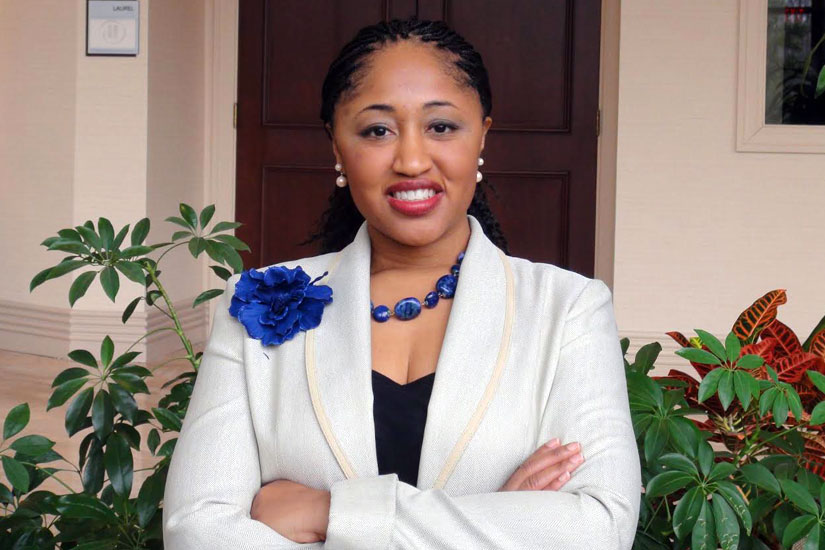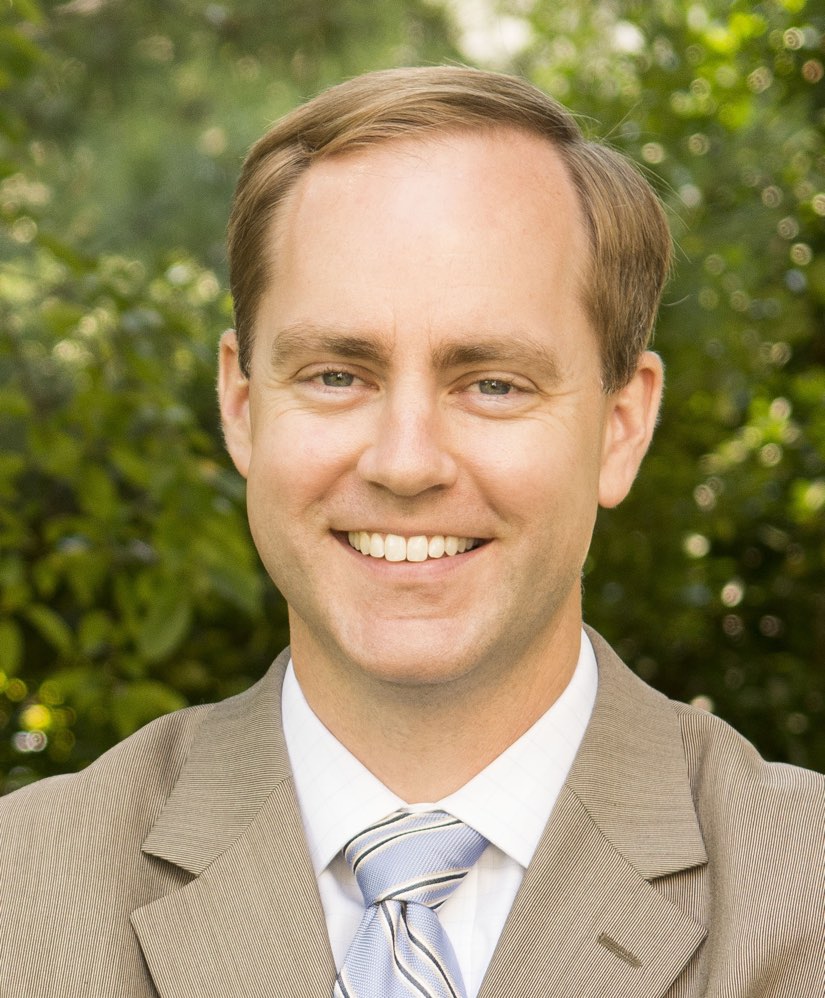
Joseph-Leitmann-Santa-CruzProgressive Voice is a weekly opinion column. The views and opinions expressed in the column are those of the individual authors and do not necessarily reflect the views of their organizations or ARLnow.com. 

By Joseph Leitmann-Santa Cruz 

I am proud to call myself an Arlingtonian. One of the reasons for this pride is that I believe our community recognizes the importance of creating opportunities for all to succeed regardless of one’s country of origin and/or immigration status. Ours is an inclusive community that proactively gets involved in the process of effecting positive change, especially on education-related matters. 

My blended Welsh, Latin American, Jewish and German heritage as well as my having been born outside of the United States and having migrated here at the age of 16 enables me to see immigration from different angles.

I am the descendant of different immigrant communities and experiences. Some of my ancestors sought new and better economic opportunities in the New World (working the mines in Pennsylvania and working the land in Guatemala) and others had to flee Austria to survive fascism and the Holocaust. For those who came to the United States, this country granted them the opportunity to achieve a better life through hard work, service, and education.

Post-secondary education continues to be a critical pathway toward achieving the American Dream. Here in Arlington, we have an amazing organization providing opportunities for low- and moderate-income immigrant youth to be given a shot at achieving the American Dream.

For the past two years, I have had the privilege of being on the Board of Directors of the Arlington-based Dream Project. Dream Project is a non-profit organization with a mission to empower students whose immigration status – over which most had no control — creates barriers to education by working with them to access and succeed in college through scholarships, mentoring, family engagement, and advocacy. 

On June 10, Dream Project hosted the 2016 Scholarship Awards Ceremony at Wakefield High School. On that day, we awarded college scholarships to 76 hard-working young immigrant scholars who graduated from high schools in Northern Virginia.

The young scholars came to the United States from countries in Africa, Asia and Latin America.

While we are pleased to be able to assist dozens of young scholars in their quest to become American success stories, there is still a lot more work to be done. Just this year, we received over 115 scholarship applications from seniors in more than 15 Northern Virginia high schools as well as from college students who graduated from high schools in this region. Our mentoring program is also assisting students from Arlington, Fairfax County, the City of Alexandria, and even from Prince William County, a jurisdiction that at times has been at the forefront of anti-immigrant legislative efforts. 

I encourage you to be part of our efforts to build bridges and not walls amongst the multiple ethnic and national groups that make up our community.

The logic behind supporting and empowering these immigrant neighbors is simple: the better educated these scholars are the more productive members of our society they can be. As with the hard work, innovation, and success achieved by previous generations of American immigrants, we can all benefit from their success.

Just as importantly, it is the right thing to do for students who have embraced American education, succeeded academically, and demonstrated their commitment to making a positive contribution to our community and our society.

To learn more about Dream Project, please visit www.dreamproject-va.org and engage with us on Twitter. We welcome supporters and community members to assist in our mentoring, advocacy, family engagement and scholarship programs.

Dream Project’s work is guided by our vision of a supportive and inclusive community where all people are empowered through education to pursue their dreams and achieve their full potential. This is the type of community I believe Arlington aspires to be. And that is one of the key reasons my wife and I have made it our home; and why we are raising our two children here.

Joseph Leitmann-Santa Cruz works for an asset-building organization in Washington, DC and is a member of the Board of Directors of the Arlington-based non-profit organization Dream Project. 


Arlington County Board Chair Mary Hynes speaks to the Arlington Civic FederationProgressive Voice is a weekly opinion column. The views and opinions expressed in the column are those of the individual authors and do not necessarily reflect the views of their organizations or ARLnow.com.

By Mary Hynes

In theory, everyone is for transparency in government – residents, politicians and public servants, businesses, non-profits, and government workers.

But what does transparency really mean for government operations and citizen interactions?

Is it the Board giving 48 or 72 hours of notice of its pending actions? Is it televising more government meetings? Is it posting information on the web or sending newsletters?

Recently, our current County Board Chair – someone who talks frequently about more transparency as a community solution – called the last minute, unadvertised (some would say non-transparent) announcement of a Blue Ribbon Panel the Board’s “biggest mistake.”

But she relieved the Board of any fault by saying “Our biggest mistake was thinking it would be a concept easily understood by the community.”

The Board did, at least, take a pause – until July 2016 — to hear directly from the community about their “idea”. I doubt the community will say that the task the Board laid out was clear or, in the scope of Arlington’s challenges, urgently necessary.

In evaluating the importance of transparency, let’s consider some other examples:

In 2009, the School Board hired a consultant to develop new school locations. That may have been transparent for school parents who were in the know about the process, but not for neighbors who, after repeated requests, couldn’t determine whether their needs were factored into a 50-year school location plan.

In August 2010, the School Board changed the rules on who could ride the bus in September without public discussion. That non-transparent action upended family plans all across Arlington with little time to develop alternatives.

In 2015, the County Board addressed the lack of success over three years in seeking publicly vetted solutions for the Reevesland property by directing the County Manager at a televised meeting without prior public notice to begin the legal process of creating a divided property. This was probably not transparent, though the public would have opportunities to weigh in on three additional public Board votes required before effecting changes at the property.

On the plus side, it’s good that the County Board is televising its works sessions. And it’s probably good that Planning and Transportation Commission meetings are being televised.

Both actions allow more people to watch, which can give a dedicated viewer a window into issues and choices and might spur an observer into broader participation in the process.

But for decisions that must stand the test of time — whether it’s the 50-year location of a new school or changes to bus routes that touch thousands of families – we need more than television.

Such decisions alter the very fabric of the community and they require broad resident participation and engagement. That special ingredient is what tends to make a decision a good one for the broad community.

When neighbors, government, community groups, and businesses sit and talk to each other about how to solve a real problem or address a complex challenge, the solution achieved is richer, more nuanced, better understood, and is more accessible even to those who couldn’t participate directly.

Such participation and the ability to explain is THE key ingredient our community has employed for many decades to create today’s great place.

Paying lip service to transparency for its own sake misses what really matters. Real community engagement isn’t more opportunities to watch or checking a box. Real community engagement – the roll-up-your sleeves hard work – is how great communities get great.

Today, more than ever, we need elected leaders who understand this on both the School Board and County Board. We need our County Manager and Superintendent to value the varied perspectives and needs that residents bring to the table.

We should commit to continuously developing strong civic engagement skills in County and School staffs so that our greatest resource — the talents and skills of those who choose to call Arlington home – are put to good use.

More than transparency for its own sake, we need greater opportunities for honest civic engagement. It’s our legacy and our future.

Mary Hynes served as an Arlington elected official for 20 years. In 12 years on the School Board she began the open office hours program and instituted a monthly newsletter and liaison meetings with PTA leaders. During eight years on the County Board, her PLACE initiative focused on civic engagement and the County’s commission structure. She instituted Open Door Mondays as an opportunity to meet a County Board member in a casual setting without an appointment. In 2015, she launched the citizen-led Community Facility Study that involved more than 200 residents.


Andrew SchneiderProgressive Voice is a weekly opinion column. The views and opinions expressed in the column are those of the individual authors and do not necessarily reflect the views of their organizations or ARLnow.com.

By Andrew Schneider

For Progressive voice readers and commenters – and those of ARLnow’s other opinion columns — I invite you to tune it to a new program called Arlington Voices that I host on Fridays on Arlington’s very own low power community radio station WERA-LP (96.7 MHz on the FM band).

The program is focused on Arlington as a unique place. Our geographic location near Washington, relatively small size, eclectic mix of Southern and Northern tendencies, transient nature of many residents, shifting demographics, and long-standing commitment to inclusiveness and progressive public policy all make for a lot of interesting ideas generated in Arlington that, in my opinion, are worth talking about.

I want Arlington Voices to be a place where we look more closely at what makes Arlington such a unique community – through dialogue, insight, whimsy, and serendipity. I am committed to maintaining a non-partisan, non-agenda driven show where anyone can feel comfortable, safe, and willing to share their thoughts and their journey.

How did the program come about?

In January 2011, President Obama signed the Local Community Radio Act, the culmination of a decade-long campaign by low power FM advocates to foster community radio across America. Thousands of applications have been filed with the FCC to open low power FM stations across the country.

Despite power levels far below commercial and noncommercial radio stations, community radio stations can make a difference in their communities. With that in mind, Arlington Independent Media launched our own community radio station, WERA-FM, in December 2015.

WERA’s mission is to “enlighten, enrich, and entertain Arlington’s diverse community by promoting and facilitating independent radio.” Like AIM’s long-standing, award-winning, community-based television and film production, WERA enables every day citizens to produce educational, cultural, and “local-centric” programming.

I learned some things running for County Board that I discussed with Paul LeValley in the context of an idea I had for a radio program. During the campaign, I talked to thousands of Arlingtonians who helped me see that everyone has a story to tell. I learned about the unique journeys like the bus driver who has lived in the same house their whole life, the lawyer who dreams of being a landscape architect, parent advocates, community leaders, young residents, immigrants, and the swim coach from my youth.

Paul and I discussed how I might take a deeper look into Arlington one interview at a time. I humbly described my show as a mashup of Diane Rehm, Marc Maron, Charlie Rose, and … Howard Stern.

I didn’t want guests just talking about their professional lives and delivering talking points. I wanted to hear more personal stories about what brought people to Arlington, why they have stayed, and where they see Arlington heading in the future.

Last week, in the inaugural show, my guest was attorney Ted Bilich. I knew we would talk about Ted’s legal career and his work in risk management. But we went much further in discussing how the concept of risk plays out in our professional, personal, and civic experiences.

Ted described risk management as akin to “looking under the rock.” It’s never quite as scary as you think it’s going to be, and the consequences of not looking are always more significant than you imagine.

I hope my guests and I will continue to look under the rocks, calm fears and encourage thoughtful progress.

In the weeks and months ahead, I look forward to continuing the conversation. My next guest, Susan Anderson, is an unsung hero of Arlington – always in the middle of things but never the center of attention; without Susan many things wouldn’t get done. The following week, I will interview Sherriff Beth Arthur. We’ll discuss not only the role Arlington plays in innovative criminal justice and how Arlington handles undocumented individuals, but also leadership and what Arlington means to her.

Please join us and send me your thoughts at [email protected]. Building on the local dialogue that takes place every day on ARLnow, I hope to highlight important conversations that are taking place or should be taking place throughout Arlington. Let’s look under the rock, together.

Andrew Schneider is a lifelong Arlingtonian. He is the Executive Director of Arlington Thrive, a non-profit that provides same day emergency financial support to neighbors in need. Learn more at Arlintonthrive.org. His radio show, Arlington Voices, can be heard every Friday at 10am on WERA-LP 96.7 FM.


Eric HaroldProgressive Voice is a weekly opinion column. The views and opinions expressed in the column are those of the individual authors and do not necessarily reflect the views of their organizations or ARLnow.com.

By Eric Harold

It’s ironic that ARLnow’s April 22 article said “Gutshall attempted to re-litigate the streetcar…” at the first County Board candidate debate held on April 20.

Nothing could be further from the truth. Along the Pike and in Crystal City we know that “streetcar” is no longer on our menu of transit choices. We understand that neither Erik Gutshall nor Libby Garvey is in favor of bringing the streetcar back, and both further agree that Arlington needs to move forward with alternative plans to address Columbia Pike.

The real difference between the candidates is that only one has, for well over a year, been in a position to act yet hasn’t.

Residents of Columbia Pike and Crystal City waited in vain throughout 2015 to hear more specifics from longtime BRT proponents Libby Garvey and John Vihstadt. While we attended meetings and filled out on-line surveys, these leaders offered no new ideas for us to consider – even though they had assured us that easily implemented alternatives were readily available.

Arlingtonians for Sensible Transit (AST) folded its tent, too, leaving us to wonder about its true purpose. AST’s Peter Rousselot, a very vocal opponent of the streetcar, has been thunderingly silent in advocating for any transit alternative. In fact, everyone involved with the “BRT movement of 2013-2014” disappeared completely from publicly advocating for improved transit services that met our well-articulated vision and needs.

The staff-led Transit Development Plan (TDP) process somehow became a reason NOT to provide active leadership for the Pike and Crystal City.

We thought that perhaps we would see the Board’s BRT proponents’ commitment to us in the recently adopted FY17 budget. After all, the draft TDP identified improvements in connectivity between the Pike and Ballston as well as enhancements in the Crystal City area as funding priorities in FY17. In fact, only one new route was funded in the FY17 budget — the ART 55 — a northside bus replacing a Metro bus route.

Unfortunately, our elected BRT leaders’ silence continues. The draft TDP contains nothing new or creative here for 22202 and 22204 to rely on. The TDP says our mode is “BUS and only BUS” and as proposed will do a great job of moving people OUT of Arlington but very little to help people move AROUND Arlington, and especially on the Pike.

Yes, some service is more frequent; and some commuters will get service during rush hour with fewer stops; but for those of us who were hoping to ditch our cars to do most of our regular errands off-peak there isn’t enough here to make leaving our cars behind practical.

Arlington’s success has been built in large part on long-term vision and strategic public investment in solutions that provide mobility beyond the car for those of us who live here — especially in our densest neighborhoods. Making sure this continues to happen on the Pike and in Crystal City is critical to Arlington’s long-term success. We can’t do baby steps or we will strangle our economic recovery.

The streetcar — vilified as it was by some — was a transformational option developed over ten years with significant public input. We’ve removed it, but the problem still remains. Now, we need even more ongoing focused creativity to ensure that the Pike achieves its adopted vision and Crystal City becomes a great place to live as well as work.

In her New Year’s Day remarks, Ms. Garvey stated that “…we have all been frustrated at how long it seems to be taking to design a substitute [for the streetcar].” That is an understatement for residents of the Pike and Crystal City.

We are still waiting for leadership from the County Board — most particularly from Ms. Garvey, who worked so hard to kill the streetcar and advocated so loudly for buses. It is clearly easier to “just say no” and to criticize than to constructively develop and implement positive solutions.

Eric Harold has lived in the Barcroft neighborhood of Arlington since 1998. He has served twice as president of the Barcroft School & Civic League (the Barcroft civic association) and for twelve years until 2013 on the County’s Environment and Energy Conservation Commission (E2C2). He currently serves on the APS Advisory Commission on Facilities and Capital Construction (FAC).


Abby RaphaelProgressive Voice is a weekly opinion column. The views and opinions expressed in the column are those of the individual authors and do not necessarily reflect the views of their organizations or ARLnow.com.

By Abby Raphael

One in five women has been sexually assaulted while in college, according to a 2016 report of the Bureau of Justice Statistics. This statistic does not begin to capture the reality of being a victim of sexual assault. At Duke University, students organize an annual photo exhibition of survivors. These stories about the assaults, and the reactions of friends, family, and campus officials, can be found at: https://www.facebook.com/dukebreakingout.

Recognizing the serious problem of campus sexual violence, Governor McAuliffe established a Task Force on Combatting Campus Sexual Violence in 2014, chaired by Attorney General Mark Herring. The Task Force issued its report in May 2015, with 21 recommendations focused on providing a coordinated and trauma-informed response to survivors of sexual assault, improving campus policies and procedures, and minimizing barriers to reporting.

The 2016 Virginia General Assembly acted swiftly to enact legislation based on many Task Force recommendations, including development of curricula on trauma-informed sexual assault investigations; new requirements for the storage and analysis of Physical Evidence Recovery Kits to assist in the prosecution of sexual assault cases; enhanced information-sharing between universities and local law enforcement agencies; and wider participation by campus officials in Sexual Assault Response Teams, convened by local Commonwealth’s Attorneys.

The Governor’s Task Force also addressed prevention of sexual assault on college campuses, recognizing that education should start in elementary, middle and high school, with a focus on healthy relationships. Such education efforts not only can help prevent sexual assault in college, but also address the reality that middle and high school students also are victims. According to the U.S. Department of Education, one in five female high school students reports being physically harmed and/or sexually abused by a dating partner. It is important to note that male students also are victims of sexual assault in secondary school and college.

In Arlington, much work is being done to promote healthy relationships and prevent sexual assault involving our young people. This includes the Arlington Public Schools (APS) health curriculum taught through tenth grade. In December 2015, APS partnered with PAVE (Promoting Awareness | Victim Empowerment), a national non-profit, to host a national SafeBAE Summit. SafeBAE (Before Anyone Else) is a national campaign to raise awareness about sexual assault in middle and high schools.

(more…)


Andrew SchneiderProgressive Voice is a weekly opinion column. The views and opinions expressed in the column are those of the individual authors and do not necessarily reflect the views of their organizations or ARLnow.com.

By Andrew Schneider

2016 is a year of elections – from the highest office in the land to positions as a Civic Association President in Arlington.

After serving six years as Yorktown Civic Association President, I look forward to the tenure of my elected successor.

Our civic association is located in North Arlington encompassing neighborhoods near Yorktown High School. Within its borders are more than 1,000 households. What did I learn during my tenure? The lessons ranged from the profound (people care!) to the exhausting (this is a lot of work!).

Above all, I learned that running anything is not that easy. Lining up volunteers, writing newsletters, generating community engagement, and scheduling meetings takes time, focus, and attention to detail. Yet, it does lead to interesting opportunities to make a difference — use permits, sidewalk projects, interacting with the County, etc.

I also learned that it’s worth it. The Civic Association provides a voice for County residents at the most fundamental level.

Right before I took office, we were dealing with a major issue in our neighborhood about a restaurant also serving as an after-hours nightclub. The neighborhood activated and the nightclub activity was curbed. Similarly, the Civic Association had been intimately involved in the reconstruction of Yorktown High School, Greenbriar Park, and additions to Marymount University.

Without the Civic Association involvement, basic civic input would have been muted and funneled through more bureaucratic channels.

More recently, Yorktown has been active in helping guide improvements to Chestnut Hills Park (Harrison Street Park), been a founding partner in the Lee Highway Alliance, opposed and worked (to no avail) to prevent the opening of TitleMax, and been engaged in the ongoing conversation about the future of Fire Station 8.

I learned that there are many dedicated County Employees. As President, I engaged with the full gamut of County employees, ranging from Code Enforcement, Law Enforcement, elected officials, and Parks and Recreation staff. Almost invariably, our County employees were responsive, collaborative and dedicated.

We didn’t always agree or get answers as quickly as we wanted, but I believe on the whole we are very well served by County government. One example is the County’s positive response to our efforts to improve conditions and code enforcement at the Garden City Shopping Center.

From that, I also learned that change is hard. My primary goal as President was to work with neighbors, business owners, landlords, and the County on the overall appearance and cleanliness of the Garden City Shopping Center. We have seen improvements. Several new businesses have moved in. But vacancies remain, trash is an ongoing issue, and the parking lot remains difficult to navigate.

(more…)


Krysta JonesProgressive Voice is a weekly opinion column. The views and opinions expressed in the column are those of the individual authors and do not necessarily reflect the views of their organizations or ARLnow.com.

By Krysta Jones

Every March, we celebrate Women’s History Month as a way to honor and remember women who have been pioneers and who have helped shape our society and contributed to its success.

Nationally, the theme of the National Women’s History Project is “Working to Form a More Perfect Union: Honoring Women in Public Service and Government.”

We in Virginia are also seeking to honor women who have been important contributors to Virginia’s progress as a Commonwealth.

We need look no further than Arlington to find women deserving of our respect, praise, and remembrance.

Mary Marshall was a public servant who represented Arlington County for 24 years as a Delegate in the Virginia General Assembly. She championed social services ranging from the rights of senior citizens to the needs of young children.

Evelyn Reid Syphax was a former Arlington elementary school teacher who served on elected and appointed school boards as well as many civic and community organizations. As Chairman of the Arlington School Board in the early 1980s, she led a successful overhaul of the County’s desegregation plan to reduce long bus rides for minority students. Mrs. Syphax’s family continues to provide leadership in our County and those who knew her honor her and remember her passing 16 years ago this month.

Both women exemplified Arlington’s progressive values. Yet despite their successes in and on behalf of Arlington, many current County residents know little about them. The same is true for many other women who were instrumental in bettering life in Arlington or Virginia.

Fortunately, the Women’s Monument Commission of Virginia is aiming to write more women into our history books by recognizing 12 outstanding women for their contributions to society with a monument on the grounds of the state Capitol in Richmond.

We can thank Em Bowles Locker Alsop, a feisty advocate for women’s issues, who in 2010 successfully lobbied for a resolution to establish a monument recognizing Virginia women on Capitol Square in Richmond. The Women’s Monument Commission selected the finalists for the monument from the many recommendations received from around the Commonwealth.

The Monument is likely the first of its kind at a state capitol. Its interactive design centers around an oval courtyard with statues of the 12 women — some standing, some sitting — greeting visitors with descriptions about their lives. Guests will be invited to learn and reflect on the important role women have played in our history, and inspire people to make their own positive mark on our Commonwealth’s history.

Here are just a few of their stories:

  • In 1677, Cockacoeske — the first female chief of the Pamunkey tribe — signed the Treaty of Middle Plantation establishing peace between area tribes and the English settlers.
  • In the late 19th century, Sarah Boyd Jones was the first African-American woman to pass the Virginia Medical Examining Board’s exam. With her husband, she helped create a medical association for Virginia’s African-American doctors and also started a hospital.
  • Born in 1882, Adele Goodman Clark was an active suffragist who became president of the League of Women Voters in 1921. She was instrumental in the establishment of the Virginia Art Commission and is considered to be one of the founders of the Virginia Museum of Fine Arts.

These are the untold stories of phenomenal women in Virginia’s history. The Honorable Mary Margaret Whipple, a former state Senator representing Arlington, serves as the Vice-Chair of the Commission, and is leading the charge to raise funds and awareness for the project.

The Monument also includes a Wall of Honor which will be updated regularly to reflect the continuous contributions women make to Virginia’s history. The deadline to nominate a woman for the wall is March 31. To find out more about the Monument or nominate your favorite Arlington woman, click here.

In honor of Women’s History Month, I hope everyone will learn more and teach our children about the women who worked to make Virginia, and communities like Arlington, places we are proud to call home.

Krysta Jones is founder and CEO of the Virginia Leadership Institute. In 2014 she was named by Leadership Arlington as a Top 40 Leaders Under 40 awardee.


Joseph-Leitmann-Santa-CruzProgressive Voice is a weekly opinion column. The views and opinions expressed in the column are those of the individual authors and do not necessarily reflect the views of their organizations or ARLnow.com.

By Joseph Leitmann-Santa Cruz

I am proud to call myself an Arlingtonian. One of the reasons for this pride is that I believe our community recognizes the importance of creating opportunities for all to succeed. Ours is a community that proactively gets involved in the process of effecting positive change.

As a result, we have done very well as a community from a macro socio-economic perspective. However, as a community we have a lot more to do to create conditions whereby that success develops more broadly – especially for communities of color to prosper in ways that are more equitable while also benefiting the entire community.

This can be seen from a closer look at poverty in Arlington County. Overall, the County has a low income poverty rate (6%). That rate is less than half of the percentage of households living in income poverty across the United States.

Yet African Americans and Latinos face a different income situation in Arlington. Their poverty rates are 14.7% and 15.4%, respectively.

Moreover, while the median household income in Arlington is approximately $103,000, the median household income for African Americans is approximately $60,000 and for Latinos approximately $63,000.

Another indicator of the socio-economic wellbeing of a community is the ability of its residents to deal with an adverse personal financial event. According to a new data analysis from Family Assets Count — a project of the Corporation for Enterprise Development (CFED) and the Assets & Opportunity Initiative — more than one of every five Arlington households (23%) is financially vulnerable. Communities of color fare even worse: 50% of African American households and 58% of Latino households are poor in terms of liquid assets.

A household is considered to be liquid asset poor if it does not have enough savings to live above the poverty line for just three months if they face loss of a job, a medical crisis, or a similar substantial income disruption.

As a result, one out of every two African American and Latino households in Arlington live in a state of persistent financial insecurity, one emergency away from falling into debt, losing a home, or suffering from poverty.

While there is no magic formula to fix problems in life, there are steps we can take to build a stronger sense of household financial security.

Based on my professional experience in working on asset-building and wealth creation solutions for low- and moderate-income families, I have five recommendations that can serve as a good starting point:

  • Empower low- and moderate-income African American and Latino youth to maximize their usage of our world-class education system;
  • Further position our superb library system as a conduit to provide financial capability services and access to financial capability resources and tools;
  • Strengthen and increase homeownership, entrepreneurship and small business technical assistance programs for Spanish and Amharic-speaking residents;
  • Lower the number of Arlingtonians who are unbanked or underbanked. Currently, one out of five Arlington residents is unbanked (doesn’t have a checking or savings account) or underbanked (has bank account but still relies on an alternative financial service such as payday loans or check-cashing;
  • Raise awareness of tax credits for low-income residents in order to attract further federal monies to our community, especially associated with the Earned Income Tax Credit, Child and Dependent Care Credit, and the Savers Tax Credit.

Let’s celebrate financial and entrepreneurial successes in our community. Let us also recognize that we can simultaneously provide opportunities for many others to succeed. More can be done to make our vulnerable residents less so, and enhance financial acumen to broaden our prosperity.

We can be a stronger community and a more stable and equitable community by recognizing vulnerability and sharing more broadly the tools for success.

I look forward to being part of our collaborative approach to benefit all in the community. How about you?

Joseph Leitmann-Santa Cruz works for an asset-building organization in Washington, D.C. and is a member of the Board of Directors of the Arlington-based non-profit organization Dream Project.
Mary RouleauProgressive Voice is a weekly opinion column. The views and opinions expressed in the column are those of the individual authors and do not necessarily reflect the views of their organizations or ARLnow.com.

By Mary Rouleau

We have seen mounting evidence and substantial reporting about the growing income and wealth (net worth) gaps nationally. These gaps have become a key theme in this year’s Presidential election. They have also been picked up more and more in local coverage.

Less reported — and perhaps less understood – are the opportunities for economic mobility in our society and the factors that influence such mobility. Economic mobility measures movement up or down the income ladder throughout a person’s life (intragenerational mobility) or relative to their parents (intergenerational mobility).

Income inequality and the wealth gap have both grown. The opportunities for intragenerational and intergenerational mobility have not improved – which may be one of the reasons for growing income and wealth gaps. While upper incomes grow, people with lower incomes find themselves stuck on the same rung of the economic ladder.

To reverse the income and wealth gaps, we will need to generate opportunities for economic mobility.

What can be done on the local level to create and sustain economic mobility?

It starts with housing, which is the primary portal to education, jobs, and transit — or, in other words, to opportunity.

The Urban Institute conducted a recent review of how housing policy has an impact on economic mobility.

The review noted that “housing policy can play an important role in improving the economic well-being of low income households….” Yet, “housing policy can also impede progress when families do not have access to affordable, safe and stable housing and when economic and racial segregation leave some communities with reduced financial, social and human capital….”

At its core, stable affordable housing enables children to have better cognitive development and improved learning. This success, in turn, reduces parents’ stress, allows families to maintain relationships, and helps build social connections. Through these relationships and connections, it is easier to identify and access resources for training, education and enrichment.

By contrast, when policies trap people in unstable housing, poor schools, few jobs, and a lack of community assets and social institutions we see individuals being unable to ascend the next rung of the economic ladder. This serves to “perpetuate the cycle of poverty for the next generation.”

The type of poverty and opportunity gaps that are generally the focus of study are found in large areas of concentrated poverty in cities and rural areas. Unstable housing, poor schools, few jobs and a lack of assets doesn’t sound like Arlington.

(more…)


Alan Howze headshotProgressive Voice is a weekly opinion column. The views and opinions expressed in the column are those of the individual authors and do not necessarily reflect the views of their organizations or ARLnow.com.

By: Alan Howze

Last night, the County government and Arlington Public Schools held a joint community forum on how to improve snow removal. No doubt, there was a wide range of suggestions, and with global warming contributing to more frequent mega-snows it is good to see that County leadership recognizes that its approach to snow removal needs to adapt.

How well did the County respond to the blizzard? Let’s look at the numbers:

376      Lane miles maintained by Arlington (excludes VDOT and federal)

4          Days to complete first pass of all Arlington roads

254      # of vehicles – county and contractor – involved in the cleanup

That amounts to 81 feet of roadway cleared per vehicle per hour.

In the spirit of yesterday’s forum, I offer suggestions for how the County and APS can get the community up and running more quickly.

1 – Use data. Many cities and state transportation departments have implemented GPS systems that track vehicles – including snow plows. Real-time information is made available to emergency managers and residents. County government and APS should implement a unified GPS system for their respective fleets – and work with contractors to improve data collection.

Better data, made publicly available, would speed snow removal and lower costs, and the benefits would extend beyond the snow season, providing year-round information to improve county services. The benefits of better data for snow clearing include:

  1. Real-time snow clearing information for residents, emergency managers, and fire / EMS
  1. Information to improve operations – for example, it would allow for analysis of driver behavior, time spent plowing, filling up with salt, refueling, shift switches, towing out other trucks and more
  1. Data upon which to make route adjustments – during the storm cleanup and for future planning
  1. More efficient application of de-icing material with less duplication of street coverage
  1. Faster clearing by allowing plows to be deployed where needed – with less duplication

2 – Set targets. The County uses a four-phase approach to snow removal – but a process is not a goal. What is missing are explicit service level targets. How about 24 hours to clear roads and reopen schools in snows of 8 inches or less – and 48 hours for larger storms? Or a target to clear 120 feet of roadway per vehicle work hour.

With a clear target, County and APS staff can engineer an approach to hit the mark. Clear expectations would also improve accountability by setting benchmarks for measuring performance.

To budget for infrequent but significant snowfall, money could be set aside in a “rainy day” fund that rolls-over from year-to-year. In years without snow the account accrues and then is drawn down when big storms hit.

3 – Integrate County and APS efforts. As with the County, APS should have clear targets for how quickly after storms it will clear its properties, and then work with the County to develop a joint approach to re-open schools quickly.

Arlington students missed an entire week after the storm. A number of APS schools didn’t see a plow until late Tuesday, a full three (sunny) days after the storm had stopped. And on many streets, County crews dumped giant snow piles onto already cleared sidewalks – forcing pedestrians, including children, to walk in the streets to reach bus stops, metro or schools – and further delaying school reopening.

The community facility study conducted last year identified a number of opportunities for County/APS cooperation, and snow removal is another area where joint efforts could benefit the entire community.

There was much that Arlington did well in the storm. The County made a real effort to provide better information to residents – albeit with mixed results. Staff and contractors worked incredibly hard and should be commended for their effort.

By working smarter – using data, setting explicit targets and coordinating County and APS efforts – our community can recover from the next storm faster, with less disruption, and for lower cost.

Alan Howze lives in the Overlee Knolls neighborhood and has been active in Arlington civic life, including a prior bid for County Board. He is the father of three Tuckahoe Elementary Turtles and a management consultant by day.


Max BurnsProgressive Voice is a weekly opinion column. The views and opinions expressed in the column are those of the individual authors and do not necessarily reflect the views of their organizations or ARLnow.com.

By Max Burns

(Updated at 11:35 p.m.) When you think of an Arlingtonian on food assistance, what image comes to mind? The stereotypes are ready-made: the single mother trying to stretch a dozen eggs across two weeks. The low-income minority without sound employment options. The homeless.

We make assumptions about these individuals every day because their circumstances prevent them from engaging in civic life. We don’t see them at political meetings or bar crawling with the khaki crowd in Clarendon. They exist separate from us, if they exist to us at all.

But those stereotypes aren’t supported by the data. I reached out to Arlington County for demographic information on residents below the poverty line and received an instructive but dusty 2011 survey on poverty in Arlington County published by the Department of Community Planning, Housing and Development. As sparse and dated as the research may be, what it shows shatters our preconceptions.

Nearly 40% of residents living below the poverty line are 18-34 — by far the largest subset of Arlingtonians. Their faces look like mine. They are “Millennials,” that much-maligned term. They came to Arlington to work, and many are gainfully employed. They don’t live lavishly. Many have multiple roommates. They aren’t bar crawlers.

Even with jobs and housing, their income just isn’t enough to handle the rising cost of living in Arlington County – north or south. That’s a systemic problem.

These young people came to Arlington to pursue their careers because of our promise as a community, but more and more end up at the door of the Arlington Food Assistance Center, which provides food support to community members in need. Now, those who help need help in turn.

An AFAC staffer told me it used to be easy to tell who visited AFAC to volunteer and who turned up for food assistance. That isn’t the case anymore. With demand for food assistance rising countywide, especially among the newest generation of residents, it’s imperative we take two immediate steps to address what is both a pressing public health crisis and a moral one.

First, Arlington County must get serious about producing updated statistics on poverty and hunger in our community. AFAC took the first step with a 2012-2013 Food Insecurity Survey that showed over 7% of Arlington suffers from chronic food insecurity. This requires those who have the means to make their voices heard on behalf of those who do not.

Second, and most immediate, we need to re-engage as a community with AFAC and organizations that support these marginalized groups. That means giving our time, expertise and, yes, contributions. It’s a logistical challenge to distribute 4.3 million pounds of food a year. Your hands and checkbooks make a direct, meaningful impact. This is what community really means.

I’ve met countless Democrats, Republicans and politically unaffiliated people who give their time and money to help alleviate the suffering of their fellow Arlingtonians. But they can’t do it alone. If Arlington is to remain a magnet for new residents, if we are going to reduce the need for other, more expensive social services for those in poverty, the County Board must make addressing food insecurity a priority.

We must find a way as a community to engage with those we don’t see. It’s time to put our values – progressive or otherwise – to the test for those we call neighbors and friends.

Max Burns is a member of the 8th Congressional District Democratic Committee and former President of the Arlington Young Democrats.


View More Stories