

This post is exclusively for ARLNow Press Club members. Not a member? Join here.
Members can sign in here.

This post is exclusively for ARLNow Press Club members. Not a member? Join here.
Members can sign in here.

Sponsored by Monday Properties and written by ARLnow, Startup Monday is a weekly column that profiles Arlington-based startups, founders, and other local technology news. Monday Properties is proudly featuring 1515 Wilson Blvd in Rosslyn.
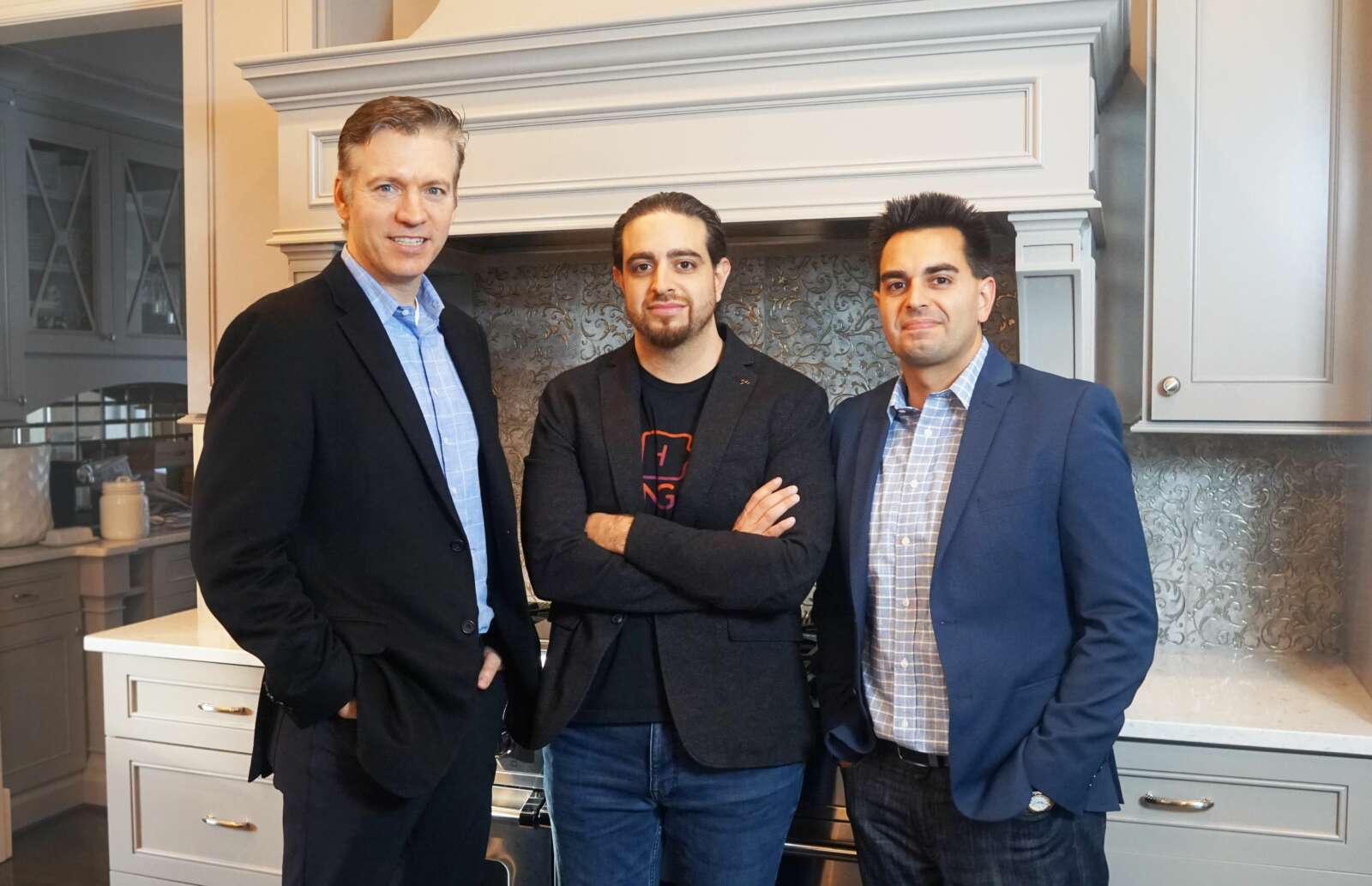
Ballston-based catering marketplace HUNGRY has nabbed $21 million in funding with backing from celebrities and athletes.
Investors in its Series C funding round include actress Issa Rae, “America’s Got Talent” host Terry Crews, NFL player DeAndre Hopkins, NBA player Lonzo Ball and boxer Deontay Wilder. More than a dozen venture backers joined in the round, including Arlington-based Sands Capital Global Venture Fund.
Previous celebrity backers include the investment group of hip hop mogul Jay-Z and singer/songwriter Usher.
With the newly-raised money, co-founder Shy Pahlevani tells ARLnow that HUNGRY can fund its plans to add new locations and services.
“Over the course of the next year, HUNGRY plans to expand its onsite services and hire more aggressively,” co-founder Shy Pahlevani said. “The money from our Series C funding will be used to strengthen our West Coast presence, starting with Southern California and Silicon Valley. In September, we plan to launch onsite services in Los Angeles and the San Francisco Bay Area.”
The startup is opening HUNGRY Cafés, which provide café and coffee bar services to business clients, and expanding food truck experiences through a partnership with food truck company Roaming Hunger.
The funding round caps a successful year for the startup, which was in the top 500 of the latest Inc. list of the fastest-growing companies in America.
“Not only is it an incredible honor to receive a spot on the Inc. 5000 list, it’s a true testament to the hustle, grit, and smarts our team has displayed over the last year and half,” he said. “Despite all the challenges we faced during the early stages of the pandemic, we’ve defied the odds — relying on great teamwork and staying true to our core value [of] positivity.”
The co-founder says celebrity support has bolstered HUNGRY’s brand recognition.
“Celebrities are investing their money in startups more and more, and we believe they’re choosing to back HUNGRY because of our mission, values and history of innovation,” he said.
One of HUNGRY’s biggest pandemic-era innovations is still growing: Virtual Xperiences. Groups can purchase experiences such as online cooking classes with name-brand chefs with supplies sent directly to participants’ homes.
Pahlevani said that business is still “booming… [and] we expect it to continue its staggering growth for the foreseeable future.”
The startup continues to roll out cooking, baking and drink-making experiences — as well as ones not related to gastronomy — on a monthly basis. A number of new concepts are launching this fall, Pahlevani said.
Meanwhile, HUNGRY is seeing part of its original business line, office catering, ramp up again.
“Office catering is starting to pick up across the country as more and more Americans get vaccinated,” Pahlevani said. “We continue to support thousands of clients through our Food Solutions onsite offerings across Boston, New York City, Philadelphia, D.C. Atlanta, Dallas and Austin. Veteran clients, such as Wayfair and Appian, are back to providing meals for their teams onsite, providing a delicious incentive for their teams returning to work.”
Another pandemic-era pivot, however, has come to an end — a partnership with Washington Nationals. When baseball resumed, without fans, those watching from home could get stadium food delivered via the startup.
“The continuation of our Washington Nationals partnership will depend on stadium attendance and interest, but we thoroughly enjoyed working with the powerhouse sports team and would be happy to continue those efforts to provide fans with a stadium experience at-home moving forward,” Pahlevani said.
During the pandemic, HUNGRY has also given back, feeding those who are food insecure as well as members of the National Guard who were sent to D.C. for the inauguration of President Joe Biden. And with the holiday season soon approaching, Pahlevani said HUNGRY has some initiatives planned.
“As we get closer to the holidays, we plan to activate a number of donations and events designed to help those who are food insecure in the communities that we serve, which will include the greater Arlington community,” he said.
This post is exclusively for ARLNow Press Club members. Not a member? Join here.
Members can sign in here.
This post is exclusively for ARLNow Press Club members. Not a member? Join here.
Members can sign in here.
Sponsored by Monday Properties and written by ARLnow, Startup Monday is a weekly column that profiles Arlington-based startups, founders, and other local technology news. Monday Properties is proudly featuring 1515 Wilson Blvd in Rosslyn.
Rosslyn-based Bitpath is working to roll out a 21st-century use for a midcentury technology: TV broadcasting.
The company says the architecture used by TV stations to broadcast their programming can also support the secure and efficient transmission of data. After all, TV and radio broadcasters and mobile phone service providers all send information wirelessly the same way, using radio frequency spectrum.
“We’re trying to be innovative and smart about how radio frequency spectrum is used,” said John Hane, the president of the startup.
The ability to repurpose broadcast TV for data services already has approval from the Federal Communications Commission, which regulates the broadcast airwaves. But broadcasters have yet to jump on the new tech because they are too small and too decentralized — relatively speaking — to do research and development and provide the services at a national scale, Hane said.
Bitpath was founded to do just that, he said. The startup is developing a platform comprised of a nationwide network of TV stations and aims to market it to companies that could benefit from better and safer data services. Bitpath is funded by big players in the TV industry, Sinclair Broadcast Group and Nexstar Media Group, which are keen to roll out this technology.
And Hane said Bitpath may be fully operational soon.
“We’re going to be launching services next year,” the president said.
This innovation to broadcast comes as more “smart” devices come online and are competing for fast, high-quality data streaming, while big mobile providers are rolling out 5G to support the rising data demand. But no matter how fast these networks get, the networks still have to transmit data through individual streams, which Hane said slows things down.
“The nice thing about the broadcast architecture, it never slows down,” he said. “That releases the cell network to be used for critical uses that can only be carried that way.”
People gravitate toward internet, even when broadcast makes more sense — for instance, streaming a big sporting event — because they are accustomed to the customization the internet provides. Bitpath’s innovations integrate the efficiencies of broadcast with the personalization of the internet, Hane said.
Consumers will one day see the tech in action in a variety of ways, he said. Regional TV stations will be able to air more personalized political advertisements or weather alerts. GPS resolution on devices will get more precise, improving a navigation app’s ability to pinpoint where a driver is and thus the quality of the directions. And security can be enhanced for certain applications.
“You associate TV stations with providing TV. That’s the majority of what they’re going to do, but a small amount of their capacity can provide amazing new services,” Hane said.
Hane says mobile providers were able to pioneer this territory because they were not as regulated as TV broadcasting is.
“Cell networks have grown so fast, because there’s been so much investment in them,” Hane said. “We use them for just about everything, even when we don’t realize that it doesn’t make the best economic sense.”
For Bitpath’s project to work, it has to make sure the hardware is consistent enough for e-commerce companies, car manufacturers and banks to buy in.
“They’re going to want fully developed services, and a platform that just works the same everywhere,” he said. “They’ll have one point of contact, one set of standards, one set of operations, and one point of support, but the capacity actually is comprised of stations all across the country owned by 20 different owners.”
This post is exclusively for ARLNow Press Club members. Not a member? Join here.
Members can sign in here.
This post is exclusively for ARLNow Press Club members. Not a member? Join here.
Members can sign in here.
This post is exclusively for ARLNow Press Club members. Not a member? Join here.
Members can sign in here.
This post is exclusively for ARLNow Press Club members. Not a member? Join here.
Members can sign in here.
Sponsored by Monday Properties and written by ARLnow, Startup Monday is a weekly column that profiles Arlington-based startups, founders, and other local technology news. Monday Properties is proudly featuring 1515 Wilson Blvd in Rosslyn.
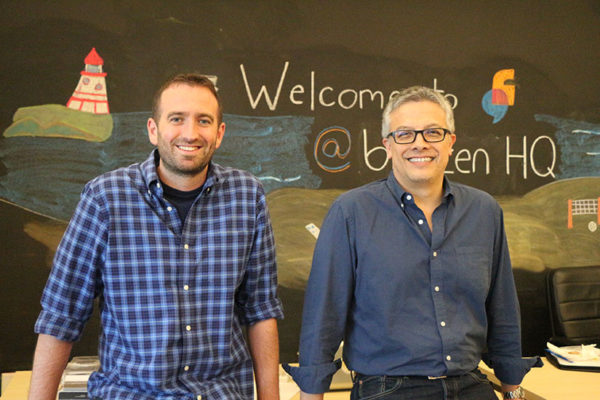
Founded in 2007, Clarendon-based Brazen experienced significant growth since the start of the pandemic.
And it’s no wonder, since the company has offered virtual hiring event technologies before virtual-anything was a societal norm. Brazen aims to help companies, universities and organizations engage students, job candidates and employees and improve recruitment and retention, via virtual job fairs and other online events.
“While the mission has remained the same, the types of organizations that saw a need to leverage virtual technologies to help with recruiting and retention expanded greatly in the past year,” the company tells ARLnow.
Brazen said its clientele has expanded from recruiting teams at Fortune 500 companies to state and regional workforce organizations to universities.
The mid-sized, remote-first startup has raised $13.4 million in funding and maintains headquarters in Arlington. Amid pandemic-era labor shortages, it has managed hiring initiatives for Spectrum, University of Southern California and CVS Health, among others.
The company says hiring in general is on the rise right now.
“The war for talent took a break but it’s only heating up more,” it said. “When you add the pressure of 2020’s events and the call for action around diversity, equity, and inclusion, it’s more important than ever for employers to hire, for universities to stand out and support their students and alumni, and for associations, organizations, and government entities to connect more people with more opportunities.”
While Brazen’s offerings have also evolved over the last 14 years, its focus remains virtual hiring events.
“Our product innovation has accelerated in the past couple years to make recruiting and hiring even better,” Brazen said. “We’ve added live video broadcasts, video chat, a live chatbot, and more to help facilitate more meaningful connections for all people.”
Those features distinguish Brazen from the likes of Zoom and Cisco WebEx, to which companies rushed to keep up business and host virtual events.
Unlike the other platforms, Brazen said its platform supports everything a team needs to host a virtual event: customizable landing pages, chat management tools to ensure recruiters chat with the most qualified candidates, live broadcasts and follow-up features.
Like Zoom and Cisco WebEx, Brazen says its platform attracted new customers during the pandemic.
“At the onset of the COVID-19 lockdowns and remote work, companies all over the world flocked to Brazen to allow them to continue to hire and retain talent through virtual hiring events and virtual career fairs,” it said. “The genie is out of the bottle and virtual hiring is here to stay.”
The company pointed to in-house research, which found that 83% of surveyed talent acquisition professionals — who are not Brazen clients — said a majority of their hiring events will remain virtual post-pandemic.
“Now that organizations, from enterprise businesses to universities, and anyone working to connect employers and job seekers, have turned to virtual event platforms like Brazen, they’ve seen first hand the benefits of these tools,” it said.
This post is exclusively for ARLNow Press Club members. Not a member? Join here.
Members can sign in here.