
Sponsored by Monday Properties and written by ARLnow, Startup Monday is a weekly column that profiles Arlington-based startups, founders, and other local technology news. Monday Properties is proudly featuring 1812 N. Moore Street in Rosslyn.

A web-based news show hosted by Modev, a Ballston-based company exploring the future of voice controls, recently won one of “the internet’s highest honors,” a Webby.

The award for the show, named VOICE Talks, “caps off a crazy year,” said Modev CEO and founder Pete Erickson.

Pre-pandemic, the startup organized large events that connected developers and large companies interested in the latest industry developments in voice control technology (think: Amazon’s Alexa, Apple’s Siri and Google Assistant). As the vaccine rollout continues and case numbers drop, the startup is beginning to return to its original purpose and aims to host a conference in 2022 in Arlington

But over the last year, Modev had to figure out something virtual to sustain the company and the conversations around voice control technologies. Erickson said the company came up with the idea for a multi-segment talk show, which is now sponsored by Google Assistant.

“Our business largely got canceled when the pandemic hit. Right away, we started this program called VOICE Talks,” he said. “We just thought that doing a virtual conference wasn’t going to be good enough. We needed something more creative — something that people would enjoy doing.”

Humans are not wired for virtual conferences, which are not great business drivers and are frustrating for conference sponsors, Erickson said. The talk show, meanwhile, presents the same kind of information that would be learned at a conference in a more compelling format, he said.

The show is streamed live with a host in New York City who adds introductions, transitions and conclusions to pre-recorded segments that feature guests from companies ranging from tech startups to blue chip corporations like Nike and Dunkin’. During the show, the host takes questions, runs polls and gives out awards.

“We built up a super loyal audience that tunes in and is always growing,” Erickson said.

According to the CEO, the show has more than 100,000 email list subscribers and averages 25,000 views per month.

“In the age of YouTube, those aren’t large views, but we aren’t a consumer show: this is a business-to-business show in a niche industry,” he said.

Erickson intends to keep the show running monthly even after the pandemic ends and Modev can return to planning live events.

“It’s a nice new way to connect the community globally,” he said.

Erickson said voice control technology space is rapidly changing, but the market is still in its early days.

“What a lot of people have experienced with Google Assistant, Alexa or Siri is the first iteration of voice,” he said. “You’re going to see it start to gain more ubiquity as time goes on.”

These changes will be at the center of the 2022 conference in Arlington, slated for Oct. 10-15, 2022, and headquartered at a hotel in Crystal City. The conference will use indoor and outdoor spaces and tents to “create a really fun, interactive and safe environment for a lot of people to meet,” he said.

“With 22 hotels and lots of restaurants and space, National Landing is a space where you can have a pretty large event and link it all together and have a compelling experience,” he said. “It lacks a large conference center or trade show floor, but I think those things are overcome-able with a creative use of space.”

Photo via VOICE Talks/Youtube


Sponsored by Monday Properties and written by ARLnow, Startup Monday is a weekly column that profiles Arlington-based startups, founders, and other local technology news. Monday Properties is proudly featuring 1812 N. Moore Street in Rosslyn.

Online community builder Higher Logic recently announced its acquisition of Vanilla, a Canadian cloud-based community software company.

Headquartered in Rosslyn at 1919 N. Lynn Street, Higher Logic creates online forums for companies, nonprofits and member-based organizations. By acquiring Vanilla — which helps brands engage customers and increase their loyalty while reducing costs — the company said it will be able to serve more customers than any other community solution of its kind.

“At a time when human connection is more important than ever, Higher Logic will expand its offering to customers across new markets and geographies,” the company said in a press release. “Together, Higher Logic and Vanilla will give its customers more choices with purpose-built community engagement solutions that meet the needs of their use case, industry and users.”

Higher Logic CEO Kevin Boyce said he was impressed by how Vanilla served customers including technology company Oracle and electronics company Acer. He said it mirrors Higher Logic’s success with health tech company Change Healthcare and network security company Juniper Networks.

“Our scale, profitability, and accelerating growth will allow us to increase our investment in both the association and corporate markets and continue to build industry-leading engagement solutions that connect people, knowledge, and ideas,” Boyce said in a press release. “We are excited to welcome the Vanilla team into the Higher Logic family.”

Vanilla is the sixth company that Higher Logic has acquired since its founding in 2007. Last year, it acquired Customer Imperative, a South Carolina-based startup that builds conversations between businesses and customers, following up on an acquisition spree of four companies in 2017.

“Higher Logic has a proven track record in building community engagement and facilitating meaningful connections for organizations,” Vanilla CEO Luc Vezina said in a statement. “With more interactions happening digitally, community has become mission-critical for almost every organization. We are thrilled to be joining forces with Higher Logic to create the pre-eminent online community solution.”

The company said it brought on a number of Vanilla employees, giving Higher Logic a total global headcount of 400.

“Throughout the COVID-19 pandemic, our leaders made decisions that ensured we could run the business without having to furlough or lay off our employees,” Chief People Officer Joanna Luth told ARLnow. “Because of our commitment to our employees, we were focused on putting their needs first. We have continued to grow over the past year and have been actively hiring across all areas of the business.”

Higher Logic helps associations grow while retaining their customers and members. Today, it also serves more than 3,000 clients and has expanded into the corporate business-to-business market. Outside of its headquarters at Waterview Tower in Rosslyn, the company has offices in Portland; Saratoga Springs, New York; Australia and Canada.

Company board member Bob Nye, who is a partner at JMI Equity, said in a press release that Higher Logic has quadrupled its recurring revenue to more than $80 million in the last four years.

“The collective digital engagement expertise positions Higher Logic’s employees and customers well for growth and shared success in this new world,” he said.


Sponsored by Monday Properties and written by ARLnow, Startup Monday is a weekly column that profiles Arlington-based startups, founders, and other local technology news. Monday Properties is proudly featuring 1812 N. Moore Street in Rosslyn.

Online secondhand shopping is taking the U.S. fashion market by storm and one Arlington startup is helping traditional retailers adapt.

Recurate — co-founded by CEO Adam Siegel, who lives and works from home in Rosslyn — allows retail brands to host resale platforms where customers can sell their used items directly from their purchase history.

The company manages the shipment from the seller to the buyer, and the seller is compensated with in-store credit or cash once the product is delivered.

“Every brand has lost revenue and customers to the resale market,” CEO Adam Siegel tells ARLnow. “Sites like Poshmark and ThredUp have made it cool to buy pre-owned products, and brands’ customers are flocking to those sites to buy branded pieces.”

The market for used clothing and accessories is projected to more than triple in value in the next decade, from $28 billion in 2019 to $80 billion in 2029, Fast Company reports. In 2019, it expanded 21 times faster than conventional apparel retail.

“We’re confident that branded ‘recommerce’ will become mainstream in the next couple years, and brands realize that they need to sell both new and pre-loved items in order to address their customers’ desires,” Siegel said.

Many consumers are switching to secondhand clothing to avoid supporting “fast fashion,” the moniker encompassing international retailers such as Zara and H&M, which sell trendy, inexpensive clothing made in sometimes unsafe factories by workers earning a few dollars a day.

Siegel said he and his business partner Chief Operating Officer Wilson Griffin founded Recurate by drawing on their long histories in sustainable retailing.

Griffin worked in The Gap’s sustainability team for the last six years, addressing issues like energy reduction, renewable energy generation, and waste reduction.

Siegel said he built and led the sustainability and ethical production programs for the Retail Industry Leaders Association, the trade association that represents the largest retailers.

Those experiences led them to found Recurate and expand resale opportunities to retail outlets.

“It was clear that the secondhand market was growing, and given our collective experience, we knew that buying used is the most sustainable way to shop,” Siegel said.

The company, founded in early 2020, just before the pandemic, announced it recently raised $3.25 million in seed funding. Recurate intends to use the funds to continue to expand operations and its business reach.

This is the second round of funding, following up on a pre-seed round last summer, Siegel said.

The company recently announced it is partnering with La Ligne, Mara Hoffman, and Peak Design. Siegel said brands find Recurate through mutual connections and online events.

“We are fortunate to have so much interest from such wonderful — and industry-leading — brands,” Siegel said.

Photo courtesy Adam Siegel


Sponsored by Monday Properties and written by ARLnow, Startup Monday is a weekly column that profiles Arlington-based startups, founders, and other local technology news. Monday Properties is proudly featuring 1812 N. Moore Street in Rosslyn.

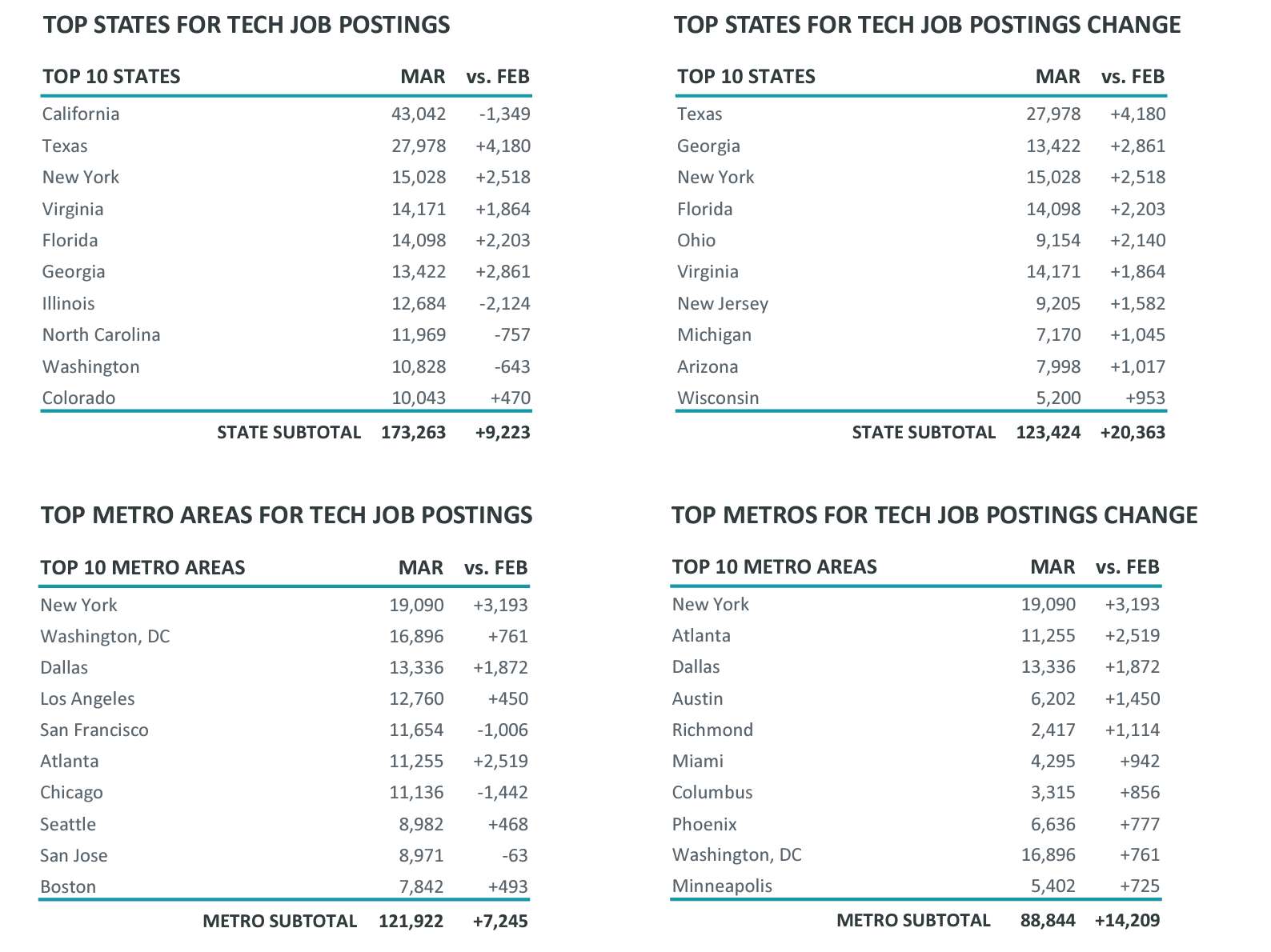
The landscape for tech jobs is changing, according to a new study from the Computing Technology Industry Association (CompTIA).

Although California still enjoys the No. 1 position for job postings, it is losing jobs while openings surge from Texas to Florida.

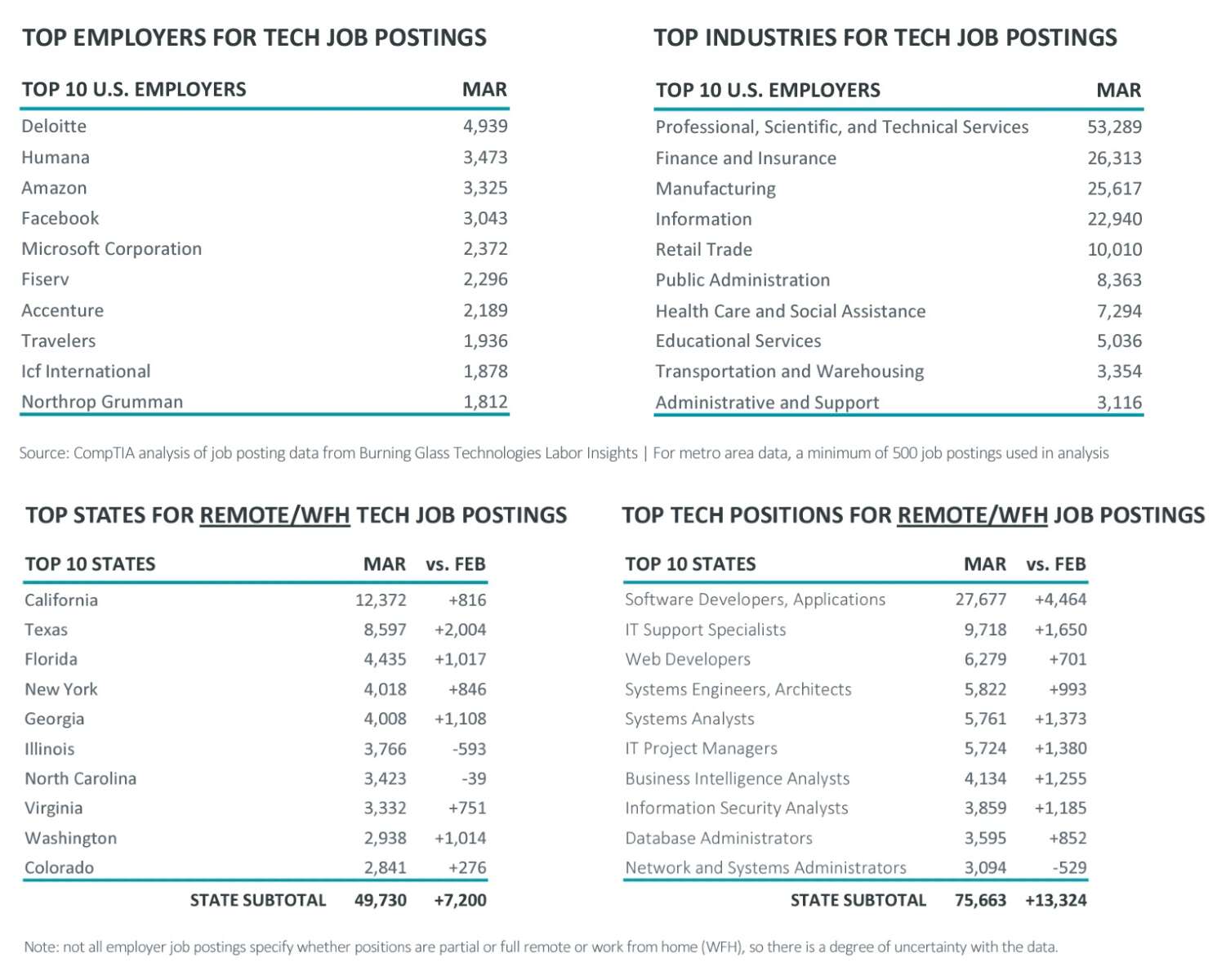
Virginia continues to hold its own as a hub for tech talent and jobs, coming in fourth for overall tech jobs and Artificial Intelligence jobs posted in March. Job postings increased enough from February to land the Commonwealth in the sixth, while it ranks eighth for work-from-home positions.

“While Virginia does not rank among the states with the highest tech industry employment growth rates over the past five years, this is largely due to the fact that the Commonwealth of Virginia already has a very large tech industry,” Suzanne Clark, a spokeswoman for the Virginia Economic Development Partnership, said. “States that have seen the most spectacular growth in tech industry employment are by and large ones that began with very small tech industries.

Clark said the organization wants to see more economic diversification in the form of more private sector — as opposed to public sector — tech jobs.

“Much of Virginia’s underperformance in tech sector growth is attributable to our over-reliance on the federal government for tech sector jobs,” she said.

Arlington is doing its part to sustain Virginia’s tech job growth, according to Arlington Economic Development. The county’s tech industry is expected to stay ahead of the growth of the tech industry nationwide over the next five years, said Kirby Clark, a spokeswoman for AED.

“Arlington maintains its competitive edge for tech talent with its highly educated workforce, above-average millennial workforce participation, a cluster of higher education institutions and proximity to innovative government agencies,” she said.

Arlington’s tech industry grew by 19.3% from 2015 to 2020, nearly 4% more than the national average. It is expected to grow by 15.6% over the next five years, compared to the expected national growth of 14.7%, the AED spokeswoman said.

Last year, Arlington’s top industries included computer systems services and technical consulting services, sectors she said are poised to continue growing.

Many of the employers with the most job postings in March have headquarters or prominent outposts in Arlington: business and tech consulting group Deloitte has a space in Rosslyn, Amazon is moving into its HQ2 in Pentagon City, consulting group Accenture has three spaces in the county, including a cybersecurity center, while another consulting group, ICF International, has an outpost in Crystal City.

The local Deloitte office is also driving a 361-position increase in AI jobs in Arlington, with its recent announcement that it will launch a new AI research center to advance federal work, Clark said.

“Demand for AI professionals has grown substantially since 2017, when there were 165 total AI jobs posted in Arlington,” she said. “Fast-forward to 2020, there were 1,172 AI jobs posted in Arlington.”

The VEDP spokeswoman said the demand for people with AI skills in Virginia during the past year was more than twice the national average.

Nationwide, thousands of tech jobs are remote opportunities, and Kirby Clark said AED is dedicated to ensuring Arlington remains an attractive place to work from home.

“Many employers intend to adopt a hybrid work model following the pandemic, making Arlington well-positioned to remain a hub for companies by enabling them to offer an attractive home and work environment in a single setting,” Clark said. “Whether working at an office or home, Arlington will continue to provide an outstanding quality of life that attracts people to live here.”

The VEDP spokeswoman, meanwhile, said the organization expects hybrid to be the new norm as well, which could help lift up the state as a whole, not just its large metro areas.

“Capitalizing on tech telework positions is also an important opportunity for rural and small metro regions that might not have been first in line to land tech jobs in the past,” Clark said.

Charts via CompTIA 


Sponsored by Monday Properties and written by ARLnow, Startup Monday is a weekly column that profiles Arlington-based startups, founders, and other local technology news. Monday Properties is proudly featuring 1812 N. Moore Street in Rosslyn.

All eyes — and phones — are trained on the rollout of 5G.

The next generation of mobile internet service promises higher data rates, meaning more people will be able to access the internet simultaneously and enjoy, among other things, higher quality videos and faster download speeds.

Telecommunications companies can either buy new, custom 5G hardware or install 5G servers on existing cell phone infrastructure. Many companies are opting to use servers because they are cheaper and more flexible than buying hardware, according to Jim Shea, the co-founder and CEO of the Rosslyn-based startup DeepSig (1201 Wilson Blvd).

How these servers run, however, could be improved, Shea said.

His startup is looking to make these servers run smarter, not harder, using machine learning, or artificial intelligence (AI). DeepSig is currently testing a solution, which would be a simple software upgrade for these servers, in its Rosslyn lab.

The software could have political and environmental consequences for the rollout of 5G, Shea said. It is a goal DeepSig has been working toward since it was founded four years ago.

“I call this the inflection point,” he said.

DeepSig has been working with a number of government organizations and private companies, trying to raise enough money to launch the lab and hire the staff needed to develop this smart software. It finally launched the lab in March.

“We’ve been building toward this,” Shea said. “It takes a long time, but once you can prove your product is valuable, you can scale rapidly. This lab is key to us getting our tech out there.”

Currently, phones are constantly seeking a good cell connection and telling local wireless network hubs, called “base stations,” when the connection is bad. In that case, the base stations may increase power to improve the signal quality.

Using DeepSig’s software, the 5G servers will repurpose the information coming from cell phones to understand the station’s surroundings and what may impact signal quality.

For example, Shea said near his WeWork office, the cell signal bounces off Rosslyn’s tall buildings. Using AI, the 5G server could learn how the signal interacts with buildings and harness these patterns to improve signal quality without having to resort to ramping up the power.

“That’s what we’re proving out with the AI lab,” Shea said. “We know of large industrial partners who are excited about our tech. By June or July, we’ll be making calls through our labs and inviting people to come and see the tech at work.”

The software improves the 5G server’s performance without ramping up the power, which Shea said is better for the environment.

“Everyone’s worried about global warming,” he said. “Our software reduces energy consumption.”

Ultimately, Shea said the goal is to also get DeepSig’s technology embedded into American-made 5G hardware.

Currently, American mobile providers can choose from three of the four major hardware providers, all outside of the U.S.: Finland’s Nokia, Sweden’s Ericsson or South Korea’s Samsung. (Telecom companies cannot work with the Chinese company Huawei over data privacy concerns.)

Shea said DeepSig’s tech will help make American-produced hardware competitive in the marketplace.

“The problem in the U.S. is that we don’t have a domestic [5G] industry,” he said. “We hope to be part of the group that gets the U.S. to rehome this technology back here. There’s a lot of interest in the government to get that to happen.”

Photo courtesy DeepSig


Sponsored by Monday Properties and written by ARLnow, Startup Monday is a weekly column that profiles Arlington-based startups, founders, and other local technology news. Monday Properties is proudly featuring 1812 N. Moore Street in Rosslyn.

Territory Foods, a meal delivery service that lets consumers personalize to their diet, recently announced it raised $22 million in a recent funding round.

Territory delivers its healthy meals directly to consumers through “a decentralized back-end marketplace” that partners with local chefs in the communities served by the company.

The Rosslyn-based startup caught the interest of investors that have put their money behind companies such GoPro, the online consignment service thredUP, the vegan “meat” alternative Beyond Meat and the fast-casual salad chain Sweetgreen. Two retired sports celebrities, soccer player Abby Wambach and NFL tight end Vernon Davis, also invested.

Territory Foods has enjoyed 250% year-over-year growth and is poised to increase its footprint nationwide, according to Rick Lewis, a general partner of U.S. Venture Partners, the investment group that led the funding round.

“We’re thrilled to partner with Territory Foods, a mission-driven brand who has built an incredibly distinctive business model by tapping local chefs who make healthy-eating attractive, tasty and attainable to consumers around the country,” Lewis said in a statement. “More than ever, we need true innovation in the food space.”

The new round of funding will allow Territory to expand the number of chefs it works with and provide customers more meal options, said CEO Ellis McCue.

“We go to great lengths to create optimized, personalized meals for each consumer and empower our chefs with data about our customer’s taste and nutritional preferences so they can tailor each meal, ultimately providing more variety than other delivery options out there,” McCue said in a statement.

The startup has raised $44 million to date, which Territory Foods said is the most venture funding raised by a female-led company in the ready-to-eat food category.

According to the company, Territory’s meals are made from scratch using responsibly-sourced ingredients.

“Territory’s ever-rotating, regionally curated menus always feature fresh non-inflammatory ingredients that optimize whole-body health, support a wide variety of dietary preferences, and have minimal to zero environmental impact,” the company said.

The startup launched in the Del Ray neighborhood of Alexandria in 2012 but the company now lists its headquarters as being based at the WeWork in Rosslyn (1201 Wilson Blvd). Territory Foods has grown to serve over 20 major U.S. markets from coast to coast.

Partner chefs and restaurants hail from all over the U.S., and D.C.-area customers will recognize one partner restaurant — local restaurant chain Founding Farmers. Of Territory’s partner food-service companies, McCue said that 42% are women-owned and 38% are led by people of color.

Territory Foods also partners with Feeding America, donating proceeds, meals and volunteer hours to fight food waste and hunger in the U.S., according to the website.

Territory announced last winter that it was recognized as a Best Company for Women and McCue a Best CEO in a 2020 awards competition from the startup Comparably. The awards recognize workplaces that are good for women, have a diverse workforce and promote work-life balance, among other categories.

Photos via Territory Foods


Sponsored by Monday Properties and written by ARLnow, Startup Monday is a weekly column that profiles Arlington-based startups, founders, and other local technology news. Monday Properties is proudly featuring 1812 N. Moore Street in Rosslyn.

When Arlington resident Michael Morgan suffered an anxiety attack, he had no idea that the source of his recovery would one day become a business.

The attack was a slow burn. Morgan started feeling unsteady on his feet and a few months later, he could not get out of bed.

After seeking therapy, he realized his physical state stemmed from business and personal troubles: smarting from two startups that sank, due to legal and financial missteps, and reeling from his father’s recent cancer diagnosis.

He said the attack “was 100% related to the entrepreneur life” while the diagnosis “hit me like a ton of bricks.”

Morgan, a biochemist, has a green thumb, and his first steps outside his house were to his backyard, where he healed through gardening. He did not intend to turn his hobby into a company but his friends saw his gift and spotted the business opportunity. This year, Morgan launched Shimo, an organic gardening kit for novices with a little space.

Sustainability runs like a vein through his three ventures. Morgan’s last two ventures included a sustainable phone and Everblume, a hydroponic appliance that nearly made it to the business-launching TV show Shark Tank.

But unlike these two, Shimo grew more organically, he said.

“Entrepreneurs will often start by creating a product and finding customers,” he said. “This time, it was the customer saying, ‘I think you have a good product.”

Shimo takes Morgan back to the root of gardening, too.

“When you think about growing food, it’s really that simple: soil, seed, water, sun,” the biochemist and entrepreneur said. “Why over-complicate it?”

The kit ($50-$60) ships to customers’ doors and includes 100% organic soil, seeds, plant food and a grow bag made from recycled material. Morgan said Shimo makes growing food less intimidating for newbies.

“People ask me, ‘Why is this unique?'” he said. “I tell them, ‘Go to Lowe’s or Home Depot one weekend, go to the Lawn and Garden Center, and then tell me where you’re going to start. There are thousands of seeds and fertilizers to choose from. Then, they get it.”

Families can grow delicious lettuce, tomatoes, peppers, and more for as little as two dollars per harvest, which he said could be a boon to people who live in food deserts.

The bags and the soil will last several years and the recurring costs are just new seeds, fertilizer and an annual soil amendment, Morgan said.

“Shimo uses the concepts we’ve used for several thousands of years and puts a spin on it for an urban or suburban environment, where people don’t have space or access to land, but still are interested in growing their own fresh food,” he said.

With his bounty, Morgan said he has pickled unripe cherry tomatoes to use in martinis instead of olives, made sage sticks and lavender oil, and is working with a D.C.-based mixologist to craft a cocktail using the flowers from mustard greens. He is compiling these ideas and other tips and tricks for his website’s blog.

Ultimately, Morgan aims to cultivate a community of micro-homesteaders around Shimo. He envisions people swapping knowledge, experiences, stories, as well as their own recipes and DIY ideas.

“I know it’s cliché, but when you think about agriculture, society, and history has been, it has always been community-driven,” he said.

Photos courtesy Shimo


Sponsored by Monday Properties and written by ARLnow, Startup Monday is a weekly column that profiles Arlington-based startups, founders, and other local technology news. Monday Properties is proudly featuring 1812 N. Moore Street in Rosslyn.

When Megan Gray was diagnosed with epilepsy at age 23, doctors told her she could never drive again.

She had to get rides from family and friends or hail Uber and Lyft drivers. Forgetting something at the grocery store meant more hassle than returning was worth and calling a car got expensive.

“Becoming epileptic changed my life,” Gray said. “People don’t realize how important driving is until you need it and can no longer do it.”

Rather than give up her independence, however, she decided to create a technology that could help her. Once she did, Gray founded Moment AI, which is developing an artificial intelligence system that can detect, monitor and analyze human health abnormalities that occur on the road.

“Moment AI can change the way drivers drive by providing the vehicle with more knowledge than it ever has had before about the driver’s health,” she said. “Our algorithms are made to adapt to the unique drivers in the U.S. Our goal is to provide more access to driving to people who have disorders.”

Gray tinkered in her 500-square foot apartment with technology she bought from Amazon using money she made playing poker. Her circle of epileptic friends tested out her technology along the way.

Once she established her company and brought on a co-founder, Gray said investors took notice. Within a year, SoftBank — the multinational Japanese company that runs the world’s largest venture capital fund (and famously invested big in WeWork) — backed her.

Another high-profile investor is Nvidia Corporation, which helped to develop the AI technology in Tesla vehicles.

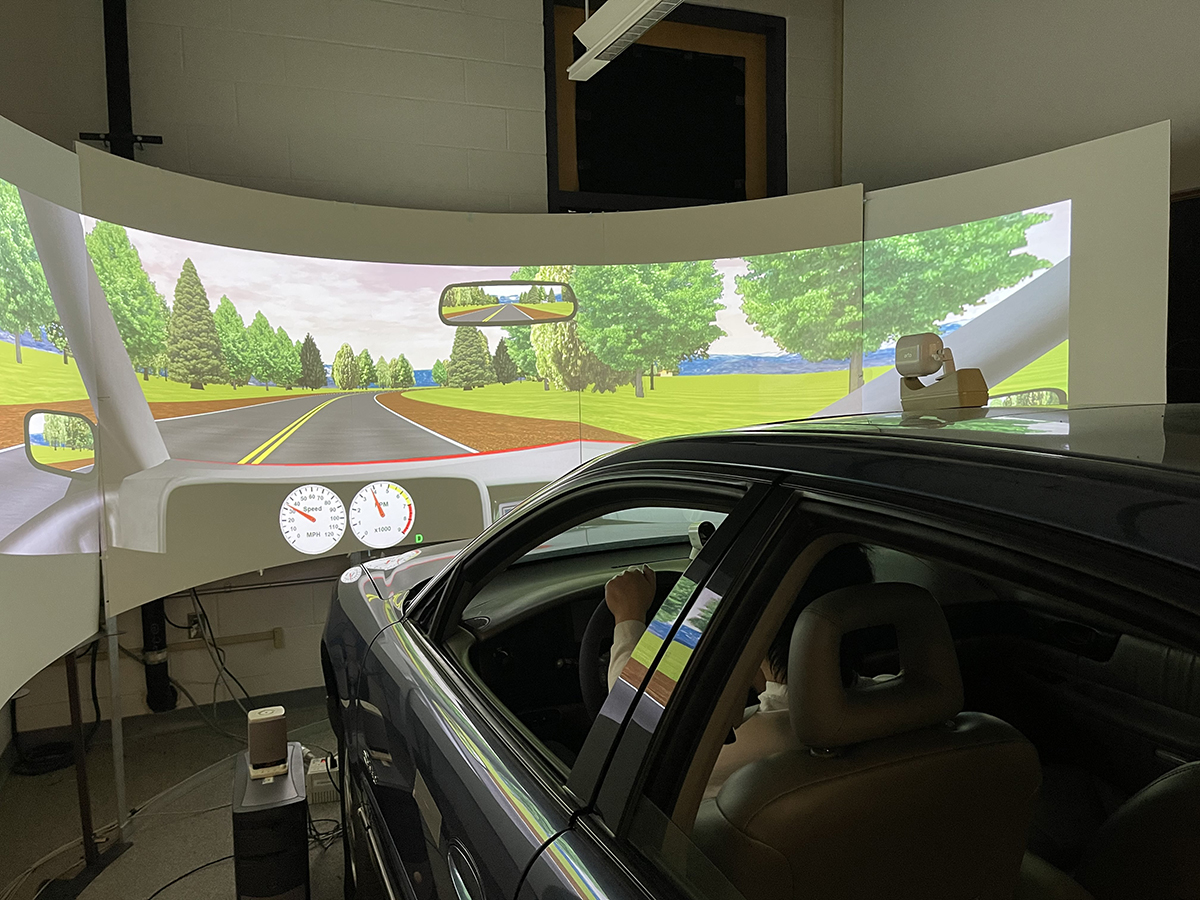
And now, Moment AI is partnering with Samer Hamdar, an associate professor of civil and environmental engineering at the George Washington University, to create a prototype of an in-vehicle AI system that could detect the start of a health problem, take control of the car and guide the car and driver safely to the side of the road.

“Mobility and certain core services should be available to all people, including those with health problems and demanding work environments,” Hamdar said in a press release. “Moment AI is a special project: it showcases the need for transportation equity and builds on a personal story to launch an academic-industry partnership that may have a significant impact on the lives of many in need.”

Now, Gray and her team have access to vehicles, simulators and graduate students to develop this potentially life-saving tech. Hamdar and his team will use driving simulators to create images and videos to train AI systems to predict and detect fatigue, seizures, strokes and heart attacks.

“We literally went from my living room to a WeWork in Arlington and now, a research lab in D.C.,” she said. “It has been pretty fast-paced.” Moment AI is headquartered at the WeWork in Rosslyn, after moving from the Crystal City WeWork, which recently closed.

Gray is also working on a way to get the tech into existing cars for those who cannot afford a new car with built-in AI.

The founder and CEO is the first woman and first African American to partner with the GWU transportation lab. In addition to breaking down such barriers, she is particularly proud that a record number of graduate candidates applied to work on her project with Hamdar.

(more…)


Sponsored by Monday Properties and written by ARLnow, Startup Monday is a weekly column that profiles Arlington-based startups, founders, and other local technology news. Monday Properties is proudly featuring 1812 N. Moore Street in Rosslyn.

After several years of quietly building, a local IT management company — temporarily leaning into cybersecurity — is enjoying huge gains.

C3 Integrated Solutions, which helps government contractors use Microsoft cloud solutions, saw 172% growth over the last two years. According to the company, located in Rosslyn, those numbers make C3 the fastest-growing IT management company in Arlington.

Inc. Magazine ranked it the 69th fastest-growing company in the D.C. region for 2020 and ranked it among the top 2,000 companies nationally.

“I’ve been joking that it’s an overnight success 13 years in the making,” co-founder and president Bill Wootton said. And those numbers are for growth in 2019.

“2020 ended up being an even better year for us,” Wootton said. “Even with COVID-19, we had our best year ever last year, and this year, with some of the new services and solutions we’re about ready to roll out, we’re going to keep going in the same direction — up and up.”

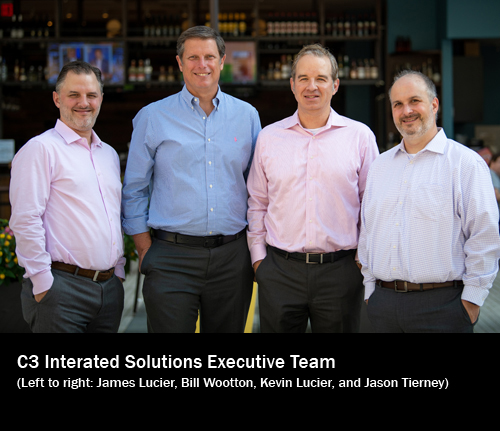
C3 Integrated Solutions started a decade ago while Wootton and co-founder Kevin Lucier, an Arlington native, worked for cable and telecommunications company RCN. They wanted to give clients outside-the-box solutions and decided to start a company that would do just that.

When they took the plunge, however, they struggled to stay afloat in a mature industry crowded with similar companies. Three years in, Microsoft cloud services went online, which they saw as a lifeline.

Listening to some clients talk about the cloud, Wootton and Lucier saw a new opportunity and decided to jump ship. But there was one problem: neither had IT experience.

The duo hired people with the right expertise, including Kevin’s brother James — as well as long-time IT veteran Jason Tierney — and C3 Integrated Solutions was (re)born.

C3 focused on providing IT services to nearby companies, which, in Arlington, meant many of their clientele were defense contractors. That incidental relationship proved a huge boon to C3 a decade later when it found a new market to enter: cybersecurity.

Today, the company also helps government contractors keep their companies secure while meeting changing cybersecurity regulations. C3 is taking advantage of new cybersecurity regulations for defense contractors that the government codified in November, which Wootton and Lucier saw coming four years ago.

“We’ve been a mover in this particular solution set for three to four years now, and it’s just now starting to get mainstream recognition,” Wootton said. “We have a track record in an area where people are just realizing there’s a market shift.”

These regulations will take five years to roll out just for the defense industry, he said. The government is looking to expand these requirements to other departments, which means C3 is poised to ride this wave for a while.

(more…)


Sponsored by Monday Properties and written by ARLnow, Startup Monday is a weekly column that profiles Arlington-based startups, founders, and other local technology news. Monday Properties is proudly featuring 1812 N. Moore Street in Rosslyn.

The finish line is in sight for a Clarendon-based startup that has developed a wearable breathing sensor called Respa.

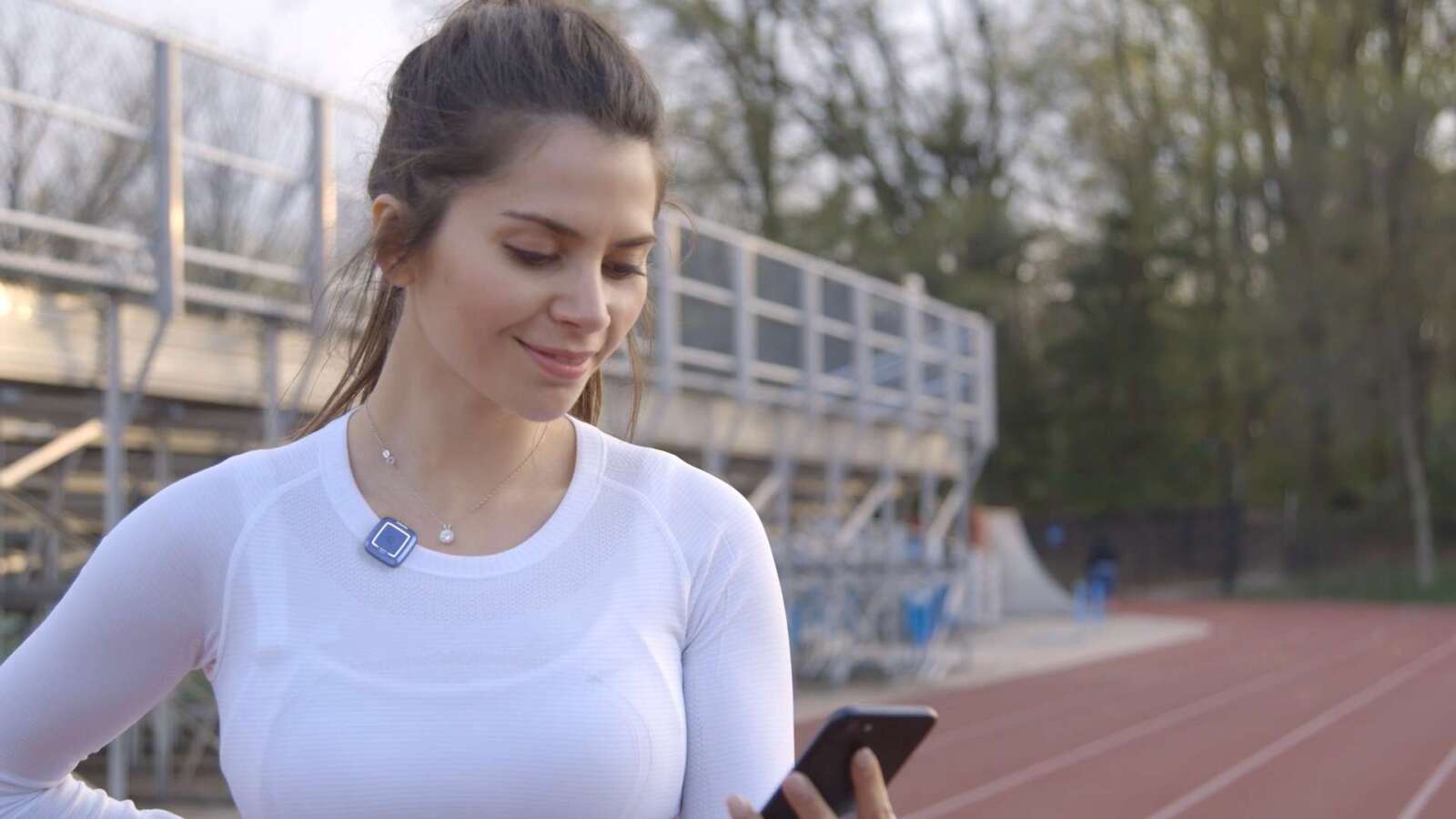
Zansors, located at 3100 Clarendon Blvd, has created an inch-square device that connects to a mobile app, showing wearers their breathing patterns. Originally created to help people screen themselves for sleep apnea from the comfort of their home, Zansors has also tailored the product to fit the needs of fitness enthusiasts who want additional data on their exercise.

The company has been around nearly nine years, during which time the product has gone through research and development and has been beset by engineering and developmental delays, said co-founder Abhijit Dasgupta. Now, Zansors is in the final stages of developing the app and connecting it to the device.

“We’re looking forward to ramping up this spring and getting out the door in the summer,” Dasgupta said. “It’s obviously a good feeling that we’re in the final stretch. It’s a lot of work, effort and sweat equity. The hiccups have been frustrating, but we’re just trying to hammer it home.”

Dasgupta, who has a doctorate in biostatistics and previously worked in medical research, said the idea for a wearable breathing sensor came from seeing how common — but under-detected — sleep apnea is.

“To create a device that can allow you to detect it at home, you wouldn’t have to get wired up, and spend the night in a foreign bed,” Dasgupta said. “We felt sleep studies weren’t reflective of your own sleep experience.”

The wearable sensor detects how sleepers move and breathe and warns doctors of abnormal patterns, he said. But Respa is a screening product, not a diagnostic one, he said.

Over time, Zansors started looking into other areas where breath and motion are synced, and made it work for athletes and fitness buffs.

“It’s the same device, leveraged in different ways,” he said.

Dasgupta and his team have other ideas for repurposing the product for respiratory diseases, something at the forefront of their minds due to the coronavirus pandemic.

Although it has become fodder for future development, the pandemic has also hurt Zansors’ ability to travel, meet buyers and clients and raise investment money, Dasgupta said. When personal protective equipment was hard to come by, Zansors pivoted to selling high-quality masks with filters, which it sold to several U.S. Army and Air Force bases, he said. Now that PPE is easier to find again, Zansors has refocused on the Respa.

The company is also in active talks about possible military usage of the device, Dasgupta said.

“There are plenty of ideas out there but we need to get this out the door so that we can put this in the ‘done’ column,” he said.

Initially, most of Zansors’ work was funded by the National Institutes of Health, through its Small Business Innovation Research grant program, as well as a few investors in Northern Virginia. The Arlington community specifically has been supportive of Zansors, Dasgupta said.

“I think it’s great that we’re in Arlington,” Dasgupta said. “Arlington is a great place to center a business because there’s so much going on: There’s so much networking and the business development groups are good.”


Sponsored by Monday Properties and written by ARLnow, Startup Monday is a weekly column that profiles Arlington-based startups, founders, and other local technology news. Monday Properties is proudly featuring 1812 N. Moore Street in Rosslyn.

(Updated 1:20 p.m.) Arlington resident and avid cyclist Carla Uriona spends most of her time demystifying data for people.

The English major-turned-coder-turned-designer is the co-founder of Factor3 Digital, a small, Arlington-based design company that creates data visualizations for nonprofits and corporations. In addition to design projects, she and co-founder Evan Potler spend a good deal of time helping prospective and current clients understand the fundamentals of responsible data visualization so they can do the work in-house if they wanted.

“Not enough agencies take that mentoring perspective,” she said.

Uriona founded Factor3 Digital partly out of frustration. The nonprofit firms she worked for, which farmed out some of their digital operations to contractors, often called on her to “translate” what the firms were doing.

“I think that those of us who are in these specialized fields, we live in our heads all the time,” she said. “Some don’t want people to see the ‘magic formula,’ and I fundamentally disagree with that so much.”

So in 2017, she and Potler, who had worked together at three nonprofits before, took the plunge to “be the firm we wish we could have hired” — the one that takes the time to cultivate relationships with clients and mentor them.

She said the pandemic led her and Potler to do some soul-searching about how much they want the company to grow or take on new clients.

“We had no idea before the pandemic how much we needed our clients and how much relationships mattered,” she said. “We’ve decided that we want to stay small enough so that we can personally focus on the majority of projects.”

Although it means sacrificing large-scale growth, Uriona — who has always worked for nonprofits — said she feels fulfilled in her work. About 80% of Factor3 Digital’s work is with nonprofits, and work with corporations makes up the remaining 20% and subsidizes the lower rates Factor3 Digital offers to nonprofits.

“The folks who are corporate know that — I wonder if it makes them feel good about the work they do,” she said.

The pandemic has led to more soul-searching among designers who work with data. Graphics of case numbers and transmission rates are everywhere but prone to misinterpretation, which can be deadly, she said.

“That points to a need for data literacy in schools,” she said. “I assure you, I’m going to make sure my son, who’s in sixth grade, knows how to read data.”

But the responsibility also falls to designers, who have to do a better job designing charts and graphics that regular people can understand.

“I don’t think we have gotten there yet,” she said.

This reckoning started before the pandemic as data became democratized and products to make graphics became more readily accessible.

(more…)


View More Stories