Bluemont Halloween parade (Flickr pool photo by Tom Mockler)
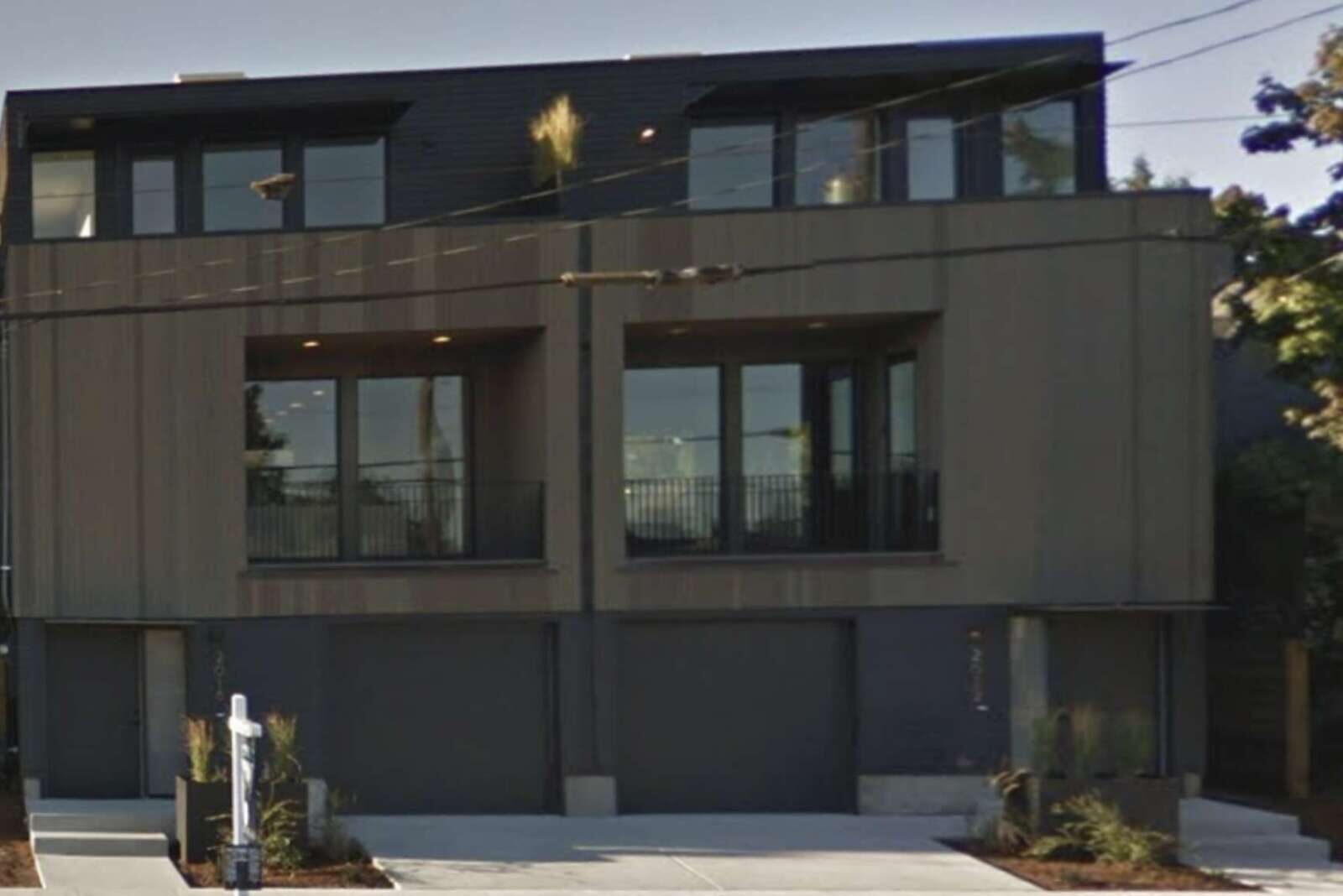
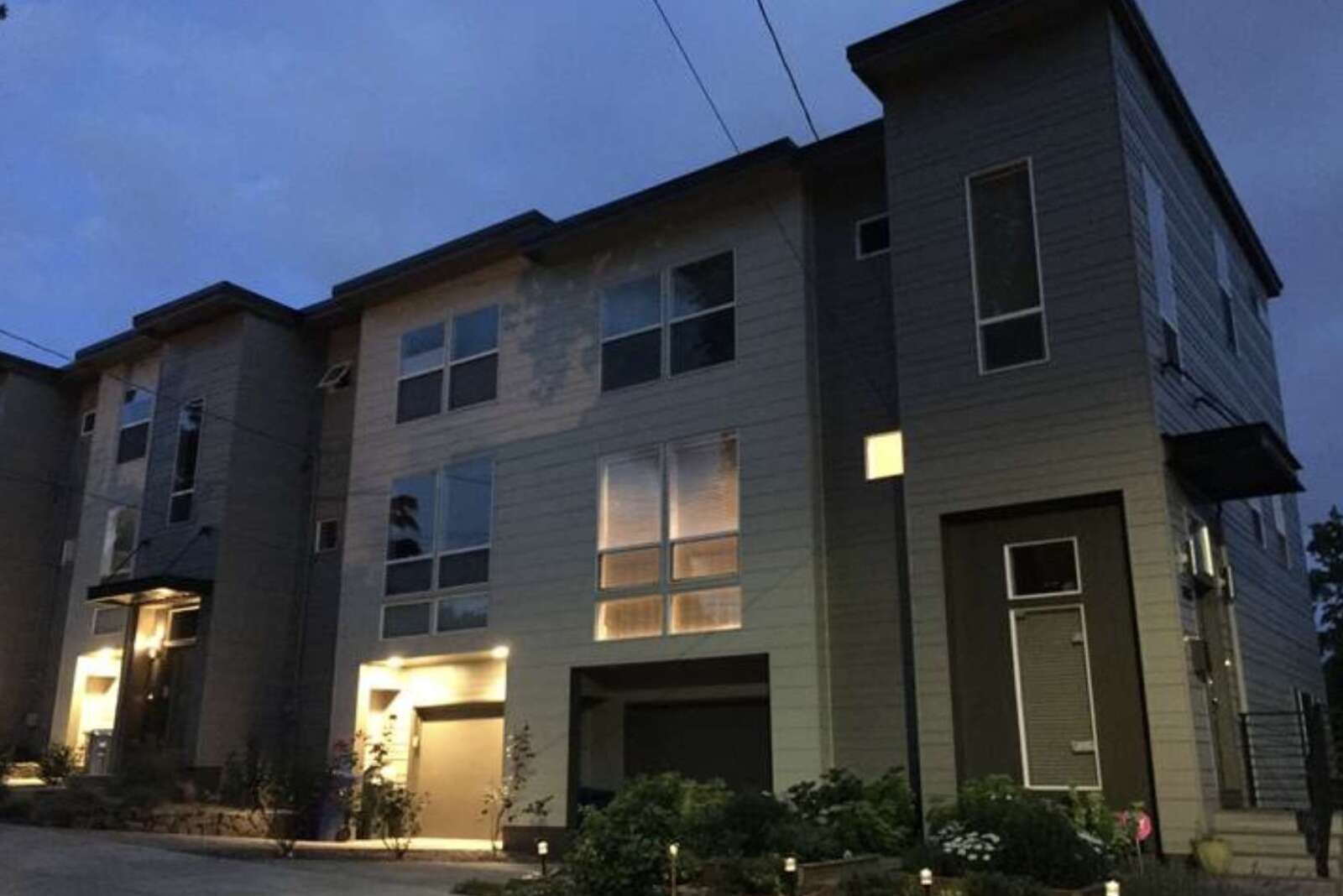
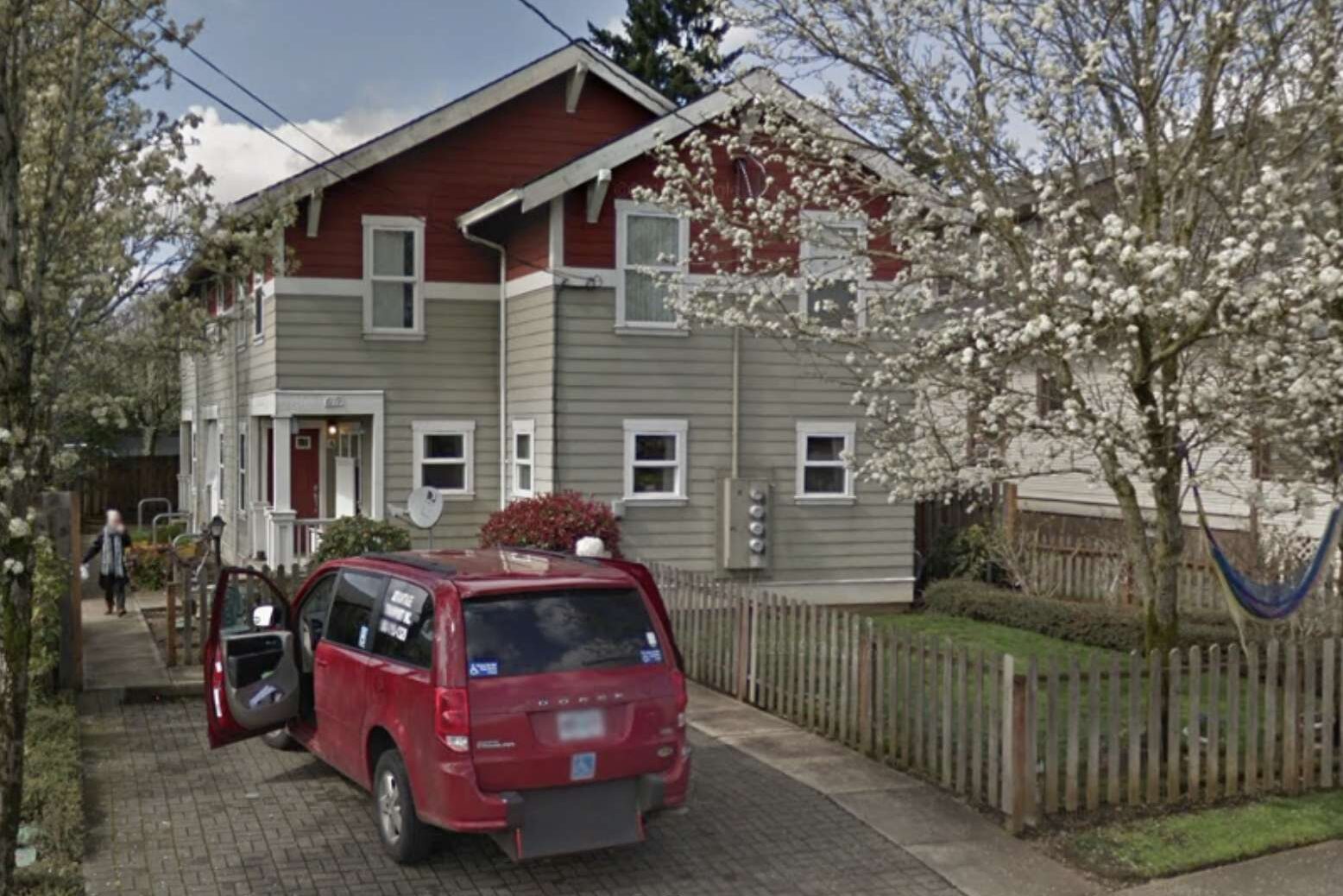
Candidates Compete on Missing Middle — “Clement — who declined to state her age — lives in the exact type of housing that might be legalized across Arlington under the framework: She rents a one-bedroom in an eightplex in Westover. The software developer said she would only support adding density along transit corridors, citing concerns about how missing middle housing will jeopardize Arlington’s tree canopy and strain county infrastructure.” [Washington Post]
‘Missing Middle’ Fight in Raleigh, N.C. — “A stately home, built almost a century ago, is set to be knocked down for new construction. The news is incensing nearby homeowners who feel it’s being developed under a guise… 17 high-end townhomes are being proposed on the near 2-and-a-half acre property… ‘Seventeen times $2 million, is not going to meet the need that we have for high-density properties, high-density living. It’s not going to solve a problem that we have,’ said Pitler.” [ABC 11]
Snow Days Are Back — “In case you thought past experience with remote learning – month after month after month of it for Arlington students during COVID lockdowns – would allow school leaders to keep classes going despite the wrath of Mother Nature, think again. Arlington Public Schools will be able to use up to seven days’ worth of instructional time as snow days before reverting to a ‘virtual’ setting this winter, Superintendent Francisco Durán told School Board members on Oct. 27.” [Sun Gazette]
No Elementary Boundary Changes — “Give thanks for small favors: There will be no boundary-change process for Arlington’s elementary schools this fall, as had been planned. ‘There is not a need,’ Superintendent Francisco Durán told School Board members on Oct. 27, calling the current enrollment levels at most elementary schools ‘manageable at this time.'” [Sun Gazette]
Dulles Metro Opening Mid-Month — “Phase two of the Silver Line will officially open on Tuesday, Nov. 15, Metro announced today. The long-delayed, 11.4-mile extension will bring six stations from Reston through Loudoun County. An opening date has been anticipated for months.” [FFXnow]
It’s Tuesday — Cloudy in the morning, then becoming partly cloudy. High of 69 and low of 57. Sunrise at 7:37 am and sunset at 6:09 pm. [Weather.gov]
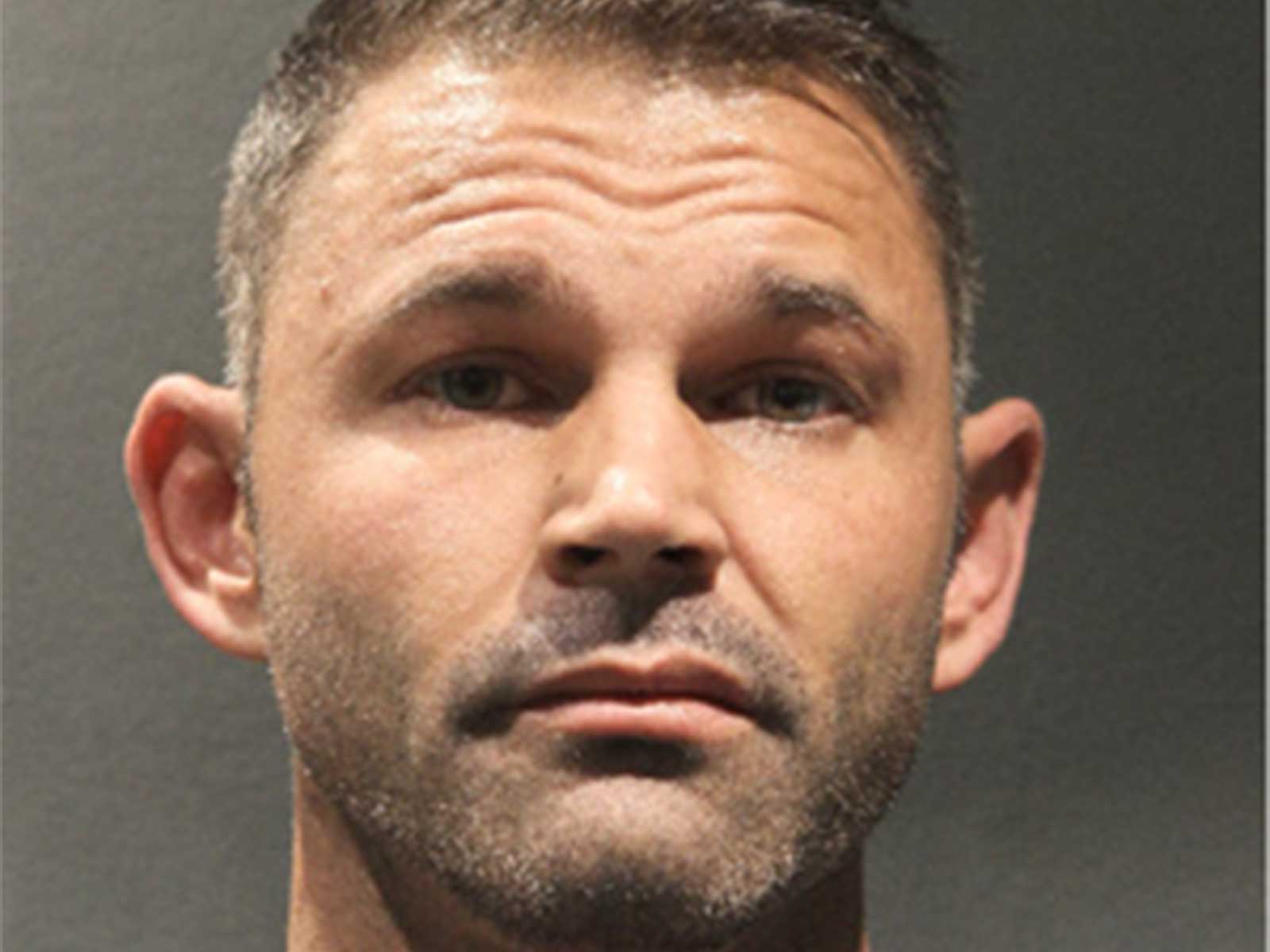
A Pentagon police officer has been arrested by Arlington County police and charged with selling cocaine.
ACPD says it received a tip about “a suspect possibly distributing cocaine in Arlington County” and subsequently caught the officer, a 33-year-old Alexandria resident, buying “narcotics for distribution.” He was arrested on the 1300 block of S. Scott Street, which corresponds to The Wellington apartment complex along Columbia Pike.
More from an ACPD press release, below.
The Arlington County Police Department has arrested and charged an off-duty Pentagon Force Protection Agency police officer following a narcotics investigation. Eric Welch, 33, of Alexandria, VA was arrested and charged with Possession with Intent to Distribute Controlled Substance and Possession with Intent to Distribute Controlled Substance while Armed. He is being held without bond in the Arlington County Detention Facility.
Organized Crime Section detectives initiated a narcotics investigation after receiving information regarding a suspect possibly distributing cocaine in Arlington County. During the course of the investigation, detectives identified Welch as a suspect and obtained evidence confirming involvement in narcotics distribution. He was taken into custody on the afternoon of October 28 in the 1300 block of S. Scott Street after detectives observed him purchase narcotics for distribution. A firearm was recovered at the scene. A search warrant was subsequently executed at the suspect’s residence in Alexandria which resulted in the recovery of additional quantiles of narcotics and firearms. As a result, City of Alexandria Police charged Welch with Possession with Intent to Distribute Controlled Substance (x2) and Possession with Intent to Distribute Controlled Substance while Armed.
This remains an active criminal investigation. Anyone with information that may assist the investigation is asked to contact the Arlington County Police Department’s Tip Line at 703-228-4180 or [email protected]. Information may also be reported anonymously through the Arlington County Crime Solvers hotline at 1-866-411-TIPS (8477).
Proponents say the changes will give renters, middle-income residents and many people of color a fighting chance to buy in Arlington. Opponents say the plan will forever change local neighborhoods, won’t serve lower-income residents, will displace seniors and and people of color, and will cut the county’s tree canopy.
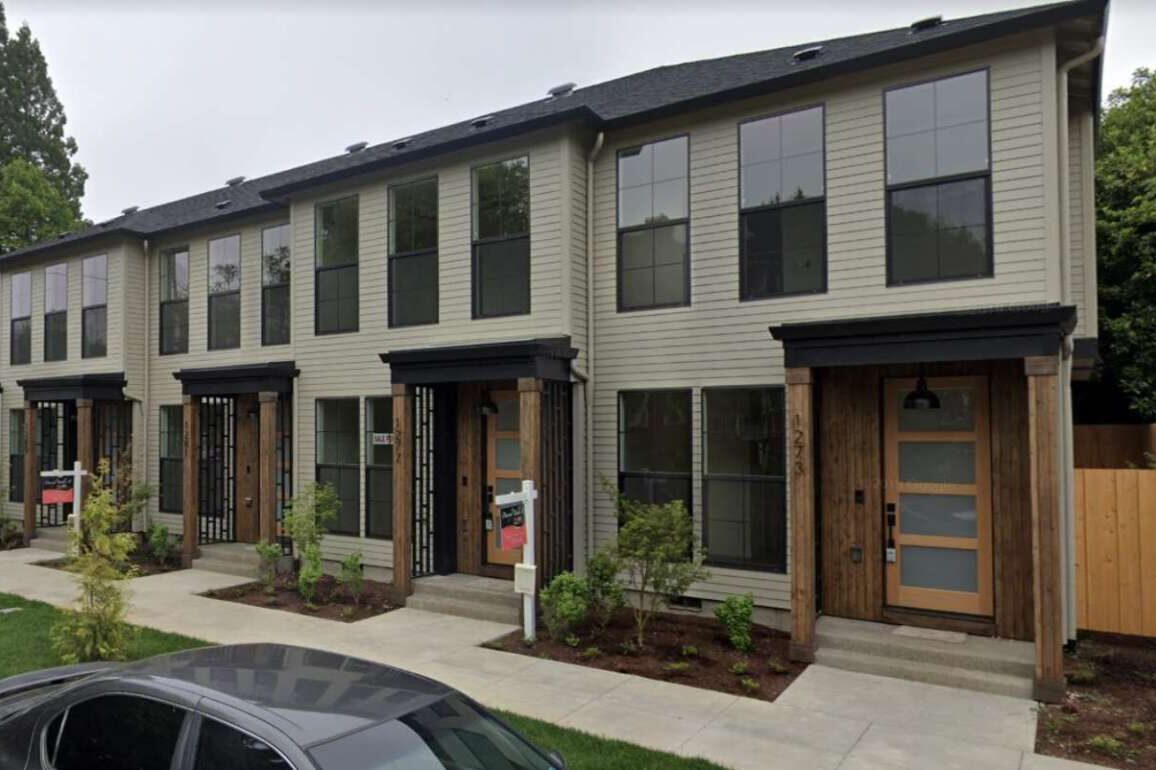
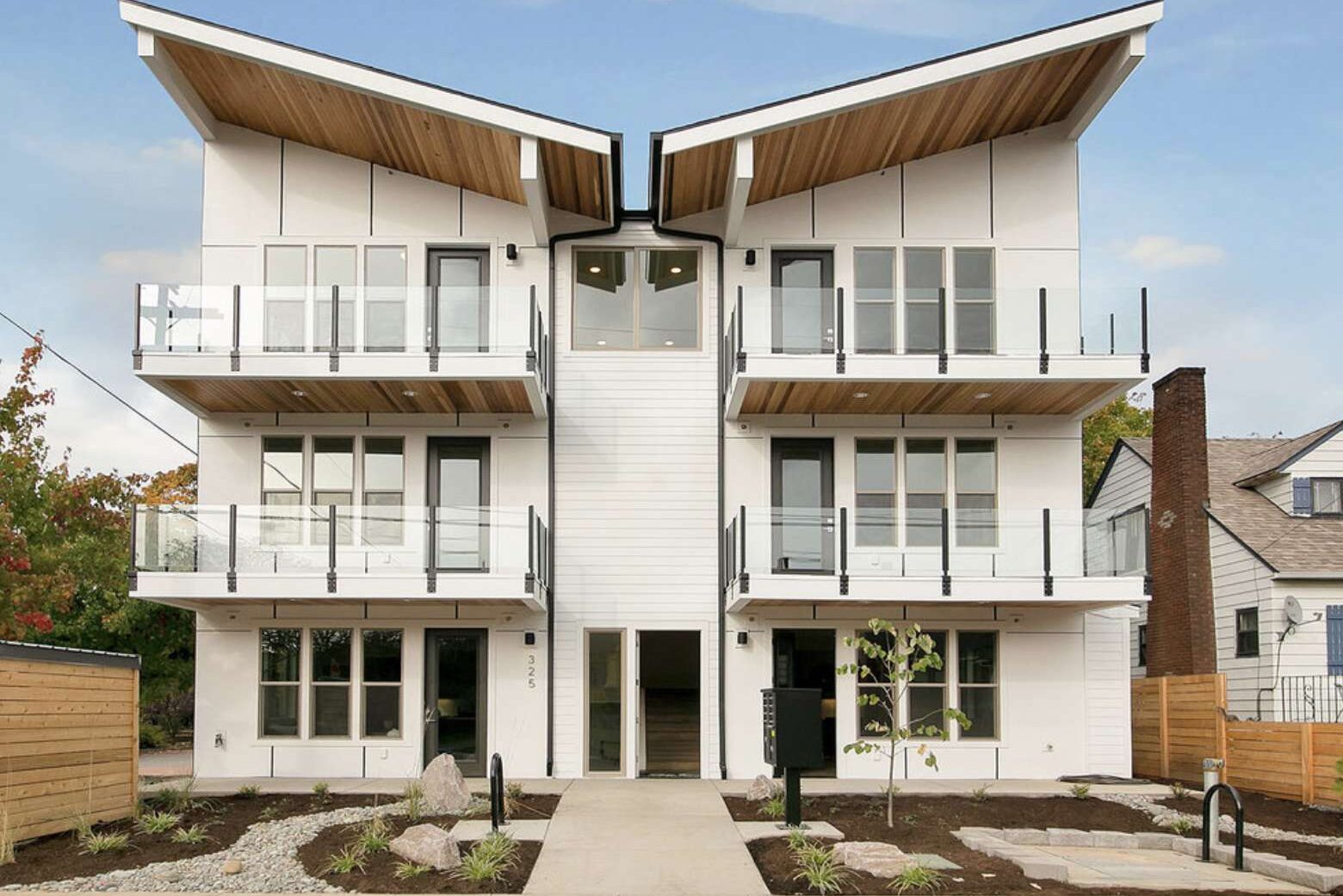
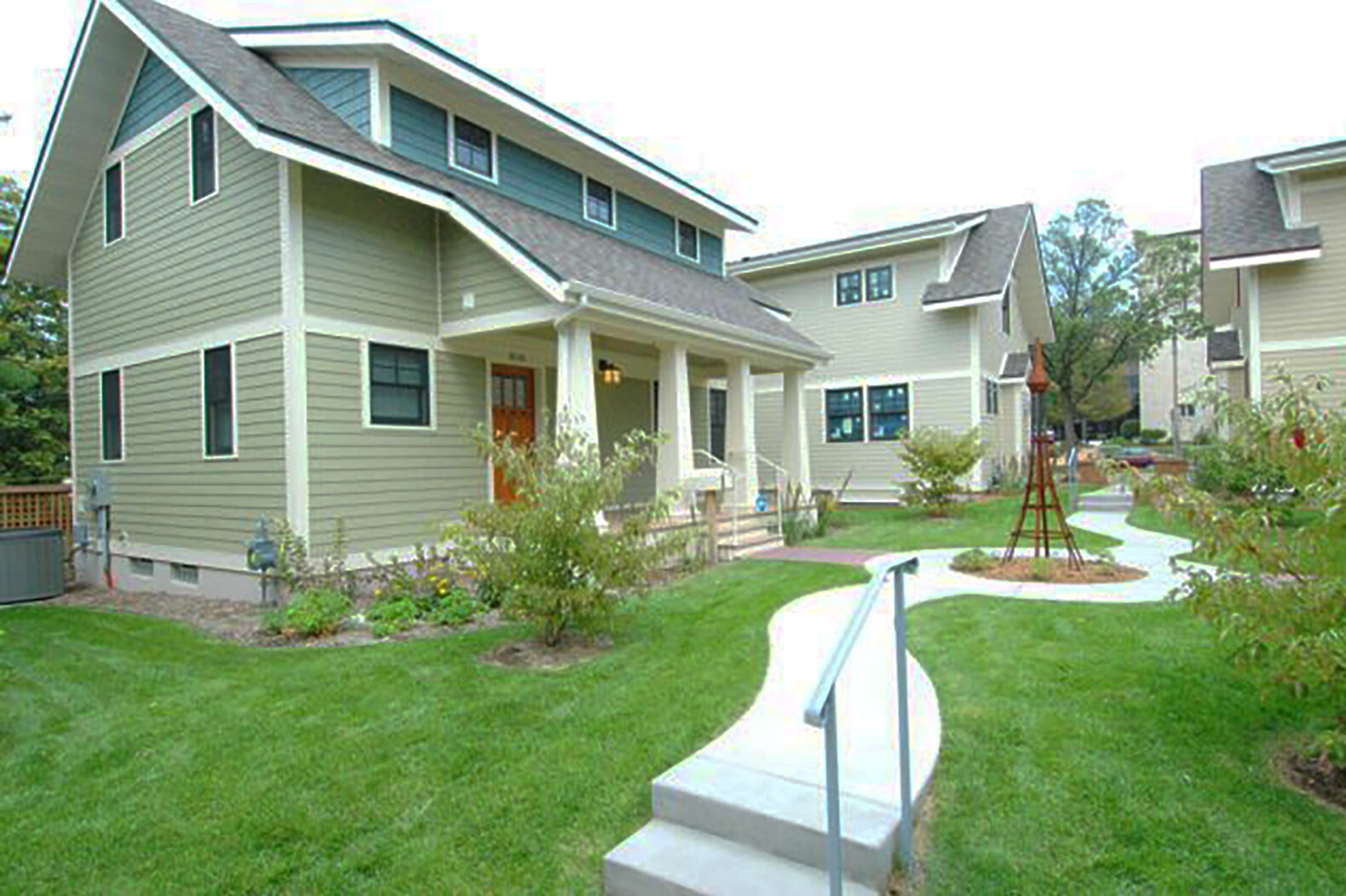
Two cities — Portland, Oregon (pop. 641,162) and Minneapolis, Minnesota (pop. 425,336) — have walked this path before, enacting similar policies in 2020 and 2018, respectively.
Both policies were described as controversial, as local officials considered whether to adopt them. In Portland, concerns over displacement of low-income renters led some officials to vote against the changes. In Minneapolis, support for the change among local officials was near-unanimous despite some vocal opposition, deemed NIMBYism in a 2019 article in The Atlantic.
Since then, both municipalities have clocked a modest number of “middle housing” units. A similar story could play out in Arlington, where the county estimates about 19-21 units could be built per year, but support for and opposition to “Missing Middle” continues to intensify.
“Our goal wasn’t really to drastically change the landscape of our primarily single-family neighborhoods,” Jason Wittenberg, the manager of Code Development for the City of Minneapolis, tells ARLnow. “It was always our expectation that duplexes and triplexes would be added in a very incremental way, which is how that has played out.”
He noted that both proponents and opponents “are a little surprised by the fact that it’s not a real rapid change.”
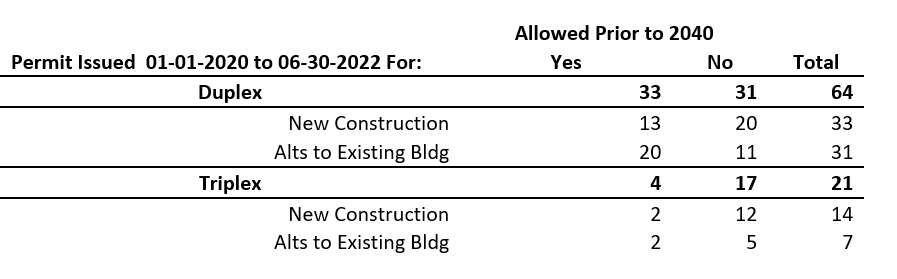
New housing data from Minneapolis (courtesy of CPED)
In a typical year, Minneapolis grants permits for over 3,000 new housing units. The 64 duplexes, or 128 units, built over the past 2.5 years as a result of the zoning change are “a small fraction of the overall housing supply,” Wittenberg said.
“Our feeling is that this is not insignificant,” he said. “Over time, that’s hundreds of units between now and 2040 that wouldn’t have existed.”
Meanwhile, there’s been a drop in single-family home construction, which predated the adoption of the new zoning laws and likely had to do with the pandemic, civic unrest in the wake of the murder of George Floyd, supply chain shortages and rising construction costs, Wittenberg said.
This “it’s more than the status quo” sentiment is shared in Portland.
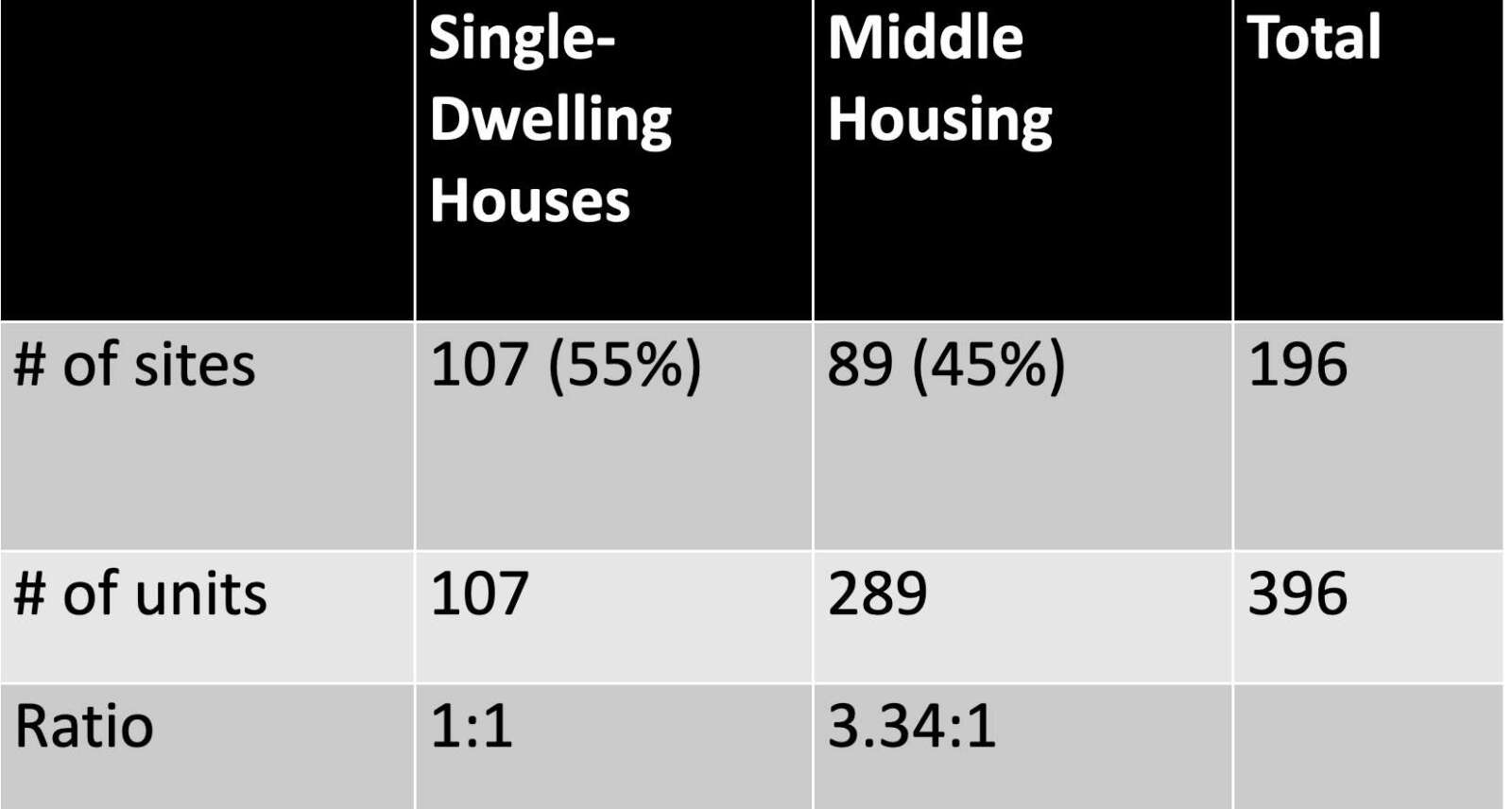
From Aug. 1, 2021 to Aug. 1, 2022, slightly less than half of new development consisted of “middle housing,” according to a presentation by city planner Sandra Wood during a conference hosted at George Mason University earlier this month.
Of the 196 sites developed or redeveloped, 89 had two to four units on them, yielding 289 units.
“Two hundred more units were built on those middle housing sites than would otherwise have been built, had this all been redeveloped, they would’ve just been single-family houses,” Wood said at the time.
That fits with the overarching reason for the zoning changes in Portland.
“Overall, what we’re aiming for is to increase access to more types of housing in all Portland neighborhoods, allowing more units at lower prices on every lot, and applying new limits to the building scale and heights and reducing displacement overall, which we don’t know the results of yet, but we will be monitoring,” Wood said.
New housing data from Portland (courtesy of BPS)
The most common new housing type in Minneapolis is the duplex. About half of duplexes were built in zones that were formerly restricted to single-family homes, Wittenberg said.
Meanwhile, the most common “middle” housing type in Portland is a quadplex.
“We expected duplexes might be because of our small site sizes but fourplexes have outstripped duplexes by quite a bit,” Wood said.
Prior to the ordinance updates, Portland’s lowest-density neighborhoods allowed single-family homes, accessory dwelling units and corner-lot duplexes. The ADU program has been successful, she said, with 5,000 ADUs built so far.
Similar ADUs have started popping up in Arlington since the Arlington County Board approved them in 2019, but developers and economists say the building rate has been hampered by county policies and financing hurdles.
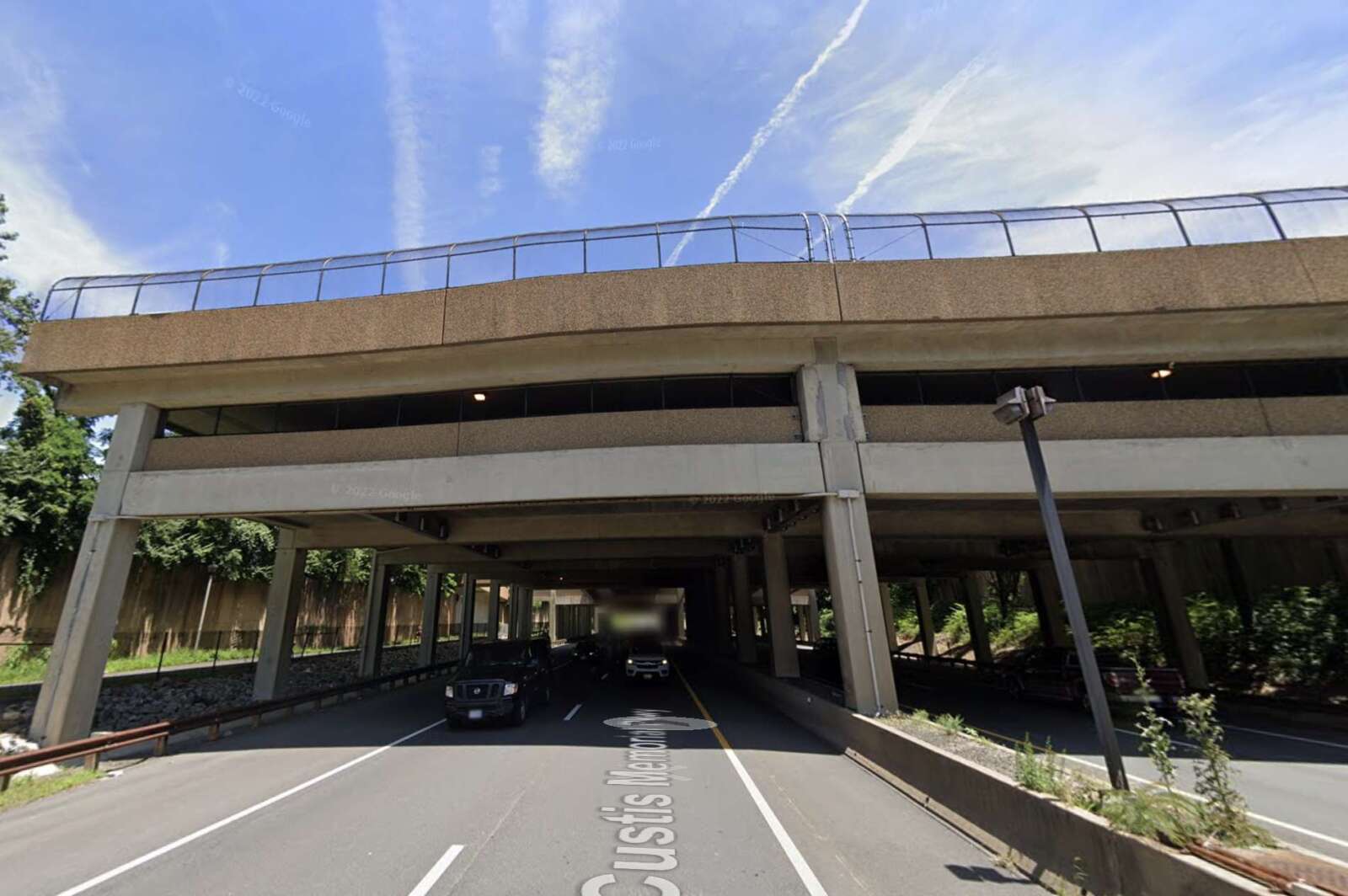
The parking garage over I-66 in Arlington (via Google Maps)
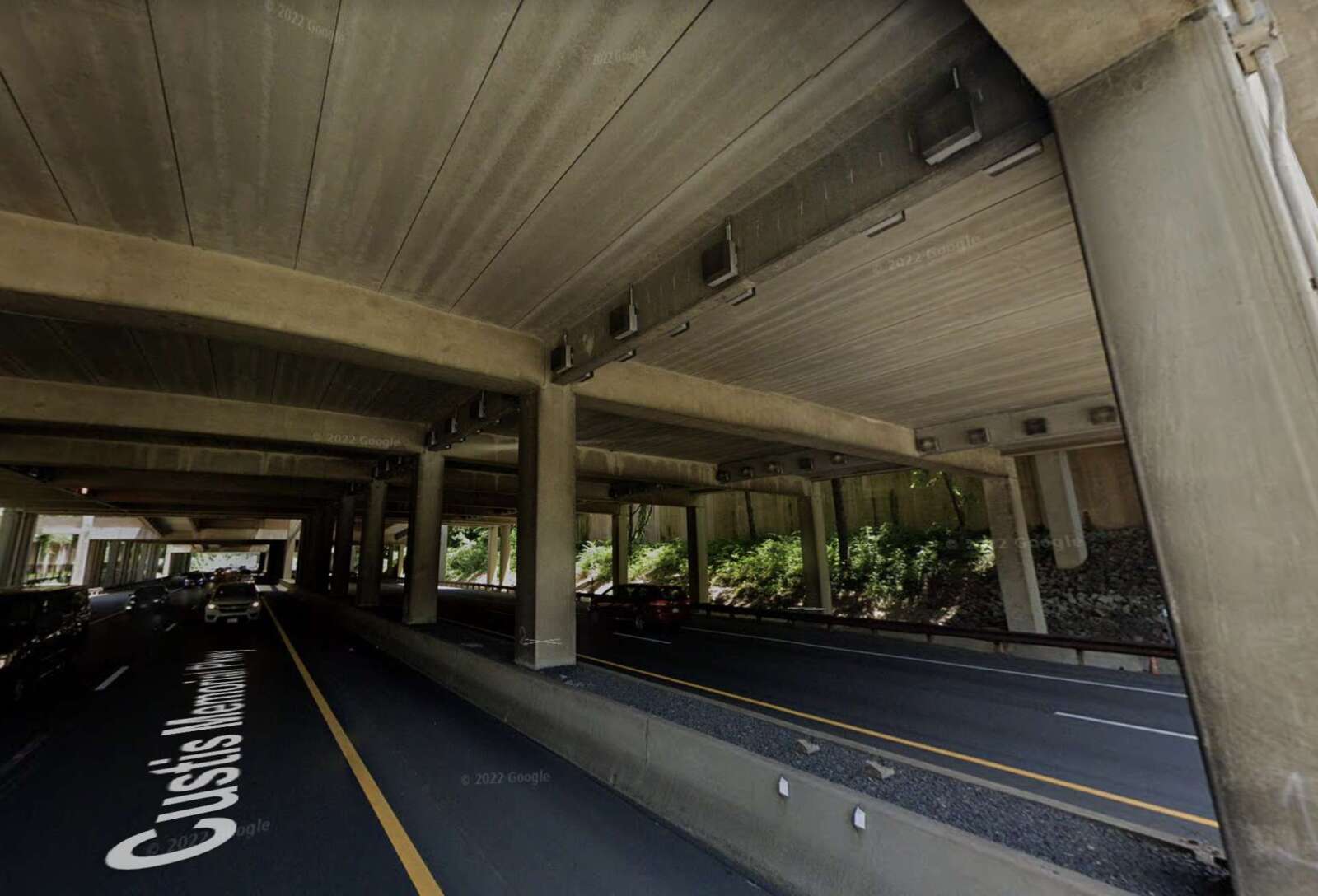
The underside of the parking garage over I-66 in Arlington (via Google Maps)
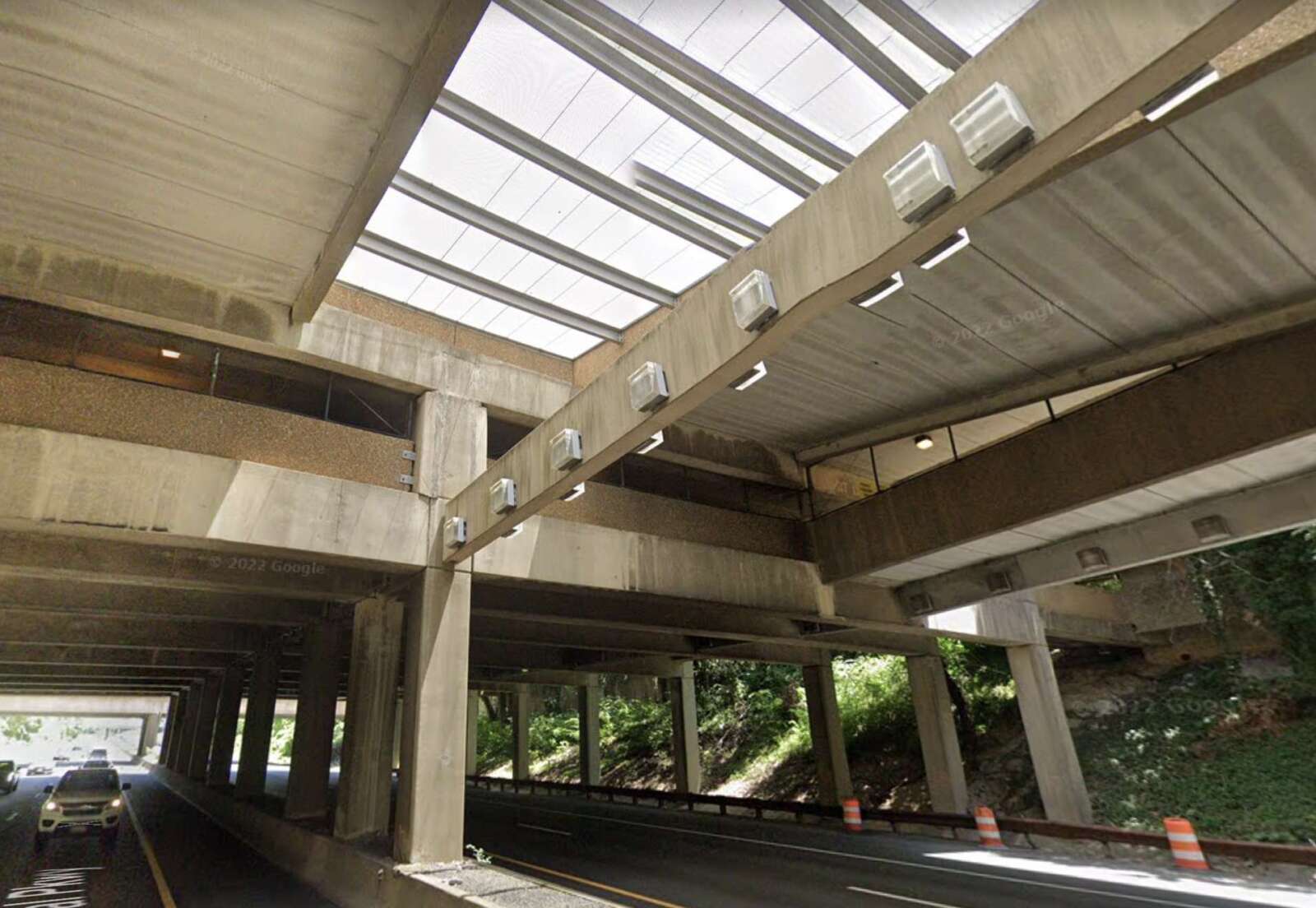
The underside of the parking garage over I-66 in Arlington (via Google Maps)
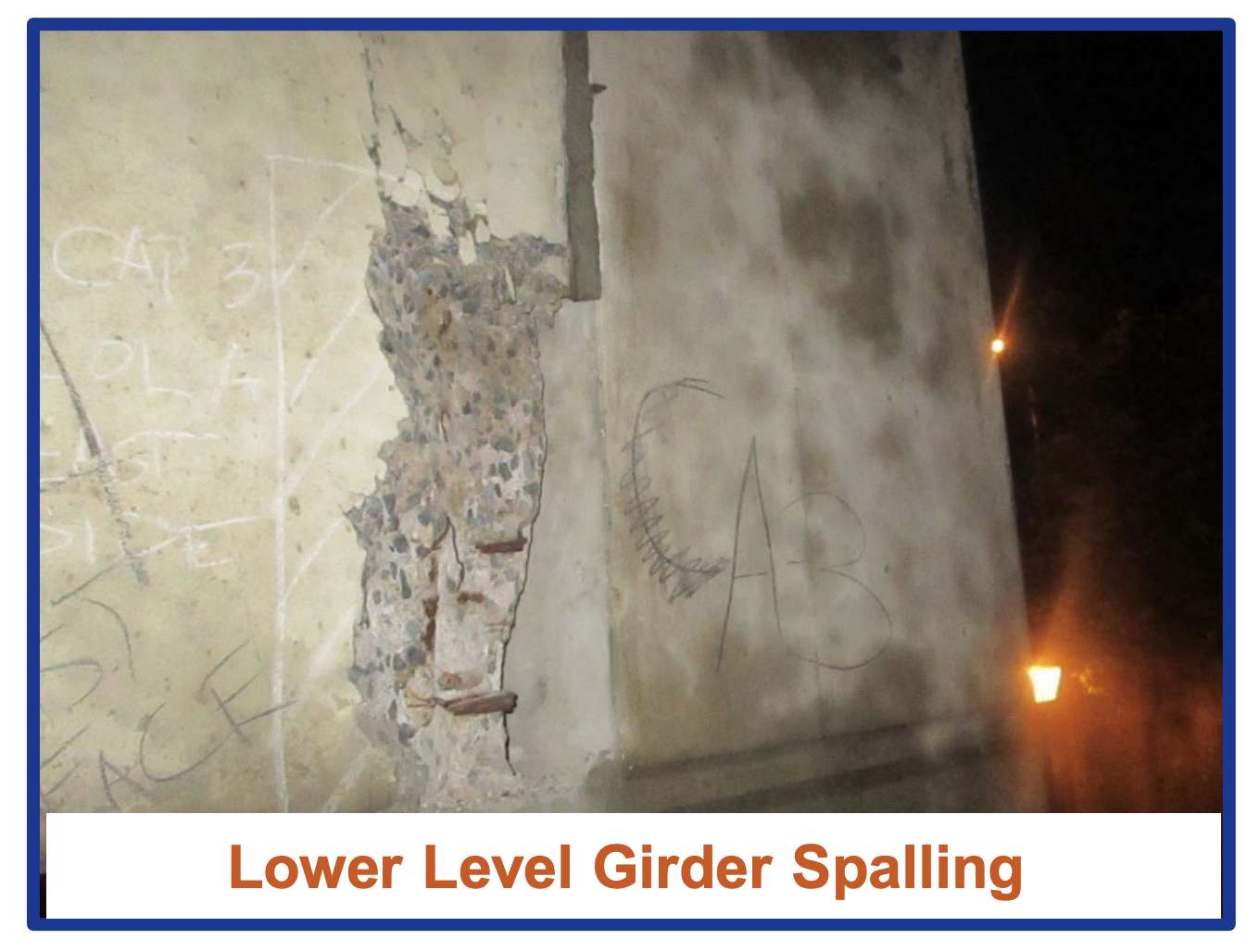
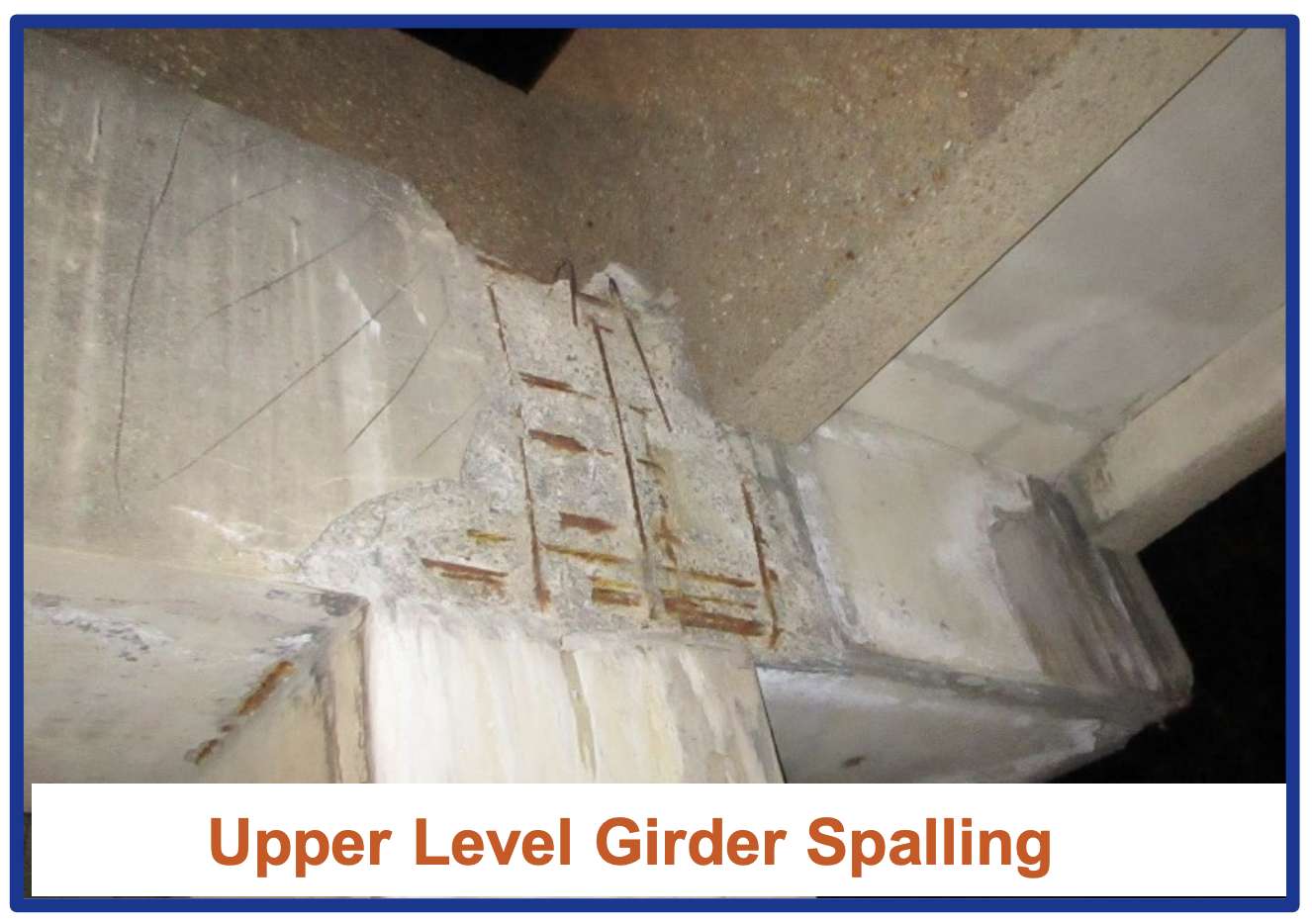
Exhibits of deterioration of the I-66 parking garage (via VDOT)
Exhibits of deterioration of the I-66 parking garage (via VDOT)
The parking garage over I-66 near Ballston is falling apart and needs repairs, says the Virginia Department of Transportation.
The garage sits above I-66 between N. Stafford and Quincy streets, next to Washington-Liberty High School. It serves as the primary parking area for the school and is the site of a seasonal flea market, called the Arlington Civitan Open Air Market.
VDOT has launched a public engagement period to brief locals on the garage’s deteriorating condition and the $2.7 million in planned improvements. Through next Monday, Nov. 7, people can provide comments online in a survey and by email or postal mail.
The Commonwealth seeks public input on repairing and rehabilitating the parking garage over I-66 at Washington-Liberty HS. And yes, galvanic cathodic protection is on the menu. https://t.co/dZQmSIbbWlpic.twitter.com/ZSWuwTpuN7
— Arlington Department of Environmental Services (@ArlingtonDES) October 28, 2022
The state transportation department says it aims to minimize traffic disruptions and keep most parking spaces available during construction. VDOT expects to send out the project for bid next summer and to start work in the fall of 2023, with construction wrapping up in about six months.
“The purpose of this project is to address various conditions identified through routine inspections that are likely to deteriorate further if not repaired soon,” a VDOT staff member said in a presentation. “Delaying action could allow some of them to become critical requiring much more extensive, expensive and disruptive repairs down the road. The repairs will ensure the structure remains safe for all users for years to come.”
The garage was built in 1982, and since then, there has been no major work performed beyond routine maintenance, VDOT Communications Coordinator Mike Murphy tells ARLnow.
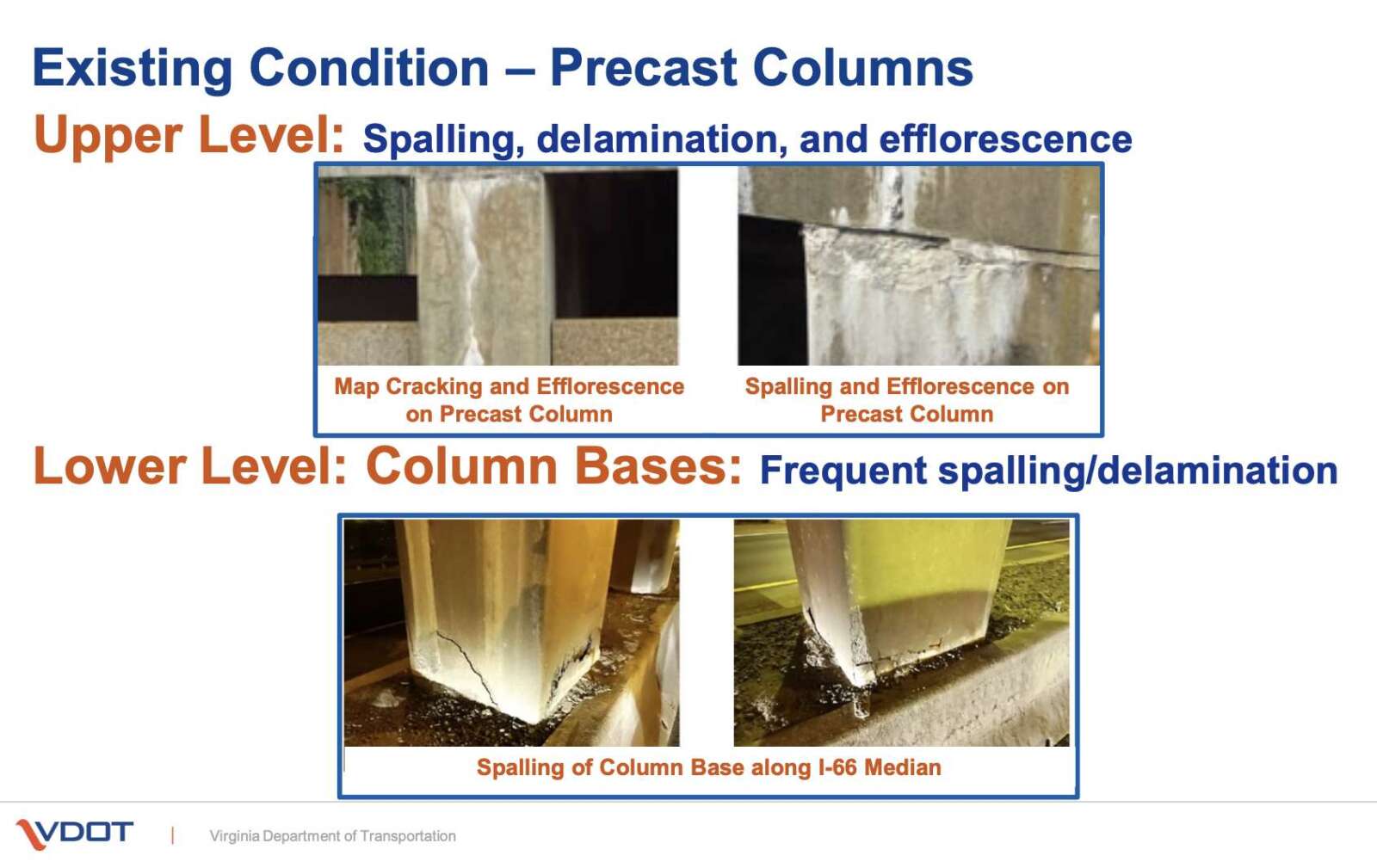
After 40 years of exposure to the elements — including cycles of freezing and thawing, anti-icing salts, and high temperatures — the garage’s columns and surfaces are worse for wear, according to the state transportation department’s presentation. The presenter said these signs of deterioration are typical of structures this age.
Slides showing deterioration of the I-66 overpass and parking lot (via VDOT)
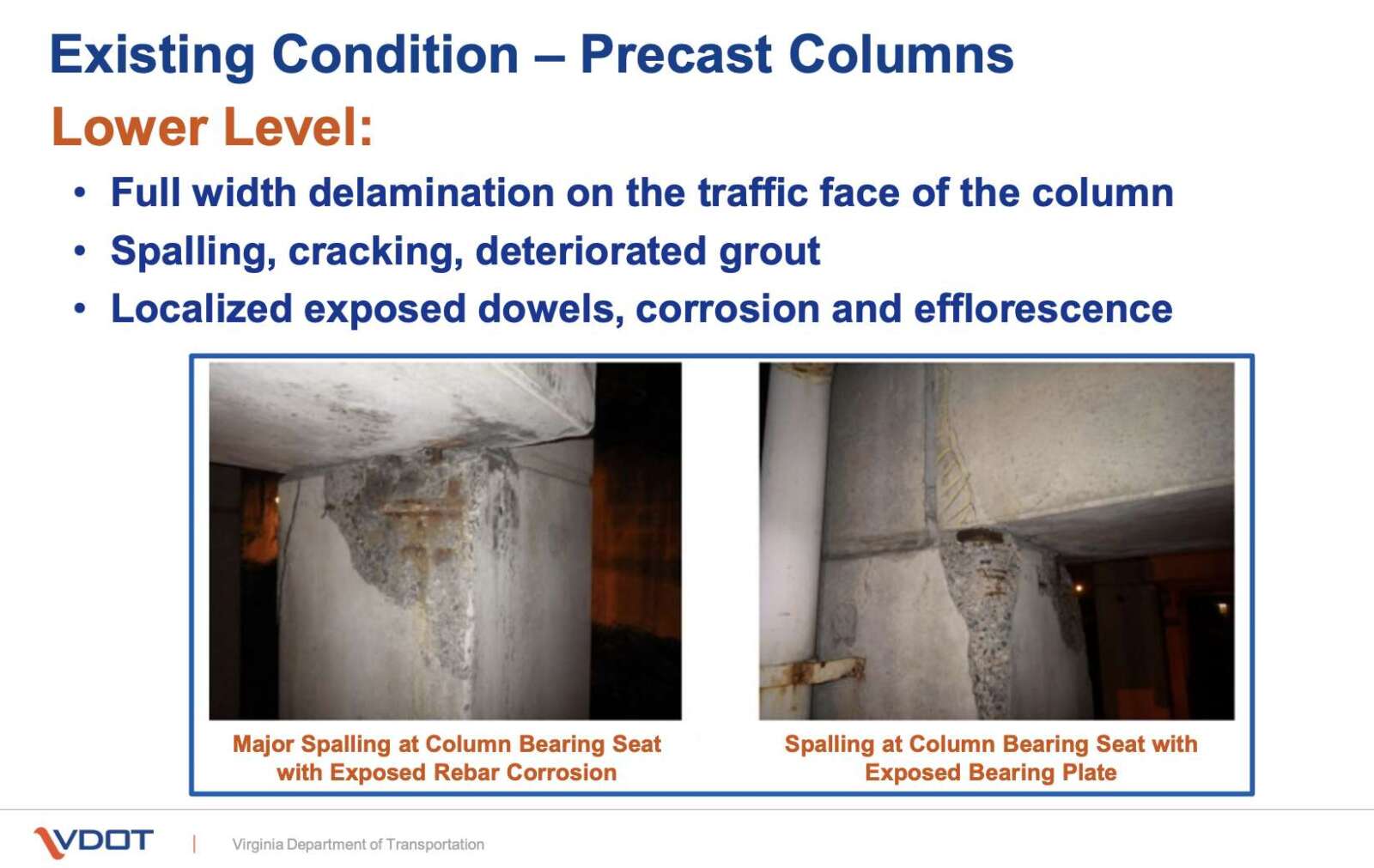
Some columns on the garage’s lower level need significant repairs to ensure its structural integrity, the presenter said. Leaking water has caused the reinforcing steel within the concrete to corrode, causing the concrete to break in flakes.
Slides showing deterioration of the I-66 overpass and parking lot (via VDOT)
In one phase of the project, traffic lanes on I-66 will be shifted to the outside lane and the shoulder to allow work along the median, per the presentation. Lane closures are expected to be limited to single lanes.
“The majority of repair work occurs on the lower level along I-66, which is isolated from parking areas of the garage,” the VDOT staff member said. “There will be no changes to local traffic patterns or pedestrian flow on N. Quincy Street, N. Stafford Street, or 15th Street N.”
No impacts to the Custis Trail — which runs parallel to I-66 under the garage — are anticipated at this time, Murphy said.
The Ballston Metro station (staff photo by Jay Westcott)
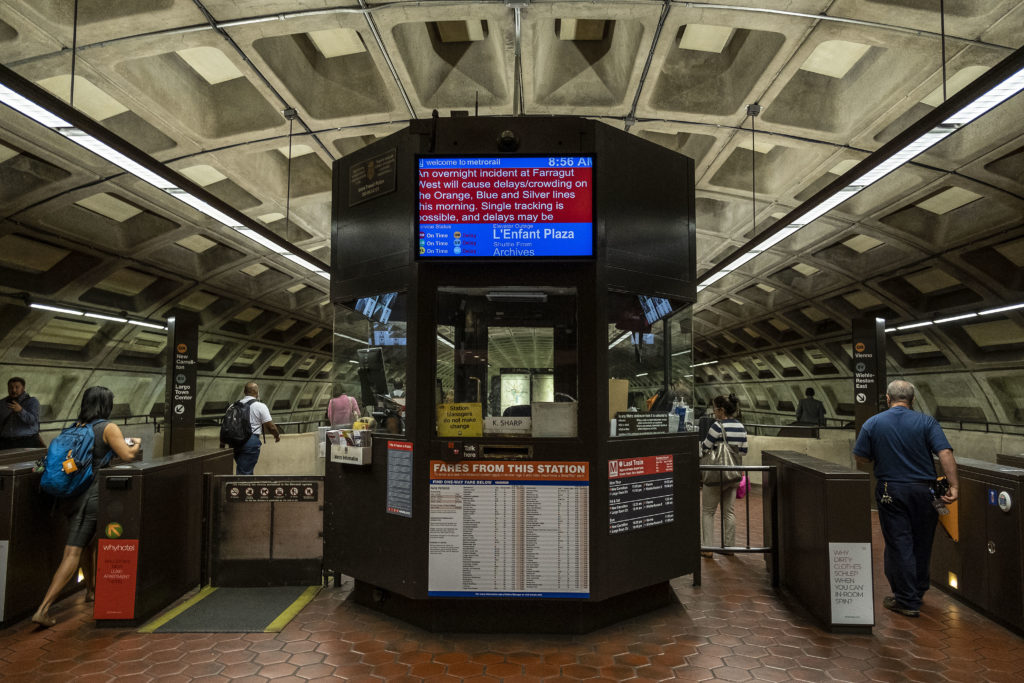
Metro announced on Friday that transit police will soon resume citing those who try to ride without paying the fare.
The announcement follows an NBC 4 story earlier this month that fare evasion on buses is “reaching eyepopping numbers.”
A WMATA press release, below, notes that the transit is also considering faregate modifications at Metrorail stations, to prevent fare evasion.
Metro Transit Police officers will begin issuing fare evasion citations on Tuesday, November 1, following a monthlong awareness and warning campaign. Citations with associated fines may be issued to anyone jumping fare gates, improperly using emergency gates, or not tapping fare boxes on Metrobuses.
Fare recovery is a major issue and has been mentioned as one of the top concerns of customers when talking with Metro staff and Metro Board Members. Revenue from fares allows Metro to keep buses, trains, and MetroAccess serving our community.
Fare evasion is responsible for significant revenue losses and is part of the focus to close a shortfall of nearly $185 million in the upcoming budget. Using data from Metrobus and pre-pandemic industry averages for Metrorail, Metro estimates revenue losses due to fare evasion totaling tens of millions of dollars in fiscal year 2022.
Metro is working with local partners to offer resources to make public transit more equitable and affordable for those in need. A low-income fare pilot is getting underway in the District, and at Metro’s recent Board Meeting initial concepts about a regional means-based fare program were presented.
Metro is also exploring other methods that will prevent customers from entering rail stations without paying. This month, Metro is expected to begin testing faregate modifications as a preventative measure. Prototypes will be installed as a pilot at a selected rail station. Some of the modifications being explored include physical deterrents on top of faregates and higher barriers.
Fare evasion was decriminalized in D.C. in 2018, becoming punishable only by a civil fine rather than jail time. Civil rights advocates told WUSA 9 that they’ll be closely watching Metro’s new enforcement effort to make sure it is applied evenly and doesn’t unduly target certain places or groups.
The TV station also counted those skipping the fare at a few Metro stations, including Arlington’s Courthouse station.
“In just 20 minutes, we recorded 26 people hopping the [turnstile] at the West Hyattsville station — an average of 78 people per hour. Based on what we gathered, Courthouse in Arlington sees an average of eight jumpers an hour and three an hour at the Van Ness/University of the District of Columbia stop,” WUSA 9 reported.
Meanwhile, overly restrictive faregates have some critics, who say they constrict passenger flow, cost money to maintain and can make getting around more difficult for those with disabilities.
Given all of that, do you fully support Metro’s new measures? Let me know why or why not in the comments.
A house in north Arlington lit for Halloween (staff photo)
Beyer Aide Fired For China Outreach — “A House Democratic staffer was fired after her outreach to other congressional aides allegedly on behalf of the Chinese embassy was revealed this week, National Review has learned. After an investigation found that the staffer had acted improperly, her boss, Representative Don Beyer, swiftly removed her.” [National Review, Twitter]
Challenger Blasts Beyer — From GOP candidate for Congress Karina Lipsman: “I spent 14 years in the U.S. defense/intel communities, and I can tell you that the reports of China ties in Rep. Beyer’s office are a serious problem. This must be investigated thoroughly by law enforcement and Congress.” [Twitter]
Missing Middle Ideas Discussed — “Several called for architectural reviews that might ‘allay some community concerns.’ Among the criteria could be ‘compatibility with surrounding neighborhoods.’ Because of state laws on lot owners’ rights, the tree canopy is best protected through the coming Forestry and Natural Resources plan, requiring keeping or replanting trees to ‘enhance beauty and a sense of place.’ Most felt no need to cap the number of new housing types that get built, forecasting that the number won’t be inordinate… And there’s wide interest in reining in ‘McMansions.'” [Falls Church News-Press]
Tow Trucks Keep Blocking Hydrant — From Dave Statter: “Listen: The most famous fire hydrant in Arlington County getting some attention today from @ArlingtonVaFD fire marshal.” [Twitter, Twitter]
Fight Prompts Large Response at Mall — “Appears to have been an assault, fight & possible robbery at Pentagon City Metro. Police were also in the mall. At one point @ArlingtonVaPD wanted all available units to respond & some help from @VSPPIO @MetroTransitPD also on scene.” [Twitter. Twitter]
Marymount Gets STEM Grant — “Amidst an ever-increasing need to meet the high-technology needs of today’s American workforce, faculty leaders at Marymount University are launching a new need-based scholarship program that will help students in STEM majors persist in their studies and pursue essential and fulfilling careers… made possible through a National Science Foundation (NSF) S-STEM Track 2 award of $1.46 million.” [Marymount University]
New Outdoor Activities at Two Schools — “On October 28, students and staff at Randolph Elementary school held a ribbon cutting event to celebrate the completion of new educational blacktop art that encourages more physical activity and outdoor play. Regular physical activity is essential to help children build strong muscles and bones, improve fine motor skills, focus better in the classroom, and improve their mental health.” [Press Release]
Nearby: Murder in Bailey’s Xroads — “A man was found shot to death in Fairfax County, Virginia, on Sunday, according to police, and the suspects may have been spotted running from the scene. Officers with the Fairfax County Police Department were called to Skyline Towers just before 3 p.m. in the 5500 block of Seminary Road in the Bailey’s Crossroads area.” [NBC 4]
It’s Halloween — Possible light rain in the evening and overnight. High of 64 and low of 52. Sunrise at 7:36 am and sunset at 6:11 pm. [Weather.gov]
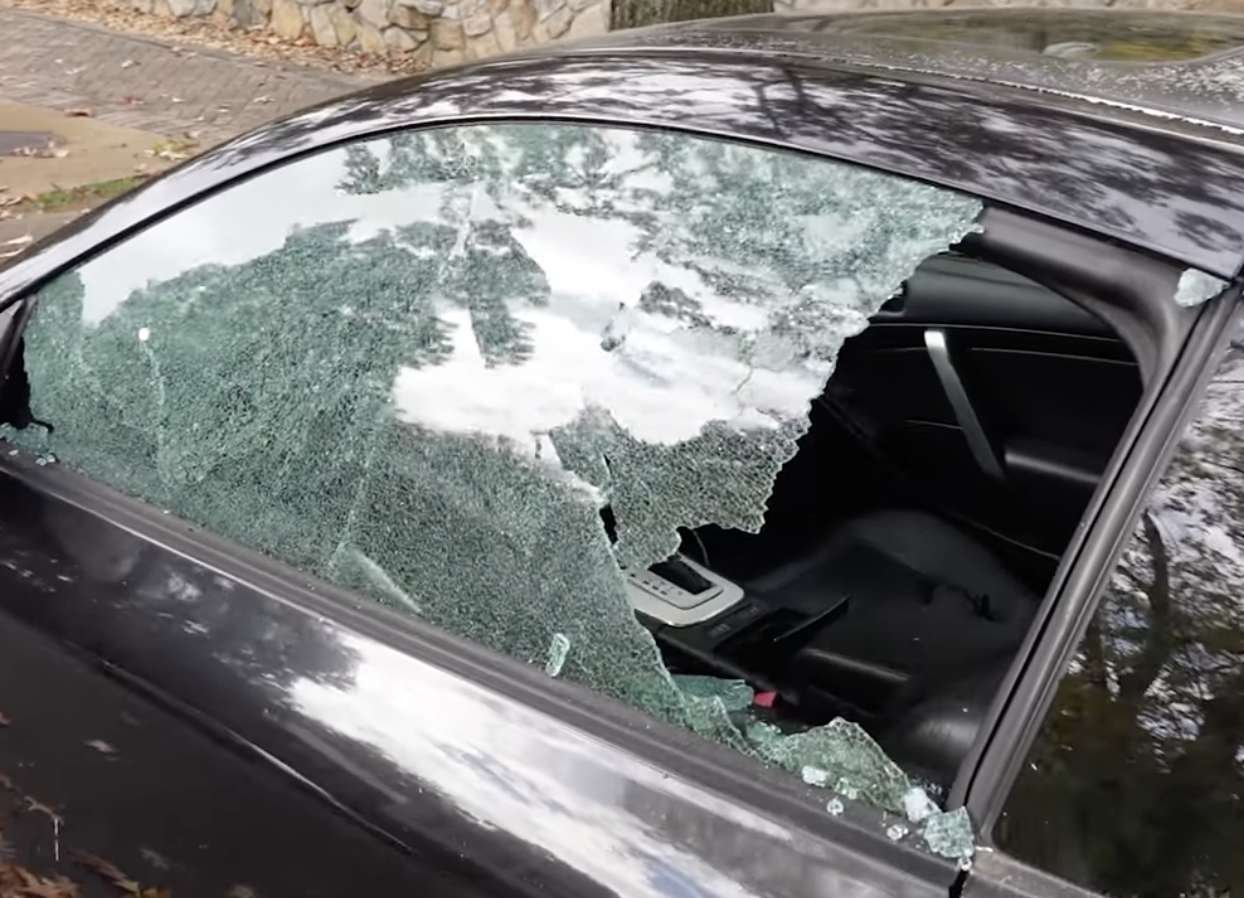
Police announced this afternoon that the suspect was arrested last night and found with a BB gun in his car. The arrest, which appears to have taken place at the 7-Eleven parking lot at 201 S. Glebe Road, happened after police say they were able to identify a “possible suspect vehicle.”
Dozens of cars were damaged, with windows shot out, during the spree that started last Thursday and stretched across various neighborhoods throughout the county. Many of the incidents took place in the Clarendon and Ballston neighborhoods.
A possible motive for the vandalism was not given. The suspect does not appear to have any recent prior criminal charges in Arlington, according to court records.
Police also said Friday that ten additional damaged cars were reported yesterday, adding to the 81 previously reported in the vandalism series.
“On October 27, police took 10 additional reports in a destruction of property series in which a suspect damaged the windows of parked vehicles with a BB gun,” an ACPD crime report said.
The police press release about the arrest is below.
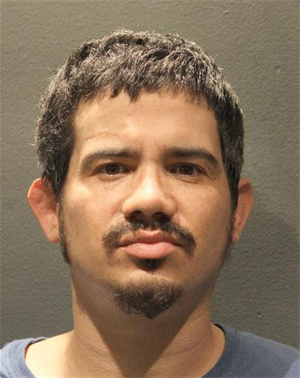
The Arlington County Police Department is announcing the arrest of a suspect in a destruction of property series in which numerous vehicles were damaged in neighborhoods across Arlington. Luis Tavares Sanchez Manuel, 37, of Capitol Heights, MD is charged with twelve counts of Destruction of Property and is being held without bond in the Arlington County Detention Facility. Additional charges are anticipated.
Late last week, police began investigating a destruction of property series in which a suspect discharged a BB gun at the windows of parked, unoccupied vehicles causing damage. During the days that followed, additional incidents occurred during overnight hours in various neighborhoods across the County.
During the course of the investigation, police spoke with witnesses and reviewed crime scene evidence which led to the identification of a possible suspect vehicle. On the evening of October 27, a patrol officer observed the suspect vehicle traveling on S. Walter Reed Drive. The driver proceeded to a business in the 200 block of S. Glebe Road where officers took him into custody as he was exiting his vehicle. During a search of the vehicle, a BB gun was recovered.
This remains an active criminal investigation. Anyone with information that may assist the investigation is asked to contact the Arlington County Police Department’s Tip Line at 703-228-4180 or [email protected]. Information may also be reported anonymously through the Arlington County Crime Solvers hotline at 1-866-411-TIPS (8477).
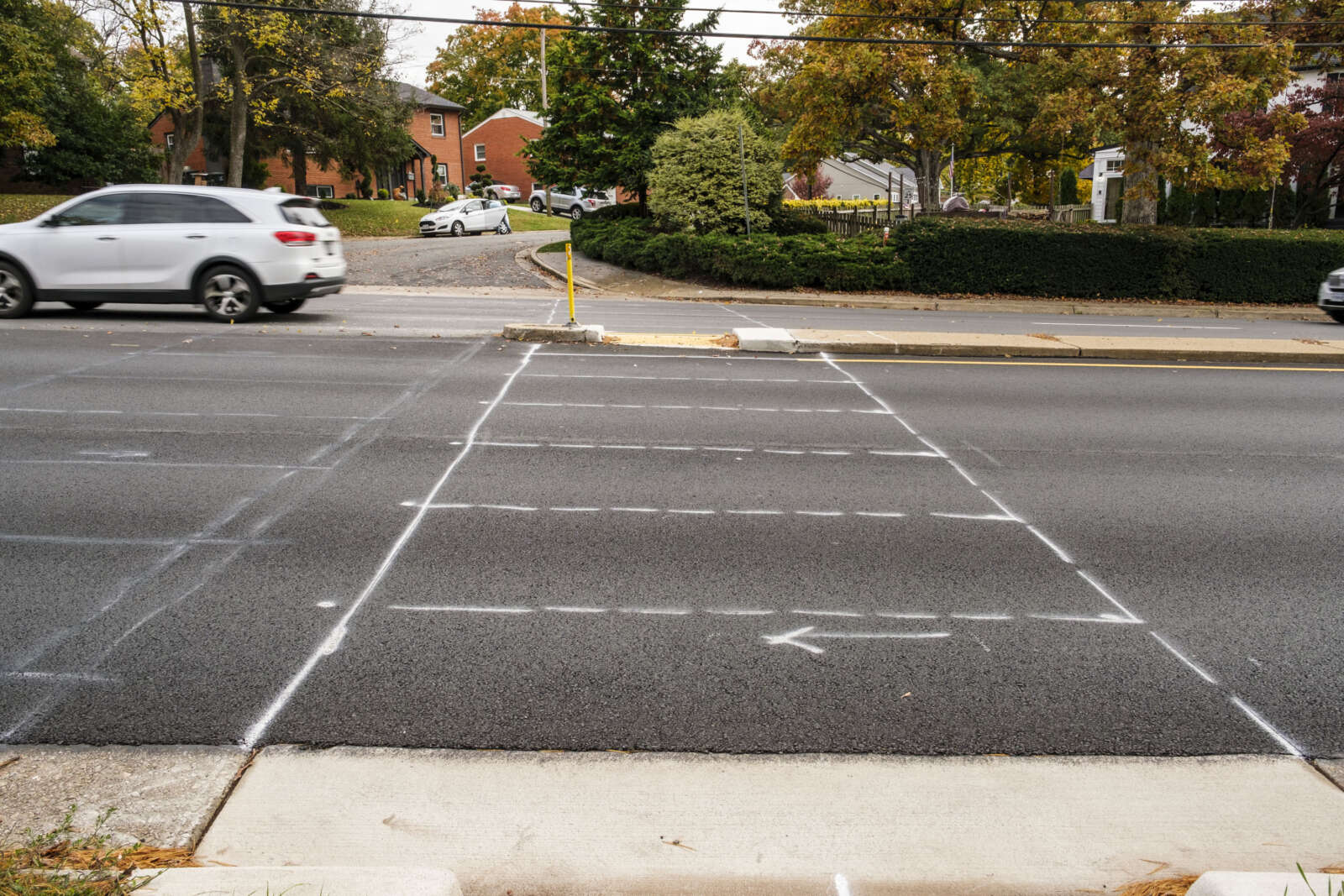
An unpainted crosswalk along Langston Blvd near N. Roosevelt Street in North Arlington (staff photo by Jay Westcott)
A spray-painted crosswalk along Langston Blvd near N. Roosevelt Street in North Arlington (staff photo by Jay Westcott)
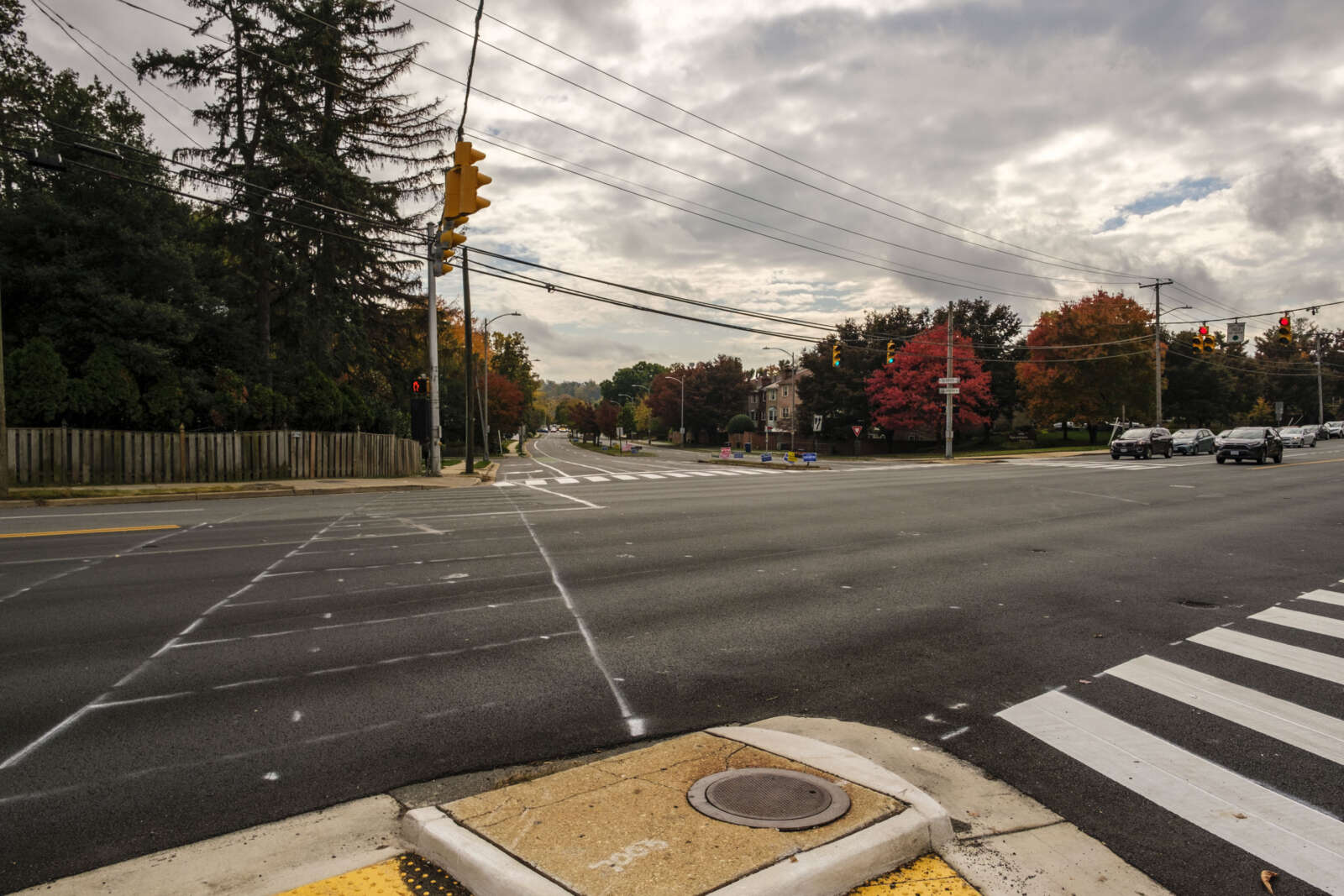
A spray-painted crosswalk next to a finished one at the corner of Langston Blvd and N. Sycamore Street in North Arlington (staff photo by Jay Westcott)
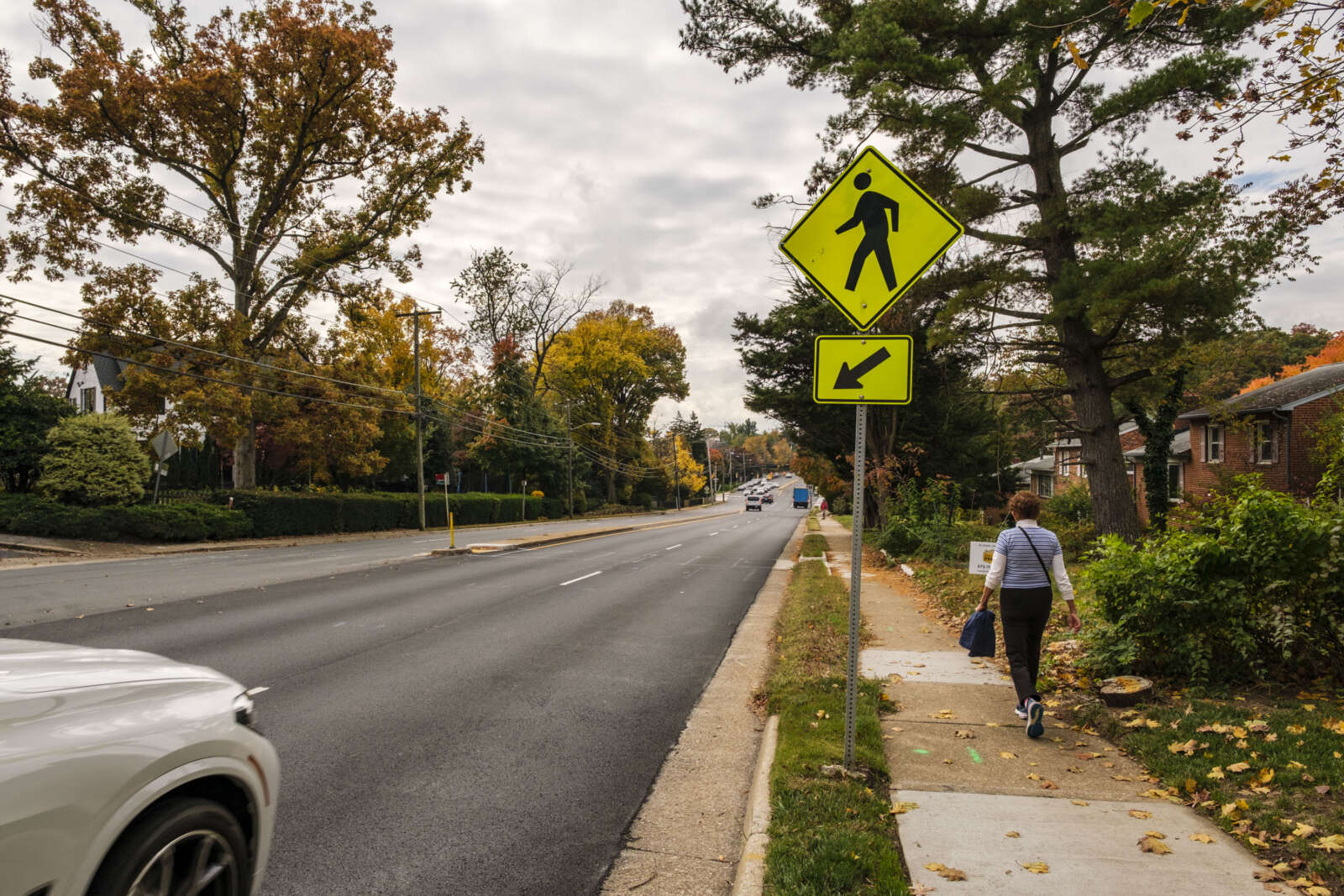
Unmarked or temporarily marked crosswalks along Langston Blvd are slated to be painted today (Friday), weather permitting.
The repainting activity comes nearly two months after the Virginia Department of Transportation paved Langston Blvd from Washington Blvd to N. Glebe Road, in East Falls Church, and from Military Road to N. Kenmore Street, in Cherrydale, according to a paving map.
VDOT, which manages the road, finished the repaving projects at the start of September, as part of its annual road repaving and repainting schedule.
According to the state transportation department, the lag between paving and painting is not uncommon.
“As the line painting contractors are different than the milling/paving contractors, sometimes schedules don’t line up as smoothly,” VDOT spokeswoman Ellen Kamilakis tells ARLnow.
Arlington County and some residents tell ARLnow they have raised concerns about the lag with state transportation department.
“VDOT is aware of our concerns and are working to complete the markings on Langston Blvd,” Arlington Dept. of Environmental Services spokeswoman Katie O’Brien said.
The repainting comes while pedestrian safety occupies the minds of Arlington County Board members, local advocates and residents. In recent months, drivers struck and killed two pedestrians: one woman near Thomas Jefferson Middle School was killed by an alleged drunk driver and a woman near Nottingham Elementary School was killed in a crash, which police are still investigating.
While VDOT repaves state routes, Arlington County does take advantage of the state’s schedule to consider changes to the streets under its purview through its Resurfacing for Complete Streets program, O’Brien said.
“For roadways maintained by VDOT, Arlington does coordinate with VDOT on improvements,” she said. “For example, this year VDOT will be adding crossing enhancements on Langston Blvd at our request.”
These include high visibility crosswalk markings, advance yield signs and markings, she says.
She added that the county coordinated with the state to “upgrade the two uncontrolled crosswalks at the intersections of Langston Blvd and N. Oakland Street and Langston Blvd and N. Nelson Street, as well as marking all side streets with high-visibility crosswalks instead of standard crosswalks.”
On Langston Blvd between Military Road and N. Kenmore Street, VDOT will be installing bike lane skip marks through intersections, high-visibility crosswalks along side streets and additional directional markings, according to the county’s first annual Vision Zero report, released this spring.
Arlington County is a year and a half into its Vision Zero initiative that aims to eliminate traffic fatalities and serious injuries. Between January 2021 and March 2022, the county updated 238 crosswalks to high-visibility crosswalks, according to the report.
It also “added new warning signage, pavement yield and high visibility crosswalk markings, and other minor improvements at 12 multilane crossing locations,” after a review of multi-lane crossings, per an August newsletter.
Onboard a flight departing Reagan National Airport (staff photo)
Metro Opening Early for Marathon — “Metrorail is stepping up the pace, opening two hours early – at 5 a.m. – for the 47th annual Marine Corps Marathon. Free shuttle buses at six Blue and Yellow line stations closed for construction will also begin operating at 5 a.m. when the system opens, with increased frequencies during peak pre- and post-race periods to accommodate the higher ridership.” [WMATA]
Road Closures Planned for Kids Run — From the Arlington County Police Department: “There will be road closures along Long Bridge Drive on Saturday, October 29 in order to accommodate the MCM Kids Run.” [Twitter]
Refugee Thanksgiving Event Returns — “After a two-year COVID hiatus, the Ethiopian Community Development Council and its ECDC African Community Center D.C. Metro will resume their ‘Refugees’ First Thanksgiving’ festivities on Sunday, Nov. 20 at 3 p.m. in Arlington.” [Sun Gazette]
Apparent Abduction Was Not a Crime — “A witness observed two male subjects exit a gray SUV and stop a woman as she was walking down the sidewalk. The men removed the woman’s backpack, brought her closer to the vehicle and the three entered and drove away… As a result of the press release, police identified the involved parties and determined no crime was committed.” [ACPD]
Steep Speaker Fee for Library Event — “Former New York Times writer Nikole Hannah-Jones was paid [$40,000] to give a 45-minute talk Sept. 20 as part of a three-hour event at Washington-Liberty High School in Arlington, Virginia.” [Daily Wire]
Fairfax Prosecutor Releases Data Dashboard — “Fairfax County’s top prosecutor, who has faced criticism for practices some view as too lenient, released data Wednesday showing that his office recommended people accused of violent crimes be denied bail at 76 percent of hearings but that judges did so only about half the time.” [Washington Post, Fairfax County]
Good Morning from Austin — ARLnow is in Texas today, attending the Independent News Sustainability Summit. We’ll try to bring back some good ideas to Arlington. In the meantime, please help us pace the reader support enjoyed by independent sites covering other big burbs like Berkeley and Cambridge by joining the ARLnow Press Club.
It’s Friday — Mostly cloudy throughout the day. High of 57 and low of 42. Sunrise at 7:33 am and sunset at 6:14 pm. [Weather.gov]
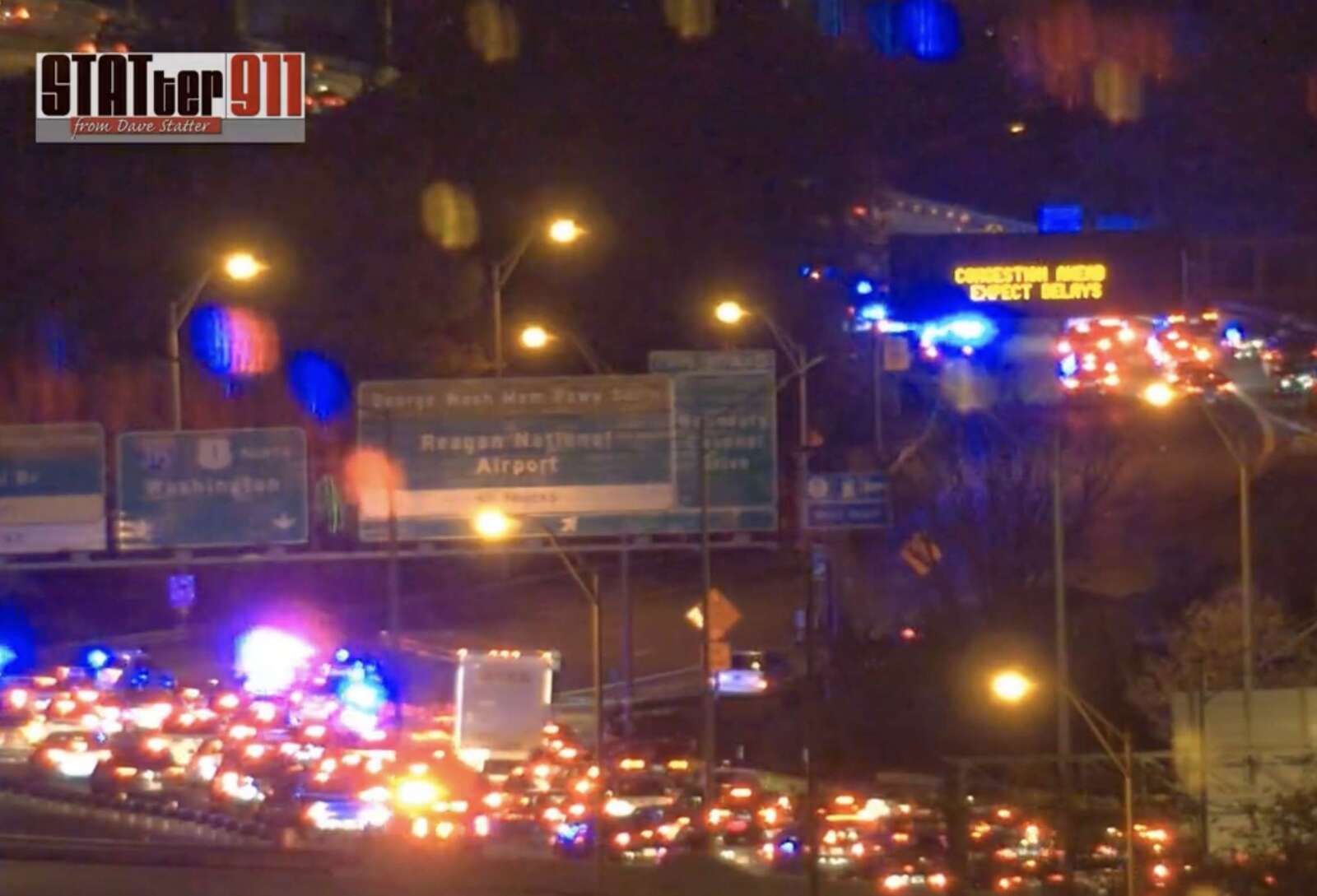
Scene from a Fairfax County police chase through Arlington County (via Dave Statter/Twitter)
A number of police chases initiated outside the county have careened through Arlington this month.
An armed robbery last Tuesday at the Home Depot in Seven Corners resulted in a police chase up I-395 before the driver got stuck in traffic approaching the 14th Street Bridge and tried to escape on foot at the exit for the GW Parkway.
In another chase last week, Fairfax County police initiated a chase after a cruiser was struck in Lincolnia.
Two weeks ago, the Alexandria police department followed a car into Arlington and Virginia State Police joined the pursuit — until the driver escaped across the river into D.C. and the chase was called off.
Public safety watchdog Dave Statter keeps records of most these chases from his perch in Pentagon City. While there has been a recent mini-rash of Fairfax County-initiated pursuits, he tells ARLnow this is a less common phenomenon compared to VSP chases.
“From my experience, those two recent chases by Fairfax County Police into Arlington are more of the exception that the rule,” said Statter. “In fact, they are so infrequent I had to put in a new folder in my police video file for FCPD.”
The same night as the Lincolnia chase, Statter said state police troopers were pursuing someone, too.
“Just a few minutes earlier, VSP chased and stopped someone on I-395 N near Washington Blvd,” Statter wrote. “VSP was still working that one when the FCPD chase went by. They had a little warning from the dispatcher and a couple of troopers joined in.”
(2) The @FairfaxCountyPD chase passed by the scene of a @VSPPIO chase that ended 10-minutes earlier when troopers boxed in a vehicle on I-395N at Route 27 & made an arrest. Some of those troopers joined in the second chase as Fairfax officers passed by.
Other VSP chases through Arlington happened on Saturday and in the early hours this morning. In the early Wednesday morning chase, VSP was following a car in connection to catalytic converter thefts in Fairfax County. On Saturday, VSP was chasing a possibly stolen car.
Recent chases involving or started by VSP that went through Arlington — including those this month — concluded with the cars escaping across the Potomac River and into D.C. Often, state police abandons pursuit once the person being chased reaches the jurisdictional line.
The reason for this is that VSP has relatively loose restrictions for starting a chase, but they tighten when troopers reach state lines.
“Sworn employees may initiate a pursuit when a driver fails to stop after the sworn employee has given a lawful order to stop by activating emergency lights and/or siren,” according to Virginia State Police policy.
Anyone under pursuit for a possible misdemeanor or traffic violation is almost always in the clear if they can cross the 14th Street Bridge.
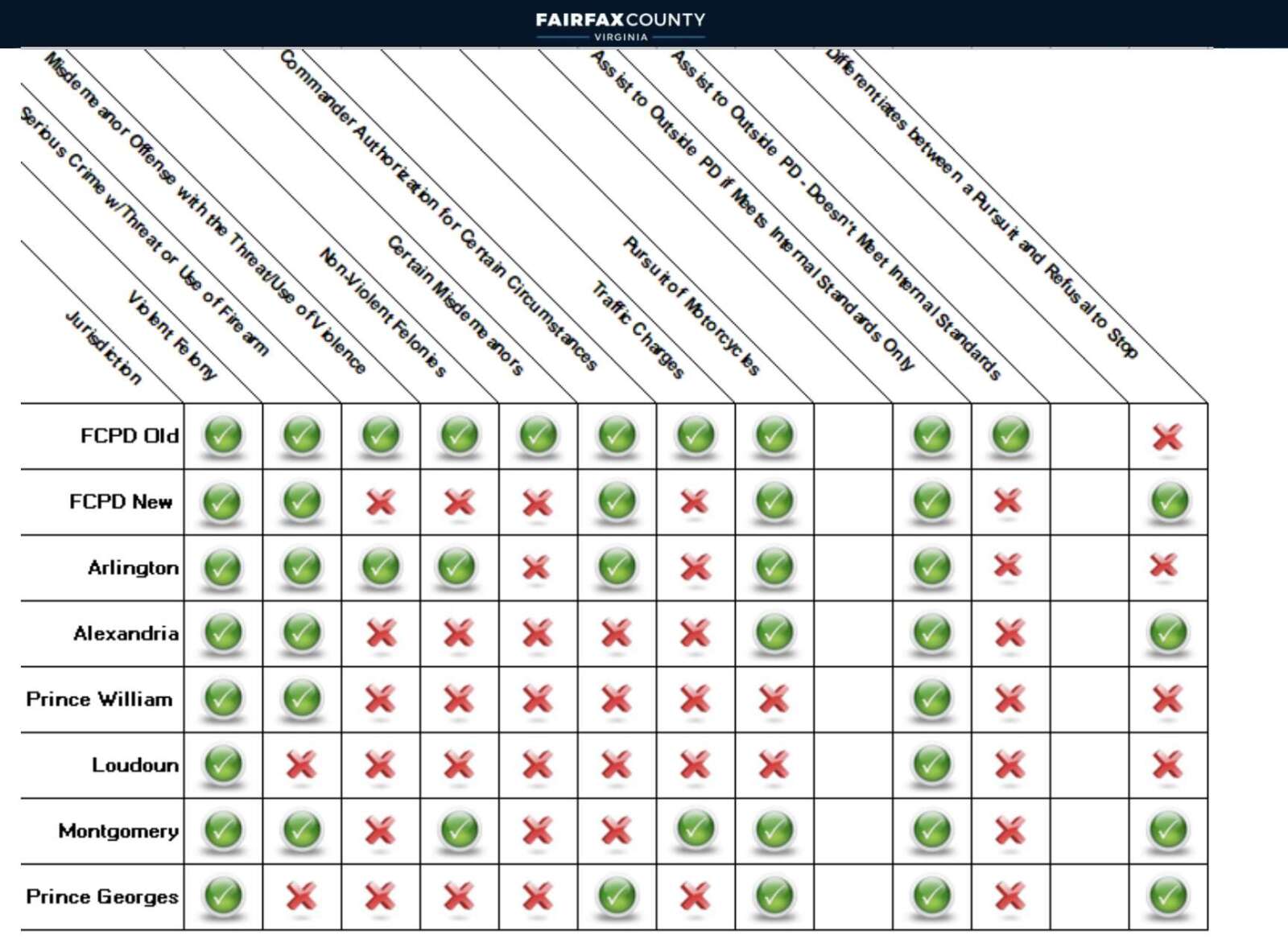
Meanwhile, Fairfax’s back-to-back chases come 13 months after the police department rolled out new, more restrictive guidance for when officers can chase suspects.
Effective September 2021, Fairfax County eliminated pursuits for misdemeanors, traffic violations and nonviolent felonies. Now, police conduct chases within Fairfax County and within Virginia for violent felonies, serious crimes with the threat or use of a firearm or explosive device, and at the authorization of a commander.
Fairfax officers join chases when they meet the department’s criteria, and officers can only pursue a car into D.C. or Maryland if the driver or passenger has attempted or is wanted for a felony crime.
Prior to the decision, Fairfax had one of the most liberal chase policies in the D.C. area, according to a police presentation from spring 2021. At the time, officials said the updated guidelines would bring the county in line with chase policies throughout the region.
“FCPD updated several pertinent policies in 2021 to further align the department with national best practices; improve officer and community safety and ensure our commitment to transparency,” according to the department’s annual crime summary for 2021. “The most significant revision included a modification to the traffic pursuit policy, which now focuses on apprehending offenders who pose the greatest risk to our community and doing so with an eye on safety.”
A comparison of police chase policies in the D.C. region (via Fairfax County)
Arlington has similar police chase policies: those wanted for relatively minor crimes are usually allowed to flee an attempted traffic stop without a chase, while violent criminals may be pursued, as happened earlier this month after an armed suspect firing shots at police was chased from Arlington to Fairfax County. Arlington’s policy follows a lawsuit nearly 40 years ago by a man who lost his legs when struck in D.C. by bank robbery suspects being chased at high speed by an ACPD officer.
Car windows freshly smashed in the Yorktown neighborhood on Oct. 27, 2022 (photo courtesy anonymous)
Car windows freshly smashed in the Yorktown neighborhood on Oct. 27, 2022 (photo courtesy anonymous)
(Updated at 3:40 p.m.) It happened again.
More Arlington residents woke up this morning to find their car windows shattered by an unknown vandal or group of vandals who had previously damaged nearly three dozen vehicles in a week-long smashing spree.
ARLnow has received reports of freshly smashed car windows in the Westover and Yorktown neighborhoods and in Ballston, near Washington-Liberty High School. That follows reports of damaged cars yesterday in parts of Clarendon, Lyon Village, Virginia Square, Courthouse and Glencarlyn.
We are awaiting additional details from Arlington County police, but a crime report just posted online says 54 vehicles were damaged by a BB gun between Tuesday evening and Thursday morning.
From ACPD:
DESTRUCTION OF PROPERTY (Series), Between the evening of October 25 and early morning of October 27, an unknown suspect damaged the windows of approximately 54 vehicles with a bb gun. Detectives are investigating this as a series with the previously reported destruction of property series. Community members in these areas are asked to review their home surveillance for any footage that may assist the investigation. Information can be reported to the Arlington County Police Department’s Tip Line at 703-228-4180 or [email protected]. The investigation is ongoing.
The vast majority of the damaged vehicles listed by police were parked in various parts of northern Arlington.
Yesterday police confirmed 10 damaged vehicles; the latest report adds 44 vehicles to the two-day total. Combined with the vandalism spree late last week, ACPD has received reports of more than 80 cars with shattered windows over the past seven days.
“Since October 21, there have been 81 vehicles reported to have damaged windows,” ACPD spokeswoman Ashley Savage tells ARLnow. “It’s important to note that since some of these reports are filed online and the reporting party does not always note if the damage appears to be from a BB gun, some of these reports may ultimately be determined not to be part of the series.”