Sunlight streaks through as the rain ends in Ballston (staff photo by Jay Westcott)
Shorter Summer Break for HS Athletes — “So much for long, nearly two-month summer breaks from high-school sports, which for a long time used to be the case. With the preceding spring high-school sports campaigns lasting closer to the end of June these days, then practices for the next fall season starting Aug. 1 this year, the summer break was about a month long. July is becoming about all there is of the summertime anymore.” [Sun Gazette]
SOL Scores Lag Pre-Pandemic Benchmark — “The Virginia Education Department said students are still bearing the scars of prolonged pandemic-related school closures, releasing test scores from last school year that showed them performing behind pre-pandemic levels. While students saw across-the-board gains in the 2021-2022 school year compared to the previous academic year, state education officials said the progress was not enough, and pinned some of the good news on lowered standards — not on better student performance.” [Washington Post]
Talking Teacher Shortage on CNN — From School Board member Barbara Kanninen: “Terrific @CNN interview with Arlingtonian Mary Kusler regarding our ‘five-alarm crisis,’ the teacher shortage. It’s the number one issue concerning parents today.” [Twitter]
Arlington is Middling for Views — “Arlington ranks in the top half of the pack when it comes to urban areas where residents enjoy nice views from their residences. Lawn Love recently set up parameters and then crunched the data to determine how those heavily populated areas stack up. The study looked at where residents have the nicest park views, mountain views, water views and cityscape views, as well as the air quality in every area.” [Sun Gazette]
It’s Tuesday — Clear throughout the day. High of 83 and low of 68. Sunrise at 6:31 am and sunset at 7:54 pm. [Weather.gov]
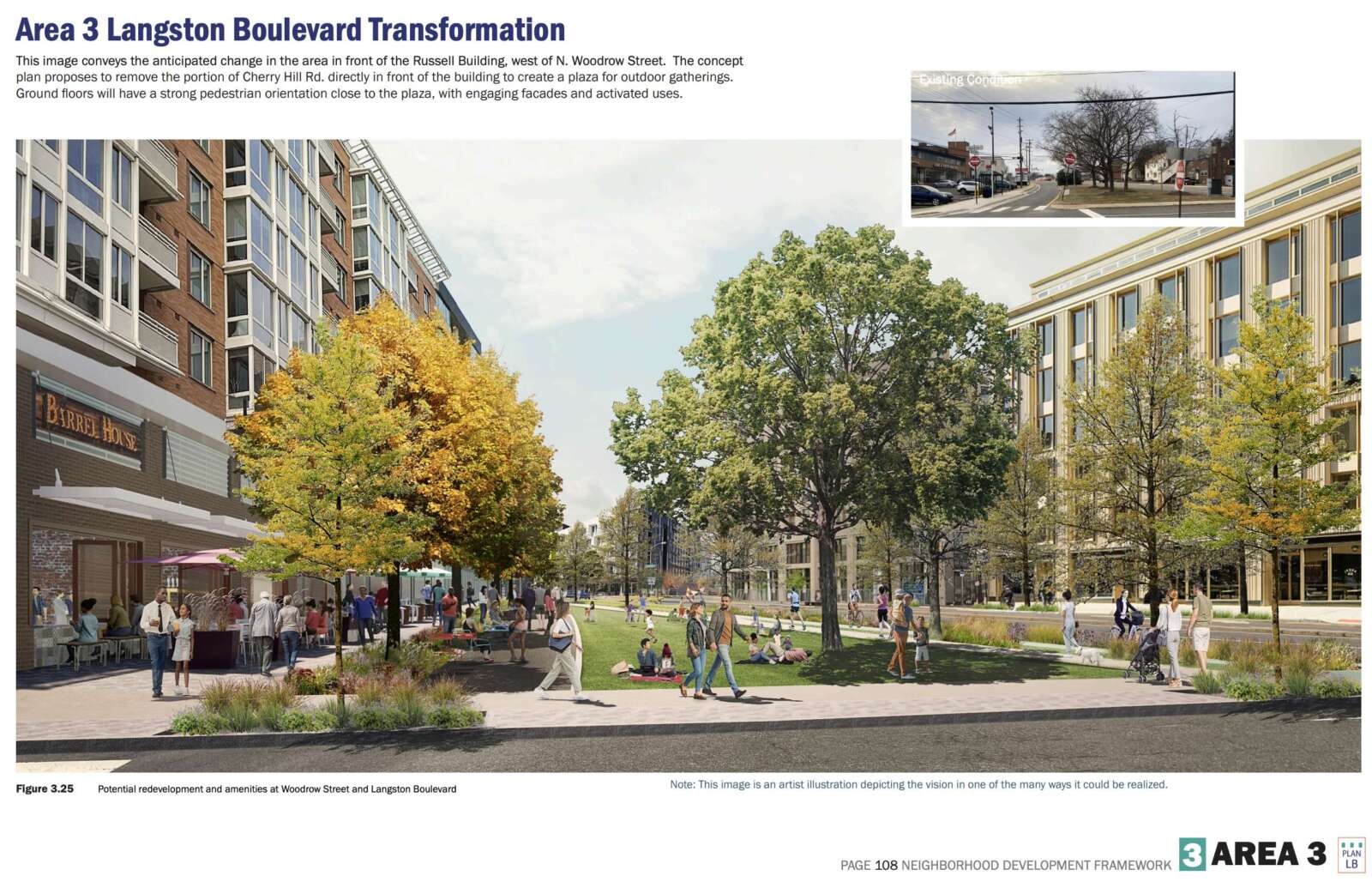
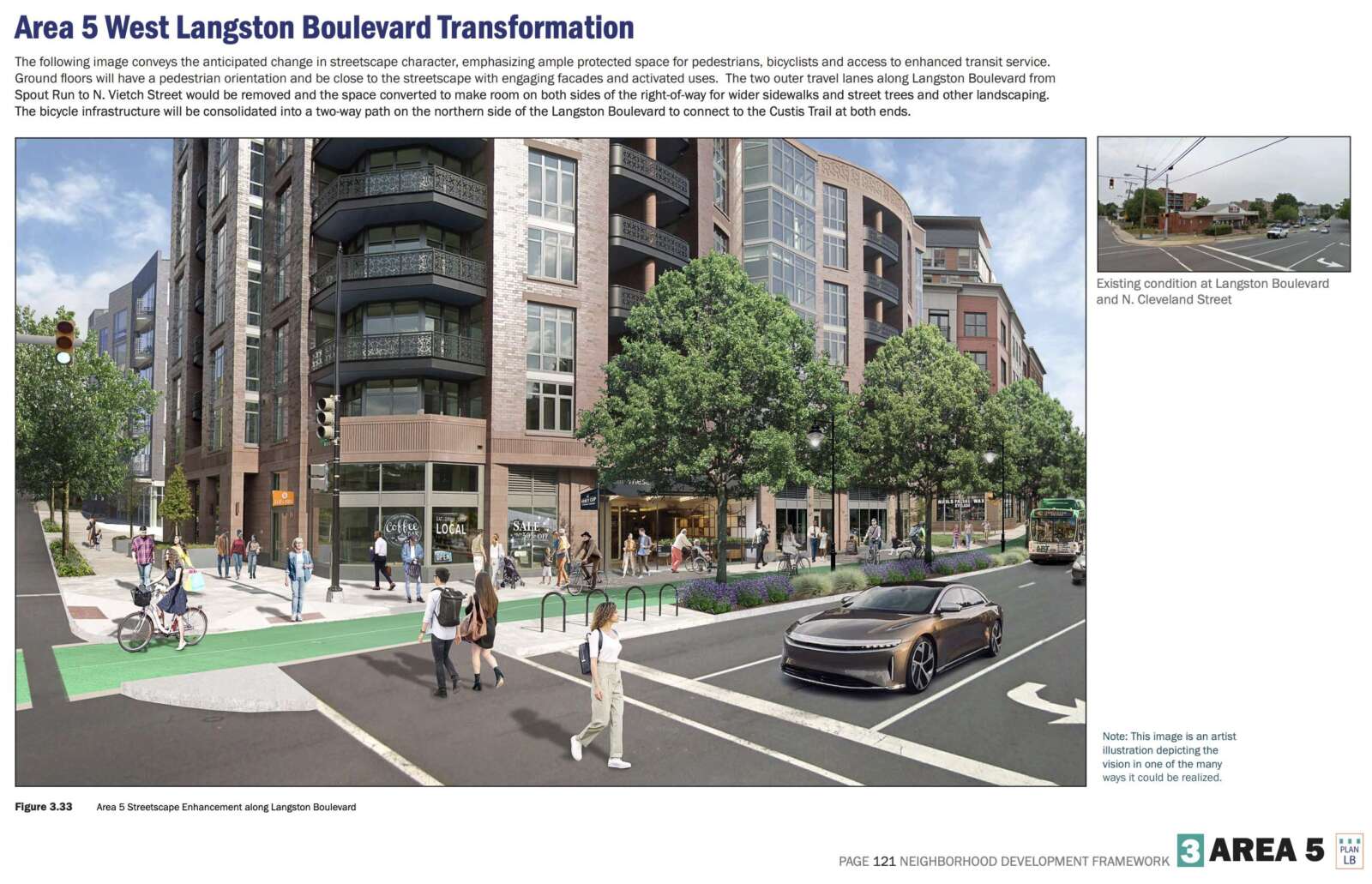
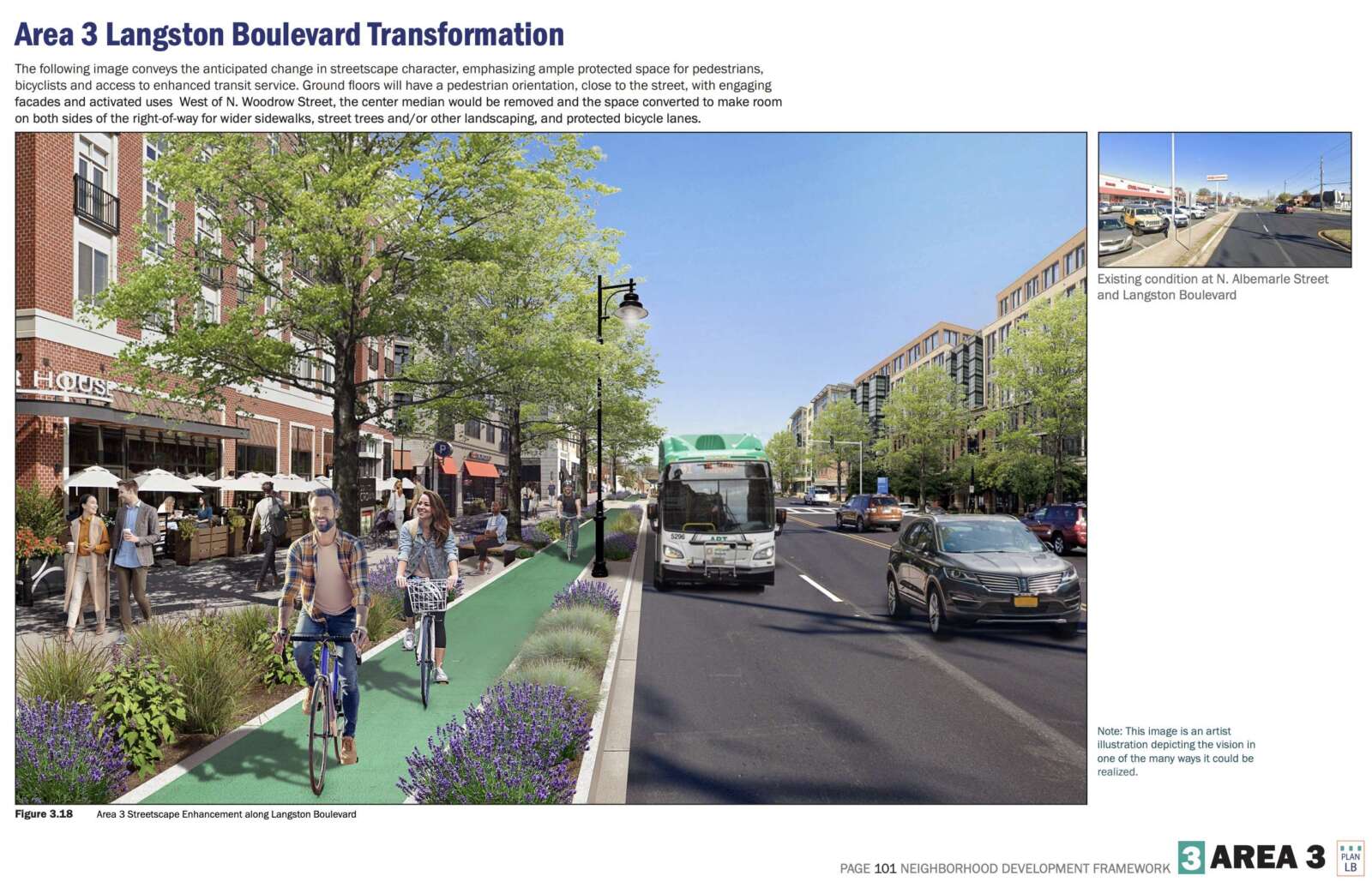
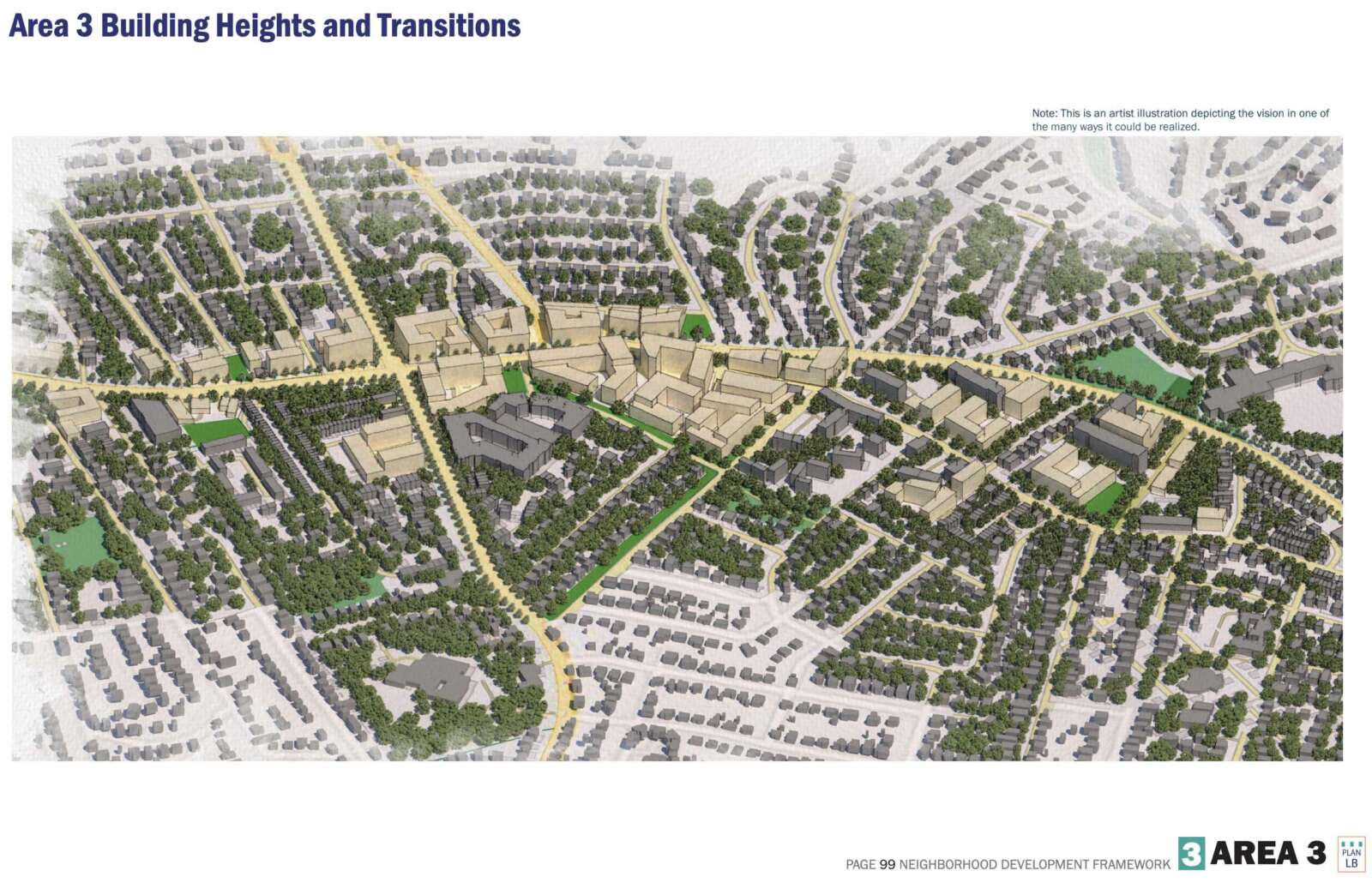
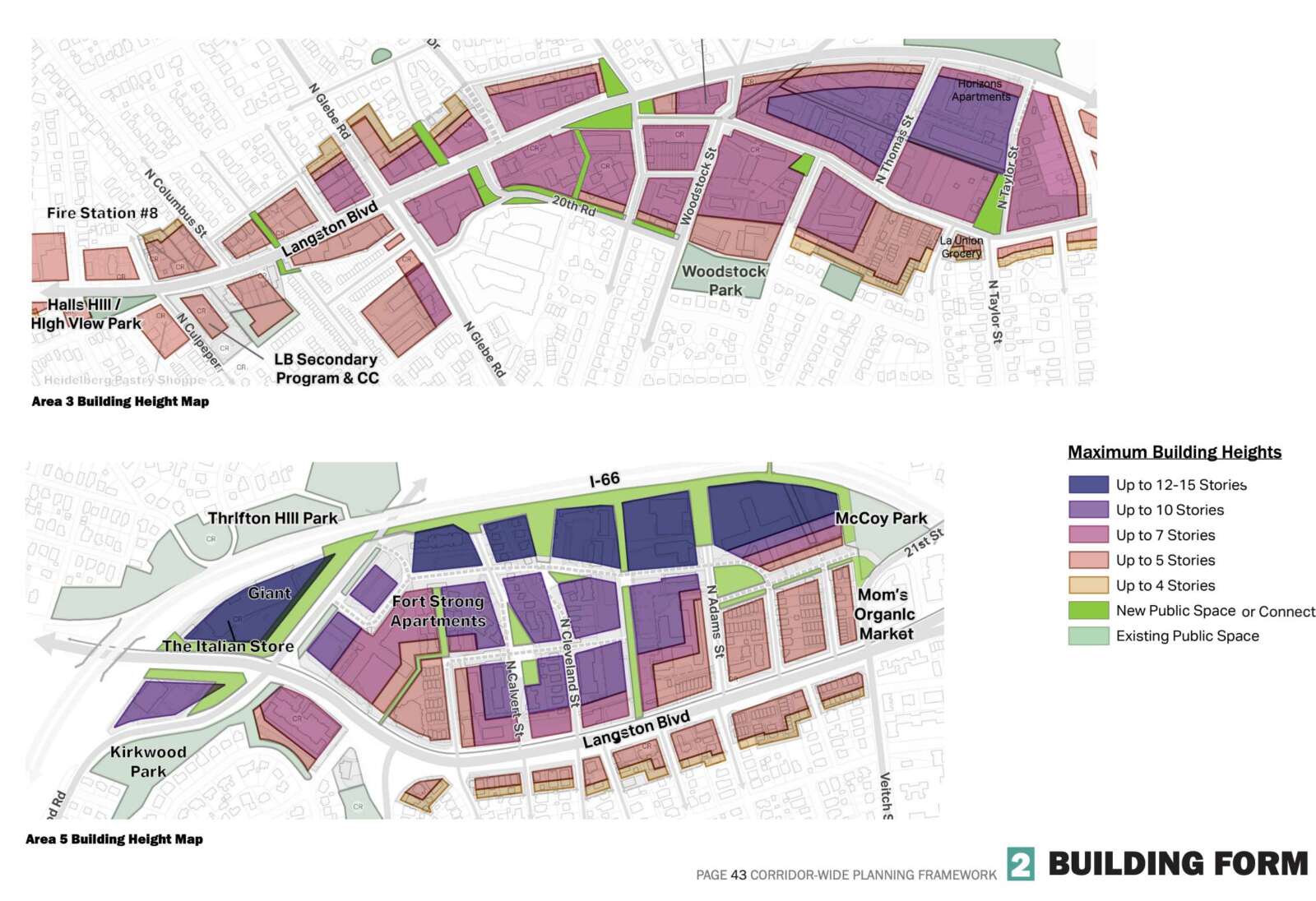
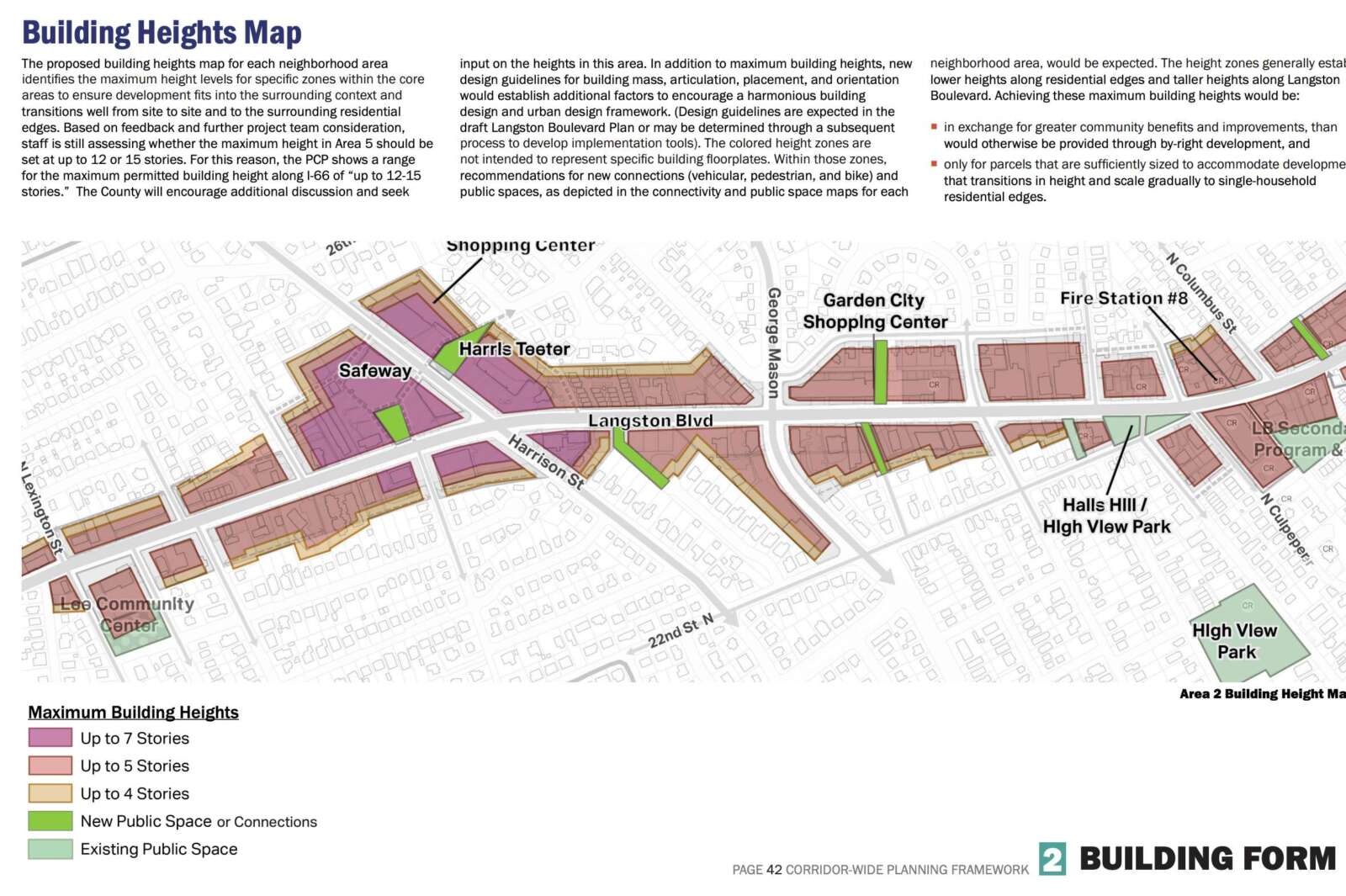
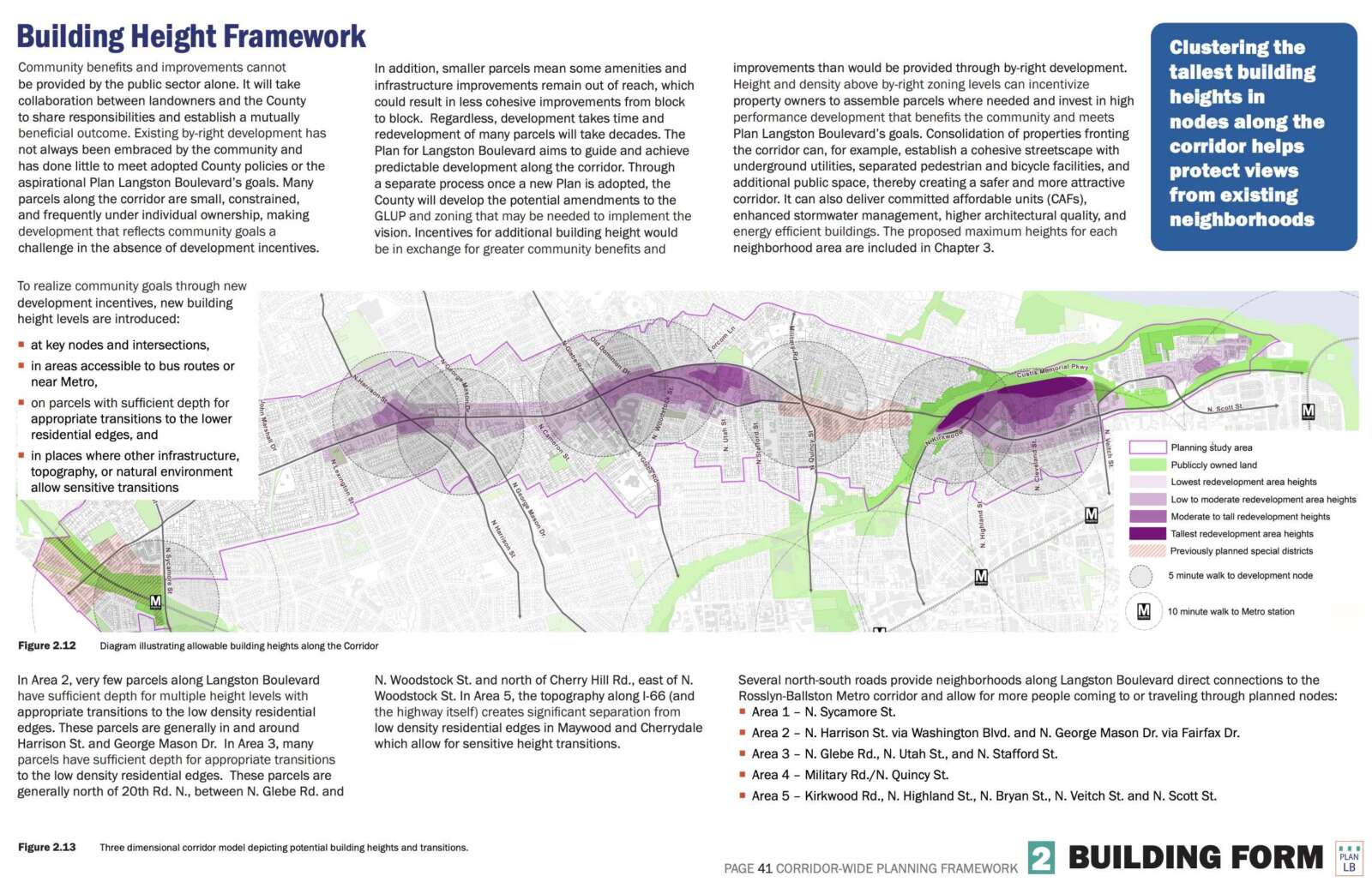
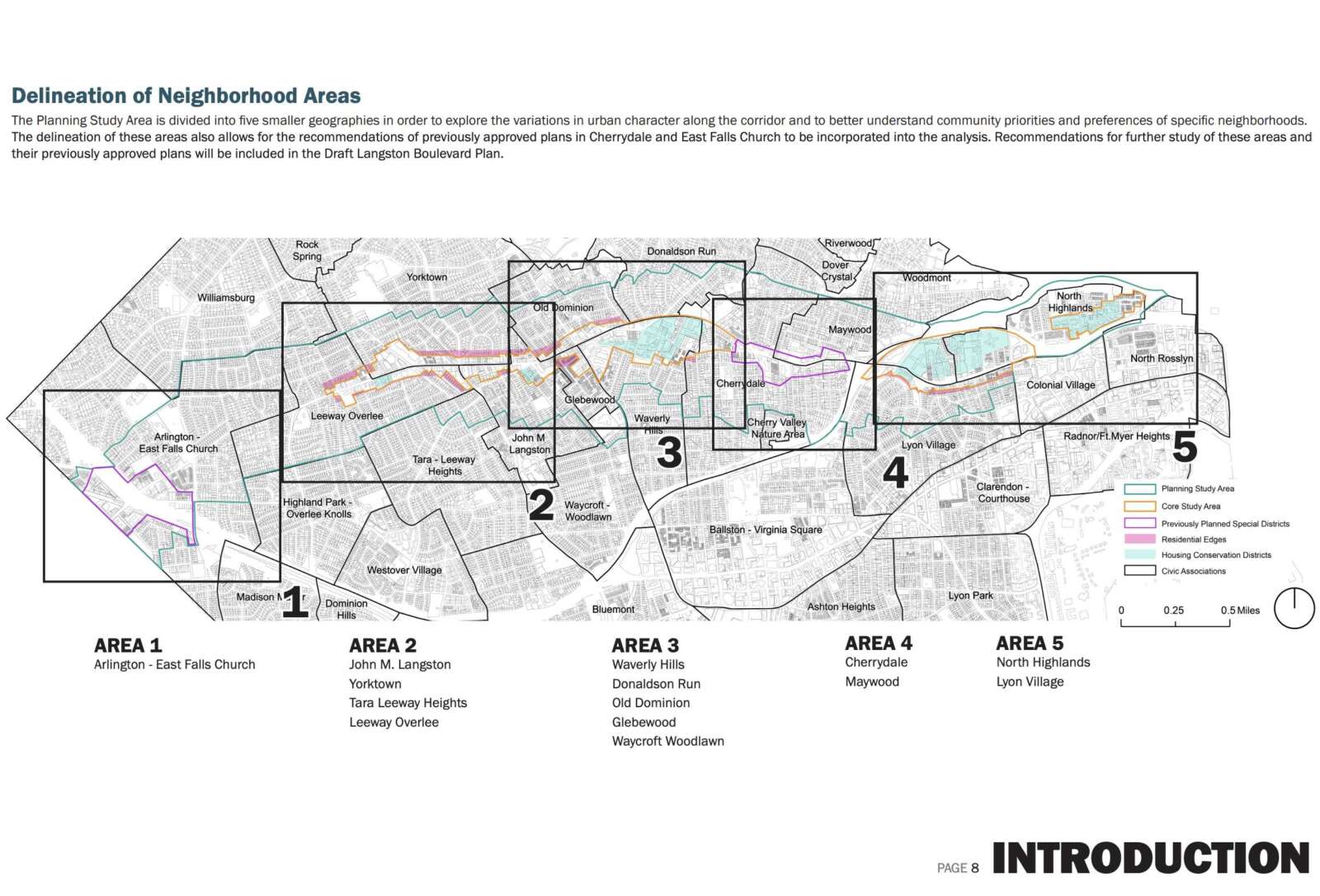
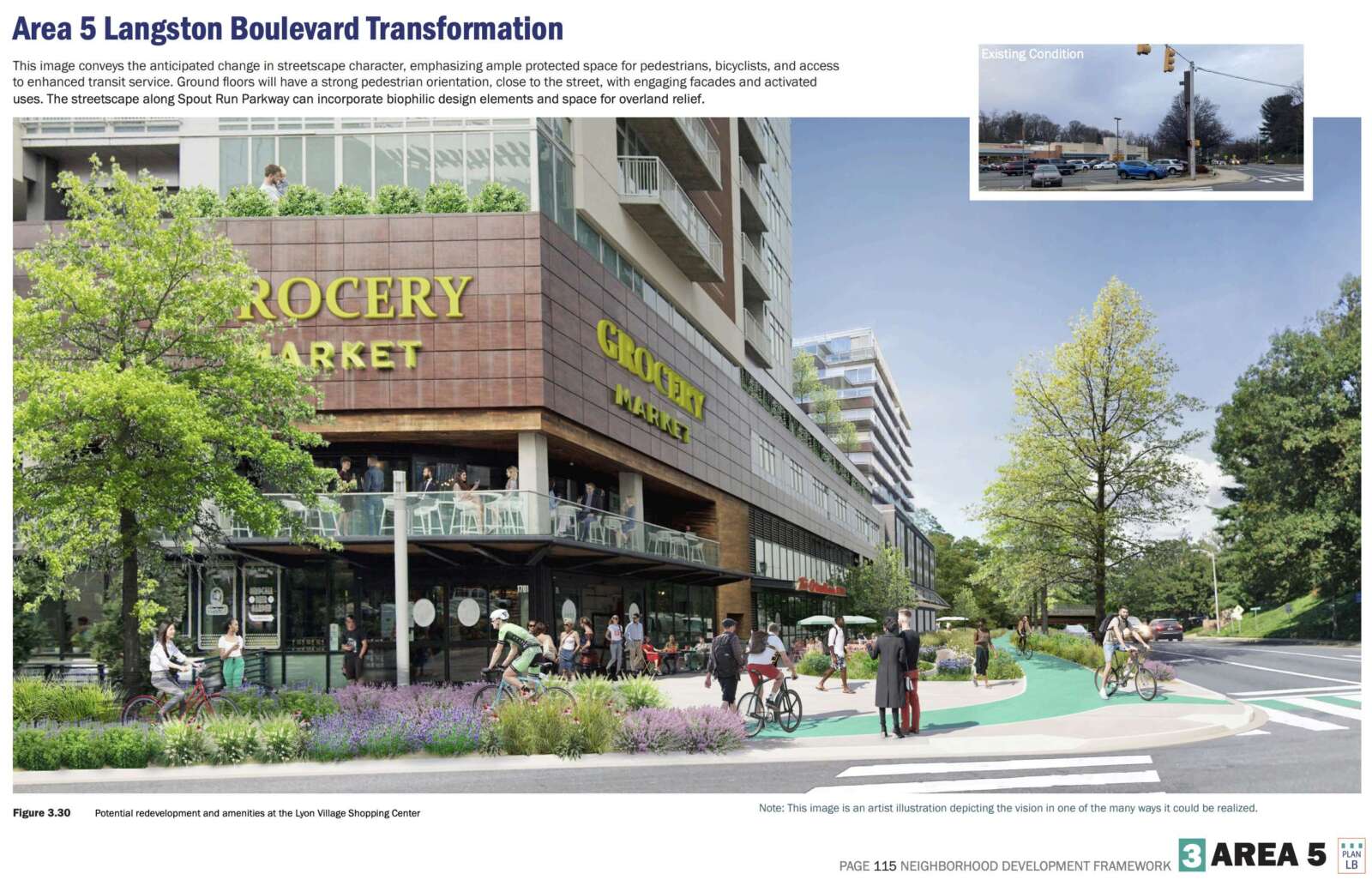
Slide from Langston Blvd concept plan (via Arlington County)
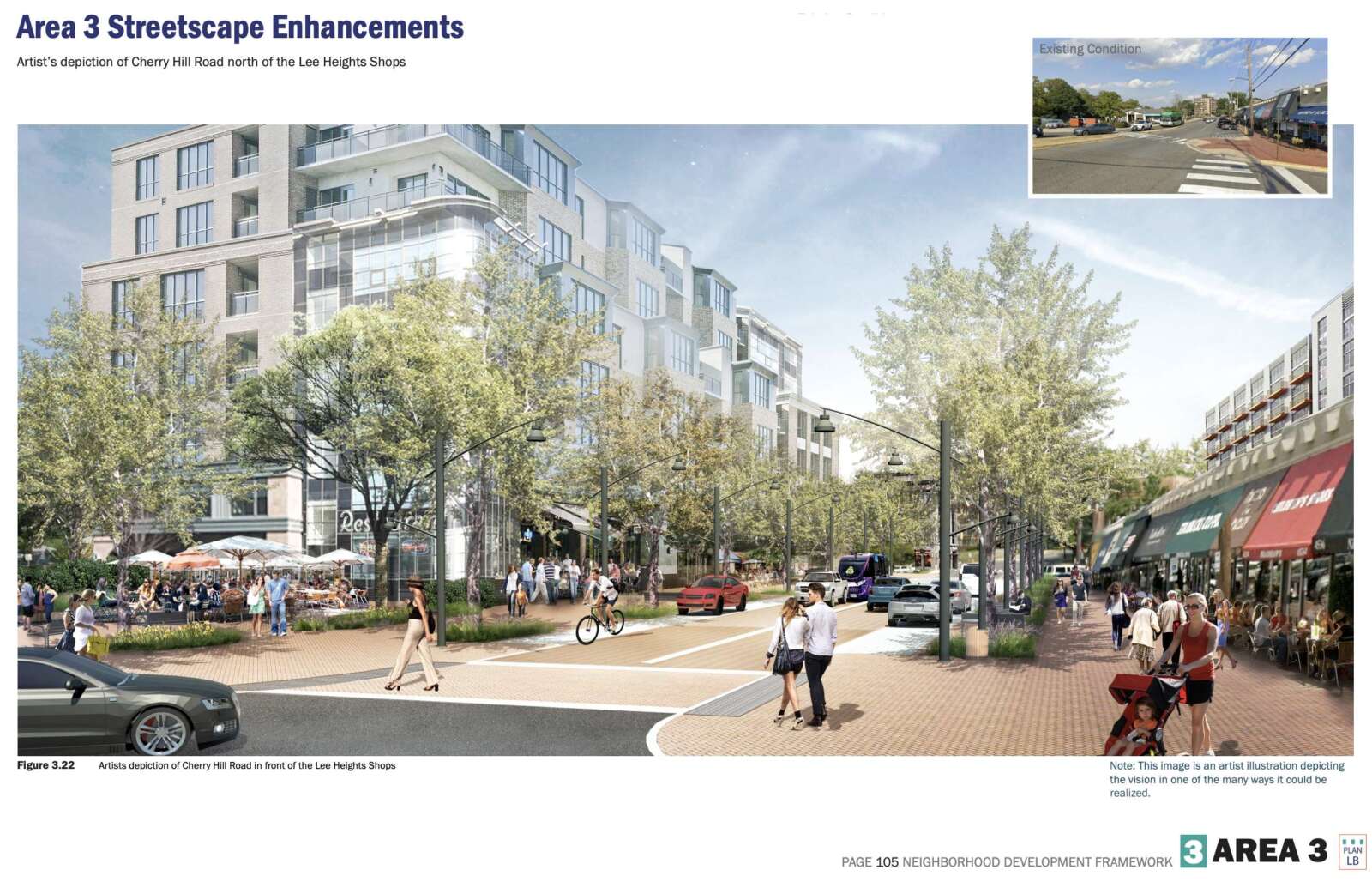
Slide from Langston Blvd concept plan (via Arlington County)
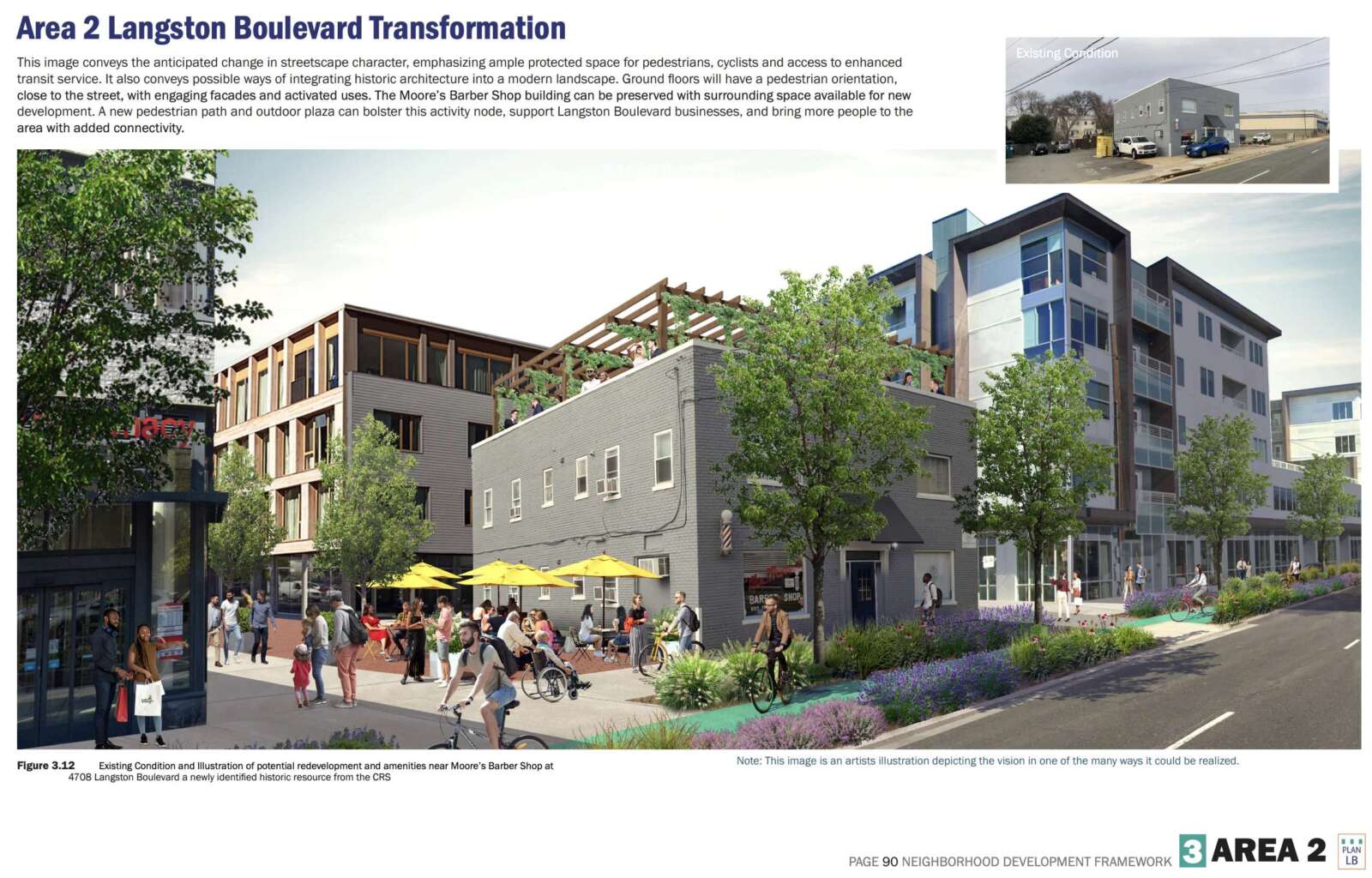
Slide from Langston Blvd concept plan (via Arlington County)
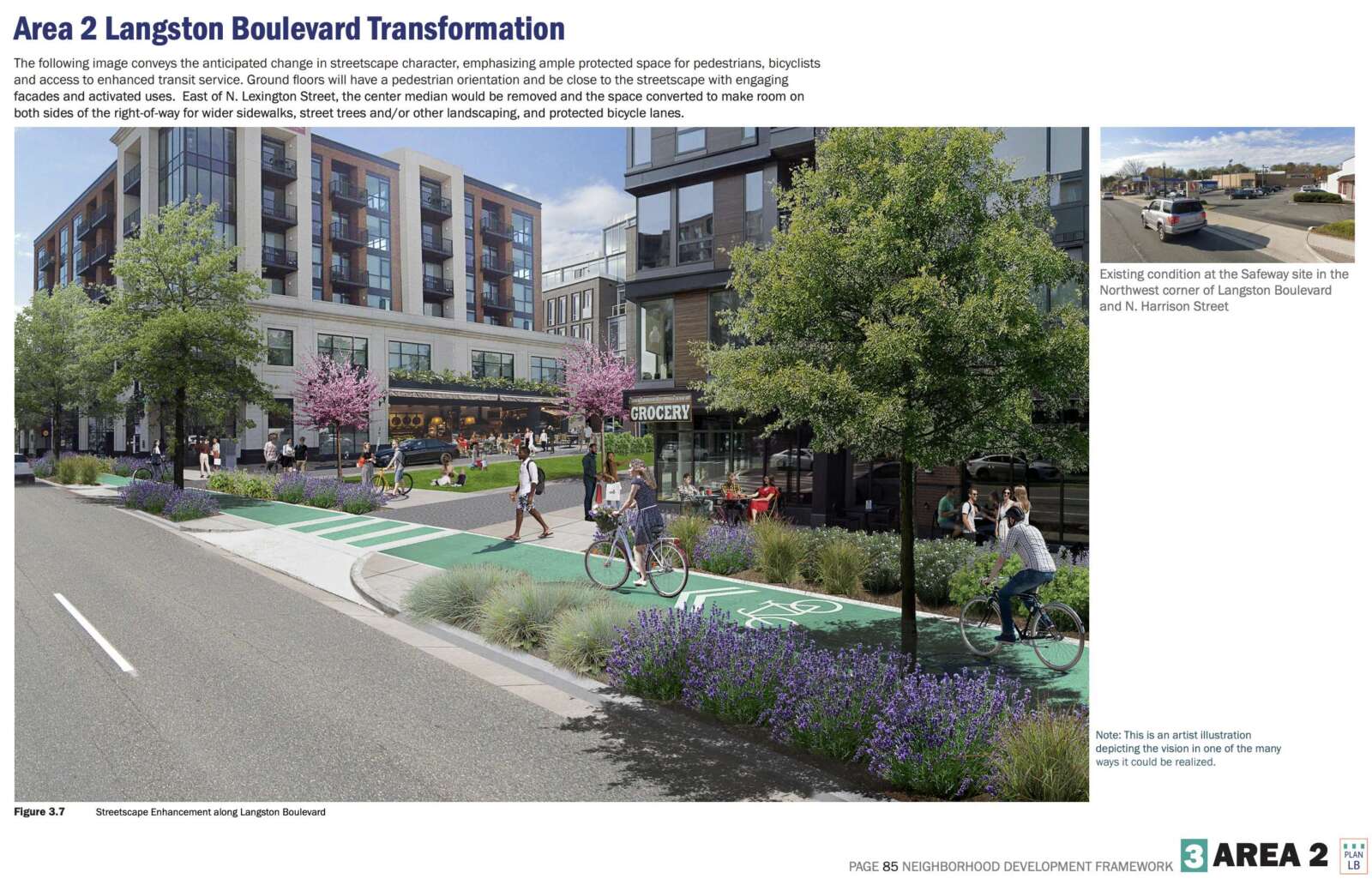
Slide from Langston Blvd concept plan (via Arlington County)
Slide from Langston Blvd concept plan (via Arlington County)
Slide from Langston Blvd concept plan (via Arlington County)
Slide from Langston Blvd concept plan (via Arlington County)
Slide from Langston Blvd concept plan (via Arlington County)
Slide from Langston Blvd concept plan (via Arlington County)
Slide from Langston Blvd concept plan (via Arlington County)
Slide from Langston Blvd concept plan (via Arlington County)
Slide from Langston Blvd concept plan (via Arlington County)
The new preliminary concept plan for Langston Blvd envisions the corridor’s transformation over several decades into a “Green Main Street.”
The extensive plan — which has been in the works for years — calls for land use changes along the former Lee Highway, with the aim of encouraging re-development over time, though the proposed zoning changes are not quite as drastic as what had been discussed last year.
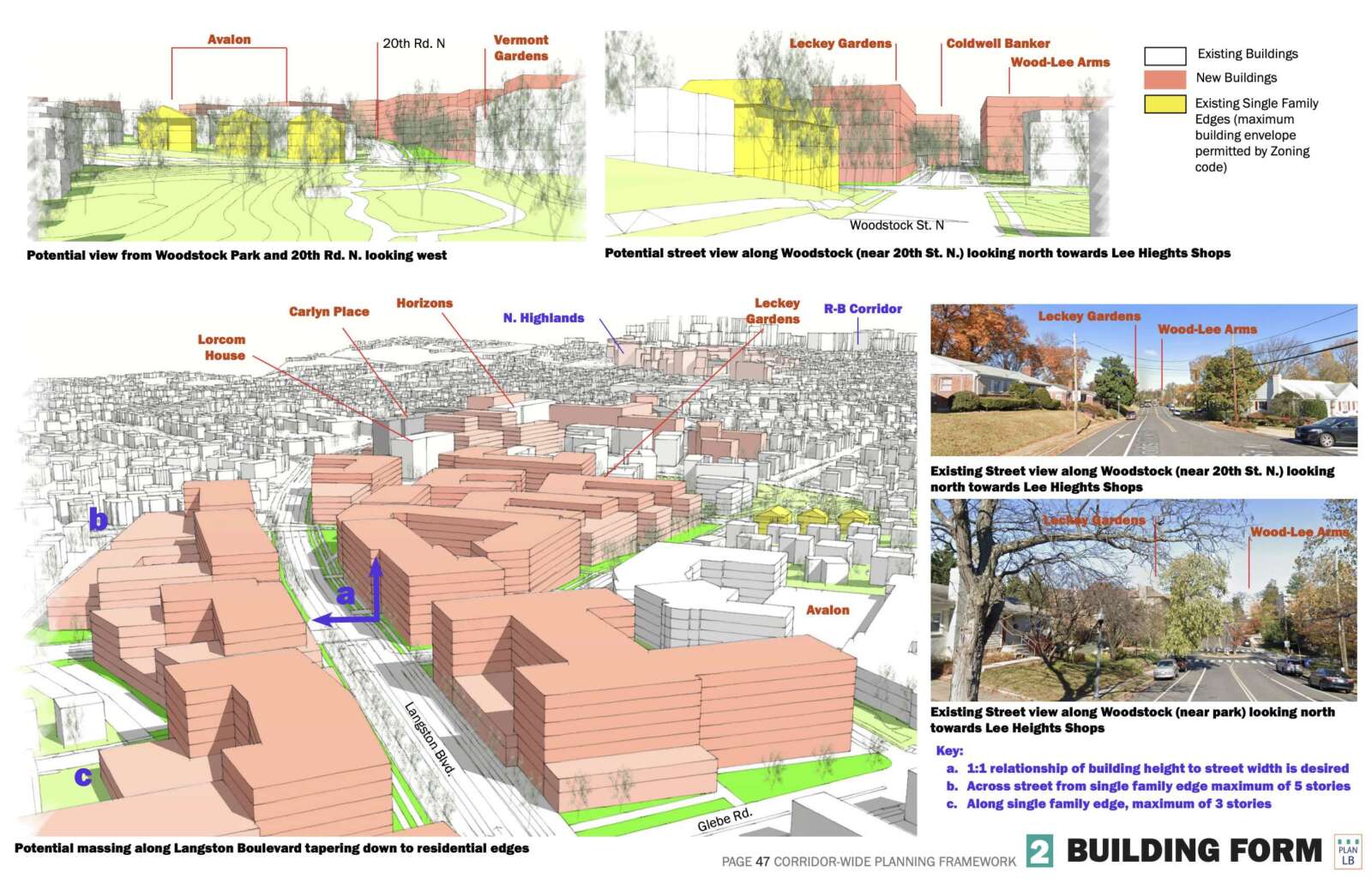
“The new recommended building heights are generally two to three stories lower than were considered in the 2021 [Land Use Scenario Analysis],” said the plan, a 135-page document filled with small text and large renderings. “While it may take longer to implement the vision and improvements along Langston Boulevard may happen intermittently, the plan provides options for property owners to execute the plan’s vision and recommendations.”
Should the vision be realized, the corridor’s ubiquitous, aging strip malls and large surface parking lots would be replaced with taller, more walkable hubs of social and economic activity.
The Lyon Village Shopping Center could be turned into a 12-15 story mixed-use development, with the current Giant grocery store and The Italian Store on the ground floor, looking out on a bike path that connects to the Custis Trail and a reconfigured intersection of Langston Blvd, N. Kirkwood Road and Spout Run Parkway.
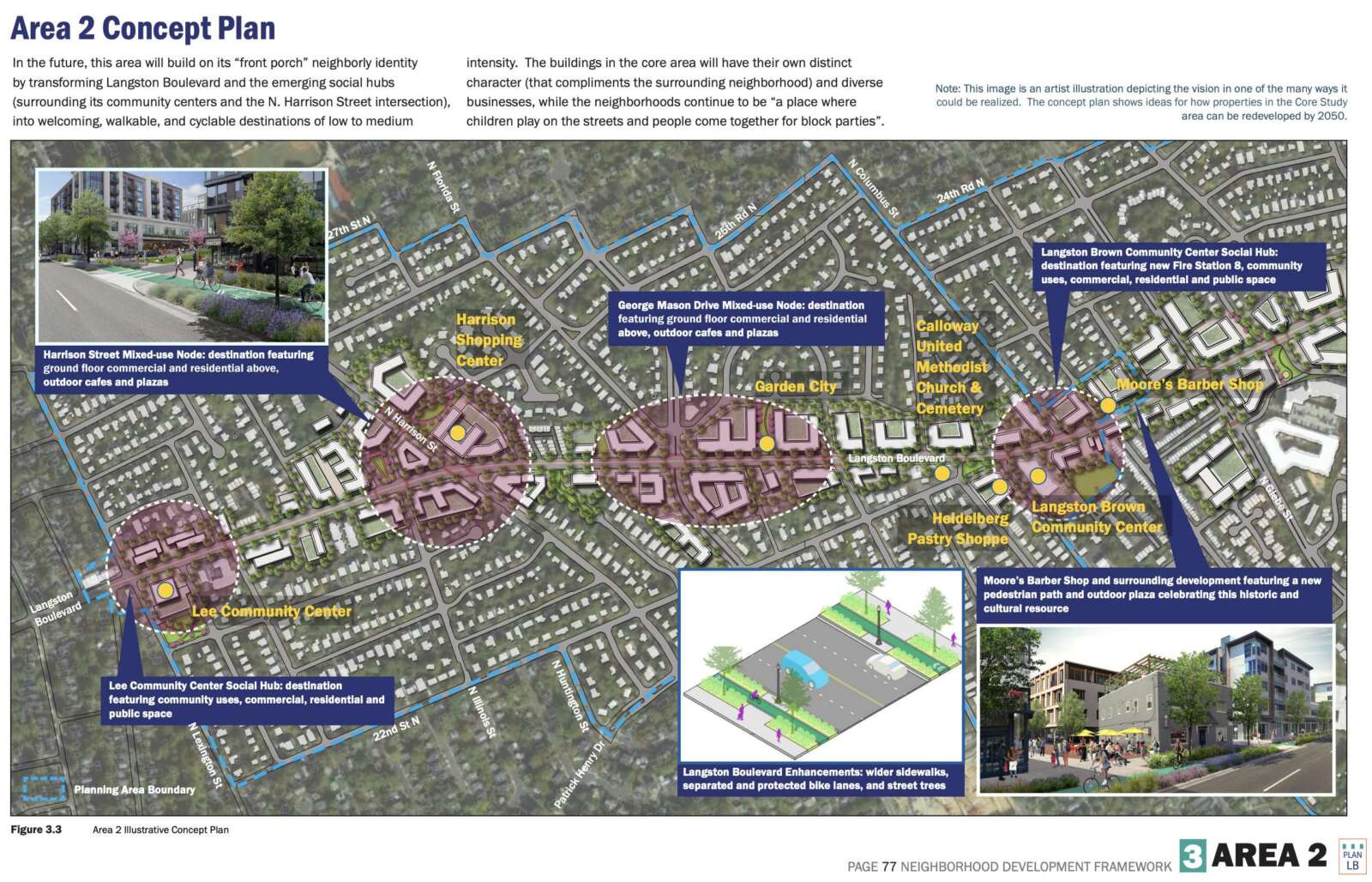
The Lee Heights Shops, home to Arrowine and Pastries by Randolph, may remain largely as-is, but with mixed-use developments of up to seven stories and pedestrian promenades around it.
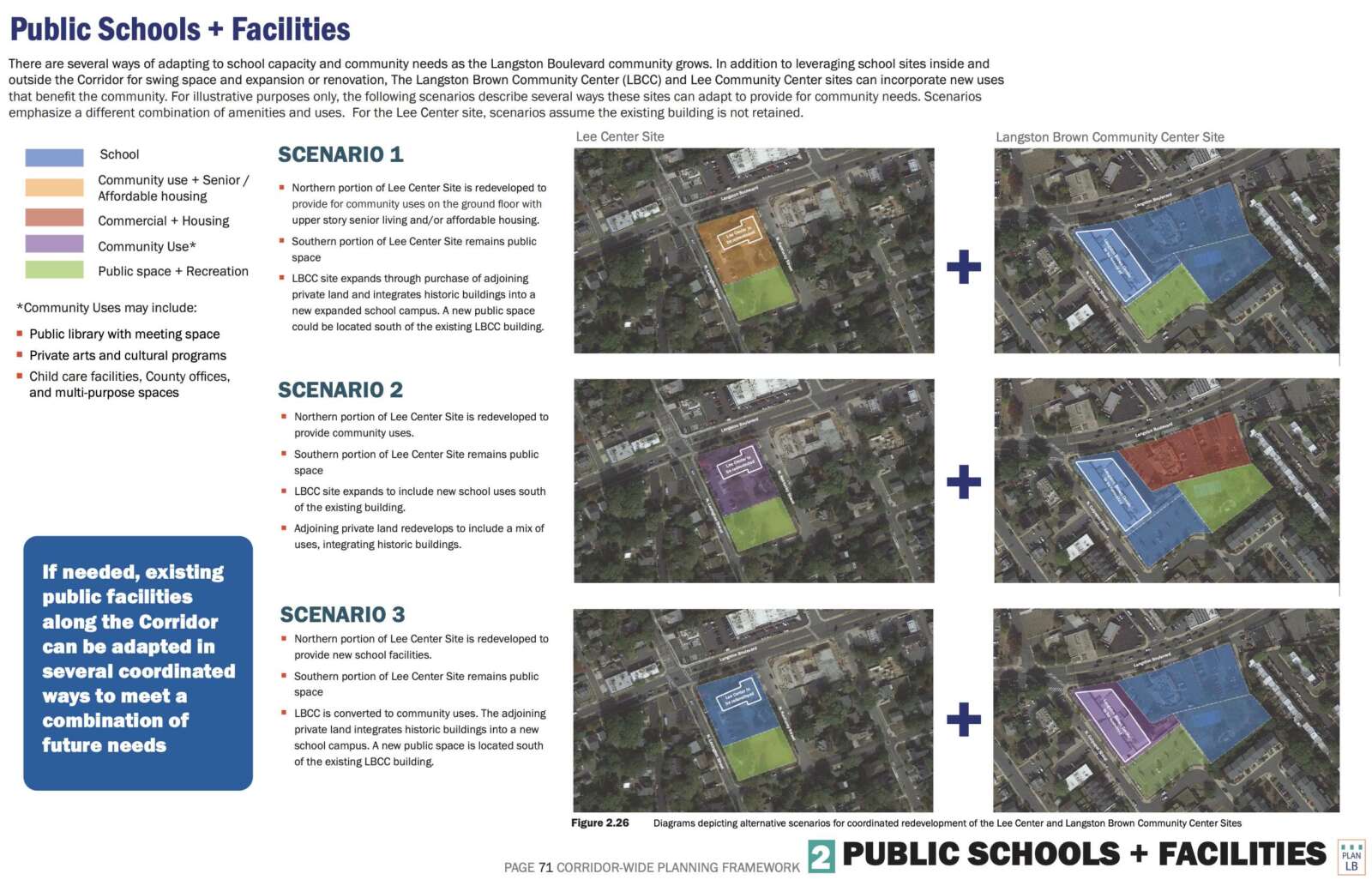
Another nearby landmark, Moore’s Barber Shop, could also remain in its current building, but next to a five-story apartment building an an outdoor cafe, rather than parking lots and a car care center. Across the street, however, the McDonald’s could make way for a new public school and other public infrastructure, alongside a renovated Langston-Brown Community Center.
Further down the road, the busy shopping centers surrounding the intersection of Langston Blvd and N. Harrison Street — currently anchored by Harris Teeter and Safeway grocery stores — could become mixed-use centers of housing and ground-floor retail, up to 7 stories.
In addition to the current mix of restaurants, grocery stores and other businesses, the plan calls for other types of commercial tenants, including coworking spaces, fitness centers, hotels, and childcare providers.
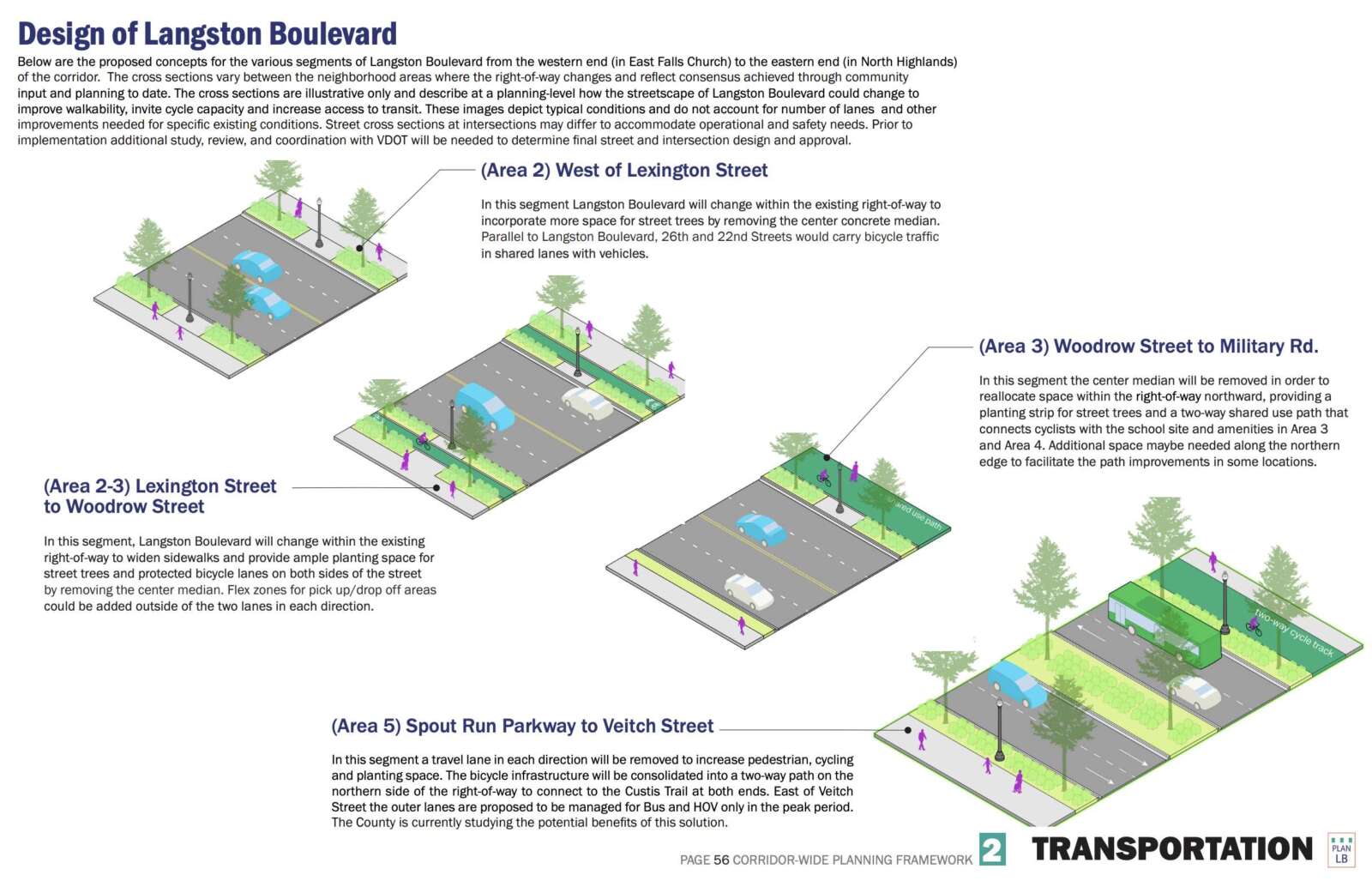
Langston Blvd itself, also known as Route 29, would become more pedestrian oriented, with street trees, wider sidewalks and some bike infrastructure. Two vehicle lanes would be maintained in each direction, but often without the center median. Where bike lanes or a shared use path are not possible, the plan calls for parallel bike routes, including along 22nd and 26th streets.
“The vision for Langston Boulevard is corridor-wide and is based on the community’s desire to transform the corridor into a resilient, renewable, and re-energized place by 2050,” the plan says. “The Preliminary Concept Plan is informed by the community’s aspirations and priorities and the unique characteristics, challenges, and opportunities for achieving the vision in each of the neighborhood areas.”
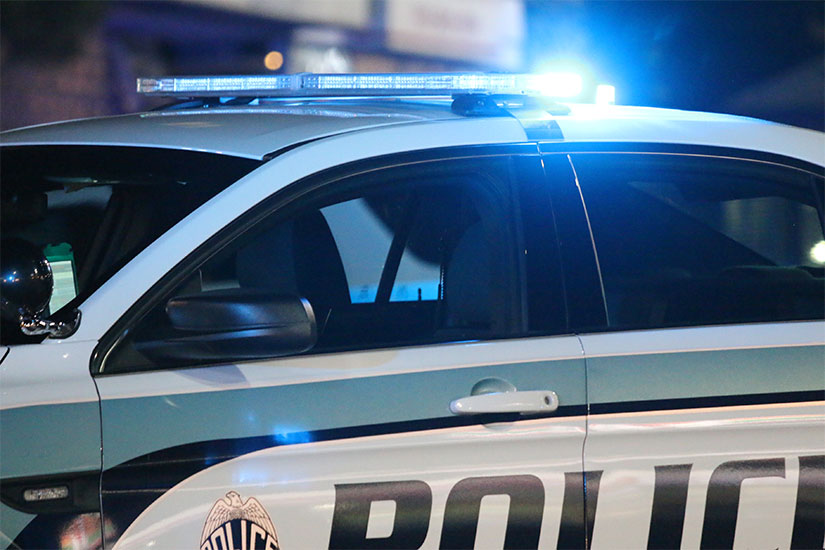
Police car speeding to a call at night (staff photo)
A driver who fled from police early Saturday morning in Crystal City then returned, successfully fled again, and returned and tried to flee a third time, police say.
The third time was the charm for officers.
Police say the unusual sequence ended with a foot chase and the arrest of a 19-year-old Springfield, Virginia man near the Pentagon City mall. It followed a vehicle pursuit that originally ended when the suspect crossed the bridge into D.C., but was re-initiated after he inexplicably returned, according to police.
The man is now facing numerous felony charges, including drug possession, three counts of eluding, and attempted malicious wounding of a law enforcement officer for allegedly ramming a police cruiser with his vehicle during the first half of the car chase.
More from an Arlington County Police Department crime report:
ATTEMPTED MALICIOUS WOUNDING OF LAW ENFORCEMENT, 2022-08200075, 20th Street S. and Richmond Highway. At approximately 3:54 a.m. on August 20, a patrol officer observed a vehicle traveling at a high rate of speed and attempted a traffic stop in the 2400 block of S. Eads Street. The driver disregarded the officer’s emergency equipment and fled from the stop. At approximately 8:00 a.m., officers observed the vehicle traveling in the area of 20th Street S. and Richmond Highway and attempted a second traffic stop. The driver accelerated, struck a police cruiser with his vehicle, and fled onto Richmond Highway. A vehicle pursuit was initiated and subsequently terminated in Washington D.C. due to the driver’s erratic behavior. Shortly afterwards, officers observed the vehicle reenter the County and reinitiated the pursuit. The driver exited the vehicle in the 800 block of Army Navy Drive and attempted to flee the scene on foot. Following a foot pursuit, officers took the suspect into custody. A search of the suspect incident to arrest yielded suspected narcotics. Adrian Molina, 19, of Springfield, VA was arrested and charged with Attempted Malicious Wounding of a Law Enforcement Officer, Felony Hit and Run, Felony Eluding (x3), Possession of a Schedule I/II Narcotic, Obstruction of Justice and Driving without a License.
Another alleged assault on police happened early this morning in Clarendon. Police say a drunk man started “became disorderly and uncooperative” along the 3100 block of Clarendon Blvd, near some of the neighborhood’s bars, after officers tried to “have him secure a safe ride home.”
From the crime report:
At approximately 1:35 a.m. on August 22, police were dispatched to the report of an intoxicated individual. Upon arrival, officers made contact with the male suspect and attempted to have him secure a safe ride home. The suspect ignored the officer’s instructions and became disorderly and uncooperative. As officers attempted to take the suspect into custody, he actively resisted arrest and a physical struggle ensued. With the assistance of additional officers, the suspect was successfully detained. While being walked to a transport vehicle, the suspect assaulted the arresting officer.
A 27-year-old D.C. man “was arrested and charged with Assault and Battery of a Law Enforcement Officer, Public Intoxication and Obstruction of Justice,” ACPD said. “He was held without bond.”
On Sunday afternoon, meanwhile, police arrested a 40-year-old South Carolina man in a Pentagon City parking lot near the mall, after a woman said she saw him in a car exposing himself.
The man has an extensive history of indecent exposure arrests, according to variousnewsreports.
From ACPD’s crime report:
INDECENT EXPOSURE, 2022-08210124, 800 block of Army Navy Drive. At approximately 3:23 p.m. on August 21, police were dispatched to the report of an indecent exposure that had just occurred. Upon arrival, the victim stated she was going to exit her parked vehicle when she observed the unknown male suspect allegedly exposing himself in the car parked next to hers. The suspect was located on scene and taken into custody without incident. Berrino McClary, 40, of Kingstree, SC, was arrested and charged with Indecent Exposure. He was held without bond.
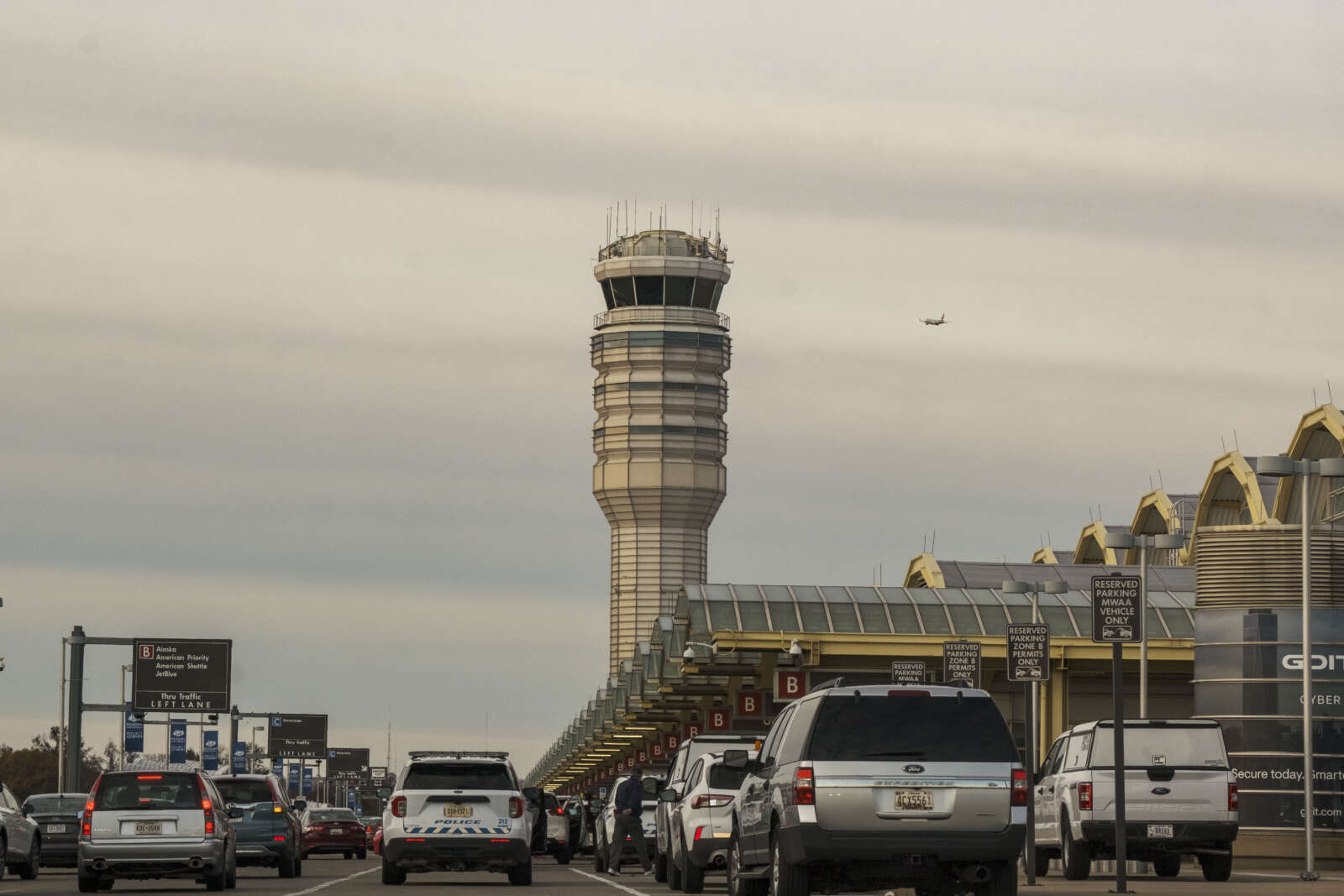
Twenty-four Virginia lawmakers, including several who represent parts of Arlington, sent a letter on Friday (Aug. 19) to MWAA President Jack Potter asking the airport authority, which manages and operates both Reagan National and Dulles International, to raise its minimum wage from its current $14.25 per hour.
While pay is scheduled to reach $15 next year per a 2019 agreement, that “will still be well below a living wage in the D.C. area.”
“We are concerned this compensation level is too low to attract and retain adequate staff, especially given the grueling work that wheelchair assistants, cabin cleaners, and baggage handlers do every day,” the letter reads.
It also called on MWAA to provide health benefits and paid sick leave to contracted airport workers, something that lawmakers and employees have been asking about for a number of years.
The letter was signed by local General Assembly members, including state Sens. Adam Ebbin and Barbara Favola, along with Dels. Elizabeth Bennett-Parker, Patrick Hope and Alfonso Lopez — all Democrats.
“The Airports Authority thanks the lawmakers for their letter and will respond to them appropriately,” an MWAA spokesperson wrote to ARLnow in response to a request for comment.
Local 32BL SEIU, a union that represents more than 2,500 contracted regional airport workers, supports the call for higher wages.
The letter sent by the Virginia lawmakers argues that the lack of proper compensation, sick leave, and health care for airport workers have played a large part in the staffing shortages that are plaguing airlines. These shortages are, in turn, contributing to the problems with cancellations and delays.
Reagan National is currently the 21st worst airport in the world in terms of flight cancellations and delays, according to recent data. Over a two-month period from May 27 to July 31, 5% of flights were canceled while 28% were delayed.
The letter concludes by asking MWAA to move quickly on raising wages and providing sick leave.
“We ask that you take swift action to address these issues by raising the MWAA minimum wage and passing standards to ensure that all workers at Dulles and National can count on paid sick leave and quality, affordable health insurance plans,” it says.
Raindrops cling to scaffolding in Ballston (staff photo by Jay Westcott)
Catholic School Enrollment Ticks Higher — “It’ll be a smaller bump up in student population than a year before, but the 41 schools in the Roman Catholic Diocese of Arlington are building on a significant uptick from a year before. Total enrollment is expected to be nearly 17,000 students when classes return Aug. 24. That’s up about 2 percent from a year ago and higher by nearly 10 percent from two years before.” [Sun Gazette]
WHS Pole Vaulter is Second in State — “Looking back at his accomplished career as a high-school pole vaulter, perseverance might have played a bigger role in Justin Delgado’s success than his raw talent in the event. The 2022 Wakefield High School graduate recently capped his prep career in the sport with a runner-up finish at the Virginia High School League’s Class 6 outdoor boys track and field state meet with a personal best jump, by one foot, of 13 feet. The first-place winning height was 13-6.” [Sun Gazette]
YHS Is Second Overall in State — “For the Yorktown Patriots, the 2021-22 high-school sports season was historic, being the most accomplished ever for the Arlington school in state-tournament competitions. As a result of three Yorktown teams winning state championships and two others placing second, the school placed second with 410 points overall in the Virginia High School League’s final Class 6 standings in the competition to finish the highest in the annual National Guard Cup trophy.” [Sun Gazette]
Chair Cristol Adopts a Kitty — From the Animal Welfare League of Arlington: “When Arlington County Board Chair, Katie Cristol, stopped by the shelter this week, she was not intending to bring home a new family member… but then she met Lorrie! Congratulations to Lorrie and the whole Cristol family!” [Twitter]
Update on Fatal Seven Corners Crash — “Preliminarily, detectives determined the driver of a 2012 Honda Civic and the driver of a 2017 Volkswagen Jetta were both traveling northbound on Wilson Boulevard. The driver of the Honda was making a lane change from the left to right lane at the same time the driver of the Volkswagen was making a lane change from right to left lane. The Honda and Volkswagen collided together which caused the Volkswagen to go off the roadway to the right into the adjacent parking lot. The pedestrian, Albert Sweat, 62, of Maryland, was walking through the parking lot in the 6200 block of Arlington Boulevard.” [Fairfax County Police Department]
It’s Monday — Rain chances, including a dinnertime storm threat, until evening. High of 82 and low of 71. Sunrise at 6:30 am and sunset at 7:55 pm. [Weather.gov]
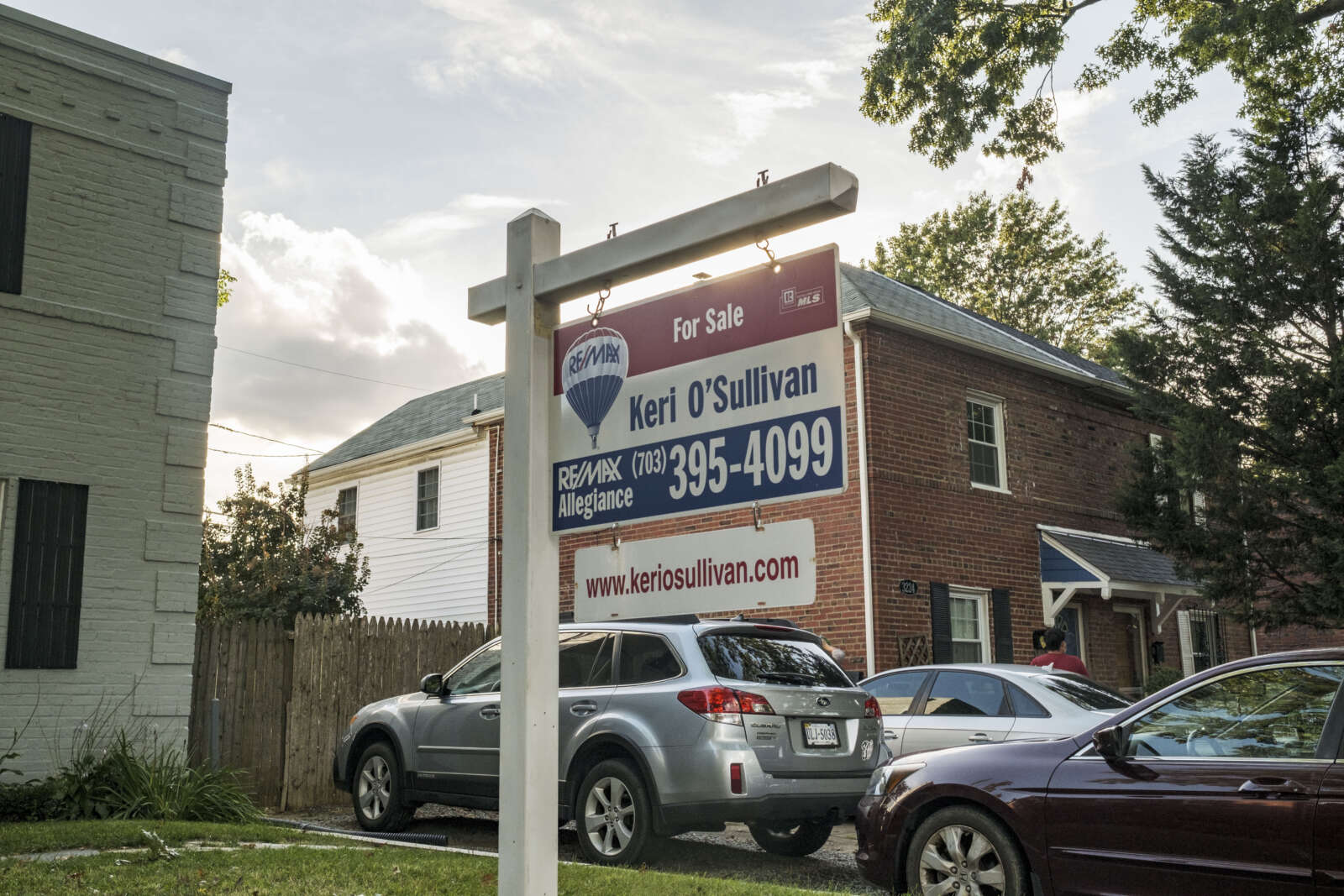
Real estate sign in the Arlington Heights neighborhood (staff photo by Jay Westcott)
This Wall Street Journal article telling the story of the steep price of single-family homes in Arlington has attracted lots of local attention this week.
The crux of the story: members of the Millennial generation, many of whom first came to the area as apartment-dwelling singles, are increasingly starting families and looking to trade up to single-family homes, but a lack of supply has made it difficult for them to find something affordable in Arlington.
Still, Arlington remains an attractive place to live, particularly for the mix of suburban-style living and urban-style amenities.
From WSJ:
But many of those millennials are well paid and want larger homes than they would get in those high-rises, said David Howell, executive vice president and chief information officer with McEnearney Associates in Washington. Others are starting families or moving to Arlington for its good schools, said Mr. Howell, or for new jobs with federal agencies and Arlington-based companies such as Boeing Co. or Nestlé SA’s U.S. headquarters. There is little land for building new single-family housing, he noted. The pandemic worsened the shortage, according to Ryan McLaughlin, chief executive officer of the Northern Virginia Association of Realtors. Older homeowners didn’t downsize, he said, and others renovated houses they now hesitate to leave. Now, he added, owners also balk at trading low mortgage rates for new, higher ones.
“Single-family homes are the hottest ticket in town, for sure,” said Mr. McLaughlin. “The extraordinary price growth has left many homeowners with very expensive homes while leaving first-time home buyers wondering how they will afford to buy one.”
Despite the slowdown in the overall market, the median price for a single-family detached home in Arlington County rose by 16.5% between July 2021 and July 2022, according to Bright MLS. The average number of days homes stay on the market rose from July 2021, but only by two days to 18 days, the service reported. At the end of July 2022, there were 147 detached homes on the market in Arlington, 21 more than in July 2021, according to Bright MLS.
Of course, not everyone needs a single-family detached home. Some would-be homeowners would be happy (or happier) with a single-family attached home, like a townhouse or a duplex.
But those are in shorter supply. The number of townhouses currently on the market is less than half the number of single-family detached homes, according to Redfin data. On the other hand, townhouses and duplexes are, on average, considerably less expensive than single-family detached homes, which have a current average sale price of just over $1.2 million, according to Redfin.
Arlington’s missing middle housing initiative may end up changing zoning to allow for more townhouses, duplexes and other smaller-scale multi-family housing types, but for now the reality is that there’s more to choose from if you were interested in detached homes on one end of the spectrum or condos in larger complexes on the other.
Given the WSJ story about the popularity of single-family detached homes, and the on-going missing middle debate, we were interested in finding out the housing preferences of readers if you take price out of the equation.
If all other things were equal, including price, what would be your preferred home type (detached or attached) and location type (a more leafy, suburban setting, or a more urban setting with amenities like restaurants and transit nearby) within Arlington?
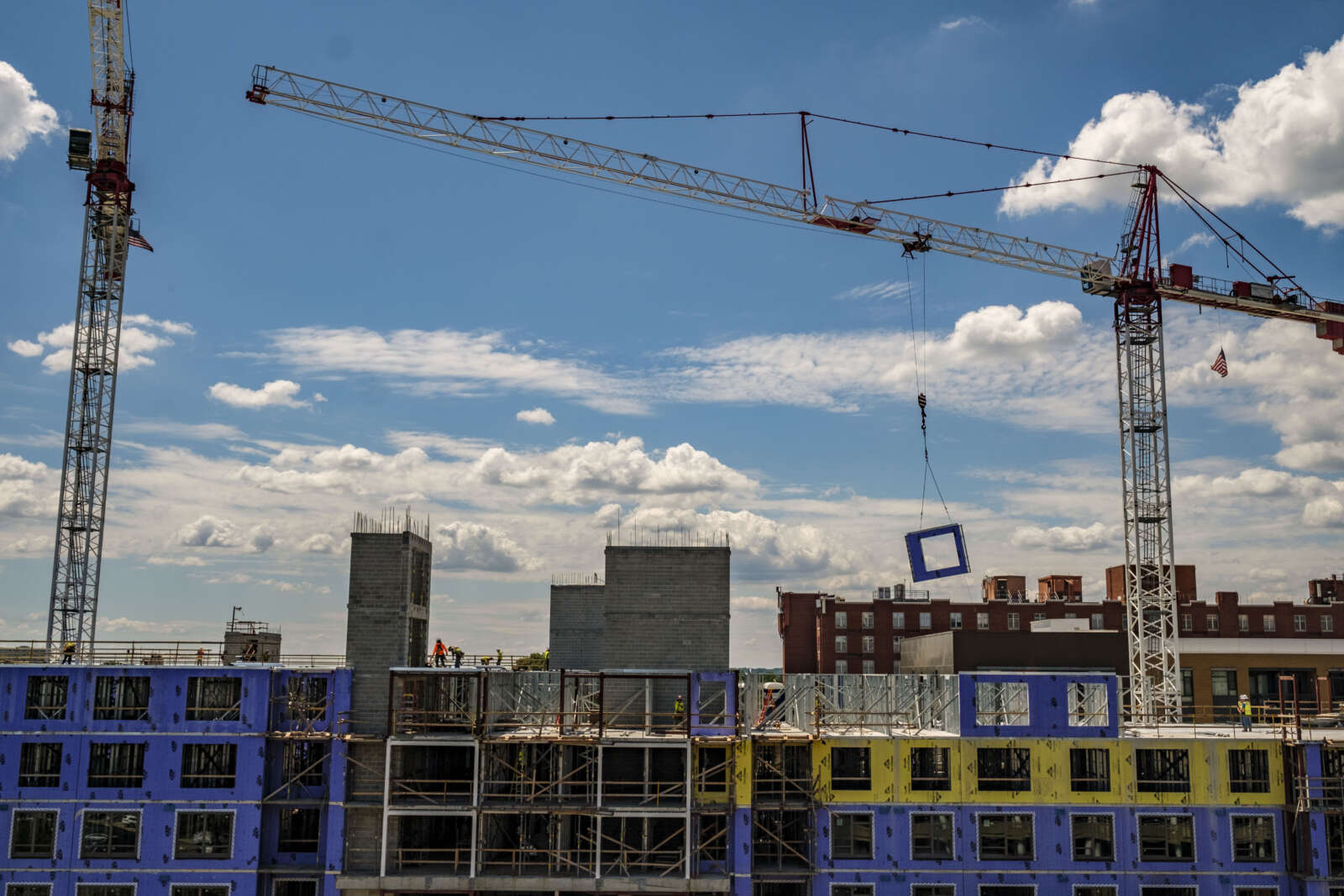
A construction crane moves a building element at a site along N. Glebe Road in Ballston (staff photo by Jay Westcott)
Arlington Housing Costs Still Rising — “The District of Columbia continued to lead the pack with an average per-square-foot sales price of $543, down from $555. Falls Church also reported a small decline, dropping 1.2 percent from $432 to $427. All other jurisdictions were up from July 2021: Arlington’s average per-square-foot sales price of $473 rose 4.2 percent from $454; Alexandria’s average of $410 was up 0.7 percent from $407.” [Sun Gazette]
Single-Family Homes Are in Demand — “Home sales may have belly-flopped in July, but the average sales price of a single-family home just kept on pushing into record territory in Arlington, according to new sales data. Will that be a symbol of the ‘new normal’ in local real estate – fewer sales, higher prices – or is it something of a bacchanalian feast before a significant correction approaches? Only time will tell.” [Sun Gazette]
Acquisition for Local Company — “Defense contractor AeroVironment Inc. (NASDAQ: AVAV) has made its first acquisition since relocating to Arlington from California last year. The company, a leading supplier of small unmanned aerial vehicles to the U.S. military, said Wednesday it has acquired Planck Aerosystems, a privately held San Diego company that provides navigational technology for drones and other unmanned aircraft systems.” [Washington Business Journal]
It’s Friday — Partly cloudy throughout the day. High of 86 and low of 68. Sunrise at 6:27 am and sunset at 8:00 pm. [Weather.gov]
“A patrol officer was flagged down by the victim who reported an attempted carjacking,” Arlington County police said today in a crime report. “Upon arrival, it was determined the victim was in his parked vehicle when the suspect approached his passenger side door. The suspect demanded the victim unlock the car door and had what appeared to be a possible firearm in his pocket.”
Despite the would-be carjacker potentially having a gun, the driver drove off it — and was able to successfully flee. He then saw two additional suspects.
“The victim drove away at which time he observed two other possible suspects flee the scene on foot with the first suspect,” said ACPD.
No one was hurt. Police say they are still investigating.
The last reported carjacking in Arlington happened last month along S. Fern Street, also in the Crystal City area.
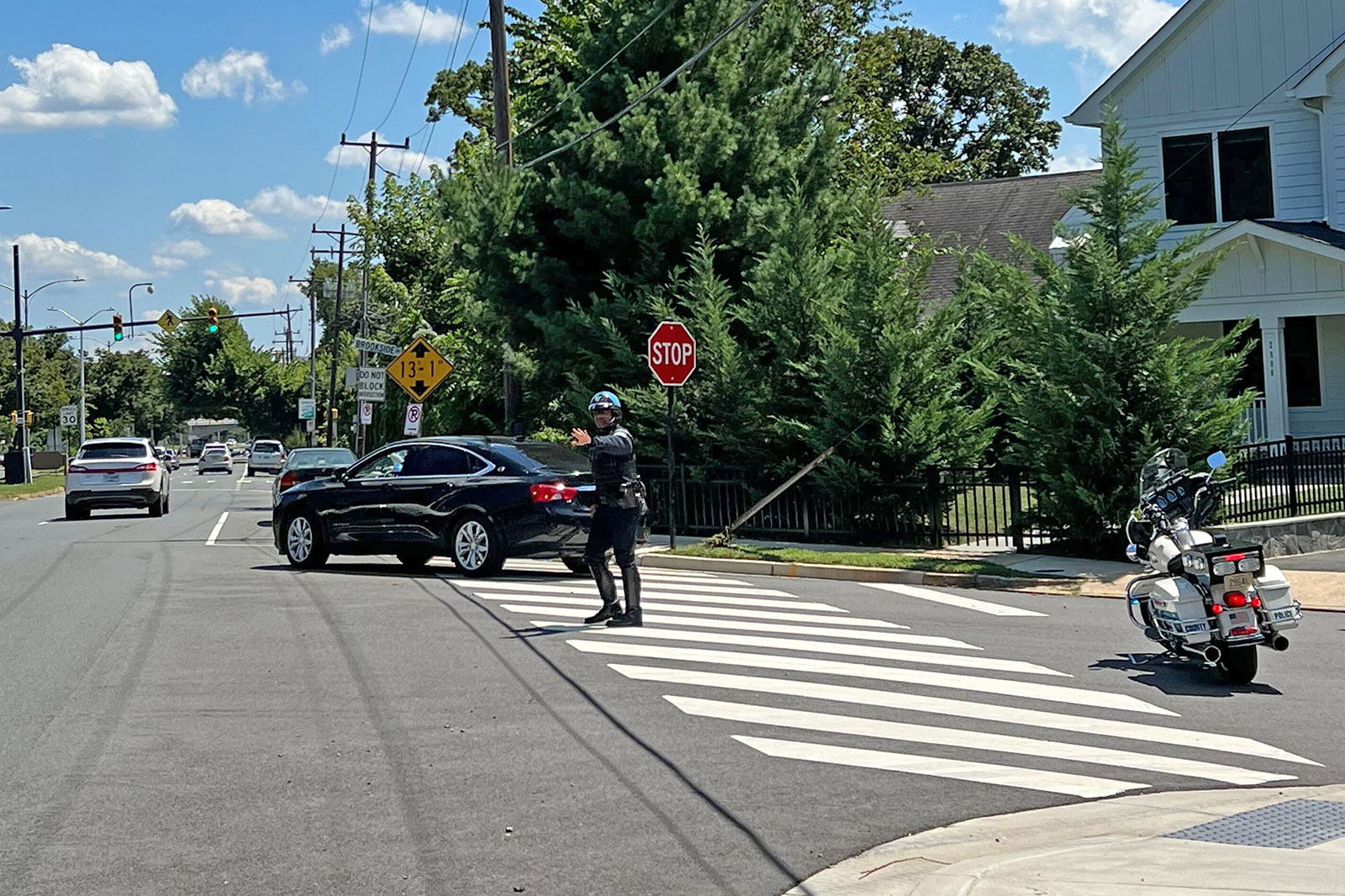
Police blocking a road near where officers were searching for a man with a gun (staff photo by Jay Westcott)
U.S. Park Police helicopter overhead of search for armed man (staff photo by Jay Westcott)
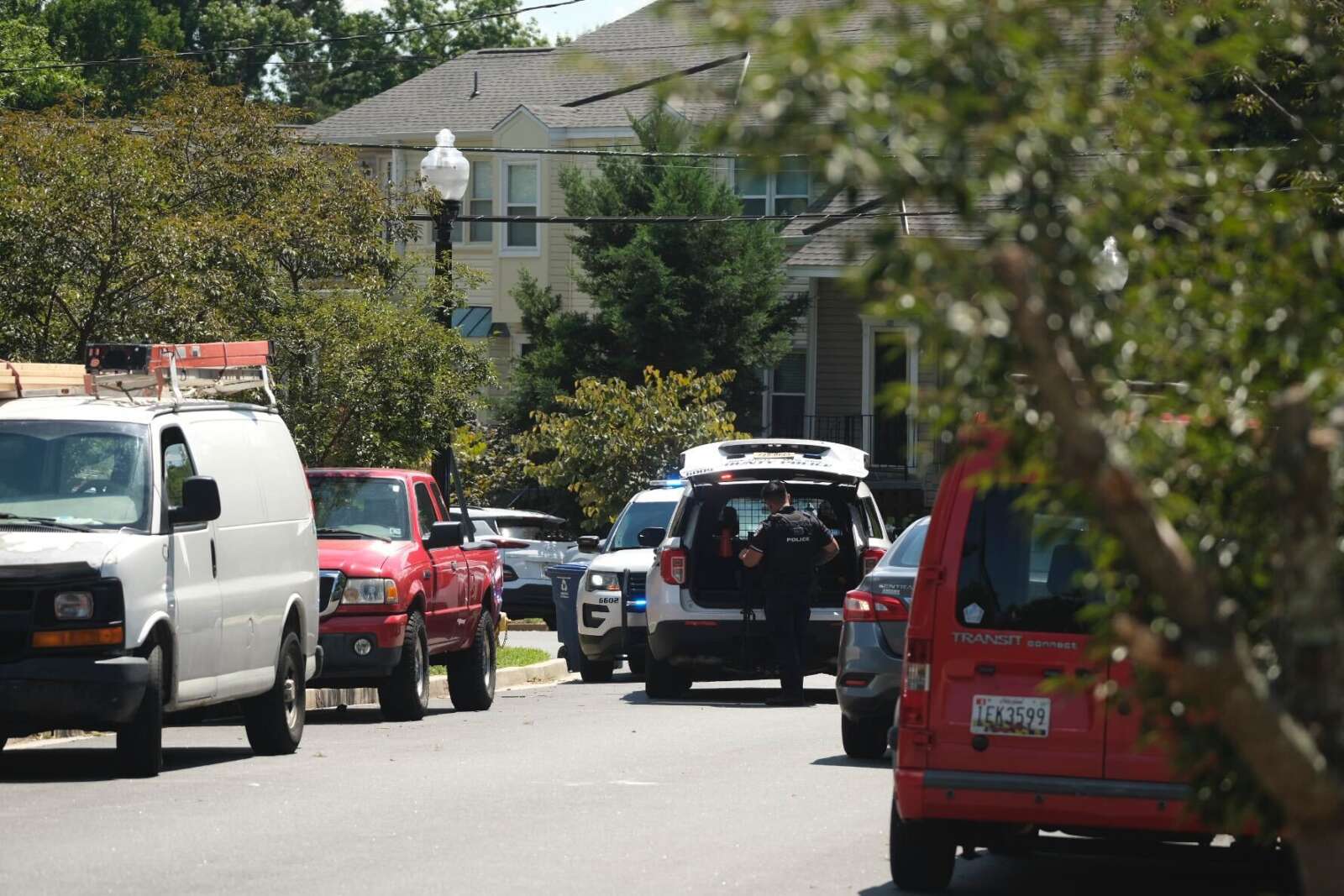
Police on scene of search for armed man (staff photo by Jay Westcott)
Update at 2:25 p.m. on 8/19/22 — Arlington police have released additional information about this incident in Friday’s daily crime report. A 34-year-old man was arrested and a knife — not a gun — recovered from the scene, ACPD said.
ASSAULT AND BATTERY (Significant), 2022-08180122, 2400 block of Washington Boulevard. At approximately 1:22 p.m. on August 18th, a plain clothes officer was in the area when he observed the male suspect allegedly brandish a weapon during a dispute with another individual. Additional officers responded to the area and located the suspect who refused to comply with the offices’ commands and fled the scene on foot. Officers canvassed the area, located the suspect in the unit block of N. Bedford Street and took him into custody without incident. During the course of the investigation, a knife was recovered. No injuries were reported. Saul Leal, 34, of Arlington, VA was arrested and charged with Assault and Battery. He was held on a $1,000 bond.
Earlier: Police have a suspect in custody after a man allegedly seen with a gun ran from officers in the Lyon Park area.
Officers and at least one K-9 unit on the ground, as well as the U.S. Park Police helicopter in the air, were looking for the man, who reportedly brandished a weapon at an officer along the 2400 block of Washington Blvd, near the Route 50 ramps, and then ran off.
After a search of the area, a suspect was taken into custody without incident, according to scanner traffic.
Residents should expect to see continued police activity in the area, though the response is now being scaled down. Nearby Long Branch Elementary School was placed in “secure the school mode” during the search, according to scanner traffic. Some roads were also blocked during the search.
POLICE ACTIVITY: ACPD investigated the report of a brandishing in the 2400 block of Washington Boulevard. The suspect has been detained. Expect continued police activity in the area. pic.twitter.com/N93uIQfyfi
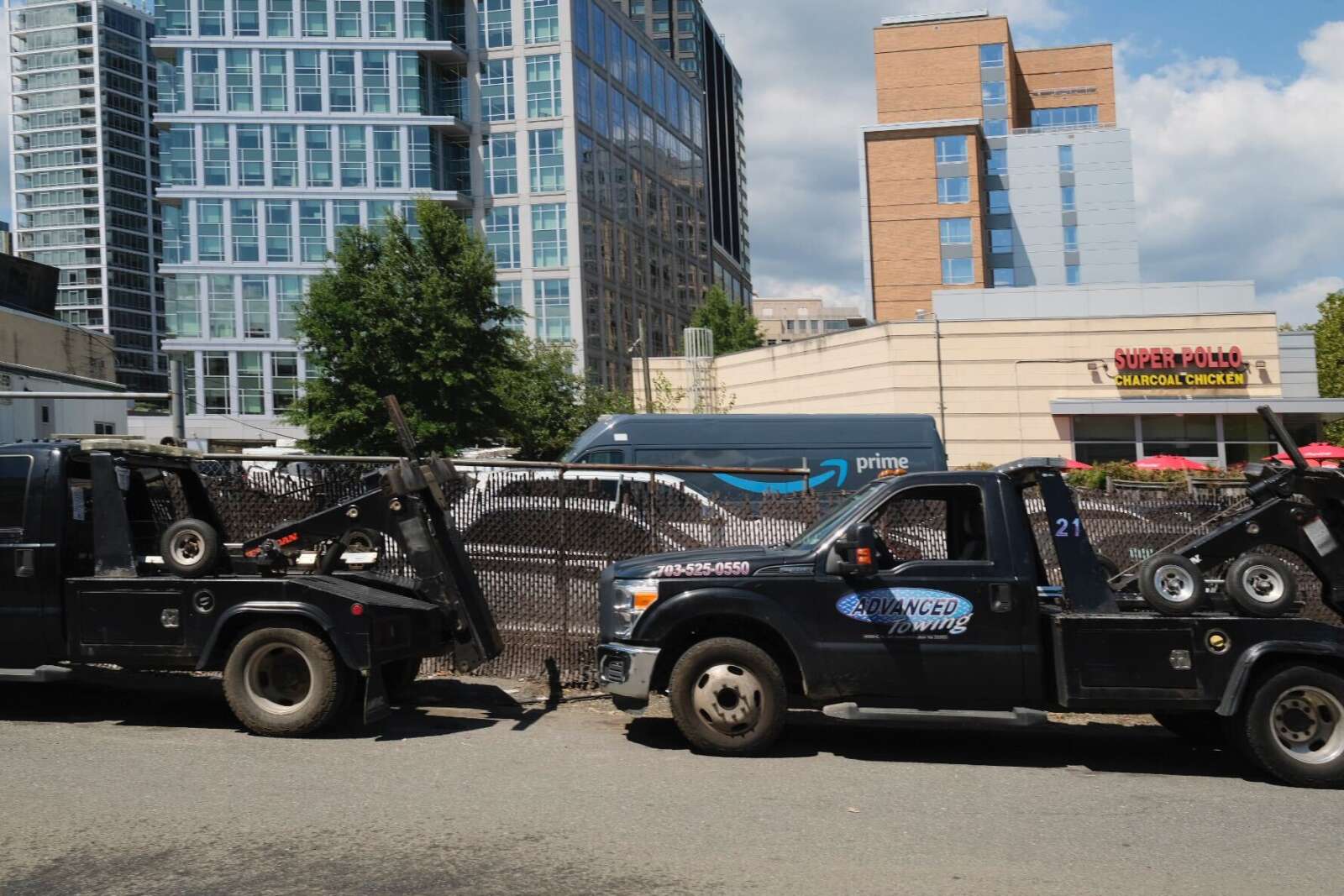
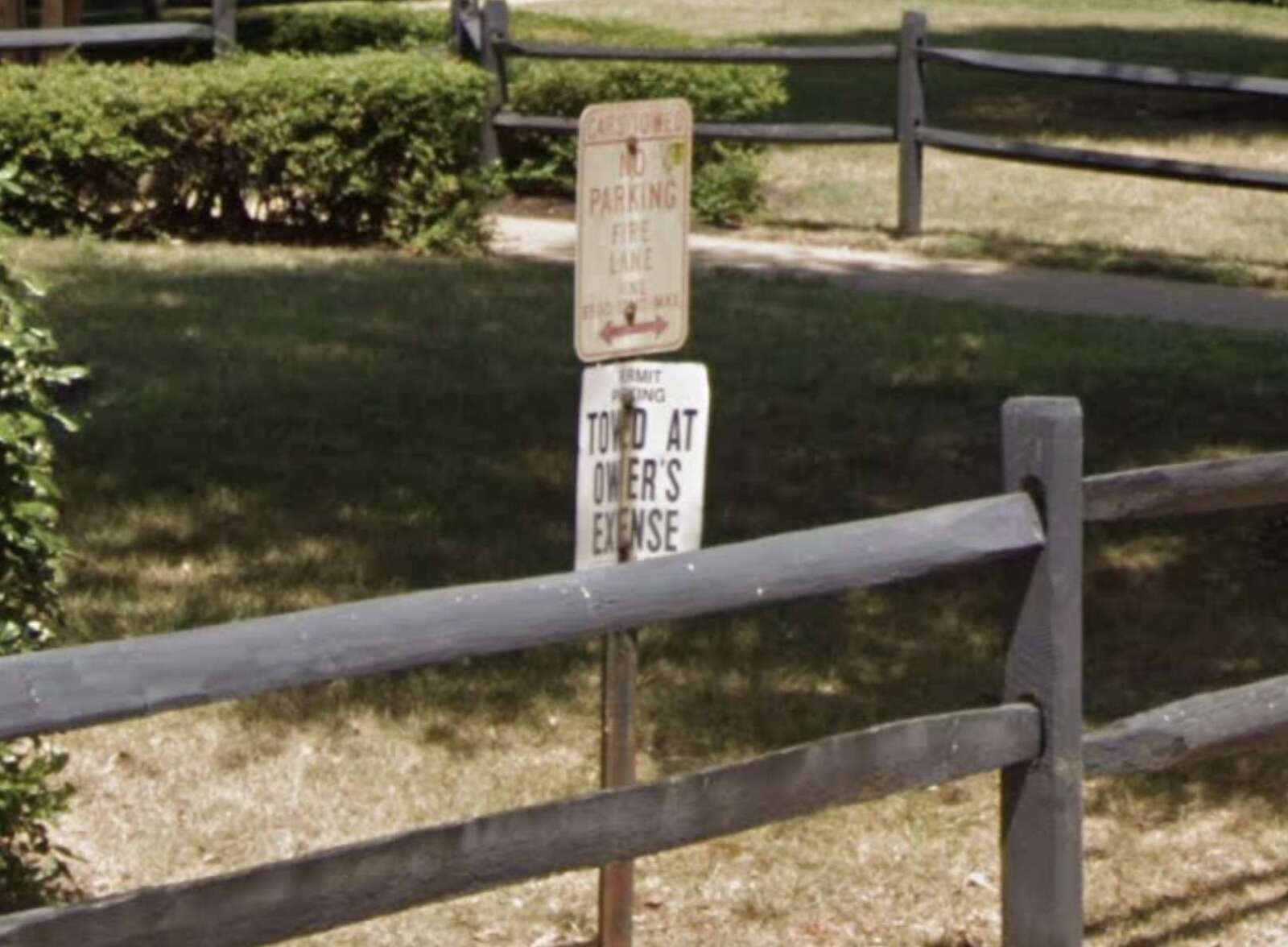
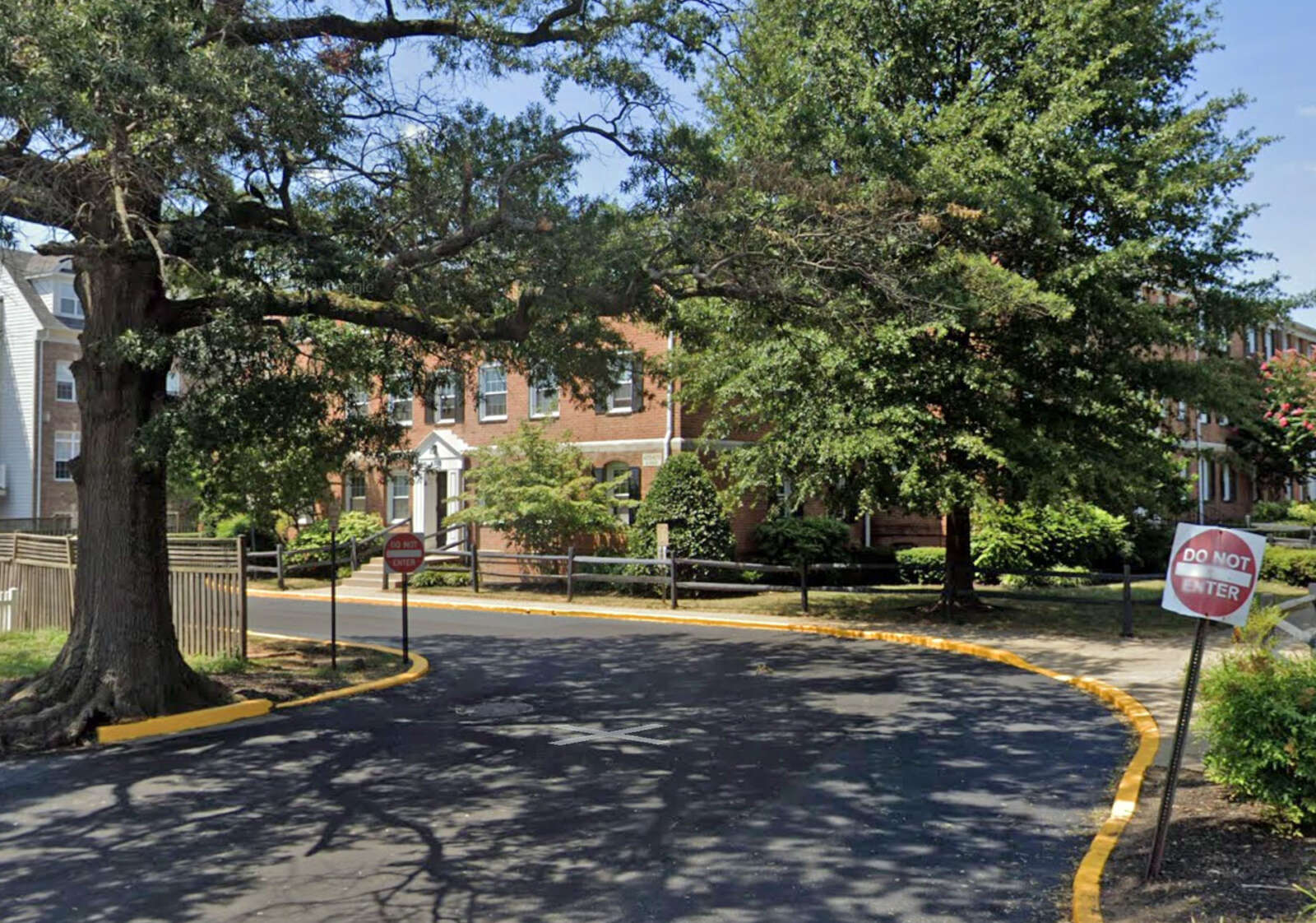
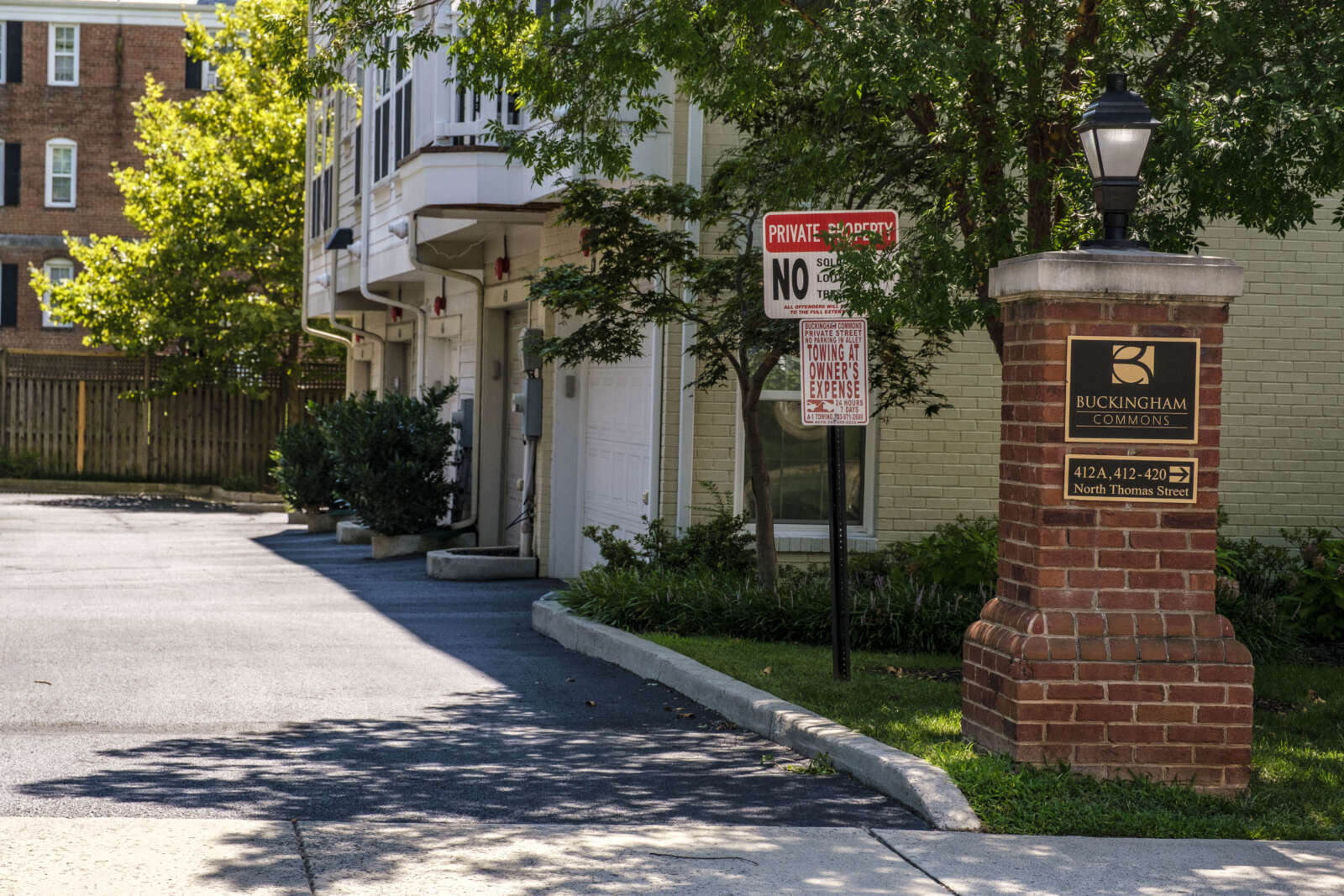
It raises a question: should delivery drivers get special treatment and a blind eye turned to violating a given property owner’s parking rules, or should the rules apply to them too?
In the latest case, tow company Advanced Towing told ARLnow that Amazon’s van was parked in a fire lane — and, indeed, we spotted “no parking, fire lane” signs on the property.
Fire lanes are there for a reason, but the flip side of the argument is that delivery drivers have a tough job to do and only stay in one place for a brief period of time, making it less likely that they’ll end up getting in the way of something important.
So what do you think? For the purposes of this poll, we’ll set aside the issue of delivery drivers blocking lanes on public streets and instead focus on those on private property.
A plaza between buildings in Ballston, including Salt Line’s outdoor patio space (staff photo by Jay Westcott)
Arlington Real Estate in WSJ — “Buying a single-family home in Arlington, Va., is a study in patience… With persistence and perseverance, these families were able to buy a house in their favorite Washington, D.C., suburb.” [Wall Street Journal]
Record Low Tax Delinquency — “Treasurer Carla de la Pava announced that the delinquency rate for taxes on real estate and personal property had fallen to 0.161 percent, down from 0.177 percent a year before and the lowest not just in county history but perhaps the lowest ever among any jurisdiction in Virginia history – and maybe more. ‘I would be shocked if it was matched anywhere in the U.S.,’ de la Pava said, praising her ‘dream team’ of staff.” [Sun Gazette]
Welcome from APS Superintendent — Arlington Public Schools Superintendent Dr. Francisco Durán has released a video message for families returning to Arlington schools soon. [Vimeo]
WWII Airman’s ANC Burial — “A U.S. Army airman killed during WWII and unaccounted for until earlier this year will finally get a proper burial, according to the Defense POW/MIA Accounting Agency. The remains of U.S. Army Air Forces Staff Sgt. Adolph ‘Leonard’ Olenik were identified earlier this year. He’ll be laid to rest Wednesday, Aug. 31 at 1 p.m. at Arlington National Cemetery.” [Patch]
Dracula at Synetic — “Arlington-based Synetic Theater has announced plans for a ‘Vampire Ball’ to celebrate both Halloween and its upcoming production of ‘Dracula.’ The Oct. 28 event will provide ‘everything you need for a spooktacular night,’ the troupe said. ‘We’re talking Dracula-themed cocktails, dancing, physical theater, spooky Georgian remixes and more.'” [Sun Gazette]
It’s Thursday — Clear throughout the day. High of 84 and low of 64. Sunrise at 6:26 am and sunset at 8:01 pm. [Weather.gov]
‘To Sail Around the Sun’ Returns to the Kennedy Center — Company E, Washington, DC’s leading contemporary repertory dance company, will return its catered-to-kids performance of ‘To Sail Around the Sun’ to the Kennedy Center on National… [Press Release]
Note: Items below the weather are promoted by a sponsor. Promote your content here.