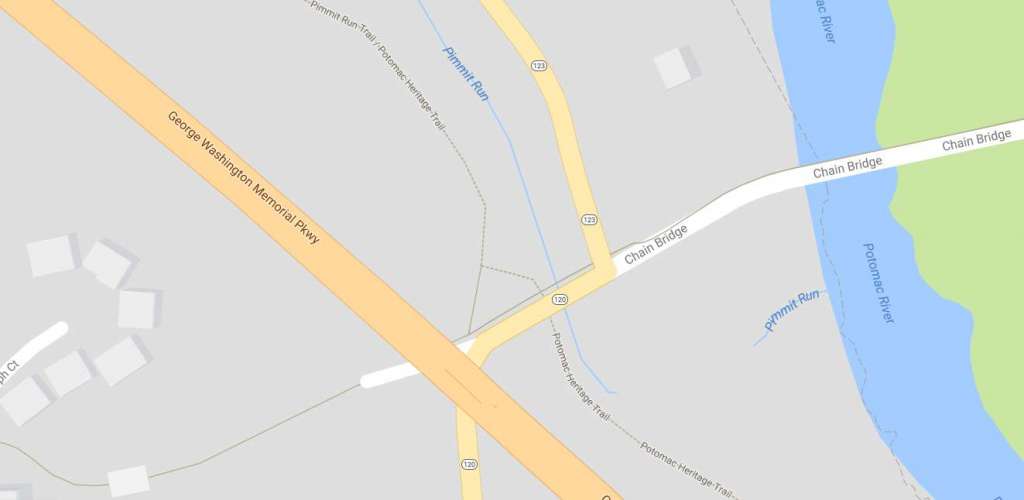
Arlington County firefighters helped to rescue a woman who fell down an embankment near Chain Bridge this afternoon.
The incident happened around 3 p.m. Initial reports suggest a 72-year-old woman fell 100-150 feet down an embankment along the Potomac Heritage Trail.
A fire department technical rescue team was dispatched to the scene, but rescuers were able to eventually walk the patient up the hill and to an ambulance, where she was evaluated for injuries, according to scanner traffic.
Police blocked the inbound lane of N. Glebe Road near the bridge during the rescue, due to a large number of fire department vehicles in the roadway.
A man accused of beating up and robbing a male victim near the Arlington Mill Community Center on Sunday night, with two juveniles as his accomplices, is facing numerous charges.
Police say 20-year-old Arlington resident Dimas Reyes and two others were apprehended after a K9 search and a brief foot chase. Reyes is also accused of wearing a mask during the crime.
More from this week’s Arlington County Police Department crime report.
ROBBERY, 2017-07090239, 900 block of S. Dinwiddie Street. At approximately 10:04 p.m. on July 9, officers responded to the report of an assault that had just occurred. Upon arrival, it was determined three male suspects assaulted a male victim and stole his belongings. The suspects then fled the scene on foot. A perimeter was established and a K9 track was conducted. Officers located the three suspects in the area and following a brief foot pursuit, they were taken into custody. Dimas Ulices Reyes, 20, of Arlington, VA was arrested and charged with Robbery, Malicious Wounding, Wearing a Mask in Public, Contributing to the Delinquency of a Minor and Preventing 911 call. Warrants were obtained for the two juvenile suspects.
The rest of this past week’s crime report highlights, including some that we’ve already reported, after the jump.
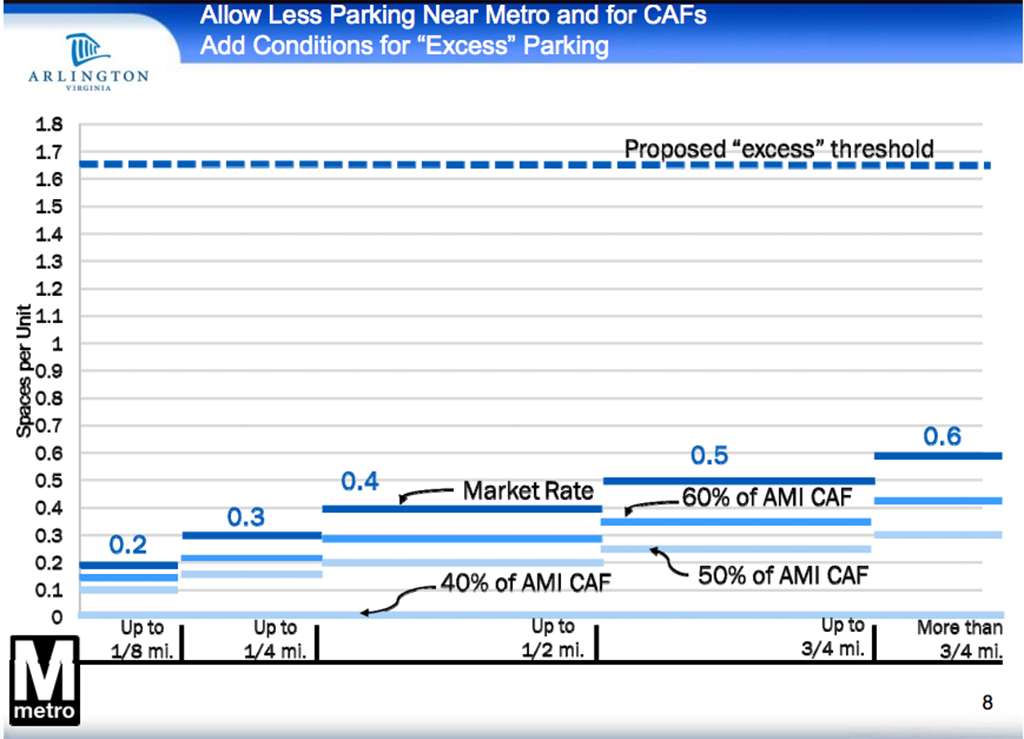
Parking spaces would vary depending on proximity to Metro (via county presentation)
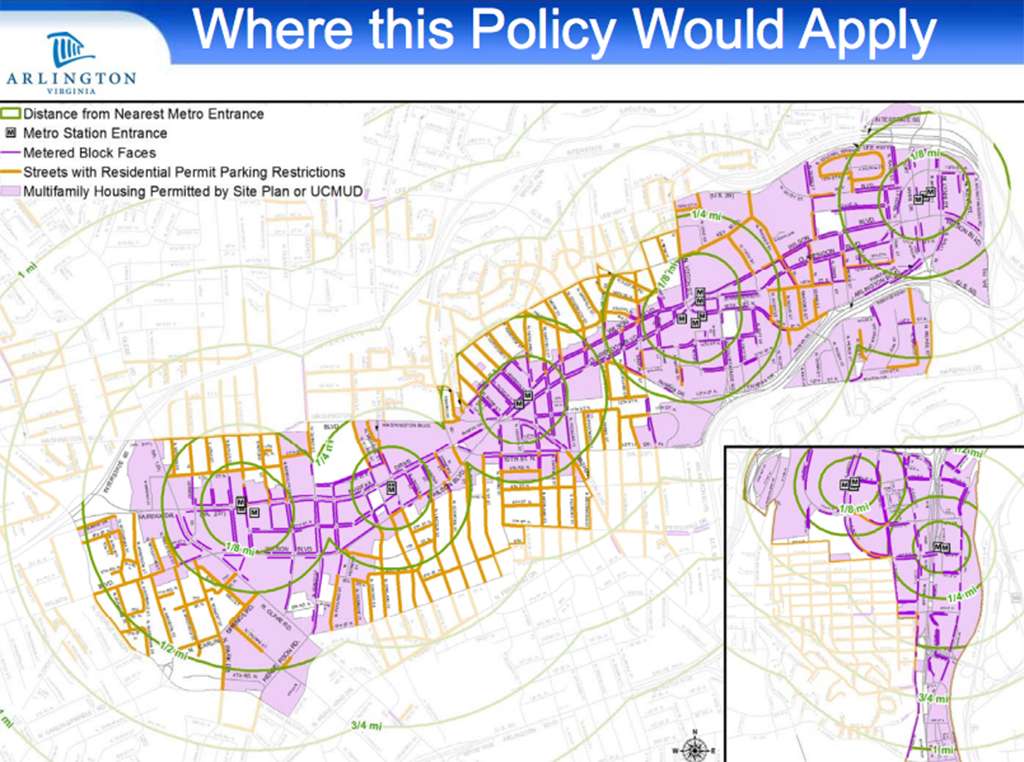
The policy would affect new developments near Metro stations (via county presentation)
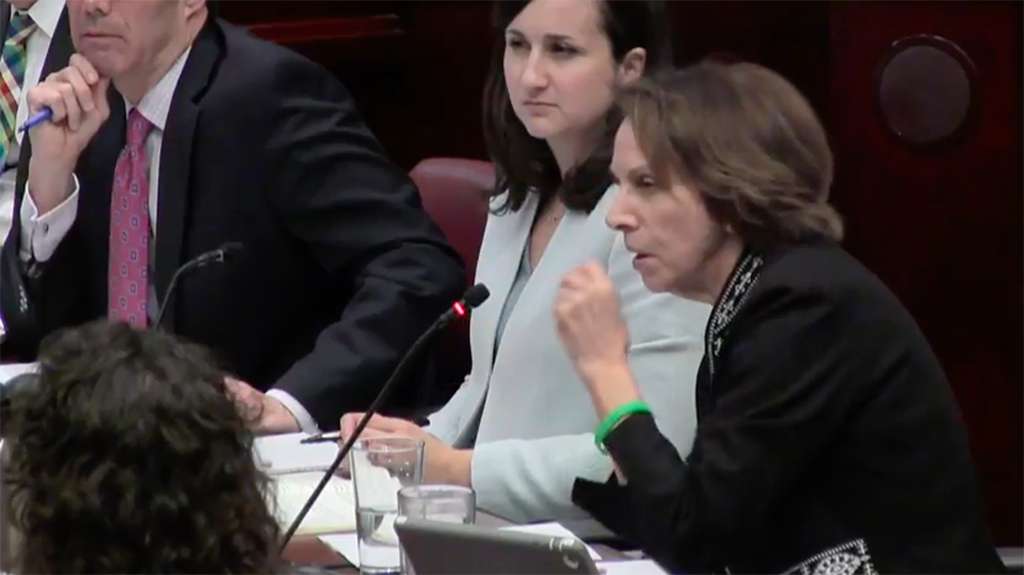
Arlington County Board members wrestled last night with a plan to substitute car parking spaces for spots for bike and car-sharing at new apartment and condo buildings near Metro stations.
The proposal, put together by county staff as part of a number of changes to parking policy under discussion at a Tuesday work session, is meant to encourage developers to contribute to other transit options.
Staff recommended that a developer providing a Capital Bikeshare station could substitute that for for up to four car parking spaces, depending on its size, or bike parking could be exchanged for two parking spaces. One car-sharing space, provided for a private company like Zipcar, could be in place of five spots.
But Board members questioned why the provision for different transit means is tied to reducing car parking spaces, especially near Metro stations, as adding such amenities is becoming a more standard practice in developments across the region.
“It bothers me that going to suggest that we’re not going to get these things until we go down to the minimum [parking ratio],” said Board chair Jay Fisette. “These are things that should be part of every site plan.”
Among the other recommendations put forward by staff, developers could request fewer parking spaces the closer a property is to a Metro station, with some committed affordable housing units not being required to have any parking spaces if they are within an eighth of a mile of a station.
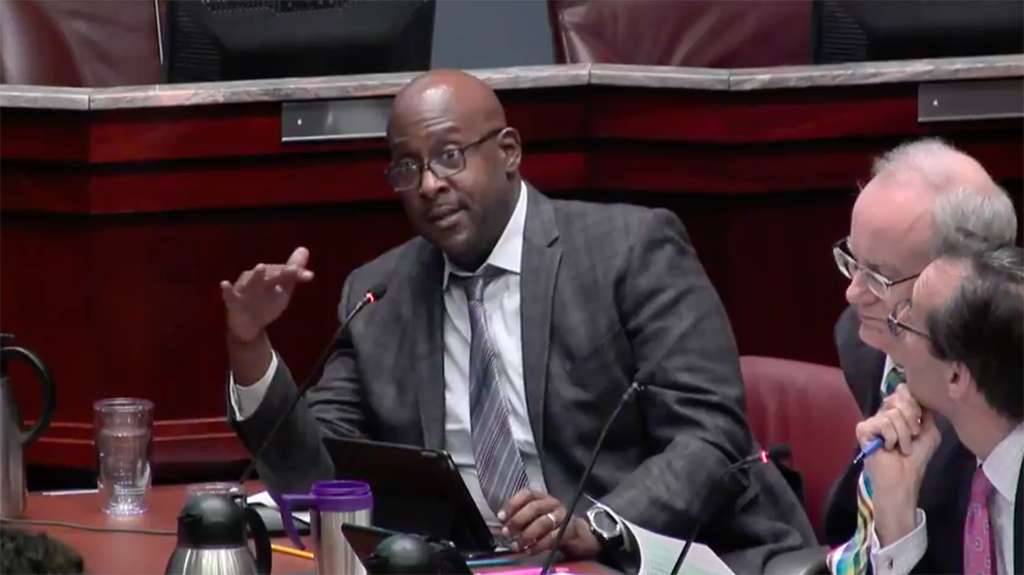
Board member John Vihstadt argued that orienting the changes in parking policy around Metro, which would allow developers to provide fewer spaces at new buildings if they are close to a station, might be misguided given the drop in ridership due to the system’s ongoing safety concerns and year-long SafeTrack rebuilding program.
Vihstadt said that drop in ridership was “casting a pall” over the discussion, but county transportation director Dennis Leach said it was important to attract residents to such buildings who “build a lifestyle” around Metro. Vihstadt requested further data on the county’s declining ridership, which Leach said has also been hampered by more teleworking and other factors.
A major addition by staff to a report in March, by a residential parking working group on the new parking policy, is a requirement that developers provide for dedicated visitor parking.
Stephen Crim, a parking planner in the county’s Department of Environmental Services, said that change came after concerns from nearby residents that cars would park on their residential streets, especially those of visitors who have few options.
Leach noted that the parking garages in neighborhoods like Crystal City and Pentagon City are under-utilized, especially by visitors, and that DES could do even more to promote use of those spaces alongside the various Business Improvement Districts in the county.
Staff and County Board members agreed that while the policy still needs work before approval, it is aspirational and designed to attract residents who would prefer to have minimal, if any, car use.
“We are all seeking to hasten a future that we are interested in, which is a more multimodal corridor especially with fewer cars and more people taking alternatives to the extent that it suits them and choices that allow them to do so,” said Board vice chair Katie Cristol.
(Updated at 10:20 a.m.) Homeowners could find it considerably easier to add an “accessory dwelling unit” to their property under changes set to be made to the ordinance in the fall.
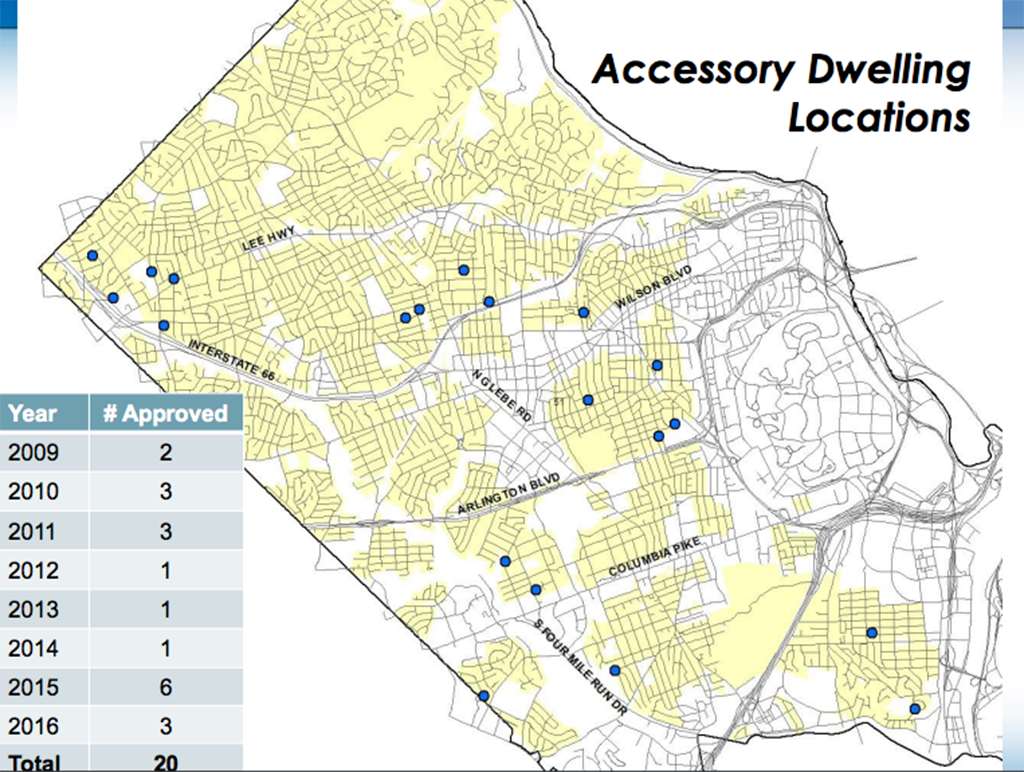
Only 20 ADUs — defined as a second living space with a kitchen, a bathroom and a separate entrance — have been approved in Arlington since the ordinance first came into effect in 2009. Advocates have said they can help ease the county’s lack of affordable housing.
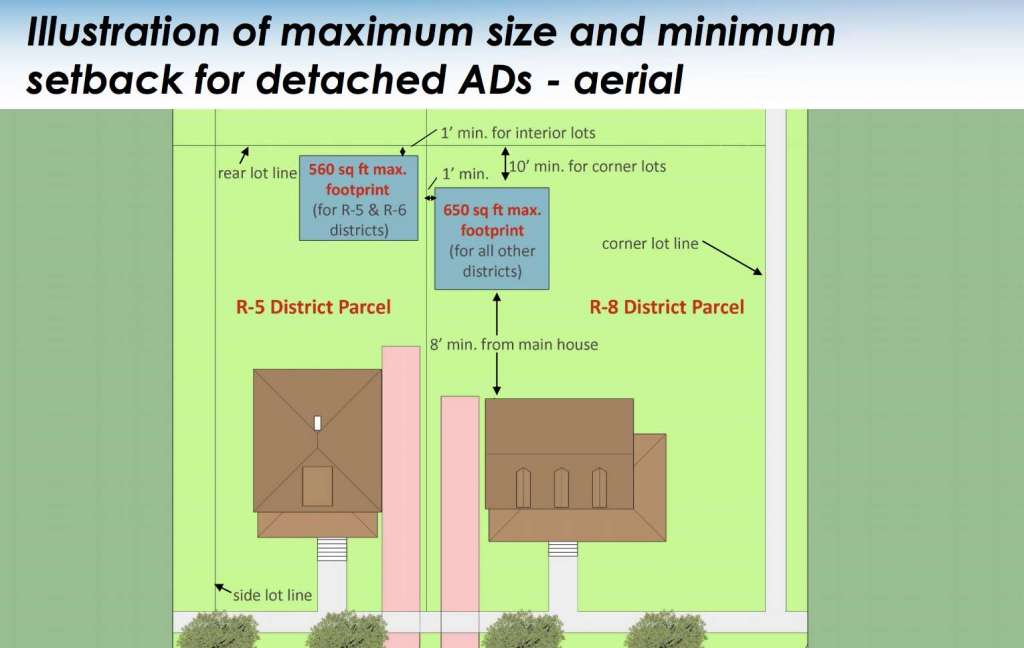
Staff is recommending that the Board allow detached ADUs, set back from the main house, and bump up the maximum occupancy from two to three. Currently in Arlington ADUs are only allowed within a single-family home.
At a work session Tuesday with county staff, Arlington County Board members debated various other recommendations, focusing in on a few.
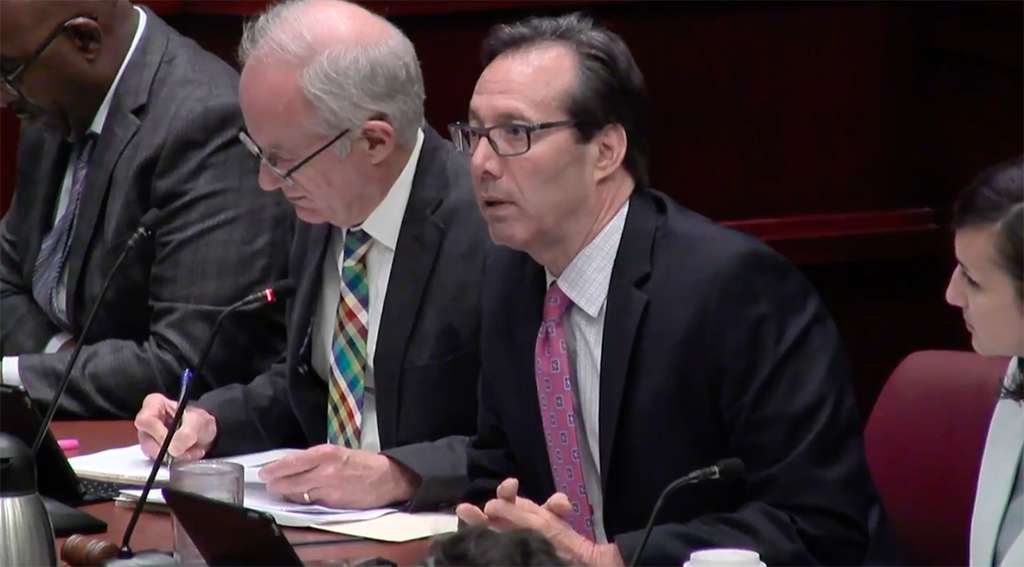
Board members discussed staff’s recommendation of maintaining the current cap of ADU approvals at 28 a year countywide. Chair Jay Fisette and member Christian Dorsey suggested removing the cap altogether.
“Even at the likely installation rates, we’re not talking about a big impact on our community,” said Dorsey. “And who’s to say that if the 29th application is really the ideal, textbook accessory dwelling location and circumstance, we have to say no because we’re going to cap it? … It just really seems insane.”
But others were not so sure about removing the cap. Board member John Vihstadt suggested looking into capping new ADUs by civic association or neighborhood to prevent a concentration in one place, something others were happy to go along with in lieu of abolishing the cap altogether.
Joel Franklin, a housing planner at the county department of Community, Planning, Housing and Development, added that staff will undertake an annual survey to try and find any issues that may arise.
The Board also explored raising the maximum number of people allowed to live in an ADU. The current maximum is two, with staff recommending that be increased to three, but several wanted more work to be done to explore whether that limit could be raised further.
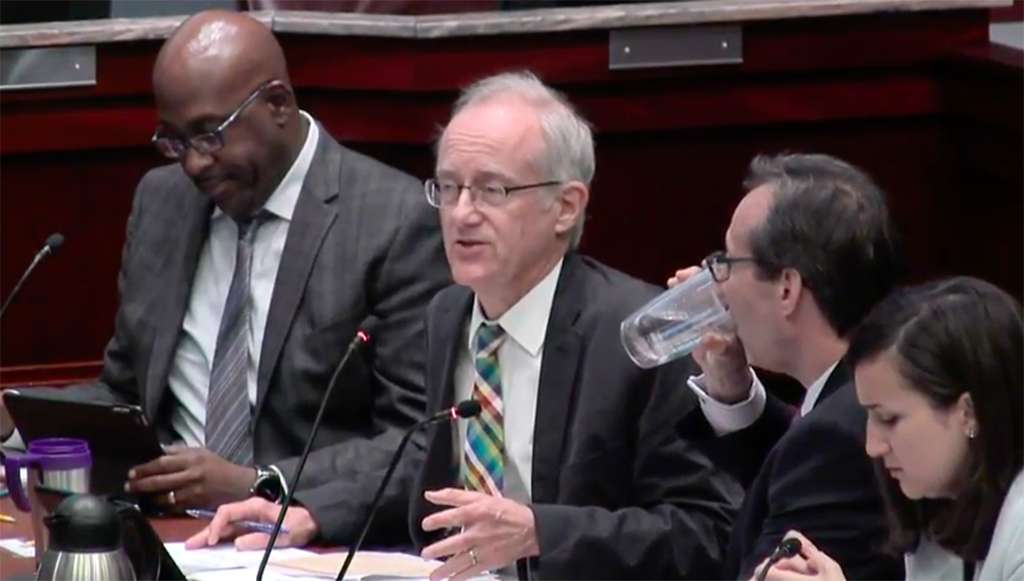
Vice chair Katie Cristol said consistency is key, and that it becomes difficult when “governing the number of people in a bedroom.” But Vihstadt and Fisette were not so sure, and inclined to stick with the staff recommendation.
“It’s one thing to stay one or two nights in a crowded hotel room when you’re on vacation with the kids or friends or whatever,” Vihstadt said. “It’s another thing to have that crowded condition on a monthly or long-term basis.”
Staff suggested various rules for the units, including that their front doors can be on the same side as long as they do not face, and that exterior stairways must not face the street, among others.
Those rules are designed to protect the character of neighborhoods dominated by single-family homes. County staff members will continue to study the various policies governing aesthetics, they said.
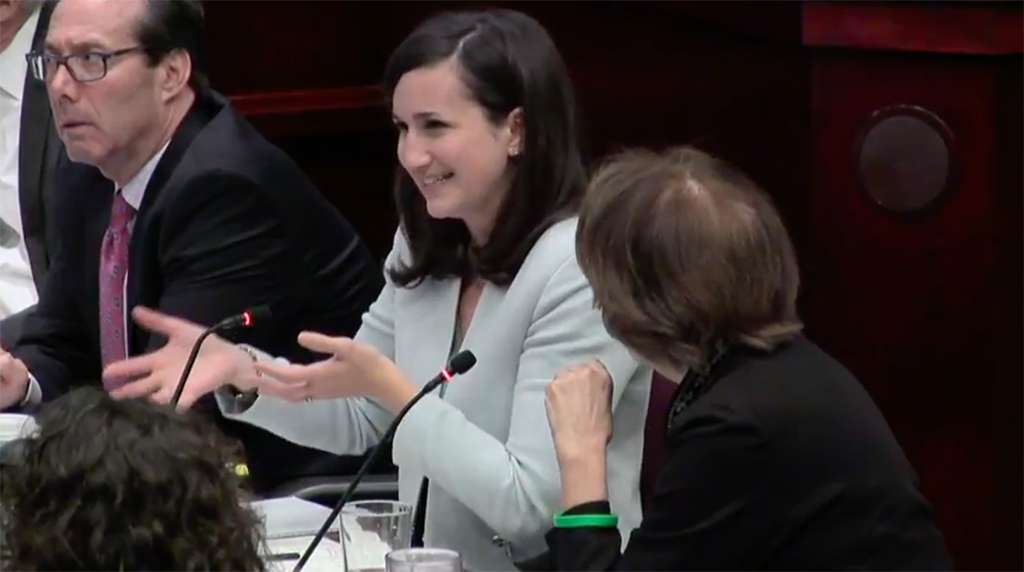
“This is really a significant body of work. This is a use that I think we should be welcoming in our community while being cognizant of impacts on neighborhoods and protecting and planning against them,” said Cristol. “I would hate to lose this opportunity in any house or lot because somebody’s front door is placed in the wrong place.”
A slight change to the parking requirements for properties with ADUs has also been proposed.
Staff will compile the results of the survey on accessory dwellings this month, then finalize its recommendations. The Zoning and Housing Commissions will examine staff’s plans, with the Planning Commission and County Board expected to take final action in November.
‘Meeting Bowls’ Coming to Courthouse — A new, temporary public art installation is coming to Courthouse. Workers will be building 5-foot high “meeting bowls,” designed by the Spanish art collective “mmmm….,” and featuring an 8-foot long circular bench inside. The bowls, which are meant to be used by passersby, are expected to be completed by Monday, July 17 and will remain in place until November. [Washingtonian]
Roosevelt Island Back Open — Roosevelt Island is open again after being temporarily closed by the National Park Service for the removal of diseased trees. [DCist]
Pentagon City Residents Peeved by Shopping Carts — Legions of stray shopping carts are getting on the nerves of Pentagon City residents, NBC 4’s Julie Carey reported during a news broadcast last night. [NBC Washington, Twitter]
Scholarships Awarded to Wakefield Students — “The Wakefield High School Education Foundation recently awarded 27 scholarships totaling $201,000, bringing the total number of scholarships presented over the history of the foundation to 400 and the total dollar amount of scholarships and teacher grants to more than $2.25 million.” [InsideNova]
Local Author Pens New Thriller — Arlington resident Bill Schweigart, author of the Beast of Barcroft, a supernatural thriller set in Arlington, has penned another book of local interest: The Devil’s Colony, which features a fictional Arlington resident as its main character. [Penguin Random House]
Nearby: Montgomery Co. Consider Plane Noise Suit — Montgomery County, Maryland has hired a law firm to explore legal action against the Federal Aviation Administration in response to new flight paths that have produced a dramatic increase in aircraft noise complaints. The flight paths were implemented in 2015 as part of the FAA’s NextGen system and have prompted some complaints in Arlington and D.C. as well. [Bethesda Beat]
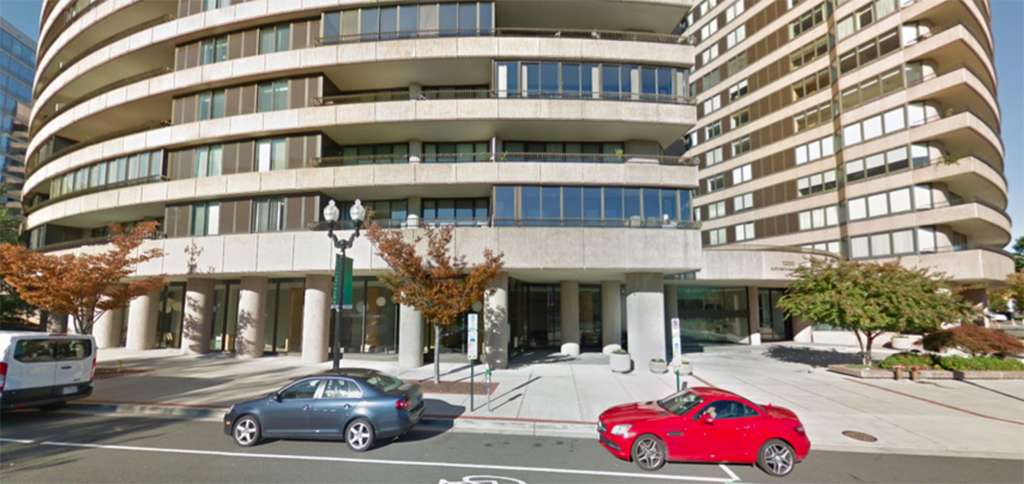
A plan to host a polling place at a condo building in Crystal City has been nixed, but elections officials said they are confident of finding a new location before November.
But a staff report on various changes to voting locations ahead of the elections said the Crystal Gateway “no longer wishes” to host a polling place. Likewise, the report notes that Crystal Place “no longer wished” to do the same.
Arlingtonians will go to the polls to elect a Governor, Lt. Governor, Attorney General and local members of the Virginia House of Delegates, as well as representatives on the Arlington County Board and School Board.
Gretchen Reinemeyer, the county’s deputy director of elections, said the building “did not provide any information on why they would not like to be a polling place.” Crystal Gateway’s property manager and a spokesman for Equity Apartments, which owns both the Crystal Gateway and Crystal Place, did not return calls requesting comment.
Reinemeyer said staff is “in the process” of finding a new polling place for the precinct, and they are “optimistic that we will have a new location soon.” She said that when looking for new polling places, staff try and find county-owned buildings in the precinct first before assessing other options.
“If there is not a suitable county facility available, we look at other buildings used by the community that have a ground level meeting room such as churches or community rooms in apartment or condo buildings,” she said. “Once we find a location that we think will work, we begin negotiating with the management of the space.”
The County Board will vote on the proposed voting changes at its meeting Saturday (July 15). Also on the table is a change for the Rosslyn Precinct to move its voting place to the 1800 Oak Apartments from the soon-to-be-redeveloped Fire Station 10, and a technical change for the Virginia Highlands Precinct to reflect that votes are cast at the recently reopened Aurora Hills Community Center.
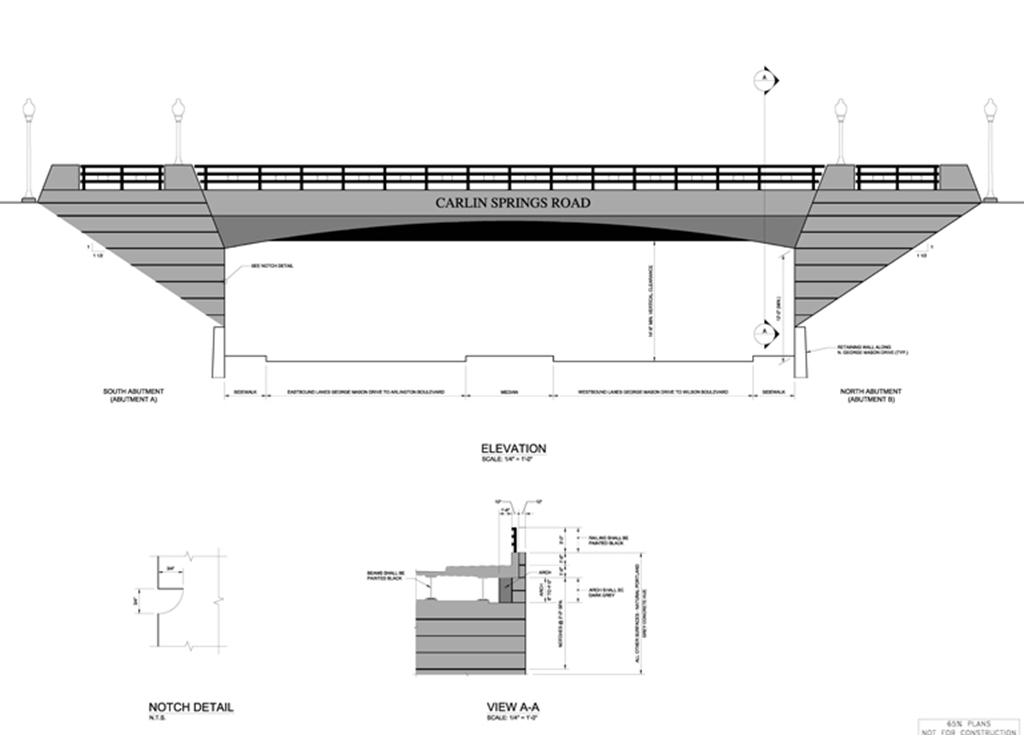
The County Board will discuss a plan to replace the Carlin Springs Road Bridge
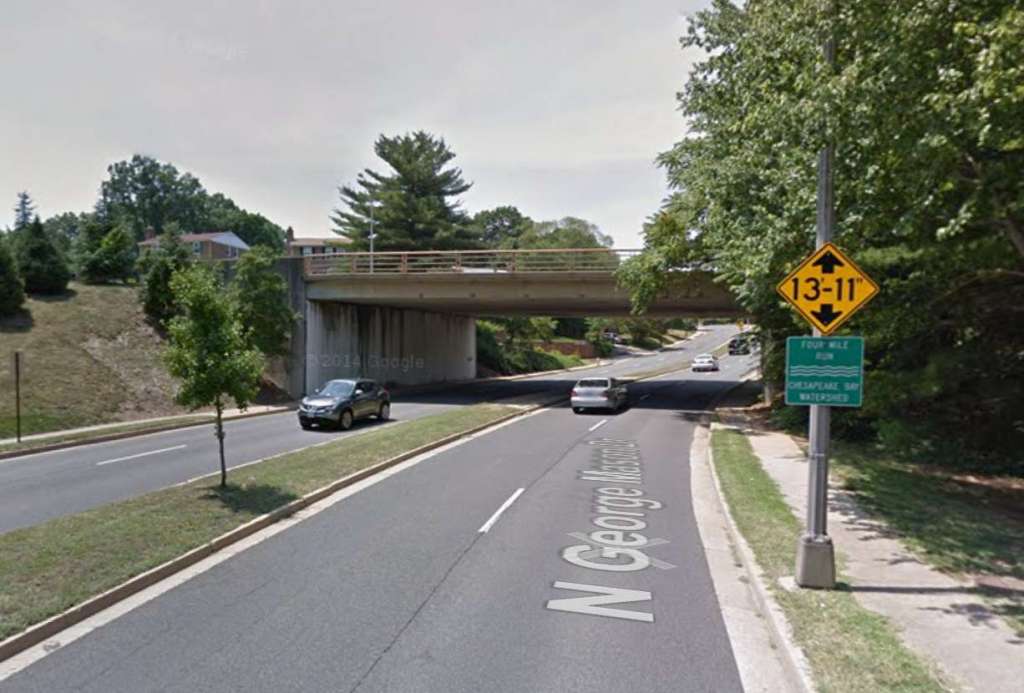
The bridge was built in 1961, and since then has deteriorated
Carlin Springs Road bridge over N. George Mason Drive (photo via Google Maps)
Replacement of the Carlin Springs Road bridge will be up for discussion at the Arlington County Board’s meeting Saturday.
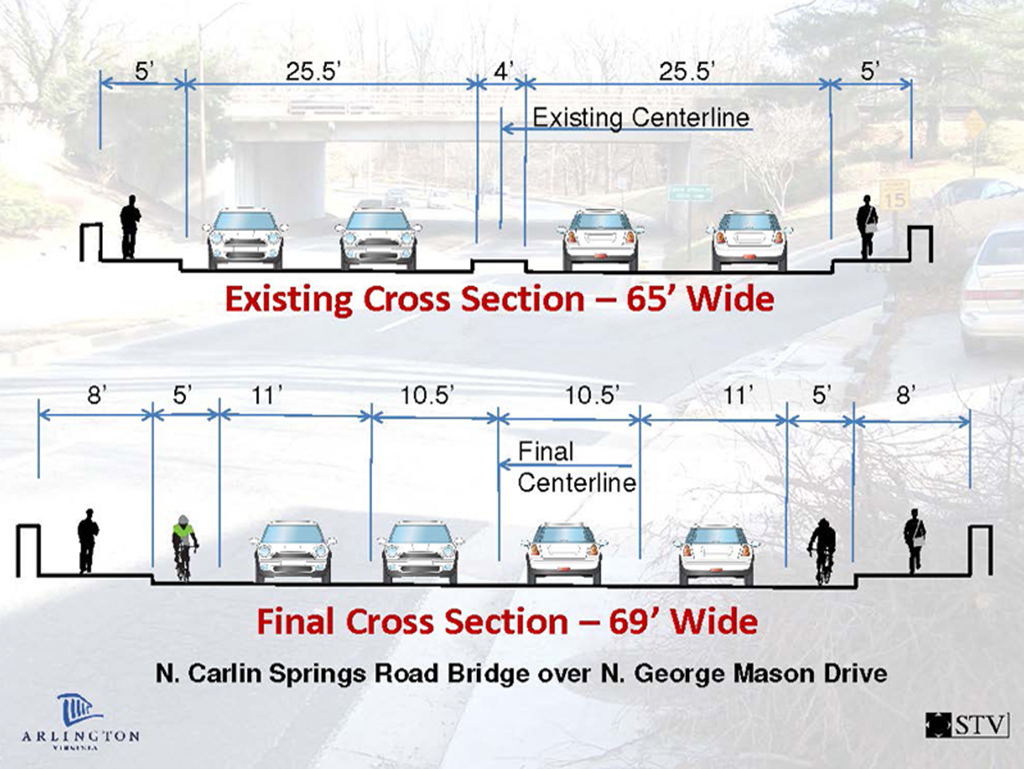
The Board will consider a construction project that would remove the 65-foot-wide bridge and replace it with a 69-foot-wide structure. The bridge takes N. Carlin Springs Road over N. George Mason Drive near Barrett Elementary School and Lubber Run Park on the border of the Arlington Forest and Bluemont neighborhoods.
In a report on the project, county staff said that while still structurally sound, the bridge was built in 1961 and is the most deteriorated county-owned bridge.
The Rustler Construction company submitted the winning bid on the project, which would combine the bridge replacement with a new sewer line along N. Carlin Springs Road between N. Abingdon Street and N. George Mason Drive. The bridge will also receive the following additions:
Wider sidewalks
Bike lanes
Four vehicular travel lanes
A facade arch and decorative railing
Enhanced lighting on and under the bridge
The street name on the bridge facade
Staff estimates the entire project will cost just over $5.8 million, with another $1.1 million set aside in contingency funds. The project for the bridge will be funded from the county’s capital improvement program, as well as with bonds, grant funding and money from the Northern Virginia Transportation Authority.
Additional bonds from the project to revamp the Shirlington Road Bridge will be used to make up a funding gap of $775,000, as that is progressing slower than expected, according to the staff report.
The sewer project will also be funded from the capital improvement program, and from funds carried over from another project in the Sanitary Sewer System improvement program that has been put on hold several times.
A D.C. man is facing charges for being in a group that rode dozens of dirt bikes and ATVs through Arlington in April.
The Arlington County Police Department announced the arrest Tuesday afternoon.
Stephon Williams, 24, has been charged with felony eluding, concealing identity while wearing a mask, reckless driving and operating an ATV on the highway. He is being held in the Arlington County Detention Facility without bond.
Williams was allegedly part of a group of about 75 riders that on April 9 around 7 p.m. drove on Arlington Blvd, then to U.S. Route 1 south into Alexandria. It was one of two such incidents of the riders descending on the county that weekend; another incident was reported last month.
An Arlington County police officer monitored the group in Courthouse on his in-car camera, and detectives were able to put together a description of a suspect. Williams was arrested in D.C. and waived extradition to the Commonwealth.
More from an Arlington County Police Department press release:
The Arlington County Police Department has arrested and charged a suspect for his involvement in an April 9, 2017 incident of dirt bikes and all-terrain vehicles (ATVs) being operated in Arlington County. Stephon Williams, 24, of Washington D.C. has been charged with felony eluding, concealing identity while wearing a mask, reckless driving, and operating an ATV on the highway. He is being held in the Arlington County Detention Facility on no bond.
On April 9, 2017 at approximately 7:14 p.m. an officer conducting a traffic stop in the 1200 block of N. Courthouse Road observed a large group of dirt bikes and ATVs traveling westbound on Arlington Boulevard. The officer activated his in-car camera system and monitored the group before they exited Arlington County.
After reviewing evidence from the scene, detectives from Arlington County Police Department’s Auto Theft Unit developed a suspect description. The suspect was arrested in Washington D.C. and waived extradition to the Commonwealth.
Dirt bikes and ATVs pose a danger to pedestrians and other motorists and are illegal to operate on area roadways. If you see or know the identity of someone riding a dirt bike or ATV recklessly in Arlington County, call police at 703-558-2222. In the case of an emergency, call 9-1-1. To report information anonymously, contact the Arlington County Crime Solvers at 866.411.TIPS (8477).
Jay Fisette, the most senior member of the Arlington County Board, has less than six months to go until his retirement. And while it will not happen during his tenure, there’s something Fisette wants for Arlington, eventually: for it to become a city.
Arlington is the fourth-largest county in Virginia by population — after Fairfax, Loudoun and Henrico — but by far the smallest, at only 26 square miles. In fact, Arlington is the smallest self-governing county in the U.S. (Mathews County, on the Chesapeake Bay, is the second smallest in Virginia, at 86 square miles.)
Fisette says Arlington has more in common with Virginia cities, like neighboring Alexandria and Falls Church, than it does with counties. And, he says, it makes sense that an increasingly urbanized place like Arlington should be governed as a city.
Additionally, many already refer to Arlington as a city, and for population-counting purposes the U.S. Census Bureau includes Arlington in its list of Virginia towns and cities, an exception the Bureau only makes for Arlington and for places in Hawaii, which has no incorporated cities.
A change to city status, however, would require action by Virginia’s state legislature.
“I have come to believe that Arlington County should ultimately become the City of Arlington,” Fisette tells ARLnow.com. “In 1846, we became Alexandria County — because we were much more rural than the City of Alexandria or DC. Then in 1920, we became Arlington County, in order to cause less confusion with our neighbor — the City of Alexandria.”
“Today, we are the geographically smallest, and most densely populated self-governing county in the U.S. and my experience is that we have much more in common with cities than counties,” Fisette continued. “I have not looked into this in a while, however, I know the change to a city would require General Assembly action. While I am not clear what they are, there may be some further changes that would be automatic with a city designation.”
In 2010, an attempt to change Arlington’s form of government, to one in which County Board members are elected by districts rather than at-large, failed to gather enough valid petition signatures.
Fisette didn’t reveal any plans to take action on changing Arlington from a county to a city, but did say he hopes it is “considered” by county leaders moving forward.
Fisette discussed the idea last month at the Crystal City Business Improvement District’s annual meeting. At the meeting, he also expressed his belief that the “City” in “Crystal City” should be lopped off and the neighborhood renamed simply “Crystal.”
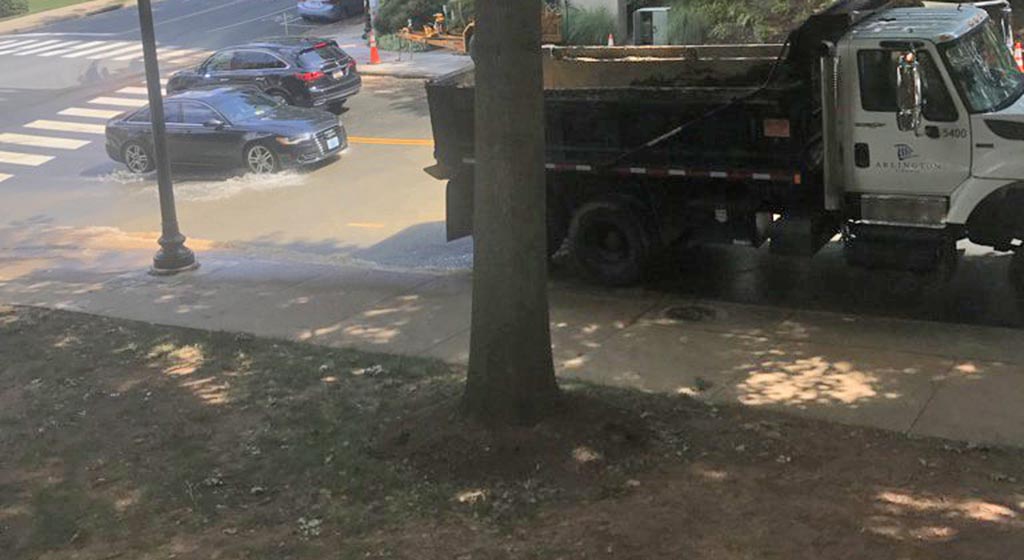
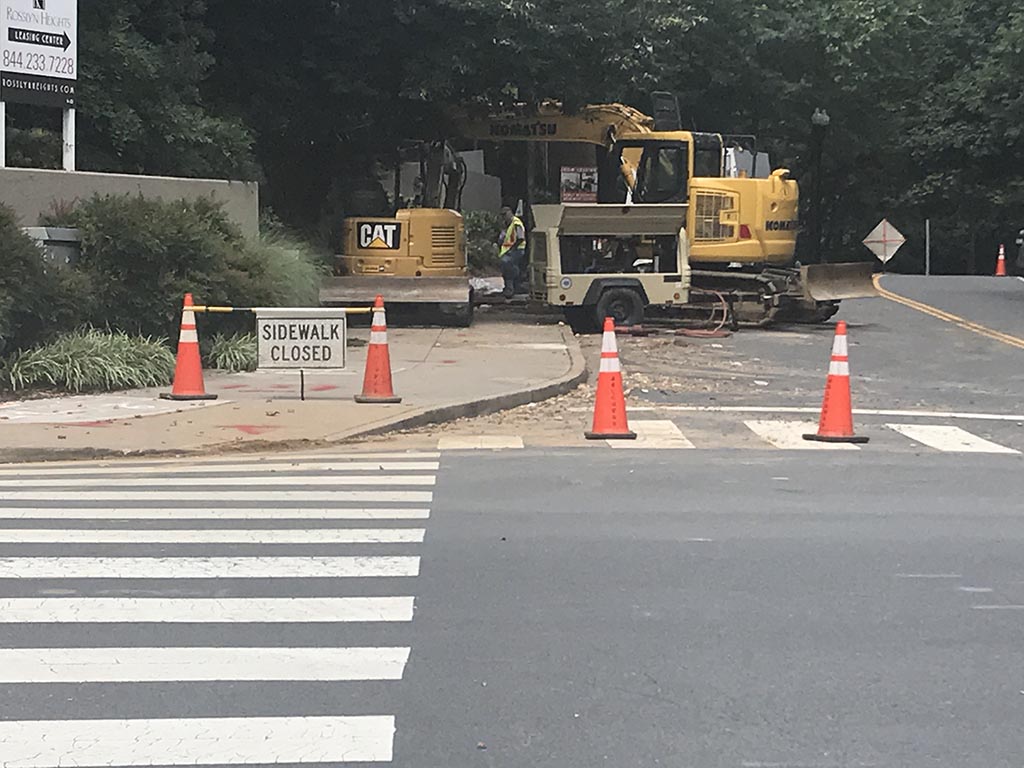
The water main break on N. Oak Street (via Twitter user @lizvanwazer)
As of Tuesday morning, crews were working to fix the problem
A DES spokesman said the work should be complete by 3 p.m.
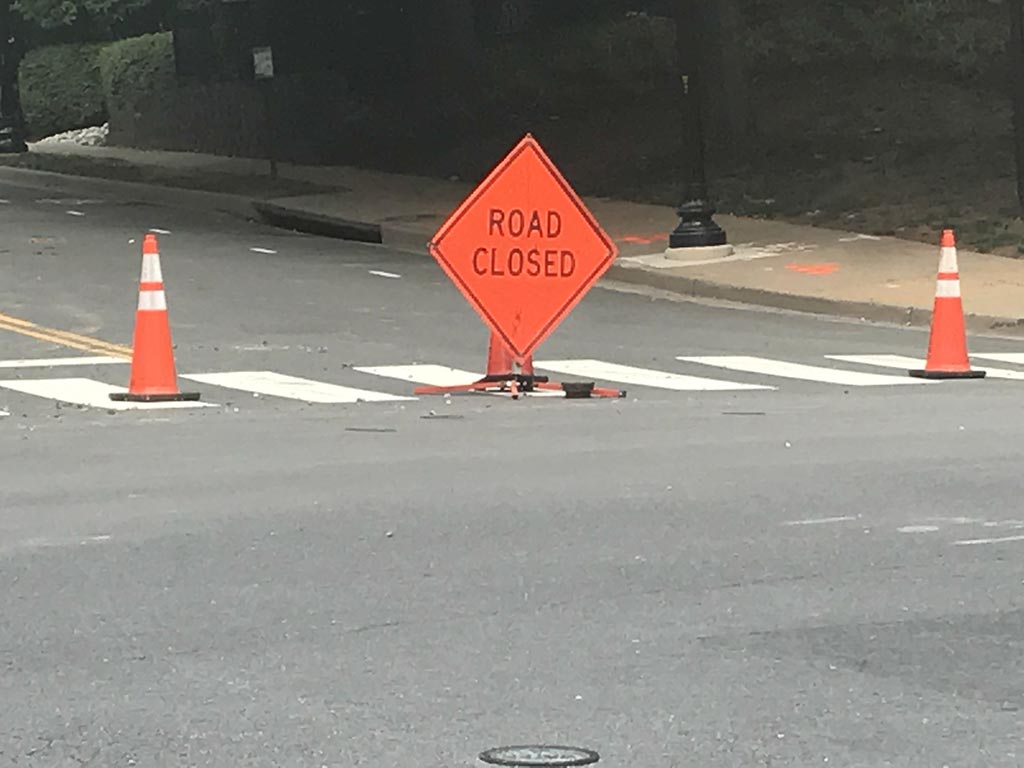
N. Oak Street was closed to vehicles and pedestrians as crews worked
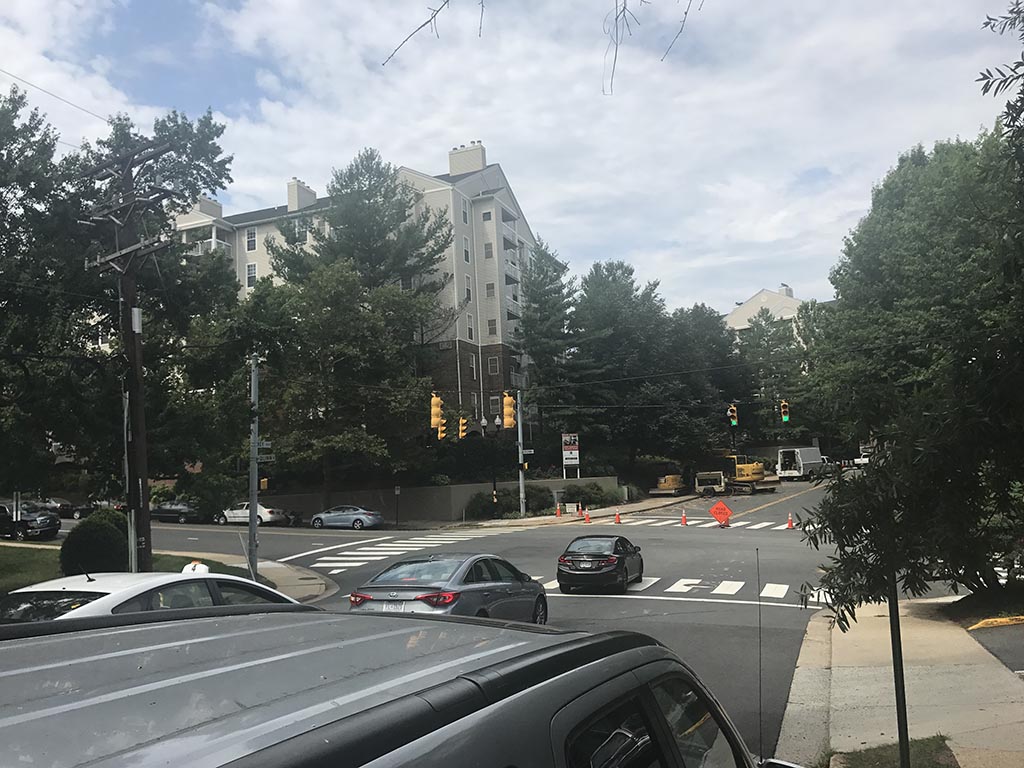
Traffic was detoured away from the scene
(Updated 12.55 p.m.) Residents in North Rosslyn have been without water since yesterday (Monday) afternoon after a water main break on N. Scott Street.
Crews from Arlington’s Department of Environmental Services have been making emergency repairs since last night at 1815 N. Scott Street.
(1/2) Emergency water repairs are taking place at 1815 N Scott St. The water service for approximately 50-100 customers will be affected.
— Arlington Department of Environmental Services (@ArlingtonDES) July 11, 2017
Hi, Thanks for the message. Repairs are expected to be completed by 3 pm. We'll be sure to update if this changes.
— Arlington Department of Environmental Services (@ArlingtonDES) July 11, 2017
A department spokesman said they expect work to be complete and water service restored by 3 p.m. Tuesday, and that the service for 50-100 people has been affected. A traffic detour has been in place in the area, with N. Scott Street closed, including its sidewalks.
The spokesman said a contractor installing a cable drilled through a 16-inch water pipe.
In a post on the North Rosslyn Civic Association’s online forum, local resident Paul Derby said the break came after contractors for Comcast installing fiber in the neighborhood accidentally drilled through the water main.
“Hopefully, Comcast will fully reimburse Arlington County for the cost of these repairs,” Derby wrote. “One wonders how a piece of underground infrastructure as large as this water main could be missed or wrongly interpreted when the utility markings were done.”
(Updated at 2:10 p.m.) The county could gain control of a section of Fairfax Drive under a plan before the Arlington County Board.
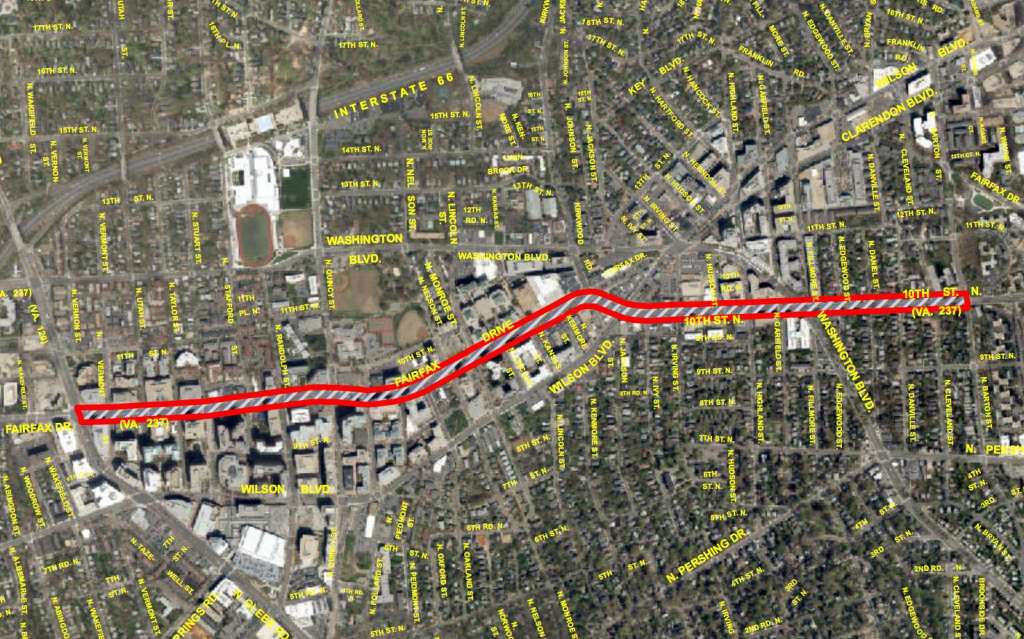
The Board will vote Saturday on whether to request that the Virginia Department of Transportation and Commonwealth Transportation Board transfer control of the road between its intersections with N. Glebe Road and N. Barton Street. Both bodies would then have to approve the transfer, but VDOT has already tentatively agreed to the deal.
If Arlington gains control of the section of Fairfax Drive and 10th Street N. between Ballston and Courthouse, also known as Route 237, it would limit VDOT’s involvement in construction projects.
Currently, roads under VDOT’s control require extensive review before any construction can be done. Making the portion of the roadway a part of Arlington’s local road system would streamline such reviews and give the county more flexibility to implement multimodal improvements.
“Since many of the County’s projects on Route 237 utilize urban standards that are not typical of VDOT plans, this often requires obtaining design exceptions in order to implement the project,” said a staff report. “This cumbersome design-exception process adds time and expense to each project.”
The report recommends the Board approve the proposal, arguing that added flexibility in managing several streets that run in parallel to Interstate 66, which is being widened under the “Transform 66” project, is worth the extra expense.
The move is expected to cost the county upwards of $60,000 a year, according to a fiscal impact statement.
Unlike many other counties in Virginia, Arlington County staff performs the full range of road maintenance functions on the 1,051 lane miles of road and would accept conveyance and responsibility for the maintenance of the additional 6.61 lane miles constituting this portion of Route 237. Per Section 33.2-366 of the Virginia Code, Arlington County receives a per lane-mile payment each fiscal year for the maintenance of its secondary road system. The Fiscal Year (FY) 2018 rate, approved by the CTB on June 20, 2017, is $18,515.71 per lane-mile; the rate typically escalates each year. Maintenance responsibilities include landscaping, sidewalk repair, street sweeping, paving, plowing, signage, and pavement markings, which cost the County roughly $28,000 per lane-mile of roadway, based on the County’s most recently reported average maintenance cost per lane-mile.
… This equates to $60,000 – $70,000 in additional net tax support to the County. The precise level of service for this portion of Route 237 and associated costs would be determined during the FY 2019 budget deliberations.
The CTB would likely vote on the transfer in September if it is approved by the County Board.