
Peter’s Take is a weekly opinion column. The views and opinions expressed in this column are those of the author and do not necessarily reflect the views of ARLnow.com.

In my June 21 column I recommended that the County Board cancel the aquatics center, freeing up capital for other legally permissible uses such as purchasing new park land:

the Manager’s Capital Improvement Plan (CIP) contains $0 for acquisition of new park land over the next 10 years even though Arlington’s population is expected to grow by over 30,000 during that period.

Arlington continues to fall behind other jurisdictions and Arlington’s own prior practices in providing access to park land

A comprehensive 2016 report from the Civic Federation Parks and Recreation Committee (“Civ Fed report”) documents how Arlington has continued to fall behind other jurisdictions and Arlington’s own prior practices regarding:

  • ratio of park land to population
  • dollars devoted to new park land acquisition

The Civ Fed report explains (PDF p.5):

As of 2015, Arlington County had 1,784 acres of park land within its borders. Of those 1,784 acres, 949 acres were owned by Arlington County, 700 acres were owned by the National Park Service (most of which is Arlington Cemetery), and 135 acres were owned by the Northern Virginia Regional Park Authority.

In 1995, Arlington County had 10.8 acres of parkland per 1,000 residents. By 2014 the County’s population had grown by over 43,000 residents, and the park land to population ratio had declined to 7.9 acres of parkland per 1,000 residents.

By contrast, Washington, DC, has 13.2 acres of parkland per 1,000 residents, and Fairfax County has 28.3 acres of parkland per 1,000 residents.

The Civ Fed report also traces the history of Arlington’s declining investment in acquiring new parkland (PDF p.3):

between 1995 and 2008, funding for park land acquisition per two-year bond cycle was between $4.0 and $8.5 million, with most cycles at $8.5 million. Since then… there has been a decline… Over the six years between 2008 and 2014, land acquisition bond funding totaled only $3.0 million, but [was] supplemented by a total of $5.47 million in pay-as-you go (PAYGO) annual budget allocations. Yet, the total funds of $8.47 million available for land acquisition during the latter six-year period was still far less than the $8.5 million that was typical for each two-year cycle between 1996 and 2004 (an eight-year period).

County government lacks a financing plan to acquire new park land

The Civ Fed report recommended that Arlington adopt a financing plan to acquire three acres of new park land per year for the next 10 years. My fellow ARLnow.com columnist, Eli Tucker, has documented that the cost of land across Arlington averaged $94 per square foot, equal to over $4 million per acre. That means it could cost an average of over $12 million per year fully to implement the Civ Fed report recommendation.

But, the County Manager’s latest proposed CIP contains zero capital dollars for acquiring new park land between 2019-2028. Therefore, our county government must answer these community questions:

  • How many acres of new parkland is Arlington planning to acquire over the next 10 years using other kinds of funding?
  • What other kinds of funding and how much of it?

Conclusion

Arlington needs a financing plan to acquire new park land. Cancelling the aquatics center is Arlington’s best source of capital funding for this purpose in our tight budget times.

If our county government insists on moving forward with the aquatics center, it needs to engage transparently with our residents regarding its long-term financial plan for new park land acquisition.

“Why is the door open, are we trying to air condition the whole neighborhood?”

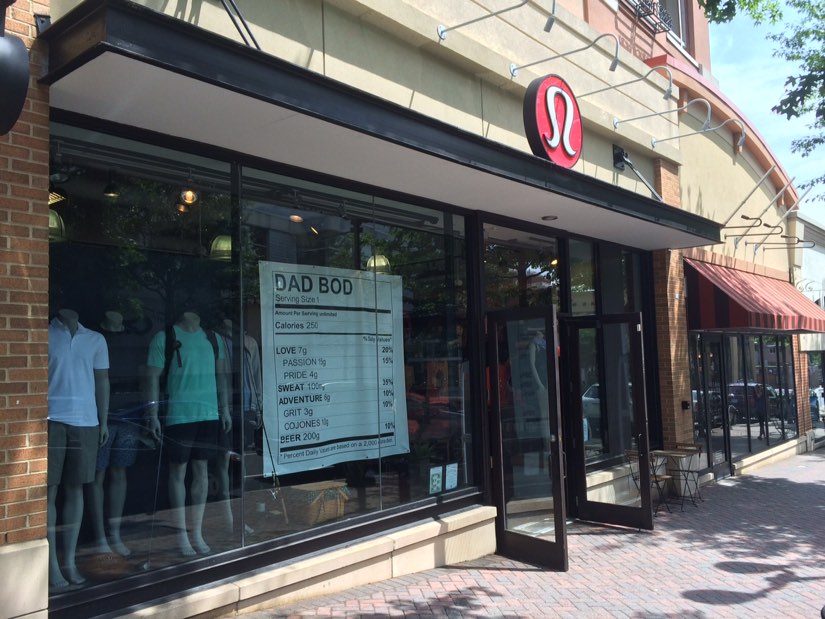
That must be what some retail employees in Clarendon are be thinking this week. Amid a scorching heat wave, many stores are still keeping their doors propped open.

What is otherwise a solid strategy for getting passersby to come inside becomes absurd when the temperature reaches well above the 90s.

This is nothing new — it’s been happening for years. But even the Arlington Dept. of Environmental Services is now making fun of it via social media.

Not everybody hates the open doors, however. A certain employee of this publication, who will go unnamed, acknowledged that the open doors are probably a bit wasteful, but argued that the cool breeze feels nice when walking by.

What do you think?


A midweek celebration of the nation’s independence is quite nearly upon us, but first, a hot and steamy weekend is on tap for Arlington.

It seems the D.C. area is in for a heat wave, with 90-degree temperatures and plenty of humidity in the forecast for the next few days.

It should be the ideal sort of weather to, say, hop on the dockless electric scooters popping up all over Arlington, or head to any one of the bevy of events around the county this weekend.

Or, if you’d rather stay inside and enjoy the A/C, you can catch up on our most popular stories of the past week:

  1. Letter: Arlington County Should Change its Logo
  2. Bird’s Dockless Electric Scooters Now Available in Arlington
  3. Condo Board Moves Meetings to School Over Concerns About Armed Resident
  4. Report: Arlington Has Lost More Than 14,500 Market-Rate Affordable Homes Since 2000
  5. Man in Critical Condition After Being Rescued from Submerged Car

Before we leave you for the week, a quick note to say we stand in solidarity with our fellow journalists in Annapolis today. The shooting at the Capital Gazette has touched everyone who works in the news business, and we’re thinking not only of those lost and their families, but everyone in the newsroom right now.

Head down to the comments to discuss your weekend plans, or anything else local. Have a good weekend.

Flickr pool photo via Jim Havard


The Right Note is a weekly opinion column. The views and opinions expressed in the column are those of the author and do not necessarily reflect the views of ARLnow.com.

I have not really weighed in about the renaming of Washington-Lee High School for a number of reasons. In the final analysis, if in their infinite wisdom the members of the School Board decide to rename this school, then they have the ability to do so. They do have to make the decision realizing they will face the fallout from the voters, particularly the alumni, many of whom from across the political spectrum vehemently disagree with this exercise.

As part of the discussion when the School Board approved the name change process, Monique O’Grady held up a W-L shirt and said “Celebrating your school pride should not mean having to wear a shirt like this one that honors a person who may not share your values.” In so doing, she effectively ruled out naming any future schools after people. It would be extremely tough, if not impossible, to find any person who could receive unanimous support throughout the county.

O’Grady may eventually backtrack from that statement. We may find out what O’Grady meant is that no one who does not share “her” values should find their name on an Arlington school.

Yesterday, ARLnow also ran a story about a local activist who is adamant that the county should remove Arlington House from its logo because it once belonged to Robert E. Lee. Of course, Arlington County was named after Arlington House. Under this logic, it might be time to rename the whole county.

What would renaming Arlington County end up looking like? Under the O’Grady standard, Arlington cannot be named after any people. So, here is a list of suggestions for the new county name based on the standard talking points from the County Board: Diverse, Inclusive, Progressive, Welcoming, World Class.

Or, maybe we could sell annual naming rights to the county to boost revenue or lower tax rates. Trader Joe’s, Virginia anyone? Or possibly, we could change the name to attract new businesses. Right now, for instance, we could change the name to Amazon.

Sure, no one has seriously suggested doing so… yet. But, it is the logical conclusion of the argument.


Progressive Voice is a weekly opinion column. The views and opinions expressed in the column are those of the individual authors and do not necessarily reflect the views of their organizations or ARLnow.

By Laura Saul Edwards

Decades of careful planning and an enviable location next to D.C make Arlington an award-winning and desirable place to work, live and learn. But years of high vacancy rates in commercial real estate, skyrocketing enrollment in the public school system and a rising population have created challenges to how the county and school system maintain Arlington’s quality facilities, schools and infrastructure in a land-starved county.

Today, as the Arlington County Board is poised to approve a 10-year, $1.1 billion Capital Improvement Plan, I wish they had scrubbed it harder. I keep thinking of my dad’s frugality. His advice to my siblings and me — “first make certain you’ve done all you can with what you’ve got” — is just as relevant to county spending.

The county and Arlington Public Schools have made a sensible start in their FY 2019-2028 CIP proposals by targeting some projects for cuts or delays and phasing in others. However, before the next CIP is voted on two years from now, both boards could also follow my dad’s advice–squeeze every possible use from existing resources before borrowing for new construction and other projects.

Creative work is already yielding positive results. The interior space in some Arlington schools has been redesigned to produce hundreds more seats. In high schools, enhanced staff space enables classrooms to be used for six or seven periods (6/7 and 7/7) of the school day for instruction instead of the former 5/7 – only classrooms that need set up time, e.g., laboratories, cannot be used continuously. APS has also converted computer labs to classrooms as keyboarding evolved to personal iPads and laptops.

APS is also testing a new way of busing students to summer school classes. Rather than being picked up at their neighborhood stops, students will be picked up and dropped off at central locations (schools, libraries). If this cuts down the time students ride the bus and generates savings, it should be expanded to more schools.

Other ideas: moving pre-K classes out of elementary schools to central locations (perhaps unused commercial space or community centers), joint school/public libraries at sites like Reed/Westover and the Career Center or co-locating libraries with community centers, reducing the yellow bus fleet for secondary students or further expanding the use of ART and Metro buses to transport secondary students to school. The county could explore such approaches to see if it is wringing the most function out of facilities and resources.

One way to get our ducks in a row would be for county staff to regularly analyze usage data for all of Arlington’s facilities to identify opportunities for even more use. In a “matchmaker” role, the county would link community needs with existing resources in new ways to a greater extent than now, resorting to new construction and major purchases after other options have been exhausted.

For example, in what new ways can existing transit options be combined to transport students, residents, workers and visitors in a safe, dependable and more affordable way than maintaining multiple fleets of buses? Could underutilized parks be repurposed to support field sports and school athletics? Could existing pools, athletic fields and performing arts spaces in schools be shared among schools in lieu of building more, without diminishing instruction and the student experience? Would it make sense to convert some community centers to pre-K centers or schools? Might some community programs move to new locations or be co-located with other programs to make capacity available where it is needed?

Establishing incentives to promote more commercial and private sector support for capacity should be actively pursued as well. In Seven Corners a five-story office building was converted into the Bailey’s Upper Elementary School for Arts and Sciences.  Zoning changes and other incentives could make redeveloping long vacant commercial space into schools, day care centers and seniors centers possible.

It will require planning, public engagement and some expenditure to repurpose and/or redesign existing facilities to make full use of untapped capacity and resources, but hopefully these changes will cost less than starting from scratch.

My dad was a creative penny pincher who found unused space in my childhood home and converted it into a craft room for my mom the quilter, instead of building a costly addition.

Granted, there will always be a need to borrow for major capital projects.  And, granted, it doesn’t make economic sense to be penny-wise and pound-foolish. But the potential for more use at less cost to taxpayers is enticing and a progressive value at its core.

Laura Saul Edwards has lived in Arlington County since 1994. She serves on the School Board’s Advisory Council on School Facilities and Capital Projects (FAC) and is an APS 2012 Honored Citizen.


Peter’s Take is a weekly opinion column. The views and opinions expressed in this column are those of the author and do not necessarily reflect the views of ARLnow.com.

On June 19, the Arlington County Board unanimously approved County Auditor Chris Horton’s Audit Work Plan.

Serving the independent audit function, Horton prepares performance audits, and reports directly to the County Board (not the County Manager) with guidance from the Audit Committee. The Audit Committee — comprising two County Board members, the County Manager, the Deptartment of Management and Finance Director plus three citizen-volunteers –oversees Horton’s work.

County Board member John Vihstadt played a leadership role in establishing the County Auditor position. He and Erik Gutshall serve as the current Board liaisons to the Audit Committee.

Off to a strong start

Horton’s latest report analyzes overtime payments at Arlington’s Emergency Communications Center (ECC). This audit makes important recommendations to improve efficiencies, and underscores the value and usefulness of performance audits.

Differences between the County Auditor and other auditors

The County Manager’s internal auditors look only for technical problems in the County’s financial and control systems:

  • Are things being accounted for and entered into financial systems correctly?
  • Are internal control systems operating to catch errors and irregularities?

Even the county’s external auditor issues only periodic, boilerplate opinion letters that reinforce the limited scope of its review.

Reporting responsibility outside of the normal management lines of authority provides an important check on our financial systems. See: “How should the audit committee be structured?”

County Auditor needs more resources

Horton’s Work Plan contains a series of hierarchical audit tiers, totaling approximately 18 potential audits. Based upon Horton’s own comments before the Board and logic, Horton, operating alone, probably will be able to prepare and publish only three, comprehensive audit reports between July 1, 2018 and June 30, 2019.

Thus, it would take Horton — operating alone — about 6 years to complete all 18 of the potential audits. Obviously, there are more than just these 18 audits that could yield significant dollar savings and efficiencies.

Nonpublic information I obtained from an Association of Local Government Auditors (ALGA) member confirms that an organization similar to Arlington County, with a $1.3 billion annual operating budget, should be devoting more than one, full-time, qualified auditor to the independent audit function.

Auditor/inspector general staffs that report directly to elected officials — if adequately funded — can identify savings that would more than cover their operating costs. Fairfax’s Office of Auditor of the Board has three auditors (including the Auditor of the Board). With three full-time auditors, you can see how much work it is possible to accomplish.

Conclusion

With Horton’s current constraints (e.g., no staff, a very limited budget, etc.), the county is underutilizing this important resource at the very moment it is needed most.

This is a concern. See “Why Government Watchdogs Are Worried”:

ALGA deals with these concerns all the time. When performance auditors rile mayors and department heads with negative audits, retaliation can come in the form of budget cuts, slow action on personnel requests or even suggestions that auditor functions be eliminated. David Jones, Seattle city auditor and chair of ALGA’s advocacy committee, says, “We frequently find that local government auditors are under attack.”

To get the best bang from our finite bucks, Arlington must add at least one (and eventually two) full-time, qualified assistant auditors to support the County Auditor and increase the annual performance audit output.


One thing we’ve never asked readers is whether you are Arlington residents or otherwise.

Obviously if you’re reading this site you have a strong interest in what happens in Arlington. But you might only work here, or maybe you used to live here and you’re checking back on the old neighborhood, or you’re Arlington born-and-raised and away at college.

Which is it? Let’s find out.

File photo


Some more showers are on the way this weekend, though Arlington seems set to avoid a total wash-out if you’re trying to get outside.

Storms will stick around tonight, even though more than a foot of rain has already plagued the D.C. region since mid-May, and could make Saturday a bit dreary as well. Sunday, however, should provide a few rays of sun.

Check out our event calendar if you need some ideas about things to do. If you’re headed to downtown Clarendon, be aware that some big drop-off and pick-up changes are now in effect. Or if you’re planning on swinging by the Arlington Cemetery, know that you won’t be able to get there by Metro.

And if you’re the owner of a wayward stuffed rabbit lost at the Taste of Arlington, county officials remain ready to arrange a reunion.

If you’re looking to wait out these storms, check out our most popular stories of the past week:

  1. I-66 Tolls Have Yet to Convince Arlington Commuters to Choose Transit
  2. Morning Poll: What’s Above the CVS in Clarendon?
  3. Rustico Ballston to Host Crawfish Boil, Open New Beer Garden Saturday
  4. New Ballston Quarter Pedestrian Bridge Delayed Until 2019
  5. Following a Maywood Roof Dispute, County Board Weighs Historic District Policy Changes

Head down to the comments to discuss these stories, your weekend plans or anything else local.


The Right Note is a weekly opinion column. The views and opinions expressed in the column are those of the author and do not necessarily reflect the views of ARLnow.com.

County Board members, in every campaign speech and at the meeting that takes place at beginning of every year, talk about the need to address the affordability of housing in Arlington.

Market forces beyond their control clearly work against the Board, but so do many of the rules and regulations they create and defend. On Tuesday the Board voted unanimously to force a homeowner to pay an additional $20,000 (or more) to replace the roof on their home because it sits in the Maywood Neighborhood Historic District.

The homeowners were not attempting to change the historic design of their home, they simply did not believe they could afford up to $30,000 for tin shingles when asphalt shingles would cost just $6,000. On Tuesday, the County Board unanimously rejected the homeowners’ appeal of the April 2017 decision by the Historical Affairs and Landmark Review Board (HALRB) which required the dramatically more expensive roofing option.

In the scope of review of zoning appeals it says that action should not be taken “which would be incongruous with the historical aspects of the district.” The HALRB ultimately determined that the lack of this particular tin roof would be incongruous. According to the zoning ordinance cited in the staff report, the Board could only overturn the appeal if it was contrary to the law or constitutes an abuse of discretion. The County Board unanimously affirmed that decision.

But if the County Board members wanted to provide the homeowners relief, they could have. According to the Maywood Design Guidelines, “the HALRB strongly supports replacing metal roofs with the same materials.” If they wanted to say it was required, they could have used the word required, but they did not. In fact, the HALRB asked the homeowners to provide an estimate for the cost of asphalt shingles as part of the application process. Therefore, the HALRB clearly had the discretion to allow the asphalt shingles but chose not to. Their exercise of that discretion was open to the County Board’s review.

Ultimately, the County Board had a simple question before it: is the HALRB’s decision to require homeowners to spend five times as much for roofing material reasonable in light of the historic district requirements? The Board unanimously chose to say that imposing such a cost was a reasonable decision.

The Board did so while trying to sound sympathetic. Board Chair Katie Cristol called it a “cautionary tale.” Vice Chair Christian Dorsey said, “I think we can figure out a way to do better.”

When it comes to driving up costs of construction through zoning rules in the county on one hand, and then simultaneously expressing concerns about the rising housing costs that result from those rules, this result is a perfect example of the Arlington way.


Progressive Voice is a weekly opinion column. The views and opinions expressed in the column are those of the individual authors and do not necessarily reflect the views of their organizations or ARLnow.com.

By Lisa Nisenson

This year marked a breakthrough for transportation with a new regional deal for Metro funding. But transit options are only part of developing a mobility system to move people while reducing gridlock. Arlington should consider innovative options from other jurisdictions that would update the county’s longstanding “car-free diet” approach. As it so happens, some of the most exciting opportunities for mobility are rolling out, literally, on two wheels.

Perhaps you’ve seen, or even ridden, the new electric bikes and scooters in Washington. These new bike share systems are called dockless, or free floating. They don’t need to be parked at a station like Arlington’s Capital Bikeshare bikes. This is both a blessing (for riders) and a curse (chaotic sidewalks). Likewise, riders can pay by the trip rather than create a membership.

Some of the dockless bikes are also electric, pedal assist models. The power does not kick in unless the rider is pedaling. There are four companies operating electric scooters in Washington: Lime, Waybots, Bird and Skip. Both scooters and electric bike share are part of a pilot project for dockless systems in DC.

While not yet available in Arlington, the county is studying how Washington and other cities are managing systems to avoid “bike litter” (improperly parked or broken bikes and scooters).

These new systems represent something larger than a bike ride. Competition among providers like Uber and Lime to provide on-demand mobility means the rate of change is outpacing our traditional, deliberative processes. The technology companies’ “install now, study later” tactics reverse the usual process for transportation planning, which can take years. Cities are scrambling to adjust for one big reason: the electric scooters and bikes are wildly popular because they fill some of the most stubborn mobility gaps.

In Arlington, electric scooters and electric pedal assist bicycles can expand bike share to the hillier parts of the northern and southern parts of the county. These bikes and scooters can also expand access to Metro beyond our transit corridors.

We don’t have to wait to begin proper planning now. The key to success is incorporating electric bike and scooter share systems into our county transportation programs via a fast and nimble approach.

Testing ideas first: With new ideas and technology, demonstration and pilot projects let the community start small and experiment with design before making large investments. Demonstrations also let the community take a test drive (or ride) of new mobility and for new street designs. On June 28, for example, the Crystal City BID will host a demonstration of the new electric bike share options (JUMP and LimeBike) as part of Food Truck Thursday.

Nimble infrastructure: Many cities install temporary infrastructure like bike lanes to test demand and design. Others use portable amenities like bike parking to meet seasonal or event-based demand. Seattle used modular rails and planters to test a protected bike lane. Austin is painting designated parking areas for dockless bikes and scooters. Arlington needs to make sure it has access to the data to assess how people are using and parking scooters and bikes, and then use the data to target increased investment on routes with high demand.

Simpler permitting: Los Angeles’ People St program has streamlined permits for installing parklets and bike parking on streets and sidewalks. Making parking easy and accessible is one key to managing dockless systems.

Evolving support: One of the main challenges to the growth of dockless systems is charging the scooters and bikes. In fact, scooter companies pay “juicers” to charge and distribute their fleets in a designated area. Over the long term, integrated parking plus charging stations will become standard in buildings for all kinds of electric vehicles.

Perhaps the biggest challenge is going to be cultural. Car drivers and bike riders alike staunchly defend their mode. The new electric mobility models, though, will mean more options for more places that create more opportunities for Arlington residents to get out and about without adding to gridlock. Allowing the perfect to be the enemy of the good with planning in this case wouldn’t be progress; it’d be shifting into reverse gear.

Lisa Nisenson leads Alta Planning + Design’s New Mobility groups and is founder of the award-winning start-up GreaterPlaces. She gave a 2015 TEDxArlington talk on building better transportation networks.


Peter’s Take is a weekly opinion column. The views and opinions expressed in this column are those of the author and do not necessarily reflect the views of ARLnow.com.

In presenting his proposed new Capital Improvement Plan (CIP) to the County Board last month, County Manager Mark Schwartz appropriately stressed fiscal prudence and making tough choices among competing priorities.

The Manager also correctly noted the incremental needs in capital spending that have arisen since Arlington’s last CIP was adopted two years ago, including for:

  • APS
  • Metro
  • Other transportation and core community infrastructure

But, as ARLnow.com reported, the Manager tried to defend moving forward with the construction of a $60 million aquatics center at Long Bridge Park. He argued that it would be a “breach of faith” to cancel it. He also claimed:

“If we back out… nobody in the contracting community is going to bid on any of our contracts for the next five years… We’d probably… be involved in protracted litigation with [the construction company]… and our future projects would go up in price. People would build that in as a risk premium.”

The benefits of cancelling the aquatics center substantially outweigh the costs

The Manager’s conclusions about the contracting community and protracted litigation are alarmist. Contractors will continue vigorously bidding against each other for our business. We can reach a fair settlement with the construction company. At a minimum, county government should produce a redacted version of the construction contract so that it can be evaluated by disinterested, independent experts.

As for the “breach of faith,” we must weigh the great disappointment of aquatics center advocates if this project is cancelled against the lasting opportunity costs to the entire Arlington community of proceeding forward.

I share most of the sentiments expressed in the most up-voted comment to the ARLnow.com news story:

“The aquatics center is a boondoggle that should be stopped immediately. Just because it has been worked on for a few months does not mean we should continue to throw good money after bad… Arlington taxpayers will be on the hook for the deficit forever.”

I don’t agree this project is a boondoggle, but I do agree with the rest of this comment.

While school enrollment is growing at the equivalent of one new elementary school per year, and our vital Metro system still needs more funding, we should take pressure off our CIP’s 10 percent debt service limits by cancelling the aquatics center project. The costs to service our bonded indebtedness are already rising too close to those limits.

The Manager estimates net taxpayer support for aquatics center operations at something north of $1.1 million annually. This estimate is highly speculative because County government has never operated such a facility. The actual annual operating deficit could be much higher.

The net savings from cancelling the aquatics center should be re-directed toward other legally permissible uses

The Manager has confirmed that the County Board legally could reprogram the approved bond monies for the aquatics center to other park and recreation priorities. These include:

  • land acquisition for new parkland (the Manager’s CIP contains $0 for acquisition of new parkland over the next 10 years even though Arlington’s population is expected to grow by over 30,000 during that period)
  • park infrastructure (including a smaller community pool) at Long Bridge or elsewhere

Conclusion

County government has cancelled the 4thof July celebration at Long Bridge Park due to “budget constraints” while insisting that the aquatics center be built despite budget constraints. Each of those decisions should be reversed.


View More Stories