Mother’s Day is nearly upon us — consider this your last warning to buy something nice for mom.

If you’re hoping to enjoy the summer-like weather and catch the Caps game outside, consider swinging by Rosslyn. And should you be heading to any Arlington Soccer Association recreational matches this weekend, remember to keep quiet.

Of course, if you’re looking for something else to do this weekend, we’ve got you covered. But first, check out ARLnow’s top stories of the past week.

  1. Police-Involved Shooting Near Columbia Pike
  2. Arlington Schools See Racial Disparity in Suspension Rates, Police Referrals
  3. Arlington Officials Fear Metro Funding Deal Could Imperil Ballston, Crystal City Station Projects
  4. ACPD Seeking Two Suspects Following Late-Night Rumble at Clarendon Restaurant
  5. Residents Steaming About Air Conditioning Problems at Dominion Towers Apartments

Head down to the comments to discuss these stories, your weekend plans or anything else local. Have a great weekend!

Photo by Alex Koma


The Right Note is a weekly opinion column. The views and opinions expressed in the column are those of the author and do not necessarily reflect the views of ARLnow.com.

There has been no shortage of advice and criticism about the newest iteration of the County’s community engagement process.

A lot of words are used to discuss the input at the front end, but it is essential to ask what are our specific goals and how do we measure results in attaining them.

Is our county making good long-term financial decisions? For years, County leaders touted the bond rating as a measure of our fiscal health. That rating is primarily determined by two things: (1) annual debt service less than 10 percent of annual spending and (2) the County’s willingness to raise taxes to make sure the debt service level stays there. The County Auditor’s office still has not been given the resources to aggressively look into county programs.

Is our business environment attracting and retaining existing businesses and encouraging the creation of new businesses, and can they do it without offering massive subsidies? The commercial vacancy rate remains high. It is expensive to build it. It is expensive to lease it. And it is expensive to do business in the county.

The County touts are schools and our workforce, but those are not the only pieces of the puzzle when businesses are looking for a home. Arlington still has a big advantage in the marketplace, location, location, location. But we cannot take it for granted any longer.

Are our schools adequately preparing our kids to enter the workforce or college in the 2020s and 2030s? Next year our schools will spend more than $22,700 per child on their educational experience. Our standardized academic measurements are doing fine.

But who is asking the questions about whether our kids should worry more about measurements scaled to college preparedness or should we also spend more time considering how kids who want to go straight into the workforce are prepared?

On transportation, what Metro reforms are we insisting on and are we improving traffic flow or restricting it for those who choose to drive? In Board Chair Katie Cristol’s speech upon taking the gavel in January, she called for action on Metro. What has the Board done thus far under her leadership?

I went back and watched each of the County Board members give their January opening speeches for the year. Another goal from Board Chair Katie Cristol included changes to how the county regulates child care. How is that process going five months into the year, and how will that be measured on January 2, 2019?

Vice-Chair Christian Dorsey wanted affordable housing, specifically mentioning the permitting process and making it more affordable to build new housing. What changes has he proposed to make housing construction more affordable?

Every County Board member should go back and read their kick-off speeches and see how they are doing so far in 2018. And if they are so inclined, they should give us an honest assessment of their progress.


Progressive Voice is a weekly opinion column. The views and opinions expressed in the column are those of the individual authors and do not necessarily reflect the views of their organizations or ARLnow.com.

By Elaine Furlow

When Dale and Janet Oak shifted into semi-retirement, they got ready to sell their big Arlington home of 25 years and find a space that better suited their needs.

“We looked at condos in Rosslyn, but they did not seem like ‘us,'” Janet Oak recalled.

Nor was the frenetic pace in Clarendon, or the dense cityscape in much of Ballston.

“We didn’t want to put all our equity into the next place, and it was hard to find that middle ground.” The Oaks wound up in a relatively new condo building in an area “that is walkable to shops, quiet and fits our lifestyle,” Janet Oak said.

It’s in Falls Church.

As comfortable middle-class baby boomer homeowners in Arlington get ready for their next stage, many are planning on 20+ years of active living ahead. After hard-charging careers, they have time, talents and money to keep investing in Arlington.

Some may want to downsize their homes, but often, it’s a matter of “right-sizing” — leaving behind aging brick colonials with stairs or 4-bedroom houses with too much upkeep.

Renovating one’s current home to age-in-place is not always feasible, yet options aren’t great. Small, quality houses with one-floor living are scarce. And most townhouses have many stairs, a big minus as boomers (those born between 1946 and 1964) think of aging knees and hips down the road.

“I know what’s out there, and it is bleak,” said Karen Close, a long-time real estate agent with Century 21. “Arlington doesn’t have a plan to deal with boomers.”

Arlington should be more alert to this need, so it doesn’t lose these successful contributors to our county. Non-boomers have a stake, too, since new solutions might free up our tight single-family housing stock. Can innovative builders/developers and far-sighted leaders envision a different, more livable type of home?

Older adults planning ahead are looking for one-floor living, a flat outside entry, quality construction, wide doorways, ample storage and features with the future in mind (like a large, walk-in shower with a bench).

Oh, and a reasonable price and attractive exterior.

“Wouldn’t you love something with the look of a townhouse, but built with single levels or with elevators, so you don’t have to do stairs,” Janet Oak said.

Yes, it’s tough to find the land. Yet we could repurpose (and likely rezone) certain commercial space. Imagine that attractive, well-built bank building, now empty, as the centerpiece of a modest-sized, innovative condo development.

Builders and developers could incorporate the desired features without drifting into “senior-only” territory since well-designed small-footprint homes will work for many ages. And most boomers also would like to keep interacting with a mix of neighbors, including school kids.

(more…)


Peter’s Take is a weekly opinion column. The views and opinions expressed in this column are those of the author and do not necessarily reflect the views of ARLnow.com.

As our County Board Chair, Katie Cristol, said in an eloquent personal statement last month (after Arlington approved its Fiscal 2019 operating budget), the current rate of growth in our expenditures for the many things we value is no longer sustainable.

Our Chair elaborated:

“We can’t grow per-pupil annual increases in the transfer to Schools when the number of pupils are growing at the rates we’ve seen. We can’t increase the general fund contributions to Affordable Housing Investment [AHIF] fast enough to support every compelling affordable housing project, when projects a decade ago required $5 or $6 million in gap financing and current projects need $20 million.”

To enable our community to participate effectively in the hard budget decisions that lie immediately ahead, Arlington needs new approaches to quantify both the short-term and the long-term fiscal impacts of the population growth Arlington expects.

Short-term fiscal impacts

We need project-specific, prospective fiscal impact statements for each discretionary development project. New, large multi-unit residential projects do not pay for themselves. They produce more new costs than new revenues.

A recent “cost of community services” peer-reviewed survey of 125 jurisdictions nationwide found that the mean ratio was $1.18 of incremental costs incurred compared to every $1.00 of incremental revenues generated.

Project-specific, prospective fiscal impact statements were among the key recommendations of the 2015 Community Facilities Study Group (CSFG), chaired by former County Board member John Milliken. Such statements are important because they will inject vital, new, objective input into the County’s planning and budgeting.

Kinds of project-specific impact analyses

Most of our Northern Virginia neighbors already are using these tools. Examples include Stafford County, Loudoun County, Fauquier County and the City of Falls Church.

The noted regional economist, Dr. Stephen Fuller, prepared an analysis for Stafford County, and confirmed that residential development does not pay for itself. His analysis also informed an Urban Development Area presentation.

These kinds of analyses are ones that Arlington County staff could and should do internally. Advanced software is available that can be tailored to Arlington’s circumstances.

Arlington’s first steps toward fiscal impact analyses

At its April 21 meeting, under the leadership of John Vihstadt, the County Board took some first steps in the direction of fiscal impact analyses.

As part of its budget guidance, the Board directed the County Manager to develop for Board review by the end of this calendar year a plan for preparing and making public periodic, retroactive cost-benefit analyses of new residential and commercial developments on an aggregate rather than a project-specific basis.

But, greater progress is being blocked once again by the Arlington County attorney’s resistance to the CFSG recommendation for prospective, project-specific fiscal impact analyses. He is unwilling to publish his detailed legal reasoning for review by independent legal experts.

Longer-term fiscal impacts

The County and APS should collaborate to develop financial projections out to 2035 for both capital and operating budget spending, utilizing at least three assumptions: most likely case, optimistic case(s), pessimistic case(s).

The results of these projections, together with the major assumptions underlying them, should be published and shared for discussion with the community.

Conclusion

The County Board needs to deploy new approaches to the fiscal impacts of development. This will enable Arlington residents to weigh in knowledgeably on how much we should spend on each thing we value.


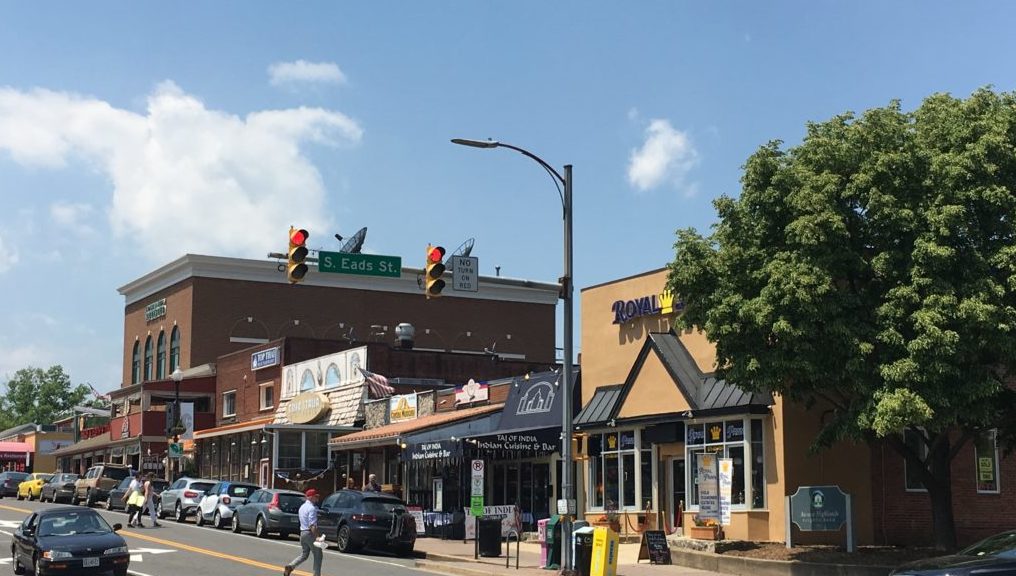
Today was another hot day, but this weekend is looking a bit rainy.

Alter your Derby Day attire accordingly, and remember to be responsible with your celebration during the races and at any Cinco de Mayo festivities you find yourself at.

Before you break out the fascinators and make yourself a mint julep, let’s take a look back at ARLnow’s most read stories over the past week.

  1. Following Sudden Death of Patrick Henry Elementary Principal, Temporary Replacement Named
  2. Country Clubs, County Strike Deal to End Tax Standoff
  3. ACPD Investigating Fatal Pedestrian Crash on Columbia Pike
  4. APS Eyes Seven Elementary Schools as Future “Option” Program Sites
  5. Reaction: Parents Frustrated, Miss Work over APS Tech Failure

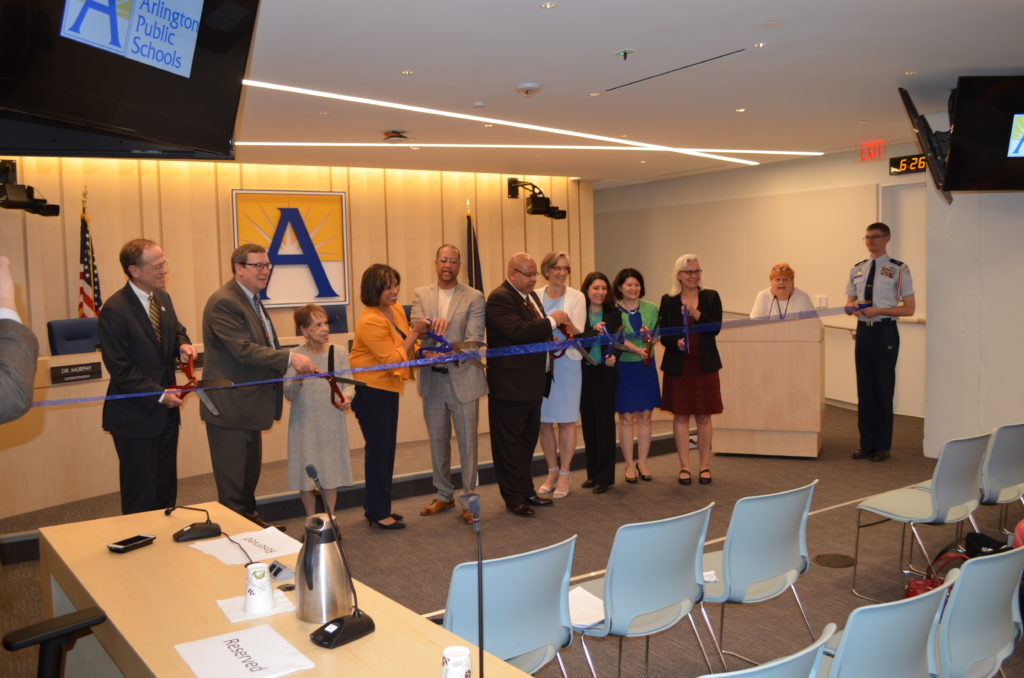
If you missed our earlier coverage of the School Board meeting, here it is. The meeting was held at the new Syphax Education Center, after officials had done some good, old fashioned ribbon cutting.

Feel free to discuss these topics, your weekend plans, how much you love or loathe gondola talk, or anything else that’s happening locally in the comments below. Have a great weekend!

Photo courtesy of Frank Bellavia, Arlington Public Schools


The Right Note is a weekly opinion column. The views and opinions expressed in the column are those of the author and do not necessarily reflect the views of ARLnow.com.

Last night, Scott McGeary was inducted into the Arlington Business Hall of Fame. McGeary was recognized for his significant contributions, not only to the business community, but to Arlington as a whole. It was a well-deserved honor.

McGeary currently serves as secretary of the Arlington Electoral Board, but has also been a leader in the Civic Federation, Committee of 100, Arlington Chamber and Northern Virginia Chamber of Commerce. He was a member of Arlington’s Board of Zoning Appeals and served on George Mason University’s Board of Visitors.

He’s well regarded across the political spectrum for his work ethic and for the professional and respectful manner he has gone about both his work and community service for the past three decades. Not only do our elected leaders know him, but he has built relationships with them.

He is exactly the type of person who would make a great county board member, but his longstanding association with the Republican Party would make such a run an uphill climb.

Speaking of the County Board, local Democrats hosted a forum last night for their candidates to take on incumbent John Vihstadt, who, like McGeary, made a name in the community long before his surprise wins in 2014.

Common themes at the forum included a “tough” budget, economic growth, housing, transportation and education. The forum questions also touched on the gondola, guns and immigration.

Tough budgets, economic development and transportation have recently been addressed in this space and are things the County could address in some very common sense ways.

Arlington’s policies on housing have done little to overcome market forces. In addition to our high level of taxation, Arlington also makes it more expensive to build new housing than it should be through its zoning regulations. Those costs are passed directly onto homeowners and renters. The candidates offered little in the way of specifics to change our present course.

One disappointing theme from the opening statement of Matthew de Ferranti invoked the need to run against President Trump this fall. Unfortunately, that strategy probably plays well with party loyalists.

When I campaigned for County Board in 2010, I was told by a voter that Ronald Reagan was to blame for the problems in Arlington. Never mind that he has not been in office for twenty years or that Democrats had controlled the County Board since then.

Chanda Choun closed by saying he should win because he was the candidate who could bring change. Except the Board is controlled by Democrats 4 to 1. If you have a problem with what they are doing, defeating Vihstadt will not really change anything. One could really argue things would be more likely to stay the same because no one from outside the dominant political party will have a microphone or a vote to change it.

Both candidates struggled to answer the questions of what Vihstadt has done, or how he has voted, that they specifically oppose. In other words, he has done a pretty good job, which is precisely why Vihstadt stands an excellent chance of being re-elected.


Progressive Voice is a weekly opinion column. The views and opinions expressed in the column are those of the individual authors and do not necessarily reflect the views of their organizations or ARLnow.com.

By Susan Robinson

After a long and difficult budget process, County and School Board members, staff and citizens heave a sigh of relief and move on. Decision makers balanced demands for services against limited resources. But still, Arlington faces some persistent headwinds:

  • High commercial vacancy rates
  • Growth in the number of current and projected schoolchildren
  • Lack of land for school and county buildings, fields and open space

The county manager warns that population and inflationary pressures will require service modifications, efficiencies and likely increases in taxes and fees next year.

No doubt staff is hard at work looking for better ways of implementing services. Yet with the perspective of a finance professional who knows Arlington civic life well, I offer four suggestions to do things differently and change smartly.

Community Engagement

Public participation in decision-making defines Arlington — but at a cost in dollars, time and focus. The two Boards and their staffs struggle to consider input while managing multiple time-consuming processes. A rumor that developers and contractors add significantly to their cost estimates on Arlington projects to cover the time of rounds of citizen engagement is believable.

The County recently developed a public engagement plan, a good first step. Here are a few additional suggestions.

  • Being up front and clear about who is making each decision and when.
  • Examine the role and effectiveness of the 50-plus county commissions. Streamline as needed.
  • Use new procurement methods authorized by the state to retain the best of citizen engagement without increasing the bureaucracy and cost.
  • Fellow citizens: engage without assuming you’ll get your own way but rather that you’ll improve the outcome for all.

Land Acquisition and Reuse

Two Arlington challenges — lack of land and the high commercial vacancy rate — may combine to create an opportunity. The county should be proactively acquiring land. Good examples are the County’s acquisition of Shirlington property and the schools’ purchase of a foreclosed house.

The County is developing a property acquisition policy; APS should do likewise. While most vacant commercial buildings are not appropriate for schools, they could be repurposed for many non-instructional uses.

We must also optimize our current facilities. For instance, before moving more vehicles and operations to new locations, the Trade Center should be redesigned to increase its current capacity.

Achievable Long-Term Plans

The County and APS have a long history of planning for the future. Each plan sets up high expectations. But while schools have a new Strategic Plan and the County has its Comprehensive Plan, all are essentially aspirational. The path to achieve them isn’t clear. Annual prioritized actions are in short supply. And when one goal collides with another, there seems little strategic sense of what takes top place.

Sharper strategic thinking and good implementation results in success. Remember President John Kennedy’s famous call to action in 1961: “This nation should commit itself to achieving the goal, before this decade is out, of landing a man on the moon.” Many people forget the second part of that, …and returning him safely to the Earth.”

Arlington needs to think through the entire path of what we are trying to achieve–and then focus more clearly on developing realistic timelines for implementation.

(more…)


Peter’s Take is a weekly opinion column. The views and opinions expressed in this column are those of the author and do not necessarily reflect the views of ARLnow.com.

When a developer requests a zoning change to increase allowable density, Arlington County has a set of rules under which the County can approve of such a request contingent on the developer’s willingness to agree to one or more conditions.

The County maintains a list of these “community benefits” conditions, noting in part that they are intended to:

  • “Ameliorate a project’s impacts on surrounding property, as well as any additional height and/or density or other bonuses that may be approved or modifications to Zoning Ordinance standards proposed by a developer, or”
  • “Are in exchange for bonuses and other benefits approved as part of the project.”

The County’s current community benefits conditions have failed to adequately address some developmental impacts

Rapidly increasing student enrollment rates and increasingly crowded parks are two important impacts of many discretionary development projects, particularly those involving new large multi-unit residential buildings. But, the County has:

  • failed entirely to request cash or in-kind schools’ contribution conditions
  • asked only occasionally for contribution conditions relating to park land and open space

Other Virginia jurisdictions routinely quantify impacts on schools and parks, and those jurisdictions impose conditions to ameliorate such impacts in appropriate circumstances.

Impact on schools of incremental enrollment

In Falls Church, voluntary school capital contributions have been a staple of past agreements with developers of mixed-use projects.

The Fairfax fiscal impact model has explicitly considered school impacts since 2003.

Fairfax determines a per-student generation factor by housing type, and estimates how many students are anticipated from the particular mix of housing units in each proposed development. Fairfax then computes a per-student cost for each project, which when multiplied times the number of students anticipated from the project, yields the total incremental enrollment cost that forms the basis for negotiations with the developer.

Important updates to the Fairfax model (effective July 1, 2016) are discussed below.

Impact on schools and parks of incremental usage

Under the updated Fairfax development impact model, benefits for incremental school or park usage negotiated with a developer do not have to be limited to creation or refurbishment of a school or park within the boundaries of the site of the proposed project — so long as those benefits are reasonable in amount and address impacts that are specifically attributable to the residential use component of the project.

Parks include playgrounds and other recreational facilities. Such off-site benefits must provide a direct and material benefit to residents of the proposed project. Both on-site and off-site benefits for schools or parks can include cash.

Conclusion

Neither the Dillon Rule, nor any Virginia state law, nor any Arlington ordinance expressly prohibit Arlington County from requesting a reasonable cash or in-kind contribution from a developer as a condition to address these kinds of schools and parks impacts.

Nevertheless, the Arlington County attorney insists that Arlington is not legally authorized to condition discretionary development projects to address such impacts. However, our County Attorney is unwilling to provide a detailed public explanation so that independent legal experts can examine his reasoning.

Our County Attorney’s refusal to provide such an explanation is unreasonable. If his opinion is correct, Arlington could seek legal changes in Richmond to enable us to do what other Virginia jurisdictions already do. If his opinion is wrong, Arlington should adjust its rules to enable reasonable schools and parks conditions in appropriate discretionary development projects.

File photo


It might be another weekend to use a ride hailing app — Metro’s weekend service alerts indicate that construction and repairs abound.

We’re also looking at a chance of rain this Saturday, but odds are it won’t be the possibly record-breaking rainstorm that Hawaiians dealt with last week.

Before you do start your weekend, let’s take a look back at ARLnow’s most read stories over the past week.

  1. AWLA: In Arlington Canine Parks, No Hogs, Just Dogs
  2. Five Retailers Announce Plans to Open in Ballston Quarter
  3. Updated: Police Release Description of Attempted Sexual Assault Suspect
  4. Parents Push Back on Proposed Attendance Changes at Nottingham Elementary
  5. Watchful Mannequin Spooks Residents Near Ballston

Feel free to discuss these topics, your weekend plans, how you plan to share your Amazon Fire stick with possible exes or anything else that’s happening locally in the comments below. Have a great weekend!

Photo via Flickr/Erinn Shirley


The Right Note is a weekly opinion column. The views and opinions expressed in the column are those of the author and do not necessarily reflect the views of ARLnow.com.

The Arlington Public Schools are in the process of developing new guidelines for the use of technology in schools.

Like other parents with children currently in our school system, technology is on my mind regularly. My wife and I embrace technology as a tool for learning for our kids, but also realize there are plenty of dangers associated with it. It is a balancing act all parents must wrestle with during these formative years.

There is one provision in the newest policy that could use some further clarification.

Students shall not audio-record, photograph, or video-record other students or school employees on school property, on a school bus or at school-sponsored activities without their knowledge and consent, except for participation in activities considered to be in the public arena (e.g. sporting events, public meetings, academic competitions, or public performances). . . . Audio-recording, photographing, or videorecording of others is strictly prohibited in locker rooms, dressing rooms, health offices and restrooms, where individuals have every expectation of privacy.

Protecting privacy, particularly for students, is a good thing.

But what happens if a teacher or other school employee were to begin threatening a student, or vice versa, and another student turned on their camera? What if a teacher launched into a profanity-laced tirade about an elected official? What if a student was committing a criminal act?

In other words, are there any circumstances where an audio or video recording would be appropriate by a student without consent? Would the school discipline a student who recorded such an incident when the recording is technically a violation of school policy? And are school employees covered by a similar policy?

Hopefully the School Board will consider these questions before adopting the policy.

Under the headline, “Following the Golden Rule can pay dividends in Richmond,” local legislators highlighted the need to build greater understanding with their colleagues from other parts of the Commonwealth, including of course Republicans. Great advice to be sure.

Senator Barbara Favola was quoted as saying, “At the end of the day, it’s really about building relationships — bringing sincerity and honesty.”

But last fall, at a campaign rally for the Democrat ticket, Senator Favola said about Republicans, “They’re evil. We’re the good guys.”

So the question is, which is it Senator Favola? Do you think Republicans in Virginia are evil or worthy of building relationships with? Or does it depend on whether you are trying to whip up Democrat partisans to vote in Arlington versus getting legislation passed in Richmond?


Progressive Voice is a weekly opinion column. The views and opinions expressed in the column are those of the individual authors and do not necessarily reflect the views of their organizations or ARLnow.com.

By Rip Sullivan

Imagine this: a family of three living in Arlington County. The father and mother work hard at hourly wage jobs, cleaning hotel rooms and working at a fast food restaurant to try to make ends meet.

Together they make $18,000 a year — someone needs to be home at all times to watch over their very young daughter. Neither parent receives health insurance from their employer, and unfortunately they make “too much” to qualify for Virginia’s Medicaid program. These parents are stuck in what is known as the “coverage gap.”

Here in Arlington, approximately 7,000 of our citizens — our neighbors — are stuck in the coverage gap, according to the Commonwealth Institute. Virginia is ranked 13th worst in the country on percentage of population that is uninsured, and 8th worst in the number of people uninsured.

Having some of the country’s most restrictive Medicaid requirements doesn’t help. For instance, childless adults are not eligible. Neither are elderly or disabled people with incomes above 80 percent of the federal poverty level, or $15,273 for a family of three.

Being insured provides critical benefits not only to the individual with health care coverage, but to society at large. Cash-strapped hospitals save money by reducing the amount of uncompensated care, and individuals get preventive care before requiring expensive trips to the ER.

How can we shrink the number of uninsured in Virginia and help those in the coverage gap? Expand Medicaid now.

Democratic candidates for the House of Delegates in 2017 made Medicaid expansion a major part of our platform in districts across the Commonwealth. In November’s wave election — in which Democrats flipped 15 seats in the House and retained the Governor’s seat — voters made it clear that health care accessibility was a priority.

In a CNBC exit poll, nearly 70 percent of Virginia voters said that health care “was the most important or a very important issue in deciding whom to vote for as governor,” and a Washington Post poll found that health care was the number one priority for 39 percent of voters, the highest of all categories considered. A December 2017 NPR poll found that 70 percent of Virginians support Medicaid expansion.

Virginians are ready for more of their neighbors to get Medicaid coverage. So what’s the hold up?

Last week, the House of Delegates passed — for the second time — a budget that included Medicaid expansion. The breakthrough came from a compromise between House Republicans and Democrats and the governor.

This agreement would include work requirements (with several exceptions that would exempt a large percentage of the affected population), small contributions from enrollees, and permission for the Northam administration to seek a federal waiver to find ways to stabilize and make health insurance exchanges more affordable.

(more…)


View More Stories