
The Right Note is a weekly opinion column. The views and opinions expressed in the column are those of the author and do not necessarily reflect the views of ARLnow.com.

Last month I wrote about the School Board’s lack of explanation for the last minute addition to their legislative package which included a restriction on people of faith. This month, the Arlington School Board is spending meeting time discussing the length of voicemails between the administration and staff.

As you let that sink in, is there anything else the School Board has done that leaves you scratching your head? Turns out, they may not have had the power to do it. Don’t like the new school boundaries? They might not actually exist.

According to Delegate Patrick Hope, Arlington is not technically allowed to elect school board members under our unique form of government in Virginia, despite doing so for the last quarter century. When the General Assembly allowed localities to elect School Board members, they forgot to include us in the change. So, ours are still technically still supposed to be appointed.

Hope has offered a piece of legislation to fix it. While there is no reason to believe the General Assembly will not accept the change, it raises a number of questions.

We all make mistakes, but how did our elected General Assembly members, our County Board, the Superintendent, the County Attorney never realize it until now?

With all the lawyers in this county, how did we all miss it?

Could one of those enterprising lawyers write a legal challenge any and every action the Board has taken over the last two decades as illegal? If so, how would all former School Board members feel when they found out they had no real power to do anything?

It is not a completely far-fetched scenario to imagine a court case springing up here. The Supreme Court unanimously struck down appointments that President Obama made to the National Labor Relations Board because they did not comport with the Constitution.

Without the prior authority to hold an election, could a judge also appoint a temporary board until a new election could be held? If so, would a judge appoint the current members to the seats? And, would it not trigger new four year terms for all five members of the Board?

This is really an intriguing political consideration. Absent Dave Foster, Democrats have ensured control of the Board by electing just one seat for three years, then two seats in the fourth year. Republicans are faced with heads up elections with the odds stacked against them. If all five were elected at once, Republicans would probably have their best chance to pick up a seat on the Board as county voters might be more willing to consider someone else in that scenario to provide a little balance.

In the end, the process is unlikely to change. But hopefully we will soon be on the right side of the law.


Progressive Voice is a weekly opinion column. The views and opinions expressed in the column are those of the individual authors and do not necessarily reflect the views of their organizations or ARLnow.com.

By Emily Patton

The Women’s March in Washington and around the country on January 21, 2017, became the largest single-day protest in U.S. history. Those of us who marched that day can clearly recall the feelings of unity, drive and purpose. We came in buses, fresh off of planes, on foot, by car and by Metro. We waited in hours long traffic, some never even making it into the city, but we didn’t care.

Wherever we were, we made sure our message was heard. From the bleakness that was the early morning hours of November 9, 2016, this march became a ray of hope — a focused effort and rallying cry that my sisters and I could stand behind and announce that we would no longer accept the status quo. We would not be silenced.

Due to our proximity to the Nation’s Capital, the Virginia chapter of the women’s march quickly became a focal point for marchers from across the country. As the State Outreach Coordinator for the 2017 march, my goal was to mobilize Virginians — and all who came through our state — with grassroots level activism.

Volunteers from across the Commonwealth coordinated to distribute flyers, fundraise and welcome marchers into their homes. We helped visitors buy Metro cards and navigate our transit system. In doing so, we helped give rise to the record numbers attending the women’s march. At the pre-march rally at the National Carousel, hundreds of Virginians gathered to listen to several of our states elected officials speak. Our blue wave was only just beginning.

Heading into mid-2017, Virginia quickly became the national focus as one of only two states holding gubernatorial off-year elections. Virginia has been a competitively purple state for years; all eyes were on us. We did not disappoint. Virginians elected more women than ever and the most diverse class of state representatives in our history.

The collective actions by women, male allies and most especially by the African American, Latinx and Asian American communities, led Democrats to a resounding victory at the ballot box. Although we made historic gains in 2017, our work has just started.

On January 21, the anniversary of the 2017 Women’s March, people will gather for Power to the Polls in Las Vegas and around the country as part of a weekend of action to advance peaceful and positive progress in communities across the country. Our goal is to ensure that women and allies persist in critical civic engagement work. The past year featured historic numbers of women engaging in the political process. It is vital that women continue to take an active role in 2018 and future elections. A government that is of the people and by the people needs to look like the people it represents.

Locally, many of us will be participating in the Women’s March on Washington 2018 — March To The Polls on January 20. This year’s Women’s March on Washington is sponsored by March Forward Virginia. Comprised of the group of advocates who worked in Virginia for the 2017 Women’s March, we’ve banded together again to continue the movement. Our focus is to empower women to run for office, to learn and take action on the policies that affect our daily lives and to strengthen the progressive work already being done in our communities to register voters and encourage civic engagement.

I march this year for the women who experience domestic violence, for the women who can’t access basic reproductive healthcare such as abortion services, for all the girls who are shamed for what they wear and for all the women and girls who have been and will be sexually assaulted.

On January 20, 2018, I will march for the women who decide to run for office for the first time, for the girls who will strive to win their school’s science competition, for the women who will start their own businesses and for each and every person courageous enough to confront sexism.

If last year’s march was the rallying cry, this year brings the full weight of the movement forward to the polls!

You can RSVP on Facebook or Eventbrite.

Emily Patton is the Press Chair for the Women’s March on Washington 2018. She is a recent graduate of the Virginia Progressive Leadership Project, sits on the Board of NARAL Pro-Choice Virginia and is an active Democratic community organizer.


Peter’s Take is a weekly opinion column. The views and opinions expressed in this column are those of the author and do not necessarily reflect the views of ARLnow.com.

There is a continuing controversy over whether to create an “Arts District” in the Four Mile Run Valley area.

Latest arts subsidy controversy

The Chairs of the Sports Commission and the Parks and Recreation Commission recently wrote a withering joint letter to the chair of the Four Mile Run Valley Working Group sharply criticizing a proposal to create an Arts District in that area:

“It remains unclear how the proposed arts hub would be financed or managed over time to become self-sustaining,” said the letter writers. “We do not want to repeat a costly mistake [like the Artisphere].”

The latest controversy over this Arts District is symptomatic of a much larger problem: Arlington lacks a 21st century arts subsidy policy.

Instead, Arlington has a confusing patchwork of programs, initiatives, studies, task forces and partial policies that make it impossible for the ordinary Arlington resident to understand when, how and under what circumstances taxpayer money will be used to promote Arlington arts.

Can you explain to the ordinary Arlington resident how these things fit together?

  • A 27-year old general policy statement regarding taxpayer support for the arts
  • The role of the Arlington Arts Commission
  • The role of a non-profit organization, Arlington Arts
  • The goal of the Cultural Affairs division of the Arlington County government, part of Arlington Economic Development, in using taxpayer dollars to sponsor a weekly column on ARLnow.com
  • The County Manager’s new policy of “making low-cost, high-impact investments in performing arts and maximizing the use of existing venues, including schools”
  • The recently-adopted “Enriching Lives: Arlington Arts and Culture Strategy”
  • The “Artspace Phase II Market Study”

A 21st century arts subsidy policy should reflect current fiscal realities

It is long past time for a 21st century arts subsidy policy because Arlington is facing a completely different fiscal environment today than it did in 1990, such as the capacity crisis in our public schools and our lack of adequate unprogrammed open green space for our surging population.

Current fiscal realities dictate that core services should receive priority

I strongly favor an appropriate level of continued public subsidies for the arts reflective of the nature and purpose of specific arts programs. But, the arts are not a core government service in the same way as schools, parks, roads, sewers and public safety. Because the arts are not core government services, the County Board should fund a higher percentage share of the needs for schools, parks, roads, sewers and public safety than the share the Board funds for the needs of the arts community.

As I wrote in December, Arlington should measure all of these needs (core and non-core) through the lens of longer-term financial modeling, setting priorities using data-driven information regarding what the County and APS are likely to be able to afford in the context of tax rate stability.

Conclusion

Utilizing the highest level of its new public engagement resources, Arlington should adopt a 21st century arts subsidy policy.

The City of Boston only launched its recent arts plan after a year-long public engagement effort.

To facilitate a community conversation to develop Arlington’s arts subsidy policy, the County should promptly publish a detailed listing of all current County-supported arts activities and the corresponding direct and indirect County subsidies.

Arlington should not try to replicate arts options that are easily accessible in the region.


Audrey Clement is reportedly thinking about running for office again, this time for Arlington School Board.

That’s according to a post on Arlington Yupette, an anonymous, sometimes conspiracy-laden blog often associated with Jim Hurysz, a top donor and advisor to Clement.

It would be — by our count — either the eighth or ninth run for local office for the repeat candidate, who most recently ran for County Board. The Yupette blog suggests Clement would focus on fiscal restraint as a School Board candidate.

“The School Board will be increasingly focused on giving APS parents more Taj Mahal schools with every conceivable amenity that they’ve historically demanded,” it says. “So A.Y. is happy that a candidate with fiscal sanity who’s not addicted to Smart Growth is considering running for School Board.”

But not everyone thinks another campaign is a good idea for Clement. Sun Gazette editor Scott McCaffrey opined this morning on his blog that it is “time for a perennial candidate to call it a day.”

It’d be her second bid for that post, and she’s run either six or seven times for County Board, as well. Just about every time, she’s either garnered (if she was the lone non-Democrat on the ball) or shared (if there were more than one) the roughly 30 percent of votes cast against the dominant political party in A-town.

I say this as one who likes Clement and thinks she brings valuable points of view to the community conversation: It’s time for her to stop running for office.

If past track record is any indication, the odds will be overwhelmingly against Clement, who would be running to unseat incumbent Barbara Kanninen. On the other hand, uncontested elections are rarely a good thing in a democracy, and Clement has added to the civic conversation whenever she has run.

In your opinion, should Clement run again, or is time to hang it up, at least for now?


It’s the end of a cold and snowy week; quite a way to start 2018.

Before we head out for the weekend, these were our most-read stories this week:

  1. DEVELOPING: SWAT Team Arrests Man in Crystal City Parking Lot
  2. Ms. Peacock’s Champagne Lounge Open at The Board Room
  3. Crime Report: Man Breaks into Clarendon Home, Refuses to Leave
  4. County Offering Refunds on Tax Prepayments
  5. Arlington’s First Dedicated Poke Restaurant Open in Pentagon City

And these received the most comments:

  1. Morning Notes (January 2)
  2. Cristol Elected County Board Chair, Dorsey New Vice Chair
  3. Local Business Owner Warns of Biking Dangers on Columbia Pike
  4. Schwartz Gives Bicycle Advisory Committee a ‘Revamping’
  5. Morning Poll: 2018 Resolutions for Arlington

Discuss anything of local interest in the comments below. Have a great weekend!

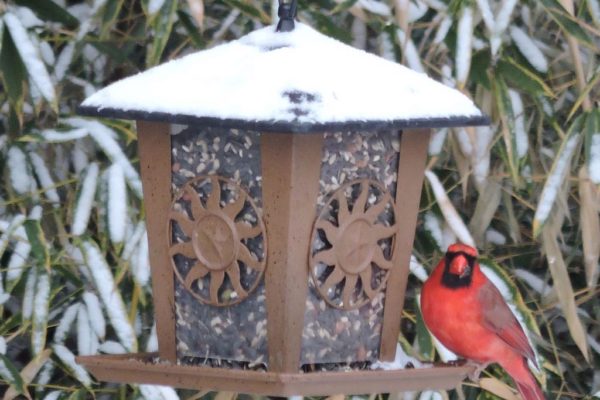
Flickr pool photo by Lisa Novak


The Right Note is a weekly opinion column. The views and opinions expressed in the column are those of the author and do not necessarily reflect the views of ARLnow.com.

On Tuesday, the Arlington County Board bypassed the longest serving member of the Board not to serve as its chair, independent John Vihstadt, in order to elect Democrat Katie Cristol. Congratulations are in order for the first millennial to take the center seat.

But hopefully voters will return Vihstadt to the Board this fall, and then the Board will give him the opportunity to serve as its chair in his next term.

As Board chair, Cristol is broadly given the opportunity to set the agenda for the year. However, as with every chair, the term is only for one year. It is difficult for anyone in this position to drive even a single pet project through the process in a year.

Cristol, like every Board chair before her, gave the opening speech about her priorities. The speech not only gave a shout out to Odysseus, but provided a lengthy laundry list of issues facing the county. It included everything you can imagine, from community engagement, to housing, to access to childcare and Metro, among many others.

The speech was fine, but it was a missed opportunity to focus like a laser on doing some big things right.

Cristol discussed working for dedicated funding for Metro. Where was the call for Metro to be completely overhauled in a way that warranted our confidence in a long-term funding solution?

Cristol discussed a desire for real growth in our local economy that did not just rely on landing the big fish with economic development incentives. Where was the statement that the time for excuses was over and that by the time the Board met next January, county staff would not be trying to improve processes, but that processes are actually improved? What about ending the regressive BPOL tax?

Cristol referenced the fake “budget gaps.” Where was the commitment to budget process reforms that stopped spending away the annual surplus?

Cristol also took a swipe the “still-unknown” impacts of the recently passed tax reform bill. We know one impact. Many Arlingtonians rushed to advance pay their next property tax bill in late December, hoping they could count it against their 2017 taxes. In doing so, they also hoped to be able to deduct up to $10,000 of state income taxes in 2018.

Why are they doing that? Because the average tax bill could top $7,500 in Arlington in 2018. By comparison, the Virginia average is just under $2,000. The national average is about $2,150.

In other words, we pay a lot to live here. And largely wealthy residents, of all political stripes, are hoping to reduce their federal tax burden as much as possible. Cristol could have made it a priority to keep property tax increases in check via responsible spending. She didn’t.


Progressive Voice is a weekly opinion column. The views and opinions expressed in the column are those of the individual authors and do not necessarily reflect the views of their organizations or ARLnow.com.

By Katie Cristol

The following is an abridged version of remarks delivered at the Arlington County Board’s January 2nd Organizational Meeting. The full text, with specific proposals and further details on each of these themes, is available online.

“Tell the old story for our modern times. Find the beginning.” 

(The Odyssey, in a new 2017 translation by Emily Wilson)  

In 2018, what does it mean to translate Arlington’s history, our community’s values, and even our foundational texts – planning documents, rather than literary – for our modern times?

For example, “to tell the old story” of Arlington is to tell of the fight for inclusion: Defiance of Massive Resistance and integrating our schools; waves of immigrants and refugees shaping the County’s culture and economy. In our current national political moment, Arlingtonians have risen to affirm that history, and those values. Inclusion is why housing affordability – an issue given structure and a policy agenda in the 2015 Affordable Housing Master Plan – continues to be such a bedrock issue for us all. What this community looks like, and who calls it home, is in part a function of the cost of its housing.

Last year, I described my hope that our 2017 Zoning Ordinance amendments regarding accessory dwellings could be a springboard to a broader community discussion about the themes of “Missing Middle Housing.”

My goal — building on and with the ideas advanced by our new colleague, Erik Gutshall, and other community leaders — is to more substantively and specifically engage this “Missing Middle” conversation in 2018, producing a few examples of what it means in Arlington. The Lee Highway Planning effort and the development of Housing Conservation District tools ahead both represent opportunities to explore these forms, and to translate our values of inclusion into housing policy.

Childcare accessibility similarly speaks to the foundational values of Arlington County.

On January 25, we will launch an Action Plan, drafted by a multi-agency partnership, with parents, providers and neighbors. As the action plan proceeds, I anticipate that long-awaited steps will be before the Board soon, such as a potential re-examination of our local codes for alignment with the Commonwealth’s; potential zoning changes to decrease barriers to entry of childcare centers; and new partnerships to increase the supply of trained childcare workers.

2018 is a critical year for restoring and supporting Metro, achieving a sustainable source of funding for Metro, and engaging constructively with the many reform proposals for its governance and operations. The regionalism of the 1950s and 1960s is our map here: Arlington will be most effective in partnership with our fellow Northern Virginia jurisdictions.

Christian Dorsey’s leadership on the Metro board will be essential to representing Arlington’s interests in any reforms adopted this year, and to establishing a more effective system. In collaboration with colleagues from Northern Virginia’s Metro jurisdictions, and from jurisdictions like Prince William, Fredericksburg, and Stafford, I will be leading legislative efforts on behalf of NVTC and the Virginia Railway Express.

We must present a common vision from the region to the General Assembly as they deliberate on dedicated transit funding in the biennial budget.

Returning Metro to sound footing is a necessary but not sufficient step to turning around our commercial vacancy rate, which will continue be a priority for 2018. We are wrestling with anticipated budget gaps: Significant ones in FY19, growing greater in the out years. The only way we get out of painful choices that pit our priorities – a moderate tax rate, quality schools, transportation, parks – against one another is growth in the commercial sector. This year, we must continue aggressive pursuit of expanded and new commercial tenants.

None of these objectives will be without controversy. So to translate the Arlington Way for our modern times, it’s time to return to these big conversations, and talk more directly to one another as neighbors. To do that, we need more citizen leadership of the public dialogue. I look forward to launching, with our Commissions, a series of “Big Idea Roundtables,” that will provide constructive venues for residents to discuss the big questions about the County’s future with each other.

I’m also looking forward to the implementation of County Board and County Manager efforts to improve the customer service experience of those interacting with their local government in 2018.

Finally, in 2018, we will need to be steady in the face of federal instability: Still-unknown implications of the new tax reform law; continued deportation threats to our young people if and as DACA expires; threatened cuts to the funding streams our safety net depends upon. Through it all, however, Arlington will be made sturdier by our proud history and by our striving to constantly live and evolve our values.

Katie Cristol was elected to the County Board in November 2015 and elected by her colleagues as County Board Chairman for 2018. She has been a community advocate and public policy professional during her time living in Arlington.


Peter’s Take is a weekly opinion column. The views and opinions expressed in this column are those of the author and do not necessarily reflect the views of ARLnow.com.

On December 21, Arlington County’s public engagement team (led by Bryna Helfer) posted a new draft Public Engagement Guide for Capital Projects.

This latest draft incorporates feedback received from residents and County staff during 2017. Over the next two weeks (until January 18), Bryna and her team are very interested in receiving your feedback on this draft.

Discussion

The latest draft guide shows promise in an area crying out for major improvements.

In late 2016, the County Manager created the Office of Communication and Public Engagement in the wake of multiple public engagement fiascos. Bryna Helfer was appointed an Assistant County Manager to lead this office.

During 2017, while Helfer and her team appropriately were conducting multiple community meetings and seeking public input on an earlier version of the guide, these fiascos continued at Nelly Custis Park and Virginia Highlands Park.

The persistence of these fiascos, many involving the Department of Parks and Recreation, underscores the urgency of approving and implementing a final guide.

As was the case with the prior draft, the latest draft raises issues, some mentioned, some not.

MENTIONED

Strategies for different projects and policies

The final guide should be very clear that its public engagement processes also will apply to county decisions in addition to those about capital projects, like all significant new policies or plans and the annual operating budget. Each of these other types of decisions should have its own appropriately-defined and publicly-understood levels of engagement.

Project and policy definitions

If the county only asks, “where shall we put the basketball court?”, and never asks, “do you want a basketball court?”, the county and its residents are in serious trouble.

Setting priorities

Our new public engagement resources should be focused on key priority choices which drive major amounts of budget dollars. The question should be: “We have enough money for Option A or Option B, but not both. Which do you prefer?” Statistically-valid surveys should be used in appropriate circumstances.

Civic Associations

Arlington’s civic associations, ranging from the many superbly-managed ones all the way to some non-existent ones, always will display a spectrum of effectiveness. The county government, not civic associations, ultimately must be accountable for public engagement with respect to taxpayer-funded projects and policies.

Transparency

The county should maintain a separate, interactive webpage with all information, data, assumptions and public engagement results regarding each project or policy.

NOT MENTIONED

Limits of public engagement

Even the best public engagement practices cannot prevent fiascos caused by other factors such as:

  • Wrong policies
  • Lack of proper staff training
  • Changing needs
  • Lack of accountability

The best public engagement practices cannot cure poor substantive policies or poor management.

If the policy is wrong, change it. If staff lacks training, train them. If needs change, then processes need to be flexible. If staff members are never disciplined, transferred, nor fired for repeated mistakes, that is a fundamental management failure.

Neutral facilitators

If necessary, neutral facilitators should be employed to conduct public engagement.

Conclusion

No guide or plan can be perfect. However, the county must ensure that it is delivering the best possible opportunities for fair, transparent and inclusive public engagement.

The latest draft guide helpfully reflects significant improvements suggested by Arlington residents over the past year.

The May & June 2017 Friends of Aurora Highlands Park newsletter contains excellent additional public engagement suggestions.


It’s a new year and, at the Arlington County Board’s annual organizational meeting tonight, Board members will set a new(-ish) direction for 2018.

The Board now has a new member — Erik Gutshall — who prevailed in the Democratic caucus and then the general election last year. He replaces long-time Board member Jay Fisette, who declined to run for another term, while Libby Garvey has become the longest-serving Board member.

With a new County Board and a new year of civic life to contemplate, we wanted to know what your New year’s resolutions are for Arlington.

We’ve taken a bunch of things we often hear from readers and put them the poll below. Select your top 3 from the list, and let us know in the comments if you have any others.


As the weekend approaches, Arlington County could be at risk of another dusting of snow.

Local crews and their VDOT colleagues have been pretreating roads due to the snow potential Saturday. The recent low temperatures may create slick conditions, officials warn.

Any snow is forecast to arrive overnight tonight, and VDOT is warning drivers to do the following:

  • If conditions are icy, avoid driving for safety. Otherwise, give yourself plenty of time to get to your destination and reduce speeds significantly.
  • Continue to check weather forecasts. Pavement and air temperatures have been below freezing all week.
  • Take it slow on bridges, ramps, and overpasses, and other known trouble spots.
  • Ensure gas tanks and windshield wiper fluid tanks are full, and always use your headlights.

In this shortened week, these were our most read stories:

  1. Longtime Pizza Restaurant Faccia Luna to Become ‘Alto Fumo’
  2. Crime Report: Man With Gun Holds Up Three Near Yorktown HS
  3. Firefighters Called to Hospital to Remove Ring from Man’s Genitals
  4. Fishing Store District Angling Now Open in Cherrydale
  5. Forecasters Warn of Potential for Morning Snow

And these received the most comments:

  1. Morning Notes (December 28)
  2. Progressive Voice: The Case for a Democratic Primary in Arlington in 2018
  3. Firefighters Called to Hospital to Remove Ring from Man’s Genitals
  4. ‘High Adventure’ Ropes Course Planned for Upton Hill Regional Park
  5. Crime Report: Man With Gun Holds Up Three Near Yorktown HS

We’ll be off on Monday, except in the case of breaking news, for New Year’s Day. ARLnow will return to our normal publishing schedule on Tuesday.

Between now and then, feel free to discuss anything of local interest in the comments. Have a great weekend and happy new year!

Flickr pool photo by Jim Havard


Progressive Voice is a weekly opinion column. The views and opinions expressed in the column are those of the individual authors and do not necessarily reflect the views of their organizations or ARLnow.com.

By Jill Caiazzo

With 2018 on the horizon, much of the political discussion is focused on the Congressional midterm elections. But the New Year brings another contest much closer to home: the 2018 Arlington County Board race featuring a Democratic challenger to incumbent John Vihstadt.

Assuming that more than one Democrat throws his or her hat into the ring (and three are already rumored), the voting members of the Arlington County Democratic Committee will select the method for nominating the Democratic candidate: a primary or a caucus. I plan to vote for a primary.

A primary has several key advantages over a caucus. Because a primary is run by the government, the full election apparatus of Arlington County applies to a County Board primary.

On Primary Day, all 54 polling locations in Arlington are open to voters for 13 hours. Absentee voting also is available to eligible voters, who can include military personnel stationed overseas, business travelers, the infirm, and their caregivers.

This well-run election apparatus greatly facilitates voter participation in a County Board primary. Even with the usual absolute best efforts, a caucus run by the local Democratic Party – with its limited voting hours, handful of locations, and lack of absentee voting – pales in comparison.

Equally important, voters also are more likely to know about a primary than a caucus, especially if the primary also features a contest for either Congressional midterm. This scenario is not far-fetched in 2018: members of Our Revolution (the offshoot of Bernie Sanders’ presidential campaign) and other progressive groups are apparently recruiting challengers to U.S. Sen. Tim Kaine  (D) and Rep. Don Beyer (D).

Such a challenge (if brought to fruition) likely would be well-publicized, drawing more voters to the polls than would be expected from a County Board race alone.

To be sure, this greater number of voters creates practical problems for potential Democratic candidates for the County Board. A far greater level of effort – and fundraising – is required to campaign on a truly county-wide basis (as necessitated by a primary) than to campaign among the much smaller subset of voters who frequent Democratic caucuses.

More than 15,000 voters cast ballots in the County Board primary held in 2016, whereas less than 6,000 voters cast ballots in the County Board Democratic caucus held in 2017. Doubling the effort required to secure the Democratic nomination potentially can leave the victorious candidate exhausted and underfunded as he or she heads into the general election.

This challenge is particularly acute for candidates historically underrepresented in politics and government, who may start with fewer resources than candidates drawn from more established circles. For example, younger candidates seeking to bring greater millennial representation to the County Board may face difficulties raising significant funds from their personal networks.

Less established in their careers, they also may struggle to make the time necessary for a county-wide campaign. Yet, despite this challenge, the Arlington Young Democrats have been some of the most outspoken advocates for the use of primaries versus caucuses to select Democratic candidates.

Far from youthful hubris, this position reflects a canny understanding of this singular political moment. As a candidate, President Donald Trump understood the moment as well. It comes down to this: Americans are tired of feeling like the system is rigged against them.

Rightly or wrongly, a Democratic caucus — with its smaller scale, limited publicity appeal, and resulting diminished voting pool — is seen by many as rigged in favor of the Democratic establishment. Even the most worthy and consensus candidate who emerges victorious from a Democratic caucus is destined to bear that taint in the current political environment.

Given the choice between such a candidate and a battle-weary (and battle-tested) Democratic primary victor, I choose the latter. Neither option is perfect — and there are some advantages to caucuses — but it is far easier in this moment to overcome candidate and donor fatigue than to motivate a disaffected electorate.

Democrats need more than anti-Trump backlash to earn a victory, particularly for a local race focused more on housing affordability than the latest tweet storm.

A candidate who wins a primary featuring a broader set of voters than a caucus by offering positive ideas for tackling housing and other issues stands the best chance of attracting general election voters in this moment. That candidate also stands the best chance of inspiring the progressive activists who proved so effective in the 2017 general election for Governor. I will take those odds any day.

Jill Caiazzo is an Arlington resident and recently completed successful service as Co-Chair of the 2017 Arlington Joint Democratic Campaign. She is a candidate for Arlington County Democratic Committee Chair in an election to be held in January 2018.


View More Stories