While we prefer the nomenclature “local news website,” ARLnow launched at a time when “blogging” was still a thing. We were basically a blog.

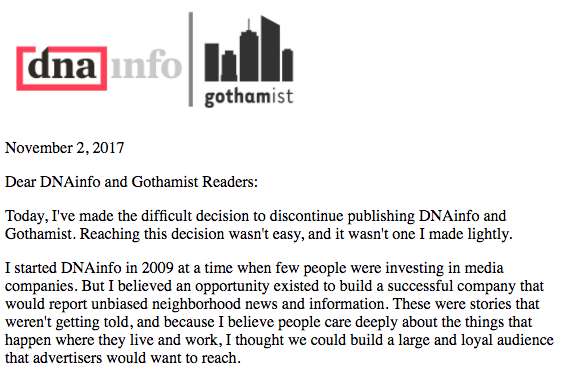
The granddaddy of all big, D.C. area local news blogs was DCist and late today came the sad news that its billionaire owner has closed all of the DNAinfo and Gothamist websites, including DCist, following a vote to unionize the company’s New York City newsroom.

It was always a thrill to get a link from DCist. Early on it would bring a rush of traffic at a time when we were still trying to build our audience. Even in 2017, getting a DCist link was a sign that an article we published here in Arlington has resonated across the Potomac.

DCist was a consistently interesting and entertaining one-stop-shop for D.C.-centric local news, it had a loyal and often very funny commenting community, it jumpstarted the careers of some excellent journalists, and it was an important component of the slowly shrinking D.C. local news ecosystem.

RIP DCist, you will be missed.

https://twitter.com/abeaujon/status/926202758025351168


Throughout the media world, a trend is emerging: more and more news outlets are asking readers to subscribe.

For the New York Times, turning readers into paid subscribers has helped the company buck industry trends and grow its revenue in the face of steep print advertising declines and an environment in which Google and Facebook capture the lion’s share of new digital advertising.

Here in Arlington, we are fortunate to have a great base of advertisers. Thanks to our advertisers, the ARLnow you see today is sustainable and here to stay.

However, we often hear from readers who want more. More long-form stories, more profiles of local community members doing good works, more investigations into neighborhood issues, more accountability and public-service journalism, etc. We do some of that now, but this kind of reporting takes a lot of time to produce and we are stretched thin as it is.

To do more is not possible for us as an exclusively advertising-supported business. It could be possible, however, if just a percent or two of our current readers are willing to subscribe to read it.

Here’s the idea we’re currently batting around:

  • Invest in increased long-form, enterprise and public-service reporting, but make most of it exclusively for subscribers.
  • Offer subscriptions for $8/mo or $80/year.
  • Beyond more news, include other goodies for subscribers like: a new weekly “insider” email newsletter, access to a private Facebook group with ARLnow staff, a quarterly subscriber happy hour, etc.

So what do you think? Would you be willing to pay a small monthly fee for more news about Arlington?


The following letter was written by Pat and Doreen Cappelaere, residents of Ellicott City, Md., regarding an event at Arlington National Cemetery this coming Saturday afternoon.

Our daughter, Valerie Cappelaere Delaney, achieved her dream of becoming a U.S. Navy fighter pilot and earned her Wings for Gold in February 2012.

Just a year later, at age 26, Valerie’s life was cut short when the EA-6B Prowler jet she was piloting crashed in a field near Spokane, Wash., during one of her last training flights prior to deployment. We were devastated, but soon realized that Valerie’s wings and her legacy would take flight in ways we could have never imagined.

At Valerie’s funeral, over 200 female military aviator wings from around the world were presented to our family in honor of her service and sacrifice, and in celebration of the strength and sisterhood of female aviators.

This impressive collection is now on display as part of the Wings for Val Exhibit at the Women’s Memorial at Arlington National Cemetery and became the inspiration for us to start the Wings for Val Foundation. The Foundation’s mission is to support and promote women in all fields, especially in the military and in aviation, and to inspire future generations of female leaders.

On November 4, we will be hosting a free event at the Women’s Memorial where a very special set of wings will be added to the collection from “Shutsy” Reynolds (see video below), one of approximately 1,000 Women Airforce Service Pilots (WASP) who flew military aircraft during World War II.

The event will also feature guest speaker, Erin Miller, the campaign leader for getting the law passed allowing her grandmother, WASP pilot Elaine Harmon, and other WASP to be buried at Arlington National Cemetery.  We hope that you will consider helping us grow our mission by joining us at our upcoming event. Details can be found at www.wingsforval.org. 

Pat and Doreen Cappelaere
Ellicott City, MD

ARLnow.com occasionally publishes letters about issues of local interest. To submit your thoughts for consideration, please email [email protected]. Letters may be edited for content and brevity.


After a largely sunny week helped mark the start of fall, things get a bit wetter this weekend with a storm system set to bring rain and wind to the area on Sunday.

With plenty of Halloween and fall events on the calendar for this weekend, don’t let the weather spoil your plans.

These were our most read articles this week:

  1. Blind Triplets Make History With Eagle Scout Recognitions
  2. BREAKING: Two Rabid Raccoons Found in Arlington This Week
  3. D.C. Man Gets Jail Time for Riding ATV in Arlington
  4. Police: ‘Mob’ of Young Males Chased Victim, Dragged Him into Woods
  5. In One Clarendon Office, Multiple People Have Been Struck By Cars Recently

And these received the most comments:

  1. In One Clarendon Office, Multiple People Have Been Struck By Cars Recently
  2. Manager Recommends Surplus Go to Affordable Housing, Other ‘Near-Term Needs’
  3. Morning Notes (October 25)
  4. County Board Candidates Respond to Follow-Up Questions from Recent Forum
  5. Morning Notes (October 24)

Feel free to discuss anything of local interest in the comments below. Have a great weekend!

Flickr pool photo by eschweik


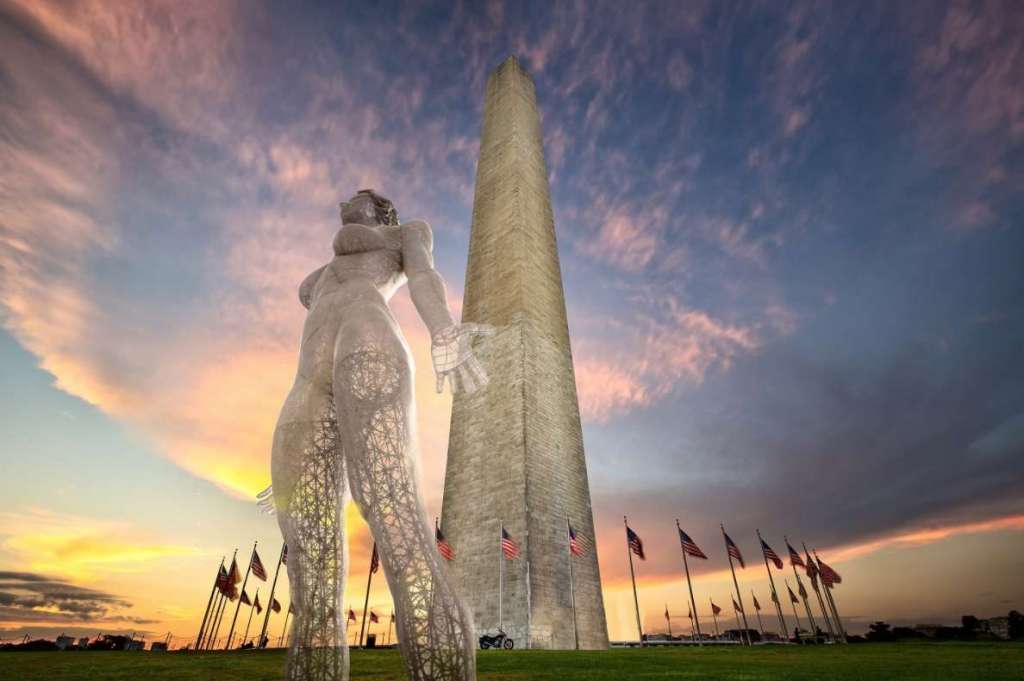
The National Park Service has denied a permit to erect a 45-foot statue of a naked, meditating woman on the National Mall near the Washington Monument.

The group behind the upcoming Catharsis on the Mall festival planned to transport R-Evolution, the statue created by artist Marco Cochrane, from San Francisco to the Mall at a cost of around $100,000.

The event is being held from Nov. 10-12.

Not that anyone has proposed it, but we were wondering whether Arlington might be a more welcoming place for the statue. If it were an option, would you support the statue being erected somewhere in Arlington?


The Right Note is a weekly opinion column. The views and opinions expressed in the column are those of the author and do not necessarily reflect the views of ARLnow.com.

Arlington County started its annual ramp up to raise your taxes by saying there could be a $10 to 13 million “funding gap.”

This could be called a “lie.” Lie is certainly a strong word. After years of using nicer words to describe a process with a singular goal of making you feel OK about sending Arlington more of your money, you have to wonder whether this three letter word would give anyone even a moment’s pause.

It’s not that County Manager Mark Schwartz can’t hand you a spreadsheet that shows a negative balance. It’s that Arlington always takes in more revenue than the county projects in its budget. Always.

And Arlington never spends everything it projects to spend in its budget. Never.

What do County officials do with the millions of dollars in excess? They put it into a slush fund to spend at the end of the year in the closeout process – just like they did last year, and the year before that, and the year before that.

But let’s assume for a moment the funding gap is real.

This year taxpayers have sent in $15.6 million in excess tax revenue. County staff is talking about $11.1 million, but that’s after sending $4.5 million of the excess taxes to the schools. It does not take a math major to figure out that applying this surplus to next year’s budget wipes out the “funding gap,” with or without the revenue that is heading to the schools.

And it’s not just the County budget that has a slush fund. The schools did not spend $13.6 million of their budget either, but they are still being given $4.5 million of the surplus revenue as well as an additional $6 million appropriations. Added together, school officials have $24.2 million more to spend outside of their annual budget process. No funding gap here either.

What does all of this mean? There is no funding gap. There is never a funding gap. There is a willingness to act in a fiscally irresponsible manner, and to make taxpayers feel obligated to help them do it.


Progressive Voice is a weekly opinion column. The views and opinions expressed in the column are those of the individual authors and do not necessarily reflect the views of their organizations or ARLnow.com.

By Joseph Leitmann-Santa Cruz

For the past four years I have had the pleasure of working with a regional asset building and financial capability nonprofit organization which seeks to empower low and moderate income residents of the Washington metropolitan region financially so they can take control of their finances, increase their savings, and build wealth for a better future.

Prior to creating and managing strategies to advance the financial lives of low and moderate income families and communities, I spent 12 years working in the wealth management and financial planning industries for the benefit of families of financial means.

Having now worked with families from across the socio-economic spectrum, I see clearly that we all have dreams and aspirations — regardless of one’s level of wealth or income. What matters most is translating them into goals and objectives.

Yet low and moderate income families face significant challenges in achieving their goals and objectives. Almost 1 out of 5 Arlingtonians live in asset poverty. A great community like ours can and should do better in leading the Commonwealth and the nation in inclusive prosperity.

To provide greater opportunity for Arlingtonians of low or moderate income – who contribute to the growth of our local economy and work hard to better their families’ circumstances, I propose the creation of a local Earned Income Tax Credit (EITC) for low-wage families in Arlington.

Over four decades, the EITC has been considered one of the most effective policy tools lifting Americans out of poverty. The EITC is a tax refund to increase the income of working families by providing tax reductions and cash supplements. It can make a real difference to low and moderate income individuals and families. It puts money back in the pockets of working individuals and families and helps them save for their financial future.

According to data from the IRS and Brookings, over 7,700 taxpayers in Arlington claimed the federal EITC — with over $15 million being received by local families from the federal government at an average EITC amount of $1,800.

Since the creation of the EITC at the national level in 1975, other jurisdictions have created local versions. In our region, the District of Columbia and Montgomery County enacted legislation to create anti-poverty programs based on the federal EITC. Their leaders now view the EITC as a critical investment in their economies and in the wellbeing of low-wage workers.

By creating a local EITC, Arlington could lead the way in the Commonwealth by showing that a local EITC provides all Arlingtonians with benefits that accrue from residents who have basic economic stability in their lives. Rather than a handout, an Arlington EITC would represent a smart co-investment between our community and hard-working, low-wage employees who aspire to provide for their families and achieve the American Dream in our community.

Based on nationwide experience, we can expect EITC recipients to spend the received tax credit to purchase goods for family needs from local businesses, save for their children’s education and long-term goals, and pay down debt.

How much would it cost to create an Arlington EITC? It’s all dependent on the percentage of the federal EITC we are willing to match. In jurisdictions where a local EITC has been created, the match ranges from 4 percent (Wisconsin) to 40 percent (Washington, D.C.). Virginia’s current statewide policy is to match 20 percent of the federal EITC.

For the Arlington EITC, I advocate for a 10 percent match as a baseline with gradual increases. At a 10 percent rate, we would be investing $1.5 million on an annual basis to further financially empower our community members currently in low-wage jobs.

As I wrote in this column last December, “local initiatives and solutions are stronger, more effective and efficient when the community is broadly represented throughout the decision-making processes.” Adding voices from our low and moderate income communities to the decisions that impact all of us is critical.

I strongly believe that local initiatives looking at local challenges and opportunities from a holistic perspective can play an impactful role in determining the wellbeing of our community in the years and decades to come. The creation of a local EITC would not eliminate poverty in our community, but would be a step in the right direction.

My wife, our two kids, and I want to be part of an Arlington that moves toward inclusive prosperity. How about you?

Joseph Leitmann-Santa Cruz is the Associate Director of an asset-building and financial capability organization in Washington, DC and a member of Arlington County’s Joint Facilities Advisory Commission. He was a member of the South Arlington Working Group and served on the Board of Directors of the Arlington-based nonprofit organization Dream Project.


Peter’s Take is a weekly opinion column. The views and opinions expressed in this column are those of the author and do not necessarily reflect the views of ARLnow.com.

In last week’s column, I discussed the County’s General Fund (GF) Fund Balance. The County Manager subsequently posted a proposed FY 2017 Close-Out Report and 5-year budget forecast.

The 5-year budget forecast projects ballooning deficits in the out years.

Past Practices and Policies

Based on past County Board actions and policies, the County Manager historically has allocated the majority of any close-out surplus either to a spending category or, if needed, to keep the County’s reserves at the current required minimum (5 percent of operating expenditures).

The Manager also typically has identified a small remaining portion of the surplus (the available balance) that has not yet been allocated to any purpose. Over a seven-year period, this unallocated surplus has ranged from $36.1 million (FY 2012) to $11.1 million (FY 2017). Every penny of surplus revenue exceeding the dedicated 5 percent minimum operating reserve gets allocated to spending.

Last week, I posed this question:

Does County government commit or earmark too much surplus revenue for spending rather than beefing up reserves or offsetting tax or fee increases?

The answer is: yes. Therefore, the County Board should act this November to change or clarify the County’s policies regarding both allocated (particularly the “assigned” or earmarked portion) and unallocated close-out surplus funds. This transition might take more than one year because organizations and individuals have planned based on the County’s current seriously-flawed approach.

Increasing Reserves

Because the County holds a large balance of earmarked/assigned funds in its GF Fund Balance ($51,946,981 million in FY2016), it has argued that it has sufficient flexibility, and doesn’t need more than a 5 percent operating reserve.

The credit/bond rating agencies (Fitch, S&P and Moody’s), however, view this earmarked money as being of questionable availability to pay debts. So, they recommend that the County raise its dedicated operating reserve toward 10 percent. 

Offsetting Tax Increases

In 2016, the Civic Federation passed a resolution asking the County Board to use a “fair and reasonable” portion of the close-out surplus to offset tax increases.

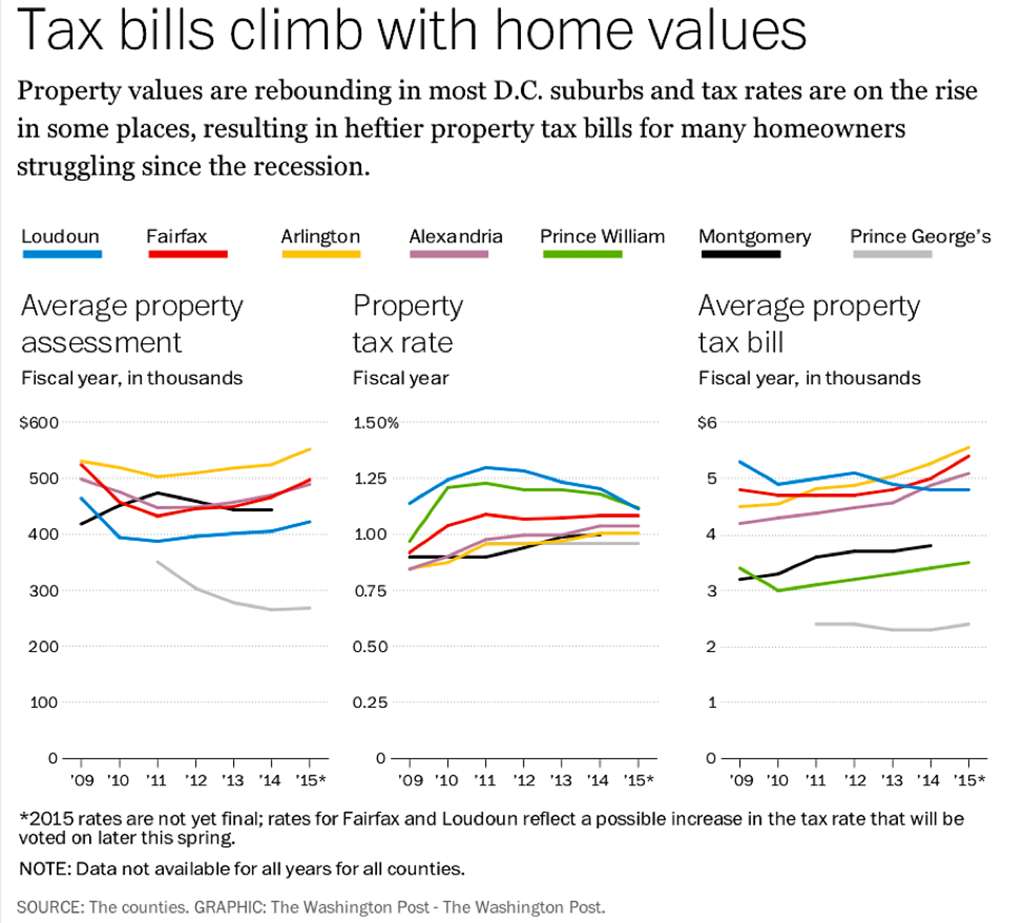
Why? Because the cumulative impact of successive real estate tax increases (a combination of assessment and/or tax-rate increases) has become burdensome for many County residents and businesses, as The Washington Post has documented:

These cumulative increases — assessment or tax rate, or both — make housing less affordable for all Arlingtonians, and render our expensive commercial office space less competitive (as tax increases are passed along to tenants by property owners).

Real estate tax increases disproportionately harm residents living in the County’s committed “affordable” housing units — undermining the housing subsidies the County provides — as well as those lower/middle-income and fixed-income residents who receive no County housing subsidy.

Conclusion

The County Board should act this November to change or clarify Arlington County’s current seriously-flawed approach to allocating close-out surplus funds. This is a major issue that extends far beyond the unallocated surplus (this year: $11.1 million).

Whether the County Board chooses to lessen the impact of tax increases in the upcoming fiscal year, add to dedicated reserves or simply stash the cash in a flexible “unassigned” category, Arlington County’s current approach of spending or earmarking every penny of surplus revenue isn’t in our community’s best interests.

The current “budget roundtables” could be strengthened substantially if the public were offered a manageable number of choices, each of which would eliminate the ballooning five-year deficits forecast by the Manager.


The following letter was written by Ryan Bloom, Chloe Fugle, Maria McGlone and Ethan Novak, student board members of Arlingtonians for a Clean Environment.

A little-noticed Arlington County government report that was issued during hurricane season should be read as a call for action on a local issue that concerns a growing number of public school students and other Arlingtonians: recycling efforts in our public schools.

The September report by the County Solid Waste Bureau (SWB) concluded that, while Arlington County as a whole has a recycling rate of 46.8 percent, the rate for Arlington Public Schools (APS) is estimated to be 15 percent. This is below the minimum recycling rate of 25 percent mandated by the Commonwealth of Virginia.

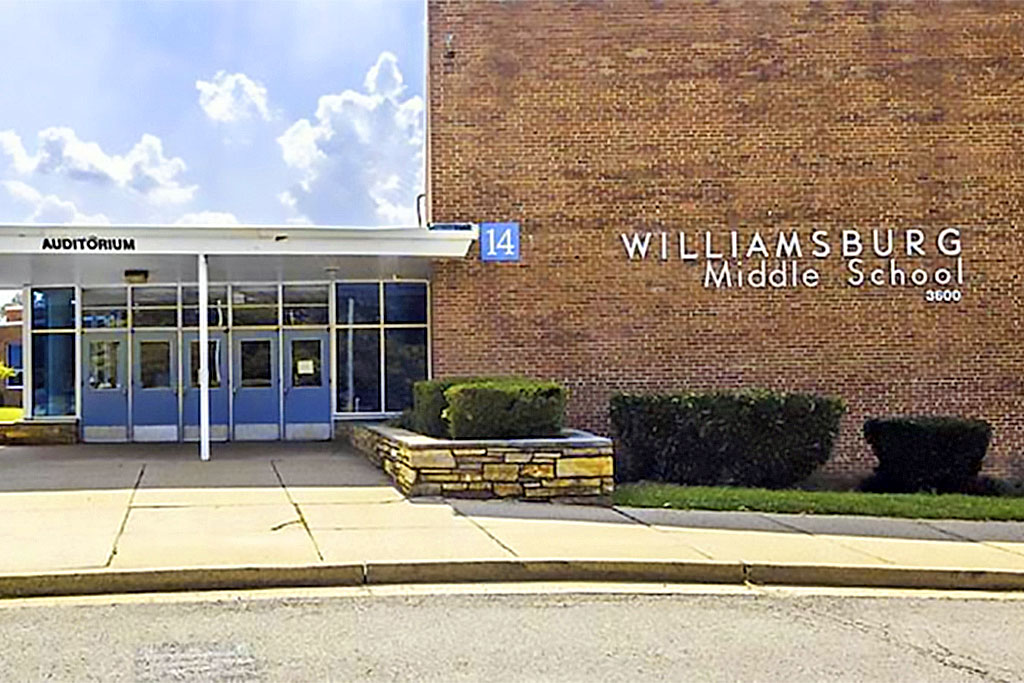
The 15 percent estimate for APS recycling is not surprising given our observations and those of the SWB in school cafeterias, hallways and classrooms. SWB reported that 70 percent of schools are not fully compliant with County recycling code; even almost two years after the code came into effect.

For example, schools’ recycling bins sometimes lack clear, explanatory signs and these bins are often not co-located with trash bins. The result is often confusion about what goes in what particular bin resulting in students and teachers tossing both recyclables and trash in the nearest container.

The SWB reports that few schools have a successful cafeteria recycling system, which is the likely result of a “… lack of clear administrative standards and policies concerning a recycling culture campus-wide.”

Our public schools should be a model for effective stewardship practices, rather than a source of embarrassment. Students develop lifelong habits based on what they see and are taught in their homes, schools and communities.

Moreover, taxpayers benefit from effective recycling practices since disposing of trash is typically more expensive than recycling. The County Board has resolved to achieve “zero waste” by 2038, which will only be achieved if our families and institutions, including APS, take action today and implement an effective recycling system fully compliant with County recycling code.

Signed by,

  • Ryan Bloom, Arlington, Student Board Member, Arlingtonians for a Clean Environment
  • Chloe Fugle, Arlington, Student Board Member, Arlingtonians for a Clean Environment
  • Maria McGlone, Arlington, Student Board Member, Arlingtonians for a Clean Environment
  • Ethan Novak, Arlington, Student Board Member, Arlingtonians for a Clean Environment

ARLnow.com occasionally publishes letters about issues of local interest. To submit your thoughts for consideration, please email [email protected]. Letters may be edited for content and brevity.


This weekend is the 42nd annual Marine Corps Marathon and 10K. To those participating, we wish you luck, and hope plenty of spectators are out and about on Sunday morning.

And for anyone trying to get around Arlington County, keep in mind the various road closures, and the Metro opening two hours early.

These were our top five most read articles this week:

  1. Police Investigating Death Near Bike Trail
  2. Police: Teens Busted for Drunken Powder Puff Football Game
  3. Letter: Am I a Burden on Arlington?
  4. Photo: Pepsi Spill in Pentagon City
  5. ‘The G.O.A.T’ Sports Bar Opens Today in Clarendon

And these received the most comments:

  1. Letter: Am I a Burden on Arlington?
  2. Plan for Reduced Parking Near Metro Stations Advancing Towards Board Vote
  3. Police: Teens Busted for Drunken Powder Puff Football Game
  4. Annual Decal Design Competition Now Open
  5. ‘The G.O.A.T’ Sports Bar Opens Today in Clarendon

Feel free to discuss anything of local interest in the comments below. Have a great weekend!

Flickr pool photo by Erinn Shirley


The Right Note is a weekly opinion column. The views and opinions expressed in the column are those of the author and do not necessarily reflect the views of ARLnow.com.

It has not been a good week for Ralph Northam.

First, The Washington Post editorial board excoriated Northam for his failure to articulate a plan for K-12 education. The Post said, “Mr. Northam claimed to believe in accountability but was utterly unable to explain what he means by the word.”

The Post went on to note that Northam was unable to state what he would replace SOL standards after calling for them to be tossed out: “Astonishingly, after almost four years as lieutenant governor and a month away from the election, Mr. Northam had no answer.”

The lack of substance is not an unprecedented issue for Northam. Just last month, he was knocked in the media for failing to produce a tax plan despite promising one for months.

Then yesterday the Northam campaign had to explain why Justin Fairfax was left off a campaign flyer that contained the other two members of the ticket. According to The Washington Post, Fairfax said, This should not have happened, and it should not happen again, and there needs to be robust investment in making sure that we are communicating with African American voters and we are engaging our base.”

That Northam is having trouble with his base and with one of the core issues Democrats rely on — education — are not good signs for his campaign.

Even more troubling is that Northam seems to have little message to offer the average voter at all. His latest campaign ad running in our area spends most of its time trying to tie Ed Gillespie to President Trump. Being a Democrat may be enough for the party faithful, but expecting fair-minded voters to give you their vote just because you are not a member of President Trump’s party is a dangerous, if not insulting, campaign message.

Voters still care most about what Virginia’s economy will look like moving forward. The central question for this election is, will Virginia’s economic policies look like the ones in states which are growing or look like the ones in states that are states which are flagging? And who has put forward real plans to make sure that happens?

Ed Gillespie has spent months talking about getting Virginia’s economy growing again, with tax and regulatory policies that make sense for new and existing businesses to provide good jobs with higher wages.

Ed has also demonstrated a commitment to other policies that are critically important to the overall strength of Virginia. Ed introduced detailed policies on education, transportation, healthcare, public safety and energy. And to help rebuild trust in our government in Richmond, Ed released detailed proposals on government reform and ethics.

No doubt, Ralph Northam wants to be governor. But he has never quite been able to articulate why he should be, at least not to someone outside of his political base.

Ed Gillespie is a better choice for governor because he has put forward clear, specific and detailed proposals on issues across the spectrum aimed at making Virginia a better place to live, work and raise and family. At the very least, take a look at all of his specific plans for yourself, and then decide.


View More Stories