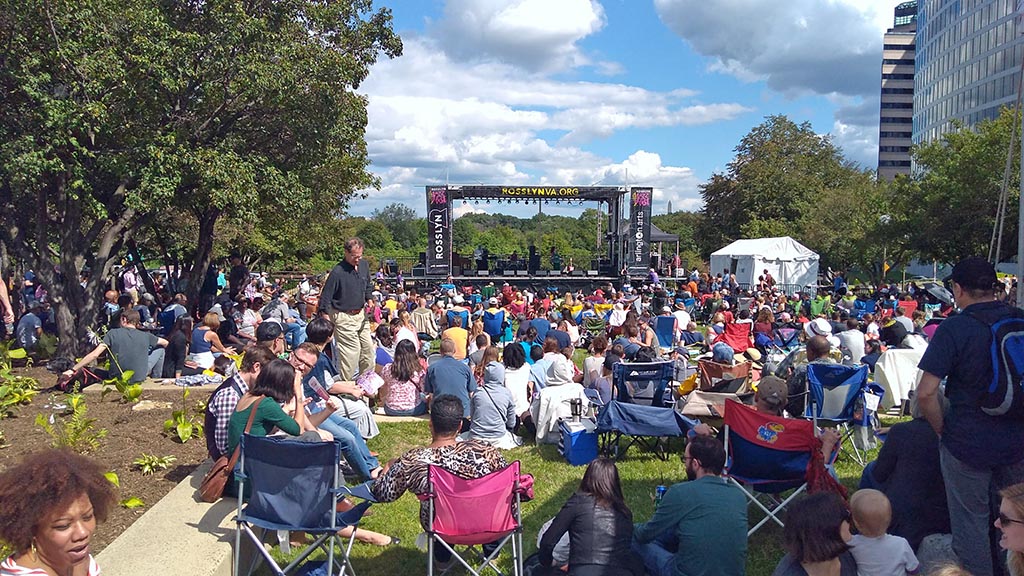
It promises to be a busy weekend in Arlington County, with Clarendon Day and the Prio Bangla multicultural street festival both set for Saturday.

Also of note: Clarendon Day’s traditional 5K and 10K races down Wilson Blvd will take place on Sunday. Those in the area can expect significant road closures.

These were our top five most read stories this week:

  1. Man Stabbed ‘Multiple Times’ Along N. Glebe Road
  2. Silver Diner Coming to Ballston
  3. Gas Station Targeted By Credit Card Skimmers Again
  4. Arlington Allocates $100,000 for Legal Aid to Immigrants Facing Deportation
  5. Bed and Breakfast Plan Denied for ‘Pershing Manor’ Mansion

And these received the most comments:

  1. Arlington Allocates $100,000 for Legal Aid to Immigrants Facing Deportation
  2. Jesse Jackson to Visit Nauck Today
  3. Peter’s Take: Board Wisely Rejects Staff Proposal on Williamsburg Field Lights
  4. Morning Notes (September 21)
  5. Letter: ‘Pet of the Week’ Should Not Glorify Bad Dog Behavior

Feel free to discuss anything of local interest in the comments below. Have a great weekend!

Flickr pool photo by Chris Guyton.


The following letter was sent to ARLnow.com by Janet R., a Lyon Village resident, in response to our latest Pet of the Week post.

The post noted that Sophie, a black lab mix, loves to “swim, run, jump, get tummy rubs, play with tennis balls, obsessively lick stuff, stalk squirrels, bark at strangers and watch Bravo with mom.”

I wish you would not encourage the “I bark at strangers” thing in your Pet of the Week.

Please encourage lawful behavior and non threatening behaviors.

  • “I poop on stranger’s lawns and my owner doesn’t clean it up.”
  • “I run free off leash and taunt young kids who might also have fears (but me and my owner don’t care). (Playgrounds are nicer than dog parks!)”
  • “I bark incessantly whenever my owner leaves me at home, so our neighbors no longer are on speaking terms because they miss using their porch/open windows in peace.”
  • “Whenever my owner does feel compelled to clean up after me, she leaves the half closed bag in a neighbor’s trash bin (especially those elderly neighbors who leave their trash bins out longer).”
  • “I especially love the long extended leash on crowded sidewalks. My owner and I think it’s okay to trip elderly with this, because I like to feel free. I’m an explorer!”

Seriously, all of these things have happened to me in Arlington County, and sadly, I could go on and on.

You need to try to HELP this situation, not hurt it. Please remind dog owners that the right of pet ownership comes with serious responsibilities. Especially to their neighbors. As our neighborhood association writes in every newsletter, this is difficult to enforce, but is an increasing problem. (Check out the exponential growth in dog ownership).

Rescue the neighbors of poorly trained dog owners!!! You play a role here, Arlington Now.

Leash and under control. Clean up poop and use own trash can. Control barking. You never know what crises your neighbors may be dealing with on their own. Show compassion for humans, too.

ARLnow.com occasionally publishes letters about issues of local interest. To submit your thoughts for consideration, please email [email protected]. Letters may be edited for content and brevity.


Mark KellyThe Right Note is a weekly opinion column. The views and opinions expressed in the column are those of the author and do not necessarily reflect the views of ARLnow.com. 

The County Board is back from its traditional August break. Three items from the meeting remind us of how the Board too often operates.

The Board heard complaints from Crystal City area residents about cut-through traffic. This is my neighborhood, and I drive through the area every morning and evening on my commute.

It seems that residents have been complaining that the driving app Waze is sending people onto neighborhood streets to avoid U.S. Route 1 and S. Eads Street. Blaming an app is convenient, but it is not the source of the problem. Over the past two years, the County completed a narrowing of S. Eads Street from two travel lanes each direction to one as part of Arlington’s anti-car philosophy.

The action has caused dramatically increased congestion on S. Eads Street during the morning and evening commutes. So now drivers are bailing out onto neighborhood streets. This was a totally foreseeable consequence of eliminating travel lanes on a main thoroughfare, and is almost certainly not going to get any better.

The Board also deferred action on lighting the Williamsburg soccer fields. The County wants to light more fields and the growing soccer community supports it, but some in the neighborhood are opposed to it. The Board seemed to offer no good reason for the delay. They seem unprepared to deliver bad news to one side or the other.

The Board did have to deliver some bad news at the direction of the Governor and General Assembly. Arlington was forced to adopt the changes to its towing ordinance after the Chamber of Commerce and the industry successfully lobbied Richmond to tweak the law.

Board chair Jay Fisette largely gave Governor Terry McAuliffe (D) a pass along with Arlington’s State Senator Barbara Favola, also a Democrat, who helped lobby for the towing industry. Instead, the Board wanted to lay the blame at the feet of Republicans. The Board inexplicably fails to recognize that years of antagonism directed at Republicans in Richmond is not going to help their cause in situations like this one.

In typical politician fashion, there was no acknowledgment of the Board’s contributions to problems mixed with a little kicking the can down the road and a healthy dose at pointing the finger at someone else.


Progressive Voice is a weekly opinion column. The views and opinions expressed in the column are those of the individual authors and do not necessarily reflect the views of their organizations or ARLnow.com.

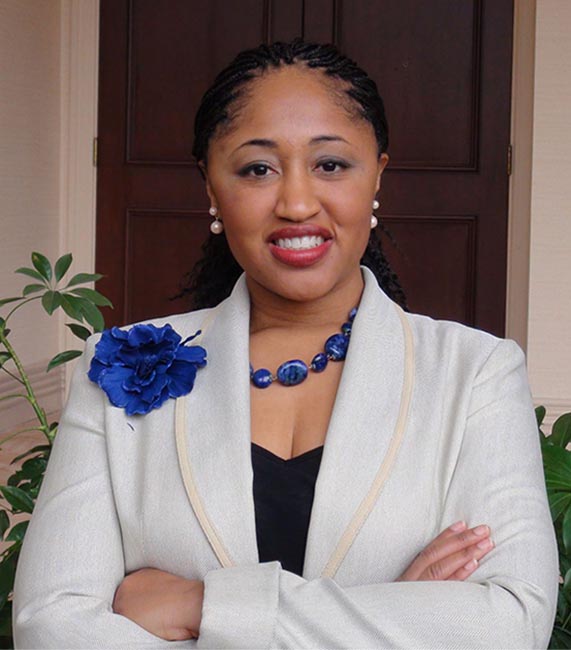
By Krysta Jones

A few years ago I had the pleasure of being invited to serve on the Women’s Monument Commission of Virginia, which is leading awareness and fundraising efforts for a first of its kind monument on the Capitol Grounds in Richmond. The monument will honor 12 women who have made an impact in Virginia.

Coincidentally, the monument is scheduled for completion just shy of 2020, when we will celebrate the centennial of the 19th Amendment that gave women the right to vote. There are several initiatives around the country to highlight and share years of research exploring how a movement of a diverse group of women fighting for the right to vote succeeded in securing the right to vote – primarily for white women.

After the Women’s March in January 2017, which galvanized a new energy and birthed a growing crop of activists, I have been even more aware of divergent movements within the women’s movement. While some saw the march as an opportunity to celebrate all women, others were disappointed with the lack of diversity among the organizers and the attendees.

It is no surprise that the “women’s movement” has been historically been run by white females, often older, who have become the stalwarts and spokespeople for what it means to fight for equal pay, reproductive rights, affordable childcare, or other traditional women’s issues.

As I have worked to motivate more women from all backgrounds to take an active interest and leadership role in all fields, and advocate for women’s issues, I have always noticed that many don’t see women like themselves on the front lines. While it is true that there is something special about seeing yourself in those who lead, it’s even more important for the overall good and progress of society to build relationships and learn from those who are different from ourselves.

The Women’s Monument Commission of Virginia seeks to do just that. The Commission selected women to honor with a view toward diversity of races, professional backgrounds, ages, time periods and geography. A major goal was to help us move past traditional stereotypes of what it means to be a woman leader.

When people walk up to the monument and read or hear about each statue, we want them to see some of themselves — as well as people different from themselves — as they reflect on the accomplishments of the women honored and at the same time reflect on what they can aspire to in their own lives.

Some of the women featured in the monument include:

Maggie L. Walker, who was one of the great entrepreneurs of her time and, with the founding of the St. Luke Penny Savings Bank in Richmond, the first woman to charter a bank in the United States.

Cockacoeske, who was a Pamunkey chief and an astute politician and ruled the Pamunkey for 30 years until her death in 1686. As Chief, she signed the Treaty of Middle Plantation on May 29, 1677, restoring important rights to native Virginia tribes and commemorated in an annual ceremony among the chiefs of the Mattaponi and Pamunkey tribes and the Governor of Virginia during Thanksgiving week in November. 

Laura Lu Copenhaver, who as Director of Information of the Virginia Farm Bureau Federation helped expand southwestern Virginia’s agricultural economy by emphasizing cooperative marketing of farm products to improve the standard of living for farm families.

On October 4 at the Woman’s Club of Arlington, I will moderate a conversation with former State Senator (and former Arlington County Board chair) Mary Margaret Whipple about her leadership journey, her service as Commission vice chair, and stories of the women who will be featured with statues as part of the monument.

My hope is that we can encourage additional dialogue in Arlington in advance of the completion of the monument to inspire an appreciation and celebration of the true power of all women.

Krysta Jones is founder and CEO of the Virginia Leadership Institute and former Chair of the Arlington Commission on the Status of Women. In 2014, Krysta was named by Leadership Arlington as a Top 40 Leaders Under 40 awardee.



Peter RousselotPeter’s Take is a weekly opinion column. The views and opinions expressed in this column are those of the author and do not necessarily reflect the views of ARLnow.com.

At its September 16 meeting, the County Board rejected a staff proposal to light two synthetic turf fields at Williamsburg Middle School.

Discussion

In rejecting staff’s ill-considered WMS field-lighting proposal, the Board, led by members John Vihstadt and Christian Dorsey, wisely relied on advice the Board received from the Planning Commission, Parks Commission, Williamsburg Fields Site Evaluation Workgroup, Environment and Energy Conservation Commission, and hundreds of citizens from all across Arlington.

County staff’s efforts to install field lights at WMS got off on the wrong foot and stayed there. As the Board acknowledged in 2013, WMS neighborhood residents were “ambushed” by County staff.

Four years of misguided staff efforts reveal deficiencies in civic engagement, policy, and management. These deficiencies (e.g., reliance on a sole-source lighting vendor, mandating lights at every synthetic turf field) are documented in the commission reports.

Future community hopes regarding civic engagement rest on Assistant County Manager Bryna Helfer’s team developing and implementing new approaches to rectify these past staff failures.

Issues relating to policy and management are summarized in the Planning Commission’s letter to the Board. For example, in explaining why she could not vote for lighting the WMS fields now, commissioner Nancy Iacomini noted:

“[T]he County does not have siting principles for lighted fields nor does it have implementation criteria about how the lighting would be achieved. …There is nothing the community can look to for direction on where fields should be lit and how they should be lit.”

Commission chair Erik Gutshall concurred, observing that:

“He cannot find how lighting the fields and the intensity of use into the night will not impact the neighborhood. However, it is irresponsible for the County to not find field space somewhere and the POPS process should outline specific decision criteria for siting and implementation and mitigation for field lighting. He would support lights at this site in the future if a deliberate process determined this is the best site for lights. He believes other options will be found.”

Even commissioner Stephen Hughes — the only one out of 10 Planning Commissioners who voted in favor of lighting now — agreed that “the processes — both the County’s and APS’ — were wrong and broken.”

Conclusion

WMS neighbors are not selfish NIMBY fanatics. They simply chose to live in an area in which it’s currently quiet and dark at night, and in which some of their homes are located less than 100 feet from the WMS fields. Wildlife abound.

As “Green Space Fan” noted in a comment to last week’s ARLnow.com lighting story:

“15-20 times as much playing time can be added by installing safe synthetic turf and less polluting lights at Kenmore, installing synthetic turf on lighted grass fields at TJ, Quincy & Gunston and building a new lighted field at Long Bridge without starting a war between the sports community & folks who live in all parts of the County, including apartments, townhouses & single-family homes.”

As both Gutshall and “Green Space Fan” have suggested, the County now transparently must adopt:

  • proper lighting criteria
  • with a county-wide focus
  • balancing sports use with neighborhood character

That ought to result in lighting some other fields throughout Arlington, but not lighting fields at WMS.

Finally, the County Board must take the lead in enacting reforms to correct the numerous policy and management failures documented in the commission reports.


ARLnow is going to start experimenting with a slightly different approach to our local news coverage later this week, one that is intended increase the depth of some of our coverage while broadening the scope of the rest of our coverage.

As this approach should result in more articles being published each day — if all goes well — we have the opportunity to cover a wider variety of topics.

Which of the following, in your opinion, should we do more of?

Have other ideas? Let us know in the comments section.


It’s been quite a week for restaurant news around Arlington County.

Today marked the opening of a new Dunkin’ Donuts in Virginia Square, while Kung Fu Tea is another new arrival, this time in Clarendon.

And looking ahead, an Indian restaurant is set to arrive in Ballston, while the Chercher Ethiopian restaurant is aiming to open this winter in Courthouse.

In other news you might have missed this week, the county celebrated PARK(ing) Day today at six sites, and a Wakefield High School teacher is a finalist for Virginia Teacher of the Year.

The effects of Hurricanes Harvey and Irma are being keenly felt here, both by a family with connections in both Texas and Florida, and by anyone looking to buy gas in Arlington.

These were our most read stories of the week:

  1. Man Sentenced to 32 Years in Prison for 2016 Homicide
  2. BREAKING: Fire Department Responding to Rosslyn Metro for Track Fire
  3. Virginia Hospital Center Plans Big Expansion After County Land Swap
  4. Ford Explains ‘Driverless’ Car Experiment in Clarendon
  5. Report: Police Justified in Officer-Involved Shooting

And these received the most comments:

  1. Board to Consider Neighbors vs. Sports Debate Over Williamsburg Field Lights
  2. Morning Poll: Where Would You Like to See Amazon’s Headquarters?
  3. Morning Poll: Would You Buy a $1,000 iPhone?
  4. Morning Notes (September 12)
  5. At Immigration Forum, A Call for Sheriff’s Office’s Relationship With ICE to be ‘Revisited’

Feel free to discuss anything of local interest in the comments below. Have a great weekend!


Mark KellyThe Right Note is a weekly opinion column. The views and opinions expressed in the column are those of the author and do not necessarily reflect the views of ARLnow.com. 

The Washington Post reported that the Democrats’ nominee for governor Ralph Northam ran a recent television ad where he encouraged voters to compare his tax plan to Ed Gillespie’s.

The problem? Ralph Northam has never published a tax plan.

Back in April, he promised to put out tax reform principles within a week, but he never did. At one point, the Northam campaign  removed the promise to release the principles from the campaign website according to the Post report.

Northam confirmed he would run for governor over 30 months ago. The logical question to ask is what has he been doing to formulate ideas on tax policy, a key factor in economic growth, between February of 2015 and last month when he cut his TV ad? We do know he attended less than half of the Virginia Economic Development Partnership meetings in his role as Lieutenant Governor.

Virginians are tuning in with less than eight weeks to go to Election Day. Right now, it doesn’t look like Ralph Northam is working very hard to earn their vote.

Metro Reforms

Yesterday’s report of a possible fire at or near the Rosslyn Metro station, and the resulting single tracking of trains, reminds us once again that WMATA is still in need of major reform and real accountability.

The Northern Virginia Transportation Commission (NVTC) met recently and recommended principles for WMATA reform, including reducing the number of members, changing the representation and eliminating some committees and meetings from the Board.

The NVTC also called for the development of proposals to address labor costs, unfunded retirement costs, safety improvements and other operational improvements.

The NVTC’s efforts to push for substantive reforms should be applauded. Unfortunately, we should remain skeptical that WMATA is ever going to get the job done unless forced to by a change agent much greater than an NVTC resolution.


Peter RousselotPeter’s Take is a weekly opinion column. The views and opinions expressed in this column are those of the author and do not necessarily reflect the views of ARLnow.com.

Last year, responding to years of community pressure, the county government finally adopted a new review process in which the County Manager’s close-out surplus recommendations were first proposed in October, but not voted upon until November.

I strongly recommended last fall that almost all of last year’s $17.8 million close-out surplus be kept in reserve until the FY 2018 budget was approved.

Despite support from Board member John Vihstadt for such a reserve, the Board voted last fall to spend most of the surplus. When it came time to approve the FY 2018 budget this spring, the Board approved a tax rate increase of 1.5 cents, estimated to produce $11.1 million.

Discussion

Arlington should follow certain principles to guide its decisions in allocating any close-out surplus.

  1. A fair and reasonable percentage (i.e., a percentage higher than 0 percent) of any close-out surplus always should be allocated to moderate the tax rate and/or reduce bonded indebtedness

Adopting this principle would mean only that a fair and reasonable percentage of any FY 2017 close-out surplus would be earmarked for property tax rate moderation in calendar-year 2018. Adopting this principle would not necessarily mean that the calendar-year 2018 property tax rate would fall, rise or remain the same.

What is “fair and reasonable”? That should depend upon the close-out surplus amount in any given year and careful consideration of public input. But the fair and reasonable percentage should be multiplied against the entire surplus, and set aside for consideration next year before any final decisions are made regarding how to allocate any remaining surplus.

Similarly, we should consider using some percentage of any close-out surplus for early debt retirement when that makes financial sense. Retiring debt early will help free up more bond capacity in addition to reducing interest expense.

  1. The remainder of any close-out surplus (after setting aside a percentage for tax rate moderation and any debt reduction) should next be considered to address any emergency that requires funding before final adoption of the FY 2019 operating budget

An “emergency” expenditure is one that simply cannot be deferred until the FY 2019 operating budget is approved in April 2018. Reasons for not waiting until April 2018 might include the complete loss of a current vital opportunity or the strong likelihood of sharply escalating costs to meet a core government function.

However, before using surplus close-out funds, the county should first determine whether it already has an appropriate reserve fund set aside which it could tap to cover the emergency.

  1. All other proposed uses of any close-out surplus automatically should be deferred, and the remaining funds’ allocation should be decided in conjunction with the FY2019 budget process

Close-out surpluses are one-time funds rather than ongoing revenue. They exist solely because the County collected more tax revenue than required to meet its budgeted commitments. Therefore, these funds should be used for nonrecurring expenditures (e.g., replacing a bridge, acquiring land).

Conclusion

In its final FY 2018 budget guidance adopted this spring, the County Board directed the Manager “to provide an option for County Board consideration that would direct all carryover funds to consideration in the FY 2019 budget process, except for what the Manager deems to be emergency or unanticipated needs that, in his best judgment, require immediate allocation or appropriation.”

At a minimum, the Board should adopt that option this fall.


Progressive Voice is a weekly opinion column. The views and opinions expressed in the column are those of the individual authors and do not necessarily reflect the views of their organizations or ARLnow.com.

By Maggie Davis

With back-to-back record setting hurricanes Harvey and Irma, there is no mistaking it: climate change is real, and it’s here. Our fellow Americans and others living in or visiting the Caribbean and along the Gulf coast now face the massive task of recovering and rebuilding.

In rebuilding, community and governmental leaders should make every effort to “build back better”  to replace the destroyed damaged infrastructure with new materials better equipped to withstand the storms our changing climate is making more intense and more damaging.

The ability for a community to come back better from a disaster — weather related or otherwise — is directly tied to the investments a community makes well before a disaster. In the urgency of rebuilding from an immediate disaster, it is incredibly difficult for a community to identify and implement new design or technology when rebuilding.

Instead, community resilience requires us to be proactive, adaptable and diverse in our investments so we can withstand the next weather-related disaster as well as other adverse events.

Proactive. Arlington leaders have proactively addressed environmental concerns in planning. From its 2013 Clean Energy Plan to lower greenhouse gas emissions to improving road intersections to make transit easier for bicyclists and pedestrians, Arlington is making a concerted effort to curb climate change.

But an even larger part of community resilience is proactively addressing the needs of our residents’ ability to thrive. This includes addressing systemic issues that are more difficult for residents to sustain through a disaster.

Resiliency in the face of an adverse community event — whether it is a hurricane, a terrorist attack like the one we experienced on 9/11, or an economic crisis — often depends on the overall stability in a person’s life as well as access to resources a person has before that event.

If it is difficult for community members to make ends meet during the best of times, it highly likely that a disaster would set them back even farther. This is why we need to proactively address long-term underlying issues such as low and stagnant wages and housing affordability.

Adaptable. In building a more resilient Arlington, we must be willing to adapt to changing times. This includes both general policy and the underlying reality that to invest in the future the county needs to have revenue to invest.

Arlington has struggled with a large commercial vacancy rate for at least the last five years, and in an era where many jobs can be completed with a laptop and a wifi connection many companies are increasing productivity while decreasing the physical space need to operate.

Moving forward, the county should critically examine the current vacancies and continue to pursue flexibility in how certain vacant or nearly-vacant are used. By being more flexible, we may be able to lower the commercial vacancy rate and increase tax revenues to further invest in the community.

Diverse. Arlington needs a diversity of skills, abilities, and resources to grow and thrive in these tumultuous times. In recent years the county has done a good job at diversifying our underlying economy, with the Nestle Corporation moving its headquarters to Rosslyn and the county’s intention to entice Amazon to open its second headquarters here, Arlington is moving toward an economy somewhat less reliant on federal agencies, workers and contractors even while remaining competitive in the federal space given Arlington’s location next to the nation’s capital.

This economic diversity makes the County less susceptible to threats of federal budget cuts and government shutdowns. It also provides a workforce with a greater diversity of skills by drawing in tech entrepreneurs, engineers, marketers, artists and more alongside the many bureaucrats, lawyers, and policy makers who have called Arlington home for years.

In sum, emergencies can come in many forms and without advance warning. Arlington is known and respected for its planning. We are more resilient than many communities for that reason. But waiting for emergencies to create sufficient resiliency is a mistake. That is why it is important to be proactive and adaptable while diversifying our skills, abilities and resources.

Maggie Davis is President of the Arlington Young Democrats. She lives in the Radnor Heights- Ft. Myer neighborhood and works as an emergency management law and policy analyst.


Apple announced its highly-anticipated new line of iPhones yesterday: the next-generation iPhone 8 and higher-end iPhone X.

The latter, with its facial recognition, advanced camera technology and “Super Retina” screen, reaches the $1,000 price mark, something that has raised the eyebrows of more than a few Apple critics.

Walk around Clarendon or other Arlington environs and it’s clear that the iPhone is king here, disproportionately more popular in Arlington than it is in other parts of the country, where Android has the market share lead.

Given that Arlington is an Apple town, we thought we’d see how many are planning to take the $1,000 iPhone X plunge.

Photo via Apple


View More Stories