It’s been another busy week in Arlington, even as the county prepares for next week’s Independence Day celebrations.

Here are our five most popular stories from this week:

  1. Dozens of Dirt Bikes, ATV Rumbled Past Crystal City Last Night
  2. BREAKING: Man Pinned Under Collapsed Wall
  3. Expert: Arlington Home Values Have Largely Rebounded Since 2008 Crisis
  4. BREAKING: ART Bus Rolls Into SUV, Yard in Nauck
  5. Continental Beer Garden To Open Tomorrow In Rosslyn

Feel free to discuss those topics or anything else of local interest in the comments. And never fear, we’ll be back on Monday. Have a great weekend!


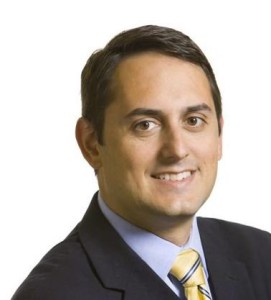
Mark KellyThe Right Note is a weekly opinion column. The views and opinions expressed in the column are those of the author and do not necessarily reflect the views of ARLnow.com.

Now that the national political parties have moved past a $50 million special election for Congress in suburban Atlanta, all eyes will begin to move to the Old Dominion.

Virginians can expect a summer and fall filled with television ads, phone calls, and people knocking on your door asking you to get out and vote in the Governor’s race. Your Facebook feed will undoubtedly be filled with political opinions.

With all the political clutter coming our way, the opportunity to hear directly from the candidates for governor and compare them side by side will be limited to three debates. That is the number of debates Democrat nominee Lt. Gov. Ralph Northam agreed to appear at after Republican nominee Ed Gillespie agreed to 10.

Northam’s decision came on the heels of debating his fellow Democrat Tom Perriello five times in the run-up to the June 13 primary. Northam did say he would make seven other joint appearances with Gillespie, but showing up at the Shad Planking and making a stump speech is hardly the same thing as answering questions.

This is a growing trend for Democratic candidates for Governor in Virginia. Former Gov. Bob McDonnell challenged Creigh Deeds to 10 debates, but Deeds only agreed to four. Ken Cuccinelli asked for 15 debates, but Gov. Terry McAuliffe only granted three.

Northam made opposition to President Trump a key component of his primary message. Both he and Perriello made it abundantly clear they were tossing aside any nods to moderation as they raced to the activist far left base and the anti-Trump Resist movement.

Standing up to a President you do not agree with is certainly fair game as a campaign issue. And if more governors pushed back against the encroachment of the federal government, we would all be better off. However, Northam’s campaign engaged in name calling rather than pushing back on specific policies.

Right now the voters of Virginia deserve to know what the current Lt. Governor would do as Governor. How would you make Virginia’s economy the best in the U.S.? What would you do to improve educational options for all Virginians? How would you address the transportation needs of Northern Virginia?

Hopefully the next few months will be filled with policy specifics and not more name calling, but don’t hold your breath in this political environment.


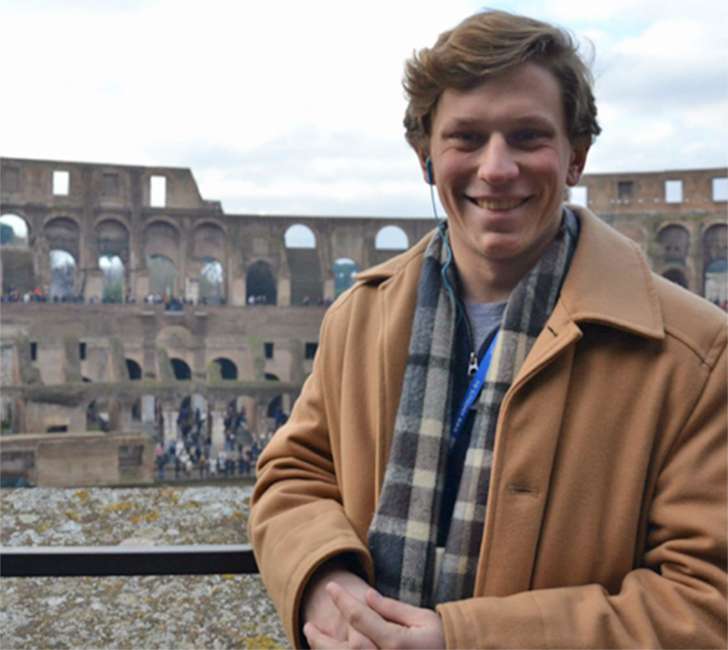
Peter RousselotPeter’s Take is a weekly opinion column. The views and opinions expressed in this column are those of the author and do not necessarily reflect the views of ARLnow.com.

Last Thursday, U.S. Senate Majority Leader Mitch McConnell finally unveiled the Senate’s version of Trumpcare.

On Tuesday, faced with a revolt in their own ranks, Senate GOP leaders postponed a vote on their bill until after the July 4 recess.

Virginia political leaders from both parties strongly oppose the Medicaid cuts

Both Republican and Democratic legislators in Virginia have condemned the Senate bill.

Virginia House of Delegates Appropriations Committee chair Chris Jones (R-Suffolk), and state Senate Finance co-chair Emmett Hanger (R-Augusta), co-signed a letter to McConnell, noting that his Trumpcare bill:

“fails to address the inequities in the federal funding allocation between states” for the Medicaid program that Virginia has operated in partnership with the federal government for a half-century.

These two Virginia Republican legislative leaders, who also serve as the co-chairs of the Joint Subcommittee for Human Resources Oversight, stated that their subcommittee:

is especially concerned that proposals to impose per-capita caps on federal Medicaid spending would put Virginia at a severe disadvantage because they would base the future federal share on past spending that has been among the lowest in the country and would not take into account measures adopted this year to expand treatment of people with mental illnesses or addictions.

These per-capita caps would cost Virginia’s Medicaid program at least $1.4 billion over seven years.

U.S. Sen. Mark Warner (D-Va.) also blasted the Trumpcare Medicaid provisions:

Virginia historically has run one of the leanest Medicaid programs in the country, with lower reimbursement rates than many other states. But as a result of the steep cuts to Medicaid in Trumpcare, Virginia would be forced to pick up an additional $900 million in costs for Medicaid over the next ten years in order to maintain the same level of care.

The federal government must continue to finance a major share of Medicaid costs

Although the U.S. Senate’s proposed Trumpcare bill is far worse in this respect, a fundamental flaw in both the Senate and House bills is that Trumpcare’s approach to Medicaid represents a massive and historic retreat by the federal government from supporting healthcare for the most poor and vulnerable:

States would continue to receive extra funding for Obamacare’s expansion of Medicaid to more poor adults, but only temporarily. After several years, states wishing to cover that population would be expected to pay a much greater share of the bill, even as they adjust to leaner federal funding for other Medicaid beneficiaries — disabled children, nursing home residents — who are more vulnerable.

It’s appropriate for the federal government to insist that each state have at least “some skin in the game.” However, one of the worst defects in Trumpcare’s approach to Medicaid financing is that it fails to account fairly for the vast differences in median household incomes and poverty rates among the states.

Conclusion

Trumpcare’s latest state’s rights approach is “mean” (h/t Donald Trump).

If enacted, Trumpcare will produce the largest single transfer of wealth to the rich from the middle class and poor in American history.

“A basic test of government is its ability to prevent large-scale harm to its citizens’ health and survival. This bill, and this Administration, are failing that test”– Atul Gawande.

This bill is still very much alive. All Virginians should join their political leaders in the fight against this cold-hearted proposal.


Progressive Voice is a weekly opinion column. The views and opinions expressed in the column are those of the individual authors and do not necessarily reflect the views of their organizations or ARLnow.com.

By Nathan Saxman

In March, the Alexandria-Arlington Regional Workforce Council released its 2017 assessment of the regional labor market. The report was prepared by Dr. Mark C. White of George Mason University’s Center for Regional Analysis and serves as an overview of the two counties’ workforce assets and liabilities.

Of the conclusions drawn, many will be familiar to Arlington residents — most notably that our economy is almost entirely services-based and highly dependent upon federal government activity.

Residents will also likely know that the local population has an extremely high level of educational attainment, with over 65 percent having earned at least a bachelor’s degree. It may even be common knowledge that the region’s workforce is disproportionately young and that the prohibitive cost of local housing tends to push this younger, more mobile workforce out of the region as it ages.

The region’s strengths are frequently advertised and rightly so. Demonstrating that Arlington and Alexandria have educated, young and motivated workforces will be key to attracting investment. While uncertainty about federal government spending in the region will continue to shake up local industries, the skilled workers we tout will adapt and prosper, or simply move on.

However, while these indicators might satisfy those worried for the health of Arlington’s workforce, they don’t paint the whole picture. The wage distribution by occupation is polarized, with 45 percent earning more than 120 percent of the average wage and 37.6 percent earning less than 80 percent of the average wage.

More than 50 percent of the types of occupations in Arlington and Alexandria required a high school diploma or less and most of these jobs paid less than $40,000 annually; well below the average wage and cost of living. Mid-skill occupations requiring an associate’s degree or post-secondary certification, such as computer support specialists or auto mechanics, comprised less than 10 percent of all jobs, further narrowing the path for workers in low-skill occupations to move up the ladder.

Divisions between high and low-skilled workers in Middle America was a theme throughout the 2016 presidential campaign and likely affected the election’s outcome. These divisions exist even in our backyard.

Earlier this year, I spoke with David Remick, Executive Director of the Alexandria-Arlington Regional Workforce Council, about workforce development in Arlington. The Arlington Employment Center, which implements many of Arlington’s workforce development programs, has sought to connect job seekers with employers since its creation in 1989. Today, it is housed in the Arlington Department of Human Services and administers training and placement funded through various revenue streams, most notably the Workforce Innovation and Opportunity Act.

In our conversation, Remick voiced his own concerns about the low number of middle skill opportunities, as compared to low and high-skilled jobs, and the risks faced by low-skilled workers unable to advance to higher wage occupations.

AEC has focused on providing in-demand credentials to trainees that will empower them to find employment in fields with projected growth, such as healthcare services, computer systems support and occupations requiring a commercial driver’s license.

These credentials and training programs are also ones that would be difficult for low-skilled workers to obtain without guidance and AEC has stepped up to fill that role. AEC also actively seeks out partnerships with local employers and routinely assesses where higher paying job opportunities will become available.

As with all public initiatives, budgetary limitations constrain the quantity and types of certifications that AEC can offer. Under WIOA, AEC may offer $3,500 in value for the “up-skilling” of qualified customers that seek out training. The type of training is guided by both market demands and the personal preferences and competencies of customers.

Last year, of those served by AEC, 18 percent earned credentials relating to hospitality or culinary arts, 33 percent in healthcare, 19 percent in construction or CDLs, and 18 percent in I.T. support fields. While the quantity of mid-skilled job opportunities is demonstrably small in Arlington (especially compared to other jurisdictions in Virginia), these are the fields that are most likely to experience growth.

There is always more to be done to improve workforce qualifications, but AEC and the Regional Workforce Council provide existing frameworks that address local deficiencies proactively.

These initiatives should be supported, both financially and through visible promotion. With resources limited, AEC and the Regional Workforce Council access their vast network of community-based organizations, local businesses, and residents to help promote their services to the public, ensuring that workforce development services are made accessible to those in need.

Nathan Saxman is a graduate of James Madison University and an Arlington resident. He has been politically active in Virginia since 2008 and presently serves as Programming Director with the Arlington Young Democrats. Professionally, Nathan is a paralegal in the field of international trade law.


It was an eventful week in Arlington County, with stories both serious and not-so-serious.

While we seek to cover all of the important stories that impact people’s lives in Arlington, not every story we publish is of the weighty variety. Some are just for fun — a glimpse at the silly and weird things that happen in our community.

Below are the top 5 most-read articles of the week.

  1. Police: Drunk Man Arrested for Tossing Wine Bottles Out of Whole Foods Window
  2. BREAKING: Man Stabbed in Jennie Dean Park
  3. A-Town Bar & Grill Turns a Corner in Latest County Review
  4. Large Power Outage in Clarendon Area
  5. Video: NYC Has Pizza Rat, Arlington Now Has French Bread Squirrel

Feel free to discuss those stories or anything else of local interest in the comments. Have a nice weekend!


Earlier this week the Arlington County Board approved a resolution expressing the county’s commitment to fighting climate change and upholding the Paris Climate Agreement.

One could argue that fighting climate change starts with local action and that, at the very least, there is positive symbolic value in the county’s resolution.

One could also argue that despite passage of its Community Energy Plan in 2013, there’s little Arlington County can legally do to reduce greenhouse gas emissions, beyond providing incentives for greater energy efficiency in buildings.

What do you think? Should the County Board be taking the time to address the issue of climate change?

Photo by Tyler Zarfoss


Mark KellyThe Right Note is a weekly opinion column. The views and opinions expressed in the column are those of the author and do not necessarily reflect the views of ARLnow.com.

Virginia, like a few other states, still begins its school year after Labor Day. There is nothing wrong with maintaining this practice. And if you are going on a beach vacation, those last two weeks before Labor Day often bring reduced prices as competition for space subsides.

But the final day of elementary school in Arlington is tomorrow, June 23. There is no reason it could not be the second Friday in June in all but the snowiest of years.

The Superintendent builds in a number of days throughout the year for teacher work days, as well as adding other “cushion” days to the calendar, to account for school closures while still meeting the minimum number of days necessary for instruction required by the Commonwealth of Virginia. As most parents know, after the SOLs are completed the amount of instruction that occurs in the classroom falls off dramatically. The final days of school are often filled with field days and movies.

APS could adjust the calendar for next year now and tell parents in September that not later than March 1, the system would determine if it needed to add days due to weather events into the next week of June. That would give parents enough time to adjust summer plans as necessary and would happen only rarely.

School Board candidates can add this “give a week back plan” to “no homework” as an agenda item to gain my endorsement in November.

Bloomberg to Receive a Boost

Between Virginia and Arlington, Bloomberg Bureau of National Affairs (BNA) could receive $2.5 million in benefits over the next 3 years for bringing 125 jobs to Arlington. $500,000 would be provided by the Virginia Economic Development Partnership. $800,000 would come from the Arlington County Economic Development Incentive. And $1.2 million would be allocated for the continuation of an expiring property tax exemption.

Unlike BNA and Nestlé, most employers are likely to receive $0 for creating jobs in the County over the next three years.

Meanwhile, the Arlington County Board passed another in the series of meaningless resolutions meant to weigh in on a national issue this week. The Board supported the Paris Agreement by recommitting itself to steps they were going to take anyway to make County Government more energy efficient.

That time could have been better spent on a discussion of how to make Arlington a better place to do business for those employers that aren’t receiving huge taxpayer-funded handouts.


Peter RousselotPeter’s Take is a weekly opinion column. The views and opinions expressed in this column are those of the author and do not necessarily reflect the views of ARLnow.com.

Arlington Public Schools’ current strategic plan is up for revision. One of the goals of the current plan is “Development of the Whole Child.”

Part of APS’ current approach to this goal is what APS calls “personalized learning.” The one-to-one device program is an integral part:

In the APS 2011-17 Strategic Plan, the community set a goal to ensure that every student from grade 2 through 12 has a personal digital learning device to support instruction. The Strategic Plan states that APS should create vital and engaging, technology-rich learning environments, provide an infrastructure for learning and utilize state-of-the-art technology that creates engaging, relevant and personalized learning experiences for all learners regardless of background, language or disabilities.

In developing its new strategic plan, the Arlington County School Board should:

  • involve the Arlington community in a truly-interactive, transparent conversation about all the critical issues
  • offer compelling proof that all proposed instructional uses of personal digital learning devices provide evidence-based instructional benefits and consistent instruction to all students

By contrast, over the past three years, the use of these devices has been characterized by poor communications, inconsistent instruction, and lack of evidence-based benefits.

This column focuses on two controversial, critical issues.

One-to-One Program Devices Should Not Be an Integral Tool Used For Personalized Learning

APS definitely should continue to create “engaging, relevant and personalized learning experiences for all learners regardless of background, language or disabilities.” However, in its new strategic plan — in any grades in which APS ultimately decides to continue the one-to-one program, APS should make it clear that the program is not an integral part of personalized learning. For some children, e.g., those whose parents cannot afford a personal digital learning device, APS should provide one.

A June 2017 comprehensive and convincing history of the development of personalized learning in education provides a withering critique of the risks of making personal digital learning devices an integral part of personalized learning. The article describes at least four other approaches to personalized learning that do not entail such heavy reliance on personal digital learning devices.

Other relevant sources also criticizing such heavy reliance are available.

APS’ current linkage between personal digital learning devices and personalized learning should be severed and replaced with an alternative approach. The one-to-one program is actually a form of depersonalized learning.

The One-to-One Program Should Be Ended — At Least in the Elementary Years

APS definitely should continue to provide a “vital and engaging, technology-rich learning environment for every APS student.” However, at least in the elementary years, the one-to-one program should be ended.

Too many elementary school parents believe that Development of the Whole Child in elementary school is fundamentally incompatible with the one-to-one program. These parents are seeking less screen time, and more face-to-face teacher-student interaction, athletic activity, and socialization.

Moreover, scientific and health studies published since the current strategic plan was adopted demonstrate that there is too great a risk from the cumulative exposure to these devices that results when the 1:1 program in elementary school is combined with home use. APS’ current position that school screen time shouldn’t count because it is for educational purposes defies common sense.

Conclusion

In its new Strategic Plan, the School Board should reemphasize the role of Arlington’s great teachers and deemphasize the role of Silicon Valley.


Progressive Voice is a weekly opinion column. The views and opinions expressed in the column are those of the individual authors and do not necessarily reflect the views of their organizations or ARLnow.com.

By Matt de Ferranti

Over the past four months, Arlington Democrats have reached out to the community on issues at stake at the national, state, and local levels.

We’ve held forums with interested Arlingtonians on health care, immigration, climate change and labor/income inequality.

Our Issues Forum Team – part of the Arlington Democrats community outreach effort — worked to share facts about policies, increase awareness, and generate ideas for action.

The team consisted of Fatima Argun, Becky Dick, Eric Gibble, Susie Lee, Vivek Patil, and Jacki Wilson.

Here’s what we learned and what you can do to make a difference.

Health Care

Who would have known when we met at Key Elementary School in February that Obamacare would still be the law of the land today? Congress may well pass a bill to overturn the progress made under Obamacare, but activism and the CBO’s estimate that 23 million Americans would lose health care coverage under the House Republicans’ proposal has changed the conversation.

The health care forum included a panel of experts on federal, Virginia, and local health care policy and a discussion with community members. One shared conclusion: Virginia voters must hold accountable those who will not support expansion of Medicaid.

The most powerful moments were hearing personal stories from our neighbors, including one woman who shared the story of her fight with insurance companies over the care she was seeking for her son as he fought against the cancer that ultimately took his life. People in the room were moved to honor the mother’s request that we act so that affordable, comprehensive coverage — that actually pays claims — is available to all.

Immigration

During our immigration forum on March 28 at Patrick Henry Elementary School, we heard from two individuals who have been impacted directly by policies that veer from our nation’s founding values of welcoming those affected by poverty and violence elsewhere to join their stories with the American story.

A young Dreamer — valedictorian at Wakefield High School – told us how she had to leave Virginia to attend college, despite having lived in Arlington since she was a child, in large measure because the in-state tuition provisions put in place by Gov. Terry McAuliffe (D) were not yet the law.

A woman from Sudan described earning asylum to come to the United States and the fear she felt when President Trump tried to impose an unconstitutional travel ban that would have prevented her from returning from a trip to care for her elderly mother.

Both speakers and the broader discussion inspired us to ensure that Arlington’s leaders and residents are welcoming to new neighbors.

Climate Change

Discovery Elementary School, Arlington’s first net-zero school, was a perfect venue for our forum on Climate Change on April 27, which occurred prior to U.S. withdrawal from the Paris Climate Agreement and Gov. McAuliffe’s subsequent commitment to carbon emissions reduction targets for Virginia.

The speakers encouraged the audience to call, write, and speak out. We collected signatures and provided an opportunity for participants to join ongoing advocacy efforts.

At the local level, we learned that Arlington is implementing a plan to convert County buildings to renewable energy.

Americans and Arlingtonians know that we must make better choices than the President’s withdrawal decision and embrace green technology now and in the years to come.

Labor, Income Inequality and the Middle Class

Our last forum addressed the central importance of an economy that helps create a country, Commonwealth and county where the middle class and the American dream thrive. We heard about the presence of real poverty even in affluent Arlington, how economic insecurity is threatening many in the middle class, and the need for policies to address these problems.

So What Did We learn?

Whether the subject is health care, immigration, climate change, or labor and income inequality, all will be addressed more successfully if we elect a Democratic governor and a Democratic majority in the House of Delegates in Virginia in November 2017.

So we ask you to join the Arlington Democrats at www.arlingtondemocrats.org to help make a difference on these issues and others at stake this year. With your help, a strong voter turnout in Arlington will be an important element in winning a very competitive election in November.

Matt de Ferranti is a Co-Chair of the 2017 Arlington Joint Democratic Campaign. He wishes to thank the Issue Forum Team members for their joint leadership on the Forums and their critical contributions to this column.



It’s the end of another news-filled week for Arlington.

Here are the top five most-read news stories from the past few days:

  1. Police: Man Filmed Woman While in Bathroom of Clarendon Restaurant
  2. Wawa Considering Arlington As Part of D.C. Area Expansion
  3. Columbia Pike Beer Garden Opening Nears
  4. ACPD Officer Rescues Kitten From Car Engine
  5. Record Democratic Gov. Primary Turnout in Arlington

Feel free to discuss those topics and anything else that happened locally this week. Have a great weekend!

Flickr pool photo via GM and MB


Mark KellyThe Right Note is a weekly opinion column. The views and opinions expressed in the column are those of the author and do not necessarily reflect the views of ARLnow.com.

There is rarely a shortage of issues to write about in Arlington, or Virginia more broadly. But today, none of them seemed appropriate.

I have worked on Capitol Hill for most of the past two decades where members of Congress and staff are generally able to work together in a civil manner across party lines.

We care about our community. And we greatly appreciate that our ongoing safety and security is owed to the Capitol Police officers who are prepared to run into the line of fire. Speaker Paul Ryan rightly said yesterday something that cannot be understated, “an attack on one of us is an attack on all of us.”

Sadly, yesterday’s shooting is not the first attack directed at our community during my time here. In 1998, Capitol Police officers Jacob Chesnut and John Gibson were shot and killed while protecting Members of Congress, their staff and visitors in the Capitol building.

On September 11, 2001 as the Pentagon was already on fire, United Flight 93 was almost certainly headed toward the Capitol before being taken down by heroic passengers.

In October of 2001, deadly anthrax was mailed to Congressional offices.

In 2011, then-Rep. Gabrielle Giffords was shot while hosting a public event in Tucson, Ariz.

And then yesterday, there was an attempted massacre on a baseball field in Alexandria as Republican Members of Congress were preparing to play a game that raises hundreds of thousands of dollars for charity.

Those of us who work here are thankful for the Capitol Police officers who stepped into the line of fire to stop the attack, and we are praying for the injured, all the while knowing “there but for the grace of God, go I.” This was exemplified by the prayers of the Democratic baseball team practicing on another field immediately upon hearing the news.

Many want to immediately assign blame on the means used to carry out this attack, on political rhetoric, or on people other than the shooter. It is a natural reaction to immediately look for an explanation of why someone would ever consider using a bomb, gun, knife, or even a vehicle driving down a sidewalk to kill fellow human beings.

But this act was pure evil carried about by a madman, and it cannot ever fully be explained to those of us who believe that every human life is precious. Today, it must simply be condemned.

As we move forward with time for proper reflection, we can consider what causes such attacks to take place: the tone of our politics; the anger fomented on social media; the threat from radical groups; and the state of our mental health care system. And if we can do that without attempting to score political points, we may actually make progress toward healing in our nation.


View More Stories