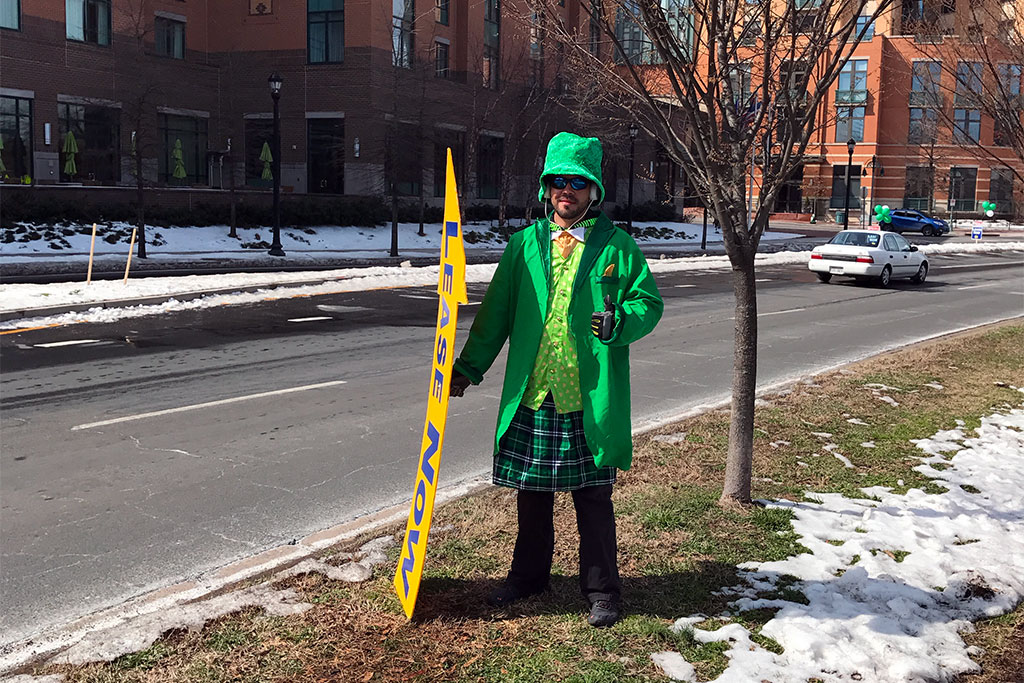
Shirlington leprechaun

Happy St. Patrick’s Day!

If you’re celebrating with pints of Guinness, shots of Jameson or any other type of alcohol, you can get home safely and for free tonight via SoberRide’s new Lyft service.

The top five most-read articles this week were:

  1. Police Tase Suspect in Pikachu Onesie During Brawl Outside A-Town Bar & Grill
  2. Williamsburg Middle School Principal Gordon Laurie Resigns
  3. UPDATE: Winter Storm Warning Issued for Arlington, Region
  4. Police Investigating Reported Home Invasion Robbery in Shirlington Apartment Building
  5. Arlington Bar Named No. 1 Destination for St. Patrick’s Day

Feel free to discuss the news of the week, your favorite St. Patrick’s Day destination, or any other topic of local interest in the comments.


Mark KellyThe Right Note is a weekly opinion column. The views and opinions expressed in the column are those of the author and do not necessarily reflect the views of ARLnow.com.

At the last County Board meeting, John Vihstadt proposed that the County Manager outline possible budget cuts to avoid the maximum advertised tax increase. This “radical” idea was meant to ensure the average homeowner’s tax increase was capped at 4 percent instead of the maximum advertised 5 percent (when you combine assessment increases with the proposed tax rate increase).

In response, County Manager Mark Schwartz produced proposed $11.1 million in possible budget cuts this week.

Included in Mr. Schwartz’s statement about the cuts was an emphasis on maintaining the proposed increase in support for Metro. And, Schwartz warned Metro could receive even more.

This comes in the face of a report this week that Metro’s management decisions are once again under fire, this time for its failures regarding the SafeTrack project. According to The Washington Post report, “With better planning, GAO officials said, Metro could have identified opportunities to conduct work more efficiently, reduce disruptions for riders and local jurisdictions, or saved money.”

At some point, the people paying the bills for Metro need to stand up and call for a fundamental reorganization of the system. Arlington could lead the way.

Back to the proposed County Manager’s optional cuts. Many were for newly created positions – almost certainly selected to sound “bad.” No new school nurse, no new sheriff’s deputies, no new ethics attorney and even an existing mental health supervisor would be eliminated, to name a few.

The proposed cuts could also ding road paving, new street lights and even some library hours.

Finally, the proposal calls for the school budget to be reduced by a little over $5 million.

The County Manager’s “cuts” are designed to make taxpayers believe there are few desirable options when it comes to trimming the budget. This of course is not true as has been outlined in this space multiple times. Unfortunately, while Mr. Vihstadt was trying to help taxpayers by giving the County Board options, this exercise may have simply bolstered the Board’s move to raise the tax rate.

As the County continues to move through the budget process, Arlingtonians should keep this Arlington Magazine article on the difficulties homeowners face when dealing with zoning regulations in mind. While Arlington seems to be getting a little better with resolving permitting issues, including improvements to older homes, it points out how the County has not always made basic government services enough of a priority.


Peter Rousselot

Peter’s Take is a weekly opinion column. The views and opinions expressed in this column are those of the author and do not necessarily reflect the views of ARLnow.com.

At its January organizational meeting, the County Board approved a new policy governing its consent agenda.

At any County Board meeting, all consent agenda items — representing as much as 80 percent to 90 percent of the Board’s entire agenda — are passed as a group by a single Board vote and without any further review or public discussion.

In describing that change, the Arlington Sun-Gazette reported:

No longer will members of the public be able to remove any item from the County Board’s “consent agenda” for a full airing. While they will still be able to seek full discussion of items that are subject to Virginia’s public-hearing rules, in other cases members of the public will need to convince at least one board member to pull the item for discussion.

Under the current consent agenda policy, new items can be added (or changes to existing items made) and posted online less than 24 hours prior to a meeting’s start time — leaving the public and Board members with little opportunity to review new materials or changes and leaving citizens with insufficient time to ask a County Board member to pull any item now categorized as a “nonpublic” consent agenda item.

Significantly, consent agenda items may be added to the Board’s agenda in an incomplete form — for example, items may lack staff reports or essential supporting documents and information, may contain material omissions or errors of fact, or may not have met the Board’s guidelines for a full public process or review.

The County Board should reconsider its January decision

Until January 3, any member of the public could pull any County Board consent agenda item for any reason, thereby shifting that item to the regular agenda and providing an opportunity for public comment and Board discussion. To pull an item, a citizen needed only to be physically present on Saturday morning to submit a request prior to the Board’s vote on the consent agenda.

The Board changed the consent agenda policy to prevent what it considered abuse by a small number of citizen-activists. However, its new policy provides too few safeguards and too little transparency in limiting or eliminating all citizens’ ability to comment on certain items before a vote is taken.

The Board failed to seek public input or feedback before passing this significant procedural change. Had it done so, it would have been reminded of multiple historical examples documenting how important public policy matters initially placed on the consent agenda subsequently proved to merit a full Board hearing or deferral based on citizen-supplied comments or questions.

Conclusion

On March 7, the Arlington County Civic Federation unanimously passed a resolution asking the County Board to reconsider its new consent agenda policy. The ACCF resolution:

asks the Board to seek input and suggestions from the public and civic groups to create an alternative policy that allows the Board to conduct orderly meetings within a reasonable timeframe while also meeting the Board’s stated goals of improving government transparency and encouraging greater public participation in Arlington County government.

I agree. The Board should seek citizen feedback on its current consent agenda policy. Possible adjustments to this policy include limiting citizens to pulling only one item per speaker per meeting.


Progressive Voice is a weekly opinion column. The views and opinions expressed in the column are those of the individual authors and do not necessarily reflect the views of their organizations or ARLnow.com.

By Gillian Burgess

As Arlington grows, more people will travel around our County. Realistically, we don’t have space for more pavement, so we must find a way to allow more people to make more trips without clogging up our roads and parking lots.

Over the past few decades, Arlington County has steadily increased transportation choices, by making it safer and easier to walk, bike, and take transit to get around. Despite our growth, traffic congestion has stayed steady. This year, Arlington has the opportunity to make another such improvement on Washington Boulevard.

Arlington County is planning to expand the transportation network between East Falls Church and Westover by adding bike lanes on Washington Boulevard between North Sycamore Street and North McKinley Street. Best of all, the Virginia Department Of Transportation will contribute by painting the travel markings to incorporate bike lanes after the street is repaved later this year.

These lanes, which are called for in both the East Falls Church Area Plan and the Master Transportation Plan, will make biking west from the Metro and east to Westover (both of which will have Capital Bikeshare stations by the end of this year) much easier.

The route between the Metro and Westover shops via Washington Boulevard is shorter, flatter and easier to follow than via the trails. The lanes will connect to the current bike lanes on Washington Boulevard stretching east to George Mason Drive.

In order to fit in the bike lanes, VDOT will reallocate space that is currently used for parking cars in front of 21 houses, mostly on the south side of the road. This reallocation of space will allow for bike lanes in both directions.

The County has studied parking along Washington Boulevard and has observed parking patterns that support reallocating this space. People will generally have to go only one block farther away to find a free parking space and, in most places, people will only need to cross the street. Additionally, County staff believes that there will be significant available parking on side streets (which were not in the study, but should have been).

Bike lanes on Washington Boulevard will improve the transportation network for everyone in this area.

By allowing space on the road for people on bikes, people biking on Washington Boulevard will be safer, and cars won’t get stuck behind slower moving cyclists.

By making biking more comfortable, less hilly, and easier to follow, more people will choose to bike, improving traffic and parking availability.  Moreover, by diverting some bike traffic off of the W&OD and Custis Trails, these bikes lanes will improve the experience for people on our trails.

Putting in bike lanes now is also fiscally responsible. Because the lanes are being installed with repaving, the costs above what would already be spent for repaving are negligible.

By building out a transportation network that gives people options beyond the car, the County stands to save significant money in the future.

Arlington is building more schools, parks, and community centers, and car parking is a significant cost to these projects.  By making it easy and attractive to get to County locations by foot, by bike and via transit, we can reduce the amount of parking needed — with significant savings to the County.

Reallocating this space from parking to bike lanes is a good deal for the County and for the neighborhood. Change, of course, is difficult, especially for those immediately impacted. The County should look for creative solutions to ease the transition.

For example, Arlington could look at options for allowing Sunday-only parking on some of the neighborhood streets around Resurrection Lutheran Church. Arlington should also work with the schools and preschools in the area to ensure there are safe places for children to be dropped off and picked up by car or bike or on foot.

Westover and East Falls Church are becoming interesting, dynamic activities centers. With the opportunity to add an elementary school at the Reed School beside the Westover Library, delicious restaurants at the Westover shops, and expected development near the East Falls Church Metro stop, we can expect activity — and travel — through this area to increase.

Adding bike lanes on Washington Boulevard is an important step in improving our transportation network to address the increased needs in this area.

More information about this project can be found on the County’s project site.  The County is accepting public comment on the project until Friday, March 17.

Gillian Burgess is the current chair of Arlington County’s Bicycle Advisory Committee, the founder of Kidical Mass Arlington, and a member of the County’s Fiscal Affairs Advisory Commission and APS’s Advisory Committee on Transportation Choices. She lives in Cherrydale with her husband and three children.


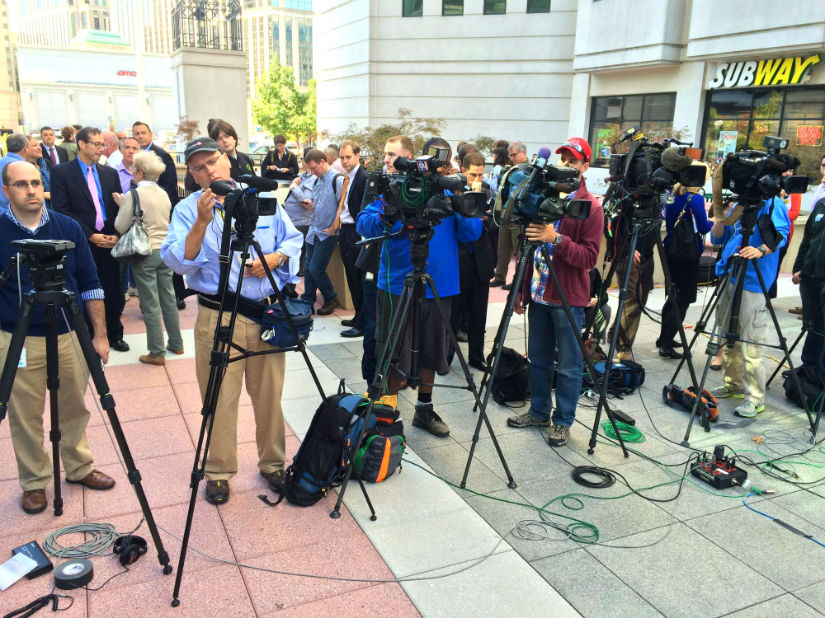
Crowds gather in Courthouse for same-sex marriage press conference on 10/6/14With a few exceptions — like breaking news — ARLnow does not publish on weekends.

We also only sparingly cover things like high school sports or do long human interest feature stories, things which readers have told us — in surveys and in their actions — are a lesser priority than news about core topics like crime, fire, local government, local businesses, weather and traffic. At the same time, readers frequently ask for us to “investigate” various topics, but true investigative journalism is time-consuming and expensive and hard to do while on the daily local news grind.

So what’s the solution to this for those readers who have emailed us and asked for more weekend coverage, more in-depth features and more investigative stories?

One possibility is for ARLnow to launch a membership program as part of a larger community journalism project.

Services like Patreon allow fans to support, with a small monthly contribution, the creators who are making content they’re passionate about. Similarly, we’re wondering if Arlingtonians would be interested in supporting local content that goes above and beyond ARLnow’s core news mission.

Those who sign up as members would get to weigh in on what kind of content their contribution should be funding — features, investigative pieces, coverage of local arts and nonprofits, etc. The new content would run as an ARLnow “weekend edition” — so as to not overwhelm readers who follow our weekday news coverage.

At the same time, members could get other benefits. We’re considering exclusive discounts from local businesses, access to exclusive ARLnow member events, access to a members-only online forum and perhaps the occasional ARLnow schwag (if NPR has totebags, we can have totebags).

That all said, maybe a $6 a month for local news isn’t something that people want to pay, or you’d rather we just stick with our core mission. Tell us what you think in the poll below and in the comments.


Cherry blossoms

The first full work week in March started out chilly, turned warm and pleasant, before ending with a burst of snow and falling temperatures.

If that sounds exciting, it’s nothing compared to what may be coming next week — we’ll be closely following the potential Nor’easter snowstorm that’s on tap for Monday night and Tuesday.

Of this week’s top five most-read articles, three were crime stories and two were about restaurants. Three had a Columbia Pike connection.

  1. ACPD, State Police, Feds Conduct Raid at Columbia Pike Apartment
  2. Man Sentenced to 17 Years in Prison for Columbia Pike Shooting
  3. Mysterious Pio Pio Still Closed for Maintenance
  4. Arlington Bar Named No. 1 Destination for St. Patrick’s Day
  5. Arlington Woman Charged With Felony Welfare Fraud (NBC4 updated this story late Friday with details obtained from court documents)

Feel free to discuss the impending wintry weather, the top stories of the week or any other topic of local interest, in the comments.


Mark KellyThe Right Note is a weekly opinion column. The views and opinions expressed in the column are those of the author and do not necessarily reflect the views of ARLnow.com.

At the end of February the Arlington County Board voted 3-2 to advertise a 2-cent tax rate increase. The two members who voted no did so because they wanted to advertise a higher rate.

As the County Board discussed advertising the increased rate, Chairman Jay Fisette called the County Manager’s budget the “best professional recommendation.” In reality, Arlington County rigs the budget game to ensure they can spend not only what they propose in the annual budget, but the closeout slush fund created by chronic underestimation of revenue.

In FY 2016, Arlington took $29 million more in revenue than it had projected in its fiscal year budget. The County also did not spend $6.4 million it had budgeted. That’s $35.4 million in tax revenue over and above the needs of the budget. And year after year, the County Manager and County Board spend it during the closeout process right before going to the public and saying they have budget shortfalls for the next year.

To put the closeout funds in perspective, if left unspent it would take no residential property tax increase to meet the revenue needed for the next county budget.

Taxpayers would appreciate a one-year pause on their escalating property taxes. Under the County Manager’s latest budget proposal, taxes on the average single family homeowner would increase by around 5 percent for 2017 when you account for higher assessments and a two cent tax rate increase. The tax burden is retroactive to January 1 of this year.

Annual spending over the last 15 years or so has regularly outpaced inflation plus population growth — a measure which should ensure more than adequate continuation of county services. The annual revenue spending is supplemented by the unlimited willingness of voters to approve bonds to take on about $1 billion in debt.

Many Arlingtonians express a willingness to pay even more, which should not be a surprise in a county that has elected exactly one non-Democrat to the County Board in the last 17 years. At some point however, a majority of the public may balk.

Wages for the third quarter of 2016 rose by 3.9 percent in Arlington. So not only do taxes continue to outpace population growth and inflation, they are growing faster than wages. It means most of us will probably be paying more and taking home less.

County Board member John Vihstadt rightly asked the County Manager for budget options at a lower tax level. But taxpayers should be dubious that the Board will approve any tax increase lower than the maximum two cents.


Larry RobertsProgressive Voice is a weekly opinion column. The views and opinions expressed in the column are those of the individual authors and do not necessarily reflect the views of their organizations or ARLnow.com.

By Lawrence Roberts

This May, Arlington Democrats will participate in a caucus to nominate the Democratic candidate for County Board. The winner of that nomination will, in all likelihood, have the opportunity to be sworn in for a four-year term commencing January 1, 2018.

The new Board member will be succeeding Jay Fisette, the current Board Chair who has served as a County Board member since 1998. Jay has chaired the Board on five separate occasions (2001, 2005, 2010, 2014 and 2017).

It is sometimes hard to notice progress, and even history, when it is occurring. But as Jay is about to enter the final nine months of what will be 20 years of service on the County Board, I think it is important to remember the odds that Jay overcame to become the first openly gay elected official in the history of the Commonwealth of Virginia and to reflect on how Jay has served as a “progressive voice” in Arlington and on the Board during a time of great change and progress in the County.

When I first met Jay, he was serving as the Director of the Northern Virginia AIDS Project of Whitman-Walker Clinic, a nonprofit community health center that was a leader in HIV/AIDS education, prevention, diagnosis and treatment. He had previously served as an auditor with the U.S. General Accounting Office.

Jay’s public service was inspired by the martyrdom of Harvey Milk, California’s first openly gay elected official, who was assassinated while serving on the San Francisco Board of Supervisors. In 1993, he decided to run for the County Board and joined a field that included future County Board members Charles Monroe and Chris Zimmerman as well as School Board member Darlene Mickey.

Although Jay won the March 1993 caucus to the surprise of much of the Democratic establishment, he lost a special election that May by 206 votes. His opponent did not raise Jay’s sexual orientation as a campaign issue, but there is little doubt in the minds of those of us who worked for Jay’s election that even in Arlington many voters were not yet comfortable with electing a gay public official. Only two years later with another candidate, Democrats easily won back the seat in a general election.

Jay’s loss did not deter him from remaining active in electoral politics and he won many friends and additional supporters as he re-dedicated himself to Democratic politics and community service.

As Arlingtonians became more progressive in their views about sexual orientation, the electoral climate became more favorable. Jay ran again in 1997 and made history with his election to the Board – winning nearly 62 percent of the vote in the November election.

It is a testament to Jay’s successful tenure on the Board that the history he made is now almost an afterthought while he paved the way for many LGBT Virginians serving in elective office and as community leaders.

Speaking of his own future, Jay has said that he wants to work on “embracing and advancing a set of progressive values that are so important; values we have championed here in Arlington…” That serves as an excellent description of Jay’s tenure on the County Board.

He has been a consistent champion of environmental and open space initiatives, smart growth planning initiatives, multimodal transportation options, affordable housing, inclusiveness, and a strong social safety net. At the same time, he has been integral to the County’s sterling fiscal reputation and performance, maintaining its low crime rate, and the County’s increasing attractiveness to families, millennials, and seniors.

In recent years, Jay has worked to help Arlington to respond to increased competition to Arlington’s economic successes and to promote cooperation between the County Board and School Board to keep the Arlington Public Schools system among the best in the nation.

Jay will be remembered by those who lived through the experience for his steady leadership as the County and its public safety agencies responded to the September 11 terrorist attack on the Pentagon.

He also has gained respect around the region and the Commonwealth through his many leadership positions in organizations such as the Virginia Municipal League, Metropolitan Washington Council of Governments, and Northern Virginia Transportation Commission.

Jay will accomplish even more before stepping down at the end of the year. But as people campaign to succeed him, it is a good time to consider his many accomplishments for Arlington County.

Larry Roberts has been active in civic and political life in Arlington for nearly 30 years and is an attorney in private practice. He chaired the Arlington County Democratic Committee, a successful Arlington School Bond campaign, two successful statewide political campaigns, and served as Counselor to the Governor in Richmond.


Peter Rousselot

Peter’s Take is a weekly opinion column. The views and opinions expressed in this column are those of the author and do not necessarily reflect the views of ARLnow.com.

ARLnow.com reported last week that the County Board has approved the County Manager’s request to advertise a property tax rate for 2017 up to 2 cents higher than the current rate and potentially the highest tax rate since 2001:

County Manager Mark Schwartz said the hike would pay for what he described as the “extraordinary circumstances” facing the board in increasing costs for APS and Metro.

Failing to Carry Over Last Fall’s Close-Out Surplus

The Manager’s proposed FY 2018 budget is supposedly driven by “extraordinary circumstances” attributable to increased funding demands from APS and Metro. To close this “gap,” the Manager’s proposed budget incorporates a 2-cent property tax rate increase to generate $14.8 million.

The Manager fully highlighted these “extraordinary circumstances” last fall, but he and the County Board failed to act then to address that potential budget gap.

Metro is critical to Arlington and our entire region, and our critically-important schools are experiencing dramatic enrollment increases. Without much-needed fundamental reforms, the long-term costs represented by APS and Metro will indeed put tremendous upward pressure on Arlington’s property tax rate in every year for the foreseeable future.

However, any need to increase that rate in 2017 is entirely attributable to Arlington’s failure to follow recommendations that John Vihstadt, the Civic Federation, I and others made regarding last fall’s $17.8 million “close-out” surplus.

In a column last October, I proposed that the Board defer almost all of the proposed expenditures that the Manager recommended for that $17.8 million surplus, and hold in reserve virtually all those funds for first-priority use to bridge any budget gap for FY 2018. Instead, the Board approved spending almost all that surplus. That was a mistake that should not be repeated.

Necessary Changes at APS

As John Vihstadt noted at the County Board’s February 25 meeting to advertise a 2017 tax rate, APS’ exploding enrollment will require substantially increased funding over time, but APS should no longer be permitted to rely on a blank check from the County to provide funds for APS enrollment growth just because our schools are — and we want them to continue to be — top ranked.

Instead, the time has come for the County Board to condition increased funding on APS’ willingness to implement changes — particularly with respect to new school construction — to reduce substantially the per-student cost of new seats.

Current APS practices regarding per seat construction costs for new schools are neither necessary to sustain excellent schools nor fiscally sustainable unless other core County services are to be “crowded out” and/or we are to incur successive annual property tax rate increases that further degrade affordability for all Arlington residents.

Necessary Changes at Metro

Arlington should go on record now in support of fundamental reforms of Metro funding and governance at the interstate compact level, such as those recommended by the Federal City Council.

Conclusion

Before the FY 2018 budget review process ends this April, the County Board should:

  • direct the Manager to reserve almost all of any fall 2017 close-out surplus to lessen upward pressures on the 2018 tax rate,
  • condition any increased APS funding on APS implementation this year of reforms to lower per-seat construction costs substantially, and
  • express support for Metro reforms at the interstate compact level.

Peter Rousselot is a former member of the Central Committee of the Democratic Party of Virginia and former chair of the Arlington County Democratic Committee.


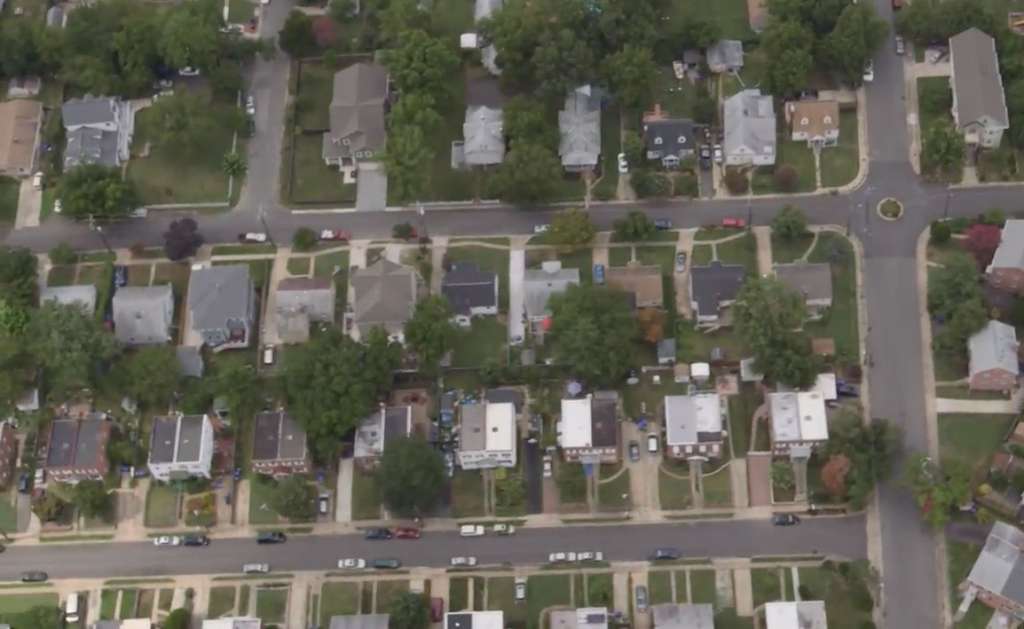
Aerial view of Arlington residential neighborhood (screen capture via Arlington TV)(Updated at 12:50 p.m.) It’s hard to dispute that Arlington is a great place, which is why it winds up near the top of a lot of lists of various place rankings.

For instance, Arlington was crowned the Best City to Live in America last year by the website Niche.com.

Just a week later, however, Arlington was only No. 7 on the list of Best Suburbs to Live in America, behind No. 4 ranked Merrifield. And that’s not to mention the fact that Niche also ranked Arlington the No. 11 “Best Place to Live in America” last year.

Mashing together U.S. Census data sets and other info to rank places on various dimensions is a popular activity among publicity-seeking companies, since news outlets often pick up such stories and readers, in turn, love reading and sharing ranking articles. But the rankings — ARLnow.com is sent dozens of such lists each year — are often contradictory, nonsensical or, at least, highly questionable.

In the spirit of ranking things, today we’re letting our users arbitrarily rank “the most questionable rankings involving Arlington.” Here are the contenders and the organizations that compiled each respective list:

  • Arlington is the No. 3 “super cool U.S. city” (Expedia)
  • Arlington Heights and Yorktown are the No. 2 and No. 3 “hottest neighborhoods” in the D.C. area (Redfin)
  • Arlington is the No. 5 “Worst City to Own a Car” (SmartAsset)
  • Arlington is the No. 33 mid-sized city for “cultural diversity” (WalletHub)
  • Arlington is the No. 985 “Most Liberal Place in U.S. (Crowdpac)
  • Arlington is the No. 1 “Hardest Working City in America” (SmartAsset)
  • Arlington is the No. 1 “Best City to Retire” (Bankrate)
  • Arlington is the No. 162 “Best City to Retire” (Niche)
  • Arlington is No. 4 for “Best U.S. City Parks” (Trust for Public Lands)
  • Arlington is No. 64 for “Best Cities for Outdoor Activities” (Niche)
  • Arlington is the No. 8 “Best City to Train for a Marathon” (Competitor)
  • Arlington is the No. 1 “Best City to Live in America” (Niche)
  • Arlington is the No. 7 “Best Suburb to Live in America” (Niche)
  • Arlington is the No. 11 “Best Place to Live in America” (Niche)

Feel free to vote for as many entries as you like, because why not.


February flowers, photo via Flickr/Lisa Novak

The progression of this week’s weather can be summed up into three words: warm, wet, windy.

The news, however, was hot, hot, hot. The top six most-read ARLnow.com stories of the week were:

Also, you may have seen a new byline on the site this week. That’s because we have a new ARLnow.com reporter, Chris Teale. That means — and I’ll switch to first-person perspective for this — my time with this company has come to an end.

It’s been a blast reporting on news in D.C. and here in Arlington. I’ve learned a lot since my humble days covering food truck controversies and writing about oddball shows at Artisphere. I’ll miss you all, especially ARLnow’s colorful commenters. Starting later this month, I’ll return to my former home of Chicago to prowl the streets in search of adventure and hot dogs. If you’d like to reach me for whatever reason, please tweet me.

With that, feel free to welcome Chris, discuss the big stories from this week or talk about or any other topic of local interest in the comments.

Flickr pool photo by Lisa Novak


View More Stories