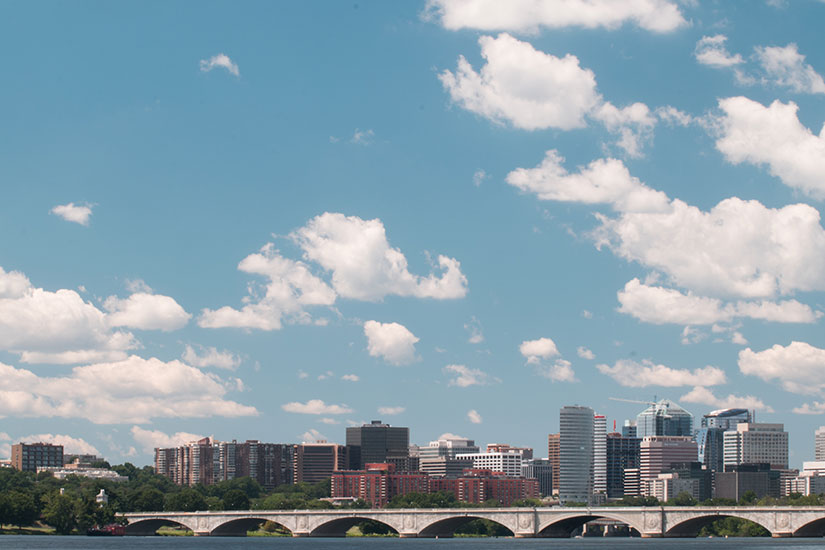
9/11 flag in Arlington (Flickr pool photo by Kevin White)

A slow August has given way to a busy September.

There are a number of marquee events in Arlington this weekend. The annual Rosslyn Jazz Festival is taking place this afternoon, although you’ll have to brave mid-July-like heat. Tonight the Arlington 9/11 5K races around the Pentagon — and it’s not too late to register online.

Tomorrow, with temperatures back down to comfortable September levels, you’ll have your choice of Crystal City Sip and Salsa — an outdoor wine, food, music and dancing festival — and Beckett’s Celtic Fest in Shirlington, with “live music, dancers, pipers, food and drink.”

If you have some down time this weekend, be sure to check out our new weekly podcast. Our first episode features an interview with Arlington County Board member Katie Cristol. Expect interviews with other notable local figures, from business owners to policymakers to anyone doing anything interesting in Arlington.

If you’re hitting the road around Pentagon City today, you might want to take note of the road closures associated with the 5K. Per ACPD:

From 3:00 p.m. until 8:00 p.m.

  • Army Navy Drive closed between S. 12th Street to S. Eads Street

From 5:45 p.m. until approximately 6:30 p.m.

  • Westbound Army Navy Drive closed from S. Eads Street to S. Joyce Street
  • *****All streets crossing Army Navy Drive (including access to I-395 S/B) will be closed for approximately 20 minutes*****
  • S. Joyce Street closed from Army Navy Drive to Columbia Pike
  • Columbia Pike closed from Pentagon South Parking to S. Joyce Street
  • I-395 Northbound HOV exit to S. Eads Street will be closed.

From 5:45 p.m. until approximately 8:00 p.m.

  • Westbound Washington Boulevard closed from Memorial Bridge to I-395
  • Southbound Rt. 110 closed from Rosslyn to S. 15th Street
  • Marshall Drive closed at Rt. 110
  • S. Eads Street closed from Army Navy Drive to S. 11th Street

In addition, street parking in the area will be restricted. Motorists should be on the lookout for temporary “No Parking” signs. Illegally parked vehicles may be ticketed or towed. If your vehicle is towed from a public street, call 703-558-2222.

Feel free to discuss this weekend’s events or any other topic of local interest in the comments.

Flickr pool photo by Kevin White


Mark KellyThe Right Note is a weekly opinion column. The views and opinions expressed in the column are those of the author and do not necessarily reflect the views of ARLnow.com.

Two weeks ago, Paul Friedman wrote a piece on ARLnow claiming Democrats believe voting is a right and Republicans believe it is a privilege. The none-too-veiled suggestion was Republicans were somehow OK with limiting the rights of Democrats, or worse yet, on the basis of race.

Republicans believe voting is a right firmly rooted in the rule of law.

There are clear conditions you must meet to vote. You must be 18. You must be a citizen of our country. You cannot vote in two states in the same election. And in Virginia, you cannot vote if you committed a felony unless your voting rights have been affirmatively restored.

The Supreme Court found that Gov. Terry McAuliffe violated the Virginia Constitution when he issued the blanket order restoring voting rights to all felons who completed their sentence. Unfortunately, what Friedman appears to be arguing is it may just be OK for our governor to circumvent a provision in the Constitution because it achieves a desired outcome. Imagine Friedman’s outrage if a Republican governor were to do so in order to achieve a desired policy objective?

The bottom line is allowing a governor to unilaterally ignore the Virginia Constitution would be a dangerous precedent to set. It was rightly overturned by the court.

What was also missing from Friedman’s analysis was what happens to the rights of other voters when someone who should not be able to cast a vote in Virginia is allowed to. When just one person who is committing voter fraud — or is registered for any other invalid reason shows up the polls — it limits your rights by devaluing your vote.

Because voting is a right, it is meant to be protected. It should not be subject to the whims of an elected official. It should not be devalued by voter fraud.

What McAuliffe should have done was work with legislative leaders to find a process within the law to restore voting rights more easily. Many Republicans, including this one, support such a change, particularly when it comes to non-violent offenders.


Gillian BurgessProgressive Voice is a weekly opinion column. The views and opinions expressed in the column are those of the individual authors and do not necessarily reflect the views of their organizations or ARLnow.com.

By: Gillian Burgess

Over Labor Day weekend, thousands of people enjoyed Arlington’s awesome network of safe, pleasant bike trails. Too often, however, the routes connecting our beautiful trails to the cafes, coffee shops and retail in the more urban parts of Arlington do not feel safe and comfortable for most people to bike on. Thousands of people stick to the trails and miss out on a lot of what Arlington has to offer.

The Bike Friendly Ballston wants to change that: The Washington Area Bicyclist Association’s Arlington Action Committee is calling on Arlington County to build protected bike lanes on North Quincy Street between the Custis Trail (along I-66) and Glebe Road.

Protected bike lanes provide the experience of biking without cars, but at a fraction of the cost of building a trail.

Most protected bike lanes, like the ones Arlington already installed in Pentagon City, flip the painted bike lane and the parking lane, so that the streetscape become sidewalk, curb, bike lane, then a buffer, parked cars, moving cars and the double yellow line — with the reverse order for traffic traveling in the other direction.

Some protected bike lanes, like those on 15th Street NW in D.C., put both bikes traveling in both directions against one curb, so the streetscape is sidewalk, curb, two-way protected bike lane, buffer, parking, one direction of moving traffic, the other direction of moving traffic, parking, curb and sidewalk.

To install a protected bike lane, the county needs only to put down some paint, put up a few flex-posts and add signage. When a street is repaved, installing protected bike lanes is practically free.

On Quincy, protected bike lanes would give people a low-stress route from the Custis Trail into the heart of Ballston. They would also connect to 5th Street North, which ends just before Quincy and Glebe, and is a great neighborhood road to bike on through Ashton Heights and Lyon Park.

By replacing the painted bike lanes that currently appear and disappear on this stretch, they would give people who do not feel comfortable riding a bike alongside moving cars the opportunity to connect to Washington-Lee High School, the Central Library and surrounding parks, and all of the shopping, dining, and coffee available in Ballston.

Protected bike lanes on Quincy would be good for everyone using Quincy Street. Because protected bike lanes feel safer, people would bike on the sidewalk far less, leaving the sidewalks free for people walking. Having a clear space for bikes would also reduce the complicated and confusing interactions that currently take place between people driving and biking on Quincy, especially around Washington Boulevard, where the current bike lanes suddenly disappear.

Protected bike lanes are also good for business. Already, about four times as many people bike on the Custis Trail as bike on Quincy. With a safe option, people would be enticed to enjoy all of the amenities Ballston has to offer. And study after study shows that people on bikes shop locally more often and spend more locally overall than people in cars. A quick stop at Buzz is easy on a bike, when you don’t have to worry about parking your car.

This proposal was brought to the County Board in February, and the entire Board was supportive of the project (discussion starting around nine minutes in the video). In March, the county manager told the board “we can do it” (discussion starting around 1:17 in the video). This month, we should finally get to see some plans.

The Bicycle Advisory Committee is set to meet with county staff to walk through some options next week (Monday, Sept. 12 at 7 p.m. on the Quincy Street side of the Central Library) and the Arlington Action Committee will meet with county staff the following week (Monday, Sept. 19 at 7 p.m. at a yet-to-be-determined location). Both meetings are open to the public.

Bike Friendly Ballston already has the support of over 600 people, most of the businesses along the route, and two surrounding neighborhood associations. You can find out more and lend your support by heading to http://www.waba.org/advocacy/campaigns/bike-friendly-ballston/.

Gillian Burgess is the current chair of Arlington County’s Bicycle Advisory Committee, the founder of Kidical Mass Arlington, and the former vice chair of APS’s Multimodal Transportation and Student Safety Special Committee. She lives in Cherrydale with her husband and three children.


peter_rousselot_2014-12-27_for_facebookPeter’s Take is a weekly opinion column. The views and opinions expressed in this column are those of the author and do not necessarily reflect the views of ARLnow.com.

In July, Arlington received an award as the top digital county in the nation for its population size (150,000-249,999).

Among the reasons:

The County’s Open Government Program … was lauded for creating more accessible and transparent interactions with departments and services. Key elements of the program include the Open Data Portal, expanding civic engagement through webcasting of commission meetings, and launch of the My Arlington app for mobile users.

But, where should Arlington go from here?

Arlington already has held a panel discussion on next steps. The panel included private sector and Arlington County government participants.

In two videos, the panel discussed how digitization is likely to change Arlington substantially between now and 2050. While the issues are complex and overlapping, one useful way to look at them is to consider how digitization is likely to:

  • Change how private individuals and firms function, and why those private sector changes will require major changes in Arlington government policies and operations.
  • Enable the Arlington government to interact more transparently and productively with its citizens.

Private sector change

In general, the pace of transformative change driven by private sector digitization means that the county should avoid adopting overly-prescriptive master plans that could inadvertently stifle future private sector innovation.

Retail

While consumers currently make about 7 percent of their purchases online, panel participants predicted that by 2050, this percentage will rise to 40-60 percent. The obvious result: retailers’ needs for brick and mortar stores will decline substantially. For future planning purposes, the county should avoid policies that will incentivize excessive retail brick and mortar store growth.

Office

The commercial office market will continue to be transformed by increasing demand for flexible working and living arrangements like WeWork and WeLive. The county should be appropriately flexible in adjusting its zoning and land use policies to enable this increased demand — especially when such adjustments will facilitate rental of existing vacant office space.

Transportation

Ride sharing will continue to transform transportation, and self-driving vehicles are likely to do so soon as well. The county should adjust its transportation, transit, parking and all other relevant policies to take advantage of these changes.

Citizen-government interactions

In general, new digitization tools enable new ways in which county government and its citizens can interact. The most important advice from panel participants: use these tools to find out what citizens prefer rather than just telling citizens what the government has decided. This often should be done by accurately defining all options, together with the costs and benefits of each, and asking residents for their preferences using statistically-valid survey techniques.

For some, citizen-government interactions can be entirely in cyberspace. How about virtual “Open Door Mondays“? For others, a physical space (like community centers and libraries) will continue to be important.
Big Data is transforming the way a local government like Arlington can improve the quality of life for its citizens.

Conclusion

One way you can participate in discussing these issues is to attend a meeting on Tuesday, October 11, from 7 to 8:30 pm in the Shirlington Library auditorium. The meeting will feature a presentation by Shawn DuBravac. Shawn was one of the panel participants, and is the author of “Digital Destiny: How the New Age of Data Will Transform the Way We Work, Live, and Communicate.”


Tornadoes are rare, but not impossible in Arlington (photo via Arlington OEM)

It was supposed to be a quiet end to a slow week today. Instead, the morning started with two breaking news stories and the day will end with an approaching tropical storm.

Even though Arlington is expected to be spared from most of Hermine’s rain and wind — “little to no impact is anticipated,” according to the National Weather Service — the storm is a good reminder of why you should be prepared for emergencies.

Feel free to discuss the weather, emergency preps or any other topic of local interest in the comments. Have a relaxing Labor Day weekend and we’ll see you back here on Tuesday for what’s looking like a busy week of news.


Mark Kelly

The Right Note is a weekly opinion column. The views and opinions expressed in the column are those of the author and do not necessarily reflect the views of ARLnow.com.

This week, Governor McAuliffe’s office sent a memo to state agencies asking for proposals to trim 5% from their budgets to help close a $1.5 billion budget gap. The gap is roughly 1.5%, but leaders are working to avoid any cuts to education, so some programs will take bigger cuts than others.

This much more realistic approach comes after Republican General Assembly leaders rejected the governor’s assertion that Medicaid expansion would relieve the budget woes.

Medicaid expansion has actually made state budgets worse. In Ohio, Medicaid expansion cost $1.5 billion more than expected in the first 18 months. In Washington it was $2.3 billion more over two years. And in Kentucky, the state had to pay $1.8 billion more for 2014 and 2015 combined.

And, this is before the federal cost share is scheduled to be reduced in 2017.

You cannot blame a Governor for trying to pass his number one priority. But he should not continue to suggest a program that has failed to have positive outcomes in other states will miraculously do the opposite in Virginia.

The Governor should instead go about the business of getting the government out of the way of job creators in Virginia. Then economic growth can drive tax revenue.

But where do independent groups rank Virginia’s economic potential?

13th by ALEC. This study found twenty-nine states have a lower top marginal corporate income tax rate and twenty-five states have a lower property tax burden.

15th by Wallet Hub. The group found Virginia ranked 21st in “Innovation Potential.”

13th by CNBC. CNBC found Virginia in 36th place when it comes to the cost of doing business.

And, we continue to slide in the wrong direction.

The ongoing (and bi-partisan) effort focusing on economic development incentives is not doing the trick. Nor should we seek out higher, and debt-financed, federal government spending. Instead, our leaders must work to create a more favorable environment for the economy to thrive for all businesses.


Abby RaphaelProgressive Voice is a weekly opinion column. The views and opinions expressed in the column are those of the individual authors and do not necessarily reflect the views of their organizations or ARLnow.com. 

By: Abby Raphael

Arlington is one of the wealthiest counties in the nation, with a median 2016 household income of $110,900. Yet 8.8% of all Arlington residents live in poverty, with an income of about $24,000 or less for a family of four. Twelve percent of Arlington’s children live in poverty. Arlington must address the effects of this economic inequality, particularly on our children, in a coordinated way so that all children and families can be successful.

During the last school year, nearly 8,000 students in Arlington Public Schools (APS), 30% of all APS students, were eligible for free or reduced price meals. Families of four with an annual income of about $45,000 or less qualify for this program.

While Arlington students across income levels score well on standardized tests, there remains a relationship between socioeconomic status and achievement that should be addressed. For example, in 2015-16, 71% of economically disadvantaged school students in Arlington passed the English standards of learning tests (SOL), compared with 87% of all Arlington students. For the math SOL, the pass rates were 73% versus 87%.

National efforts to address achievement gaps as part of the No Child Left Behind Act (NCLB) have focused on standardized testing, charter schools, and national standards, known as the Common Core. Diane Ravitch, a former Assistant Secretary of Education and NCLB proponent, concluded in a recent New York Times article that these efforts have failed. Ravitch wrote that one of the main causes of low student achievement is poverty and “[w]hat is called ‘the achievement gap’ is actually an ‘opportunity gap’.”

So, how do we address childhood poverty and the opportunity gap to help all students achieve at higher levels?

First, we must recognize that this is a responsibility of the entire Arlington community and not just APS. Through a shared vision and coordinated efforts of County government, APS, non-profits, businesses, the faith community, and individuals, we can make a real difference. This is the power of collective impact: a model that brings people together in a structured way to achieve positive results.

Community schools, a form of collective impact, bring together school and community resources for children. They integrate academics, health and wellness, social services, and family and community engagement to improve student achievement for all students, especially low-income students. Carlin Springs Elementary School is a community school, supported with federal funding. In addition, Barcroft Elementary School, Gunston Middle School, and Wakefield and Arlington Mill High Schools are community schools, with staffing from Communities in Schools of Northern Virginia, part of the national non-profit network, Communities in Schools (CIS).

CIS was founded 40 years ago by Arlingtonian Bill Milliken, who writes in The Last Dropout that to be successful, students need: “a one-on-one relationship with a caring adult; a safe place to learn and grow; a healthy start and a healthy future; a marketable skill to use upon graduation; and a chance to give back to peers and the community.”

Whether assisted through CIS, federal grants, or other similar programs with track records of success, community schools bring existing community resources together to provide greater opportunities for students and families. National research shows that the community school model works for all of us – improving attendance and performance on standardized tests, reducing behavioral problems, and reducing the dropout rate.

In Arlington, we have many non-profit organizations, faith communities, businesses and individuals partnering with APS and County government that do excellent work to help low-income students. They provide mentors, tutors, food, after-school programs, and more. However, these efforts need to be coordinated in a more systematic way to identify which students have the most need, evaluate what efforts are most effective, and best match the community’s existing resources with those needs.

To best serve our low-income students and families, and to be equitable, Arlington should expand the community school model from five schools that now have it to all schools with significant populations of students eligible for free or reduced price meals. This requires additional staffing to leverage the community’s existing resources, coordinate efforts, establish and monitor measures of success, and communicate effectively.

As APS and County government leaders consider their priorities for the coming budget, I urge them to expand community schools, which have demonstrated effectiveness in improving outcomes for low-income students. Such a strategic investment aimed at economic inequality will benefit the entire community. 

Abby Raphael is co-Chair of Arlington’s Project Peace Prevention Committee, which addresses domestic violence and sexual assault. She also serves as a member of the Board of the Arlington YMCA and the Second Chance Advisory Committee. She was a member of the Arlington School Board from 2008-2015, including two terms as Chair, and is a former Arlington Assistant Commonwealth’s Attorney.



peter_rousselot_2014-12-27_for_facebookPeter’s Take is a weekly opinion column. The views and opinions expressed in this column are those of the author and do not necessarily reflect the views of ARLnow.com.

Last week, Mark Kelly, my fellow columnist at ARLnow.com, and David Alpert over at Greater Greater Washington each posted a column about fixing Metro. Both arrived at essentially this conclusion:   

Metro can’t be fixed unless its Board and senior management have sufficient freedom to hire and fire.

Discussion

I agree with both David and Mark.

David framed the issue as Metro’s badly needing a culture change:

“Metro’s culture, clearly, is lacking. Many employees, whether front-line or managers, don’t take responsibilities seriously. If employees falsify reports, and their managers encourage them to, and other departments hang up on them without solving a problem, something is very wrong not just with a few people or a department, but a culture.”

Mark focused on the need for Metro to have sufficient flexibility under its union contract:

“The union contract has long appeared to be a substantial impediment to Metro’s ability to move forward. Not only has the union locked in pay scales and overtime provisions, but also makes it extremely difficult to make necessary workforce adjustments as Metro faces ongoing financial strain. Or in this case, seemingly is making it next to impossible to fire employees for cause.”

Metro’s culture can’t be changed without sufficient freedom to hire and fire

Metro’s senior management has no hope of changing Metro’s culture without sufficient freedom to hire and fire its unionized workforce. The most important union in this case is Local 689 of the Amalgamated Transit Union (ATU). “ATU Local 689 covers 8,576 workers, or about 82 percent of the unionized workforce, including train operators, maintenance crews, and other employees.”

Metro’s contract with ATU Local 689 is currently being re-negotiated. If the ultimate outcome of these negotiations is a voluntary agreement between management and ATU Local 689 that gives Metro’s senior management sufficient freedom to hire and fire, then there will be a reasonable prospect that Metro’s culture can be changed. These negotiations must not drag out too long.

Metro shouldn’t get a new dedicated revenue stream without first demonstrating that it has changed its culture

Metro critically needs to get a new dedicated revenue stream sufficiently large to enable it to:

  • replace its existing capital assets at the end of their useful lives, and
  • gradually expand the Metro system over the coming decades.

A dedicated revenue stream is usually defined as money that flows from a source–like an earmarked sales or gas tax–that isn’t subject to an annual appropriations process.

Metro is the only major transit system in the United States without such a dedicated revenue stream. While the need for such a revenue stream is critical, this new revenue cannot be provided without:

  • unanimous agreement by Virginia, Maryland and DC on what that new funding source is–and the specific terms and conditions under which funding will be provided, plus
  • federal government approval of that tri-jurisdictional compact.

It is both imprudent and politically impossible for such agreements and approvals to occur without a prior demonstration by Metro that it has changed its culture sufficiently to justify this substantial new investment.

Conclusion

Metro can be fixed if it is able to change its culture enough and in time. If it can’t, the three jurisdictions and the federal government will have to agree upon and enable a new organization to operate this vital transit system.


Clarendon MetroIt’s the week before Labor Day, which — in our experience — is the runner up for slowest week of the year in the D.C. area, second only to the week between Christmas and New Year’s.

There’s not a whole heck of a lot going on locally and lots of people are out of town. The weather is nice for outdoor activities, but otherwise it’s a pretty boring week.

On the plus side, traffic is noticeably lighter than the usual terribleness, everything is less crowded and it’s easier to get a table at popular restaurants.

Do you prefer a slow week like this to busier, more traffic-clogged but less exciting weeks?


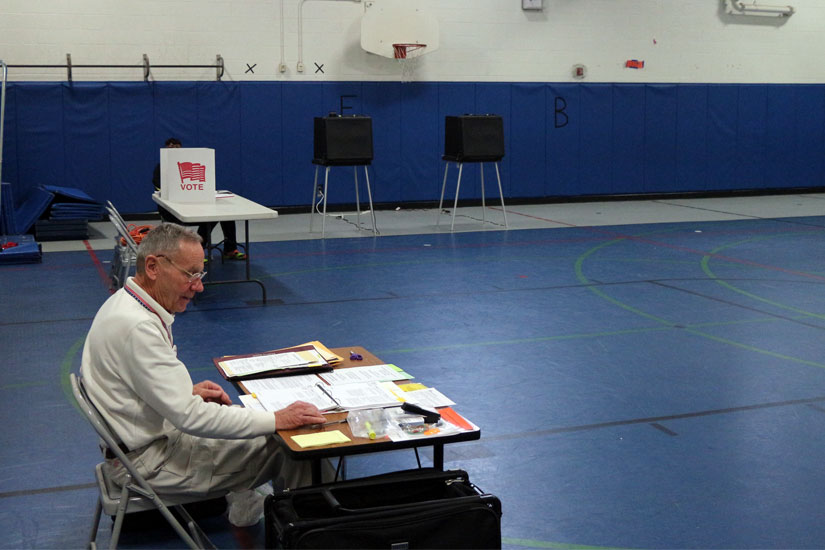
The polling place at Barrett Elementary School is slow for the 2014 special electionThe presidential election showdown between Donald Trump and Hillary Clinton has been endlessly covered on cable news, online and in print this summer. The Arlington County Board race — considerably less so.

Next week, the week of Labor Day, is the traditional kickoff of the local election season, with such landmark events as the Arlington County Democratic Committee chili cook off and the Arlington County Civic Federation candidates forum.

The rule of thumb is that most voters aren’t paying much attention to local races between the primaries and Labor Day.

But that hasn’t stopped certain local candidates from doing some campaigning this summer. Independent County Board candidate Audrey Clement, for instance, just sent out a press release detailing a number of campaign pledges, including building more school capacity at a lower cost.

Clement is facing off against Democratic incumbent Libby Garvey in November.

Republican congressional candidate Charles Hernick, meanwhile, sat down for a Reddit Ask Me Anything session in July. And Mike Webb, who’s running as an “independent conservative” write-in candidate in the congressional race, has blasted out some 100 press releases since he lost to Hernick in the Virginia 8th District GOP convention. (During that time Webb also accidentally made national news.)

Hernick and Webb will face incumbent Democratic Rep. Don Beyer and little-known independent candidate Julio Gracia in November.

Our question for readers: what has been your level of interest in these general election races so far? Is it even worth trying to campaign in the summer, or should candidates perhaps stick with the Labor Day conventional wisdom?


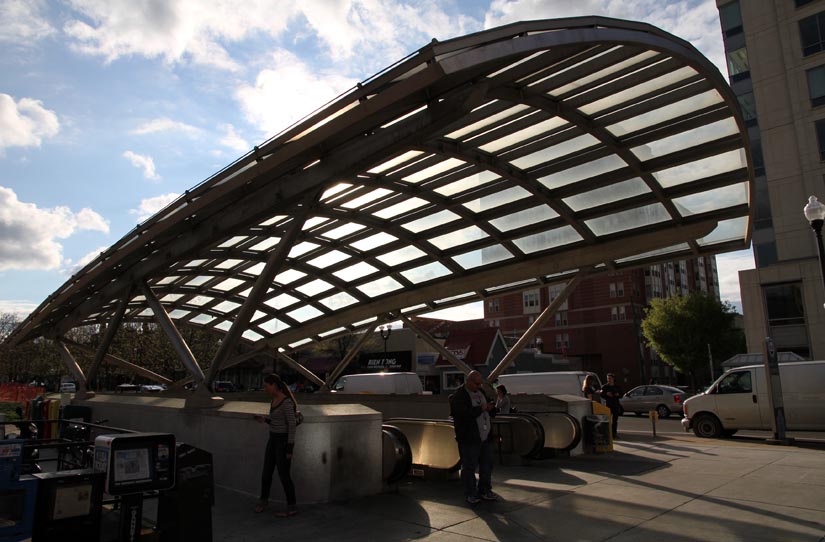
Rosslyn (Flickr pool photo by John Sonderman)

Sunny skies should prevail this weekend, making sunscreen a valuable commodity if you hike to historic points of interest in Arlington or attend a police block party this weekend.

If you want to do something indoors, there also are open houses and a new Matchbox American Kitchen + Spirit in Pentagon City to check out.

But traveling on Metro’s Yellow Line could pose a challenge to riders Sunday, when the agency is scheduled to close part of it for a train derailment drill.

Feel free to discuss happenings in Arlington this weekend, or any other topic of local interest, in the comments.

Flickr pool photo by John Sonderman


View More Stories