January 2016 blizzard (Flickr pool photo by John Williams)

The weekend is here and the remnants of last weekend’s blizzard are continuing to melt.

Expect relatively mild temperatures this weekend and into next week, says the Capital Weather Gang.

While much of the snow is likely to disappear over the next week, the biggest piles are like to to stick around for some time. In 2010, after the “Snowmageddon” blizzard, a big pile of snow near Ballston Common Mall was still around in early April.

So let’s get your best guesses: what’s the over/under for the last snow pile in Arlington? After which date will there be no more snow to be found anywhere in the county?

Feel free to discuss that or any other issue of local interest in the comments.

Flickr pool photo by John Williams


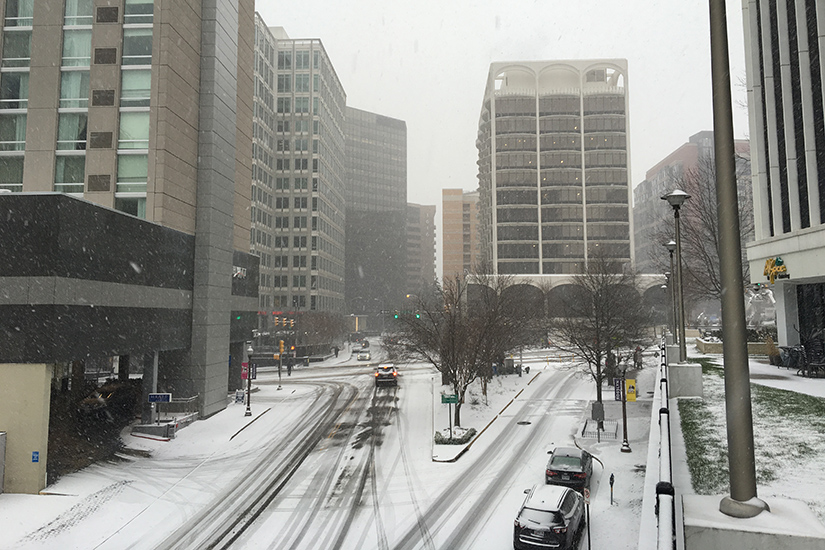
Snow scenes in Rosslyn Jan. 22, 2016

The following letter to the editor was submitted by Abby Olin, a Falls Church resident, regarding the local snow removal effort.

Since you recently gave a platform to readers frustrated with the snow-removal progress, I want to take a moment to briefly thank everyone who has contributed to the advanced preparation and snow clearing efforts so far.

Given the snow fall totals and the thousands of miles of road surfaces, Arlington County and other nearby counties have done an admirable job so far.

In the days before the storm arrived, my local Safeway called in extra cashiers, and while my wait time wasn’t exactly short, it was clear they were doing everything they could to ensure their customers were prepared for the storm. My vet was flexible and helped squeeze in my appointment early so my dog didn’t have to wait the whole weekend with an ear infection. The staff at my apartment complex did everything it could to keep the sidewalks clear, shoveling multiples times during the day over the course of Friday and Saturday.

On Sunday, a plow came and got stuck for more than eight hours. I saw several neighbors working to help the plow driver dig out. I didn’t have a shovel, so my contribution was to bring them hot cocoa. From the week leading up to the storm until Sunday, I was struck by how neighborly the residents of Arlington and Falls Church became — I saw neighbors helping to dig out others’ cars, grocery store customers encouraging a mother with several small children to pass them in a long check-out line, and a steep increase in friendly small talk all over town.

Since Monday, however, the tone has largely shifted in a negative direction — complaints about unplowed streets, annoyance with local school districts’ decisions, and a general frustration in regard to how tax dollars are spent. These are all valid concerns, and as a community we should continue to seek resolutions, but I wonder if it might be easier to if we thwart our reflex to find fault and instead exhibit the “pull together” attitude that was on display all last week.

ARLnow.com occasionally publishes thoughtful letters to the editor about issues of local interest. To submit a letter to the editor, please email it to [email protected]. Letters may be edited for content and brevity.


Mark KellyThe Right Note is a weekly opinion column. The views and opinions expressed in the column are those of the author and do not necessarily reflect the views of ARLnow.com.

Missed Opportunity

The announcement that Acting County Manager Mark Schwartz was elevated permanently to the top post comes as a surprise to no one. It does represent a missed opportunity to change course in Arlington.

The Board undoubtedly viewed their last attempt to bring in an outsider on as County Manager as a failure. Michael Brown’s short tenure ended when he and the County Board did not see eye to eye. While Brown graciously offered an excuse of his wife’s health when he resigned, it is no secret that the Board did not like having a County Manager who desired to do things differently.

The Board then elevated Barbara Donnellan, a long-term county employee to the post. Donnellan certainly was by all accounts well-liked and well-respected, a quality not to be taken lightly. More importantly to the Board, she was well entrenched in the status quo way of doing things in Arlington and already had an established reputation with Board Members.

Now Mark Schwartz has been given the job. His resume certainly backs up the hire on paper. Qualifications aside, Schwartz is someone who, like Donnellan, was part of an Arlington government that brought us the Columbia Pike streetcar, the artisphere and aquatics center. These were bad ideas that have since been mothballed because of public pressure or mounting costs that the Board could no longer support.

Maybe the national search the Board said it conducted did not find anyone equally or more qualified. That certainly may be true. But, it seems doubtful that any premium was placed on bringing in a fresh perspective to how Arlington County operates on a daily basis. And, that is a loss for Arlingtonians.

On the upside, Schwartz is an Arlington resident. So, if he recommends a tax increase, he will have to pay it.

Parents Deserve to Know

Surely what we experienced last weekend was a storm of historic proportions. However, many parents are beginning to ask why school has now been canceled for the entire week. Superintendent Murphy posted a news release on Tuesday, but as of the writing of this column has said nothing at length since then. So, it begs the question, what are the criteria that lead to school being closed for the entire week?


Mary RouleauBy Mary Rouleau

Progressive Voice is a weekly opinion column. The views and opinions expressed in the column are those of the individual authors and do not necessarily reflect the views of their organizations or ARLnow.com.

A recent posting on the Governing website noted:

There is a wave of new innovation at the local level of government, and much of it is coming not from government but from citizens. This is happening through a rapidly proliferating ecosystem of civic innovation labs — platforms that connect citizens with each other and with government to share ideas, define community problems and find solutions.

For the past two years, I have been a part of one such citizen-created platform: Arlington Women Educating & Empowering, also known as AWE2 (“AWE Squared”).

The AWE2 organizing group brought together women with a variety of job-related and volunteer expertise. Our forming the group was motivated by what we saw as challenges facing Arlington, including such issues as a growing school enrollment, a higher-than-normal commercial vacancy rate, transportation options, and an affordability crisis.

A guiding question for the group was “Wouldn’t it be great for a group of women who already take an active interest in Arlington to come together to ask questions and educate themselves on issues?” We also viewed the effort as a great way for women to socialize and network with one another.

As a group, we wanted to:

  • Connect the dots among our issues: affordable housing, schools, neighborhoods, jobs, and more
  • Break down silos
  • Look at the big picture
  • Be nonpartisan and avoid taking group positions on particular projects or policies
  • Help spread information, and
  • Have fun!

About 50 women first met at the beginning of February 2014. We identified issues of common concern and made lots of introductions and connections. Since then, we have covered a lot of ground, figuratively and literally.

We have explored County and Arlington Public School planning processes and followed that up with a letter to the School Board, signed by 109 Arlingtonians, calling for greater transparency and other changes in the APS Capital Improvement Plan (CIP).

We have also explored how pieces of Arlington’s transportation network link up (or can be linked up) and how those in attendance use the network.

In a session hosted by the Crystal City BID, we gained a better understanding of the role of Business Improvement Districts and followed that up with a tour of Tech Shop.

We took a walking tour of the Clarendon area to examine how well “smart growth” has aged.

And we learned about the importance of community flexibility in enhancing Arlington’s economic growth.

We also run a list serve and regularly circulate notices of important meetings, informative websites, and good summary documents. We steer folks to County and APS information portals.

Along the way we have encountered some challenges, with the most significant being picking dates and times for events that fit into the busy schedules that most of us keep.

We also have to work to find venues that can accommodate our interaction without breaking the bank.

Innovative and informal groups need to provide value to survive. Based on attendance at our events and feedback we’ve received, the AWE2 organizers believe we are providing value.

Personally, through AWE2 I have had the opportunity to get to know women I would likely have not had a chance to interact with while attending larger County-sponsored meetings.

My experiences with AWE2 have given me new perspectives and created fresh energy on issues, and allowed me to help inform others on issues where I have particular expertise or knowledge.

We also have developed something very important to Arlington’s ability to move forward. As we get to know each other, we are able to build trust and find ways to make progress even if we don’t always agree.

In this way, we see AWE2 as a supplement to The Arlington Way. The County and APS can make such efforts by AWE2 and other groups easier by:

  • Keeping Arlingtonians informed of dates of events well in advance;
  • Providing good information and educational tools that can be shared across list serves;
  • Attending informal group events to gather perspectives and help inform attendees; and
  • Hosting occasional informal feedback sessions with AWE2 and similar groups.

To join our list serve, please contact us via: [email protected].

Mary Rouleau is a 25-year resident of Arlington. She is the Executive Director of The Alliance for Housing Solutions. This column reflects her personal views.



peter_rousselot_2014-12-27_for_facebookPeter’s Take is a weekly opinion column. The views and opinions expressed in this column are those of the author and do not necessarily reflect the views of ARLnow.com. 

I have written several columns focusing on how the Arlington County government can improve the transparency of its activities. This column focuses on how the Virginia state government can improve its transparency.

Virginia is a “Dillon Rule” state. That rule prohibits localities like Arlington from enacting ordinances unless expressly authorized to do so. For that reason, Arlington citizens have a greater stake in state government transparency than we would have if Virginia were a “Home Rule” state.

Unfortunately, “Virginia has a terrible record when it comes to transparency.” Last year, Virginia received a grade of D for transparency from the Center for Public Integrity:

Virginia again scored poorly on information access, lobbying disclosure and political financing. The state’s Freedom of Information Act has many exemptions, notably including all work conducted by the major regulatory body for businesses, insurance, financial institutions, utilities and railroads, known as the State Corporation Commission.

Discussed below are reforms that would improve state government transparency.

State Senate

The Virginia State Senate continues to hold committee meetings at the desks of Senators on the Senate floor. This practice was discontinued in the Virginia House of Delegates because it lacks transparency. It’s time for the Senate to discontinue the practice as well.

House of Delegates

In the House of Delegates, Democratic Delegate Mark Levine, who represents some Arlington precincts, says he will post on his personal YouTube page videos of all committee meetings about his bills:

By videotaping every one of my bills, which are really my constituent’s bills, I can show them what happened. If they are voted down, they can see who voted them down [and why]. If they were amended, people can see why ….

Kudos to Levine, but why shouldn’t videos of all committee meetings on all bills be made and posted on the General Assembly’s official website?

Executive Branch

Republican Delegate Jim LeMunyon has offered a bill that would overturn a recent Virginia Supreme Court decision that allows state agencies to withhold entire documents rather than redacting only the portions that are exempt from disclosure:

The First Amendment, among other things, says that people have a right to redress grievances. Well you don’t know what to grieve unless you know what the government’s doing. And so this is the way that the people can find out.

Conclusion

Although its budget exceeds $100 billion, Virginia state government has a grade of D for transparency. Regardless of what your positions are on issues like guns, reproductive rights, health care, education or transportation, we should all be able to agree that the state should strive for a much higher grade on its next report card.


The following letter to the editor was submitted by Donna Owens, a parent of three Arlington Public Schools students. It’s co-signed by more than three dozen members of the Arlington Special Education PTA and the Arlington Reading Yahoo group.

Dear Editor:

In response to Peter’s Take: Reform APS Reading Curriculum for Dyslexic Students, we believe that APS’ School Board and Superintendent need to assess if decisions are being given the appropriate priority and objectivity to effectively identify and successfully instruct our dyslexic students, a population that Mr. Rousselot suggests may be as many as 5,000 in APS.

Students in Special Education are entitled to services through an Individualized Education Program to meet the student’s unique needs for their disability. Those services should occur in the least restrictive environment, which is generally presumed to be the classroom with their non-disabled peers. APS defines its available dyslexia resources (Orton-Gillingham, SpellRead, Phono-Graphix, My Virtual Reading Coach, and Read Naturally) (see http://www.apsva.us/Page/31000) as “Interventions” to serve students with dyslexia. However, APS does not define how these resources should integrate with the core English Language Arts (ELA) curriculum.

By not providing a process to incorporate the dyslexia instruction into the student’s regular English/Reading class, too many of our dyslexic students are shackled with the burden to navigate difficult scheduling complexities to receive their dyslexia instruction outside of their English/Reading class, when, in fact, the student is failing to learn how to read in their regular English/Reading class. Not only is this model inefficient, but it also perpetuates a cycle that may jeopardize the student’s rights to be educated in the least restrictive environment.

Perhaps an even bigger concern are the struggling readers who are not identified through the current screening process and fall further behind with each passing year. A well-administered screening process should pinpoint the who, what, and why for poor readers. Do these students have trouble sounding out the words, reading the words with fluidity, or comprehending what they just read? Are these struggling readers still learning the English language or do they need more exposure to books? Until APS can fully answer these basic questions for each of their students, how can we ensure that our students are being provided the most appropriate instruction?

APS provides 2 – 2.5 hours of daily language arts instruction for grades K-2 and 1.5 – 2 hours for grades 3-5.

APS needs to investigate if these ELA blocks of time are being used as constructively as possible, and those decisions should be viewed from the lens of the struggling readers.

Sincerely,

Donna Owens

ARLnow.com occasionally publishes thoughtful letters to the editor about issues of local interest. To submit a letter to the editor, please email it to [email protected]. Letters may be edited for content and brevity.


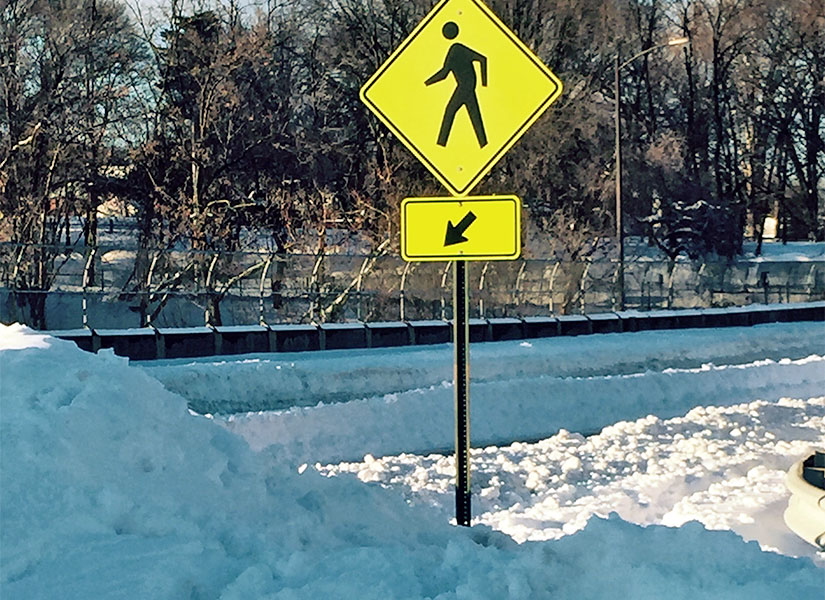
Pedestrian walk sign next to a large snow bank (photo courtesy Dennis W.)It’s generally agreed that it would take awhile to recover and clean up from this past weekend’s historic blizzard, which dumped some two feet of the snow on Arlington. But that’s not stopping a myriad of complaints from rolling in.

Since the storm county crews and private contractors have been working in shifts around the clock to clear roads, sidewalks and parking lots. As expected, even today there are plenty of examples of places untouched or barely touched by snow crews.

Some Arlington residents — especially those along major arteries and Metro corridors — have had their street cleared to the point where it’s drive- or walk-able. Others, especially those in single-family home neighborhoods, have not been so lucky.

As of 1:30 this afternoon, Arlington County said half of all residential streets have been plowed. Snow crews have been working for 92 straight hours, the county said.

Some residents who remain snowed in are taking the “keep calm and carry on” approach. Others, however, are upset and are expressing their displeasure on TV, on social media and in emails to ARLnow.com.

After the jump: some of the letters — and photos — sent to ARLnow.com by local residents.

(more…)


Snowy roads in Rosslyn

The following letter to the editor was submitted by Thomas Crane, a Fairlington resident who had a recent experience in Courthouse that inspired him to write us. 

Dear Editor:

As the winter storm interrupts our lives for the next few days, most of us will likely get along just fine. If you’re like me, you’ve stocked up on the essentials and plan to binge watch Netflix . . . until the power goes out, at least. Others will need help.

On Wednesday night, there was a lesser storm in the area that served as a proper wakeup call. I nearly lost all faith in humanity that evening. Sadly, most people stood idly and laughed as cars collided with other cars, curbs, and signs. On the other hand, one person was extremely helpful and his actions inspired me to write this piece.

It was about 8 p.m. and I was on my way home from a community meeting — ironically, the meeting topic “emergency preparedness”– and a few inches of snow caused extremely icy conditions. I took a shortcut to avoid reckless drivers and I came to a “T” where I could turn left and slide down a steep icy hill, turn right and get stuck and probably slide backwards down the hill, or go in reverse up a hill and probably slide into every car parked to the left and right. Two other car accidents were already visible as I approached so I pulled over and got out to see if everyone was okay. They were.

A crowd of mostly young men formed and, with hands in pockets, watched as several cars attempted the hill. The crowd was entertained as car after car slid dangerously up and down the hill. Not one person jumped in to help. Eventually, some onlookers half-heartedly tried advising drivers from attempting the hill. Some convinced the drivers they could make it if they just took their foot off the brake and did this or that. It seemed like all the onlookers were armchair experts. I did my part to deter some cars and push a couple others.

I started talking with a guy named Mike who lived next door and was late to the scene. We were chatting and I said I’d been there for over an hour and was waiting to see if a car of my caliber could actually conquer the hill. He invited me inside his home to warm up and check the news to see if conditions would improve. Soon, he invited me to stay the night, and I did. His family was extremely welcoming and kind. I remain blown away by his kindness to a complete stranger.

In emergencies and difficult times, we must be able to rely on our neighbors. Don’t be afraid to ask for help, and please, don’t be hesitant to offer help. Below are 5 great ways to help others.

Knock on your neighbors’ doors and say “hi.” Ask if they’re prepared to hunker down for a couple days. You can learn who may need help and who can give help. Maybe you’ll want to get friendly with those who have a propane grill, generator, firewood, and other essentials that may be shared if need be.

Shovel snow. This is as desirable as helping a friend move, but those you help will be eternally grateful. I remember a young Marine helped shovel a bunch of cars out of our apartment complex during Snowmaggaden of 2010. Thank you, Marine!

Give a push. If you see a car that is stuck, go ask them if they need a push. And push! And get others to help you push.

Inform and advise. Some people are apathetic to this storm. But if you’re well informed about the current forecast and hazards and know what action to take, tell others. Spread the word on how to get prepared.

Give shelter. Offer to open your home to those in need. Of course, take safety precautions but don’t let fear deter you from hospitality.

Please comment on other ways to help, and how others have helped you.

Sincerely,

Thomas Crane

ARLnow.com occasionally publishes thoughtful letters to the editor about issues of local interest. To submit a letter to the editor, please email it to [email protected]. Letters may be edited for content and brevity.


peter_rousselot_2014-12-27_for_facebookPeter’s Take is a weekly opinion column. The views and opinions expressed in this column are those of the author and do not necessarily reflect the views of ARLnow.com. 

Several months ago, I wrote a column outlining some of the legal and policy issues raised by Airbnb’s operations in Arlington. That column presented public information about the scope of Airbnb’s Arlington activities and concluded:

Right now, Arlington County should NOT go down the path of cities like Richmond, Charlottesville and Roanoke by spending time and energy looking for strictly local ways to regulate and tax Airbnb or its participating property owners. Instead, Arlington first should focus on seeking a fair and uniform state-wide regulatory framework for Airbnb and entities like it. A Virginia state-wide solution ultimately might lead to an agreement by Airbnb and similar entities to act as the tax collection agents for localities like Arlington. Airbnb already has worked out such deals in D.C., San Francisco and Portland, Oregon.

The possibility that there might be a Virginia state-wide regulatory framework to regulate Airbnb’s operations has moved a step closer. Del. Chris Peace (R-Mechanicsville) has filed a relevant bill (H.B. 812).

Summary

As currently drafted, H.B. 812 would do three things:

  1. Establish a uniform, state-wide regulatory framework to regulate operations like Airbnb and FlipKey
  2. Preempt any local ordinances and regulations inconsistent with that state-wide regulatory framework
  3. Allow limited regulation by localities like Arlington so long as that regulation only relates to areas specifically authorized in the state legislation.

State-wide Regulatory Framework

H.B. 812 uses the term “limited residential lodging” (§ 55-248.53) to define the types of stays that platforms like Airbnb facilitate. Limited residential lodging means:

the accessory or secondary use of a residential dwelling unit or a portion thereof by a limited residential lodging operator to provide room or space that is suitable or intended for occupancy for dwelling, sleeping, or lodging purposes, for a period of fewer than 30 consecutive days, in exchange for a charge for the occupancy, provided only that…the primary use of the residential dwelling unit shall remain as a household living unit.

The Virginia Department of Taxation would be authorized to collect a tax from either the residential lodging operator or a hosting platform like Aribnb, and to remit a portion of those revenues back to a locality like Arlington. H.B. 812 would not apply to limited residential lodging of 90 or more days in a calendar year (§ 55-248.54 (C)).

Limited Local Regulatory Authority

Localities like Arlington would retain authority to regulate residential lodging operators with respect to nine subcategories of issues (§ 55-248.55) such as noise, safety, and liability insurance.

Conclusion

The status quo — in which Airbnb and other similar hosting platforms operate in Arlington and throughout Virginia in a legal never-never land — is not good public policy. Whatever its prospects in this legislative session, H.B. 812 represents a significant step forward in identifying the kinds of issues that state-wide legislation must address.

However, the 90-or-more-day carve-out from the “limited residential lodging” definition is far too harmful to hosts and should be scrapped.


Greg Greeley (Progressive Voice)By Greg Greeley

Progressive Voice is a weekly opinion column. The views and opinions expressed in the column are those of the individual authors and do not necessarily reflect the views of their organizations or ARLnow.com.

The Arlington Way has been much discussed over the last few years amid concerns that the “Way” has been lost. Our experience on the South Arlington Working Group (SAWG) planning for a new school suggests that we can still achieve consensus while doing so in an inclusive and prompt manner.

We do still need a way of ensuring that our elected leaders’ decisions about Arlington’s future have broad community support, especially with the number of decisions needed to address school capacity concerns.

As we consider how to update the Arlington Way the SAWG process — swift and inclusive — may point to what we need to meet the demands of our changing community and growing school population.

In June of 2014, Arlington Public Schools (APS) identified the Thomas Jefferson site as its preferred location for a new elementary. The County Board, in response, formed the Thomas Jefferson Working Group to consider the feasibility of building a new school on the site. The TJ Working Group was able to establish a number of thoughtful considerations for the use of the site, but could not build a consensus that the Jefferson site should be for a new elementary school.

There were many community questions about alternative sites and how a school on the Jefferson site would be used. Ultimately, the County Board deferred on approving the site and asked the School Board to help develop a consensus regarding location of a new elementary school.

In response, the School Board set up SAWG and invited a broad cross-section of community participants. This included every Civic Association in south Arlington, PTAs from every south Arlington school, and a number of community-based organizations. These stakeholders brought different views to the table — and different ideas about how to address school capacity.

One challenge was that capacity needs in south Arlington were not evenly distributed. The three schools projected as most overcapacity in 2019 were Barcroft, Henry and Oakridge. Barcroft and Henry are on the western side of south Arlington and Oakridge is on the eastern side. Thus, it would be challenging to find a single school site that could relieve capacity issues for all three schools.

The SAWG members wanted new options. They considered every APS property and every County property in south Arlington. The members also reviewed potential privately-owned sites. This interest and outreach ultimately led to not one, but two private property owners coming forward. Both had serious proposals for providing the County with land in return for building more densely on their remaining property.

With a large, diverse group, some thought SAWG would not reach a conclusion. But, we pushed for open discussions and stepped outside of narrow, parochial viewpoints. We also sustained a healthy dialog with APS and County staff. Ultimately, we came up with three, interlocking recommendations.

First, we recommended that APS build a new home for Henry Elementary at the Jefferson site. These new seats are well-located to relieve crowding at Henry and Barcroft. Also, knowing that this new building would be a neighborhood school was an important consideration for many stakeholders.

Second, we paired the Jefferson/Henry recommendation with a plan to move the Montessori Program from Drew Model School to the current Henry building, opening approximately 400 seats at Drew. This pairing was important because it provides needed capacity for schools on the eastern side of south Arlington. And, by separating two programs now housed at Drew, it helps ensure the success of both programs.

Third, we concluded that a second elementary school would be needed in the Pentagon City area. Oakridge is our only elementary school east of Interstate 395. We expect that population growth will require another school. By starting planning now, we can thoughtfully consider such options as the potential joint use of the Aurora Hills Community Center and the offer of land for a school at the River House property.

SAWG members did get new options on the table that had not been considered before. We also moved quickly and came up with recommendations that met our charge — and more. Consensus was broad. Our site recommendation received unanimous support from both boards.

Most importantly, our recommendations quickly received support from our communities. This shows that what Arlington needs today in finding our “Way” forward can be achieved.

Greg Greeley was a member of the Thomas Jefferson Working Group and the Chair of the South Arlington Elementary Working Group. He is a long-time resident of Arlington and has been an active parent in Arlington schools.


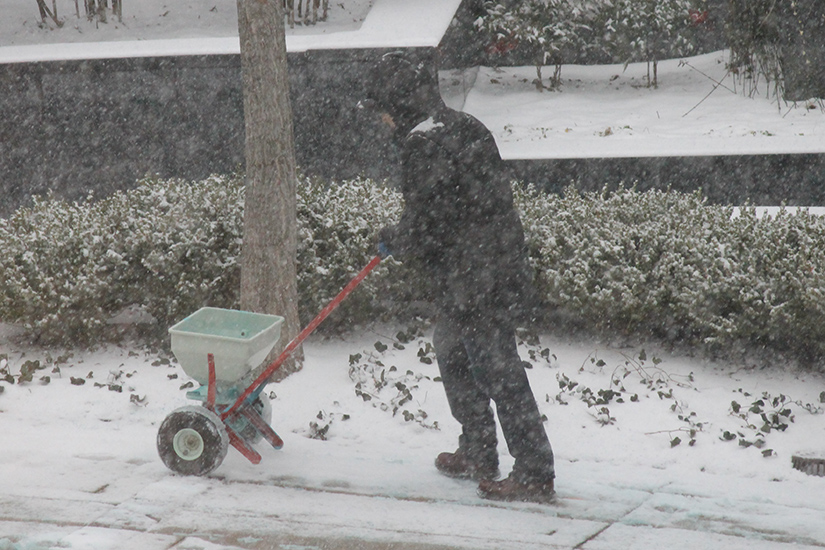
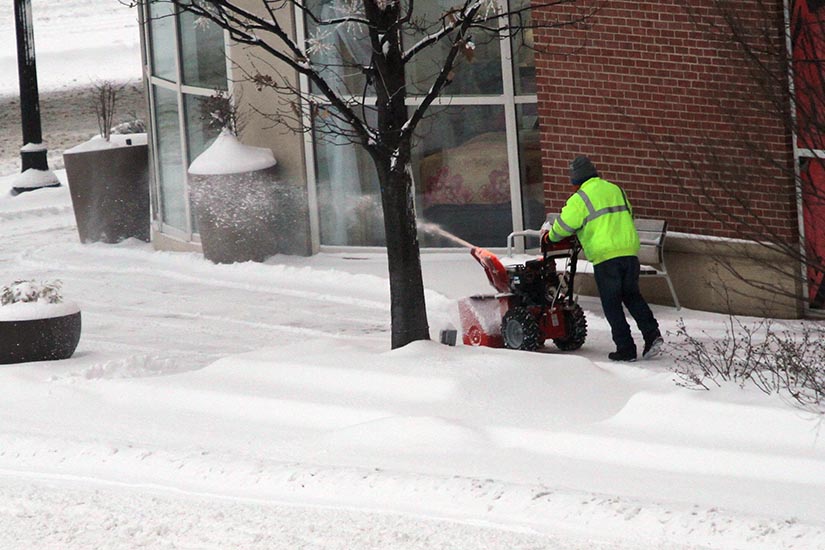
Plowing snow in Pentagon City

The latest forecast suggests a “crippling” blizzard is headed for the region, with snowfall totals in the double digits and strong winds possible. And before we go any further, let us remind you that you asked for this just one week ago.

With any winter storm comes a lot of excitement and plenty of panic. How have you prepared thus far? Snowblower gassed up? Are your shovels sharpened? Did you buy the bread, eggs and milk?

It also comes with a healthy dose of skepticism. After all, how many times have we woken up to a light dusting when we were promised snowmageddon?

So, we want to hear from you: Are we snowtally doomed? Or does the hullabaloo surrounding the latest forecast make you want to tell people, “snow way, Jose.”

File photo


View More Stories