Katie Cristol and Christian DorseyThe calendar year is coming to a close, which means local government has some decisions to make before the new year.

The County Board’s monthly meeting is tomorrow, and many conversations this week have been about what its members are expected to approve. Many of the items on the agenda focus on projects scheduled to take some serious steps forward in the next year.

Parks are certainly toward the front of the Board’s mind, having to consider awarding a contract to a construction company for the $1 million renovation of Tuckahoe Park and finalizing a land acquisition to continue expanding Benjamin Banneker Park.

Another project has been waiting for funding and Board approval since the Arlington Presbyterian Church’s congregation first approved it more than two years ago. The proposal would tear down the church and replace it with affordable apartments.

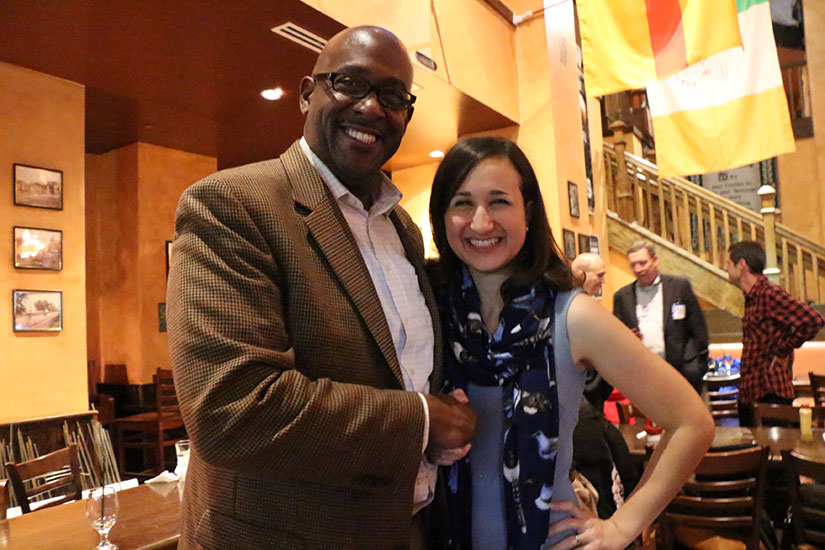
This week’s meeting is also the last — not including the recessed meetings that are scheduled to follow — for Mary Hynes and Walter Tejada. Newly-elected Board members Katie Cristol and Christian Dorsey (above) will be sworn into office at a ceremony scheduled for Monday evening.

Are you planning to attend or watch the County Board meeting? Feel free to discuss the agenda items or any other topics of local interest in the comments.

Have a nice weekend!


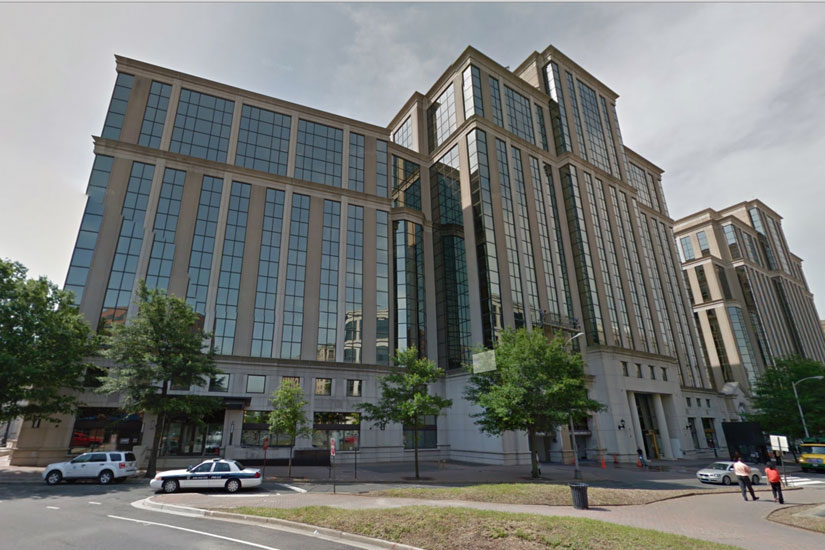
Arlington County government's offices at 2100 Clarendon Blvd

The following letter to the editor was submitted by Dave Schutz, a 30 year Ashton Heights residents, regarding the Arlington Way.

Dear Editor: This letter responds to the Dec. 3 Progressive Voice column by Mary Rouleau.

Ms. Rouleau suggests that recent dissension in our community shows that the Arlington Way needs to be updated, and that it’s time for an Arlington Way 2.0. Ms. Rouleau says that the current practice, even though advisory groups generally advocate the progressive options which the County should follow, does not adequately inform residents to build the necessary consensus for these options. She says it is “…important that the County government provide the public with facts that support its decisions and a description of the public purposes served by the decisions… there is a wide information gap on that set of issues alone… the County has the resources to reach more households and should be a primary source of information for explaining the use of public assets and resources..”

I agree with Ms. Rouleau that there’s an Arlington Way problem, but what I see is that the problem is basically that we have left behind the original Arlington Way 1.0, are already in Arlington Way 2.0, and this has led to the turmoil we have seen.

Arlington Way 1.0 involved the Board seeking input from citizens who brought to an issue group a wide variety of perspectives, and the Board sought a way forward which would leave most residents satisfied with the direction. It was widely popular. About fifteen years ago we shifted to Arlington Way 2.0, in which the Board would recruit mostly-advocate advisory group members whose views at the outset matched those of the County Board majority.

Since the shift, there has been a growing buzz of rejectionist comments directed toward task force products, as well as doubt and opposition from budget-minded people in civic organizations. To complete the picture, the County Board can push necessary approvals for a proposal to well before or after an election, and then claim that it’s been legitimated. Anyone who did not work the process earlier has no standing, it’s the Arlington Way, and it can’t now be changed because the board has decided. I think it would be well for our community if we went back to Way 1.0.

WTOP quoted Chris Zimmerman (a man who will never again face the voters) in Feb. 2014: “In the end, each Board member has to make a judgment about what is best for the community… Leadership is the unflinching exercise of that judgment without regard to momentary swings in popularity. I believe that the great success Arlington has had is the result of the combination of leaders who actively engage the people; listen closely to what they’re saying; and then chart a path that they, in their best judgment, believe is most likely to result in the ultimate happiness of the community; and the willingness of the people in this community to let them do so.”

I think this exemplifies the mindset which has led to Arlington Way 2.0. As an example, on the trolley, Zimmerman and his acolytes badly overestimated the willingness of the community to go down the road they had identified, and their advisory process did not adequately warn them of what was about to happen. Likewise on a number of other issues, including the Natatorium. Though the Board majority gavelled through the Affordable Housing Master Plan last month, it had been the source of a great deal of dissension — again, Arlington Way 2.0.

Ms. Rouleau suggested that the County government organize to advocate for new progressive initiatives. I’m not convinced that this would guarantee success: it’s very much what was done for the Columbia Pike trolley, hundreds of thousands of dollars went into the Mobility Lab for pro-trolley propaganda and the under-fifty thousand dollar oppositional spending of the Arlingtonians for Sensible Transit carried the day.

ARLnow.com occasionally publishes thoughtful letters to the editor about issues of local interest. To submit a letter to the editor, please email it to [email protected]. Letters may be edited for content and brevity.


Larry RobertsBy Larry Roberts

Progressive Voice is a weekly opinion column. The views and opinions expressed in the column are those of the individual authors and do not necessarily reflect the views of their organizations or ARLnow.com.

This week, progressive Democratic leaders from the three DMV jurisdictions appeared on stage together at a Capital Region Business Forum held in McLean. Virginia Governor Terry McAuliffe, D.C. Mayor Muriel Bowser, and Maryland State Senate President Mike Miller were at times both cooperative and competitive in discussing how the region and each jurisdiction can move forward successfully.

The topics discussed will have major ramifications for Arlington in the years ahead.

All three leaders are committed to growing the region’s economy and enhancing its competitiveness in a global economy.

They did not view business only through the lens of lower taxes and less regulation. They identified other issues key to our region’s economic future — transportation, K-12 education, research and entrepreneurship, higher education, affordable housing, environmental sustainability, green space, access to health care. They also view economic success being dependent on regional cooperation and coordination.

They see a continued influx of residents to the District of Columbia. Fairfax, Loudoun and Prince William Counties will continue to grow rapidly. Maryland will move more aggressively to match successes in Virginia and the District.

All spoke of diversifying an economy too heavily dependent on federal spending. They emphasized the importance of foreign investment in our region and a vibrant tourism sector.

These initiatives will have consequences — likely dramatic ones — for Arlington, whether we choose to engage them or not.

There will be increasing pressure for moving more cars through Arlington unless we are fully engaged regionally and with Richmond to develop multimodal solutions that work for outer jurisdictions and show a willingness to contribute resources.

Our top-tier schools will attract more families to Arlington for educational opportunities. In response, we can grow our commercial tax base to support increased school enrollment or pay higher residential taxes to fund education. Or we can be involved in regional efforts to promote educational excellence in other jurisdictions to ease some of the growth pressure on Arlington’s schools.

We can compete nationally and internationally for new and innovative business opportunities through investments in Arlington Economic Development, or we will see other jurisdictions strengthen their commercial tax base while ours remains stagnant or declines.

We can work aggressively on housing affordability and affordable housing issues, or we can see more people priced out of Arlington, as its location near the District and regional population growth pushes land values higher.

As we enter a new year in Arlington, we can expect to see renewed emphasis on scrubbing our budget to reduce spending, concerns about changes that have come to Arlington, and a desire to keep things the way they have been.

Yet as other jurisdictions grow in population and economic strength, we risk being without a seat at the table as decisions are made and priorities are set if we miss the larger picture.

There has been much talk about the need for strategic planning in Arlington. My hope is that such planning will include an intense focus on how we can most effectively play a key role in state government and the Capital Region.

A heavily internal focus will mean that changes all around us will not work to our advantage and we will have a harder time maintaining our level of success.

Historically, Arlington has “punched above its weight class” through its intelligent planning, creative use of resources, willingness to place resources behind priorities, care for others, an understanding of the economic power of diversity and inclusion, sound finances, a strong commercial sector, excellent schools, multimodal transportation investments, unity of purpose, and political will.

Remembering what has made us great, looking for ways to improve, and engaging more fully in state and regional issues will all be necessary to ensure a bright future for Arlington.

We can only retain the best and most important unique qualities and values that have defined Arlington if we are fully cognizant of, willing to engage in, and help shape the significant change ahead for our Commonwealth and our region.

Larry Roberts is a 30-year resident of Arlington and an attorney in private practice. He chaired two successful statewide campaigns and is a former Chair of the Arlington County Democratic Committee.


Mark KellyThe Right Note is a weekly opinion column. The views and opinions expressed in the column are those of the author and do not necessarily reflect the views of ARLnow.com.

Here we go again.

A few days ago, County Board Chair Mary Hynes wrote a letter to the Virginia Department of Transportation sounding an optimistic tone on the opportunity to work on HOT lanes inside the beltway on 395. Those lanes were part of the original HOT lanes project proposal in the region, dating back to Democrat administrations of Mark Warner and Tim Kaine in Virginia.

In 2006, then County Board Chairman Chris Zimmerman sent a similar letter to VDOT outlining what sounded like Arlington’s conditional support for HOT lanes on 395. In the letter, he even described the need for a HOT lanes exit at Shirlington — an exit he later vehemently opposed.

The Board seemed to sour on the idea of HOT lanes in general as time moved on. By 2010, the County Board had sued everyone they could think of to stop the HOT lanes from happening. They even sued individual civil servants, requiring them to hire lawyers to defend against the claims. The addition of individuals to the suit drew some of the harshest criticism for it.

Eventually, an exasperated VDOT announced they were abandoning plans for the project inside the beltway. But, Arlington taxpayers paid around $2 million for outside counsel to file and pursue lawsuit before the County Board dropped it.

If you work at VDOT, you may be feeling like Charlie Brown staring at the football in Lucy’s hands wondering if it will be pulled away just as you start to kick it. You may also be wondering if you may some day be a defendant in a lawsuit.

Regardless of where you stand on the issue of adding a lane in each direction, you have to wonder what path the Board is really heading down now. Is the Board actually serious about finding a way to add this lane of traffic? Are some of the demands in the letter actually impossible for VDOT to meet?

What are the chances the Board, with two new members about to join, balk again later in the process? And would the Board spend $2 million or more to sue again if they didn’t like what Governor McAuliffe’s administration decided?

Only time will tell. At the very least, let’s hope they can work it out without handing taxpayers another $2 million legal bill.


peter_rousselot_2014-12-27_for_facebookPeter’s Take is a weekly opinion column. The views and opinions expressed in this column are those of the author and do not necessarily reflect the views of ARLnow.com.

Background

In its recent front-page editorial about the mass shooting in San Bernardino, California, the NY Times editorial Board stated:

[M]otives do not matter to the dead in California, nor did they in Colorado, Oregon, South Carolina, Virginia, Connecticut and far too many other places. The attention and anger of Americans should also be directed at the elected leaders whose job is to keep us safe but who place a higher premium on the money and political power of an industry dedicated to profiting from the unfettered spread of ever more powerful firearms…It is not necessary to debate the peculiar wording of the Second Amendment. No right is unlimited and immune from reasonable regulation.

There are reasonable regulations — consistent with the Second Amendment right to bear arms — that Virginia can and should adopt to reduce gun deaths.

Discussion

If a particular gun control proposal is consistent with the Second Amendment and is shown to be likely to prevent multiple future fatalities, it doesn’t matter whether it would have prevented other fatalities. The life saved could be yours.

For example, Virginia can and should close the so-called “gun show loophole.” This loophole should be closed because, under current Virginia law, background checks that are required to be performed on people who seek to buy guns at Virginia gun stores are NOT required to be performed on people who buy guns at Virginia gun shows.

All members of the Virginia House of Delegates representing Arlington — Patrick Hope, Alfonso Lopez, Rip Sullivan, and Mark Levine — support Virginia legislation to close this loophole. An online petition supporting closing this loophole now has over 30,000 (!) signatures.

Another significant set of gun control laws that Virginia can and should enact would tighten the criteria governing access to guns by people with documented severe mental or emotional problems. A report from the Educational Fund to Stop Gun Violence determined that of 109 domestic homicides in Virginia last year, 64 were committed with guns.

The group recommended state-level legislation, which [Governor] McAuliffe has backed, that would prohibit gun possession by anyone under a protective order or those convicted of misdemeanors related to domestic violence.

Conclusion

Even Justice Scalia has acknowledged that:

Nothing in our opinion [about Second Amendment protections] should be taken to cast doubt on longstanding prohibitions on the possession of firearms by felons and the mentally ill, or laws forbidding the carrying of firearms in sensitive places such as schools and government buildings…

All we need in Virginia is for our legislators to have the courage to legislate within the constitutional boundaries that the U.S. Supreme Court has provided to them.


Cow (photo by USDA via Wikipedia)

The following letter to the editor was submitted by Bob Meyerson, a former Arlington resident, regarding development in the county and government spending.

I am almost 70 years old. I grew up in Arlington. I was last in Arlington in October for a reunion of (if you can believe it) the Woodlawn Elementary School Class of 1958, and recently before that I attended the W-L class of 1964 50 year reunion.

My purpose in writing is to express my utter shock and dismay at how Arlington has been destroyed, and for no good reason that I can discern, except for greed. There is no reason that so many people and hi-rise buildings should have been jammed into, as your publication proclaims, the smallest self governing county in the country. Why couldn’t the county have been left as it was in the “old days,” i.e., with predominantly single family home neighborhoods, albeit perhaps upgraded, renovated or replaced with more modern structures?

And commercial areas, i.e., Ballston, Clarendon, etc., rejuvenated without creating these New York City type ant hill like colonies with people jammed together? Why, I can’t even find my way around most of the county any more!

When I was in the first grade at John Marshall Elementary, I remember riding the school bus by an old house on Military Road with a milk cow in the front yard! And, when I was older, I remember a newspaper story of an old woman who lived on a small farm just off Glebe Road near Chain Bridge, who was evicted from her property for her inability to pay inflated taxes on a property she had lived on for most of her adult life…just so developers could build a bunch of (even for those days) McMansions. Also, I’d be really interested to know how much money the county and its residents have had to expend over the years on larger government, larger numbers of county personnel, greater numbers of emergency vehicles, larger structures to house county government and other inflated county expenditures. In Tuesday’s issue of your publication, there are stories about Arlington spending $637,500 here, and a million dollars there, like it was chump change!

I am not saying Arlington should have remained in the 1950s and 1960s (although I do miss that time period there). I am saying Arlington could have remained a successful, serene “bedroom” community adjacent to Washington, D.C. Instead, it is a place I can’t even recognize or claim as my home town anymore. Sadly, I would no more move back there (even if I could afford to) than I would move to Manhattan, New York City.

Bob Meyerson
Formerly of N. Woodstock Street and N. Quebec Street

ARLnow.com occasionally publishes thoughtful letters to the editor about issues of local interest. To submit a letter to the editor, please email it to [email protected]. Letters may be edited for content and brevity.

Photo by USDA via Wikipedia


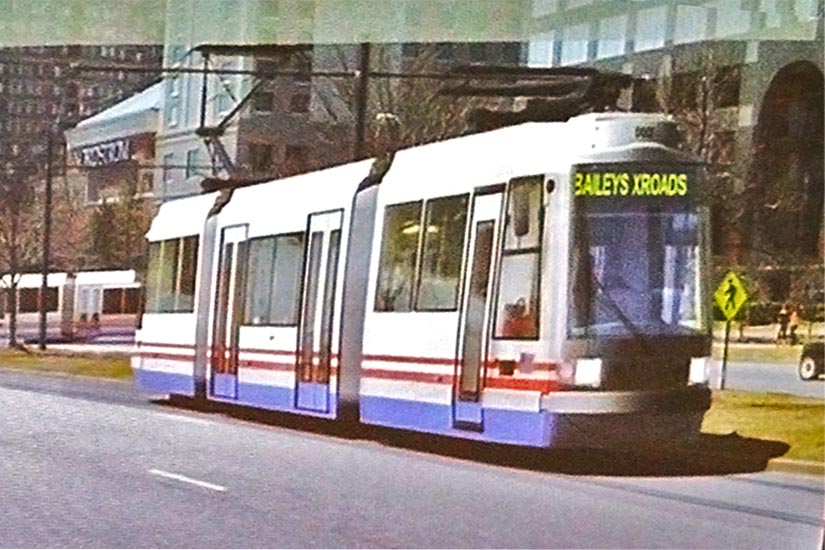
Rendering of a streetcar in Pentagon CityJust over a year ago, the Arlington County Board voted to scuttle the county’s controversial streetcar project.

The next day we conducted a poll, asking whether the County Board made the right decision. About 62 percent of 3,280 respondents said yes, while 38 percent said no.

Over the weekend, the Washington Post published an article entitled “How D.C. spent $200 million over a decade on a streetcar you still can’t ride.” The article details a decade-plus-long string of delays, questionable decisions and cost overruns.

Also published over the weekend on YouTube: “The D.C. Streetcar Song,” a re-dubbed clip from the classic Simpsons monorail episode.

Meanwhile, Columbia Pike — for which the streetcar was to provide an enhanced transit experience — continues to be clogged by traffic and long lines of buses at rush hour. The Pike is continuing to develop, albeit slowly.

Given the continued bad news about the crash-prone and long-delayed D.C. streetcar — or a year of reflection on the current state of traffic and development on Columbia Pike — we’re wondering whether any Arlington residents have changed their minds.

A year later, do you agree with the decision to cancel Arlington’s streetcar project?


Chanukah on Ice 2012 at Pentagon RowHappy (almost) Hanukkah to the Jewish members of the Arlington community. The holiday begins Sunday evening at sunset, followed by eight days of celebrating the Festival of Lights.

And to those who celebrate Christmas but haven’t picked up a tree or decorated yet, you could find yourself falling behind the holiday cheer. There are, however, plenty of opportunities for you to catch up, especially with the sunny weather expected this weekend.

There are holiday markets and festivals at churches and schools this weekend. Celebrating with an experience is another way to get into the spirit, either by going to a performance of The Nutcracker, bringing your family to a sing-along or attending a holiday concert. See our event calendar for details.

Feel free to discuss holiday plans, weekend events or any other topic of local interest in the comments. Have a great weekend!


Mark KellyThe Right Note is a weekly opinion column. The views and opinions expressed in the column are those of the author and do not necessarily reflect the views of ARLnow.com.

The week before Thanksgiving, County Board members Vihstadt and Garvey teamed up to question the closeout spending process. They asked the Board to at least delay the decisions on spending nearly $22 million in excess revenue till the new members were seated in January.

Kudos to Vihstadt for raising the issue as part of the closeout process and drawing more public attention to it. As Garvey noted, it would be “much better governance to make sure your spending goes through the budget process.”

Outgoing members Tejada and Hynes were not amused. Hynes claimed the public supported the Board’s plans for the year-end spending, despite having virtually no public input on the specifics of the just-released plan. Tejada called the Vihstadt proposal to pump the brakes on the spending measure “unreasonable and unneeded.”

If your goal is to spend tens of millions of dollars in a way that does not catch the attention of the public, then you agree with Tejada. If you never want to give taxpayers a break, then the 3-2 vote to forge ahead without additional public scrutiny makes a whole lot of sense.

The $22 million in year-end surplus revenue is just the tip of the iceberg in closeout spending and the need to shed more light on it. Arlington Public Schools ended up spending $25.6 million less than they budgeted for the previous fiscal year.

As part of the same meeting, the County Board considered budget guidance for the next fiscal year. Once again, the staff report raised the issue of a so-called budget gap, to the tune of around $15 million total between schools and the county budget.

In recent memory, Arlington has not faced a budget shortfall. There will be no budget gap next year either.

County Board members had just voted to spend tens of millions of dollars in excess revenues, just like they do every year. To allow for any pretense at the same meeting there will be a budget gap next year borders on ludicrous.

Despite claims to the contrary, the threat of a budget gap has nothing to do with conservative budgeting. It is put in play to give Board Members an excuse to once again force the taxpayers to pay more.

For the next four to five months of the annual budget process, the Board can talk about the budget gap. How they must make difficult choices. How they cannot lower taxes.

Unless Vihstadt and Garvey can convince one of their new colleagues to change the way the Board does business, we will be right back to this point a year from now. The Board will be spending the taxpayer-funded proceeds of another budget surplus and talking about the next budget gap.


peter_rousselot_2014-12-27_for_facebookPeter’s Take is a weekly opinion column. The views and opinions expressed in this column are those of the author and do not necessarily reflect the views of ARLnow.com. 

As the Washington Post reported on Nov. 25, the Arlington School Board is “moving toward a compromise” under which the historic desegregation events at the Stratford school site on Vacation Lane would be honored. However, under the compromise, the school building itself would not receive a formal “local historic designation” as demanded by the Historic Affairs and Landmark Review Board (HALRB).

This is the type of compromise the School Board should have reached much sooner.

Background

According to the Post story:

The School Board last week adopted a plan for an addition that leaves intact the façade of the building and that satisfies some of the requirements of historic designation. The planned remodel will cost between $31 million and $36 million, according to preliminary estimates, and will add 35,000 square feet of space to the school. And the board set aside $250,000 for commemorative artwork and educational displays to ensure the community knows the history of the building. School Board members said the money might also be used to enhance what is taught in the classroom about Arlington’s history of desegregation.

The vote on this proposal was 3-2 (Van Doren, Lander, and Violand-Sanchez voting for; Kanninen and Raphael voting against).

The final School Board vote on whether to grant formal local-historic-designation status to the current building is now scheduled for Dec. 8.

Discussion

This most recent Stratford compromise plan, while certainly not the only compromise that might be appropriate, does contain the two critical elements that should be present in any compromise:

  1. Honor the historic desegregation events that took place at this site, but
  2. Do NOT formally designate the current building as a “local historic site,” thereby triggering all the review and approval requirements for subsequent changes to the building that would flow from such a formal local historic designation.

As I have written recently, our community is confronted with a set of serious challenges to build new schools, fire stations, and other public facilities without clear priorities to fit the cost of all these new facilities within a budget we can afford. The School Board is absolutely correct to be concerned about unnecessarily adding to this cost at the current Stratford school site:

Such a [formal local historic] designation could hamper school officials’ efforts both at the proposed $30-plus-million renovation, but also would add hurdles for any future exterior changes to the school.

Conclusion

In light of the complexity and cost of all the new construction issues APS has to confront throughout the County, the School Board quickly should wrap this one up by voting NO on local historic designation for Stratford.


Mary Rouleau

By Mary Rouleau

Progressive Voice is a weekly opinion column. The views and opinions expressed in the column are those of the individual authors and do not necessarily reflect the views of their organizations or ARLnow.com.

Last year, I attended a workshop focused on crafting a conversation about and building public support for “the common good” in Arlington. In my view, the workshop helped counter the view that government was the problem — or at least a large part of it — in a climate of “no trust” and partisan gridlock.

While the “no trust” description readily applies to the other side of the Potomac, there have been threads of the “no trust” narrative in Arlington in recent years.

I believe Arlington has done many things right over the past 20 years, including balancing the tax base between commercial and residential sources, sustaining strong schools and crafting national best practice models of transit-oriented development, including affordable housing.

But we now face large, complex challenges, including sustained school growth, economic competition, a growing affordability gap and a large number of aging Boomers — and all must be placed in the context of limited available land.

A prior generation of Arlington leaders made tough but good decisions in leading the County. Among the best was siting the Metro underground instead of in the I-66 median. We now find ourselves with a set of “next era” decision points. Those decisions will determine where and how we go forward as a community.

Because we must make these decisions in an era of tight budgets and slower economic growth, it would not be surprising to hear sentiment along the lines of, “Why should I pay for things I don’t need?”

But Arlingtonians have, over the decades, been more sophisticated and progressive, showing a willingness to go where the facts lead, even if there is not a direct benefit to them. Perhaps the most important and consistent indicator of this is the continued support for our schools even though the vast majority of Arlington households have no direct ties to APS.

Pursuing progressive values does not require a blank check to government. And residents should be able to expect not only good outcomes, but also transparency and informed decision-making with public input of various kinds.

It is important that the County government provide the public with facts that support its decisions and a description of the public purposes served by the decisions. My experience with housing issues over the past several years has demonstrated again and again that there is a wide information gap on that set of issues alone.

Advocacy groups can play an important educational role, too, but the County has the resources to reach more households and should be a primary source of information for explaining the use of public assets and resources.

And what of the “Arlington Way” that has guided County decisions? No doubt it has been a key in the public’s support for most of those decisions.

But demographic shifts, the technology explosion, and increasing careers demands support the view that it’s time for an Arlington Way 2.0.

There was talk during the recent election cycle of the need to bring more segments of the community into the dialogue by creating more opportunities for feedback. While true, it’s not enough. We also need ways to get more information about the challenges we face into the community’s hands in a timely and a sustained way. For most issues, this will need to be an ongoing process and not a one-off exercise.

It strikes me that so much energy goes into a typical Arlington study process on the front end that little remains for the rollout. Yet for many people, the rollout is the first time they become aware that change is happening.

We can fairly expect that those who participated in the process understand the reasoning behind the recommendations and outcomes that follow. But to build and maintain a larger community consensus, it is probably even more important for good information — promoting understanding of the importance of the action and why the action serves the common good — to flow after a decision is made.

In a future column, I will discuss the importance of the just-completed Final Report of the Community Facilities Study Committee, both for its substantive recommendations and how it provides an opportunity for greater public awareness and consensus.

Mary Rouleau is a 25-year resident of Arlington. She is the Executive Director of The Alliance for Housing Solutions. This column reflects her personal views.


View More Stories