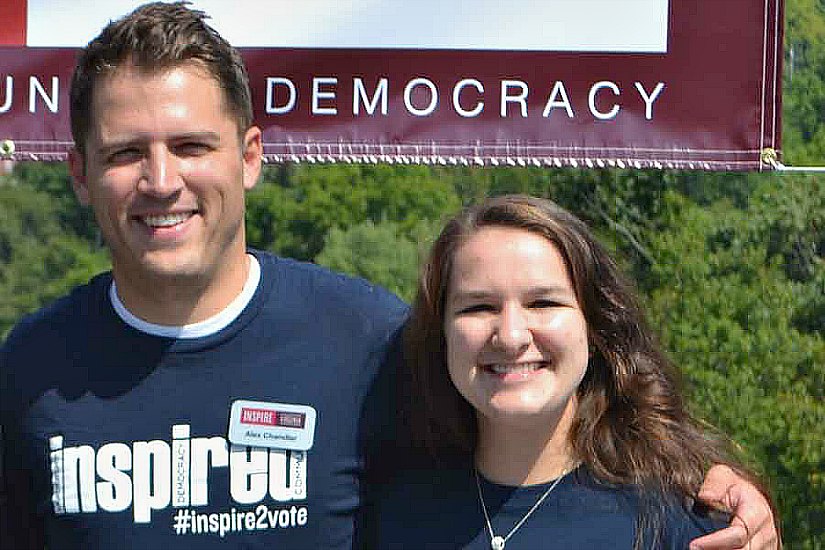
Isabel Alcalde and Alex ChandlerBy Isabel Alcalde and Alex Chandler

Progressive Voice is a weekly opinion column. The views and opinions expressed in the column are those of the individual authors and do not necessarily reflect the views of their organizations or ARLnow.com.

While some of the individual results may be important, proponents of a fair and representative democracy see little to celebrate overall in the 2015 Virginia general election results.

Only 26.5% of eligible voters turned out to vote on Nov. 3. Only 29 out of the 100 House races had a two-party contest. Of those, only six races were seen as truly competitive. Thus, the Washington Post lamented that 2015 was “a carnival of cakewalks” that left the average Virginia voter “powerless.”

Inspire Virginia is a civic engagement organization based in Arlington. We are supported by Project High Hopes, a nonprofit organization that was founded by Ira Lechner, who once represented Arlington in Virginia’s House of Delegates.

Through its work, Inspire Virginia has an understanding of the frustrations identified by the Washington Post and experienced by voters. We believe that hope lies in the youth vote and that is why we support and empower high school student leaders to mobilize the youth vote.

A healthy and representative democracy requires ideas, debate, and votes from every demographic. Young people offer unique attributes that could energize Virginia elections and the political process:

  • Young people are more likely than other age groups to be unaffiliated with a specific party and want candidate interaction beyond just party identification.
  • Surveys in 2000 and 2008 showed 18 to 29 year-olds cared about candidates’ positions on issues over leadership/personal qualities more than any other age group.
  • Studies show active young voters influence members of households to go and vote. It’s simple: young people bring others along with them to vote.

Inspire Virginia is working to transform the way the youth vote is viewed; we must empower every eligible high school student to vote as soon as they are eligible.

In August, Inspire Virginia brought together 60 students from 18 different high schools in six different counties, including Washington-Lee High School in Arlington. Together, these students formed Inspire Virginia’s inaugural class.

Inspire Virginia recruits three or four exceptional leaders in partner high schools across the state.  These juniors and seniors must be willing and committed to improving Virginia’s democracy, starting with their own schools.

We educate, train, and ultimately, inspire these student leaders to return to their schools and mobilize their peers to participate in the democratic process. Our mission is to inspire student leaders in each high school across the state to register every eligible student and empower those students to vote. Already, these “Inspired Leaders” are reaching out to community leaders and asking for greater inclusion of youth in the democratic process.

In the weeks since the summer conference, Inspired Leaders have worked to register 172 voters, and nearly 900 of their peers have pledged to register when they become eligible. These 1,072 youth votes are just the beginning.

As one of our student leaders, Jessica Edwards, a junior at Saint Stephens and Saint Agnes High School, wrote:

“It’s truly incredible to see all the amazing work that other schools are doing through Inspire so quickly. Additionally, it’s great to know that the stereotype that youths are apathetic and lazy is certainly false, as proven by the work of Inspire Leaders all over the nation. “

The coming year presents a unique opportunity for all of us to engage the youth vote. Virginia law allows 17 year-olds to register and vote in primary elections as long as they will turn 18 by the general election. For 2016, that means many seniors can register and vote in both the March presidential primary and the June primary for Congress and other offices. These are two opportunities for young people to become active voters — and get in the habit of voting — even before graduating high school.

Our state, by incorporating the collective youth demographic into Virginia civic life, will reinvigorate an elections process that has been criticized as stale and ineffective. This is why Inspire Virginia is working to register thousands of new, interactive voters across the state. We hope you will join us in welcoming and supporting these new additions to the electorate. For more information, visit our website.

Isabel Alcalde and Alex Chandler are Program Coordinators for Inspire Virginia. Inspire Virginia is the seventh state chapter of Inspire US, a unique program dedicated to supporting students in a year-long civic experience.


Mark KellyThe Right Note is a weekly opinion column. The views and opinions expressed in the column are those of the author and do not necessarily reflect the views of ARLnow.com.

On the next Arlington County Board meeting agenda is the annual close-out process. Despite it being just seven days away, the recommendation from the County Manager is not even online.  This process often allocates $100 million or more in spending and no one outside of County Staff — and presumably Board Members — has seen it yet.

For years, I have railed against this process. In effect, the County Board has a slush fund every fall that they can dip into and spend with almost no public input. While this process may not get the attention of a Columbia Pike trolley project, it has spent far more of our tax dollars and few county residents even know the process exists.

Last year, around $32 million came from revenue over and above what was budgeted for in the spring. In fact, year after year, revenue estimates come in far below actual revenue collections. The County argues this is fiscal prudence. I remain convinced they take the low end of the estimate range so they can advocate for higher taxes to pay for their spending priorities.

What should the County Board do to improve the close-out process?

First step: make it more transparent. The County Board should not vote to spend $100 million with only seven days, or less, notice.

Second step: create a section of the annual budget in the spring of anticipated priorities with close-out funds. Tell the community specifically what you will spend money on if some things you are budgeting for end up costing less than you anticipated. Let people speak to it as part of the budget hearings.

Third step: as part of the new independent audit function, the County Board should ask for a report as to why revenue estimates continue to be off by such a wide margin every year.

Fourth step: start returning excess revenue to taxpayers. Property taxes, not rates but actual tax payments, go up every single year in Arlington. Few of us would object to paying a little less.

With fresh faces on the County Board and a new County Manager on the way, it as good a time as any to bring a more transparency and accountability to the spending process. With any luck, it will lower our tax bills as well.


peter_rousselot_2014-12-27_for_facebookPeter’s Take is a weekly opinion column. The views and opinions expressed in this column are those of the author and do not necessarily reflect the views of ARLnow.com.

Early in 2016, the new County Board should overhaul the seriously-flawed process the current County Board uses to allocate any surplus funds left over at the close of the County’s fiscal year.

Background

Both the County Board and the School Board have fiscal years that end on June 30. Each Board is required, by law, to adopt a balanced budget. In many years, the County Board has closed its fiscal year with substantial surpluses. Since the School Board receives the lion’s share of its revenues from the County Board, the School Board receives a pro-rata share of any such locally-generated surpluses.

However, each Board currently has very different processes for deciding what to do with such surpluses. The School Board’s approach is far superior to the County Board’s approach.

Discussion

At its Nov. 19 meeting, the County Board is scheduled to vote to allocate tens of millions of dollars in prior fiscal year surplus funds. The County Board has scheduled that vote based on a proposed allocation contained in a staff report not posted on the County website when this column was submitted to ARLnow.com. This is exactly the same process the County Board has followed for years. You can review last year’s County staff report’s recommendations regarding how to allocate prior fiscal year surplus funds here.

Many activists believe that the County overestimates expenses and underestimates revenues in the operating budget it adopts each spring. They claim the County does this deliberately so that during the following fall’s fiscal year close-out, the County can eliminate a public review of its close-out recommendations comparable to the public review the budget receives in the spring. County staff counters indignantly that any such suggestions are false because the County’s spring budgeting approach simply demonstrates prudent financial planning for which the staff should be praised.

It isn’t necessary to resolve this heated annual debate over motive because there is a far better process available to guard against the possibility that the activists are correct.

The School Board first receives, posts on its website, and discusses in a public meeting its staff’s recommendations regarding how to allocate any surplus funds. But, the School Board does not vote on its staff’s proposal until the following month. This much fairer and more transparent process allows the School Board to:

  • discuss the initial APS staff recommendations at a public meeting,
  • receive a public report from the APS Budget Advisory Committee, and
  • wait a month to get further input from the general public, before finally
  • adopting the final allocation of any APS surplus funds.

Conclusion

The new County Board should adopt the School Board’s close-out process.


A photo went viral this week, showing a sign at a Nordstrom store.

“We won’t be decking our halls until Friday, November 27,” the sign said. “Why? Well, we just like the idea of celebrating one holiday at a time. From our family to yours, Happy Thanksgiving.”

Never mind that the photo was from 2009, it brings up a discussion-worthy point: has Christmas creep gone too far? Should other retailers hold off until after Thanksgiving to start putting up Christmas decorations?

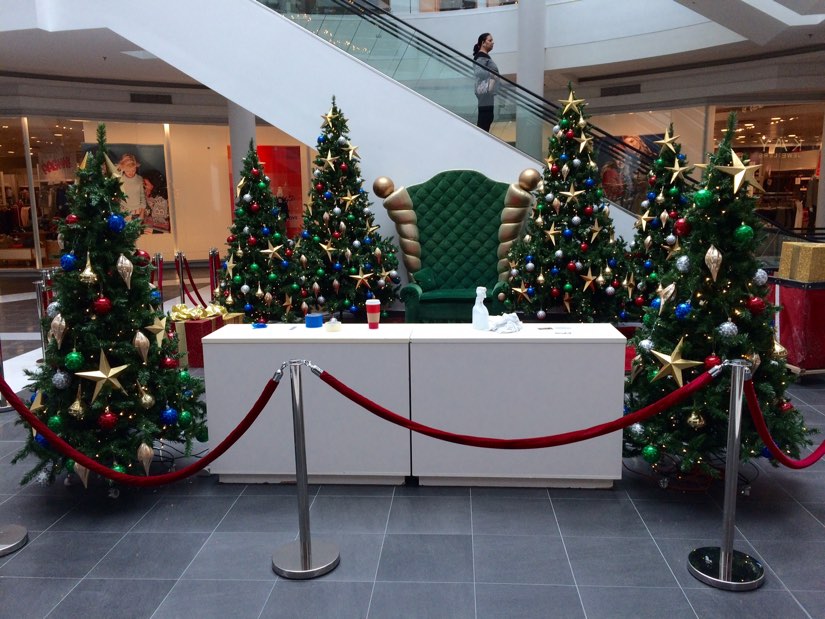
Over at the Nordstrom store in the Fashion Centre at Pentagon City yesterday, there were no signs of Christmas decorations — and no signs of explanatory signs — inside. Outside of the department store was another story: the future home of the mall’s Santa Claus already had decorated trees along with red carpets and rope lines, waiting for Saint Nick to arrive along with adoring throngs of youngsters and parents.

So which would you prefer? A holly, jolly November, or some holiday restraint?


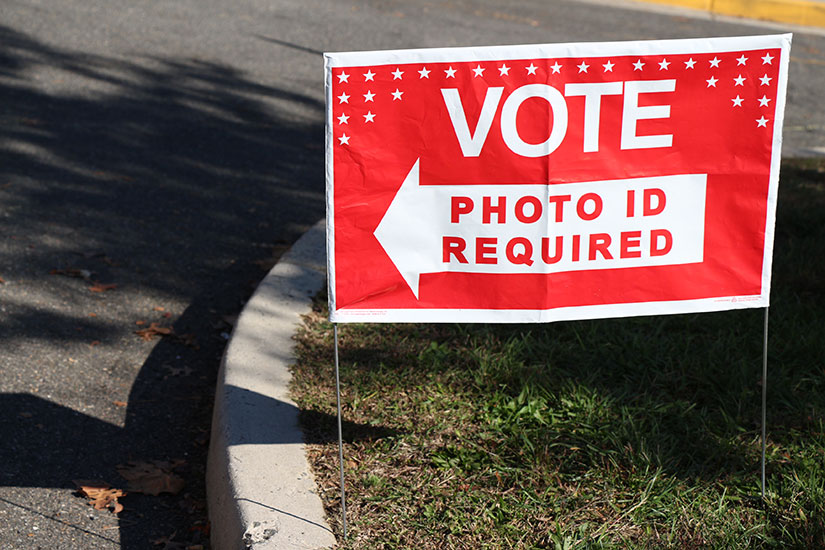
Polling place on Nov. 3, 2015

The overall party affiliation of those on the Arlington County Board might not be changing on Jan. 1, but that doesn’t mean the status quo from a policymaking perspective.

Democrats Katie Cristol and Christian Dorsey will bring a fresh perspective to the Board, following their lopsided victory in Tuesday’s election.

In a way, it’s back to normal for Arlington’s usual pattern of electing Democrats to local office, after John Vihstadt’s election last year flipped the script. But Cristol and Dorsey are not exactly the establishment Arlington Democrats of old, pledging to bring more fiscal responsibility, economic development and an emphasis on innovation to county government

Feel free to discuss the election or any other topic of local interest, in the comments.


Mark KellyThe Right Note is a weekly opinion column. The views and opinions expressed in the column are those of the author and do not necessarily reflect the views of ARLnow.com.

Across Virginia, voters made few changes to their elected representation. Every single incumbent on Tuesday’s ballot in the General Assembly won. The Senate remained 21-19 Republican, and Democrats netted a gain just one of 100 seats in the House, leaving it overwhelmingly in Republican hands.

Despite millions of dollars being spent to retake the Senate, Governor McAuliffe now must work with Republicans if he hopes to achieve any meaningful results in his final two years in office. After ignoring the General Assembly and the Virginia Constitution with his Supreme Court appointment over the summer, the governor has some ground to make up.

In Arlington, the results were a far cry from 2014 when voters delivered a resounding defeat to the status quo by overwhelmingly electing John Vihstadt. Like Vihstadt, Mike McMenamin offered vast community experience to voters.

The voters chose overwhelmingly instead to give two Democratic newcomers a chance on the County Board. Those results mirror Arlington’s recent history in County Board elections as voters reset to their natural predispositions at the ballot box. We will never know if the retiring members Walter Tejada and Mary Hynes would have fared as well with the electorate. But both Cristol and Dorsey promised to do a better job of taking community concerns into account on the campaign trail.

While neither Dorsey or Cristol campaigned on a complete overhaul of how the government budgets and spends our money, they join two other Board Members who have been elected since March of 2012. Four out of five County Board members had to campaign for the office in an environment where voters of all political stripes are growing increasingly concerned that our County Board had taken its eye off the ball when it comes to core functions of local government. And that is a good thing.

Now the newly constituted Board can turn its attention to hiring a County Manager. It will be the first indication of whether it will be business as usual or a new direction.

Paper Ballots

Many voters were surprised to find paper ballots awaiting them at the polls on Tuesday. Some were taken back to their hatred scantron tests in school. But lawmakers wanted to create a paper trail for recount purposes, so we will be filling them out for the foreseeable future.

Election officials at my precinct were welcoming feedback on the paper ballots as they head into a much higher turnout presidential election year. If you have any constructive suggestions, please consider contacting the Registrar’s office or use the comments section below.


peter_rousselot_2014-12-27_for_facebookPeter’s Take is a weekly opinion column. The views and opinions expressed in this column are those of the author and do not necessarily reflect the views of ARLnow.com.

A poop fence and an APS trailer both represent choices that our local governing bodies have made in the past. We can do much better in the future.

Background

In October, ARLnow.com posted a story about the completion of a public art installation on a sewage treatment plant fence. The County Board properly was ridiculed.

In September, ARLnow.com posted a story warning that more trailers were coming to certain schools. Most Arlington parents agree this is a bad idea.

Will the new County and School Boards continue to make choices like these?

Discussion

I believe the new Boards must make smarter choices. The new Boards must deny certain constituencies funding to which they aspire in order to provide more funding to other priorities that have greater community support.

The current County Board has dodged certain critical issues such as developer proffers for school construction. While Fairfax and Loudoun require such education proffers, our current County Board continues to claim that Arlington lacks the legal authority to require them. I say: prove it, then get it.

The new County Board should direct the County Attorney to publish a legal opinion explaining why he claims Arlington lacks the authority. After other lawyers examine the County Attorney’s opinion, if there is a consensus that Arlington indeed does lack such authority, the new County Board expeditiously should direct our Richmond legislative delegation to get that authority. Arlington needs a level legal playing field to enable us to require developers to contribute to all different types of “community benefits.”

The new County Board should lead in organizing a transparent community conversation about our next capital and operating budgets. What priorities does our community assign to using either developer proffers or general obligation bond financing for:

  • education?
  • open space acquisition?
  • affordable housing?
  • public art?
  • other?

We need to develop such priorities to direct both our tax dollars and developer contributions.

At the same time, the new School Board should lead a transparent community conversation regarding new and innovative ways to cut the cost of construction of new schools and additions.

New modular school construction technologies are much:

  • cheaper,
  • greener, and
  • faster

than the current school design and construction approach to which APS staff stubbornly clings. Cheaper new classrooms = fewer trailers.

Examples of modular construction that APS should investigate include:

Conclusion

We need to prioritize spending on core services, not on “totally redefining the traditional role of a fence.” We need more regular classrooms much faster.


Gillian BurgessBy Gillian Burgess

Progressive Voice is a weekly opinion column. The views and opinions expressed in the column are those of the individual authors and do not necessarily reflect the views of their organizations or ARLnow.com.

Arlington Public Schools opened a new elementary school this year, is currently building additions to two other schools, and is building another entirely new school. And the Arlington community is studying where to put another new elementary school. And we need to look at options for the Career Center. And. And. And. There are lots of decisions to make, and these decisions will shape how we live in Arlington.

We need new, creative ideas on how to deal with the capacity crisis in Arlington Public Schools. However, as one wise Facebook commenter wrote, “I feel like these discussions constantly occur in a vacuum, completely ignoring the public processes and discussions that have gone on previously, some of which seriously looked at (and rejected) some of these ideas.”

To fill this vacuum, APS should organize a School Planning 101 session and publish an accompanying website that summarizes the public processes that have come before, explains those that are currently running, and collects relevant data into one easily accessible place. By doing so, APS would not only enable more people to engage in this important process, but also would improve the quality of its decisions.

Many Arlingtonians have already been involved in “More Seats for More Students” or a related process. There have been committees, advisory councils and working groups advising the School Board, the County Board and the Superintendent, all with relevant ideas and recommendations. Coming in fresh to this process is intimidating. When talking to those who have been following this process for years, seemingly every idea has already been considered and evaluated. The enthusiasm of new blood is often quickly tempered by “been there, thought of that, it doesn’t work because.” We need new people and new ideas in this process, and those new people need to understand what has come before. Organizing a School Planning 101 session would enable more people to engage productively.

The work of organizing this information would improve the quality of “More Seats for More Students.” These past committees have made important recommendations, which deserve serious consideration by the School Board and the Superintendent. School Planning 101 should summarize the recommendations of the working groups, providing links to their final reports and other resources. It should also gather the current data that is relevant to school planning — enrollment, projected populations, current capacity and available land – in a place that is easily accessible and up to date. The session should explain the fundamentals of how facilities are paid for, including the difference between capital and operating costs.

The end result would be not only an information session, but also a website so that this information would be available to the general public who could not attend the information session and going forward. This website would gather data and recommendations in one location. Most importantly, as more people become interested in helping out with this important planning process, this website will give them a place to start.

Yes, APS already has a website for “More Seats for More Students.” But it takes you deep into the weeds of the current planning processes. Information on past committees is there, but anyone interested has to dig through the unorganized archive. There is no roadmap, no “START HERE.” My suggestion would create just such a page.

“More Seats for More Students” is one of the most important planning programs of our generation. APS must add thousands of seats for new students over the upcoming years, and will likely build significant facilities to do so. These facilities and their locations will shape the look and livability of Arlington for everyone and will impact the quality of our public schools. Having great public schools is essential not only for our students but also for our property values. By organizing a School Planning 101 session and accompanying website, APS would enable more people to lend their voices and ideas to shaping the future of the public school system. A more informed process will lead to a better result and a more livable Arlington County.

Gillian Burgess is the current Chair of Arlington County’s Bicycle Advisory Committee, the founder of Kidical Mass Arlington, and the former Vice Chair of APS’s Multimodal Transportation and Student Safety Special Committee. She lives in Cherrydale with her husband and three children.


Weekend Wine and Beer Guide logo

Editor’s Note: This biweekly column is sponsored by Dominion Wine and Beer (107 Rowell Court, Falls Church). It is written by Garrett Cruce, a Certified Beer Server in the Cicerone Certification Program.

One year ago, the owners of Green Flash Brewing Co. and Alpine Beer Company announced that their breweries were merging. Around this time, Green Flash ranked 48th among craft breweries in the U.S. in brewing volume according to the Brewer’s Association. They weren’t huge, but they were a good sight larger than Alpine who employed 20 people.

Their business relationship had begun a year earlier when they entered into a “handshake agreement” to have Green Flash brew and package some of Alpine’s beers. This agreement doubled Alpine’s production from 1,500 bbl to 3,000 bbl. So successful was 2013-14 for both breweries that they decided to take their relationship one step further.

Alpine BeerJoining forces, while allowing each company to continue operating independently, supports an environment in which two world-class breweries can co-exist and thrive. Their excellence is evident on beeradvocate.com — each brewery routinely earns a score of 90 or greater. What’s better, is that Alpine — a brewery that was previously only local to San Diego — can now share it’s coveted beers with the same markets that enjoy Green Flash.

It can be fun getting your hands on a beer than can only be found in the Russian River Valley or in rural Vermont. What I prefer is enjoying a superb beer that I bought in my own back yard. Alpine and Green Flash have proven that they can scale up their winning formulas. Now, we can all benefit.

Check out these three Alpine beers and more at Dominion Wine & Beer.

Alpine Beer Company Hoppy Birthday IPA (5.25% ABV)

Brewed to celebrate hoppiness and to keep the party going, Alpine’s Hoppy Birthday is a session IPA. The relatively low ABV of this beer allows the huge hop flavor to shine without all the alcohol of a standard IPA. For those who like the way that hops can bring the bitterness, this beer will be a welcome assault on the tongue.

Alpine BeerAlpine Beer Company Duet IPA (7% ABV)

Duet is Alpine’s own West Coast IPA — a modern classic with a blend of Simcoe and Amarillo hops. The combination of hops lends this beer a nice balance of piney aroma and hop flavor. This is a finely crafted, hop-forward IPA that has just the right amount of sweetness from the alcohol. It’s full of flavor and immensely drinkable.

Alpine Beer Company Nelson golden rye IPA (7% ABV)

Made primarily with generous amounts of the New Zealand hop, Nelson Sauvin, in both the brewing and dry-hopping this IPA packs quite a hop punch. The rye in the name refers to European rye, which is used as part of the grain bill — it brings both a smooth maltiness and a peppery spice that complements the bitterness of the hops. Nelson’s reputation preceded it’s availability in this area when The Washington Post made Nelson it’s Beer of the Week earlier this summer.


County Board candidate Mike McMenamin

Last week we asked the four Arlington County Board candidates to write a sub-750 word essay on why our readers should vote for them on Nov. 3. Two County Board seats are up for grabs this year.

Here is the unedited response from Mike McMenamin:

Somewhere along the journey, “the Arlington Way” got off track. A county once revered for its innovative but prudent growth let the spending spigot flow too freely at the expense of homeowners and businesses.

The County Board built a million-dollar bus stop. Then there was the “well-intentioned” but ill-fated Artisphere. Arlington was all set to build an extravagant streetcar for Columbia Pike. Another pool, this time for Long Bridge Park, turned out too be overly expensive.

Last year, Arlington voters came to their senses by selecting another Independent, John Vihstadt, and signaled that Arlington County was through with such excessive spending. Still, bloated projects come our way. Take the $350,000 the county just gave Dutch contractors for an art project on the fence of a county sewage plant.

As Civic Federation President, Maywood Community President and a member of the Fiscal Affairs Advisory Commission, I have seen where the county spends our money. Sure, some of these projects are nice ideas. But they crowd out other projects that I consider more important. We need to get back to basics and spend our tax dollars on core government services, such as paving our roads, updating our infrastructure, schools, and parks. We must properly fund neighborhood conservation, so that neighborhoods can build the projects they need, e.g. curb, gutter, sidewalks, and storm water drainage.

Too much of the burden of costly projects falls on homeowners in Arlington County. We need to proactively draw in more tax-paying companies by filling the vast amounts of vacant office space caused by overbuilding and the departure of government agencies. By doing so, it will provide the much needed tax relief for homeowners.

I am the only candidate who is a small business owner in Arlington, so I know firsthand how difficult and expensive it is to run a business in the county. Quite frankly, opening a new business in Arlington is a marathon process. It takes a great deal of time to navigate the byzantine permit process, which planning and zoning staff have not made easy. This needs to change.

A major issue for the next board is the growth in the school-age population. As parents of two children who have attended Taylor Elementary, Swanson Middle School, Washington & Lee High School and H.B. Woodlawn, my wife and I know just how good our schools are. The board must work with the school board to find cost-efficient solutions in locations that do not disrupt neighborhoods. For instance, we should look to expand our schools by building them up instead of out.

I feel that the time is ripe for another Independent on the county board. I am proud to have gotten the endorsement of John Vihstadt and the Arlington Sun Gazette, among others. So I ask for your vote on November 3rd.


View More Stories