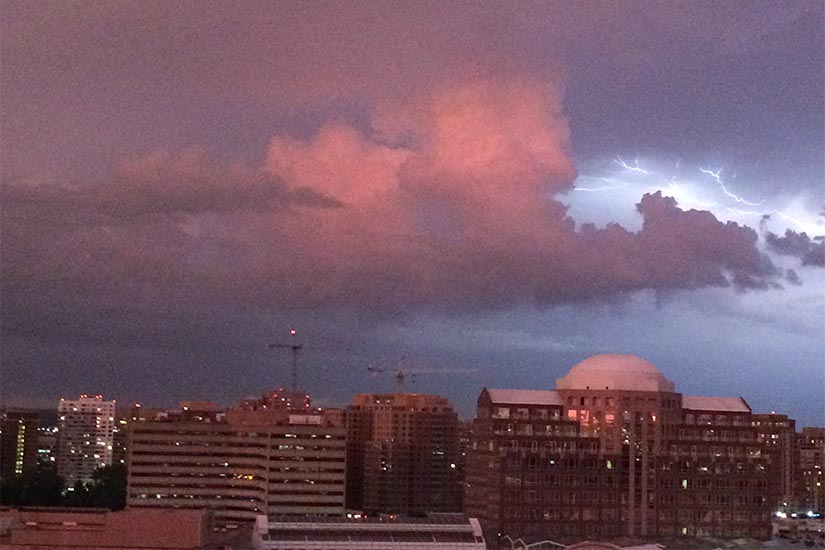
Lightning over Pentagon City(Updated at 6:20 p.m.) Well, that was a historic week. The history theme will continue this weekend with a patriotic bar crawl tomorrow night in preparation for the 4th of July.

If you’d rather focus on recent history, like say the legalization of gay marriage throughout the entire country, then you’ll have an opportunity for that too; the Arlington Gay and Lesbian Alliance is hosting a Pride Month Social this Sunday evening from 4:30-7:30 p.m. at Freddie’s Beach Bar & Restaurant (555 23rd Street S.).

Finally some housekeeping. Remember, the “Freedom Four” race is going down on Sunday, so sections of N. Courthouse Road, N. Rhodes Street and Wilson Boulevard will be closed that morning. Parking will be limited in the area, but things should start opening up after 10:30 a.m.

Feel free to discuss this weekend’s goings on or any other topic of local interest in the comments.


Sally DuranProgressive Voice is a weekly opinion column. The views and opinions expressed in this column are those of the individual author and do not necessarily reflect the views of the author’s organization or of ARLnow.com.

Economic development is the art of attracting the right business to make a prosperous and vibrant community for residents, businesses and visitors to enjoy. Arlington is a unique place where business and residents have together created Arlington’s success and economic prosperity.

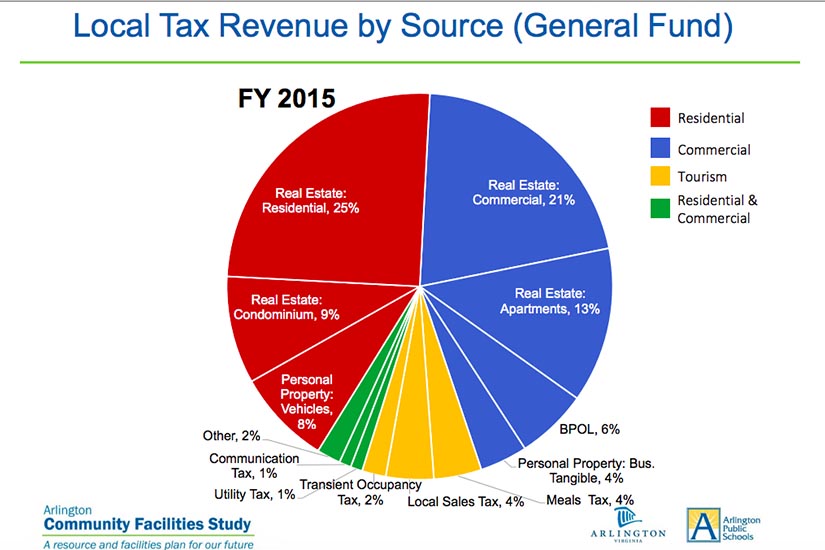
We’ve achieved an enviable and unique position in having a 50 percent/50 percent split in the residential/commercial share of property taxes. In some of our neighboring jurisdictions, for example, there’s a 70/30 split in the share of property taxes. That 50/50 split means commercial property taxes reduce the tax burden on residents; help fund schools, parks and infrastructure; and allow Arlington to maintain its triple-A bond rating.

What’s more, those commercial property owners and businesses pay business taxes and contribute into special funds for affordable housing, arts, sidewalks, landscaping, street lights and more.

Economic development is a topic that is not without its share of controversy in Arlington. As many of you know, our County is facing an unprecedented office vacancy rate that exceeds 20 percent. The team at Arlington Economic Development is diligently working to reduce that rate.

Two years ago, Arlington’s Economic Development Commission (EDC) established a competitiveness task force to look at Arlington’s position in the marketplace. That task force determined that Arlington’s public investment in Metro over the past three decades created distinct competitive advantages for Arlington’s economy and transformed Arlington into one of the most successful and “intelligent” communities in the country.

In the past, our location next to Washington, DC, lower business tax rates, public transportation and infrastructure made Arlington the low cost alternative and a key location for federal agencies, federal contractors and businesses. However, it’s a new time. Moving forward, those federal agencies are just one driver of Arlington’s economy, and we have more competition for those office rents.

In response, Arlington is in the process of diversifying its businesses so our residents can continue to enjoy the benefits that come from that 50/50 split in residential/commercial property taxes. We are investing in smart “mixed-use” planning and transportation for our urban villages and revitalizing shopping areas. We made changes at the County level too – with innovation-friendly, less costly processes and faster response times to attract and retain businesses.

Arlington has always been an early adapter, and the EDC recognized the need to focus on an “Innovation Economy” for the future. We recently completed a study on the Future of the Arlington Office Market, and as a result, we’re exploring creative and flexible approaches to using commercial spaces that will make Arlington’s commercial space more attractive and affordable to small businesses, start-ups and emerging new economy businesses.

We’re also fostering partnerships between business, government and universities to make Arlington a desirable destination for collaboration. And, we’re providing needed incentives and technology infrastructure improvements to support “mom and pop” storefronts, high-tech startups and solo entrepreneurs — all measures that are helping Arlington stay competitive in this rapidly changing marketplace.

Arlington values being an unique community that combines small town charm of walkable streets,  great schools, restaurants and shopping with the big city amenities, such as Metro, world-class hotels, universities and arts.

Right now, we’re in the midst of a transition – one that requires us to compete in the business marketplace and global economy of the future. It’s not an easy process, nor is it a short-term one. It will take everyone, including businesses and residents working together with the county, to find fair solutions that will improve the efficiency of Arlington’s development processes and meet these new challenges while still maintaining our shared community values.

Sally Duran is Chair of the Arlington Economic Development Commission. She is a health insurance policy consultant with SJD Associates.


Mark KellyThe Right Note is a weekly opinion column. The views and opinions expressed in the column are those of the author and do not necessarily reflect the views of ARLnow.com.

According to CNBC’s rankings, Virginia continues to slide down the list of the best places to do business. Last year, Virginia was ranked 8th. Now, we are ranked 12th. This is consistent with a trend noted in this column in April.

In 2013, Governor McAulliffe campaigned on the platform that he could take his successful business acumen and transfer it to the Governor’s mansion. At the time, many of us disputed McAuliffe’s claims that he was successful in building any businesses, though he always ended up making money for himself. The voters disagreed and sent him to Richmond.

Unfortunately for our economy, the latest business rankings come on top of the recent report that 2014 showed zero GDP growth in the Commonwealth. Last year, Virginia ranked 48th in economic growth according to the Commerce Department, just ahead of Alaska and Mississippi.

Governor McAuliffe may be trying, but it is clear the path we are on is heading the wrong way.

Here in Arlington, it was reported this week that our new Director of Economic Development Victor Hoskins has a plan to effectively cut our office vacancy rate in half over the next 75 months.

Arlington’s leaders should not act surprised at the 21% office vacancy rate today. It is no secret that we are never going to return to spending at 2009 federal government stimulus levels, nor should we. Federal deficits are still running nearly half a trillion dollars every year, and they are projected to rise to nearly a trillion over the next decade despite taking in record levels of your tax dollars. Arlington will also not get back the federal occupants of office space lost to BRAC.

The Board has been aware of this changing federal presence for years and has seemingly done little to stem the tide. While the details of the new plan were not reported in the Washington Business Journal, it was described as ” A mix of much more aggressive marketing efforts, incentives and other government aid, and the help of “frenemies” in competing local governments such as the District and Alexandria.”

Use of the word “frenemies” aside, nowhere does it appear that Hoskins is proposing that the County Board change policies to make Arlington more competitive. For example, abolishing the BPOL tax is not under consideration.

Arlington remains some of the most valuable real estate in the United States. The federal government will continue to provide us with a foundation of economic support, but location is not enough. And to be competitive for businesses, you cannot just throw some marketing plans, incentives and other shiny objects around.

Arlington is learning the hard way that if you are not improving your overall business climate, you are going to lose out to neighboring jurisdictions. Like our elected officials in Richmond, we must create a more favorable tax climate and a regulatory structure that is consistent and not overly burdensome. Whether at the state or local level, the fundamentals count.


peter_rousselot_2014-12-27_for_facebookPeter’s Take is a weekly opinion column. The views and opinions expressed in this column are those of the author and do not necessarily reflect the views of ARLnow.com.

The Arlington County Board designed a fundamentally flawed process in its Western Rosslyn Area Planning Study (WRAPS) charge. The principal flaw was to require the WRAPS group to proceed without first disclosing a Letter of Intent between the County and a private developer (Penzance) that was a precondition for the site’s redevelopment.

By later issuing the more holistic (and County-wide) Community Facilities Study group charge, the County Board implicitly acknowledged imposing unreasonable constraints on the WRAPS process by trying to accomplish too many objectives on this one small site.

The Board set July public hearings to review the County’s proposed plan for this portion of Rosslyn. Seeking to defend that plan, Board Chair Mary Hynes argued:

The proposed plan seeks to balance the need for open space in Western Rosslyn with the need for a new school with associated gym and playing field accessible to residents, a new fire station and more affordable housing in collaboration with commercial redevelopment.

Measured by this standard, the proposed plan fails miserably.

The plan makes a small park much smaller and disproportionately favors commercial redevelopment over scarce green space in a rapidly urbanizing area. It also conflicts with several existing plans–The Rosslyn to Courthouse Urban Design Study (2003), the Natural Resources Management Plan (2010), and the Draft Rosslyn Sector Plan (2015) –all calling for increased open space and/or no loss of open space.

The Board’s final, approved plan for this site must assure that the entire current, contiguous acreage of Rosslyn Highlands Park remains dedicated to park use in perpetuity.

To that end, the final site plan should adhere to these principles:

  • Each current land owner should retain ownership of its land;
  • Rosslyn Highlands Park should be preserved in its entirety as public parkland;
    APS should proceed with building a new structure to house the HB Woodlawn program on the land it currently owns;
  • Penzance may develop the land it currently owns and should be relieved of any obligation to pay for a new fire station on the site;
  • The County should follow existing procedures by conditioning the award of any bonus density on contributions to affordable housing and other community benefits, if Penzance seeks bonus density on this site, and
  • If the County determines that the current site of Fire Station #10 is the only appropriate County site for a new fire station serving Rosslyn, then it should finance that new fire station’s construction with general obligation bonds.

CONCLUSION:

Preserving existing parkland is more important than giving one of Rosslyn’s largest private developers a new development opportunity that current market conditions would not otherwise support.


Columbia Pike Blues Festival 2014

It’s Friday, which means Father’s Day is two days away.

There are plenty of opportunities to celebrate dad in Arlington, with the Columbia Pikes Blues Festival on Saturday and the Zero Prostate Cancer run on Sunday.

There will be multiple road closures this weekend as a result of the two events.

On Saturday, the following roads will be closed from 7:30 a.m. to 10 p.m.:

  • Walter Reed Drive from Columbia Pike to 9th Street S.
  • 9th Road S. from S. Garfield Street to Walter Reed Drive
  • 9th Street S. from S. Highland Street to Walter Reed Drive

On Sunday, S. Joyce Street, from 15th Street S. to Army Navy Drive, and Army Navy Drive, from S. Joyce Street to 25th Street S., will be closed from 7-11 a.m.

Shout out to dad or about any other local topic in the comments section.


The following op-ed article is written by Kate Roche, president & CEO of the Arlington Chamber of Commerce.

Kate RocheArlington currently faces trying economic conditions. Approximately 50 percent of the County’s tax base comes from business. Thus, these challenges affect Arlington as a whole and matter not just to businesses, but to all County residents.

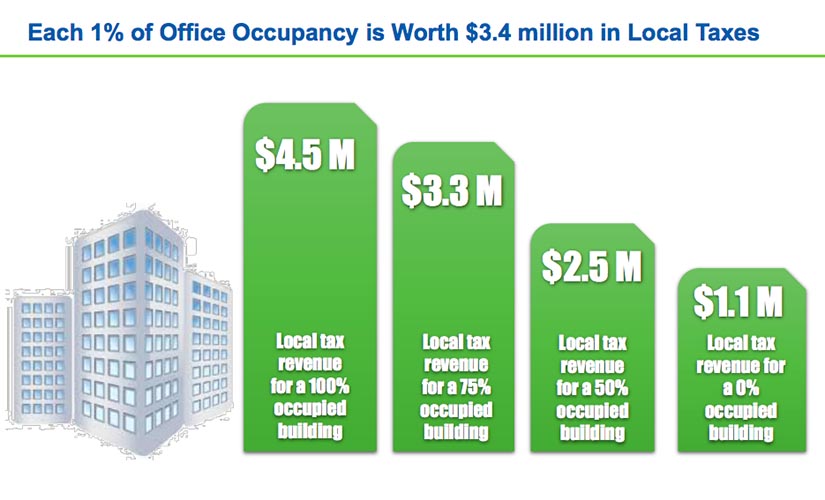
The current office vacancy rate is 21.7%, over ten percent higher than the 15-year historical average. A ten percent improvement in occupancy rates (4.4 million sq. ft.) would represent $34 million annually in local tax revenues. No matter what issues are important to you as a citizen – great schools, social services, parks, art – a healthy business community is utterly essential to sustainably fund those initiatives.

As a community, we can’t keep operating the way we have been and expect to attract businesses. We have grown complacent that our strengths, our location, amazing workforce, and early adoption of transit-oriented development would entice companies to Arlington.

Arlington Chamber of Commerce logoThis may have been sufficient in the past, but Arlington faces rapidly growing competitiveness in the region as other localities copy our successful blueprint. To some degree we are a victim of our prior success, in the form of higher property costs and rental rates. Pressure on commercial real estate is accelerated by the dramatic shift in the way companies utilize space to maximize employees per square foot.

So what can Arlington do?

We can be proactive in attracting business and fostering a more welcoming culture for business:

  • We are encouraged by the recent high-level appointments made by County Manager Barbara Donnellan, including Carol Mitten, Steven Cover, Victor Hoskins, and Shannon Flanagan-Watson. Arlington needs to ensure that the enthusiasm and willingness to work with businesses to find solutions at the highest levels percolates throughout the County staff.
  • The recent funding of Arlington Economic Development by the County Board above what the County Manager specified in her base budget is another good sign. However, Arlington still remains significantly behind competing localities when it comes to funding the core components of economic development. More can be done.
  • Long term planning efforts should incorporate more robust economic analysis so that decision makers can better understand the trade-offs when making their decisions. For example, the County is in the process of possibly reducing previously planned density from Rosslyn without studying the effects on our long term tax base.
  • We must review and revamp both the site plan and permit processes for length, focus, and consistency. The site plan process is currently both overly lengthy and sometimes uncertain in terms of any type resolution. The permit process has gotten a bit better in recent years, but can still be frustratingly inconsistent.
  • Better communication is crucial. This includes better communication by the County with businesses, but also better communication by the County about business to the community.

The onus for better communication lies not just with the County, but also with the business community itself.

This article is the first in an ongoing opinion column authored by the Arlington Chamber of Commerce to share that business perspective for the benefit of the Arlington community. We look forward to participating in helping steward Arlington to a vibrant and exciting future.


peter_rousselot_2014-12-27_for_facebook

Peter’s Take is a weekly opinion column. The views and opinions expressed in this column are those of the author and do not necessarily reflect the views of ARLnow.com.

In an April column, I outlined these lessons learned from Arlington’s Artisphere fiasco:

  • Arlington needs a new arts policy,
  • The new policy must reflect current fiscal realities,
  • Current fiscal realities require that core services should receive priority funding,
  • Taxpayer support for the arts should be based upon artistic merit (as determined by a qualified citizens advisory group), not based upon hard-to-quantify “economic development” potential.

On June 11, ARLnow.com published a revealing new story on the Artisphere based upon documents provided to ARLnow pursuant to a Freedom of Information Act (FOIA) request to the Arlington County government.

That story and the documents provide additional lessons about arts funding, Arlington County’s mismanagement, and what we should do moving forward.

The Artisphere’s Mission Was Muddled

This comment to the latest ARLnow story best captures the Artisphere’s muddled mission:

Artisphere never figured out if it wanted to be a mini-Kennedy Center or a mini-Torpedo Factory. Local artists and artisans were promised a gallery/shop where they could sell what they created. As the article pointed out, a popular local theater company was kicked out. If Artisphere had wanted more local attendance, it should have brought in more of the local arts community. Instead, it turned its back on us, trying to be something it never stood a chance of being.

We could argue endlessly whether the Artisphere should have focused on being a mini-Kennedy Center or a mini-Torpedo factory or something else. If public taxpayer dollars were not involved, this would be a decision strictly up to the private sector. If such a private-sector venture failed, then the private backers would suffer the financial loss. But if our tax dollars are involved, we should insist on a clear mission.

Arlington County Mismanaged The Artisphere

The Arlington County government compounded the risk posed by the Artisphere’s muddled mission by:

  • agreeing to an open-ended taxpayer subsidy arrangement supporting this costly facility,
  • prematurely launching the Artisphere before key hires (e.g., executive director, marketing director) were in place,
  • trying to rationalize the mounting red ink by seizing upon the Artisphere’s alleged economic development potential to boost Rosslyn.

The Way Forward

From the ashes of the Artisphere fiasco, we can move forward to an exciting and fiscally-sustainable future for the arts in Arlington. I disagree with those who say Arlington should stop all support for arts funding.

Arlington’s continued strong commitment of our tax dollars to support the arts should:

  • avoid future arrangements in which Arlington assumes fiscal responsibility to fund any and all losses of a facility housing artistic ventures,
  • emphasize targeted direct grants from Arlington to artists and arts groups,
  • recognize that funding for core services (e.g., schools, parks, roads) requires priority.

Mark Kelly

The Right Note is a weekly opinion column. The views and opinions expressed in the column are those of the author and do not necessarily reflect the views of ARLnow.com.

A while back, I made brief mention of the County’s decision to take away a travel lane in each direction on Eads Street in Crystal City. While it certainly can be frustrating to wait an extra handful of minutes on Eads Street each day for those of us who live there, it sounds like Wilson Boulevard is even worse, with reports of adding 20 minutes or more to the commute.

The County said it anticipates traffic will improve on Wilson, but it is hard to imagine taking a lane of travel away during rush hour will ever improve traffic flow.

Cynically one might say Arlington County transportation policy is to make it so miserable to drive a car that more people will give up their cars for public transportation out of frustration. The County almost certainly also believes that creating dedicated bike lanes will encourage more bike usage. And no doubt, this is part of the “greening” of Arlington.

Unfortunately, Metro is an unreliable, expensive and often unpleasant experience.  And the eye test on Eads says that increased bike use during rush hour is not happening so far.

The fact is most people are still driving their cars, just sitting in longer backups to do it. The result is more idling while backups occur. Idling means each driver will burn considerably more gasoline which adds cost to their monthly budget and puts more CO2 into the atmosphere. Instead of CO2 savings from bike usage, these decisions are actually going to end up being worse for the environment and our wallets.

Some drivers could also begin looking for alternate routes that will involve cutting through residential neighborhoods during heaviest traffic times. That means any small amount of safety for bikes gained along the main roads could be lost to pedestrians and bikes on residential streets.

Arlington continues to add density in its development. This new development here and in the surrounding communities is going to only increase traffic that must move through.

Yet, Arlington regularly adopts transportation policies that do not increase our ability to move this traffic through our roads efficiently. Arlington opposed the 395 HOT lanes and opposed measures to improve 66. Now, we are narrowing non-highway surface streets.

Of course, these decisions are brought to you by many of the same people who insisted that putting a fixed rail line down existing lanes of travel on Columbia Pike would make traffic flow better.

The County is putting a lot of time and effort into these so-called “Complete Streets” projects. As they are being rolled out, maybe it is time to re-evaluate whether or not this actually represents the best path forward.


Krysta Jones

Progressive Voice is a weekly opinion column. The views and opinions expressed in this column are those of the individual author and do not necessarily reflect the views of the author’s organization or of ARLnow.com.

Last week I attended the Women’s Campaign School at Yale (WCS). This 20-year-old non-partisan, issue-neutral leadership program works to increase the number and influence of women in elected and appointed office in the United States and around the globe. Several of the speakers repeated the same line all week, “Women are 53 percent of the population…stop acting like we are in the minority.”

Arlington’s own Allida Black, (Eleanor Roosevelt Scholar and co-founder of Ready for Hillary), spoke at WCS about her journey as a child of the civil rights movement to creating a social movement for Secretary Clinton’s candidacy: “Politics is equal part dream, courage, and sheer grit. WCS is essential training for any woman, especially women in Arlington, who want to run for office. It shows in very real ways what decisions you must make in order to fortify yourself, concretize your dream, build your community, and give you the confidence to introduce your vision for an effective community-based party.”

My WCS classmate from Arlington, Natalie Trisilla (program manager for a DC-based nonprofit) concurred. We intend to rely on our vision, courage and grit to use what we learned at WCS to make a difference in Arlington.

Fortunately, Arlington has been a leader in women’s empowerment issues in both the political and business contexts.

For example, The Leadership Foundry, in conjunction with Northern Virginia-based Women in Technology, prepares women to serve on corporate boards. The Leadership Foundry is co-chaired by the Arlington Commission on the Status of Women’s (CSW) Vice Chair Marguerete Luter.

Marguerete has also been a key part of local Congressman Don Beyer’s efforts to promote women’s economic empowerment. In May, Congressman Beyer introduced the Gender Diversity Investment Act, which would provide federal employees the freedom and flexibility to invest their retirement savings in companies that demonstrate a strong commitment to gender diversity and women’s economic empowerment.

The progress of women leaders in Arlington was the focus of CSW’s Women of Vision reception on June 11, honoring women who have made an impact in Arlington in the government, nonprofit and business sectors.

CSW awarded its government award to Karen Darner, who served in the Virginia House of Delegates from 1991 to 2004. Delegate Darner set an example that continues today. Our County Board is chaired this year by a woman, Mary Hynes. In November, the ballot will reflect continued engagement by women leaders. Incumbents on the ballot will include Barbara Favola (State Senate), Ingrid Morroy (Commissioner of the Revenue), Carla de la Pava (Treasurer), and Theo Stamos (Commonwealth’s Attorney). Among other women running for office will be CSW member Katie Cristol (County Board candidate).

Notwithstanding Arlington’s successes and programs like WCS and the Leadership Foundry, women still continue to lag behind in political and corporate leadership, both nationally and throughout Virginia. Women represent only about 19 percent of the U.S. Congress. In Virginia, about 20 percent of our state senators, and 25 percent of our state delegates are female. Recent research shows that women hold only about 17 percent of the board seats at Fortune 500 companies, and about 15 percent of senior executive positions.

There is much discussion about the women’s vote, but not as much recognition of the key role of African American women in electoral politics. As Jessica Byrd, formerly of Emily’s List, has noted, since 2008, Black women voters have the highest turnout percentage in electoral politics.

Although Arlington has never elected an African American woman to the County Board, we have elected African American women to the School Board, and African American women are active in other positions of leadership. CSW gave its nonprofit award this year to Sarah Summerville, long-time community leader and cofounder and president of the African American Leadership Council of Arlington.

CSW awarded its business award to Mary-Claire Burick, President of the Rosslyn Business Improvement District (BID). Among other women serving as President of leading business groups in Arlington are Kate Roche (Arlington Chamber of Commerce) Angela Fox (Crystal City BID) and Tina Leone (Ballston BID).

I am proud to say that in Arlington, we generally don’t act as though women are in the minority. Our progressive values have led us to elect and promote women to the highest levels of leadership. Hopefully, Arlington’s leadership can help our state and our nation to put even more cracks in our glass ceilings.

Krysta Jones is founder and CEO of Virginia Leadership Institute, former chair of the Arlington Commission on the Status of Women, and a member of both the Leadership Foundry and the Junior League of Northern Virginia.


Air Force Cycling Classic Crystal CupThe weekend is here, which means Arlington is gearing up for the Air Force Association Cycling Classic.

Put on sunscreen and make your way to the main stage area to watch pro and amateur teams compete on one of the most challenging courses in the United States.

Don’t think competitive cycling sounds that tough or action-filled? Maybe this caught-on-video crash from the 2013 race in Crystal City will change your mind.

There will be multiple road closures as a result of the Saturday and Sunday races, including GW Parkway ramps, Wilson Boulevard, Clarendon Boulevard and Crystal Drive.

Feel free to sound off in the comments about the race or any other local topic that has piqued your interest.


Mark KellyThe Right Note is a weekly opinion column. The views and opinions expressed in the column are those of the author and do not necessarily reflect the views of ARLnow.com.

What did Tuesday’s primary results mean? According to the Chairman of the Arlington Democrats, it meant that affordable housing will be the central issue of the fall election.

Chairman Malinosky’s job is to spin the election results in a way that he sees as benefitting his party. But reading into the results of a six way primary for two spots is virtually impossible, particularly when five of the six candidates received a substantial share of the vote.

When there is little substantively differentiating the candidates on issues, these elections are won by the quality of the candidate and the quality of the campaign operation. Cristol and Dorsey simply outperformed their opponents on the campaign trail to claim the top two spots.

Election analysis aside, what about affordable housing?

Throughout the last decade, the County Board has had a stated goal of improving housing affordability. And, this has been a County Board controlled exclusively by Democrats until last year. Yet, there is little the County Board has tried on the housing front over the last decade has changed the trajectory of housing affordability. In fact, our Board relies on these ever-increasing property values to fund its lavish spending habits.

If in fact, it has become the top issue for the voters in Arlington, it could be argued it is because of a major failure of Chairman Malinosky’s own party. Is the Chairman of the Arlington Democrats actually making the case that the voters should reject his nominees and add two more Independents to the County Board?

Probably not. But, if Cristol or Dorsey stand up at a forum and say they are going to address affordable housing, will they be able to answer the question: what would you try that is different than the policies that have already failed?

Maybe a majority of Arlingtonians would commit to higher taxes in the name of spending hundreds of millions more over the next decade to subsidize housing. You would be right to be skeptical that Cristol, Dorsey or even Malinosky will make that their topline talking point.

Yes, we can continue to do the things we have been doing that have met with limited success. We can revisit the approval of accessory dwelling units and in-law suites. The Board can even approve the development of micro units in Crystal City as Katie Cristol suggested.

At some point, maybe we will all just admit that housing is simply not going to be affordable in Arlington over the long haul. It is the laws of supply and demand at work. Arlington is conveniently located to our nation’s capitol and people are willing to pay a premium to live here. At the same time, governments have been trying to change the laws of economics for years, so I wouldn’t look for the Arlington County Board to stop claiming it can now.


View More Stories