Progressive Voice is a weekly opinion column. The views and opinions expressed in this column are those of the individual author and do not necessarily reflect the views of ARLnow.com.
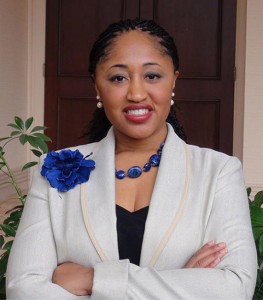 Arlington is a community that has strong tradition of women in leadership positions — in businesses, government, nonprofits and electoral politics.
Carrying on that tradition is something that we cannot take for granted. Fortunately, our community creates opportunities to promote leadership and career opportunities for women.
Recently, the Arlington Commission on the Status of Women, Ballston Business Improvement District, Living Vicky and the Arlington chapter of the National Organization for Women held the 2014 Women in Business Conference titled “Women in Non-Traditional Careers.”
It was a good opportunity to network and listen to panelists in nontraditional careers for women: financial services, law enforcement, entrepreneurship, and corporate executive positions.
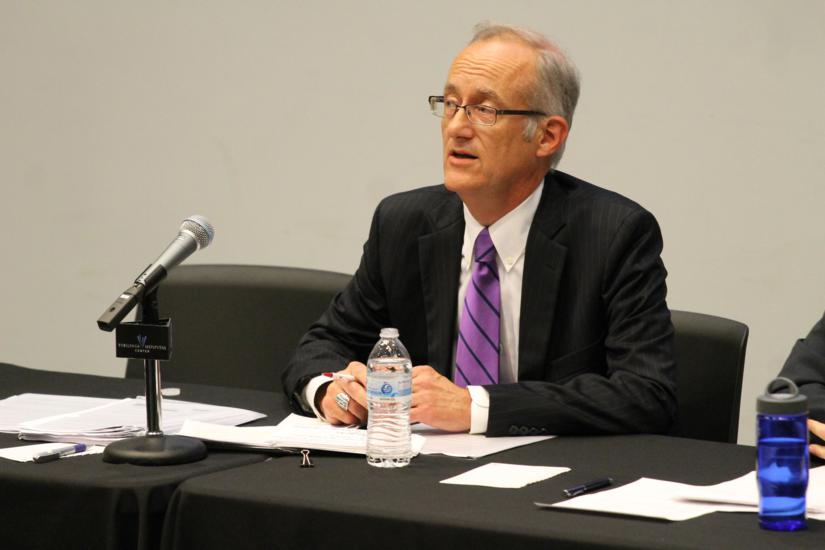
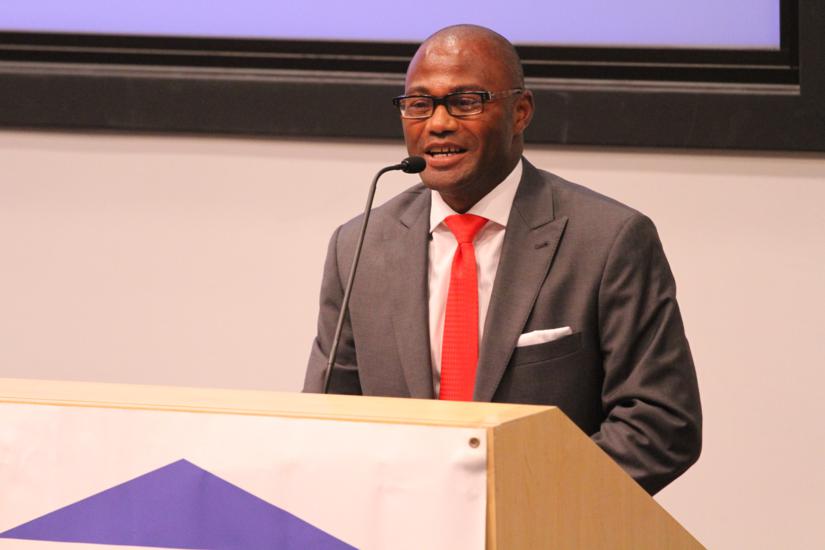
Moderated by Maureen Bunyan of ABC7, the panel engaged the audience with personal experiences, words of advice, and thoughts on encouraging women to pursue nontraditional careers.
I believe that we can learn those lessons at a young age. My father tells a story about when I was 2 years old. One minute he was watching me in the front yard and the next minute I was gone. He soon found me at a playground we frequented down the street. Although he helped me to understand risks, he also encouraged me to want to get back to that playground!
I imagine all of the dynamic women panelists have similar childhood stories of independence, taking risks and setting goals, just like I did in wanting to get to the playground.
The event ended with a raffle for an “Entrepreneur” Barbie. Despite her faults, the Mattel doll introduced in 1959 has had nontraditional and empowering careers — astronaut, politician, surgeon, and football coach. In that admirable way, Barbie has been a model for girls and boys to be open to and comfortable with seeing women in all types of careers.
Fortunately, I grew up at a time when women were increasingly encouraged to explore all careers. That helped me decide to go into the “nontraditional” career of politics. In 2014, fewer than 25 percent of elected officials at the federal level, in statewide office, and in state legislatures are women, and only 40 percent of all school board members are women.
A 2013 Huffington Post article cites Census Bureau reports that the leading occupations for women in 1970 were secretaries, bookkeepers, and elementary school teachers. In 2006-2010, the leading occupations, similarly, were secretaries and administrative assistants, cashiers, and elementary/middle school teachers. Leading jobs for men were also similar in 1970 (miscellaneous managers, truck drivers, and production supervisors) and today (truck drivers, miscellaneous managers, and freight, stock, and material movers).
Moderator Bunyan noted that her profession — journalism — has seen increasing numbers of women over time. She remembers when sexual harassment and discrimination were acceptable behavior. Today, Title VII of the Civil Rights Act offers protection to individuals encountering gender-based discrimination such as sexual harassment and direct requests for sexual favors, as well as workplace conditions that create a hostile environment for men or women.
According to Norma Carr-Ruffino, an expert on women in management, economic need drove many women to work. She credits affirmative action for redefining the cultural acceptance of working women and giving people an opportunity to “experience women and minorities in roles that they thought they could never be good at.” (more…)


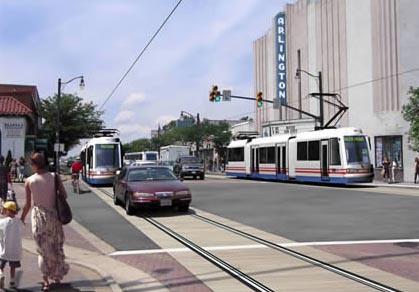 After years of planning, community meetings and debate, Arlington’s planned Columbia Pike and Crystal City streetcar system was scuttled yesterday following a somber press conference and brief vote.