Peter’s Take is a weekly opinion column. The views and opinions expressed in this column are those of the author and do not necessarily reflect the views of ARLnow.com.

Peter RousselotOn Aug. 27, ARLnow.com revealed that Arlington Public Schools (APS) has decided to give a new Macbook Air computer to every ninth-grader at Wakefield, Washington-Lee and Yorktown high schools.

Regardless of whether APS’ decision is right or wrong, the decision badly flunks any reasonable test of transparency.

Whether to undertake this initiative cries out for a thoughtful, careful process of advance consultation with parents and the public. The failure to have such a process precede the decision reflects remarkable tone deafness.

Here are just some of the reasons why the decision is wrong according to angry ARLnow commenters:

  • There is too large a mismatch between the way the current curriculum is structured and the ability to use a personal computer in the classroom effectively, so it is premature to introduce personal computers in the classroom until this mismatch is corrected;
  • Too many teachers cannot use effectively the technology tools they already have (Smartboards and TVs), so it is not realistic to believe those teachers will be able effectively to integrate the new personal computers into their classroom instruction;
  • Being prepared for the 21st century means learning how to budget one’s financial resources, and the message we’re sending kids by paying for them to have free Macs is that everyone can just have what’s very expensive and hip at everyone else’s expense;
  • Even if a requirement that all HS Freshmen have a Macbook Air is appropriate, that requirement should be imposed first on the parents, with financial assistance made available to every family that cannot afford to purchase one;
  • Given the capacity crisis APS faces, the money spent on purchasing these personal computers is better spent directly alleviating that crisis.

If you are part of APS’ management, and you believe that you have excellent answers to every one of the points noted above, and therefore that the public reaction to this decision is overblown, you are missing the point.

When you are using our taxpayer dollars to implement a decision like this one, you should be willing to stand up before the public, justify your decision, and engage with the public regarding its concerns.

APS management seems to be fixated on large-scale programs placing PCs in the hands of students. Remember the 1:1 initiative? More recently, at least one elementary school — Campbell — is planning to give iPads to all second graders — apparently without consulting parents or the public.

But, APS management hasn’t engaged with the Arlington community as to why APS thinks it can do better with these PC initiatives than Hoboken, N.J. Like many other school districts, Hoboken tried, but now has abandoned, its PC-for-every-student program.

APS has failed to meet its burden to prove it is ready to implement such programs in an effective way.

Peter Rousselot is a former member of the Central Committee of the Democratic Party of Virginia and former chair of the Arlington County Democratic Committee.
The Right Note is a weekly opinion column. The views and opinions expressed in the column are those of the author and do not necessarily reflect the views of ARLnow.com.

Mark Kelly

Yesterday’s report that Arlington County policy may leave First Amendment protesters subject to arbitrarily enforced rules should give us all pause.

The actual wording of the special events policy would apply to “one or more persons” with even just the “propensity to attract a crowd.” The remedy for police, presumably, would be to tell a small group or individual to go home or face a fine of indeterminate size.

As reported here in ARLnow, some sort of administrative language from county staff is supposed to be forthcoming to clarify the policy. Those holding up signs outside of a political event they disagree with may not be subject to its enforcement. In the the meantime, county staff’s current policy toward its enforcement is effectively “trust us,” according to yesterday’s report.

The reality is the policy as written could conceivably give the county the ability to decide on a case-by-case basis whether it applies and to which group — or even a single individual. It opens the door for county staff to make that determination based on the content of the speech. Imagine, for example, the county staff or Arlington Police Department gets a call from an angry Board Member whose event is being protested.

Giving the Board the benefit of the doubt, let’s assume it was not their intent to prohibit concerned citizens from peacefully or spontaneously protesting. Hopefully, Board members will have county staff recommendations on the policy by the time of the September Board meeting.

But, it should have never been passed without more specific clarifying language. As written, it may take more than a county staff clarification to effectively protect Arlingtonians from potential abuses. The Board itself should probably re-address the issue.

Next time, maybe someone will stop and think about what wording of a policy actually means before they pass it. There should be no question as to whether diversity of political opinion will be welcome in Arlington.

Mark Kelly is a former Arlington GOP Chairman and two-time Republican candidate for Arlington County Board.


Progressive Voice is a weekly opinion column. The views and opinions expressed in this column are those of the individual author and do not necessarily reflect the views of ARLnow.com.

Andrew SchneiderArlington County Board candidate Alan Howze has announced a set of proposals to improve the streetcar system that would link Arlington with Alexandria and Fairfax and improve transit along one of the busiest corridors in the region.

The streetcar project will also provide significant financial returns to Arlington through economic development that, in turn, will generate revenues to help create needed schools while protecting neighborhoods and preserving affordable housing.

I support Alan’s campaign and his fundamental tenets of engaging Arlington’s voters and communities to improve on a project that has been the centerpiece of multi-year revitalization efforts for Columbia Pike and Crystal City. I applaud the many Arlingtonians who participated in those efforts.

In making his proposals, Alan has respected the long-standing and inclusive community planning process while looking for innovations to improve upon project implementation.

After talking to thousands of Arlington residents at their doors, he has made five proposals based on their suggestions:

  1. Timely construction should be a key contract requirement to minimize disruption, protect taxpayers, and accelerate streetcar benefits. Speed and accountability in government matters.
  2. Create a small business contingency plan to support small businesses affected by construction.
  3. Create a business and residents advisory council to ensure community issues arising during construction are dealt with promptly.
  4. Examine the feasibility of streetcars that run without wires for sections of the streetcar line to reduce use of overhead wires.
  5. Secure 100 percent renewable energy power supply for the streetcar to ensure a zero emissions system.

I have known and worked with Alan as a community leader. These proposals reflect his approach to meeting community challenges — thoughtful discussion, community input, considering needs of neighborhoods and the broader Arlington community, finding innovative solutions, looking to conserve community and taxpayer resources, addressing the vital imperative of climate change and environmental protection, and respecting community processes in order to encourage Arlingtonians to participate actively.

These attributes are important to me as a lifelong Arlingtonian dedicated to service making a difference.

More importantly, they are important to me as someone serving as President of the Yorktown Civic Association and taking a leadership role in the Lee Highway Revitalization project.

Formed in 2013, this project is a grassroots strategic partnership for re-visioning Lee Highway, involving the presidents and other interested members of the civic associations along Lee Highway. Moreover, this project has taken its template/lead from the thoughtful, inclusive, and deliberate Columbia Pike revitalization process that has been undertaken since the 1990s.

We anticipate developing a joint community vision for a more economically vibrant, walkable, attractive Lee Highway corridor to benefit neighborhoods and the business community. I expect that our vision will lead to a corridor that avoids disjointed development and that will support improved transit options as well.

We also anticipate that our joint community vision will be sent in 2015 to the County Manager’s office with a recommendation that the County Board appoint and fund a task force to develop a Lee Highway Sector Plan guiding future rezoning and development applications. (more…)


Progressive Voice is a weekly opinion column. The views and opinions expressed in this column are those of the individual author and do not necessarily reflect the views of ARLnow.com.

Terry SavelaThe concerns raised regarding Arlington’s streetcar program remind me of my own journey from streetcar skeptic to streetcar supporter.

As a planning commissioner for the County from 2002 and 2012 and as a transportation commissioner for part of that time, I participated in the development and review of the long-range plans for Columbia Pike and Crystal City and the eventual selection of the streetcar as the preferred option for improving transit services.

The County’s path to choosing the streetcar project rather than enhanced bus service was not a short, straight line. The process included:

  • a progression of public planning charrettes, community meetings, public task forces and public hearings supplemented by surveys and other forms of outreach to gather public opinions;
  • professional working groups involving state and local agencies, expert contractors and WMATA; and
  • both internal and contracted studies on financing options, economic development impacts, engineering options, right-of-way acquisitions, and impacts on neighborhoods, businesses, affordable housing, and historic resources.

At each step along the way, transportation and economic development experts, citizen advisory groups, and the County Board asked tough questions and identified gaps in information and analysis, leading to additional work and public review.

In keeping with “The Arlington Way,” the County Board listened to the questions and objections raised, weighed the merits of the arguments in support of each alternative, and unanimously agreed that the streetcar was the best method for achieving and balancing Arlington’s various goals.

While we can always identify more questions and raise more objections, we must eventually, on any major project, reach a point where the information gathered is deemed sufficient, a decision is made, and we move forward.

That said, here are a few of the criticisms I considered along the way to becoming a streetcar adherent.

First, the streetcar requires a fixed rail infrastructure that does not permit routes to be changed. I believe the benefits of a light rail approach offset this concern. The “guarantee” offered by fixed light rail is essential to building momentum for private investment according to economic development and real estate professionals. This private development will generate additional demand for the streetcar as well as tax revenue needed to support our schools, parks, libraries, human services programs, and maintenance of basic infrastructure. We can still add transit services as demand for additional routes materializes.

Second, a streetcar operating in a mixed-use travel lane is sub-optimal. Having separate dedicated lanes is optimal for any form of transit. However, the Columbia Pike community identified a range of goals that work to limit street width — wider sidewalks, traffic calming, and the preservation of historic buildings.

Combined with limitations imposed by private property lines and VDOT’s requirement that all travel lanes be maintained, widening Columbia Pike to accommodate dedicated lanes is not feasible. Planners and civil engineers will continue their work on ensuring success of the shared use approach. (more…)


Peter’s Take is a weekly opinion column. The views and opinions expressed in this column are those of the author and do not necessarily reflect the views of ARLnow.com.

Peter RousselotAs I have done previously, today I’m profiling a nonprofit that offers valuable services to the Arlington community: Friends of Guest House.

Mission

The mission of Guest House is to provide female ex-offenders the structure, supervision, support and assistance they need to become self-sufficient and responsible members of the community. Guest House rebuilds female ex-offenders’ lives by providing them with the physical and emotional tools they need to begin a new life.

Guest House operates and delivers its services without regard to race, creed, color, religion, gender, age, national origin, physical or mental health, sexual orientation, or any characteristic protected by law.

Programs

Guest House provides comprehensive re-entry support to female ex-offenders in Northern Virginia, including Arlington. It delivers that support through three core programs: Residential, aftercare and non-residential outreach.

Spanning those three programs, Guest House provides case management; mental health and substance abuse counseling referrals; and directly or through other groups, assistance with issues such as:

  • health care
  • education
  • vocational training
  • employment
  • housing
  • emergency needs
  • child custody
  • referrals to other community services
  • generally, navigating the post-incarceration environment in constructive ways

Guest House works as part of the larger Northern Virginia social services network, referring its clients for special services and receiving client referrals as well. Formal partnerships with several groups have expanded the range of services that clients receive.

Success Rate

Guest House addresses the root causes that lead to the vicious cycle of incarceration. It provides clients with the most effective help so they do not re-offend. Its program focuses on core issues ranging from trauma and addiction to housing and employment. The success of Guest House’s program is demonstrated by these comparative statistics:

  • Without the re-entry support the Guest House program provides, 70 percent of non-violent ex-offenders nationwide re-offend within three years;
  • Among graduates of the Guest House program, only 7 percent re-offend.

How to Help

There are a number of different ways to get involved. These include:

  • Donate money;
  • Honor someone special;
  • Underwrite a specific project;
  • Volunteer
  • Host a benefit or friendraiser or feature a Guest House speaker
  • Fundraise with social media
  • Help clients find jobs and housing

Peter Rousselot is a former member of the Central Committee of the Democratic Party of Virginia and former chair of the Arlington County Democratic Committee.

The Right Note is a weekly opinion column. The views and opinions expressed in the column are those of the author and do not necessarily reflect the views of ARLnow.com.

Mark Kelly

ARLnow.com asked its readers this week to opine on whether or not riders on the new trolley line should have to pay for the ride — assuming the line is built that is.

When I took online the poll, just 54 percent of 1,000 respondents said “no” to subsidizing riders. 46 percent voted to subsidize it temporarily or permanently. While not a scientific poll, 46 percent seemed high based on the reasons we are told that new rapid transit buses on Columbia Pike are not the solution.

On top of that list of main selling points is that more people will WANT to ride the trolley who do not currently pay to take the bus. If people will gladly give up the frustrations of driving their car in favor of a shiny new trolley, why would we need to provide monetary incentives to entice them to do it?

Apparently, 46 percent of ARLnow readers are not convinced that if we build it, they will come. In fact, the more interesting question may have been, would you ride the trolley without a free fare?

Granted, this is an academic discussion for now. The notion of making the trolley a free ride came about from a debate about light rail in Virginia Beach. But, with ridership not meeting projections virtually everywhere across the U.S. this experiment has been tried, rest assured the thought of reduced or no fares has crossed someone’s mind in Arlington.

If we are going to give a preference to trolley riders, why not make the Metro free? Or bus rides free? Or at least, we could knock a $1 off of all those fares as well.

We do now live in a county that seems to be on a path to buy every child in Arlington’s schools a Macbook Air — or maybe just an iPad. Our budgets are so comfortably padded that we are apparently paying for this year’s Macbook Air purchase with money that was just lying around at APS unused.

Compared to the half-billion price tag to get the complete trolley line installed, the fare subsidy would really only be chump change. Of course, there’s an applicable old saying about government spending that goes something like this, “the problem is, sooner or later, you run out of other people’s money.”

Mark Kelly is a former Arlington GOP Chairman and two-time Republican candidate for Arlington County Board.


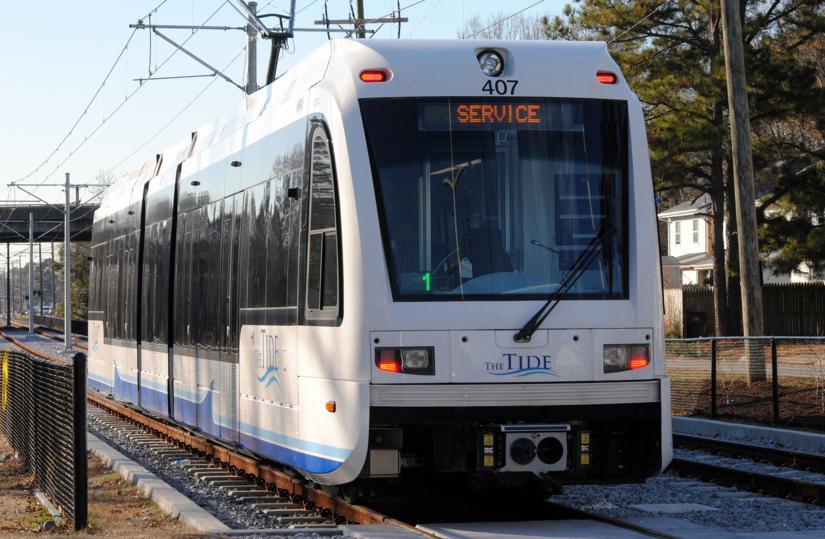
Tide LRT system (photo by Xshadow via Wikipedia)To try to reverse falling ridership, some are suggesting that the three-year-old Tide light rail line in Norfolk eliminate its $1.50 one-way fare.

Making the seven-mile Tide line free, say advocates, would help boost ridership and achieve the system’s true goal: encouraging more transit-oriented development around its 11 stops. The line simply isn’t long enough to attract ridership sufficient to offset its $8 million in annual operating costs, they say.

(As pointed out by the Sun Gazette, Arlington County Board member Libby Garvey has held up the Tide as an example of why the county shouldn’t build the Columbia Pike streetcar system.)

Economic models presented by Arlington County suggest that the Columbia Pike streetcar’s estimated $287 million cost will be offset in the long run by new development and increased real estate values. Given that development is such an important component of the Pike streetcar’s return on investment, should rides on it be free?
 

Photo by Xshadow via Wikipedia


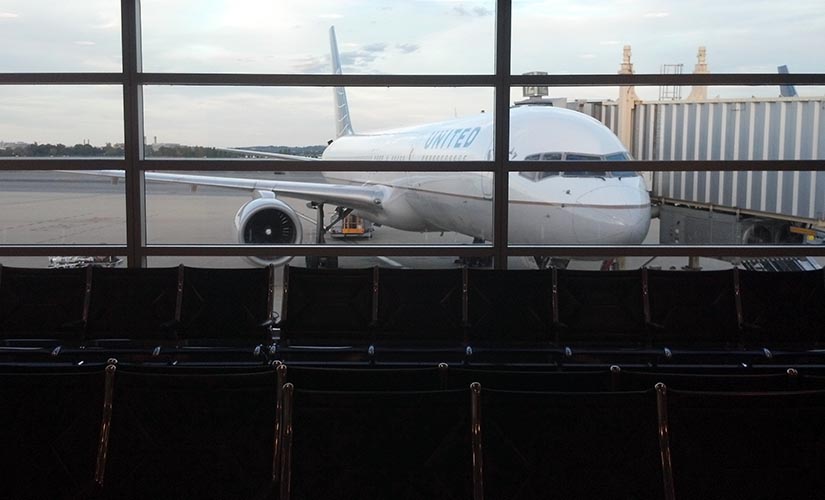
United plane at the gate at Reagan National AirportFourteen percent of the D.C. metro area’s population will be going out of town for Labor Day this weekend, according to AAA Mid-Atlantic.

That’s 842,100 local residents hitting the local roads, rails and airways. Nine out of ten of those traveling — 735,000 residents — will doing so by automobile, the association predicts. That’s up 0.8 percent from 2013, and AAA says the lowest Labor Day weekend gas prices in four years are helping to drive the increase.

“It remains the preferred and cheapest mode of transportation for a couple traveling with children trying to squeeze in a memorable family getaway before the school year goes into high gear,” said John B. Townsend II, AAA Mid-Atlantic’s Manager of Public and Government Affairs, in a press release. “With the wind to their backs, they will also be buoyed along by a positive consumer outlook and improvements in the labor market.”

Air travel, meanwhile, is expected to dip slightly, down 0.3 percent to 64,200 residents who will be flying out of the D.C. area. “Other” modes of transportation, like rail, are predicted to dip 0.5 percent to 43,100 travelers.

Are you planning to travel this weekend? How will you be getting to your destination?


The Right Note is a weekly opinion column. The views and opinions expressed in the column are those of the author and do not necessarily reflect the views of ARLnow.com.

Mark Kelly

What can we expect from our newly elected delegate?

When asked what his first piece of legislation would be during the debate held at George Mason’s Arlington campus, Rip Sullivan said he would introduce a bill to force a trolley referendum. Based on the way he almost forgot to mention it that night, we can probably only expect at best a half-hearted attempt at bringing a referendum to a vote.

His second piece of legislation he said, would be an attempt to change the laws regarding special elections. It is very unlikely this is the highest priority of his new constituents. A higher priority would seem to be to replace an elected representative as quickly as possible on the constituents’ behalf.

Rip’s tenure will start in the upcoming special session of the General Assembly when they will consider the expansion of Medicaid. I think it is fair to say that he supports expanding Medicaid in virtually any way, shape or form.

To give some perspective, Medicaid currently costs almost $9 billion a year and consumes about 22 percent of our general fund budget in Virginia. It is the fastest-growing part of our budget, growing at an average of 8 percent annually. Medicaid is already on track to siphon off resources from education and transportation even if the federal government can find a way to pay for 90 percent of it forever.

Studies have also shown that because of Medicaid’s low reimbursement rates, hospitals pass that cost along to private insurance which raises our premiums — one 2008 study pegged the cost shift at $1,800 per year for a private plan. Driving 400,000 more people onto Medicaid’s rolls will not simply be “free money” for Virginia. It will cost all of us over and above what we already pay in taxes and what our federal government borrows to cover the $500 billion deficit.

But, what does Medicaid do for patients?

Evidence is mounting that Medicaid does not improve health outcomes for the patients who are on it, even versus the uninsured. A University of Virginia study found that surgical patients on Medicaid are 13 percent more likely to die before leaving the hospital than those with no insurance. Compared to those with private insurance, the number is 97 percent.

The UVA study follows a Harvard study published in the New England Journal of Medicine that studied Medicaid patients in Oregon. The results indicated Medicaid “generated no significant improvement in measured physical health outcomes.”

This Wall Street Journal article outlines other studies on where Medicaid falls short. Head and neck cancer, heart procedures, and lung transplant patients were all found to be worse off.

Some counter that Medicaid is better than no coverage at all. But with fewer doctors accepting Medicaid patients, less than half according to this survey, many will be be counted as “covered” despite being unable to find a primary care physician.

While Rip found a good talking point to help get his fellow Democrats to the polls on Tuesday, Medicaid is simply not a desirable form of health insurance coverage for Virginians.

Mark Kelly is a former Arlington GOP Chairman and two-time Republican candidate for Arlington County Board.


Progressive Voice is a weekly opinion column. The views and opinions expressed in this column are those of the individual author and do not necessarily reflect the views of ARLnow.com.

Krysta JonesAs we watch the events in Ferguson, Mo., unfold, I am thankful for the progress we have made in Arlington to create a more diverse and welcoming community. I am even more determined that we work together to foster civic engagement and leadership opportunities for African Americans and to honor the historic contributions of African Americans in Arlington and all Arlingtonians who have worked to eliminate discrimination and expand opportunity.

Since I was younger than I can remember, I have watched documentaries on the American civil rights movement. Growing up in the 1990s, my mother made sure I understood the struggles and accomplishments of African Americans in our country and also how far we had to go as a community and a country.

These early conversations and experiences shaped my philosophy about civic engagement. I have wanted to do everything I can to repay those who lost their lives and sacrificed so much for me to go to integrated schools, use the same bathrooms as everyone else, and live in any neighborhood I wanted to make my home.

Not long ago, things were very different.

In 1954 the Supreme Court ruled that American schools should be desegregated. In defiance of the Court, our state government in Richmond chose to work actively to prevent integrated schools.

In the midst of Virginia’s “massive resistance” efforts, the NAACP filed a suit on behalf of Arlington parents and students. Judge Albert V. Bryan ordered the Arlington schools to be desegregated. In 1959, four Black students entered Stratford Junior High School (now H.B. Woodlawn) with the protection of Arlington police officers, changing our history forever.

Since the 1950s, the struggle for full equality has changed. While our schools are legally desegregated, African Americans are still not fully represented in political leadership.

I founded Virginia Leadership Institute (VLI) in 2006 with the goal of increasing the number of African American elected officials in Virginia.

African Americans are 20 percent of the Virginia population and approximately 8 percent of the population in Arlington, yet only about 250 African Americans across the Commonwealth hold elected offices (county boards, constitutional officers, school boards, city councils, state legislature, Congress).

VLI believes that our elected and appointed officials should be diverse in age, gender, ethnicity, sexual orientation, and the like.

We believe that residents can be represented effectively by someone different than themselves, yet VLI also believes that one’s background, experiences and characteristics can provide different perspectives that are important as leaders seek to represent and discover solutions for growing and changing communities in Arlington, and throughout Virginia.

VLI, based in Arlington, focuses on teaching African Americans skills needed to win elections and govern successfully. VLI also provides personal leadership consultations to assist them on their life journeys.

In 2014, there are many who question why an organization would focus on helping one group of people get elected to office. Yet current events show us that diversity in leadership continues to be an important element of creating safe and healthy communities as well as addressing crises. (more…)


Peter’s Take is a weekly opinion column. The views and opinions expressed in this column are those of the author and do not necessarily reflect the views of ARLnow.com.

Peter Rousselot

In two earlier columns, I urged Virginia’s political leaders to try to find bi-partisan common ground to improve access to healthcare for Virginia’s poor.  In the second of those columns, I explained that Republican leaders in many other states, even leaders who opposed the Affordable Care Act, have found ways to do this either by expanding Medicaid or by using a premium assistance model.

Regrettably, Virginia still seems gripped in partisan gridlock.

Virginia’s Democratic Governor, Terry McAuliffe, continues to insist that expanding Medicaid is the right solution. Virginia’s Republican leaders are just as adamant that expanding Medicaid is the wrong solution. Governor McAuliffe has asked his Secretary of Health to present a plan by September 1 under which the Governor would expand Medicaid without legislative approval. Virginia’s Republican leaders say that the Governor lacks the authority under the Virginia Constitution to proceed without legislative approval. If he tries to do it this way, the Republican leaders have promised to sue the Governor to block his plans.

For nine months, Governor McAullife and Virginia’s Democratic legislative leaders have made their proposal to expand Medicaid crystal clear, but they have failed to persuade Virginia’s Republican legislative leaders. These Republican leaders have just said no.

What is the Virginia Republican legislative leadership’s alternative to Medicaid expansion?

For some Republicans, that alternative may be the status quo.  The status quo shouldn’t be an option for Virginia — any more than it has been for many other states with Republican governors.

It is long past time for Virginia’s Republican legislative leaders to take a stand. If you don’t support Medicaid expansion, what do you support? Put your alternative out there for Virginians to compare side by side with Governor McAuliffe’s proposal.

How about supporting the Arkansas approach?

Arkansas did things a little differently than other states that expanded Medicaid. The Republican-dominated legislature wouldn’t pass a traditional expansion; instead, it mandated that federal money be used to pay premiums for private insurance plans through the state’s marketplace, an alternative proponents dubbed the “private option.” Other states have used federal money for premium support, but not to the extent Arkansas has.

The Arkansas approach has been remarkably successful:

No state has made progress faster than Arkansas….[T]he percentage of the state’s population without insurance dropped nearly in half, down from 22.5 percent in 2013 to 12.4 percent today.

Personally, I strongly favor a straightforward expansion of Medicaid in Virginia — as advocated by Governor McAuliffe.

What I don’t understand is why Virginia’s Republican legislative leaders can’t tell us what they support instead.

Peter Rousselot is a former member of the Central Committee of the Democratic Party of Virginia and former chair of the Arlington County Democratic Committee.

View More Stories