County Board budget hearingArlington is a famously civically-active community. It’s the “Arlington Way.” But do residents sometimes take their expectations for responsive governance and residential serenity too far?

Arlington residents — many of whom are government workers and, perhaps as a result, have high expectations for the way things ought to be here — are not shy about letting their opinions known. In the past week, we’ve seen complaints about a proposed fire station, local restaurants, and an article about a basketball player serving ice cream.

In the past, varying degrees of neighborhood controversy have erupted over new streetlights, a house with a “cornhole-friendly yard,” a small fence, a proposed bocce court, a proposed five-story apartment building and grocery store, an expansion of Arlington National Cemetery, outdoor restaurant seating, rooftop signs, boisterous bar-goers, and kids dancing in the street.

Do Arlington residents take their complaints too far at times, or is it just the sign of a healthy, active community?


Progressive Voice is a weekly opinion column. The views and opinions expressed in this column are those of the author and do not necessarily reflect the views of ARLnow.com.

John SnyderArlington is a national leader in the smart growth movement.

Throughout the country, we are seeing a strong trend for younger workers and older suburban homeowners to choose to move to transit-oriented communities.

Arlington has developed successful transit-oriented corridors — using those corridors as a focal point for development while simultaneously protecting the character of suburban neighborhoods across Arlington.

On May 15, the Coalition for Smarter Growth honored Arlington Board member Walter Tejada with its Livable Communities Leadership Award bestowed annually to those who have made significant contributions to smart growth in our region.

In Walter’s case, CSG honored his work on the Columbia Pike corridor, adding that Walter “ensured that the Columbia Pike planning process brought everyone to the table, addressed the needs of current residents, and placed affordable housing at the forefront.

“Walter demonstrated outstanding leadership in making the case for the plan and the Streetcar, which is essential to supporting the increased density and ridership expected in the corridor, while spearheading innovative housing policy and funding strategies to preserve and add affordable housing in the corridor as it redevelops.”

Note that CSG recognized that Arlington is trying to use transit-oriented development to save, not displace affordable housing, and that we need high quality, high capacity transit to make it work.

In the Columbia Pike Neighborhoods Plan, we leverage economic forces to preserve affordable housing. By allowing developers additional density, we can also require that at least 25 percent of the new development is affordable housing. The Plan would preserve 6,200 affordable apartments, equal to all the market rate affordable apartments on the Pike.

On Columbia Pike, we are lucky to live in a respectful and friendly community that is one of the most diverse neighborhoods anywhere. It’s a place where papusas and pad thai are comfort food, while the soft ice cream sign at The Broiler is a welcome sign of summer.

The diversity is remarkable to people in my generation, but not to our kids. They have grown up in neighborhoods and schools where everybody is who they are and not defined by their skin tone or accent.  The world can learn a lot from the Pike.

Affordable housing makes the Pike culture possible. Yet our property is becoming more desirable. Our aging apartment buildings will soon need renovation and the easiest route for owners is to move everybody out, install upgrades, and triple the rent. They can do that by right.

To keep the cultural identity of the Pike, we need an alternative — to make it possible, and profitable, for property owners to keep affordable units when they inevitably renovate. It would cost over $2 billion to buy and renovate the 6,200 affordable apartments we now have. We can’t afford that, so to save affordable housing we have to create more property value by allowing more density.

We also need to respect surrounding neighborhoods. By putting taller buildings on the Pike itself, we can buffer our neighborhoods. But we can’t jam more traffic on the Pike and more parked cars on neighborhood streets.

How do you add thousands more apartments and move people more quickly than they can move now? Answer: a modern streetcar system.  (more…)


The Right Note is a weekly opinion column. The views and opinions expressed in the column are those of the author and do not necessarily reflect the views of ARLnow.com.

Mark KellyLast Friday, Gov. Terry McAuliffe vetoed bi-partisan ethics legislation which passed the General Assembly unanimously. The bill would have barred the governor and his campaign committees from soliciting or accepting donations or gifts of $50 or more from anyone seeking funding from the Governor’s Development Opportunity Fund.

The governor claims he vetoed the bill because he wanted the provisions to cover General Assembly members as well. His rationale is that they vote on the budget for the Fund.

The companies with pending grant applications are on a confidential list held by the administration. That means General Assembly members could unknowingly make illegal campaign solicitations or accept illegal contributions if they were covered by the law. The alternative is to share the list with everyone responsible for soliciting or accepting campaign checks for General Assembly members, including campaign treasurers.

That course of action seems both impractical and unnecessary if you want to stop influence over ultimate funding decisions. The bottom line is that it is solely the governor’s administration that determines where these loans and grants go — meaning any pay for play could potentially happen right where the ethics bill was targeted.

Some may argue that the existence and use of the fund only invites questionable decisions. That instead, state run incentive programs should be open to a more full and fair competition — if funded by taxpayer dollars at all.

At this point, however, the fund does exist. Passing reasonable rules that ensure decisions on distributions from it are free from the influence of campaign contributions would provide an appropriate level of accountability to taxpayers.

Terry McAuliffe was elected governor last fall despite a less than sterling reputation when it came to sweeping up campaign contributions. He also made some questionable claims related to his own business dealings, including failed efforts to get assistance from Virginia to build a plant for GreenTech Automotive here.

Signing this bi-partisan bill would have gone a long way to silence Gov. McAuliffe’s critics. Instead, the governor vetoed it — standing firmly on the side of business, and politics, as usual.

Mark Kelly is a former Arlington GOP Chairman and two-time Republican candidate for Arlington County Board.


Peter’s Take is a weekly opinion column. The views and opinions expressed in this column are those of the author and do not necessarily reflect the views of ARLnow.com.

Peter RousselotThis month, ARLnow.com posted two stories about fee-based rides in Arlington.

The stories and comments highlighted a controversy featuring charges and counter-charges among:

* traditional taxicab companies like Arlington Red Top Cab;
* newer providers like Uber and Lyft; they offer apps allowing smart phone-equipped riders to schedule rides from drivers who use their own personal vehicles to provide those rides, and bill the rider’s credit card;
* customers of both kinds of providers, and
* drivers for both kinds of providers.

Fortunately or unfortunately for the partisans on various sides of this controversy, Arlington right now cannot adopt the ideal framework to address this situation. Under the so-called Dillon Rule, Arlington needs explicit authorization under Virginia law to develop a comprehensive solution.

Arlington currently is saddled with a hopelessly outdated Virginia regulatory framework which specifies only how Arlington should regulate traditional taxicab companies. This existing framework needs a radical overhaul. Current Virginia law also does not give Arlington the comprehensive authority needed to regulate the newer providers.

What Arlington can do now is develop suggested principles and minimum standards that it would like the authority to use to regulate all providers of fee-based rides.

To the maximum extent possible, this new framework should eliminate:

  • caps on the numbers of individuals, companies, or vehicles that could provide the services;
  • maximum or minimum fees that could be charged, and
  • other purely economic regulations and barriers to entry or exit.

However, the new regulatory framework should set minimum standards and requirements in areas such as:

  • safety;
  • liability insurance;
  • background checks, and
  • full disclosure of terms and conditions of service, preferably on a new website that would enable fair, side-by-side comparisons, among all providers.

D.C.’s recent experience with these issues offers a cautionary tale. The D.C. City Council, instead of taking the approach I recommend above, ended up granting its traditional taxicab companies a monopoly on one part of the business, while giving Uber a monopoly on a different part of the business. Two monopolies are not better than one.

Arlington County should develop a blueprint for a new 21st century approach to these issues. That blueprint should give the highest priority to customer service and value. Then, Arlington should ask our legislative delegation to take our blueprint to Richmond, and seek bi-partisan support for the new state laws Arlington needs to implement that blueprint.

Peter Rousselot is a former member of the Central Committee of the Democratic Party of Virginia and former chair of the Arlington County Democratic Committee.


The Right Note is a weekly opinion column. The views and opinions expressed in the column are those of the author and do not necessarily reflect the views of ARLnow.com.

Mark Kelly

This past week, Treasurer Frank O’Leary updated a chart showing county cash-on-hand. According to the Treasurer, over the past five years, the County’s April cash-on-hand has approximately doubled.

O’Leary caused a splash with last year’s version. Initially he called for using a growing cash surplus to provide taxpayers with a rebate. Within days, O’Leary explained his comments were meant as a private citizen, not as an elected official.

Spending less money than you take in is a laudable goal. Creating a rainy day fund from taxpayer surpluses is important when our local government has to actually balance its budget every year. At the same time, the trend line is moving in a direction that should concern Arlingtonians.

We currently have about $360 million in the bank — an amount equal to roughly one-third of our annual budget. O’Leary picked April to study because it is typically the lowest cash-on-hand month of the year. The monthly cash-on-hand has peaked at over $600 million in the fall.

At the very least, a transparent government should provide an accounting and an explanation for the overflowing coffers. Here are four questions the County should answer about the surplus.

  1. What are the surpluses earmarked for, if anything? Trolley, aquatics center, school construction, anything at all? If the money is in the accounts, presumably the County can tell us about the intended purposes.
  2. Will the County Manager reveal the process by which they estimate revenue projections since they continuously underestimate actual revenue collections? I have written about this on multiple occasions, and this year the Board used the revenue surplus as its rationale for the token tax rate cut.
  3. Why didn’t the growing surpluses warrant a larger tax rate cut? Many fiscal watchdogs have called for a rebate to taxpayers, not just Treasurer O’Leary.
  4. Will you publish the county’s “check register” online? Arlingtonians should be able to track revenues, expenditures, and accounts on a regular basis without relying on annual reports from the Treasurer. This can be done in a manner that would both provide maximum transparency while protecting privacy.

Mark Kelly is a former Arlington GOP Chairman and two-time Republican candidate for Arlington County Board.


Peter’s Take is a weekly opinion column. The views and opinions expressed in this column are those of the author and do not necessarily reflect the views of ARLnow.com.

Peter Rousselot

Gov. Terry McAuliffe recently announced the appointments of five new members to the state Board of Health. He directed the Board to review controversial regulations it adopted to regulate all Virginia women’s health clinics at which first trimester abortions are performed.

Gov. McAuliffe made the right decision.

Background

In 2011, Virginia passed a new law authorizing the Board of Health to adopt stricter regulations for these women’s health clinics. The regulations require the clinics to comply with construction standards used for inpatient hospitals. They force the clinics to have hallways that are of specific widths, provide locker rooms for staff members, new ventilation systems and larger parking lots.

Recognizing that the regulations would cost millions to implement, the Board initially grandfathered existing women’s health clinics from their applicability. The Board’s initial decision was wise when you consider that the new law and regulations do not cover other outpatient facilities, such as those performing oral or plastic surgery, even though the latter facilities engage in medical procedures of comparable risk.

After the Board’s initial decision, the Board came under intense pressure from then-Attorney General Ken Cuccinelli to reverse it. Cuccinelli wrote to Board members, telling them that they had exceeded their authority, and warning them that if they persisted in their decision to grandfather existing clinics, he would not defend them in any subsequent lawsuits. He also warned them that they might be personally liable in any such suits.

Faced with these pressures, the Board reversed itself, and proclaimed that existing clinics would be subject to its new regulations. If the Board sticks to this course, most or all existing clinics are likely to shut down. Five have already closed. When clinics close, women are also denied access to other services, such as testing for sexually transmitted infections and cancer screenings, or they are forced to travel longer distances to get these services.

Cuccinelli’s goal from the beginning was to shut down as many of these clinics as possible.

What’s Next?

The Board could simply vote to re-affirm that no existing clinics are grandfathered. In that case, the clinics and their patients are no worse off than now. The Board could vote to go back to its original decision to grandfather existing clinics. Those who believe the Board lacks power to do that could challenge the Board in court. If such a challenge succeeds, the clinics and their patients again are no worse off than now. But, if such a challenge fails, then the clinics and their patients will be much better off than they are now.

Gov. McAuliffe deserves credit for standing up for women’s health and reproductive choice in Virginia.

Peter Rousselot is a former member of the Central Committee of the Democratic Party of Virginia and former chair of the Arlington County Democratic Committee.


Progressive Voice is a weekly opinion column. The views and opinions expressed in this column are those of the author and do not necessarily reflect the views of ARLnow.com.

Juliet HiznayIn 1992, I began my morning commute crossing a vast asphalt automotive lot to the Clarendon Metro. This was before Whole Foods, Starbucks, or the Apple Store. Instead, I was treated to gritty wind blowing in my face. There was not much of interest to young people in Clarendon then, nor did residents have many dining and shopping options within walking distance.

But there was a subway station.

Today, Clarendon is a thriving area and the Orange Line helps move tens of thousands of people daily in Arlington and to points around the region.

We have other corridors in Arlington that need transit solutions to reach their potential. Columbia Pike is one such corridor, and it needs a healthier business environment to support a stronger Arlington.

Arlington residents expect a high level of services — excellent schools, public safety, parks and recreation, affordable housing, quality health care options. They also want to ensure lower residential real estate taxes than other jurisdictions.

We can do this only by keeping our economic engine humming. Arlington’s commercial tax base pays half the cost of our services, a far higher percentage than most other places.

We cannot maintain our services if we ignore infrastructure required for economic growth: our transportation system.

Now, more than ever, we need long-term planning and investment to ensure Arlington’s economic vitality. We need to do what is required to attract employers to our County and offset cuts to federal and military jobs, vacant commercial space, and downsized federal agencies.

There is also increasingly vigorous competition as reflected in the National Science Foundation soon departing for Alexandria. Meanwhile, the Silver Line is poised to open. Tysons Corner will attract residents and additional businesses in response to its new transit offerings.

Arlington needs to invest in more and better transit options to attract and retain the businesses that provide our commercial tax revenue, as well as workers who spend money without demanding much in the way of County services.

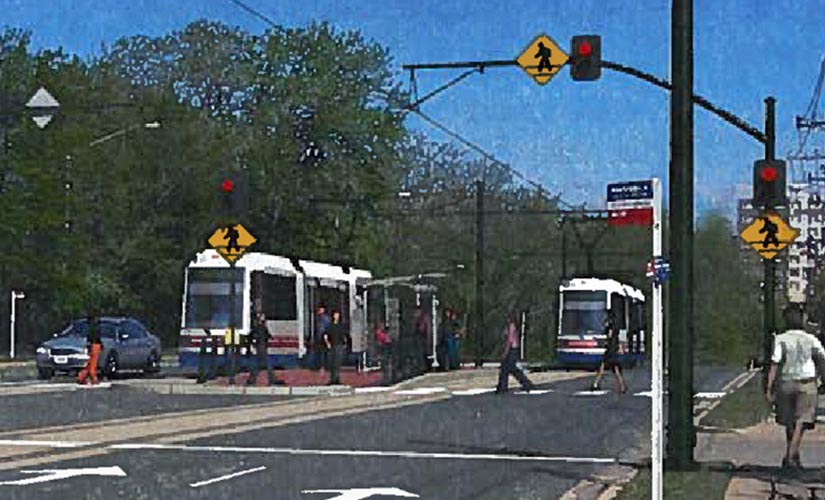
On Columbia Pike and Route 1, this means a streetcar system. The streetcar will more than pay for itself over time through economic vitality. Such a system will also help us avoid haphazard development while preserving surrounding neighborhoods, retaining affordable housing and improving open space.

What happens if we don’t build the streetcar? The opportunity cost would be tremendous. We will lose out on bringing employers to Columbia Pike and Route 1. We will lose the economic activity that raises revenues needed to build schools and meet other core needs across Arlington.

Why do we need fixed rail? It offers permanence and is far more attractive to riders than other options. Entrepreneurs know this, and they respond by investing. The promised streetcar has already brought new construction and retail activity to the east end of the Pike, with the expectation that a streetcar system will drive demand and business success. East end residents see flickers of light: Columbia Pike as a destination.

So far, this is great, but it could be snuffed out easily. With the streetcar project under threat, and concern about delays in construction, this private investment may end.

By contrast, enhanced bus service cannot meet projected ridership needs, much less our economic needs. Articulated buses (buses with accordion-like centers) are wider and longer but carry fewer passengers and offer less comfortable rides. (more…)


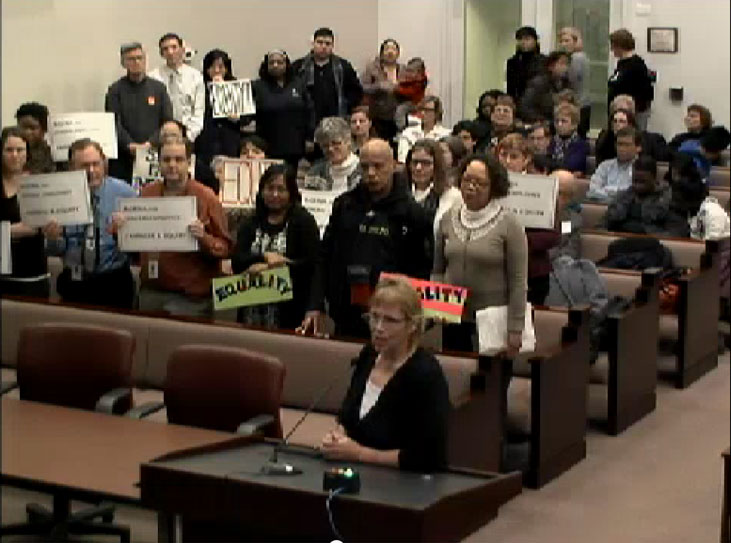
Rendering of a streetcar along Columbia PikeIn an op-ed in the Washington Post this weekend, Greater Greater Washington editor David Alpert argues that Arlington residents should look at the county’s history with Metro when forming an opinion on the Columbia Pike streetcar line.

Residents should take a long-term view of the benefits of the Pike streetcar, instead of just looking at the price tag, Alpert says. Such long-term thinking helped Arlington come up with the plan for Metro that ultimately led to much of the county’s prosperity.

Alpert adds the streetcar line is relatively inexpensive when comparing projected ridership with that of the Silver Line.

“In comparison with other projects, a streetcar on Columbia Pike is a thrifty proposition,” Alpert writes. “But that hadn’t stopped it from being a political punching bag for some who simply attack the price tag without context. News coverage that reports only the cost without discussing benefits does not help, either.”

Alpert says the county should focus on long-term investment, not just on spending as little as possible. Do you agree that recent discussions of the streetcar have focused too much on cost?


Progressive Voice is a weekly opinion column. It is written by a rotating group of contributors. The views and opinions expressed in this column are those of the author and do not necessarily reflect the views of ARLnow.com.

Mike LiebermanLast year, Arlington Democrats campaigned for statewide and House of Delegates candidates on a message of carrying Arlington’s values to Richmond. During the past two weeks, these efforts have borne fruit, with major progressive actions taken by our governor and attorney general, both of whom were elected with strong support from Arlington voters.

Today, I focus on Attorney General Mark Herring’s announcement last month that instantly provided access to higher education for 8,000 Virginia residents who have successfully completed high school or its equivalent and who were brought to the United States as children by parents who were undocumented immigrants.

These students, called Dreamers (named after the DREAM Act), can now qualify for in-state tuition at Virginia’s public colleges and universities. With his two-page letter, Mr. Herring broke through a logjam in the General Assembly that had seemingly stalled progress indefinitely on the Virginia Dreamers’ access to higher education in the state where they grew up and achieved K-12 academic success.

From a policy perspective, Mr. Herring’s decision is beyond common sense. Dreamers are children whose status as undocumented immigrants was most often not a choice of their making. Indeed, in many cases, these children came to the United States as babies. Many may not even know the circumstances of their arrival in the United States. Yet they have been successful students and contributed to the vibrancy of our communities in many ways.

Dreamers have completed their education at Virginia high schools, in many cases with honors. They have maintained a clean record. They want to become even more productive members of society by going to college and getting a degree. Put simply, these are the type of productive Virginians that we want and need in our communities.

By gaining admission to Virginia’s institutions of higher education, they will not only enrich those colleges and universities through their hard work and desire to succeed, but they will also have the opportunity to remain in our Commonwealth and positively contribute to our economy and workforce — following the path of hard working immigrants seen throughout the American experience.

Long before Attorney General Herring’s action, Arlington led the way as a champion for Virginia Dreamers.

School Board Member Emma Violand-Sanchez is the chair of Arlington’s Dream Project, dedicated to encouraging and supporting promising immigrant youth in their pursuit of higher education through mentoring, scholarships, advocacy, and community outreach.

Our Del. Alfonso Lopez and state Sen. Adam Ebbin have been patrons and champions of the DREAM Act as General Assembly members. Our County Board, led on this issue by Walter Tejada, has made passage of the DREAM Act a legislative priority for Arlington.

I am proud to live in a community that not only speaks about its values of inclusion and diversity, but takes steps to translate them into action.

Republicans in the General Assembly, by contrast — and indeed, some right here in our community — have decried Attorney General Herring’s decision as overreaching. (more…)


Peter’s Take is a weekly opinion column. The views and opinions expressed in this column are those of the author and do not necessarily reflect the views of ARLnow.com.

Peter RousselotLast Friday, ARLnow.com posted a story that the Federal Aviation Administration (FAA) is considering “a policy change that would lower the maximum allowable building heights near airports.”

That story mentioned a new bill proposed by Rep. Jim Moran and Congressional co-sponsors that would require the FAA to adopt its new building height restrictions through a “standard rulemaking procedure” rather than through a “proposed policy.” The difference between these two alternatives is that the standard rulemaking procedure involves consideration of more factors and evidence than the proposed policy approach.

Regardless of which procedure the FAA ultimately has to follow, it is not clear from either the ARLnow.com story or from the FAA formal announcement precisely what the FAA’s new height limitations will be, nor which geographic areas of Arlington will be subject to them.

But, it is clear that the Aquatics Center site at Long Bridge Park is directly in the airport’s flight path. Therefore, there is a reasonable possibility that the height of the roof of the currently-proposed design for the Aquatics Center — a height needed to accommodate the King’s Dominion-style water slide — will have to be lowered to meet the FAA’s proposed new height restrictions.

Given the FAA’s commitment to lower its height restrictions, it would be irresponsible for Arlington to proceed to a bid process for construction of the Aquatics Center without a binding agreement with the FAA that Arlington’s final design for this facility has FAA approval.

To the best of my knowledge, Arlington County does not have such a binding agreement with the FAA. If the FAA refuses to provide Arlington with such an agreement, the FAA’s refusal ought to be yet another reason to scale back the current Aquatics Center design. With so many other competing priorities, like the schools capacity crisis, “the community does not ‘need’ this gold-plated Aquatics Center, and we should not move forward with it even if we could do so within the whopping $80 million price tag we thought it would cost” as recently as last year.

Moreover, the continually-escalating construction costs for the current Aquatics Center design (now well north of $80 million) will be followed by the even more rapidly escalating annual operating costs of the current design (up from $450,000 per year only thre years ago to $3.8 million per year at last count).

The current Aquatics Center design is fundamentally flawed because it contains too many extravagant features. It’s time substantially to scale back the current design, and develop a new design for a sensible pool and recreation center at Long Bridge Park.

Peter Rousselot is a former member of the Central Committee of the Democratic Party of Virginia and former chair of the Arlington County Democratic Committee.


The Right Note is a weekly opinion column. The views and opinions expressed in the column are those of the author and do not necessarily reflect the views of ARLnow.com.

Mark KellyIf the County Board special election was a small political earthquake, aftershocks were felt this past week and were centered somewhere in Crystal City.

Democrats sent out a newsletter which expressed exactly what many of us outside the controlling party in Arlington have been saying for years — the County Board is (rightly) perceived to be arrogant and insular.

Undaunted, the Board plowed ahead. It came to light that once again, the Board saw fit to give raises to the three employees it hires directly without putting the issue on the agenda. The Washington Post was on the case, disclosing that County Manager Barbara Donnellan received a raise of $8,000. Could it be for successfully stalling the $1 million bus stop study? Or maybe, it is just for taking all the slings and arrows when the Board refers questions to “staff?”

Also this week, the cost for the Columbia Pike to Crystal City trolley system was released. Based on past cost projections, I think it is safe to assume the $585 million price tag will only go up. And of course, it will not take long to scare the $1 billion mark.

This announcement comes on the heels of concerns that addressing school capacity needs may bump up against the bounds of the debt limits necessary to maintain our triple AAA bond rating. Most Arlingtonians would place the need to address 700 additional students entering our schools over other projects, but the priorities of the County Board remain an open question.

There is no doubt that something eventually has to give. In the past, that usually meant your wallet.

Some have suggested that the County Board may be giving themselves an out to abandon the trolley at a later date by relying on federal dollars in the funding mix. Federal officials have already sent it back to the drawing board once. Others are still concerned that the County Board could eventually turn to a public-private partnership or some other funding mechanism as a “savior” for it.

One thing is for sure, the retirement of Chris Zimmerman means the number one trolley cheerleader is no longer in the building. His departure opens the door for political expediency to trump insular arrogance if voters give John Vihstadt a full term in November. Walter Tejada or Mary Hynes might “re-evaluate” their position heading into 2015. That would most certainly leave Alan Howze with nothing to do but shake his head.

Mark Kelly is a former Arlington GOP Chairman and two-time Republican candidate for Arlington County Board.


View More Stories