
Arlington County Board candidate Peter FallonThis week, we asked the Democratic candidates for Arlington County Board to write a sub-750 word essay describing why Arlington residents should vote for them in the Democratic caucus. The caucus is being held from 7:00 to 9:00 p.m. today and from 11:00 a.m. to 7:00 p.m. on Saturday.

Here is the unedited response from Peter Fallon:

Arlington is a caring community that promotes equality, values diversity, helps those at risk, has great schools, invests in our future, and practices good government. My priorities in this campaign represent these shared values.

As I’ve reached out to voters, the message I’m hearing back has been consistent. People tell me they don’t think the County Board’s decision-making is representative of the community as a whole. I consistently hear that no one is listening to them. Well, I’m here to tell you that I’m listening, and I want to be your voice on the County Board.

I work as a tax accountant and small business advisor. I understand the struggles entrepreneurs face working to make their dream a reality. I also understand that Arlington must reposition itself to attract quality employers to fill our vacant office buildings and maintain our commercial tax base. As an accountant and former auditor, I know when the numbers “don’t add up right.” I pledge to bring a new focus on both transparency and fiscal accountability to Arlington’s decision-making. We must rebuild the public’s confidence in the County’s ability to manage large capital projects both on-time and on-budget.

Arlington has long held a reputation for good government, grounded in the tradition of electing county board members with deep roots in our community and years of service on our advisory commissions. I share this tradition.

My family and I have called Arlington home for more than 27 years. In 1991, we purchased our first home in the Donaldson Run neighborhood where we still live today. Our children attend a local preschool and our eldest will enter Taylor Elementary in September.

I started out as a community advocate, as the President of the Donaldson Run Civic Association for 11 years and represented my neighborhood on the Civic Federation and Neighborhood Conservation Advisory Committee (NCAC) for over a decade.

I’ve been privileged to serve on the County Planning Commission, the Housing Commission and the Transportation Commission. Over the years, I’ve acquired direct experience across all major areas of responsibility of the County Board from affordable housing to zoning and long range planning. I have a record of working with the community and respecting the diversity of opinion that accompanies all issues in Arlington.

I have been part of the smart growth story that has made Arlington successful, while preserving our established neighborhoods and protecting our high quality of life.


(more…)


Last week, St. Charles Borromeo Church, near Clarendon, announced that it will be closing its private K-8 school after this school year.

Administrators say the decision is due to low enrollment — only 117 students are currently enrolled at the school, about half of its capacity. Still, parents are upset with the decision, and wondering whether anything could have been done to save the school.

Here’s a letter from one such parent.

My daughter’s school, St. Charles Borromeo in Clarendon, announced suddenly January 13 that it was closing the K-8 portion this June and “restructuring” as an Early Childhood Center.

“So what?” you must be thinking; Catholic schools have been closing at an alarming rate all over the country.

But it’s not that St. Charles Elementary is closing — it’s the process by which it is closing.

We received an email the morning of the 13th that there was an important letter in our child’s backpack for us. I didn’t give the email another thought until I went to pick up my daughter from extended day, when I saw the stricken faces of other parents. I thought maybe that someone in the school community was very ill or had died. Little did I know it was the news of the school closure.

A letter like that should come at the end of a long fight to save your school — after you have done everything you could think of to raise both enrollment and necessary operating funds. Why were parents not even given the opportunity to try?

We were never afforded the respect and dignity to be invited into the process. We were never given financial information or analyses. We were never notified of the warnings that were apparently delivered from the Diocese to the school. We were never rallied and given a goal to try to attain. We were never given a chance to go down swinging.

We were led to believe that everything was fine. We have an active PTO. We have an active enrollment management committee. We have a brand new, engaging, motivated principal who this school year alone brought in 10 new students.

Look — we are not naïve. We understand the economics of private education in this area and the struggles in trying to compete with the fabulous public schools in the region. Maybe in the end, after fighting the good fight, we would not have succeeded. Then we would have been sad to receive the letter, would have licked our wounds, and at least known we did all we could.

But for things to end this way is unacceptable and disrespectful.

In his letter Father Horace H. “Tuck” Grinnell stated “What defeated us in the end was our low enrollment.” I beg to differ. I believe it was a lack of leadership.

So now St. Charles Elementary — the most diverse Catholic elementary school in the diocese and a shining example of Dr. Martin Luther King’s hopes and dreams — is closing. There is no written transition plan, only vague assurances that families will be welcomed with open arms, and current teachers and staff will be given priority for jobs, at other Catholic schools in the area. I only hope this is the case.

I hope the new St. Charles Early Childhood Center will be a success. Those of you in Arlington looking for a preschool would have the joy of working with Principal Angela Rowley and her staff. She is the finest example of Christian love and charity and will educate and care for your children like they were her own. If she can’t make this new center a success, then no one can.

But learn from our situation — demand transparency and participation at all times. Demand accountability from the parish, the superintendent of Catholic schools at the diocese, and from the bishop himself. Maybe then something good will come out of St. Charles Elementary’s untimely and unnecessary death.

In the fall my daughter’s third grade teacher read the class the children’s version of Greg Mortenson’s “Three Cups of Tea.” On their own the class decided to raise funds for Pennies for Peace, the charity supporting schools in Pakistan and Afghanistan. They set a goal of $400, and to be honest, I didn’t think there was any way they could raise that amount of money. I thought it would be a great learning experience that sometimes you can’t meet a goal you set.

The kids raised almost $900. Just imagine what their parents could have done for St. Charles Elementary if only we were given the chance.

Kayleen Fitzgerald
Falls Church

To submit a letter to the editor, please email it to [email protected]. Letters to the editor may be lightly edited for content and brevity.


The following was sent in response to last week’s letter to the editor, “The Case for Long Bridge Park Phase 2.”

I am an Arlington resident and have been for 15 years. I would like to respond to Eric Cassel, President Friends of Long Bridge Park. First he makes the case that the target audience for this lavish facility is increasing in Arlington County. Target audience? Elementary school age children — I have lived in six states while I was growing up. In not one state was there a swimming facility for us to learn how to swim. How did this become a necessity for elementary school children? At what point did “we” decide that my elementary schooling when I was a child was lacking?

My parents took me to the YMCA to learn how to swim. We have one of those very close to the Pentagon City / Crystal City area. Why is it the tax payers responsibility to teach others children how to swim? Second, young urban professionals. We have gyms with pools in this area already. I belong to sport and health. The pool is rarely crowded. They can well afford to pay a gym membership. Again, why is it taxpayers responsibility to subsidize young urban professionals’ desire to swim? There are also the Arlington County high school pools that they are free to join at a great discount to them! Thirdly, the elderly. See my comments about the young professionals. In addition, not well-off elderly receive subsidizes from the County already. Why suddenly a “new need” for them to swim at taxpayer expense.

We already have Hayes Park for events of all sorts and a soccer field, basket ball courts, and tennis courts. Is this not enough? Why must the taxpayers now foot the bill for an overly expensive facility that supporters are attempting to portray as a requirement and entitlement?

George Sarkees
Addison Heights

To submit a letter to the editor, please email it to [email protected]. Letters to the editor may be lightly edited for content and brevity.


Peter’s Take is a weekly opinion column. The views and opinions expressed in this column are those of the author and do not necessarily reflect the views of ARLnow.com.

Peter RousselotA tragic incident in Bath County, Va. — in which the son of State Sen. Creigh Deeds attacked his father with a knife and subsequently shot himself to death — once again has exposed the many flaws in Virginia’s public mental health system.

In another tragedy earlier last fall, a mentally-unstable employee of a government contractor, who had worked on many assignments around the Metro area (including in Arlington), shot multiple victims to death at the D.C. Navy Yard.

The Deeds incident brought into sharpest focus flaws in Virginia’s record keeping regarding the availability of openings to hold mentally ill individuals who might pose a danger to themselves or others. It also highlighted the need to re-examine standards for involuntary detention. However, I believe the mental health area that is most in need of reform is the longer-term care and treatment of individuals who cannot afford care for themselves.

At various points during their lives, large numbers of the mentally ill can be:

  • in school
  • in hospitals
  • in jail
  • living in a home
  • homeless
  • employed part time
  • unemployed

In any of those settings, these individuals can be: improving, stable, declining, or dangerous to themselves or others.

The challenge for Virginia is to develop a mental health system that provides comprehensive, consistent and continuous treatment for all eligible residents — regardless of in which of the above categories they happen to fall at any given time.

One key to improving treatment is to develop an electronic records system to capture critical information about diagnoses, past treatment and recommendations for the future. We must avoid a “silo” approach in which one or more Virginia public or non-profit institutions treat an individual for mental health issues, and then keep the information stored away where it cannot be accessed later by other mental health professionals. With due deference to patients’ privacy rights, such a records system must be accessible electronically by subsequent treatment providers.

A second key to improving treatment is a combination of increased state and local funding so that eligible individuals can receive appropriate care while living in the setting that best fits their mental health status.

Any of us could be the next victim of an act of violence perpetrated by a mentally-disturbed person. Let’s work together in a bipartisan way to reform Virginia’s mental health system.

Peter Rousselot is a former member of the Central Committee of the Democratic Party of Virginia and former chair of the Arlington County Democratic Committee.


The Right Note is a weekly opinion column published on Thursdays. The views and opinions expressed in the column are those of the author and do not necessarily reflect the views of ARLnow.com.

Mark KellyYesterday, Arlington County released its real estate assessments. Your tax bill is going up by roughly 5 percent unless the County Board reduces tax rates later this spring. You can look up your home’s assessment here if you want to see what it means to you.

Some may argue that the rise in assessments is good news because your home is now worth more. While true, and certainly helpful whenever you decide to sell your home, we all know that we pay these taxes while we live in our homes. So, the tax increase is effectively a tax on your income, which is one of the reasons you can deduct it from your federal tax return.

Back in November, county budget staff estimated real estate assessments would go up by 2.6 percent, leaving a $20-25 million so-called “budget gap.” They now believe that number is 5.8 percent — a dramatic increase that was clearly unexpected. County Manager Barbara Donnellan said yesterday the increase will narrow the “budget gap,” but the County still faces “pressures” for increased expenditures.

As I have previously written, the “budget gap” is essentially a myth. Every year in recent memory, Arlington County takes in excess revenue over and above the budget that is then spent, rather than returned to the taxpayers. It is spent to give the illusion that the County has spending “pressures” for the following year’s budget so that the Board can then raise our taxes again.

The bottom line is that no real spending cuts would be necessary to allow the County Board to simply hold the tax increase on homeowners to the 2.6 percent anticipated assessment increase level rather than 5.3 percent level. Unfortunately, no County Board member is likely to make that case.

This is because the pressures to spend more are the creation of County Board policies. And, the Board is planning to bring more of these pressures online by locking in huge future subsidies for both the trolley and the aquatics center. These ongoing subsidies will come out of the general fund and will be spent on these priorities rather than on roads or schools or public safety — just like they did for the Artisphere.

Not to worry, when the Board’s priorities run up against the “budget gap”, they will just raise the tax rate to pay for it. As long as Arlingtonians keep voting for people with the same priorities, the cycle will continue.

Mark Kelly is a former Arlington GOP Chairman and two-time Republican candidate for Arlington County Board.


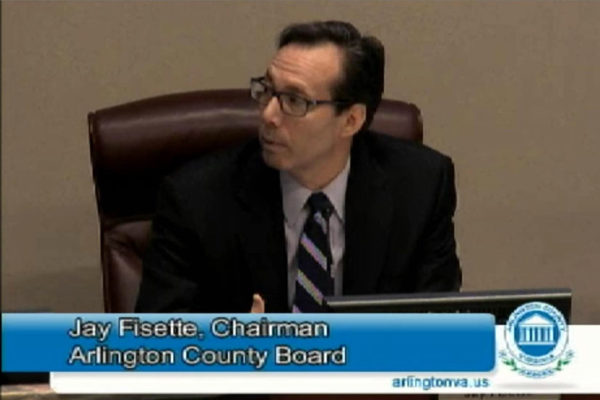
Editor’s Note: The following opinion piece was written by Arlington County Board Chairman Jay Fisette. It originally appeared in ARLbiz, our weekly Arlington business e-newsletter. You can subscribe to ARLbiz here.

On New Year’s Day, I announced that my focus this year as Arlington County Board Chairman will be on sustainability – the ability to prosper through change. A key element of that focus for me will be laying the groundwork for Arlington to become a hub for the innovation economy.

Everything we do should be judged by how it advances our goal of building a community that will sustain Arlingtonians for generations to come. We have such a strong foundation on which to build.

When I moved to Arlington in 1983 — 31 years ago — it was a somewhat sleepy place with an uncertain future. Arlington had made the commitment to transit as our prime engine of redevelopment but we were not sure how far it could take us. Today, 40 percent of all transit trips in the state — in the entire state — begin or end in Arlington. After years of persistence, patience and sound investment, the unprecedented prosperity that has resulted is clear.

Today, other localities are learning from us and making smarter planning decisions themselves. We face a rapidly changing economy and increased competition as the Silver Line brings rail transit to Tyson’s and beyond and DC creates new office markets. To tackle these challenges, the County Manager, accompanied by Board Members, went on a listening tour in the business community. What we heard on that tour helped me formulate my action plan. Owners of businesses both small and large love this community and value the business opportunities here, but we heard thoughtful suggestions from them on how we can make Arlington an even better place to do business.

We know that Arlington has amazing assets that will continue to be a fundamental part of our economic strength. Our location is not going to change. National Airport and the Pentagon are not going anywhere. Our outstanding transportation system, smart growth policies and great schools will be protected and enhanced. Did you know that today’s Arlington has the nation’s highest concentration of 25 to 34-year-olds — and is the home of the region’s “creative class?”

In the coming months, as part of my six-point plan, we will be presenting ideas for accelerating the growth of the Rosslyn-Ballston corridor’s science, technology, art, research and education eco-system; strengthening communications and partnerships between County government, businesses, entrepreneurs and residents; updating our Retail Action Plan; and strategically marketing Arlington to businesses and developers nationally.

These initiatives will help ensure that Arlington is a leader in the innovation economy — the 21st-century economy of flexible, creative enterprises and high-tech products and services.

You can read my entire January 1 speech on the County website.

It is an ambitious agenda — but this is an ambitious community. We lean forward and are good at turning challenges into opportunities. Arlington’s future is bright. Together, we will continue to build a community that is a model of sustainability, diversity and civic engagement – a place that other communities look to for inspiration.

Jay Fisette
Chairman, Arlington County Board


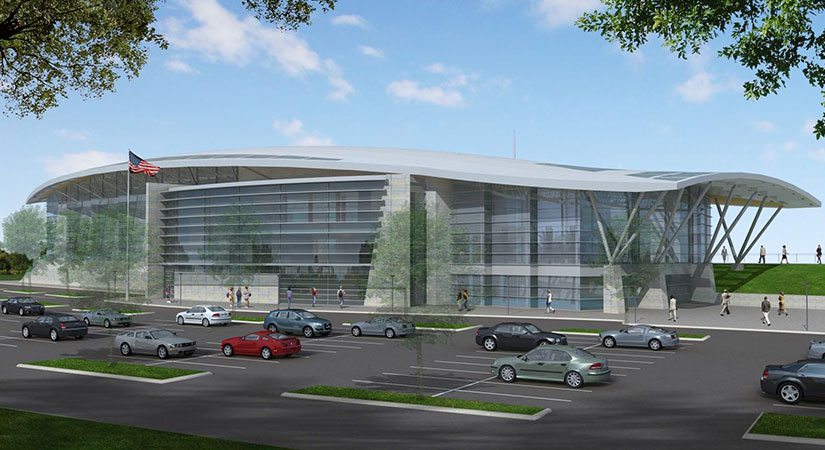
Renderings of the future Long Bridge Park Aquatics, Health & Fitness FacilityNews that rising cost estimates and construction bids have put the Long Bridge Park aquatics center in danger of being downsized or scrapped has been gleefully seized upon by critics of the planned facility this week.

With construction bids well exceeding the $80 million projected cost — of just the first phase of the aquatics and fitness center project, also referred to as Phase 2 of Long Bridge Park — critics says it’s too grand a project for Arlington County, with its eroding commercial tax base. However, supporters say it’s well worth the investment.

Here’s a Letter to the Editor from Eric Cassel, President of the Friends of Long Bridge Park organization.

Many facts about Phase 2 at Long Bridge Park have been forgotten in the past few weeks and as everyone takes a breath, it would be timely to restate the great need for the next phase and three of the reasons why it has been proposed.

1) Three major groups will use the pool and each group is projected to increase greatly in the coming years.
Elementary age children, local young adults and the elderly are the primary target audience for the Aquatics center. All three groups are projected to increase significantly in the next 20 years.

First, the schools have made a great case that elementary school students are already increasing and creating a demand for facilities. That means the number of small children who need a place to play and a location to learn to swim have and will increase. Having tons of elementary school kids ‘playing’ in the high school pools cannot happen. The two age groups have significantly different needs (for example water temperature) and significantly different type of pool needs. Thus the increasing demand from elementary students will not be able to be accommodated by the high school pools.

Second, in the Crystal City/Pentagon City/Rosslyn area the number of households is expected to increase in significantly more than the rest of the county. The increase in housing units near Metro stations is almost all condo/apartments. These units are very attractive to the Young Urban Adult population. To give everyone an idea the following table shows the dramatic increase in housing units near Long Bridge Park:

How much additional time can the local schools schedule in the high school pools for this additional young adult activity? Or is the county going to ignore the recreational needs of young adults?

Lastly, the Center will also provide aquatics and fitness facilities and times for the fast growing older adult population. Currently no facility in the county provides a lazy river for seniors to walk against the current. In addition, the classes for seniors are offered when the schools can provide time in their pools—not at other times that seniors would prefer and even at these restricted times, the few classes are waitlisted. Lastly there is no public therapy pool in the county for classes and health of seniors. Arlington County should provide these recreational and wellness facilities for seniors.

Thus, all three groups: elementary children, young adults and seniors are the target audiences for the facility.

2) Main Swimming Pools

The Arlington County Master plan specifically recommends that the park be developed and was based on a comprehensive and expert analysis of the physical assets and the demand for services. Instead of looking at just a few individuals’ anecdotal opinions, it is important to gather the facts, and look at the demand/supply balance. Expert data and research have shown the demand for swimming is significantly greater than the supply. Demand and supply studies, information from the county on demand for pool time and the class demand all show a supply/demand imbalance that Phase 2 has been planned to address.

As a result of this study and an impressive community input process with almost 100 public meetings, the proposed phases of Long Bridge Park were developed. These phases were designed to be complementary and increase the value of the park over time.

3) Outdoor Facilities at Long Bridge Park

One of the features of the park is the increased space for events, passive recreation and pedestrian/bike access to the Mt. Vernon trail. These outdoor features are part of the cost of the park and provide a significant increase in the facilities for the county.

The park will be the site of medium sized events, like ethnic festivals, sporting events and smaller local concerts. No place in the county will be able to hold such events with the ease that will be possible at Long Bridge Park. The site is being equipped for events by having outdoor electric outlets, additional bathrooms and physical support facilities.

The increased length of the esplanade will provide joggers, walkers and bikers with a longer, better views of the monuments, the airport, the trains and the Potomac River and more outdoor features. All of these outdoor features are part of the cost, upkeep and resources that the county should provide its residents. We cannot be a world-class community, without providing some basic outdoor recreation to our residents.

The three reasons for Phase 2 are:

  1. The target populations are increasing and currently underserved,
  2. The demand for the main swimming pools has been shown to be greater than the supply,
  3. The outdoor facilities provide needed recreation and open space

The next phase of Long Bridge Park is necessary to fulfill Open Space Master Plan and to offer needed recreational, fitness and wellness needs for the full range of populations and ages in Arlington County.

Eric Cassel
President, Friends of Long Bridge Park

To submit a letter to the editor, please email it to [email protected].


The Right Note is a weekly opinion column published on Thursdays. The views and opinions expressed in the column are those of the author and do not necessarily reflect the views of ARLnow.com.

Mark KellyIn November 2012, voters approved a bond that was titled “Local Parks and Recreation.” The primary part of that bond package was $50 million to complete funding for a new south Arlington swimming center which had a total price tag estimated at $75 million.

As it turns out, that still may not be enough. County Manager Barbara Donnellan had to halt forward progress on the new facility when bids came in well over the already-generous cost estimates. This was on top of the recent announcement that annual taxpayer subsidies for the ongoing operational costs of the project were ballooning dramatically over the original cost estimates. The new estimate is that the aquatics center will operate at a deficit of $4 million per year.

In 2012, the voters did give the “parks and recreation” bond 10 percent less of the vote than the community infrastructure bond, and 17 percent less than the schools and Metro bonds. It seems a larger percentage of voters than usual had concerns about the swimming facility than they usually do over local infrastructure spending. However, it is still tough to defeat a ballot measure that sounds as benign as “Local Parks and Recreation.”

As I was standing in line to vote 15 months ago, I recall hearing a mom explaining the bond votes to her elementary school-aged daughter. “We need good parks,” she said in explaining why she was voting for the bond. Maybe she knew the aquatics center was included and just wanted to simplify it for her daughter, or maybe she did not.

Either way, this is a perfect case in point for the need to have large bond issues stand on their own for votes. If the County Board is proposing a bond for more than $10 million on a single project, why not let us vote it up or down as a standalone measure?

The answer is quite simple. If the bond description had been “$50 million to complete a $75 million community swimming facility,” the County Board may have lost the vote. And, it is the same rationale by which Board members have resisted allowing even a token straight up or down vote on the Columbia Pike trolley.

Mark Kelly is a former Arlington GOP Chairman and two-time Republican candidate for Arlington County Board.


Peter’s Take is a weekly opinion column. The views and opinions expressed in this column are those of the author and do not necessarily reflect the views of ARLnow.com.

Peter RousselotSeveral weeks ago the news broke that the annual operating subsidy Arlington would have to provide to the Aquatics Center had ballooned from $1.9 million to $3.8 million. Just three years ago, the County’s “high” estimate of the annual operating subsidy was $450,000.

On Dec. 12, I recommended that the County Board direct the County Manager to “halt all further work on the Aquatics Center… and develop a new, cost-effective design for a sensible recreation center at Long Bridge Park (including a swimming pool).” Little did I know when I wrote that December column that the construction bids to build this facility also would come in so much higher than anticipated.

In the face of more and more new information about the vastly higher operating and capital costs of this facility, it is very disappointing that some of our current elected leaders, and some of those who want to succeed them, stubbornly cling to the belief that all of the design elements in this project are sacrosanct.

For example, ARLnow.com quotes County Board Chair Jay Fisette as attempting to justify his continued support for the project because “more than a decade was spent on the Center’s design” and “exaggerations about the exact extent of the cost increases have been ‘celebrated by long-time opponents of the facility.’”

Our elected leaders should be offering us a contrite acknowledgement that despite over a decade of planning, they have allowed the current design to proceed laden with so many extravagant features. Planning should be judged by the wisdom of the final decision—not the length of time it takes to make it.  In the new normal of Arlington’s economy, with 20 percent commercial office vacancy rates and our public schools bursting at the seams, sticking with the current design is a luxury we cannot afford.

Similarly out of touch is Alan Howze — one of the candidates for the Democratic nomination for the County Board seat soon to be vacated by Chris Zimmerman. ARLnow.com quotes Howze as saying there “clearly is a need in the community” for the Aquatics Center, and “we should move forward… if we can do it within the budget we’ve allocated for it”. With so many other competing priorities, the community does not “need” this gold-plated Aquatics Center, and we should not move forward with it even if we could do so within the whopping $80 million price tag we thought it would cost as recently as one month ago.

It’s long past time for the Aquatics Center to downsize or die.

Peter Rousselot is a former member of the Central Committee of the Democratic Party of Virginia and former chair of the Arlington County Democratic Committee.


Restaurant Talk is an occasional feature written by Nick Freshman, a native Arlingtonian and co-owner of Spider Kelly’s and Eventide Restaurant in Clarendon. Photos added by ARLnow.com.

Pan seared Steelhead at Water & Wall restaurant in Virginia SquareHappy New Year, Arlington! It’s been a while, but I’m back.

What better way to start 2014 than with another controversial topic? Kids, food trucks, tipping; you name it, and I will take it on. Well, probably not tipping ever again. That was brutal. Point is, it’s fun to explore some of the more talked about areas of what we do. So what’s first on the list for 2014? Food allergies.

Food allergies can present the most significant challenges to successful service in a restaurant. In some cases, we are told that the literal life of a guest is being placed in our hands for the duration of the meal. No pressure, Chef. It’s hard enough for us to cook a steak medium rare some nights. It’s hard for the guest as well. To constantly have to interrogate the staff about ingredients, to always need to alter the menu and to live in constant anxiety that the kitchen got it right must be terribly stressful.

Working with customers with mild to severe to fatal allergies is something that we do on a nightly basis. In fact, it was this past New Year’s Eve in the dining room at Eventide that the idea for this column came about. Faced with a limited choice tasting menu, a guest was unsure if she would even be able to stay and eat. She informed us that she had a fatal dairy allergy and was carrying an EpiPen in her purse in case she went into anaphylactic shock. She also had a gluten allergy that while not fatal was serious.

Her dining companion’s New Year’s Eve wish was to not have to stab her friend Pulp Fiction-style as the clock struck midnight.

Food at Black Lime restaurant in Crystal CityMy answer? Let’s look at the menu and figure out how to make it work. That was not easy. We use more than our fair share of butter and there is flour in many more dishes than one might imagine. Step by step we went through the menu, consulted with Chef and tried to figure out a way to make it work on the fly.

That was an example of the most challenging situation — the menu is in front of the guest, they are stuck, and we are learning of a severe allergy as they are trying to find something to eat. It is unavoidable at times to be sure, but it can make things really tough.

On an average weekend night, we have four to five tables in the dining room that have some type of allergy. Is that on the rise? I don’t know. It seems like it, but many allergies — gluten being the primary example — have been historically undiagnosed. Regardless, it is something we deal with on a regular basis, and a conversation with some helpful tips might be a good idea. Allergy sufferers usually know exactly what they need and what they want, and they are usually very good at presenting their needs early and explicitly. However, they are not always the ones making the reservations or booking the events, so this information could be helpful for non-sufferers making the plans as well.

  1. Plan ahead. The earlier the information can get to the restaurant the better. You can include it in the notes when you book on OpenTable, or you can mention it when you call in. Be as specific as you are able. Exactly what the allergy is and the severity is important. If the diner has preferred substitutions, that is helpful as well. This applies to dietary choices as well as allergies (vegan, vegetarian).
  2. Do your homework. Everyone has menus online now. Yes, it is true that restaurants are notorious for not being completely current, but you can at least get an idea what the venue offers and what might work as a substitute in advance.
  3. We love the cards. Many guests arrive and hand a small card to the server that lists the allergies. They are clear and concise, and they go right to the Chef. That eliminates the potentially dangerous opportunity that something might be lost in translation.
  4. Be clear about the severity. By all means be overcautious, but also be conscious that there is a very big difference between a fatal shellfish allergy and a mild intolerance to cilantro. Restaurants should take all allergies seriously and honor all requests that they can, but if you overstate the severity, you could limit what you can have. With a fatal allergy, we will often rule out serving you any dish or ingredient that has been in the vicinity or even the same floor as the potential offender. With a mild allergy, we might just have to remove a garnish.
  5. Be a little patient with the kitchens. If we hear in advance that you are coming, there is a better chance we can come up with something more interesting for you. If we hear about it the moment of, there is only so much the kitchen can do. Also, sometimes in order to cover ourselves, if there is the slightest chance of any contamination, and there is a fatal allergy, we might just say “sorry, we can’t do such and such.” It’s the last thing anyone in the hospitality business wants to do, but sometimes we might not be able to accommodate a request.

(more…)


The Right Note is a weekly opinion column published on Thursdays. The views and opinions expressed in the column are those of the author and do not necessarily reflect the views of ARLnow.com.

Mark KellyI ended last week’s column with my New Year’s resolution for the County Board, a no waste county budget. It reminded me of the first column I wrote for ARLnow.com one year ago.

In it, I commented on the false choice Chris Zimmerman often offers to Arlingtonians. If you have listened to his speeches, he often paints a picture that people either believe the government is capable of doing good things or nothing at all.

Nearly all Americans believe that government is necessary. On the local level for example, that means public safety, transportation, infrastructure, schools and parks. At the same time, most Americans also believe government at all levels can be inefficient and, at times, wasteful.

So, when fiscal conservatives object to projects in Arlington like the Artisphere or the trolley, it is not because we do not like for government to do anything. Rather, it is because we prefer a government that is more fiscally responsible with our tax dollars.

The Board Members do recognize the fact people want government to spend their tax dollars wisely — at least in their speeches. If you listened to what was said at last week’s meeting, you may have noted an interesting line in Walter Tejada’s nomination speech of Jay Fisette. In it, Tejada half-jokingly referred to his colleague as “cheap” — to suggest that Fisette is prudent with taxpayer resources.

Both Fisette and Mary Hynes repeated the “prudent” theme in their speeches — pointing to the County’s triple-AAA bond rating as proof. That, next to citing low tax rates when our actual tax bills are not the lowest in the region, is one of the most-used pieces of spin by Board Members to look like they are fiscally disciplined in their governance.

If you know much about the bond rating agencies, they are much like personal credit rating agencies. The number one issue for them when looking at Arlington’s “credit worthiness” is our ability to pay our debts in the future. The Washington, D.C., region was given a negative outlook when the federal government pulled back its spending levels because the federal government is our main “industry.” Arlington’s rating remains the same because our elected officials are willing to continually raise our taxes to pay our bond obligations.

A million dollar bus stop, or ongoing subsidies at the Artisphere, or the doubling of subsidy requirements for an aquatics center (now on hold because of escalating cost estimates) are what you get from a County Board that talks about fiscal discipline without a real commitment to it. It seems that in reality — talk is cheap, but our County Board isn’t.

Mark Kelly is a former Arlington GOP Chairman and two-time Republican candidate for Arlington County Board.


View More Stories