Peter’s Take is a weekly opinion column published on Tuesdays. The views and opinions expressed in this column are those of the author and do not necessarily reflect the views of ARLnow.com.

Peter RousselotWhen County Board member Mary Hynes launched a new initiative called PLACE (Participation, Leadership and Civic Engagement), ARLnow posted a video and wrote a capsule story. In the video, various people were asked what they thought the term “Arlington Way” meant.  The capsule story asked and answered the question:

“What is the ‘Arlington Way’ exactly? It is essentially an open conversation between the local government and the people who live and work in Arlington. But the Arlington Way can mean different things to different people, as the video … seems to prove.”

Has the Arlington Way lost its way?

Arlington has created an elaborate system of advisory commissions, committees and task forces to tap the wealth of talent in our community This system was supplemented in 2012 with the PLACE initiative. And, in 2013, the County Board has added Walter Tejada’s Neighborhood Town Halls.

Compared to every other community anywhere near its size, the variety of opportunities that Arlington affords for citizen engagement and participation is admirable.

But, the Arlington Way is losing its way because of a combination of:

  • whether, when and how the County Board frames the issues for community discussion
  • what the County Board does with the advice it gets

Example: the PPTA guidelines.

The Southern Environmental Law Center (SELC) issued a report last fall warning that the Public Private Transportation Act (PPTA) lacked adequate safeguards, often enabling private firms to negotiate sweetheart deals that earn them high profits while placing most or all of the risk on the public.

The County Board has at least 3 citizen advisory groups that should have been asked to meet, review the proposed PPTA guidelines, and report back to the community: the Transit Advisory Committee, the Transportation Commission, and the Fiscal Affairs Advisory Commission. The County Board never requested such meetings or reports. Why not? What was the rush to enact such far-reaching guidelines without the input of these advisory groups?

Other examples:

  • The County Board’s recent decision on what to do with its fiscal year closeout funds, totaling many millions of dollars, included no opportunity for significant community engagement.
  • The entire structure of County Board decision making is a question too:  an item can appear once on an agenda and be voted on the same night.  Compare this with the School Board’s process of an item appearing first for information, with an opportunity for public comment, and then not being voted on until the next meeting – two weeks later. For major decisions, the School Board has even more time between public notice and action (like what to do with its fiscal year closeout funds).

We are losing our way. We have created many commissions, PLACE, and Neighborhood Town Halls so it looks like there is a lot of input, and there may be on many decisions. But, too many of the big, important decisions are reached without following the process we have created.

When we do use the process, the County Board too often disregards the input.  Of course, it is naïve to believe that the Board should always follow the recommendations, but when at midnight Board members are making changes to staff proposals and voting that same night – that does not inspire sufficient confidence in the Board’s decisions.

Peter Rousselot is a member of the Central Committee of the Democratic Party of Virginia and former chair of the Arlington County Democratic Committee.
The Right Note is a weekly opinion column by published on Thursdays. The views and opinions expressed in the column are those of the author and do not necessarily reflect the views of ARLnow.com.

GOP county board candidate Mark KellyIf you like two hour debates on the placement of chairs for outdoor cafe seating, then get ready, because the Arlington County Board will conduct its first regular business meeting of the year this Saturday. While this month’s Board’s agenda itself may not produce big fireworks, there is one sub-plot that many of us will be watching.

Last January, Libby Garvey was not Chris Zimmerman’s choice to replace Barbara Favola on the Board. Melissa Bondi was. Now we may know why.

In December, Garvey rocked the boat by making public her concerns about the newly formed consulting arrangement between Zimmerman and AECOM East Canada. The company stands to benefit from work on the proposed Columbia Pike trolley.

When Garvey raised the issue in light of the vote to move forward under the Public-Private Transportation Act (PPTA), the other three Board Members quickly rallied to Zimmerman’s defense. However, they seemed more upset that Garvey aired the matter in public than the very real concern over any appearance of impropriety from the Zimmerman arrangement.

For his part, Zimmerman checked with the County Attorney who maintains there is no way for him to manipulate PPTA guidelines to benefit his new employer.

On its face, Zimmerman’s consulting contract is to only do work for the company in Canada, and none of us should begrudge our “part-time” Board Members having a day job. In fact, some rightly contend more Board Members with regular day jobs would bring much-needed perspective to the debate on Arlington issues. At the very least, people with day jobs might not carry on debates ‘til the wee hours of the morning.

That said, it is right for Garvey to question Zimmerman’s impartiality on issues that could impact his new employer. The arrangement, at the least, seems a little cozy and conveniently timed to the Board’s pressing forward on the trolley project. What should concern Arlingtonians is that only one Member of the Board appears to believe this contract should be subject to additional public scrutiny.

At the New Year’s Day meeting, Garvey continued the back and forth by using her time to call for a new community dialogue on the trolley. Zimmerman, the trolley’s chief backer for at least a decade, indicated that the decision had already been made and the Board would move forward.

Then last week, the new multi-partisan Arlingtonians for Sensible Transit launched. The group may give Arlingtonians a real platform to put pressure on the Board to revisit the issue in spite of Mr. Zimmerman’s pronouncement that the decision was final. (In the interest of full disclosure, while I was not asked to be an original member of this group, I am joining it.)

We can watch the meeting Saturday to see how the next scene in the Garvey-Zimmerman drama plays out. If nothing else, watch to learn a little more about how our local government works.

Mark Kelly is a former Arlington GOP Chairman and two-time Republican candidate for Arlington County Board.


Independent’s Day is a weekly opinion column by published on Wednesdays. The views and opinions expressed in the column are those of the author and do not necessarily reflect the views of ARLnow.com.

Independent Congressional candidate Jason HowellOn one of the most innocuous days in politics, the Presidential Inauguration, partisanship once again took a bold new step in Richmond.

On Wednesday night the Washington Post reported that some of our Virginia Senators cast a vote to change our local districts and favor their party. They did this despite the reality that our Commonwealth, along with many states in our union, just recently redistricted all of the state “lines” last year.

Around this time a year ago, I shared a conversation with fellow Virginia independent candidate for U.S. Congress, Mr. Mark Gibson. He ran against newly re-elected U.S. Representative Gerry Connolly in Virginia’s 11th Congressional district. Mark shared that Reston, part of the then current 8th Congressional District, was being moved back to the 11th. I hadn’t realized that this was going into effect so soon. I nervously made multiple phone calls to our Virginia State Board of Elections. It wasn’t until late March that the new districts had been confirmed and my signature gathering process could confidently continue.

As frustrating as the jostling of entire townships was to me as a first-time candidate, it was even more disheartening to read into the possible motives.  The documentary film Gerrymandering describes well the process, perpetrated by both major parties, that leaves the true “electing” to state representatives. The movie used to be free on their website but now you may have to dig around on-line for it. It’s worth the find but be careful; the film may encourage you to do something crazy like run for office as an independent.

In simple terms, gerrymandering is the process by which politicians outline the neighborhoods that will likely vote in their party’s favor; they then “draw” them into their voting district. This nearly guarantees that their party will win the November elections (and that unless they lose in the primary, they will win individually). November elections have become less of a deciding factor than the primary elections held earlier in the election year, when fewer people are casting votes. This is a big reason why we have had U.S. Congressional retention rates hovering over 80% since 1964. In addition, most people casting votes in June (our 2012 primary month) are traditionally more partisan; which leads to more polarity in our political choices.

The apparent gerrymandering in Richmond this week continues to drive a familiar political wedge between our neighborhoods. These divisions are not reflective of our true nature to understand then be understood. We are better able to “come to the table” when we are not sent to our corners — so are our legislators.

Our governor has an opportunity to veto this bill should he be interested in distancing himself from the appearance of unhealthy partisanship. Having just performed a redistricting action last year, he could easily question the constitutionality of another plan, just one year later. Governor McDonnell could also have a U.S. Supreme Court decision on the Voting Rights Act to lean on for this veto action, should he go in that direction.

Virginia is once again making national news with this latest action by members of our legislature. Here’s hoping our Governor has the support he needs to make a wise decision about our commonwealth’s future and reputation.

Jason Howell, a former accountant and a motivational speaker, ran as an independent candidate for U.S. Congress in 2012.


The following op-ed is written by Chris Slatt, an advocate for streetcars in Arlington County. The views and opinions expressed in this column are those of the author and do not necessarily reflect the views of ARLnow.com.

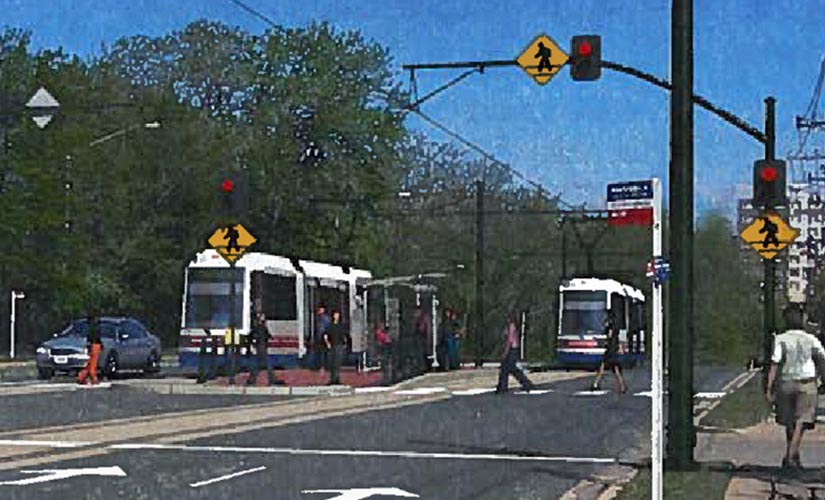
Rendering of a streetcar along Columbia PikeI’m Chris Slatt, a supporter of Arlington Streetcar Now — a group of local citizens committed to seeing Arlington County continue its investment in high quality transit through the installation of a modern streetcar network. There are many reasons that Streetcars are the right transportation system for Columbia Pike, and we highlight many of them on our web site, but for me it all comes down to one main reason, ridership.

What good is a transit system if few people ride it?  People, at least in US, seem to prefer rail transit even in cases where it isn’t faster or more frequent than equivalent buses. For instance:

  • When Seattle temporarily substituted buses for streetcars on its Waterfront line while the streetcar vehicles were being overhauled, ridership dropped to 1/15th of what it had been with Streetcars, despite the buses providing “equivalent service”.
  • When Memphis surveyed its transit riders it found that 83% of those who rode their streetcar system didn’t utilize any other form of public transit — it was the streetcar or nothing at all.
  • In 2003 the City of Tacoma converted an existing bus line that ran every 12 minutes to a streetcar line that runs every 10 minutes. Despite that only being a small increase in “performance,” ridership increased by 500%.
  • The Arlington County Resident Study, a survey that was completed in 2009, found that while 36% of Pike residents use the current bus system at least once a week, 59% of respondents indicated they would use a proposed streetcar at least once a week.

Some folks may note that Arlington’s own Alternatives Analysis shows only a small ridership benefit for the Streetcar Alternative. This is because it is Federal Transit Administration policy to only allow a 5% “mode factor” for rail in federal alternatives analyses — despite many examples like those above that would indicate that it should be much higher.

(more…)


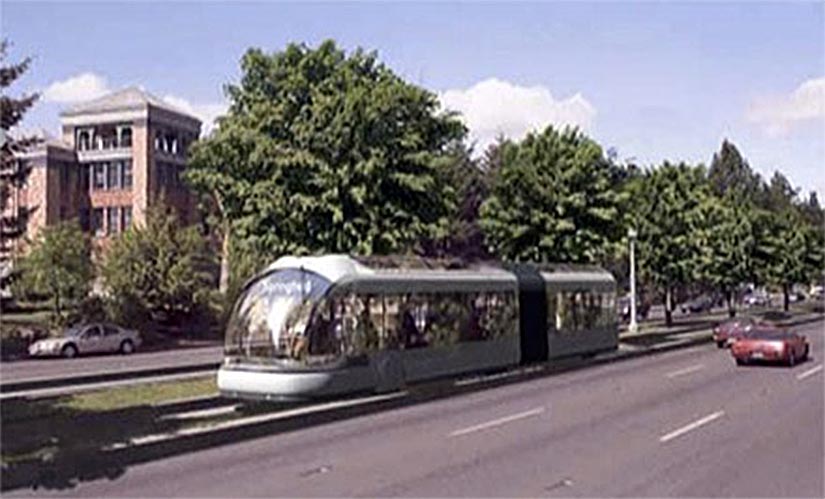
Modern BRT bus (via sensibletransit.org)Peter’s Take is a weekly opinion column published on Tuesdays. The views and opinions expressed in this column are those of the author and do not necessarily reflect the views of ARLnow.com.

Last week, ARLnow reported on the formation of a new citizens’ advocacy group: Arlingtonians for Sensible Transit (AST).

I am an AST supporter. You can check AST out here. I urge you to sign up if you support AST’s mission.

AST’s mission is to convince the Arlington County Board to do something it has not yet done:

  • hire truly independent experts to do a cost-benefit analysis of the Columbia Pike (CP) streetcar compared to a modern bus rapid transit system (BRT) and other alternatives,
  • share the results with the community, and then
  • have a community conversation about whether the CP streetcar really is the best transit choice in these challenging economic times.

Several streetcar supporters posted comments to last week’s ARLnow story saying the streetcar has been studied for years, and it’s time to move on. However, the vital studies AST recommends have never been performed. Because these studies have never been performed and shared with the community, the “Arlington Way” has not been followed appropriately. Moreover, the CP streetcar’s price tag has soared during these years, as ARLnow has documented .

AST supporters have identified quite a few misunderstandings and misconceptions about both the CP streetcar and alternative BRT systems. Several of the comments posted to last week’s ARLnow story reflected misunderstandings and misconceptions like these:

  • You can only have a BRT service if you have a dedicated lane for it
  • White collar professionals will ride streetcars but not BRT
  • Given projected density on the Pike, only streetcars will be able to handle the anticipated increase in ridership
  • Streetcars, but not BRT, will attract needed economic development to the Pike
  • BRT service on the Pike really wouldn’t be any different from current bus service

Every one of the above statements is incorrect. To learn why, check out the Get the Facts, Resources, and FAQ sections of the AST website.

BOTTOM LINE: if you think that all or some of the above statements are correct, while AST does not, that’s one more reason why the Arlington County Board needs to hire independent experts to study and report back on all these issues, and share their conclusions with the Arlington community.

Peter Rousselot is a member of the Central Committee of the Democratic Party of Virginia and former chair of the Arlington County Democratic Committee.

Restaurant Talk is a new, occasional feature written by Nick Freshman, a native Arlingtonian and co-owner of Spider Kelly’s and Eventide Restaurant in Clarendon.

Hello ARLnow readers! I have been a fan of this site since its earliest days, and I am now proud to be a contributor. I am amazed at the dining public’s bottomless appetite for content about restaurants and food culture. As an operator, I think this is great, and the attention certainly contributes to every operator’s success. However, there does seem to be an occasional disconnect between the dining public and restaurant professionals. I hope to offer a bridge between the two by providing an insider’s perspective on trends and issues that pertain to our business. And since I am a local, and this is the most local of websites, it will have an Arlington twist.

To kick things off, I’ll take advantage of the New Year theme and start a discussion about one food trend that should be of great interest to many who live and work in Arlington. In the coming weeks, we’ll discuss other trends and give you a chance to get your burning restaurant questions answered in a live Q&A.

Food Trucks: I’ll Skip the Politics, Thanks

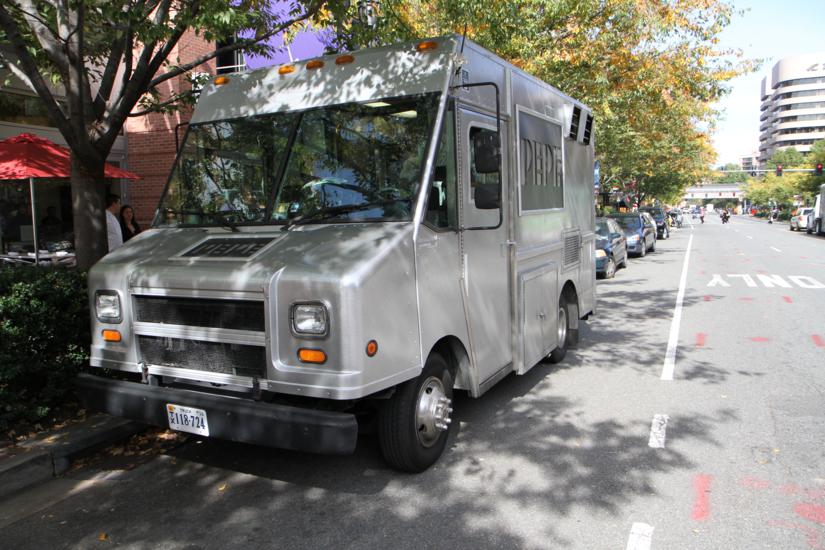
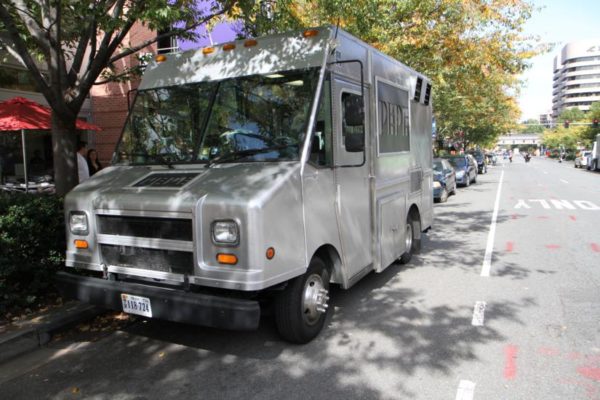
The 'Pepe' food truck makes its debut in ArlingtonAhhh, the food truck: bringing funky food to the cubicle masses in guerilla form. What an idea, albeit an old one in Arlington. Ever had a pupusa from the trucks that hover around our construction sites? Tasty. The concept has been around forever. Nonetheless, the convoys roaming the county now represent a huge trend, and it’s growing. The Post just ran a piece recalling that during the 2008 inaugural there was one food truck operating in DC. One. This year, there are over 100. Thirty of them will be there to feed the inaugural masses today. For our recent holiday party, in fact, we hired a couple of trucks to camp out in the alley behind Spider Kelly’s for our staff to enjoy, including Big Cheese (I recommend the “Thrilled Cheese”) and District Taco (the carnitas is a favorite).

But for the consumer, the question remains: How many trucks can the market reasonably sustain? Business Darwinism will cull the herd in 2013 for two reasons. First, just because it’s on a truck with a cool paint job doesn’t mean it’s great food. Sometimes it is, sometimes it ain’t. There are only so many spots they can park in, and the service window is short. The ones that don’t truly offer something special will fade out.

Second, sometimes people want to sit down at a table inside to eat, even at lunch. Even if they don’t, most eaters assume that by sacrificing the comfort of a chair and a plate, they’ll receive a commensurate decrease in price. However, price points on these trucks can rival or exceed the restaurants they’re parked in front of. This again raises the bar for the food inside the truck: If it’s not better, cheaper and more convenient, customers will seek a spot that is. Is it worth it to squat on a curb for your meal if what’s inside that foil wrapper is just mediocre?

You, the dining public, will decide their fate with your wallets. Will there be 100 trucks prowling at noon this time next year? I wouldn’t bet on it.

In 2013, will you be visiting food trucks as often, more often or less often than you did in 2012? Let us know in the comment section.

I look forward to hearing from all of you, and if you ever want to come by to share your thoughts with me in person, pull up a barstool at Spider Kelly’s or Eventide and let me have it. But please, buy a drink first.

(more…)


The Right Note is a weekly opinion column by published on Thursdays. The views and opinions expressed in the column are those of the author and do not necessarily reflect the views of ARLnow.com.

GOP county board candidate Mark KellyA major source of opposition to trolley-driven development on Columbia Pike is that it will destroy the last corridor of market rate affordable housing in Arlington. Board Chairman Walter Tejada has cited this concern in the past as giving him pause about supporting the project.

Enter a tax increment financing district (TIF).

Earlier this month, Chairman Tejada announced he would seek a new TIF on Columbia Pike to create a fund for replacing affordable housing along the corridor. And, other Board Members voiced support for his 2013 agenda.

Just like that — a virtually done deal.

The TIF concept has been used by local governments across the country to finance pet projects for some time – Chicago has well over 100 of them — but it is a relatively new concept here in Arlington. The Board created the first TIF in Arlington in Crystal City, in large part to use as a financing mechanism for that portion of the trolley.

So how does a TIF work?

Essentially, Arlington County freezes the tax base of a defined area and dedicates tax revenue from that base to the general fund. The additional future revenue, or a percentage of it, is then earmarked to spend solely in that area, presumably with a pet project in mind.

The general fund, on the other hand, is used to pay for the ongoing county services we all use: schools, transportation, police, fire, parks, and other services. Absent future board action to reverse course, none of these priorities will receive consideration for future TIF revenue in either Crystal City, or presumably Columbia Pike, districts over the next 20 years.

Arlington needs to stop creating TIFs before the practice becomes ingrained in our way of doing business.

We have a long tradition of bringing funding projects through the traditional budget process, seeking public input. We also have a tradition of putting bonding authority before the voters. It is supposed to be the Arlington Way.

Our Board has already packaged bonding authority together to avoid straight up or down votes on big or controversial projects. For example, the aquatics center in November was voted on as part of a parks and recreation bond.

Our Board has already put the trolley on a path to be financed, at least primarily, by revenue bonds backed by the Crystal City TIF and commercial property tax surcharge. These bonds require no public vote.

The use of special interest TIFs to avoid future public debate, scrutiny, and up or down votes on such projects is a bad idea, plain and simple. It will not only avoid additional public input, but it will inevitably lead to higher tax rates for all of us. When schools, roads, public safety and other services face a squeeze in future budgets, the Board will tell voters they simply have to raise taxes to pay for it.

The County Board should not lock Arlingtonians into this fiscally irresponsible path.

Mark Kelly is a former Arlington GOP Chairman and two-time Republican candidate for Arlington County Board.


Independent’s Day is a weekly opinion column by published on Wednesdays. The views and opinions expressed in the column are those of the author and do not necessarily reflect the views of ARLnow.com.

Independent Congressional candidate Jason Howell“Torture is always wrong.” That’s not just a bumper sticker sitting on my desk; it’s also a quote from Rev. Richard Killmer, Executive Director of the National Religious Campaign Against Torture (NRCAT).

On December 3rd of last year, less than a month after the election, I had two options for continued civic participation: attend the Realize Rosslyn Kickoff Event or the Program on Virginia’s Use of Solitary Confinement. I chose the latter. The Program on Virginia’s Use of Solitary Confinement was held at Arlington Central Library and hosted by NRCAT, Social Action Linking Together (SALT), and Amnesty International (Arlington Chapter). Each speaker highlighted a reality that can be lost on the majority of us who have never had the experience: extensive, unlimited, solitary confinement is a violation of the 8th Amendment’s protection from cruel and unusual punishments.

In August of 1998, in Wise County Virginia, the Red Onion State Prison opened as a security level “S.” Its Virginia location was likely the reason for the presence of State Delegate Patrick Hope (D-Arlington) at the meeting I attended. According to Red Onion’s website, their average population is 799 prisoners but a Washington Post article reported 505 of 745 inmates were held in solitary confinement as of last October. I have no way of knowing whether two-thirds of inmates housed by Red Onion “deserve” lonely lockdown for 23 hours per day. The prisoners were accused of crimes and sentenced by our criminal courts after being afforded all of the normal rights we associate with our justice system. What the meeting I attended highlighted however, was to the extent that they were being punished versus being rehabilitated.

The mission of the Virginia Department of Corrections is to enhance public safety by providing effective programs, re-entry services, and supervision of sentenced offenders in a humane, cost efficient manner, consistent with sound correctional principles and constitutional standards. Accomplishing any part of that mission is impossible if the 8th Amendment to our United States Constitution is not being upheld.

(more…)


Peter RousselotHe’s still got one more year in office, but we already know that Bob McDonnell has failed as Virginia’s Governor. He never proposed a real plan to solve the major problem facing Virginia: how to generate enough public revenue to pay for our transportation systems.

We should have known.

We should have known when McDonnell said he could solve our transportation problems with a flawed proposal to sell off Virginia’s publicly-owned liquor stores. He campaigned on this idea in 2009, and spent his first year in office trying to get his flawed plan enacted.  Those were two wasted years.

We should have known when McDonnell said he could solve our transportation problems using Virginia’s Public-Private Transportation Act (PPTA).  In practice, the PPTA has produced tremendous distortions in risk allocation, allowing private sector companies unjustly to enrich themselves while forcing the public sector into wasting hundreds of millions of our tax dollars on ill-conceived projects.

In 2013, Bob McDonnell is giving transportation funding one last try. He won’t succeed. How do we know? Because he’s already proved that he lacks a strategic plan to generate sufficient public revenue for transportation. What’s missing from all his plans: sufficient new tax increases to generate the necessary funds.

The higher taxes we need to fund Virginia’s transportation systems have to be enough higher to solve the problem. McDonnell’s latest plan does involve an increase in the state sales tax, but that increase is way too little to generate the necessary funds. And, McDonnell is also proposing to eliminate the main current source of funding for transportation: the gas tax. Finally, the sales tax is used to fund many other vital programs, like education and mental health services, which also need more revenue, but will lose revenue to help try to pay for transportation.

Excusing past failures by saying a real solution will be DOA in the Virginia legislature is not an excuse.

Governor McDonnell: take a stand, propose a real solution and fight for it. Maybe you’ll get your plan enacted, maybe you won’t. Why not try?

Wouldn’t it be better in the end to propose a real solution and fall short rather than an inadequate solution and fall shorter?

Peter Rousselot is a member of the Central Committee of the Democratic Party of Virginia and former chair of the Arlington County Democratic Committee. Peter’s Take is a weekly opinion column published on Tuesdays. The views and opinions expressed in the column are those of the author and do not necessarily reflect the views of ARLnow.com.

Editor’s Note: This weekly column is written by Mark Kelly, former Arlington GOP Chairman and two-time Republican candidate for Arlington County Board.. This is the third of three weekly opinion columns from local thought leaders across the political spectrum that ARLnow.com will be publishing in 2013.

GOP county board candidate Mark KellyAlong with the traditional dose of rhetoric — like a chicken in every backyard and a crusade against plastic water bottles — our County Board produced a predictably steady dose of self-congratulation, and what you might call “indirect” Republican bashing, at its traditional New Year’s Day meeting.

The annual passing of the gavel to the new chairman is followed by speeches from each member to outline their priorities.

Later joined by others, Vice Chairman Fisette bemoaned the fiscal cliff mess and unhealthy leadership in Washington, while specifically exempting President Obama from his critique.

Richmond, controlled by Republicans, did not escape blame. Outgoing Chairman Hynes zeroed in on a call for more transportation funding from the General Assembly.

Chairman Tejada did spend most of his speech laying out the agenda for his one year stint in the center chair. Unfortunately, it included another ill-advised plan to divert future revenue from the general fund to be earmarked for a pet project.

Libby Garvey made a commendable, but lonely stand against the trolley.

But, it was Chris Zimmerman who used his time to extol the virtues of Arlington’s style of governance while demonizing those who take a different view. It is a speech veteran Board watchers have heard before.

Unfortunately, Mr. Zimmerman suffers from two delusions. One is that fiscal conservatives are simply “anti-government.” The second, is that the policies and management of the County Board are responsible for our standard of living and financial stability, rather than our proximity to Washington, DC.

As an original piece of what was to be our nation’s capitol, no community is more heavily benefitted by the presence of the federal government. Most Arlingtonians are employed by the government, lobbying and PR firms, law firms, think tanks, non-profits, trade associations, political organizations or the service industries supporting them. Our fortunes are directly, and indisputably, tied to the never ending stream of dollars flowing into our nation’s capitol from around the U.S.

It is understandable that Mr. Zimmerman would take credit for things he has no control over, it’s what politicians often do. What cannot stand is the notion that all, or even most, fiscal conservatives are anti-government.

In fact, we believe there is an appropriate role for each level of government. The most important of which, outside of self-government, is local government. It is where our tax dollars meet the asphalt. It is where our children attend school, our homes are kept safe, our water is dispensed, and our trash is collected. It is where we can most easily and directly petition our elected officials for assistance. And, at least theoretically, it should be the most responsive to changing community needs with the smallest amount of bureaucracy and red tape.

What Mr. Zimmerman seems to actually have a problem with is the notion that not everyone thought driving up spending at two to three times the level of inflation for a decade was a good idea. He does not understand why many of us might oppose borrowing another $300 million for a trolley when the County already has $1 billion in debt. Or, he is perplexed that we ask why the Board would pay 50% more than the assessed value for a building, before millions in renovation costs, to house a new homeless shelter.

When we question these free-spending, debt-driving government exercises, it does not make us anti-government, it makes us pro-common sense.


Editor’s Note: This weekly column is written by Jason Howell, former independent candidate for U.S. Congress. This is the second of three weekly opinion columns that ARLnow.com will be publishing in 2013. The columns, from local thought leaders across the political spectrum, are intended to introduce fresh ideas and spark community conversations about issues of local and state interest.

Independent Congressional candidate Jason HowellLong before there were political parties, there were independent minded individuals. Along the way, despite the warnings of the first elected Independent, President George Washington, party factions took over our political system. Today, they are strangling it. In Virginia, we don’t register to vote by party in part, I imagine, because we are citizens before we become partisans. That is the spirit of this column.

Beginning today, thanks to your thoughtful editor, ARLnow.com will host a regular column that pays tribute to the independent minded viewpoint founded in all of us.  This column is called “Independent’s Day” and will celebrate one day a week when we can tackle local issues without partisanship. Unlike the 4th of July, which celebrates our independence as a country, on these published days we will celebrate our independence as citizens. Each is our day, hence the intentionally possessive title of the column.

Every column belongs to the reader rather than the writer. Like my 2012 campaign, all of my “wins” were yours. When I was asked to write this column I mentally added one win to that list. Serving Arlington and the entire 8th Congressional District of Virginia as a candidate was difficult but not hard. I enjoyed meeting so many of you as I knocked on doors, manned booths at festivals and stood at the Metro Stations.

Last Thursday, the 112th Congress left the stage and the 113th Congress was sworn in at noon. I looked really hard at the crowd on C-SPAN but my wife and I were not in it. Despite this rather cruel fact, I have committed to serve you in unelected ways and this column is one of those. I have also committed to stay as close to the issues as I was during the campaign. Because we are a Republic, “we the people” are responsible for the outcome of our country. I believed that during our campaign and that gave me the courage to run as an Independent for United States Congress. I believe that now, as a lay citizen of the country and Arlington resident.

ARLnow.com readers are some of the sharpest thinkers in the county. I can surmise this by your razor sharp sense of humor and your follow up research in many of your article comments. You will be happy to know that many of your neighbors are also as sharp, thoughtful and interested in keeping our neighborhoods some of the best places to live in the world. I have been asked to focus this column on local and state issues rather than the federal issues that consumed most of my campaign. Thankfully, there are many of these issues and I am excited to share an independent-minded perspective.

It is harder to be non-partisan. Not just in a campaign but when filtering the news sources and statistics that are often created by “special” interests. I will do my best to remain apolitical when analyzing the issues discussed in this column.  I know you will do your part in keeping me honest.

Thank you for reading this far, caring about Arlington, Virginia and the country. Your citizenship will help us get past the partisanship. With your continued attention, we will always be better tomorrow than we were yesterday.


View More Stories