Last week, we invited the four candidates running in the general election for a seat on the County Board to write a post about why our readers should vote for them next Tuesday (Nov. 2).

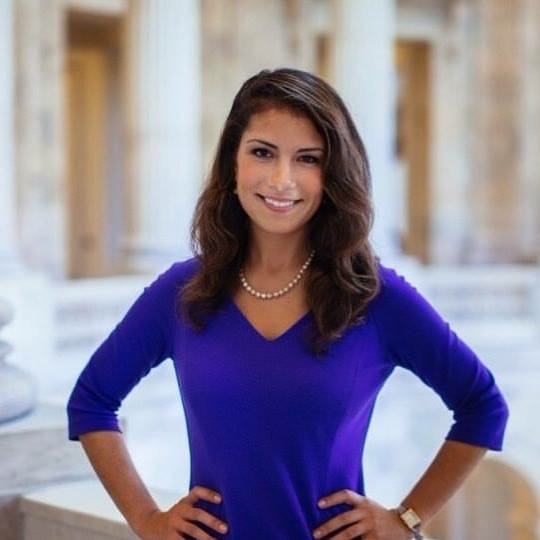
Here is the unedited response from Audrey Clement:

I’m Audrey Clement, Ph.D., Independent candidate for Arlington County Board. As a 17-year Westover resident, long time civic activist, and former member of the Transportation Commission, I’m running for County Board because it has pushed harmful policies resulting in:

  • overcrowded schools,
  • gentrification,
  • loss of green space, and
  • a 10-year average annual effective tax rate increase that is more than double the rate of inflation.

The pandemic has challenged residents’ ability to make ends meet, with many businesses shuttered and people out of work or facing eviction. In response other Northern Virginia jurisdictions reduced their tax rates earlier this year. Not so Arlington County Board, which adopted a tax package that together with rising assessments increased the effective real estate tax rate by 6 percent. (See FY 2022 Adopted Budget, Revenue Summary, p. 114)

https://budget.arlingtonva.us/wp-content/uploads/sites/18/2021/07/FY22A-Revenue-Summary.pdf

Another Board priority that I oppose is its push for so-called “missing middle” housing–multi-family dwellings in single family home neighborhoods. Contrary to what the County says, “missing middle” is a euphemism for up-zoning that will not make housing more affordable. Instead, it will inflate land values, resulting in higher housing prices, overcrowded schools, more traffic congestion, loss of tree canopy, increased runoff and more air pollution.

The County under my opponent’s leadership has packaged up-zoning as the solution to racial inequality despite the fact that few minorities will qualify for mortgages on up-zoned lots.

Finally, while I agree with the police reforms recently adopted by the General Assembly, I oppose symbolic gestures. The fact that Lee Highway has a new name and the County has a new logo, means nothing to people of color facing inferior employment, housing or educational opportunities.

Changing the name of W&L High School in 2019 did not close the minority student achievement gap. In fact, it helped hide the dirty little secret that the County was investigated by the Justice Department in 2018 for discriminating against English language learners.

The inequitable policies pushed by Arlington County government are the direct result of the fact that it has been controlled by the same political party for decades. Some have criticized the fact that I’m a repeat candidate for public office. I’m proud of my record of challenging the political machine that runs this County, and I solicit your support in defeating it.

If elected, I pledge to:

  • Seek immediate tax relief for residents and businesses.
  • Say YES to affordable housing and NO to “Missing Middle” up-zoning.
  • Preserve Arlington’s cultural heritage. Stop permitting the destruction of historic structures like the Rouse estate that was demolished in March, 2021.
  • Save our parks, streams and tree canopy. Stop clearcutting wooded areas along Potomac tributaries in the name of stream bed restoration.
  • Say YES to real social justice reforms and NO to symbolic gestures.
  • Promote real democracy. End one party rule in Arlington County.

If you share my agenda, then:

  • Spread the word about my candidacy.
  • Donate to my campaign.
  • Help make the “Arlington Way” more than an empty phrase.
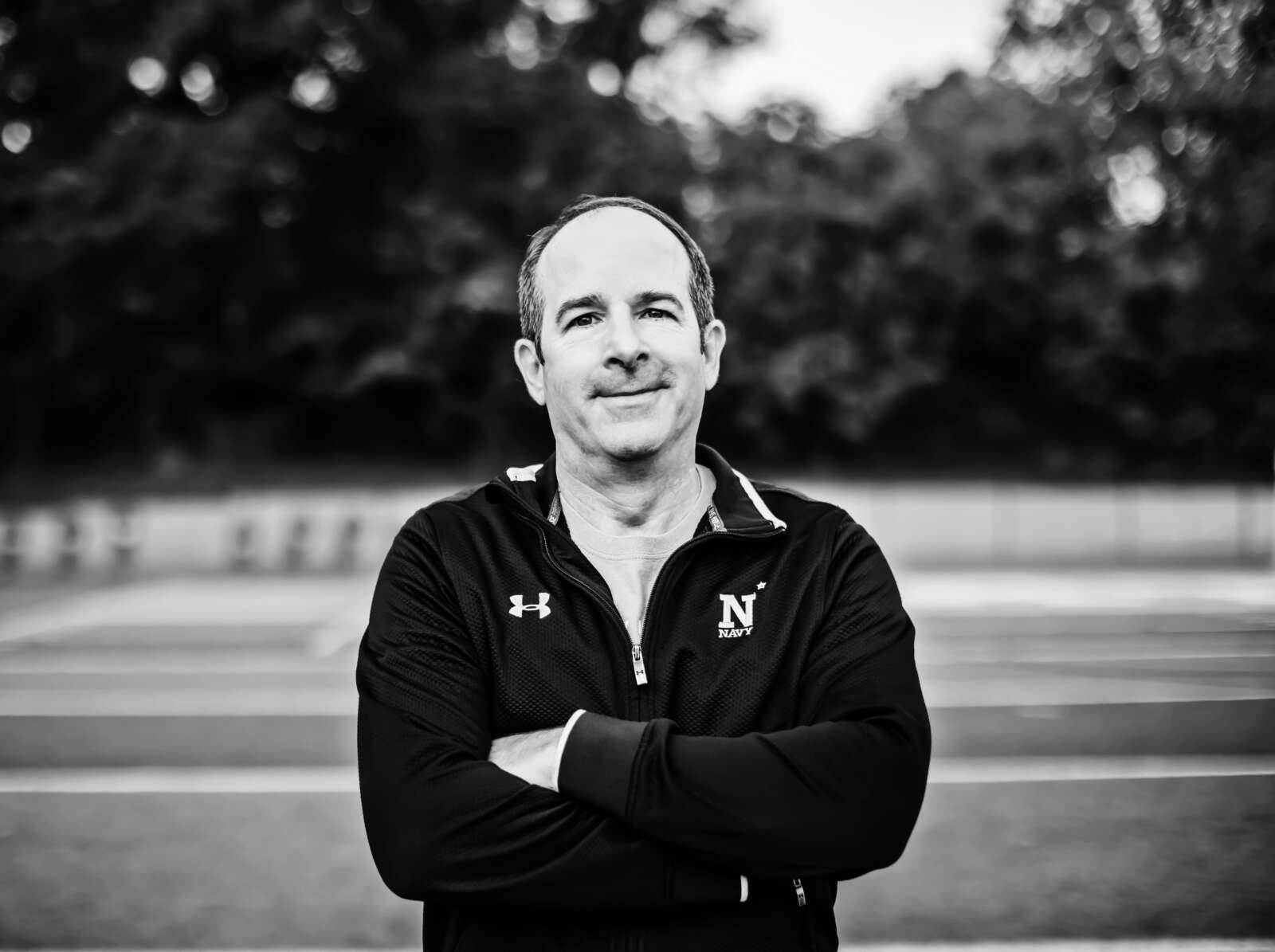
Independent County Board candidate Mike Cantwell (courtesy photo)

Last week, we invited the four candidates running in the general election for a seat on the County Board to write a post about why our readers should vote for them next Tuesday (Nov. 2).

Here is the unedited response from Mike Cantwell:

I am running for the Arlington County Board as a moderate Independent. As a retired naval officer, federal government employee, community leader, and parent, I have the skills and experience needed to bring the people of Arlington together and to solve our most challenging problems. As I knock on doors throughout the county and talk to voters, they tell me about their growing frustration with our current County Board members. The voters are frustrated with One Party Rule and the Arlington Way and they want local elected officials who will listen — really listen — to their issues and concerns.

Arlington voters want a candidate who will:

  1. Bring an independent voice to the County Board. Arlingtonians are exhausted with divisive partisan politics. They are looking for a candidate who will think and act moderately and independently. They know instinctively that more political competition will lead to better outcomes. They want an independent voice who will challenge the County Board’s “group think” and bring new ideas to the civic square. The county government was more efficient, more effective, and more inclusive when we had political diversity on the County Board. It is time to bring an Independent back to the County Board.
  2. Focus on core government services. Public safety, streets, parks, recreation facilities, utilities, libraries, and schools are the core government services Arlingtonians expect from their local government. Current County Board members spend much of their time and energies on issues that are unrelated to the services citizens expect from their local government. After I join the County Board, I will seek out and uncover inefficient and ineffective programs and take actions to improve or eliminate them.
  3. Curb Rapid Urbanization.The current county board members continue to encourage rapid population growth and more high-rise construction. I will resist the “upzoning” of residential communities while encouraging moderate density increases along major transit corridors. Over the last two decades, the county government failed to adequately plan and budget for the repair or replacement of our aging infrastructure. Schools, parks, recreation facilities, and utilities are already inadequate and overburdened. The county staff and the County Board must ensure the needed infrastructure is in place before large-scale development projects are approved. Government-run affordable housing programs are inefficient and ineffective and have had little positive impact on housing affordability. The millions of dollars of grants and loans given to affordable housing “nonprofit” developers and backroom “bonus density” deals have opened the door to corruption. The County Board should do more to incentivize the retention of market-rate affordable housing, including single-family homes.
  4. Support small businesses by lowering taxes. Now, more than ever, the County Board needs to prioritize Arlington’s workers and small businesses. If elected, I will work to reduce the tax burden on Arlington small businesses by ending the business tangible property tax. The business tangible property tax is an inefficient tax and an administrative burden for Arlington small business owners and the Commissioner of Revenue’s office and only brings in 4% of the total revenue for the county. Eliminating the business tangible property tax will spur economic activity, reduce the commercial real estate vacancy rate, and create new jobs.
  5. Expand the County Auditor’s office. As a federal government employee in the intelligence community and as a former naval officer, I take pride in the fact that I have always conducted myself in an ethical manner. Currently, the County Auditor’s office is both underfunded and understaffed. I support expanding the County Auditor’s office to ensure the residents of Arlington benefit from an efficient, effective, and fair local government. The county needs more fiscal oversight for its 1.5 billion dollar budget.

Honor, Courage, Commitment, and Respect are my core values. My core values will guide me as I serve the people of Arlington. I hope that you will join me my mission to bring better government to Arlington. Please visit the Mike Cantwell for Arlington County Board website. Donate. Volunteer. Vote. Thank You!


Ed Talk is a biweekly opinion column. The views expressed are solely the author’s.

October is Dyslexia Awareness Month. Dyslexia impacts 1 in 5 people, or 20% of the population. In APS, that would equate to over 5,000 students.

According to the International Dyslexia Association (IDA), “Dyslexia is a “specific learning disability that is neurobiological in origin. It is characterized by difficulties with accurate and/or fluent word recognition and by poor spelling and decoding abilities. These difficulties typically result from a deficit in the phonological component of language that is often unexpected in relation to other cognitive abilities and the provision of effective classroom instruction. Secondary consequences may include problems in reading comprehension and reduced reading experience that can impede growth of vocabulary and background knowledge.”

Students with dyslexia need to learn to read with Structured Literacy, which involves phonology (the study of sounds in spoken words); sound-symbol/orthography (how to map sounds/phonemes to letters/graphemes); syllables (knowing the types of syllables and how to divide words into syllables; morphology (the study of base words and affixes –prefixes and suffixes); syntax (understanding the grammatical order of words, like sentence structure); and semantics (understanding the meaning of words and sentences). One notable structured literacy approach is Orton-Gillingham (O-G). Structured Literacy is critical for students with dyslexia, and is advantageous for all other readers.

Dyslexic students have tremendous difficulty learning to read using Balanced Literacy, where students are encouraged to use word analogies and pictures or context to identify words. Balanced Literacy instruction is focused on shared reading (e.g., the teacher reads aloud to students and asks questions about the text), guided reading (e.g., students read texts at their current ability level and discuss them with the teacher in homogeneous groups), and independent reading (e.g., students self-select books to read on their own). However, consecutive years of overall declining reading declines in APS indicates that Balanced Literacy isn’t working all that well for students who aren’t dyslexic. We should be teaching the students in the margins because a rising tide lifts all boats.

After years of parent advocacy, a 2016 Dyslexia Consultant Report, and a 2020 NAACP Education Committee letter, APS has finally agreed to transition to Structured Literacy for K-5. However, the rollout is slow and still entangled with the Balance Literacy until APS goes through a resource adoption process. It is noteworthy that the widely used Balanced Literacy curriculum, Lucy Calkins Units of Study, received an Ed Reports failing review, for not meeting expectations for text quality and complexity in grades K-8. So why is APS clinging to this garbage while students continue to languish?

(more…)


With cooler weather in the forecast, and Thanksgiving just a few weeks away, the scene is set for the start of the Winter 2022 Arlies.

Voting starts next week with a new look and a return to voting once per season, but before we reveal the winter categories here’s a roundup of the Fall 2021 Arlies winners:

Favorite sushi spot
1. Sushi-Zen
2. Sushi Rock
3. Endo Sushi, Yume Sushi (tie)

Favorite biking trail
1. W&OD Trail
2. Mt. Vernon Trail
3. Four Mile Run Trail

Favorite bicycle shop
1. Trek Store
2. Spokes Etc.
3. Bikenetic

Favorite condo building/complex
1. Arlington Village
2. Shirlington Village Condos
3. The Continental at Ballston

Favorite real estate agent for condo buyers
1. Shawn Battle, Eli Tucker (tie)
3. Carol Temple

Favorite apartment building
1. Camden Potomac Yard
2. Barton House

Favorite street for trick-or-treating
1. N. Jackson Street in Ashton Heights
2. 14th Street S. in Douglas Park

Favorite dentist (for kids)
1. VK Pediatric Dentistry
2. Dr. Christine Reardon

The following are the fall winners from last week, which were not previously announced.

Favorite restaurant for a fancy dinner
1. SER
2. Lyon Hall
3. Ambar

Favorite financial planner
1. Paul Cocozza

Thank you to all who voted this fall!


Modern Mobility is a biweekly opinion column. The views expressed are solely the author’s.

I have heard some variation on that sentence more times than I can count at public engagement sessions, County Board hearings and civic association meetings: “Cars just come speeding around that corner.” They shouldn’t be able to.

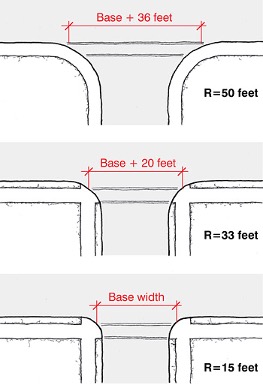
A street designed for pedestrian safety uses a solid, dependable and simple technique to force cars to slow down, the “corner radius.” Arlington is building streets using corner radii that are much larger than our policies say they should and they don’t seem to be taking into account a key concept: “effective” versus “actual” curb radii. The end result: drivers can whip around a corner at a high rate of speed making them much more likely to kill or severely injure a pedestrian in the crosswalk.

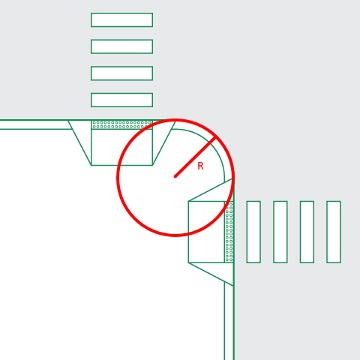
If you look at any street corner in Arlington, that corner is rounded off, it doesn’t actually come to a 90-degree angle. If, in your mind’s eye, you inscribe a circle onto that corner whose outline follows the contour of the curb line, the radius of that circle is the “corner radius.”

A schematic drawing of a street corner’s corner radius (courtesy Chris Slatt)

The smaller that radius, the sharper the turn a car needs to make and the slower they need to go to accomplish it.

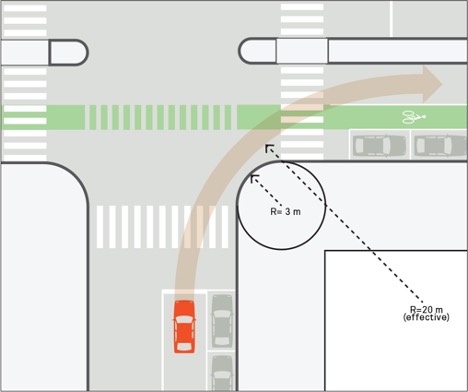
On many streets, turning cars don’t follow the curb line because the area they are supposed to be driving on is offset from the edge of the street by parking lanes, bike lanes, etc. This means that their “effective” corner radius is much higher than the “actual” corner radius.

In this example, because the car is starting to the left of a parking lane and turning onto a street that has both a bike lane and a parking lane next to the curb, they can make a much more gently sweeping turn than the actual radius of the curb would indicate, and as a result they can make that turn at a much higher rate of speed.

A car can speed through turns when the turn is gradual, due to a larger corner radius (courtesy Chris Slatt)

In addition to determining the speeds that cars travel through the crosswalk while turning, corner radii impact the distance that pedestrian have to walk in order to cross the street in the first place. The longer a pedestrian has to spend in the crosswalk, the longer their exposure to danger.

Corner radii impact the distance a pedestrian has to walk to cross the street (courtesy Chris Slatt)

So how small should our corner radii be for safe pedestrian travel? The National Association of City Transportation Officials (NACTO) says “Minimizing the size of a corner radius is critical to creating compact intersections with safe turning speeds… In urban settings, smaller corner radii are preferred and actual corner radii exceeding 15 feet should be the exception.” The Federal Highway Administrator’s Pedestrian Safety Guide concurs: “The smallest practical actual curb radii should be chosen based on how the effective curb radius accommodates the design vehicle. An actual curb radius of 5 to 10 feet should be used wherever possible.”

(more…)


Community Matters is a biweekly opinion column. The views expressed are solely the author’s.

I recently moderated a forum for the Leadership Center for Excellence (LCE) on advocacy. After years of lobbying and grassroots advocacy, I enjoy learning how others influence our elected officials and community leaders.

The panelists shared their best practices for building relationships, understanding the process, connecting with people as individuals, and coalition building.

Carlos Velasquez, past chair of the Arlington Human Rights Commission; Kim Phillip, co-founder and steering committee member of Arlington for Justice; and Edie Wilson, President of the Shirlington Civic Association, all recounted numerous personal stories about how they have advocated for different causes.

Carlos focused on the importance of listening first, and getting to know our neighbors, before we even engage in advocacy at a more traditional level. Edie stressed tenacity in her work, and having a larger vision that staff and elected officials may not yet understand. Kim articulated doing your research and while advocating with the County, we have to understand the role that staff play in the process. She also noted that while some may go to the County Board with their concerns first, one may not even need to contact the County Board unless they have exhausted other channels.

As we stress equity and engage more people in our community, it’s essential that we are transparent about who advocates, and how to do it effectively. Forums like these are an essential part of a transparent government. Some lessons from the panelists include:

Listening First: Carlos shared that listening is an important part of the advocacy process, and recommended amplifying the stories of those for whom we advocate. The personal stories of our community are powerful advocacy tools which give elected officials a valuable perspective on the issue.

Vision: Edie was clear that sometimes she had to pull others along to see her vision for Arlington or a specific project. I think this is critical and also goes along with something that Kim noted, regarding the importance of thinking long term. I believe that advocates get frustrated when they don’t see immediate results. If we want real progress, we have to understand that it won’t happen overnight.

Know the process and do your research: In my advocacy experience, I have found that being the “go to” person is particularly valuable. Elected officials, as Kim noted, have a lot on their plate. Making their work easier and being dependable, is a great position for an advocate to be in.

A key takeaway for me from the session was how simple advocacy can be, although we often try to complicate it. As the policy issues and concerns of Arlington evolve, let’s not forget to encourage more people to be involved by understanding the basics of being a successful advocate. Advocates are a critical constituency of our civic engagement process, and we should do all we can to support their voices.

Krysta Jones has lived in Arlington since 2004 and is active in local politics and civic life. This column is in no way associated with or represents any person, government, organization or body — except Krysta herself.


Making Room is a biweekly opinion column. The views expressed are solely the author’s.

The Site Plan Review Committee begins today for the redevelopment of The Marbella. This project is a fantastic opportunity to bring much needed affordable housing to the Rosslyn-Ballston corridor.

This site plan is an excellent example of using the new zoning tools that allow additional height for 100% affordable projects, resulting in close to 500 net-new units. This project will serve not only the residents of the property, but the entire community. Ideally, the Site Plan Review process will find the best way to fit these new buildings into the neighborhood, while maximizing the opportunity to welcome low-income families into one of Arlington’s high- opportunity neighborhoods.

The Marbella is a committed affordable garden-apartment community spread across three blocks in Radnor-Ft. Myer Heights. It is owned and managed by the Arlington Partnership for Affordable Housing (APAH), which has an excellent track record for developing and running communities for low-income residents. This redevelopment proposal includes renovating six 3- story buildings and replacing the remaining six small buildings with two new 12-story apartment buildings. The site plan includes amenity space, courtyards, underground parking, and streetscape improvements.

One distinctive feature of the Marbella’s expansion is over 100 units for low-income residents over age 65. Arlington seniors who rent are twice as likely as younger renters to be considered housing-cost burdened, according to recent analysis. This dedicated affordable housing supply will help people remain in Arlington as they age, especially for lower-income seniors who lack generous pensions or retirement funds.

To redevelop and expand their property, APAH is hoping to use a new zoning tool approved by the County Board in April. The zoning for the R6-15 district allows 6-stories by right. APAH is requesting an additional 6-stories because their buildings will be 100% affordable to families earning below 60% of the area median income. This bonus height option was adopted as an interim tool while the County staff work on a broader Multifamily Reinvestment Study.

At 12 stories, the new Marbella properties would be among the tallest in the Ft. Myer Heights neighborhood, but they would not be out of context. The surrounding blocks contain a mix of 3- to 10-story condominium and apartment buildings. The newest property is a market rate building at 6-stories. The entire neighborhood is zoned RA6-15, which means that it is expected to be multifamily residential buildings and they can be up to 6 stories by right. In the context of the neighborhood, the remaining detached, single-family homes and two-story townhomes are more out of place than the future 12-story building will be.

(more…)


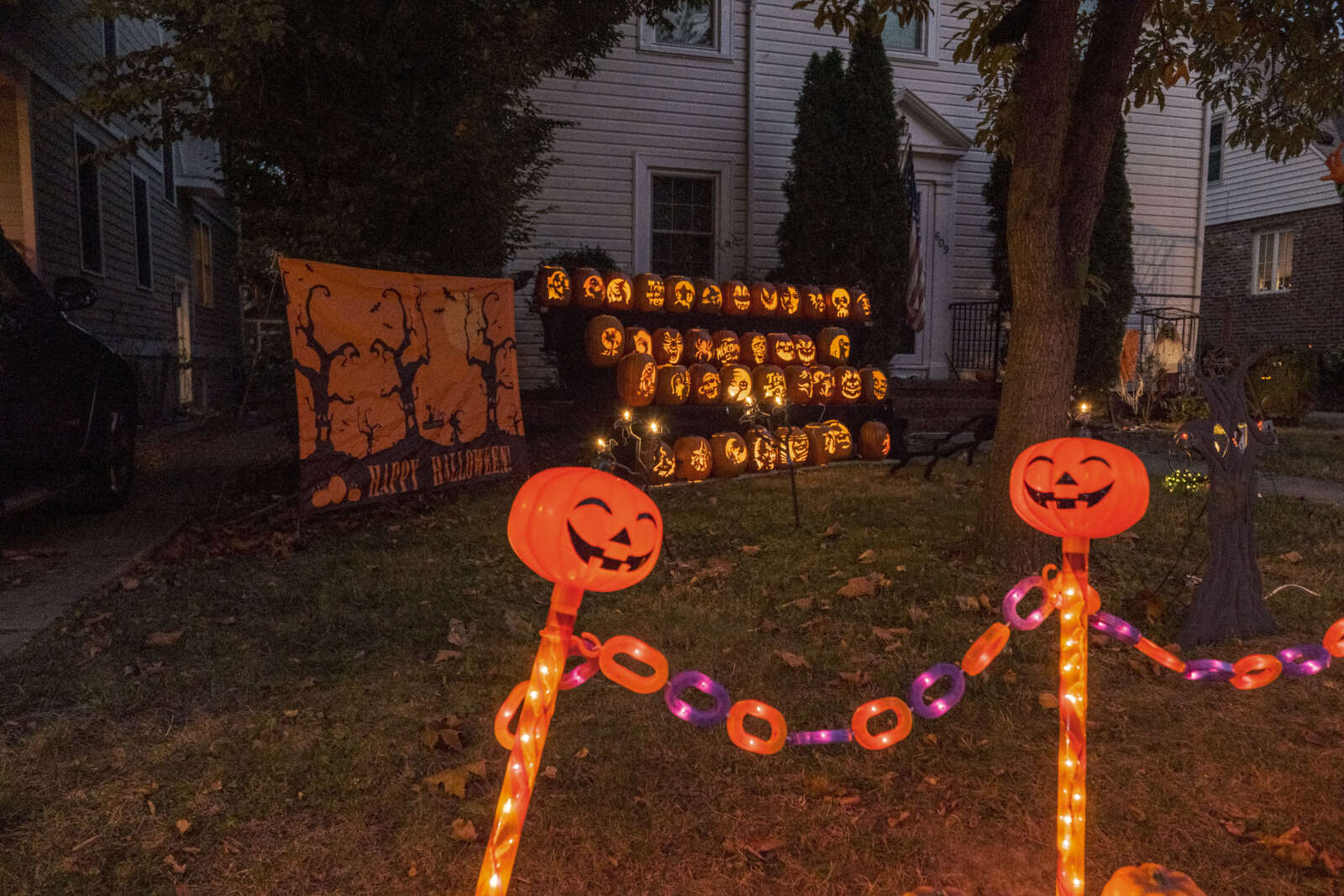
Halloween decorations along N. Jackson St. (staff photo by Jay Westcott)

After sunny, near-perfect weather during the work week, a cloudier and cooler weekend awaits.

The local news cycle in Arlington has remained busy, shifting from stories around this month’s County Board meetings to the upcoming election. Expect another round of “Why Should You Vote for Me” essays from local candidates at the end of next week.

It the meantime, here are the most-read ARLnow articles of the past week:

  1. Police investigating ‘drive-by shooting’ near Shirlington
  2. Bomb squad investigation at State Dept. office in Rosslyn
  3. Video shows man lighting American flag on fire outside Arlington Heights home
  4. HQ2 to house alternative high school permanently, Arlington and Amazon announce
  5. This Week’s Cartoon: Advanced Towing
  6. Video: Arlington animal control officers rescue dog from fence along I-395
  7. President Biden coming to Arlington next week for another McAuliffe campaign event
  8. Rescue underway after car careens into woods along GW Parkway
  9. Person seriously injured in Rosslyn crash
  10. Hundreds of APS high school students stage walkout over sexual harassment and assault
  11. Firefighters battle a blaze near Shirlington
  12. New restaurant brings Uyghur cuisine to Cherrydale

Feel free to discuss those stories of anything else of local interest in the comments. Have a nice weekend!


“All I did was think about where I was going to park, and they just showed up!” (Cartoon by Mike Mount)

Each week we’ve been bringing ARLnow Press Club members a new editorial cartoon by Arlington resident Mike Mount.

Starting this week we’re going to start publishing the toons here on a regular basis, after hearing from members that they prefer that Press Club content be seen by the entire ARLnow community.

Members will still get an early look at the cartoons, much like they get the Morning Notes four hours early each day, as well as a a preview of the stories we’re planning to cover later in the day.

Click here to join the ARLnow Press Club, support our work, and be the first to know what’s going on in Arlington.


What’s Next with Nicole is a biweekly opinion column. The views expressed are solely the author’s.

It is likely the last chance to weigh in on what the future of Pentagon City and the 22202 zip code will look like for the next several decades via the Pentagon City Planning Study. Comments, which can be submitted online, are due Oct. 31.

I had the opportunity to work on the study over the past year and am generally happy with where we ended up. Mostly, I find it exciting that we were able to include a new element to this plan that other area and sector plans have excluded, which is to estimate the number of housing units to be added to the area in order to help guide infrastructure needs.

Estimating new housing units; infrastructure

Additional people in any area will inevitably put pressures on community infrastructure, ranging from transportation to schools to parks to stormwater management. From what I understand, this is the first time a planning study has made estimates on new housing units in the short, medium, and long term based on conservative and liberal expectations. Usually, we only see anticipated units that have already been approved or are currently in the pipeline.

In most studies, transportation “level of service” estimates are included and hotly debated. Other aspects of infrastructure such as school capacity, green space and stormwater are generally left out. This plan not only includes housing estimates but also includes potential sites for a new elementary school that we know will likely be needed in the area.

These housing unit estimates are vital to tracking our infrastructure needs in departments across the county.

Putting housing units near Metro

It is my belief that for long-run economic success and stability, growth must be built on sustainable infrastructure, which is why the estimated number of new housing units is so important. That estimated increase in housing units surrounding Pentagon City Metro is also an important part of that sustainability.

Unless we wish to stagnate our economy, growth is inevitable. It is where and how we chose to grow that is important and why it’s important that we grow densely in areas close to transit corridors. When homes, offices and retail are near transit corridors, it is convenient to walk, bike or take public transit. This makes it easier to incorporate physical activity into daily routes and reduce transit costs and environmental impact.

Incorporation of Biophilia

I will admit that I was immediately skeptical of this concept, and in the most recent draft of the plan, have been won over by the inclusion of biophilia in the study. My skepticism lay in the concept of potentially losing real green space in Pentagon City and in return getting leaves painted on impermeable sidewalks and tree sculptures being erected outside of buildings — this did not end up being the case.

The plan enables at least five and up to 10 new acres of new parks and green space distributed across Pentagon City, plus expansion of Virginia Highlands Park by at least one acre. In the “Green Ribbon” of walkable space, there are specifics on how it will be lined with plantings and more often than not, that is in-ground plantings as opposed to in-pot, meaning help for things like stormwater management and space for dogs to relieve themselves. Although the aesthetic aspect I previously mentioned is incorporated, it is not without real specifics on permeable surfaces.

Conclusion

I am proud of the work product that has been presented, but now it is time for everyone to give comments. This document will shape the 22202 zip code for decades to come and it is important that all voices are heard in that process — not just those of us who spend the most time at these meetings. Participate here.

Nicole Merlene is an Arlington native and former candidate for Virginia State Senate. She has served as a leader in the community on the boards of the Arlington County Civic Federation and North Rosslyn Civic Association, as an Arlington Economic Development commissioner, in neighborhood transportation planning groups, and as a civic liaison to the Rosslyn Business Improvement District.


Peter’s Take is a biweekly opinion column. The views expressed are solely the author’s.

Even prior to COVID-19, APS students’ reading proficiency had been on the decline–a problem which Superintendent Francisco Durán has acknowledged.

However, the current pace of action is both too slow and too narrow. The past year’s results demonstrate why APS must act urgently to enable our students to catch up, both in literacy and also in math.

Former Virginia Secretary of Education Anne Holton recently stated: “Was there learning loss? Absolutely. And that means we all need to pull up our sleeves and lock arms and work together.” APS should heed her call, and move swiftly to dedicate appropriate resources, including structured literacy materials and appropriate math textbooks, now.

Balanced literacy is a bust, but what’s next and when?

Studies show that when students do not learn to read proficiently, they are at increased risk for dropping out as well as suffering lifelong adverse consequences, including mental health challenges, unemployment, and incarceration.

Last spring, APS’s Advisory Council on Teaching and Learning’s English Language Arts Advisory Committee (ELAAC) wrote to the School Board that “APS is facing a literacy crisis.” ELAAC’s #1 recommendation (seconded by the Early Childhood Advisory Committee) was to “immediately halt” the “balanced literacy” approach, and adopt new resources aligning with the science of reading. Recognizing that procurement takes time and money, ELAAC also suggested “significant professional learning in structured literacy as a ‘stop gap’ until a new resource is adopted.”

To date, APS has removed balanced literacy materials from grades K-2 for reading only (not for grades 3-5 or writing) and over 500 teachers have received training in structured literacy. This is a great start, in particular because third grade is a key inflection point for literacy. However, this year’s third graders’ last normal year was kindergarten, and last year’s third graders saw the most significant reading declines.

Otherwise, APS has not committed to an urgent timeline or a dedicated plan for adopting the needed literacy resources. APS’s final 2021-22 budget (pp. 50-51) — which notes that APS initially adopted balanced literacy over the objections of parents and advocates–includes funding over four years (FY 2022-2025) totaling just $1 million. Four years is too long, and APS should use its one-time federal infusion of $18.9 million on new literacy and writing resources and professional development for teachers, now that it has acknowledged it will expend “far less” on the poorly-executed Virtual Learning Program.

Digital devices don’t deliver on math

APS has not had a math textbook adoption in over a decade, even though Virginia expects textbook renewal to take place every six years. What we saw during the pandemic only underscores the importance of textbooks: students wasted time navigating myriad websites, digital materials, and software programs, and struggled to keep track of assignments. This is not only wasteful but impedes learning. It is harder to revisit concepts in this format than to review an indexed textbook. APS’s Math Advisory Committee found that teachers did not enjoy creating a patchwork of materials either. They thought they were “forced to reinvent the wheel.”

(more…)


View More Stories