The Arlies continue with a sweet category, but first, the results of last week’s voting.

Your favorite dog park is the Shirlington Dog Park, followed by Ethan Allen Dog Park at the Madison Community Center and the new Gateway Park dog park in Rosslyn. See the county’s list of Arlington dog parks here.

Arlington’s favorite veterinarian is Clarendon Animal Care, followed by Cherrydale Veterinary Clinic and Caring Hands Animal Hospital.

Now, let’s vote on this week’s category. Is there a favorite ice cream shop you like to treat yourself to, especially on a hot day like today? A go-to spot with the best flavors and toppings? Let us know below or by clicking this link.

Voting is open until next Tuesday, when we announce the winners and vote on a new category.


July 4 fireworks as seen from Joint Base Myer-Henderson Hall (Flickr pool photo by John Sonderman)

It’s hard to believe, but the Fourth of July is just around the corner.

Fireworks viewing on the National Mall is a go this year. Like last year, there’s no formal viewing event in Arlington, but expect crowds to congregate at the usual spots, like the Iwo Jima memorial, Key Bridge, the Air Force Memorial, Rosslyn Gateway Park  and Long Bridge Park.

After more than a year of a pandemic, however, some folks may be more apt to stay closer to home.

What are your fireworks viewing plans?


Progressive Voice is a bi-weekly opinion column. The views expressed are solely the author’s.

By Rev. Jonathan Linman 

I moved to Arlington a year ago after 18 years in the concrete jungle of New York City where the only contact I had with nature in my apartment was a view of a mimosa tree from my fifth-floor kitchen window. Thus, I now relish my occasions outdoors at my Arlington home where I spend all the time I can on my porch, deck or brick patio in the yard.

While we live amidst the fifth largest metropolitan area in the nation, nature is all around us — the cacophony of the once-every-17-years cicadas noisily asserted nature’s presence this year. Our suburban context cannot ultimately overshadow nature’s claims on us. Yet our species tries to “fill the earth and subdue it” as the mythic creation account in Genesis in the Bible puts it. Our stewardship of mother earth has been anything but exemplary.

I notice this in subtle ways, like the scarcity of fireflies on summer nights, a foreboding sign of the collapse of many insect populations due to human practices. I also notice, in not-so-subtle ways, the human effects of seeking to control the natural world.

On April 30, an army of workers descended on our usually quiet neighborhood wielding lawnmowers, weed whackers, leaf blowers and chainsaws, all in the name of imposing “order.” The irony of this intrusive, un-natural cacophony was that it occurred on National Arbor Day, a day dedicated to planting and caring for trees, not cutting them down!

The point of these musings? We as a species are beckoned to promote environmental justice right here at home in Arlington.

The congregation I serve as pastor has worshiped outdoors for several months because of the coronavirus. This has been a silver lining amidst the overbearing clouds of our pandemic-induced truncated routines. The songs of the birds accompany our communal singing. Even the cicadas offered their strange sounds to the proceedings, enhancing our connection with nature.

Outdoor worship forces us to admit in humility that we are subservient to nature’s elements with weather — too hot or cold or wet — that we cannot control. All of this is an exhortation for our congregation to get serious about working for environmental justice.

One such effort that seeks to be environmentally friendly and to serve human need is our community garden, our “Plot Against Hunger.” Our garden is lovingly nurtured by our volunteer gardeners who practice sustainable agriculture in microcosm to raise wholesome, healthy produce to benefit the hungry and food insecure in our community.

But there is more to be done. As we anticipate a return soon to congregational programming as the pandemic subsides, our congregation’s leaders will begin to discern ways we can practically promote environmental justice locally while also adding our voice of advocacy to more global concerns. Our national church body, the Evangelical Lutheran Church in America, had the foresight in 1993, before climate change was front-page news, to adopt a social statement: “Caring for Creation: Vision, Hope, and Justice.” This statement will ground and guide our conversations and decision-making.

While I cannot predict our specific course of action, we as a congregation aim to be among many local organizations that add leaven to the loaf to nurture a more sustainable and harmonious blend between humanity and the natural world.

Even in our suburban context, the global struggle between nature and the human species is unavoidable. We cannot escape this conflicted reality even here in our pristine neighborhoods. Thus, I welcome hearing from other organizations who also share a passion for environmental justice. The synergies of partnerships will take us further than if we act alone.

Linman is pastor of the Resurrection Lutheran Church in Arlington’s Westover neighborhood.


It has been a slow week readership-wise on ARLnow, but we still had plenty to write about.

The big news of the week, of course, is Whitlow’s closing. The long-time Clarendon watering hole will be throwing one last bash on Saturday before locking the doors. We hope they are able to find a new location soon — Arlington is a better place with a place like Whitlow’s than without.

With that bit of editorializing, here are the most-read articles of the past week:

  1. Whitlow’s Is Being Auctioned Off, Piece by Piece
  2. Someone Is Deflating SUV Tires in North Arlington
  3. Whitlow’s Is Closing Next Week and Throwing Itself a Going-Away Party
  4. Video: Car Fire Blocks Part of Columbia Pike
  5. Ballston Church Set for Demolition Auctioning Off Everything from Bibles to an Organ
  6. Pike Businesses Leaving Due to Parking Challenges at County-Financed Garage
  7. Making Room: The Clock Starts Now to Preserve Affordable Housing in Ballston
  8. Commonwealth’s Attorney: Organized Carjackings Require Organized Response
  9. Steadfast Supply in Ballston Closing This Week
  10. ACPD Investigating Car-Buying Fraud

Feel free to discuss those stories or anything else of local interest in the comments. Have a nice weekend, Arlington!


Ed Talk is a biweekly opinion column. The views expressed are solely the author’s.

Tonight, the Arlington School Board is likely to vote to remove School Resource Officers (SROs) as a daily presence in schools.

SROs are Arlington County Police Department (ACPD) officers whose primary role is to promote safety and security in schools, including acting as a deterrent to crime by their presence, according to the 2018 Memorandum of Understanding (MOU) between ACPD and Arlington Public Schools (APS).

A decision to remove SROs from schools would be consistent with the recommendations of Superintendent Dr. Francisco Duran and the SRO Work Group, which was created in December 2020 to address community concerns about the relationship between ACPD and APS.

The Work Group report states that law enforcement functions can be provided to APS without SROs stationed at schools, with ACPD to be available when called upon to respond to situations such as active shooters and serious crimes. For the non-law enforcement functions that SROs provide — such as counseling, coaching, teaching and mentoring — the Work Group recommends that APS invest in additional staff and training to meet these needs.

Like localities across the country, Arlington is considering best practices for policing in our community. In making decisions from these important discussions, the School Board should focus on the facts and circumstances in Arlington — not what is happening in other school divisions.

One concern raised by community members about SROs is that a school to prison pipeline exists in Arlington. Data does not support this.

In Virginia, school administrators are required to report to law enforcement a limited number of criminal offenses alleged to have been committed by students on school property. In the 2018-19 school year, APS reported 106 cases to law enforcement, which was nine percent of all crimes documented to have been committed in Arlington schools that year, according to a January 23, 2020 presentation to the School Board.

Of those 106 cases, 16 were referred to the juvenile court with 8 cases resulting in diversion instead of prosecution and 8 cases prosecuted. Police took no action for 50% of the 106 cases. Thirty-five percent of the cases reported were documented, and no charges were brought.

Data presented at the January 2020 School Board meeting also show that arrests of Arlington youth are happening mostly outside of schools, with a total of 227 arrests in 2018, down 32% from 2017.

The Work Group acknowledges administrator support for SROs in schools and the “good work” that they do. But it recommends that this good work can and should be done by those who don’t carry “a badge and a gun.”

ACPD Deputy Chief Wayne Vincent, head of the new Community Engagement Division, told me that SROs want to be in the schools. He said:

The primary mission of the SRO Unit has always been to ensure the safety and security of students and staff. However, over our 40-plus year relationship with APS, the program has evolved as SROs have fostered lasting relationships with students and parents through youth programs/camps, teaching, mentoring and coaching.

He added that if the School Board adopts the Superintendent’s recommendation, ACPD “will continue to work with APS to support students, parents and administrators while reimagining our role in supporting our youth throughout the County.”

If the School Board votes to remove SROs from schools, the MOU between ACPD and APS will be revised. It will need to address how ACPD will respond to APS requests to maintain the safety and security of students, staff, and visitors at schools. In addition, APS should have its staff take on the non-law enforcement roles of SROs, as the Work Group recommends. But without funding for additional staff or training in its FY 2022 budget, this will be a challenge.

Abby Raphael served on the Arlington School Board from 2008-2015, including two terms as Chair. She also led the Washington Area Boards of Education for two years. Currently she co-chairs the Destination 2027 Steering Committee, is a member of the Board of the Arlington YMCA, and works with Project Peace, the Community Progress Network, and Second Chance


Community Matters is a biweekly opinion column. The views expressed are solely the author’s.

It is not often that we see the opportunity for a major cultural shift in our society unfold before our eyes.

One of the many inequities that the COVID-19 pandemic elucidated was in the child care system, which represents larger gender and racial imbalances in our nation. Arlington County and the Commonwealth of Virginia have made great investments in expanding access to child care, and must continue to support our child care heroes to save the day.

Mothers have historically been responsible for caring for children, even when more women began to work outside of the home. According to The History of Child Care in the U.S. by Sonya Michel, Ph.D: at the end of the 19th century, mostly low income families used child care services and the philanthropic sector and mother’s pensions were provided to assist with the loss of income when there was not a male breadwinner.

Under the New Deal, Emergency Nursery Schools (ENS) were established, yet during World War II, “children’s experts warned parents that children in group care might suffer the effects of ‘maternal deprivation’ and urged them to maintain tranquil home environments to protect their children from the war’s upheaval.” In subsequent years, attitudes changed and the child care tax credit was introduced and there was more focus on early childhood education during child care.

In their May 27 Progressive Voice column, Arbora Johnson and Victoria Virasingh clearly outlined a number of challenges faced by Arlington parents during the pandemic and how Arlington can do more to help families with child care. In order to solve the child care crisis, it is also imperative that we support child care providers and early education teachers who had low wages and vacancies even before the pandemic, as they both are essential components to quality, affordable child care.

A December 2020 survey found that 60% of child care workers reported that their site-reduced expenses included implementing pay cuts. Many child care workers are minority females, who are already more vulnerable to economic inequities. These strains on the system are dire and unsustainable, not only for minorities, but also American society.

The recent uptick in the federal commitment to providing resources for child care has been instrumental to the sector, yet these funds are temporary. Long term changes to the system are needed. On July 1, the oversight of child care services in Virginia will be transferred from the Department of Social Services to the Department of Education which shows a commitment to early childhood education, a critical equalizer. Arlington County has also made important changes through our Child Care Initiative.

The Virginia Promise Partnership is a coalition of 30 organizations committed to affordable (no more than 7% of income), quality child care for all Virginia families by 2030. Success will take us a long way towards correcting gender and racial disparities for the child care industry and for society. As we work towards this bold goal, let’s not forget our heroes who will make it happen.

Krysta Jones has lived in Arlington since 2004 and is active in local politics and civic life. This column is in no way associated with or represents any person, government, organization or body — except Krysta herself.


Another week and another round of voting for the newest categories in the summer Arlies. First, the results of last week’s voting.

Your favorite Arlington food truck is Tacos El Chilango, followed by La Tingeria and Tacos Los Primos.

Now, let’s vote on this week’s categories. Do you have a favorite dog park where you meet for pet playdates? Is there a special veterinarian who keeps your pup healthy and happy? Let us know below or by clicking this link.

Voting is open until next Tuesday, when we announce the winners and vote on a new category.


Making Room is a biweekly opinion column. The views expressed are solely the author’s. 

Every year, Arlington loses market-rate affordable housing (MARKs) as redevelopment and reinvestment turns older, lower-cost apartments into newer, higher-cost apartments.

We also lose committed affordable housing (CAFs) when the income and rental restrictions on properties built with public funds expire, typically after 30-60 years.

In 2027, Arlington could lose 500 MARKs and CAFs near the vibrant and desirable Ballston area when the term of committed affordability at the Ballston Park Apartments expires.

This would be a huge blow to the County’s Affordable Housing goals. Staff, advocates, and tenants should start now to create a plan to preserve this affordable housing stock as the landlord pursues it’s likely goal of redevelopment.

Ballston Park is a perfect case study for Arlington’s forthcoming Multifamily Reinvestment Study. Part of the Housing Arlington initiative, the Multifamily Reinvestment Study “seeks ways to stem the loss of market-rate affordable housing that occurs in multifamily apartment communities when property owners rehabilitate, redevelop, or add new units.”

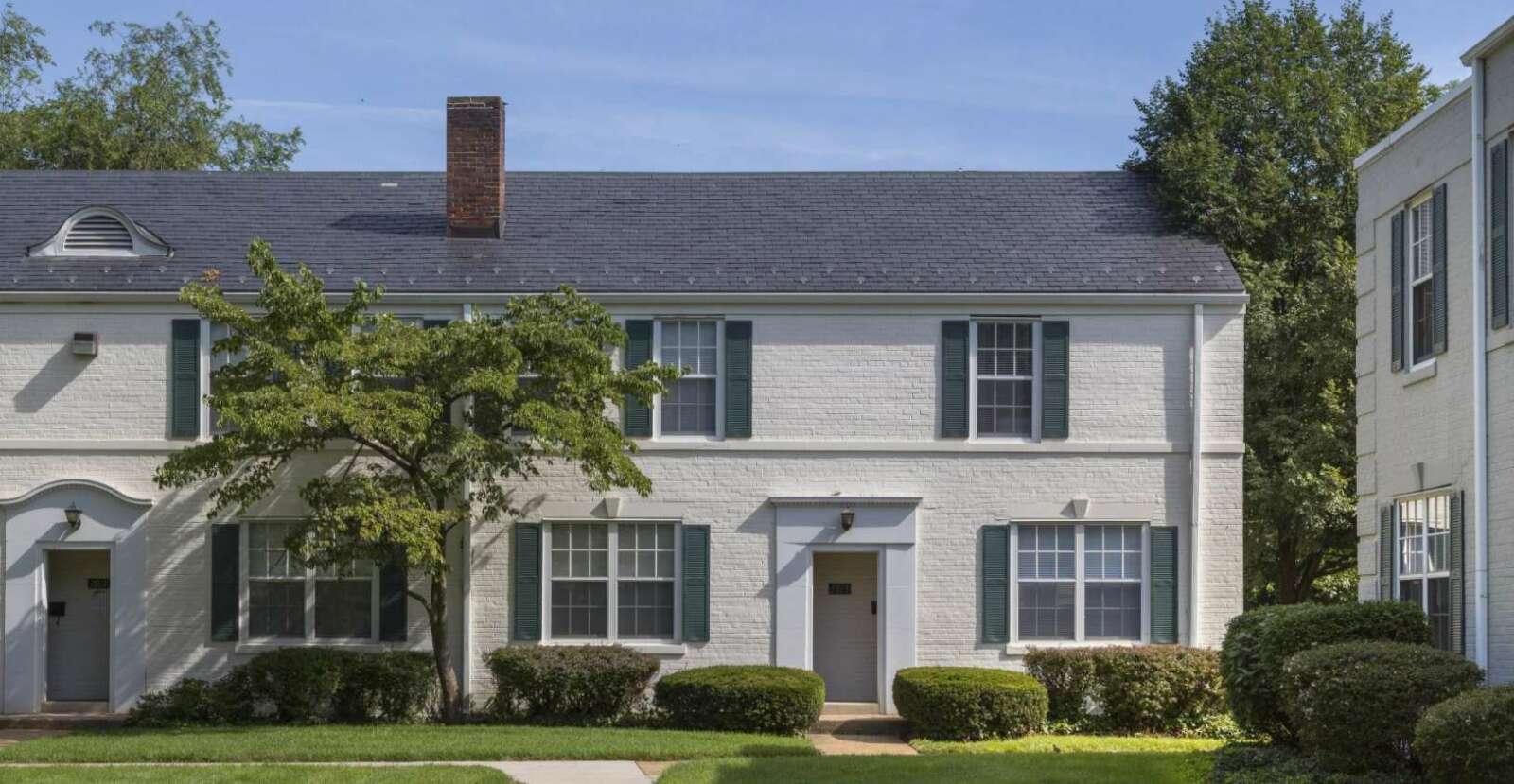
The fate of Arlington’s aging garden-style apartments is one of the biggest challenges to current housing policy. They provide lower-cost housing to thousands of residents, largely due to their age and condition. But these properties are on scarce land that allows multi-family buildings as by-right development. They are prime targets for demolition and development as higher-cost townhomes, with no requirement to preserve or support affordable housing.

Ballston Park will present a greater challenge for preservation than previous efforts.

First, the property has limited parking lots, which means not as much space to build new housing at a higher price point to offset the cost of preserving affordable units. Second, Arlington doesn’t have the option of using historic designation to force the property owner (in this case Paradigm) to negotiate and maintain affordable units.

To preserve affordable homes for the hundreds of families at Ballston Park, and other tenants at low-cost, aging apartments throughout the County, Arlington should pursue three objectives:

1. Find policies that preserve 100% of the existing MARKs and expiring CAFs

The County should not be satisfied with partial preservation of our endangered market rate affordable housing (MARKs). Preserving the existing stock of lower-cost housing is more effective than building new Committed Affordable Housing (CAFs) using developer contributions or Arlington funds.

One nearby example is the Residential Affordability Zone as part of the South Patrick Affordability Strategy in Alexandria that is working toward 1-to-1 replacement of expiring CAF units at aging properties along Route 1.

2. Make it easier to build at a higher density in Arlington’s ‘unplanned’ areas

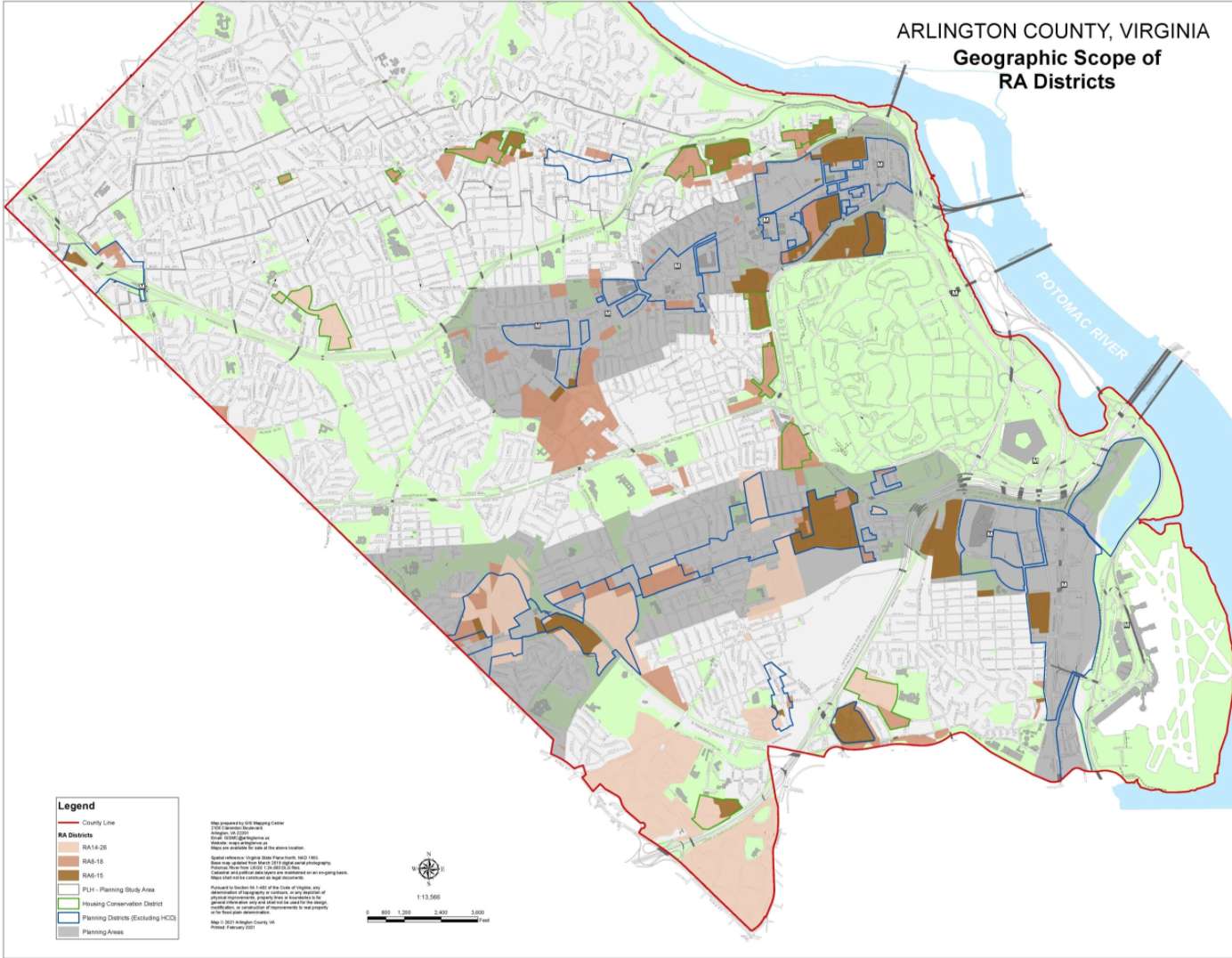
Ballston Park, like many garden-style apartments, is in an “unplanned” area of the County. This means that while the zoning allows for multifamily dwellings, there are few options for building above the baseline density. Developers have little reason to pursue anything but the by-right zoning on the site, which means they build the most expensive housing that the plot allows, and the community gets no additional housing and no public benefits.

The solution is not to halt change and leave these buildings as they are. Aging garden apartments need reinvestment to remain habitable, and many are located in areas of the County that warrant greater density to allow even more people to live near robust amenities. Making it easier for property owners to add more units means more opportunity to preserve existing lower-cost housing alongside higher-cost housing. (more…)


It only became official yesterday afternoon, but this is now a long federal holiday weekend.

We join the rest of the Arlington community in commemorating and reflecting on Juneteenth today and tomorrow.

Given the new holiday, we’re ending the day a bit early. Below are the most-read ARLnow articles of the week.

  1. Arlington’s Torri Huske Going to Tokyo After Setting Record at Olympic Trials
  2. Authorities Advise Removing Bird Feeders, Still Stumped By Reports of Sick and Dead Birds
  3. RCA Redevelopment in Rosslyn Gets Green Light
  4. Popular NYC Bakery Mah-Ze-Dahr Opening in Crystal City This Weekend
  5. Combo Sandwich and Flower Shop to Replace Buzz Bakery in Ballston
  6. Noise Complaints Drown Out Discussion of Forthcoming Cherrydale Farmers Market
  7. Progressive Voice: Spreading “Gentle” Density Across Arlington Benefits Everyone
  8. County Board Drills Into AHC About Serrano Apartments Conditions
  9. ACPD Reports More Thefts Involving Unlocked Vehicles
  10. County Board Approves $16 Million Loan for Affordable Apartment Building in Ballston
  11. Whitlow’s Is Closing Next Week and Throwing Itself a Going-Away Party

Feel free to discuss those or any other local topics in the comments. Have a nice weekend!


Lyon’s Legacy is a limited-run opinion column on the history of housing in Arlington. The views expressed are solely the author’s.

I grew up in Arlington because, in the 90s, it was a place where middle-class parents could afford to own a home and raise two children. I loved my childhood here. But because of Arlington’s economically-exclusive zoning laws and their contribution to rising housing prices, I don’t expect to be able to give my kids the same.

This is the eighth and last part of Lyon’s Legacy, a biweekly series on ARLnow. You can read the whole thing, with citations, here.

As I grew up, my family lived in three neighborhoods: Tara-Leeway, Woodland Acres, and Cherrydale. All were wonderful, with lovely neighbors, beautiful parks, friendly schools, and — my favorite — peaceful libraries. But all three are subject to restrictive single-family zoning, prices have skyrocketed, and on my NGO salary I can’t imagine ever being able to afford a home and children in any of them.

Now I am grown enough to see that Arlington has a choice. We can leave our zoning restrictions in place and watch our county turn into an exclusive enclave of the super-rich. Or we can build a few stories taller, turn some car parking into bike lanes, and smile at the kids of the new middle-class family in the apartment next door.

Legalize six-unit apartments on any lot in Arlington. Use the zoning code, not the GLUP. Remove requirements for setbacks and off-street parking. Build bike lanes, bus lanes, schools, and parks to provide for the new residents. Legalize neighborhood retail. Our neighborhoods will not only become more inclusive, they will also become more sustainable, economically productive, safer, socially-connected, and physically and mentally healthy.

Lyon’s changes to our county a century ago were radical. He and men like him utterly transformed Arlington, converting it from farmland to exclusive suburbs. Many things that Lyon did were good: he left us with beautiful parks and charming homes. But he also left us with laws, forged in racism, that have only become more stringently exclusive as housing prices have risen over the last few decades. To expunge racist exclusion from Lyon’s legacy in Arlington, we now must be as bold as he was then.

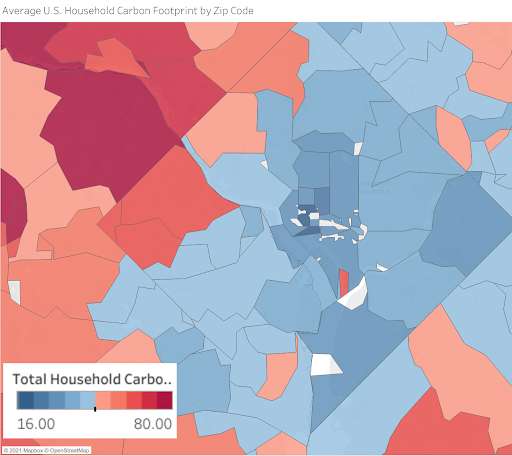
Confronting exclusive zoning, we not only face racial injustice — we face our own contributions to global climate change. Those of us living in Arlington’s northwestern, single-family, economically-exclusive ZIP codes of 22205 and 22207 have the largest carbon footprint in the county, over 60 CO2-equivalent tonnes of greenhouse gas per household per year. Carbon emissions in DC’s ZIP codes of 20001 and 20009 are about half of that. This is largely because people living in walkable neighborhoods drive cars less, but also because it’s more efficient to heat and cool apartments than single-family homes.

Household carbon emissions in the DC area in tonnes CO2-eq per year. Image by the CoolClimate Network at UC Berkeley, https://coolclimate.org/maps.

Just as with housing affordability, in climate change a compromise is insufficient. Minor increases in density through duplexes or rowhomes will not be enough to overcome Arlington’s car dependence and allow us to live less carbon-intensive lifestyles, doing our part to restrict anthropogenic global warming to 1.5 degrees C. Nor will electric cars, not when their batteries depend on extractive rare-earth mining and electricity from burning coal. If Arlington believed in climate science and in the urgency of the crisis, we would get rid of our garages, not just change what we park in them.

(more…)


What’s Next with Nicole is a biweekly opinion column. The views expressed are solely the author’s.

This Sunday is the last day to provide feedback on “Plan Lee Highway“, a multi-year planning process for the corridor that has now produced specific proposals for development levels, street improvements, stormwater impact, and other significant changes.

My biggest piece of feedback on Plan Lee Highway and every ongoing area and sector plan is the lack of consideration for our schools. We should be including school generation factors in our area and sector planning process.

Plan Lee Highway is one of three ongoing planning processes for entire areas of our county in addition to Pentagon City Planning and the Clarendon Sector Plan. For background, I am currently serving on Pentagon City Planning which has allowed me to dig into the “why” of this situation.

Background on Student Generation Factors

An average generation factor is available in the annual Arlington Profile and school facilities staff can further refine that generation factor based on neighborhood. For example, an apartment building in Crystal City will generally produce slightly more children than an apartment building in Rosslyn.

On average, a market rate apartment with an elevator produces .066 students per unit whereas a single family detached home produces .489 students. This means single family homes generally produce 7.5 times more than one apartment building unit.

In terms of Plan Lee Highway, I will use two examples of how these factors impact the planning process:

  • If we consolidate 10 single family homes into one 5-7 story elevator apartment building that has ten units per floor we would reduce our students generated from 4.98 students from the single family homes in that area to 3.3 – 4.62 students from the new apartment building. This is an example from Area 3 at the north east intersection of Lee Highway and Old Dominion.
  • If we transform a zero population shopping center into two 7 story elevator apartment buildings with 10 units per floor, we increase the number of students in that area from 0 to 9.24 students. This is an example from Area 2 in the south east corner of Lee Highway and George Mason.

While each example either increases or decreases expected school seat generation, it is at least a known quantity. We have the data to produce a seat generation factor and the Planning Department should be able to ballpark the estimated number of units we can expect in these study areas over the next few decades.

Contemplating Schools in Area/Sector Plans Rather Than a Building by Building in the Site Plan Review Process

We are reviewing school impact too late in the planning process.

Right now, we determine the school seat impact each time a new construction project is brought to the Site Plan Review Commission. That means that those new anticipated seats will be brought on in a year or two. As a result, we have a seemingly biannual fire drill about how to shift kids around to accommodate changing enrollment projections.

If we contemplate changes to school seats in the area/sector plan process, we can anticipate the number of seats added decades in advance instead of our usual fire drill situation.

This is also important for the reservation of limited public facilities and open space. In a 2019 memo county manager Schwartz identified a number of potential new school sites which is a useful tool to use in these area/sector planning processes.

In the chance that we do not have the land availability in the future for new schools, we also need to know that. Will we need to develop a fund for land acquisition? When? These are the types of answers we would only know with this long-range perspective found in area and sector planning.

Precedent for an Imperfect Estimation for Infrastructure Impact

We already have estimated infrastructure impact equations in the Comprehensive Planning process as it relates to transportation. In my capacity on the Pentagon City Planning group we had 2-3 meetings on the “level of service” calculation for roads/public transportation and almost an entire meeting for bike infrastructure level of service. All of these projections are important infrastructure considerations, but also produce an imperfect result that we can generally accept.

With schools constituting almost half of our operational budget and a significant amount of our capital improvement plan’s bonding, it seems negligent to not include these calculations in the same way we calculate other infrastructure impact in our comprehensive plan.

Conclusion

My opinion is not against increased density around major transportation corridors such as Metro and state highways like Lee Highway. Encouraging growth along corridors with accessible public transportation and lower commuting times is better for the environment and a diversity of housing supply will help create varying housing costs (see page 5 in the Arlington Profile 2021 for varying housing type costs).

I would find it hypocritical though to advocate for this added density without also advocating for sufficiently planned infrastructure to support that added density, and encourage us to incorporate schools in our comprehensive planning.

Nicole Merlene grew up in Arlington County and has been a civic leader in both policy and political arenas. She has been an Economic Development and Tenant-Landlord Commissioner; Community Development Citizens Advisory Committee, Pentagon City Planning Study, Rosslyn Transportation Study, and Vision Zero member; Arlington County Civic Federation and Rosslyn Civic Association Board Member. In 2019 she sought the Democratic nomination for the 31st District of the Virginia State Senate. Professionally Nicole is an Economic Development Specialist where she works to attract businesses to the region. She lives in an apartment with her dog Riley and enjoys running and painting.


View More Stories