The weekend is here but the week’s biggest local excitement is yet to happen.

The implosion of the former Rosslyn Holiday Inn is set for 8 a.m. on Sunday. If you haven’t done so already, be sure to take a look at the planned road closures.

The public is being discouraged from watching in person, but ARLnow staff photographer Jay Westcott will be on the scene. You’ll be able to see his photos afterward and, if all goes well, we will be livestreaming the implosion on our Facebook page.

Here are the most-read Arlington articles of the past five days:

  1. Implosion to Fell Rosslyn Hotel Tower This Weekend
  2. Va. to Enact New Midnight Curfew, Stricter Limits on Gatherings
  3. I-66, Numerous Roads Around Rosslyn to Close for Hotel Implosion
  4. Pentagon Row Rebrands as ‘Westpost,’ Adds New Beer-Centric Pizza Restaurant
  5. Prelude to Demolition for Circa 1907 Dominion Hills Mansion?
  6. Coronavirus Cases Hit New Peak in Arlington
  7. New Pierogi Stand Opening in Ballston Quarter Food Hall
  8. ACPD: Gunshot Fired During Robbery in Fairlington
  9. Health Matters: Should I Get the COVID Vaccine if I Have Allergies?
  10. Man in ‘Jabbawockeez’-Style Mask Robs Couple at Gunpoint

Feel free to discuss those stories or anything else of local interest in the comments. Have a nice weekend!


Ed Talk is a biweekly opinion column. The views expressed are solely the author’s.

The political divide in the United States in the wake of the 2020 presidential election is palpable. In a recent Pew Research poll, 90% of Biden supporters and 89% of Trump supporters said that the election of the other candidate would lead to lasting harm to the country.

For the next generation of leaders to find common ground and advance solutions to pressing national issues, we must teach students how to engage in civil dialogue.

The Sorensen Institute for Political Leadership, part of the University of Virginia, promotes “effective leadership, working together, building trust, ethics, and a mastery of public policy issues” to “strengthen the quality of governance and community service at all levels and help restore public confidence in our political system.”

One of Sorensen’s programs is the High School Leaders Program, which teaches about 32 students each year how to engage “positively and effectively” in public policy debates so that they can make a positive difference in their communities. According to Sorensen Director Larry Roberts, students from across the Commonwealth with different cultural backgrounds and political beliefs learn to listen to each other, challenge stereotypes about political parties, focus on policy, and work together to find solutions.

Another Virginia program to promote civil dialogue and an understanding of the legislative process is the Virginia YMCA’s Model General Assembly (MGA). After preparing legislation, about 500 students travel to Richmond each year for three days where they meet in the General Assembly to debate their bills.

Erik Van de Poll, Arlington YMCA District Executive Director, says that “MGA has taught Arlington students how to better understand the perspectives of students from different parts of Virginia. This understanding has helped them to build consensus for their own legislation, and ultimately to be more effective advocates.”

Both Sorensen and MGA charge fees and enroll a small number of students, limiting the reach of these effective programs.

Public schools have an important role to play here. The Virginia Standards of Learning (SOLs) in History and Social Science include understanding “the rights, duties, and responsibilities of citizens” and “respecting differing opinions.” However, the SOLs do not do not emphasize the skills that students need to engage in civil dialogue about policy.

Work on the revised 2022 SOLs is underway and is expected to include a more skills-based approach, according to APS Social Studies Supervisor Kerri Hirsch. In the meantime, Hirsch provides APS teachers with resources so that students can better understand diverse perspectives, discuss these respectfully, and develop arguments to support their views based on facts. This includes the use of Checkology, a resource to help students use critical thinking skills to separate fact from fiction.

What do teachers do when a student’s comments reflect prejudice toward others? Author Robert Jones, Jr. writes: “We can disagree and still love each other unless your disagreement is rooted in my oppression and denial of my humanity and right to exist.” Some teachers do not engage students in discussions of politically charged issues because they do not feel equipped to handle these kinds of situations.

Teachers should have more opportunity for professional development to give them the tools they need to facilitate student conversations about policy. Available resources address setting classroom ground rules, examining one’s own perspectives and bias, and engaging students in projects to help them listen to each other to build understanding of different views.

Empathy is a common theme in the work done by Sorensen, MGA, and APS. Civil dialogue depends on participants listening respectfully to those with opposing views and working to understand their perspectives. Empathy allows us to see beyond labels and stereotypes.

Understanding others’ views does not mean agreeing with them. But it can lead to finding some common ground. This seems a better path to finding solutions to national issues than vitriol and ad hominem attacks.

Abby Raphael served on the Arlington School Board from 2008-2015, including two terms as Chair. She also led the Washington Area Boards of Education for two years. Currently she co-chairs the Destination 2027 Steering Committee, is a member of the Board of the Arlington YMCA, and works with Project Peace, the Community Progress Network, and Second Chance


Health Matters is a biweekly opinion column. The views expressed are solely the author’s.

One of the hottest topics surrounding the COVID vaccine the past few days is allergic reactions, sparked by reports of two anaphylactic reactions after administration of Pfizer’s vaccine in the UK.

This has prompted many to ask the question: should I get the COVID vaccine if I have allergies? My goal is to clarify some of the warnings so people can make an informed decision. The main takeaways focus on differentiating between allergic vs. anaphylactic reactions:

  • If you have food allergies or allergies to one medicine, you do not need to avoid the Pfizer vaccine
  • If you have had anaphylactic-level reactions and normally carry an auto-injectable device with epinephrine (e.g. EpiPen), you can either wait for more data or get vaccinated in a more controlled setting like a hospital or outpatient clinic.
  • There is no virus in the vaccine, so you can not contract COVID from the vaccine

So what happened in the UK? Last week, Britain’s Medicines and Healthcare Products Regulatory Agency (MHRA) was the first in the world to approve the vaccine developed by Germany’s BioNTech and Pfizer. Just this past Tuesday, Britain rolled out the Pfizer vaccine starting with the elderly and frontline workers. Two National Health Service workers developed anaphylactic reactions that were described as non life-threatening. Both recipients had a history of severe allergies and carried epinephrine pens routinely. Fortunately, both patients are recovering.

Initially, the MHRA put out a precautionary guidance stating people with a history of significant allergic reaction should not take the vaccine, which was quickly clarified to anybody with anaphylaxis to a vaccine, medicine or food. Many in the science community are concerned that this advice is too broad, particularly since there is no trace of nuts, eggs, or any food in the vaccine.

What is actually in this vaccine, and what could explain the allergic reaction? The Pfizer vaccine is based on new technology, designed to get the body to build up defenses against COVID on its own. The key ingredient in the Pfizer vaccine is messenger RNA (mRNA), which teaches the body how to fight against the proteins that help COVID-19 invade our cells. The mRNA is packaged up with salt, fats and sugar in a whitish, preservative-free solution to help make it deliverable into our muscle.

Here is a list of the components:

  • A nucleoside-modified messenger RNA (modRNA) encoding the viral spike glycoprotein of SARS-CoV-2 (this is what makes the shot work, and is NOT the virus)
  • Lipids (i.e. fatty substances) including:
    • (4-hydroxybutyl)azanediyl)bis(hexane-6,1-diyl)bis(2-hexyldecanoate),
    • 2-[(polyethylene glycol)-2000]-N, N-ditetradecylacetamide,
    • 1,2-distearoyl-snglycero-3-phosphocholine,
    • cholesterol
  • Potassium chloride
  • Monobasic potassium phosphate
  • Sodium chloride
  • Dibasic sodium phosphate dihydrate
  • Sucrose

While none of these ingredients are known to be highly allergenic, one possibility is a component found in one of the ingredients called polyethylene glycol (PEG). PEG helps stabilize the vaccine and is not in other types of vaccines.

Patients with severe allergic reaction history were excluded from the clinical trials, which is common, and helps explain why we are seeing these events show up in real-time. The good news for those predisposed to allergic reactions is that other vaccine options will become available that may avoid the allergic trigger found in the Pfizer vaccine.

Transparency during vaccine rollout is paramount to gain public trust. Events such as these two allergic reactions will help better equip patients and healthcare workers as we prepare for the FDA’s Emergency Use Authorization (EAU) of the vaccine in the U.S. The COVID vaccine has a particularly big magnifying glass on it, and I think we have to resist the urge to panic or “headline react.”

There is enough mistrust in the vaccine that adding a headline to avoid the vaccine if you have a history of allergies may dissuade millions of people from getting vaccinated. Allergic reactions, and certainly anaphylactic reactions, are not something to take lightly. Fortunately, these reactions are rare and treatable in the right setting, and the benefit of protecting against COVID-19 likely outweighs the risk.

Dr. George C. Hwang, known to his patients as Dr. Chaucer, is a practicing anesthesiologist who also helps to run Mind Peace Clinics in Arlington. He has written for multiple journals, textbooks and medical news outlets, and has been living in Arlington for the past 15 years.


Modern Mobility is a biweekly opinion column. The views expressed are solely the author’s.

The Arlington County Board is set to vote this weekend on accepting a grant to implement a performance parking pilot in Arlington’s Metrorail corridors.

Performance Parking is a proven approaching to managing parking supply to make parking more convenient. It uses technology to measure parking demand, and over time matches the price of that parking to demand, ensuring that parking is generally available where people want it, when people want it.

How Does it Work?

When trying to understand how performance parking works, it’s helpful to look at an existing example while keeping in mind that there are many ways to customize a performance parking implementation plan to fit each community. One of the most well-known and well-documented examples is SFPark in San Francisco.

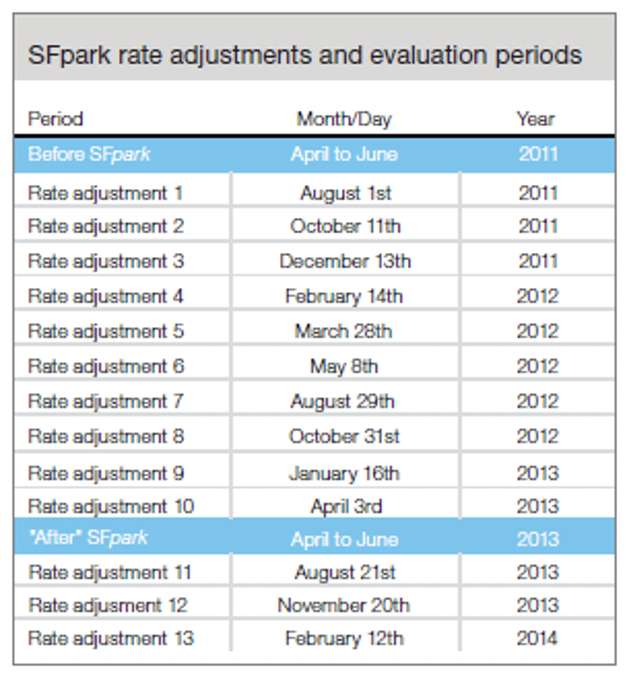
The SFPark pilot installed in-pavement parking occupancy sensors across 7 parking management areas which included about 25% of the city’s on-street spaces.  Approximately every 8 weeks, the city adjusted parking rates for each block based on average parking occupancy of that block, according to the following formula:  blocks that saw 80-100% occupancy the rate was increased by $0.25, blocks where the occupancy was 60-80% the rate was left alone, blocks where occupancy was 30-60% the hourly rate was decreased by $0.25, blocks where the occupancy rate was below 30% the hourly rate was decreased by $0.50.

These pricing adjustments were made approximately every 8 weeks.  Unlike something like Uber’s Surge pricing, these are not sudden, real-time changes – they are slow, deliberate changes made over a period of months with clear, predictable signage.  Over time they find the true intersection of the parking supply and demand curves and ensure that parking is available on each block when people need it.

What does it Accomplish?

SFPark made parking easier to find.  The amount of time that blocks achieved the target parking occupancy (60 to 80%) increased by 31% in pilot areas, compared to a 6% increase in control areas. The amount of time that blocks were too full to find parking decreased 16% in pilot areas while increasing 51% in control areas.

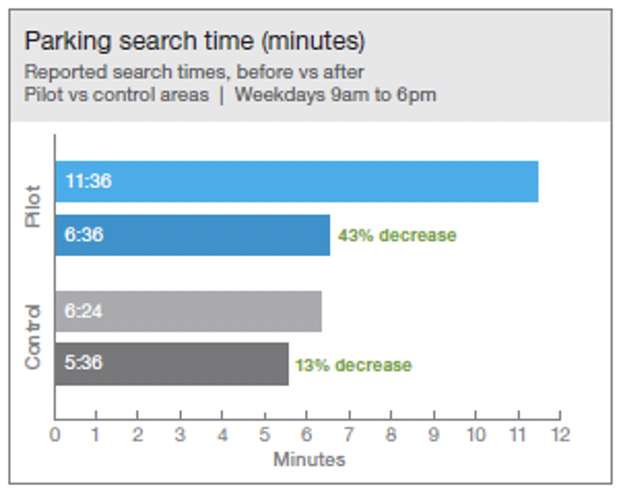
SFPark saved people time.  In SFpark pilot areas, the amount of time most people reported that it took to find a space decreased by 43%, from about 11 ½ minutes to about 6 ½ minutes.

SFPark reduced greenhouse gas emissions.  Due to reduced time spent circling for a parking space, drivers went from generating about 7 metric tons of ghg emissions per day looking for parking prior to the pilot to about 4.9 metric tons of emissions per day after the pilot.

SFPark reduced double parking.  Double parking increases dramatically as convenient parking gets harder to find.  In SFPark pilot areas, double parking decreased by 22% compared to a 5% decrease in the control areas.

SFPark reduced congestion and improved transit speeds.  Due to a reduction in drivers circling for spaces and the reduction in double parking, peak period congestion decreased and transit speed increased in the pilot areas.

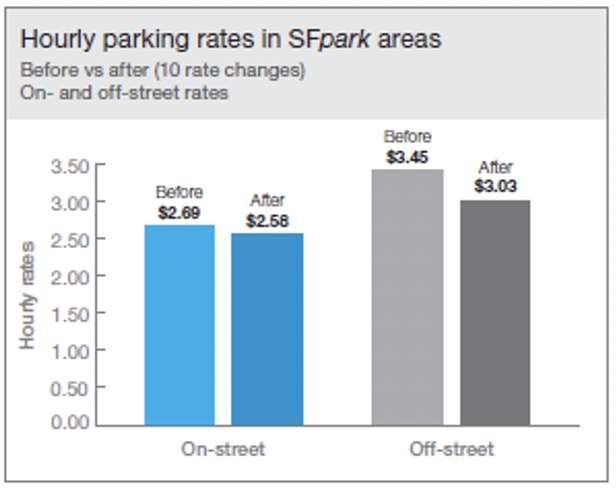
SFPark lowered average hourly parking meter rates.   Over the course of the SFPark pilot, the average hourly rates at meters dropped from $2.69 to $2.58.

(more…)


Community Matters is a biweekly opinion column. The views expressed are solely the author’s.

I often receive questions about how to broaden an organization’s membership whether it be race, age, or talent.

As I have written previously, we are challenged with having the same people across our associations which stifles the growth of some of our residents, organizations and the community as a whole.

This summer, many white people were asking what they could do to help with race relations. A continual concern among our Arlington organizations is the “graying” of our membership, and the difficulty attracting younger members. Some organizations are concerned whether they have the numbers to compete with other larger organizations. Other organizations do not feel their members have the technical expertise to succeed.

In Arlington County, we love our organizations. With over 50 advisory boards and commissions, over 80 member groups of the Arlington County Civic Federation and numerous additional civic groups which cover a variety of interests, there are plenty of opportunities to get involved.

We pride ourselves on civic engagement and much of that is done through associations. Decisions are made at the organizational level which have weight with our local government. Organizational leaders generally have entree with elected officials and the media. We routinely honor our community groups and their members for their service. We identify people by their organizational involvement.

I have two simple first steps:

Hold a join Zoom social event with an organization that is different than yours. The group could represent a younger demographic, have more or less racial diversity, have more or less organizational history, have a different focus, etc. These informal opportunities to engage with new people are valuable to us as individuals and our organizations.

It’s been several months since America had our most recent awakening about the status of structural racism. I don’t think many were surprised to hear that the majority of the respondents so far in the County’s Dialogues on Race and Equity (DRE) survey have been middle-aged white women. My guess is that some non-white middle aged Arlingtonians believe that this survey is simply not for them, yet the County is seeking a more diverse sample of the community. The County’s DRE includes conversations across groups.

Invite a prospective member who fits the profile of a person to your next meeting or event or to speak about a topic of interest. I spoke to the Arlington Rotary Club a few months ago and I was invited to be a member on the spot. I have thoroughly enjoyed connecting with people whom I probably never would have met. I would not have likely sought membership with Rotary, but I have already reaped tremendous rewards.

We often view our organizational shortcomings as huge insurmountable challenges which may require years of work, funding, or are just simply uncomfortable. I encourage you to take that first step, and just ask.

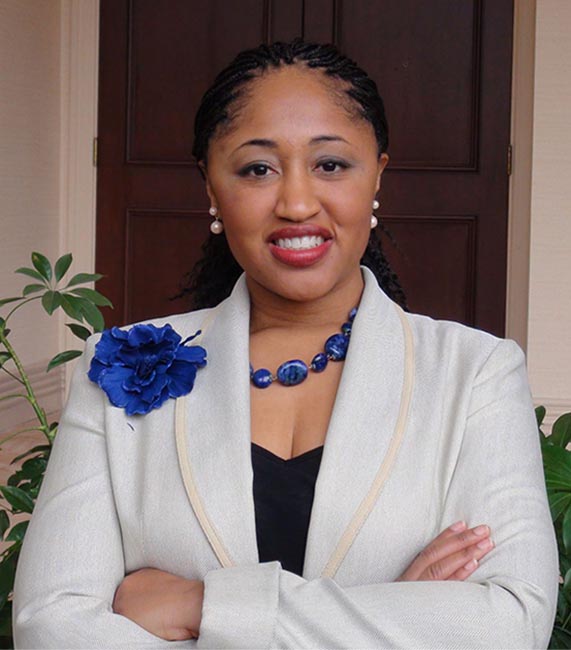
Krysta Jones has lived in Arlington since 2004 and is active in local politics and civic life. This column is in no way associated with or represents any person, government, organization or body — except Krysta herself.


Making Room is a biweekly opinion column. The views expressed are solely the author’s.

What are the consequences of Arlington’s housing shortfall?

What housing options are missing in Arlington’s neighborhoods?

What are the characteristics of your neighborhood that you most value?

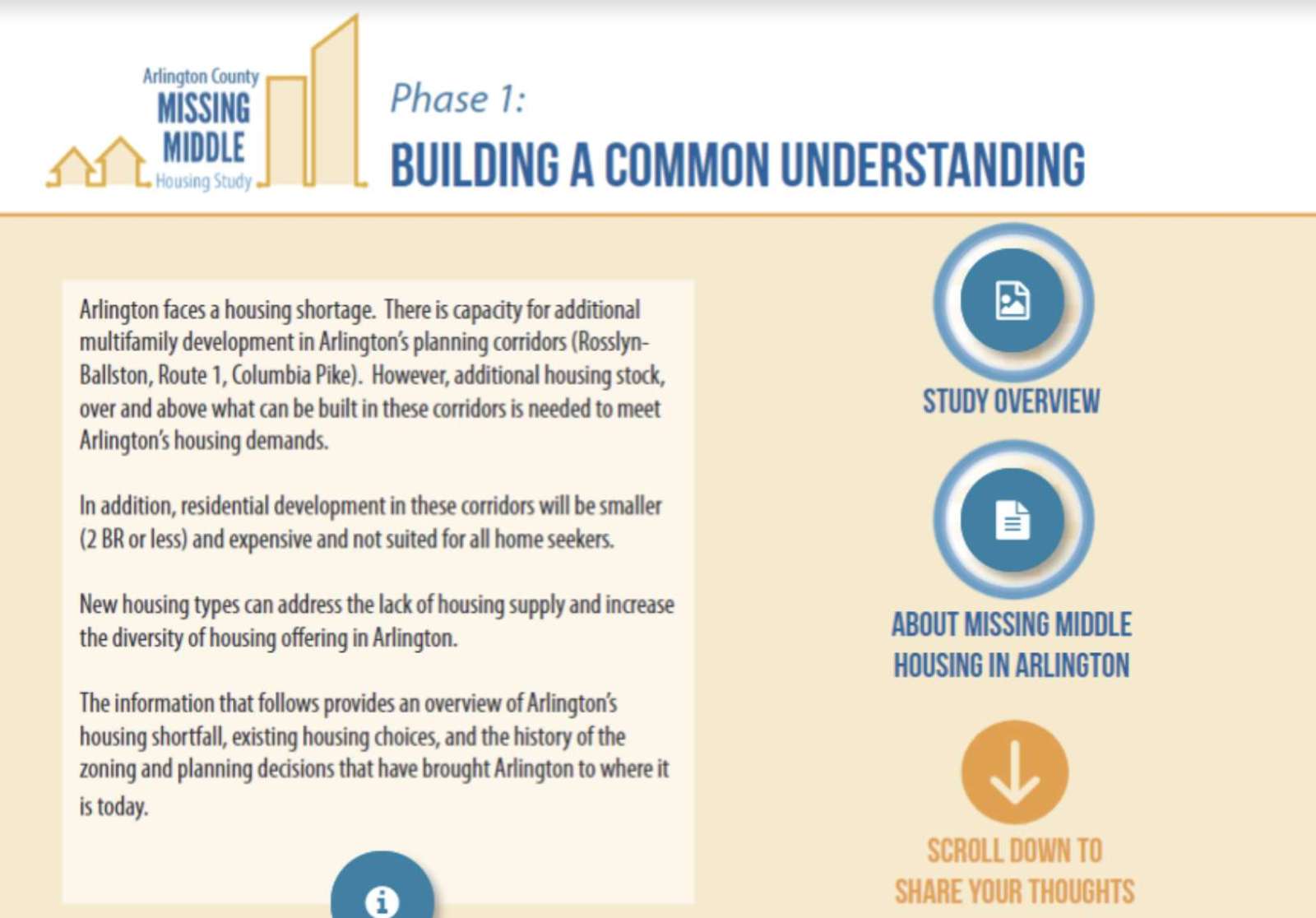
These are some of the questions that Arlington County is asking as part of its Missing Middle Housing Study. And these seemingly innocuous questions are already generating heated opposition. In order to address Arlington’s housing shortage, we need to overcome the vitriol when it comes to talking about zoning.

“Missing Middle” housing, a phrase coined by Daniel Parolek, refers to small, multi-unit dwellings that allow multiple families to split the cost of land. Historically, duplexes, quadplexes, and rowhouses were common and legal to build in residential neighborhoods. Over the past century, zoning has restricted the types of housing allowed on most land – large apartment buildings in narrow corridors, detached single-family homes everywhere else.

Before Arlington staff make any recommendations about zoning ordinance or policy changes, they are charged with “building a common understanding” among County residents about the problem of housing affordability and distorted supply in Arlington.

If the rhetoric at public meetings, to say nothing of the comments section of this site, is any indication, we are a long way off from consensus about the health of Arlington’s housing market, the County’s capacity for more residents, or the impact of allowing more types of housing in more places.

The first step toward “common understanding” is a community survey that walks participants through data about the current state of Arlington’s housing market. The goal is to educate residents about the facts: our housing supply is constrained, and the types of housing are limited. At each point, participants can give feedback about their own experience and share what they see as the biggest impacts or concerns related to recent housing trends.

Some residents will be upset when confronted with the reality of our housing crisis and the history of Arlington’s development. Changes to zoning can seem like a threat to financial security and assumptions of what a residential neighborhood looks like. But for many people in Arlington, the current market is impossibly out of reach and new choices are the only way to gain a foothold in the County.

(more…)


Another week is in the books, and we’re now seven days closer to 2020 mercifully coming to a close.

It’s been another busy week in Arlington, and with a County Board week upcoming, it might not be until just before Christmas that the news finally slows down around here.

Here are the most-read local stories that made waves this week:

  1. Spotted: A Couple on an Elaborate Date at Gravelly Point
  2. Man Arrested for 30-Year-Old Rape Cold Cases
  3. Court Docs: Metro Station Manager Beat Coworker for Helping Customer
  4. Specialty Grocery Store and Beloved NYC Bakery Filling Open Retail Space in Crystal City
  5. Metroway is on the Chopping Block as WMATA Eyes Bus Cuts in Budget Proposal
  6. New School Boundaries Draw Mixed Responses Ahead of Vote This Week
  7. Walk-Up Testing Hours Expanded As County Caseload Remains High
  8. Those To-Go Coffee Cups Are Not Recyclable in Arlington
  9. Soldiers, Not Volunteers, to Lay Wreaths at Cemetery This Year

Feel free to discuss those, or any other topics of local interest, in the comments section. Stay dry tonight and have a nice weekend!


With many students struggling with their academic achievement during remote learning and the pandemic, Fairfax County Public Schools has discussed potentially extending the school year into the summer.

The idea of an extended school year, to allow students to catch up on their studies during the summer, has also been raised by Arlington School Board member Tannia Talento.

“Can we make a summer school plan to be proactive versus reactive?” Talento asked, at a recent Board meeting.

Given that vaccines are on the way, and that there appears to be a lower level of infection during warmer-weather months, it seems likely that classes could be held in-person this summer. That may be just what’s needed, at least for some students, after months of virtual classes.

On the other hand, it could be argued that kids most of all just need a break from sitting and staring at screens, something that a summer vacation provides. And the virus will likely still be circulating this summer, despite the vaccines.

Do you think APS should plan to do so?


What’s Next with Nicole is a biweekly opinion column. The views expressed are solely the author’s.

This week Metro released a devastating budget for FY 2022 in order to balance a $500 million deficit.

In more ways than one this pandemic has continued to exacerbate systemic problems that already exist in our society, and Metro’s budget is one of those evident examples. There are multiple reasons why even with federal stimulus that we will continue to have budget issues for the foreseeable future.

During the pandemic, service cuts already have made it difficult for essential workers. With these proposed “doomsday” cuts to service, those workers will be driven further off the ledge of stability. Shift workers that have hours being cut are having to pay for a $30 round trip Uber versus a $6 Metro trip, and that is unsustainable to continue through July 2022.

Metro has been the core of Arlington’s economic growth over the past several decades and served as a regional connector to our neighbors for commuting and leisure. Ensuring its continued success in not just maintaining, but expanding service to Dulles, is essential for us in providing regional housing supply, attracting businesses and jobs that generate revenues at the state and local level, and providing reliable and environmentally friendly transit throughout the region.

Changing workforce patterns

Even after a vaccine is widely distributed, we are likely to see a measurable shift in commuting patterns. It has been made clear that work from home is here to stay. In Congressional hearings, GSA directives, and indicators from government contractors, we have seen concrete intention to continue expanded work from home policies.

Some $763 million in Metro revenues come from ridership and parking. Twenty-two percent of the D.C. region works for the government and that number is even higher if you count government contractors. We cannot expect that revenue to continue in perpetuity. We need a long term plan to rely less on ridership revenue.

Living on a prayer

“We are going to need federal funding. Eventually we will need to change our tax system to provide more funding, but this year is an election year so that won’t happen. We did increase funding a few years ago and we’re really proud of that.”

The above is a summarized response from our state legislative leadership when I asked about the legislature’s planned response to these devastating cuts at George Mason University’s NOVA Leadership Dinner.

First, Virginia is not paying our fair share of Metro funding as it is. With the new stops, we will account for 31% of Metro stops, but will be paying only 27% of state/local contributions. If we were paying our fair share, we would be paying $73 million more annually to Metro. We cannot rest on our laurels and pat ourselves on the back for taking action a few years back.

Second, it is unfortunate that the reasoning for being unable to make changes to our tax code is that it is an election year. It is election year every year in Virginia. Public transportation is a bipartisanly popular topic and should be considered an asset to any campaign, not a deficit. This cannot be used as an excuse to not get things done.

(more…)


Yesterday, officials from the Centers for Disease Control and Prevention said that Americans should avoid travelling during the holiday season, but get tested if they do travel.

“Cases are rising. Hospitalizations are increasing, Deaths are increasing. We need to try to bend the curve, stop this exponential increase,” said the CDC’s incident manager for the COVID-19 pandemic, as quoted by USA Today.

The federal agency has additional guidance for family holiday gatherings on its website.

Despite the CDC’s advice, many will still travel, gather and celebrate. Today we’re wondering how many Arlingtonians are planning to head out of town for Hanukkah, Christmas or the new year.

Are you planning to travel this holiday season?

Flickr pool photo by Kevin Wolf


Peter’s Take is a biweekly opinion column. The views expressed are solely the author’s.

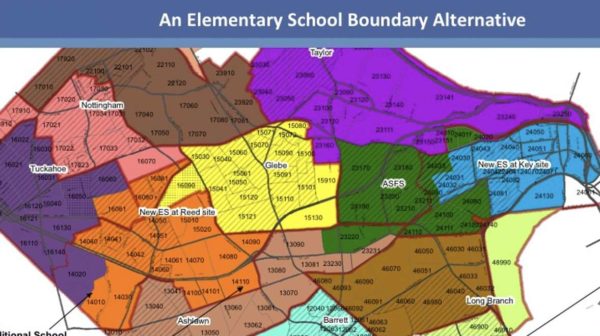
APS continues its record of flawed planning with the 2020 Elementary School Boundary Process. The latest recommendations typify years of ineffectual boundary planning.

In 2018, APS recognized it had a problem: a mis-match of the geographic locations in which its elementary students resided and the locations of schools.  Further, APS identified the planning corridors (Rosslyn-Ballston, Columbia Pike, and Route 1) as the locus of the future enrollment growth, but the next new facility — Reed — was not being constructed where seats were needed.  Therefore, APS began internal deliberations to adjust county-wide elementary school boundaries (for school year 2021-22).

The objectives included:

  • create Reed and Science Focus (ASFS) attendance zones
  • address overcapacity at schools
  • maximize building capacity
  • make efficient use of existing facilities and resources
  • adhere to walk zones and balance demographics when possible

Last February the School Board voted to move Key Immersion to ATS, ATS to McKinley, and McKinley to Reed. Although this was and remains very controversial, the net result moved Option programs closer to areas with excess seats and freed up neighborhood seats at the Key site. However, because APS decided to limit additional stress during the pandemic, it hastily decided to abandon a first principle of any boundary process–to balance enrollment.

APS objectively has defined “preferred maximum” numbers of students at each school using Virginia guidelines. But APS has ignored its own analysis and excluded schools like Abingdon. Abingdon is projected to reach 930 students in 2022-23 with a preferred maximum of only 742. Other schools like ASFS, with a preferred maximum of 637 students, are included, yet ASFS is projected to enroll 662 in 2022-23 with the strong potential that up to an additional 80 will enroll if they elect not to move with Key Immersion. Others like Dr. Charles Drew–adjacent to Abingdon–has approximately 400 preferred maximum unfilled seats. And schools like Ashlawn and Tuckahoe (in this boundary process) have 200+ combined preferred maximum seats available through 2022-23.

The “minimal” boundary changes now proposed are unfair

Even for the small number of schools involved, APS’s latest proposal does not maximize flexibility nor does the proposal minimize impact on families as a foundation for the 2022 process. APS proposes moving several planning units from Ashlawn to ASFS even though future flexibility is needed there. At the same time APS proposes moving some students from McKinley to Ashlawn.  These moves should be delayed until 2022 to preserve flexibility.  Finally, APS leaves Tuckahoe well under-capacity. APS should use Tuckahoe’s excess seats to balance capacity from Ashlawn along the southwestern boundary of the County where future flexibility is less important.

(more…)


View More Stories