(Updated at 9:50 a.m.) Thanksgiving is only three weeks away, and with coronavirus on the rise in much of the country, plans for the holiday are in flux.

The usual gatherings of family and friends are now subject to a calculation: is a big turkey dinner worth the risk of contracting a potentially deadly or debilitating disease?

For some, the solution will be a smaller dinner, perhaps with only some of the fixin’s. For others, however, it might be business as usual.

Asked about it last week on CNBC, two prominent figures in the medical field said the traditional Thanksgiving gathering was out for them this year.

What are your current turkey day plans? If they’ve changed from your usual Thanksgiving plans, let us know in the comments.


Last week, we invited the three candidates seeking a seat on the Arlington School Board to write a post about why our readers should vote for them in the Nov. 3 general election.

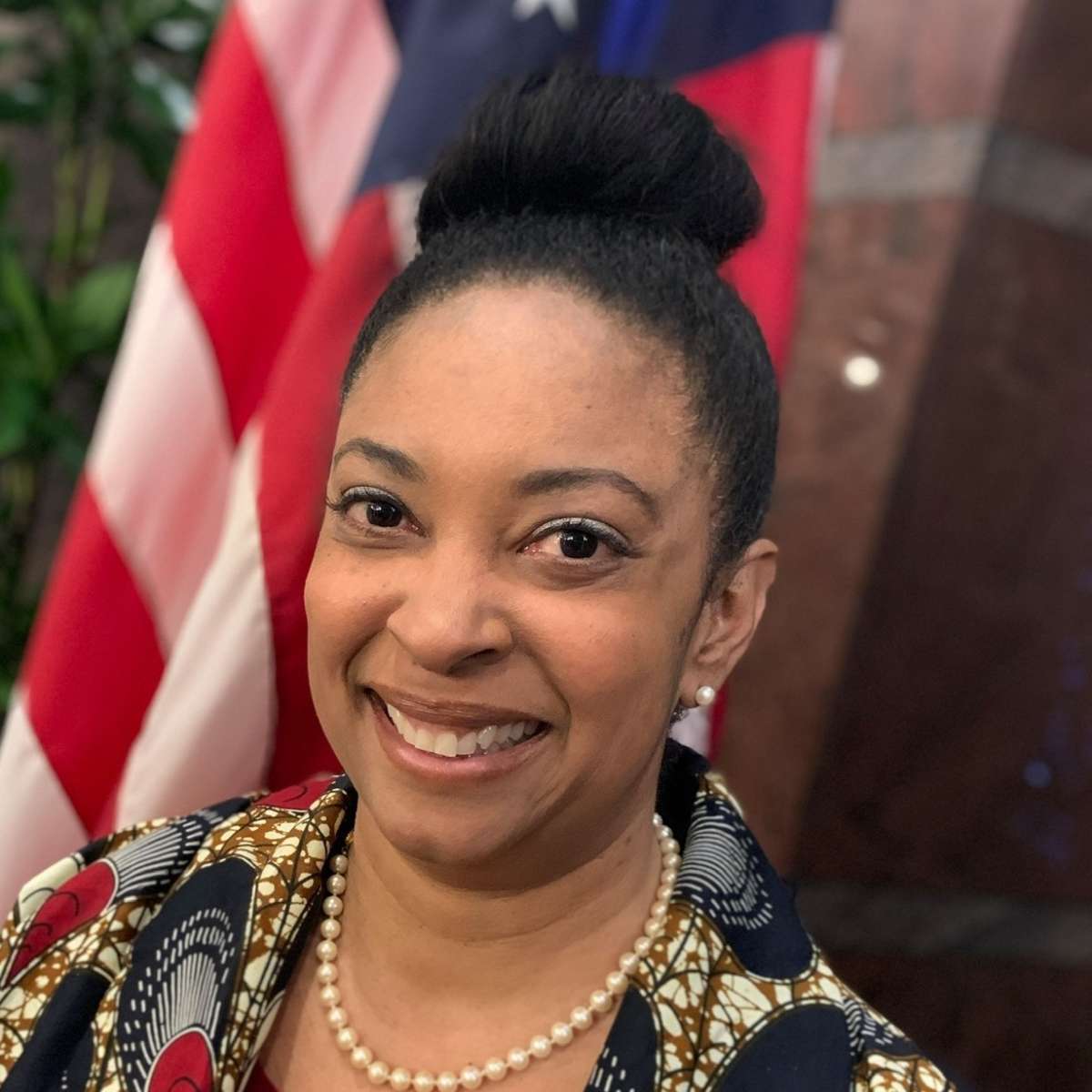
Here is the unedited response from Symone Walker:

I am Symone Walker, an APS parent, and education activist, having served on various PTA and school committees for the past decade. I currently serve as Co-Chair of the Arlington NAACP Education Committee. As the parent of a gifted child and a child with special education needs, my passion for education activism stems from my own struggles in seeking equitable access to special education and differentiated instruction for my children. I am running for the school board to be an instrument of change because a lot needs to change. The opportunity gap has not closed in decades; our reading curriculum is leaving students further behind and widening the gap. Struggling students are graduating semi-literate; unable to read well enough to fully participate in our democratic society, and unable to write well enough to navigate the rigors of college-level writing without remedial classes or tutors.

For too long, the school board has mostly focused on capacity, boundaries, and buildings, and neglected curriculum and instruction to the detriment of our students. Our Black and Latino students’ academic performance stagnates at 20-30 points below their Caucasian and Asian counterparts, and they are performing below the state average, which is a low bar. For a school district as well-resourced as Arlington that spends almost 20K per pupil, far exceeding neighboring jurisdictions, APS’s inability to close the opportunity gap is incomprehensible. To still have no comprehensive equity framework in place in 2020 is unacceptable. And to have schools that are still segregated 66 years after Brown v. Board of Education & 61 years after desegregating Stratford Jr. High is highly problematic.

I am laser-focused on closing the opportunity gap which, as a result of COVID-19, will widen exponentially and require a multipronged approach to close it. To that end, we must screen for and identify learning differences and disabilities as early as Kindergarten, and every student beginning in elementary school must have access to an evidence-based, structured literacy curriculum that is rooted in the science of reading, a robust evidence-based writing curriculum, an evidence-based, multisensory math curriculum, and timely intervention for struggling students. Further, our schools need to become trauma-informed, depressurized, authentically inclusive, race-conscious, restorative rather than punitive, and reflective of the diversity of our community so that the whole child can flourish.

Having served two decades as a federal government attorney in a number of practice areas, I am prepared to overcome challenges that seem insurmountable such as the challenging times we are now facing with the impending reopening of schools. I am a strategic thinker, adept at forecasting risk, and implementing mitigation strategies to avoid catastrophes. I can handle curveballs and navigate steadfastly through uncertainty and unpredictability with sound judgment. My LL.M. in litigation and dispute resolution and 15 years of experience as a mediator have prepared me to effectively manage conflict, build coalitions, and find common ground. These are the leadership skills I will bring to the school board.

You should vote for me because I am the only candidate in this race with an equity focus steeped in curriculum and instruction, and in improving students’ learning experience. I am the only candidate in this race who has drafted state legislation to improve literacy because I firmly believe literacy is a civil right. I am the only candidate in this race with over a decade in the trenches of school advocacy. Finally, I am the only candidate in this race who has garnered broad, grassroots, community support and is not beholden to any political organization or special interest groups. I am not running for the school board to climb the political ladder on the backs of our children. I am running for the school board solely to be a voice for each and every student because I believe that when we uplift the students in the margins, all students will benefit. I am asking for your vote before or on November 3rd. Visit my website at symoneforstudents.com to learn more.


Last week, we invited the three candidates seeking a seat on the Arlington School Board to write a post about why our readers should vote for them in the Nov. 3 general election.

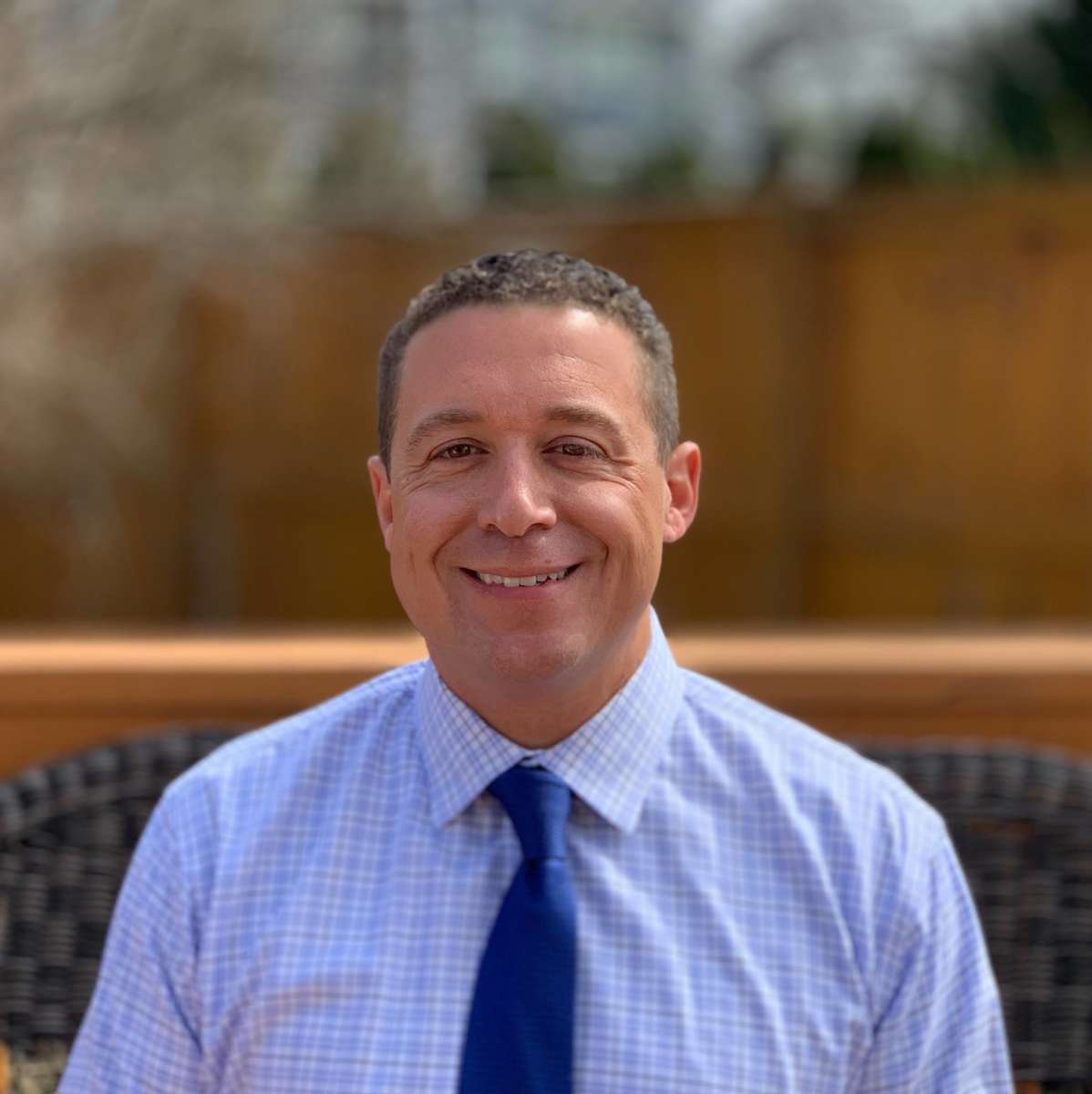
Here is the unedited response from David Priddy:

I am David Priddy and I am one of two candidates endorsed by the Democratic Party (Cristina Diaz-Torres is the other), running for the Arlington County School Board. Like you, I am passionate about achieving a quality 21st-century education for all of our children in Arlington.

I am a native Arlingtonian, and attended Arlington Public Schools (APS): Long Branch Elementary, Thomas Jefferson Middle School, and Wakefield High School. I graduated from James Madison University in 1996 with a degree in History.

With my wife Melanie, we have been following our sons through the APS system as they attend Alice West Fleet Elementary and Thomas Jefferson Middle School. Through coaching basketball, baseball, and soccer, I also have an appreciation of the rich sports programs available to our children. As part of my commitment to all parents and children in Arlington, I have had the opportunity to serve on various local committees and organizations. This has given me greater insight into the concerns of the Arlington community as a whole.

As a product of Arlington County Public Schools, I am pleased to see my children benefit from a quality education here. I have had the privilege of growing up in Arlington, and raising my family here has given me a front-row seat to four decades of positive changes, as well as to the challenges that Arlington County Schools face.

Here are 5 reasons to vote for me:

  1. With one son in Elementary School and one in Middle School, I bring a perspective to the Board that currently is not represented. The policies that are enacted by the School Board affect my sons and their teachers on a daily basis. As a result, I have the ability to see through the lens of the teachers, students, and community. I am passionate about ensuring that my children and all Arlington children have the same positive, enriching, and diverse set of experiences through the APS system that I did. Arlington needs a representative who will listen to the community and bring fresh solutions to continue to provide the best academic environment for our children.
  2. With a professional background in the Vertical Transportation industry managing branches in Burbank, Santa Barbara, and Northern Virginia, I have first-hand experience in managing multi-million dollar budgets, operations, dealing with labor unions, and construction projects. This is much needed experience when dealing with $700 Million budgets and the potential budget shortfalls due to COVID-19.
  3. Equity has been an important issue for this election, and critical part of my platform. I have a four-step action plan to promote and achieve equity listed on my website:
    https://priddyforschoolboard.com
  4. Transparency and accountability are pillars of my campaign. I will bring back the faith and trust in the School Board that the community has lost in recent years by making certain that stakeholder’s voices are heard and valued.
  5. I have served in a variety of community organizations, and recently completed my tenure as the president of TJ Middle School’s PTA. My active engagement with these organizations during these uncertain times caused by COVID-19, ensures that the perspectives of parents, teachers, students and APS staff will be considered as APS makes difficult decisions around the safe return to school.

I would like to serve on the Arlington County Public School Board because I believe we can do better. I’ll help continue to build a stronger foundation for education in our county with greater transparency, a true collaboration with teachers and the community. I would like to help forge the outstanding Arlington School system that awaits us. It is with dedication and humility that I seek one of your two votes for the Arlington County School Board.

Facebook: @priddyforschoolboard
Instagram: @priddyforschoolboard
Twitter: @PriddyAPS


Last week, we invited the three candidates seeking a seat on the Arlington School Board to write a post about why our readers should vote for them in the Nov. 3 general election.

Here is the unedited response from Cristina Diaz-Torres:

Hello, Arlingtonians! I’m Cristina Diaz-Torres, a former teacher and education policy specialist running as one of your two Democratically endorsed candidates for Arlington School Board because I believe all students have a right to succeed — no matter their background, race, ability, family context, language, or legal status.

I began my career as a high school math teacher. Being a teacher was the most rewarding job I’ve ever had. It was also the most challenging. My district faced severe systemic barriers to student success. On my first day of school, I walked into my classroom and saw 54 students but only 48 desks. My students were there to learn math, while our leaders across the state, county, and school district were failing at basic arithmetic. I used my time in the classroom to work with parents, community members, and colleagues to overcome these systemic barriers and improve outcomes for my students.

This is why I’m running for Arlington School Board. I know firsthand that student outcomes improve when all stakeholders have a seat at the table–and I’m running to bring an educator’s voice to the decision-making process.

Since leaving the classroom, I have worked to create more equitable and efficient systems at all levels of government. As an Education Policy Specialist, I work with states, districts, and education organizations across the country to create evidence-based systems that meet the needs of all students, no matter the circumstances. Over the last few years, this work has included helping educators from my home island of Puerto Rico get back to school in the aftermath of Hurricane Maria; conducting landscape scans to support social and emotional learning across the state of Delaware, and, most recently, helping states rethink education in the context of COVID-19.  

The ongoing pandemic has unearthed systemic challenges that have long plagued APS–and leaves our community wading through uncharted territory without a specific roadmap to guide us to better outcomes. We must interpret this crisis as a call to action! Now is the time to build a collaborative framework for governing education that gives voice and power to all community stakeholders so that we can adapt and build back a better, more equitable Arlington Public Schools. We’ll do this by focusing on:

  • Equity: We must make every decision based on this promise: all students have a right to succeed no matter their race, gender, background, learning or physical ability, family situation, legal status, or zip code. Our budgets must afford educators the resources necessary to prepare students to thrive in college, career, and life.
  • Improved & Transparent Data: We must improve how APS collects, analyzes, and shares data–ensuring the process is more transparent, provide action-ready insights, and is accessible to all stakeholders. APS must dismantle data silos by connecting the dots that show inequities and inefficiencies wherever they are.
  • Supporting our Educators: We must support teacher-driven, evidence-based professional development, and advocate for competitive compensation that allows our staff to live in the community where they work. Interest-Based Bargaining can empower education professionals to advance the needs of all students in every Arlington classroom.

If elected to the Arlington School Board, I will rely on these core principles and work with all of you to develop a more community-appropriate, equitable, and adaptable public school system. To read more about my vision for APS, visit my website www.cristinaforarlington.com or follow me on Facebook and Twitter. I am asking you to vote for me and my other Democratically-endorsed colleague, David Priddy, on November 3rd.


Last week, we invited the two candidates seeking a seat on the Arlington County Board to write a post on why our readers should vote for them in the Nov. 3 general election.

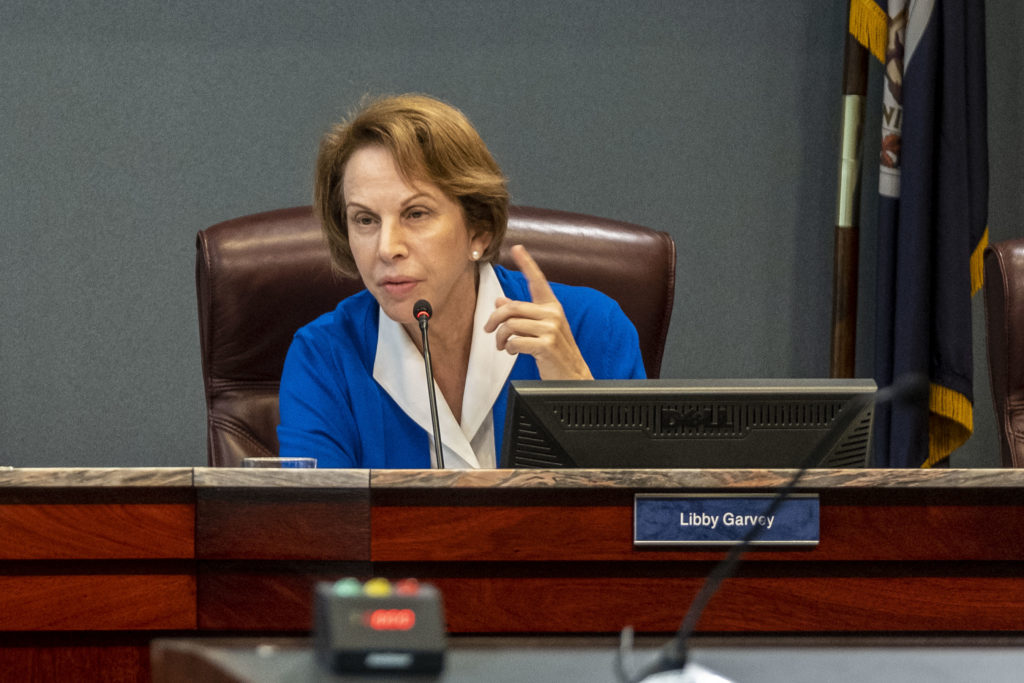
Here is the unedited response from the Arlington County Board Chair and Democratic incumbent Libby Garvey.

I appreciate the opportunity to say why ArlNow readers should vote for me.  Strong, experienced leadership is always important, but during the difficult year ahead as we move through the pandemic into recovery, it is more important than ever to have good leadership on the County Board.  I am the candidate most able to provide that leadership.

During the 15 years I served on the School Board I focused on equity and helped close the achievement gap by over 50%. I focused on wise spending and helped renovate or build new almost every school building in Arlington on time and on budget, including the first LEED certified school building in Virginia.

In my 8 years on the County Board, I have continued to focus on equity, wise spending and the environment.   I have helped  increase support for affordable housing and programs for our elderly residents so they can stay in their homes and stay part of our community.  I’m proud the Board adopted an equity resolution last year and hired our first chief equity officer this year. The planet and our own environment have always been a focus for me.  I have helped improve parks throughout the County and support their maintenance and protection.  We adopted our Community Energy Plan last year, setting a goal for 100% of our electricity coming from renewable sources.  We are well on track to meet that goal.  This past March we joined the global Biophilic Cities network which fosters connections with nature.

Since my time on the School Board, I have continued to focus on wise spending, halting unwise projects like the streetcar and the too-expensive aquatics center which was redesigned and now is being built within budget. I helped bring in project management practices that ensure against cost overruns. I helped bring Amazon HQ2 here with conditions that are very favorable for Arlington.

Having come to Arlington in 1977, raised two daughters and now with grandchildren growing up in Arlington, my roots are deep in our community.  Nevertheless, while I helped build the Arlington we have today and know our community pretty well, I continue to learn new things every day. It is one of the many things I love about my job.

Another thing I love is how I am able to use the regional networks I’ve built over the years to help Arlington. The pandemic has shown everyone how very interdependent we are across Northern Virginia, Maryland and DC. Over the next year or two, we will need to work even more closely with businesses and our regional colleagues to recover in a way that leaves us stronger, more equitable and more resilient than before.

This year, as Chair of the County Board, I often found myself thankful for the years of experience I could draw on to help lead our County through one of the most difficult years I think any of us can remember. Looking forward to the next 4 years, I believe the focus area themes of equity, innovation, and resilience that I set out in January will continue to serve us well.

It has been an honor and a privilege to serve you.  My lifetime of experience, relationships, values, and commitment will continue to serve you well as we face an uncertain future.

I hope I will have your vote and support so I can continue to work on the County Board to make Arlington a community where everyone can thrive.

For more information about my service and positions go to libbygarvey.com.


Last week, we invited the two candidates seeking a seat on the Arlington County Board to write a post on why our readers should vote for them in the Nov. 3 general election.

Here is the unedited response from independent candidate Audrey Clement.

I’m Audrey Clement, the Independent candidate for Arlington County Board. As a 16-year Westover resident and long-time civic activist who serves on the Transportation Commission, I’m running because Arlington deserves better.

My opponent, long-time incumbent Libby Garvey, has promoted harmful policies resulting in overcrowded schools, congested streets, massive tree removal on public property, gentrification, and most importantly, a ten year average annual real estate tax rate increase that at 4 percent is twice the rate of inflation.

Now, she is pushing Missing Middle upzoning, which will inflate land values, hike tax assessments, displace existing residents, and build housing unaffordable to anyone earning less than area median income, which is about $126,000 per year.

The County under Ms. Garvey’s leadership has packaged upzoning as the solution to racial inequality despite the fact that few minorities will qualify for mortgages on upzoned lots. In a recent press release Garvey emphasized the Board’s resolve to address “historic and ongoing patterns of discrimination,” implying that homeowners in predominantly white, single family neighborhoods are racist. Yet the County has produced no evidence to support that contention.

Meanwhile the chair and executive director of Alliance for Housing Solutions (AHS), Arlington’s principal advocate for upzoning, own homes in Arlington assessed at over $1 million. Thus they stand to profit from the densification of their neighborhoods. It also appears that newly elected County Board member Takis Karantonis, who serves as vice-chair of AHS, has a serious conflict of interest, which Garvey herself denies.

The County’s COVID response has also been uneven: too little funding to deal with an impending eviction crisis, no guaranteed child care for essential workers, and adoption of a sidewalk ordinance to prevent congregating near bars and restaurants that was unfair to Clarendon business owners and ultimately repealed.

Ms. Garvey has also embraced a plan to change the Arlington logo, which she indicates must go because it depicts the Greek columns of the former Lee mansion at Arlington House.  No matter that Greek columns are ubiquitous throughout the South and that much more pressing issues confront people of color than cultural symbols.

For example, the Black student achievement is wide and growing, with Black high school student pass rates more than 20 percentage points below their White counterparts throughout the County. Focused on symbolic solutions to racial injustice, County officials’ efforts to address the achievement gap have clearly failed.

If elected, I plan to:

  • Act sensibly to curtail COVID spread.
  • Oppose upzoning and displacement of existing homeowners.
  • Seek immediate relief for all taxpayers.
  • Say YES to real social justice reforms and NO to symbolic gestures.

If you share my agenda, then:

  • Visit my website at AudreyClement.com
  • Support my candidacy, and
  • Donate to my campaign.

Together we can make the “Arlington Way” more than an empty phrase.


Tomorrow is Halloween, and this year’s edition is coming complete with a blue moon.

But the real scare of the weekend comes early Sunday morning, when Daylight Saving Time ends, leading to a 5:07 p.m. sunset that night.

On the plus side, those without young kids will gain an extra hour of sleep. Just make sure to check your smoke detectors and be extra careful on local roads and trails.

Here are the most-read ARLnow articles of the past week:

  1. Arlington Question Stumps Jeopardy Contestants (Oct. 23)
  2. Widespread Power Outages in Arlington, McLean and Falls Church
  3. Task Force Reveals Possible New Names for Lee Highway
  4. APS Return to School Plan Hits Snag
  5. Early Work Underway for New Harris Teeter, Apartments in Ballston
  6. ‘The Lot’ Owners to Open Pop-up in Former Clarendon Ballroom Space
  7. South Arlington Vintage Market Goes Viral On TikTok
  8. A Majority of APS Teachers Prefer Remote Teaching for Now
  9. Morning Notes (Oct. 26)
  10. Morning Poll: Are You Willing to Eat Inside a Restaurant Yet?
  11. Teen Facing Charges After Crash Involving Stolen Vehicle
  12. Courthouse ‘Landmark Block’ Development Under Review, Meetings to Come

Feel free to discuss any of the above, or other topics of local interest, in the comments. Have a nice weekend!


Ed Talk is a biweekly opinion column. The views expressed are solely the author’s.

To paraphrase The La’s, “There they go! There they go again!”

APS has again embarked on an elementary boundary process that dismisses student demographics, one of the six guiding principles in APS’ boundary policy. This isn’t surprising. But it is disheartening that APS’ new Chief Diversity, Equity, and Inclusion Officer (CDEIO), Arron Gregory, supports APS’ approach.

Mr. Gregory explains that “diversity” comes from our differences in culture, heritage, and upbringing. At the same time, he states that we need to shift our focus from the free- and reduced- lunch (FRL) aspect of diversity to the programs and services APS offers because “free- and reduced lunch is not going to create diversity within our schools,” that we can have diversity in any school because it is “about our thought process (and) cognitive diversity.”

Mr. Gregory reasserts Arlington’s long-standing “separate but equal” approach – or in today’s parlance, “separate but equitable.” There is just one problem with Mr. Gregory’s argument: the FRL aspect is precisely what produces the “cognitive diversity” he wants to focus on.

Like it or not, economic status is highly correlated with race in our society and in Arlington. It is the economic part of diversity that is critical to achieving the equity Mr. Gregory and APS profess is at the forefront of their decision-making. Since race legally cannot be used as criteria in designating school boundaries, FRL is our primary measure of diversity and is the logical and practical aspect on which to focus.

He is right that boundaries are but one in a series of steps toward equity. The problem is, APS is not actually using the boundary process to affect equity in our schools. Ignoring student demographics, or FRL eligibility, is misguided for several reasons:

  1. It hasn’t worked so far. Arlington’s high FRL schools have had highly qualified teachers and extra resources for years; yet the disparities in students’ opportunities, achievement, and experiences relative to those of students in low FRL schools has persisted;
  2. It runs counter to decades of social science research demonstrating that disparities are more effectively narrowed by providing economically diverse learning environments than by increasing investment and resources in high-poverty schools.
  3. It completely disregards so-termed “social capital” that enables true equity.
  4. It is shortsighted and does not consider the implications for disadvantaged students beyond their APS years.

Been there done that

Arlington has maintained a district of high- and low-FRL schools for decades, focusing on programs and services. My children attended one of Arlington’s highest FRL elementary schools and now attend high-FRL middle and high schools. I can attest to the high quality teaching that goes on in these schools and have seen the valuable extra resources and supports that these schools provide. Yet achievement and opportunity gaps persist. Vast disparities in the academic and social enrichment PTAs are able to provide remain. Those high-FRL schools continue to be disparaged and avoided by many in our community.

(more…)


Health Matters is a biweekly opinion column. The views expressed are solely the author’s.

Holiday season is fast approaching, and millions of people are weighing the risks of air travel versus staying home. The decision is intensified by the fact that many have not seen family for almost a year, and driving long distance just isn’t an option.

While the thought of being confined in a small space with strangers for hours is daunting, recent studies have suggested that flying may not be as dangerous for COVID-19 spread as once thought, and that cabin air may in fact be cleaner than air in hospitals.

This idea that flying may be safer than the hospital or supermarket is an idea airline companies are extolling and fervently proclaiming to all willing to listen. The airline industry has been among the hardest hit by COVID, with travel dramatically declined compared to 2019.

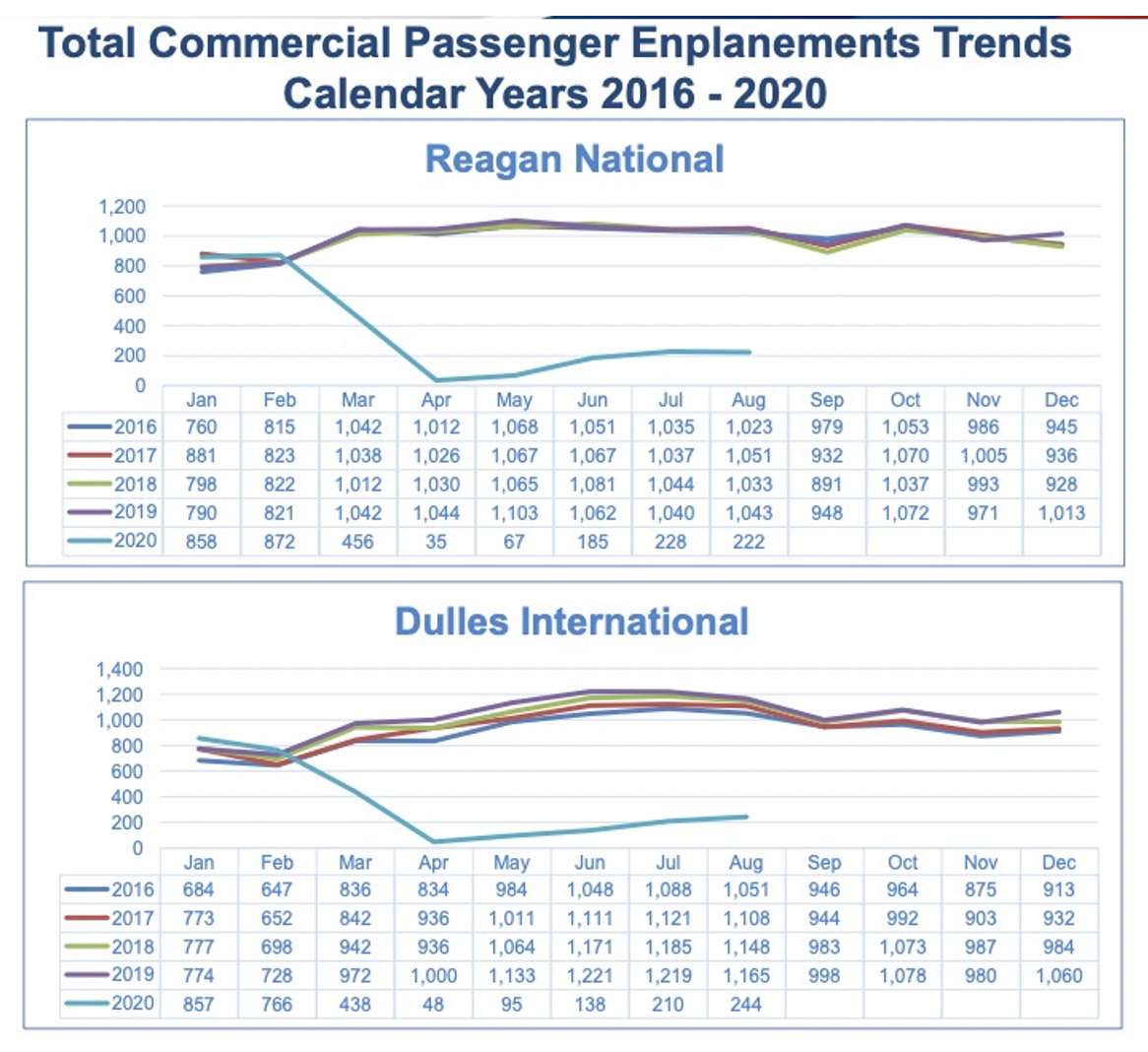
For Reagan National and Dulles International, domestic commercial passenger activity was down nearly 80% this August compared to August 2019. The airliners message of safety seems to be resonating, as the most recent data from Metropolitan Washington Airports Authority shows that the number of domestic passengers has more than tripled at Reagan and more than doubled at Dulles, after bottoming out in April.

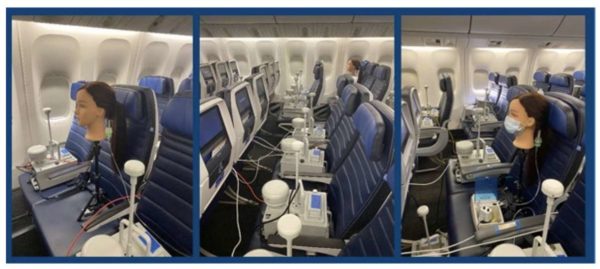
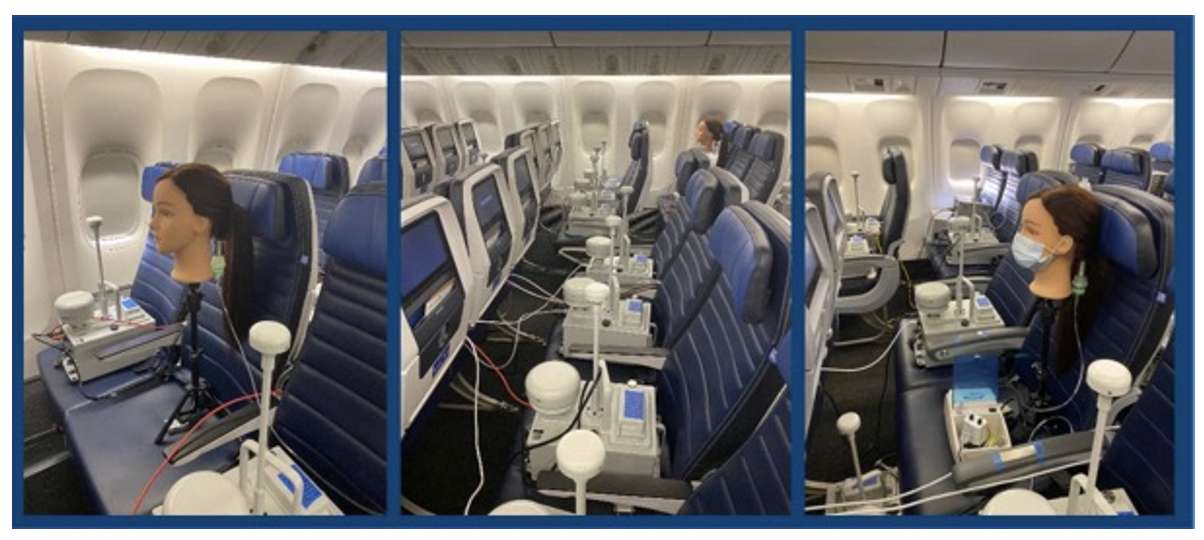
The airlines have put in substantial effort to research airplane safety, and perhaps the most convincing study sponsored by United Airlines was just released, albeit not peer-reviewed. Using human-like mannequins and high-tech particle counters in proximity to simulated sick passengers, researchers concluded that the risk of aerosol viral dispersion is reduced 99.7% due to high air exchange rates, HEPA-filtered recirculation and downward ventilation.

High air exchange rates means the entire volume of cabin air is replaced every three minutes, with 75% coming from outside the plane and 25% recirculated after going through HEPA filters. While ventilation system is running, air travels from the ceiling to the floor, reducing risk of horizontal transmission. In other words, risk of transmission is highest if the infected passenger is in the same row, and much lower in the rows ahead and behind.

(more…)


Modern Mobility is a biweekly opinion column. The views expressed are solely the author’s.

(Updated at 9:25 p.m.) Enforcement of traffic laws is one of the key pillars to safety on our streets. No matter how well-engineered our streets are to encourage good behavior, if people are able to blow through red lights or exceed a safe speed with their vehicle, our streets will never be safe.

Unfortunately, our current methods of doing traffic enforcement bring their own set of problems. Police forces that are already struggling with staffing levels see traffic enforcement as a low priority making enforcement rare and sporadic, and traffic stops have proven to be the #1 pretext for harassment of black people. Automating enforcement of common traffic violations like speeding, running red lights and running stop signs can both improve safety on our streets for everyone, remove potential bias and reduce unnecessary encounters between residents and armed police officers.

Problems with the Status Quo

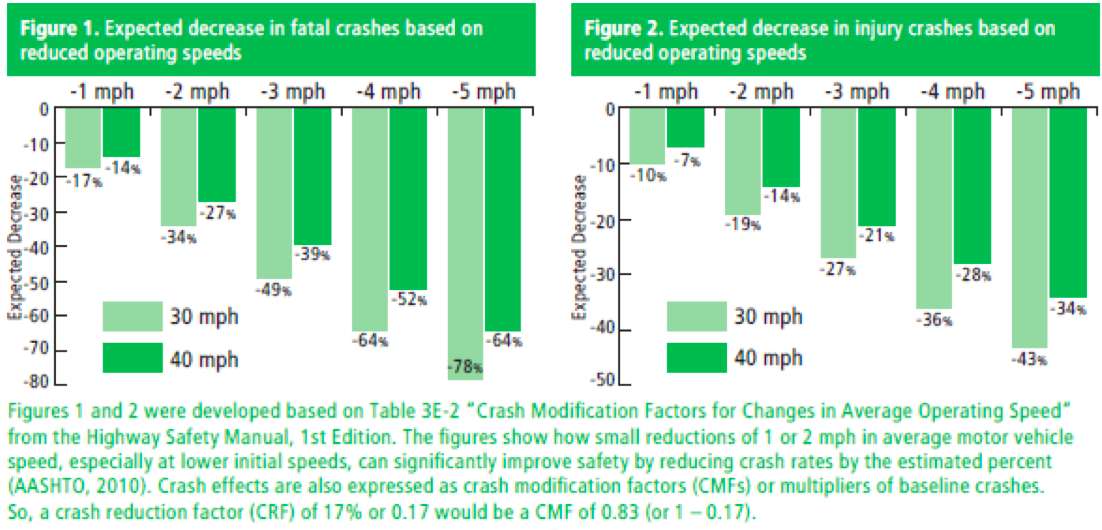
Street safety is a major concern in Arlington. A quick look at Arlington’s Vision Zero map (submissions accepted through Friday) shows concerns all around the county, including many concerns about speeding. The old adage, “Speed Kills” is truer than many people realize. Even a small 2mph decrease in average vehicular speed can result in as much as a 34% reduction in fatal crashes.

While local data seems lacking here, nationwide the injuries and fatalities that result from this lack of enforcement fall primarily on low-income and non-white households. Low income pedestrians are 2x as likely to be killed while walking as high income pedestrians. Even adjusting for population, non-white pedestrians in Virginian are 46% more likely to be killed while walking than white pedestrians.

Advantages of Automation

Automated enforcement could provide the kind of constant feedback that is necessary to change behavior. Research on behavior change has shown that feedback must be swift, certain and fair. Our existing enforcement is far from certain, and there are legitimate questions in our community about whether our traffic laws are being enforced fairly. Currently a tiny percentage of speeders, stop sign runners and red light runners get caught. This lack of certainty in enforcement causes it to generally fail to cause behavior change. Automated enforcement could ensure that a much higher percentage of these infractions are caught and issued a fine, leading to fewer people committing these unsafe infractions. Chicago’s DOT, for instance, recently reported that 92.7% of drivers ticketed for speeding in school zones in 2019 didn’t receive a second ticket.

(more…)


Community Matters is a biweekly opinion column. The views expressed are solely the author’s.

In the 1985 version of “Brewster’s Millions” starring Richard Pryor and John Candy, Pryor inherits $300 million, but as a condition of accepting it he has to spend $30 million in 30 days.

As a way to spend the money quickly he jumps into a divisive political campaign for Mayor of New York City, but then encourages everyone to vote for “None of the Above” as he says none of the candidates are worthy of being elected. He withdraws his candidacy, and voters end up choosing “None of the Above,” forcing a new election.

In 2016, 25% of voters said they did not vote because they didn’t like the candidates or the issues. Other reasons include feeling like their vote won’t matter and not knowing the issues well enough.

Many of us were raised to believe that voting is a right and a responsibility, and teach our children the same lesson. Yet nearly half of the nation’s eligible voters, approximately 92 million, hardly ever vote. In Arlington, we have an especially high voter turnout, with goals of 90% this year, but who are the people who don’t vote?

Non-voters are diverse. Stephen Hawkins, More in Common’s global director of research noted that, “the Disengaged would look like a Greyhound Bus Station. There are right racists and black inner-city low-income folks.” Vote Like A Woman has focused their strategy around the fact that 1 out of 3 eligible women are not registered and 53% of chronic non-voters are women.

The solution may be complicated. A February 2020 Politico article highlighted the results of the Knight study, which “indicates that voting is a social behavior and that any effort to mobilize a significant number of chronic non-voters will require complex, long-term interventions and a more nuanced understanding of this poorly understood portion of our electorate.”

Political campaigns tend to focus their resources on frequent voters due to limited time and money, therefore exacerbating the feeling of “being left out” and discouraging many from voting. Vote Like a Woman’s strategy is to engage women both 1:1 and in groups, strive for creativity in reaching nonvoters, and be honest about our current political systems.

Voting is a function of several factors, and maybe we will never reach 100%, but we can become a stronger community by listening and attempting to address the concerns of non-voters. They may have a valuable perspective just by virtue of them being non-voters that could make our community even more inclusive, and help us reform our own local political system.

Tomorrow night I am bringing together Dr. Stephen J. Farnsworth, Director of the Center for Leadership and Media Studies at the University of Mary Washington; clinical psychologist Dr. Linda McGhee; and racial and gender justice organizer Krystal Leaphart to talk about how we can encourage more people to vote. Moderated by educator, consultant and radio host Kevin E. Boston-Hill, this session will also provide strategies to have these critical conversations. You can join this discussion “None of the Above” on Wednesday, October 28 at 6 p.m. on Facebook.

As of October 24, Arlington had surpassed 80,000 votes out of 178,532 registered voters, so we are well on our way to record turnout. It’s easy for us to laud ourselves for doing our civic duty and being responsible. Chances are we feel heard, engaged, and valued. In “Brewster’s Millions,” Pryor’s character tapped into a sentiment by addressing it head on. In Arlington, let’s boldly confront the issues that our nonvoters have and do more to listen to those who believe “None of the Above” is their only choice.

Krysta Jones has lived in Arlington since 2004 and is active in local politics and civic life. This column is in no way associated with or represents any person, government, organization or body — except Krysta herself.



View More Stories