
Peter’s Take is a weekly opinion column. The views and opinions expressed in this column are those of the author and do not necessarily reflect the views of ARLnow.com

A new community group has formed to support restorative justice policies in Arlington.

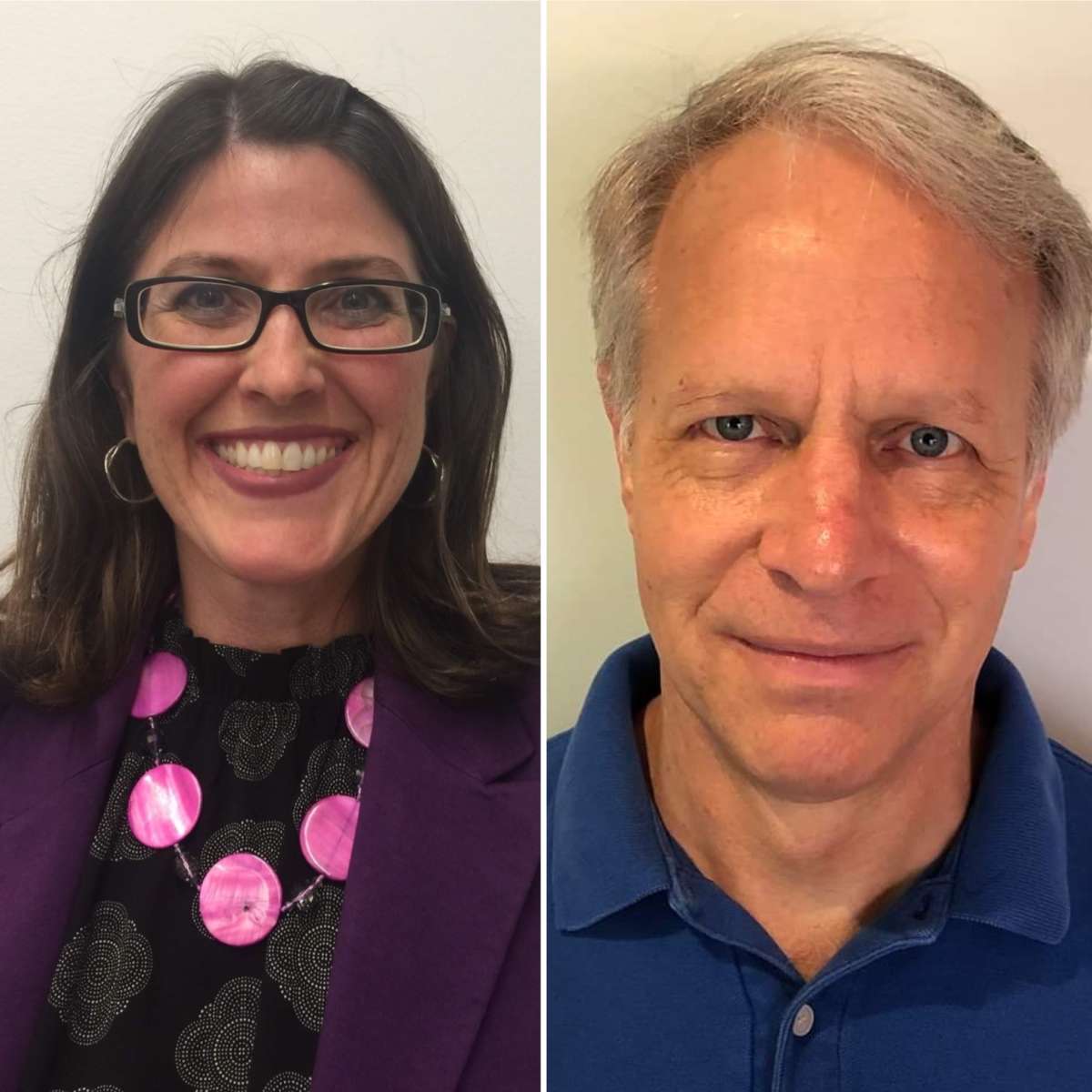
The group, Arlington Advocates for Restorative Justice (“AARJ”), will sponsor a virtual public panel discussion on September 9 at 6:00 PM. Two academics renowned for their work studying restorative justice will participate: Thalia González from Occidental College and Carl Stauffer from Eastern Mennonite University.

These panelists will discuss the efficacy of restorative justice in its various applications and imagine, in conjunction with the audience, what a fairer and more just Arlington might look like. You can register here.

What is restorative justice?

Restorative justice (“RJ”) is an approach to wrongdoing that seeks, to the greatest extent possible, to repair or ameliorate harms caused by an offense, through communication and affirmative measures collaboratively agreed upon between those the offense harmed or affected and the offender or offenders.

Since the latter part of the twentieth century, many communities worldwide have incorporated RJ into criminal justice and public education disciplinary systems. Studies show that RJ generally increases victims’ and offenders’ perceptions of fairness, and suggest that its adoption may reduce recidivism.

The criminal justice system in the United States is broken. It is a system that exacts punishment as an end in itself rather than bringing about positive change to address underlying causes of crime and the need for victims, offenders, families, and communities to heal.

The U.S. represents 5% of the world’s population yet incarcerates 25% of its prison inmates; and that’s just the tip of the iceberg. Our schools often fail effectively to help students in their moments of greatest need, instead following disciplinary policies that lead students to drop out rather than helping them change or avoid negative behaviors. And it is often our most oppressed and disadvantaged communities that bear the brunt of the failings of our predominantly “retributive” approach to violations of law and community norms.

We need a paradigm shift in how we deal with wrongdoing.

County’s “Restorative Arlington” initiative

In December 2019, the County Board took an initial step toward creating a “Restorative Arlington” by approving a one-year employee loan from the Annie E. Casey Foundation to the Arlington County Manager’s Office. Liane Rozzell, a Senior Associate at the Foundation and an Arlington resident for 21 years, became the Restorative Justice Project Coordinator. This agreement took effect on January 2 and will expire on December 31, 2020.

(more…)


The Right Note is a weekly opinion column. The views and opinions expressed in the column are those of the author and do not necessarily reflect the views of ARLnow.com.

On November 3rd, Virginians will have the opportunity to vote for a constitutional amendment requiring an independent redistricting commission.

After years of campaigning for it  and eventually passing it through the General Assembly on a bipartisan basis, Democrats across Virginia have reversed course. They are tripping all over themselves looking for an excuse to vote against it. Arlington Democrats rejected the yearslong efforts of Delegate Rip Sullivan and will ask voters to oppose it on their November sample ballot.

Some of us have maintained for quite some time that the idea was a false promise of reform. Map drawing commissioners would not be directly accountable to the voters, and elected officials could shrug off blame if the results from a commission were tilted in favor of one party or the other. Moreover in places like California, “independently” drawn maps do not necessarily result in districts that reflect the makeup of the state. Democrats there successfully pressed for their favored map.

Over the years in Virginia, Democrats suggested Republican opposition to a commission process was political. They argued that a Republican majority in Richmond simply wanted to maintain a partisan advantage. “Politicians want to pick their voters,” they would say.

However, nearly a decade ago a Senate Democrat majority drew the current Virginia Senate lines. They lost the majority under those lines in 2011 and 2015, only to gain it back again in 2019.

House of Delegate Republicans drew most of the current lines (judges redrew some of them prior to the 2019 elections). While the GOP held the majority for much of the decade, including a number of Republicans sitting in seats won by Barack Obama or Hillary Clinton, they lost it in 2019.

Now that Democrats are on the verge of the redistricting commission becoming law, they are claiming the amendment is not quite good enough. In other words, if Democrats defeat it now they can rewrite the proposed amendment and tilt it in their partisan favor since they do not need to rely on Republican majorities controlling the General Assembly in order to pass it.

In the meantime, if they are successful in defeating the amendment the Democrats have the added bonus of being able to draw all the lines themselves without any Republican input. They can lock in General Assembly majorities and safe Congressional seats by picking their voters in 2021.

This politically driven about-face screams hypocrisy of the highest level.

Mark Kelly is a 19-year Arlington resident, former Arlington GOP Chairman and two-time Republican candidate for Arlington County Board.


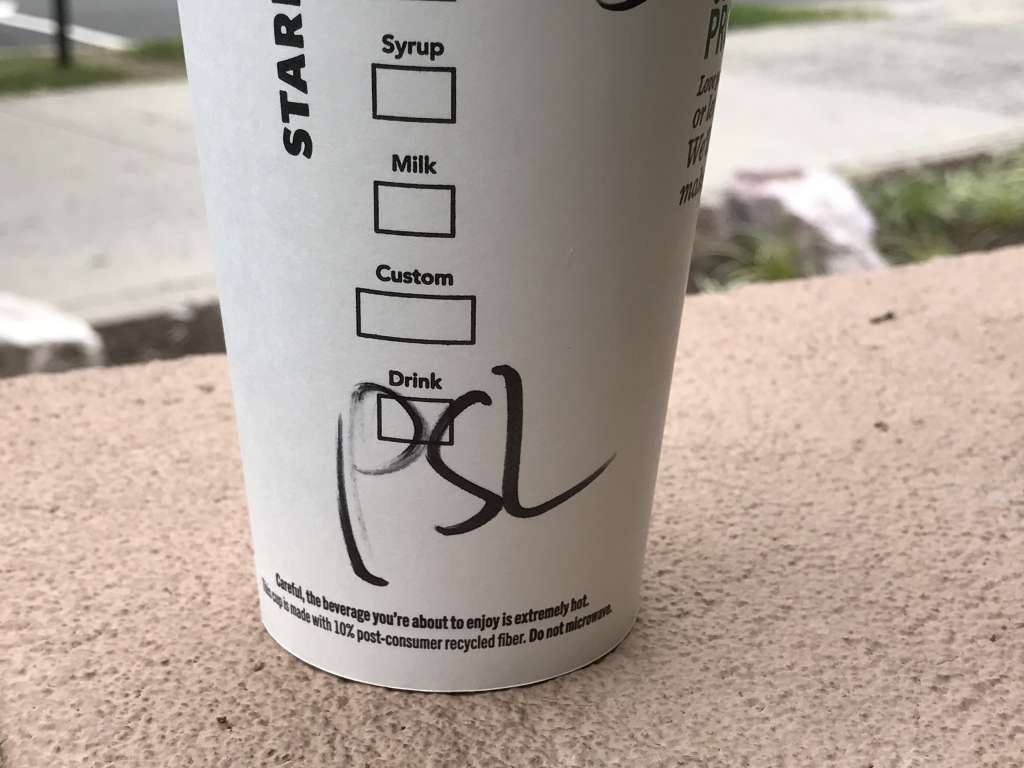
It’s official: the Pumpkin Spice Latte returned to local Starbucks locations today, heralding the imminent arrival of Mr. Autumn Man.

Granted, temperatures today are expected to reach the mid-90s, and the actual calendar start of fall — the Autumnal Equinox — is not for another four weeks. Some people, however, might have their own personal definition of the start of fall.

Maybe the return of the PSL is it for you, in which case fall just started two days before it did last last year.

Or the start of meteorological fall on Sept. 1 may be what you generally consider to be fall.

For many others, it’s the day after Labor Day, the holiday that serves as the “unofficial end of summer” and also marks the closing day for lots of local pools.

Here in Arlington, with a warmer climate than cities to our north, September is usually pretty warm and pleasant, which makes the beginning of October a choice that generally better matches up with the actual weather at the time.

When is your personal start of fall?


Progressive Voice is a bi-weekly opinion column. The views expressed are solely the authors’. 

By Arbora Johnson and Doug Snoeyenbos

The coronavirus pandemic, and the associated impact on every level of the economy, has put a tremendous strain on small businesses in Arlington.

These businesses are the lifeblood of the local economy, and a large part of what makes Arlington and its different neighborhoods so special. They provide goods and services tailored to the needs of our communities. And many are owned and staffed by women, people of color, and immigrants — groups which have been particularly impacted by the pandemic and its economic fallout.

Progressives should do all we can to keep small businesses afloat during these difficult times, and to help them to recover as the economy starts to improve.

The Arlington County Board has taken steps to reduce the economic impact of the virus on local small businesses: providing grants of up to $10,000 to almost 400 Arlington small businesses, waiving signage restrictions to allow more advertising, easing parking regulations to help restaurants provide takeout, and approving Temporary Outdoor Seating Arrangements (TOSAs) so restaurants can provide safe spaces for diners.

Mehmet Osman Coskun, the owner of East West Coffee Wine (in Rosslyn and Clarendon), said that the County’s flexibility on outdoor seating has been especially helpful. His customers are more comfortable outside, where they can maintain safe social distancing. Mostly, though, Mehmet is grateful for the community members who have proven loyal customers. “I love Arlington,” he says, “this County is a special place.”

The Board’s steps are welcome and reflect the type of measures — and flexibility — that should be a permanent part of County leadership’s approach.  But Arlington needs to do more. Businesses across the board are hurting. Ashley and Cuong Vu, owners of Nova Pharmacy in the Dominion Hills neighborhood, have kept their doors open throughout the pandemic but have seen a drastic drop-off in business — with little formal help. They are not looking for a handout, but how about a County program to connect small businesses like them with retirement homes or families in need to provide prescriptions? Like Mehmet, Ashley and Cuong are grateful to their customers and sincerely hope to stay in business but worry for their future.

“We don’t have that many customers,” Cuong said, “but those we do have feel like family.”

Arlington is blessed with many active community groups and highly engaged citizens. Let’s work collectively to support a thriving local economy that works for all. How can we rebuild the economy so that it works for everyone? Are there ways to help small businesses without directly offering government cash — which will be in short supply for a while to come?

(more…)


The weekend is here. That is a phrase that used to mean something, but these days the weekend isn’t as different from the rest of the week.

There’s not as much to do, for one. But more so, it just doesn’t feel as different for those who are working from home. That’s doubly true if you have kids, and the weekend is only a slightly less stressful version of the work week — blending together in a 2020 stew of nonstop activity and frequent anxiety.

Anyhow, here are the most-read articles of the week:

  1. Wakefield Graduate And Former Varsity Quarterback Dies At 20
  2. Arlington Records New Summer Peak in COVID-19 Cases
  3. Arlington’s Charlie Clark Takes County Back to 1959 With Restored 8mm Footage
  4. Police Investigating Armed Robbery at Ballston Gas Station
  5. Police: Drunk, Naked Man Tased Twice on Lee Highway
  6. Arlington Restaurants Participating in ‘Restaurant Week’ Starting Today
  7. Arlington Man Accused of Grabbing Girl
  8. Just Reduced Properties in Arlington
  9. Majority Of Arlington Private Schools Will Make In-Person Return
  10. Sloppy Mama’s BBQ Starts Serving Breakfast
  11. Ballston &pizza Open Again, But More Closures Coming for ‘Operational Changes’
  12. Neighborhood Spotlight: 5 Great Spots for Brunch, Drinks and More

Feel free to discuss those stories or anything else of local interest in the comments. Have a nice weekend!

Photo courtesy Peter Roof/Alt Gobo MediaWorks


Ed Talk is a biweekly opinion column. The views expressed are solely the author’s.

News articles and social media chatter are inundated with information and discussion about back-to-school plans for this fall.

Arlington Public Schools has decided that all students will begin the 2020-2021 school year virtually. Teachers have spent much of their summer vacation working to convert their in-class instruction to virtual formats and are “heading back to the classroom” next week for training and final preparations to begin the year.

Most reports and discussions focus on such issues as the safety or logistics of returning to the classroom, the quality of virtual instruction, and screen time. One will also find frequent expressions of concern about the socioemotional well-being of students, yet one will struggle to find many specific ideas for addressing students’ social needs outside the virtual classroom or the role extracurricular clubs can play despite school buildings being closed.

Fortunately, sports leagues have made decisions regarding organized athletics and APS is currently considering guidelines for other extracurricular clubs and student activities. How — or if — a club will proceed likely depends upon the nature of the club as well as the determination of the club leaders to make it happen. Knowing that teachers — who comprise the majority of club sponsors — are rightfully focused on planning and training for the virtual classroom, parents and students could use this time to turn their attention toward ways to adapt clubs for a socially distanced school year. Students may have some of the best and most creative ideas as to how to transform their traditional group into an active, community-strengthening, pandemic-era extracurricular activity.

This new environment may provide an opportunity for community organizations or private business enterprises to become more involved in schools or for individual families to form groups among themselves for their own children. However, it is important to continue offering accessible, free, school-based extracurricular opportunities for students. Organized sports are a primary driver of school pride; but extracurricular clubs and activities expand the number of students engaged outside the classroom. They bring students together, build friendships, form memories, spark passions and careers, and help shape the school community’s character, spirit, and sense of school pride.

Given the likelihood that any club or activity will begin the year virtually like everything else, this is the perfect time to take inventory of existing clubs at each school, begin visioning how these groups will function this coming year, and consider potential new groups.

If there are clubs at one school that do not exist at another, consideration should be given to opening membership to students at other schools where a similar club may not be offered and how those students can continue to participate upon returning to an in-person school schedule. Merging clubs from different schools can foster a broader sense of community. Joining forces may increase participation or even strengthen the impact of some clubs such as those with a community service or environmental focus. At the same time, opening membership or joining forces can help chip away a bit of the opportunity disparities across the district.

It is often left to students to recruit members and solicit a sponsor to create a club. To ensure the clubs they are interested in will be offered this coming year students should:

  1. Consider ways to publicize the club and recruit members, appeal to administration and solicit potential teachers to sponsor them;
  2. Think creatively about ways to adapt club activities, meetings, and publicity efforts within a modified format to ensure members are engaged and the club remains active;
  3. Offer and solicit ideas for new clubs or activities.

(more…)


Health Matters is a biweekly opinion column. The views expressed are solely the author’s.

Fourteen years of school and training is needed to become a physician specializing in infectious disease. Yet when it comes to novel treatment for COVID-19, a former crack addict who has made millions selling pillows has as powerful a voice as a doctor.

The race for a cure presents both opportunities and challenges to how we evaluate novel treatments and we are witnessing how drug approval can go awry during a pandemic. As a doctor, it is frustrating and concerning to see so many Americans place their trust in politicians and entrepreneurs over evidence-based medicine. It leaves me wondering if the role of a physician, and science in general, is devalued.

In this case, without adequate scientific backing, President Trump expressed enthusiasm for the Food and Drug Administration (FDA) to approve an experimental botanical extract called oleandrin as a cure to COVID-19. MyPillow CEO Mike Lindell has been the biggest champion for oleandrin, stating “It’s an absolute miracle. I take it every day. I don’t get the virus. I have at least 50 to a 100 of my friends and family. Some that got it, and in two days they’re fine.” No, you’re not reading The Onion or watching a late-night infomercial starting with “from the maker of MyPillow…”

Turns out that Andrew Whitney, executive of oleandrin drug maker Phoenix Biotechnology, enlisted outspoken Trump donor Lindell, who also has financial stake in the company, to speed up approval. Lindell then got HUD Secretary Ben Carson aboard and arranged for a private meeting with Trump in July to tout how oleandrin can cure COVID.

In addition to anecdotal stories, Lindell and Whitney reference a study that suggested oleandrin can inhibit SARS-CoV-2 replication in monkey kidney cells in vitro. However, the study was not peer reviewed, not tested on humans and one of the authors was previously a chairman of Phoenix Biotechnology’s scientific advisory board. To date, there is no peer-reviewed randomized control trial in humans showing efficacy of oleandrin against COVID-19 — it could in fact be lethal — yet members of the administration want it thrust to the masses. Perhaps more concerning than the paucity of science is how easy it was for Lindell to push this product at the highest level.

We have seen this tactic before, in which entrepreneurs push unproven products as if it were a Shark Tank sales pitch in hopes that Trump will urge FDA Commissioner Stephen Hahn to expedite approval. For example, in March, Trump personally urged Hahn to authorize hydroxychloroquine for emergency treatment. The FDA obliged but later rescinded authorization after it was deemed ineffective and could actually cause serious heart arrhythmias.

(more…)


With clear skies and lower temperatures, the past couple of evenings have been downright pleasant outside. Except for one thing: the “bumper crop of mosquitoes” that swarm those venturing outdoors.

Thanks to heavy rains over the past few weeks, mosquitoes have been out in force.

This morning we’re asking: have the mosquitoes kept you inside, or have you continued with your outdoor activities undeterred?

Photo by Егор Камелев on Unsplash


Community Matters is a biweekly opinion column. The views expressed are solely the author’s.

August 2020 marks the centennial of the ratification of the 19th amendment. As we reflect on the courage and tenacity of the suffragists and women’s rights leaders who secured the right to vote for primarily white women, it’s hard not to question the racism (and the sexism) of the movement.

Some argue it is not fair to judge those who lived in a different time using a modern day lens. Yet, there are several examples of those who took the unpopular positions of demanding equal voting rights and integration. Others argue that the white suffragists made strategic and political decisions to not support Black voting rights in order to secure passage of the 19th amendment. Yet, it took another 45 years after the passage of the 19th amendment to pass the Voting Rights Act, and some organizations continued to restrict their membership to whites only.

Arlington has several connections to suffragists and women’s rights activists. Sojourner Truth is well known for being one of the leading abolitionists and Black suffragists. Arlington County Library notes that in 1865, Truth accepted a position with the National Relief Association at Freedmen’s Village in Arlington Heights at the intersection between Columbia Pike and South Joyce Street.

According to a March 2018 Arlington Magazine article, in 1920, Gertrude Crocker, a noted suffragist and treasurer for the National Woman’s Party, opened the Little Tea House on Arlington Ridge Road. In the years that followed, the famed restaurant (which closed in 1963) was one of the first Arlington establishments to allow racially mixed groups to dine together.

While not “suffragists” in the traditional sense, as we commemorate the mission of earning the right to vote for women, it’s important to recognize the work of women who pressed for civil and women’s rights throughout the 20th century.

Arlington native Joan Trumpauer Mulholland, is a Civil Rights icon who participated in over 50 sit-ins and demonstrations by the time she was 23 years old, and happens to be white. For her actions she was disowned by her family, attacked, shot at, cursed at, put on death row and hunted down by the Klan for execution.

Another face of movement was the “colored women’s clubs” which were precursors to Black sororities (my own sorority, Zeta Phi Beta Sorority, Inc. is also celebrating our centennial this year) and organizations like the Links, Inc. and National Coalition of 100 Black women. While Black sororities are social and often host luncheons and galas, we are also professional organizations who all have missions to promote scholarship, service and political/social action. Democratic Vice Presidential pick Kamala Harris is a member of one of the largest Black sororities, Alpha Kappa Alpha Sorority, Inc. and the Links, Inc., whose members have actively supported her throughout her career.

Pauline Ellison moved to Arlington in 1956, at a time when racial segregation was the norm. Ellison served on the Civil Service Commission, the Equal Employment Opportunity Advisory Committee, and the Arlington Community Foundation board of trustees. She was also a national president of The Links, Inc.

Voting rights is only one step towards equality. As you tune into or read some of the  hundreds of webinars, Facebook chats or news articles on the centennial of the passage of the 19th amendment, take some time to reflect on what equality meant on August 26, 1920, and what it means today. While not perfect, Arlington has our own examples of women who refused the status quo. Whether it was as a abolitionist, suffragist and business owner, civil rights activist, or local leader and the president of a Black women’s organization, their courage and tenacity also provides excellent examples of how we can continue the march to true equality in Arlington.

Krysta Jones has lived in Arlington since 2004 and is active in local politics and civic life. This column is in no way associated with or represents any person, government, organization or body — except Krysta herself.


Making Room is a biweekly opinion column. The views expressed are solely the author’s.

My column talks a lot about single-family vs. multi-family homes. But what counts as a family?

The rules that govern who can legally occupy Arlington’s housing have changed to reflect our understanding and acceptance of diverse types of families. But even with significant progress to make our definition of families more inclusive, we have further to go to support the different forms that households take the 21st century.

Arlington’s Zoning Ordinance sets limits on the number of families that can live on a particular lot — what we typically call single-family zoning or multi-family zoning. It also defines what constitutes a family. According to Arlington’s Zoning Ordinance, a family is “an individual, or two or more persons related by blood, marriage or adoption, or under approved foster care” or “a group of not more than four persons (including servants) whether or not related by blood or marriage living together and sharing living areas in a dwelling unit.” So if a group of people is related, they can live together as a family, no matter how people are in the household. But if the group is not related, Arlington limits the household size to four people.

The restrictions placed on families comprised of unrelated people are based on prejudiced assumptions about their character and their impact on the community. This regulation typically targets young people who seek to live together in a single home because presumably they would be dirtier and rowdier than a “traditional” family of two parents and 1.5 kids. It also discriminates again “functional families,” such as two single parents, not in a relationship with each other, cohabitating with their children to share costs and childcare.

Arlington is not alone is viewing households of unrelated people as a nuisance and incompatible with the “character” of a residential neighborhood. However, our country has a long history of restricting people viewed as a nuisance or as lacking character from living equally and openly in our communities.

Until 1968, when the Fair Housing Act was first enacted, it was legal to discriminate against Black Americans, Jewish Americans, or immigrants because you thought these residents would degrade the character of your neighborhood. Until 1974, you could decline to rent or sell your property to a single woman out of a moral concern for women living without a father or husband. Until 1988, you could keep a renter with a disability or a family with children out of your rental property because you thought accommodating them would be a nuisance. Until just this year, it was legal in Virginia to deny housing to a gay, lesbian, or transgender person, because you objected to their sexual orientation or gender identity.

These are all cases where a person or family was view as a nuisance or a detriment to the community’s character based on bigotry or prejudice. Spurred by civil rights movements, the law gradually rejected the basis for discrimination and recognized housing access as an essential component of equality.

The nuclear family is no longer the dominant family type (if it every was), and in the absence of extended family networks, many people look beyond traditional family relationships of blood and marriage to build their lives. Arlington County shouldn’t be in the business of determining which families or households are worthy of living in residential neighborhoods, and it shouldn’t prevent the diverse forms that families take from finding mutual support and affordable housing. As we evaluate the proper density for our neighborhoods, we should also expand our definition of family.

Jane Fiegen Green, an Arlington resident since 2015, proudly rents an apartment in Pentagon City with her family. By day, she is the Membership Director for Food and Water Watch and by night she tries to navigate the Arlington Way. Opinions here are her own.


The countdown to the end of summer is well underway.

Sure, technically fall doesn’t start until Sept. 22, but Labor Day weekend is only three weeks away and the signs heralding fall’s imminent arrival are already here.

Oktoberfest and pumpkin beers are hitting the shelves, and pumpkin spice lattes at Dunkin Donuts are only five days away (you’ll reportedly have to wait until Aug. 25 for the Starbucks version).

Bottom line: enjoy summer while you still can!

Here are the most-read articles from the past week:

  1. Target Now Open in Ballston
  2. Arlington Has Quietly Used Two Local Hotels for Coronavirus Quarantines
  3. Arlington Coronavirus Cases Reach New Summer Peak, Hospitalizations Remain Low
  4. The Pinemoor is Now Open
  5. Sidewalk Crowding Poses Coronavirus Threat, Local Experts Say
  6. APS Plans On Still Paying Staff Who Cannot Telework
  7. Police Searching for Man Who Chased Woman Down the Street in Virginia Square
  8. Taco Bamba is Planning to Open Next Week in Ballston
  9. Clarendon Restaurant Buena Vida Folded Into Downstairs Taco Joint
  10. Police Investigating Shooting in Clarendon

Feel free to discuss those stories or anything else of local interest in the comments. Have a nice weekend!

Flickr pool photo by Eric


View More Stories