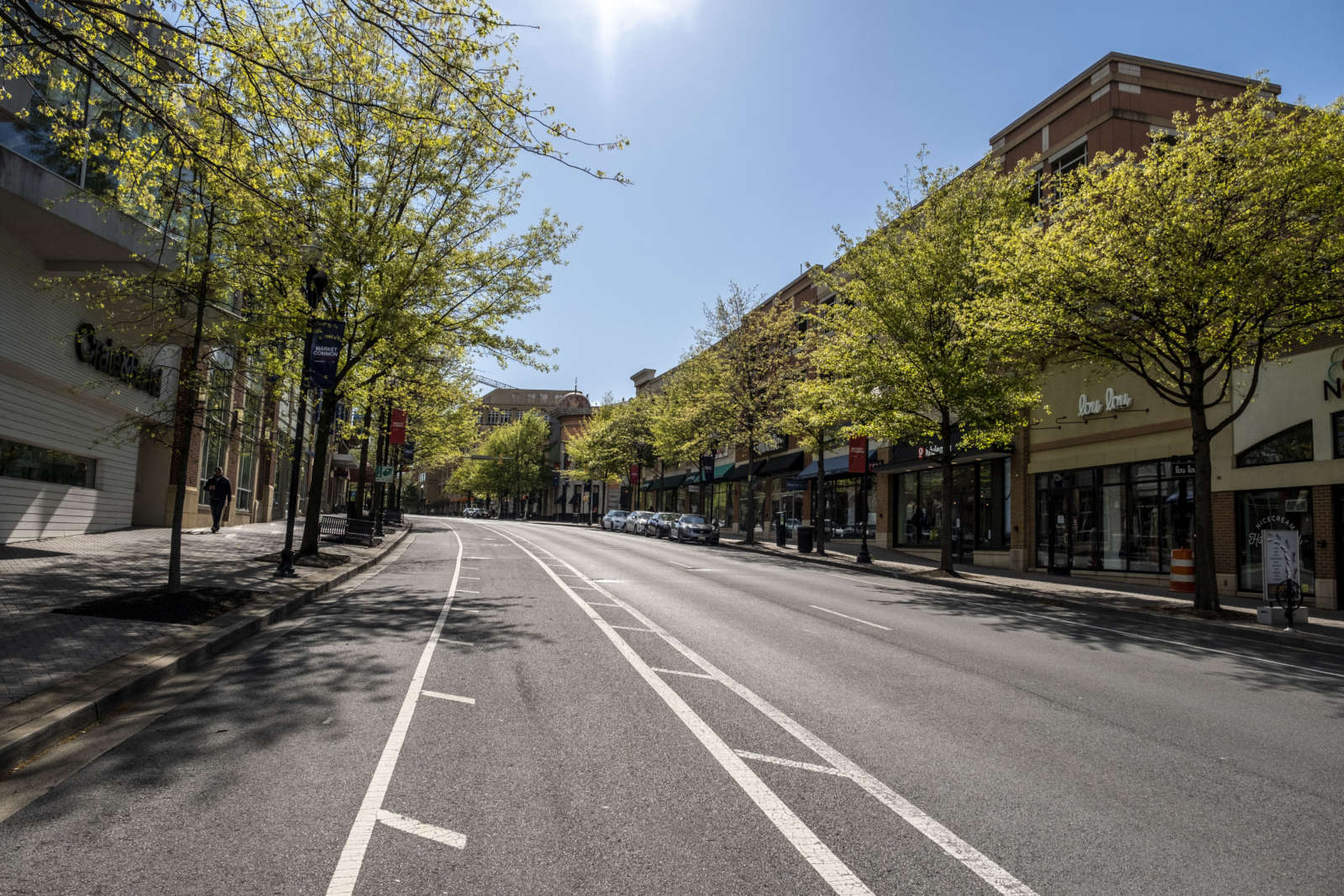
There’s growing evidence that the outdoors are, other than one’s home, the safest place to be during the pandemic.

A study in China revealed that the vast majority of outbreaks reviewed were the result of indoor transmission of the coronavirus. Former FDA commissioner Dr. Scott Gottlieb discussed the findings on social media and on CNBC Thursday.

“I think local governments, state governments should be looking at what activities we can move outside, because things can be done outside,” Gottlieb said. “You want to have religious services, you should think about moving them outside. Gym classes, restaurant tables, anything that we can move outside heading into the warm months I think you’re going to have a safer environment for doing things.”

The coronavirus is a highly contagious and deadly disease that is not going away anytime soon. There are no miracle cures at this point, just ways to slow the spread.

Staying quarantined until a vaccine comes, if a vaccine ever comes, might be necessary for those most at risk — those over 65 and with certain chronic health conditions — but it’s not a viable long-term option for the entire population. Many months of home isolation would likely lead to an economic calamity and, well, human nature seems to suggest that lots of people would eventually rebel against it.

Thus, some level of opening up is coming. As Bill Gates wrote on his blog yesterday:

Most developed countries will be moving into the second phase of the epidemic in the next two months. In one sense, it is easy to describe this next phase. It is semi-normal. People can go out, but not as often, and not to crowded places. Picture restaurants that only seat people at every other table, and airplanes where every middle seat is empty. Schools are open, but you can’t fill a stadium with 70,000 people. People are working some and spending some of their earnings, but not as much as they were before the pandemic. In short, times are abnormal but not as abnormal as during the first phase.

The rules about what is allowed should change gradually so that we can see if the contact level is starting to increase the number of infections. Countries will be able to learn from other countries that have strong testing systems in place to inform them when problems come up.

Urbanists have been calling for closing some streets to cars to allow better social distancing for pedestrians and cyclists for weeks now. So far, Arlington has not responded with any solid plans to do so. But what if closing some streets not only allowed safer outdoor recreation, but boosted local small businesses?

Such a scenario might be possible as the curve bends and growth of new COVID-19 cases goes down.

Imagine Clarendon and Wilson Blvds closed in Clarendon, at least on weekends, allowing restaurants and shops to spread out tables and store shelves while pedestrians strolled in the street — a giant sidewalk cafe. Gyms could get in on the action as well. And that could be repeated in Ballston, Crystal City, Westover, and other business districts.

Sure, you would have to have a way to ensure it doesn’t get too crowded. And those who are not dining should be wearing masks to help prevent spreading disease to others, even if it’s less likely to happen outside. Also, such activity would be weather dependent, labor intensive (for businesses, police and county officials), and wouldn’t necessarily be the salve that keeps restaurants in business through the end of the pandemic, whenever that may be.

But as we discussed around the 40 minute mark of last night’s Zoom chat with local business owner Scott Parker, it could be a start and a source of hope and normalcy.

What do you think?

Peter’s Take is a biweekly opinion column. The views expressed are solely the author’s.

As of April 20, there were 300 officially-reported Virginia statewide coronavirus deaths. By contrast, the annual average Virginia statewide gun violence death toll has been 958.

While the governmental path forward to minimize coronavirus deaths remains uncertain, Virginia has passed a significant number of new common-sense gun safety laws this year. These new laws will help substantially to lower our gun violence death toll from what it would have been without them.

Last week marked the 13th anniversary of the death of 32 students and faculty shot at Virginia Tech.

In 2020, the new Democratic majority in the legislature supported a package of eight major gun-safety laws.

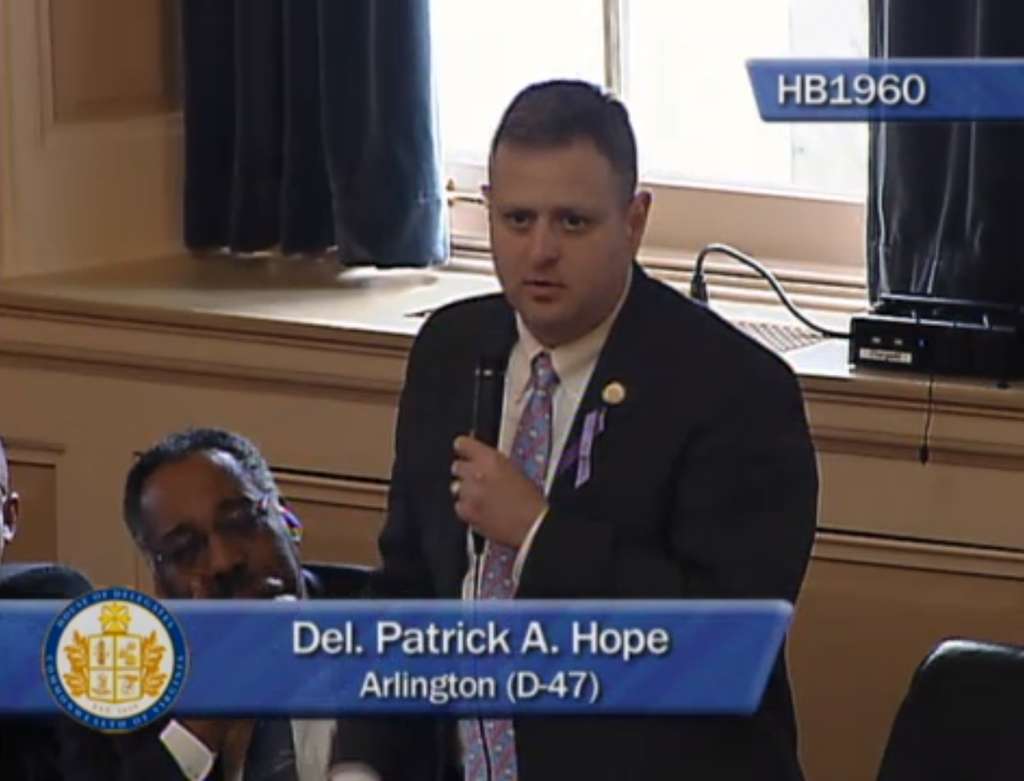
Seven of these narrowly targeted new laws will become effective on July 1. Congratulations to Arlington Delegate Patrick Hope (HD 47) for his leadership on this legislation.

Already enacted

Earlier this month, Virginia enacted these five laws strengthening gun safety:

Background checks

SB 70 requires a background check for any firearm sale. This new law eliminates a prior provision that made background checks of prospective purchasers at firearms shows voluntary (the gun-show loophole).

The vast majority of the American public support laws requiring background checks on all firearms purchases. More than 90% of both gun owners and non-gun owners support this policy. Strong support for background-check laws also has been measured among NRA members, with at least 69% supporting comprehensive background checks.

Red flag provisions

SB 240 creates a legal mechanism enabling law enforcement temporarily to separate a person from their firearms when they represent a danger to themselves or others. Virginia is now among 19 other states and the District of Columbia to enact this type of law.

One handgun a month

SB 69 reinstates Virginia’s one-handgun-a-month law to help curb stockpiling of firearms and trafficking. Laws limiting the number of firearms an individual can purchase per month help reduce the number of guns that end up at the scene of a crime. Virginia used to have a one-gun-a-month law, but repealed that law in 2012 at the request of the NRA.

Lost or stolen firearms

Virginia HB 9 requires gun owners to report their lost or stolen firearms to law enforcement within 48 hours or face a civil penalty.

Children’s access to firearms

Virginia HB 1083 further decreases the chances of children accessing firearms by increasing the penalty for recklessly leaving firearms in their presence.

(more…)


On a Wednesday four weeks ago — which seems like a lifetime ago — Arlington had 36 known cases of COVID-19 and ARLnow conducted an unscientific poll.

Of nearly 2,800 respondents, 0.76% said they had tested positive for COVID, 4.4% said they had COVID-like symptoms, and 11.6% said they had a close personal connection who had tested positive.

It’s now April 22 and as of Tuesday there were 625 known coronavirus cases in Arlington. Let’s conduct the same poll and see (again, unscientifically) where we stand.

Please answer honestly and select the options that apply to you. Note that the typical symptoms of COVID-19 are cough, fever, tiredness and — in more serious cases — difficulty breathing. Loss of taste and smell is also a common symptom.

As before, you should not use this poll response data for policy decision-making — but do use it as a reminder of the importance of social distancing, practicing good hygiene, wearing a face mask when out, and flattening the curve.


The Right Note is a weekly opinion column. The views and opinions expressed in the column are those of the author and do not necessarily reflect the views of ARLnow.com.

Governor Northam has a duty as we move forward to balance this public health emergency with the substantial economic damage being done right now in order to promote the overall health of our Commonwealth. Getting to the other side of this crisis is a true test of leadership for the governor and the Democrats in charge of the General Assembly.

According to modeling, which admittedly has produced projections that regularly overstate the impact of COVID-19 in Virginia when compared to actual data, Virginia is just two days from peak resource use. Daily case increases have plateaued even with increased testing. More people have been discharged from the hospital than are currently being treated. There is no shortage of hospital beds or ventilator capacity. And Virginia’s share of national cases has remained constant. All of this means, what we have done is working in terms of slowing the spread of this coronavirus.

At this point, Governor Northam has not put forward his plan for how Virginia can reopen safely. In the absence of a plan from the governor thus far, here are some general guidelines they could follow:

Recognize Regional Realities. There are areas of the Commonwealth with few if any cases. Those areas can be reopened sooner and in a less restrictive way than the more urban and suburban areas which have seen a higher number of cases. One thing is certain, there are Virginians in rural and economically disadvantaged areas who can ill-afford for employers there to close permanently.

Public Health Response. What protocols can we put in place in areas with the worst outbreaks to do contact tracing or ramp up testing quickly if another surge in cases occurs?

Reasonable Temporary Regulations. Virginia businesses can implement common sense regulations for the next few months or even a year to keep workers safe. Split shifts. Closing common areas. Taking temperatures at the door. Rotating office employees with telework. Spacing in public spaces like movie theaters, mass transit, and restaurants when those can safely reopen.

Return of Restricted Health Care Services. Many medical procedures and tests were halted in the name of preparing for a surge in the need for hospital beds and personal protective equipment. It has delayed health care services to people who need them and put a tremendous financial strain on hospitals, clinics, physicians and even dental practices. It is time to determine how best to lift these restrictions.

Protect Vulnerable Populations. For example, the biggest outbreaks have been in long term care facilities. Restrictions can be put in place to recognize this threat.

Announce Benchmarks for a Return to Normal. The governor should announce what specific data points are necessary to achieve in order for us to move beyond temporary restrictions to the next stages of reopening. By doing so, he can also be held accountable for the progress.

Virginia can get past this crisis. We need Governor Northam to step up to the plate with the plan to help us do it.

Mark Kelly is a long-time Arlington resident, former Arlington GOP Chairman and two-time Republican candidate for Arlington County Board.


Progressive Voice is a bi-weekly opinion column. The views expressed are solely the author’s.

By Scott Matties

In the face of COVID-19’s massive effect on the health, safety and economic welfare of Arlingtonians, our county decision-makers face hard choices as they re-consider the 2021 budget and five-year CIP. Many economic impacts are not yet certain — accurate revenue forecasts, the toll on health and human service needs, and what the future holds when schools and businesses are able to reopen. Emerging needs have been factored into the revised budget proposal, but updates later in the year will likely be necessary.

With these serious and immediate challenges, it is easy to lose focus on long-term community priorities and their need for funding. Both the public and private sectors should do more to improve sustainability as aging buildings and infrastructure are upgraded or replaced. How we bring about this change can be a model for protecting our environment–or not. We have an opportunity now, with the redevelopment of Lee Highway, to put big ideas into action.

One example is stormwater management. The Chesapeake Bay Preservation Act regulations, first implemented in Virginia in 1989, have improved the health of the Bay by focusing on water quality through the collection and treatment of stormwater run-off to reduce pollutants. Arlington’s stormwater management regulations are written, in part, to ensure compliance with this law. These regulations will continue to improve the health of the Bay and our local waterways that feed it.

A more tangible impact on Arlington discussed much of late is flooding. The frequency of very intense storms will continue to impact Arlington due in large part to our inadequate stormwater drainage systems. To address this, we need a new focus on better management of stormwater quantity. It is worth noting that the Virginia regulations related to flood protection identify minimum requirements but do not prohibit local jurisdictions from requiring more.

There are a variety of criteria in the Virginia flood protection regulations, but they generally involve mitigating 2-year and 10-year storm events. The storm that hit our region in July 2019 was a 100-year+ event. The language we use to describe these events should change as it can be misleading. We should shift from colloquial terms like a 100-year storm to what it really means – a 1-in-100 (or 1%) chance of such a storm. Another storm like July 2019 could happen tomorrow. It may be statistically unlikely but it’s time for the public to discuss storms in these terms.

As we plan for the redevelopment of the Lee Highway corridor, how do we address this? Restricting redevelopment is not a realistic approach. Community needs and market pressures are already leading to redevelopment, mostly through by-right proposals meeting only the minimum stormwater requirements.  The commercial core areas of Lee Highway are about 67% impervious, meaning covered by buildings, streets, and parking lots, making effective management of stormwater run-off in these areas very challenging. There is currently no requirement and little incentive for that existing condition to change.

So controlled redevelopment will be an important component of a broad-based plan to better manage stormwater along Lee Highway. Individual redevelopment projects can be required to do more, such as increased on-site stormwater retention and re-use allowing controlled release into the County system. But this must be balanced with the financial burden. This is a complicated and interconnected problem that cannot be solved site-by-site.

Arlington’s government should lead the way to upgrading the antiquated stormwater infrastructure county-wide. The County’s 2019-28 Capital Improvement Plan suggests about $19 million to address stormwater quality but less than $1 million to address stormwater quantity through system upgrades. The County’s current FY 2021 budget proposal appears to improve on that with about $2 million proposed in capital outlay.  However, this does not reflect the sense of urgency felt in the community to get ahead of this issue.

One silver lining in the COVID-19 crisis has been improved air quality worldwide. It is encouraging to see clear evidence that a change in behavior, whether chosen or imposed, can improve our environment.  This is likely temporary so let’s not to get complacent. Let’s use this time to get ahead of the problem and make changes, both in policy and implementation, that can improve our environment for the long term.

Scott Matties AIA LEED-AP is an architect who has lived in Arlington 25 years. He is the current president of the Lee Highway Alliance, a group of citizens, property and business owners that has been working on Lee Highway redevelopment for nine years.


Ed Talk is a biweekly opinion column. The views expressed are solely the author’s.

Last week, Arlington Public Schools revealed its continuous learning plan for the remainder of the academic year. As with all APS decisions, the plan is controversial and parents have been quick to react with criticism.

I initially approached this week’s column intending to discuss the most contentious aspect of the plan. But no matter what APS does or doesn’t do, parents will continue to criticize and debate. So, upon considering the conversations I’ve had, my own reactions, and comments I’ve heard and read, I decided instead to look for some silver linings.

I am in something akin to a “Twilight Zone” episode wherein I find myself in a (literal) stay-at-home mom role with no idea what day of the week it is, a teen and pre-teen inexplicably unenthused and uncooperative with the thoughtful schedule I’ve outlined, a husband able to escape to an office one full day a week, juggling my own paid and volunteer work while trying to consolidate academic expectations from 14 teachers using Canvas (or not) in 14 ways. Maybe it will all come together in time to return the kids to the classroom into the much more capable hands of their teachers?

Meanwhile, as I ignore sibling exchanges and commentaries in response to my nagging about screen time, daring to suggest the kids fill their time by helping out more around the house, I welcome the diversion of some possible positive outcomes from APS’ distance learning plan:

  • Struggling students have a unique opportunity to significantly improve their year-end grades, possibly boosting their self-confidence and maybe becoming a turning point for some.
  • Most students will enjoy the reprieve from the daily stresses of school and the academic pressures and expectations causing significant anxiety and depression.
  • Many will have time and opportunity to pursue self-selected topics and to learn in ways more suited to them than the structured school day and prescribed assignments.
  • Parents have been inspired to become more involved and actively help other school communities in need.
  • APS and PTAs are coordinating with County efforts to supply and manage food distribution programs.
  • New connections between PTAs are being made. A more substantive PTA partnership program may begin to emerge – partnerships that continue beyond the current crisis at hand and that benefit students academically and socially.
  • Partnerships and collaborations taking place now can create a foundation for a countywide network for providing ongoing services and to respond to future crises more efficiently and effectively – reducing time required to coordinate while people wait for the help they need.
  • The move to “distance learning” and APS’ decision not to introduce new curriculum content highlight the disparities and obstacles that exist in our County and schools. With increased awareness of the severity of disparities and all students being directly impacted by APS decisions based on equity issues, perhaps APS and the County will feel more pressure to solve existing problems and devise more creative and collaborative solutions.
  • APS could consider enrichment options and better use of its tiered system of support instruction to compensate for material missed this year and students being expected to learn more information more quickly next year.
  • APS has renewed reason to evaluate whether its 1:1 digital device initiative is the best model or if there is a more equitable model for designing instruction that better facilitates the allocation of devices and resources, ensures every student has access to a working device at home, and allows students to be taught new material via distance learning when necessary for any reason.
  • Maybe my kids will learn to cook — or at least feed the dog.

(more…)


The Hurtt Locker is a biweekly opinion column. The views expressed are solely the author’s.

As governments at every level react (and sometimes overreact) to the ongoing COVID-19 situation, other institutions across society have risen to the occasion to fill in the gaps and confront the unintended consequences of shutting down the economy to address the present situation.

Across society, we observe four key institutions working in concert (and sometimes at odds) with one another: business, community, education, and government.

These institutions are the stable and lasting structures that guide how people interact with one another in society. Over time, they’ve evolved as society progresses through human action and cooperation.

Advocates of limiting the institution of government seek to empower and embolden the other three institutions to assume their proper roles in our society, allowing them to address pressing issues that affect our quality of life. When these institutions work in harmony with one another, our quality of life improves. When these institutions ignore their proper roles or act in bad faith, human progress is diminished, and vulnerable people are left behind.

Those who advocate for empowering business, community, and education might ask, “What if government didn’t do that?” in response to any number of activities that fall outside the proper role of government.  A common misconception from my friends who advocate for more government involvement in our lives is that if government didn’t do [insert activity here], then it wouldn’t get done at all.

That’s simply not the case. Let’s take a look at a few examples where business, community, and education have stepped up where government has missed the mark in the last few weeks:

Business

Businesses should use principled entrepreneurship to create products and services that not only improve their customers’ lives but society as a whole. When possible, they should also inspire their employees to create value for others outside of business.

Most non-essential businesses have closed across Arlington and Virginia for the foreseeable future, leaving hundreds of thousands without work and struggling to make ends meet. Thousands of small businesses will likely never re-open. But Virginia technology entrepreneur Pete Snyder and his wife Burson, with the help of business leaders across the Commonwealth, launched the Virginia 30 Day Fund to help small businesses stay afloat during these challenging times.

The money raised by business leaders and entrepreneurs through this fund are dispersed directly to small businesses and do not need to be repaid. Businesses who benefit from assistance from the 30 Day Fund are encouraged to “pay it forward” at a later date to another Virginia small business in need of assistance.

This is just one example of the institution of business flexing its muscle and stepping in to fill the gaps created by the economic shutdown. There are countless instances of business innovation in response to the COVID-19 situation across Virginia. Silverback Distillery, based near Charlottesville and owned by Congressman Denver Riggleman and his wife Christine, switched part of their production from liquor to hand sanitizer to provide to hospitals, first responders, and medical personnel.

(more…)


Modern Mobility is a biweekly opinion column. The views expressed are solely the author’s.

Back in January, I kicked off this series looking at the Pike Premium Transit Network.

This is the year that the Columbia Pike Streetcar was supposed to start running; since many folks claimed that a “Modern BRT” system could be implemented more quickly than a Streetcar, I’m examining how far we’ve come in that implementation compared to what was envisioned.

If you need a refresher, take a look back at Part 1. Here in Part 2, I’ll be looking at the key features related to improving travel time. Future installments will examine convenience, dependability and capacity features.

Fare Collection

One of the slowest and most frustrating parts of riding the bus is waiting in line to get on the bus while everyone pays their fare. Our BRT system is supposed to avoid this using “off-vehicle fare collection”, which moves that fare-payment activity to occur at the bus stop instead of on the bus. There are many ways to do this, the simplest of which is a “proof of payment” system where people pay at the bus stop, and are given a receipt. Fare enforcement officers ride the bus throughout the day and can ask to see a passenger’s receipt. If they don’t have one, they are ticketed for fare evasion.

Arlington appears to be working to make off-board fare collection happen on Columbia Pike, but has been stymied by a lack of progress at WMATA. With the majority of bus service on the Pike run by WMATA and with the importance to riders of a functioning regional fare system that allows a seamless transfer between providers, WMATA is at the center of any progress on off-board fare. Unfortunately, WMATA declared it’s “Next Generation Fare Pilot” a failure in 2016 and has made little progress in moving off the SmarTrip platform since.

Being saddled with 1990s-era fare technology make implementing off-board fare collection technically possible, but extremely challenging requiring numerous workarounds and potentially investing millions of dollars in fare infrastructure that could then become obsolete within a couple years when WMATA finally moves forward on a new regional fare system.

Arlington could try to go its own way on this, or potentially in partnership with other Northern Virginia jurisdictions in the same way that VRE has created its own mobile ticketing app. Unfortunately, without a link to SmarTrip, users wouldn’t get a transfer discount when connecting from a Columbia Pike bus to MetroRail.

The Northern Virginia Transportation Commission and the business community have been trying to push WMATA forward on this, with limited success so far — the Federal City Council did a feasibility study for off-board payment on Metrobus in Arlington & DC in 2017 and Arlington has been participating in quarterly meetings between regional partners who are planning off-board or multi-door fare collection systems.

Arlington has made little-to-no discernible progress on this front, but staff are clearly trying; we may need our political leaders to wade deeper into this issue. All Columbia Pike buses currently accept fares exclusively on the vehicle but Arlington is trying to move the ball forward.

Grade: B for effort, F for actual progress.

Boarding

Once you’ve got off-vehicle fare collection and don’t need everyone to make their payment in front of the driver, you can get a great speed-up by now using more than one door to get people onto the vehicle. The more doors, the faster you can board.  Currently about 25% of a Columbia Pike bus’ travel time is spent letting passengers on and off. If you can halve that, you’ve sped up the bus by more than 12% (about 3 minutes off a 30-minute trip).

(more…)


Community Matters is a biweekly opinion column. The views expressed are solely the author’s.

It’s been more than two weeks since we began our stay at home order in Virginia due to COVID-19. In that time, testing has increased which has provided a clearer picture of the pandemic.

Unfortunately, it’s become more common to learn about relatives, friends and others in our lives who have succumbed to COVID-19 related illnesses.

Grocery stores, one of the few places where we can travel, are increasingly seen as the front lines of the pandemic along with hospitals. Masks are a common sight in public and are highly encouraged, especially when at the grocery store.

On one hand while some religious leaders are refusing to obey social distancing orders, we have become more accustomed to seeing the majority of church services, town hall meetings, news broadcasts, and late-night talk shows either with the hosts/participants practicing social distancing in the same studio and/or broadcasting from their homes.

As of April 13, we are seeing the light at the end of the tunnel. Deaths are not as high as originally projected, and there is more serious talk of rapid testing and vaccines.

Studies show that Arlingtonians are working from home, which means that we may be in a better position to bounce back economically. There is a varied reaction to those of us who are diligently reporting and venting about others who are not practicing social distancing or wearing masks. A popular solution gaining momentum is closing off specific streets to cars for pedestrians. When there were reports of schools running out of free meals before spring break, there was a swift community response in the form of the new Cooperative for a Hunger Free Arlington (CHFA)

It’s easy to criticize isolated responses during a crisis but I urge Arlingtonians to focus on the processes and institutions, both strong and weak, that got us here. In a testament to years of advocacy and education by organizations like the League of Women Voters, some of our democratic institutions including elections are evolving to include an emphasis on voting by mail. Election Day is now a holiday in Virginia and the primary and caucus dates are postponed.

Yet, it’s an outrage that we haven’t done more as a community in terms of the systemic inequalities which cause health disparities. Surgeon General Jerome Adams recently received criticism for his remarks targeted toward blacks which seemingly focuses on their unhealthy lifestyles for the disproportionate number COVID-19 deaths, and for using language in his critique  (grandaddy, Big Momma) which was seen as condescending by some.

I asked several African-Americans for their opinions, and as expected their perspectives ranged from disgust for the Surgeon General’s lack of acknowledgment for the systemic racial inequalities in the United States to frustration about the early rumors in the black community that blacks were immune from COVID-19.

According to an April 9 WTOP story “in Virginia, positive cases in which race was recorded as white, black or other, 506 cases involved blacks, or 30.4%. Census data says 19.9% of Virginia’s population is black. Whites make up 917 of the state’s cases — 55%.” Virginia is not immune to the inequity.

As we approach the other side of the curve, it’s the perfect time to ramp up our advocacy around the unequal systems which keep some of us behind – whether its access to quality health care, e-learning, healthy meals for our students or safe and affordable housing for families. These aren’t new or easy challenges, yet they have been exacerbated by the pandemic, and will likely outlast our memories of the early days of COVID-19.

History will judge us kindly if we allow the pandemic to shine a light on our inequalities and fight even harder for an equitable Arlington.

Krysta Jones has lived in Arlington since 2004 and is active in local politics and civic life. This column is in no way associated with or represents any person, government, organization or body — except Krysta herself.


Making Room is a biweekly opinion column. The views expressed are solely the author’s.

We are now in Week 4 of social distancing. Schools are closed. Most stores are closed or pick-up only. Arlingtonians who are not fortunate enough to be teleworking are faced with furloughs, layoffs, or difficult travel to essential work. Arlington has even closed parks, fields, courts, and playgrounds.

These are difficult changes that are intended to flatten the curve of coronavirus infections.

But as we prepare to stay at home until June 10, as the governor has ordered, we will need outlets for safe outdoor exercise. About half of Arlington County residents do not have a yard. Our public and private spaces are incredibly limited.

The sidewalk is nearly all that is available to us to get exercise and fresh air, which is critical for a lasting commitment to social distancing. Arlington County even agrees that individual outdoor exercise is a legitimate activity.

Anyone who has tried to go for a walk in the past few weeks can plainly see that our neighborhoods were not built for social distancing. None of our sidewalks are wide enough for people to pass with 6 feet of distance. But while you might blame density for the crowded conditions, the problem lies in the 30 feet of pavement we have devoted to cars.

https://twitter.com/cyarie/status/1248236763686068229

https://twitter.com/cyarie/status/1248603384396926978

With all that has changed about our lives, our deference to cars has remained. Even as the streets have emptied of commuters, shoppers, and visitors, our roads remain unchanged. Arlington residents have made voluntarily limited our freedom of movement. We need to expect the same for cars.

https://twitter.com/bikepedantic/status/1247217922373754882

Across the country, cities are blocking of parkways and widening sidewalks. Arlington County needs to make our community safer for outdoor recreation by repurposing street space. Instead of privileging cars, we need to create priority for walkers, joggers, and cyclists. This is a critical issue of public health. For social distancing to be successful, we need to give people opportunities to go outside.

You don’t even have to take it from me. Dan Rather agrees (although we shouldn’t wait until later).


The following op-ed was written by Del. Patrick Hope (D-Arlington), chair of Virginia House Public Safety Committee, following Gov. Ralph Northam signing several gun violence prevention measures into law.

Knocking on doors last summer and fall, I asked Arlington voters their top legislative concerns. The largest response, by far, was for the General Assembly to take action to reduce gun violence.

That same sentiment has been growing across the commonwealth for years due to the lack of response to tragedies, such as, Virginia Tech, Sandy Hook, Parkland, Columbine, and more recently, Virginia Beach. But the gun violence prevention movement is not just about the mass shootings you see and hear about in the media. It’s the daily acts of gun violence — over 100 a day — occurring in our communities and firearm suicides that you don’t hear about.

According to the Centers for Disease Control and Prevention, in 2017 there were 1,041 gun deaths in Virginia. The Virginia firearm suicide rate has increased by 15% over the last decade and the firearm homicide rate increased 45%. Of all the suicides, nearly two-thirds are by firearm. Thirty-two children die by firearm every year in Virginia. Year after year, advocates from Moms Demand Action, Everytown for Gun Safety, the Brady Campaign, Giffords, and the Educational Fund to Stop Gun Violence come to Richmond to lobby for commonsense solutions only to be rejected.

But the 2020 legislative session would be different. I could tell gun violence prevention was going to be a rallying point for voters ever since Governor Ralph Northam, who called for a July 9 special session following a mass shooting in Virginia Beach, had his call to action thwarted by Republicans who immediately adjourned the session without taking any action. Virginia Democrats made gun violence prevention a central campaign theme in the 2019 election. Legislators finally listened to the voices of voters and we delivered.

House Speaker Eileen Filler-Corn tapped me to chair the House Public Safety Committee to oversee the passage of one of the House Democrats highest priorities: gun violence prevention. Those items that passed and recently signed by the Governor include:

  • Universal background checks on all firearm sales;
  • Reinstate the law allowing the purchase of only one handgun within a 30-day period;
  • Requiring lost or stolen firearms be reported to law enforcement within 48 hours;
  • Create an Extreme Risk Protective Order that would allow a court to order the temporary separation of firearms from an individual determined to be danger to self or others (this bill was patroned by Del. Rip Sullivan);
  • Prohibiting the person the subject of a protective order from possessing a firearm (this bill was patroned by Sen. Janet Howell);
  • Enhancing the penalty for recklessly allowing child access to a loaded firearm;
  • Allowing localities, such as Arlington, to prohibit firearms in County buildings, parks, or recreation centers.

These laws will save lives.

Other bills that passed include the requirement for a person to receive a concealed handgun permit to demonstrate competence in-person (patroned by Del. Alfonso Lopez); creation of a Virginia Gun Violence Intervention and Prevention Fund; adding child day centers to the list of schools where firearms are not allowed; prohibiting the possession/sale of bump stocks; and my bill to clarify school boards are prohibited from arming untrained personnel for school protection; and another to require family day homes to lock up firearms during operating hours.

The House passed a bill to ban military-style assault weapons and high capacity magazines but, unfortunately, the bill was defeated in a Senate Committee. This bill was patroned by Del. Mark Levine.

Critics say the House moved too fast. It may seem that way if you are used to doing nothing or preferred we did nothing. In my view, however, we struck the right balance acting only on measures that have been proven to save lives. Many of these bills have been introduced, studied, and debated for years. It was time to be responsive to Virginia voters and act.

Why does this issue mean so much to me and so many others? Kris Brown, Arlington resident and President of the Brady Campaign to Prevent Gun Violence, summed it up best when she recently tweeted: “There are too many children living in constant fear in their schools, in their homes, and in their neighborhoods. We owe them all a better future.” As the father of three children, I couldn’t have said it better.


View More Stories