
The weather is set to be downright perfect this weekend, so get yourself outside ASAP.

The forecast calls for these balmy, delightfully un-humid conditions to last through Sunday, so enjoy it while you can. Perhaps it’ll be fine weather for a bike ride, or any of the other events going on around the county this weekend.

But should you find yourself online, somehow, check out our most popular stories of the past week:

  1. Police: Bikers Steal from Rosslyn Gas Station, Assault Employee
  2. ‘Something from Nothing’: Stories of Punk in Arlington
  3. Glebe Elementary PTA Claims Auction Vendor Won’t Turn Over $88,000
  4. Workers Start Cutting Down Large Dawn Redwood Tree in Williamsburg
  5. Arlington National Cemetery Expansion Plans Moving Ahead

Head on down to the comments to discuss these stories, or anything else local. Enjoy the weekend!

Flickr pool photo via Erinn Shirley


The Right Note is a weekly opinion column. The views and opinions expressed in the column are those of the author and do not necessarily reflect the views of ARLnow.com.

After two years of working without a contract, a recent arbitration decision set the terms of employment for nearly two-thirds of all Metro employees through 2020. Union members get a small raise retroactive to 2017. In exchange, they will have to pay a higher percentage of their health care costs moving forward. On net, that means labor costs will go up over $60 million through 2020 and WMATA will look to Arlington, among other jurisdictions, to fill in that gap.

The issue that will have the biggest impact on the long term health of the transit agency is pensions. The second largest union has agreed to move to a defined contribution plan for new hires. The largest union refuses to do so.

The arbitration panel punted on the issue this time around. They also refused to cap the use of overtime in the pension calculations. It was a financially irresponsible decision in the face of a $3 billion unfunded pension liability.

Under the terms of the contractual arrangement, both sides are bound to go to arbitration when talks break down. WMATA, which already faces difficulties firing employees, has no real leverage to push for these pension changes as long as the union continues to balk.

Riders and taxpayers in subsidizing jurisdictions will end up shouldering the burden in the near term. Over the long run, the agency cannot sustain the union’s retirement demands. This failure by the arbitrators to address the pension issue now is another reminder that it is probably time to consider a major structural overhaul.

In anticipation of recent repairs, Metro warned riders on affected lines to avoid the system unless they had no other options. More and more, riders are leaving and not coming back. Now that Arlington has a voting member of the Metro Board, we should hear regularly from Christian Dorsey on what reforms he will push for in order to stop kicking the can down the road.


Progressive Voice is a weekly opinion column. The views and opinions expressed in the column are those of the individual authors and do not necessarily reflect the views of their organizations or ARLnow.

By Joan Horwitt

You may know that Arlington is geographically the smallest self-governing county in the U.S. It is also home to the country’s most famous cemetery. But what else makes Arlington truly unique?

To the short list, I would add the one-of-a-kind LAWNS 2 LETTUCE 4 LUNCH program, a highly successful, home-grown school and multi-neighborhood collaboration to promote healthy eating and community engagement. Nowhere else in the country — to the best of my knowledge — do hundreds of elementary school children and neighbors come together in the spring and fall, grow a bountiful crop of organic greens and celebrate their harvest with a spectacular multi-ingredient Fiesta Salad extravaganza for more than 700 students, teachers and neighborhood volunteers.

It is now a common yet extraordinary sight at the Fiesta Salad celebration, held at Ashlawn Elementary School, to witness girls and boys vying with each other to see who can eat the most salad servings. We now have scores of stories from students and parents that indicate how attitudes and behavior about healthy eating can be transformed.

LAWNS 2 LETTUCE 4 LUNCH, which spans three Ashlawn-connected neighborhoods, is a model that could and should be implemented countywide, in part to strengthen community engagement and because 26 percent of Arlington’s children are already overweight or obese even before they start kindergarten, according to a report in 2015 by the Arlington Partnership for Children, Youth and Families.

Starting eight years ago, LAWNS 2 LETTUCE 4 LUNCH became a program of the nonprofit Reevesland Learning Center that I and other volunteers formed, inspired by the legacy of the late Arlington dairy farmer Nelson Reeves who tended an iconic vegetable garden adjacent to his farmhouse overlooking Bluemont Park. He became famous for sharing his crop and knowledge with neighbors. After his death in 2000, Arlington County purchased his property but his garden disappeared — until it was reimagined by local residents as the Reevesland Learning Garden, a centerpiece of the LAWNS 2 LETTUCE 4 LUNCH program.

Every planting season in the Reevesland Learning Garden, and at two other sites, hundreds of Ashlawn students get excited about curriculum-based lessons in math, science and language arts while they plant organic seeds in raised beds that were built by volunteers. The seeds have colorful, intriguing names. “Tennis Ball,” a beautiful green Bibb lettuce, was one of Thomas Jefferson’s favorites at Monticello, and “Mayan jaguar” is an intriguing dark green romaine with maroon speckles. And students sometimes select red romaine seeds that were also used by NASA at the Space Station for a farming experiment in 2014. The students learn the different characteristic shapes of the lettuce leaves and why the darker the color, the more nutritious it is. This is a revelation for those only familiar with iceberg.

We have witnessed the educational power of student involvement and experiential learning among young children of diverse academic levels. But that is only part of the LAWNS 2 LETTUCE 4 LUNCH story. The simultaneous participation of adults, both parents and non-parents alike, helps to reinforce the community value of growing and eating healthy food.

To enlist adult participation, we go door-to-door in the three neighborhoods surrounding Ashlawn, inviting neighbors to grow organic greens in their yards or gardens to promote healthy eating. Typically, more than a hundred sign up and, like the students, they select a seed variety of their choice. When they bring in their crop sealed in Ziploc bags several days before the Fiesta Salad celebration, they are often as excited as the students.

Yes, LAWNS 2 LETTUCE 4 LUNCH is unique, but it should be commonplace throughout Arlington and beyond. The message is simple yet powerful: involve the kids when they’re young and give them a voice in the decision-making, reach out to neighbors and make it fun and you’ll have community-supported healthy eating on a scale that can really make a difference.

Joan Horwitt is a longtime Arlingtonian and one of the founders and president of the Reevesland Learning Center, which runs the LAWNS 2 LETTUCE 4 LUNCH program in collaboration with Arlington Public Schools.



Peter’s Take is a weekly opinion column. The views and opinions expressed in this column are those of the author and do not necessarily reflect the views of ARLnow.com.

In my dockless vehicle column last month, I noted that Arlington County Transportation spokesperson Eric Baillet had told ARLnow that “county government plans a [dockless vehicle pilot] framework for County Board review in September.” Board member John Vihstadt stated he’d be “broadly receptive to clearing the way for more dockless vehicles to become available around Arlington.”

I then suggested that Arlington familiarize itself with the details of the dockless vehicle pilot programs already begun or completed in other localities, citing Washington D.C., and Denver as examples.

Although I don’t agree with all its features, the Denver dockless vehicle pilot program has addressed many of the issues that Arlington is likely to face. Arlington should focus particularly on how Denver has handled those issues.

Arlington’s dockless vehicle pilot program should adopt these features

Each dockless vehicle permit holder should be required to:

  • provide indemnification, liability, and insurance coverages similar to Denver’s
  • provide a unique vehicle identifier on each vehicle
  • adopt an equity program, as in Denver, by submitting a plan outlining how its services will be available to those without smart phones
  • have each user sign a form providing critical information (e.g., “rules of the road”, including “do’s and don’ts” regarding where and where not to operate the dockless vehicle, and where and where not to leave the dockless vehicle after the user finishes)

Note that the Denver rules of the road prohibit the use of E-scooters in bike lanes. I believe that all dockless vehicles, including E-scooters, should be permitted to use bike lanes.

  • share certain categories of data with Arlington

The Denver data-sharing requirements include but are not limited to: utilization rates; total downloads, active users & repeat user information; total trips by day of week, time of day; origin & destination information for all trips; trips per bike by day of week, time of day; average trip distance; incidents of bike theft and vandalism; complaints; accident/crash information.

  • pay a dockless vehicle permit fee

The Denver dockless vehicle permit fee schedule seems fair and reasonable:

  1. Bicycles/E-Bicycles: application fee: $150 per permit application; permit fee: $15,000; performance bond: $20 per vehicle deployed
  2. E-scooters/Other Approved Dockless Vehicles: application fee: $150 per permit application; permit fee: $15,000; performance bond: $30 per vehicle deployed

In any event, the permit fee schedule that Arlington adopts for its pilot program should represent Arlington County’s best estimate of amounts sufficient fully to recapture all costs which the County might incur to retrieve dockless vehicles left in locations that are prohibited on the form that each user has to sign.

Conclusion

Quite a few of the other pilot programs include regulatory features that I believe Arlington should reject — at least when it comes to choosing the final regulatory framework after the pilot program ends.

For example, for that final regulatory framework, Arlington County staff should not be picking, choosing, or limiting to any arbitrary number:

  • how many dockless vehicle permit holders there are
  • how many bikes and/or scooters each dockless vehicle permit holder can operate
  • how many total bikes and/or scooters all dockless vehicle permit holders can operate

The marketplace should sort that out over time.

Dockless vehicles have great potential, but also pose significant risks. Arlington should adopt a pilot program (and regulatory framework) that maximizes the potential and minimizes the risks.


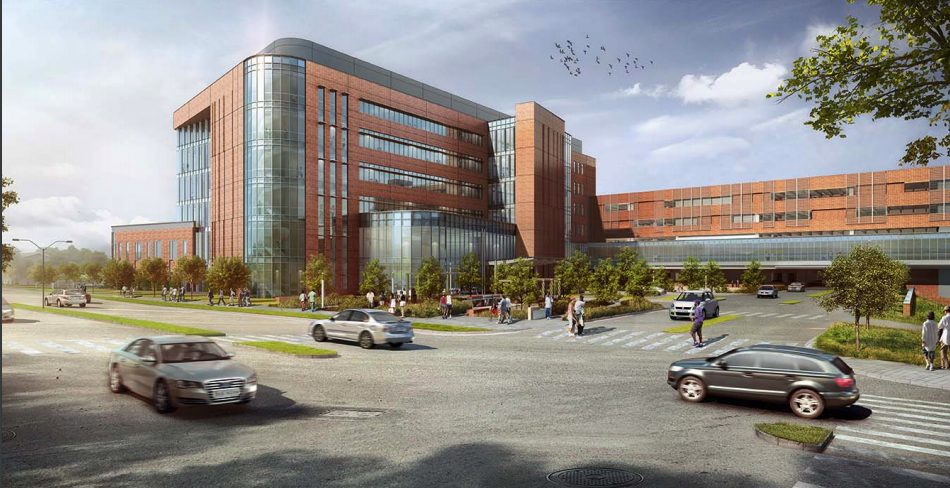
After many long months of debate, county officials are set to have their say next month on an extensive proposal for the Virginia Hospital Center’s expansion.

The project has attracted plenty of criticism from neighbors and transit advocates alike, prompting a brief delay of the county’s consideration of the 101-bed expansion of Arlington’s lone hospital.

But the county’s business community recently threw its support behind a swift approval of the project, as has another longtime civic leader. Julian Fore, a former president of the Arlington Community Foundation, is also urging the County Board to lend the project a full approval in a letter he shared with ARLnow.

Letter to the Editor:

I am an Arlingtonian and frequent user of Virginia Hospital Center (VHC).  This first-rate hospital provides excellent acute care and places an emphasis on needed follow-up services and disease management. VHC is a community jewel and is deserving of our support for its expansion project. I urge the County Board to approve the VHC application.

We should all be in favor of VHC’s desire to improve the efficiency, convenience and accessibility of healthcare. These are important community benefits and should be acknowledged. Moreover, the newly proposed Behavioral Health Center will enable our friends and neighbors who are suffering from mental illness to receive immediate outpatient care. The VHC proposal also expands the number of psychiatric beds based on a community-negotiated formula and subject to State approval.

It is important to note that under the VHC proposal, 1.3 acres of the 5.5 acre Edison Street site are either landscaped or open space to bring visual relief and more greenery to the site.  The placement of the landscaping and open space creates a “sense of place” and a welcome oasis to an urban village. This action demonstrates VHC’s commitment to enhancing the appearance and livability of the surrounding neighborhood.

At this point, we need to acknowledge that the cumulative effect of additional requested changes to the VHC proposal will affect the broader community goal of increasing the availability of low-cost, high-quality, patient-centered healthcare. VHC is the only stand-alone community hospital in the greater Washington D.C. Metro area. It is in the public’s interest to enable VHC to contain development costs, so the Hospital has more dollars available for needed state-of-the-art equipment and other patient related services.

I hope the County Board recognizes that the overall public benefits provided by the VHC expansion are too important to be held hostage by the narrow concerns of nearby neighbors.

Sincerely,

Julian Fore

ARLnow occasionally publishes thoughtful letters to the editor about issues of local interest. To submit a letter to the editor for consideration, please email it to [email protected]. Letters may be edited for content and brevity.

Photo via HDR


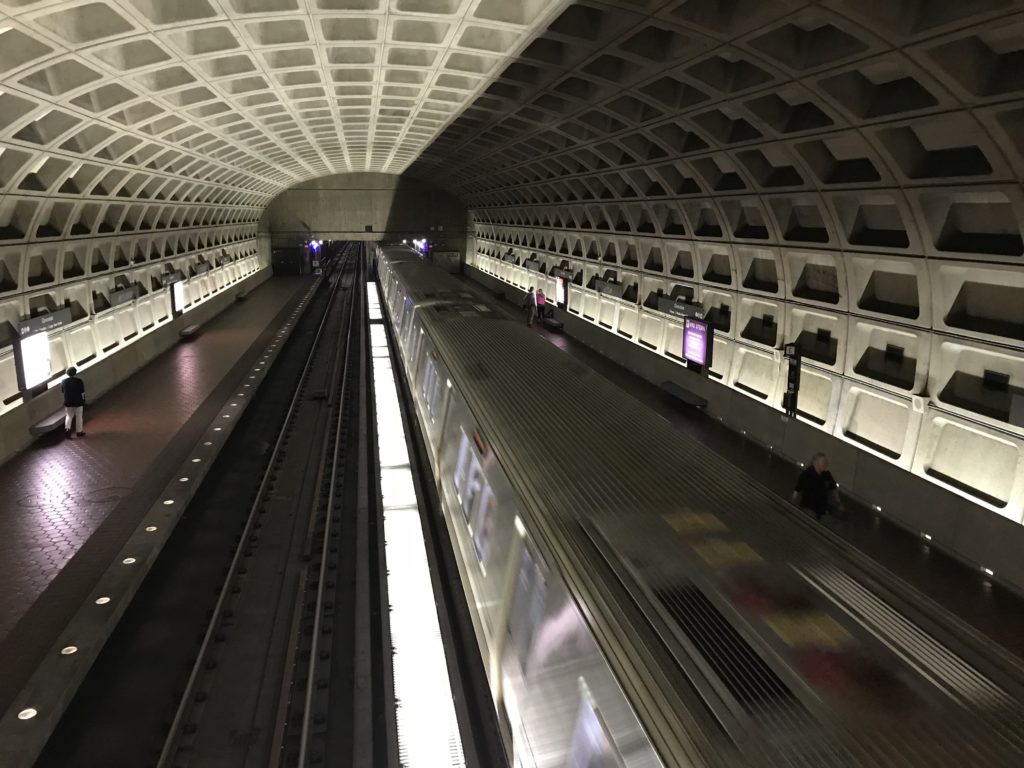
In the days leading up to Metro’s latest round of major track construction work, officials rolled out a series of grim warnings about what the work would mean for commuters on the Silver, Orange and Blue lines.

With the Blue Line completely shut down between Arlington Cemetery and D.C., and huge delays on the other two lines, Metro warned commuters to only choose the service if they didn’t have any other option. County Board Vice Chair Christian Dorsey even predicted “extreme crowding” and “incredible chaos” at station platforms along D.C.’s urban core.

Now, with the major track work set to last several more days yet before wrapping up Sunday, the question becomes: how accurate were those gloomy predictions?

Whether you’re a Metro rider braving those conditions, or looking to avoid them on a bus or in a car, we want to know: has the track work meaningfully impacted your commute since last Saturday (Aug. 11)?


The weekend is here, and so too, perhaps, is an end to this week’s muggy conditions.

The forecast is calling for a few scattered showers tonight and into the weekend, but those should help cool down the oppressively steamy weather we’ve seen the last few days.

That should be good news if you’re heading to the county fair, or any of the other happenings around the county this weekend.

In the meantime, catch up on our top stories of the past week:

  1. HGTV’s ‘House Hunters’ Returns to Arlington, Features Local Couple
  2. Woman Spots Worker Tattooed with Nazi Symbols at Ballston Quarter
  3. Arlington County Fair Pledges to Cover ‘Racist Caricature’
  4. Density, Development Debates Take Center Stage as Lee Highway Planning Nears
  5. County Fair Opens Today in Arlington Heights

Head down to the comment to chat about these stories or anything else local. Have a great weekend!

Flickr pool photo by Bekah Richards


The Right Note is a weekly opinion column. The views and opinions expressed in the column are those of the author and do not necessarily reflect the views of ARLnow.com.

This week’s announcement by Arlington Public Schools about their compliance with the new Virginia law on recess reminded me that voters do have a choice in the School Board race in November. Audrey Clement and Barbara Kanninen will debate in September, so here are eight things Civic Federation members should consider asking about.

College is becoming prohibitively expensive for many. The economy still needs people in skilled trades which can provide good careers. What more should Arlington be doing to prepare students who do not want to go on to a traditional four-year college?

Our school enrollment is increasing and new buildings are being built, under what circumstances would you support increasing the student to teacher ratio to meet enrollment within budget constraints?

If county revenues suddenly became flat, where would you look first for budget savings? Have you considered ways that administrative staff and expenses could be scaled back to ensure cuts were not made in the classroom?

This year as part of the budget process, Superintendent Patrick Murphy reported per pupil spending would be $19,235 for the 2019 school year for the anticipated enrollment of 28,027 students. But when you divide $636.7 million by 28,027 students, you arrive at $22,717 per projected student. Why does Arlington report per-pupil spending this way and shouldn’t we be honest with county residents about the total actual cost rather than relying on a manufactured formula that pegs the number nearly $3,500 lower?

Assuming the School Board had not decided to engage in a name change process for Washington-Lee, what could staff have spent their time on to improve educational outcomes and what could the money that will be needed to change the name have been spent on? As the name change process moves forward, do you support naming it after a person or do you think we should stop naming schools after people altogether?

Some in the county have suggested that increasing diversity should be a higher priority when it comes to school boundary changes. What do you think the top three considerations should be?

Many studies show that homework at younger ages has no academic benefit to students, so would you support a proposal to ban homework county-wide for all elementary school students? What about through the seventh grade?

Currently the county builds in snow days and multiple teacher in-service and conference days into the calendar. Would you support ending the school year for all students not later than June 10 unless too many snow days were accumulated?


Progressive Voice is a weekly opinion column. The views and opinions expressed in the column are those of the individual authors and do not necessarily reflect the views of their organizations or ARLnow.com.
By Kevin Wolf

A core progressive value is getting things done for the greater good, which often requires bipartisan collaboration. Regardless of what happens in the November elections, trade policy is an important area for bipartisan cooperation because it affects us all.

I am a traditional Democrat but see remarkably few differences of opinion with my mainstream Republican friends on current trade developments. Basically, we don’t disagree with the administration’s general goals in concept, but fundamentally disagree with its zero sum approach (for us to win others must lose) to achieving those goals. Also, the tariffs based on national security justifications often appear to be more like protectionist industrial policies.

The United States has overwhelmingly benefitted from free trade, which has been supported by presidents of both parties. President Obama, for example, recognized that because 95 percent of the world’s consumers and 80 percent of gross domestic product are outside the United States, it was vital to open up growing markets in Asia with the Trans-Pacific Partnership. There is no doubt that trade has negative costs, and we have a responsibility to aggressively enforce our laws and help those workers disrupted by trade agreements. But, overall, America overwhelmingly benefits and our peace and economic prosperity since World War II has resulted from a global trading system that we built.

As seen in the daily news, this administration has taken a fundamentally different approach to trade policy that largely revolves around imposing tariffs. Tariffs are, however, a tax on consumers and provoke retaliation, leading to more harm than help for U.S. companies and consumers.

To put the issue in local terms, think about schools in the construction pipeline, and what a higher cost of steel for those buildings would mean. Think about higher prices on consumer goods. Think about your business and ask how it could survive if, overnight, your costs increased 25 percent.

The issue often gets boiled down to a “fair trade” versus “free trade” debate, but it is really about drawing the right lines to achieve policies that:

  • Allow for economies to benefit from their advantages (things that they do better than other countries),
  • Respect the rules of international trade, reduce barriers and foster good relations with allies,
  • Support domestic innovation policies and protect other parts of the economy harmed from unfair practices or that get left behind,
  • Reflect our values, such as protecting the environment and rights for labor, and, fundamentally,
  • Do more good than harm.

Proposing bipartisan cooperation may seem strange in the current highly partisan climate, but the issue affects too many people to leave current actions unchecked.

There is, however, recent precedent for how a bipartisan approach and an open legislative process can lead to success. Legislation became law this week that enhances U.S. government authorities to address emerging national security issues associated with foreign investment in the U.S. and the export of critical technologies. The legislation improved over time because Congress used a nonpartisan, bicameral, civil (mostly), principled process that included robust hearings, thoughtful debate and engagement with stakeholders, former officials from Democratic and Republican administrations, other subject matter experts and Trump administration officials. The debate identified the real national security and trade issues and addressed them in a way that all these interests could largely agree on.

My modest proposal here is for those on all parts of the left and all parts of the right to take a breath, collect the facts and work through the current trade issues together for the greater good.

Kevin Wolf is a long-time Arlington resident and was the Assistant Secretary of Commerce for Export Administration from 2010-2017.


Peter’s Take is a weekly opinion column. The views and opinions expressed in this column are those of the author and do not necessarily reflect the views of ARLnow.com.
As recently reported in the Washington Post, under a new state law, local school districts in Virginia (including APS) have been granted added flexibility to increase recess time at the elementary level.

Local school boards now may devote up to 15 percent of state-mandated instructional time to recess under a law that took effect July 1.

What the new law provides

The new law allows up to 15 percent of the required 5.5 hours of daily instructional time to be used for recess (roughly 50 minutes). The new law also reduces the minimum instructional hours that must be spent teaching only English, math, science and social studies/history from roughly four hours and eight minutes per day to roughly three hours and 47 minutes per day.

These are newly-authorized changes to state-mandated minimums. But, before these changes can be implemented, each local school district (including APS) must take affirmative steps to incorporate the changes into its own policies. Each local school district (including APS) must decide how much of the newly-authorized time that district wishes to shift to recess.

Benefits of more elementary recess

A large body of educational research has documented the benefits of more recess time. Among the chief benefits are these:

  • Brain Development–Physically active children are better at paying attention, have faster cognitive processing, and perform better on standardized tests. Breaks allow children time to encode classroom learning into memory.
  • Social & Emotional Skills–The American Academy of Pediatrics has concluded that children learn negotiation, cooperation, and problem-solving skills at recess.
  • Executive Functions–During unstructured playtime at recess, children learn to plan their own activities, switch between tasks, and set their own goals. These skills increase success in school and even in adulthood.

Increases in elementary recess time already approved in other NOVA districts

Other Northern Virginia school districts already have announced plans to take advantage of the new Virginia state law, as the Washington Post reported:

Fairfax, Prince William and Loudoun counties have opted to mandate at least 30 minutes of recess, which the law defines as “unstructured recreational time that is intended to develop teamwork, social skills, and overall physical fitness.” In Loudoun, kindergarten students must get at least 40 minutes. In some schools, the increased time will double students’ daily unstructured play.

APS response

On August 15, APS sent its first formal communication about the new law to elementary school parents. APS stated:

  • Many APS schools already provide at least 30 minutes of recess
  • APS policies will be updated to reflect the 30 minute per day recess minimum for elementary students

Conclusion

Our schools are all overcrowded. Almost all elementary schools have lost field space to trailers. APS parents are dealing with this reality.

APS can’t fix the overcrowding or the lack of open space overnight, but APS has appropriately recognized that it should take advantage of the new law now.

Yesterday’s APS announcement is a welcome step. However, as more and more academic pressure has been applied at younger and younger ages, APS should do still more given the critical importance of recess to young children’s development.

APS’ current recess policies (at pp. 5-6) do not contain any minimum daily recess requirement.

APS should revise these policies to mandate a daily minimum of:

  • 35 minutes of recess in grades 1-5 at every elementary school
  • 45 minutes of recess at every kindergarten

If you’re looking forward to an end to this week’s steamy weather, there’s good news and bad news.

It seems set to cool down a bit Saturday, but only because rain seems likely to return. Some weather watchers are even calling for downpours and flooding.

A reminder to think twice before hopping on the Metro this weekend, as major track work starts Saturday and lasts for the next two weeks. Sunday’s “Unite the Right 2” rally in D.C. will mean additional headaches for commuters, and D.C. officials are taking precautions to prepare for the arrival of white supremacists downtown. Arlington police say there aren’t any events planned in the county surrounding the event, but some county residents are taking some online action.

Check out our event calendar for more info on what’s going on this weekend, and be sure to catch up on our top articles of the past week:

  1. Metro Warns Silver, Orange, Blue Line Riders: Stay Away, Starting Saturday
  2. Morning Poll: Should Washington-Lee HS Be Renamed?
  3. Girl Believed to be Abducted from DCA Found Safe
  4. Owner of Lyon Park Vegetarian Restaurant Dies
  5. With Amazon Looming, Developers Increasingly Link Crystal City to Potomac Yard

Head on down to the comments to discuss these stories or anything else local. Have a great weekend.

Flickr pool photo via John Sonderman


View More Stories