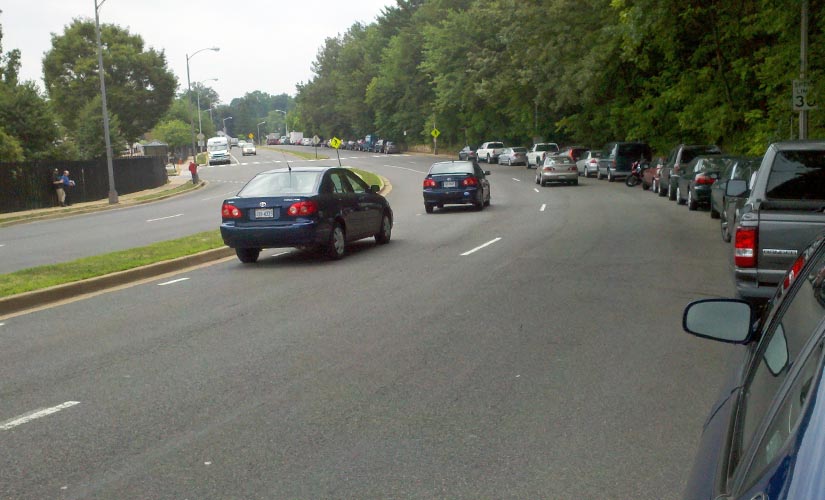
Efforts by residents to reduce traffic headaches in the Barcroft neighborhood appear to have paid off. Residents report that the increase in shuttle buses for government workers affected by BRAC has diminished the number of cars clogging the neighborhood.

In July, we reported about resident concerns over an additional 1,200 workers flooding the Barcroft neighborhood due to the Base Realignment and Closure Act. People living in the area were concerned about workers parking on the streets and dangerous traffic congestion on George Mason Drive. They appealed to Rep. Jim Moran for help.

Moran asked that the plan for shuttle buses between Arlington Hall and the Pentagon Center be expedited to ease the traffic burden, and shuttles started running on September 6. Now, residents report this action has helped improve traffic conditions and safety over the past few months.

“I believe the diligent work by Congressman Moran’s office and the determination of our neighbors to make clear boundaries really paid off,” said Barcroft School and Civic League President Pat Williamson.

Williamson says although there’s still some congestion along George Mason during the morning rush, the situation is much improved and she hasn’t received any new complaints from neighbors.

“The new Arlington Hall shuttle bus service is a testament to the impact of an engaged, active community,” Moran said. “I look forward to continuing to work with the Barcroft residents, Arlington Hall employees and the Defense Department to smooth out any wrinkles caused by BRAC.”

Also being credited is the increase in Metrobus service along the route. WMATA had previously promised to increase the frequency of 22A buses, and as of this week, added additional stops to the route.
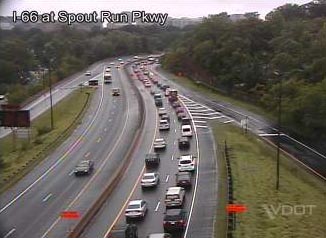
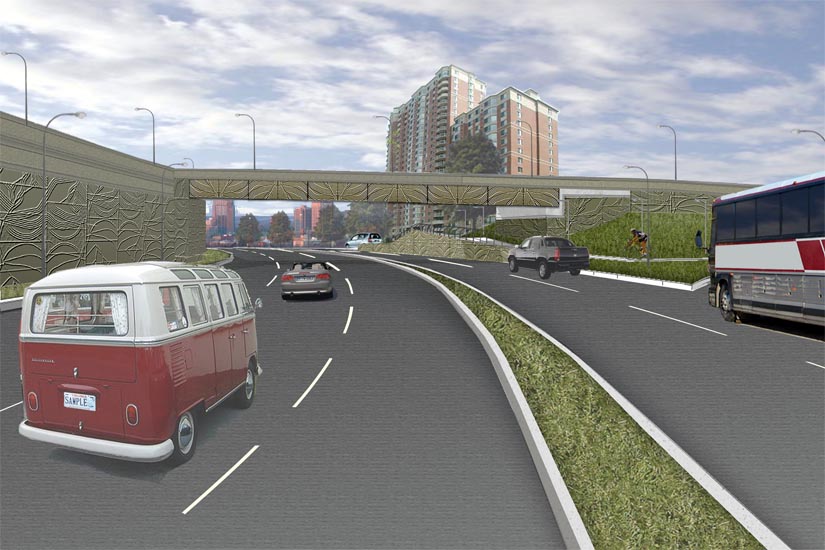
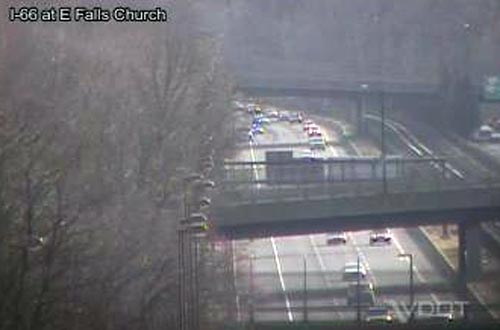
Widening I-66 and Route 50 inside the Beltway are among the options for relieving congestion on the I-66 corridor currently being studied by the Virginia Department of Transportation.

The “I-66 Multimodal Study,” as its called, began in July 2011. Study organizers held public meetings in December 2011, are scheduled to hold additional public meetings in April, and are expected to wrap up in May with a final report.

“This study will identify a range of multimodal and corridor management solutions (operational, transit, bike, pedestrian, and highway) that can be implemented to reduce highway and transit congestion and improve overall mobility within the I-66 corridor, between I-495 and the Theodore Roosevelt Bridge,” VDOT says on its web site.

Currently, I-66 is HOV 2+ in the peak direction during peak hours, with no other restrictions on the reverse peak direction or during off-peak hours. With the exception of the recently “spot improvements,” I-66 consists of two travel lanes in each direction.

Among the theoretical options the study is considering for I-66, as outlined at a recent public meeting:

  • A. No new I-66 lanes. Peak direction to be bus/HOV 3+ only during peak hours. Reverse peak direction to be bus/HOV 2+ only during peak hours. No off-peak restrictions.
  • B. Convert I-66 into an electronically tolled bus/HOV/high occupancy toll (HOT) highway. Single occupancy vehicles and HOV-2 vehicles would be tolled in both directions, 24/7. Buses and HOV 3+ vehicles would not be tolled. Optionally, a third travel lane may be added to I-66 in each direction.
  • C1. Lane added in each direction on I-66. Peak direction to be bus/HOV 3+ only during peak hours. One reverse peak lane to be bus/HOV 2+ only during peak hours. No off-peak restrictions.
  • C2. Lane added in each direction on I-66. Peak direction to be bus/HOV 3+ only during peak hours. All reverse peak lanes to be bus/HOV 2+ only during peak hours. No off-peak restrictions.

(more…)


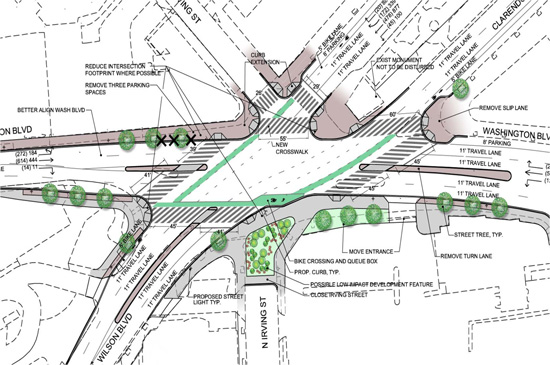
A widely disliked Clarendon intersection will be revamped in the next couple of years. The County has released preliminary plans for the area sometimes referred to as Clarendon Circle.

Based on a study of the intersection at Washington, Wilson and Clarendon Boulevards, the plan provides safety improvements for drivers, bicyclists and pedestrians. Eight other nearby intersections would also be affected by the changes in traffic flow.

The study offers numerous suggestions and sketches of possible redesigns. Some ideas included adding lanes to Washington Blvd, removing left turn lanes, adding bike lanes, adding curb extensions near Liberty Tavern and Sam’s Diner and moving traffic more toward the Silver Diner’s property.

The geometry of the intersection, which is often described as “awkward” and “confusing,” would be normalized by the revamp. The overall size of the intersection would decrease, and better traffic signals and signs would be installed.

County staff examined the study’s suggestions and narrowed down the ideas into one design proposal. Feedback is currently being accepted on the initial proposal via an online survey.

The first round of public forums addressing the improvements will be scheduled soon and will continue throughout the spring. A finalized plan and ground breaking is expected sometime in 2014, at the latest.


Various lane closures due to work on the new Courthouse interchange could cause some additional traffic headaches starting this weekend.

The Virginia Department of Transportation will be closing up to two of three lanes in each direction of Route 50 from 10th Street to N. Rhodes Street. Those closures will take place at night, from 9:00 p.m. to 5:30 a.m., starting on Sunday and running through Thursday, February 2. Daytime closures from 9:00 a.m. to 3:00 p.m. will begin on Monday and continue until Friday, February 3.

VDOT warns drivers that although late night closures don’t officially begin until 9:00 p.m., preparations for the road work could start as early as 7:00 p.m. Drivers should use extra caution in the area and be aware of construction crews.

The $39 million project to redesign the interchange at Route 50, Courthouse Road and 10th Street was launched to improve accessibility and safety in the area. Aesthetic improvements will also be added.

The project’s second phase of utility relocation is scheduled to be finished this spring. The entire project is slated to be completed in fall of 2013.


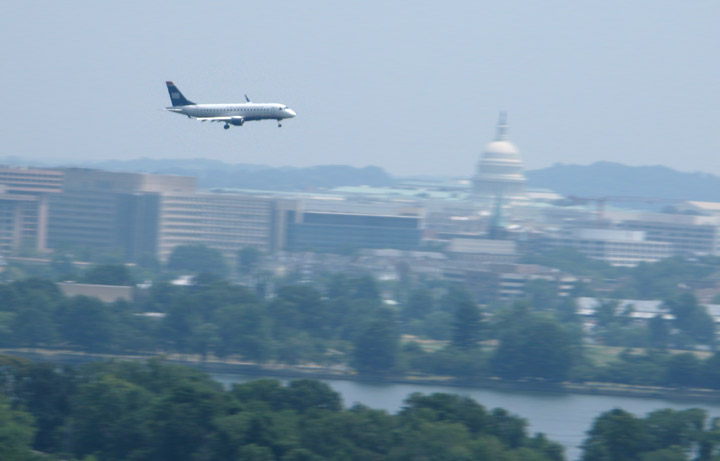
Weather and an equipment outage are both causing air traffic to back up at Reagan National Airport.

A foggy condition referred to as “low ceiling,” which causes decreased visibility, is apparently combining with at least some of the airport’s approach lights being out of service.

Currently, DCA lists “excessive delays” on its webpage. Average wait times are reportedly hovering around 45 minutes. That’s better than some of the multi-hour delays being experienced in other parts of the Northeast due to the low ceiling.

Be sure to check your flight status with your airline before heading to the airport, or check the FAA’s online flight delay information page.


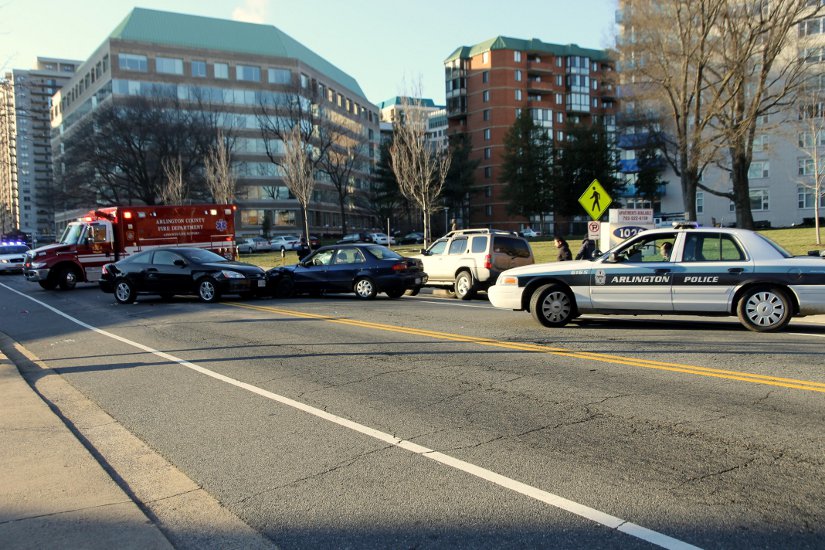
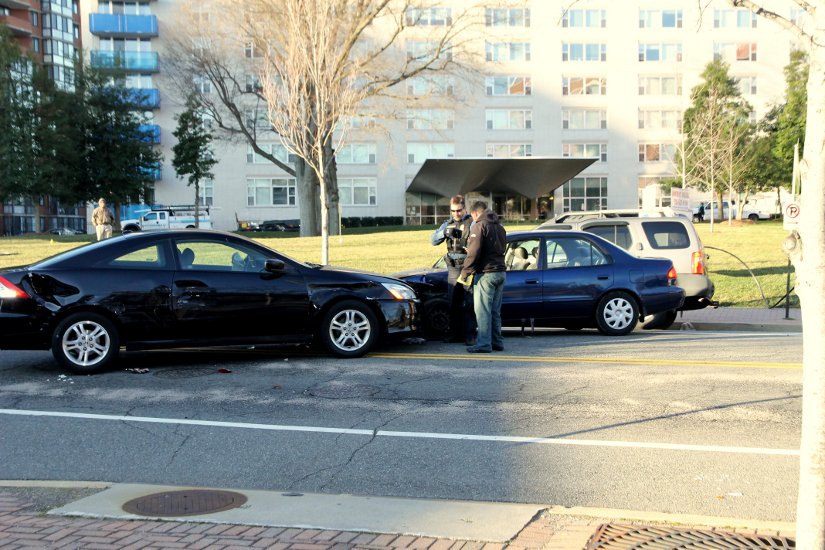
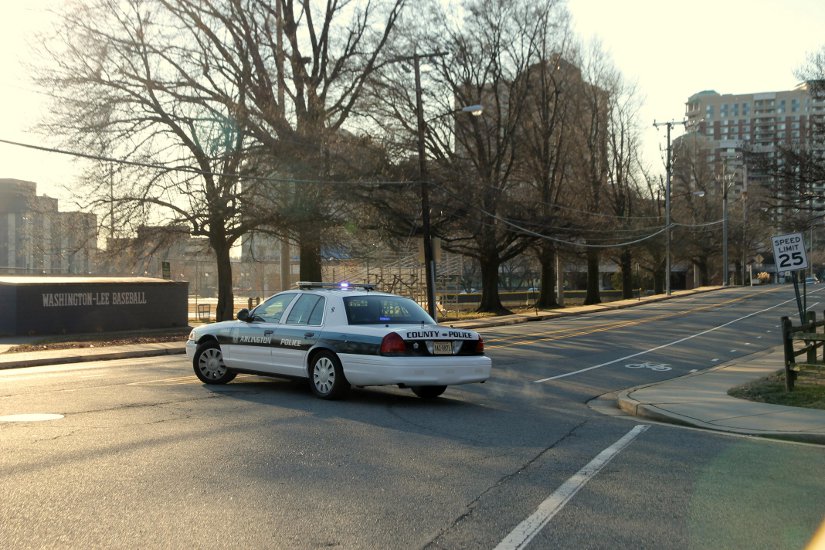
The already busy morning commute proved to be more hectic due to an accident that shut down part of N. Quincy Street. Two cars collided directly in front of the Central Library (1015 N. Quincy Street).

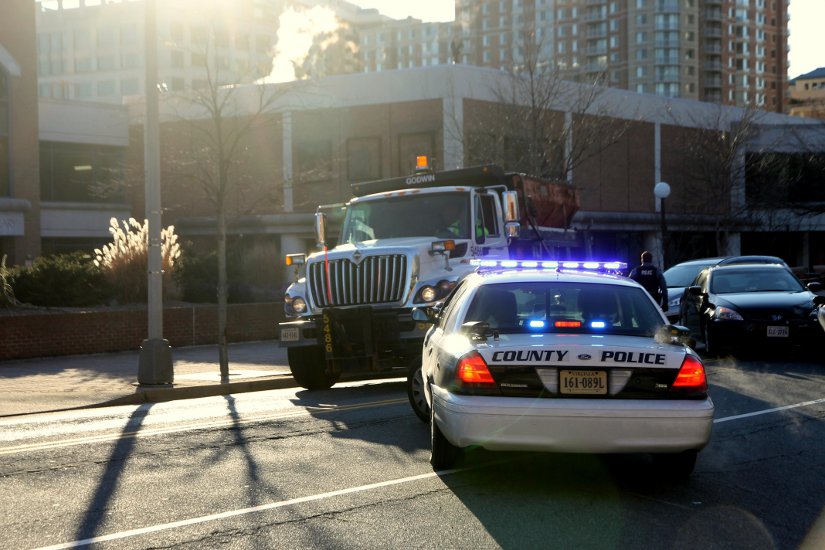
Police shut down Quincy Street from Washington Boulevard to Fairfax Drive while conducting their investigation. Although it’s currently unclear if icy roads contributed to the accident, a salt and sand truck was called to the scene due to police reports of ice.

Drivers are reminded to use extra caution because this week’s quick temperature drop has caused ice to form on certain streets that may not traditionally be known for icy conditions.


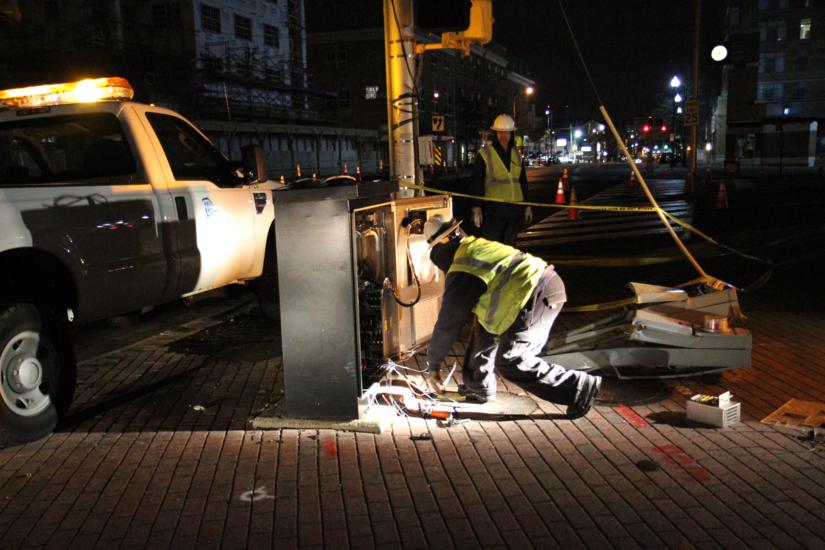
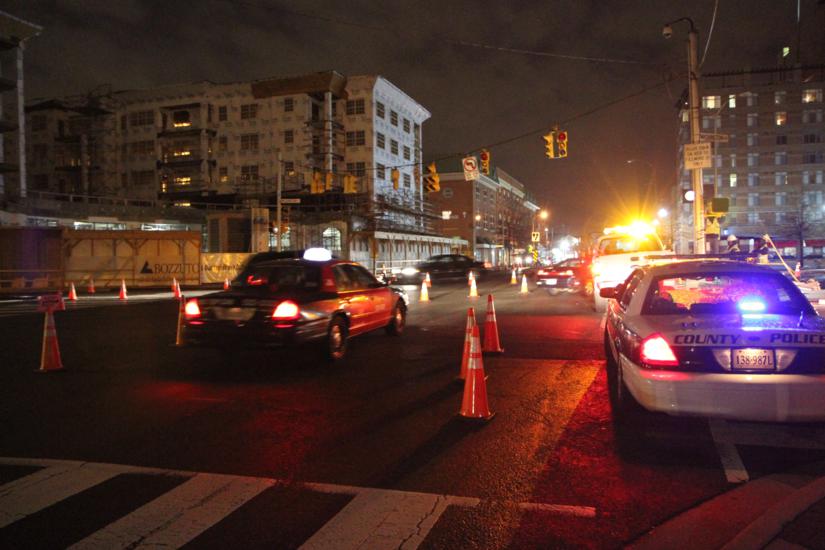
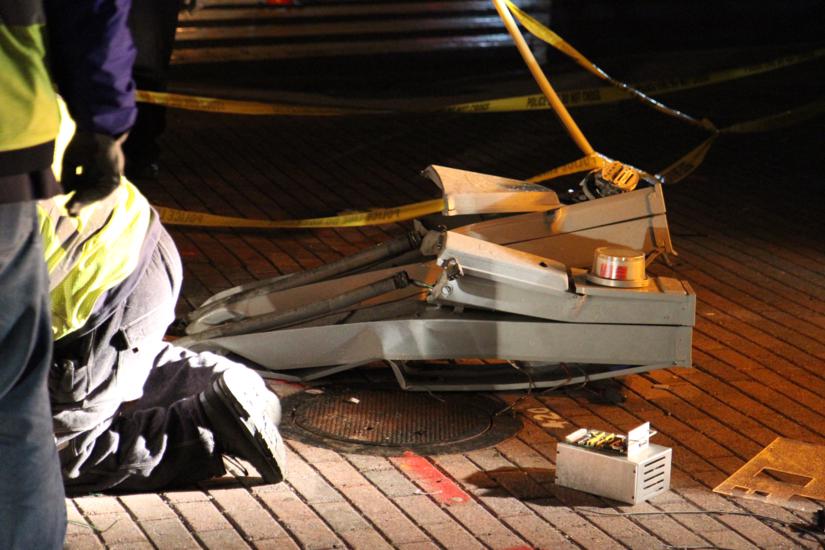
The traffic light sat the busy Clarendon intersection of Washington Boulevard, 10th Street and Fillmore Street is expected to remain dark throughout the morning rush hour following a car accident Thursday night.

Around 7:15 last night a car hopped the curb and took out the traffic signal control box near the Virginia ABC store. One minor injury was reported.

Arlington County crews have been working throughout the night to replace the traffic signal hardware, but the lights are not expected to come back on until after the morning rush hour. Police have set up cones in the intersection in order to keep traffic flowing in an orderly manner.


Two lanes of westbound I-66 are closed prior to Sycamore Street due to an apparent gravel spill.

VDOT crews are on their way to the scene to clean up the loose gravel, but Arlington County officials say they don’t know long the clean-up will take.

Just before 9:30 a.m. a car slammed into the guardrail on westbound I-66 beneath the Patrick Henry Drive underpass, near the gravel spill. It’s not clear if the gravel caused or is somehow related to the accident.


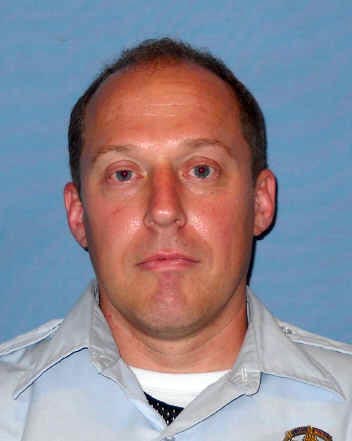
A number of temporary road closures are planned on Wednesday, Dec. 28 to accommodate the funeral procession of a fallen U.S. Park Police officer.

Sergeant Michael Boehm, a 19-year Park Police veteran, suffered an apparent heart attack and collapsed while responding to man found critically injured under the Key Bridge in D.C. on Dec. 16. Boehm, an Army veteran, was rushed to a local hospital but was later pronounced dead. He is survived by a wife and a son.

According to USPP, Boehm’s funeral procession will depart from a Burke, Va. funeral home at approximately 11:30 a.m. on Dec. 28. It will head into the District, pass by Park Police headquarters near Hains Point, then head back to a cemetery in Fairfax.

A number of rolling road closures will accompany the funeral procession in Arlington. Closures are expected on I-395, Washington Boulevard/Route 27, and the Memorial Bridge.

“Partnering law enforcement agencies and departments of transportation will assist with the road closures. All roads will be reopened as soon as possible,” USPP said in a media advisory. “The U.S. Park Police anticipates that the procession will take about 1.5 hours. The beginning time is approximate.”


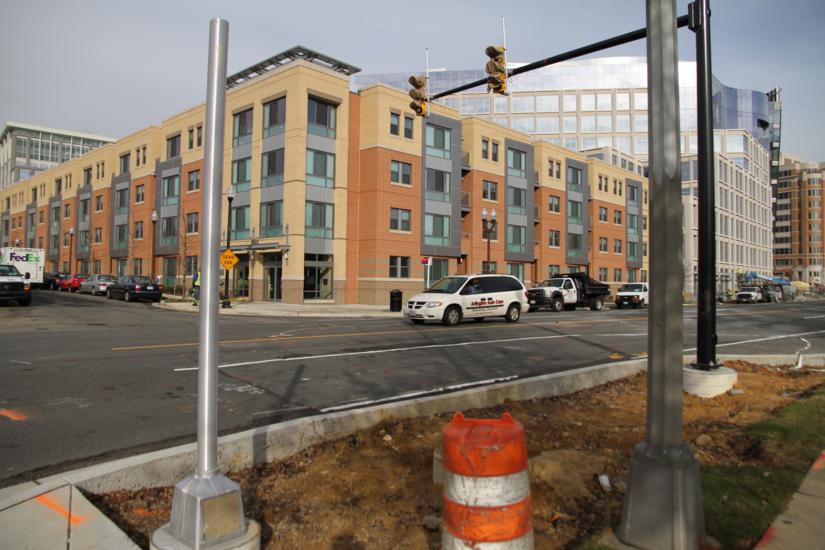
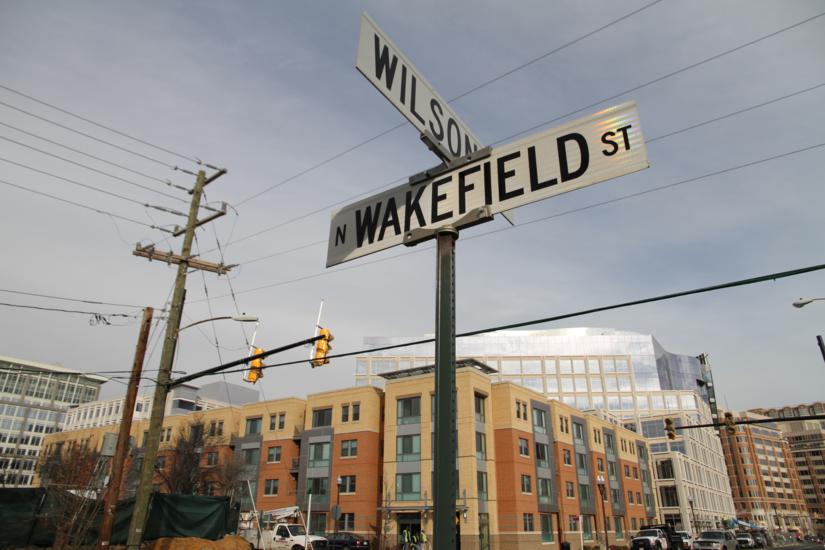
A new set of traffic lights and pedestrian crossing signals are being installed at the intersection of Wilson Boulevard and N. Wakefield Street.

The traffic signals are located next to the Murphy Funeral Home and a new residential development, in the Bluemont neighborhood near Ballston. A developer agreed to pay for the traffic signals in 2008 as part of the development’s site plan process. At the time, county staff argued that increased traffic from the development would necessitate the installation of traffic signals.

No word yet on when the traffic lights might be switched on.


Old Jefferson Davis Highway, which will be officially renamed “Long Bridge Drive” next year, is arguably the worst road in Arlington County.

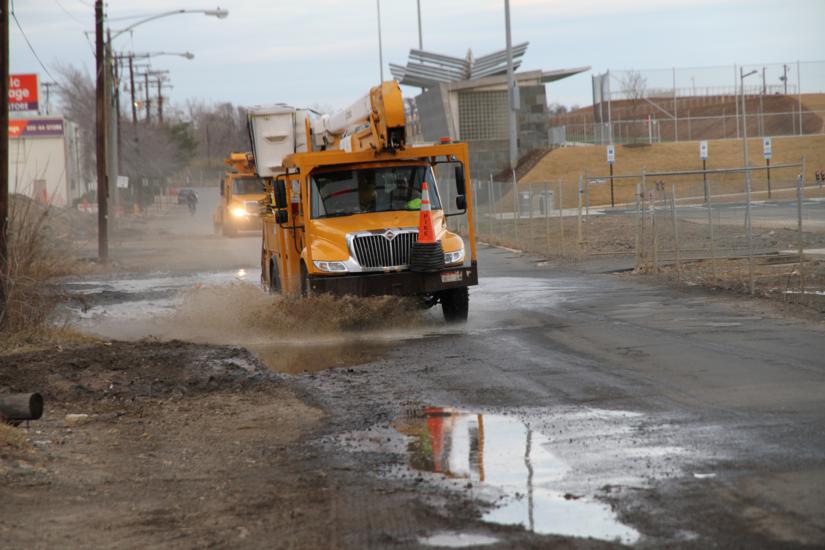
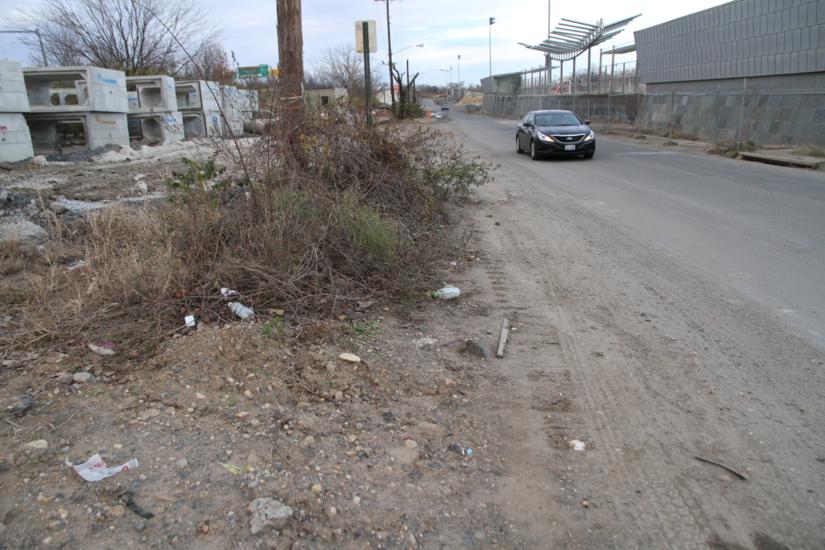
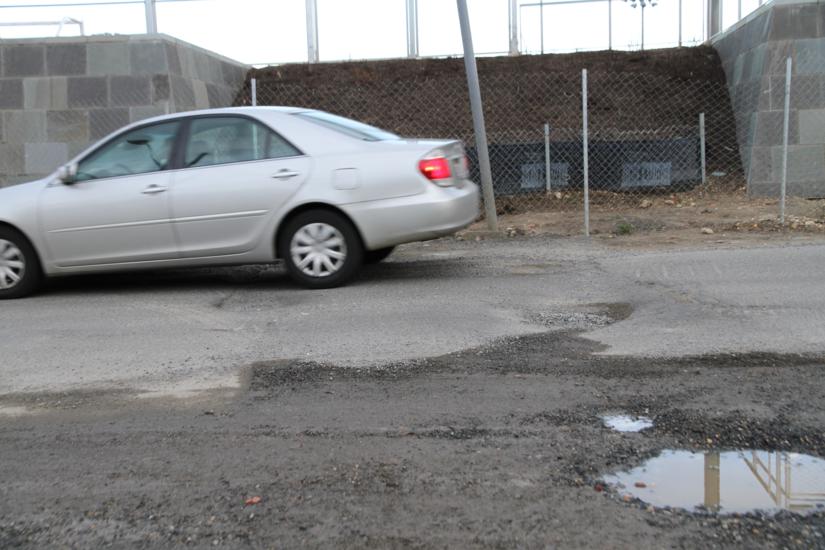
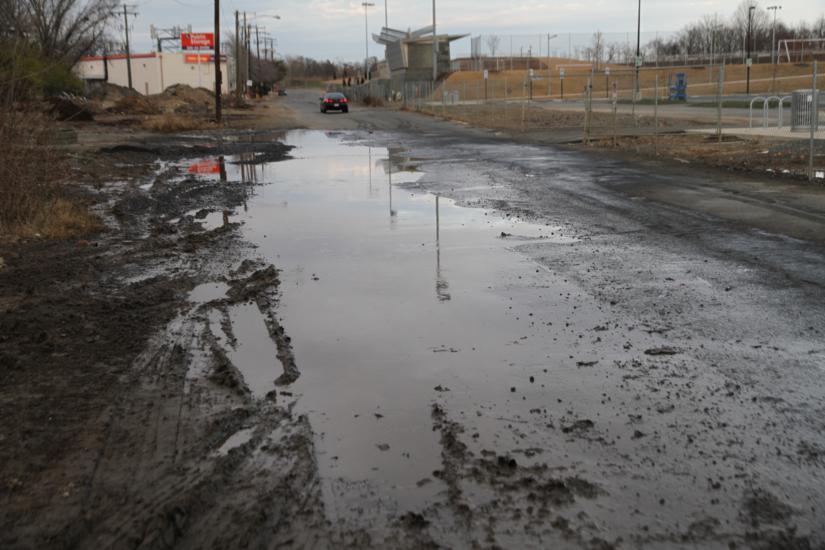
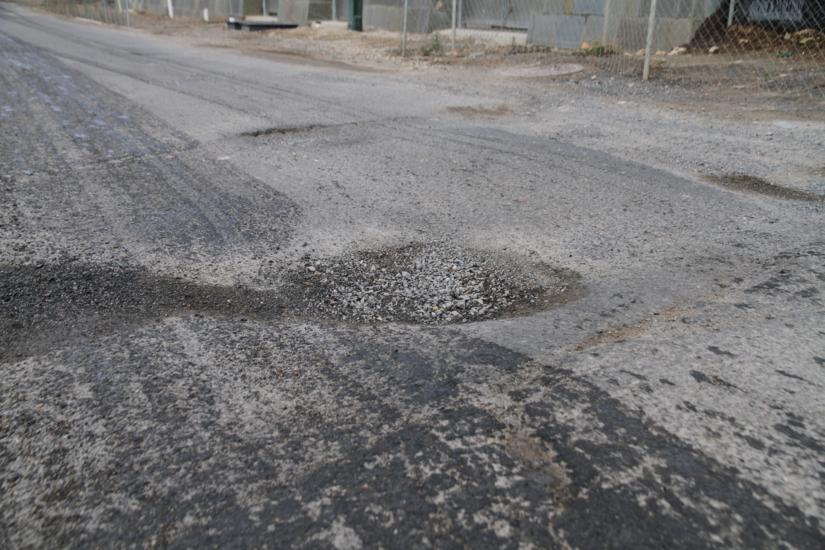
With deep potholes, large pools of standing water, and no lane markings, the road — which connects Boundary Channel Drive and Crystal Drive/12th Street S. — is not easily traversed by anything smaller than an SUV.

That was less of a problem when the road served primarily as a short cut for adventurous I-395 commuters and Pentagon employees. Since November, however, Old Jefferson Davis Highway has been the sole road leading to the newly-opened, $31 million Long Bridge Park. That has led to some grumbles among park users.

“Old Jefferson Davis Hwy is in SERIOUS need of repaving,” one local resident said in an email to ARLnow.com. “Why would they open a brand new park, but not provide a safe road to get to it or tear down the decrepit buildings next to it?”

The good news is that relief is on the way. According to Arlington’s Department of Parks, Recreation and Cultural Resources (PRCR), a reconstruction project for the road will begin in early-to-mid 2012.

“The reconstruction of Old Jefferson Davis Highway should begin in earnest toward the end of February/early March pending the completion of utility relocation,” said PRCR planner Erik Beach. “The installation of a massive stormwater system will be one of the first steps in rebuilding the road. The final paving will be late summer of 2012.”

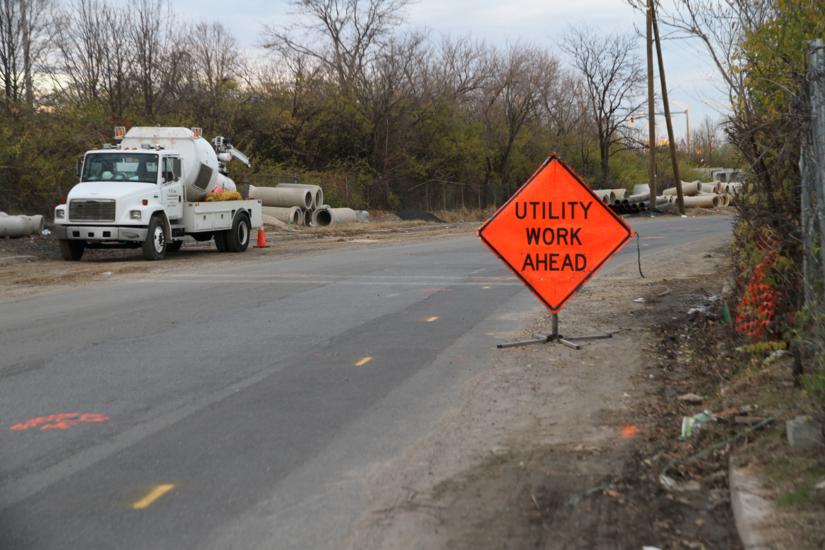
The road was originally supposed to have been reconstructed by the time Long Bridge Park opened, according to Beach, but the project was pushed by due to delays in Dominion and Verizon relocating their utility lines.

“The County cannot begin its wet utility work until the dry utilities have been relocated by the utility providers,” Beach said. “Dominion appears to have completed their work and Verizon projecting a late January completion. This places the finished road at the end of August 2012 with landscaping going in in the early fall.”

The finished road — which will by then be called Long Bridge Drive — is expected to include an improved drainage system, two bike lanes, on-street parking, median strips, sidewalks, street trees, pedestrian lighting, curbs and new pavement.


View More Stories