
News

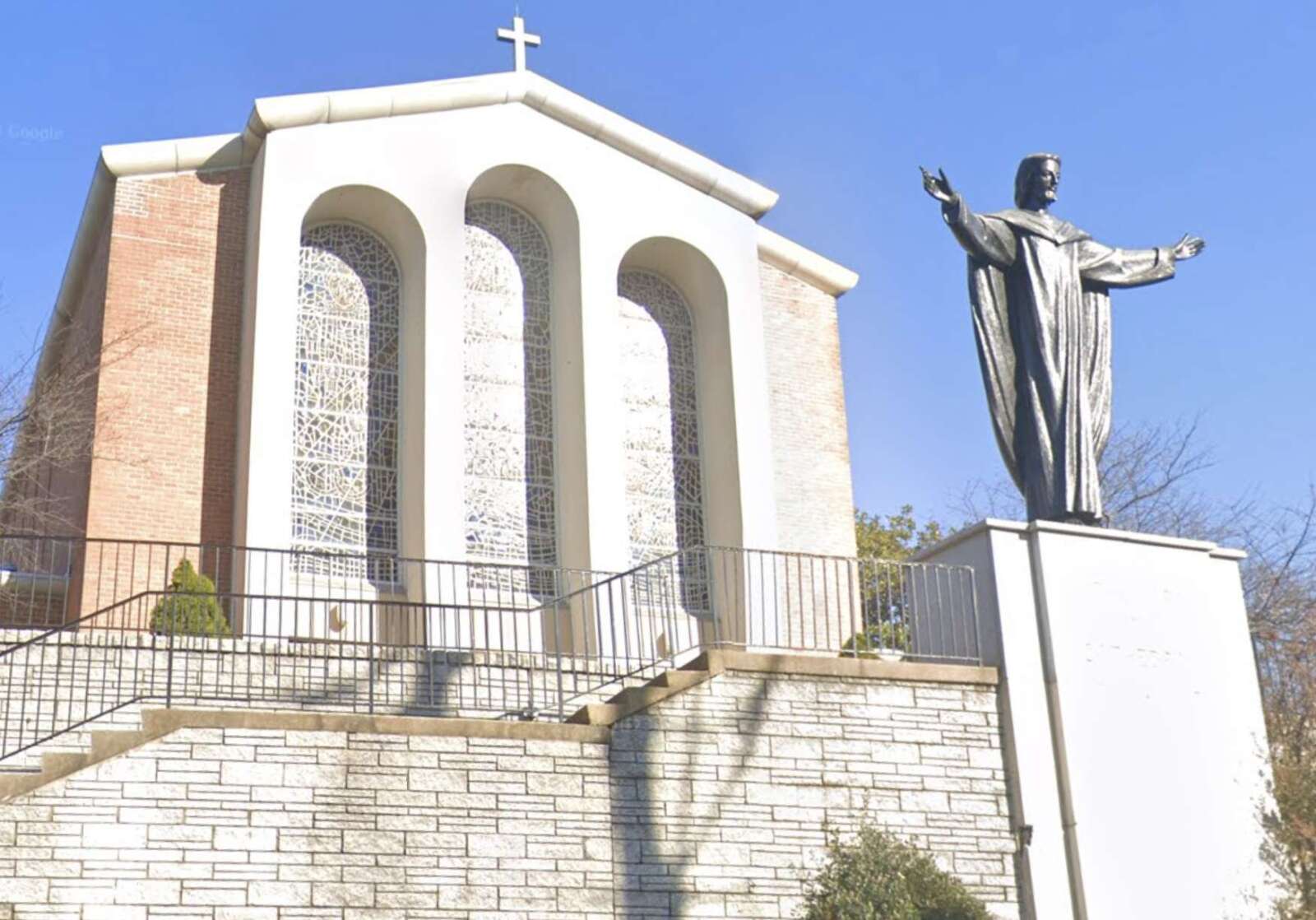
There is a brick, mid-century Catholic church that overlooks Arlington Blvd from a hill, adorned with three stained glass arches and a white cross.

Built to serve a parish, it was repurposed in the mid-1970s and christened the Cathedral of St. Thomas More. Its exterior today belies the building’s significance as the “mother church” for nearly a half-million Catholics across Northern Virginia and the seat of their bishop, Michael Burbidge.

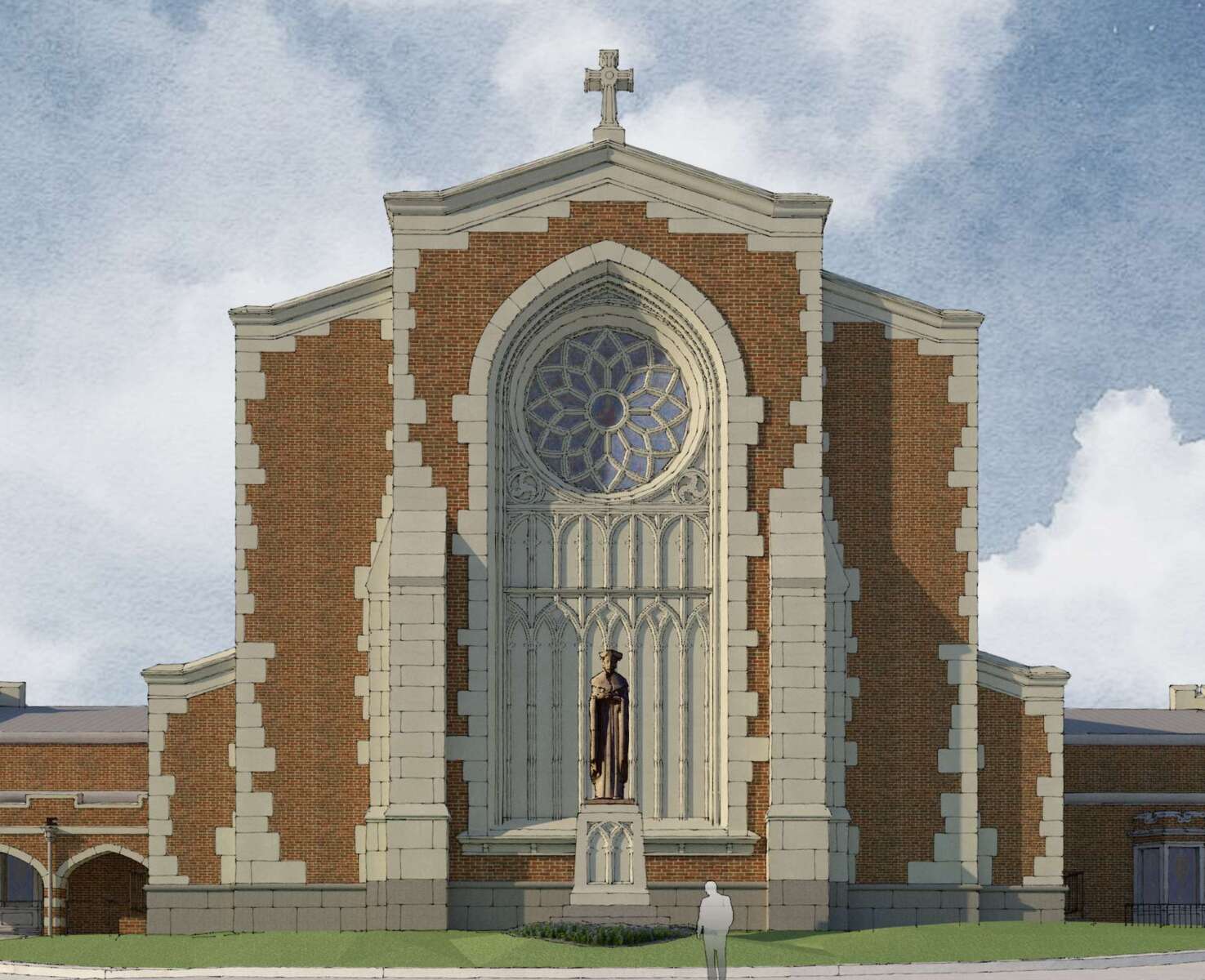
The Arlington diocese says now, in honor of its 50th anniversary, is the time to make the church in the Buckingham neighborhood — which also operates a school — look the part.

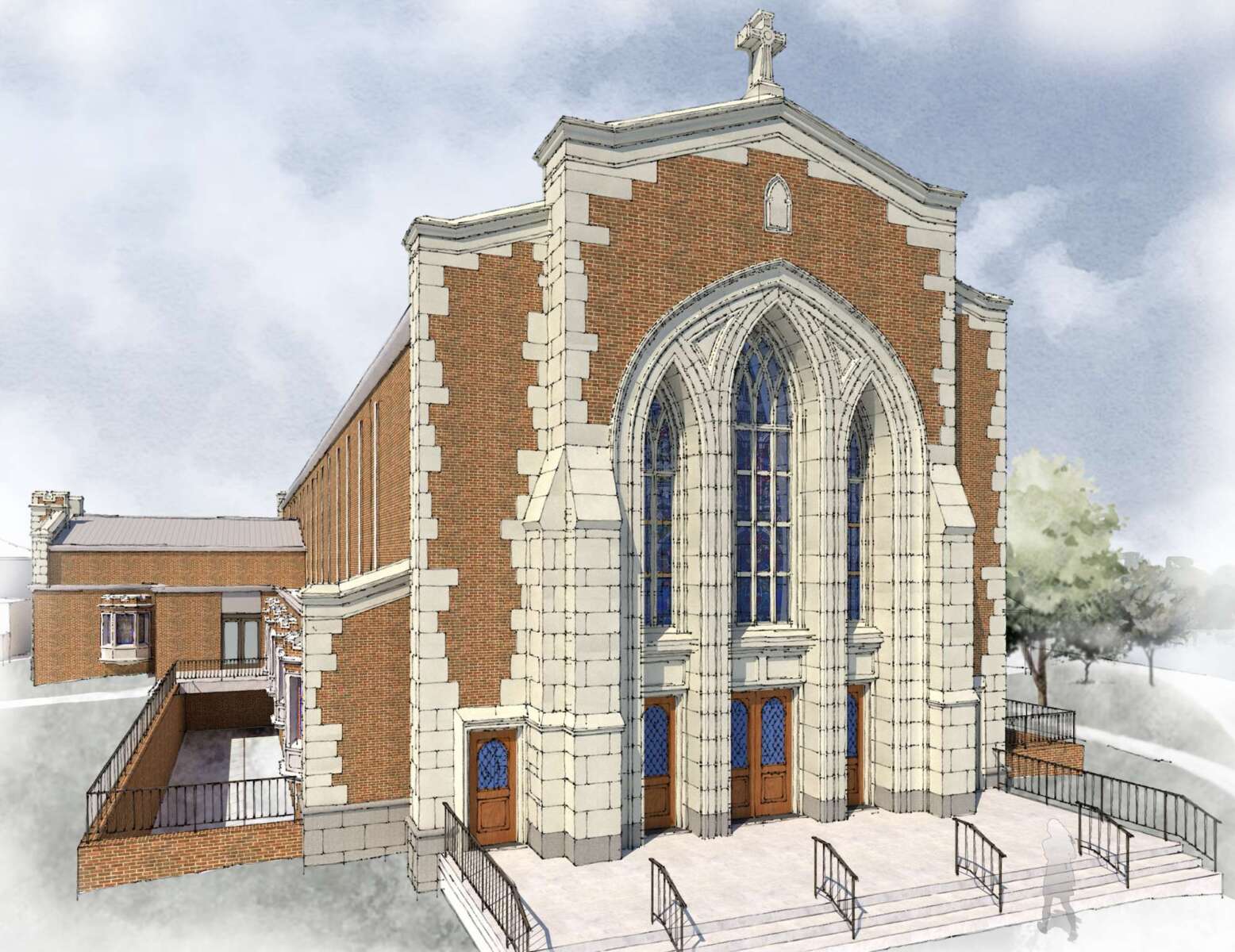
In April, work began on a year-long project to transfigure the building, updating the interior and exterior and installing new stained glass windows and liturgical furnishings.

“When the Diocese of Arlington was established in 1974, there was no pre-existing cathedral to serve the needs of the newly-formed diocese,” Billy Atwell, the chief communications officer for the diocese, said. “As such, a parish church was chosen and retrofitted as best as possible to meet those needs.”

“As we approach our 50th anniversary in 2024, it is an appropriate time to undertake this project to help the Cathedral of St. Thomas More better reflect its dignity as the mother church of the more than 433,000 registered Catholics in the Diocese of Arlington,” he continued.

The new church at 3901 Cathedral Lane will have a Tudor-style façade that will be a nod to the church’s patron saint, St. Thomas More, who lived at the turn of the 16th century in England.

A permit filed with Arlington County indicates the project is estimated to cost $15.3 million.

It is completely paid for by donors “who agreed to give beyond their current contributions to their parishes, the Diocese and Catholic charitable efforts,” Atwell said.

“Bishop Burbidge had three essential principles for funding the cathedral renovation project which have all been achieved: that no debt would be incurred, no assessments would be taken from any parish and that there would be no capital campaign for this project,” he said.

After going through county approval processes in late July 2022, and receiving a permit in late October, demolition work began in mid-April. The project is set to wrap up next summer.

The church will get the following upgrades, according to permits filed with Arlington County:

  • new stained glass windows
  • two twin belfries at the south façade
  • a Tudor-style exterior
  • a new cupola, or small dome
  • new roofing
  • a renovated raised sanctuary platform with a ramp for greater accessibility
  • new liturgical furnishings, such as a cathedra or bishop’s seat
  • a renovated shrine
  • a refurbished choir loft

The project was designed by Arlington-based sacred architecture firm O’Brien and Keane Architecture.

From N. Glebe Road, travelers will be able to see a rose-patterned stained glass window. Imbued with scripture references, the diocese hopes the window inspires passers-by “to seek its deeper meaning in their lives,” according to the diocesan newspaper, The Arlington Catholic Herald.

Inside, there will be stained glass images of the saints for whom churches throughout the diocese are named, as well as devotional shrines to saints from the numerous cultures and communities represented in the diocese, the Catholic Herald said.

“Behind each statue will be stained-glass windows that tell the story of that saint’s life,” Atwell wrote in the article. “The cathedral will exemplify both the oneness and the diversity of the diocese — that our one body has indeed many parts.”

Following the cathedral renovation, also in honor of its 50th anniversary the diocese will conduct a capital campaign for charitable works, Atwell told ARLnow.
News

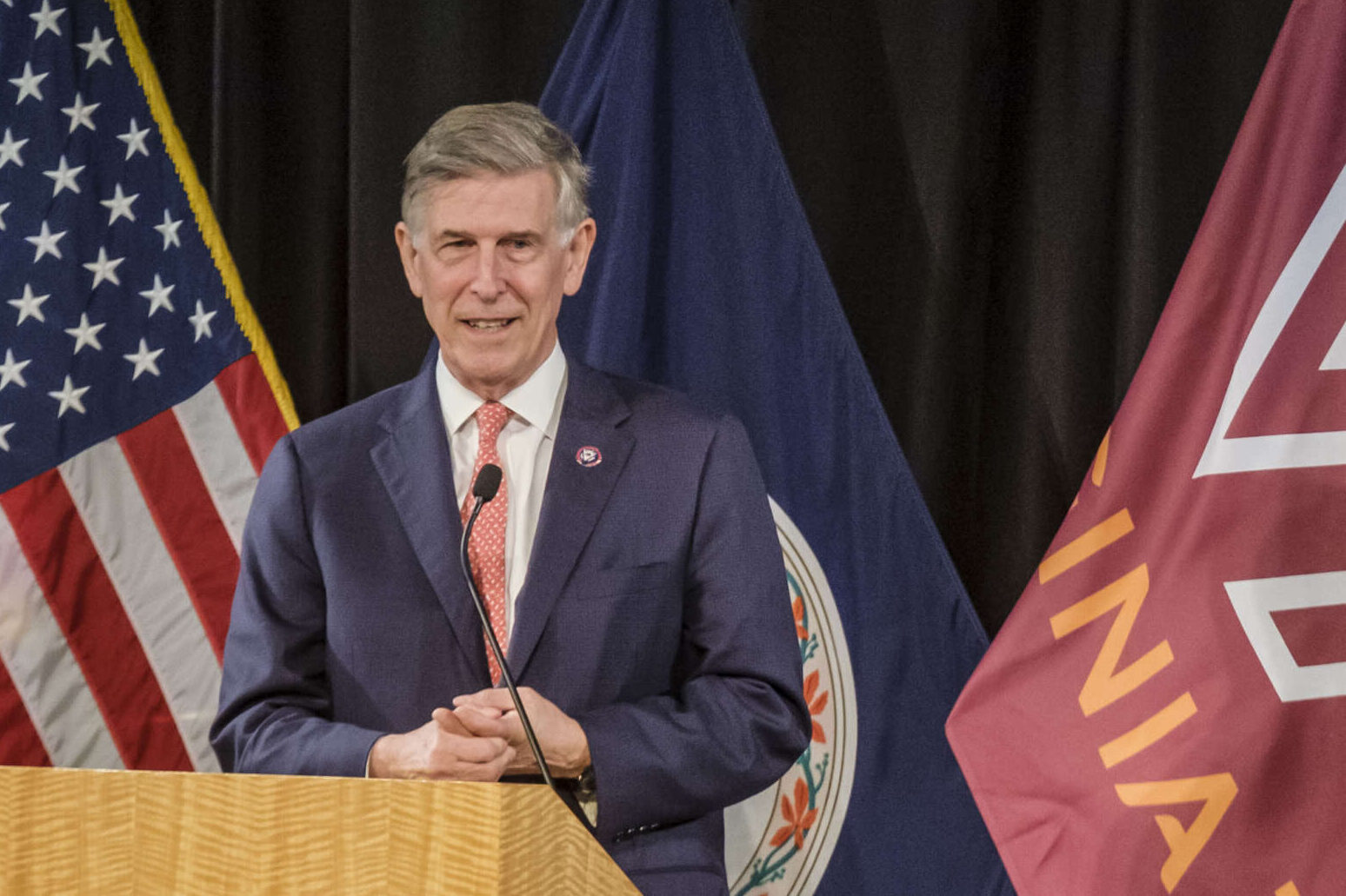
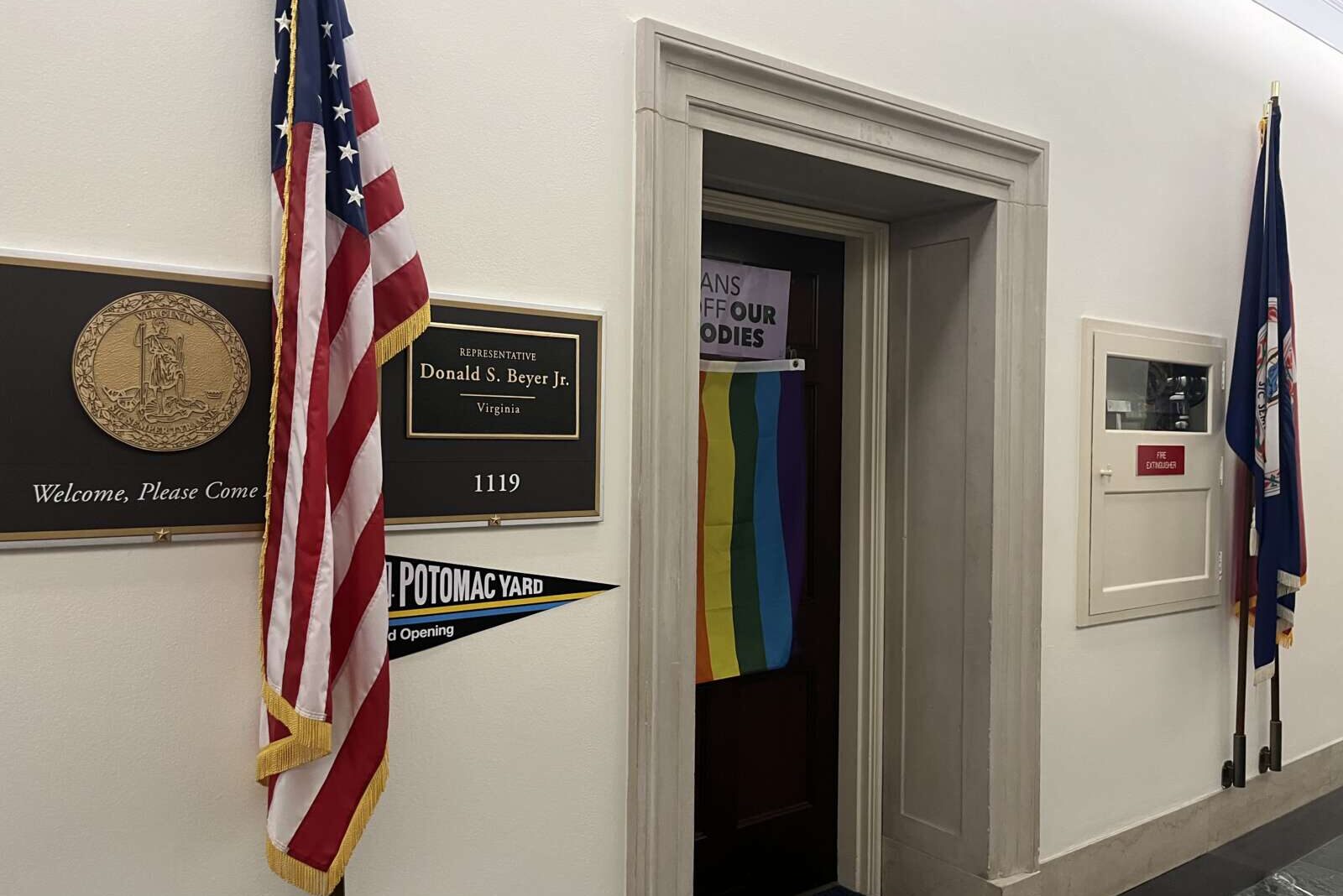
While the results of the ranked-choice Arlington County Board election have yet to be determined, the voting method has a champion in Rep. Don Beyer.

Beyer tells ARLnow that voters are more likely to see someone they support reach the Board as a result of the voting method’s choice in the six-way Democratic primary for two open seats. He had another reason for supporting ranked-choice voting, too: it rewards candidates who build diverse coalitions, meaning candidates away from the partisan extremes are more likely to emerge triumphant.

“I’m a very strong supporter of ranked-choice voting as it maximizes the happiness and satisfaction of citizens,” said Beyer, who has represented Virginia’s 8th congressional district since 2015, during an interview yesterday (Wednesday) at his office on Capitol Hill.

For the first time, local voters went to the polls on Tuesday — and in early voting — and ranked their candidates in order of preference. Their votes count towards another candidate if their top pick is eliminated in what is known as “single transferable vote.”

Since the Virginia General Assembly gave Arlington permission to try it out before the rest of the state, election officials say lots of people are watching this race with interest. That includes Beyer, who observed that so far, the voting process seemed to be working.

“The early feedback this morning was that there were almost no bad ballots, meaning that almost everyone understood the ranked-choice voting method. It is not that hard, all you have to do is go through your choice one through three in terms of preference,” Beyer said.

There have been reports of confusion leading up to the primary, particularly about how votes are counted. An informal ARLnow poll found that some 20% of primary voters were confused either by the voting or tabulation process but most found it straightforward.

For Beyer, however, the benefits are clear.

“With ranked-choice voting, people are able to rank their top three choices, knowing that one of those three people is likely to win. As a voter, you have the chance to see someone who you most prefer to be elected. Without this, if your first choice does not win, you have no say beyond that one person,” Beyer said.

The congressman said at the national level, ranked-choice voting could have a moderating effect on the two political parties, which are pulling voters farther right or left as more extreme candidates emerge.

“In the Democratic primary, candidates appeal to the Democratic base which means they’re going to pull it farther and farther to the left. Republicans are going to pull farther and farther to the right,” Beyer said. “In Congress, there is no overlap. There is the missing moderate. We are so polarized, however, ranked choice voting allows for candidates who will serve everyone rather than one side to be elected.”

While ranked-choice voting could theoretically help results get calculated more quickly, jurisdictions voting this way, including Arlington, appear to instead be waiting longer to ensure all the ballots are in. That means results are not clear immediately after election night, though this expectation has also been eroded in conventional election by more people using mail-in and provisional ballots.

For Beyer, waiting is a secondary concern to what he says could be a healthier democracy.

“I’m excited about ranked-choice voting and believe that it will be good for our democracy which is the key thing,” he said. “It will also benefit our parties and make our voting system more responsive. I am always advocating for it.”

Today, the Arlington County Dept. of Elections said its staff began uploading votes. Calculating who is eliminated in the tabulation rounds and redistributing second-choice votes, however, may not begin until the weekend.

Meantime, Arlington County is asking voters for feedback on their ranked-choice experience.


Sponsored

As a 23-year-old voter in still-segregated 1960s Virginia, Portia Haskins was convinced she had followed all the rules in order to cast a ballot in Arlington.

Election officials disagreed, saying she had failed to pay the appropriate poll tax still required in the Old Dominion, maintained in part to disenfranchise Black voters.

Haskins took the county, and state, to court. She won, with her case ultimately being folded into the landmark 1966 Harper v. Virginia Board of Elections decision of the U.S. Supreme Court.

Haskins was an unusual legal combatant, committed to seeking unity.

“I’m the type of person who wants to bring everyone together,” the Halls Hill native said at a weekend presentation sponsored by the county library system and hosted by the Black Heritage Museum of Arlington.

After her efforts to vote were rejected at the local level, Haskins enlisted support from the Congress of Racial Equality (CORE) to challenge the ruling. She traveled several times to the U.S. District Court in Richmond, then watched as the case and others like it moved to the Supreme Court.

Her reaction at the final outcome? “I was so happy,” she said.

The 6-3 ruling in Harper v. Virginia Board of Elections effectively outlawed requiring poll taxes for state elections in those few states, like Virginia, that retained them. The poll-tax requirement for federal elections had been eliminated with ratification of the 24th Amendment to the U.S. Constitution in 1964.

Lessons from the struggle are still valuable today, said Haskins, now 83.

“Everybody has to come together and fight” when they see injustice, she said. “You have to get together.”

Historical photo of Portia Haskins (via Black Heritage Museum of Arlington)

Haskins is among the Arlingtonians profiled in the “From Barriers to Ballots,” an exhibition marking the 60th anniversary of the Voting Rights Act of 1965. Several versions of the exhibition are on display across Northern Virginia, with one at Central Library running through Nov. 4.

The Arlington Historical Society partnered on the exhibition, and was excited about the Haskins presentation, former president David Pearson said.

“She is someone we really wanted to learn about,” he said, pointing to a renewed effort to “really get out the stories of the complete history of Arlington.”

Haskins has been a member of Mount Salvation Baptist Church near the Glebewood neighborhood since 1951, and in the community she has promoted “the spirit of community and empowerment,” said Scott Taylor, president of the Black Heritage Museum.

Haskins lamented that much of the history of the civil-rights movement is being lost in the public consciousness.

“We went through a lot, but people today don’t know,” she said. Young people in particular, she said, “don’t care because they don’t know.”

Her request to today’s youth? “Let everybody know how you feel” and use the ballot box to create change.

“Voting is important. That’s what everybody really needs to do,” Haskins said.


Events

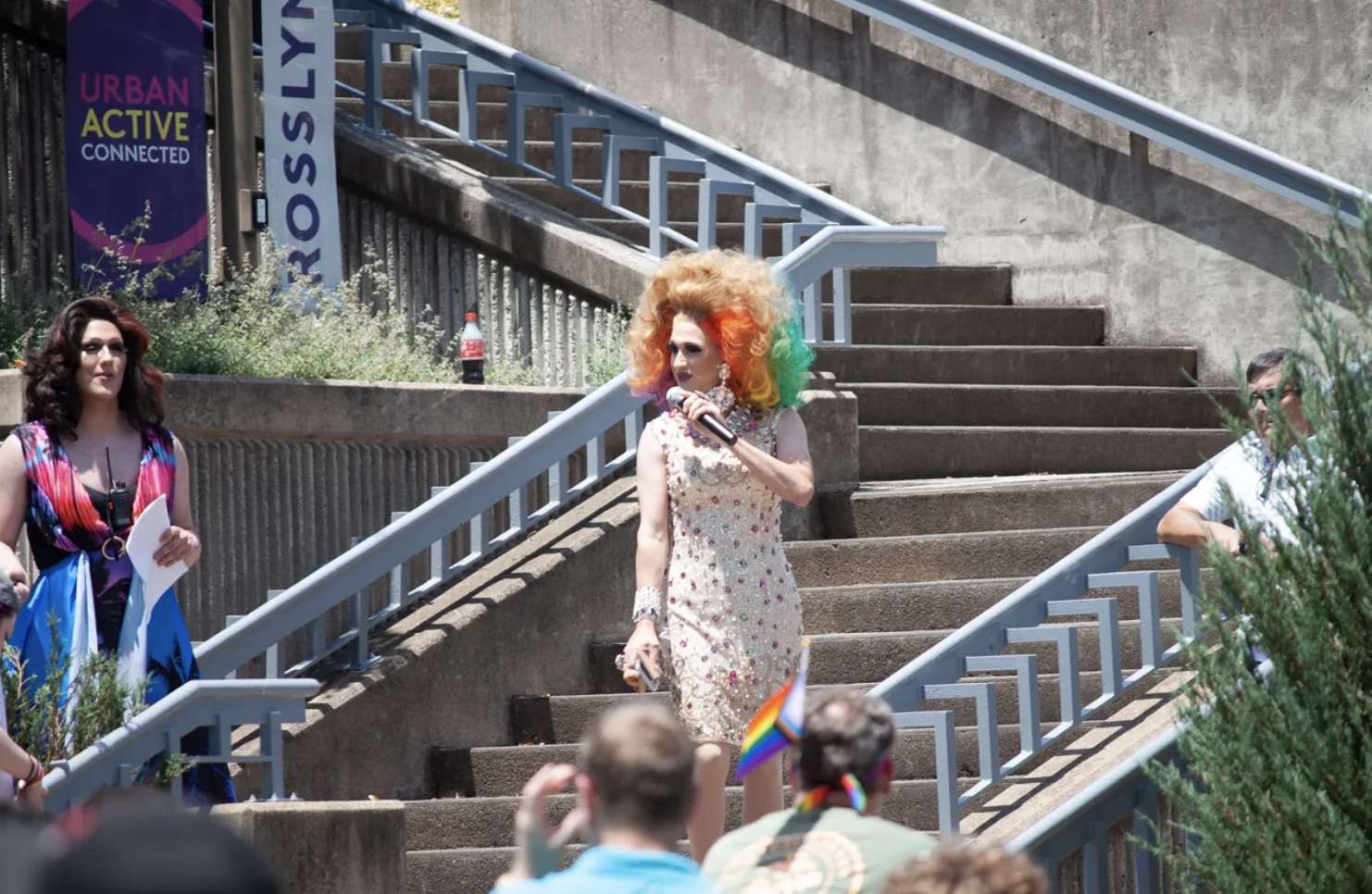
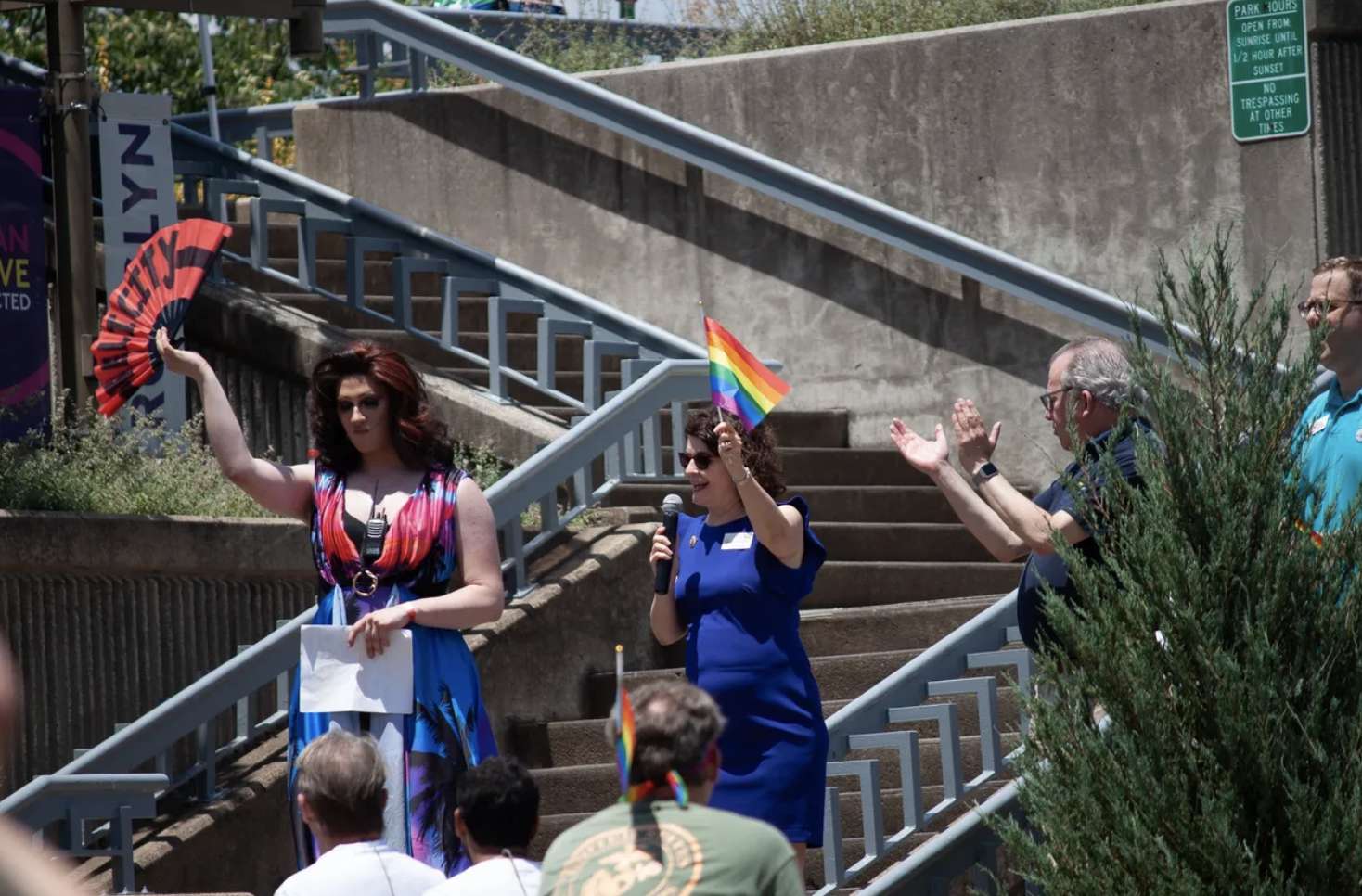
Tomorrow, the spotlight will fall on local drag entertainers in Crystal City.

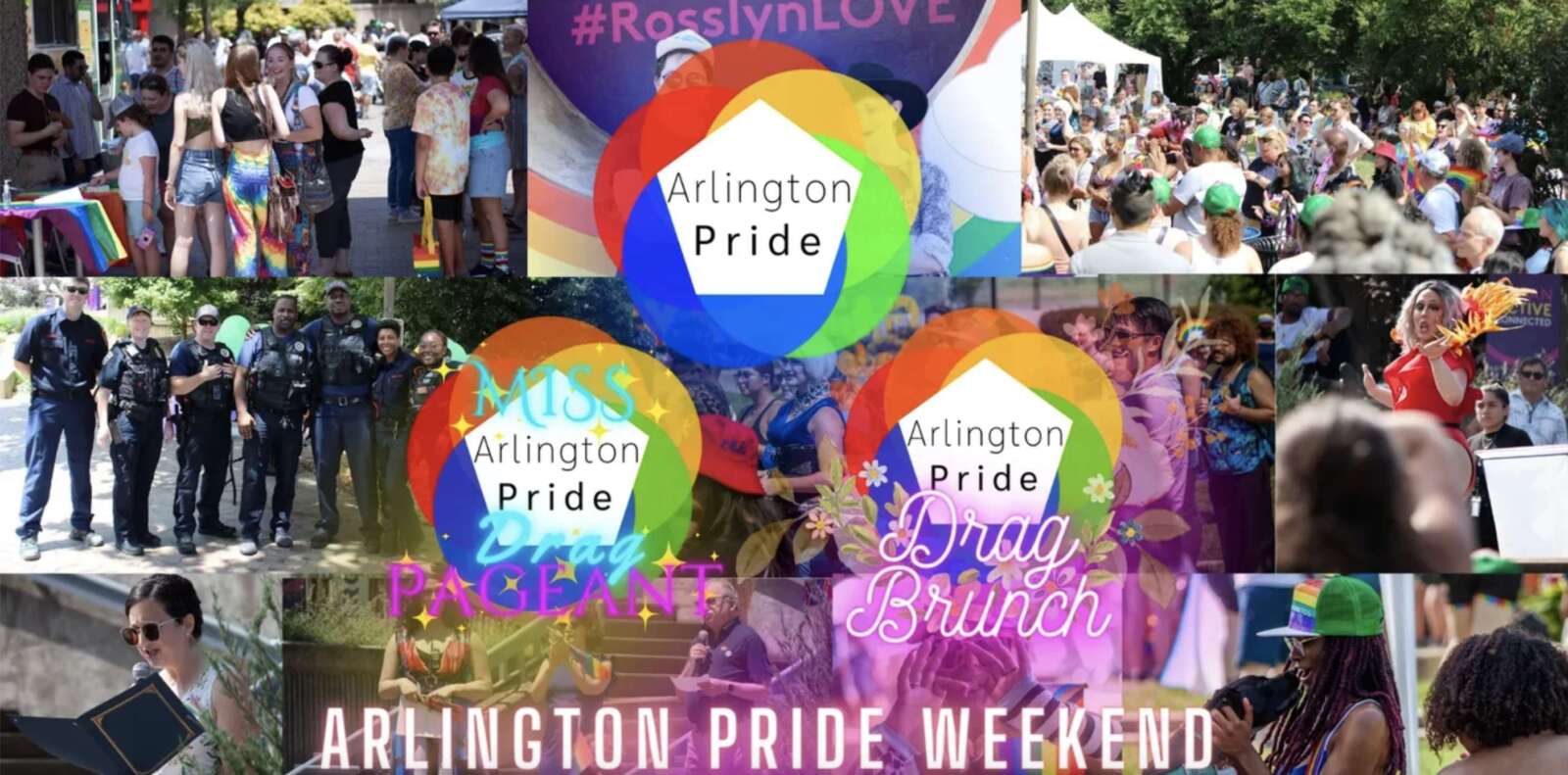
The inaugural Miss Arlington Pride Drag Pageant on Friday will kick start Arlington’s second-ever Pride festival.

“Hosted by the incomparable Shi-Queeta Lee, the Miss Arlington Pride Drag Pageant is going to be one of the most anticipated local events of the summer,” an event page says. “This event will be full of charisma, uniqueness, nerve and talent from our contestant, and an abundance of drag entertainment as we determine who takes the crown for 2023.”

Contestants can compete in four categories: presentation, talent, evening dress and a Q&A. The event runs from 8-9:30 p.m. at the Hyatt Regency Crystal City (2799 Richmond Hwy), located near Reagan National Airport. Doors will open for entry at 7 p.m.

Attendees will need a ticket, which can be bought online. Regular admission costs $20 but a VIP package is available for $160. This ticket reserves a table for up to 10 guests and comes with a free drink and a gift bag.

The proceeds from sales will be donated to an undisclosed nonprofit.

After the drag pageant, Pride festivities will continue all weekend long in Crystal City and Rosslyn. Details are available online.


News
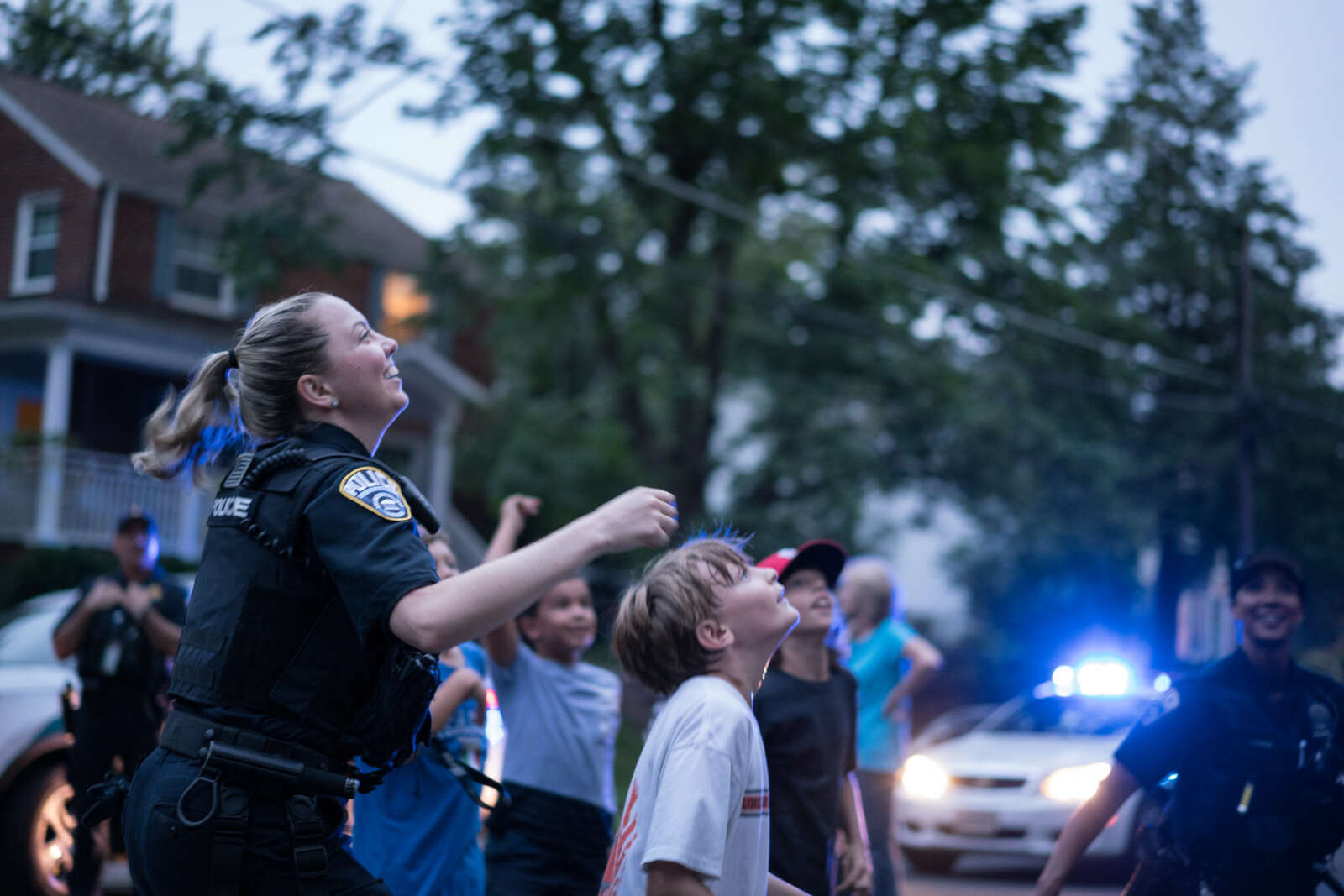
A police officer plays a game of pickup basketball with local kids in 2018 (Flickr pool photo by Kevin Wolf)

(Updated at 2:10 p.m.) A new youth program could divert youth who commit misdemeanors and nonviolent felonies from the juvenile legal system.

Arlington police will be able to refer offending juveniles to local programs aimed at holding youth accountable outside of the court system, according to a press release from the Center for Youth and Family Advocacy (CYFA).

“Community-based diversion is critical to community policing because it recognizes young people’s capacity for change,” the organization said in a statement. “Community-based diversion also reduces the possibility of collateral consequences arising from legal system involvement, which can have lasting, and often unexpected, effects on a youth throughout their life.”

CYFA works Arlington County’s juvenile court services unit to provide a variety of youth-led programs, through which kids who acknowledge wrongdoing can make amends and rejoin their communities.

It offers programs such as “Youth Peer Court,” in which trained teens occupy the roles of prosecutor and defense attorney, judge and jury and help develop a plan the juvenile follows to repair the harm he or she committed.

Now, police will be able to refer kids to that program and another, in which kids learn how to facilitate conversations about issues impacting teens by those harmed and those doing the harm.

The nonprofit says its new partnership with ACPD, in the works since 2019, is a “radical change” in how Arlington County addresses delinquent behavior in kids and prevents them from being involved in the formal juvenile legal system.

Until recently, for instance, police officers were in Arlington Public Schools. The intent was to maintain school safety and provide mentorship, though there were community concerns that the school presence resulted in racial disparities in juvenile arrests.

For the police department, the CYFA partnership is a new way to stay involved in the lives of children without involving the full weight of the courts.

“ACPD recognizes that using restorative justice programs for particular incidents involving youth provides an opportunity to divert youth from the criminal justice system while still holding them accountable for their actions and providing persons who have been harmed an opportunity to be actively involved in the resolution of their case,” department spokeswoman Ashley Savage told ARLnow.

The two organizations will work together to educate locals about how to also utilize these two programs when police are not involved, CYFA says.

The nonprofit says the partnership advances the aims of the county’s Police Practices Group, which suggested more than 100 ways to reform policing in Arlington.

“It creates space to reframe police response from adversarial to solution-focused and provides an opportunity to shift cultural and societal reliance on police resources,” CYFA said.

In a Facebook post, the organization provided a “shoutout” to several officers within ACPD for their work to stand up the program, as well as to Chief Andy Penn and Deputy Chief Wayne Vincent “for their tremendous work on strategic planning.”

The organization additionally thanked County Manager Mark Schwartz and the Arlington County Board for supporting its efforts.

Flickr pool photo by Kevin Wolf