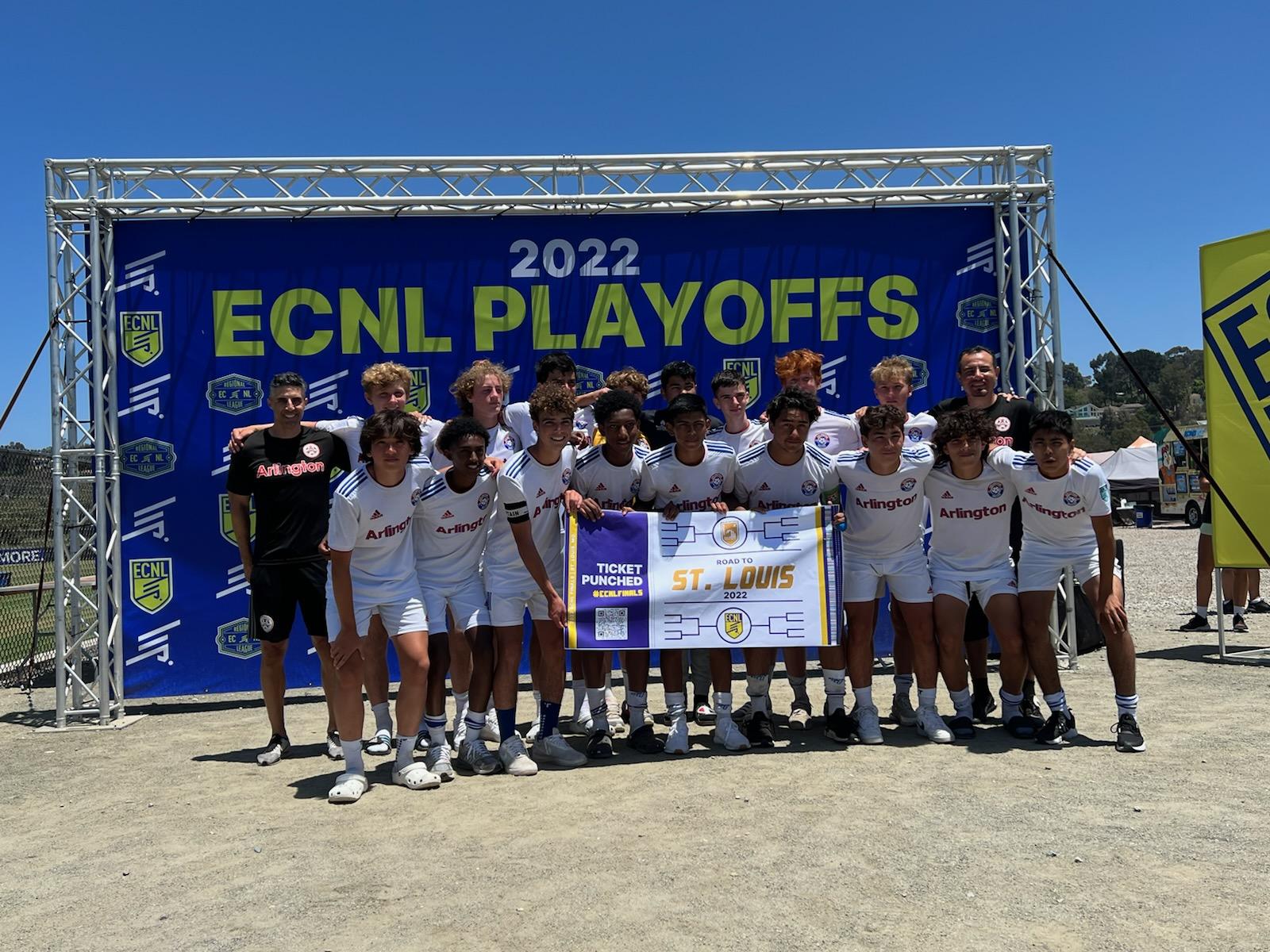
The 2006 Boys Academy team last year, in a group photo (courtesy of Arlington Soccer Association)
Arlington’s preeminent youth soccer league is nixing white shorts.
The Arlington Soccer Association announced yesterday that it would replace white shorts with blue shorts, starting in the fall. The move will create the “best possible environment for [female athletes] to feel comfortable and perform at their highest level.”
The issue, a spokesperson for the association says, is that the white shorts can be somewhat transparent at times and are easily stained. Similar moves away from white shorts for female soccer players have been reported this year among national teams and a U.S. National Women’s League Soccer team.
A Time article about the New Zealand and England national teams adopting new shorts colors cites “female athletes around the world voic[ing] concerns over period anxiety during matches.”
White shorts will be replaced by blue shorts for all travel teams — boys and girls — ASA says.
“We already have an all-blue uniform set for our home games. And then we currently wear all white for our away game uniforms,” noted Jerome Boettcher, ASA’s Director of Communications and Engagement. “The new away uniforms will be a white jersey top with blue shorts. The away uniforms will remain all blue.”
The organization’s full press release about the move is below.
The Arlington Soccer Association will replace white uniform shorts with blue beginning in the fall of 2023 for all of its travel teams for home and away games. The change is intended to promote player confidence.
“We believe in empowering our female athletes,” Arlington Soccer Executive Director Frank DeMarco said. “As a result of player feedback, and their concerns about wearing white shorts, we have decided to implement a change. We want to support them by creating the best possible environment for them to feel comfortable and perform at their highest level.”
Arlington Soccer values all its players and strives to foster their love of soccer. The club recognizes the importance of supporting girls in sports throughout their adolescence and providing every opportunity for them to continue playing. Ensuring that all players are comfortable and confident in Arlington Soccer uniforms is one of many efforts that demonstrates the club’s commitment to player well-being and their overall experience.
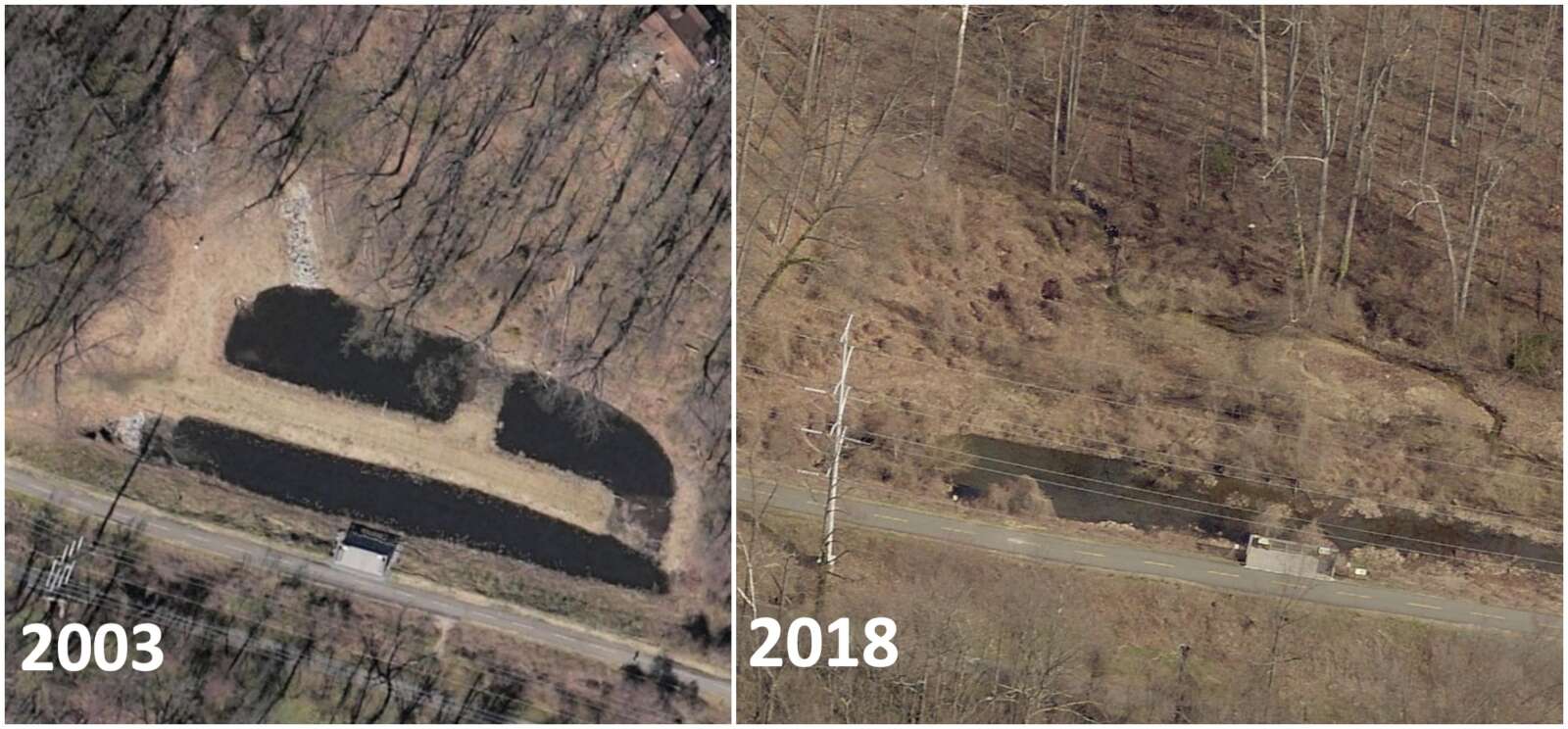
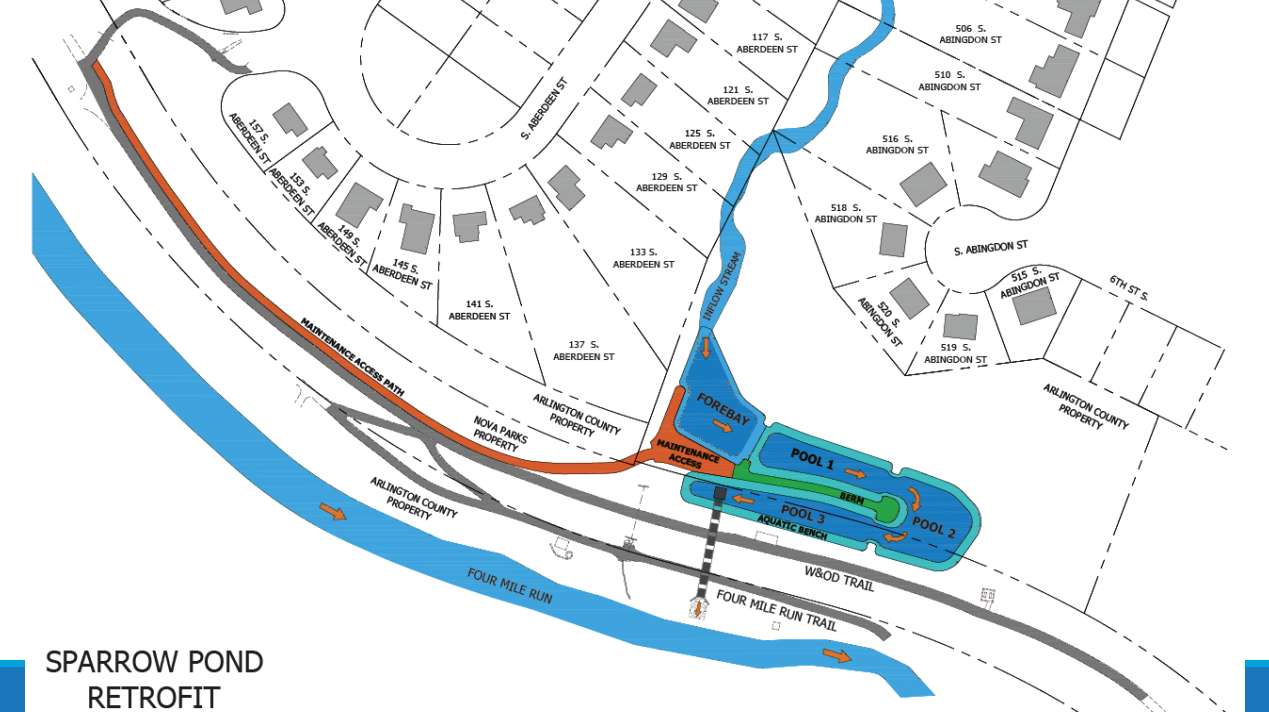
New designs for Sparrow Pond (via Arlington County)
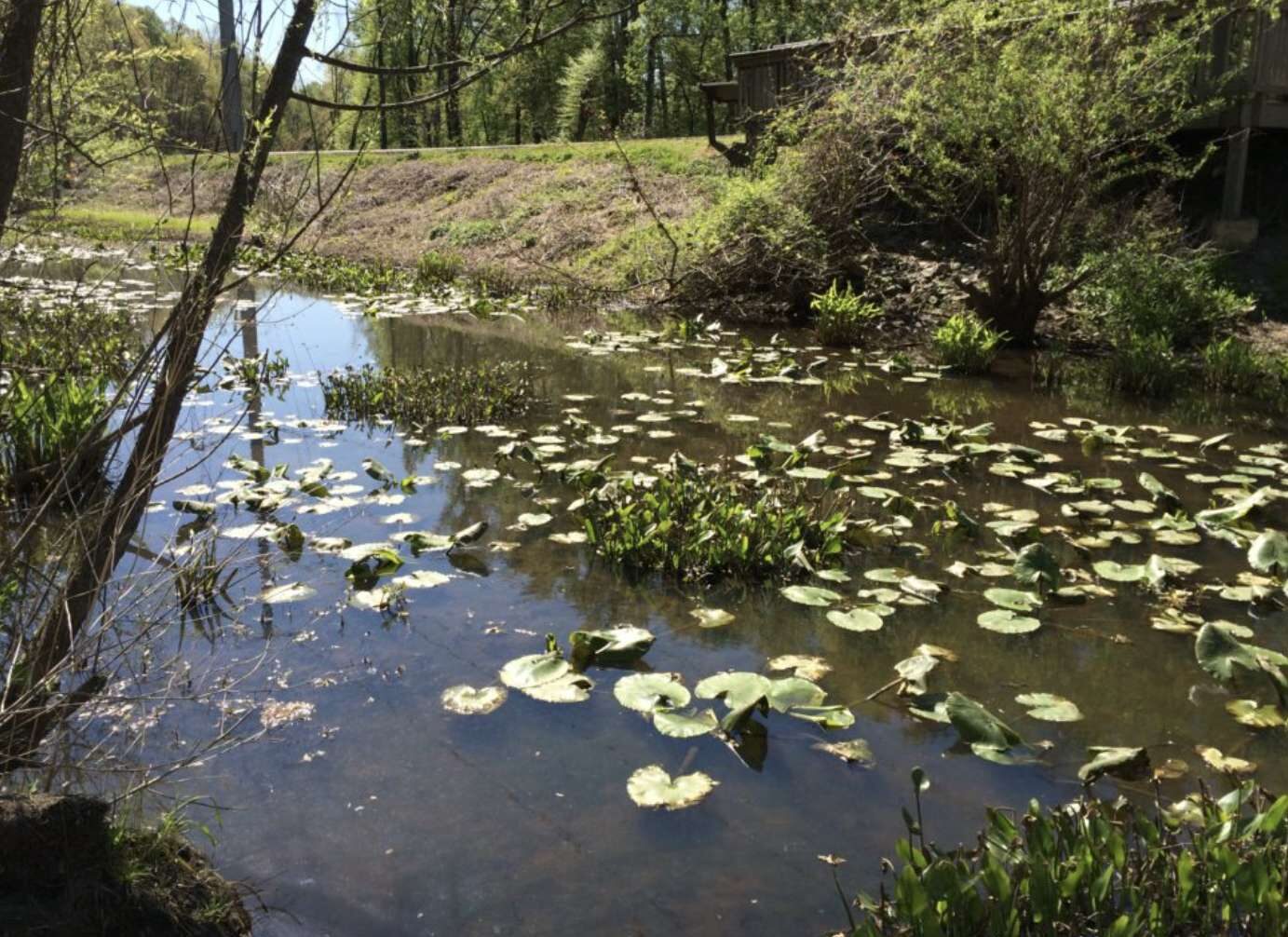
Mallard ducks made their home in Sparrow Pond (Photo via Flickr Pool/Dennis Dimick)
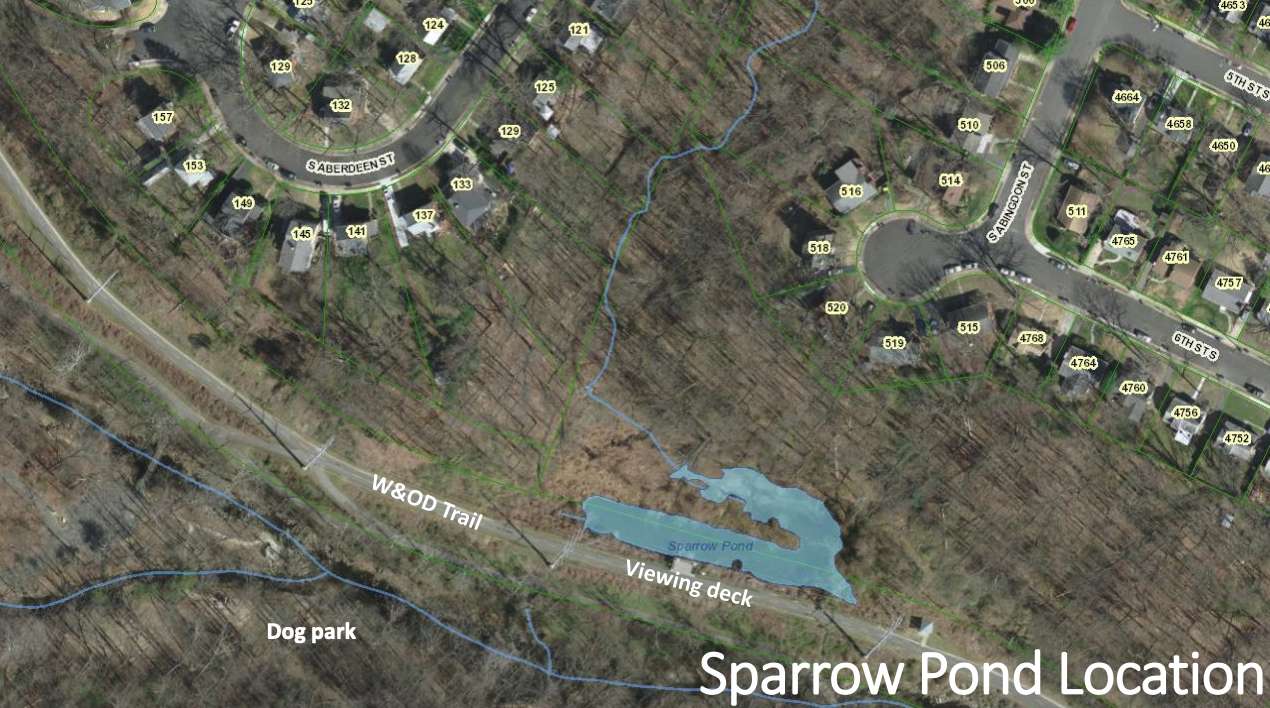
A $2.1 million contract to restore Sparrow Pond in Glencarlyn Park is set for Arlington County Board consideration this weekend.
The planning of the Sparrow Pond restoration project began in the spring of 2019. It will add new stormwater management facilities while restoring the sediment-laden pond.
At its upcoming Saturday meeting, the Board is set to consider a contract with construction company Triangle Contracting that includes a base of about $1.8 million and a contingency of around $300,000.
Construction is now projected to take six to nine months to complete, wrapping up sometime in 2024, according to the county’s project webpage. With the project’s permitting phase now complete, construction is anticipated to start by the end of this summer or early this fall.
The work is necessary because the pond has become filled with sediment and overgrown vegetation since being built in 2001-2002, according to county staff.
“The project will convert the pond to a constructed wetland to restore its stormwater management functions, as well as improve water quality, increase wildlife habitat, and restore native plant species,” a staff report to the County Board said.
“Planned improvements include adding a forebay to accommodate accumulation and removal of sediments, a maintenance access path, a riser structure, and an outfall culvert to safely convey the stormwater runoff to the Four Mile Run stream during high storm events,” staff noted.
A community meeting, open to the public, will be held regarding construction plans before the project begins. The specific date of the meeting will be posted on the project webpage.
The restoration will benefit residents in the area of the pond, county staff said, along with W&OD Trail users and local wildlife.
Reducing sediment infiltration from stormwater and improving water quality will “restore the pond to the original depth,” the county said, and improve the “habitat for herons, ducks, turtles, frogs and fish.”
This recurring Real Estate feature is sponsored by The Eli Residential Team. Their mission is to guide, educate, and advocate for their clients through real advice, hands-on support, and personalized service. This week’s post is written by Carolanne Korolowicz.
In Arlington, the contention between urban development and environmental preservation is ever present. Citizens went to bat to save Arlington’s tree canopy during the Missing Middle debacle, there are environment-focus ballot measures almost every election, and plenty of local associations with a mission to preserve the county’s green landscape. But, did you know that debating over trees is actually an Arlington tradition? Before boundaries were even drawn, trees have been at the center of almost every development project.
On October 21, 1767, the stage was set by John Carlyle and Charles Alexander. The two prominent figures went to trial to dispute whose land (modern day Arlington and Alexandria City) was whose. Twenty-four witnesses gave their testimonies about the land boundaries defined by tree markers. Many of these witnesses were quoted mentioning the trees’ ages, whether they had been marked as line or corner trees, and the type of instrument used. With tree-defined boundary lines, the testimonies became a source of confusion rather than clarity.
In other historical accounts, it is clear that the DC-area forefathers viewed trees as part of the area’s heritage. A friend of Thomas Jefferson wrote, “Nothing affected Mr. Jefferson like this wanton destruction of the fine trees scattered over the (Federal) City grounds.” The friend also stated that Jefferson himself once said, “The unnecessary felling of a tree, perhaps the growth of centuries, seems to me a crime little short of murder.” As obvious by these statements, the conservation cause has always been one of great passion.
(A part of George Washington’s Oak Tree Displayed at The Glencarlyn Library, Photo: ArlingtonHistorical.com)
The acknowledgement of prominent trees has been documented over the centuries. George Washington’s survey oak in Glencarlyn being one of the first. Later in 1860, a large, anciently marked poplar tree was noted to be a landmark for the Cherrydale Neighborhood, but was cut down for the Washington and Old Dominion Railway in 1912. George Nicholas Saegmuller, an original owner of “Reserve Hill”– today’s Knights of Columbus Arlington Headquarters– planted a strip of evergreen forest from LIttle Falls Road to Old Dominion Drive as a homage to his homeland of Germany. Most importantly, the first tree to be given protection was one of the oldest oak trees of the Nation at the Grunwell Estate, located in Country Club Hills, in the late 19th century.
(A Champion Ash tree in Barcroft Park being measured, Photo: Arlington County)
Citizens acting as stewards of wildlife are deeply rooted in the makeup of Arlington. This symbiotic relationship remains today through the Forest and Natural Resources Commission’s Notable Tree Nominations. Since 1987, the volunteer-led program has awarded over 400 significant trees and their caregivers. In 2024, eleven trees were selected, including four on Fort CF Smith, six in North Arlington and one located on the corner of Columbia Pike and George Mason Drive. Though not legally protected, the status has proved helpful when communicating the importance of conservation during development projects.
What makes for a notable tree? The committee looks for these three items: size, neighborhood value, and uniqueness. Nominations are due every year on October 31st – so it’s not too late to submit! For legal protection, an application must be submitted for a ‘Specimen Tree’ through the Trees and Shrubs Ordinance. This designation requires tree conservation and protection if development of a site occurs. Violations result in a civil penalty of up to $2,500. Applications are due September 30th every year.
(A 2024 Notable Tree Winner: Deodar Cedar on Fort CF Smith, Photo: Arlington County)
As headbutting between developers and “tree-huggers” continues on, Arlington County has made efforts in favor of the area’s ecosystem over the decades. The citizens hold the power to improve these protections. Nominating trees for significance, or legal protection, is the easiest way to make a difference.
To quote the late local historian Eleanor Lee Templeman, “Although Arlington County has already lost a great deal of its forests through careless development of subdivisions, an awakened public concern over this priceless heritage will save a great deal of remaining beauty. Our stream valleys and palisades still possess true wilderness areas which must be preserved for posterity.” (Arlington Heritage: Vignettes of a Virginia County, 1959)
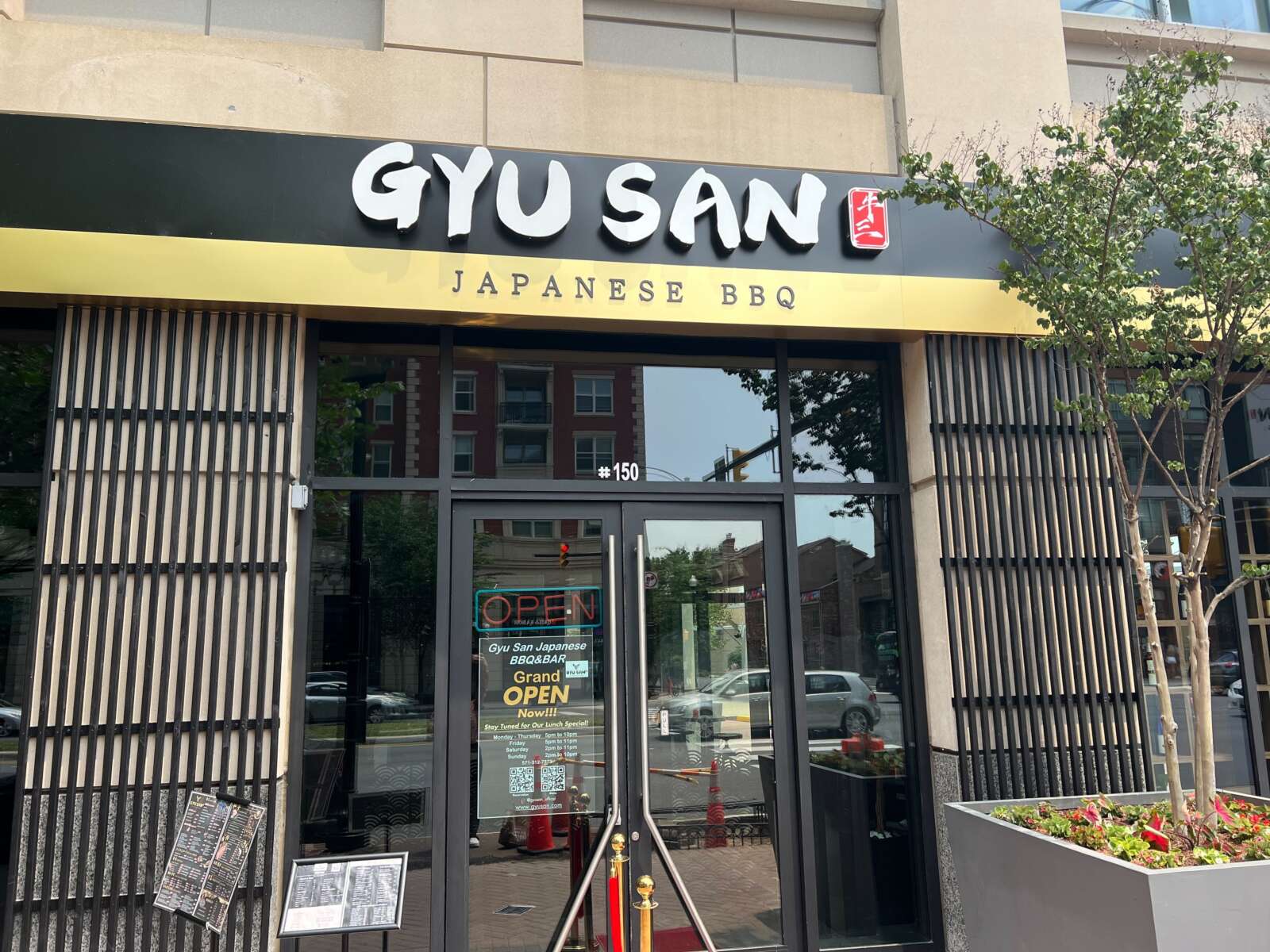
Gyu San is now open in Ballston (staff photo by Vivian Hoang)
Gyu San is now open in Ballston (staff photo by Vivian Hoang)
A new Japanese barbeque restaurant has started sizzling in Ballston.
Gyu San BBQ opened late last month at the corner of N. Glebe Road and Wilson Blvd, a restaurant spokesperson confirmed to ARLnow.
ARLnow first reported last September the restaurant was coming to the space that was formerly occupied by Bangkok Bistro, which closed in 2020.
It’s in the Ballston Point building, which it shares with the coffee shop Slipstream, which opened recently, albeit on the opposite side of the triangular building. World of Beer, at the building’s “point,” closed in April.
Gyu San is from Ivea Restaurant Group, which owns a number of other restaurants in Arlington and across the region. That includes Chinese dim sum eatery Tiger Dumpling and Japanese izakaya-style restaurant Izakaya 68, which are set to open next to each other on Washington Blvd in Clarendon. No word yet on when those establishments might start serving.
While Gyu San BBQ has only been up for a short time, Yelp reviews are already generally positive.
“Fun new spot in Ballston that did not disappoint,” reads one. Several reviews did note that it gets busy on weekends.
Gyu San is competing with at least one other local Japanese barbeque restaurant, Gyu-Kaku, which opened several years ago in Clarendon.
Commonwealth’s Attorney Parisa Dehghani-Tafti at Arlington Democrats election watch party in November 2019, when she was elected to office (Staff photo by Jay Westcott)
Last week, we invited the candidates running in competitive races in the June 20 Democratic primary to write a post about why Arlington residents should vote for them. Find information on how and where to vote here.
Below is the unedited response from Parisa Dehghani-Tafti, incumbent for the office of Commonwealth’s Attorney for Arlington County and the City of Falls Church.
Four years ago, I ran for Commonwealth’s Attorney on the simple idea that we could build a more just legal system while still keeping our community safe. I am proud to say that since I took office, we have made that idea a reality. I have kept the promises I made to implement criminal justice reform here in Arlington, helping to make our community one of the safest in the country.
As promised, I have expanded opportunities for diversion for lower level crimes and non-violent crimes. I helped create a mental health docket and expanded our drug court, quadrupling the number of people served by it. These diversion programs get people the treatment they need rather than simply incarcerating them and ignoring the underlying issue. This both makes our community safer, and is the right thing to do.
I have also worked to make the legal process easier on victims and survivors. I reorganized the office to implement a victim-centered prosecution model. This means that only one prosecutor or team is assigned to each case so that victims aren’t being shuffled around between different prosecutors at every stage. Further, I have helped empower victims by creating a restorative justice program for appropriate cases. And, unlike my opponent, I don’t prosecute victims of domestic violence for fighting back against their abusers.
I have used my lobbying power as a prosecutor to advocate for safer gun laws and criminal justice reforms and am a Moms Demand Action Gun Sense Candidate. I supported Red Flag laws, ending the death penalty, decriminalizing marijuana, and many other legislative efforts. More than once, I have convinced VACA (the statewide Commonwealth’s Attorneys’ lobbying group) to see the other side of an issue and refrain from opposing reforms. That’s why I’ve earned the endorsement of local progressive legislators like Delegates Patrick Hope and Alfonso Lopez, and Senator Barbara Favola.
Of course, my office aggressively prosecutes serious crimes like rape, murder, and gun violence. Under my supervision, the office’s trial conviction rates on violent felonies have nearly doubled over those of my predecessor. The overall trial conviction rate is also significantly higher. And we have achieved these increases even as we take a higher percentage of cases to trial.
As you may know, before becoming the Commonwealth’s Attorney, I spent many years working at the Mid-Atlantic Innocence Project. In doing so, I saw the harm that results—both to the accused and to crime victims—when the system gets it wrong. That’s why I created a conviction review unit to review old convictions for mistakes. That unit has already helped overturn a conviction and keep a woman from being wrongfully deported away from her family and the only country she knows.
To prevent errors going forward, I have also made strides to even the playing field with the defense and make sure trials are a fair fight. Immediately upon taking office, I ended my predecessor’s outdated policy requiring defense attorneys to hand-copy documents and began providing open-file electronic discovery. And, my office was one of the first in the country to stop using peremptory strikes in jury trials except in limited circumstances. This is a commonsense way to prevent discrimination in jury selection.