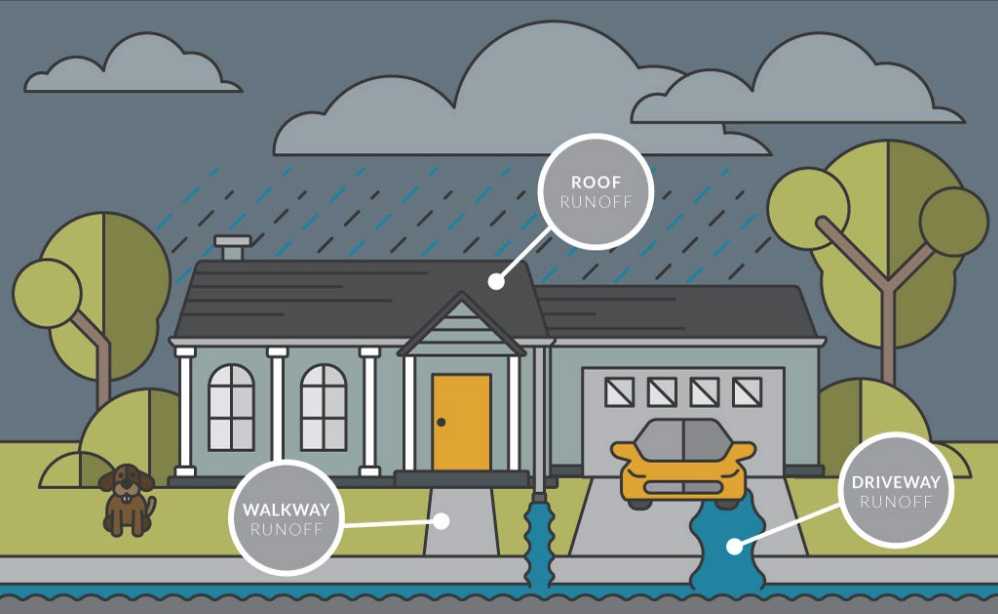
Examples of impervious area that causes stormwater runoff (via Arlington County)
This weekend, the Arlington County Board is set to consider a new tax based on how much hard surface your property has.
Property owners with more hard surfaces that do not let rain soak into the ground — such as roofs and driveways — can expect to pay larger fees than those with fewer such surfaces. Revenue would support the county’s stormwater management fund, which pays for flooding mitigation projects.
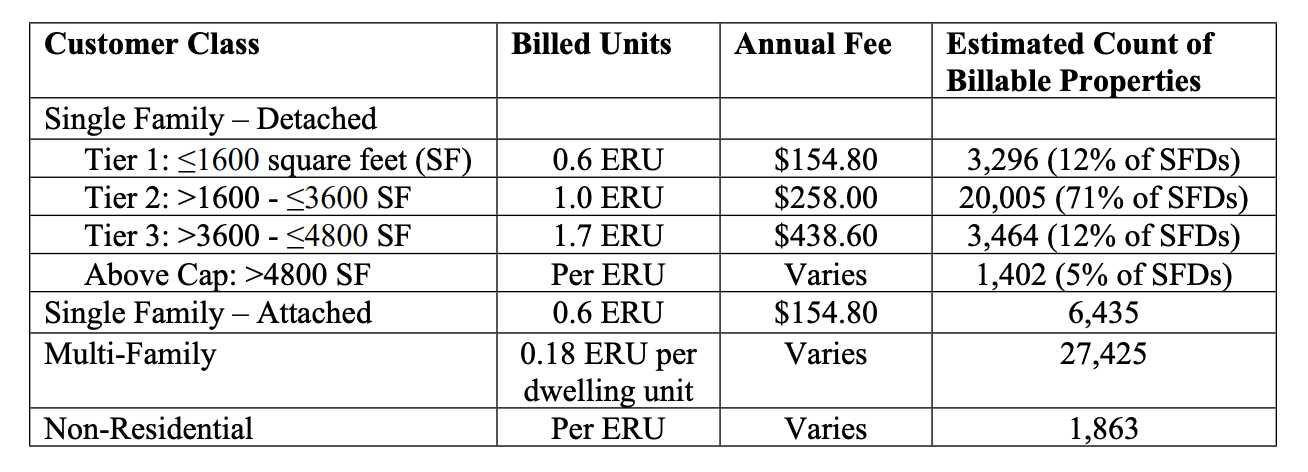
The proposed rate would cost residents $258 per 2,400 square feet of impervious area, though this figure could change annually to support the budget, similar to how the county approves other fees and taxes. Property owners can receive credits for steps they take to reduce stormwater runoff.
Like the current sanitary district tax, the stormwater fee will be billed twice a year on the real estate bill, a county report says. The first bill will be sent to property owners in May, due June 15, 2024, and the second bill will come in September, due Oct. 5, 2024.
Homeowners can get a sense of their bill by plugging their address into an online map, which estimates impervious area using satellite imagery. This can range from $154 for a home under 1,600 square feet to some $19,000 for one local Catholic church.
The rate structure for the stormwater utility (via Arlington County)
If approved, the stormwater utility tax would replace the current sanitary district tax ($0.017 per $100 of assessed value on all taxable property) starting in the new year. The county says this is a fairer approach than using property assessments because there is not much of a correlation between property assessments and impervious areas.
“The rationale for using the amount of impervious area on each property, rather than all taxable real estate, is that it directly correlates with stormwater runoff that contributes to the County’s stormwater system,” a county report says. “Under the stormwater utility model, properties with more impervious area, which are therefore contributing more to the stormwater system, pay a higher fee.”
Following state requirements, Arlington will offer credits to customers who reduce the runoff their properties contribute to the stormwater system. In an informal Q&A last week, county staff said the number of credit applications coming in has kept them busy.
Arlington’s credit program rewards voluntary actions such as adding rain gardens. Now through Jan. 15, all property owners can apply for voluntary credits to offset up to 35% of their bill, or about $80 per 2,400 square feet. Details on credit options are spelled out in this county manual.
Properties where owners have added stormwater facilities mandated by statute, around 1,900, will automatically receive credits. These properties add up to about 1% of projected revenue and the county budgeted a total of 2% of revenue for credits.
Staff said the county will evaluate the amount of credits it dolls out each year, against the amount of revenue it needs to generate, to determine rates, and will study its rates every five years.
Senior and disabled residential property owners as well as disabled veterans and their surviving spouses are eligible for total fee relief, as they currently qualify for real estate tax exemptions and deferrals.
The idea of funding the county stormwater program with a tax on impervious surfaces has been in the works for three years. In May 2020, a consulting firm recommended Arlington transition to a utility funding model after researching how such a fee would affect different types of customers and examining different rate structures.
One year later, the Arlington County Board directed staff to do more analysis, engage the community and provide options for a utility fee by the 2024 proposed budget. In April, the Board adopted a resolution signaling its intent to adopt the stormwater utility ordinances.
As a 23-year-old voter in still-segregated 1960s Virginia, Portia Haskins was convinced she had followed all the rules in order to cast a ballot in Arlington.
Election officials disagreed, saying she had failed to pay the appropriate poll tax still required in the Old Dominion, maintained in part to disenfranchise Black voters.
Haskins took the county, and state, to court. She won, with her case ultimately being folded into the landmark 1966 Harper v. Virginia Board of Elections decision of the U.S. Supreme Court.
Haskins was an unusual legal combatant, committed to seeking unity.
After her efforts to vote were rejected at the local level, Haskins enlisted support from the Congress of Racial Equality (CORE) to challenge the ruling. She traveled several times to the U.S. District Court in Richmond, then watched as the case and others like it moved to the Supreme Court.
Her reaction at the final outcome? “I was so happy,” she said.
The 6-3 ruling in Harper v. Virginia Board of Elections effectively outlawed requiring poll taxes for state elections in those few states, like Virginia, that retained them. The poll-tax requirement for federal elections had been eliminated with ratification of the 24th Amendment to the U.S. Constitution in 1964.
Lessons from the struggle are still valuable today, said Haskins, now 83.
“Everybody has to come together and fight” when they see injustice, she said. “You have to get together.”
Historical photo of Portia Haskins (via Black Heritage Museum of Arlington)
Haskins is among the Arlingtonians profiled in the “From Barriers to Ballots,” an exhibition marking the 60th anniversary of the Voting Rights Act of 1965. Several versions of the exhibition are on display across Northern Virginia, with one at Central Library running through Nov. 4.
The Arlington Historical Society partnered on the exhibition, and was excited about the Haskins presentation, former president David Pearson said.
“She is someone we really wanted to learn about,” he said, pointing to a renewed effort to “really get out the stories of the complete history of Arlington.”
Haskins has been a member of Mount Salvation Baptist Church near the Glebewood neighborhood since 1951, and in the community she has promoted “the spirit of community and empowerment,” said Scott Taylor, president of the Black Heritage Museum.
Haskins lamented that much of the history of the civil-rights movement is being lost in the public consciousness.
“We went through a lot, but people today don’t know,” she said. Young people in particular, she said, “don’t care because they don’t know.”
Her request to today’s youth? “Let everybody know how you feel” and use the ballot box to create change.
“Voting is important. That’s what everybody really needs to do,” Haskins said.
As another year comes to a close, ARLnow’s advertisers — along with members of the ARLnow Press Club — have helped us continue to report on your community.
To the long-term and new advertisers alike, we say: thank you for supporting local news in Arlington.
Interested in reaching hundreds of thousands of readers while supporting local reporting in your community? Check out our new 2024 media kit.
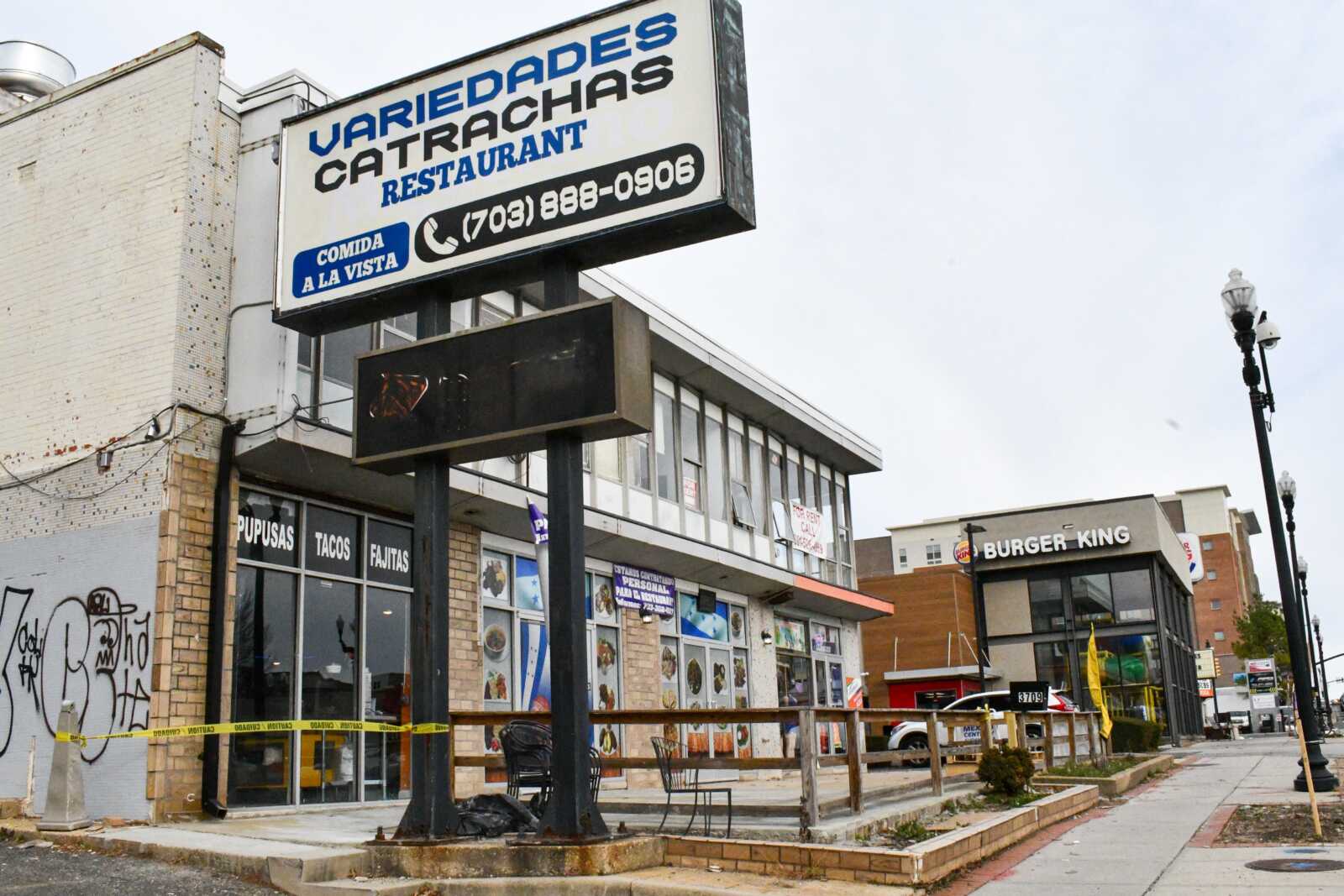
Variedades Catrachas restaurant on Columbia Pike (staff photo by James Jarvis)
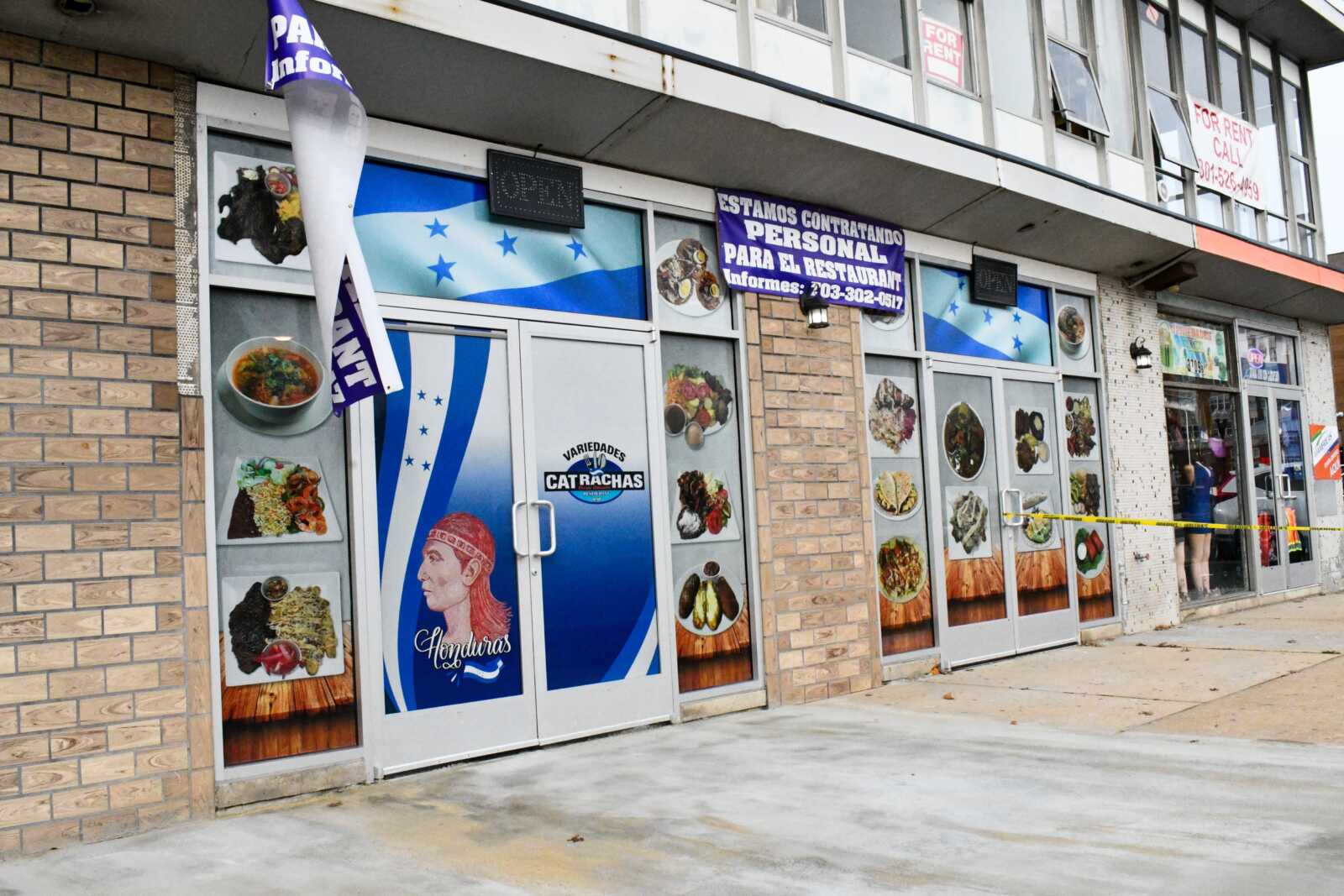
Variedades Catrachas restaurant on Columbia Pike (staff photo by James Jarvis)
A new restaurant specializing in traditional Honduran and Salvadoran cuisine is opening on Columbia Pike tomorrow.
Located at 3709 Columbia Pike, Variedades Catrachas is expected to welcome its first customers starting at 5 a.m. this Friday, the owner Jessica Canas told ARLnow.
Offering breakfast, lunch and dinner, the menu includes a variety of items such as soups, tacos, enchiladas, tamales and several egg-based dishes.
Canas also owns a Honduran restaurant in Alexandria called Las Catrachitas but this is her first foray into the Arlington food scene.
Variedades Catrachas joins the Pike’s bustling scene for Central and South American cuisine, including the recent additions of Mpanadas, Sabores and Taqueria el Poblano.
The restaurant will be open from 5-2 a.m. on Monday, Thursday and Friday; 5 a.m. to 11 p.m. on Tuesday and Wednesday; 6-2 a.m. on Saturday; and 7-2 a.m. on Sunday.
Join us the evening of Saturday, April 22nd for food and drinks while we celebrate the opening of our Spring-Summer exhibit featuring Megan Elizabeth.
Broadway Gallery, an Alexandria purveyor of Fine Art, Custom Framing, and Installation needs presents a solo exhibition featuring local artist, Megan Elizabeth April 22 through July 31, 2023.