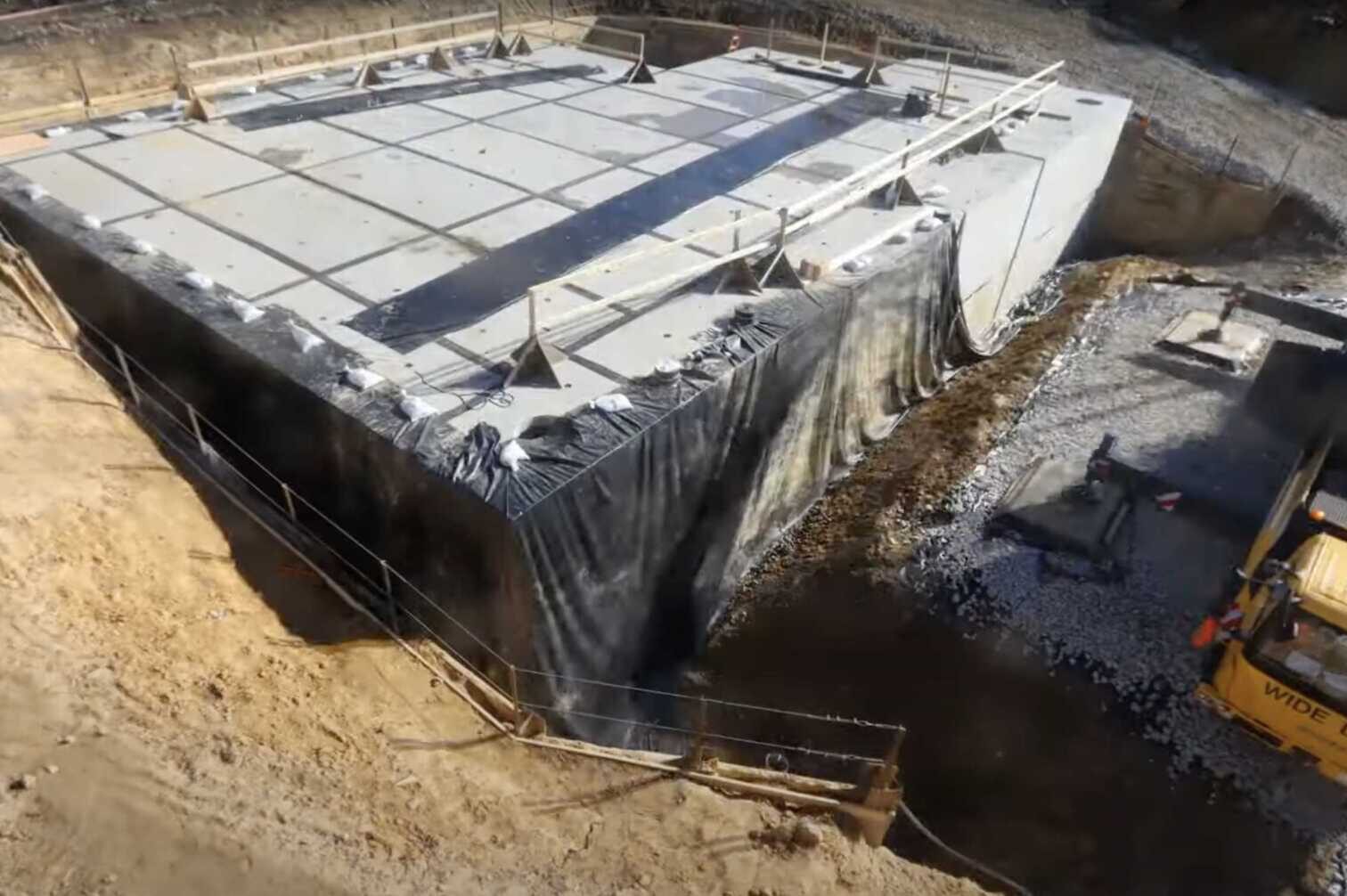
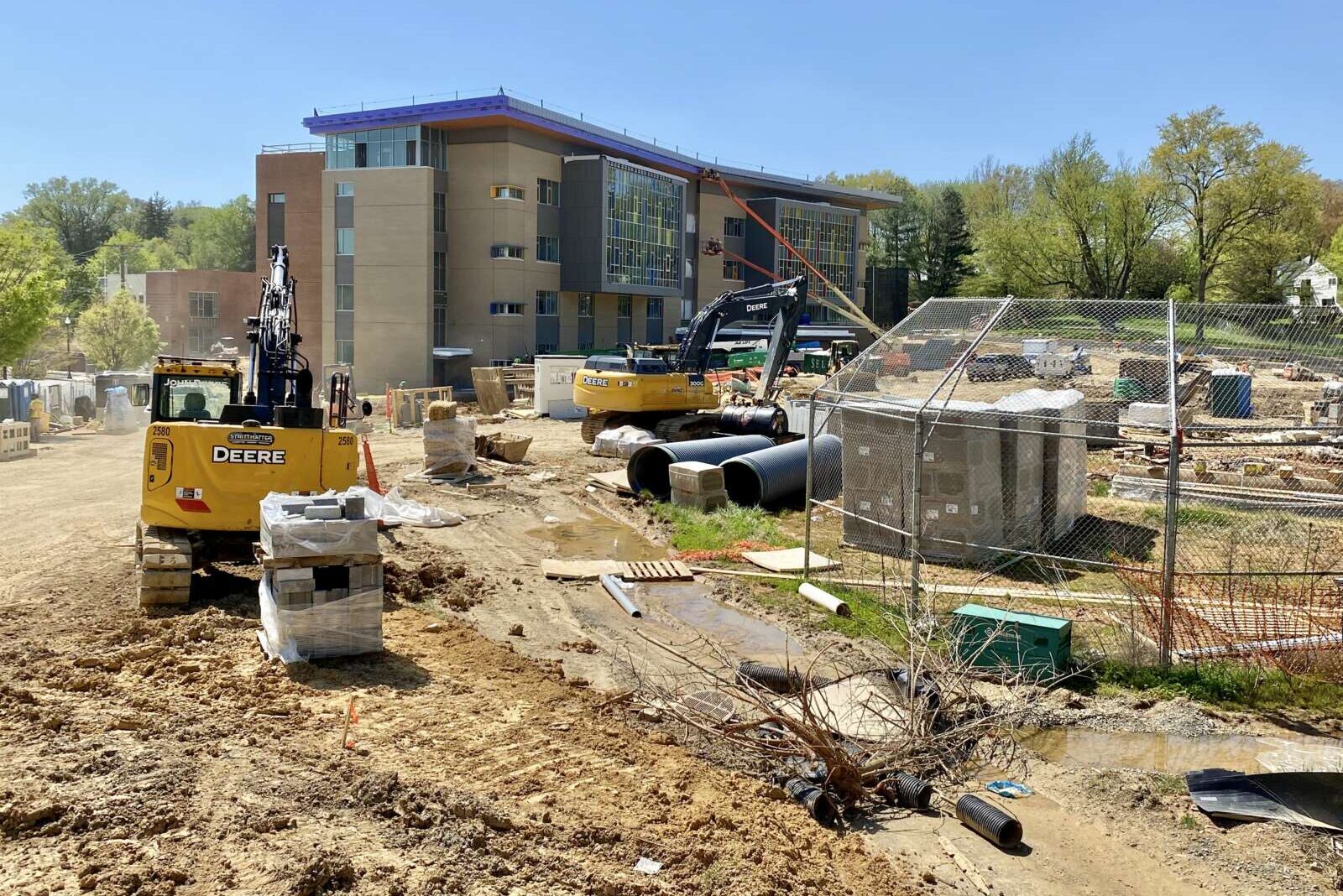
A large, $18 million stormwater vault underneath Cardinal Elementary School in the flood-prone Westover neighborhood is now complete.

The vault responds to community concerns that arose after significant flooding washed over Westover in July 2019.

Arlington County will mark the completion of the vault with a ribbon-cutting this Saturday during a neighborhood festival at the school, dubbed Westover Day. Beyond celebrating the completed vault, Westover Day will also mark the completion of the new school building, athletic field and playground with school tours, live music and food trucks.

The 47,000-square-foot vault is part of the county’s strategy, dubbed Flood Resilient Arlington, to mitigate the major impacts of flooding. Located in the Torreyson Run watershed, Westover is one of the communities being prioritized for stormwater upgrades.

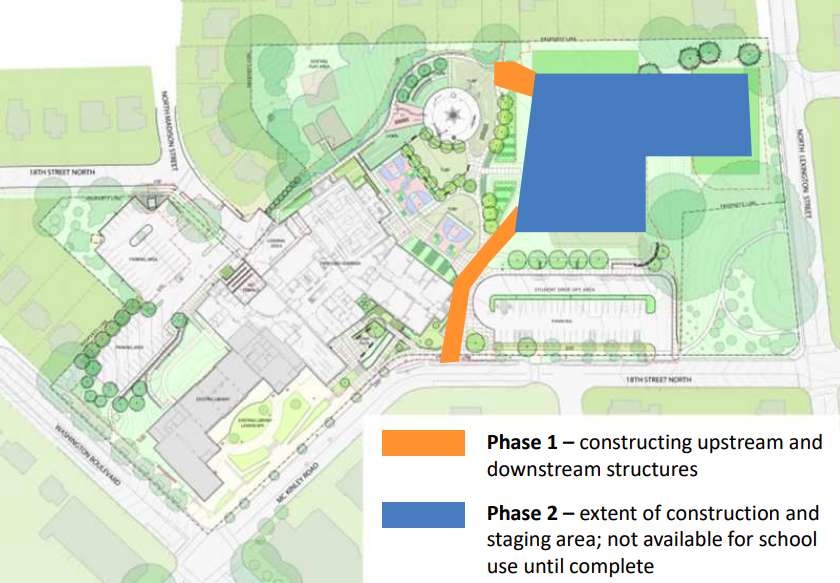
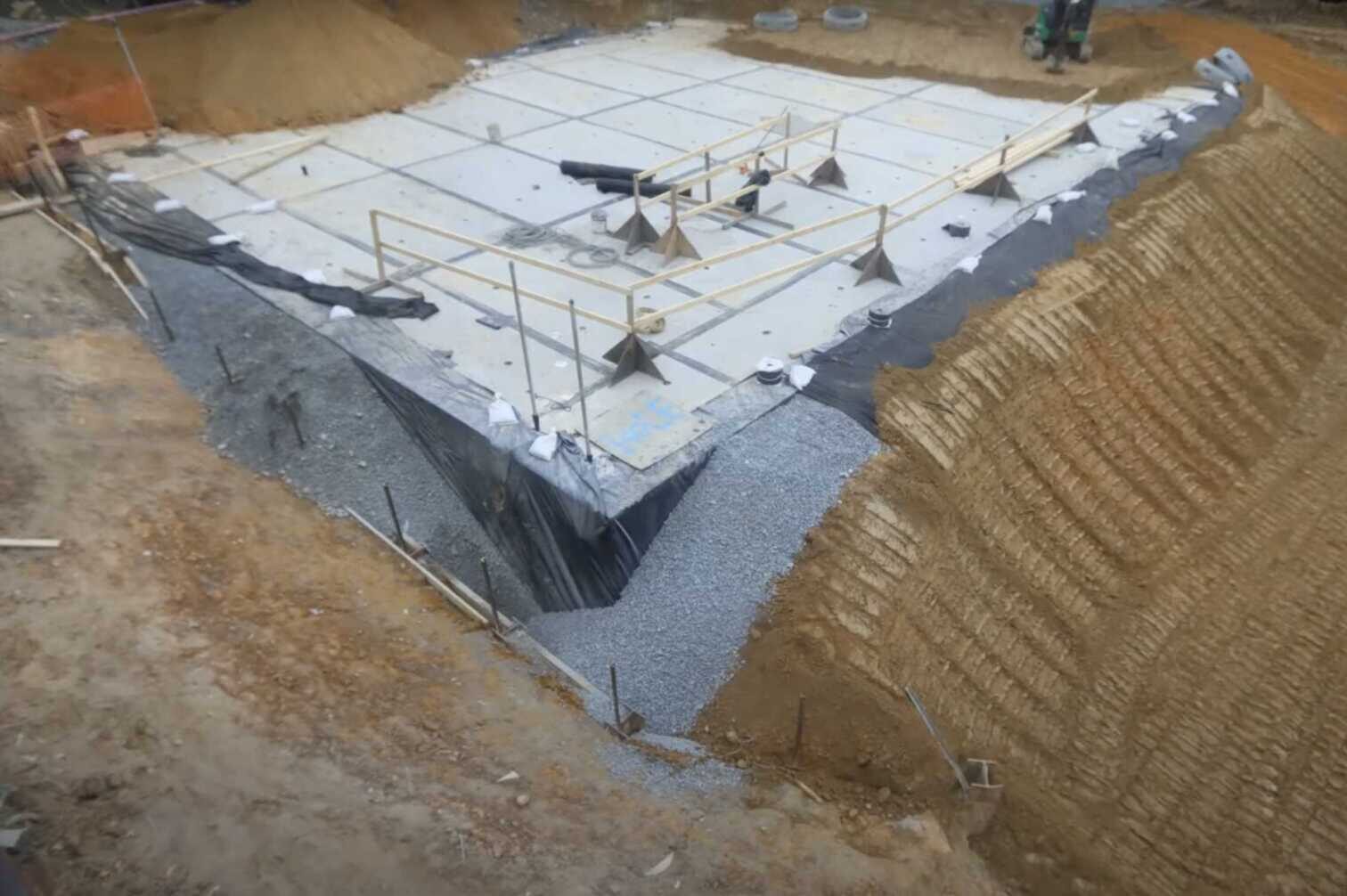
The vault is designed to hold just over 4 million gallons of stormwater — “equal to six Olympic swimming pools,” according to the county. Its construction, a joint effort by Arlington County and Arlington Public Schools, took two years and was separated into two phases.

First, underground pipes and junction boxes were installed to divert water from an existing storm sewer beneath the school property to where the newly built vault would be, according to the county website. Then, in December 2021, construction of the vault began. It was substantially completed this June.

A video below shows a timelapse of construction through last December.

The athletic fields atop the stormwater vault were closed for sodding but the county tells ARLnow the work is now complete and the fields open.

The ribbon-cutting for the vault at Cardinal Elementary comes on the heels of another county stormwater improvement project.

On Tuesday, county officials celebrated the transformation of the once sludge-filled Ballston Wetland Park into a more robust stormwater filtration system and wildlife refuge.
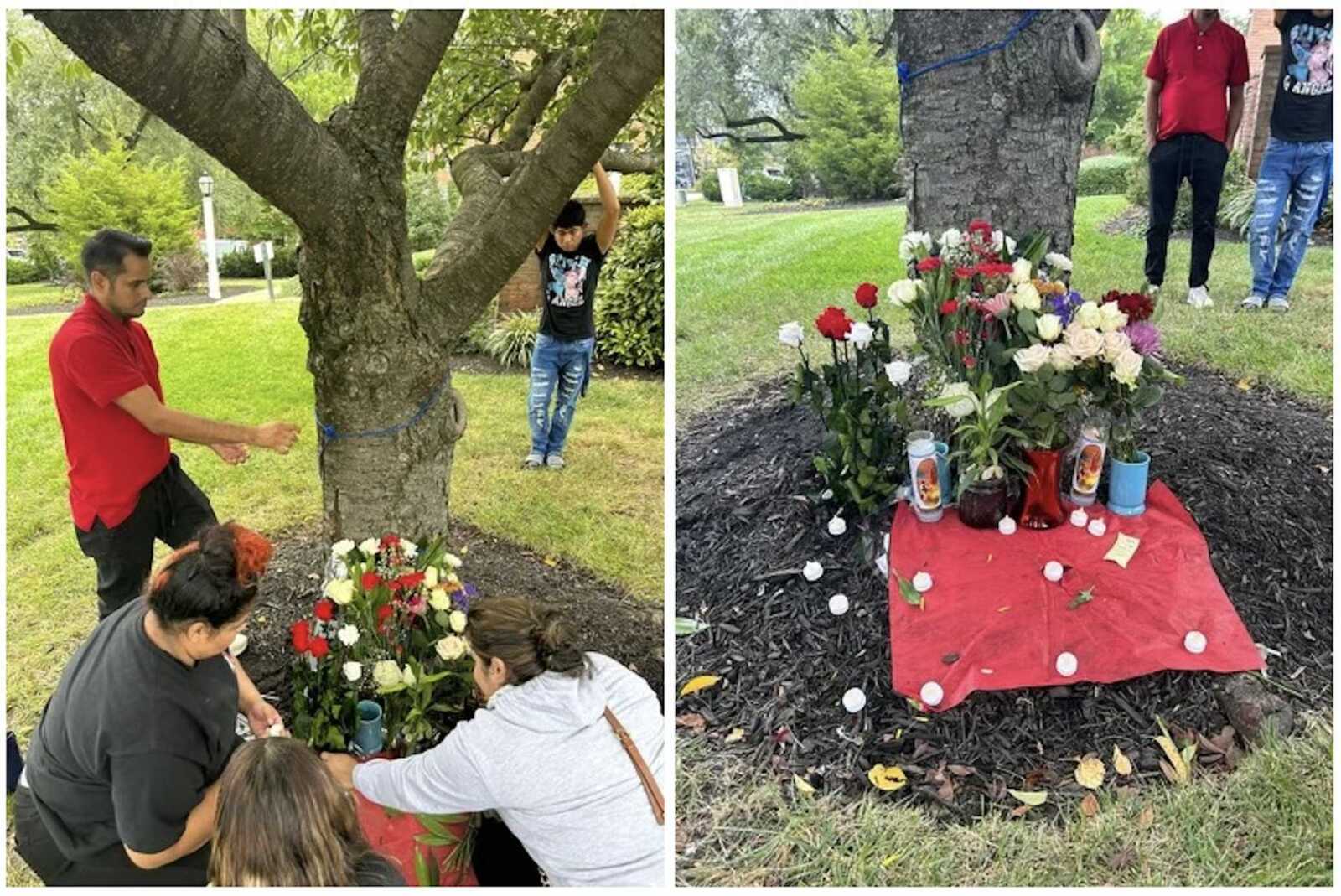
Friends and family gather at a memorial for Jorge Rodríguez (courtesy Janeth Valenzuela)

A Wakefield High School freshman named Jorge Chavarria Rodíguez died Thursday evening, according to several sources.

The 16-year-old attended Barcroft Elementary School and Kenmore Middle School and had just started his 9th-grade year at Wakefield, per an email from Wakefield Principal Peter Balas to the school community.

“Jorge was a beloved member of the Wakefield, Kenmore, and Barcroft families, and impacted the lives of many of our students and staff members,” Balas said in the email, which Arlington Public Schools provided to ARLnow. “He was excited and happy to join the Wakefield family, with staff recalling his genuine smile.”

This marks the second death of a Wakefield student this calendar year. APS confirmed on Monday, a school holiday, that Jorge was not on school grounds at the time of his passing.

Arlington County Police Department spokeswoman Ashley Savage said police found a deceased teen last Thursday at an apartment building in the 5100 block of Columbia Pike. Officers were dispatched just before 8:30 p.m. on Thursday for the report of an unresponsive person on the ground.

First responders reported that the person was dead upon their arrival on scene, according to scanner traffic.

Now, ACPD is conducting a death investigation and the Office of the Chief Medical Examiner will determine cause and manner of death. She noted a preliminary investigation “has not revealed an ongoing threat to the community related to this incident.”

In a GoFundMe page created by Jorge’s mother, Luz, she writes in Spanish that she is living through the worst pain a mother can experience. She says her biggest wish is to give him the final goodbye he deserves as a beloved son.

An English-language description below describes Jorge as “a happy and playful child, a good student and an excellent son.”

“My heart is broken knowing that his dreams will not come true and that his life was short,” she says. “I thank you in advance for your expressions of affection and collaboration. I wouldn’t wish this pain on anyone. May my little Jorge rest in peace.”

Over the weekend, a tribute to her son, made of flowers and saint candles, started growing around a tree across the street from the Columbia Pike Plaza shopping center. The GoFundMe, meanwhile, has circulated on social media and received some 265 donations, totaling more than $13,000 of the $25,000 goal, as of publication.

https://twitter.com/pondfamily/status/1705932502341177431?s=46&t=PyhgdUMYHjgfAse98_Ue_A

The Arlington County Board briefly discussed the 16-year-old’s passing on Saturday.

Reading from texts he received, Board member Takis Karantonis said it was possibly an overdose, amid attempts by Chair Christian Dorsey to interject.

“Whatever the circumstances, it’s a tragic thing, and I’m really devastated and heartbroken about this,” Karantonis said.

Dorsey cut the the discussion short, saying that “resources are going to be made available to the students next week [and] details are not known at this time.”

In a statement, community activist Janeth Valenzuela said adults and responsible citizens need to act quickly or risk losing more children to death and addictions.

“We want to make changes, now,” she said. “Not tomorrow, today. Let us not allow this death to be one more of others, let us use this pain that burns our soul to gain momentum and defend our children and the children of our community with our claws.”

(more…)


The Arlington Public Schools Syphax Education Center (staff photo by Jay Westcott)

High school-based behavioral health services could be in place by November or December of this year, according to the county.

In the wake of a mini-rash of student deaths earlier this year that included the fatal overdose of a 14-year-old Wakefield High School student, Arlington Public Schools and the county government began devising a joint response to the twin epidemics of substance use and mental health issues.

This included plans to place county therapists in schools. The intent was to make it easier for students to get mental health support from the Dept. of Human Services, overseen by Arlington’s Community Services Board, or CSB.

“Both APS and the County seek to reduce barriers for children and youth to receive services from the Arlington CSB,” a county report says. “This agreement will allow for the provision of outpatient services in the school setting rather than the office setting. It will significantly reduce or eliminate the need for transportation and potential family time away from work.”

As part of the 2024 budget adopted earlier this year, the Arlington County Board approved $520,000 in ongoing funding and four full-time employees for this program. Recruitment of the four employees is underway, per the report.

The county notes the program responds to calls from the community for more services to youth.

“Expanded behavioral health services for children and youth has been identified as a community need by both Arlington Public Schools and the County through ongoing dialogues with stakeholders,” the report says.

The report emphasizes that the School-Based Behavioral Health Program cannot be the single, defining solution for struggling teens.

It “supplements and reinforces families’ efforts to enhance youth mental wellness by teaching and coaching youth to develop coping skills for managing emotional challenges in order to improve functioning at home, school, and in the community,” the report says.

The county and APS spent the summer hammering out a memorandum of understanding permitting the DHS Children’s Behavioral Health Bureau to provide behavioral health support in high schools. This weekend, the County Board is set to ratify the document.

Once the four behavioral health specialists are hired and finish mandatory training, they could begin practicing in Arlington high schools in November or December, the report says.


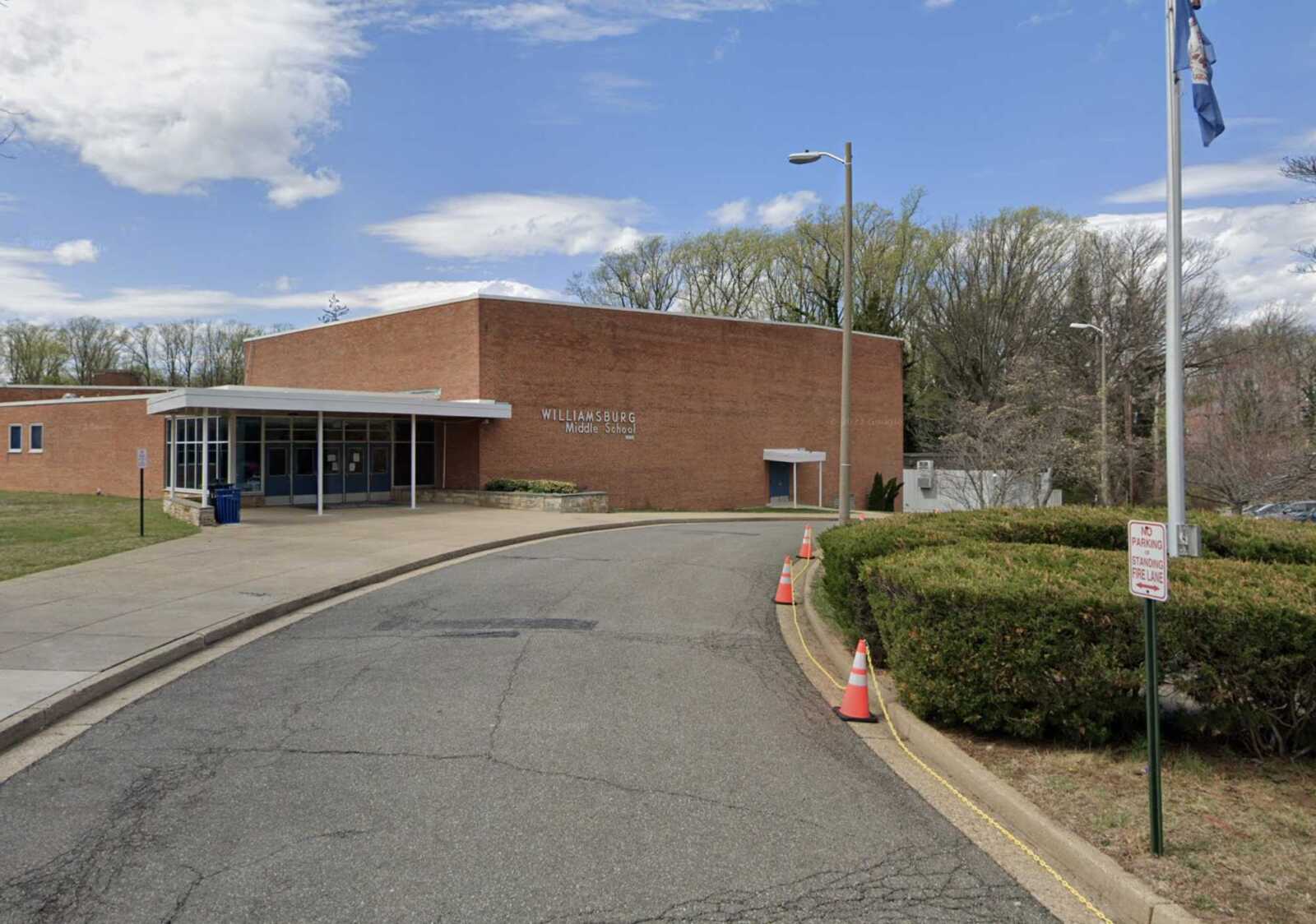
Williamsburg Middle School (photo via Google Maps)

Williamsburg Middle School has been named a National Blue Ribbon School for 2023.

The prestigious honor from the U.S. Dept. of Education has been presented to fewer than 10,000 schools since its founding in 1982. It honors “high-performing schools and schools that are making great strides in closing any achievement gaps between students.”

The National Blue Ribbon School designation was previously bestowed on a handful of Arlington public schools, including Arlington Traditional School in 2019, Patrick Henry Elementary in 2015 and Yorktown High School in 2002.

“This is an extraordinary achievement for our students, staff, and community,” Bryan Boykin, principal of Williamsburg Middle School, said in a statement. “Being recognized as a National Blue Ribbon School demonstrates the hard work of our educators and students, as well as our community’s continued commitment to supporting our schools and students. We are incredibly proud of the accomplishments of our students and the quality of our staff.”

More, below, from a press release.

The U.S. Department of Education today announced Williamsburg Middle School is one of 353 schools awarded National Blue Ribbon Schools for 2023.

The recognition is based on a school’s overall academic performance or progress in closing achievement gaps among student groups on assessments. Williamsburg Middle School earned the prestigious award for Exemplary High-Performing Schools.

“This is an extraordinary achievement for our students, staff, and community,” said Bryan Boykin, principal of Williamsburg Middle School. “Being recognized as a National Blue Ribbon School demonstrates the hard work of our educators and students, as well as our community’s continued commitment to supporting our schools and students. We are incredibly proud of the accomplishments of our students and the quality of our staff.”

The Department recognizes all schools in one of two performance categories, based on all student scores, subgroup student scores and graduation rates:

  • Exemplary High-Performing Schools are among their state’s highest performing schools as measured by state assessments or nationally normed tests.
  • Exemplary Achievement Gap-Closing Schools are among their state’s highest performing schools in closing achievement gaps between a school’s student groups and all students. Nominated schools also complete an extensive narrative application describing their school culture and philosophy, curriculum, assessments, instructional practices, professional development, leadership structures, and parent and community involvement.

U.S. Secretary of Education Miguel Cardona praised all honorees in a statement:

“The honorees for our 2023 National Blue Ribbon Schools Award have set a national example for what it means to Raise the Bar in education. The leaders, educators, and staff at our National Blue Ribbon Schools continually inspire me with their dedication to fostering academic excellence and building positive school cultures that support students of all backgrounds to thrive academically, socially, and emotionally. As the Biden-Harris Administration partners with states and schools to accelerate academic success and transform educational opportunity in this country, we take tremendous pride in the achievements of these schools and their commitment to empowering educators, serving students, and engaging families.”

The award affirms and validates the hard work of students, educators, families, and communities in striving for – and attaining – exemplary achievement. National Blue Ribbon Schools represent the full diversity of American schools and serve students of every background.

National Blue Ribbon School leaders articulate a vision of excellence and hold everyone to high standards. They demonstrate effective and innovative teaching and learning, and value and support teachers and staff. Data from many sources are used to drive instruction and every student strives for success. Families, communities, and educators work together toward common goals.

Past Arlington Public Schools Blue Ribbon Award winners include Arlington Traditional School in 2004, 2001 and 2019; Patrick Henry Elementary School (Alice West Fleet) in 2015; Yorktown High School in 2002; Ashlawn Elementary School in 1990; Oakridge Elementary School in 1986; and Washington-Lee High School in 1985.

Photo via Google Maps


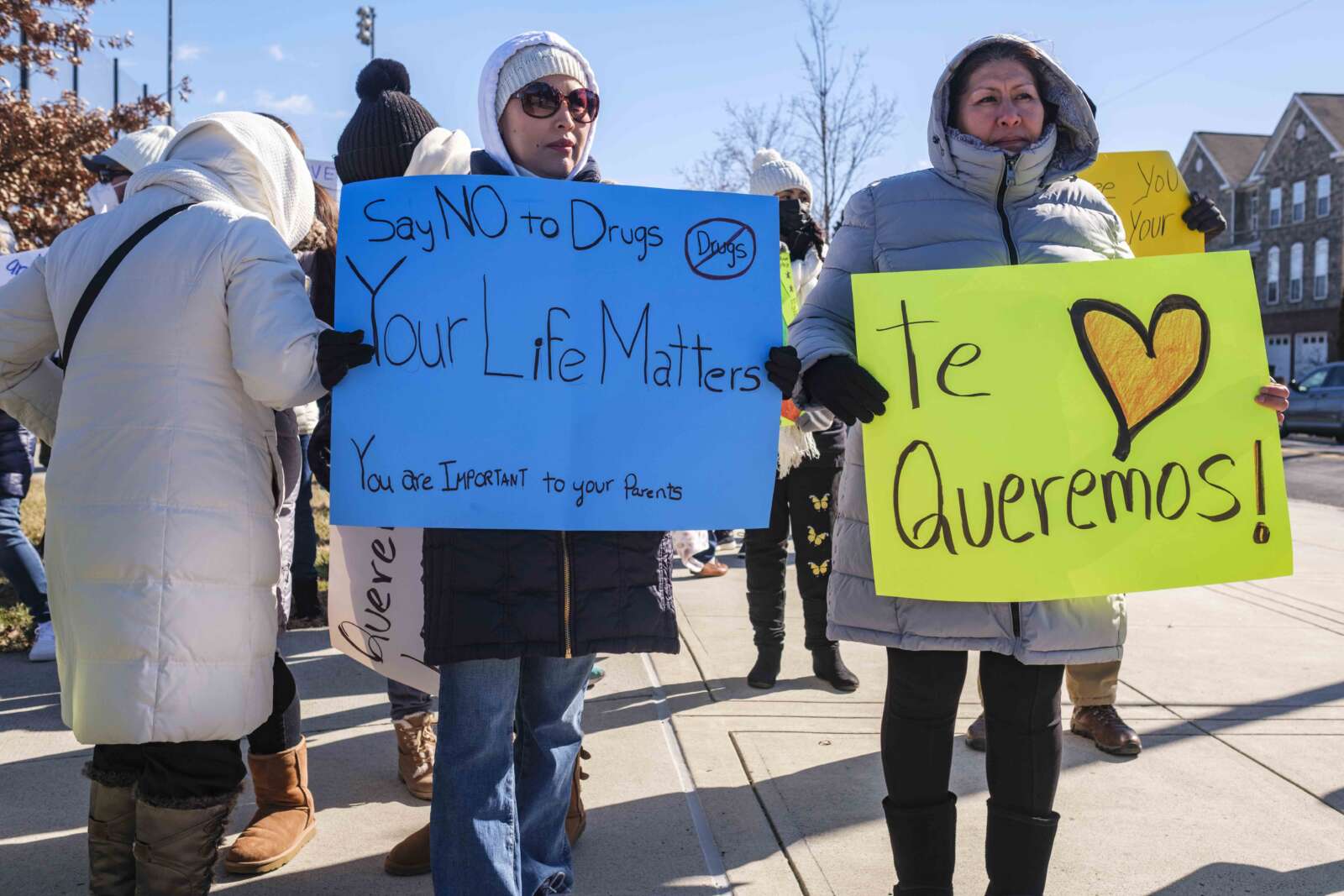
Parents and community members march at Wakefield High School after 14-year-old student Sergio Flores died of an overdose (staff photo by Jay Westcott)

Bucking statewide trends, Arlington County may be seeing opioid overdoses trend down this year.

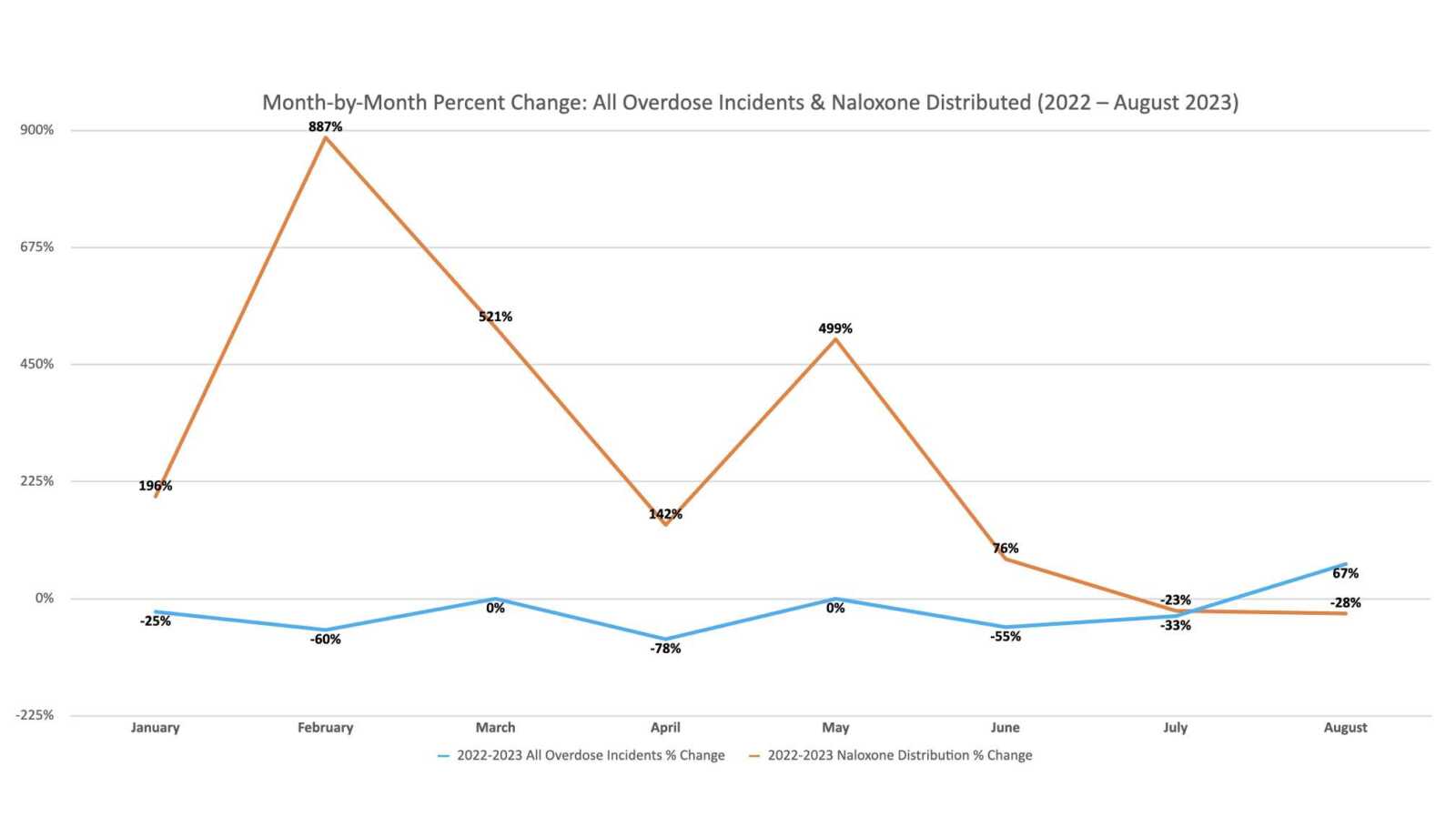
So far this year, Arlington registered 44 overdoses with Narcan — a brand name for the opioid-reversal drug naloxone — deployed in 35 instances. Of the overdoses, eight involved juveniles, all of whom received Narcan.

That marks a 31% decrease this calendar year in total opioid overdoses, compared to other Virginia jurisdictions still seeing increases, says Emily Siqveland, the opioids program manager for the county.

That is the good news, to be taken with a more sobering projection that Arlington County is not seeing a similar decline in fatal overdoses. As of this time last year, Siqveland says Arlington had the same number of fatal overdoses as it does now: 15.

Arlington County has been significantly affected by the opioid epidemic wreaking havoc on the country and the region, where the Inova health system estimates some 32% of adults have a family member or friend with an addiction. In response, the county has joined lawsuits against pharmaceutical companies linked to the opioid crisis, putting settlements toward treatment.

It was the January 2023 death of 14-year-old Sergio Flores after overdosing at Wakefield High School, however, that threw a spotlight on the use of pressed pills among young people and a lack of local treatment options for them. His passing prompted a surge in activity and conversations within Arlington Public Schools, the county and the broader community.

Eight months later, some of that work is coming together.

Percent change in naloxone distribution versus overdoses over the last year (courtesy Emily Siqveland)

Works in progress

The hyperlocal focus on young people dovetails with findings from Inova that younger generations are particularly touched by addiction. It found 32% of Gen Z and 39% of Millennial survey respondents reported having a family member or friend with an addiction.

APS has hired one substance abuse counselor and is finalizing paperwork for the other, says Darrell Sampson, the school system’s executive director of student services. This would bring the total number of counselors to eight serving the division.

This year, the Dept. of Human Services and APS are preparing to station four county therapists in the high schools. To date, 320 high school students have family consent to carry Narcan in school.

“With the additional substance abuse counselors, we’re able to expand supports to middle schools,” Sampson tells ARLnow, noting insufficient support for 6-8th graders was a concern in the community. “We want to try to keep [kids who are experimenting] from blowing up into a more full-blown addiction or using even more concerning substances.”

In June, several years after closing down its juvenile treatment program, National Capital Treatment & Recovery (NCTR) — formerly Phoenix House — debuted its new adolescent intensive outpatient program this summer.

As of yesterday (Thursday), NCTR has admitted 13 patients and has had to turn away referrals from outside the county, which it cannot accept at this time, NCTR Chief Clinical Officer Pattie Schneeman tells ARLnow.

“I anticipate the referrals will increase now that school has started, because that is often where we start seeing the needs surface, i.e. when it interferes with school attendance, etc.,” Schneeman said.

(more…)


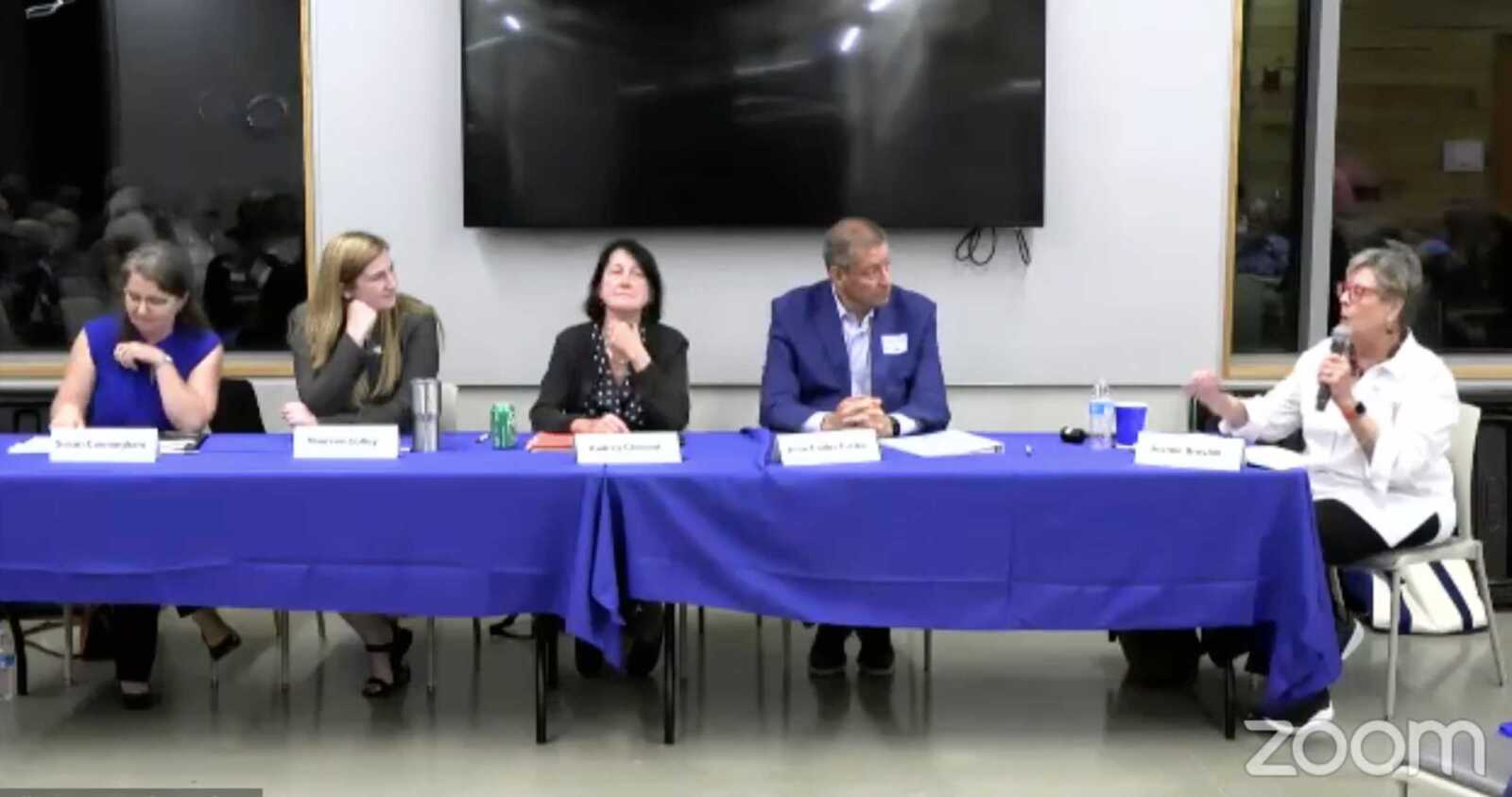
Arlington County Board candidates at the Committee of 100 forum on Wednesday, Sept. 13, 2023 (via Arlington Committee of 100/Facebook)

Arlington County Board candidates say they would like more coordination and transparency from the School Board when it comes to annual budgets and long-term plans.

The discussion arose last night (Wednesday) during an Arlington Committee of 100 candidate forum.

Candidates were asked if they support increasing the share of tax revenue the county transfers to Arlington Public Schools to, among other reasons, further tackle Covid-era learning loss. They were also asked how they would promote sustainable growth in Arlington County with an eye toward how that impacts the school system.

In their responses, Democratic candidates Maureen Coffey and Susan Cunningham hinted at closer scrutiny of the budget but pointed to a different issue they would to address: county-school coordination. Independent Audrey Clement and Republican Juan Carlos Fierro, meanwhile, said it may be time to revisit how much money the schools receive.

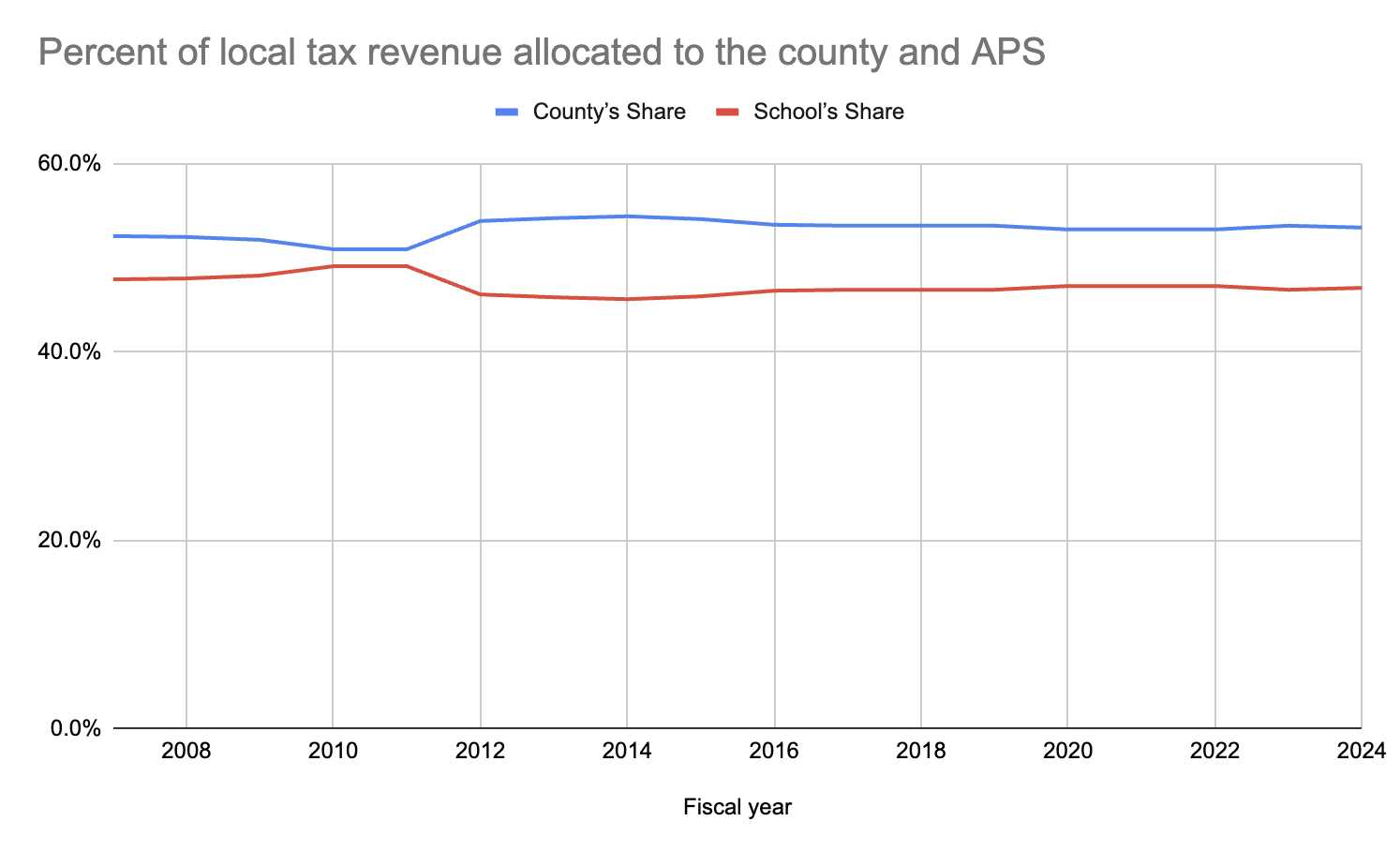
Every year, the county transfers money to APS, which it uses to fund most — around 75-79% — of its annual budget. The percent of revenue shared has remained fairly constant in the last two decades.

The table below shows the percentage of local tax revenue that allocated to the County and APS since 2008 (by ARLnow)

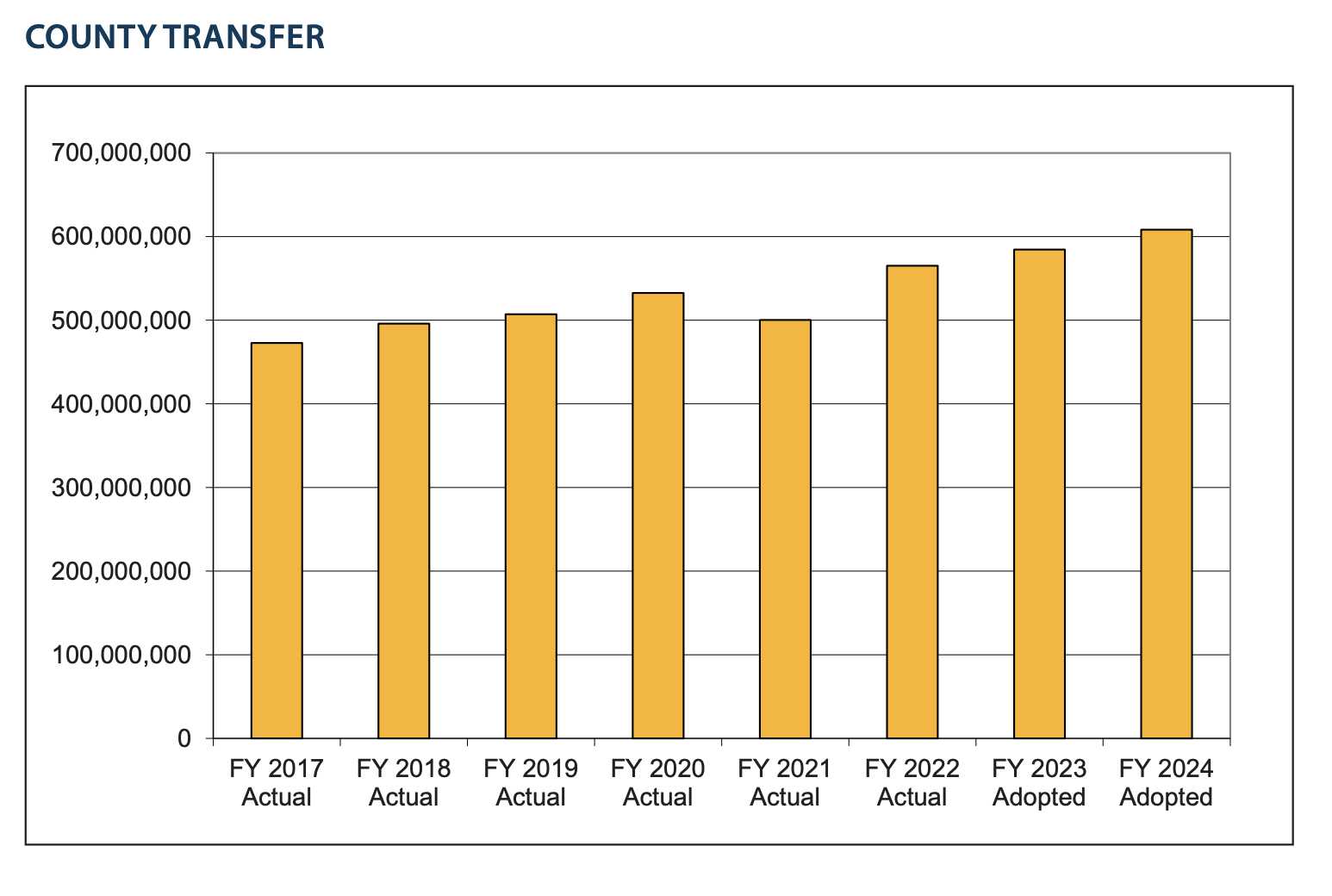
The dollar amount transferred, however, has risen steadily in the last three budgets after more modest upticks between 2017 and 2020.

The amount Arlington County transfers to Arlington Public Schools annually for its budget since the 2017 fiscal year (via Arlington Public Schools)

Given the recent increases, Fierro says it is time to study the county’s revenue share to APS, which currently sits at 46.8%.

“That, plus the allowance we have to give to Metro, is a lot for Arlington County,” he said. “We have to find a way to study how we can try to lower that amount, but of course, the quality has to be the same.”

Fierro contrasted the rising contributions to APS with the county’s budget surplus, suggesting residents may be over-taxed. At the close of each fiscal year, the county puts surplus, or “closeout funds,” toward a variety of expenses, a practice that has its critics, who say it should instead help stave off tax increases.

“It’s a lot of money,” he said. “One of my radical ideas is that this money goes back to taxpayers. We’re living in challenging times.”

Clement said she agreed.

“We are really imposing a huge tax burden on our residents,” she said. “I believe it is unsustainable because it’s over twice the rate of inflation and I think we ought to look at ways to streamline our budget, not ways to increase it.”

Clement further argued against increasing the budget for APS, citing falling enrollment projections over the next decade.

“I understand that the greatest problem facing our schools is the achievement gap, which grew significantly during Covid,” she said. “I don’t think throwing more money at that particular problem is going to solve it.”

Coffey and Cunningham were modest in their suggestions to review county transfers to APS but said they were open to that conversation.

Like Clement, they said the main issue county leaders need to address regarding the school system is poor coordination. They argued this can lead to redundant spending and service gaps.

(more…)


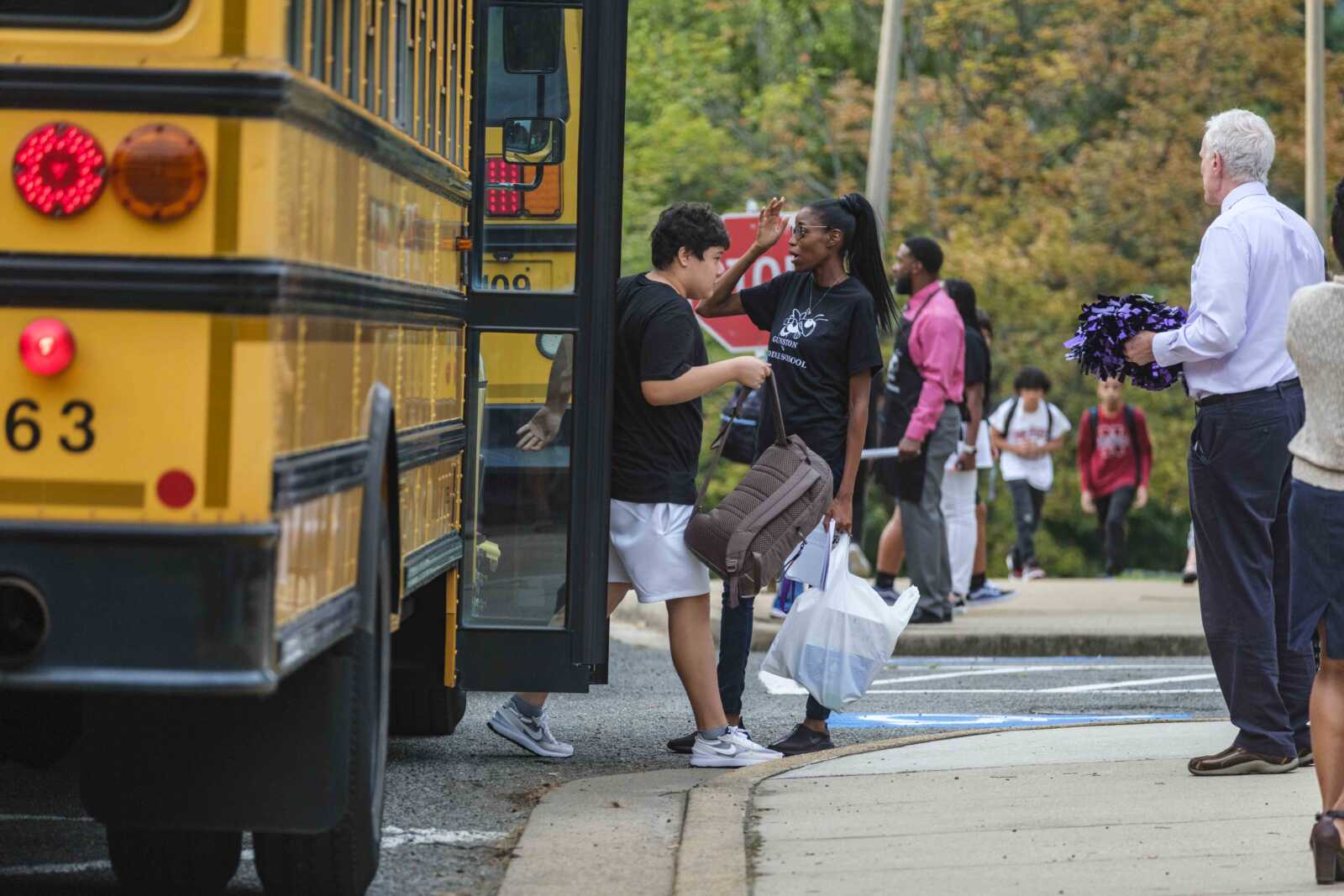
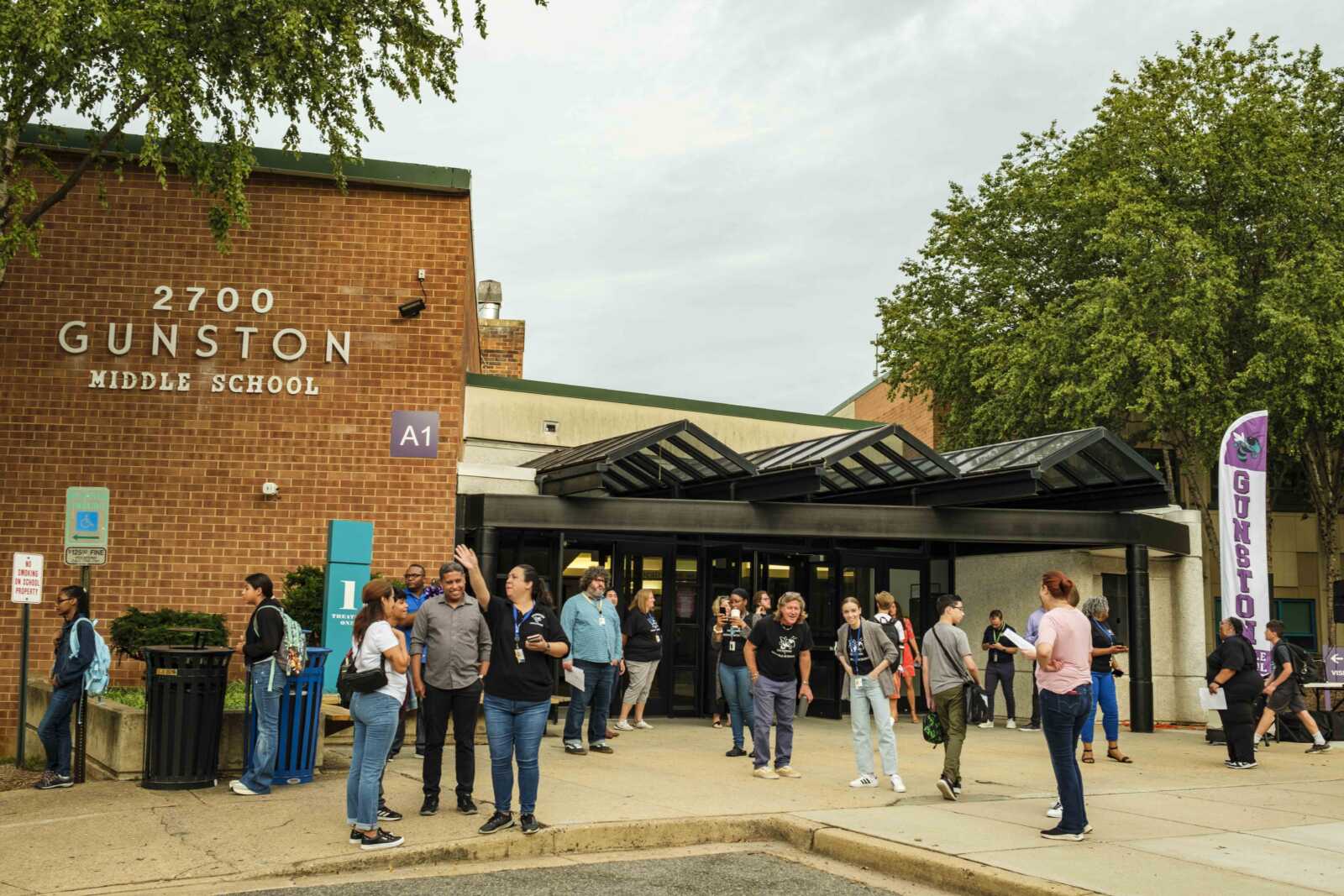
Students arrive to Gunston Middle School on the first day of school (staff photo by Jay Westcott)

Arlington Public Schools is kicking off the new school year with a bit of good news related to academic performance.

Last school year, students as a whole made gains in math, social studies and science, and in almost all areas, generally exceeded statewide scores, per new testing data.

Between the 2022 and 2023 school years, the percentage of students passing state tests increased by 4 points for math, 7 points for social studies and 1 point for science, according to a presentation to the School Board on Thursday. Reading remained flat and writing dropped 2 percentage points.

Black and Hispanic students, students with disabilities and those learning English, in particular, demonstrated progress. APS highlighted math pass rates that increased by 8 and 11 percentage points for Hispanic and English-language learning students, respectively.

Administrators says the data demonstrates that students are gaining ground after pandemic-era learning loss. It may also indicate long standing achievement gaps based on race, English proficiency, ability and socioeconomic status are narrowing.

Crediting teachers and new academic tools for that progress, Chief Academic Officer Dr. Gerald Mann, Jr. told the School Board on Thursday APS has its work cut out for them.

“We are seeing the work that our team is doing starting to pay dividends and recover some of the loss from the pandemic,” he said. “We’ve come a long way but we’ve got more work to do.”

Future focus areas include reading — where pass rates remained flat over last year, at 80% — and writing, which fell 2 percentage points.

Facing what one committee described a “literacy crisis,” APS overhauled how it teaches reading to elementary school students. Like other schools nationwide, APS is working to reverse years of reading instruction that critics say glossed over the basics, such as phonics, and disadvantaged students for whom reading did not come naturally.

That effort is starting to bear fruit, according to Superintendent Francisco Durán, who noted that this fall, some 91% of kindergarteners could meet benchmarks such as recognizing rhymes, words and letter sounds, up from 81% last year.

“[That] is building them up for bigger success later,” Durán said.

But this leaves a group of students, fifth grade and up, who were taught to read before these changes were made, and might still be struggling today. This year, APS is turning its attention to them.

“Our hope is that the work that we’re doing for secondary literacy this year also pays dividends in the future,” Mann said.

When School Board members asked about falling writing scores, Durán emphasized that the state test measures one type of writing: responding to a social studies or science text.

“We want students to be writers across all different types, and genres and ways,” he said. “I just want to make sure we all are aware of that because, I think long term, it could be misunderstood if we’re just speaking about writing, generically.”

Writing, more broadly, may still be a concern.

A 2019 survey of APS graduates found many graduates wished they had been better prepared for collegiate writing. School Board watchdog group Arlington Parents for Education, which recapped last week’s meeting, previously highlighted the survey, saying students were “practically begging for more… ‘writing assignments.’”

Even as the number of assigned essays increased, Mann said teachers already feel they cannot give adequate feedback on assignments.

“The biggest barrier that I’ve also heard is that ‘I just don’t have the time. I will assign it, but then I can’t give [them] appropriate feedback,'” he said.

(more…)


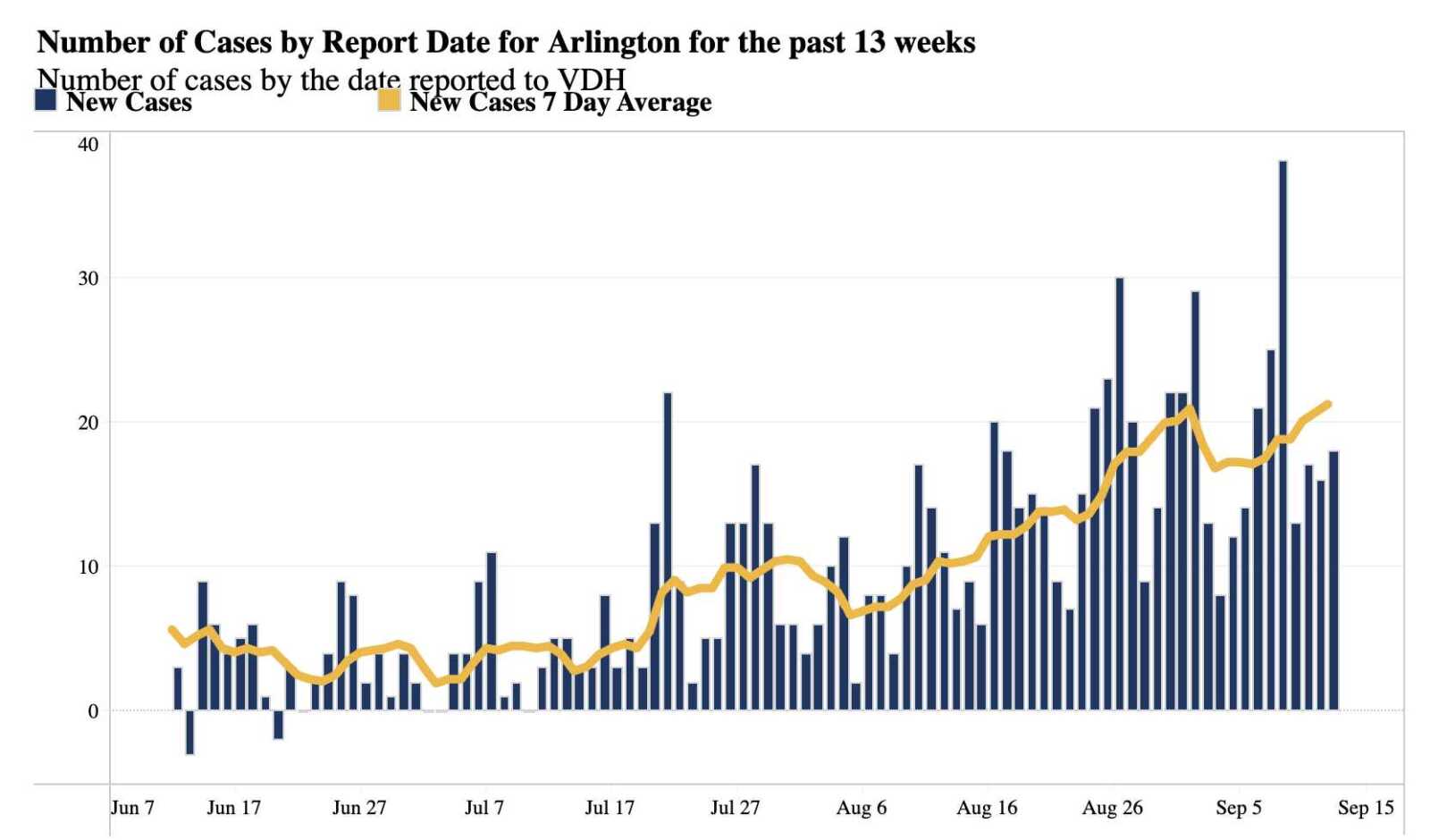
Covid cases in Arlington over the past three months, as of 9/12/23 (via Virginia Dept. of Health)

Don’t look now but Covid cases are on the rise in Arlington.

As of today, the Virginia Dept. of Health is reporting a seven-day average of just over 21 daily cases in the county. That’s the highest point since this past February.

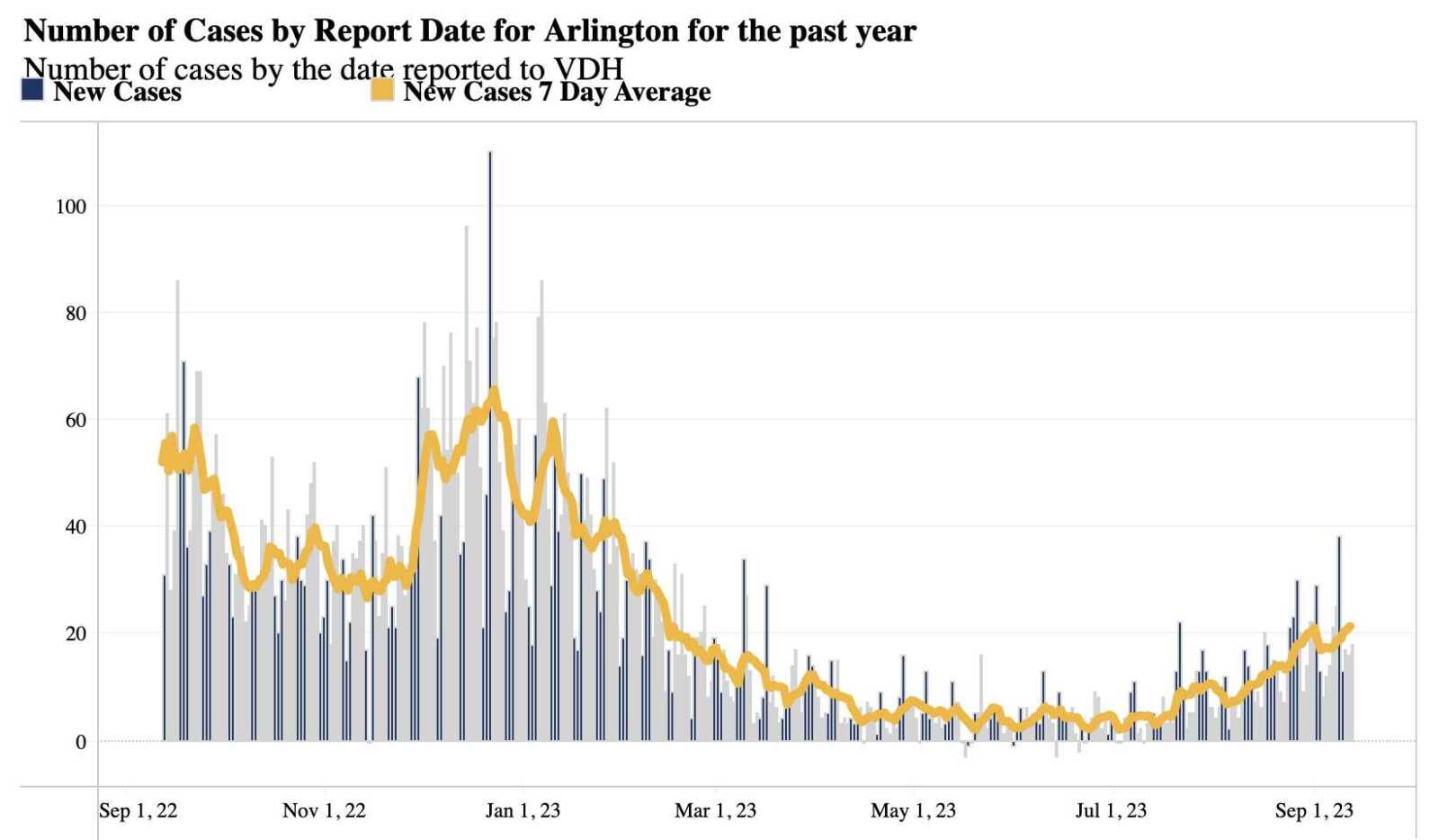
Of course, there are some caveats. First, Covid cases are not getting reported to health departments as consistently as earlier in the pandemic, thanks in part to the availability of at-home tests. On the other end of the equation, cases are still much lower compared to this time last year, then there were more than 50 average daily cases in Arlington reported to VDH.

And then there’s the matter of Covid being a respiratory virus with seasonal spikes — like the flu — so an increase in September is not unexpected.

Covid cases in Arlington over the past year, as of 9/12/23 (via Virginia Dept. of Health)

Nonetheless, there are anecdotal indications that Covid is making the rounds locally. Several D.C. area employees of ARLnow’s parent company, which is a primarily remote workplace, recently were diagnosed. And some schools in the region have been reporting outbreaks.

That’s not to mention what has been characterized as a “late summer surge” nationally.

Arlington Public Schools no longer reports cases via an online dashboard, as in previous years, but an APS spokesman told the Washington Post that the school system is monitoring for outbreaks.

In nearby Arlington County, spokesman Frank Bellavia said the school district, which has been in class for only five days, is not tracking cases this year, but it will be monitoring for an influx of cases and will provide notice of an outbreak as it would for other communicable diseases.

Meanwhile, the FDA just approved updated Covid vaccines. From CNN:

The US Food and Drug Administration gave the green light Monday to updated Covid-19 vaccines from Moderna and Pfizer/BioNTech amid rising cases and hospitalizations.

Both vaccine manufacturers have said testing shows that their vaccines are effective against EG.5, the currently dominant strain in the United States.

Two Covid-related deaths have been reported so far this year in Arlington, according to VDH.


CCPTA President Claire Noakes speaks at the School Board meeting on Thursday, Sept. 7, 2023 (via Arlington Public Schools)

(Updated at 2:30 p.m.) The Arlington County Council of PTAs is criticizing plans to close Nottingham Elementary School and make it a “swing space” where students go when their school is being renovated.

In suggesting this change, the coalition of PTAs, or CCPTA, says Arlington Public Schools has not considered how little money it has in the next decade to spend on sorely needed renovations. It adds the move would disadvantage low-income, diverse neighborhoods that rely on schools for county and community-based services.

This spring, APS proposed closing Nottingham, in the Williamsburg neighborhood at 5900 Little Falls Road, and making it a swing space as early as 2026. It was part of a suite of proposed changes to solve for projected capacity imbalances: several schools below Langston Blvd are over-full while their counterparts north of the highway have many empty seats.

Nottingham was chosen because it would cost the least to retrofit — $5 million to expand its ability to receive buses — compared to other schools, county facilities or commercial buildings. APS also argued it would be more fiscally responsible to use the under-capacity buildings it currently has, rather than build a new school.

This proposal quickly rankled current and future Nottingham parents, some of whom argue APS made the decision on faulty projections of falling enrollment. The CCPTA joined their chorus during the School Board meeting last Thursday.

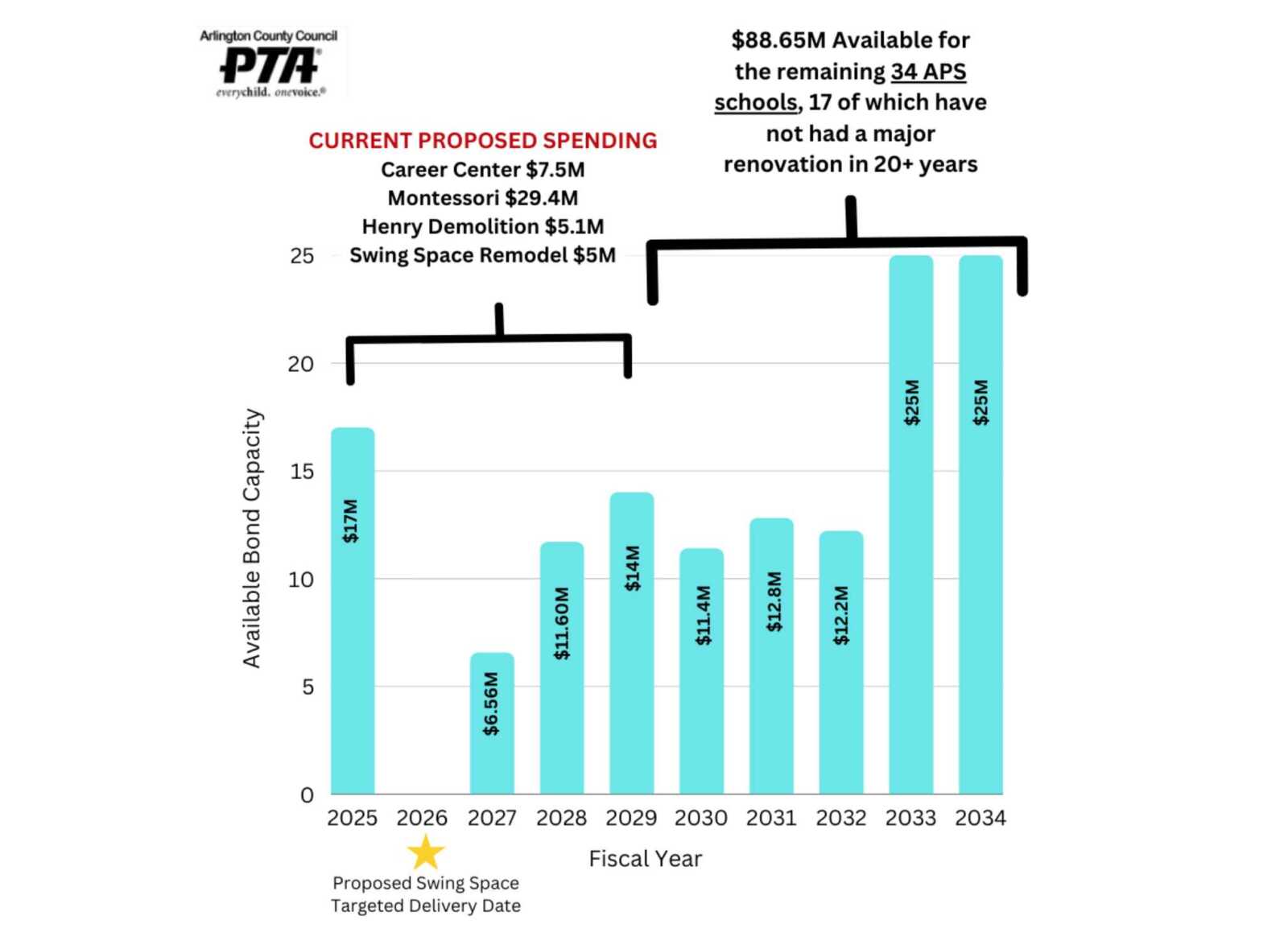
“Recent spending decisions and currently proposed spending projects have monopolized our bond issuance capacity until at least FY 2032, leaving insufficient funding for a major renovation,” CCPTA President Claire Noakes said in a statement released after the meeting.

She notes 17 of 37 school buildings have not had a major renovation in at least 20 years and are in need of upgrades, creating “a backlog of need.”

“The lack of available funds for a major renovation will cause the swing space to stay empty for six years, while other identified needs that could have been paid for with that $5 million will go unmet,” she continued.

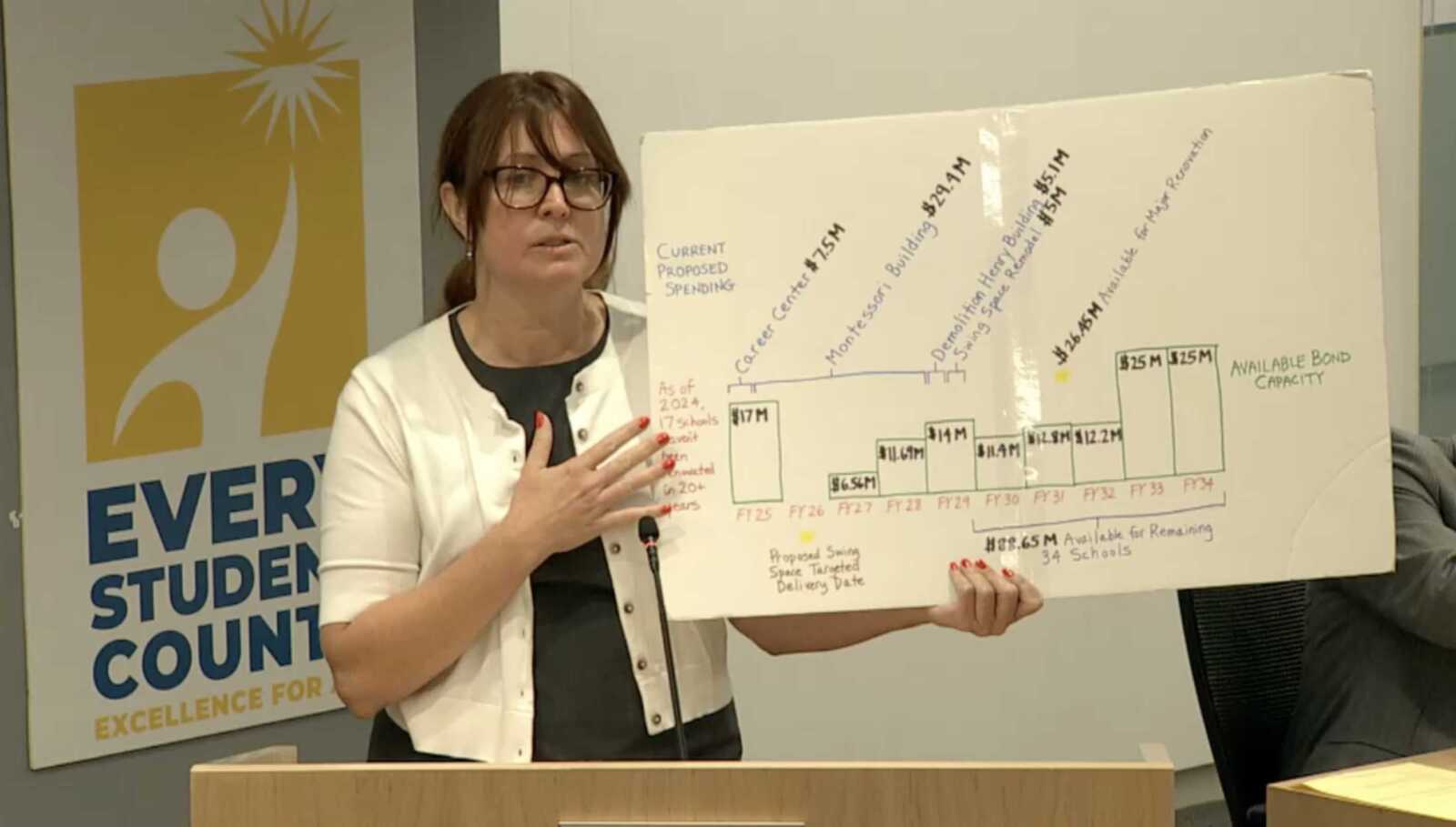
The CCPTA illustrated its argument in a chart that shows how much money APS estimates it can issue in bonds for major renovations over the next decade.

It estimates a major renovation would exceed $25 million, based on estimates for one such project down the pike. The CCPTA say that APS would have to accumulate a few years of bond capacity, from Arlington County, to embark on a major renovation.

This squeeze is due to projects APS already has in the queue, including the new, forthcoming $180 million Arlington Career Center building and related plans to retrofit the current Career Center for the Montessori program now housed in the former Patrick Henry Elementary School. This building is set to be demolished and turned into a green space.

(Note: The chart below lists $7.5 million for the Career Center because this was tacked onto the project’s costs after APS approved the project via the previous Capital Improvement Plan.)

A chart from the CCPTA arguing APS will deliver a “swing space” at Nottingham at least six years before having the money to start a major renovation project (via CCPTA)

(more…)


Catholic students at St. Thomas More Cathedral School in Arlington (courtesy the Diocese of Arlington)

Arlington’s private schools say they are still riding a wave of enrollment increases that started early in the pandemic.

More than three years ago now, Covid lockdowns shut down schools, which reverted to distance learning. That fall, however, local private schools affiliated with a church or the Catholic Diocese of Arlington reopened their doors while Arlington Public Schools continued with virtual learning for most students for the better part of the 2020-21 school year.

While some APS families relied on virtual learning, even after the shutdowns, other parents urged for a faster return to in-person learning. Some in this camp enrolled their children in local private schools, confirmed by their rising figures and a steep drop among some public elementary schools, particularly in North Arlington.

Three years later, growth continues at some of these schools, albeit at a slower pace, with high retention rates among those who transferred during Covid.

“We’ve been holding pretty steady,” says Lori Bodling, the office administrator for Our Savior Lutheran Church and School in Barcroft. “We’ve kept most of the families — a few moved out or went back to public schools, but the majority who came to us during Covid times have stayed.”

This is not, however, the only enrollment story and families who made the switch due to Covid considerations do not wholly explain the changes. As the long-term effects of the pandemic on education reveal themselves, one school leader says a small — but growing — group of students with anxiety, school avoidance and academic struggles are opting for non-public options in Arlington.

APS, meanwhile, projects to recover from the Covid slump and continue seeing a steady growth in enrollment that began in 2006. It is preparing, however, for downward pressure on enrollment starting in 2025, due, in part, to falling birth rates.

Rising enrollment in private schools

Both Our Savior Lutheran School and Arlington’s Catholic schools saw enrollment suddenly jump in the early years of Covid that has since slowed down.

Our Savior jumped more than 26% since 2020, while St. Ann and St. Thomas More Cathedral School, which both run from preschool through eighth grade, increased 27% and 21%, respectively.

“The uptick you saw at St. Thomas More Cathedral School and St. Ann [was] more pandemic-related,” says Renee Quiros White, the Assistant Superintendent of Catholic Identity, Enrollment & Marketing for the diocese. “In other words, they had the space to accommodate additional students.”

White adds that retention percentages have remained high, at 88% for both 2021 and 2022, suggesting families who changed schools have mostly stayed on.

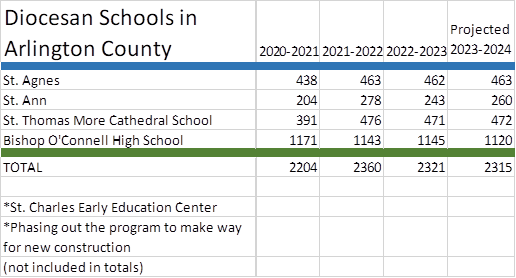
Two remaining Catholic schools did not have these growth spurts. St. Agnes, another school for preschool through eighth grade, increased 6% at the start of the pandemic and has since remained steady while enrollment Bishop O’Connell High School has been in decline since 2020. Both were considered “full” prior to the pandemic, says White, noting “you wouldn’t necessarily see a big increase” as a result.

White says the growth in Arlington tracks with the predicted population growth tracked by the U.S. Census and population estimates from the University of Virginia. The diocese is seeing a third straight year of overall enrollment increases, with an average increase of 10% since 2020.

“Enrollment numbers can vary from year to year, due to a number of factors,” she wrote. “Regardless of the reason(s), we are very pleased that so many families have sought a Catholic education for their children and have become part of our communities.”

New needs among students

Meanwhile, a private school recognized as non-traditional option for middle- and high-school-aged students is also reporting an enrollment uptick.

(more…)


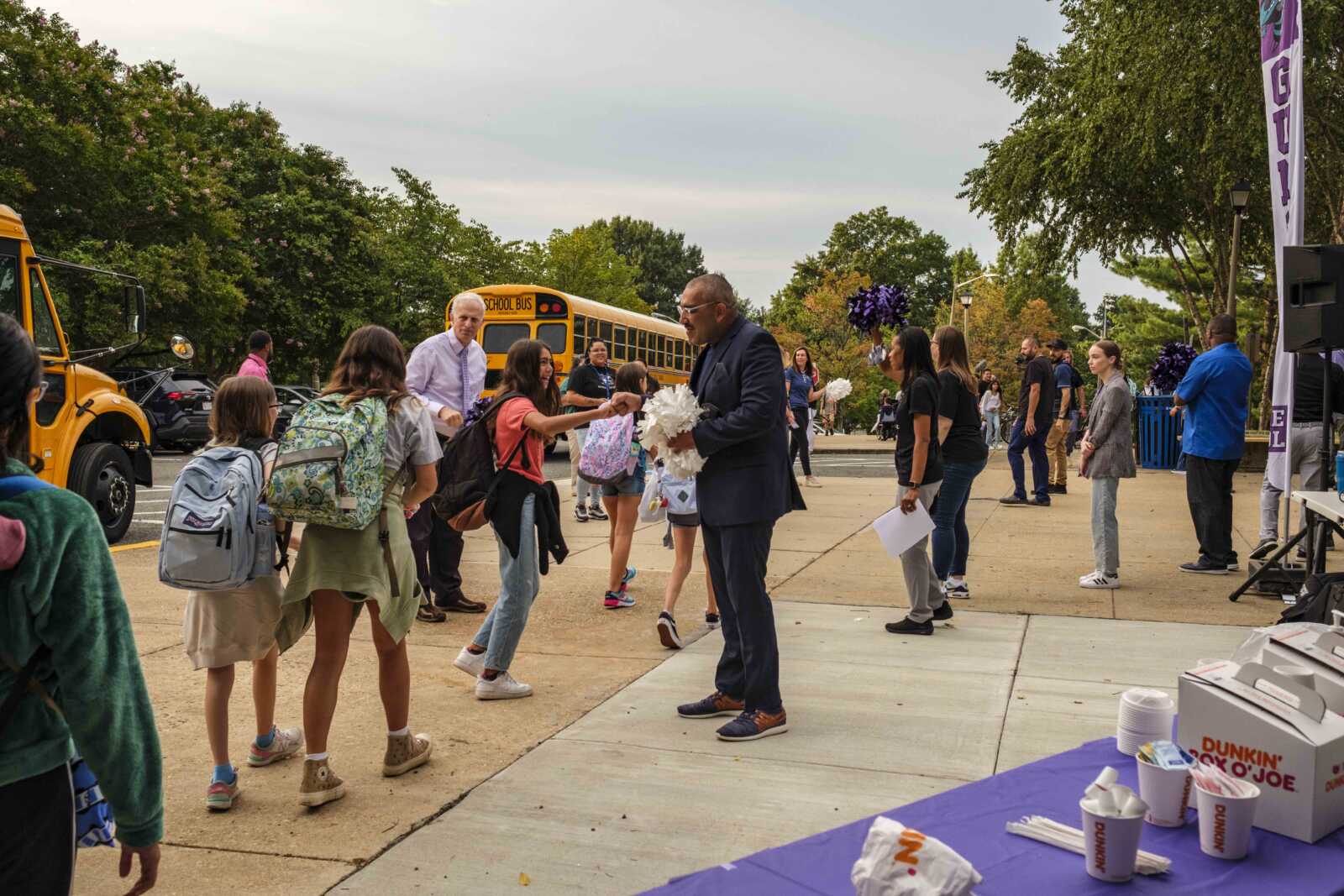
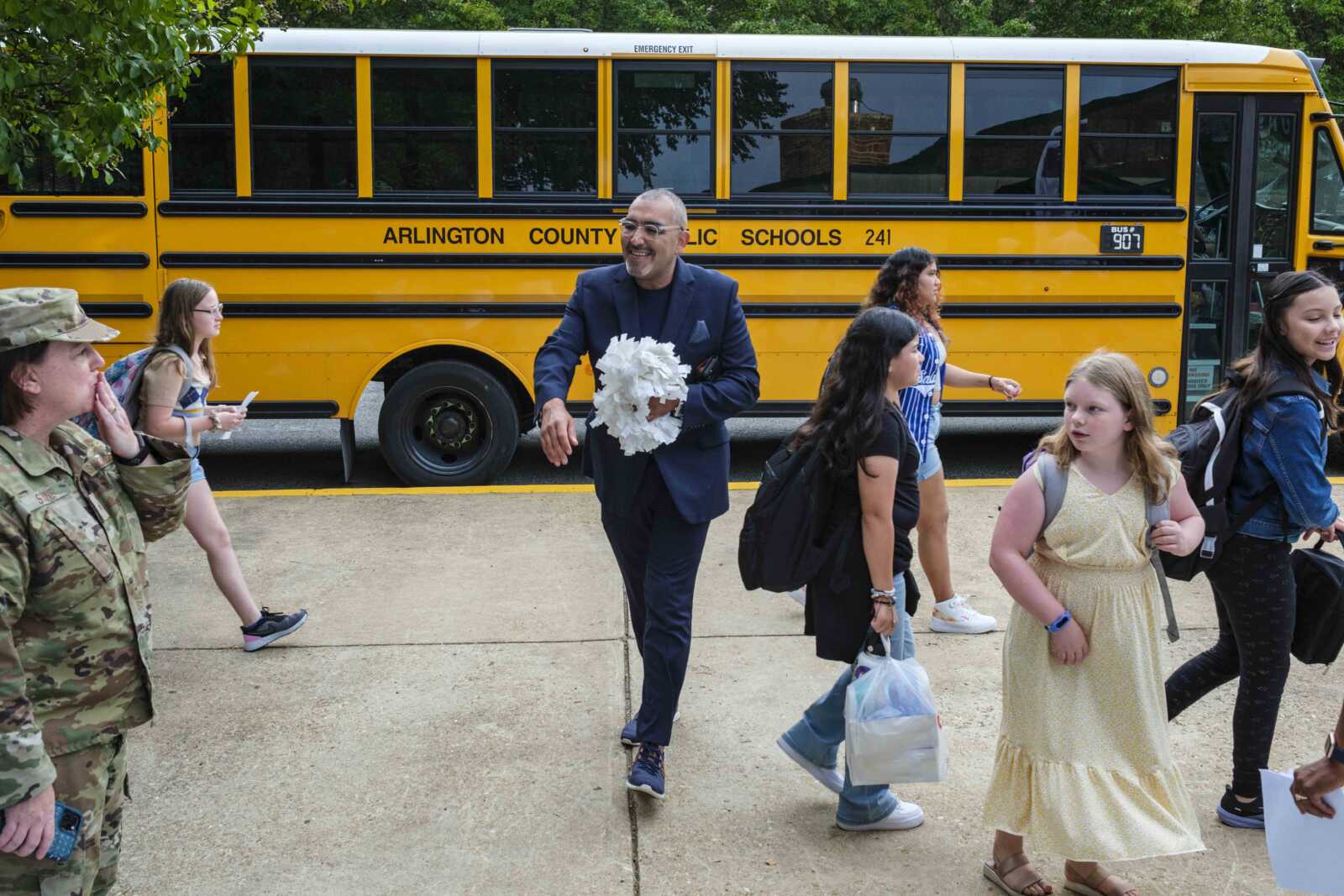
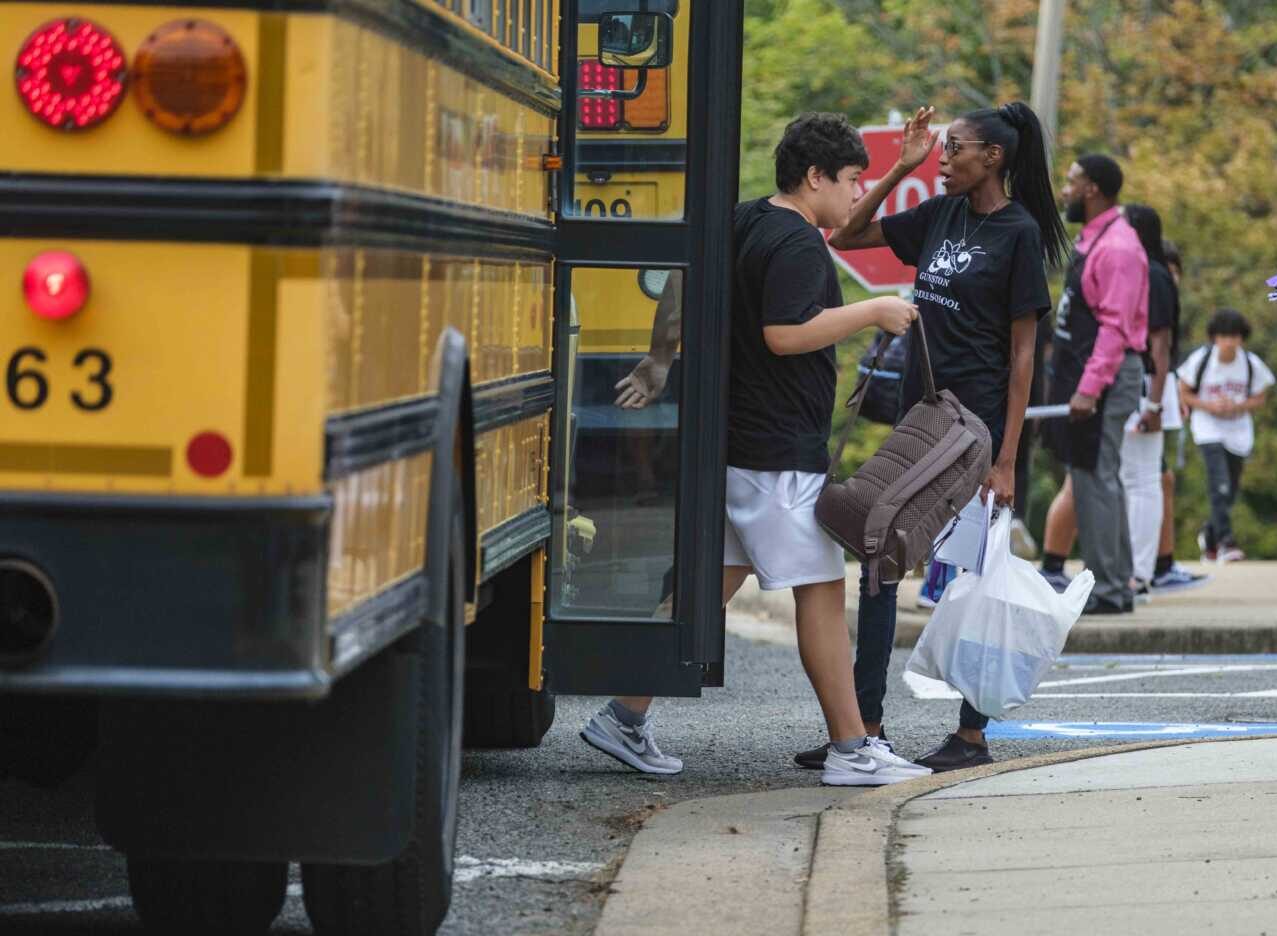
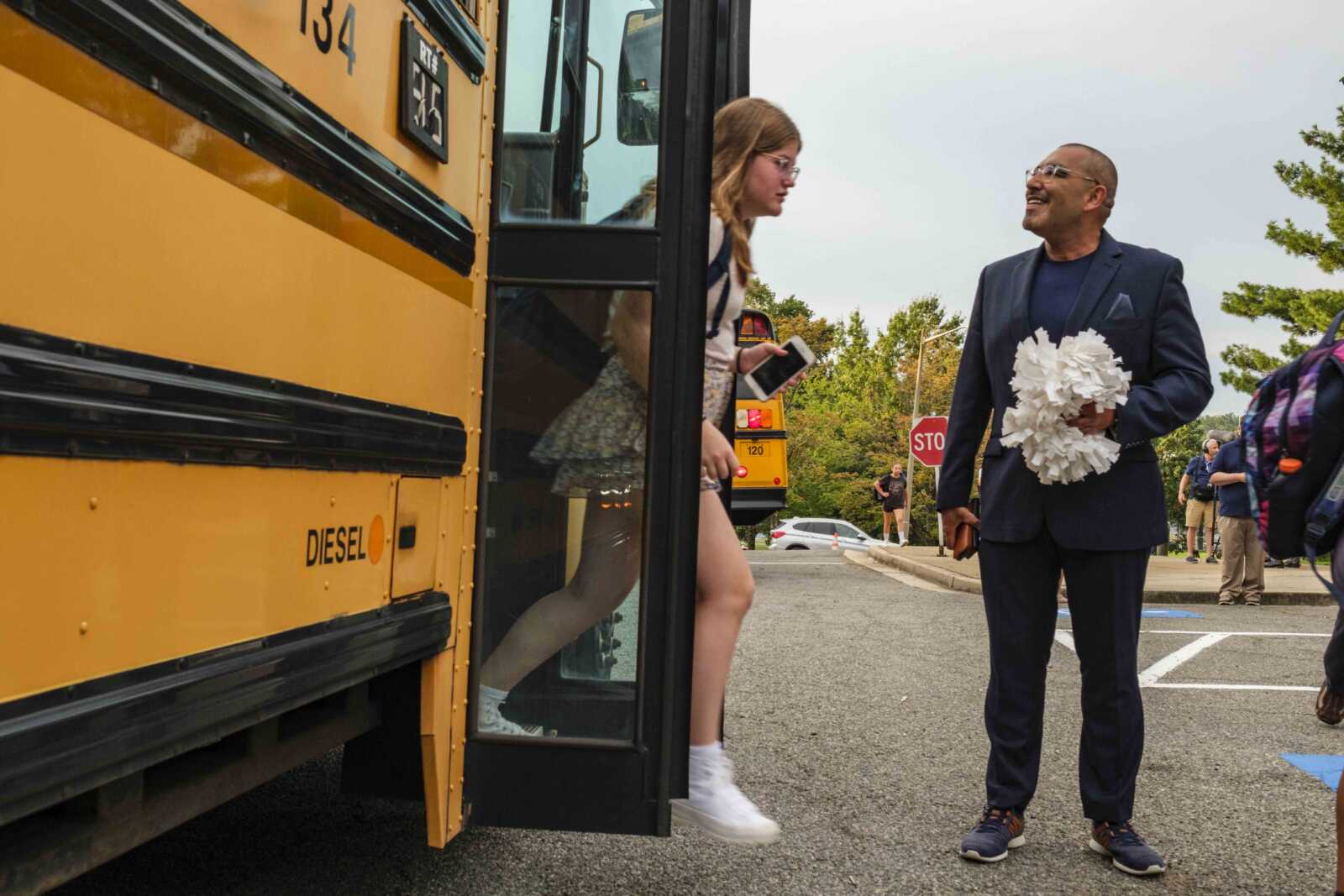
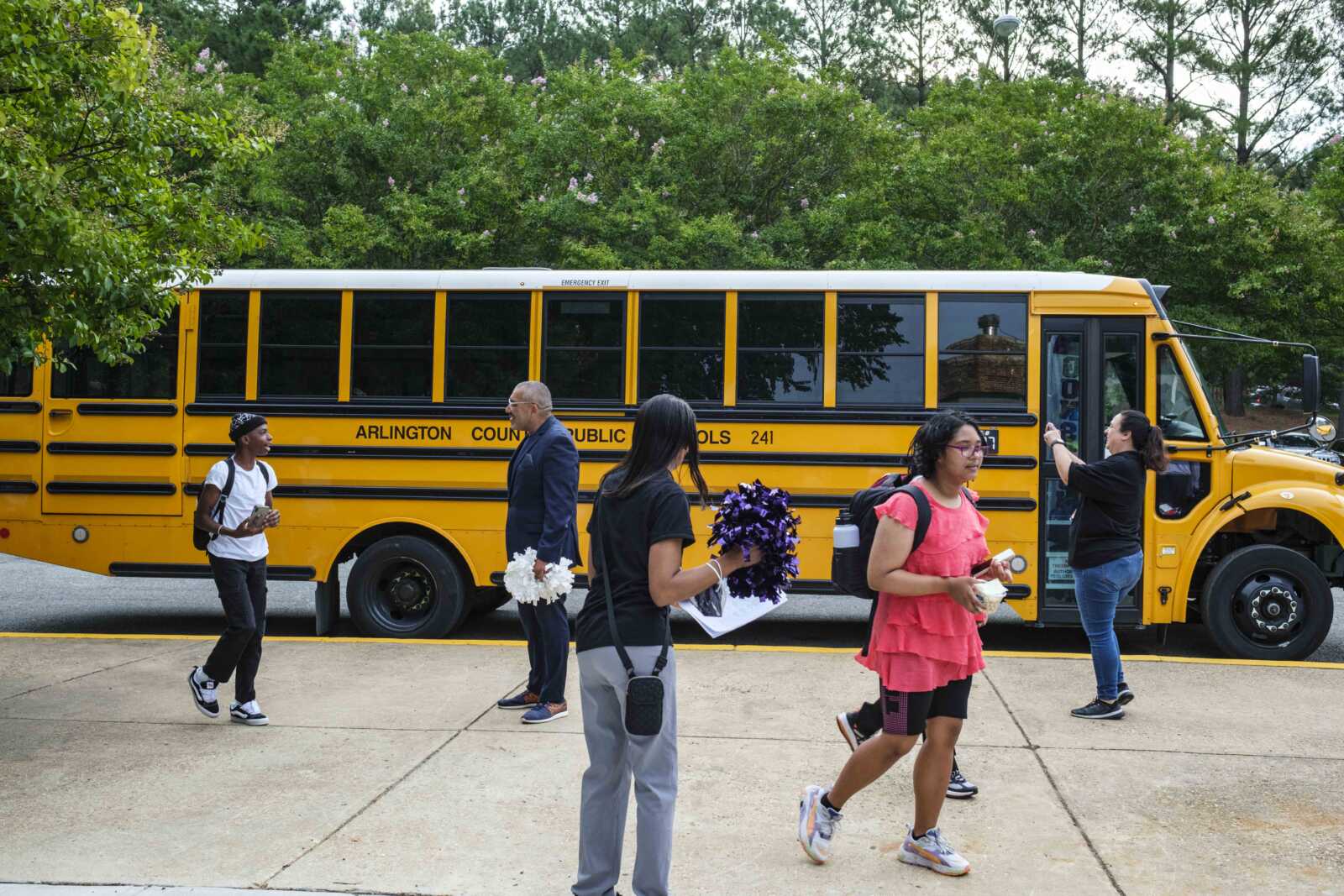
(Updated at 4:15 p.m) Arlington Public Schools students headed back to school today and the positive energy, according to Superintendent Francisco Durán, was palpable.

“It was so wonderful,” he told ARLnow on a phone call this afternoon, debriefing from his morning spent visiting the half-dozen schools with new principals, including Gunston Middle School. “People are excited to be back.”

Going into this year, Durán says APS has its work cut out for it.

The system spent two years focused on improving literacy among kindergarten through second-graders, and is starting to see more students who are proficient the basics of reading. Now, the system is developing an all-hands-on-deck approach to another area of concern: middle and high school students who cannot read or write on grade level, either.

“We haven’t done a systemwide approach to secondary literacy,” he said. “How do we shift and go intensely, and in a strategic way, to supporting… those who are really struggling?”

Already, APS has identified struggling readers who he says could benefit from a new reading curriculum and the extra attention. The school system also is looking into ways to assess and identify struggling students better. Families can expect more information coming online about this shift in the coming months.

Likewise, the school system says a big challenge ahead will be tackling mental health. Last year saw the death of a 14-year-old due to an overdose as well as a rash of reported deaths connected to worsening mental health.

“We’ve had challenges at secondary level with substance abuse and students feeling depressed, isolated or having anxiety,” Durán said.

Middle and high schools have new intervention counselors and APS is working with Arlington County Dept. of Human Services to bring therapists to the schools. Three middle schools and all high schools have new deans focused on providing supports to students and getting their families involved.

“When we see students who are experiencing behavioral challenges — being suspended or being sent out of class or experimenting with substance abuse — we have to take an approach that’s not just punitive,” he said.

Part of that work, for Washington-Liberty High School Principal Tony Hall, is holding students to the school’s policy to keep phones “away for the day.” This week on X, the platform formerly known as Twitter, he outlined the academic and social reasons for keeping phones off.

(more…)


View More Stories