New Hotel for DCA? — “A hotel might be in the works for Reagan National Airport, according to Jack Potter, CEO of the Metropolitan Washington Airports Authority… A spokeswoman for MWAA said they are still in the ideas phase and nothing is concrete.” [Washington Business Journal]

Parents Fight Proposed Key Changes — “Parents are battling for the school’s future after Arlington Public Schools surprised them with a plan to relocate Key [Elementary], an announcement that animated larger questions about race, class and the purpose of bilingual education.” [Washington Post]

APS Friday Closure Questioned — “Most schools in the DC region decided to stay open despite the wintry mix Friday morning, but Arlington County Public Schools decided to close leaving parents in disbelief.” [WJLA]

Kindergarteners Learn About Transgender — “Dozens of kindergarten students sat cross-legged in his classroom at Ashlawn Elementary School in Arlington, listening as an advocate for transgender rights paged through a children’s picture book about a transgender girl,” as part of an event with the National Education Association and the Human Rights Campaign. [Washington Post]

Chamber Partners with APS — “The Arlington Chamber of Commerce is pleased to announce a partnership with Arlington Public Schools Career Center for the Young Entrepreneurs Academy (YEA!) program. The Chamber is in its fifth year of offering the YEA! Program, but this is its first class of students for the program as part of their Arlington Public Schools learning.” [Arlington Chamber of Commerce]

Dog With Dementia Falls into Storm Drain — “A small dog with dementia is missing after falling into a storm drain in Arlington, Virginia. The Animal Welfare League of Arlington tweeted out an alert Thursday and said the cute pup disappeared after falling into the sewer about 8 p.m.” [NBC Washington, Twitter]


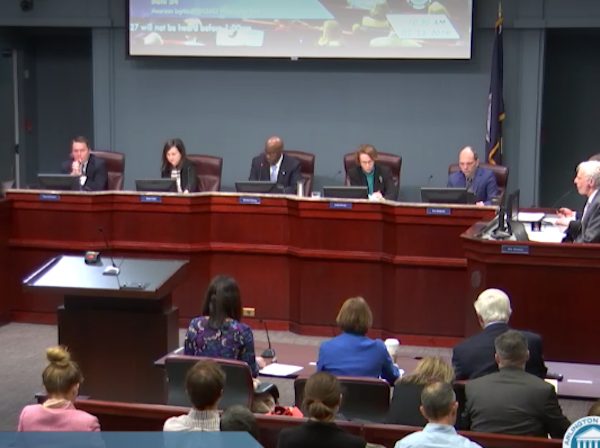
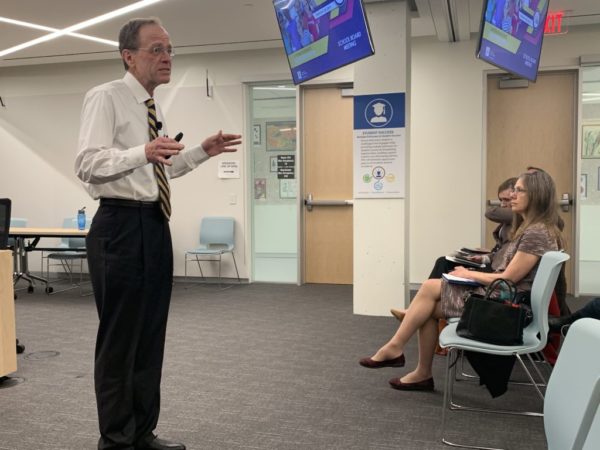
(Updated at 10 a.m.) Arlington schools will likely face class size increases and could see some staff layoffs next year under terms laid out in Superintendent Patrick Murphy’s proposed budget for the new fiscal year.

Murphy delivered his first draft of a new spending plan for fiscal year 2020 to the School Board last night (Thursday), arguing that even the tax increases proposed by the County Board won’t be enough to help the school system avoid some spending cuts. The school system is preparing to open three new schools next year to cope with persistently rising enrollment levels, which Murphy expects will create another challenging budget year for county schools.

Much like the county government’s own financial picture, sketched out in earnest by County Manager Mark Schwartz late last week, Arlington Public Schools’ budget picture is still a bit more promising than it appeared this fall. School officials initially warned that they could be facing a $43 million budget gap next year, a deficit that Murphy says could’ve been the largest one for APS in the last 30 years, if not the school system’s history.

However, rising real estate assessments filled county coffers a bit more than officials anticipated, easing some concerns. And Murphy was glad to see, too, that Schwartz proposed 1.5-cent real estate tax increase largely designed to meet school needs, and the superintendent built his budget using that increase as a base.

But even if the County Board approves that tax hike, Murphy says the school system will face cuts. He built a series of spending trims into his plans, most notably the reduction of 23 staff positions, bumping up class sizes slightly.

“It’s a tough year, there’s a lot of things happening,” Murphy told a group of reporters and school leaders in a budget briefing Thursday. “But given where we are and the things that are happening, I thought that was prudent.”

Plans call for grades four through five seeing the largest increase of an estimated one student per class. Middle schools will see a .75 pupil per class increase, and high schools will see a .5 student per class increase.

The School Board narrowly avoided that outcome last year, thanks largely to some one-time funding from the county. But Murphy says he fully expects the county’s own money troubles, driven by a still-high office vacancy rate and rising Metro expenses, means that the school system might not be so lucky this time around.

The proposed cuts total about $10.1 million in all. That will include moving $5.28 million in one-time money to cover construction and maintenance funding, rather than using ongoing funds.

Murphy says he may need to make another $8.9 million in cuts to balance the budget, if the County Board doesn’t approve a tax increase over and above Schwartz’s proposal. He did not say, however, just how of large of a tax hike would meet the school system’s needs.

The Board signed off on advertising a 2.75-cent increase last weekend, setting the ceiling for any potential tax rate it may adopt throughout the budget process. Officials can always lower the rate beyond the one advertised, but can’t raise it.

Board members agreed to that higher rate largely over concerns that schools would need more cash, and Murphy says those concerns were well founded. Without more cash from the county, Murphy expects that cuts to APS central office staff would be necessary, in addition to some transportation and benefit changes, the introduction of new and increased fees and delays to student support programs.

“I hope we don’t have to go there,” Murphy said.

And should the Board decline to raise taxes at all, rejecting Schwartz’s proposed increase, Murphy says he’ll need to make an additional $11.1 in cuts, prompting even more layoffs. However, he said he’s “optimistic” that the Board will avoid that outcome.

Depending on the county’s budget, Murphy also warned that the school system could tinker with its plans for bumping up employee pay rates this year.

Currently, Murphy hopes to order a fifth straight “step increase,” moving eligible employees up the school system’s pay scale commensurate with experience. But he also wants to follow through on long-held plans to raise pay for instructional assistants, bus drivers and bus attendants, arguing that the changes are necessary to keep APS “competitive in the region.”

“It’s a competitive environment out there,” Murphy said.

Those changes will cost APS $12.9 million in all, though Murphy cautioned that “whether we build in that direction this year, or build there in the future” will be dependent on how much money the county sends the school system.

One budget line that will remain unchanged, Murphy says, is the $10.1 million the school system will spend to afford both one-time and ongoing costs associated with opening three new schools next year and repurposing two others.

Alice West Fleet Elementary, Dororthy Hamm Middle and The Heights Building (housing the H-B Woodlawn and Stratford programs) will all open next year. APS will also move the Montessori program currently at Drew Model School into its own building (formerly Patrick Henry Elementary) and convert Drew into a full neighborhood school.

APS will also need to keep up with an expected enrollment bump of about 1,059 students next year, roughly the same level of enrollment growth the school system has seen over the last decade. That will require about $8.73 million in spending to manage, and the addition of 83 employees.

“There’s a very clear reason we’re in this situation: more families are moving here, more businesses are moving here,” Murphy said. “We must be doing something right.”

The County and School Boards will now spend the next several weeks debating their competing budgets.

The School Board will finalize its proposed budget to send on to the county by April 11, then the County Board will pass its budget by the end of the month. The School Board will then adopt its final budget by May 9.


Arlington school officials are planning some major changes to how parents register for the “Extended Day” program, following a variety of technical snafus with sign-ups over the last few years.

Parents looking to enroll their kids in the program, which provides low-cost before and after school care for students, will now be able to submit applications from April 1-May 15 each year.

If schools have enough room, anyone who applied before the May 15 deadline will earn a spot in the daycare service. At schools that receive more applications than they have “Extended Day” slots available, however, applicants will be entered into a “random, double blind lottery” to sort out who earns a spot in the program.

That represents a distinct change from the school system’s old process, which opened up registration on an online portal at a set time (often late at night), and only accepted applicants on a first-come, first-served basis.

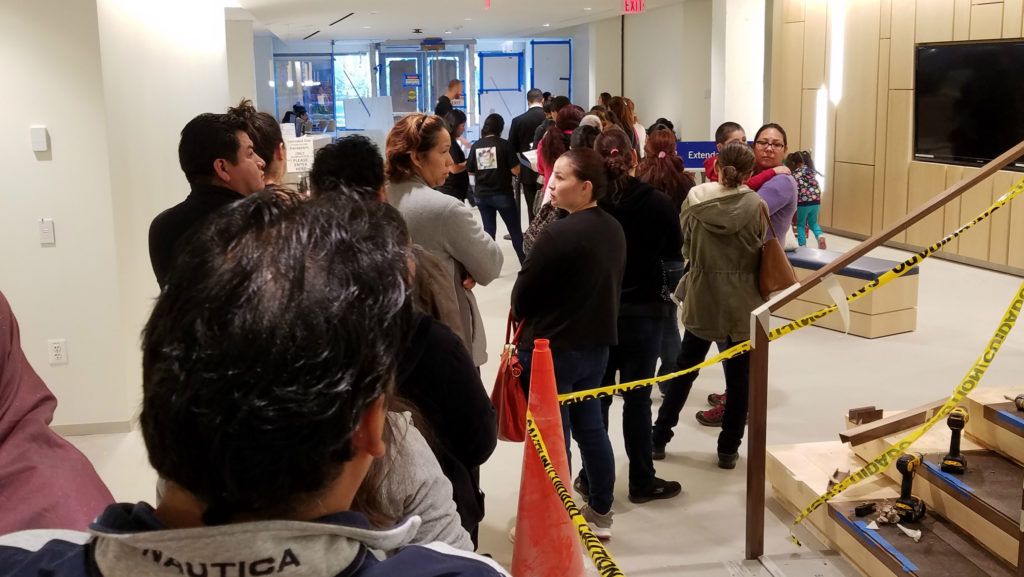
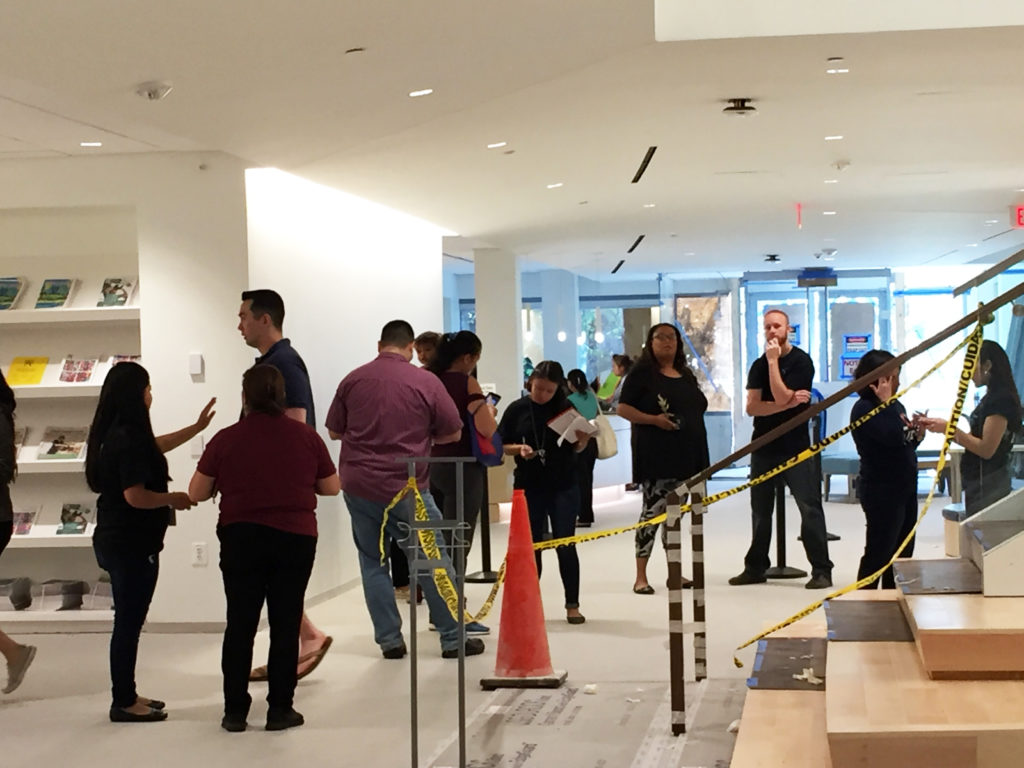
That prompted parents to race to register all at once, resulting in a series of system crashes the last few years. Just last year, frustrated parents raced to the school system’s offices in an attempt to register in person, as the technical glitches persisted.

“We understand that the stress of being online early to register was a major imposition for many families and often led to system ‘crashes’ because so many people tried to access the system at the same time,” APS staff wrote in an online announcement explaining the “Extended Day” changes. “This new process will allow everyone to register anytime within the six-week period and all will now have the same opportunity for enrollment.”

School officials wrote that the program saw a substantial increase in enrollment over the last decade — growing from “about 2,600 to over 4,300” students — which they believe contributed to some of the school system’s technical glitches.

APS staff hope this new process means that “all families will have the same opportunity to register, regardless of the time registration opens, access to computers, work schedules and other extenuating factors.”

Officials stressed that no decisions about “Extended Day” enrollment will be made until after May 15 under this new system, and any child who misses out on a spot in a lottery process will be placed on a waitlist. The school system noted that nine elementary schools (Abingdon, Arlington Science Focus, Ashlawn, Claremont, Glebe, Henry, Key, McKinley and Tuckahoe) have reached capacity for the program in the past, making them likely spots for lotteries.

School officials also urge any parents applying for an option school to wait until those results are released on May 1 before applying for “Extended Day” inclusion.

The new process has already irked at least one parent, who told ARLnow that they’re concerned that the school system has created “an entirely new registration process, without a public discussion.”

“If you are going to run a true lottery process, as they seem intent on doing, they need to conclude it much earlier than May 15, so families have an opportunity to make other arrangements if they don’t get lucky,” the parent wrote in an email, declining to give their name.

The school system’s “Extended Day” webpage says that APS plans to post additional information on the new registration process on Monday (March 4).


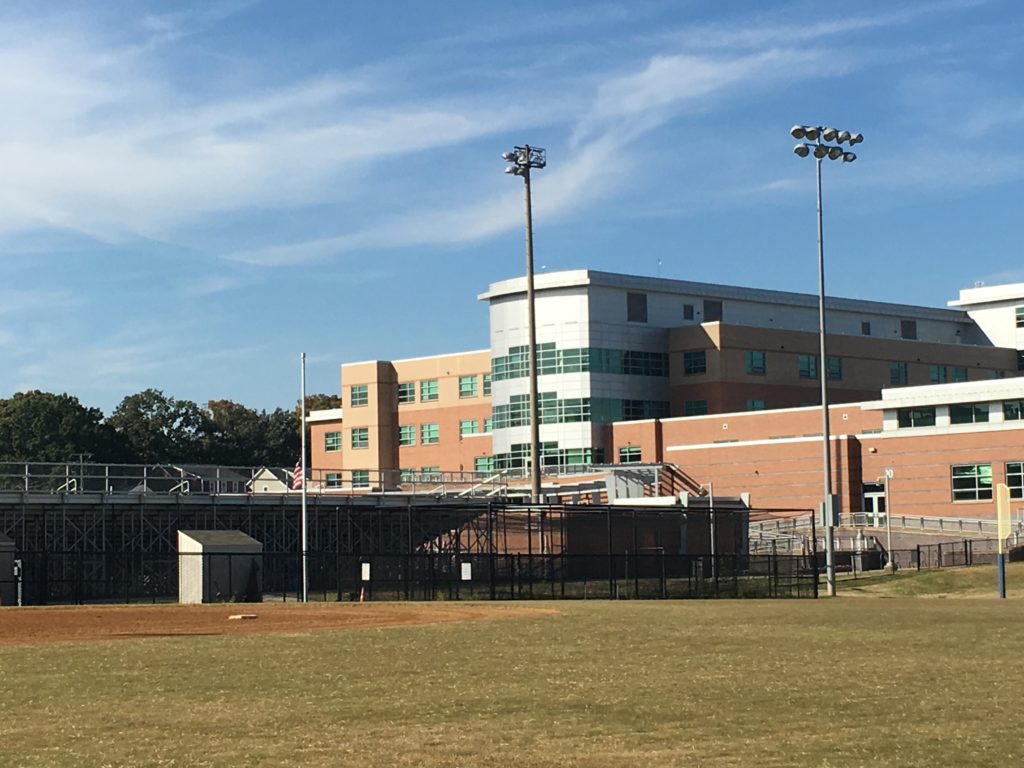
With more than 150 new students set to attend classes at the Arlington Career Center in the coming school year, officials are now scrambling to free up some extra classroom space at the facility.

The county school system now plans to move eight trailers over from the adjacent Patrick Henry Elementary School to free up room for those students in the 2019-2020 school year. Career Center Principal Margaret Chung informed parents of the move in an email Monday (Feb. 25) that was subsequently obtained by ARLnow.

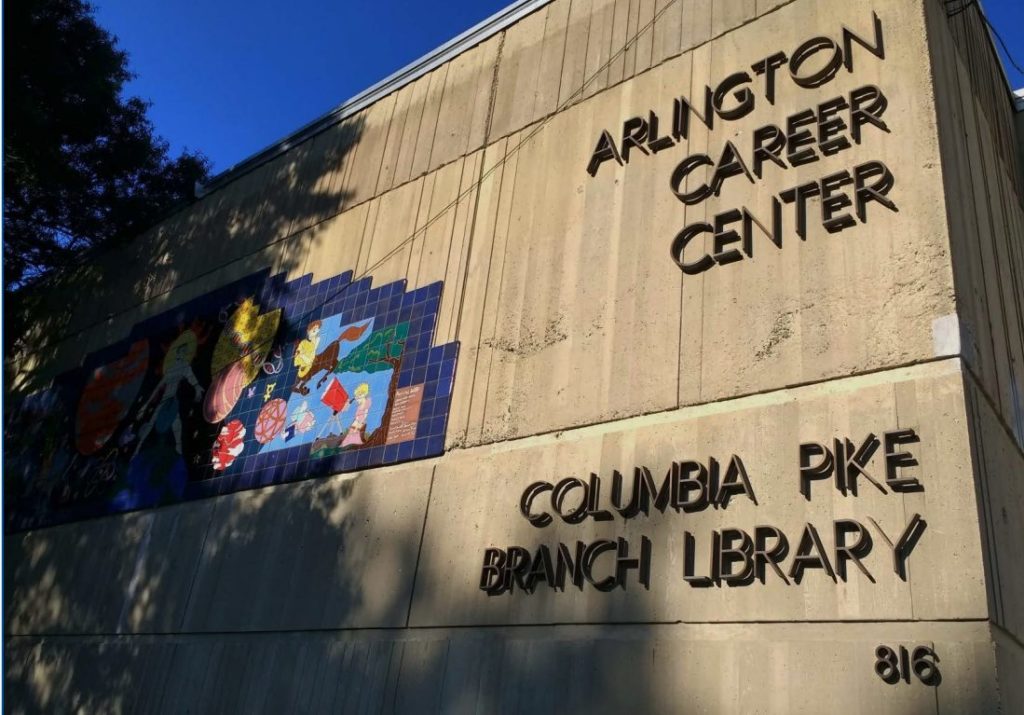
Chung wrote that school leaders initially hoped instead to move students into the second floor of the Columbia Pike Branch Library space, which is located in the Career Center. But county officials rejected that request, prompting the reliance on the so-called “relocatable classrooms” instead.

“To accommodate our expected growth next year and beyond, we have had to identify space for the additional students,” Chung wrote.

The downside of that move is that the trailers will take up some space currently used for the Career Center’s Animal Science program.

The program includes classes focused on animal care and veterinary science, with a variety of animals housed at the site for students to study. Chung expects that the trailers will take up the space currently set aside for three grazing animals — APS spokesman Frank Bellavia says that includes two goats and a miniature pony — forcing the Career Center to “reimagine that program for a more urban setting.”

“This does not mean that we are discontinuing our focus on animal sciences,” Chung wrote. “We will continue to maintain the smaller animals onsite for learning and instruction.”

She added that her staff has “begun to explore options to find a new home” for the animals that need to move, with the goal having them settled by the time the new trailers are in place this summer. That’s also when the school system will move the Montessori program currently housed at Drew Model School into the Henry building.

But with demand for the Career Center’s programs anticipated to only keep growing in the coming years, and the planned expansion of the building to accommodate more high schoolers still years away, Bellavia says the new trailers won’t solve all the building’s space limitations.

Accordingly, APS officials plan to ask the county for permission to use both the first and second floor of the library as instructional space, Bellavia said, with the goal of having it available for students in time for the 2020-2021 school year.

It’s a move that “comes as a surprise” to Kristi Sawert, the president of the Arlington Heights Civic Association and a member of working group that spent months studying the planned expansion and renovation of the Career Center.

Eventually, the school system plans to build room for another 1,050 high schoolers at the facility. But the process of doing so has been a thorny one, with Sawert and other local parents pressing the school system to add a full suite of amenities at the site to make it equivalent to the county’s other comprehensive high schools.

Still, Sawert says that the need to take up the library space for the new students was “never mentioned” during the working group’s deliberations, some of which included the library’s future. The group suggested that the county could ultimately buy up some properties near the Career Center and use that land for a stand-alone library.

“We were told repeatedly during the [working group’s meetings] that internal modifications to the Career Center would accommodate the incoming class of 150 students,” Sawert wrote in an email to concerned neighbors she provided to ARLnow.

Roughly nine years ago, the county kicked off a firestorm of controversy when it proposed shuttering the Pike library and moving its offerings to the Arlington Mill Community Center. The branch has been located at the facility since moving there in 1975.

While moving students into the library space (and the changes to the animal science program) may end up ruffling a few feathers, Chung chose to paint the impending changes as indicative of the demand for the center’s programs.

“We are so pleased to see the excitement and interest in our programs, and it is extremely rewarding to know that more and more students and families want to be part of the opportunities that our programs provide,” she wrote.

Photo 2 via @APS_AnimalSci


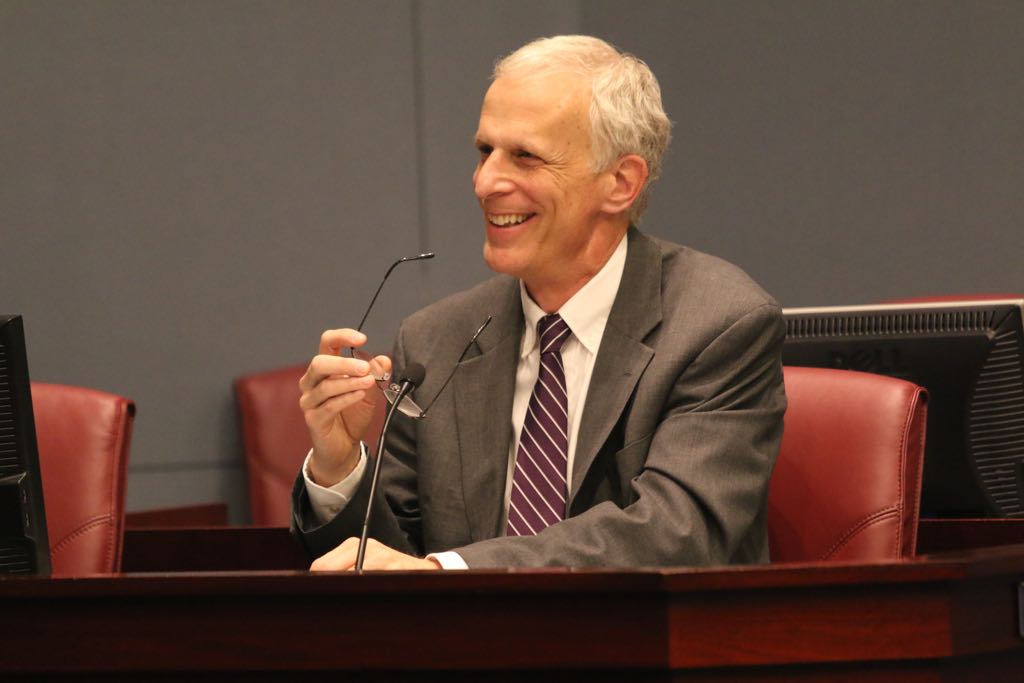
An Arlington Heights parent is launching a challenge to School Board Chairman Reid Goldstein, arguing that the county school system needs a more transparent, comprehensive planning process to match the county’s persistently rising student enrollment levels.

David Priddy told ARLnow that he’s filed papers to compete in the upcoming caucus to win the Democratic Committee’s endorsement in the race. School Board seats are nominally non-partisan, and candidates don’t run under party labels, but local parties frequently endorse candidates for the Board.

Goldstein announced his re-election bid in early January in the race for the lone Board seat on the ballot this fall. He’s seeking his second term in office after winning the seat in 2015, replacing retiring Board member Abby Raphael.

Democratic Committee Chair Jill Caiazzo says that Goldstein and Priddy were the only candidates to file for the caucus ahead of last night’s deadline. Considering that every School Board member for the last 15 years has won the party’s endorsement before going on to win the general election, the caucus will likely decide the outcome of the race.

Priddy wrote in an email that he’s an Arlington native, and grew up attending Arlington Public Schools. He serves on Superintendent Patrick Murphy’s Advisory Committee on the Elimination of the Achievement Gap and he has two children currently in the county’s school system: one at Thomas Jefferson Middle School and the other will attend Alice West Fleet Elementary School when it opens next year.

He hopes that, as “a product of APS as well as an APS parent,” he’ll have a unique perspective to bring to the job.

“Priddy is running for the School Board because he believes better transparency into School Board decision-making is needed, along with comprehensive planning for growth to enable fiscally-responsible financial investments in both new and renovated educational facilities,” his campaign biography reads. “He is not afraid to directly confront the tough issues – from technology to inclusion to capacity challenges – that Arlington’s schools are currently facing.”

Priddy’s Arlington Heights neighborhood has a bit of a fraught history with the school system, and Goldstein, in particular.

The process of determining how, exactly, the school system will add new space for high schoolers at the Arlington Career Center has frustrated many parents in the neighborhood, who argue that the school shouldn’t open as a high school serving the South Arlington neighborhood unless APS can guarantee it will boast the same amenities as the county’s other comprehensive high schools.

Similarly, the recent redistricting process to divvy up students from nearby elementary schools and send them to Fleet as it opens next year sparked conflict in the community.

Parents at Patrick Henry Elementary School, which will soon become the exclusive home of Drew Model School’s Montessori program, argued that Board members (Goldstein, in particular) repeatedly promised them that the school community would move as one to Fleet. School officials dispute their account, and the Board ended up directing about a fifth of Henry’s student body elsewhere, prompting plenty of hurt feelings.

However, Priddy does not make any direct reference to those controversies in his campaign materials, and he said he will launch his campaign in earnest in mid-March.

Goldstein and Priddy will square off in a three-day, “unassembled” caucus in June.

Democrats hoping to vote in the race can do so on June 4 at Drew Elementary (3500 23rd Street S.) from 7-9 p.m., June 6 at Key Elementary (2300 Key Blvd) from 7-9 p.m. or June 8 at Washington-Liberty High School (1301 N. Stafford Street) from 11 a.m.-7 p.m. Anyone hoping to vote in the race will be required to sign a pledge indicating that they are a Democrat and don’t plan to support any other candidate in the race.

Caiazzo stresses that this process is different from a primary, which Virginia law does not allow to decide nominations in School Board races.

Courtesy photo of Priddy, right, file photo of Goldstein, left


Growing expenses from the county school system and Metro have convinced Arlington officials to propose a substantial tax increase for the new year’s budget, with leaders advancing a tax hike that’s even larger than the one initially proposed by County Manager Mark Schwartz.

The County Board voted 4-1 to advertise a 2.75-cent bump to the county’s real estate tax rate at its meeting Saturday, nearly double the 1.5-cent increase included in Schwartz’s proposed budget for fiscal year 2020. Board member Katie Cristol cast the lone dissenting vote.

That change would raise the real estate rate to $1.0205 per $100 of assessed value, generating about $21.4 million for the county in all. The average homeowner would pay an extra $360 or so if the rate goes into effect, though most other county tax rates will remain unchanged.

Of course, there’s no guarantee that the Board will end up approving that exact tax bump — the advertised rate merely represents the upper limit of the rate officials can ultimately approve by the time the budget process ends in April, and they can always bring the rate back down if they so choose.

Most Board members said Saturday that they hope to eventually to do just that, but with the exact size of the budget challenges that the county will face still uncertain, leaders opted to post the higher rate to afford themselves some extra flexibility this spring.

“I don’t want to be in the position of erring because of a box we set ourselves in early,” said County Board Chair Christian Dorsey. “I’m comfortable having that [higher rate] to allow us the proper flexibility to make sure that, at the end of this budget season, we don’t end up with regrets.”

The Board was bracing for Schwartz himself to propose a similarly sizable tax hike in his first draft of the budget, given his warnings this fall that the county would need to close a budget gap of anywhere between $20 million to $35 million, without taking the schools’ needs into account.

But a larger-than-expected rise in property values filled up county coffers a bit, prompting Schwartz to propose the 1.5 cent tax increase and $5.2 million in cuts to balance the budget. Yet Schwartz also cautioned that he had no way of knowing quite yet just how much money the school system or Metro will ultimately need, convincing officials of the need for some extra wiggle room.

The extra quarter of a cent on the tax rate above Schwartz’s proposal would be set aside for Metro’s needs, a move championed by Dorsey, who also serves on WMATA’s Board of Directors. The transit system will set its new budget next month, and there’s no telling just how much cash that could demand from localities like Arlington — General Manager Paul Wiedefeld is proposing major service increases designed to increase ridership, but county officials have thrown cold water on some of those proposals.

As for the school system, Superintendent Pat Murphy will present his opening budget proposal to the School Board later this week, but he’s previously estimated that a flood of new students (and the opening of new schools to accommodate them) could put Arlington Public Schools in a budget hole of as much as $43 million.

Accordingly, Board members hoped to add an extra penny to the tax rate beyond Schwartz’s proposal, generating an extra $7.8 million to dedicate specifically to schools.

Board member Erik Gutshall says school leaders have been especially keen on a larger tax increase recently, particularly after the Board decided to hold the tax rate flat last year. Many around the school system felt that the Board promised them that they’d work to address school needs this year instead, and they’re looking to see officials deliver on that pledge.

Josh Folb, a leader of the Arlington Education Association, even argued that a 3-cent tax increase would be the most appropriate step for the Board to take.

“Without that flexibility, the Board will not be able to negotiate in good faith with the schools when they present their budget of needs in the coming days,” Folb said.

Board Vice Chair Libby Garvey, a former School Board member herself, said she’d have favored advertising the full 3-cent increase, but acknowledged she wouldn’t have the votes with her to make that happen.

Indeed, Cristol argued instead for the Board to advertise a 2-cent tax hike. She pointed out that the Board managed to find some extra money for both schools and Metro without raising taxes in last year’s budget, and worried that even advertising the 2.75-cent tax hike would send a poor message to local homeowners.

“Raising it any further undermines our commitment, or way of framing, we have taken to this community, this idea we’ve had softness in the office market and we were committed to doing everything we needed to do to raise that, rather than just balance the cost of our increasing needs on the backs of our residential taxpayers,” said Cristol, who’s up for re-election this fall. “I think that’s really penetrated and allowed us to have much a healthier conversation with most quarters of our community about Amazon’s arrival and why it’s necessary.”

But Cristol was the only Board member to support that proposal, with others arguing that last year’s budget cuts were painful enough that leaders aren’t eager to repeat that process this time around.

“If there’s fat to be found [in the budget], we’ve crossed that bridge already,” Gutshall said. “Last year, we hopefully didn’t cut to bone, but we came very, very close in some particular areas.”

As part of his proposal, Schwartz included an extra $3.4 million in potential cuts that the Board could consider if it doesn’t want to raise taxes at all. Those changes would affect another 19 county staffers, and involve changes like the elimination of library services at the Crystal City Connection and Glencarlyn Library, reductions in county transportation and human services staffing and cuts to some police department programs.

But Schwartz pointedly did not endorse those changes, urging the Board to opt for the tax hikes instead.

The Board will now hold a series of work sessions and public hearings on the budget and tax rates, with a final vote on the new spending plan set for April 23.


Arlington’s top executive is calling for a real estate tax hike and some select staff cuts to meet rising expenses passed along by county schools.

However, County Manager Mark Schwartz’s proposed budget for the new fiscal year is not quite as unpalatable as he’d initially feared.

Schwartz offered a first glimpse at his budget proposal for fiscal year 2020 to the County Board at a work session today (Thursday). The headline number: a 1.5-cent tax increase.

Unlike last year, when the Board opted to keep the tax rate level, Schwartz is envisioning bumping the base real estate rate to $1.008 per $100 of assessed value.

That’s a 4 percent jump from last year, factoring in the increase in real estate assessments, generating an extra $11.7 million for the county on an annual basis and costing the average homeowner an extra $277 annually. Schwartz plans to leave most other tax rates and fee schedules untouched.

In all, the annual tax burden on the average homeowner would reach $8,890, including car taxes and fees, trash collection charges, and water and sewer fees.

Neighboring Fairfax County, meanwhile, is considering holding its tax rate level at $1.15 per $100, while Alexandria’s rate is also likely to be held steady at $1.13.

Schwartz hopes to save $5.2 million by slashing a total of 29 full-time staff positions and one part-time role from the budget. Eleven of those positions are currently unfilled, and Schwartz is characterizing those cuts as ways to reform inefficient programs rather than as painful losses for the county.

The county manager had originally projected doom and gloom for the new year’s budget, predicting that the county would need to close a gap of anywhere between $20-35 million on its own, with the school system tacking on a $43 million deficit too. But Schwartz told reporters today that the county’s budget picture has improved substantially since those initial estimates in the fall, giving him a bit more room to maneuver.

“This budget been a little bit more of a meandering trail than a straight line,” Schwartz said. “I thought I’d be coming to the community proposing a budget with reductions to fundamental services in the county. We’d be doing less maintenance, we’d have fewer programs. That’s not really the case.”

Schwartz chalks up the sudden change partially to property values ticking up a bit more than the county anticipated — assessments saw a 3.5 percent increase this year, while Schwartz says the county projected a 2 percent jump.

That’s not to say that the county is out of the woods, fiscally speaking.

Schwartz says he’s still not sure just how large the school system’s budget gap might be, and the extra $24.8 million he plans to send to Arlington Public Schools next year still likely won’t be enough to meet all their needs. APS is opening three new schools next year, prompting plenty of new expenses, and persistently rising enrollment projections means that the school system will need to keep adding new buildings going forward.

“They still have something of a gap that will require cuts,” Schwartz said. “I can’t really quantify what those cuts would be, but I’m sure we’ll hear from the schools community and the School Board when the [County Board] has to decide what to advertise that my penny [on the tax rate] for them wasn’t enough.”

That tone toward the school system could set off yet another round of wrangling between the county and the School Board, which has repeatedly argued for more cash to fund school construction. School leaders narrowly avoided class size increases last year, but the Board is already warning that they may not be able to do so this time around.

Another potential spot of trouble for the county is Metro. Schwartz plans to spend an additional $45.6 million to support the transit service in FY2020, with only a 3 percent increase in expenses to fund Metro operations specifically. That’s a key figure because the deal to provide dedicated funding to Metro mandates that Virginia localities can’t increase spending on the transit service by more than 3 percent each year, but WMATA General Manager Paul Wiedefeld is courting a bit of a dispute on the issue.

He’s proposing a Metro budget that calls for substantial changes aimed at boosting ridership, which would require localities to blow past that 3 percent spending cap. Wiedefeld argues that he’s crafted a way to avoid violating that stricture — Arlington officials disagree, and Schwartz said he had no desire to push the envelope on this front.

“We had a deal, this is the deal and to the extent that there’s more [money] that has to be added, we can talk about it,” Schwartz said. “But I wasn’t prepared to make the choices on my own right now to defund a county program in order to do something I think might be questionable.”

Aside from Metro, the rest of the budget includes raises of 3.25-3.5 percent for all county employees, including pay bumps of up to 5.5 percent for Arlington first responders, a key part of last year’s budget deliberations.

Schwartz also hopes to add four new staff positions geared around adapting to Amazon’s growing “HQ2” presence, assuming the Board signs off on an incentive package next month to bring the tech giant’s new headquarters to Crystal City and Pentagon City.

(more…)


Board Member Wants Lower School Costs — “In remarks to a local service organization, Matt de Ferranti telegraphed the likelihood that Arlington property owners would see a higher real-estate-tax rate this year, in part to pay for higher school costs. But at the same time, he said the days of gold-plated school facilities must come to an end.” [InsideNova]

Arlington No. 5 on ‘Women in Tech’ List — Arlington County ranks fifth on a new list of “the Best Cities for Women in Tech in 2019.” D.C. ranked No. 1. [SmartAsset]

Isabella Restaurant Gear Up for Auction — “Rasmus Auctions is advertising online auctions for kitchen equipment, dining room contents, decor and more at Yona, Pepita and Kapnos Taverna in Arlington until about noon March 13.” [Washington Business Journal]

County Expanding Drug Take-Back Boxes — “In the first calendar year of the Permanent Drug Take-Back Box program, residents safely disposed of 1008 pounds of unused, unwanted or expired prescription medications. Due to the success of the program, an additional permanent drug take-back box has been installed at Arlington County Fire Station #5.” [Arlington County]

AWLA Calls for More Pet Foster Families — “We need your help! Our kennels are full and we are in URGENT need of foster homes for medium-large adult dogs and kittens undergoing treatment for ringworm.” [Facebook]

Falls Church Becoming ‘Un-boring’ — The sleepy City of Falls Church is attracting younger residents amid a development boom, cheered on in an editorial by the little city’s newspaper. [Falls Church News-Press]


(Updated at 5:20 p.m.) Arlington Public Schools will be closed Wednesday due to expected snow and ice.

The school system made the call at 5 p.m. Tuesday, shortly after a similar announcement from Fairfax County Public Schools.

Arlington’s Marymount University will also be closed.

Arlington and the region is under a Winter Storm Warning for Wednesday, with 3-6 inches of snow expected. From the National Weather Service:

…WINTER STORM WARNING REMAINS IN EFFECT FROM 1 AM TO 7 PM EST WEDNESDAY… * WHAT…HEAVY MIXED PRECIPITATION EXPECTED. TOTAL SNOW ACCUMULATIONS OF 3 TO 6 INCHES AND ICE ACCUMULATIONS OF UP TO ONE TENTH OF AN INCH EXPECTED. * WHERE…THE DISTRICT OF COLUMBIA AND PORTIONS OF CENTRAL MARYLAND AND CENTRAL AND NORTHERN VIRGINIA. * WHEN…FROM 1 AM TO 7 PM EST WEDNESDAY. SNOW WILL OVERSPREAD THE AREA EARLY WEDNESDAY MORNING AND MIX WITH AND CHANGE TO SLEET AND FREEZING RAIN DURING THE LATE MORNING AND EARLY AFTERNOON HOURS WEDNESDAY. PRECIPITATION WILL CHANGE TO PLAIN RAIN WEDNESDAY EVENING. THE HEAVIEST SNOW IS LIKELY WEDNESDAY MORNING. * ADDITIONAL DETAILS…TRAVEL COULD BE VERY DIFFICULT. THE HAZARDOUS CONDITIONS COULD IMPACT THE MORNING OR EVENING COMMUTE. PRECAUTIONARY/PREPAREDNESS ACTIONS… A WINTER STORM WARNING MEANS SIGNIFICANT AMOUNTS OF SNOW, SLEET AND ICE WILL MAKE TRAVEL VERY HAZARDOUS OR IMPOSSIBLE. WHEN VENTURING OUTSIDE, WATCH YOUR FIRST FEW STEPS TAKEN ON STEPS, SIDEWALKS, AND DRIVEWAYS, WHICH COULD BE ICY AND SLIPPERY, INCREASING YOUR RISK OF A FALL AND INJURY. &&

Arlington’s Dept. of Environmental Services says it has been pretreating roads and expects to have its “full response team” on the road shortly after midnight, before the first of the flakes starts falling.

The wintry weather is expected to prompt delays and cancellations at local airports, including Reagan National Airport, which is advising flyers to “check with their airline to confirm the status of their flight prior to coming to the airport.”

VDOT’s Northern Virginia office, meanwhile, is encouraging drivers to stay off the roads if at all possible.

VDOT asks that drivers plan travel around a winter storm bringing accumulating snow and a mix of frozen precipitation to the region throughout the day Wednesday. Avoid travel during the storm for safety, as well as after until road conditions improve.

Crews pretreated interstates and major routes throughout northern Virginia yesterday and today.

Tonight, trucks will stage along roadways, ready to plow and treat roads as needed when the storm begins.

VDOT Asks Drivers and Residents To:

  • Plan now to avoid driving through the day Wednesday and after the storm until conditions have improved. Give crews time to plow and treat roads.
  • Park in driveways or on the same side of the street to allow plows room to pass.
  • Continue to closely monitor weather, as forecasts can improve or worsen quickly.
  • If you absolutely must drive, know the conditions, drive for the conditions and give plows plenty of room. Ensure enough gas, wiper fluid, proper tires, medication, and an emergency car kit. Check road conditions along your route at www.511virginia.org, on the free mobile app, or call 511 from any phone in Virginia.

The backers of a lawsuit seeking to preserve the name of Washington-Lee High School are working to keep their legal challenge alive, appealing the matter to a higher court after a judge previously struck down the suit on procedural grounds.

Three current W-L students are hoping to block the Arlington School Board’s decision to strip Robert E. Lee’s name from the building, arguing that the Board didn’t follow its own stated policies for renaming the building and ignored the community’s opposition to the switch. The Board first kicked off a process to consider a name change in August 2017, in the wake of the white supremacist violence in Charlottesville and a nationwide reconsideration of the meaning of Confederate symbols.

Arlington County Circuit Court Chief Judge William Newman ruled in December that the students were barking up the wrong tree, noting that the Board broadly followed the community engagement process it laid out for the name change, and that state law doesn’t even bind school officials to follow that process to the letter, in the first place.

But the students, who are backed by a group of the school’s alumni working feverishly to preserve W-L’s name, were undeterred. Their attorney, Jonathon Moseley, told ARLnow that he’ll be appealing Newman’s ruling, even though the Board already voted last month to rename the school as “Washington-Liberty HS.”

“The judge took into account that [the School Board] didn’t follow all of their own procedures for the renaming, but he said it didn’t matter that they didn’t,” Moseley said. “I don’t like that idea, and I think it’s a pretty important issue that the courts need to address.”

Moseley expects that the appeal will head to Virginia’s Court of Appeals, rather than the state’s Supreme Court, though he’s still waiting on judges to sort out the details. He filed his notice of appeal in circuit court on Jan. 30.

Initially, Moseley had planned to simply amend his original complaint. Even though Newman struck down the students’ initial legal arguments, he gave Moseley until Jan. 9 to file revised arguments instead.

Court documents show that he missed that deadline, asking instead for Newman to issue a written explanation for why he blocked Moseley’s previous efforts and more time to consider next steps.

“I wanted more information about the judge was thinking,” Moseley said. “If there were no set of facts we could allege that showed the Board violated the rules, there’s nothing I could’ve added that would’ve been any different.”

But attorneys for the School Board pointed out in a motion that that request came “on the eve of the School Board’s vote on a new name for Washington-Lee High School” on Jan. 10, arguing it was “nothing more than a delay tactic.”

Similarly, Board attorney John Cafferky argued that Moseley “failed to articulate any legal authority” for a delay, urging Newman to toss out the case.

The judge proved to be sympathetic to those arguments. He ruled against Moseley’s motion in a Jan. 25 hearing, reasoning that the students missed their chance to file any revised claims and that the court no longer has jurisdiction over the matter.

That’s forced Moseley to appeal the dispute to a higher court instead, which could drag out the proceedings for months yet. He plans to have a brief ready supporting his appeal within the next 90 days, then the court will need to decide whether to take the case.

“It could be a year to a year-and-a half project if the appeals court decides it’s even going to look into that at all,” Moseley said. “They can do what they want.”

In the meantime, the school system is moving ahead with putting the building’s new name in place. Officials hope to have everything from signage to sports uniforms changed to reflect the new “Washington-Liberty” name in time for the 2019-2020 school year to start up in September.


Arlington school leaders could soon gain the power to start classes before Labor Day, as some long-stymied legislation finally seems set to pass in the General Assembly.

State lawmakers are gearing up to finally repeal a provision widely known as the “King’s Dominion Rule,” which has barred school systems across the state from starting class before Labor Day for the last 30 years in a bid to provide Virginia’s theme parks with a robust pool of potential patrons, and student workers, each summer.

Many schools have already earned “waivers” to disregard the rule (including large school systems like Fairfax and Loudoun counties) and momentum has built in recent years to do away with the law entirely. Arlington officials have been particularly keen on kicking off class early, hoping to better align high school calendars with the slew of standardized tests that dominate the latter half of each school year.

And while it’s not a done deal just yet, Arlington could well get its wish this year. The House of Delegates and state Senate have now both passed a bill from Del. Roxann Robinson (R-27th District) to allow school systems to start classes up to 14 days before Labor Day — so long as they give students the Friday before the holiday off.

Lawmakers will now need to determine the bill’s next steps. General Assembly leaders could opt to send it along to Gov. Ralph Northam as it is, or convene a conference committee for additional negotiations as a competing bill from Sen. Amanda Chase (R-11th District) heads to the House floor for a vote.

Some local Arlington legislators — Sens. Barbara Favola (D-31st District) and Janet Howell (D-32nd District) — were backing narrower bills to give only Northern Virginia localities the power to control their school calendars. But those efforts were quickly rolled into Chase’s legislation instead, as it became clear that the tourism industry and school administrators might be able to strike a compromise on the legislation.

“We think this is a good compromise,” Chase told a House committee yesterday (Monday). “Our desire is really this to give the power back to the school boards, the parents and the PTAs, as opposed to big business determining when our young people go to school.”

Both bills would grandfather in school systems that already have waivers to start more than two weeks before Labor Day, a key demand from school leaders. Those localities also wouldn’t be required to give students the Friday before the holiday off.

Chase, and groups representing the state’s school boards and superintendents, said they would’ve much preferred a full repeal of the law to let school systems set calendars however they’d like.

By contrast, representatives of the state’s theme parks say they’re not thrilled with the prospect of schools starting the full two weeks before the holiday, but insisted on students receiving a four-day weekend as a bit of a compromise.

Tom Lisk, a lobbyist for the Virginia Restaurant, Lodging and Travel Association, told House lawmakers yesterday that the interest group is generally opposed to the legislation, but wouldn’t condemn the effort in its entirety.

“There’s an opportunity to work to find middle ground still,” Lisk said.

As of yet, however, there’s not much sign that lawmakers will bend to pressure from the hospitality industry on the bill.

The House’s education committee altered Chase’s bill to make it identical to Robinson’s on a 16-6 vote yesterday — should the House then pass the legislation, the final decision will rest with Northam. Or, the House could always alter Chase’s bill, setting up the potential for a conference committee, where a small team of negotiators would hash out the differences between the two pieces of legislation.

Regardless of just how lawmakers work out the details, Arlington’s School Board will be watching the proceedings quite closely. As the group set the calendar for the 2019-2020 school year on Feb. 7, Board member Barbara Kanninen told staff that she’d be “very interested” in seeing options for a pre-Labor Day start next year, so long as the legislature follows through.

“Ultimately, I’m a big fan of year-round school, and this gives us a chance to start working in that direction,” Kanninen said.

File photo


View More Stories