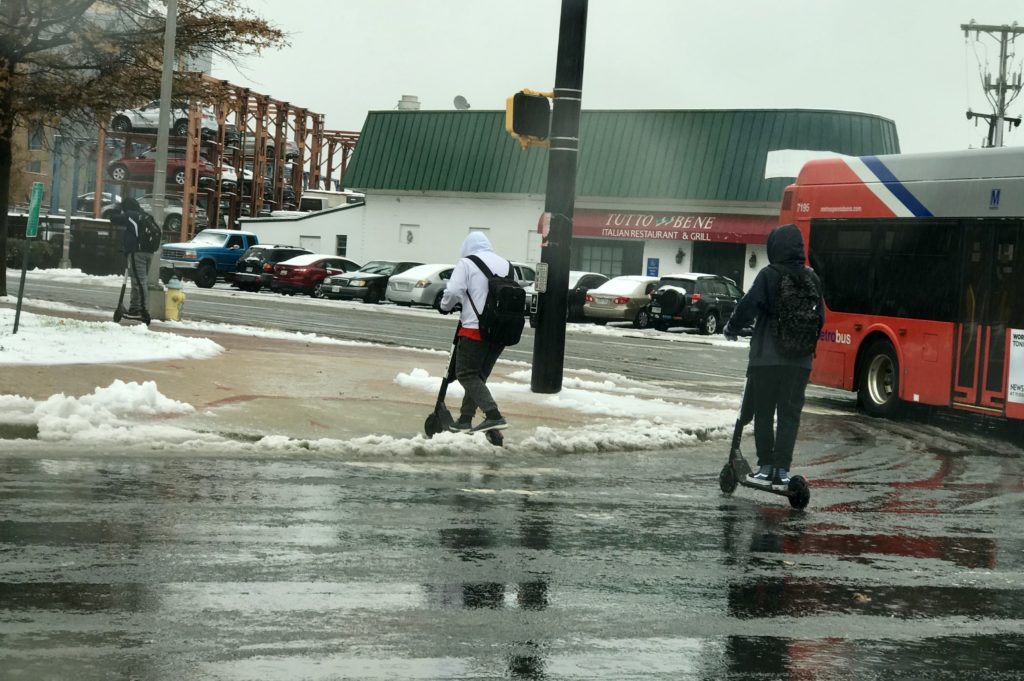
(Updated at 3:35 p.m) After a controversial on-time start that led to a treacherous morning on local roads and sidewalks, Arlington Public Schools is not taking any chances tonight.

Both parents and school bus drivers had trouble getting to school this morning on the roads. According to an APS spokesman, 12 out of around 160 school buses became stuck due to slippery road conditions, and one bus was involved in a “very minor” crash. The spokesman did not have an exact tally of how many buses were late arriving to school

“Our drivers are instructed to drive slow and take all precautions when driving,” said Frank Bellavia.

Following the morning mess, APS canceled all after school and evening activities. The school system announced the cancellations in a tweet just after 1:30 p.m.


Marymount University, meanwhile, is also closing early because of the weather.

While most of the frozen precipitation is over for Arlington, there are still a number of concerns for this evening, including remaining snow on local roads and a possible re-freeze overnight.

More from VDOT:

A mixed bag of precipitation is affecting much of the Commonwealth Thursday, and Virginia Department of Transportation (VDOT) crews are responding to adverse road conditions where needed. Snow, sleet, and heavy rain are expected across Virginia through the afternoon and overnight hours.

Some portions of Virginia are experiencing the first taste of winter in the 2018-2019 season. In affected regions, VDOT crews are deployed to treat roads to melt icy areas. Icy conditions could cause downed trees and debris in roadways. Travelers should exercise caution during the afternoon rush hour and overnight, as road conditions may be wet and slushy.

Portions of the state are experiencing heavy rain. Crews are monitoring road conditions and responding to reports of high water and debris in roadways.

Motorists are encouraged to closely monitor travel conditions in local areas and adjust travel as needed. In wet and icy conditions, allow extra time to reach destinations, lower speed and keep a safe distance from other vehicles.

Another concern: the potential for flooding as a result of melting snow and heavy rain. Arlington and much of the rest of the region is currently under a Flood Watch.

From the National Weather Service:

…FLOOD WATCH REMAINS IN EFFECT THROUGH THIS EVENING… THE FLOOD WATCH CONTINUES FOR * PORTIONS OF MARYLAND, THE DISTRICT OF COLUMBIA, AND VIRGINIA, INCLUDING THE FOLLOWING AREAS, IN MARYLAND, ANNE ARUNDEL, CALVERT, CENTRAL AND SOUTHEAST HOWARD, CENTRAL AND SOUTHEAST MONTGOMERY, CHARLES, PRINCE GEORGES, SOUTHEAST HARFORD, SOUTHERN BALTIMORE, AND ST. MARYS. THE DISTRICT OF COLUMBIA. IN VIRGINIA, ARLINGTON/FALLS CHURCH/ALEXANDRIA, FAIRFAX, KING GEORGE, PRINCE WILLIAM/MANASSAS/MANASSAS PARK, SPOTSYLVANIA, AND STAFFORD. * THROUGH THIS EVENING * A PERIOD OF MODERATELY HEAVY RAIN IS EXPECTED THIS AFTERNOON AND EVENING. ONE AND A HALF TO TWO INCHES OF RAIN IS EXPECTED WITH ISOLATED HIGHER AMOUNTS POSSIBLE. THIS MAY LEAD TO FLOODING OF AREA CREEKS AND STREAMS AS WELL AS IN URBAN AND POOR DRAINAGE AREAS. PRECAUTIONARY/PREPAREDNESS ACTIONS… A FLOOD WATCH MEANS THERE IS A POTENTIAL FOR FLOODING BASED ON CURRENT FORECASTS. YOU SHOULD MONITOR LATER FORECASTS AND BE ALERT FOR POSSIBLE FLOOD WARNINGS. THOSE LIVING IN AREAS PRONE TO FLOODING SHOULD BE PREPARED TO TAKE ACTION SHOULD FLOODING DEVELOP. &&


(Updated at 9:55 a.m.) While Fairfax County cancelled school today, Arlington Public Schools opened on time despite the snow.

About an inch of wet snow has fallen, covering roads and sidewalks. A number of crashes have been reported around the county, per scanner traffic, and at least one school bus has gotten stuck on a snow-covered street. Another crash involving a bus has been reported on S. George Mason Drive in front of the National Guard center.

Several streets have been closed due to slick conditions, including N. Harrison Street at Little Falls Road, near Yorktown High School, the large S. Walter Reed Drive hill north of S. Four Mile Run Drive, N. George Mason Drive at Park Drive and N. George Mason Drive at Wilson Blvd.

ART buses, meanwhile, have been delayed due to the winter precipitation. Per ART:

ART Routes 41,45,62,75,77,and 84 are experiencing delays/operating issues due to icy/slippery road conditions.  Road Supervisors, Safety and Maintenance Technicians are assisting Operators. We apologize for the inconvenience.

The federal government is also open on time today, with the option for some employees to telework.

Arlington County Police and other agencies are urging drivers to be careful on the road.

More from social media:

https://twitter.com/alisonedye/status/1063068759999549440


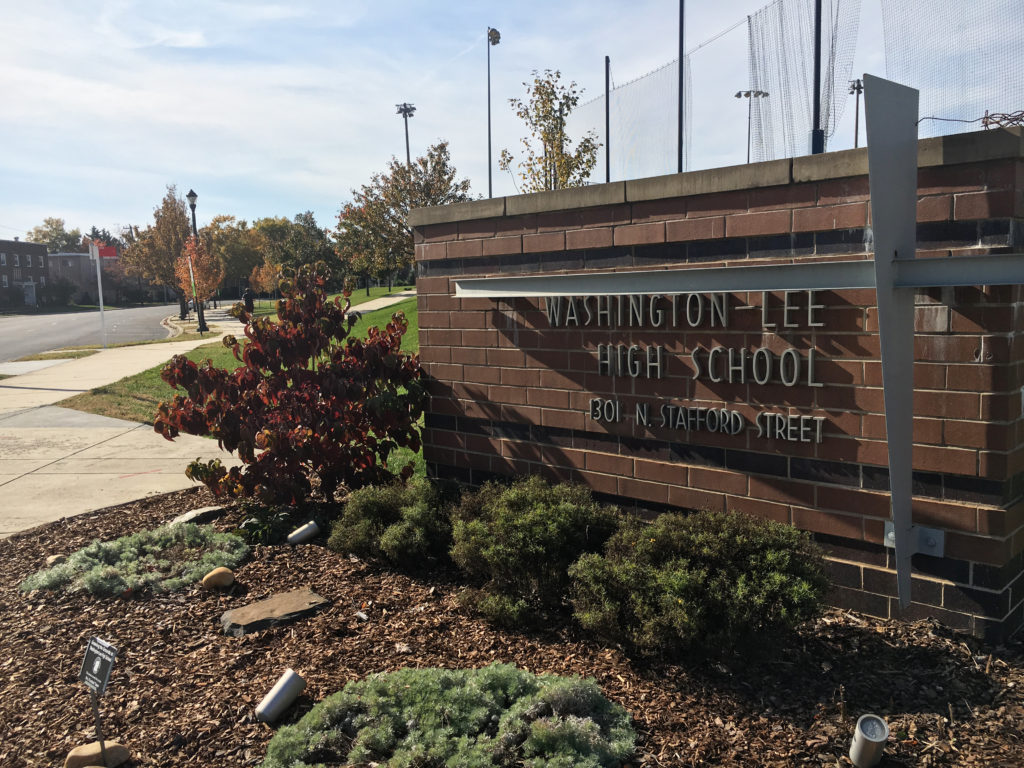
Opponents of the decision to change the name of Washington-Lee High School have long claimed the School Board improperly cast aside its established engagement process on the matter — but the school system has now provided its most robust rebuttal of those charges to date.

A trio of students at Washington-Lee are hoping to block the school’s renaming with a lawsuit targeting the School Board and other top Arlington Public Schools officials, arguing primarily that the Board rushed a vote on the issue and failed to follow its proscribed process for accepting public comments on the name change.

The Board and its lawyers have already asked a judge to toss out the suit, claiming that the question of whether Board members followed their proposed engagement schedule is irrelevant in the legal proceedings. But, in a legal memorandum filed in late October, the APS lawyers argue extensively that the Board “properly followed its procedures in voting to rename W-L,” should the students’ legal challenge survive a judge’s scrutiny.

In short, name-change opponents have accused the Board of misleading the community by promising a two-step process, and not delivering; they argue the Board pledged to first revise its policy for naming all county schools, then consider whether to change Washington-Lee’s name specifically. Instead, the Board changed the naming policy, then voted to rename W-L all on the same night back in June.

The students backing the lawsuit, who have asked the court to withhold their names despite some giving on-camera interviews about the case, even claim a recording of their meeting with Board Vice Chair Tannia Talento bolsters those arguments. In that conversation, Talento did admit that “there was never any intentional engagement to the community about specifically changing [the name of] Washington-Lee.”

However, in the Oct. 26 motion, the School Board’s attorneys argue that name-change challengers have misunderstood what Board members promised to do.

The motion points specifically to the Board’s vote in October 2017 to adopt a four-stage process for drafting a new school naming policy. That process involved a staff committee identifying the names of schools that “may need to be considered for renaming” based on a revised policy governing school monikers, which ended up including W-L. Then, the Board agreed to “in tandem” adopt the new naming policy and “begin a renaming process for any schools that may need to be renamed.”

That means the lawyers believe Board followed its planned process during its June meeting, despite the claims to the contrary.

The Board’s attorneys do note that Superintendent Patrick Murphy did proposed a “modified procedure and timeline” for the process in January, which did allow for a separate round of community engagement and Board vote on a potential W-L renaming.

However, the lawyers write that “at no point did the School Board vote to adopt this alternate procedure and/or its accompanying timeline,” making it merely a proposal and not set policy. The attorneys even go on to describe Murphy’s January plan as a “non-binding, contingency plan” that “never supplanted the naming process or its accompanying timeline that had been previously adopted by the School Board in fall 2017.”

“Plaintiffs’ specific allegations that the School Board gave no advance public notice that the revised naming policy would be considered for a vote — and that the amendment was not circulated to the public in advance of its June 7, 2018 meeting — are both factually contradicted by the plaintiffs’ own amendment complaint and exhibits, and are legally irrelevant in any event,” the lawyers wrote.

Certainly, there are a variety of other legal arguments that the Board’s lawyers make to justify their earlier request that the case be dismissed. They believe the students don’t have standing to sue — as all of them are currently seniors, and won’t be attending the school by the time it’s set to be renamed in fall 2019 — and that the lawsuit improperly targets Board members and school leaders in their personal capacities, rather than the Board as a whole.

The attorneys also point out that a Fairfax County Circuit Court judge dismissed a similar legal challenge to the renaming of J.E.B. Stuart High School in Falls Church earlier this year. That school is now known as Justice High School.

The students and their attorney now have until Dec. 7 to file a motion rebutting the Board’s claims. A judge is set to hold a hearing on whether the case can go forward on Dec. 19.

Meanwhile, the Board has pressed ahead with the renaming process, in the hopes of voting on a new name for Washington-Lee next month.


Amazon’s new headquarters will fundamentally transform Arlington in the years to come, but county officials are hoping to reassure residents that the area won’t change in the blink of an eye.

Instead, Arlington leaders are painting the arrival of the tech giant — and the 25,000 workers set to someday occupy its new office space — as a development that will shape the county’s economic landscape over time, rather than overnight. And, they hope, that will give the county time to prepare accordingly.

“This is not going to feel like a tsunami of new people on our streets or kids in our schools,” County Board Chair Katie Cristol said during a question-and-answer session live-streamed on Facebook last night (Tuesday).

Critics of the county’s courtship of Amazon have long feared the impact that thousands of highly paid workers arriving in the region could have on everything from home prices to school overcrowding. But Arlington leaders have often countered that the region is experiencing dramatic growth at the moment, and seems set to see even more in the future, meaning that Amazon’s arrival might not seem especially out of place.

Now that Jeff Bezos and company have made the big decision, targeting Crystal City, Pentagon City and Potomac Yard for half of its proposed second headquarters, officials remain confident in those predictions. Cristol, for instance, noted Tuesday that the tech company could draw as much as 15 to 20 percent of its new workforce from current county residents.

“They located here because they want access to the tech talent we have here,” Cristol said.

As for the rest of the new Amazon staffers, Arlington Economic Development Director Victor Hoskins pointed out that they won’t be arriving on the county’s doorstep next week, or even next month. Under the terms of the company’s proposed deal with the state, Amazon would only hire about 400 workers for the new Arlington campus next year.

That number will ramp up sharply over time, however, leaping to 1,180 new staffers in 2020 and then 1,964 workers the year after. But Hoskins noted that the pace of change would’ve been even more dramatic had Amazon stuck with its original plan to house all 50,000 workers in one city, rather than splitting “HQ2” between Arlington and New York City.

“After February, when the deal is set to be approved [by the Board], you’ll see the first employees arriving,” said County Manager Mark Schwartz. “Beyond that, I don’t think people will see a lot different in first year… It’ll become more noticeable a few years out.”

For parents nervous about how many kids those new workers will bring with them, Cristol is also optimistic that the school system will be able to handle the influx of students. She expects that the county will only see two to three additional students in each school per year, and that’s only when Amazon fully ramps up hiring in the coming years.

Depending on how the county is calculating that figure, such an increase would work out to anywhere from 70 to 105 new students enrolled in Arlington Public Schools each year, at a time when the school system is already struggling with severe financial pressures to match rising enrollment.

“That’s not nothing,” Cristol said. “But compared to the 500 students per year that APS is already adding, it’s really manageable.”

But Schwartz noted that, under the county’s revenue-sharing agreement with APS, roughly half of the tax revenue that Amazon generates will flow into the school system’s coffers. He estimates a $315 million increase in tax revenue over the life of the county’s deal with Amazon, which beats county projections by about $160 million between now and 2030.

Of course, Schwartz says the county will still feel some pain in the short term. Though Amazon represents a tax windfall for Arlington, he warned that it will take time for the county to feel the benefits — and that means that painful measures like layoffs, service reductions and tax increases remain on the table for the county’s new budget.

“We’ve been through several difficult budget years and we have a couple more to bridge to where we’re going to be,” Schwartz said.

Cristol acknowledged that there are some “difficult short-term conversations” on the way in the county, particularly as Arlington tries to prepare for Amazon’s impact without the tax revenues it needs to fund necessary projects and services.

But she also pledged to be open to having those difficult discussions. Some Amazon skeptics have already called on the Board to hold multiple town halls focused on Amazon alone, and Cristol said officials plan to do so, and more.

“Let us know if you want us to come meet with your civic group,” Cristol said. “We plan to have many conversations in the community about this.”


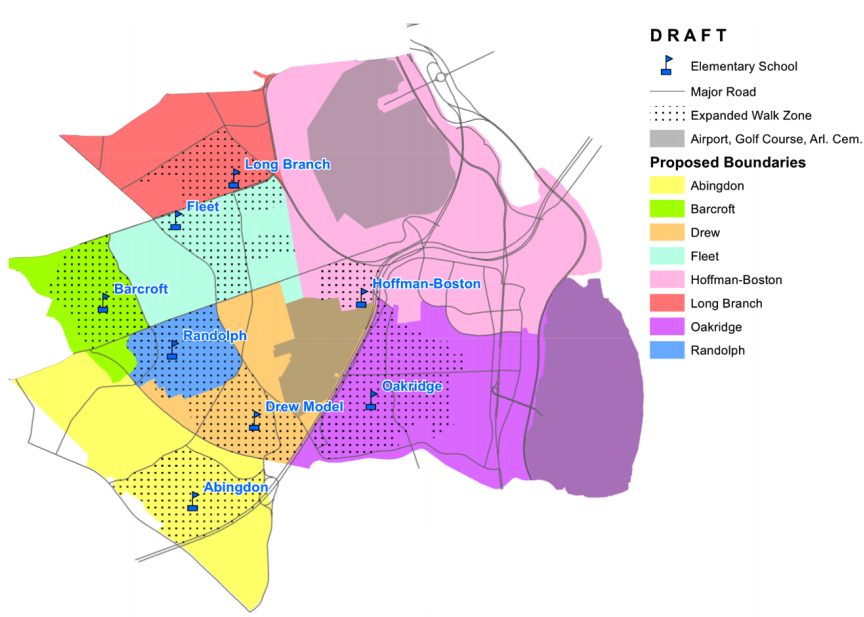
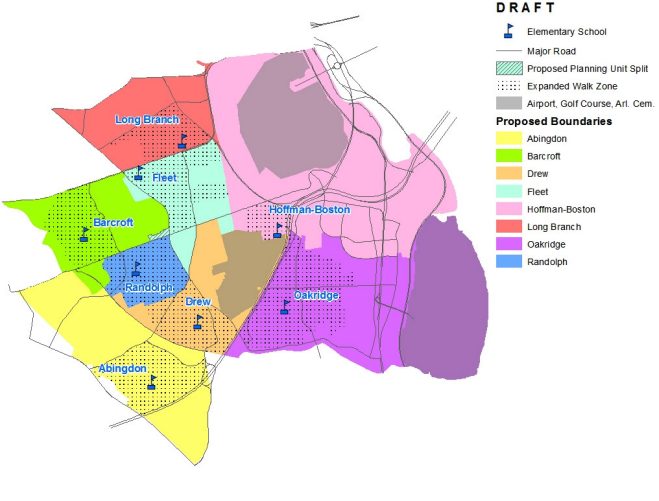
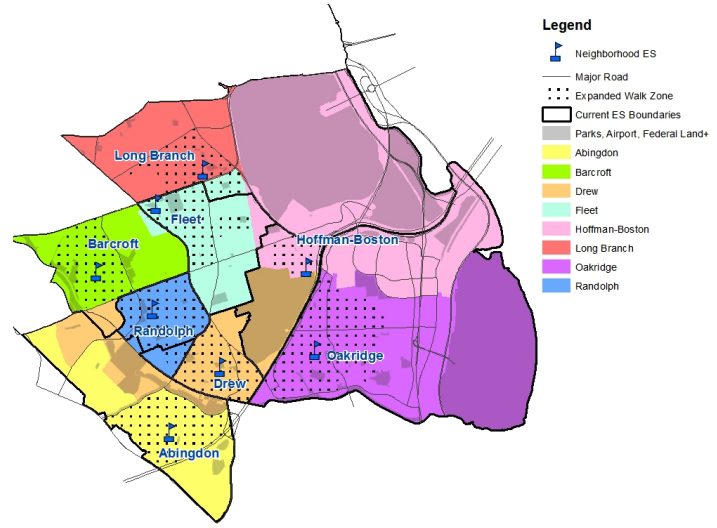
Superintendent Patrick Murphy has revealed his final proposal for new elementary school boundaries to forward along to the School Board, with a new map designed to simultaneously the answer the concerns of some Fairlington parents and reduce overcrowding at Barcroft Elementary.

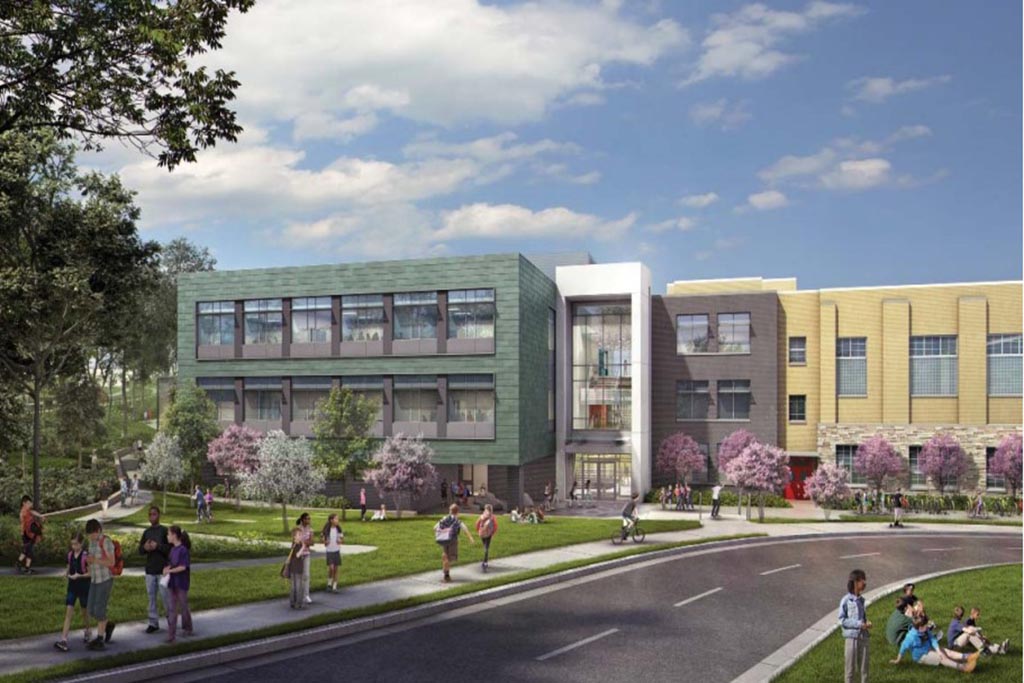
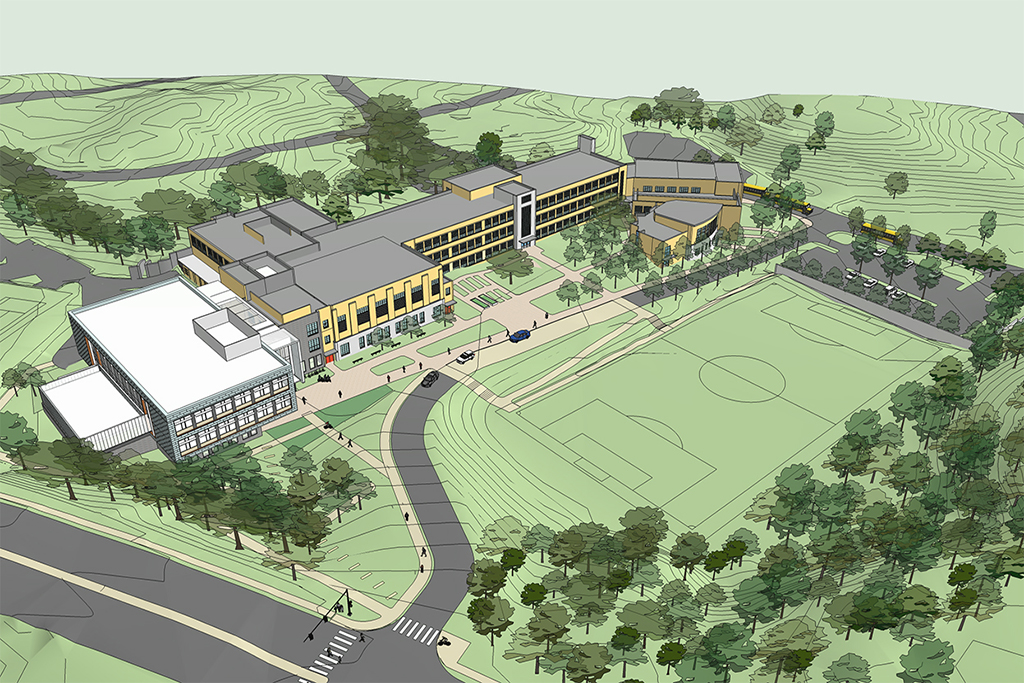
Arlington Public Schools officials have spent months drawing up map after map to guide attendance boundaries at eight South Arlington elementary schools set to go into effect next fall. Each one has prompted fresh rounds of concern among parents nervous about seeing their kids moved to different schools, as the school system prepares to open up the new Alice West Fleet Elementary next year.

Murphy’s new proposal, released yesterday (Monday), incorporates changes made to several prior maps worked up by APS staffers.

Perhaps most notably, the proposal keeps the entirety of the Fairlington community within Abingdon’s attendance boundaries, rather than sending some students in South Fairlington neighborhoods to Drew Model School. Parents from across Fairlington vigorously protested previous proposals to do so, arguing that it would unnecessarily split up the community and require plenty of busing to help students reach Drew.

School officials worked up a map last week to leave Abingdon’s boundaries unchanged, but that proposal would’ve left both Drew and Fleet with far fewer students than the buildings are designed to hold. Meanwhile, Barcroft, in particular, would’ve remained substantially over its capacity.

Murphy’s new map would move 100 students out of the school, reducing it from being at 149 percent of its capacity next year to 120 percent. Randolph would also see a slight decrease of about 40 students, and Drew and Fleet would absorb most of the students from those schools.

Neighborhoods just off Columbia Pike would be primarily impacted by the change, with a cluster of streets behind the Walter Reed Community Center and others around Alcova Heights Park all moving to Fleet.

The superintendent’s proposal would mean that Fleet will open at about 88 percent of its planned capacity, while Drew will move to about 92 percent of its capacity. Abingdon remains relatively unchanged, and is scheduled to be at about 120 percent of its capacity, but school officials hope to address that in a new round of boundary adjustments in 2020.

Next year, Drew will see hundreds of students leave the building, as the Montessori program moves to Patrick Henry Elementary. Yet parents there worried the school system’s initial plans would involve unfairly packing the school with students from low-income families, as measured by the percent of the student body eligible for free and reduced price lunch.

Murphy’s proposal would mean that about 56 percent of the school’s population would be FRL-eligible, down slightly from the 60 percent figure that officials initially proposed. Of the eight schools included in the process, only three will have more than 50 percent of the student bodies eligible for free and reduced price lunch, the school system’s target benchmark throughout the boundary process.

The School Board will get its first look at the superintendent’s boundary proposal at its meeting Thursday (Nov. 8), with a public hearing set for Nov. 27. The Board plans to pass a final map by Dec. 6, and could make plenty of changes to Murphy’s proposal between now and then.

Photo via Arlington Public Schools


Amazon in Talks to Come to Crystal City — Per a widely re-reported Washington Post scoop, Amazon “has held advanced discussions about the possibility of opening its highly sought-after second headquarters in Crystal City.” An Amazon executive, meanwhile, tweeted that “the genius leaking info about Crystal City” is “not doing [it] any favors.” [Washington Post, Twitter]

Crystal City Isn’t Alone — “Amazon.com Inc. has progressed to late-stage talks on its planned second headquarters with a small handful of communities including northern Virginia’s Crystal City, Dallas and New York City, people familiar with the matter said, as it nears a final decision that could reshape both the tech giant and the location it chooses.” [Wall Street Journal, Washington Business Journal]

Jewelry Store Coming to Ballston Quarter — “ninetwofive, formally Wuayra Peruvian Silver Jewelry, is offering sterling silver jewelry and fine accessories in its new location at Ballston Quarter in Arlington, VA beginning this November.” [PR Log]

Officials: We’re Listening to Boundary Concerns — “Arlington school leaders say nothing has been cast in stone when it comes to adjusting elementary-school boundaries, but that the clock is ticking toward decision-making… The schools whose boundaries are in play in this round of adjustments include Abingdon, Barcroft, Drew, Fleet (the new school to replace Patrick Henry), Hoffman-Boston, Long Branch, Oakridge and Randolph elementaries.” [InsideNova]

APS Asked About Graduation Rates — “Arlington school officials are being pressed by one board member to be more specific in analyzing data related to graduation and drop-out rates of minority students. School Board Vice Chairman Tannia Talento says minority students — those classified as black, Latino and Asian — could end up ‘falling through the cracks’ if more attention isn’t given to their individual cases.” [InsideNova]

Miss Steindorff Remembers — A nursing home employee in Minnesota used social media to help a former Walter Reed Elementary teacher, Miss Steindorff, remember the names of students in one of her classes, as depicted in a photo she kept. Students in alumni groups the employee reached out to helped fill in the gaps in Miss Steindorff’s memory, while sharing their own fond memories of their teacher, shortly before she passed away. [Presbyterian Homes & Services]


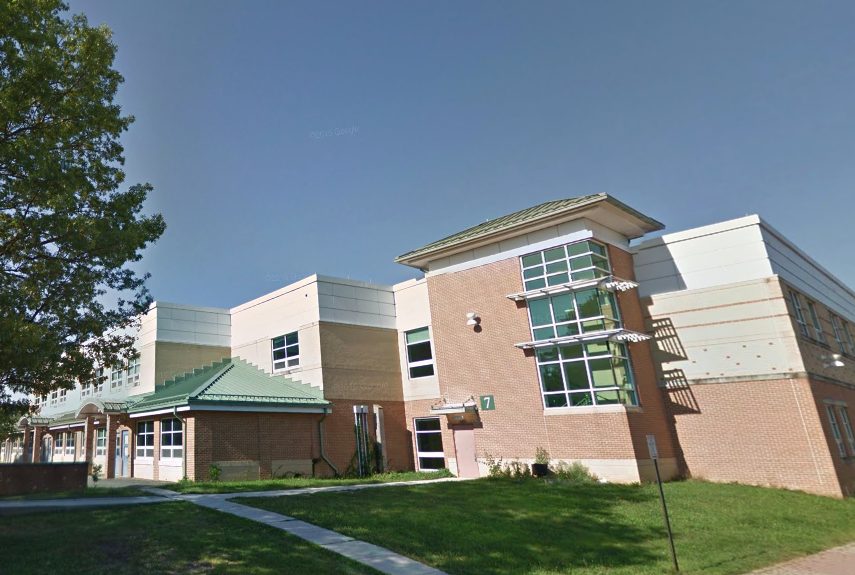
A parent of an autistic student at Carlin Springs Elementary worries that school officials are pushing her son into general education classes too quickly, and she’s taking the school system to court in response.

Jemie Sanchez says that school officials assured her last year that her son, Christopher, would continue to primarily learn in small classes when he moved up to kindergarten this fall, with attention from a special education teacher. But she says she subsequently discovered her son has been spending his time in larger, general education classrooms instead, and can’t understand why educators would make such a change.

Sanchez is pursuing legal action against Arlington Public Schools to try and force Carlin Springs leaders to adhere to what she felt they’d originally promised for her son, particularly because she’s concerned that the school has repeated this pattern with other students in special education classes.

“When I used to send him to pre-school, I felt comfortable, and now I don’t,” Sanchez told ARLnow. “The worst part is he cant tell me either, because he’s largely nonverbal. He used to be happy to go to school. He’d wake up early on weekends and say he wants to go to school, and he’s not doing that anymore.”

APS spokesman Frank Bellavia says the school system can’t comment “on an individual student’s record,” so it’s impossible for the school system to respond directly to Sanchez’s claims. But he did seek to stress that APS staffers work diligently to develop Individualized Education Programs (commonly known as IEPs) for special needs students in conjunction with parents, in order to allay any potential concerns.

“In general, school staff and families are able to have informal discussions and/or formal IEP meetings to consider a child’s strengths and weaknesses, services, accommodations and placement,” Bellavia said. “Additional specialists from the Central Office are available for consultation and participation. Families and school staff may also access support from our Parent Resource Center.”

Sanchez felt she had worked out an acceptable IEP with the Carlin Springs administration and special education teachers back in March.

She stressed to educators that she felt her son would be best suited for a small classroom with only seven to eight students in total, and two teachers working with them. And she says Carlin Springs staff agreed with her on that point.

Yet when Sanchez arrived for a back-to-school event earlier this fall, she learned that Christopher was spending time in a larger, general education class, working with a special education assistant at the time.

“He has troubles with transitions already, so I just couldn’t imagine him being in a bigger classroom with different teachers,” Sanchez said.

She quickly raised the issue with educators, who then offered to arrange another meeting with her to revise Christopher’s IEP. But she can’t understand why they changed the arrangement they struck back in March without consulting her first.

“They’re not implementing the first one, so how can we decide on something else after such a short period of time?” Sanchez said.

Sanchez decided to hire a lawyer instead, and challenge the school’s actions in court. Nicholas Ostrem signed on as her attorney, and he says he helped her file an administrative complaint, in order to force the school to comply with the original IEP educators sketched out for Christopher.

He says the school system has so far insisted that it is indeed complying with that document, but he worries that Sanchez’s son shouldn’t be working solely with an assistant teacher when he’s in the larger group setting.

“Many [assistants] don’t have specific special education training, and we don’t think that complies with the IEP,” said Ostrem, whose firm focuses on special education cases. “Even giving them the benefit of the doubt, we don’t think they’re doing this in good faith. It can’t just be a warm body, you have to try to educate these kids.”

Ostrem said the case was set to go before a hearing officer today (Thursday), though it could take a while yet before everything the courts can sort all this out. He even wonders why APS has fought back on this in the first place, arguing that it will “cost taxpayers a ton of money” to litigate the case.

For her part, Sanchez says the whole ordeal has been “very emotional,” particularly after she just had another child a few weeks ago. Now, she wonders what the future might hold for her family.

“I’ve lived in Arlington my whole life, I grew up going to APS,” Sanchez said. “I wanted that for him too, but then it’s coming to this. It’s made me think maybe I made a mistake in wanting to keep him in Arlington.”

Photo via Google Maps


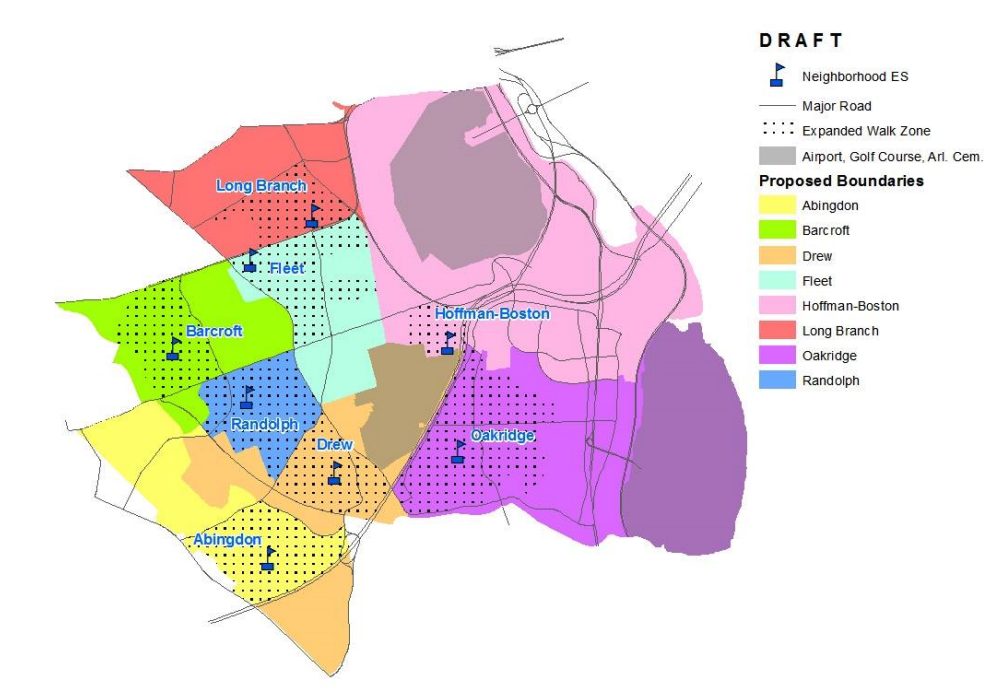
Arlington school officials are proposing a new boundary map that would keep South Fairlington students at Abingdon Elementary, answering the concerns of parents there who worried the school system’s process of drawing new attendance lines would break up the community.

The school system has wrestled for months now with the thorny question of how to best tinker with the boundaries for eight South Arlington elementary schools, in order to address overcrowding concerns and prepare for the opening of Alice West Fleet Elementary next fall. Previous proposals for new maps initially irked parents at the Drew Model School, prompting Arlington Public Schools officials to propose an option moving some students in Fairlington neighborhoods from Abingdon to Drew to help address those worries.

But that proposal has touched off a fierce backlash of its own, with some in the community arguing it would force the unnecessary of busing of Fairlington students and damage the community’s strong ties. Now, APS leaders are offering up yet another new option, leaving all of Fairlington at Abingdon and moving some Columbia Heights and Alcova Heights neighborhoods to Drew instead.

Such a change would leave Abingdon substantially overcapacity, with Drew and Fleet still with plenty of space. Yet, in a work session last Wednesday (Oct. 24), school officials indicated it could end up being a workable solution for the county’s boundary conundrums.

“We can’t maintain everyone’s status quo, because we’re in a growth environment, so something has to give,” School Board Chair Reid Goldstein said at the meeting. “In our economic environment, we also need to ensure we fill school buildings, but the results aren’t going to be perfect.”

School system figures show that Abingdon will likely sit at 124 percent of its designed capacity by next year, and the latest proposal would bring that down to just 120 percent, a reduction of about 20 students. By contrast, the boundary map involving the disputed Fairlington changes would’ve dropped Abingdon to 98 percent.

Still, some Board members expressed uncertainty about the value of such a trade off, wondering if it could create problems at Abingdon down the line — APS projections show Abingdon reaching 131 percent of its capacity by 2021, under the latest boundary proposal. Meanwhile, Drew will be at just 74 percent capacity under that plan, and Fleet will open at 90 percent of its capacity.

“In the long run, we don’t want to have to build a new school because we’re not using these facilities well,” said Board member Barbara Kanninen.

Yet APS planning director Lisa Stengle pointed out that Abingdon, Barcroft and Long Branch will all be included in both this year’s boundary process and the redrawing of boundaries set for 2020, giving school officials a chance to address overcrowding at Abingdon in the coming years. She added that process will include more school’s in the county’s northern half as well, allowing for more possibilities in shifting around students.

Stengle also noted that the newest proposal would bring down the percentage of students eligible for free and reduced price lunch in Drew’s attendance boundaries compared to previous maps. Parents at Drew expressed concerns that previous efforts would’ve unfairly concentrated low-income students at the school, as the FRL rate is a proxy for the economic diversity of each community.

The newest proposal would mean that 57 percent of students eligible to attend Drew would qualify for free and reduced price lunch, down slightly from the 60 percent figure that initially concerned parents. As of now, about 52 percent of the school’s attendees are FRL-eligible.

“We still haven’t found that sweet spot yet where all the considerations are exactly where we want them to be,” Stengle said.

Board members indeed sought to stress that they were well aware that any boundary proposal is bound to make at least some people unhappy, and Goldstein was careful to note that all of the maps offered up by APS officials over the course of the process “are all still possibilities at this time.”

But Kanninen, in particular, called for a cooling of tempers among parents worried about their children changing schools, urging anyone anxious about a move to a new school to simply call up their prospective principal and learn more about the curriculum before worrying too much.

“We are creating new communities when we do this,” Kanninen said. “Please keep an open mind and get excited about the possibilities.”

Superintendent Patrick Murphy will offer up a final boundary map recommendation next Monday (Nov. 5), ahead of a planned Board vote on the matter in December.


A naming committee is narrowing down its options for a moniker for the new middle school taking the place of the Stratford School building in Cherrydale.

The 1,000-seat middle school is set to open next fall, and a committee of parents and community members charged with picking a name for the building has settled on three finalists, according to an anonymous tipster and confirmed by school system spokesman Frank Bellavia. Those include:

  • Stratford Middle School
  • Dorothy Hamm Middle School at the historic Stratford building
  • Legacy Middle School at the historic Stratford building

The building, located at 4100 Vacation Lane, was once the site of Stratford Junior High School, and has long been recognized as one of the valuable historic sites in the county. The old Stratford school is believed to be the first school in Virginia to admit black students following the momentous Brown v. Board of Education decision.

Even still, there’s been some hesitancy to simply name the school “Stratford,” given the name’s association with Confederate general Robert E. Lee. Located in Westmoreland County, Stratford Hall was the plantation home of the Lee family, and any association with Lee is quite fraught in Arlington Public Schools circles at the moment. The school system is also in the process of changing the name of Washington-Lee High School to remove Lee’s name from the building, a move that’s prompted a lawsuit and fierce community debate.

“Many (including the committee responsible for commemorating these events in the new school and the director of the Black Heritage Museum of Arlington) expressed strong interest in keeping the Stratford name given the significance of the events on the site,” naming committee member Caroline Holt wrote in a letter to the community, which was provided to ARLnow. “Others expressed interest in finding a name that commemorates what the school will represent or that honors the events there without calling it Stratford (e.g., similar to Discovery Elementary which could not be named after John Glenn as he is still living).”

Hamm also has a connection to Stratford’s history with integration. As a civil rights activist, she helped lead a court challenge to Arlington’s school segregation policies, leading to the eventual integration of Stratford. Her daughter, Carmela, became one of the first African American students to attend Stratford.

Hamm also participated in a series of other court challenges to Jim Crow-era laws in Arlington, including efforts to end the segregation of county theaters and the poll tax. Bellavia says the school system is currently in the process of contacting Hamm’s family to make them aware of her inclusion as a possible honoree at Stratford.

The naming committee is set to deliver a recommendation on a name to the School Board in time for its Dec. 6 meeting, with a final vote set for Dec. 20.


The following Letter to the Editor was submitted by Mike Rosenberger, a parent of a second grader at Abingdon Elementary who has deep concerns about a proposal by Arlington Public Schools officials that would send some students in South Fairlington neighborhoods to Drew Model School instead of Abingdon.

The School Board has spent the last few months considering a redrawing of boundaries for eight South Arlington elementary schools, precipitated by the opening of the new Alice West Fleet Elementary next year, and tempers have frequently flared over how the changes will impact Drew, in particular. But one APS proposal designed to alleviate those concerns has prompted new worries among Abingdon parents.

The Board is still considering a variety of proposed maps, and will approve final boundaries in December. 

I am writing regarding the proposed elementary school boundary map released at APS’s “What We Heard” meeting on Oct. 17. APS’s proposal to bus the students of southern Fairlington from the walkable Abingdon school zone to Drew Model School is not in the best interests of the children and does not reflect the values or the limited transportation resources of the county. The failure of the “What We Heard Proposal” to address in a fair and appropriate way several of the county’s guiding principles in the redistricting process means that this map should be withdrawn from serious consideration.

One of APS’s objectives in establishing new elementary school boundaries is to ensure that most students can attend the school closest to their home. Under the current proposal the students of southern Fairlington, all of whom live within one mile of Abingdon, would be bussed up to two miles to Drew Model School. This proposal would effectively eliminate the popular options of walking and biking to school for all southern Fairlington students, despite the know health benefits of walking or biking to school. Virginia’s Safe Routes to School initiative recognizes that children who walk or bike to school are more active, more physically fit, and more ready to learn when they arrive at school than students who are driven or bussed to school.

Increasing the school transportation needs of Fairlington also has important consequences for APS’s future capital and operating costs. The fiscal year 2019 school budget already allocates $18.3 million for transportation and was only balanced by extending the useful life of buses by three years. Arlington County is already being forced to make difficult financial decisions about existing tax rates and services. The School Board must look for opportunities to stabilize or reduce transportation costs and concentrate its budget on children’s educational needs.

The walk from southern Fairlington to Abingdon is through a safe neighborhood that features contiguous sidewalks, crosses no major roads, has no traffic lights, and, for some children, would be as short as .3 miles. Expanding the Abingdon walk zone would be a common-sense decision that supports APS’s dedication to the welfare of the whole child and would seize a valuable opportunity to reduce transportation needs from the current levels.

I ask the School Board to consider the significant benefits of leaving the southern portion of Fairlington within the borders of Abingdon Elementary School. I understand that redrawing school boundaries is a difficult process. Finding a better alternative to the current proposal would not only be in line with Arlington County’s efforts to promote walkable communities, but would also serve the health interests of the children of southern Fairlington and APS’s limited transportation resources and budget.

I encourage APS to withdraw the “What We Heard Proposal,” to explore other options, and to think more creatively about possible solutions to the challenges we face as we work to ensure our schools meet the needs of our communities.

Sincerely,

Mike Rosenberger

ARLnow.com occasionally publishes thoughtful letters to the editor about issues of local interest. To submit a letter to the editor for consideration, please email it to [email protected]. Letters may be edited for content and brevity. Photo via Arlington Public Schools.


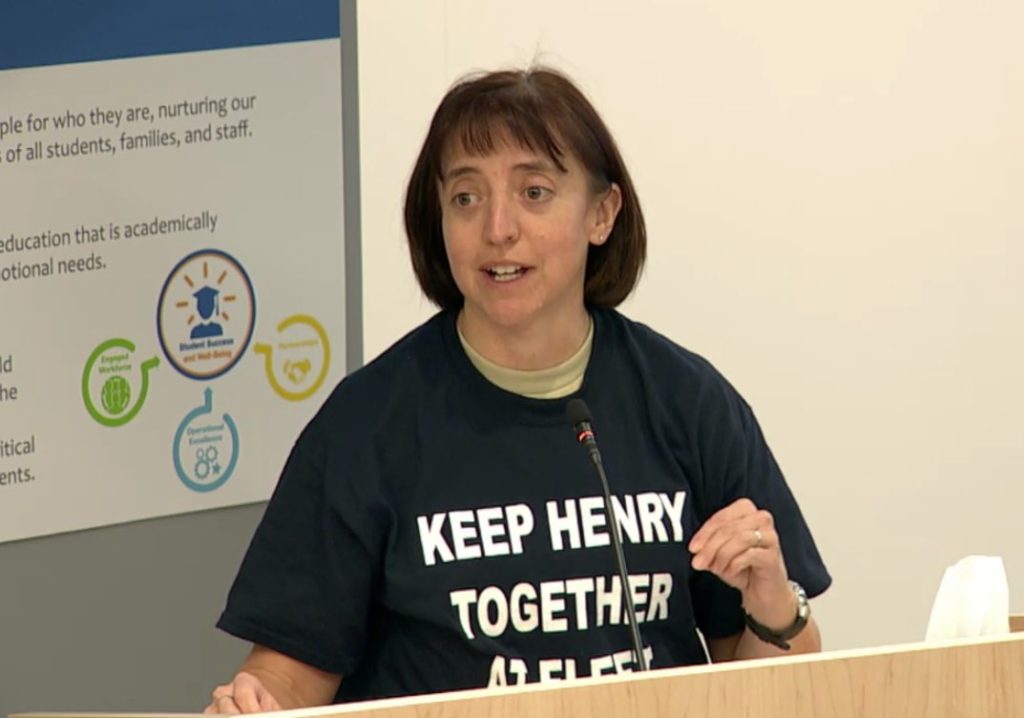
(Updated Wednesday at 4:10 p.m.) As the heated process of setting new boundaries for eight South Arlington elementary schools lurches forward, parents at Patrick Henry Elementary are trying to deliver a single message to school officials: don’t break up the community in the move to Alice West Fleet Elementary.

Fleet’s planned opening next fall precipitated this process of drawing new boundary lines for the schools in the first place, with most Henry students set to move to the new school and the Montessori program currently housed at Drew Model School will move to Henry’s building.

Parents at Henry have long sought reassurances from Arlington Public Schools officials that the community would move as one to Fleet, without any neighborhoods being redirected elsewhere. The school system has released two different maps for public scrutiny over the last few months, and both have so far stuck firm to that request.

That fact was not lost on roughly a dozen parents who testified at the School Board’s meeting last Thursday (Oct. 18). Though the new boundary proposals have stoked outrage among families at Drew and Abingdon alike, they’ve largely satisfied parents with kids set to make the move from Henry, who are urging school leaders to stay the course throughout the remainder of the boundary process.

“We are a community that lives on Columbia Pike,” Melanie Devoe told the Board. “This will keep our students together, as we’ll have students who are learning together in elementary school all stay on the same campus through middle school.”

Erin Wasiak, co-president of the Henry Parent-Teacher Association, similarly praised the Board for keeping families along the Pike together, noting that the road acts as “our ‘Main Street’ and our town square.” Even still, she would note that the school system’s latest proposal would divert a few neighborhoods on the east side of S. Courthouse Road to Hoffman-Boston instead, a change that would only affect a relatively small number of students, but still struck Wasiak as a bit concerning.

“We’re as close or closer to Fleet as we are to the school you want to put us in,” Nicole Hallahan, a parent of a current Henry student set to move to Hoffman-Boston, told the Board.

APS spokesman Frank Bellavia stressed that officials are working to focus on contiguity as part of the process, though he noted that the school system “cannot guarantee that any individual school community will stay together.” As Lisa Stengle, the APS director of planning and evaluation, put it at an Oct. 17 community meeting, “We don’t want islands in places.”

“Boundary proposals align with the policy considerations, reflect what serves all students, and explore how changes to one school affect other schools,” Bellavia wrote in an email. “Change will be continual within APS due to ongoing enrollment growth, and APS is responsible for ensuring equity for all students across schools and programs.”

Nevertheless, between the changes with the Henry boundaries and the proposal to send some South Fairlington students to Drew instead of Abingdon, parents say the county hasn’t always managed to meet that particular goal.

“You just have to look at the map to see it’s oddly gerrymandered,” Claire Kenny, a parent of an Abingdon student, told the Board. “Please don’t punish our children to fix past redistricting efforts, or to fulfill promises to other communities.”

APS planners only proposed those Fairlington changes in the first place to create a more even spread of students eligible for free and reduced price lunch, a measure of their families’ economic means, at schools across South Arlington. Some parents worried too many economically disadvantaged students were being lumped in at Drew, and Henry parents also urged the Board to keep the issue as a prime focus throughout the rest of the boundary-setting process.

“It’s important to have racially and culturally diverse schools that prepare our students to effectively relate with others,” said Megan Haydasz, a parent of a Henry student who’s been active on other school equity issues in South Arlington in the past. “Yet high concentrations of poverty limit a school community’s resources and may unconsciously limit student outcomes compared to other schools.”


View More Stories