Arlington Public Schools will begin to mark the end of the 2017 school year over the next week with graduation and promotion ceremonies.

Graduation ceremonies are scheduled for the following times and places.

  • Arlington Career Center PEP (Friday, June 16, 10 a.m. in the Career Center)
  • Stratford (Friday, June 16, 1 p.m. in the H-B Woodlawn auditorium)
  • Arlington Career Center GED (Friday, June 16,  7 p.m. in the Washington-Lee High School little theatre)
  • New Directions (Monday, June 19, 11 a.m., Arlington Central Library)
  • H-B Woodlawn (Tuesday, June 20, 5 p.m., H-B Woodlawn cafeteria)
  • Comprehensive high schools (Wednesday, June 21, DAR Constitution Hall – Washington-Lee at 10 a.m., Yorktown at 2 p.m., Wakefield at 8 p.m.)
  • Arlington Community High School (Thursday, June 22, 9:30 a.m., Washington-Lee auditorium)
  • Langston Continuation Program (Thursday, June 22, 1 p.m., Washington-Lee auditorium)

The last day of school for APS is as follows.

  • Tuesday, June 20: High schools
  • Thursday, June 22: Middle schools (promotion ceremonies that day)
  • Friday, June 23: Elementary schools (a number also have celebrations that day)

The first day of school for the next school year is Tuesday, Sept. 5.


Arlington Public Schools parents and teachers remain divided over the county’s one-to-one technology initiative ahead of possible revisions to the school system’s strategic plan later this year.

The rollout of the program began during the 2014-2015 school year and provides iPads for elementary and middle school students, Macbook Air laptops for high school students. The hope was that every student attending an Arlington school would have a device by 2017.

Prior to the program teachers had to check out laptops for assignments that were based online, or reserve computer lab space. In some cases, students had to pair up to complete assignments.

One middle school parent said that although her children have access to technology at home, the program is the county’s “best option” for those who don’t — helping to level the playing field for those from disadvantaged backgrounds.

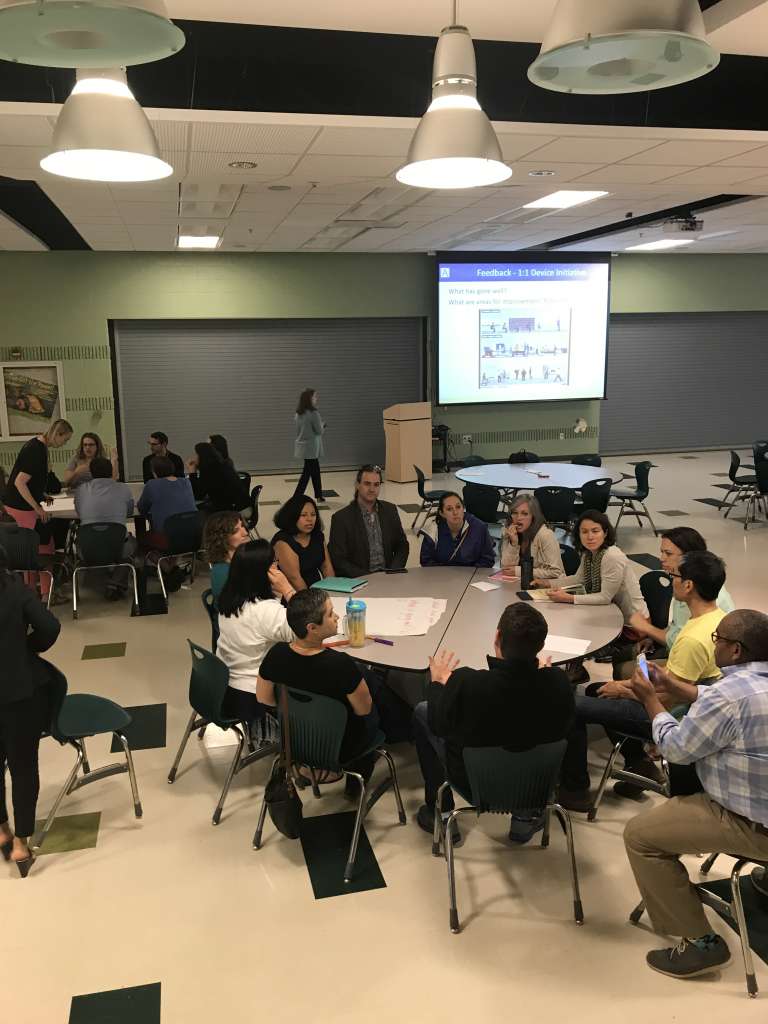
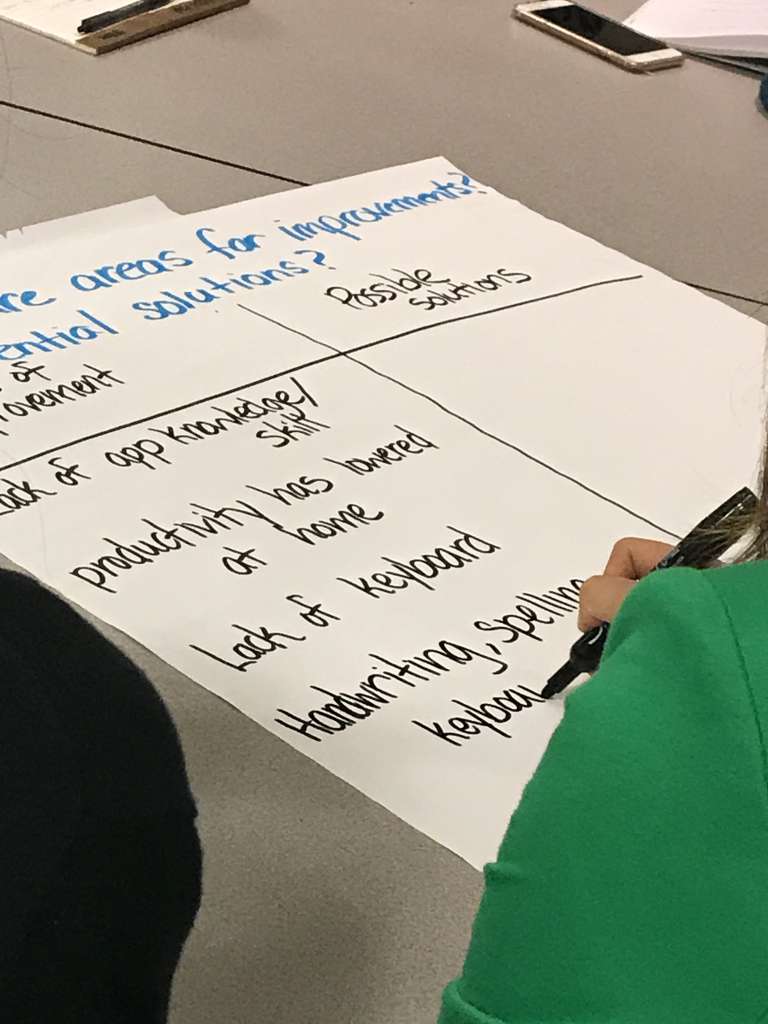
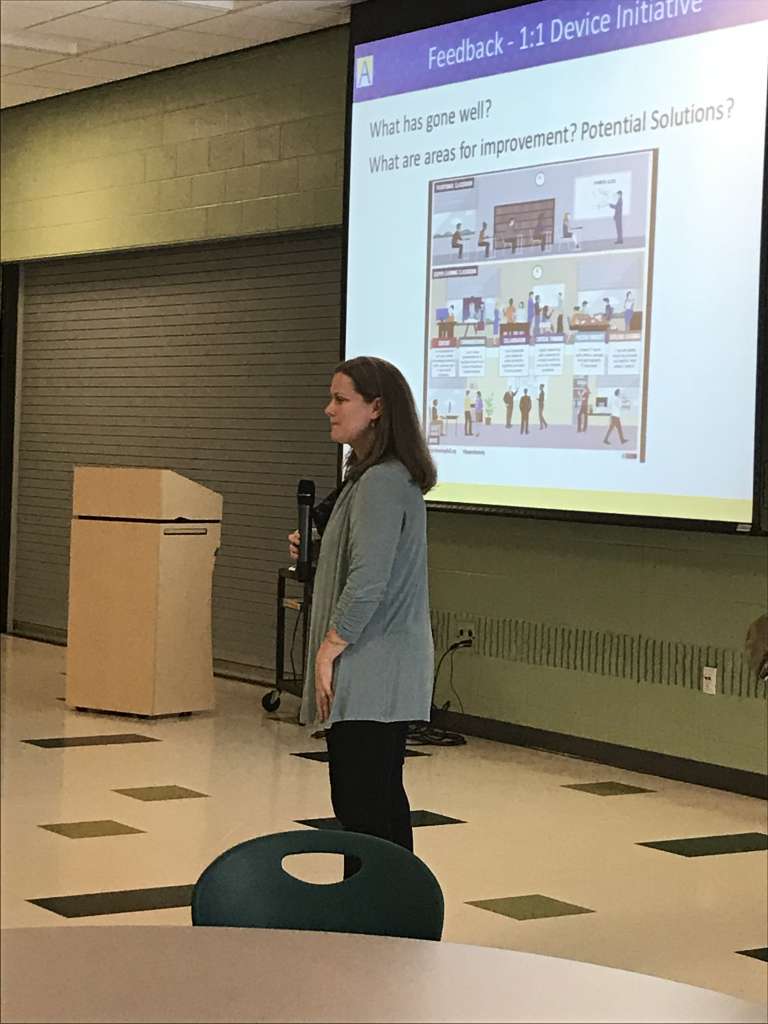
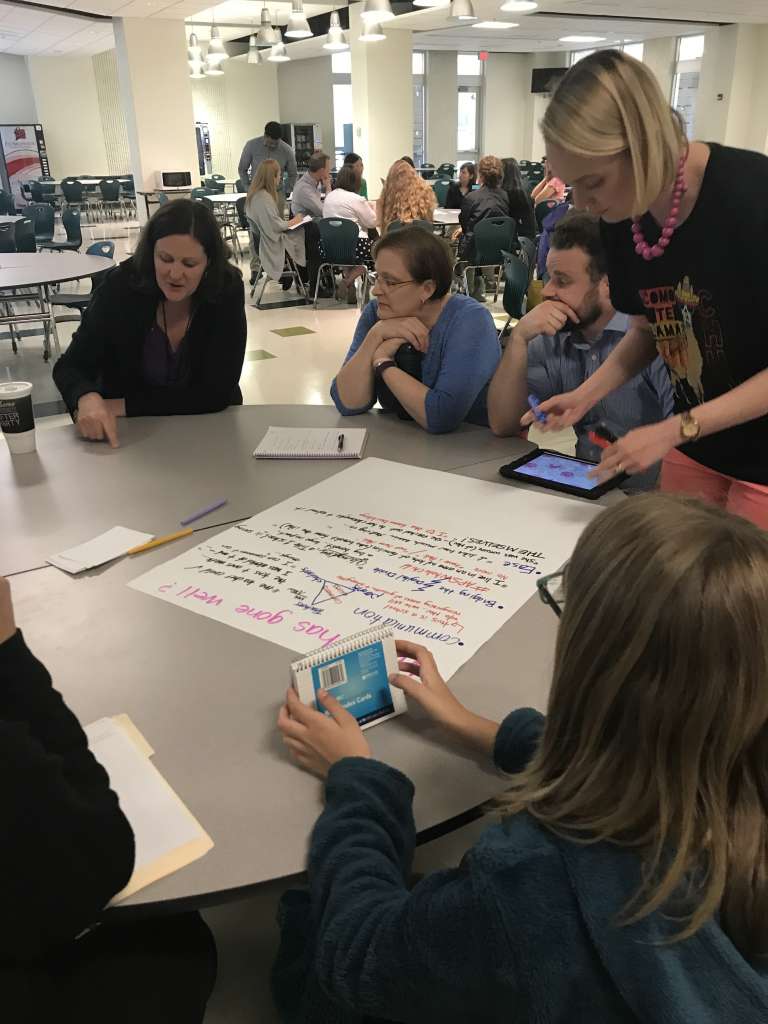
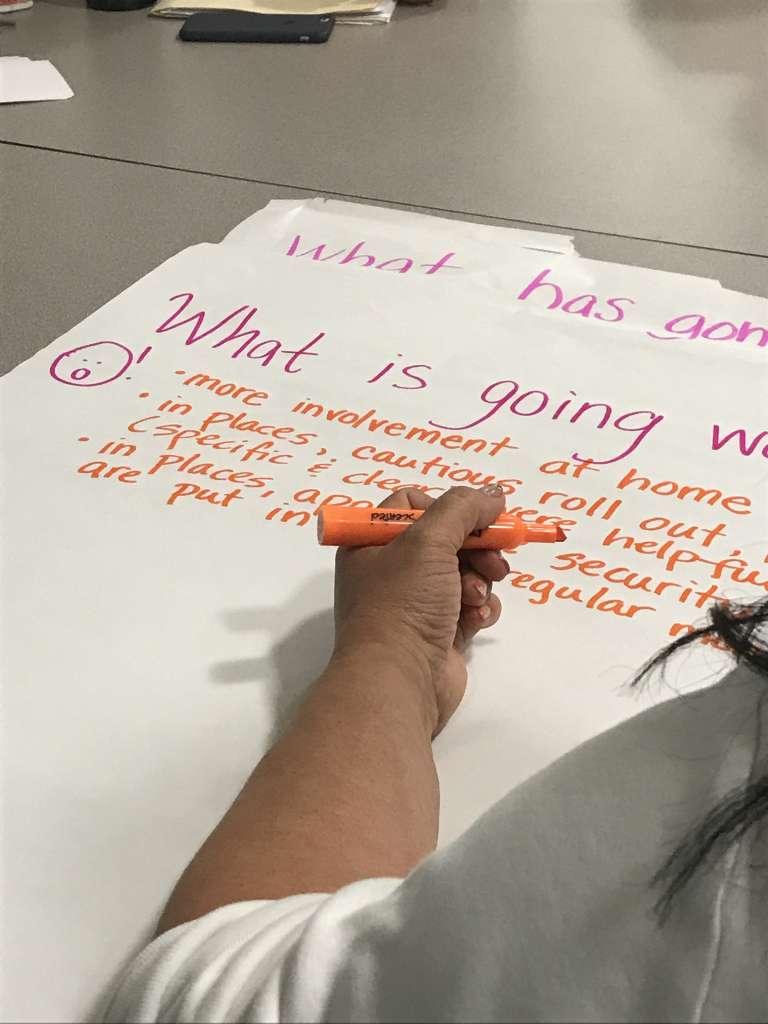
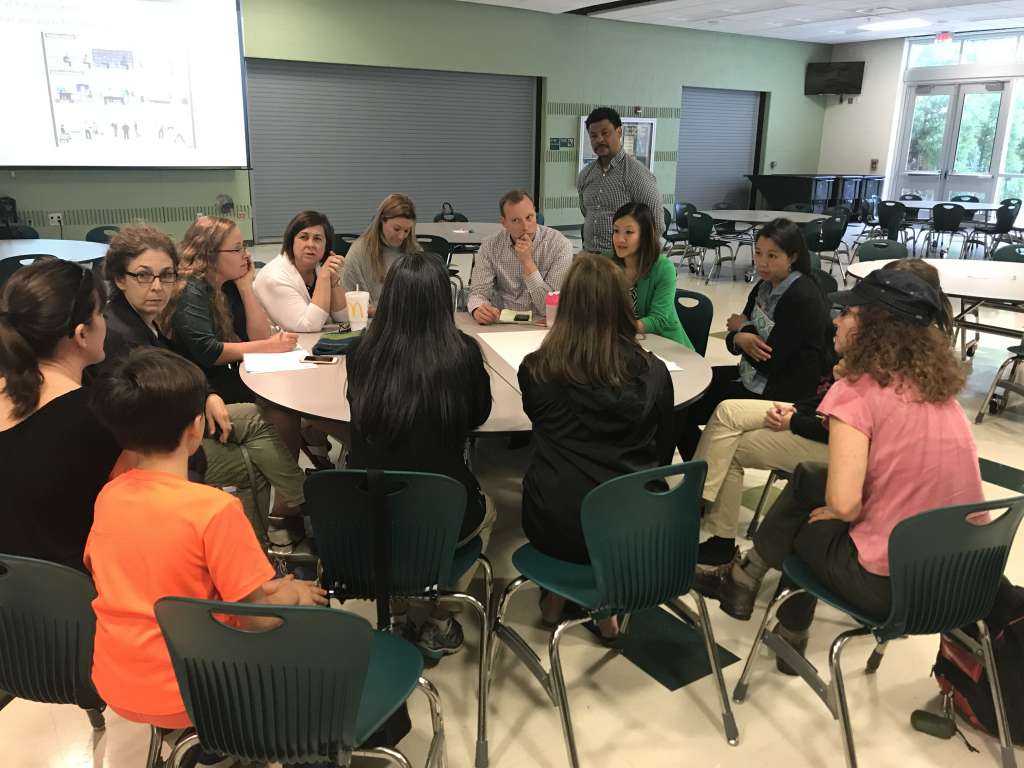
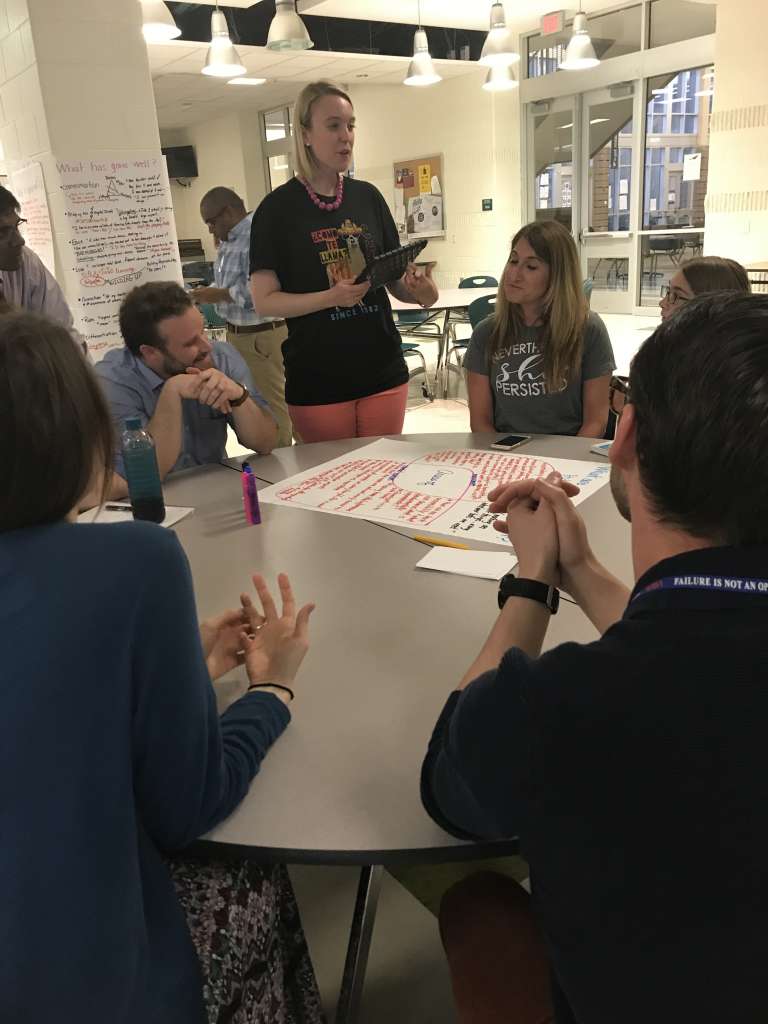
Attended by parents and teachers, the conversation was focused on how the technology is impacting the classroom. The main concerns for many parents were how teachers could balance the use of the technology with traditional learning and how parents could monitor how their child is using their device.

Jennifer Burgin, a second grade teacher at Oakridge Elementary School, shared how her students used their iPads to identify real deer teeth samples. When the assignment was over, the devices were replaced with pencil and paper. 

“iPads are not meant to replace me, instead they help unleash me,” said Burgin. “As I learn more about deeper learning practices and ensuring equity for all my learners, I use iPads to my advantage when they benefit all learners.”

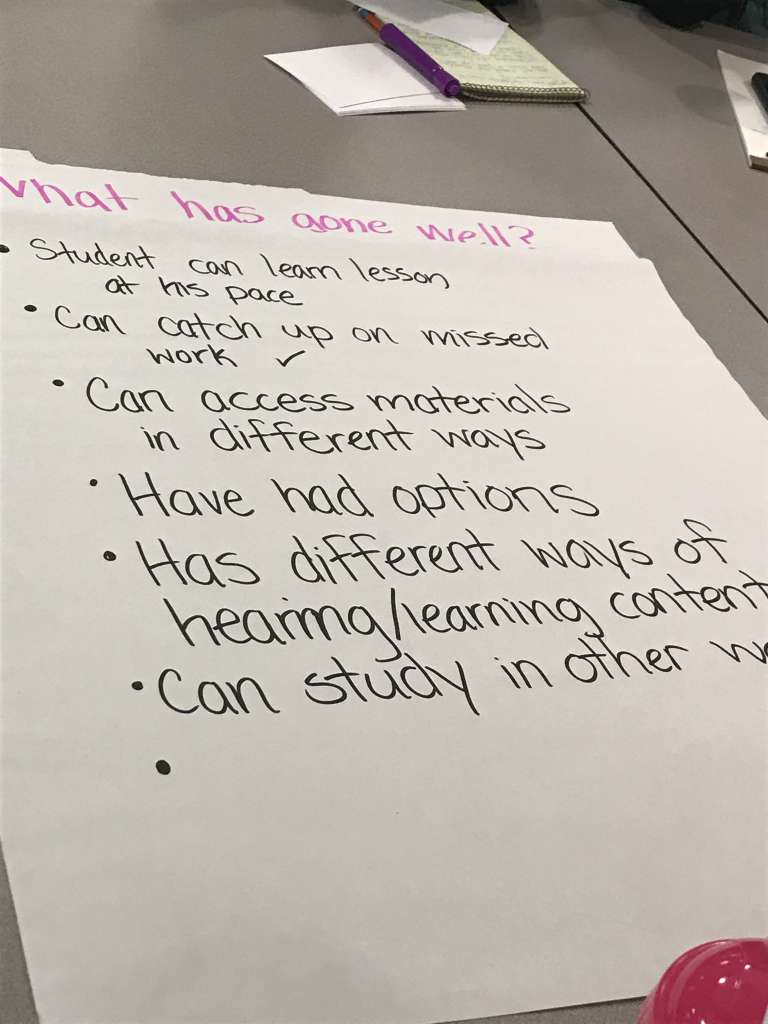
Several middle school teachers said that the technology makes their students more interested in learning, allowing them to research additional information or record and re-watch their teacher explaining challenging concepts.

Some parents, however, wanted to know what is being done to protect children from the dangers of the internet, with some saying there needs to be a county-wide policy on the use of the devices.

While there are schools that have blocked apps and have teachers conducting spot checks on student devices, parents said that there are still students who get in trouble for breaking the classroom guidelines. One anonymous parent alleged there is a culture of students using their iPads for inappropriate content. 

“I can tell you that if a child is reported to have inappropriate content, their iPad is checked and if the content is there, the iPad is taken away from the child,” she said. “But that is a Band-Aid on instance on a much wider systemic problem.”

The one group that was absent from the meeting were parents of high schoolers. The older students got laptops instead of tablets because of their heavier course load and lengthier assignments.

“[Now] that students have laptops — which they have by and large learned to bring to class, charged, every day — [it] has facilitated a sea-change in how I deliver instruction,” said Doug Burns, an English teacher at Wakefield High School. He said that an effective lesson plan helps keep students from misusing their devices.

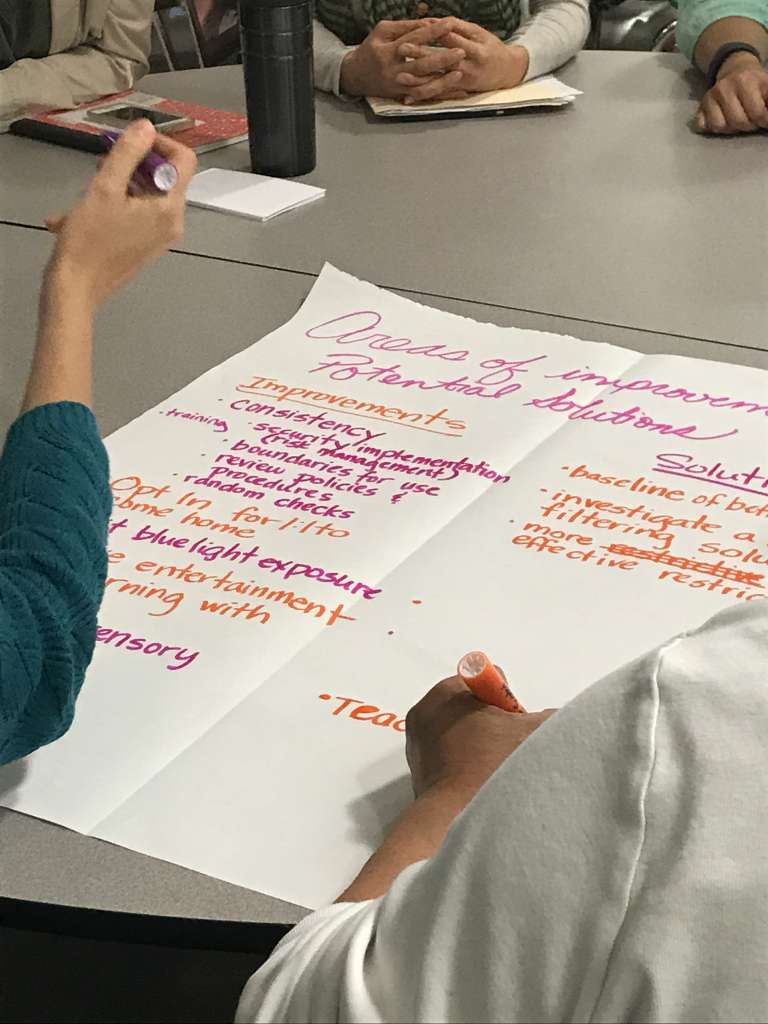
Some suggestions for a more cohesive program included a training program for both teachers and parents, and placing more restrictions on the devices.

“If they would have thought about curriculum, investigated helpful apps, locked down the iPads to only those apps, not provide Safari, and train the teachers prior to rollout, the iPad initiative could have been much more successful,” said one parent.

APS is set to revisit its strategic plan for the devices later this year.


Criticism of School Drug Searches — The Arlington School Board last week heard public criticism of a new initiative to conduct K-9 drug searches after hours at Arlington’s public high schools. Despite talk of a drug problem in local schools, one activist said of the K-9 plan: “I don’t think it is reasonable.” [InsideNova]

Economic Segregation at APS — Arlington Public Schools is just below the threshold of “hypersegregation” in a new study of de facto economic segregation in public schools. Neighboring districts like Alexandria and Fairfax score well below Arlington on the “hypersegregation index,” though Prince William scores just above Arlington and is above the level considered hypersegregation. [Center for American Progress]

County Honors ‘Women of Vision’ — Arlington County’s 2017 Women of Vision honorees have been announced: emergency preparedness advocate Jackie Snelling, Washington Business Journal Editor-at-Large Jennifer Nycz-Conner and La Cocina VA founder and CEO Patricia Funegra. Arlington’s Commission on the Status of Women also honored former Arlington School Board member Dr. Emma Violand-Sanchez with a lifetime achievement award. [Arlington County]

Backyard Chickens Blamed for Salmonella — There have been eight salmonella outbreaks sickening more than 370 people this year due to contact with backyard or pet poultry, according to the Centers for Disease Control. In Arlington, backyard chickens are legal for only a handful of residents with very large backyards. In 2013, after dueling lobbying campaigns by chicken enthusiasts and opponents, Arlington’s county manager recommended against allowing more residents to keep egg-laying hens. [Washington Post]

Delta Experimenting With Biometrics at DCA — Delta is experimenting with a biometric identification system at Reagan National Airport. For now, the system is only being used by members of both CLEAR and Delta’s Skymiles program to enter the airline’s Sky Club lounge. If all goes well, in Phase 2 members will also be able to use their fingerprint to check a bag and board a flight. [Delta]

Flickr pool photo by John Sonderman


School Board members clashed Thursday over an attempt to add language encouraging more diversity in Arlington Public Schools.

The Board was discussing the new enrollment and transfer policy around neighborhood and option schools. The policies have been rewritten to help APS keep up with steep growth.

The revised policies are designed so students could have equal access to an option school with a more specialized curriculum, while also guaranteeing students a place in their neighborhood school.

The new policies will go into effect for the 2018/19 school year, with siblings able to attend the same school at the elementary level if one already attends.

But an effort by Board member Reid Goldstein to add new language that says the policy “will include steps to enhance diversity across our option schools and through our neighborhood transfer practices” got the cold shoulder from his colleagues.

Goldstein said steps that could be taken to enhance diversity could include looking at new options around transportation, to enable a better mix of students from different socioeconomic backgrounds.

He also said that higher-income families could thus be encouraged to attend schools where there are more lower-income students and families.

But Tannia Talento said Goldstein’s efforts represented “microaggressions,” the casual degradation of those less fortunate than others.

“While I support diversity, I think diversity is a great thing, it’s very hard for me to sit here and listen to some of this, because there are some things in here that I feel are microaggressions that I’m offended by,” Talento said.

Later, Talento added that previously, she has been seen as the “token Latino” and “token woman” in various settings. Any conversation about enhancing diversity should include all affected communities and be part of a robust public engagement process, she said.

Goldstein said his efforts were focused on helping the county and APS improve its diversity, given what he said are major disparities across the system.

“This should be a call to action for a community that so vociferously hails its diversity and proudly proclaims how diverse and inclusive it is,” he said. “And yet, outside of our vision state and our core values, APS’ definable steps to achieve diversity are scarce.”

But James Lander rejected that, and the idea that the income of fellow students’ families could be a determining factor for where people want to send their children to school.

“It’s been my experience that families choose instructional programs, not how much money their neighbors make, to determine what is the best instructional journey for their children,” Lander said. “I want to bring this back to instruction, because that’s important.”

The board voted down Goldstein’s plan, 3-2. Chair Nancy van Doren said that not only did she believe it was making an attempt at “forcing” or “incentivizing” diversity, it was too late in the process to introduce such an amendment. The Board then unanimously approved the new transfer policy, despite opposition from some parents.


There have been 18 drug arrests on public school grounds in Arlington so far in 2017.

That’s according to the Arlington County Police Department, in response to an inquiry from ARLnow.com. ACPD has thus far not provided additional details about the nature of the arrests, the suspects or the schools involved.

The new statistic comes as ACPD starts conducting K-9 drug searches after hours in Arlington public high schools.

Current and former students, who spoke to ARLnow.com on the condition of anonymity, said there is drug problem within the school system.

“Over the past two years or so, I have definitely seen an increase in drug usage among high school students, particularly Xanax and Adderall,” said one recent graduate. “If I had to place blame on one thing, I would say that stress is what’s driving most kids towards drug use, but particularly Xanax and Adderall. The stress problem is really something that APS needs to get out in front of sooner rather than later.”

A current junior at Yorktown High School said the issue extends beyond prescription drugs.

“Yorktown definitely has a drug problem,” she said. “So many people have started getting into cocaine and a lot of the other harder drugs and many of them don’t even think much of it just because they see it around so often. It’s definitely considered ‘cool’ to be into that sort of thing, which is why I think so many kids are drawn to it.”

“There’s not much else to do so a lot of people do for fun,” said a recent graduate. “I don’t think people really think of themselves as addicts.”

“The middle schools are the worst,” said a senior. “Kids have older siblings that are in high school and are able to sell to the younger students. It’s a cycle.”

In a prior statement, an Arlington Public Schools spokesman said APS is taking steps to combat drug use, adding that the problem is part of a larger trend that extends well beyond Arlington.

“As you know, substance abuse and opioid use is a growing problem both in our region and across the US,” said Frank Bellavia. “In collaboration with our law enforcement partners, we are taking steps to make sure that our students are safe and that our schools remain drug free. We also want to make sure that parents are aware and having conversations with their children at home.”

Kalina Newman and Brooke Giles contributed reporting. File photo.


FBI Seeking Man Who Touched Girl at Cemetery — The FBI’s Washington Field Office is searching for a man who “inappropriately touched a girl as the two stood in a crowd during a wreath-laying ceremony at Arlington National Cemetery on Memorial Day.” [NBC Washington]

Task Force Recommends ‘Fleet Elementary’ — The task force charged with recommending a name for the new elementary school being built next to Thomas Jefferson Middle School has settled its choice: “Alice West Fleet Elementary.” Fleet was the first African-American reading teacher in Arlington’s public school system. The task force did not recommend transferring the name of Patrick Henry, a slave owner, from the current school, which will be transferring its students to new new school when it is complete. [InsideNova]

Bicyclist Group Calls Out Biking Bullies — In a blog post, the Washington Area Bicyclist Association is calling out aggressive male riders who yelled insults at a female bike commuter on two separate occasions on the Mt. Vernon Trail. “This sort of behavior is totally unacceptable,” the group said. [WABA]

Mt. Vernon Trail Upgrade Complete — The National Park Service has completed an upgrade to a portion of the Mt. Vernon Trail that runs through the Theodore Roosevelt Island parking lot. The upgrade includes a new crossing and speed table across the parking lot and the widening of the trail. [Greater Greater Washington]

Arlington Sells Bonds at Low Interest Rate — Arlington County solds $185 million in bonds at a relatively low 2.5 percent interest rate. “The interest rate we received today is one of the lowest we’ve ever received,” County Manager Mark Schwartz said in a press release. “However, it is slightly higher than the rate we received last year.” [Arlington County]

Tight Race in Va. Gov. Primary — The two candidates battling it out in the Virginia Democratic gubernatorial primary are in the midst of a tight race. The race between Lt. Gov. Ralph Northam and Tom Perriello is being portrayed as a contest between an establishment figure (Northam) and a progressive darling (Perriello). Primary voters will go to the polls on Tuesday, June 13. [Washington Post]

Flickr pool photo by John Sonderman


The following Letter to the Editor was written by former U.S. Chief Technology Officer Aneesh Chopra and his wife Rohini. The Chopras are Arlington residents and parents of Arlington Public Schools students.

While many Arlingtonians are mobilizing to protect much needed science investments in the wake of proposed Trump administration budget cuts, a more pressing local threat has emerged that needs our immediate attention: the June 1st Arlington School Board vote that, if passed, will unnecessarily weaken our best shot at helping lower-income kids succeed in science and, thus, prepare for the jobs and industries of the future. And it does so without adding a single new seat to handle APS-wide over-crowding challenges.

The School Board notes that the proposed changes to its enrollment and transfer policy are to “make it easier for families to understand the school options available.” However, what the proposal actually does is arbitrarily change those options – re-classifying some schools to eliminate neighborhood access and others to eliminate choice or lottery access. How the Board re-classifies each school appears arbitrary with no published explanation, justification or criteria including whether it is a reflection on school quality, student demand, or any other factor.

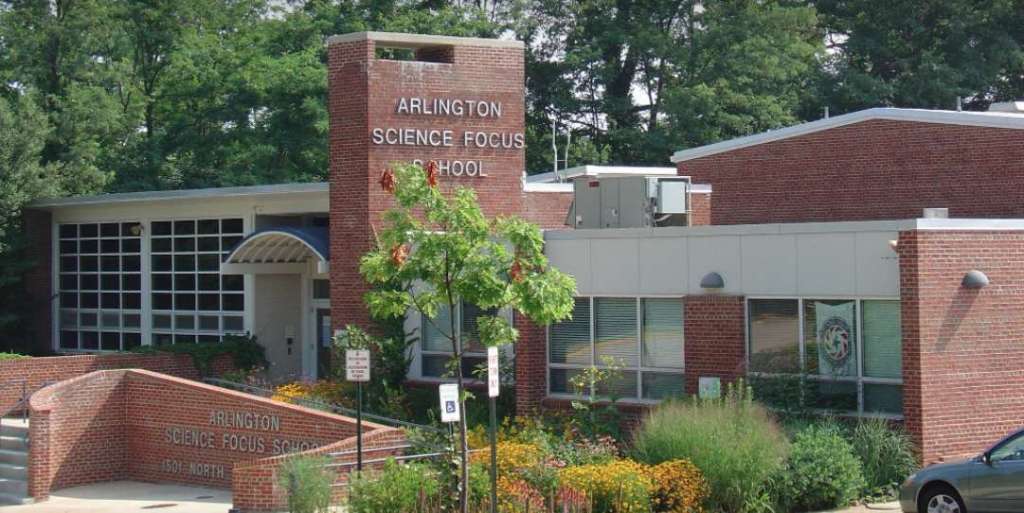
Absent School Board transparency, a group of families have “crowd-sourced” as much publicly available data to piece together the net impact and the answer is bad news for families interested in boosting their child’s performance in science, especially for lower-income families. Roughly 20% of Arlington Science Focus enrollment is via choice/lottery, a figure that falls to zero if this passes. Worse, by eliminating the neighborhood zone for Key Elementary, up to 240 students who could lose in the lottery, including native Spanish speakers, will be forced into an already overcrowded ASFS (runing today at 120% capacity).

Why should this matter? For a low-income family wishing for their child to succeed in science, here’s the bad news: unless you live in the Key Zone neighborhood, you will not have access to ASFS, an award-winning school that delivers, for 93% of low income kids, proficiency or higher on the 5th grade science exam, a rate that places ASFS among top 5% of elementary schools statewide.

The School Board COULD have proposed to treat Key Elementary and ASFS similarly to allow that low-income family to apply for enrollment via lottery, but without justification as to why, they are poised to choose to limit access for ASFS while expanding it for Key.

More insidious is the risk to ASFS’ impressive results. Despite a taxpayer-funded evaluation of APS science results in 2014, not a single publicly available evaluation explains why ASFS is so successful. A fellow Obama White House policy maker and neighbor, Ben Harris, notes that children benefit–or suffer–from being in a classroom with children at a different educational level as their own. Stanford economist Caroline Hoxby found that economically disadvantaged African-American and Hispanic children in Texas showed marked benefits from being in a classroom with kids who had higher test scores.

In other words, diversity matters. And this policy hits right at the diverse enrollment mix currently at ASFS. Coupled with its award-winning integrated curriculum that embeds science and discovery in all classroom instruction, ASFS results need further study before materially changing its composition, curriculum, or level of parental engagement on account of family choice.

I urge you to call, write, or show up to the June 1st School Board meeting and demand a return to evidence-based policy-making that we have so loudly called for at the federal level when attempting to fight back the Trump Administration’s attacks on science, health, and the social safety net. Such a call will result in a call to expand access via choice/lottery slots to Arlington Science Focus. Anything less would be irresponsible.

(Update: APS just posted this FAQ which includes this depressing quote: “Ensure that no students who live outside of the current Science Focus/Key boundary zone are enrolling in Science Focus for the first time, beginning with the 2017-18 school year.”).

ARLnow.com occasionally publishes thoughtful letters to the editor about issues of local interest. To submit a letter to the editor for consideration, please email it to [email protected]. Letters may be edited for content and brevity.

Photo via Arlington Public Schools


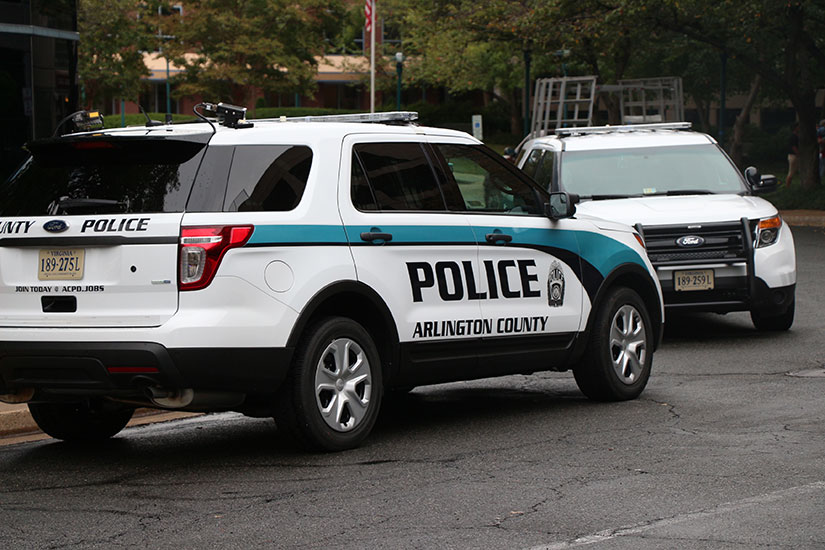
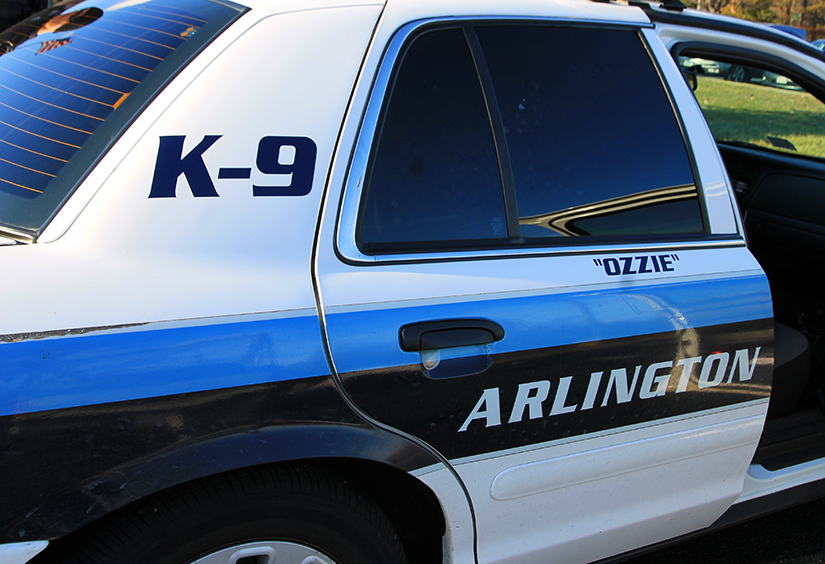
Arlington County Police K-9 units will be deployed to Arlington’s public high schools as the school system addresses what some see as a worsening drug problem.

During the last few weeks of the school year and throughout the summer, the dogs will patrol secondary schools after hours to try to sniff out illegal drugs.

Described as a “proactive measure” in a letter to parents, sent today (Thursday), the searches come at a time when parents are becoming increasingly alarmed about the presence of drugs in middle and high schools.

“I have two children in middle school and have heard of numerous times this year alone of students overdosing on prescription drugs on school grounds or having drugs on school grounds,” one Arlington Public Schools parent said in an email to ARLnow.com.

“Drugs in APS middle and high schools are a real problem,” said an APS employee, who wished to remain anonymous. “Administrators are quick to sweep the drug problems under the rug so it won’t make the school look bad. Do the police warn drug dealers of a raid before the raid? I’m a concerned parent, tax paying citizen and an employee of APS.”

In an email to staff yesterday afternoon, obtained by ARLnow.com, Washington-Lee High School Principal Dr. Gregg Robertson acknowledged that Arlington “has seen an increase in the use of controlled substances.”

As many of you may be aware, Arlington, like many areas of the country, has seen an increase in the use of controlled substances. Over the course of the past year, APS staff worked closely with a number of county agencies to respond to this uptick and to ensure that our schools continue to be safe spaces for students and staff. One of the new measures that will be implemented to help minimize the presence of illegal substances in the schools is the use of the Arlington Police Department K-9 unit. Beginning later this month, the police will come to each of the high schools with the K-9 units to search for drugs. The searches will take place in the evening after students and staff have left.

APS has been communicating this information to families, and all high schools will make an announcement tomorrow (Thursday) morning. I wanted you to be aware of this initiative as I am sure students may have questions.

The drug dogs will only patrol high schools, not middle schools, according to APS.

At least one middle school principal downplayed the extent of the “drug problem” at her school. In an email sent to parents on Monday, Williamsburg Middle School principal Connie Skelton said the problem was limited to “a small cohort of students.”

I’ve had some questions about the “drug problem” at Williamsburg. I want to assure you that this is not a widespread problem, however, we do share your concern. In our school, there is a small cohort of students we are carefully following for drug related issues. If you have any information you would like to share with me, please give me a call.

Arlington Public Schools spokesman Frank Bellavia said the school system is taking measures to keep students safe in the face of a nationwide upswing in drug use.

“Substance abuse and opioid use is a growing problem both in our region and across the U.S.,” said Bellavia. “In collaboration with our law enforcement partners, we are taking steps to make sure that our students are safe and that our schools remain drug free. We also want to make sure that parents are aware and having conversations with their children at home.”


County residents will see their electricity and gas bills rise slightly as of July, while next month fares will increase on both Arlington Transit and Specialized Transportation for Arlington Residents.

And the County Board denied a request that the Education Center and adjacent planetarium be designated as a historic district, so that Arlington Public Schools can continue to keep the site as a contender for a fourth high school.

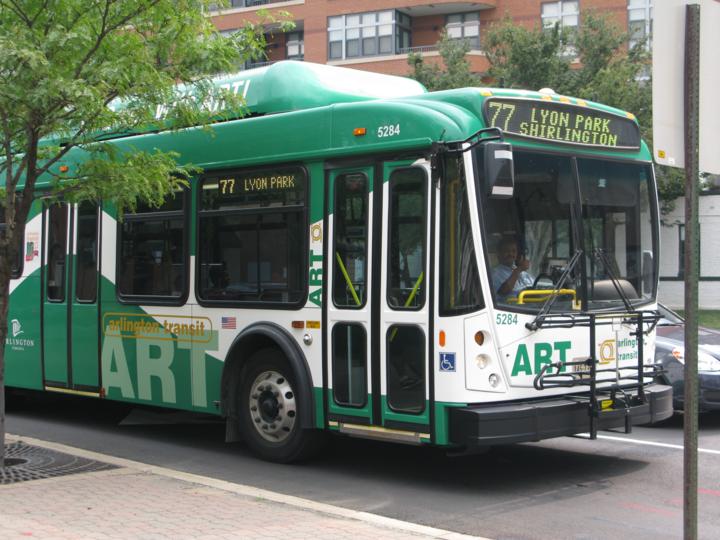
ART and STAR Fares To Go Up

Fares on ART and STAR will go up on June 25 to keep up with similar hikes for Metrobus and MetroAccess.

The ART adult bus fare will rise from $1.75 to $2 and the ART discount fare for seniors, students and people with disabilities goes from 85 cents to $1.

Local STAR trips will increase in cost from $3.50 to $4, while trips inside the Capital Beltway and trips beyond increase 50 cents each, from $5 to $5.50 and from $9 to $9.50, respectively.

ART’s iRide program offering discounts for teens would be extended to elementary school students, while the program allowing free use of ART by personal care attendants accompanying MetroAccess-certified riders would also be extended.

Board members said they have heard several complaints about the cleanliness and reliability of buses in the county, and urged transportation staff to keep on top of any problems. Board member Christian Dorsey, who also represents Arlington on Metro’s Board of Directors, drew a comparison between STAR and MetroAccess.

“I do think it’s essential with STAR that Arlington not accept the mediocrity that Metro has dealt with with MetroAccess,” he said. “It was once considered a shining star in the paratransit world, it needs to continue to do so.”

Education Center Historic District Denied
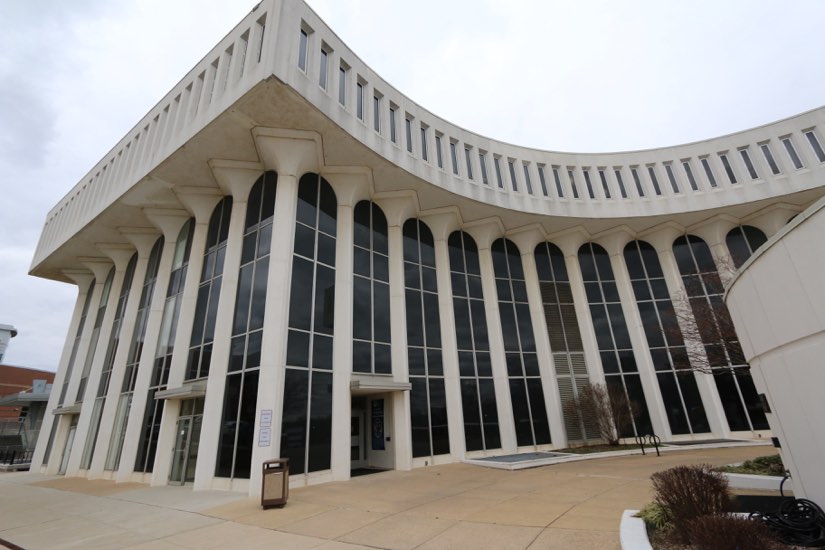
The Board voted to deny designating the Education Center and the adjacent David M. Brown Planetarium at 1426 N. Quincy Street as a historic district, in agreement with staff’s recommendation.

The center is one of three remaining options for the county’s next public high school not counting a new option involving the center, floated by superintendent Patrick Murphy.

County Board member John Vihstadt said that while he appreciates the 1960s-era architecture, Arlington Public Schools should not have its options cut down when it faces capacity issues.

The board asked staff to work with their APS counterparts to look at possible adaptive reuses of buildings built in the “New Formalist” style, which the center is an example of.

“The school system, I believe, needs certainty and clarity now,” Vihstadt said. “If we defer, it leaves a cloud over the building, it leaves doubt, it leaves conjecture. If we recommend designation, it potentially hamstrings APS as to cost, as to timeframe, as to process.”

Gas and Electricity Bills Set For Slight Hike

Residents will see a slight uptick in their gas and electricity bills, a plan county staff said will generate more than $650,000.

The electricity tax rate will increase to $0.005115 per kilowatt-hour (kWh) from $0.00341 per kWh, with the first 400 kWh per month excluded from taxation. The natural gas tax rate will increase to $0.045 per 100 cubic feet (CCF) from $0.030 per CCF, with the first 20 CCF per month excluded from taxation. The hike will be most keenly felt by those residents who use a lot gas and electricity.

A staff report on the plan notes that Arlington’s would still be among the lowest utility tax rates in Northern Virginia.

From the extra revenue, factored into the FY 2018 budget approved in April by the County Board, the cost of a full-time staff member will shift from the county’s General Fund to the Arlington Initiative to Rethink Energy, consultant costs are covered and more than $400,000 will go towards energy efficiency in county and APS buildings.

County Board chair Jay Fisette said the extra tax money is “all to do good things to move the community energy plan forward and meet the goals of that master plan.”



The fidget spinner toy fad has caught the attention of Arlington school administrators.

Kids have apparently been doing too much fidgeting, because at least two schools — and likely more — have addressed the issue in emails to parents.

A parent who did not wish to be identified said emails have been sent to her from Williamsburg Middle and Nottingham Elementary schools, saying that schools are cracking down on the toy, which was originally intended to help students relieve stress and concentrate in class.

That follows similar crackdowns at other schools throughout the U.S. and U.K.

Here’s an excerpt from the WMS email:

We need your help with two issues. First, the entrepreneurial spirit has hit Williamsburg! And not necessarily in a good way. We have noted students selling spinners and slime to other students. This activity takes the focus off of learning and we are making every effort to stop it. On a somewhat related issue, we are continuing to see an explosion in the number of spinners. The spinners are getting larger, more complex and increasingly distracting. Unless your child has an accommodation to use a spinner, please encourage them to leave the spinners at home.

There has been “no guidance from central office as of yet” regarding spinners, said Arlington Public Schools spokesman Frank Bellavia. “Principals handle this sort of thing and make decisions based on what they are seeing in schools.”


It’s Bike and Walk to School Day — Expect additional pedestrians on local roads this morning as parents, students and teachers participate in Bike and Walk to School Day. [Twitter, Twitter]

Sun Gazette’s County Board Endorsement — The Arlington Sun Gazette newspaper has endorsed Erik Gutshall in the Democratic County Board caucuses, which are happening this week. At the same time, the paper urged readers to also consider Kim Klingler, thanks in part to her background on public safety issues. [InsideNova]

SoberRide Triples Cinco de Mayo Usage — Having switched from offering free taxi rides to free Lyft rides, the regional SoberRide anti-DUI program reported that its ridership on Cinco de Mayo tripled this year: 676 riders compared to 225 last year. [Washington Regional Alcohol Program]

Hurricane Hunters at DCA — Government officials and members of the public were on hand at Reagan National Airport yesterday to tour the National Oceanic and Atmospheric Administration’s hurricane hunter aircraft. Among those on hand were acting FEMA director Bob Fenton and Commerce Secretary Wilbur Ross. The director of the National Hurricane Center called it “the biggest, baddest hurricane awareness tour stop we have ever had.” [Roll Call, Capital Weather Gang]

TV Station Visits Local School — WJLA (ABC 7) and meteorologist Brian van de Graaff broadcast live from Hoffman-Boston Elementary School, near Columbia Pike and I-395, yesterday as part of the station’s “lunchbox weather” program. [WJLA]

Activists Target FCC Chair’s Arlington Neighbors — In their fight to retain net neutrality policies, activists have been leaving advocacy materials for and knocking on the doors of FCC Chair Ajit Pai’s neighbors in Arlington. Pai has suggested such policies should be rolled back. [Silicon Beat, DSL Reports, Popular Resistance]

Arlington Water Quality Report Posted — The results of Arlington County’s annual water quality testing have been published online. Per a press release: “Based on sampling data taken throughout the year at our treatment plant and distribution system, the report confirms that Arlington’s high-quality drinking water meets and exceeds all federal and state requirements.” [Arlington County]

Flickr pool photo by John Sonderman


View More Stories