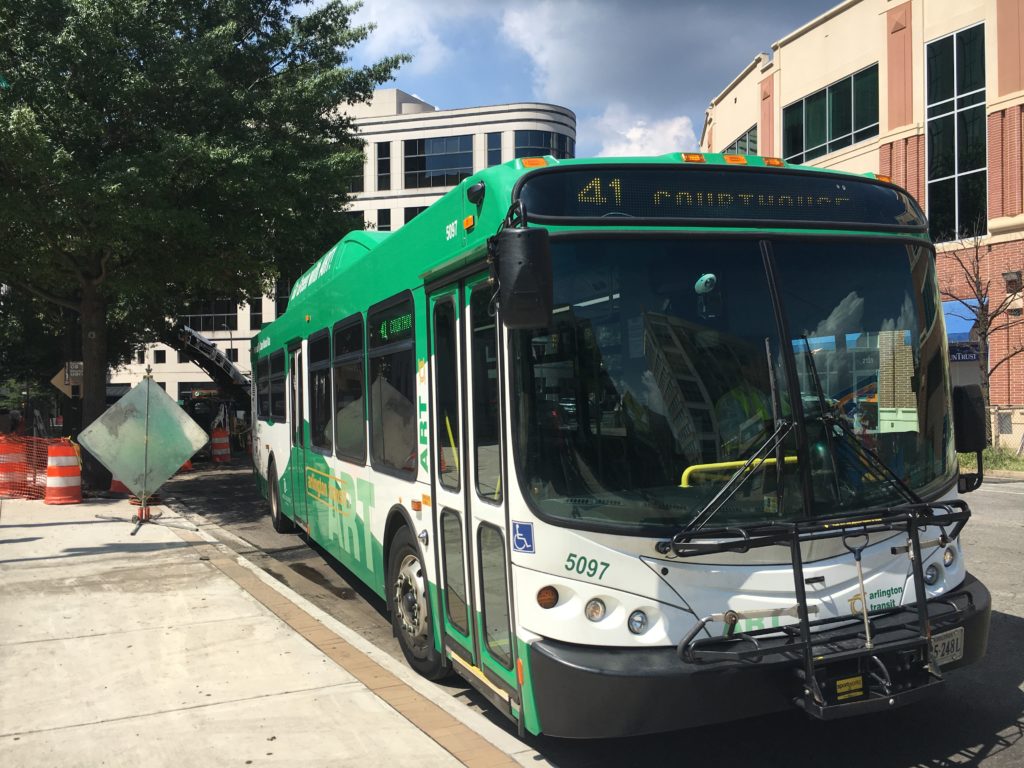
Arlington County’s bus service saw another substantial dip in ridership this spring compared to the same time last year, new numbers provided to regional transportation planners show.

Arlington Transit recorded a 15 percent drop in riders in the fourth quarter of fiscal year 2018, covering April through June, compared to the same period a year ago.

The latest figures forwarded to the Northern Virginia Transportation Commission show that the bus service recorded 745,850 passenger trips over that three month stretch, down from 874,695 a year ago.

That number is actually a 6.6 percent increase from ART’s ridership figures covering January through March. But those numbers were also disappointing ones for the bus service, as they represented a 17 percent drop from the same time period in 2017, meaning that ART has recorded ridership declines for the last two quarters in a row.

The latest ridership statistics represent an even steeper drop still from the same time period in 2016, when ART recorded 905,661 passenger trips — equivalent to a 17.6 percent decline.

These figures come as bus services nationwide cope with ridership declines, as the D.C. region as a whole struggles to convince riders to embrace public transit. The NVTC’s numbers also show that Metrobus ridership in Northern Virginia localities dipped by 9 percent this quarter compared to a year ago, though Metro ridership did tick slightly upward at most Arlington stations.

“The depth of erosion in bus ridership has been more than what we were expecting,” County Board Vice Chair Christian Dorsey previously told ARLnow. “As riders returned to Metro after SafeTrack, we would’ve expected a modest reduction, but it’s just been more substantial than we thought.”

The county has indeed previously blamed some of the decline in bus ridership on riders returning to Metro after the aforementioned intense rehab work, though the rail service has continued to deal with lengthy delays due to construction, which recently resulted in some riders embracing bus options this summer. Other potential culprits include the increasing popularity of ride-sharing or telecommuting.

Dorsey says the county’s approach to reversing that trend will remain the same as ever: “keep investing in places where people want to go.” He added that the county is also working to “refresh” some of its older ART buses, which could help lure riders back to the service.

“We’re investing in new coaches for greater comfort, which is always helpful,” Dorsey said. “When ART was introduced, one of the benefits that convinced people to move to the bus was they were cleaner and quieter. But as they’ve aged, that competitive advantage has declined. We just need to reinvest in ART a little bit.”
Metro’s dire warnings about the impacts of track work in the latter half of this month seem to have effectively pushed Arlington commuters onto local bus routes instead — though bike share services didn’t see a similar ridership boost.

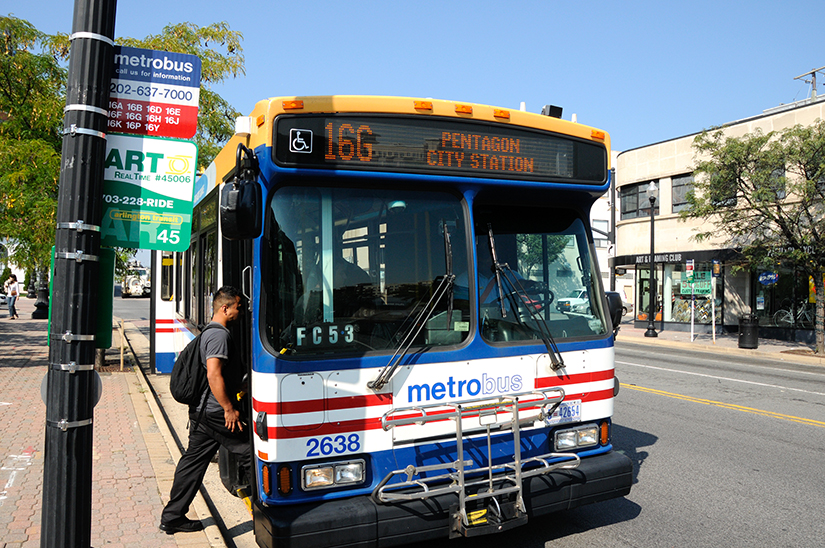
With the rail service’s major rebuilding work on the Silver, Orange and Blue lines fading in the rearview, Arlington transportation officials say their data show that both Metrobus and Arlington Transit ridership saw substantial jumps during the construction from Aug. 11 through Aug. 26.

Metro itself recorded an 11 percent dip in ridership over that period when compared to figures from 2017, largely attributable to WMATA’s persistent urging that commuters only use rail service if they had “no other option” for the two-week period. And in Arlington, at least, it seems that commuters weren’t shy about turning to bus options instead.

The Metrobus 3Y line, which runs from stops along Lee Highway to D.C.’s Farragut Square, recorded the biggest ridership surge, according to county transportation spokesman Eric Balliet. He says the county’s initial data show a 97 percent increase in average weekday ridership compared to the weeks prior to the track work starting, shooting from an average of 413 riders each day to 815.

He added that Metrobus’ 38B line, running from Ballston to Farragut Square, recorded a 38 percent increase, with average daily ridership jumping from 3,001 people to 4,136. Balliet noted that the county requested that Metro provide additional service along those lines, as they run along the Orange and Silver stops most likely to be affected by the track work.

As for ART buses, Balliet says the 43 route (running between the Crystal City, Rosslyn and Courthouse Metro stations) recorded a 67 percent increase in average weekday riders compared to a year ago. Last August, the bus service saw an average of 1,022 people on those buses each day; this year, it jumped up to 1,706.

Similarly, he said the 42 line between Ballston and the Pentagon saw a 16 percent jump, from last year’s 1,068 riders per day to 1,241. He attributes those changes to the fact those ART lines “parallel the segment of the Blue Line that was closed during the track work.” Metro shut down service on the line between the Arlington National Cemetery stop and the line’s New Carrollton terminus.

Jim Larsen, the county’s commuter services bureau chief, pointed out that those numbers amounted to increases of anywhere from 599 to 1,000 riders each day between the two bus services.

“Now, if we can only keep them,” Larsen said.

A spokesman for the dockless electric scooter company Bird says the firm also saw “ridership grow consistently this summer as commuters sought new options to avoid delays on multiple lines,” but didn’t provide specific numbers.

The track work did not produce a similar ridership bump for bike-sharing in the county, however.

Compared to the same two-week period a year ago, the number of Capital Bikeshare trips originating in Arlington was “virtually the same, though down just a smidge,” according to Bike Arlington Director Henry Dunbar.

In all, the county’s stations recorded about 17,041 trips during the track work. From Aug. 12-27, 2017 the county saw 17,180 trips, Dunbar said.

Spokespeople for the ride-sharing companies Uber and Lyft did not respond to requests for comment on any ridership changes they observed during the track work.

Anecdotally, it would seem that the Metro construction inspired some commuters to turn to their cars rather than transit options. For instance, some ARLnow commenters mentioned hefty backups on the Key Bridge and 14th Street Bridge to make it into D.C. in the first place.

In all, 73 percent of the more than 1,400 respondents to an (admittedly unscientific) ARLnow poll on the issue said the Metro track work affected their commutes in some way.

Metro was even scheduled to do a bit more work on the Silver, Orange and Blue lines this weekend, prompting single-tracking through Rosslyn. However, it announced today (Thursday) it’d be abandoning those plans.


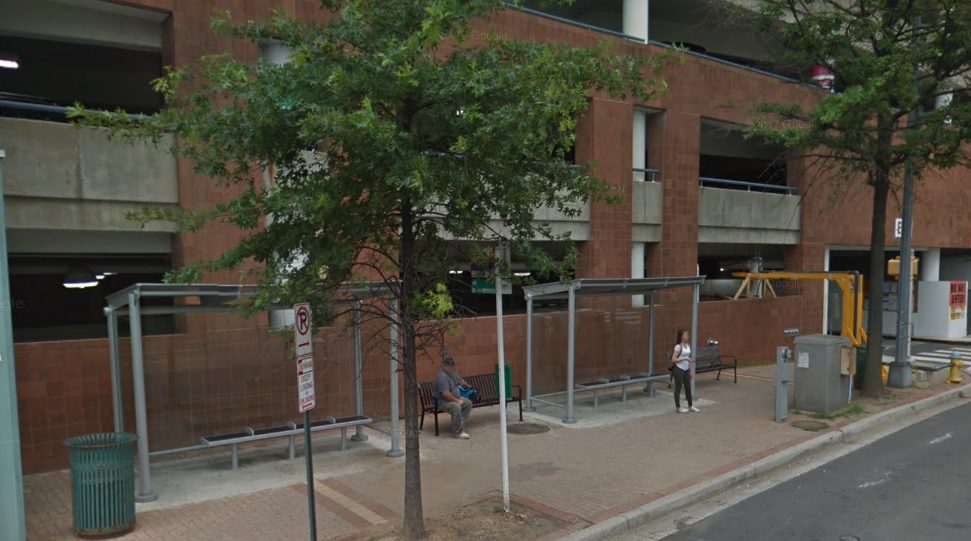
Arlington Transit is closing several bus stops around Ballston to cope with construction this weekend.

Starting tonight (Friday) at 9 p.m. and running through Sunday (Aug. 12) at 7 p.m., the bus service plans to close the following stops along its 41 line:

  • Northbound N. Randolph Street at Wilson Blvd
  • Southbound N. Randolph Street at the Ballston Quarter mall
  • Northbound N. Glebe Road at N. Quincy Street
  • Northbound N. Glebe Road at N. Henderson Road

ART noted in a service alert that some stops along N. Glebe Road and Wilson Blvd will remain open, should riders need options along the corridor.

The construction work prompting the bus stop closures will require occasional road closures as well, as it’s largely tied to the Ballston Quarter construction and some summer paving work.

Photo via Google Maps


Arlington is shelling out $23.9 million to buy land that will someday become home to a new bus “operations center” in Nauck, marking an end to years-long negotiations over the property’s future.

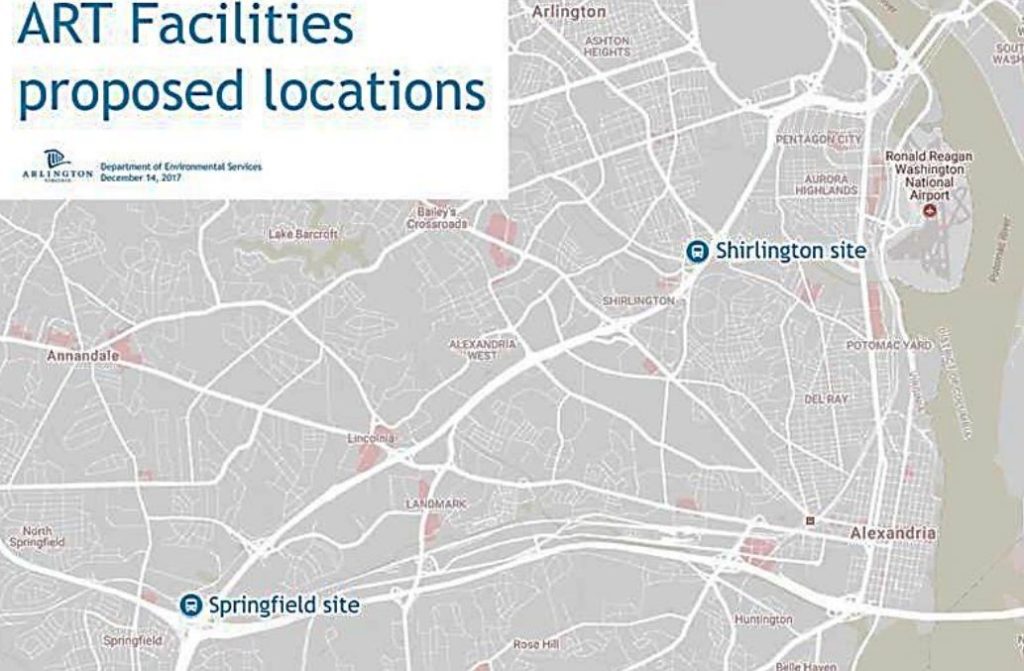
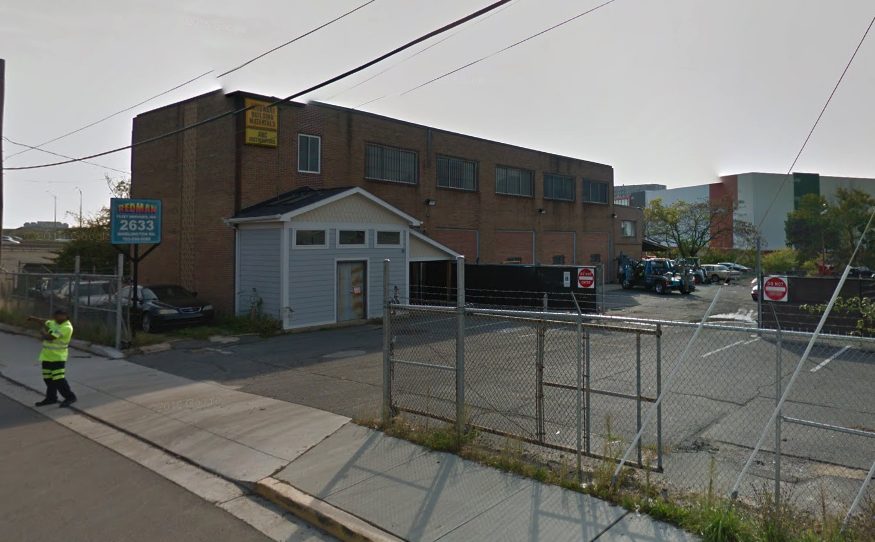
The County Board voted Saturday (July 14) to purchase the site, located at 2629 and 2633 Shirlington Road. Arlington Transit plans to eventually store about 90 buses on the property, and eventually develop the space “as a base for ART operations,” according to a county staff report.

The county already leases about 2.5 acres of the roughly 3.5-acre property to use as bus storage, but it was paying $60,000 a year for the privilege. The remaining section of the land was once used as storage by the towing company Redman Fleet Services.

County leaders have eyed the property as an ideal site for additional bus storage for several years now, and considered acquiring it as part of a swap involving another in-demand piece of land: the Buck property near Washington-Lee High School.

The Arcland Property Company proposed trading its Shirlington Road property for a portion of the Buck site, which the county bought for $30 million several years ago, in order to build a self-storage facility on the property. But that proposal attracted pushback from the community, particularly as the county eyed the Buck site as one that could become home to a school someday.

Arlington’s budget pressures means officials still haven’t been able to plot out a long-term plan for the property, though the county did recently agree to allow some school system employees to use it for parking. The county plans to wrap a study of the property’s suitability for some sort of school building this winter.

Yet the Board was able to afford the Shirlington Road site without giving up any of the Buck property thanks to a mix of state and regional funding. Some state grants will pay for nearly $7 million of the $23.9 million price tag, with some recently awarded money from the Northern Virginia Transportation Authority adding another $2.7 million or so.

The NVTA doled out $39 million to help pay for the operations center’s construction as well, in addition to a new “heavy maintenance facility” in Springfield. ART recently opened a new “light maintenance” facility in Crystal City.

Photo via Google Maps


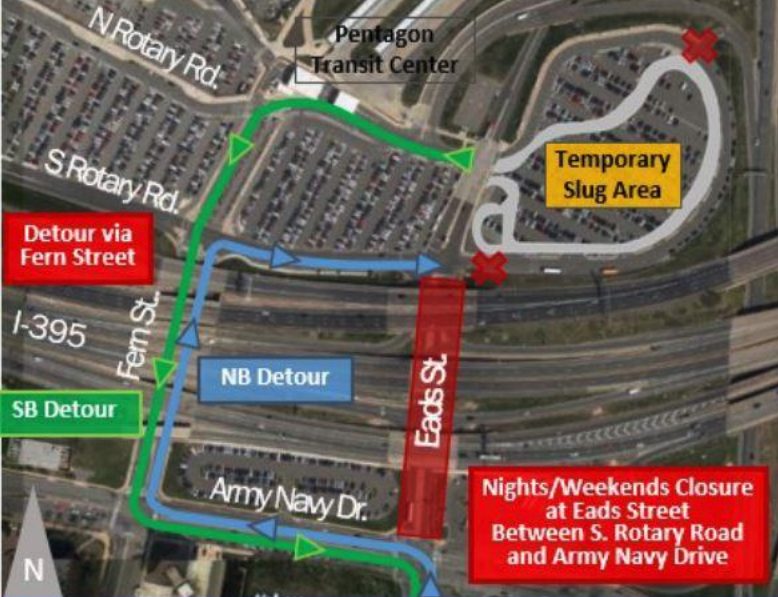
Construction around one of the Pentagon’s parking lots kicking off this week could produce some big headaches for drivers and bus riders alike.

Starting this morning (Monday), work will shut down the west side of S. Eads Street from Army Navy Drive to where it nears the Pentagon’s south parking lot at S. Rotary Road.

That will shift both northbound and southbound traffic to the east side of the street. In the mornings, from 6 a.m. to 9 a.m., that will cut off access to I-395’s northbound HOV lanes and Army Navy Drive from S. Rotary Road. Crews will post a detour and drivers should follow signs. In the same time period, access to northbound S. Eads Street from the right lane of S. Rotary Road will be reserved for anyone heading for I-395’s southbound HOV lanes.

Construction will include “median reconfiguration, road widening, pavement and drainage work,” according to VDOT, prompting some major traffic snarls.

“As current traffic volume along Eads Street is near capacity during peak periods, we expect significant traffic congestion and delays along Eads Street,” VDOT wrote in an advisory. “Periodic nighttime/weekend closures may also take place to complete the construction activities.”

VDOT is recommending that drivers looking to reach the I-395 HOV lanes during the construction to use the ramps near the Pentagon’s north parking lots at Boundary Channel Drive instead.

Arlington Transit is also warning bus riders looking to reach the Pentagon to expect “significant delays for ART buses entering and exiting” the facility’s lots. ART plans to issue service advisories as needed.

VDOT says work will shift to the east side of S. Eads Street sometime this fall, then last for an additional two months. The construction is included as part of the broader project focused on the I-395 express lanes.

Photo via VDOT


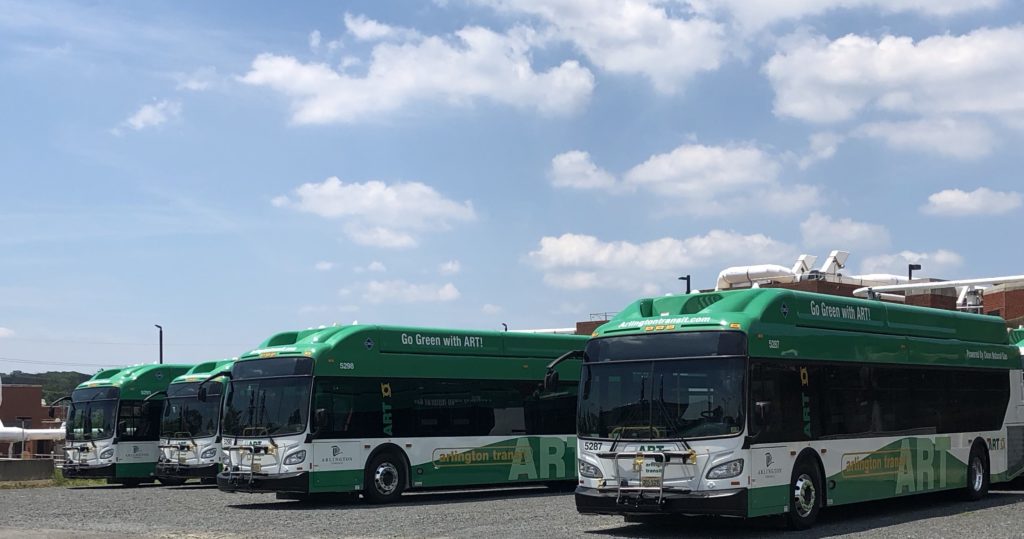
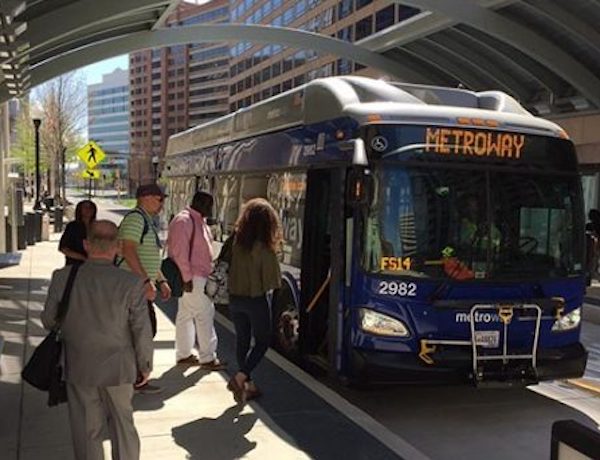
Arlington Transit is prepping 13 new buses to start picking up riders in the coming months.

County transportation spokesman Eric Balliet told ARLnow the bus service received the new vehicles a few months back, and hopes to have three making the rounds before the month is out.

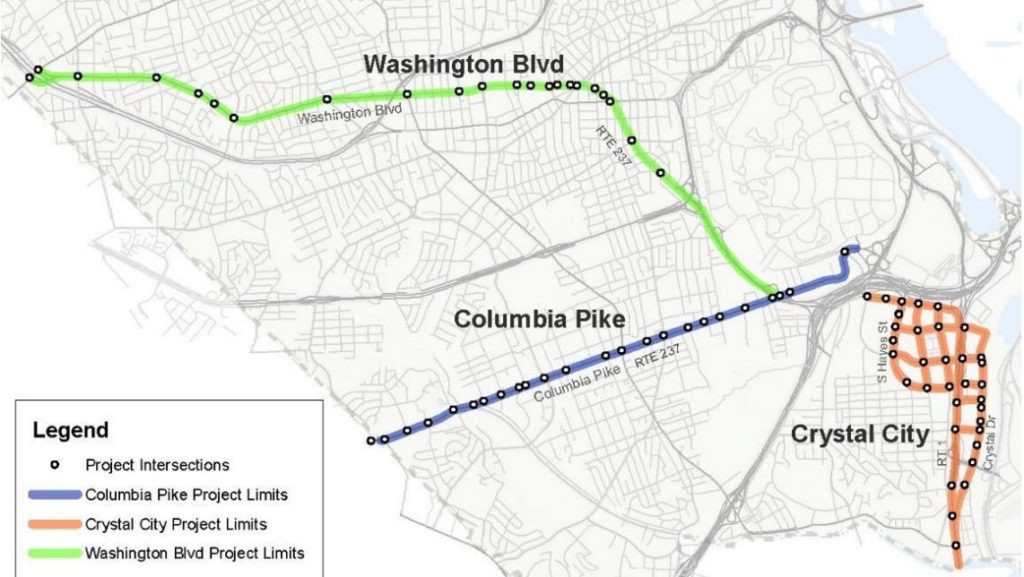
He expects the rest will hit the road as the county continues to beef up bus service in the coming months, likely “later this summer/early fall,” as part of the Transit Development Plan the County Board approved in 2016. That plan is designed to bridge gaps in bus service around the county, particularly along Columbia Pike, where ART and Metrobus just started teaming up to offer enhanced service last month.

ART has also dealt with a series of mechanical issues recently, particularly on some of its older buses, but Balliet says the county is still being cautious in putting these new buses in the field.

The 40-foot-long, natural gas-powered vehicles are the first buses the county has purchased from New Flyer of America, the same company that provides vehicles to WMATA for much of its Metrobus service. Accordingly, Balliet says ART’s service contractor “has been in the process of reviewing the buses for acceptance and training operators and technicians” since the agency got its hands on the buses earlier this year.

In all, the county’s Transit Development Plan calls for ART to expand its fleet “by over 20 vehicles” in total through 2026.

The county projects that these additions and service changes will help it boost ridership by 24 percent over the same time period, though ART’s ridership figures have flagged in recent months, similar to other bus services nationwide.

Photo courtesy of Abigail Wendt


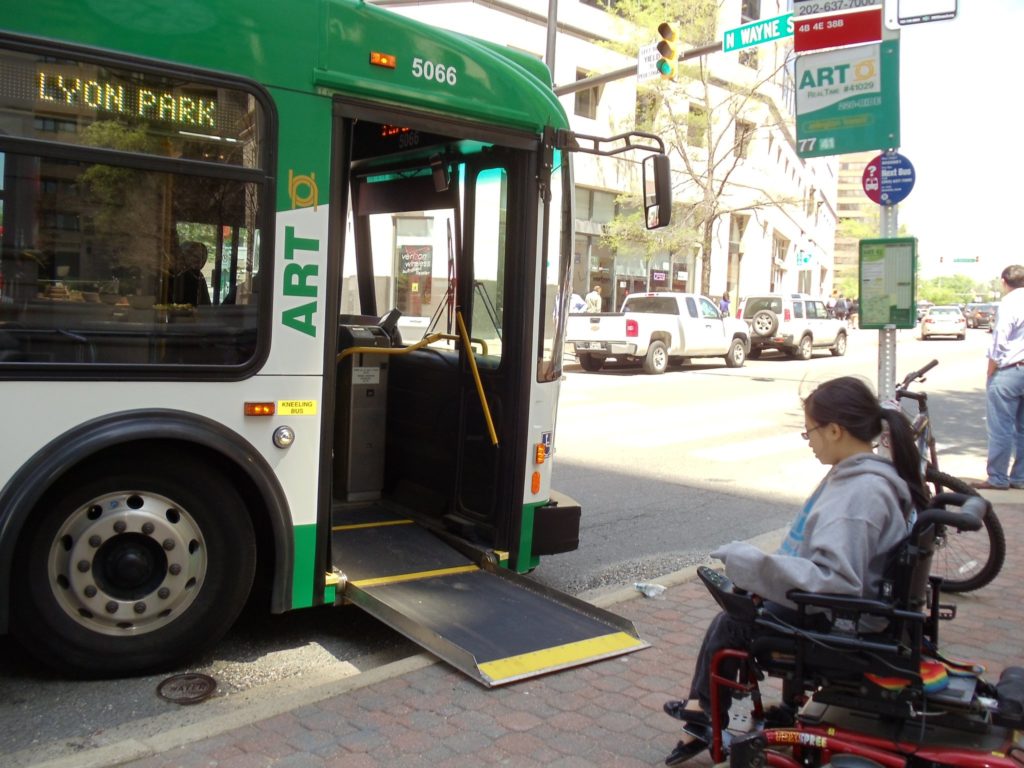
(Updated at 3 p.m.) Arlington Transit’s phone system to connect disabled and elderly riders to bus service has been hobbled by technical problems all week, prompting big headaches for people who rely on the program.

ART’s “Specialized Transit for Arlington Residents” service, commonly known as STAR, has been dealing with “technical difficulties” at the agency’s call center since Tuesday (June 26), according to a series of alerts sent out to riders.

The main STAR phone line hasn’t worked since then and remains down today (Friday). County transportation spokesman Eric Balliet says ART is working on the issue with service provider Verizon and even the state’s technology agency, with a temporary solution on the way.

“The temporary solution, estimated to be in place later today, will forward the main STAR number to a number provided by Red Top Cab, which dispatches service for STAR,” Balliet wrote in an email. “STAR personnel have been taking calls on this temporary line and will continue until the issue is resolved.”

The phone system is designed to connect riders who might have trouble using ART’s regular service with a scheduled, shared-ride service to take them wherever they need to go around the county. Accordingly, this week’s outages have created big problems for riders with disabilities, in particular.

https://twitter.com/TiffanyJolliff/status/1012720958023569410

https://twitter.com/TiffanyJolliff/status/1012720960582103042

https://twitter.com/TiffanyJolliff/status/1012720963262337024

ART has also dealt with a series of problems with its real-time alert service in recent weeks, not to mention a host of bus maintenance woes necessitating some service disruptions.

Photo via Facebook


RCA Building Redevelopment Nixed — Plans to tear down the aging RCA office building at 1901 N. Moore Street in Rosslyn and replace it with a 24-story residential tower have been placed on hold “indefinitely.” Instead, owner Weissberg Investment Corp. is now seeking to lease up vacant spaces in the building. [Washington Business Journal]

New County Board Clerk Announced —  “The Arlington County Board today named Kendra M. Jacobs the Clerk to the County Board. She will join the County Board Office in her new role on Monday, July 9. Jacobs comes to Arlington County Government from the City of Alexandria, where she has managed the Department of Planning and Zoning’s Boards and Commission Unit since 2003.” [Arlington County]

LWV to Host Gerrymandering Forum — The Arlington League of Women Voters is hosting a forum entitled “Gerrymandering in America and the Future of Popular Sovereignty” on Thursday, July 12 at 7:30 p.m. at the Arlington Mill Community Center. [League of Women Voters, InsideNova]

More ART Mechanical Issues — The bus serving the ART 43 route today “died on [Route] 50 right before the Crystal City exit,” a rider reports. Per the transit agency, which has been plagued by problems recently: “Due to mechanical issues ART 43 to Court House Metro from Crystal City Metro at 8:51 AM will not operate. We apologize for your inconvenience.” [Twitter, Twitter]

Flickr pool photo by Eric


Two ART Routes End Today — ART Routes 54 and 92 will cease operations after the end of the day today. Per a press release: “The two routes were eliminated as part of Arlington County’s FY 2019 budget and to improve efficiency of ART service. Both bus routes perform below ART’s minimum service standards of 15 passengers per hour.” [Arlington Transit]

Arlington Cemetery Station to Close This Weekend — The Arlington Cemetery Metro station will be closed this weekend so workers can install cables “for cellular communication,” WMATA says. Shuttle buses will be available but the Blue Line will only run from Franconia-Springfield to National Airport. [DCist]

Windy Run Improvement Project Complete — “There will soon be an official ribbon cutting to celebrate the renovated Windy Run. And in the meantime, the trail and park have re-opened and can be enjoyed by Arlington residents.” [Arlington County]

Suspected DUI Hit and Run in Clarendon — A man was arrested after an alleged DUI hit and run in Clarendon yesterday evening. At least two vehicles were struck, though the suspect’s SUV appeared to have suffered the most damage. [Twitter]

Arlington is No. 2 on New Livability Ranking — “Arlington placed second in its size category in the updated AARP ‘Livability Index.’ Arlington ranked behind only Madison, Wisc., in the ranking for communities with populations between 100,000 and 500,000. The survey, updated for the first time since 2015, used more than 50 data sources to score communities on areas ranging from housing and transportation to social engagement.” [InsideNova]

Photo by @thelastfc


The new tolls on I-66 inside the Beltway may be steep, but new data suggest they have yet to convince people to turn to Arlington’s public transit options instead of driving.

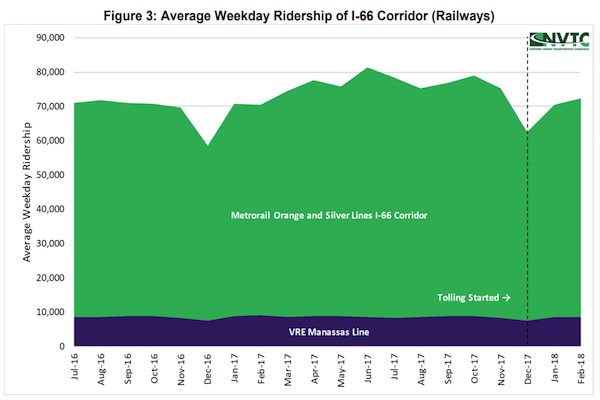
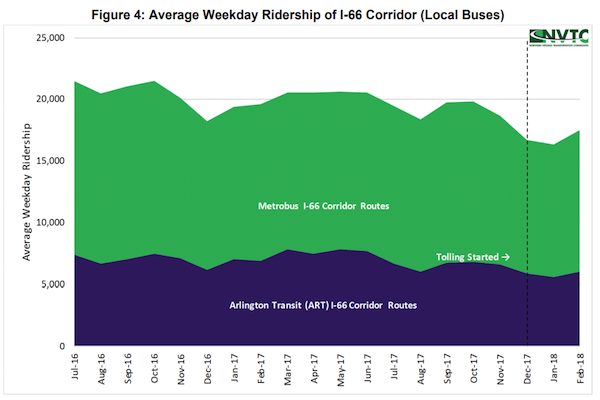
The rush hour tolls have been in place on I-66 between Rosslyn and the Beltway since December, but a new report by the Northern Virginia Transportation Commission does not show any substantial increase in Metrorail or local bus ridership around Arlington.

The regional transportation planning group’s researchers did find some upticks in express bus ridership in Fairfax and Prince William counties, which benefits from fewer rush hour traffic delays on I-66 post-tolling. Yet NVTC staff stresses that there is currently no clear evidence that the tolls, designed to convince commuters to carpool or turn to public transit to ease congestion on the highway, are having their desired effect broadly.

“While public transportation systems transport significant numbers of commuters from the Washington, D.C. suburbs to downtown, overall transit ridership in Northern Virginia has shown a gradual decline, which is influenced by employer transit benefits, transit service reliability, telework, and real estate development, among others,” the NVTC report reads. “However, new commuter and express bus services supported by the I-66 Commuter Choice [tolling] program have demonstrated stable demand and are expected to grow.”

The group examined ridership data on Metro’s Orange and Silver lines, running between stations west of the Ballston stop and Ballston itself, as well as between Ballston and stations east of it. For the month of February, the NVTC found that ridership increased by about 4 percent from the same month in 2017.

However, staff noted that could be due to the transit system’s recovery from its “SafeTrack” maintenance program, noting that “it is difficult to discern the influence of I-66 tolling from these statistics.”

The NVTC also found that bus ridership in the I-66 corridor declined from a similar time period a year ago, particularly in Arlington. Staff found that Arlington Transit routes along the corridor dropped by a total of 12 percent when comparing February 2018 to the same month last year, and Metrobus ridership in the area fell by 10 percent.

The new tolls helped local bus services run some buses more frequently along the corridor, but the group found declines in ridership on those routes too. For instance,  ART started running buses on its 55 route once every 12 minutes during rush hour starting in June 2017, yet ridership fell by 7 percent when comparing February 2018 to February 2017.

Similarly, 2A Metrobuses now run every 10 minutes instead of every 15 during periods of peak ridership — and the route saw a 10 percent drop in riders, the report found.

However, the NVTC noted that bus ridership “declines persist before and after the I-66 tolling,” not only in Arlington in recent years, but also across the region and even the country.

They’re also hopeful that commuters are still taking time to adjust to the beefed up transit options, and are merely taking time to adjust their schedules accordingly.

“The public transportation service capacity added in FY2017 through the I-66 Commuter Choice program has met with stable demand,” staff wrote. “A ramp-up in demand is expected in the coming years.”

File photo. Charts via NVTC.


Arlington is now in line to receive nearly $83 million in funding to help the county afford four major transportation projects over the next six years, including the construction of two bus maintenance facilities and a major expansion of transit options in Pentagon City.

The Northern Virginia Transportation Authority announced its new Six Year Program today (Friday), outlining the regional body’s plans to shell out a total of nearly $1.3 billion for transportation projects through 2024. The NVTA collects a select set of regional taxes, then identifies which construction efforts around the region are most likely to reduce in congestion before doling out money to help localities fund them.

State lawmakers recently decided to pull tens of millions of dollars away from the group each year, in favor of sending the money to Metro as part of the new dedicated funding agreement for the rail service. That’s constricted the NVTA’s ability to hand out funding for transportation projects, much to the chagrin of officials across Northern Virginia, but the group still has the capacity to help pay for 44 different projects around the region.

In Arlington, that includes:

  • $39 million for two new Arlington Transit operations and maintenance facilities
  • $28.8 million for Pentagon City road improvements and Transitway expansion
  • $10 million for improved traffic signals around the county
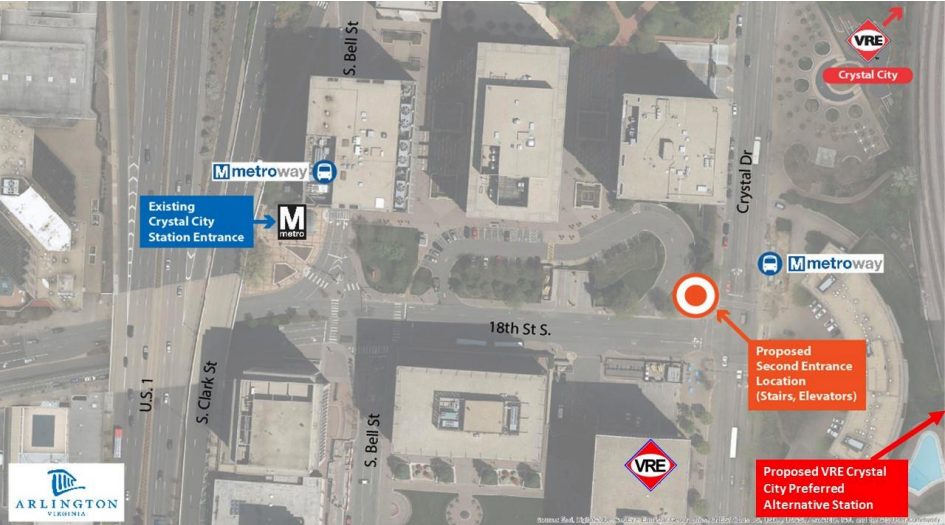
  • $5 million for a second entrance to the Crystal City Metro station

Notably, the NVTA declined to award additional funding to one of the county’s other top priorities: a second entrance to the Ballston Metro station. Arlington previously received $12 million from the group to start work on the effort, and was looking for another $72.3 million to make the project a reality, but NVTA leaders warned that such a project was unlikely to win out over other efforts more focused at relieving traffic congestion.

The $5 million for the second entrance at the Crystal City station is also substantially less than the $87 million the county requested to complete the project. County Manager Mark Schwartz has previously warned that Arlington’s funding challenges will make it difficult for the county to build both second entrances without the NVTA’s help, but the $5 million will help the county complete additional design, engineering and environmental work.

Those issues aside, the NVTA did manage to fund the bulk of the county’s request for the new ART facilities, the top priority for Arlington officials this year. The county is planning to spend a total of $98.4 million on additional facilities for buses over the coming years — a new “heavy maintenance” facility in Springfield and an “operations center” along Shirlington Road.

(more…)


View More Stories